Archive for the ‘The Shepherds’ Category

The Angels & The Shepherds

December 6, 2023

By Fr. Chinnappan Pelavendran

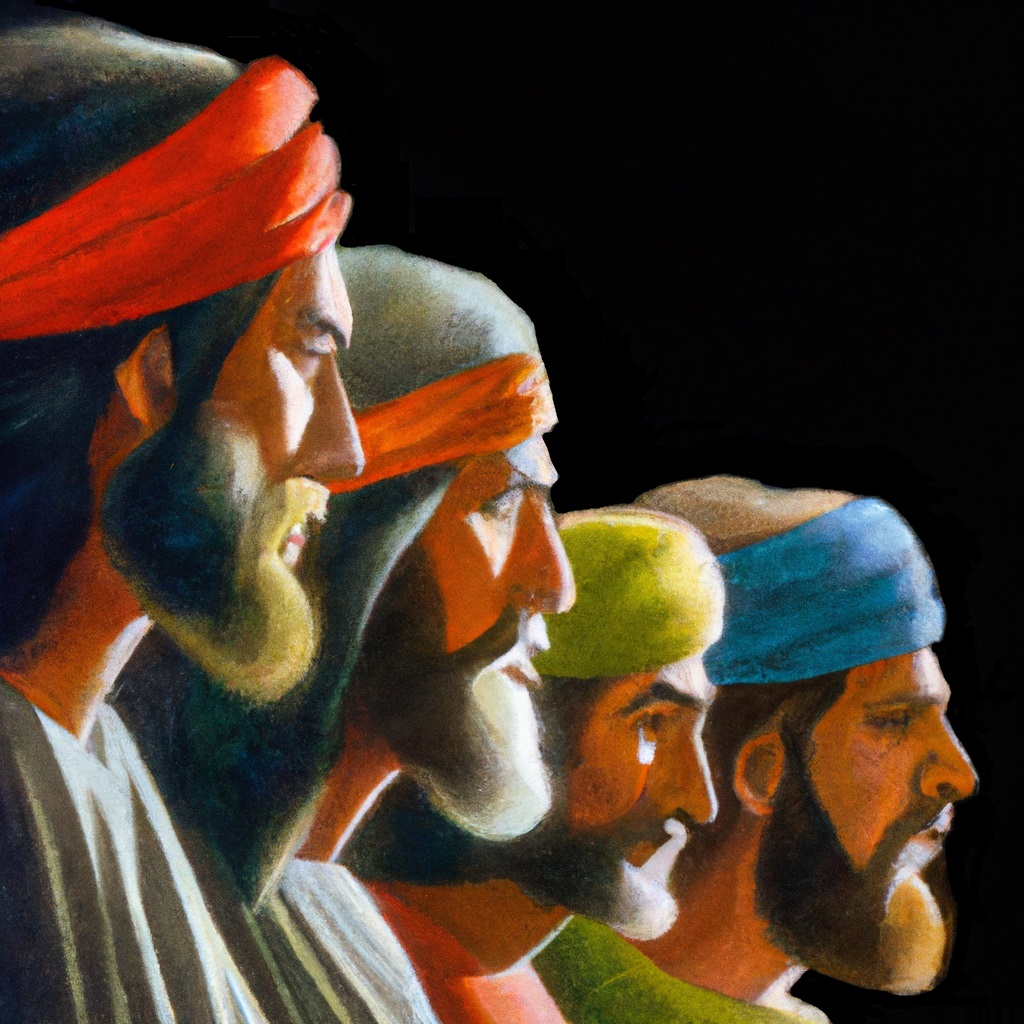
(Luke 2:8) Now there were in the same country shepherds living out in the fields, keeping watch over their flock by night. These shepherds were watching Passover lambs, which would be sacrificed later that year. So it is appropriate that they are about to go look at another Passover Lamb who will also be sacrificed later in His life.

(Luke 2:9) And behold, an angel of the Lord stood before them, the glory of the Lord shone around them, and they were greatly afraid. (Luke 2:10-12) Then the angel said to them, “Do not be afraid, for behold, I bring you good tidings of great joy which will be to all people. For there is born to you this day in the city of David a Savior, who is Christ the Lord. And this will be the sign to you: You will find a Babe wrapped in swaddling clothes, lying in a manger.

The angel tells the shepherds about the birth of Christ, that He will be the Savior of the world. “Glory to God in the highest, and on earth peace, goodwill toward men!” The angels proclaim Christ will bring peace. Peace does not come through money and power of the Emperor, but through humility and service. Moreover, the all-important peace with God comes only to those who believe in Jesus for eternal life. Only through Christ can you have true and lasting peace. That is the message the angels proclaim. You see, in Isaiah 48:22, God says that there is no peace for the wicked. We live in a wicked, sinful world. Those who live in wickedness and sin will never have peace. If, however, you are one of those who have come to know Jesus Christ as your Savior by believing in Him alone for eternal life, then you can know this peace the angels proclaim. Romans 5:1 states, “Therefore, being justified by faith, we have peace with God through our Lord Jesus Christ.”

Peace is available to you today if you are a person of God’s will. What is God’s will? To believe in Jesus Christ for eternal life. In John chapter 6, some people come to Jesus and ask him, “What must we do to do the works of God? What is His will?” Moreover, Jesus said, “This is the will of my Father, that you believe on Him whom the Father has sent.” (John 6:28-29) That is it. Believe in Jesus for eternal life. Do you want to have the peace the angels proclaim here? You need to be a man or a woman of God’s will; you need to do God’s will, which is to believe in Jesus for eternal life. However, if you reject Him, you also reject peace. There can be no peace in this world without Him.

(Luke 2:15-16) So it was when the angels had gone away from them into heaven that the shepherds said to one another, “Let us now go to Bethlehem and see this thing that has come to pass, which the Lord has made known to us.” And they came with haste and found Mary and Joseph, and the Babe lying in a manger.

It says they came with haste. This was the first Christmas rush, but certainly different from the Christmas rush we are familiar with. They were rushing to see Jesus. I wish we all were more like these shepherds. They heard the Word of God spoken here by angels, and they immediately acted upon it. They did not wait around until it was morning. They did not ask for better directions. They received by faith the message God sent to them and then responded with immediate obedience. I am sure they knew where all the stables were, so they just checked around until they found the one Mary, Joseph and Jesus were in.

We should also note that the angels did not appear to kings. They did not appear to the mayor of Bethlehem. They did not appear to the religious leaders in Bethlehem. They appeared to be shepherds. Just humble shepherds out in the field. Shepherds were outcasts in Israel. Mary’s song pointed out back in Luke 1:51-53 that this would be a pattern in the life of Christ, and it has already begun here. (1 Cor. 1:26-29) It seems that the poor and the people who are nobodies are often the ones whom God gives special attention to.

(Luke 2:17) Now when they had seen Him, they made widely known the saying which was told them concerning this Child. The shepherds became the first Christian evangelists. The first witnesses to spread the good news of the Messiah. When they saw Jesus Christ, they could not help but keep silent about Him. They told everyone they met. Again, they are a lesson for us. Not only did they obey God’s Word immediately, but they also went beyond that and told others about Jesus. Once you have seen Jesus, it is a privilege, it is an honor, it is a necessity to tell others about Him. Once you have seen Jesus, you can’t keep from talking about Him even if you tried. The shepherds were so excited about what they had seen and heard, they just had to tell everybody.

(Luke 2:18) And all those who heard it marveled at those things which were told them by the shepherds. This is a key idea after all that we have seen today. Things did not go as planned for Mary and Joseph. They had experienced more trouble than they should have. And rather than complain, rather than criticize, they quietly accepted what God was doing. Joseph could have blown his own horn and demanded he get what he deserved as a descendant of King David. But he didn’t. Mary could have gone around bragging that she was carrying the promised Messiah and as a result, she could have demanded that she be given the best room in the inn – for free, and the innkeeper should kick out whoever was there. But she didn’t.

Mary and Joseph chose to humbly accept the trials and troubles that God sent their way, and as a result, God lifted them up. He raised them up. He sent angels to blow the trumpet for them, and shepherds to pass the word for them about who they were, and what kind of child they had been blessed with. Mary and Joseph chose not to blow their own horn. Instead, they let God do it for them. When credit comes to you for the ministry and talents and abilities you have, let it be God and others who bring it rather than yourself.

(Luke 2:19-20) But Mary kept all these things and pondered them in her heart. Then the shepherds returned, glorifying and praising God for all the things that they had heard and seen, as it was told them. Mary was not the one to go around and tell people about how great she was, and how much God had blessed her. Instead, she just kept all these things and pondered them in her heart. God used the shepherds to tell the world about Mary and her newborn baby. Instead, like Mary and Joseph, quietly and humbly accept whatever position and privilege God has placed you in, and as you prove yourself faithful with a little, He will give you more. Don’t blow your own horn. Let God blow it for you in his perfect timing.

All of us need to learn from Mary and Joseph that our sufferings, our troubles, and our trials in life are tools in the hand of God to mold us shape us, and make us into something beyond our imagination. When trials and troubles come into your life, God is making you into something great. In whatever trials you are facing, ask God these kinds of questions: Say, “Father, what are you trying to teach me in this situation? How can this trial make me more like Jesus Christ?” God wants to change your troubles into trumpets if you will only let him perform His work in you.

God brought the first message of the birth of Jesus to ordinary people rather than to princes and kings. God spoke through His holy angel to the shepherds who were keeping sheep in the fields. This was a lowly occupation, so shepherds were not well educated. But Mary tells us the true story: “He has put down the mighty from their thrones; and exalted the lowly. He has filled the hungry with good things, and the rich He has sent away, empty.” (Luke 1:52–53)

What was the message of the angel to the shepherds? First, he told them not to be afraid. Repeatedly, the presence of angels was frightening to those to whom they came. However, unless they came in judgment, the angels spoke a word of reassurance. They calmed the people to whom they came.

Behold, I bring you good tidings of great joy which will be to all people. For there is born to you this day in the city of David a Savior, who is Christ the Lord.” (Luke 2:10-11) The good tidings were that the Savior had come. The people needed somebody who could bring them back into fellowship with God because the blood sacrifices could not do this in any permanent way. The Lord had visited His people with salvation.

Another lesson we can learn from the shepherds at Jesus’ birth is that ordinary people can tell others about the Savior. Once the shepherds made it to Bethlehem and saw the Savior, “they spread the word concerning what had been told them this child. And all who heard it were amazed at what the shepherds said to them.” In their joy and praise, they could not refrain from telling others about their experience.

These ordinary shepherds, who were outcasts among their people, were the first to hear of Jesus’ birth and to spread that news. They did not wait until they had extensive theological training to tell others. Instead, they went out and told people about their experience of hearing the message of the angel and seeing the Savior. We can do the same.

Many of us will think that we need more effective in sharing the gospel once we have read a book or the Holy bible or taken a course on the bible. Books and courses are helpful resources, but all believers can tell others about how Jesus saved them. We do not have to wait until we feel qualified enough, because we can all testify about Christ’s saving work in our lives.

If the shepherds, who were outcasts in society, could spread the good news about Jesus’ birth, then we can certainly tell others about how Jesus saved us. The shepherds also remind us of the need to listen to the Lord and obey Him, that ordinary people can spread the good news of Jesus, and that worship should be our response to Jesus’ saving work.
Ready for Christ’s Coming? Then & Now

November 26, 2022

1st Sunday of Advent
By Fr. Victor Feltes

Our season of Advent has now begun — a season of Christian preparation. Throughout Advent, we the Church are getting ready in two different respects: we are preparing to celebrate and commemorate the historical birth of Christ at Christmas and, at the same time, we are preparing for the day Jesus will return to this world in unveiled glory. In today’s Gospel, Jesus recalls the story of the days of Noah’s Ark, in which a few were prepared for the flood and saved while most were unprepared and swept away. “So too, you also must be prepared,” Jesus tells us, “for at an hour you do not expect, the Son of Man will come.” Will we be prepared for the day of Jesus’ return? How well prepared and open were people for Christ’s first arrival and what can their examples teach us?

Local shepherds of Bethlehem were the first to hear of Christ’s birth on Christmas. An angel of the Lord appeared to them and said, “[B]ehold, I proclaim to you good news of great joy… a savior has been born for you who is Messiah and Lord!” Now these shepherds were working, keeping night watch over their flock. They could have claimed they were too busy to accommodate Christ into their schedules. Instead they said, “Let us go… to see this thing… which the Lord has made known to us!” They went in haste and found Mary and Joseph, and their Lord lying in the manger.

Sometime later, word of Christ’s birth came to King Herod in Jerusalem, but he did not welcome this good news into his heart. This man loved to reign in his own domain and did not wish to share control. So the king sent soldiers to kill the children who could be Jesus. King Herod refused to change for Christ.

Where had Herod learned of Christ’s birth? Through Magi from the east who came to Jerusalem in good faith expecting to find the newborn king of the Jews. “We saw his star at its rising,” they said. They came with their gifts to honor him. Now most had missed the important sign from heaven (they were focused on other things) but the Magis’ attentions were not distracted, and based on what they saw, they acted. They too found the Lord amidst his Holy Family.

The examples of the shepherds, King Herod, and the Magi show us ways of either being ready and open for Christ or not. So ask yourself this Advent, will I allow work and responsibilities to crowd out my time for Jesus, or will I be like the shepherds who came to him and his Holy Family with joy? Will I cling to my own control, my wealth and my sinful pleasures like King Herod did, or will I offer and sacrifice these things to Christ? Will be distracted by the many diversions of this world and overlook what really matters, or will I be attentive like the Magi to act for the Lord?

At the start of this Advent season, St. Paul tells us, “You know the time; it is now the hour for you to awake from sleep. For our salvation is nearer now than when we first believed; the night is advanced, the day is at hand.” Let us prepare to celebrate and commemorate the historical birth of Christ at Christmas, while at the same time preparing for the day Jesus will return to this world in unveiled glory.

Learning from the Angels

December 24, 2021

Christmas, the Nativity of the Lord

It can be an alarming experience to encounter an angel. Their presence is typically veiled to us but once revealed to our human perception angels radiate such mightiness, holiness, and otherworldliness, that often the first thing they say upon appearing is: “Do not be afraid.” So it was on the first Christmas night in the fields outside the little town of Bethlehem where the shepherds kept watch over their flock.

A heavenly angel appeared to them, the Lord’s glory shone around them, and the shepherds were utterly terrified. But the herald angel said, “Do not be afraid… I proclaim to you good news of great joy that will be for all the people. …Today in the city of David a savior has been born for you who is Christ and Lord.” The angel then gave them a sign to look for, to know that they had found the newborn king: “You will find an infant wrapped in swaddling clothes and lying in a manger.” Suddenly, a whole multitude of angels appeared, praising God and saying: “Glory to God in the highest and on earth peace to those on whom his favor rests!” When the angels departed the shepherds were seemingly alone once more in the dark and quiet field.

Like the gospel two weeks ago about St. John the Baptist’s preaching, what strikes me about the angels’ proclamation is what the shepherds are not told to do. The Holy Family was very poor, but the shepherds are not told to bring them coins. The cave-stable in which Jesus laid was probably dirty like a barn, but the shepherds are not told to bring him a broom or clean blankets. Jesus’ parents had had a long day, but the shepherds are not told to bring them a meal. Any of these things would have been good gifts, but none of them were the most important thing. The angels invited the shepherds to bring themselves to Jesus; to approach him, see him, know him, love him, honor him; to come and encounter him, to come and adore him. This is the greatest gift.

Jesus Christ had only just been born on earth but the angels had already met the eternal Son of God in heaven. Through him all things were made, including the angels. The angels knew him from the start of their existence and in highest heaven they adored him constantly beholding his unveiled glory. In this, the angels seem to have an advantage compared to us. We see God’s creations, but they see the Craftsman. We see his effects, but they see the Source. We see his works which reflect his glory, but they see his glory directly. At Jesus’ birth, we see the Godhead veiled in flesh, lying in the manger. At his Holy Mass, we see Jesus Christ in the Eucharist, veiled in the appearances of bread and wine. Every good and beautiful thing you have ever enjoyed has its existence from him who is the most real, the most delightful, the greatest and best of all. And yet, for us human beings, God is easy to overlook.

If an angel had not visited the shepherds they would not have realized that they were within walking distance of their Savior, Messiah, and Lord. But once the angels had proclaimed the message and went away from them to heaven, the shepherds turned and said to one another, “Let us go, then, to Bethlehem to see this thing that has taken place, which the Lord has made known to us!” The shepherds left in haste, but imagine if… they had chosen not to go. The shepherds could have chosen not to go into Bethlehem. Nobody was forcing them to visit the Holy Family. They could have ignored Jesus and stayed away from him. Many people do.

The angels, in their beginning, once faced a choice like this themselves: would they love and adore and serve the Lord or would they disregard him, rejecting him and his reign? Would they love him or not? Would they worship God or themselves? The spirits who chose well are called the angels. The spirits who chose badly are called the demons. Ever since that decisive decision, the angels have loved and worshipped the Lord and been rightly ordered and thriving in his will, while the demons who refused to love and worship him have been disordered and depraved through and through.

Worship and love are linked. We worship what we love most, and that impacts our relationships to other things for good or ill. Imagine a child on Christmas morning who excitedly unwraps a new and coveted toy which, for a while, they love more than anything on earth. Will they remember to thank Mom and Dad who gifted it, or be too distracted to show gratitude? Will they be willing to share the toy with their brothers and sisters, or resent and fight against anyone who wants it? Will they draw closer to their family, or isolate to be alone with their most precious possession? Will they be delighted by that toy forever, or feel disappointment when it does not provide happiness unending? As adults, our coveted toys, our disordered loves, take different forms but lead to similar results. To love God as our greatest good and worship him with thanksgiving, praise, and openness to grace, are essential for us to love him and people and things like we should.

For the first Christmas, the angels’ gift to Jesus Christ was worship: “Glory to God in the highest!” And the angels’ gift to the human race was an invitation for us to do the same. As God’s messenger to you this sacred day, I invite and urge you to return to this church soon to faithfully encounter and adore your Savior, Christ, and Lord.

Treasure the Gift — Christmas Mass at Midnight

December 26, 2009

It’s Christmas, and today we hear one of the most familiar passages in the Gospel, the nativity scene in Bethlehem.  Is there anything that we can learn out of such a familiar text?  Yes, very much indeed. For example, have you ever wondered: what are swaddling clothes anyways?  ‘Mary wrapped her Son in swaddling clothes and laid him in a manger.’

When I was young I thought swaddling clothes were just dirty pajamas, but in fact swaddling refers to an ancient custom. They would use tightly bound cloths to wrap-in an infants’ arms and legs to their bodies (they thought this was important for promoting proper posture.) This practice was called “swaddling.” Was it cruel to confine the babies like this? No, the babies liked this. It reminded them of their many months, warm and snug, within their mothers’ wombs. Another thing I’ve learned since the time I was a kid was what a manger really was.  A manger is not a stable. It’s a feeding trough.  Mary wrapped Jesus up in swaddling clothes and laid him in a feeding trough.

Even if you knew all that stuff before, there remains the question of why St. Luke included these details in his Gospel. Why is it important?  Not only does it show the poverty and humility of the Christ, it also points to Jesus’ future. This is not the last time that His mother would wrap Him in tight cloths and lay His body down. And baby Jesus is laid in a feeding trough because when He is grown He will say to His disciples, as you will her Him say to you here, “Take this, all of you, and eat it. This is my body which will be given up for you.” The swaddling cloths point to Jesus burial cloth, and laying in the manger points to His Eucharist, where which He offers us His whole self, His body, blood, soul, and divinity as food.

So you see, whether we are a talking about the Sacred Scriptures, prayer, the sacraments, the teachings of Christ’s Bride (our Mother, the Church,)  our Catholic faith is not a half-cut orange whose richness you can drain out with one or two squeezes and then toss away. A lifetime of discovery will not exhaust what all that our Catholic Faith contains.

When I was a kid I might have looked at this manger scene and though that some people were missing.  “Where are the Magi, the wise men (or astrologers) from the East?”  They’re over there, hiding among the poinsettias. Maybe they are journeying through the forests, or maybe they haven’t even left home yet, but one thing we do know is that they were not there on Christmas night.  When they arrive in Jerusalem they ask King Herod, “Where is the newborn king of the Jews?” Days, weeks, or even months have passed since Christmas, and when they do arrive in Bethlehem they do not find Jesus, Mary and Joseph living in a stable or a cave, but in a house.

So who was there that first Christmas night? The shepherds were there. The angel said to them in the fields, ‘I declare to you news of great joy! A savior who is Christ and Lord is born for you in Bethlehem.  You will find Him wrapped in swaddling clothes and lying in a manger.” The shepherds look at each other and say, “Hey, we’ve gotta check this out.” Who wouldn’t turn out for that first Christmas after an angelic invitation like that?

The shepherds came to the stable and find the infant Christ just as the angel described. From there, Luke’s Gospel says, they returned rejoicing and spread the word about what had happened to all. The shepherds probably knew everybody from Bethlehem, since they were locals (“from that region”) and within walking distance from the stable.

Yet there is a question which I would like us to consider, a question which the Gospels do not answer, and it is this: After that first Christmas, did the shepherds ever come back to visit the Holy Family again? I doubt you could find two people more friendly and welcoming than Joseph and Mary, so I sure that any guest was welcome in their home, but did the shepherds ever take the opportunity to visit them again? The Magi had to travel hundreds of miles just to see Jesus once, but the shepherds were only a short distance away. 

Did the shepherds ever get to know Mary and Joseph better, these two holy saints of God? Did they ever take time come back to adore Jesus, to consider what the birth of this Child meant for their lives, and to praise and thank God for all the blessings they had received? If they had merely spent a single hour each week in the Christ child’s presence, imagine what difference it would have made for their relationships, their work, and their lives in general? We don’t know whether the shepherds ever came back again after that first Christmas, but if they didn’t, then they were foolish and they really missed out.

This Christmas Jesus Christ invites you come back and see Him again, to visit this house of Joseph and Mary, where He is always present to be adored. He wants to bless you through His saints, His teachings, His sacraments, and His Real Presence here, the whole year round. You may be receiving many gifts this Christmas, but make sure that you do not return this one.