
Archive for the ‘Creation’ Category

Love & Eight — The Jacob Pake & Kayla Bowen Wedding

June 22, 2025

By Fr. Victor Feltes

We read in the Genesis Creation account that it was not good for mankind to live in solitude, so God made a suitable partner for the man. “That is why a man leaves his father and mother and clings to his wife, and the two become one body, one flesh.” Man and woman were made for each other. Psalm 128 notes how marriage, that first blessing from the original Garden, remains visible in the world even after the Fall: “Your wife like a fruitful vine in the heart of your house; your children like shoots of the olive around your table.” However, after the Fall, we are wounded by sin and drawn by temptation. Humanity commonly does not do as we should.

That is why St. Paul’s exhortation to the Corinthians reminds their divided and squabbling community what love is and what it is not. He lists eight things that love “is” or does alongside eight things love “is not.” Love is not jealous, not pompous, not inflated, not rude, not self-seeking, not quick-tempered, not brooding over injury, not rejoicing over wrongdoing. But love is patient, love is kind, it rejoices in the truth, bears all things, believes all things, hopes all things, endures all things, and love never fails. These groupings of eight are interesting because Jesus in his Sermon on the Mount lists eight beatitudes. (Some may count nine beatitudes, but the Greek indicates that the final “blessed” is an expansion on the eighth one.) These beatitudes describe Christian saints, but first and foremost they describe Christ himself.

So eight, eight, and eight — What does this have to do with how we are to love today? In Genesis, God begins creating on the first day of the week, which is Sunday. He works six days and then rests on the seventh day. That is why the Jewish Sabbath, their holy day of rest, was Saturday. Jesus Christ, who on Good Friday worked his perfect Sacrifice, whose lifeless body on Holy Saturday kept a day of perfect rest, rose again on Easter Sunday. Christians beginning in the 1st or 2nd century called that Sunday “the eighth day,” the eighth day of Creation on which Jesus Christ transforms humanity and our lives in this world. Now we have hope beyond this life, hope for blessed endless life with God. And the Passion, Death, and Resurrection of Jesus have opened access to grace, the help of God, enabling us to live and love like him.

How can we achieve and preserve true unity and harmony among us in our homes and community? This is not possible merely on our own. We must let God give us his grace which allows us to live and love like him. This is why daily prayer, weekly worship, and consistent devotion to the Lord must be top priorities for any Christian. Jacob and Kayla, draw near to him and remain with him, so that you both may live and love like him and be blessed together. Like the psalmist said, ‘Blessed are all who fear, who reverence, the Lord and walk in his ways. You will be blessed and prosper. May you see your children’s children. May the Lord bless you all the days of your life.’

Three Pillars

May 26, 2024

Solemnity of the Most Holy Trinity
By Fr. Victor Feltes

Sacred Scripture proclaims, “God created mankind in his image; in the image of God he created (us); male and female he created (us).” And our Catholic Faith teaches the divine image is present in every human person. The image of God also shines forth in the communion of human persons, communion in the likeness of the union of the Trinity’s Divine Persons among themselves. We are finite and sinful while God is infinite and perfect, yet we reflect his image and likeness in many ways: as individuals, as families, and as the Church of Jesus Christ.

Each one of us, made in God’s image, “possesses the dignity of a person, who is not just something, but someone.” Like God, we can know things, choose freely, and love. Like God, we can fashion things beyond ourselves, we can enter into relationship with others and reign over Creation. One psalmist in the Book of Psalms asks God: “What is man that you are mindful of him, and a son of man that you care for him? Yet you have made him little less than a god, crowned him with glory and honor. You have given him rule over the works of your hands, [and] put all things at his feet.” These words proclaim the glory of human persons, but also foretell the coming of Christ, who called himself “the Son of man.” Jesus Christ reveals to us that which was veiled yet always true before: God is not the solitary oneness of a single person but a unified oneness in three eternal Persons. This revelation of the Trinity opens our eyes to how the image of God is reflected among us not only individually but communally, such as in a family and as in the Church.

In the beginning, when God created the first human person, he saw that it was not good for the man to be in utter solitude. So, perhaps because it was the bone closest to his heart and core, God brought forth the woman from the man’s rib, ‘bone of his bone, flesh of his flesh.’ This is a reflection of God where, “God from God, Light from Light,” the Son is eternally begotten of the Father. God the Father lovingly gives all that he is to the Son and God the Son gives himself back as a total gift to the Father. And from this mutual self-gifting love, the Holy Spirit eternally proceeds. This is likewise reflected in marriage, where a husband and wife gift their whole selves to each other and a third distinct person can proceed.

Jesus Christ the Bridegroom founds the Church as his Bride, unites us in her and makes us fruitful, yet even though he makes us one he does not make us all the same. There are more than a billion Catholics spread across the earth. We have different strengths, cultures, and treasures, “different gifts according to the grace given to each of us.” No one of us mere creatures completely manifests the infinite goodness of God. But united together as his holy Church, our diversity of goods more fully reflects God’s glory.

God has created mankind in his image; in the image of God he has created us. So reverence each and every human person he has made, honor the holiness and fruitfulness of marriage, and celebrate the plethora of goodness present in the Church. For all of these are God’s creations, pillars of Christian civilization, and each one reflects the glory of our Triune God.

From Creation to this Cradle

December 24, 2023

Christmas, the Nativity of the Lord
By Fr. Victor Feltes

Before all time’s beginning,
before creation’s making,
was our Lord, who is living.

Omnipotent, all-knowing,
unlimited, all-loving,
the self-existent Being.

This eternal deity
was not solely unity,
but divine community.

Father and Son, self-giving,
Spirit from both, proceeding,
Trinity, ever-living.

Though God could not be more great,
goodness loves to propagate,
so he opted to create.

The Lord said, “Let there be light,”
earth” and “sky” and “day” and “night,”
man” and “woman” in his sight
and in each did he delight.

Blessing us was his concern,
gifting gifts we did not earn,
minds to know and hearts to yearn
so we’d love him in return.

Like all things, he made us good,
yet, as God, he understood
human beings sadly would
freely choose to sin;
distaining the divine,
disturbing our domain.

Dissolution, desolation.
Division and dismay.
Despair and death.

Behold how in our world and lives,
sins stab and slice and scar like knives.
But our Lord lowers his lifeline,
a long thread throughout our timeline.

After the Flood and Babel’s tower,
God’s plan was launched with Abraham.
Summoned by the Higher-Power,
he journeyed to the Holy Land.

God vowed to him to give that earth,
to bless all peoples through his name,
and cause his barren wife to birth
a boy who would extend his fame.

Isaac was that wondrous son,
received back as from the dead.
His sacrifice was left undone;
as God supplied a ram instead.

(Note in Abraham’s descendants,
the Messianic lineage,
persons presenting precedents
repeated on the Gospel page.)

Next, from Isaac, Jacob came,
and suffered much from sinful deeds.
To “Israel” God changed his name,
and through twelve sons a kingdom seeds.

This tribe then west to Egypt fled
and grew up becoming many,
until from slavery God led
to “the land of milk and honey.”

For this nation, God appointed
from Bethlehem to kingly throne,
shepherd David, God’s anointed,
one with a heart after his own.

He was betrayed, mistreated,
but overcame each enemy.
God pledged there’d always be seated
a true son of his dynasty.

King Solomon, the peaceful one,
built with wisdom beyond compare
God’s temple in Jerusalem
for everyone from everywhere.

Isaiah’s prophesies foretold
and his consoling words record
how every nation would behold
salvation from our bridegroom Lord.

Then Babylon’s empire came
and took the Jews captive by sword.
But God removed his people’s shame
when to their homeland he restored.

These ups and downs had set the stage
for one night prepped thousands of years.
Between the old and current age,
the Son of God on earth appears.

It’s simple for our little ones,
the way in which our Savior comes.

A stable full of yellow hay?
Kids see a perfect place to stay.

Tiny Jesus is in his box,
asleep beside the sheep and ox.

His mom and dad on Christmas day,
as still as statues, kneel and pray.

That manger scene lit by a star
draws friends to Christ from near and far.

Our children lack experience
but maintain pure, sweet innocence.

They see with awe and gentle joy
our God become a baby boy.

Now that you and I are older,
we recognize complexity;
what Christ’s parents had to shoulder,
the burdens of humanity.

Joseph and Mary were displeased
when turned away from that hotel
and then unpleasant odors breathed
while giving birth where livestock dwell.

Stress-filled was that nativity,
mixed with their joys, feelings of dread,
as they combatted poverty
and unseen forces wished them dead.

The way of Christianity
is not promised to be easy,
but life with Christ, our deity,
has mercy, grace, and great beauty.

Our little ones are right in this,
though much in our world is amiss,
it’s right and wise to reminisce
on Christmas Day and feel great bliss.

Now to conclude, let us review:
God’s great goodness is real and true,
an ancient love that’s ever new
and through Christ’s birth comes into view.

So come to Mass — yes, please do!
His family’s less when lacking you.

Crafting Gifts — Barbara “Barb” Ertolacci, 81

June 22, 2021

Barbara N. ErtolacciWe extend to you, who mourn Barb’s passing most, our sympathy and condolences. We are honored and grateful to be able to offer today, here inside of Barb’s former parish church, our greatest prayer: the Holy Mass. May its graces help purify Barb’s soul of any imperfection, speed her soul to heaven, console all those who mourn her here below, and strengthen us on all our own lives’ journeys to God. No brief funeral homily can present the fullness of a Christian life, but holy aspects of a Christian’s life will reflect God’s goodness, beauty, and truth.

Earlier this week, Barbie and Jeff shared stories with me about Barbara (or Me-me). They told me of her smiles and laughter, of her generosity, about the Hi Way Café, and other things. One aspect of Barb’s life that stood out to me is her crafting hobby. Barb loved to make crafts; including crosses, coasters, wall decorations for every holiday, homemade cards. After moving into Cottonwood Manor in 2019, Barb made greeting cards and signs for residents; signs for doors to welcome new residents to their rooms and other signs to help residents find their way around. My personal favorite of these: a bathroom sign with the helpful message “4U2P”. Barb just freely did these crafts. It was her pleasure to create and give things as gifts. Her industry seems to have outpaced her recipients. I’m told she leaves behind six big boxes of creations, not for destruction but to be given away.

Our God is into crafts as well. He made this universe and our souls from scratch; not out of any need or obligation, but simply from a desire to create and give gifts as a blessing. Creation is an expression of God’s love. We are his craftsmanship. And even just the delightful, wonderful things we can see (be they animals, plants, landscapes, or galaxies) are far too numerous for us to behold in all of our lifetimes combined. His good gifts surround and overwhelm us. All things came to be from the Father through the Son, and the Father has given you, and Barb, and me as a gift to his Son.

Jesus says in our Gospel, “Everything that the Father gives me will come to me, and I will not reject anyone who comes to me… And this is the will of the one who sent me, that I should not lose anything of what he gave me, but that I should raise it on the last day.” In the view of the foolish, the dead seem to go forth to utter destruction. But those who trust in the Lord understand the truth, that with him is plenteous redemption. God has crafted us with loving care and he does not intend to discard us. One day, the dead will be raised incorruptible, and we shall be changed. That which is corruptible will be clothed with incorruptibility, and that which is mortal with be clothed with immortality. For “this is the will of the Father: that everyone who sees the Son and believes in him may have eternal life.” Barb is God’s beloved craftsmanship, a gift to you, a gift to this world, and a gift to the Son. And this is the will of the one who sent us Jesus Christ, that he should not lose anything of what the Father gave him, but that he should raise us on the last day.

Christ Was Lifted Up

March 7, 2021

3rd Sunday of Lent

People would pilgrimage to the Temple in Jerusalem from across the known world to worship, often bringing money to purchase oxen, sheep, or doves for sacrifices to God. So vendors had set up shop in the Temple’s outermost court exchanging foreign currencies into Hebrew coins for a percentage fee and selling animals for a healthy profit. God, however, had designated that large, marble-paved court as the Court of the Gentiles where non-Jews (that is, the Gentiles) could come to worship him at his Temple. The Father willed his Temple to be “a house of prayer for all the nations,” but the moneychangers and animal sellers were making it a noisy, smelly “marketplace.” And by charging unlawful interest and demanding excessive prices even of the poor, they were also “making it a den of thieves.

A place intended to be free for holy worship and communion with God had become unclean, profaned by sin. So Jesus personally comes to Jerusalem at the time of Passover and does something dramatic. He zealously cleanses the Temple, conquering evil, achieving justice, restoring relationship between God and man, drawing people to himself, and indeed sacrificing himself; for when the chief priests and scribes heard of this incident they began seeking a way to put him to death. Their plotting would lead to the Pascal Mystery at the heart of The Apostles’ Creed:

He suffered under Pontius Pilate,
was crucified, died and was buried,
he descended into hell,
on the third day he rose again from the dead,
he ascended into heaven,
and is seated at the right hand of God the Father Almighty.

Why does Jesus Christ do these things? Because sin had caused the human race to fall far from God and paradise. Suffering, dying, and being barred from Heaven were our human lot. We had become slaves to sin and the Evil One, held hostage against our will. Our offenses against the All-Holy One required an incalculable repayment. And our separation from God had made us doubtful of his goodness and love for us. It was a slavery we could not escape, a debt of justice we could not repay, and a broken relationship we could not heal. But God had a plan to save us. He would aid humanity with his divinity by fashioning a remedy for us out of our weakness and suffering and mortality, that from fallout of our downfall would come the means to our salvation. By his Incarnation, the Son of God enters our sinful world as one of us and by his Pascal Mystery sets us free, cleansing us, for holy worship and communion with God. First, Jesus assumes our nature, and then he offers a perfect sacrifice.

As the Letter to the Hebrews says, since we “share in blood and Flesh, Jesus likewise shared in them, that through death he might destroy the one who has the power of death, that is, the Devil, and free those who through fear of death had been subject to slavery all their life.” Jesus said that he came “to give his life as a ransom for many.” And lest it be unclear, St. Paul proclaims that the Lord “gave himself as a ransom for all.” Christ’s death frees the slaves and ransoms the captives, and now saints and angels sing to Jesus, the Lamb of God, in Heaven: “Worthy are you… for you were slain and with your blood you purchased for God those from every tribe and tongue, people and nation.

To some, the idea of Almighty God dying on a cross seems impossible, unbecoming foolishness. Yet Christ crucified is the power and wisdom of God. “The foolishness of God is wiser than human wisdom, and the weakness of God is stronger than human strength.” This mysterious, hidden, wisdom, planned by God before the ages for our glory, was not understood by the devil and his demons; “for if they had known it, they would not have crucified the Lord of glory.” In sinning God, Adam had handed himself and his descendants into the devil’s clutches, but in crucifying Christ (the sinless New Adam) the serpent overplays his hand and loses big. St. Augustine uses the image of a mousetrap in which Jesus is the bait. The devil takes this bait in putting Jesus on the Cross, but by shedding Christ’s innocent blood the devil is forced to release his claims on those who are joined to Christ. The trap snapped down and crushed the serpent.

Jesus’ sacrifice was also able to pay the incredible debt of human sins before God. All sin is wrong, but consider which sin is worse: to lie to a stranger or to betray a friend; to slap your enemy or to slap your mother? The greater the generous goodness and love that a person has shown us, the greater is the offense of our trespasses against them. So how great a crime then are our sins against God, whose love created us and from whom all good things come? How very great a debt of justice must then be satisfied? Our sins caused a debt no sinner could repay. God had commanded his Old Covenant people to offer animal sacrifices for their sins, the idea being that the creature was dying in the place of the sinner whose sins had merited death. However, as the Letter to the Hebrews says, “it is impossible that the blood of bulls and goats take away sins. For this reason, when [Jesus] came into the world, he said: ‘Sacrifice and offering you did not desire, but a body you prepared for me; holocausts and sin offerings you took no delight in. Then I said, as is written of me in the scroll, “Behold, I come to do your will, O God.”’

Jesus Christ, God become man, perfectly fulfills the Law, keeping the commandments and doing his Father’s will. He lives for God without sin, honoring his Father and mother, proclaiming the Kingdom of God without idolatry or blasphemy, without murder or adultery, without thievery or lying or coveting, but with abundant love. And in his death, Christ obediently offers the perfect, acceptable sacrifice we were incapable of on our own; a divinely-perfected offering of humanity to God. By his Incarnation, Jesus has in a certain way united himself with every human person, inviting them to become one with him. Through his sacraments, we are more perfectly joined to Jesus to share in his life and enjoy the benefits of what he has accomplished. Christ is the Victor over sin and death, over the tomb and the underworld, over the world and the devil, and he invites us to partake in his victory.

In the beginning, though the Holy Trinity did not desire humanity to sin and fall, our freely-chosen rebellion did not come as a surprise. Before Creation, the eternal, all-knowing Trinity foreknew what it would cost to save us. And God still said Yes, “Let there be light.” Jesus Christ was freely delivered up crucifixion by lawless men according to the set plan and foreknowledge of God, as foreshadowed by the Old Testament Scriptures. But could God, if he had wished, before Creation or in the course of time, have ordained a manner for the Son’s saving sacrifice other than dying upon a Roman Cross? If so, if there were other unchosen options, then the Cross of Christ was chosen as a most effective and compelling sign for us. A less painful, less ignoble, less public, less striking death — if such a death could have saved us — would not speak to us so clearly as a powerful sign of God’s love for us as this. Jesus makes himself so vulnerable and so lowly so as to awaken a response of love in our hearts. He extends his arms on the Cross in hopes that the whole world will be drawn to his embrace. As Jesus said, “When I am lifted up from the earth, I will draw all people to myself.”

After Jesus died, the Apostles’ Creed says, “he descended into hell.” What are we to make of this? Death is the separation of one’s soul from one’s body. On Holy Saturday, while Jesus’ dead body laid in his sealed tomb keeping a perfect Sabbath rest, Jesus’ soul visited the souls of those in the realm of the dead. Our creed translates this abode of the dead (called “Sheol” in Hebrew or “Hades” in Greek) as “hell” because all souls there, whether righteous or unrighteous, were deprived of the vision of God. But this does not mean that the situations of the Just and Unjust there were identical. Jesus’ Parable of the Rich Man and Lazarus describes the afterlife before the gates of Heaven had opened, showing Lazarus comforted in the bosom of Father Abraham while the uncaring, anonymous rich man (whose name is not written in the Book of Life) suffers torment in the flames.

Jesus descends to hell as Savior, proclaiming the Good News to the souls imprisoned there. He does not descend into hell to deliver the damned, nor to destroy the hell of damnation, but to free the souls of the Just. Jesus had said, “Amen, amen, I say to you, the hour is coming and is now here when the dead will hear the voice of the Son of God, and those who hear will live.” By proclaiming the Gospel in the underworld and inviting souls to Heaven, Jesus extends his saving victory to all the faithful people who had preceded him in death.

On the third day he rose again from the dead,
he ascended into heaven,
and is seated at the right hand of God the Father Almighty.

I do not have the time to speak much about these lines this Sunday, but in closing, note what St. Paul beautifully observes about Christ in his Letter to the Philippians:

Though he was in the form of God, Jesus did not deem equality with God something to be grasped at. Rather, he emptied himself and took the form of a slave, Being born in the likeness of men, …it was thus that he humbled himself, obediently accepting even death, death on a cross!

Because of this, God highly exalted him and bestowed on him the name that is above every other name, so that at Jesus’ name every knee must bend in the heavens, on the earth, and under the earth, and every tongue proclaim to the glory of God the Father: Jesus Christ is Lord!

Jesus empties himself in his Incarnation, humbles himself in his holy obedience, submits himself to his Passion and death, descends to the depths of the underworld, lower and lower and then Jesus is raised up from there, higher and higher, to life and rewards, glory and honor and power, enthroned at the favored righthand of God the Father. St. Paul says to “have among yourselves the same attitude” as this in your Christian life, for as Jesus teaches, “Whoever exalts himself will be humbled; but whoever humbles himself will be exalted.

The “In Brief” Catechism On God “The Creator” (CCC #315-324)

September 6, 2013

● In the creation of the world and of man, God gave the first and universal witness to his almighty love and his wisdom, the first proclamation of the plan of his loving goodness, which finds its goal in the new creation in Christ.

●  Though the work of creation is attributed to the Father in particular, it is equally a truth of faith that the Father, Son and Holy Spirit together are the one, indivisible principle of creation.

●  God alone created the universe, freely, directly and without any help.

●  No creature has the infinite power necessary to “create” in the proper sense of the word, that is, to produce and give being to that which had in no way possessed it to call into existence “out of nothing.”

●  God created the world to show forth and communicate his glory. That his creatures should share in his truth, goodness and beauty—this is the glory for which God created them.

●  God created the universe and keeps it in existence by his Word, the Son “upholding the universe by his word of power” (Hebrews 1:3), and by his Creator Spirit, the giver of life.

●  Divine providence consists of the dispositions by which God guides all his creatures with wisdom and love to their ultimate end.

●  Christ invites us to filial trust in the providence of our heavenly Father, and St. Peter the apostle repeats: “Cast all your anxieties on him, for he cares about you.” (1st Peter 5:7)

●  Divine providence works also through the actions of creatures. To human beings God grants the ability to co-operate freely with his plans.

●  The fact that God permits physical and even moral evil is a mystery that God illuminates by his Son Jesus Christ who died and rose to vanquish evil. Faith gives us the certainty that God would not permit an evil if he did not cause a good to come from that very evil, by ways that we shall fully know only in eternal life.

“He Is Not Here” — Easter Vigil

April 23, 2011

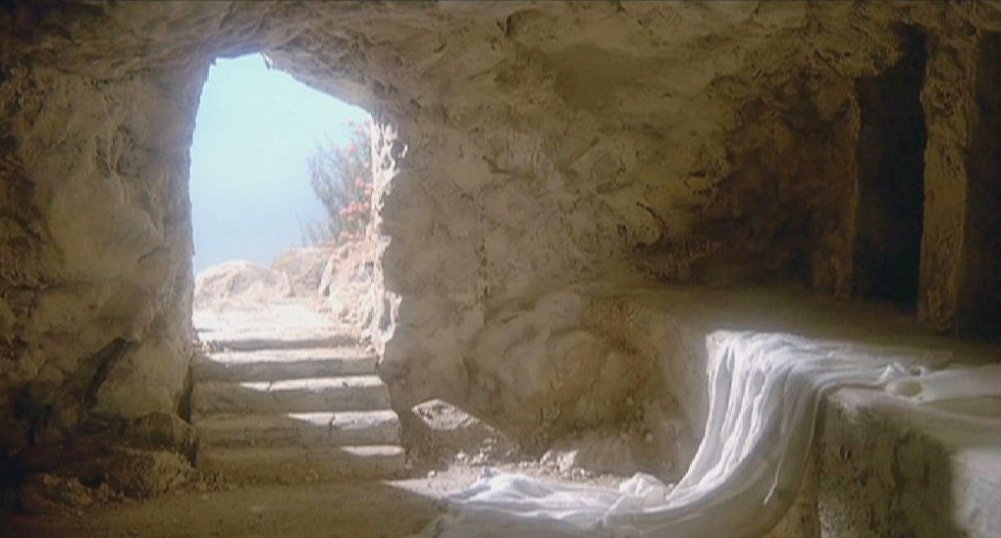
When the women came to the tomb they did not find Jesus, but a radiant messenger. He told them, “Do not be afraid! I know that you are seeking Jesus the crucified. He is not here.…” The tomb was empty, Jesus was not there.

Jesus was present at the beginning of creation, for through Him all things were made. Going forth from the Father’s mouth, He was at hand on earth throughout the ages, achieving His purposes.

He was mystically with Noah, who saved his family from death by building a ship, just as Jesus built the Church to save us.

He was mystically with Isaac, who, though bound and led to sacrifice, was not to be lost forever.

He was mystically with Moses, who freed God’s people from Pharaoh’s demonic slavery by leading them through miraculous waters.

He was mystically with all the prophets, in proclaiming a law to be written on hearts instead of stones, in promising the gift of a Holy Spirit from Heaven, in suffering at the hands of those who refused to hear wisdom.

He has been in His saints, from the least to the greatest, throughout the centuries to this very night. He is present here in all of us who are ‘living for God in Christ Jesus.’

By the all foreshadowings that proceeded His coming, and by the fruitful witness of all His saints ever since, we can confirm the angel’s words, “he has been raised just as he said.”

Jesus is not there in the empty tomb. He is here,  tonight, with us.

Evil: Unholy Holes — Tuesday, 5th Week of Ordinary Time—Year I

February 8, 2011

“God looked at everything he had made, and he found it very good.” Everything that God has made, everything that has being, contains God’s goodness. What then is this thing called evil?

Think of a hole in the ground. What is the hole made of? Nothing really. If not for the good earth surrounding it you would not even know that a hole was there. Evil is like that hole, it’s an absence, a deprivation, a negation of something good. Evil can only be present within something good, as a corruption. Even though evil is essentially nothingness, that doesn’t mean that it can’t still hurt you, like falling into a deep, gaping hole.

Let no one think that evil is necessary for there to be good. No one should think of evil as the Ying to God’s Yang. God created a universe which was entirely good. It has been the free choices of the demons and of us to rebel in sin which have brought evils upon us.

Because of the goodness that remains in them, God shall love and preserve the Devil, the demons, and the damned forever. They shall not be destroyed, but they shall no longer do harm. They shall be as the wounds in Jesus’ hands, feet and side, which are as they are due to evil, but which cause no more pain, only glory.

Attacks Within — Tuesday, 1st Week of Ordinary Time—Year I

January 18, 2011

In the beginning, when God created the heavens and the earth, He also created purely spiritual beings called angels to serve Him and share His friendship. Unfortunately, some of these spirits decided that they would not serve, and rejected His friendship. We call these rebels demons, and with intense hate they wage spiritual war against us on the battlefields of our hearts and minds.

Demons are pleased when we hold either of these two extreme attitudes towards them: either in denying their very existence, so that we will be completely unaware of their activity in the world, or in fixating upon them, so that we are paralyzed with false fears of their power. Demons are powerful (by nature we human being are “lower than the angels”) but we should not be terrorized. First, Jesus is greater than them all. Made “for a little while lower than the angels” the Father has crowned Jesus “with glory and honor, subjecting all things under his feet.” Second, as a baptized Christian, you belong to Christ, you are claimed by Him, and that gives you special protection. Demons cannot possess you like the man in the Gospels unless you invite them in. (This is why Ouija Boards, Tarot cards, seances, magic and other things occult are so dangerous.) Demons cannot control us, overriding our freewill, but they can influence our thoughts and feelings.

When I interact with you, I can influence your thoughts and feelings by what I say and how I act. If I mention elephants, you’ll think of elephants. If I smile and compliment you, you’ll feel good, and if I insult you, you’ll feel bad. But however I interact with you, you can see and hear me doing it right in front of you. The work of spirits, on the other hand, is more subtle since they operate invisibly, speaking in our thoughts and influencing our hearts. God’s good angels direct us toward what is good, but demons would lead us toward sin and harm. To be forewarned and aware of the demons’ tactics is to be forearmed and prepared to resist them.

One typical demonic tactic is to first entice and then condemn. Suppose you gave up cookies for Lent and you notice the cookie jar sitting on the counter. A demon might entice you by speaking thoughts to you like this: “… a cookie would be great right now …this sucks …I’ve been good all Lent… I’ve earned it.” Then, once you give in and have the cookie, the enemy shifts to words of condemnation: “…couldn’t even give up one cookie for God.” Whenever you fall into sin, the demons don’t want you to get back up with Christ, they want to kick you when you’re down and keep you there. Sometimes our heavenly friends will correct and challenge us, but whenever they do, they always do it in a way that makes us stronger to do what’s right.

Another demonic tactic is Always/Never, or All or Nothing Thinking. If you find yourself thinking that you’re “always” this, or “never” that, you’re probably being fed a lie; either an untruth welling-up out of your own human brokenness, or a lie coming from an external attack. If you find yourself thinking that you ‘always mess things up,’ or that you ‘don’t have any friends,’ or that you ‘never really sin,’ you’re facing a falsehood. The truth is that only in rare cases are you “always” or “never” anything. The truth is probably somewhere in the middle.

Another tip: don’t dialogue with temptations. Whether the temptation springs from an external enemy or merely from our own desirous passions, both demons and we ourselves are cleaver enough to persuade us into sinning, if granted enough time for convincing.

So what can we do to defend against such attacks? We should pray every day and stay close to Jesus Christ through frequent reception of confession and the Eucharist. We should use holy water and holy images to sanctify the places where we dwell. We should call on our heavenly friends; Mary, St. Michael the Archangel, leader of God’s angelic armies, and all the saints. We should also remember that we are always accompanied by a Guardian Angel who God-given mission is to light, to guard, to rule, and to guide us.

Demons want us to either fixate on them or to deny that they even exist. Instead, let’s be forewarned in faith and confident in Christ about the invisible spiritual warfare fought on the battlefields of our hearts and minds.

Seen and Unseen — December 28 — St. John the Evangelist

December 27, 2010

Today’s Gospel says that when John the Apostle went into the tomb on Easter morning “he saw and believed.” What did he see that led him to believe? Was it how the burial cloth which had wrapped Jesus’ body wasn’t taken away or tossed in a mess on the floor,  but left behind (perhaps deflated) in its place? Or was the cloth which had covered the Lord’s head rolled up in a familiar way, such that John recognized Jesus’ hand behind it. Or perhaps, if the Shroud of Turin is truly the burial shroud of Christ, John believed through beholding its testimony to the resurrection.

On the other hand, maybe it wasn’t something John saw that led him to believe, but something he didn’t see. Perhaps it was from the fact that Jesus wasn’t there that he infered the truth. “Dead bodies don’t just disappear for no reason at all. I didn’t do this. None of us did this. And what motive would our enemies have to take Him? This is the work of God.”

Just as John may have inferred the resurrection of Jesus from the empty tomb, so we can infer the truth of God from the presence of the universe: “Things don’t just appear for no reason at all. I didn’t make this. None of us made this. And how could an enemy have to create beauty, life, and love? This is the work of God.”

Tradition says that after Jesus entrusted the care of His mother into the care of John the Apostle, they went to live in what is modern-day Turkey.  What if we had gone to visit them in their home at Ephesus and asked them how someone can believe in the God of the universe, or the Lord Jesus Christ, when their reality can sometimes seem so distant.

I can imagine Mary or John replying, “Beloved, the One who was from the beginning, whom we have heard, whom we have seen with our eyes, whom we looked upon and touched with our hands, the Word of God, the Word of Life, the Lord Jesus Christ——we have seen Him, and testify to Him, and proclaim to you His eternal life.” The Christian faith is firmly founded, upon the unseen things we can infer and the things which we  have seen.