Archive for the ‘Nativity’ Category

A Manger Sign

December 25, 2025

Christmas Day
Fr. Victor Feltes

The shepherds were in the countryside keeping night watch over their flocks when an angel of the Lord appeared to them and the glory of the Lord shone around them. The angel proclaimed “good news of great joy”: a baby born that day in Bethlehem, a Savior who is Christ and Lord. And the angel gave the shepherds a confirming sign: “You will find an infant wrapped in swaddling clothes and lying in a manger.” Seeing a newborn baby swaddled (that is, snugly wrapped up in cloth) would not have been an unusual sight back then. As the Old Testament author of the book called The Wisdom of Solomon writes: “In swaddling clothes and with constant care I was nurtured. For no king has any different origin or birth; one is the entry into life for all…” A much stranger sight for the shepherds on Christmas would be to see a baby in a manger.

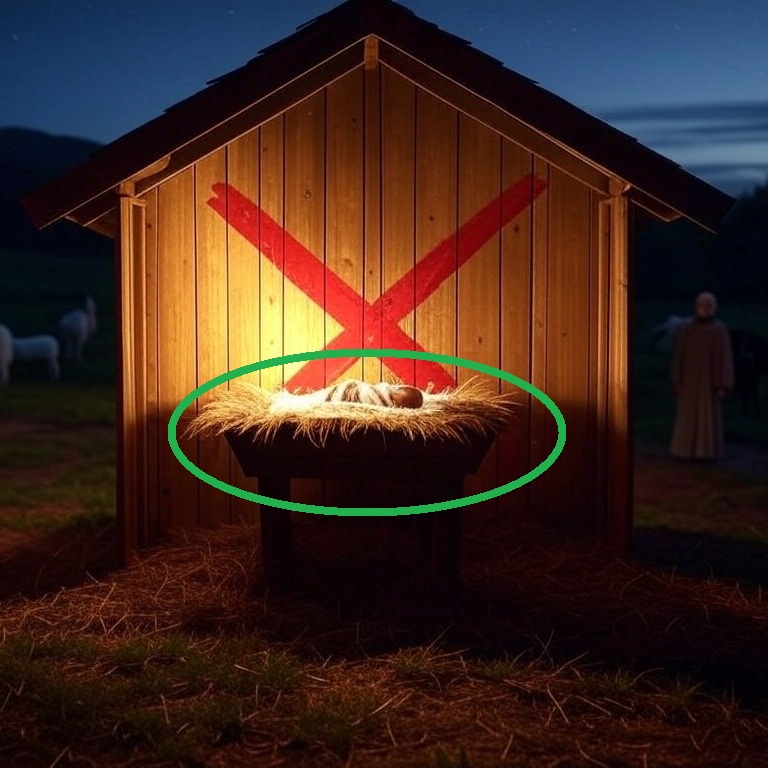
Now when I was a kid, I thought the manger in any “manger scene” was the Holy Family’s barn or shelter, but that’s mistaken. A manger is not a building but a feedbox for dry feeds, like grain, for animals to eat. On Christmas, one such manger served as a makeshift cradle. Once the herald angels had departed, the shepherds excitedly said to each other: “Let us go, then, to Bethlehem to see this thing that has taken place!” They went in haste into Bethlehem and found the Holy Family, with the newborn King lying in the manger.

The angel had told the shepherds “this will be a sign for you.” Seeing the child in the manger confirmed that they had found the Christ, but this Savior in the manger is a sign for us in another sense. The name of the city of Christ’s birth, Bethlehem, means “House of Bread” in Hebrew. Finding our Lord inside a box for eating grain within the House of Bread is a sign for us foreshadowing the Holy Eucharist. Jesus would go on to teach us, “I am the living bread that came down from heaven; whoever eats this bread will live forever; and the bread that I will give is my flesh for the life of the world.”

God’s Son became man for a closer unity with humanity; “the Word became flesh and dwelt among us.” The shepherds in the countryside and the Magi in a distant land were called to draw nearer to Christ at his dwelling place in Bethlehem. But Jesus offers and calls us to an even closer union with him, within this church, his dwelling place. Jesus declares, “Amen, amen, I say to you, unless you eat the flesh of the Son of Man and drink his blood, you do not have life within you. … Whoever eats my flesh and drinks my blood remains in me and I in him. Just as the living Father sent me and I have life because of the Father, so also the one who feeds on me will have life because of me.” When Jesus teaches us to pray for daily bread he wants us to eat more than only once or twice a year. As normal food sustains our natural lives, so we need “the Bread from heaven” to sustain our spiritual lives, to remain in Christ and he in us.

Behold, as a messenger of the Lord, I proclaim to you good news of great joy: Jesus Christ, who is Savior and Lord, has come down from heaven. Born long ago in Bethlehem, he remains really present for us here today. Please allow the miracle of Christmas to produce enduring fruit in you. Return here to Christ’s dwelling place each Sunday and holy day, to adore him and receive him in his Holy Eucharist. Through his Incarnation, Jesus chose to become one of us; but through his Holy Eucharist, he wishes to remain one with you.


Born to Die & Rise — Funeral Homily for Matthew “Matt” Jaworski, 63

December 23, 2025

By Fr. Victor Feltes

In one sense, no date on the calendar is a good time for a funeral. Any day for a loved one’s funeral rites will feel off, discordant. But today, on this eve of Christmas Eve, it feels like an especially strange time to have Matt’s funeral. We will soon be marking the glorious birth of Baby Jesus — how God becomes man and lives among us. We rightly celebrate that as one of the most joyous feasts of the year. But the life and joy of Christmas seems to be stark contrast with the loss and sadness of today. And yet it may be said that Jesus Christ “was born to die.” If Jesus Christ, the God-Man, had lived without ever becoming our redeeming sacrifice, we would still remain hostages to Satan, sin, death, and suffering forever. Instead, God the Father “did not spare his own Son but handed him over for us all.

The signs of Christ’s salvific mission were there from the beginning. The very name “Jesus” (or “Yeshua”) means “God Saves.” He was born in the hometown of David the shepherd-king, at Bethlehem, from where lambs to be sacrificed at the temple came. Jesus would go on to be sacrificed as our Good Shepherd-King, at Jerusalem, as the Lamb of God who takes away the sins of the world. On Christmas night, his Mother Mary wrapped his body in cloth and laid him down inside a borrowed cave. Years later on Good Friday, she would wrap his body in cloth again and lay his body down inside another borrowed cave. Jesus’ Christmas birth and Easter resurrection, these sources for our hope, did not come without difficult trials.

The first Christmas was not easy but the Holy Family was always in God’s care. Imagine being poor, being far from home, and having your first child in a place for animals. Yet Mary and Joseph carried faith and peace within them, from the words and miracles from heaven recorded in salvation history and experienced in their own lives. Jesus Christ’s young and unexpected death stunned those who knew and loved him; however, even that awful day was foreseen in heaven’s providence. God’s Beloved One was remembered and soon would rise again. Blessed were those who mourned for him and prayed for him, for they were soon comforted. Matt’s unexpected passing saddens and a day like this is always painful. But we carry faith and hope from God, for Matt—for whom we pray—and for every one of us. Though God’s beloved one must pass through Good Friday, Christmas leads us to Easter joy.

3 Things I Didn’t Know About Christmas

December 24, 2024

Christmas Eve
By Fr. Victor Feltes

O holy night! Christmas has come! Jesus Christ is born! Tonight we celebrate and hear the story again of his world-changing birth. And though it is a familiar story, we all still have things to learn from it. For example, do you know what swaddling clothes are? “Mary wrapped her Son in swaddling clothes and laid him in a manger.

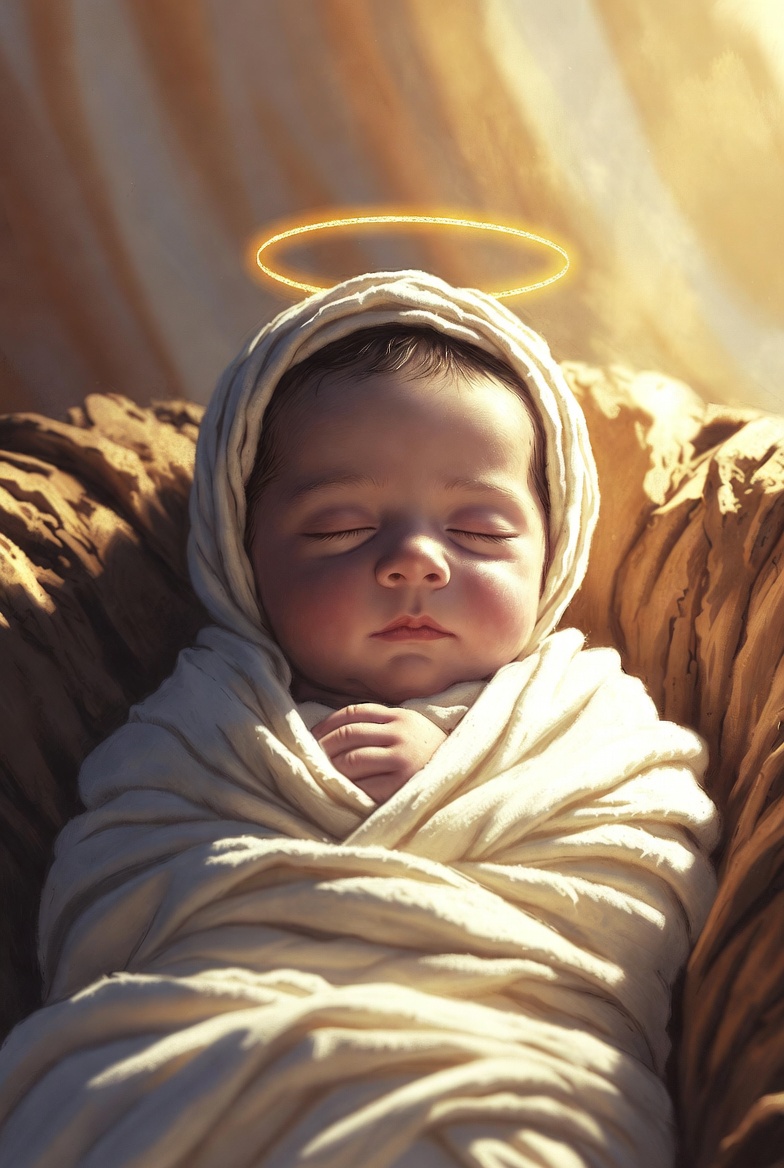
When I was younger, I didn’t know what swaddling clothes were. Maybe because “swaddle” sounded like “squalid” and I had seen the inside of messy barns, I imagined they were dirty pajamas. It’s actually an ancient and modern practice to use cloth to wrap up infants’ arms and legs tightly to their bodies. This is called “swaddling,” and babies enjoy it — it reminds them of the warm close comfort of the womb.

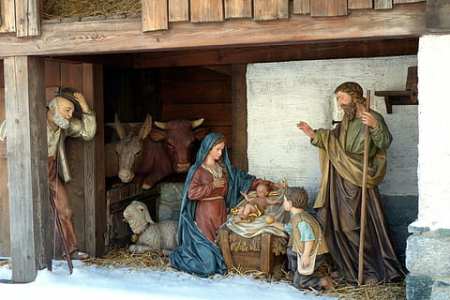
Another thing I didn’t know when I was younger was what a manger is. I assumed the manger was the stable because whenever someone would point out a “manger scene” what I always noticed was the big wooden barn. The shelter in Bethlehem where Jesus was born was actually more like a cave. But regardless, a manger is not a barn; it’s an animal feeding trough that holds dry feeds, like grain. So Mary wrapped up Jesus in swaddling clothes and laid him in a feed box.

These are interesting details, but why does St. Luke mention them? The details do reflect the humility of our Savior and King. Our Lord could have arranged providence instead to have himself born inside a palace with wealth, but he chose to enter into our human poverty and discomfort. But there is another reason why St. Luke notes these things: they foreshadow what would come later.

One day, decades after Christmas, assisted by another Joseph, the Blessed Mother Mary would wrap her Son’s body with cloths and lay him down inside another borrowed cave. And it is fitting that on Christmas night Jesus’ body was placed inside of a feedbox for grain, for he would go on to offer his full self as food for us, as Bread for the life of the world. It’s all connected and the beginning contains the end. Christmas leads to Holy Week, and Holy Week gives us the Faith, the Church, the Holy Eucharist.

A third and final thing I misunderstood when I was younger was when the Magi (or “Wisemen”) really arrived in Bethlehem. Having followed ‘the Christmas Star,’ I assumed they showed up on Christmas night. The Magi actually came later, sometime between forty days and perhaps two years after Christmas. We know this because Joseph and Mary did not yet have the Magi’s gift of gold to buy a sacrificial lamb for the Presentation at the Temple. And King Herod, in his attempt to kill Baby Jesus in Bethlehem, ordered the death of all the baby boys “two-years-old and under.The Magi responded to Christ’s birth and came after Christmas. They entered the house of the Holy Family and they came with gifts.

It is good that we are gathered for this holy night. Jesus has called you here to be with him and to be with us. But like the Magi, we all are also called to respond to his birth by coming after Christmas. This is the house of his Holy Family, and we must honor and adore him, bearing for him the gift of ourselves. Jesus’ wish this Christmas is for you, and each of us need him. Christmas, Easter, the Holy Mass; the Faith, the Church, the Eucharist; the past, the present, eternity; they’re all connected here, in Jesus Christ. Behold, I proclaim to you good news of great joy! A Savior has been born for you who is Christ and Lord. So come, let us adore him!

From Creation to this Cradle

December 24, 2023

Christmas, the Nativity of the Lord
By Fr. Victor Feltes

Before all time’s beginning,
before creation’s making,
was our Lord, who is living.

Omnipotent, all-knowing,
unlimited, all-loving,
the self-existent Being.

This eternal deity
was not solely unity,
but divine community.

Father and Son, self-giving,
Spirit from both, proceeding,
Trinity, ever-living.

Though God could not be more great,
goodness loves to propagate,
so he opted to create.

The Lord said, “Let there be light,”
earth” and “sky” and “day” and “night,”
man” and “woman” in his sight
and in each did he delight.

Blessing us was his concern,
gifting gifts we did not earn,
minds to know and hearts to yearn
so we’d love him in return.

Like all things, he made us good,
yet, as God, he understood
human beings sadly would
freely choose to sin;
distaining the divine,
disturbing our domain.

Dissolution, desolation.
Division and dismay.
Despair and death.

Behold how in our world and lives,
sins stab and slice and scar like knives.
But our Lord lowers his lifeline,
a long thread throughout our timeline.

After the Flood and Babel’s tower,
God’s plan was launched with Abraham.
Summoned by the Higher-Power,
he journeyed to the Holy Land.

God vowed to him to give that earth,
to bless all peoples through his name,
and cause his barren wife to birth
a boy who would extend his fame.

Isaac was that wondrous son,
received back as from the dead.
His sacrifice was left undone;
as God supplied a ram instead.

(Note in Abraham’s descendants,
the Messianic lineage,
persons presenting precedents
repeated on the Gospel page.)

Next, from Isaac, Jacob came,
and suffered much from sinful deeds.
To “Israel” God changed his name,
and through twelve sons a kingdom seeds.

This tribe then west to Egypt fled
and grew up becoming many,
until from slavery God led
to “the land of milk and honey.”

For this nation, God appointed
from Bethlehem to kingly throne,
shepherd David, God’s anointed,
one with a heart after his own.

He was betrayed, mistreated,
but overcame each enemy.
God pledged there’d always be seated
a true son of his dynasty.

King Solomon, the peaceful one,
built with wisdom beyond compare
God’s temple in Jerusalem
for everyone from everywhere.

Isaiah’s prophesies foretold
and his consoling words record
how every nation would behold
salvation from our bridegroom Lord.

Then Babylon’s empire came
and took the Jews captive by sword.
But God removed his people’s shame
when to their homeland he restored.

These ups and downs had set the stage
for one night prepped thousands of years.
Between the old and current age,
the Son of God on earth appears.

It’s simple for our little ones,
the way in which our Savior comes.

A stable full of yellow hay?
Kids see a perfect place to stay.

Tiny Jesus is in his box,
asleep beside the sheep and ox.

His mom and dad on Christmas day,
as still as statues, kneel and pray.

That manger scene lit by a star
draws friends to Christ from near and far.

Our children lack experience
but maintain pure, sweet innocence.

They see with awe and gentle joy
our God become a baby boy.

Now that you and I are older,
we recognize complexity;
what Christ’s parents had to shoulder,
the burdens of humanity.

Joseph and Mary were displeased
when turned away from that hotel
and then unpleasant odors breathed
while giving birth where livestock dwell.

Stress-filled was that nativity,
mixed with their joys, feelings of dread,
as they combatted poverty
and unseen forces wished them dead.

The way of Christianity
is not promised to be easy,
but life with Christ, our deity,
has mercy, grace, and great beauty.

Our little ones are right in this,
though much in our world is amiss,
it’s right and wise to reminisce
on Christmas Day and feel great bliss.

Now to conclude, let us review:
God’s great goodness is real and true,
an ancient love that’s ever new
and through Christ’s birth comes into view.

So come to Mass — yes, please do!
His family’s less when lacking you.

The Angels & The Shepherds

December 6, 2023

By Fr. Chinnappan Pelavendran

(Luke 2:8) Now there were in the same country shepherds living out in the fields, keeping watch over their flock by night. These shepherds were watching Passover lambs, which would be sacrificed later that year. So it is appropriate that they are about to go look at another Passover Lamb who will also be sacrificed later in His life.

(Luke 2:9) And behold, an angel of the Lord stood before them, the glory of the Lord shone around them, and they were greatly afraid. (Luke 2:10-12) Then the angel said to them, “Do not be afraid, for behold, I bring you good tidings of great joy which will be to all people. For there is born to you this day in the city of David a Savior, who is Christ the Lord. And this will be the sign to you: You will find a Babe wrapped in swaddling clothes, lying in a manger.

The angel tells the shepherds about the birth of Christ, that He will be the Savior of the world. “Glory to God in the highest, and on earth peace, goodwill toward men!” The angels proclaim Christ will bring peace. Peace does not come through money and power of the Emperor, but through humility and service. Moreover, the all-important peace with God comes only to those who believe in Jesus for eternal life. Only through Christ can you have true and lasting peace. That is the message the angels proclaim. You see, in Isaiah 48:22, God says that there is no peace for the wicked. We live in a wicked, sinful world. Those who live in wickedness and sin will never have peace. If, however, you are one of those who have come to know Jesus Christ as your Savior by believing in Him alone for eternal life, then you can know this peace the angels proclaim. Romans 5:1 states, “Therefore, being justified by faith, we have peace with God through our Lord Jesus Christ.”

Peace is available to you today if you are a person of God’s will. What is God’s will? To believe in Jesus Christ for eternal life. In John chapter 6, some people come to Jesus and ask him, “What must we do to do the works of God? What is His will?” Moreover, Jesus said, “This is the will of my Father, that you believe on Him whom the Father has sent.” (John 6:28-29) That is it. Believe in Jesus for eternal life. Do you want to have the peace the angels proclaim here? You need to be a man or a woman of God’s will; you need to do God’s will, which is to believe in Jesus for eternal life. However, if you reject Him, you also reject peace. There can be no peace in this world without Him.

(Luke 2:15-16) So it was when the angels had gone away from them into heaven that the shepherds said to one another, “Let us now go to Bethlehem and see this thing that has come to pass, which the Lord has made known to us.” And they came with haste and found Mary and Joseph, and the Babe lying in a manger.

It says they came with haste. This was the first Christmas rush, but certainly different from the Christmas rush we are familiar with. They were rushing to see Jesus. I wish we all were more like these shepherds. They heard the Word of God spoken here by angels, and they immediately acted upon it. They did not wait around until it was morning. They did not ask for better directions. They received by faith the message God sent to them and then responded with immediate obedience. I am sure they knew where all the stables were, so they just checked around until they found the one Mary, Joseph and Jesus were in.

We should also note that the angels did not appear to kings. They did not appear to the mayor of Bethlehem. They did not appear to the religious leaders in Bethlehem. They appeared to be shepherds. Just humble shepherds out in the field. Shepherds were outcasts in Israel. Mary’s song pointed out back in Luke 1:51-53 that this would be a pattern in the life of Christ, and it has already begun here. (1 Cor. 1:26-29) It seems that the poor and the people who are nobodies are often the ones whom God gives special attention to.

(Luke 2:17) Now when they had seen Him, they made widely known the saying which was told them concerning this Child. The shepherds became the first Christian evangelists. The first witnesses to spread the good news of the Messiah. When they saw Jesus Christ, they could not help but keep silent about Him. They told everyone they met. Again, they are a lesson for us. Not only did they obey God’s Word immediately, but they also went beyond that and told others about Jesus. Once you have seen Jesus, it is a privilege, it is an honor, it is a necessity to tell others about Him. Once you have seen Jesus, you can’t keep from talking about Him even if you tried. The shepherds were so excited about what they had seen and heard, they just had to tell everybody.

(Luke 2:18) And all those who heard it marveled at those things which were told them by the shepherds. This is a key idea after all that we have seen today. Things did not go as planned for Mary and Joseph. They had experienced more trouble than they should have. And rather than complain, rather than criticize, they quietly accepted what God was doing. Joseph could have blown his own horn and demanded he get what he deserved as a descendant of King David. But he didn’t. Mary could have gone around bragging that she was carrying the promised Messiah and as a result, she could have demanded that she be given the best room in the inn – for free, and the innkeeper should kick out whoever was there. But she didn’t.

Mary and Joseph chose to humbly accept the trials and troubles that God sent their way, and as a result, God lifted them up. He raised them up. He sent angels to blow the trumpet for them, and shepherds to pass the word for them about who they were, and what kind of child they had been blessed with. Mary and Joseph chose not to blow their own horn. Instead, they let God do it for them. When credit comes to you for the ministry and talents and abilities you have, let it be God and others who bring it rather than yourself.

(Luke 2:19-20) But Mary kept all these things and pondered them in her heart. Then the shepherds returned, glorifying and praising God for all the things that they had heard and seen, as it was told them. Mary was not the one to go around and tell people about how great she was, and how much God had blessed her. Instead, she just kept all these things and pondered them in her heart. God used the shepherds to tell the world about Mary and her newborn baby. Instead, like Mary and Joseph, quietly and humbly accept whatever position and privilege God has placed you in, and as you prove yourself faithful with a little, He will give you more. Don’t blow your own horn. Let God blow it for you in his perfect timing.

All of us need to learn from Mary and Joseph that our sufferings, our troubles, and our trials in life are tools in the hand of God to mold us shape us, and make us into something beyond our imagination. When trials and troubles come into your life, God is making you into something great. In whatever trials you are facing, ask God these kinds of questions: Say, “Father, what are you trying to teach me in this situation? How can this trial make me more like Jesus Christ?” God wants to change your troubles into trumpets if you will only let him perform His work in you.

God brought the first message of the birth of Jesus to ordinary people rather than to princes and kings. God spoke through His holy angel to the shepherds who were keeping sheep in the fields. This was a lowly occupation, so shepherds were not well educated. But Mary tells us the true story: “He has put down the mighty from their thrones; and exalted the lowly. He has filled the hungry with good things, and the rich He has sent away, empty.” (Luke 1:52–53)

What was the message of the angel to the shepherds? First, he told them not to be afraid. Repeatedly, the presence of angels was frightening to those to whom they came. However, unless they came in judgment, the angels spoke a word of reassurance. They calmed the people to whom they came.

Behold, I bring you good tidings of great joy which will be to all people. For there is born to you this day in the city of David a Savior, who is Christ the Lord.” (Luke 2:10-11) The good tidings were that the Savior had come. The people needed somebody who could bring them back into fellowship with God because the blood sacrifices could not do this in any permanent way. The Lord had visited His people with salvation.

Another lesson we can learn from the shepherds at Jesus’ birth is that ordinary people can tell others about the Savior. Once the shepherds made it to Bethlehem and saw the Savior, “they spread the word concerning what had been told them this child. And all who heard it were amazed at what the shepherds said to them.” In their joy and praise, they could not refrain from telling others about their experience.

These ordinary shepherds, who were outcasts among their people, were the first to hear of Jesus’ birth and to spread that news. They did not wait until they had extensive theological training to tell others. Instead, they went out and told people about their experience of hearing the message of the angel and seeing the Savior. We can do the same.

Many of us will think that we need more effective in sharing the gospel once we have read a book or the Holy bible or taken a course on the bible. Books and courses are helpful resources, but all believers can tell others about how Jesus saved them. We do not have to wait until we feel qualified enough, because we can all testify about Christ’s saving work in our lives.

If the shepherds, who were outcasts in society, could spread the good news about Jesus’ birth, then we can certainly tell others about how Jesus saved us. The shepherds also remind us of the need to listen to the Lord and obey Him, that ordinary people can spread the good news of Jesus, and that worship should be our response to Jesus’ saving work.

The Magi & King Herod

December 6, 2023

By Fr. Victor Feltes

When Jesus was born in Bethlehem of Judea, in the days of King Herod, behold, Magi from the east arrived in Jerusalem, saying, “Where is the newborn king of the Jews? We saw his star at its rising and have come to do him homage.”

This is how the second chapter of St. Matthew’s Gospel introduces us to the noble Magi and the infamous King Herod. Their good and bad examples in the story of Christmas present much for us to learn from and reflect on.

The gospel tells us the Magi were astrologers from the East who saw a celestial sign which firmly convinced them the heir to the Jewish throne was born. The Magi were so convinced by this sign that they packed up valuable gifts and traveled far from their home to honor this newborn king. What are magi? “Magus” is the title which ancient civilizations east of Israel, such as the Persians and the Babylonians (or Chaldeans), bestowed upon their individual men of wisdom. These experts, their various teachers, priests, physicians, astrologers, soothsayers, Magicians, or interpreters of dreams, were collectively called magi.

How did the Magi who journeyed to Herod know how to recognize Heaven’s sign? In the 6th century before Christ., King Nebuchadnezzar of Babylon came and laid siege to Jerusalem. In response to his people’s unfaithfulness, God permitted them to be conquered and many Jews were taken east into Babylonian Captivity. The Babylonians reasoned that conquered peoples were more productive alive than dead and less likely to stage a successful rebellion when resettled outside of their homeland. Thus the Jews’ relocation deeper into the Babylonian Empire.

At that time, King Nebuchadnezzar told his chief chamberlain to bring in some of the Israelites of the royal line and of the nobility. He said, “They should be young men without any defect, handsome, proficient in wisdom, well informed, and insightful, such as could take their place in the king’s palace.” He was to teach them the language and literature of the Chaldeans. Among these chosen young men was the Prophet Daniel, who would go on to give prophesies about the coming of Christ recorded in the Old Testament book which bears his name.

Impressed by Daniel’s wisdom, Babylonian King Nebuchadnezzar “advanced Daniel to a high post… made him ruler of the whole province of Babylon and chief prefect over all the wise men of Babylon.” Perhaps Daniel’s prophetic wisdom, handed down for centuries, enabled these wise Magi from the East to recognize the significance of the starry sign and inspired them to journey to Jerusalem. The Bible does not record the Magi’s names, but a tradition hands down their names to us as Caspar, Melchior, and Balthasar.

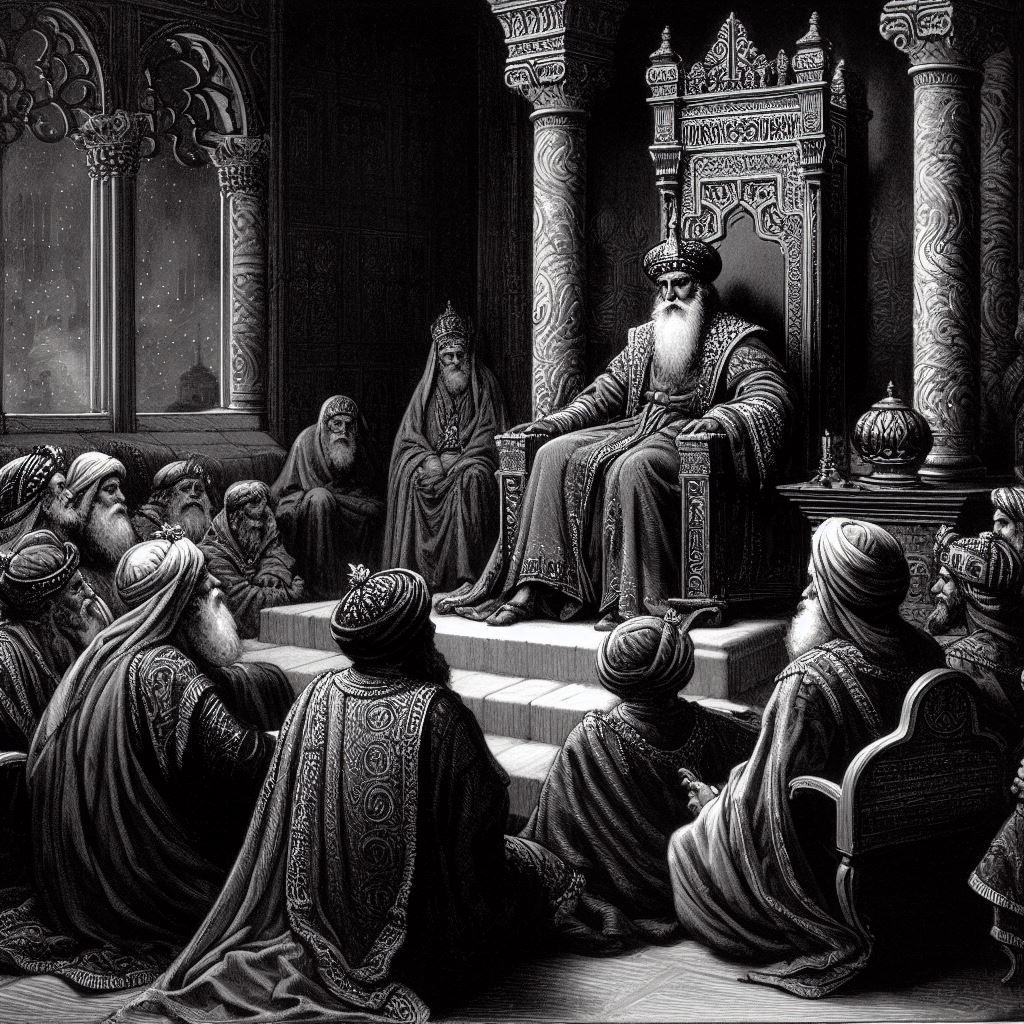
Behold, Magi from the east arrived in Jerusalem, saying, “Where is the newborn king of the Jews? We saw his star at its rising and have come to do him homage.” When King Herod heard this, he was greatly troubled, and all Jerusalem with him.

More than thirty years prior to the arrival of the Magi, the pagan Roman Senate had appointed Herod as the region’s king. He is known as “Herod the Great” because of his vast territories and many building projects, including new cities, massive fortresses, and a complete renovation of the Jewish temple in Jerusalem. Herod heightened the architectural beauty of the temple to such greatness like it had in the days of King Solomon. However, Herod was not greatly loved.

He imposed extremely harsh taxes for the ancient world and ruled ruthlessly, executing many of his political opponents and family relatives, including three of his sons and at least one of his ten wives. No one ever mistook him for being the Messiah; besides being more of a pagan king than a Jewish one, Herod was not a descendant of Kind David like Scripture said the Christ would be. So when foreign Magi came to Jerusalem seeking the Messiah, word got around and King Herod became greatly troubled and all Jerusalem with him.

Why were the whole of Jerusalem troubled (that is, “stirred or agitated as in roiling water”) along with King Herod by this news of Christ’s possible coming? Because they knew Herod better than the foreign Magi did. The Magi had swooped in as innocent doves, but Herod was a cunning serpent. The Jews of Jerusalem realized King Herod was not eager to freely hand over power. Even if the Messiah had indeed been born, violence or a civil war would likely follow.

Assembling all the chief priests and the scribes of the people, [King Herod] inquired of them where the Messiah was to be born. They said to him, “In Bethlehem of Judea, for thus it has been written through the prophet: ‘And you, Bethlehem, land of Judah, are by no means least among the rulers of Judah; since from you shall come a ruler, who is to shepherd my people Israel.’”

There is a Jewish joke that two rabbis together produces three opinions, but here all of the priests and scribes assembled by King Herod cite the Old Testament Prophet Micah to identify Bethlehem as the promised Messiah’s birthplace. Maybe Herod asked them subtly amongst many other questions, inquiring about the Messiah’s birth in such a way that they did not suspect his motives. But if they grasped what Herod was after and why, then this was the first time Jewish religious leaders betrayed the Christ. Perhaps they reasoned that if God’s Anointed One had indeed been born in Bethlehem, then God would protect him, “For if the righteous one is the son of God, God will help him and deliver him from the hand of his foes.” God did protect the Infant Jesus, but Herod ended the precious lives of innocents in the little town of Bethlehem.

Our God will win in the end, all evil will ultimately be defeated, but we must not go along to get along in this world by cravenly cooperating with evil. Imagine if those religious leaders had refused to tell wicked Herod where the Messiah would be born; then they might now be celebrated throughout Heaven and earth as men who defended and died for Christ, instead of Bethlehem’s baby boys. We are all called to practice courage as Catholic Christians. Remember that it is better to innocently suffer or even die for Christ than to die as one of his enemies or betrayers.

I do not know whether the chief priests and scribes of the people knowingly betrayed the infant Christ, but there is no record in the Gospels of any of them going in search of the child. The Magi traveled hundreds of miles to find him, but it appears the priests and scribes never went the six miles from Jerusalem to Bethlehem in search of him. Beware of practicing your faith so feebly that you forego making the simplest sacrifices in service of Christ.

Then Herod called the Magi secretly and ascertained from them the time of the star’s appearance.

What was the star which the Magi saw? There are several interesting theories. It may have been one of the planets in a meaningful position, or perhaps a pair of planets combining their light. This is a possibility since the ancients deemed the other planets in our Solar System to be ‘wandering stars.’ Our word “planet” comes from the Greek word for “wanderer,” because the planets wander across the constellations. Some have suggested the Christmas star was a comet or a star’s supernova, but whatever the star was it was something too subtle for Herod to recall. In the ancient world, comets were regarded as foreboding omens and some supernovas have been notably bright to eye at night in recorded human history; however, the star which arose at Jesus’ birth was not of particular note to Herod and his royal counselors. This is why Herod must ascertain from the Magi the time of the star’s appearance.

As God once said, “As the heavens are higher than the earth, so are my ways higher than your ways and my thoughts than your thoughts.” This world and worldly people miss what is important, and what the world pays attention to are often fleeting things. So many things talked about today will be forgotten by next week, discarded like last week’s newspaper. Sports, movies, music, TV, social media, advertising, celebrities, politicians, and even much of the 24-hour news cycle will not show you what really matters. God tells us through St. Paul, “Do not conform yourselves to this age, but be transformed by the renewal of your mind, that you may discern what is the will of God, what is good and pleasing and perfect.” If you follow the nightly news you might naturally conclude that nothing good is happening anywhere, but remember that God is always quietly at work. I believe that many of the most important things which happened in the world today are good things, and things which the world will not notice, like the appearance of the star which announced our Savior’s birth, or a caravan of Magi beginning a journey west to meet God.

Herod called the Magi secretly and ascertained from them the time of the star’s appearance. He sent them to Bethlehem and said, “Go and search diligently for the child. When you have found him, bring me word, that I too may go and do him homage.”

Though their meeting was secret, Jesus says “nothing is concealed that will not be revealed, nor secret that will not be known.” Looking back, we can see that the Magi were sincere and faithful and sought to honor the Christ Child, while Herod was a cynical liar who sought to destroy him. No good or bad secret, of yours or mine or others’, will not be revealed in the end. St. Peter writes that “the day of the Lord will come like a thief… and the earth and everything done on it will be found out. Since everything is to be dissolved in this way, what sort of persons ought you to be? Conducting yourselves in holiness and devotion.” At the Presentation in the Temple, Simeon had told Mary that through her Son ‘the thoughts of many hearts would be revealed.’ That was true in the lives of King Herod and the Magi. In your personal response to Jesus Christ, your own heart is revealed, too.

After their audience with the king [the Magi] set out. And behold, the star that they had seen at its rising preceded them, until it came and stopped over the place where the child was. They were overjoyed at seeing the star, and on entering the house they saw the child with Mary his mother.

Notice that the Holy Family is no longer dwelling in a cave or a barn, but inside a house. This was not Christmas night but at least forty days later. We know this because when Joseph and Mary came to present Jesus at the temple, to offer a sacrifice God’s law required following the birth of a firstborn son, they could not afford a yearling lamb, so they offered “a pair of turtledoves or two young pigeons” instead, as the law of God permitted. And their humble gift pleased God. If the Magi had already visited them and provided their gift of gold, the Holy Family would have had the ability to purchase the more expensive lamb instead. The Magi arrived in Bethlehem between forty days and two years after Christmas. We know that upper bound from the cruel command which Herod issues later in hopes of destroying the Christ Child, targeting baby boys “two years old and under, in accordance with the time he had ascertained from the Magi.”

Upon entering the house the Magi unsurprisingly find the child with Mary his mother. She is the Lord’s new ark, his throne, the seat of Wisdom Incarnate. Sadly, some Christians consider her a harmful distraction from Jesus. However, the mother of the Christ is no hindrance to Jesus, for when you meet Mary she will joyfully show her Son to you.

[The Magi] prostrated themselves and did him homage. Then they opened their treasures and offered him gifts of gold, frankincense, and myrrh.

Unlike Herod, who grasps and clutches what he has, the Magi freely give gifts to Jesus. Three gifts of the Magi are mentioned by St. Matthew since they reveal who Jesus is; gold for a king, frankincense for a high priest and the true God, and myrrh resin used for external embalming, for one who has come to die. But the Magi’s best gift was the gift of themselves. What Christmas gift will you prepare for Jesus this Advent?

The Magi prostrated themselves, laying down on the floor with their faces towards the ground before Little Jesus in homage. Did they feel embarrassed to be bowing down to a baby, a child of poor parents in a humble house, far from the trappings of obvious power and glory? The Magi had deep faith in who Jesus was and faith in his future glory so they did not refuse to be seen paying him respect and honor. Do you feel embarrassed to be seen praying or honoring Jesus? Jesus says, “Everyone who acknowledges me before others I will acknowledge before my heavenly Father. But whoever denies me before others, I will deny before my heavenly Father.” Let us not be ashamed to acknowledge Jesus in others’ presence.

Having been warned in a dream not to return to Herod, [the Magi] departed for their country by another way.

These Magi took signs seriously. They previously followed such one sign hundreds of miles from home and it led them to the Christ Child. So they heed this message and bypass Herod on their trip back home. In that dream, the Magi might not have been warned that the Christ Child was in danger. Recall how Bethlehem is only six miles away from Jerusalem, just a two or three hour walk. If the Magi had sensed that Jesus was in danger, wouldn’t they have warned the Holy Family before they departed to caravan back east? Perhaps they did warn the Holy Family of possible danger, but Joseph and Mary simply did not know what to do next. But if this inspired dream told the Magi not to return to Herod without revealing the reason why, the Magi’s obedience provides a beautiful lesson for us.

Jesus and his Church teach us many precepts about what we must or must not do, what we should or should not do. There are good reasons behind these commands, and it is good to explore these teachings and ask questions to better understand them, but there will be times in your life when you are called to be faithfully obedient even before you fully understand. The Magi’s obedience served Jesus and likely saved the Magi’s lives. Your obedience to God will bless you, and more than you may realize.

[The Magi] departed for their country by another way.

They came to Jesus from one direction, but they departed for their country by another way. Servant of God Bishop Fulton Sheen makes a famous observation about this fact. He writes that it is fitting that the Magi left this way, since “no one who ever meets Christ with a good will returns the same way as he came.

When Herod realized that he had been deceived by the Magi, he became furious. He ordered the massacre of all the boys in Bethlehem and its vicinity two years old and under, in accordance with the time he had ascertained from the Magi.

Did Herod actually believe that the Christ Child has been born in Bethlehem? Probably not, but he was afraid that other people would believe it, rally around this child, and attempt to overthrow him. He reasoned that, ‘If all the baby boys in Bethlehem are dead, none of them can rise up against me as a rival.’

His calculation is like that of Pharaoh’s at the start of the Book of Exodus. Pharaoh said to his people in Egypt, “See! The Israelite people have multiplied and become more numerous than we are! Come, let us deal shrewdly with them to stop their increase; otherwise, in time of war they too may join our enemies to fight against us….” After enslaving the Hebrews, Pharaoh commanded all his people to “throw into the Nile every boy that is born, but you may let all the girls live.” Both Herod and Pharaoh aimed to prevent a future rebellion through the murder of baby boys. As ancient Machiavellians, they were willing to do great evils in hope of gaining good outcomes.

To the Romans, St. Paul records that ‘we are accused and some claim we say that we should do evil that good may come of it.’ Denying their false charge, he says, “Their penalty is what they deserve.” Remember that Christians are never allowed to do evil or sin in the hopes that good things will result. Good ends do not justify sinful means. Beware of how readily any evil deed can and will be justified with practical arguments.

When [the Magi] had departed, behold, the angel of the Lord appeared to Joseph in a dream and said, “Rise, take the child and his mother, flee to Egypt, and stay there until I tell you. Herod is going to search for the child to destroy him.” Joseph rose and took the child and his mother by night and departed for Egypt. He stayed there until the death of Herod, that what the Lord had said through the prophets might be fulfilled, “Out of Egypt I called my son.”

The Holy Family remained in Egypt until Herod’s death. Then Herod’s kingdom was divided among three of his sons: Archelaus who ruled Samaria and Judaea, Philip who ruled the Golan Heights, and Herod Antipas who ruled Galilee and the east bank of the Jordan River. This Herod Antipas is the Herod who would go on to murder St. John the Baptist and meet Jesus during the Passion, mocking him, dressing him in a splendid robe, and sending him back to Pilate. Fathers are important. I like to believe the sons of the Magi went on to find saving faith in Jesus Christ, then these sons would have born fruit following the example modeled by their fathers.

In conclusion, I invite you to take one or two of these ideas to contemplate and pray with. “Do not conform yourselves to this age, but be transformed by the renewal of your mind, that you may discern what is the will of God, what is good and pleasing and perfect.” What worldly things do you need to pay less attention to? What heavenly things do you need to pay more attention to? “The day of the Lord will come like a thief… and the earth and everything done on it will be found out.” So “what sort of persons ought you to be? Do not do evils in the hope that goods will follow. Do not justify your sins with rationalizations like Herod. Anyone searching for excuses can easily find them forever. Remember how simple obedience saved and blessed the Magi. We are called to be courageous and go extra miles for Christ. How can you better acknowledge him before others? In your personal response to Jesus, your heart will be revealed. Ask Mary’s help in this, for believers draw closer to her Son with her. What Christmas gift will you prepare for Jesus this Advent? Remember that the greatest gift to him is yourself. Embrace this Advent season with our Lord, for “no one who ever meets Christ with a good will returns the same way as he came.”
St. Elizabeth & The Innkeeper

December 5, 2023

By Fr. Chinnappan Pelavendran

Christmas is a time for joy, cheer, and festivities. It is a time when we gather around the Christmas tree to share our joy. For many of us, each year, around this time we pull out our Bible and read the classic story of the true meaning of Christmas. Luke 2:1–21 tells us the story of Jesus Christ being born unto this world to save us all from our sins. However, today we are going to meditate about the Elizabeth and the Innkeeper.

Among the gospels, only St. Luke recorded the real songs of Christmas, sung by Elizabeth, Mary, Zacharias, Simeon, the angel Gabriel, and the angelic host. Beginning with one older woman who understood something of the mystery of what was happening in her womb and the womb of her young relative from Galilee named Mary. After the angel Gabriel appeared to Mary, she traveled from Galilee to the hill country of Judah, to the home of Zacharias and Elizabeth. Gabriel had told her about Elizabeth’s miracle pregnancy (Luke 1:36). Now Mary needed human help, someone to talk to, and someone who would listen to her with understanding. Who was there better to do that than Elizabeth?

God’s timing is perfect. In the Gospel of St. Luke, we see the story of Elizabeth and Zechariah who were well advanced in years. They were a couple who loved the Lord and went about Kingdom work here on earth. We know them for their righteousness, and for being barren. “And they were both righteous before God, walking in all the commandments and ordinances of the Lord.” (Luke 1:6) Elizabeth and Zacharias were waiting. A priest has been chosen to serve in the holy of holies only once in his lifetime and Zacharias is advanced in years. Elizabeth dearly longed to be chosen to bear a child, but she was beyond childbearing when God called her to bear the prophet in her womb. With all this waiting, they remained faithful to God’s commandments and statutes, unwavering in faith.

Elizabeth fully saw the hand of God in her life and rejoiced over His plan for her. Elizabeth could have complained that God waited too long. She could have thought that it would be harder to raise a child. She could have even balked at the plans God had for her child’s life. However, she did not do any of those things. Rather she turned and offered her praise back to God. She rejoiced over the blessing she was given and gave glory to God.

This is the lesson we learn from Elizabeth. Even into our advanced age, God can bring life into the world through each one of us. God does not favor the young or the old. Mary was a young and, adolescent virgin, and Elizabeth was advanced in years. Through each woman, young and old, He brought life that contributed to His plan of redemption. Elizabeth testifies to all of us that faithfulness does not go unseen by our God, nor unrewarded. Though the wait may be long, God will fulfill His purpose for each of us. We can pray with the Psalmist, “The Lord will fulfill his purpose for me, your steadfast love, O Lord, endures forever. Do not forsake the work of your hands.” (Ps 138:8) Just as Elizabeth was in His sights, so are we.

Elizabeth was a woman of God, and we know that all her life she devoted herself to serving God. Despite not being able to bear children, she still held on to her faith in God. Elizabeth must have honored God with her life. As you walk close to the Lord he will do the same for you, your faith will move the mountains in your life. Both Zechariah and, Elizabeth show us that God can be trusted. God was merciful to her. Elizabeth believed and bore a son in her old age, which was a miraculous blessing from God. The message that Elizabeth taught, is to believe what God says He is going to do even if it seems impossible.

Mary, the Mother of Jesus, and Elizabeth, the Mother of John the Baptist, were both exceptional women who were chosen to play important roles in salvation history. Both were filled with the Holy Spirit which empowered them to the fulfill mission entrusted to them. We can only imagine the internal anxiety that Mary went through upon knowing that she would be pregnant without having a relationship with a man. There was of course the very harsh punishment that was awaiting her yet she trusted in God’s will and power. For Elizabeth, we can only imagine how she coped with barrenness and insults; moreover, it was not easy to bear a child in old age, and There were no medical experts to help. She, too, gave her full trust in the goodness and mercy of God.

The foundation of the Christian life is the gift of faith that we freely receive by asking Jesus into our hearts. Believers should look for the hand of God in every circumstance. Recognizing God’s supernatural intervention and purpose comes with spiritual maturity. The Bible says that believers who have yet to see God’s involvement in their lives but still believe will be rewarded for their patience and unquestioning faith. However, in reality, becoming a Christian is evidence of a divine revelation in every believer’s life.

What should we conclude from Elizabeth’s life of faith? First, God was merciful to her. Elizabeth believed and bore a son in her old age, which was a miraculous blessing from God. The message that Elizabeth taught, the lesson that God recorded in the Bible, is to believe what God says He is going to do even if it seems impossible. She also taught the message that if you do what God says to do and believe, you will be blessed by seeing the fulfillment of what was promised.

God chose a woman of faith and obedience to rear and teach an important prophet. It is by the Holy Spirit and by the Word of God, that one is to teach and to inspire others. As parents, all of us should have that same desire to teach and inspire our children in the ways of God. John the Baptist was indeed special, and there was none like him—the greatest of all the prophets—but there is a lesson here for all of us. Both Elizabeth and Zacharias taught their son about God and the role and mission God wanted him to fulfill. Are we doing that with our children? Do our children know the ways of God and do they know why they were born? This is the time we follow the example set by Elizabeth and Zacharias.

Luke 2:7 says she brought forth her firstborn Son and wrapped Him in swaddling clothes, and laid Him in a manger because there was no room for them in the inn. “No room in the inn” became prophetic words of the truth that “He came unto His own and His own received Him not.” (John 1:11) They experienced so many troubles here, that I am not sure I can list them all. First, they went out of the city of Nazareth, into Judea, to the city of David, which is called Bethlehem. They have to travel from Nazareth to Bethlehem; Now Mary is nine months pregnant. This is not the ideal time to go on a long journey. The journey went much slower than normal; they arrived in Bethlehem long after everybody else. Which means there was no place for them to stay. All the inns were full. The end of Luke 2:7 says, “there was no room for them in the inn.

Joseph has to leave his home, he has to close his shop, has to travel a long way, he feels bad he has to take his pregnant wife when they arrive in Bethlehem, he realizes all the inns are full, and he forgets to make reservations. He does not know what to do. He feels ashamed and depressed. He sometimes feels angry with Caesar Augustus for making him do this. Other times he feels angry with God for allowing this to happen. He knows that God still loves him and is somehow going to work things out for good because He is still in control.

God had His reasons and His purposes for having His Son born in a lonely and dirty stable. Moreover, the baby Jesus was born there. It appears from the verses that she did not have any help. No doctors. No midwives. Just Mary and the animals. It appears that Joseph was not even there. Maybe he was out looking for a midwife, or a better place to stay. There is a lot of loneliness in Jesus’ birth. It happened that way. According to Luke 2:7, “Mary wrapped the newborn baby in swaddling clothes and laid Him in a manger.” Again, a manger is not the best crib. It did not have any safety features. No soft mattress.

Is there room in my heart for Jesus? Some hearts never welcome Jesus, not because of hatred toward Him, but simply because their hearts are already overcrowded with thoughts of riches, honor, prestige, pleasure, business affairs, etc. No room. No time to reflect on His will, no desire to go out of their way to do what will please Him.

It would be Easy to Miss Jesus if the innkeeper had understood who Jesus was, and then he would have made different arrangements. He would have kicked out some of his other guests to make room for the savior of the world. We can make the same mistake as the innkeeper. We see Jesus all over the place during Christmas; on cards, on wrapping paper, in carols, and in nativity scenes. But do we understand who Jesus is? He is God in the flesh. He is the savior of the world. It is easy to miss Jesus because we do not expect God to arrive as a baby, born to a poor family in some part of the earth. Yet, this is what happened.

The innkeeper teaches us about the danger of judging people and events without having all the facts and letting our imaginations run wild. When we judge other people or assess events without knowing the truth, the results can be unfair, dangerous, damaging, and destructive. Suspect that we have treated the innkeeper unfairly.

God’s Amazing Encouragements for Joseph and Mary

January 8, 2023

Feast of the Epiphany
By Fr. Victor Feltes

Unlike how some imagine the event, the magi were not in Bethlehem on Christmas night or even the following day. (You will notice that our magi statues did not reach our Nativity scene until this Feast of the Epiphany.) On Christmas night, the Holy Family was visited by local shepherds. The shepherds had seen a vision of angels proclaiming the birth of Christ. St. Luke records that Joseph and Mary “were amazed by what had been told them by the shepherds. And Mary kept all these things, reflecting on them in her heart.”

At least forty days later, Joseph and Mary presented Baby Jesus in the Temple to offer a sacrifice for him. When they carried Jesus in, an aged prophet and prophetess named Simeon and Anna came forward to proclaim great things about the child. And again, St. Luke writes that Jesus’ “father and mother were amazed at what was said about him.” Under Old Testament Law, a firstborn son required the sacrifice of a lamb, but if his parents could not afford this, two turtledoves or pigeons could be offered instead. Joseph and Mary sacrificed a pair of birds because they did not have enough money to purchase a lamb. The magi had not yet arrived with their gift of gold.

Sometime after the Presentation in the Temple, magi from the east came to Bethlehem. (Based upon whom wicked King Herod hunted afterwards, the magi may have arrived even two years after Christ’s birth.) The Holy Family, having moved out of the Christmas stable, was now living in a house. And “on entering the house [the magi] saw the child with Mary his mother. They prostrated themselves and did him homage. Then they opened their treasures and offered him gifts of gold, frankincense, and myrrh.” The magi explained how a certain rising star had informed them of this new king’s birth; how the star had preceded them and stopped over this place where the child was. Though St. Mathew’s Gospel does not explicitly say so, Joseph and Mary were surely amazed by this encounter as well.

The shepherds on Christmas, Simeon and Anna at the Temple, and the magi preceding the Holy Family’s escape into Egypt were amazing consolations for Joseph and Mary at challenging times in their lives. Imagine the stress of delivering a baby in a stable after being unable to find any place better. Imagine feeling embarrassment at being too poor to afford the best sacrifice for the Son of God at the Temple. Imagine the anxiety of having to flee to another land to save your family’s lives. One could imagine a person asking in such circumstances “Why is this happening? Have we done something wrong? Is God really with us in all this?” But in the midst of their difficult trials, God gave Joseph and Mary encouraging signs to reassure them that he was indeed with them and that their faithful struggles really mattered.

Our missions may not be as lofty as Joseph and Mary’s, but we can be helped by divine consolations too. In our trials, we can either choose to fall to the temptation of clinging to bitterness and settling for cynicism, or instead be receptive to signs and open to wonders. We can recall in our hearts (like Mary) the great things God has done. We can also pray to God for new gifts of consolation. We can ask to receive his strengthening reassurances, that he is with us and that our personal sacrifices truly matter. As St. Paul says, “God is faithful; he will not let you be tested beyond what you can bear. But when you are tested he will also provide a way [through] so that you can endure it.” God gives us his own Son at Christmas, on the Cross, and in the Holy Eucharist — how will he refuse to give us whatever else we truly need? As he did for Joseph and Mary before us, God will answer our prayers in times of burden with amazing and helpful encouragements.

Holy Shepherds and a Holy Mother

January 1, 2023

Solemnity of Mary, Mother of God
By Fr. Victor Feltes

The shepherds, after encountering the herald angels, went in haste to Bethlehem. They knew they were searching for an animal stable, for the angel had told them their “Messiah and Lord” would be “lying in a manger.” They came to the cave of the Nativity and found St. Joseph, Mother Mary, and her holy child. She had wrapped Jesus’ tiny body in strips of cloth called swaddling clothes and laid him in a feed trough to serve as his first crib. On the first Christmas night, lots of people were in and around the little town of Bethlehem. The Roman census had brought so many visitors that there was no room for the Holy Family at the inn. So of all the people in the area why did the angels announce the big news of the Savior’s birth to the shepherds in particular?

Jesus was “born of a woman, born under the law,” about five miles from the Jewish Temple in Jerusalem. In the law of the Old Covenant, God commanded his people to sacrifice lambs. Every day and especially for the Feast of Passover, lambs were offered on Jerusalem’s holy altar. God’s instructions were clear: the “lamb must be a year-old male and without blemish.” By custom, these lambs came from the fields outside of Bethlehem. And so, the young, male, flawless lambs to be sacrificed in Jerusalem were first presented by these shepherds. Mary had a little lamb; the Lamb of God who would take away the sins of the world, and these shepherds made him known. The circumstances of Jesus’ birth foreshadowed what was to come.

Jesus Christ, the perfect Lamb of God, would go on to be slain, sacrificed at Passover. His mother Mary, who had wrapped him in swaddling clothes, would go on to see him wrapped in a linen shroud. One Joseph had arranged the place for his birth, another Joseph would provide the place for his burial. Mary, who had given birth to Jesus in a cave, would deliver his body to a rock-hewn tomb. And Baby Jesus, who was laid in a grain box in a city whose name means “House of Bread,” would offer his own Body as the Bread of Life for the salvation of the world.

Today we celebrate Mary as the mother of God. How is she the mother of God? Is she the mother of God the Father? No. Is she the mother of the Holy Spirit? No. Is she the mother of Jesus? She is. Is Jesus God? Yes, he is. Therefore, Mary is rightfully called the mother of God. Celebrating her as the mother of God at the start of each year helps to preserve and protect the truth about who her Son is. Jesus is fully human, born of a human mother, while at the same time he is also fully divine, begotten by God the Father. On Christmas, Mary gives birth to a single person who is both God and man. Without Mary, we would not know Jesus in the way that we do now.

There is further reason to celebrate Mary: God created her to be Jesus’ mother and to be our mother, too. As the recently departed Pope Benedict XVI said, “Mary has truly become the mother of all believers.” He observed that “if Mary no longer finds a place in many theologies and ecclesiologies, the reason is obvious: they have reduced the faith to an abstraction. And an abstraction does not need a mother.” Our faith is more than a mere concept—it is about relationship as part of a family. “Being Christian,” Pope Benedict wrote, “is not the result of an ethical choice or a lofty idea, but the encounter with an event, a person, which gives life a new horizon and a decisive direction.” He wrote: “Each of us is the result of a thought of God. Each of us is willed, each of us is loved, each of us is necessary. There is nothing more beautiful than to be surprised by the Gospel, by the encounter with Christ.

In the future, Pope Benedict is very likely to be canonized a saint and declared a Doctor (that is, a great teacher) of the Church. He is arguably the greatest theologian of the 20th century. So what would you guess were the last dying words of this brilliant man (according to his private secretary)? They were simply, “Jesus, I love you.” We are blessed and rejoice to have a mother in Mary. And through her we have a Brother, Friend, Lord, and Savior in her Son, Jesus. With this new year, let us rejoice in Jesus Christ, our Mother Mary, and our Catholic Faith, for they produce great saints and salvation from Christmas in Bethlehem to across our world today.

Something New Under the Sun — Funeral Homily for Marvin Weber, 94

December 30, 2022

By Fr. Victor Feltes

Ancient people thought about time differently than us. They did not picture time to be like a flying arrow, moving forward toward some end and purpose. They imagined time to be like a flat circle, going round and round. They saw history, in its broad strokes, repeating itself. The same four seasons, cycling over and over. Every empire eventually being replaced by another. This attitude is reflected in the Old Testament book of Ecclesiastes, whose author wrote:

“What has been, that will be; what has been done, that will be done. Nothing is new under the sun! Even the thing of which we say, ‘See, this is new!’ has already existed in the ages that preceded us.”

That author adds:

“There is no remembrance of past generations; nor will future generations be remembered by those who come after them.”

Indeed, very few people’s names are remembered by this world after just a handful of generations. To keep track of time in the ancient world, the custom was to refer to the years of the ruler’s reign (such as “the 15th year of the reign of Tiberius Caesar”). Yet those earthly rulers came and went, as history spun round and round with no apparent purpose.

But then, unexpectedly, something truly new happened under the sun. It is an event that we always celebrate during the present time of year. At the center of history, God entered history, becoming a human being like us. “Behold, God’s dwelling is with the human race.” We now number all the years of time as before or after the Christmas birth of Christ our King (“B.C.” or “A.D.”). Jesus says, “I am the Alpha and the Omega, the beginning and the end.” His life reveals that our lives, this world, and all human history are not merely random accidents but exist with purpose in God’s plan. As Pope Emeritus Benedict XVI said, “Each of us is the result of a thought of God. Each of us is willed, each of us is loved, each of us is necessary.”

We are gathered here for Marvin’s funeral at a meaningful time. He passed away two weeks ago, before the celebration of Christmas. Today, we offer his funeral Mass during the week between Christmas Day and a new year. His peaceful passing comes, in a sense, both before and after Christmas. Year after year, Marvin already knew and looked forward to the joy of Christ’s coming. He had already experienced great joy in Jesus but had not yet experienced its fullness in the time to come. The life of Jesus Christ causes us to see a Christian’s death through eyes which are different than the world’s. For a Christian, dying, “this momentary light affliction, is producing for us an eternal weight of glory beyond all comparison.” So Marvin’s passing is more than just a sad parting; it is a cause for joy in us as well.

Marvin married Betty inside this church 65 years ago. She told me many stories about her husband’s life, and there is no way I could retell them as thoroughly or as well as she. But I would like to highlight three anecdotes: First, Betty told me about Marvin’s dad who, when Marvin was about seven years old abandoned his family. Thirty years later, he appeared at his son’s doorstep and said, “I’m here.” He offered no apology, he gave no explanation, and Marvin was not happy about that, but Marvin valued forgiveness and forgave him. Marvin said he wanted his children to have a grandfather; he wanted them to know his father. Second, Betty tells me regarding Marvin, “If he found two pieces of wood he would make something.” Marvin has loved woodworking. He delights to repair or remake things into something greater. And third, at an age of 94, Marvin died relatively young. Because of the longevity of many of his ancestors who lived to be more than 100, Marvin died at a younger age than he had expected. For this reason, according to Betty he often put projects off for later saying, “I’ve got time.”

In our Gospel, Jesus tells us, “Where I am going you know the way. … I am the way and the truth and the life. No one comes to the Father except through me.” Christians’ lives throughout the centuries will reflect the One whom they have followed. For instance, despite our past unfaithfulness, our abandonment of God, Jesus forgave us, because he desired that we would come to know his Father. Christ took two pieces of wood for his Cross and used them to repair us and make us into something greater. And though our Lord died relatively young, with the resurrection he’s got time—everlasting life—to share with us forever.

The world will not remember us a few generations from now, but though the world may forget us, Jesus never will. Christ our King has come; entered time, our world, and our humanity to save us. So on this day of Marvin’s funeral, we are consoled by Jesus’ words: “Do not let your hearts be troubled. You have faith in God; have faith also in me. … Behold, I make all things new.”

Good News Needed by Each & All

December 24, 2022

Christmas Mass
By Fr. Victor Feltes

I proclaim to you good news of great joy!” Today is born our Savior, Christ the Lord. Why is his birth such good news? Well, why do people still need Jesus Christ today?

Would you say we presently live in a time of great wisdom? A time of advanced technology? Certainly. A time with more wealth than previous centuries? Sure. But is this a time of great wisdom? Relatively few know how to live rightly, anchored firmly in hope, and thrive. Would you say we live in a time of great heroes? Who would be our heroes now beyond paid athletes or fictional characters with superpowers? No U.S. politician in national office today has an approval above 50%. And even the best leaders among us are flawed. Would you say we live in a time of strong fatherhood? Rather, families are increasingly strained or broken. And many people have never had a good father. Would you say we live in a time of great peace? Bombs are not exploding around us like in Ukraine, but is there peace in our culture and peace in all our souls?

The good news of Christmas, as the Prophet Isaiah foretold in our first reading, is that ‘the people who walk in darkness see a great light; upon those who dwell in the land of gloom a light shines.’ “A child is born to us, a son is given us… They name him Wonder-Counselor, God-Hero, Father-Forever, Prince of Peace.” In our foolish world, Jesus is the wisest teacher whose counsel wondrously changes lives. In our unvirtuous world, Jesus is the only flawless hero; he is God among us. In our world lacking fatherhood, Jesus says he “only [does] what he sees his Father doing”— so Jesus acts and loves like his Good Father forever. And in our troubled world, Jesus is the Lord who would bring us peace, both around us and within us.

In the days of the birth of Jesus, St. Matthew’s Gospel notes a decree had gone out from the Roman Emperor that the whole world should be enrolled in a census. (This brought the Holy Family to Bethlehem.) Caesar Augustus wanted everybody grouped and tallied for his worldly purposes: to tax more efficiently, to draft more men for war, and to dominate more effectively. Beginning with the birth of Jesus at the center of history, God decrees for all the people of the world to be gathered into his Church for his holy purposes. It is not to tax us, but to give us his gifts. It is not for waging wars, but to bring about his peace. It is not to dominate us, but to share with us the freedom of his Kingdom. Like St. Paul says in our second reading, the grace of God has appeared in Christ to save and train us all to reject godless ways and worldly desires and to live temperately, justly, and devoutly in this age, as we await our blessed hopes: the return of Christ, the resurrection of the dead, and everlasting life with him.

On Christmas Day, Divine Providence brought the Holy Family (Jesus, Mary, and Joseph) and the shepherds all together. God’s Providence has likewise brought you and all of us together this morning with the Lord Jesus in this Church. Will you be here next Sunday? I pray the joyful news of Christmas will bring you back again. The Lord who loves you calls you. Our world needs Jesus Christ profoundly and so do you.

Make Room for the Child Jesus

December 24, 2022

Christmas Mass
By Fr. Chinnappan Pelavendran

Once up a time there was a class of small children who wanted to have a nativity play. One of the children, a very tall boy wanted to be a shepherd and carry the sheep on his shoulders, but the teacher decided that he should be the innkeeper who would drive away Mary and Joseph away from the inn. When Mary and Joseph came to the inn, the little innkeeper told them loudly that there was no room for them. Mary turned to Joseph and began to cry. The little innkeeper turn back to them and said, there is no room here in the inn but you can take my room. He showed the spirit of Christmas that there is room for everyone.

Christmas is the feast of God sending us a Savior. The Incarnation of Jesus as the True God and true man was to save us from our sins. As our Savior, Jesus freed us from the slavery of sin and atoned for our sins through his suffering, death, and Resurrection. Every Christmas reminds us that we need a Savior every day of our lives.

Christmas is the Feast of God’s sharing his love with us. Jesus, as our Savior, brought the Good News that our God is a loving, forgiving, and merciful God. He demonstrated by his life and teaching how god our heavenly father loves us and forgives us. All of His miracles were signs of His divine love. At the end, Jesus gave his life and died on the cross to atone for our sins and make us children of God. Each Christmas reminds us that sharing love with others is our Christian privilege and duty. Let Jesus be reborn in our hearts and lives, not only during Christmas but every day. His presence within us will allow us to share our love in words and deeds.

Christmas is the feast of Emmanuel, God living with us and within us. The New Testament begins with the birth of Christ. He has now come to live with us and continues to live with us during our entire life. He lives in us in the sacraments, especially in the holy Eucharist.

Christmas reminds us that we are to bring God to those around us by loving them as Jesus did. This is the best Christmas gift we can give or receive today.

Today the new king is born to us and He is not like any secular king. The first people to find out about his birth are not the royal officials, religious officials, military leaders, or the wealthy elite. The first people to be informed are the shepherds whose social and political status would be among the lowest ranks. The angels announced the birth of Jesus and declared he is the Messiah and the lord. There is no palace or royal household for him, he is wrapped in swaddling clothes and laid in the manger. There is no celebration, only silence. We are aware that Christmas is the birthday of Jesus and we share it too since we are reborn as children of God at our baptism. This is the news of great Joy and he is the great light that has appeared in the world.

When Jesus first came into the world over two thousand years ago, His arrival was to fulfill the promise of God. The Bible tells us that from the Fall of Adam and Eve, God promised to send a redeemer. The people waited eagerly for him. Sometimes they were faithful to God and sometimes they were not. The birth of Jesus is a reminder that God is faithful forever and has not forgotten us. It is a reminder of how much God loves us. It is a reminder that God has reached down to us, so we may reach up to Him with praises and glory in thanksgiving for our salvation.

Let us enjoy the true spirit of Christmas by accepting Jesus the Christmas Baby as our Savior – God. Let us invite him to rule our lives and ask him for the strengthening power of his Holy Spirit to do God’s will every day of our lives. Let us be like the little innkeeper that we talked about earlier, and make room for the Child Jesus in our hearts.

The Openness, Obedience, & One Word of St. Joseph

December 18, 2022

4th Sunday of Advent
By Fr. Victor Feltes

Our Gospel this final Sunday of Advent centers on St. Joseph. It recounts how St. Joseph received the stunning revelation of Mary’s pregnancy. We can learn from the great saint’s response — from his openness, his obedience, and his one word.

Mary was already Joseph’s wife when she conceived her child. In their Jewish culture, a newlywed couple would live apart for the first year of marriage. Thereafter, the husband would bring his betrothed into his home to live with him. When Mary conceived a child (whom Joseph knew was not his) why did he decide to divorce her? Was Joseph heartbroken because he believed she had betrayed him? Or was Joseph frightened, because he believed her story of the Annunciation and thought himself unworthy of this holy woman and her holy child? Whatever the case, Joseph was a righteous man and unwilling to expose Mary to shame, so he intended to divorce her quietly.

Then an angel of the Lord appeared to him in a dream and said, “Joseph, son of David, do not be afraid to take Mary your wife into your home because it is through the Holy Spirit that this child has been conceived in her. She will bear a son and you are to name him Jesus, because he will save his people from their sins.” Once Joseph awoke, he did as the angel of the Lord had commanded him and took Mary into his home.

I used to fret very much about precisely discerning God’s will. “What if the Lord wants me to do a specific thing but I can’t figure it out?” During my college and seminary years, I thought I had a vocation to the priesthood but how could I be sure? I worried, “What if I get this discernment terribly, terribly wrong?” Then a holy friend gave me peace of mind by pointing to St. Joseph. When Joseph was about to make a terrible mistake by separating himself from Mary and Jesus, it only took one night’s dream to get him back on the right track because Joseph desired to do whatever God willed. God can easily redirect a willing heart.

People sometimes complain, “I wish God would just tell me what to do!” But unless we are open to doing God’s will, what good would his directions do us? Imitate St. Joseph in his openness. Like with the Blessed Virgin Mary, Joseph’s openness allowed God to do great things through him. So resolve your will and pray for the grace to always be open to God’s will like St. Joseph. Another St. Joseph trait of we can imitate and profit from is his simple obedience.

St. Matthew’s Gospel records, “When Joseph awoke, he did as the angel of the Lord had commanded him and took his wife into his home… and he named [the boy] Jesus.” On this occasion, like later when told to flee to Egypt or told to return to Israel, Joseph does point-by-point what God commands. Like Moses in the Old Testament, whenever God instructs Joseph to do (A) and (B) and (C), the author notes how Joseph then does (A) and (B) and (C).

Moses and Joseph’s duties were different from ours today. We will not construct an Ark of the Covenant, nor protect and provide for the Holy Family, but each of us has persons and tasks entrusted to us by God; people to care for and works to be done. You already know a great deal of what God has commanded you to do; your own (A) and (B) and (C) according to your state in life. You will not fulfill your missions perfectly—and that’s OK—but imitate St. Joseph in his simple obedience because your basic, God-given duties are more important than you realize.

A third and final feature of St. Joseph reflected in today’s Gospel is his single word. Did you ever hear that in all of Scripture there are no recorded quotes from St. Joseph? It’s true: Jesus has many, Mary has several, but Joseph has none. Now there is no evidence that St. Joseph lacked the ability to speak or ever took a vow of silence.  Joseph probably said many things that were simply not written down. Yet today’s Gospel contains the strongest evidence of his having said any one particular word. What was that word?

The angel in Joseph’s dream said of the unborn child: “You are to name him Jesus.” And when Joseph awoke, he did as the angel of the Lord had commanded him. Joseph named him Jesus. The name of Jesus was St. Joseph’s greatest and most important word. Ever after, the name of Jesus defined his life.

Learn from St. Joseph, the husband of Mary and foster-father of Jesus. Imitate his openness to doing God’s will whatever it may be. Benefit from practicing his obedience in your daily duties. “And whatever you do, in word or in deed, do everything in the name of the Lord Jesus,” like St. Joseph did.

Learning from the Angels

December 24, 2021

Christmas, the Nativity of the Lord

It can be an alarming experience to encounter an angel. Their presence is typically veiled to us but once revealed to our human perception angels radiate such mightiness, holiness, and otherworldliness, that often the first thing they say upon appearing is: “Do not be afraid.” So it was on the first Christmas night in the fields outside the little town of Bethlehem where the shepherds kept watch over their flock.

A heavenly angel appeared to them, the Lord’s glory shone around them, and the shepherds were utterly terrified. But the herald angel said, “Do not be afraid… I proclaim to you good news of great joy that will be for all the people. …Today in the city of David a savior has been born for you who is Christ and Lord.” The angel then gave them a sign to look for, to know that they had found the newborn king: “You will find an infant wrapped in swaddling clothes and lying in a manger.” Suddenly, a whole multitude of angels appeared, praising God and saying: “Glory to God in the highest and on earth peace to those on whom his favor rests!” When the angels departed the shepherds were seemingly alone once more in the dark and quiet field.

Like the gospel two weeks ago about St. John the Baptist’s preaching, what strikes me about the angels’ proclamation is what the shepherds are not told to do. The Holy Family was very poor, but the shepherds are not told to bring them coins. The cave-stable in which Jesus laid was probably dirty like a barn, but the shepherds are not told to bring him a broom or clean blankets. Jesus’ parents had had a long day, but the shepherds are not told to bring them a meal. Any of these things would have been good gifts, but none of them were the most important thing. The angels invited the shepherds to bring themselves to Jesus; to approach him, see him, know him, love him, honor him; to come and encounter him, to come and adore him. This is the greatest gift.

Jesus Christ had only just been born on earth but the angels had already met the eternal Son of God in heaven. Through him all things were made, including the angels. The angels knew him from the start of their existence and in highest heaven they adored him constantly beholding his unveiled glory. In this, the angels seem to have an advantage compared to us. We see God’s creations, but they see the Craftsman. We see his effects, but they see the Source. We see his works which reflect his glory, but they see his glory directly. At Jesus’ birth, we see the Godhead veiled in flesh, lying in the manger. At his Holy Mass, we see Jesus Christ in the Eucharist, veiled in the appearances of bread and wine. Every good and beautiful thing you have ever enjoyed has its existence from him who is the most real, the most delightful, the greatest and best of all. And yet, for us human beings, God is easy to overlook.

If an angel had not visited the shepherds they would not have realized that they were within walking distance of their Savior, Messiah, and Lord. But once the angels had proclaimed the message and went away from them to heaven, the shepherds turned and said to one another, “Let us go, then, to Bethlehem to see this thing that has taken place, which the Lord has made known to us!” The shepherds left in haste, but imagine if… they had chosen not to go. The shepherds could have chosen not to go into Bethlehem. Nobody was forcing them to visit the Holy Family. They could have ignored Jesus and stayed away from him. Many people do.

The angels, in their beginning, once faced a choice like this themselves: would they love and adore and serve the Lord or would they disregard him, rejecting him and his reign? Would they love him or not? Would they worship God or themselves? The spirits who chose well are called the angels. The spirits who chose badly are called the demons. Ever since that decisive decision, the angels have loved and worshipped the Lord and been rightly ordered and thriving in his will, while the demons who refused to love and worship him have been disordered and depraved through and through.

Worship and love are linked. We worship what we love most, and that impacts our relationships to other things for good or ill. Imagine a child on Christmas morning who excitedly unwraps a new and coveted toy which, for a while, they love more than anything on earth. Will they remember to thank Mom and Dad who gifted it, or be too distracted to show gratitude? Will they be willing to share the toy with their brothers and sisters, or resent and fight against anyone who wants it? Will they draw closer to their family, or isolate to be alone with their most precious possession? Will they be delighted by that toy forever, or feel disappointment when it does not provide happiness unending? As adults, our coveted toys, our disordered loves, take different forms but lead to similar results. To love God as our greatest good and worship him with thanksgiving, praise, and openness to grace, are essential for us to love him and people and things like we should.

For the first Christmas, the angels’ gift to Jesus Christ was worship: “Glory to God in the highest!” And the angels’ gift to the human race was an invitation for us to do the same. As God’s messenger to you this sacred day, I invite and urge you to return to this church soon to faithfully encounter and adore your Savior, Christ, and Lord.

Christmas, Unlike We Envisioned It — Funeral Homily for Dr. S. Ann Hartlage-Feltes, 79

December 16, 2021

Ann and Larry realized something was gravely wrong during their recent vacation abroad. She was experiencing persistent and unexplained fatigue and shortness of breath. Just some forty days later, the cancer present and growing within her ended her earthly life. It’s stunning, it’s shocking, that a woman we know as being so energetically alive could pass away from us so quickly. As a good and faithful spouse to Larry after James’ passing, as a loving, caring mother to David, Kristin, and Ken, as a devoted, attentive grandma to her grandkids, as a dedicated psychologist to the clients and couples she served, as someone known and loved by us, her death creates a painful absence. How strange, how jarring, how incongruous it is, to be having her funeral now – so very close to Christmas. At a time for togetherness, we’re separated. In a season celebrating heavenly peace, we’re unsettled here on earth. Christmas joy, veiled by dismay. This is not how we imagine Christmas to be. And yet… the first Christmas was troubled too.

About fifteen months before the first Christmas, when Zachariah exited the temple sanctuary after having encountered an angel, he made excited, mute gestures to the people. Some concluded that he had seen vision but Zachariah was unable to speak or hear for many months. His wife, Elizabeth, may have worried whether her beloved suffered a stroke. Would he ever speak again? Then Elizabeth herself began to be unwell. She felt nauseous every day and noticed her abdomen expanding. Could she “who was called barren” somehow be pregnant, or was something gravely wrong?

Nine months before the first Christmas, the Blessed Virgin Mary gave her “Yes” to God’s plan at the Annunciation in Nazareth. An angel told Mary she would become the mother of the Messiah, but many details about her future remained hidden from her. Would her husband. Joseph, believe her when she told him? Would he become angry or afraid and decide to leave her? Joseph came very close to erroring and divorcing Mary, either because he judged her unworthy of him or because, believing her, he thought himself unworthy of her. After a torturous time of doubt and uncertainty, an angel visited Joseph in a dream and got him back on the right track.

Joseph resolved to be the very best protector and provider to Mary and her Holy Child that he could be. So imagine his great frustration that first Christmas night, consider his distress at being unable to find a proper place for Mary’s labor and Jesus’ birth; only an unclean cave with a feed trough for a crib. The first Christmas and the events leading up to it were not easy for the people who lived them. Their times were troubled, with hardships and fears. But in the end, now looking back, the accomplishment of God’s loving plan for them was more beautiful than any of them would have imagined.

See what God did for these saints of his who suffered: St. Elizabeth was not sick and dying but with child, carrying the forerunner of the Christ. St. Zachariah would regain his voice and rejoice in their firstborn son, St. John the Baptist. St. Mary would never be abandoned, but was lovingly cared for through it all. And St. Joseph succeeded in his mission to be the best father on earth. Jesus Christ’s birth in a stable was not an accident, not a divine oversight, but according to God’s plan. Their stories are a sign for us, a lesson for our lives. The Scriptures repeatedly tell us to hope in God and the good things to come.

The author of today’s first reading laments, “My soul is deprived of peace, I have forgotten what happiness is,” yet the prophet does not despair. “The favors of the Lord are not exhausted, his mercies are not spent. … Good is the Lord to one who waits for him, to the soul that seeks him. It is good to hope in silence for the saving help of the Lord.” St. John tells us in our second reading: “The way we came to know love was that [Jesus] laid down his life for us.” Our Lord faced dying so bravely because he knew not even death would end God the Father’s blessings toward him.

Today we gather in this famous and beautiful cathedral to offer the Church’s greatest prayer, the Holy Mass, for Ann’s soul and our consolation. She and Larry have been parishioners here at Holy Name for years, attending Sunday Mass and sometimes weekday Masses, too. From this altar, Ann received her Lord, his Body and Blood, his Soul and Divinity, his living and entire Self, in the Holy Eucharist. Jesus says in our Gospel, “My Flesh is true food and my Blood is true drink… Whoever eats my Flesh and drinks my Blood has eternal life, and I will raise him on the last day.” Today, we remember and are consoled by Jesus’ promise to Ann and us: “Whoever eats this bread will live forever.

Because of Ann’s parting, this Christmas will not be as we envisioned. But we are consoled by the truth that even amid these trials God is accomplishing his loving plan for us, a plan which is more beautiful than we can now imagine.