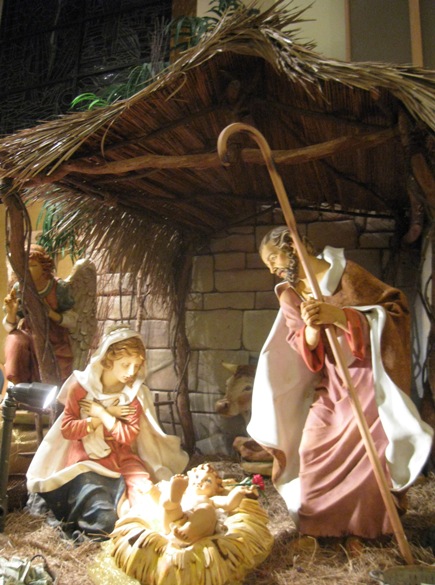
Archive for the ‘Nativity’ Category

Jesus Christ: The Word of God

December 24, 2020

Christmas Night

In the beginning was the Word,
and the Word was with God,
and the Word was God.

Have you ever wondered why Jesus Christ is the Word? How is Jesus Christ a Word; or, how are words like Jesus Christ? Spoken words have a speaker. Written words have an author. And the person these words come from is revealed through them. My words reveal what is hidden within me. The words I generate reveal my inner self to you. If I did not speak, you would not know my thoughts. If I were invisible to you as well, you could not see my presence or my activity; nor could you read any emotions from my face. I would remain a mystery to you.

If I were unheard, unseen, and unknown, you might look at the objects I have made to learn something more about me. A Renaissance artist’s masterpiece differs greatly from a child’s finger-painting; and if we were to place the two paintings side-by-side it would be easy for us to guess who made which. The creator is revealed through his creations. If I built a mountain you would know of my strength, but you might wonder if I am hard and unfeeling like rock. If I created an ocean you would know of my greatness, but you might wonder if you were of relatively small significance to me. If I fashioned a star you would know of my vast reach, but you might wonder if I am distant from you.

In times past, God spoke to our ancestors in partial and various ways; such as through his creation and through his Old Testament prophets. But in these last days, God speaks to us through a Son who reveals the Father’s knowledge, will, and love. God the Son is our Father’s Eternal Word.

And the Word became flesh
and made his dwelling among us,
and we saw his glory…

In what way does God choose to come to us? We knew he was strong, but he comes weak and vulnerable. We knew he was great, but he comes lowly and meek. We knew he was vast, but he comes as someone very small. He possesses all riches, but he comes to an unwealthy place and time. A stable is certainly not a palace, and the little town of Bethlehem is not the great city of Rome. In fact, our present modern world is far more rich and comfortable than those ancient times and places were. Yet the Son of God chose to be born there and then as a human baby.

Why does Jesus come to us in this way? Imagine yourself supremely happy in Heaven. Ask yourself: for what possible reason would you ever leave there? “For us men and for our salvation he came down from Heaven.” For love of you and me, he humbly descends to reveal for us what God is like, to win our love and save us.

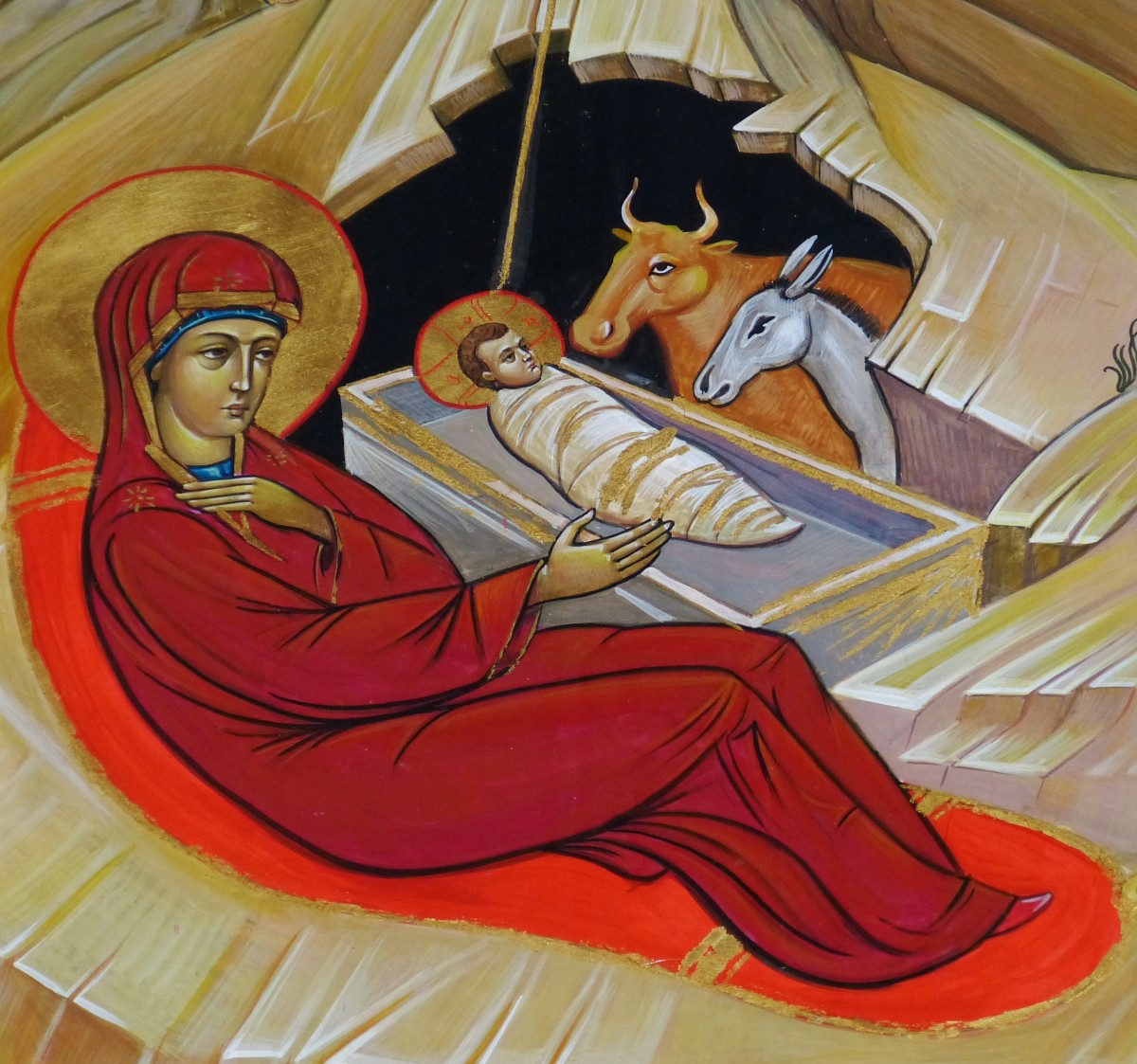
The Virgin Mary wraps baby Jesus in swaddling clothes. His beaten, crucified body will later be wrapped in a linen burial shroud. Mary lays baby Jesus in a manger, a feedthrough for animals. He will go on to offer himself as food for us, the Bread of Life for the world. Delivered first in a cave, Jesus will go on to be delivered from a tomb. Jesus Christ descends down to the depths to bring us up with him to the heights.

In yet another surprise, the Son of God, our Prince of Peace, our God-Hero and Emmanuel, comes to us so quietly and subtly. Sometime after the first Christmas, when the Magi showed up in Jerusalem seeking “the newborn king of the Jews,” King Herod and his court are completely oblivious of what has occurred in Bethlehem just six miles down the road. If not for the angels, the shepherds in the fields would not have known. And if not for those shepherds sharing the message they were told by the angels, who else in Bethlehem would have known besides Joseph and Mary? Jesus Christ’s birth was heralded and celebrated by some, but dismissed and ignored by many.

Jesus did not force the world to pay him notice then, and it is similar today. Despite all that he has done for us, he allows himself to be ignored. The Word of God is among us, but we must decide to listen; not only on Christmas but throughout the whole year. “Behold, I proclaim to you good news of great joy… a Savior has been born for you who is Christ and Lord.” So heed this Word and rejoice in this Word, for he has revealed to you what God is like, to win your love and save you.

Bowing to the Child

December 23, 2020


When I was in seminary studying to become a priest, there was an older seminarian named Phil who years before had worked as a hospital orderly. An orderly does jobs around the hospital that the nurses and doctors don’t do, such as bringing people trays of food, tidying up rooms, or moving patients around the building. If you’re ever a patient in a hospital, when you’re discharged and it’s time to go home, they’ll put you into a wheelchair to roll you to the exit, even if you can walk just fine. (Maybe they don’t want anybody to fall and sue the hospital for lots of money.) In any case, one of my friend Phil’s jobs was to push peoples’ wheelchairs on their way out of the hospital. It was in doing this task that Phil noticed something interesting.

Sometimes the patient would be a mom who had recently given birth to a new baby. These women would hold their tiny children in their arms as Phil pushed them down hallways, in and out of elevators, and through the lobbies. What Phil noticed is that the other people in the hallways, elevators, and lobbies would stop, turn, and lean over for a closer look at the baby. Everyone was bowing down, showing love and honor, towards the child and its mother, with the father proudly looking on.

Notice in our gospel today how many people gathered around Elizabeth, Zechariah, and baby John the Baptist to celebrate his birth? God knows how much we love and flock to babies. So, in order that we might adore him more, for his glory and our good, the Son of God became a baby. Jesus became a baby to be even more adorable.

There are many wonderful Christmas customs and traditions, like trees and stockings and wrapped presents, but these are not the reason for the season. Whatever this coming Christmastime holds for you, whatever you are doing, be sure to stop, turn, and see the baby Jesus. Bow down with your heart with love and honor toward the holy Child and his loving mother, with God the Father proudly looking on.

The Visiting Shepherds — Christmas Mass

December 25, 2019

Early on the first Christmas Eve, in a field outside of Bethlehem, I imagine one of the shepherds complaining to his companions: “Wouldn’t you know it, we have to work on Christmas!” That’s just a joke, of course. The shepherds near Bethlehem, living in the fields and keeping watch over their flock, had no reason to expect that night would be anything special. Indeed, if not for Jesus’ birth into our world, today would be just another workday and there would be no reason to celebrate. But Jesus did come into our world to save us, and those shepherds were his first invited guests. “Do not be afraid; for behold, I proclaim to you good news of great joy that will be for all the people. For today in the city of David a savior has been born for you who is Christ and Lord.”

These shepherds would seem to be unlikely guests. Not rich, not powerful, not admired; but poor, dirty, and smelly. They lived apart from the community like outcasts. Shepherds were so little trusted that they could not give testimony in court. And yet, God’s Good News was offered to them. The Emperor Caesar Augustus, whose census brought the Holy Family to Bethlehem, was not given an angelic invitation. Perhaps the Roman Emperor was too proud to receive one; unwilling to admit that he was not a god over anything and that one God deserved his full worship, love, and obedience. But the shepherds were humble, humble enough to listen to the Heaven-sent message and act on it. “Let us go, then, to Bethlehem to see this thing that has taken place, which the Lord has made known to us.

The city of Bethlehem is to the south and west of Jerusalem. Bethlehem was only about 5½ miles away from the Jewish Temple, roughly the same direction and distance that St. John the Baptist Church in Cooks Valley is from here. Just as Bethlehem and Jerusalem are situated closely to each other, so Christmas points to Easter. The two are closely linked. It was specifically from Bethlehem’s flocks that sheep were provided to be sacrificed in Jerusalem for the peoples’ sins. In this region, the Lamb of God was born and to this region Jesus would return to die and rise to take away the sins of the world. Mary wrapped her little newborn snugly in swaddling clothes. Mary would later wrap his body in a linen burial shroud. Tradition says Joseph prepared a cave for the place of Jesus’ birth when other accommodations were unavailable. Later, another Joseph would make last-minute arrangements for Jesus to be buried in a rock-hewn tomb. Baby Jesus was born in Bethlehem, a city whose name means “House of Bread.” He was laid in a manger, a feed-box for grain. Later, on the day before he was to suffer, Jesus would take bread in hand and say, “Take this, all of you, and eat of it: for this is my body which will be given up for you.

The shepherds went in haste into Bethlehem and found Mary, Joseph, and the baby Jesus there. “When they saw this, they made known the message that had been told them about this child. … Then the shepherds returned, glorifying and praising God for all they had heard and seen, just as it had been told to them.” After Christmas, after that beautiful day, did the shepherds ever come back to visit the Holy Family? I doubt you could find two people more friendly and welcoming than holy Joseph and Mary, but did the shepherds ever take the opportunity to visit them and the Christ Child again? The Magi were soon to travel hundreds of miles to see Jesus just once, but these shepherds lived only a short, walking distance away. Did the shepherds ever take time come back and adore Jesus, to rest and to contemplate what he meant for their lives, to praise and thank the God for his presence in their midst? Did the shepherds ever get to know Mary and Joseph better, these holy saints and friends of God?

If the shepherds had spent a single hour each week in the presence of Christ and his holy family, imagine how it would have improved their daily lives; their work, their relationships, their whole outlook on life? Great graces flow from being close to Jesus. What do you think they should have done? What would you have done? We don’t know whether the shepherds ever came back again after Christmas, but if they didn’t, they really missed out. Living a life with Jesus Christ is better than a life neglecting him.

Christmas is a truly special day, a happy day and rightly so, but a day that points beyond merely itself to Easter and the fullness of Christ’s Gospel, Good News of great joy. For a Savior has been born for you who is Christ and Lord. Do not be too proud, do not be too busy, do not be afraid, make the short journeys to visit Jesus here again. Do not feel too unworthy to come, for even shepherds were his first guests. Feel welcome in this his dwelling place and find friends here among his family. Will you come back again after Christmas? I hope you will, but if you don’t, you’re really missing out; because living your life with Jesus Christ is better than life without him.

Preaching Aid for Advent, Year A

November 7, 2019

This is a homily creation aid for preaching on themes of marriage and family during the seasons of Advent and Christmas during Year A of the lectionary cycle. I wrote this guide back in seminary and I welcome its being put to good use.

A Christmas Funeral

December 29, 2018

Funeral Homily for Marie Clark

There is an understandable and natural sadness felt in the passing of a well-loved mother, sister, aunt, grandma, and  great-grandmother like Marie in any season of the year. But a funeral like this, so close to Christmas, can feel strange as well. Perhaps I have forgotten but I can’t remember — in almost a decade of priesthood — ever offering a funeral Mass so close to the celebration of Jesus’ birth, with Christmas trees still in the sanctuary. And yet, this is not so strange as it may seem, for the birth of Jesus the Christ bears many connections with and foreshadowings of his death:

Jesus’ birthplace, a stable, was actually a cave. His burial-place, his tomb, was a cave as well.

The first cave was prepared by Joseph, the poor carpenter from Nazareth. The second cave was also prepared by a Joseph, a rich man from Arimathea.

At his birth, Mary wrapped Jesus’ body tightly in cloths for swaddling clothes. At his death, Mary also wrapped Jesus’ body, in linen cloth, for a burial shroud.

She placed his body in a manger, a feed-box for grain. He would give his own body as food, feeding his flock with his flesh and blood.

Who first heard the news of Jesus’ birth? It was shepherds in the fields outside Bethlehem. From Bethlehem’s flocks the lambs were provided for sacrifice at the Temple in Jerusalem about 5½ miles away. Jesus is the Lamb of God who was born to die as a sacrifice to take away our sins.

The Christmas trees in our sanctuary are evergreen and gloriously-lighted. Contrast that to the wood of the Cross, stark and dead, where we see the starkness of death in Christ crucified. Yet the cross bears the Light of the World, for Jesus says, “I am the Light of the World.” Life flows from this tree.

The Church, in these days following Christmas, celebrates a series of martyrs. The day after Christmas is the feast of St. Stephen, the first martyr after Jesus’ Ascension. Tomorrow, it’s St. Thomas Becket, a bishop martyred more than a millennium later. Today, it’s the Holy Infants of Bethlehem, who died unknowingly for Christ, but who the Church has long-celebrated as martyrs. We can fittingly celebrate the martyrs or even a funeral so close to Christmas because the birth of Jesus Christ has great and vast implications for life and death.

As we heard in our first reading, “If before men, indeed they be punished, yet is their hope full of immortality. … They seemed, in the view of the foolish, to be dead; and their passing away was thought an affliction, and their going forth from us, utter destruction. But they are in peace.” So, even in the dark valleys of life, we are courageous (as St. Paul twice declares in the second reading) for the Lord who died and rose is our shepherd. “Even though I walk in the dark valley I fear no evil; for you are at my side.” And this is our Gospel: ‘this is the will of the Father, that everyone who sees the Son and believes in him may have eternal life, and Jesus shall raise them on the last day.’

Pray for Marie’s soul, as is fitting and right, but be courageous and even joyful through the sadness; for at Christmas we see:

Christ, by highest heaven adored,
Christ, the everlasting Lord.
Late in time behold he comes,
offspring of the Virgin’s womb.

Mild he lays his glory by,
born that we no more may die,
born to raise us from the earth,
born to give us second birth.

With the herald angels sing,
“Glory to the newborn King.”

Christ, the Peace Light, is Born

December 27, 2018

In the city of Israel that is called Bethlehem, the ancient Church of the Nativity marks the site of the first Christmas. There one can actually stoop and bend down beneath the central altar & touch the celebrated spot where Jesus Christ was born. It is fitting that the pilgrims bend low to do this, because the miracle of God becoming a human being — to live and die and rise for us — surely deserves humble reverence with everything that we are.

Earlier this year, as has happened for a number of years now, an Austrian child and their family was selected to travel to Bethlehem. Candles and lamps are always burning within the Church of the Nativity, and there this chosen child transferred their fire into two blast-proof lanterns. Then they all flew back to Austria, where this flame (called “The Peace Light”) has spread from lamp to lamp, light to light, candle to candle, into more than thirty European countries and to places around the world. On December 1st of this year, the Peace Light arrived at J.F.K. Airport in New York City and it has traveled from there across our country. This week, it providentially came to our parish.

Last Friday, a Hudson couple traveling with the Peace Light approached me after morning Mass at St. Paul’s. I had never heard of the Peace Light before, but I happily received it and kept it for this Christmas celebration. All the flames you see burning our sanctuary this Christmas were originally lit from Bethlehem’s flame. Now I carefully carried, protected, and preserved this light; especially when I only had one vigil candle. I realized that one error, one jostling of the liquid wax, could extinguish the fire; and then what would become of this, my Christmas homily? I’d be lost. But, thanks be to God, these candles are lit here today.

So why do we have candles at Mass? Since the early days of Christianity, when Catholic Mass was celebrated in hiding, underground in the catacombs, lamps have provided useful illumination. But these lights are not merely practical. In the late 300’s A.D., a heretic named Vigilantius criticized Christians in the East about many of their practices, including their lighting of great piles of candles while the sun was still shining in the sky. St. Jerome declared in answer to him that candles are lighted where the Gospel is proclaimed not merely to put darkness to flight, but as a sign of joy. As an added symbol, these candles on the altar (and the Easter Candle) are, by tradition, mostly made of beeswax. Because beeswax, which is the product of the virginal female bee, is like the flesh of Our Lord supplied by the Blessed Virgin Mary.

Of course, the celebrated Peace Light is not merely a symbol of some abstract notion or idea of peace; it’s a symbol of the very real person of Jesus Christ. The “Light of the World” entered our world from his mother’s womb in Bethlehem. And his light has spread across the world and throughout time to this place and our day. Today, our candles burn and shine for him.

Within you there is also candle, but it is a very vulnerable light. Through error or neglect its light can go out. And without this light we are in darkness without true joy. So Jesus commands us to regularly gather all our candles together here, to be re-lit from the Source, the Light of Christ. In conclusion, in case my symbolism has been too subtle: Have a very joyful Christmas, and know that Jesus Christ (who loves you) wishes you to return here again for his Holy Mass next Sunday.

The Holy Family and Yours

January 1, 2018

Every year, Holy Mother Church presents the Holy Family for our contemplation and imitation. Some imagine life in the home of Jesus, Mary, and Joseph in the soft, pastel colors of a Christmas card; so holy, so flawless, so unobtainable. We wonder, “Can the Holy Family and my family really relate to one another?” At least two out of the three members of the Holy Family never sinned in their entire lives together. We, meanwhile, could jokingly refer to the Feast of the Holy Family as “Elbow-Nudge Sunday.” Throughout the world this day, wives and husbands, parents and children, take turns gently nudging one another as they listen to God’s words about marriage and family life. The Holy Family was holy, but that doesn’t mean their lives were easy or smooth.

I’ve previously written about the stresses and difficulties of the holy couple leading up to the first Christmas: about Mary’s crisis pregnancy, about Joseph grappling with his wife telling him the child within her is the Son of God and Joseph contemplating a divorce, about their giving birth to that holy child in an animal stable. And their trials together continued after Jesus’ birth.

Imagine being Mary and hearing Simeon prophesy, “Behold, this child is destined … to be a sign that will be contradicted — and you yourself a sword will pierce…” How would that make you feel about the future for you and your child? Picture being Mary as her husband awakes and says “our boy is being hunted, we need to leave tonight.” Consider Joseph, the servant-leader of his family, having to pack-up quickly and leave so much behind to take his family into hiding in Egypt. Later, an angel tells Joseph to bring his family back into Israel. So Joseph returns with Jesus and Mary, but he’s afraid to resettle in the south because the son of Herod the Great now rules Judea. With the help of another dream, Joseph decides to resettle in the north, in Nazareth of Galilee.

I mention all this because St. Joseph, the just and holy man, feared an earthly king even as he trusted God. St. Mary at the Annunciation did not know all the details of her future, but she trusted in God by saying, “Let it be done to me according to your word.” Our Lord Jesus, sweating blood from stress the night before he died, trusted God to say, “Not my will but yours be done.” Their holy lives were often difficult, but God always rewarded their trust, bringing about good for them in the end.

In Genesis, Abram (whose name later got changed to Abraham) was promised a son by the Lord. But the childless Abraham looks at the old age of his wife and himself and asks, ‘Will my steward, Eliezer, be my heir?‘ God answers, ‘No, not him; your own flesh and blood son shall be your heir.’ Then the Lord took Abraham outside and said, “Look up at the sky and count the stars, if you can. Just so,” he added, “shall your descendants be.” And Abraham put his faith in the Lord.

When I first heard this story (and maybe when you heard it too) I assumed this event happened at night. But the message is even more powerful if God told him to “look up at the sky and count the stars, if you can,” during the daytime. Where do the stars go during the day? We know they’re still there, even though the Sun’s brightness the sky’s blueness prevent us from seeing them. Abraham trusted in the Lord’s unwavering goodwill towards him and beheld God’s word fulfilled in the birth of Isaac. Through that son, Abraham received glory and the whole world was blessed.

One of the things Jesus says in the Gospels more than anything else is, “Be not afraid.” Sacrifice your fears. Imagine taking those obsessive worrying thoughts from your mind, placing them upon the altar, and lighting them afire like a sacrifice of old to God. “Let the peace of Christ control your heart…” Trust that “God works all things for the good of those who love him” and then “the peace of God, which surpasses all understanding will guard your hearts and minds in Christ Jesus.”

God not only wants peace within us, but peace among us as well. In our homes there is always room for improvement. The household of the Holy Family may have been a sinless one, but mistakes and miscommunications surely happened. Joseph probably broke or misplaced tools. Mary probably burnt an occasional loaf of bread. From the Gospels we know they both thought they knew where their 12-year-old boy was as they left Jerusalem for home; several hours passed before they realized he was missing. Even when we deeply love one another, we must learn and practice how to love and serve each other better.

We love each other in many ways, and the best modes by which we experience love can vary from person to person. The book “The Five Love Languages” lays out five major ways that we give and receive love, namely:

Gift Giving
Acts of Service
Affectionate Touch
Words of Affirmation
Quality Time

What are your top-two love languages? Can you guess the preferred languages of your spouse and children? Sometimes we try to love others as ourselves by loving them exactly as ourselves and we unfortunately miss our mark. For example, imagine a spouse complaining, “Why don’t you let me know that you love me,” when they really mean “why don’t you get me surprises anymore” (gift giving) or “why don’t you tell me that I delight you and you’re pleased with me” (words of affirmation.) At this, their spouse might reply, “What do you mean? I’m loving you all the time,” when they’re really saying “I take care of the kids and do housework” (acts of service) and “We eat and sit in the living room together every evening” (quality time.) These two loving spouses are loving past each other.

Learn the preferred love languages of your family members, and don’t expect others read your mind, sabotaging our own happiness. Tell them how to delight you. They love you and they want to make you happy. Don’t attack and criticize (“You always this” or “You never that”) but invite them to bless you. And pray together, as a couple and a family. The Holy Family surely did and its one of the most valuable things I can recommend. Some married couples, who have shared a bed for years, have never revealed their personal prayer requests to each other. Pray together, and then even whenever frictions arise, you will remember that you are on the same team, together on the same side with God.

Your home will never be perfect – not even the Holy Family’s was perfect. Life’s circumstances will go awry, and there will be sins we have to apologize for and forgive one another. But with trust in God and a daily commitment to loving and serving each other better, you too can live in the peace and joy of the Holy Family.

Jesus Christ, the Center of History

December 25, 2017

If you had walked through the streets Bethlehem or Rome asking people on the first Christmas Eve, “What year is this,” the answers you’d hear might vary. The Sun numbers our days, the Moon tracks our months, and the seasons indicate the passage of years, but answering what year it is requires people to make reference to some shared historical event.

If you had bumped into one of the ancient world’s many sports fans on the first Christmas Eve, they might have told you that it was 3rd year of the 194th Olympiad. Once every four years, famous athletic competitions were held in Olympia, Greece. Freeborn Greek men would compete in footraces, chariot races, wrestling matches, javelin tosses, discus throws, and other events; for the honor of the Greek god Zeus, for the pride of their home city-states, and for their own personal glory. The winners received crowns or wreaths made of green olive leaves that would fade. All that remains of some of those ancient sports superstars today are their names in texts read less often today than last month’s newspapers.

If you had run into a merchant on the first Christmas Eve who used the Roman coins and roads to trade goods, he might have said that it was 752nd year since the founding of the City of Rome. Considering the wealth and influence of Rome at that time, it might have seemed like that empire would live and reign in the world without end. However, from decay within and barbarian attacks from without, much of what that empire built remains today, if at all, only as ruins for tourists.

If you had encountered someone enamored with power and celebrity on the first Christmas Eve, they might have answered that it was 42nd year of the reign of Emperor Caesar Augustus. It was a census he decreed that sent Joseph and Mary to Bethlehem. Early in his reign, Caesar Augustus claimed that the passage of Halley’s Comet over Rome was the spirit of his predecessor, Julius Caesar, rising into heaven. And so, since Julius Caesar had been a god, Caesar Augustus, as his heir, presumed to call himself “the son of a god.” Caesar Augustus would go on to die at age seventy-five and never be heard from again.

If you had spoken on the first Christmas Eve to someone focused on the politics and current events of the land of Israel, they might have replied that it was 38th year of the reign King Herod the Great, the King of Judea under the Romans. Herod the Great was a very controversial figure, with some Jews praising him and still more despising him: he expanded and gloriously refurbished the Temple in Jerusalem but was also a murderous tyrant, like when he ordered the deaths of the innocent baby boys in Bethlehem. Because the Roman Senate had appointed him as “the King of the Jews,” and since he was not descended from King David, nobody mistook Herod for being the Christ.

On the first Christmas Eve, some two thousand and eighteen years ago, only a handful of people on earth had any clue of the world-changing significance of what was about to occur. The baby born that night was the source of the universe and the center of human history.

In the year we call 525, a new way of numbering years was introduced by a monk named Dionysius the Humble. Dionysius numbered years using this baby’s birth as the starting point, naming it “1 A.D.” A.D. stands for the Latin phrase “anno Domini / in the year of our Lord.” 1 A.D. was dubbed the first year of our Lord on earth, and this is currently the 2,017th year of our Lord, Jesus Christ. Now I should mention that Dionysius has reason to be humble here as well. He estimated the time of Jesus’ birth as best as he could, but he seems to have been a little bit off. The best evidence today points to Jesus being born in 2 or 3 B.C. But regardless, it is most fitting that we mark and celebrate the birth of Jesus Christ as the center of human history and the most important person who has ever lived.

  • Christ is the undefeated champion whose glory does not fade. Even when he seems to be down, he triumphs in overtime. (And, unlike Aaron Rodgers, “not one of his bones shall be broken.”)
  • Christ’s holy kingdom has outlasted the Romans. In fact, he conquered them peacefully by converting their hearts. And today, his kingdom extends to all lands and people through his Holy Catholic Church.
  • Christ is greater than Caesar, he is stronger than death. When Jesus died, he rose again. And now he reigns, because he is truly the Son of God.
  • Christ is the King of Kings and Lord of Lords. He is our leader untainted by sin, who is truly wise, and cares about me and you.

Even those without any Christian faith must acknowledge Jesus’ positive influence on the world: in children treasured; in women respected; in slaves freed; in strangers welcomed; in millions and millions fed, clothed, treated, or taught, around the world and across centuries, all because of the baby born on Christmas.

A.D. does not stand for an “Arbitrary Date.” Anno Domini is no accidental demarcation of before and after. Jesus Christ merits more than our apathetic dismissal. Jesus deserves to be at the center of our years and the center of our lives. As he, this Christmas night, so humbly gives himself to you, please give yourself to him anew. He is the Christ, yesterday and today, the beginning and the end, the Alpha and Omega, all time belongs to him and all the ages; to him be glory and power, through every age and forever, in you and in me. Amen.

The Ox, the Ass, & the First Manger Scene

December 20, 2017

In the year 1223 A.D., about two weeks before Christmas and three years before his death, St. Francis of Assisi shared an innovative idea with a beloved friend: “I want to do something that will recall the memory of that child who was born in Bethlehem, to see with bodily eyes the inconveniences of his infancy, how he lay in the manger, and how the ox and ass stood by.” With Pope Honorius III’s approval and his generous friend’s help everything was ready for Christmas Eve.

Blessed Thomas of Celano (writing just six years after) recounts the unveiling of that first manger scene, or crèche:

“With glad hearts, the men and women of that place prepared, according to their means, candles, and torches to light up that night which has illuminated all the days and years with its glittering star. Finally the holy man of God arrived and, finding everything prepared, saw it and rejoiced. … The manger is ready, hay is brought, the (live) ox and ass are led in. The brothers sing, discharging their debt of praise to the Lord, and the whole night echoes with jubilation. The holy man of God stands before the manger full of sighs, consumed by devotion, and filled with a marvelous joy. The holy man of God wears a deacon’s vestments, for he was indeed a deacon, and he sings the holy gospel with a sonorous voice. Then he preaches sweetly to the people standing about, telling them about the birth of the poor king and the little city of Bethlehem.”

The Gospel accounts of Jesus’ birth make no mention of an ox or donkey, but St. Francis included them in his scene because the duo had so commonly appeared in Christian imagery and writings since the Early Church.

Like the crucified thieves beside Jesus’ cross, this pair of creatures beside Jesus’ crib can represent two types of people in our world. Some respond to the birth of God among us like a donkey, with a foolish, stubborn resistance. But others, like an ox, humbly take the yoke of Christ upon their shoulders, learn from him, and produce a great harvest. Some attend Christmas Mass eager to leave early and without plans to soon return, like Judas Iscariot at the Last Supper. Yet Jesus calls us to attend to him week in and week out as his faithful oxen so that we may have peace in this world: “Take my yoke upon you and learn from me, for I am meek and humble of heart; and you will find rest for yourselves. For my yoke is easy, and my burden light.”

A 50-50 Christmas Quiz

December 22, 2016

Christmas Card  Highlight to Reveal the Answers

  1. Which archangel visited Mary?

       (((A: Gabriel)))   B: Michael

  1. In which Gospel does the archangel visit Mary?

       (((A: Luke)))    B: Matthew

  1. Who is the “Immaculate Conception?”

            A: Jesus    (((B: Mary)))

  1. Where was Jesus conceived by the Holy Spirit?

           A: Bethlehem    (((B: Nazareth)))

  1. What is grown in wombs?

           A: Christmas Trees    (((B: Babies)))

  1. Who was born first?

           A: Jesus Christ    (((B: John the Baptist)))

  1. Which Gospel has John the Baptist’s birth?

       (((A: Luke)))    B: Matthew

  1. About many years ago was Jesus born?

       (((A: 2,017 Years)))    B: 3,300 Years

  1. What is a manger?

       (((A: Feed Box)))    B: Stable

  1. Who invented crèches (or manger scenes)?

           A: St. Augustine    (((B: St. Francis of Assisi)))

  1. Which Gospel has the “Wise Men” or Magi?

            A: Luke    (((B: Matthew)))

  1. From which direction did the Magi come?

       (((A: The East)))    B: The West

  1. Who was St. Nicholas in the 4th century?

       (((A: Bishop in Turkey)))    B: Norwegian Martyr

  1. When does the Roman Catholic Church’s Christmas Season end?

       (((A: Baptism of the Lord)))    B: Epiphany

So how did you do?

The Temptations of the First Christmas

December 22, 2015

If I were a demon prowling about the world for the discouragement, confusion, and ruin of souls, how might I have tried to tempt God’s beloved ones in the year leading up to the first Christmas?

If I were a demon, I would say to St. Elizabeth, “Did people imagine that Zechariah had a vision while he was serving in the temple? He simply had a stroke and he will never speak again. You’re feeling sick every day and your abdomen is expanding. You clearly have a cancer. You will soon be dead. There is no hope.

If I were a demon, I would say to St. Mary, “You think you saw an angel? That’s crazy! You’re imagining things. Who are you to be the mother of God’s son? Who do you think you are! Don’t even bother going to visit Elizabeth. You’ll feel foolish when you arrive and see that nothing has changed. None of your family, friends, or neighbors will believe you. Joseph will divorce you and you will be all alone.

And if I were a demon, I would say to St. Joseph, “Do you really believe Mary conceived by God’s Spirit? She’s obviously lying. Even if it’s true, who are you to be a father to the Messiah? Either way, it is best for you to just get a divorce. Whatever you imagined when you married her, now you can see that you were so very wrong.

Mary & Joseph

Even with the coming of Christmas, my diabolical efforts would not cease. I would advise Bethlehem’s shepherds to steer safely-clear of the holy child and to keep to watching their flocks. I would urge the Magi to dismiss the starry signs as meaningless coincidences and not to risk a long journey. I would encourage Joseph to ignore the warning dream to take his family into Egypt and I would encourage Mary not to trust in her loving husband’s lead: “Surely, God would have told you this before telling Joseph.” Thankfully for us, none of them were prevented from doing God’s will through being tripped-up by such traps.

Some people think of temptation strictly as a prompting toward pleasurable, immoral action. But temptation can come in other forms. It can also pull us toward inaction and negative experiences like fear, doubt, sadness, and despair.

Some people assume that the saints do not know temptation like the rest of us. But did Mary, Joseph, and Elizabeth live oblivious to the thoughts and unassailed by the feelings realistically described above? In truth, the saints come to understand temptation well as they discern and persevere through the trials of life.

Some people believe that God loves and watches over a few favored saints while having less concern for the rest of us. But this is also a temptation. Even if our life takes a shocking turn and we don’t know what to do, even if we have a stroke, or cancer, or our mind begins to fail, even if we seem betrayed or abandoned by everyone, each and all of us are his dearly beloved ones. (And we shouldn’t listen to anyone telling us otherwise, even if they speak to us in our own voice.)

Their First Christmas — Christmas Mass at Midnight

December 27, 2010

Christmas can be a hard time of year for a lot of people. Despite the pious, peaceful, and nostalgic scenes we see on the Christmas cards (like the one on the right,) many peoples’ Christmases are less than picture perfect. Today I would like to tell you the true story of two friends of mine, newlyweds whose first Christmas together was far from idyllic. (I’ll call them Chuck and Sue, though that’s not their real names.)  

In fact, Chuck and Sue’s first year together had been a rocky road. Chuck has always been a good and faithful man, but at one point in the beginning, he seriously thought about getting a divorce. He says that it was only by the grace of God that the serious tensions and misunderstandings between them were resolved and their marriage was saved.

After they tied the knot, the two picked-up and moved away from their closest family and friends to a small town down south where they had some distant relatives. Chuck worked hard as a blue-collar laborer, but after this transition, he found himself unemployed. And unfortunately, all of those distant relatives proved too distant to care about helping-out a struggling young couple in need. Their first Christmas together, Chuck and Sue were out of work, pregnant, and homeless.

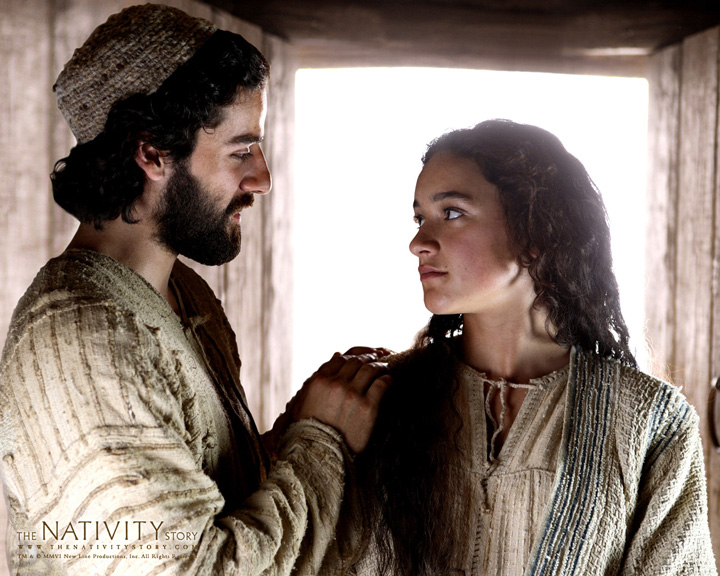
How do you think Sue must have felt? Do you think she felt concerned about their circumstances and their family’s future? And how do you think Chuck must have felt when through no fault of his own he wasn’t able to provide better for his wife and child on the way? Had it not been for their deep faith in God and the consolation of their prayers, they would have been overcome by darkness, resentment, fear, and despair. But instead, their first Christmas together was the brightest and most joyful in history. You know Chuck and Sue’s story well, for theirs is the Christmas story. Chuck’s real name is Joseph and Sue’s real name is Mary.

Remember, the Christmas story is not a fairy tale from far, far away. It’s a real story in the real world, and for the real world. Our lives still have difficulties, but Jesus Christ has come, and that makes all the difference in the world. No matter what we’re going through, because of Christmas, we all have good reason to be merry.

And in closing, let me say one final word: I’m always pleased by how full the church is at Christmas. Please come back. Jesus Christ calls you back. He knows our world well and He knows how much you and those you love need His grace to get through it. The shepherds were called to find Jesus in a feed trough. Jesus invites you to find Him here.

The Joyful Mysteries, Meditations with the Saints

October 28, 2010

The 1st Joyful Mystery: 
The Annunciation

The Blessed Virgin Mary may have been just 13 years old when the angel Gabriel announced to her that she would give birth to Jesus. She shows us that even if you are young, God can still do big things with you, if you say “Yes” to Him.

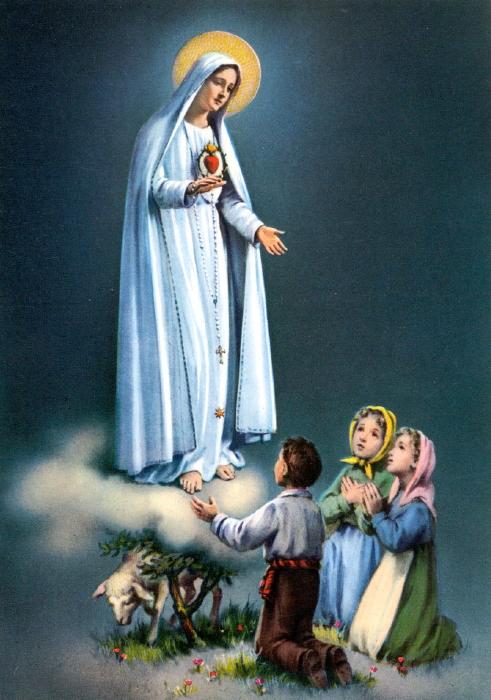
On May 13, 1917, three Portuguese children were praying the rosary after lunch in a field on a clear blue day.  The eldest was Lucia, age 10, and she was with her cousins, Francisco and Jacinta, ages eight and seven. Suddenly, they saw two bright flashes. They looked up and saw “a lady, clothed in white, brighter than the sun…” The Lady smiled and said, “Do not be afraid, I will not harm you.” Lucia asked her where she came from. The Lady pointed to the sky and said, “I come from heaven.” Lucia asked what she wanted. The Lady said, “I have come to ask you to come here for six months on the 13th day of the month, at this same hour.”

On July 13, the incredibly beautiful Lady appeared again. Lucia asked her who she was, and for a miracle so everyone would believe. The Lady answered, “Continue to come here every month. In October, I will tell you who I am and what I want, and I will perform a miracle for all to see and believe.” Then she taught them this prayer: “Oh my Jesus, forgive us our sins, save us from the fires of hell. Lead all souls to Heaven, especially those in most need of Thy Mercy.”

At noon, on October 13, 1917, some 70,000 people were gathered in the field. With a flash of light, the Lady appeared to the children and declared, “I am the Lady of the Rosary.” Some spectators cried out and the crowd turned their eyes upward to the cloudless sky, and they gazed on the sun without the least discomfort.  They saw it tremble and danced in a miraculous way.

Mary, Lucia, Francisco and Jacinta teach us this lesson: Even if you are young, God can do big things with you, if you say “Yes” to Him. Let us pray that we would be open to doing God’s will every day.

The 2nd Joyful Mystery:
The Visitation

“During those days Mary set out and traveled to the hill country in haste to a town of Judah, where she entered the house of Zechariah and greeted Elizabeth. When Elizabeth heard Mary’s greeting, the infant leaped in her womb, and Elizabeth, filled with the Holy Spirit, cried out in a loud voice and said, ‘Most blessed are you among women, and blessed is the fruit of your womb. And how does this happen to me, that the mother of my Lord should come to me? For at the moment the sound of your greeting reached my ears, the infant in my womb leaped for joy.’” (Luke 1)

Imagine how St. Elizabeth must have felt to have Mary, Mother of God, walk in through her door. Elizabeth could not see the tiny Jesus, a fetus in Mary’s womb, but she was convinced that He was hidden there. How would you treat someone if you knew that Jesus was hidden inside of them?

Blessed Mother Theresa cared for the poorest of the poor in the streets of Calcutta, India. Despite years of strenuous physical, emotional and spiritual work, Mother Teresa seemed unstoppable. Though frail and bent, with numerous health problems, she always returned to her work, to those who received her compassionate care for more than 50 years. How did she do it? She could do it because she encountered her beloved Christ both in times of prayer and in the people she cared for. Mother Teresa remembered Jesus’ words, “Amen, I say to you, whatever you did for one of these least brothers of mine, you did for me.” (Matthew 25:40) Mother Teresa loved others as if they were the Lord Himself.

Blessed Mother Teresa and St. Elizabeth teach us this lesson: Jesus is present in your classmates here at school, so you should always be welcoming and loving toward them. Let us pray for the grace to love others in this way.

The 3rd Joyful Mystery:
The Nativity

In his youth, Francis had been quite rich, the son of a wealthy merchant, yet he sensed that there was more to life. He put his former life behind him and devoted himself to following Christ. One day, at Mass, the Gospel told of how Christ’s disciples were to possess neither gold nor silver, nor traveling items, but were to exhort sinners to repentance and announce the Kingdom of God. Francis took these words as if spoken directly to himself, and as soon as Mass was over he threw away what little he had and went forth at once, exhorting the people of the country-side to penance, brotherly love, and peace. He was poor, but clearly happy, and others were attracted to join his movement. By the time of his death, hundreds had joined his religious order. On October 3, 1226, St. Francis died a penniless, but happy man. 

St. Francis of Assisi loved Christmas.  In fact, one story tells of how he petitioned the Holy Roman Emperor to make an edict that grain and bread should be provided to birds, beasts, and the poor this day, so that all God’s creatures would have occasion to rejoice in the Lord. St. Francis also invented the Christmas tradition of making a model of the nativity scene. These nativity scenes, called Crèches, remind us that even though Christ was rich in Heaven, he became poor when he was born on earth in a barn. Yet, Jesus was a happy man, despite his poverty.

Jesus and St. Francis teach us this lesson: You do not need to be wealthy in order to be happy. Let us pray that we may be content and happy with the riches that we have.

The 4th Joyful Mystery: 
The Presentation of Jesus in the Temple

In the year that Jesus was born, “there was a man in Jerusalem whose name was Simeon. This man was righteous and devout” and he longed to see the Messiah who would save God people. It had been revealed to him by the Holy Spirit that he would indeed see the Christ before he died and Simeon trusted and hoped in that promise.

One day, the Spirit inspired him to come into the temple. When he say Mary and Joseph carrying in the baby Jesus to offer a sacrifice for Him, Simeon “took him into his arms and blessed God, saying: ‘Now, Master, you may let your servant go in peace, according to your word, for my eyes have seen your salvation, which you prepared in sight of all the peoples, a light for revelation to the Gentiles, and glory for your people Israel.’” (Luke 2)

What are the promises the Lord has made to us?  Do we trust and hope in these promises? Simeon teaches us this lesson: That we ought to trust and hope in the Lord’s promises, for all of them will be fulfilled in the sight of all someday.

The 5th Joyful Mystery:
The Finding of Jesus in the Temple

This is a true story, the story of a Catholic mother of three whose oldest son joined an anti-Catholic religious cult. It started him down a path of sinful pride and many sensual sins. It broke her heart and for years she prayed tearful prayers for his conversion.

She even asked the bishop to intervene in winning over her son. He counseled her to be patient, saying, “God’s time will come.” When she persisted in asking, the bishop (perhaps busy with many other things) famously reassured her: “Go now, I beg you; it is impossible that the son of so many tears should perish.”

That mother was St. Monica, and that son of hers, who was lost and found, was the great St. Augustine. Sts. Monica and Augustine teach us this lesson: that your persistent prayer can help people to find Christ. Let us pray for someone that we know, that he or she may be drawn closer to Jesus Christ.

Sources:
On Fatima
On St. Francis
On Blessed Mother Teresa

Luke’s Source — January 1 — Mary the Mother of God

January 1, 2010

Have you ever wondered how it is that Luke the Gospel writer knows the stuff he’s telling us? For instance, he wasn’t present at the Annunciation to take down notes.  Only Mary and the Archangel Gabriel were there. And in today’s Gospel, after the shepherds visit, it says, “Mary kept all these things, reflecting on them in her heart.” Now how does Luke know what Mary was thinking? Who could know something like that besides Mary herself?

Now I suppose the Holy Spirit could have directly infused the knowledge of these things into him, but that’s probably not what has happened here. Luke probably learned of these details in the most natural and human way; by being told about them, first or second-hand, by people who knew. Luke begins his Gospel by saying that his narrative of events is composed from what “those who were eyewitnesses from the beginning and ministers of the word have handed … down to us.”

But there is only one person who could have been the original source for many of Luke’s details, and that is Mary herself. In fact, some call the beginning chapters of the Gospel of Luke “the Memoirs of Mary.” Perhaps Luke heard of these details from Mary’s very own lips and took them all to heart.  Then later, knowing these things by heart, committed them to writing.

And so we do know something today of what was going on inside of Mary in those early days, “Mary kept all these things, reflecting on them in her heart.” And some years later, upon finding Jesus in the temple, Luke reports that Mary and Joseph did not understand what their boy when said to them, but “his mother kept all these things in her heart.” In this there is a lesson for us to discover through Mary, a lesson that is particularly applicable for us this New Year’s [Eve/Day].

In her life, Mary knew some important aspects of God the Father’s plan, but there was always a great deal about which she did not know. She knew that her Son was messiah, savior, and Lord, but his future, and hers, remained largely a mystery. Perhaps Mary wondered, as we often wonder when faced with evils and obstacles, “How can this be, Lord?  How will your promises be fulfilled despite this?”  Yet through it all, Mary firmly trusted that the Lord was with her, and we should do the same.

What does the new year ahead hold for each of us? Like Mary, we do not know, yet Mary shows us that we do not have to know.  We do not have to fully know our future to be able to do great things for God and to be richly blessed by Him. We do not need to know our future for the Almighty to do great things for us.

In the year ahead, may the Lord bless you and keep you, as He did the Virgin Mary.

May the Lord let his face shine upon you, and be gracious to you, as He did for Mary through Jesus’ infant face.

And may the Lord look upon you kindly and give you peace, a peace like that which Mary always kept with her Son, Jesus the Christ.

Treasure the Gift — Christmas Mass at Midnight

December 26, 2009

It’s Christmas, and today we hear one of the most familiar passages in the Gospel, the nativity scene in Bethlehem.  Is there anything that we can learn out of such a familiar text?  Yes, very much indeed. For example, have you ever wondered: what are swaddling clothes anyways?  ‘Mary wrapped her Son in swaddling clothes and laid him in a manger.’

When I was young I thought swaddling clothes were just dirty pajamas, but in fact swaddling refers to an ancient custom. They would use tightly bound cloths to wrap-in an infants’ arms and legs to their bodies (they thought this was important for promoting proper posture.) This practice was called “swaddling.” Was it cruel to confine the babies like this? No, the babies liked this. It reminded them of their many months, warm and snug, within their mothers’ wombs. Another thing I’ve learned since the time I was a kid was what a manger really was.  A manger is not a stable. It’s a feeding trough.  Mary wrapped Jesus up in swaddling clothes and laid him in a feeding trough.

Even if you knew all that stuff before, there remains the question of why St. Luke included these details in his Gospel. Why is it important?  Not only does it show the poverty and humility of the Christ, it also points to Jesus’ future. This is not the last time that His mother would wrap Him in tight cloths and lay His body down. And baby Jesus is laid in a feeding trough because when He is grown He will say to His disciples, as you will her Him say to you here, “Take this, all of you, and eat it. This is my body which will be given up for you.” The swaddling cloths point to Jesus burial cloth, and laying in the manger points to His Eucharist, where which He offers us His whole self, His body, blood, soul, and divinity as food.

So you see, whether we are a talking about the Sacred Scriptures, prayer, the sacraments, the teachings of Christ’s Bride (our Mother, the Church,)  our Catholic faith is not a half-cut orange whose richness you can drain out with one or two squeezes and then toss away. A lifetime of discovery will not exhaust what all that our Catholic Faith contains.

When I was a kid I might have looked at this manger scene and though that some people were missing.  “Where are the Magi, the wise men (or astrologers) from the East?”  They’re over there, hiding among the poinsettias. Maybe they are journeying through the forests, or maybe they haven’t even left home yet, but one thing we do know is that they were not there on Christmas night.  When they arrive in Jerusalem they ask King Herod, “Where is the newborn king of the Jews?” Days, weeks, or even months have passed since Christmas, and when they do arrive in Bethlehem they do not find Jesus, Mary and Joseph living in a stable or a cave, but in a house.

So who was there that first Christmas night? The shepherds were there. The angel said to them in the fields, ‘I declare to you news of great joy! A savior who is Christ and Lord is born for you in Bethlehem.  You will find Him wrapped in swaddling clothes and lying in a manger.” The shepherds look at each other and say, “Hey, we’ve gotta check this out.” Who wouldn’t turn out for that first Christmas after an angelic invitation like that?

The shepherds came to the stable and find the infant Christ just as the angel described. From there, Luke’s Gospel says, they returned rejoicing and spread the word about what had happened to all. The shepherds probably knew everybody from Bethlehem, since they were locals (“from that region”) and within walking distance from the stable.

Yet there is a question which I would like us to consider, a question which the Gospels do not answer, and it is this: After that first Christmas, did the shepherds ever come back to visit the Holy Family again? I doubt you could find two people more friendly and welcoming than Joseph and Mary, so I sure that any guest was welcome in their home, but did the shepherds ever take the opportunity to visit them again? The Magi had to travel hundreds of miles just to see Jesus once, but the shepherds were only a short distance away. 

Did the shepherds ever get to know Mary and Joseph better, these two holy saints of God? Did they ever take time come back to adore Jesus, to consider what the birth of this Child meant for their lives, and to praise and thank God for all the blessings they had received? If they had merely spent a single hour each week in the Christ child’s presence, imagine what difference it would have made for their relationships, their work, and their lives in general? We don’t know whether the shepherds ever came back again after that first Christmas, but if they didn’t, then they were foolish and they really missed out.

This Christmas Jesus Christ invites you come back and see Him again, to visit this house of Joseph and Mary, where He is always present to be adored. He wants to bless you through His saints, His teachings, His sacraments, and His Real Presence here, the whole year round. You may be receiving many gifts this Christmas, but make sure that you do not return this one.