Archive for the ‘Salvation History’ Category

The Living Water Jesus Gives

March 23, 2025

3rd Sunday of Lent
By Fr. Victor Feltes

Jesus tells the woman at the well, “Everyone who drinks this water will be thirsty again; but whoever drinks the water I shall give will never thirst; the water I shall give will become in him a spring of water welling up to eternal life.” What is this water he speaks of? The Samaritan woman, initially either humoring him, mocking him, or believing him, replies to Jesus, “Sir, give me this water, so that I may not be thirsty or have to keep coming here to draw water.” She seems to be imagining literal, physical water. The disciples likewise thought Jesus spoke of literal food when they returned from town and heard him say, “I have food to eat of which you do not know.” They asked one another, “Could someone have brought him something to eat?” But Jesus clarified, “My food is to do the will of the one who sent me and to finish his work.” So what is the “living water” Jesus wants to give?

Later in John’s Gospel, he gives us another clue. Jesus stands up in the temple area and exclaims, “Let anyone who thirsts come to me and drink. Whoever believes in me, as scripture says: ‘Rivers of living water will flow from within him.’” Jesus announces this during the last and greatest day of the Jewish Feast of Tabernacles, a celebration of God’s forty years of care for his people during the Exodus. And that context is significant. When the Hebrews entered the Sinai Desert, they were thirsty and cried out for water. So the Lord commanded Moses to strike a rock with his staff, miraculously causing water to flow for the people to drink and live. St. Paul the Apostle would later reflect that the Hebrews “all drank the same spiritual drink, for they drank from a spiritual rock that followed them, and the rock was the Christ.” Jesus Christ is our source of life. He pours out his living water so we may spiritually survive our pilgrimage through the desert of this world and happily enter the Promised Land of the life to come. Where do we find this living water with Jesus? Three places come to mind and the three are intertwined.

Christ’s water of life first comes to us in baptism. The Catechism of the Catholic Church teaches that “Holy Baptism is the basis of the whole Christian life, the gateway to life in the Spirit, and the door which gives access to the other sacraments. Through Baptism we are freed from sin and reborn as sons of God; we become members of Christ, are incorporated into the Church and made sharers in her mission….” This sacrament is called “‘the washing of regeneration and renewal by the Holy Spirit,’ for it signifies and actually brings about the birth of water and the Spirit without which no one can enter the Kingdom of God.” St. Paul teaches that we who were baptized into Jesus Christ were baptized into his death. He writes, “We were indeed buried with him through baptism into death, so that, just as Christ was raised from the dead by the glory of the Father, we too might live in newness of life.” Baptism connects us to Jesus’ Passion, Death, and Resurrection. We also encounter the water of Christ from the Cross.

On Good Friday, when the Roman soldiers “came to Jesus and saw that he was already dead, they did not break his legs, but one soldier thrust his spear into his side, and immediately blood and water flowed out.” Jesus nourishes us with himself in his Eucharist so that he remains in us and we remain in him as constant companions. Knowing of his sacrifice nourishes our souls as well when we consider how Jesus does these things for love of us; both dying for us once on the Cross and then giving us himself from this altar today. We encounter the living water of Christ in baptism and from the Cross, but John’s Gospel tells us of a third way.

When Jesus stood up in the temple area and exclaimed, “Let anyone who thirsts come to me and drink,” St. John’s Gospel notes Christ “said this in reference to the Spirit that those who came to believe in him were to receive,” adding “There was, of course, no Spirit yet, because Jesus had not yet been glorified.” To be clear, the Holy Spirit is an eternally existing divine Person and St. Luke’s Gospel shows us that the Holy Spirit was active in the world even before the birth of Christ, yet through Jesus’ victory every Christian is now made into a temple—an enduring dwelling place—for the Holy Spirit within them. Jesus said, “Whoever believes in me, as scripture says: ‘Rivers of living water will flow from within him.’” He said this in reference to the life-giving and refreshing Holy Spirit that those who came to believe in him were to receive.

Sharing in Christian Baptism, Confirmation, Holy Eucharist, and the Holy Spirit who guided Jesus, we drink of the living waters of Christ. A person who drinks natural water will be thirsty again, but Jesus says whoever drinks the water he gives will never thirst. With Jesus, on our pilgrimage through the deserts and trials of this world, our hearts can be refreshed and satisfied through the gift of God.

Difficult Decisions? Look to the Star

March 15, 2025

2nd Sunday of Lent
By Deacon Dick Kostner

Our gospel this weekend tells of another Epiphany, the “Light of Christ.” Jesus has just disclosed to his disciples that his death is near. He needs to get away from the World and so he invites some of his friends Peter, James and John, to take some time off and follow him to the top of a mountain and pray for support from the Father for him to conclude his ministry vocation as savior of those he loves. His friends do not yet understand that he must die and rise from the dead to complete his assignment. But Jesus gifts them with a look at who he really is. They witness him talking to two Saints Moses and Elijah two Old Testament heroes. Showing them that he is the fulfillment of the Torah. Then they witness his glorified body turning into the bright Light of Christ and they begin to realize that he is not just their fisherman friend but also hear the Father call him his son who commands them to “listen to him.

Jesus is the great teacher and we, like the disciples are called to “listen to him,” and to follow his directions, actions, and words, and to teach the same to the children of God. Jesus gives us directions today on how we can be successful and fruitful disciples. First, we need to pray for help. Prayers seem to be more successful if we pray on “Holy Ground.” Where do we find that? Some, find it on a mountain like Jesus found it. Some find it in a Church where the Blessed Sacrament resides. But for many it lies where ever you go to when you need help and direction from God through prayer. For me that is usually near my garden or a place that I can witness the Father’s creatures and creations. A place of reverence and quiet wonder of creation. Sometimes it is my chair where I write my homilies and reflect on Scripture writings. Bottom line is the whole world can and is “Holy” if you find yourself thanking God for where you can find peace to talk to Him.

Next, Jesus tells us to invite family and friends to join you and maybe provide some help and support from them when you are confused or suffering through an event you need to get through. My favorite place to view this is at a funeral liturgy. Remember Jesus works through and with his followers, who he calls His earth Body, His Church.

Finally, remember that Jesus has respect for suffering, and in this life, it is a very important element of faith, for it requires us to admit we need his supernatural strength to overcome and turn suffering into redemptive faith in and through his power to bring about an end to suffering through Easter Sunday and bring about our glorified eternal life with him in heaven.

Transfiguration can happen to us when we are called by God to commit to a vocation call from Him. At RCIA/OCIA class we talked about special events we have experienced in our lives and I shared with the class one of my special and fearful events that occurred to me when we were asked to purchase for ourselves an alb, a white vestment which I believe is related to our baptismal vow to be priest, prophet and king,.  It was to be used by us for leading parish  prayer events after we had completed our two years Lay Minister class some twenty-nine years ago. Barb, had me trying on several albs at a store in La Crosse and after she found one that she thought looked best on me she told me to go over to the mirror to get my take on the one she had picked. I walked over to the mirror glanced at the alb ,which I thought was fine, and then I looked up and fear overtook me. The face I saw in the reflection was not some one that I knew. I said to myself “who is this person?” This is not the person I grew up with. I did not share this with Barb until a week or so later. A few days after the happening while having a beer with my best friend I confessed my experience to my best friend telling him that I think God has something planned for me that I have not yet thought about. I asked him what he thought about the event and where I should go from here with this new person I had met in the mirror. He grinned at me and said, “I think you should get to know this new person and that you should go for it!” You all know the ending.

P.S.: The guy I grew up with is still with me, and the new guy and him are now good friends.

Passing the Marshmallow Test

March 9, 2025

1st Sunday of Lent
By Fr. Victor Feltes

A young child is brought into an empty room and seated at a table. On the table is a plate with a single yummy marshmallow. An adult explains that if the child waits fifteen minutes to eat the treat, one more yummy marshmallow will be given. Will the child eat one treat now or enjoy two treats later? Versions of this experiment are known as the Marshmallow Test. Studies of the Marshmallow Test have varied in their findings about how much this predicts a child’s future academic and social success. But in every test, a person faces a free choice: to either grasp at an easy thing, or to resist temptation and obtain something better. The temptations of Jesus in the desert were a high-stakes test which our Lord passed and we can learn from.

During Jesus’ public ministry, when “unclean spirits saw him,” St. Mark records they would fall down before Jesus and shout, “You are the Son of God!’” But St. Luke records how Jesus “rebuked them and would not allow them to speak, because they knew he was the Messiah.” The title “Son of God” was thought a reference to the Messiah, Christ, or Anointed One spoken of in the 2nd Psalm. During the Temptations in the Desert, the devil may or may not have known that Jesus is divine, but the devil’s questions show he at least strongly suspected that Jesus was the Christ, the prophesized King of the Jews: “If you are the Son of God, command this stone to become bread. … I shall give to you all this power and glory… All this will be yours, if you worship me. … If you are the Son of God, throw yourself down from (this roof ledge of the temple).” With each temptation, the devil was placing before Jesus an easy way to become a flawed Messiah.

Like the forty days of Moses atop Mount Sinai, Jesus ate nothing for forty days in the desert and he felt hungry. By suggesting that he tell stones to become bread (possibly against God’s command that he fast) the devil was enticing Jesus to be a materially-focused Messiah. Yet “man does not live on bread alone.” Giving everybody bread without saving their souls would doom the whole world to death. Instead, Jesus obeys his Father, and goes on to change bread into his Flesh for the life of the world. By suggesting that Jesus worship the wicked “Prince of this World” the devil was enticing him to grasp at worldly power like evil lords, kings, and emperors. Instead, Jesus establishes a Kingdom in this world not of this world and reigns now as our uncorrupted, holy, righteous King. By suggesting that Jesus jump off from the height maybe the devil sought to fool him into presumptuously ending his own life, or maybe he wanted Jesus to be a Messiah who would refuse to die so he could never be the Lamb of God whose sacrifice takes away the sins of the world. Instead, Jesus is obedient unto death, even death on a cross, winning for himself and for us a resurrection to glory. Each time, Jesus resists the temptation, refusing the easy evil way but obtaining something better for himself and others.

Our daily temptations may not be so dramatic as Jesus’ in the desert, but we frequently face similar tests. When you are tempted to sin, consider the cost and opportunities lost. If you choose to throw rocks through your windows, if might be fun in the moment but you will lose money and time repairing them. And that money you would have used for a nice meal or clothing or some other good thing will instead be spent on panes of glass. If you choose to sin, it will cost you; not only in the pains which follow but also in the goods things you fail to obtain. When the devil would lead you down the smooth and easy path, call out to the Lord and trust Jesus enough to take the path that Christ has shown you. We see the greater things Christ’s faithful obedience ultimately brought himself and others. Patiently endure in order to see the victories it leads to in this life and the next life, in this world and the world to come. Remember the Marshmallow Test and pass the test before you.

Why Bread & Wine

February 17, 2025

6th Sunday in Ordinary Time
By Fr. Victor Feltes

This Sunday, our seven week exploration of the sacraments culminates and concludes with the Most Holy Sacrament, the Most Blessed Sacrament, the Source and Summit of the Christian life. It is called the Breaking of the Bread, the Lord’s Supper, our King’s Heavenly Banquet, the Marriage Supper of the Lamb. It is the Bread from Heaven, the Bread of Angels, the Bread of Life; the antidote for death and the medicine of immortality. This sacrament is the Holy Sacrifice, our Holy Communion, the Most Holy Eucharist. After this homily, following our profession of the Creed and our prayers of the faithful, gift-bearers will carry up bread and wine along with water and our Sunday collection. Why did our Lord in his divine wisdom choose bread and wine for use in a sacrament, for this greatest sacrament? There are many reasons.

One reason is that the Last Supper was a Passover meal, and Passover meals featured unleavened bread and wine with a sacrificed lamb. The Passover celebrated how the angel of death harmlessly passed over the homes marked with the blood of the lamb, freeing God’s people from Egyptian slavery to Pharaoh, and enabling them to journey toward the Promised Land. The Eucharist frees us from slavery to Satan, sin, and death, enabling us to enter heaven and the new Creation, passing over unharmed into freedom and new life.

During the exodus, God’s people ate flakes of Manna in the desert. This Manna resembled and was called bread from heaven strengthening and preserving them on their journey. Jesus proclaims himself the new Bread from Heaven: “I am the living bread that came down from heaven; whoever eats this bread will live forever; and the bread that I will give is my flesh for the life of the world.”

Jesus changing water into wine at Cana reveals Christ can transform one thing into another. And Jesus’ multiplication of loaves shows that he can multiply something so that a multitude can partake of it. These miracles foreshadow how Jesus changes bread and wine into himself so that all of us can receive him in the Eucharist.

Daily bread” and wine were staple foods for Gentiles and Jews in the ancient world. Psalm 104 says God gave “wine to gladden the heart of man,” and “bread to strengthen man’s heart.” Though wine was more commonplace in those days, it was a symbol of special rejoicing as well. Jeremiah noted how people typically tread grapes with “shouts of joy,” and Ecclesiastes observed “wine gives joy to the living.” A feast of bread and wine combines the humblest of common foods with the peak of luxurious royal drinks. Likewise, the Eucharist unites the ordinary and extraordinary, our earthly everyday combines with the height of heavenly celebration.

Wheat and grapes grow on every continent on earth besides Antarctica, making these sacramental ingredients available to people throughout the world. God provides the raw materials, fruits of the earth and vine, to be worked by human hands into the bread and wine we offer the Lord God of all Creation. We are called to serve as his faithful stewards. Christ then takes our works and makes them still more bountiful. He does this in this sacrament and also throughout our lives.

The processes for making bread and wine reflects the Passion of Christ. Wheat is beaten, ground, and pummeled. Grapes are crushed, drained, and outpoured. They suffer along their way to God-honoring sacrificial glory.

The baked bread resembles human skin and red wine resembles human blood. And at the words of Consecration these things really become Jesus Christ through and through—his Body, Blood, Soul, and Divinity; living, whole, and undivided—with only the outward appearances of bread and wine remaining. To symbolically separate the Body of Christ from his Precious Blood is a symbol of death. And their reunion within us is a symbol of resurrection. Christ is truly risen in history and risen in us. As Jesus says, “Whoever eats my flesh and drinks my blood remains in me and I in him.”

This sacred sacrifice is also a communal meal. The Eucharist which unites us to Jesus Christ unites us to one another in him. As St. Paul writes to the Corinthians, “The cup of blessing which we bless, is it not a participation in the blood of Christ? The bread which we break, is it not a participation in the body of Christ? Because there is one bread, we who are many are one body, for we all partake of the one bread.”

Finally, consider how instead of coming to us as a frightening fire, Jesus Christ comes as non-threatening food. He says, “Take this, all of you, and eat of it, for this is my Body… Take this, all of you, and drink from it, for this is the chalice of my Blood…” It is very important that we approach him lovingly and reverently, in a state of grace, but Jesus urges us to partake of him. Christ’s desire is for us and him to live as one, to become the Body of Christ you receive in this Most Blessed Sacrament.

The Gift of Holy Orders

February 9, 2025

5th Sunday of Ordinary Time
By Fr. Victor Feltes

The seven sacraments of the Catholic Church are sensible signs instituted by Christ to gift us his grace. Sometimes the sacraments are powerfully moving experiences but a person can also receive graces and be transformed by them without feeling anything extraordinary. It is possible, for instance, for a baby sleeping in its mother’s arms to be born again through baptism without waking up. It is possible to hold the God of infinite glory upon your tongue in the Eucharist while being totally distracted with a wandering thought. From modern science, lethal amounts of radiation — though invisible — can kill you. From the sacraments, God’s graces can give you life even when you do not feel them. Ministers of the sacraments typically do not feel divine power flowing in or out from them, like Jesus at the healing of the hemorrhaging woman. However, I believe I felt the moment that I was ordained a priest.

Fifteen years ago, I was ordained a priest of Jesus Christ at our cathedral in La Crosse. The Sacrament of Holy Orders, which can ordain a man first a deacon, then a priest, and then a bishop, is celebrated through a bishop’s laying of hands and consecratory prayer. I had not studied the words of the ritual beforehand but I knew going in that my ordination would occur by the end of that consecratory prayer, and I wondered if there would be some moment before the “amen” when I would be ordained.

The prayer’s first ten sentences recount the Old Covenant priesthood, the high priesthood of Jesus Christ, and the priesthood of his apostles. God declares his people to be a priestly people, since all of us are called to offer spiritual sacrifices and help sanctify the world. But from this multitude, God has called certain men to be ministerial priests to serve him and his people.

Then I heard Bishop Listecki say these words: “Grant we pray, Almighty Father, to these, your servants, the dignity of the priesthood; renew deep within them the Spirit of holiness; may they henceforth…” and when he said “henceforth,” I began feeling a pleasant but unsettling wooziness. The words which followed were: “may they henceforth possess this office which comes from you, O God…” I felt the effect of those words.

There is one eternal priest, Jesus Christ, the source of all priesthood. He is the true priest, with all others being merely his ministers Jesus chose apostles to be his first New Covenant priests. These men then appointed and ordained through the laying of hands bishops, priests, and deacons to serve, sanctify, and shepherd the Church—an apostolic line of authority which endures to this day. In Jesus Christ, priest, prophet, and king, these ministers are called to lead worship, teach truth, and pastorally lead. Though history’s greatest and holiest woman who has ever lived was in their midst, Jesus and his apostles never ordained the Virgin Mother Mary nor any other female, and the Church lacks the authority to ordain women today. Men and women are equal in dignity, but a man is not a woman and a mother cannot be a father.

Priests, however faithful or unworthy, act in the person of Christ. Without them, we would not have the Eucharist, or Confirmation, or Anointing of the Sick, or the sacramental forgiveness of sins. Without the successors to St. Peter and the apostles, the pope and the bishops, the Magisterium of the Church whose definitive teachings are protected by the Holy Spirit from error, we could not know our one, holy, catholic, and apostolic Faith with certainty. How lost we would be without shepherds for our flock! Such is the importance of the Sacrament of Holy Orders.

Last week, when I asked different people what I should preach about this sacrament, more than one said to mention the importance of praying for priests. It is important to pray for more vocations to the priesthood, but these folks meant praying for the priests we have, for their holiness, endurance, and fruitfulness. Pray for your bishops, priests, and deacons, both the ones that you like and the ones that you don’t. St. Paul asked that “supplications, prayers, petitions, and thanksgivings” would be offered “for all in authority, that we may lead quiet and tranquil lives in all devotion and dignity.” Pray for your clergy that they may more effectively aid you and many to grow into saints in this world and one day reach heaven.

A man who thinks Jesus may be calling him like he called Simon Peter, James, and John in today’s gospel, should earnestly explore this vocation, since priesthood is likely the greatest mission, duty, and life he could ever pursue. In the words of St. John Vianney, “The priest continues the work of redemption on earth… If we really understood the priest on earth, we would die not of fright but of love… The Priesthood is the love of the heart of Jesus.”

The Gift of Confirmation

February 2, 2025

Feast of the Presentation
By Fr. Victor Feltes

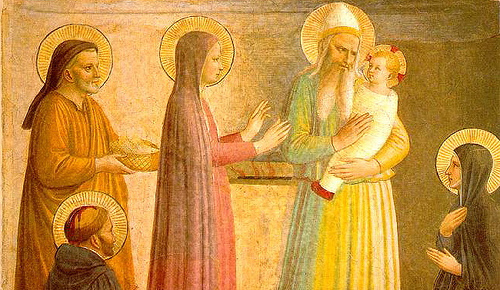
Forty days after Jesus’ birth, Joseph and Mary took him up to Jerusalem to offer the sacrifice required for a firstborn son. Jesus had been conceived through the Holy Spirit, but that was not the Spirit’s only activity in the world. The Holy Spirit revealed to a devout and righteous man named Simeon that he would encounter the Christ during his lifetime. On the day of the Presentation, the Spirit moved Simeon to come into the temple and enabled him to recognize the Christ when he saw him. Then Simeon took Baby Jesus into his arms and spoke words of prophecy which the Spirit inspired in him. There was also a prophetess there, an 84-year-old widow named Anna who never left the temple but worshiped night and day with fasting and prayer. The Spirit enlightened her too, to draw near and meet the Christ, and she spoke about the child to all. Through the Holy Spirit these servants of God, St. Simeon and St. Anna, were witnesses to Christ and filled with knowledge, courage, and joy. The plan of God was not to keep this gift of the Spirit limited to a few, but to grant him to many.

When the Spirit came down on Pentecost Sunday, St. Peter recalled the Old Testament prophesy of Joel: “‘It will come to pass in the last days,’ God says, ‘that I will pour out a portion of my Spirit upon all flesh. … Indeed, upon my servants and my handmaids I will pour out a portion of my Spirit in those days…” The Holy Spirit is poured out in the Sacrament of Confirmation which, together with Baptism and Eucharist, is necessary for the completion of our baptismal grace.

At Jesus’ baptism, the Holy Spirit descended upon him in the form of a dove, and “drove” and “led” him out into the desert for forty days before commencing his public ministry. The Old Testament had foretold that the Spirit of the Lord would rest upon the Christ or Messiah, titles which both mean “Anointed One.” Jesus was quoting the Prophet Isaiah when he declared in the synagogue at Nazareth, “The Spirit of the Lord God is upon me, because the Lord has anointed me.” Old Covenant priests, prophets, and kings were inaugurated through anointing with oil. Jesus was anointed with the Holy Spirit as our New Covenant Priest, Prophet, and King. And Christians are anointed with that same Spirit through Baptism and Confirmation to participate in Christ’s identity and mission.

In our Latin rite, a person celebrates Confirmation typically sometime after the age of reason, but in danger of death it is even given to newborns. The ordinary minister of Confirmation is the bishop, our successor to the apostles, though Catholic priests can be granted the authority to validly confirm when needed. A person is confirmed when the minister laying his hand on his or her head and anoints the forehead with a blessed oil called chrism while saying, “Be sealed with the Gift of the Holy Spirit.” Chrism is made of olive oil plus a fragrant sap called balsam. This gives chrism its perfumed scent, such that the anointed Christian — to use the words of St. Paul — bears “the aroma of Christ.”

One of my memories from the evening following my Confirmation by Bishop Burke in Eau Claire’s Zorn Arena was feeling great joy. When I wondered at its source I thought, “Oh yeah, the Holy Spirit.” Joy, love, peace, patience, kindness, goodness, generosity, gentleness, faithfulness, modesty, self-control, and chastity are among the Spirit’s fruits. And wisdom, understanding, counsel, fortitude, knowledge, piety, and fear of the Lord are numbered among his gifts.

In the ancient world, oil was a sign of abundance and joy, as at harvest time. It was used for cleansing both before and after baths. The injured used oil to heal wounds and soothe bruises Track and field athletes and wrestlers used it to limber their limbs. And it gave radiant beauty to both men and women’s skin. The Holy Spirit, in addition to the generous gifts he gives and fruits he brings, purifies us from sin and vice toward perfection, heals our past wounds and soothes our daily bruises empowers us to prevail over temptation and opponents, and gives us the beautiful glory of a more than natural goodness.

By the sacrament of Confirmation, you are more perfectly bound to the Church and enriched with a special strength. This sacrament is not an ending but a new beginning. After Confirmation you are, as true witnesses of Christ, more obliged to bravely spread and defend our Faith by word and deed in the world. If you were never confirmed within the Catholic Church, do not neglect this sacrament. Ask me about how you can receive this gift. And if you have already received the Holy Spirit in Confirmation, sincerely and lovingly ask him for his greater gifts and fruits. Like the fire passing atop candles, one to the next, God the Holy Spirit is not diminished by being more widely shared and spread. The child Jesus grew and became strong, filled with wisdom, and the favor of God was upon him. By the Holy Spirit, God desires to do greater things with you.

The Vision of Christian Marriage

January 18, 2025

2nd Sunday in Ordinary Time
By Fr. Victor Feltes

God created mankind in his image; in the image of God he created them; male and female he created them.” When God’s Old Covenant people only knew of God’s oneness, they may have assumed we only share in God’s image by our freewill, our intellect, and our rule over creation. But Jesus reveals to his New Covenant people that God’s oneness is not mere solitude but a unity of persons sharing one divine nature – the Holy Trinity. The Father eternally begets the Son, while the Son eternally gifts himself back to the Father, and from their love the Holy Spirit eternally proceeds. And in the beginning in the Garden of Eden, from Adam’s side close to his heart, Eve is fashioned — the woman of his dreams, his equal in dignity, sharing one human nature. And from their self-gift to each other, another person (children) can proceed. A family or loving community reflects a fuller image of God than an individual alone.

The human body speaks a language. In the one-flesh union, a man and woman’s bodies express a total gift of self to each other, open to enduring love and open to new life. This embrace says, “I give myself to you freely and completely for the rest of our lives. In the sight of God and neighbor I pledge my love for you and promise to will the very best for you.” When an occasion of this act does not match what the language of the body is saying, it is a lie, a sin, and often feels impure. But when what is being said matches the reality, then it is true, pure, and holy. Indeed, for Christian couples it seals or renews their covenant in the Sacrament of Marriage.

God made marriage before the Fall and created it good, but after the Fall the relationships between men and women have been impacted by sin. Since then, their unity has been threatened by discord, spirits of domination, selfishness, infidelity, jealousy, and conflict which can even escalate to hatred and separation. To prevail over sin, man and woman need the help of God’s grace which in his infinite mercy he never refuses them. The Sacrament of Marriage connects couples to Christ’s grace to create new holy families. Indeed, Christ the Bridegroom’s earthly mission was a courtship leading to a marriage with children.

Jesus’ first recorded miracle was performed at the wedding feast of Cana. “There were six stone water jars there for Jewish ceremonial washings,” and his public ministry began by transforming those Old Covenant waters into wine. In Sacred Scripture, six is a number of imperfection and incompletion while seven is a number of completion and perfection. And there is a seventh jar in the Gospel of John: “[On the Cross,] aware that everything was now finished, in order that the Scripture might be fulfilled, Jesus said, ‘I thirst.’ There was a jar filled with sour wine. So they put a sponge soaked in wine on a sprig of hyssop and put it up to his mouth. When Jesus had taken the wine, he said, ‘It is finished (or fulfilled, complete, consummated)’ And bowing his head, he handed over the Spirit.

Jesus is the New or Second Adam who, naked at a tree with the New Eve, proves faithful to God. Jesus enters the deep sleep of death, and from his side, from his heart, water and blood pour forth, the water for baptism and Blood for the Eucharist from which the Bride of Christ is fashioned. This bride, the Church, is fruitful in bearing, nurturing, and forming her children. The Old Testament foreshadowed this, like in our first reading from Isaiah: “As a young man marries a virgin, your builder shall marry you; and as a bridegroom rejoices in his bride, so shall your God rejoice in you.” And at the end of Scripture in the Book of Revelation it is declared in heaven: “Blessed are those who have been called to the wedding feast of the Lamb.”

The Sacrament of Marriage taps into the mystery and power of this loving union of Christ and his Church. In Ephesians 5, St. Paul writes how husbands and wives should love each other, with wives respecting their husbands’ leadership and husbands serving their brides like Jesus loves us. And Paul says in conclusion, “This is a great mystery, but I speak in reference to Christ and the Church.” Twenty years ago this year, when I was still a seminarian I attended my cousin’s wedding. Around the time when the bride and groom exchanged their vows, they were gazing in each other’s eyes, holding hands, and smiling. Then, without anything visibly changing, my perception shifted, and for several seconds I saw in them Jesus Christ marrying the Church. Now I hesitate to share this story because it might be like when someone talks about an “awesome” dream they had which fails to impress or translate for others. Yet I mention it all the same in hopes that, in addition to seeing the importance of being sacramentally married in the Church and being open to God’s will in bearing and raising children, you may have the vision to see your marriage in a new, real, more spiritual and mystical way.

The Great Gift of Baptism

January 11, 2025

Feast of the Baptism of the Lord
By Fr. Victor Feltes

As with the Jewish boys who received the rite of circumcision on their eighth day to enter the Old Covenant, the early Church gave the rite of baptism as a free gift for even newborns to enter the New Covenant. Unlike those of us who were baptized as babies, my friend Elena remembers her baptism from when she was nineteen years old.

She says, “Right up to the night (of that Easter Vigil in 2007), I was still partially afraid that God would strike me down when the baptismal waters touched me. I wanted so much to belong to him but half-thought that maybe he didn’t want me. I thought, ‘If he wanted me in the Church, why didn’t he have me born in a Catholic family?’” Full Christian initiation is accomplished through three sacraments: first, Baptism which is the beginning of new life; Confirmation which is its strengthening; and Holy Eucharist which nourishes the disciple with Jesus’ Body and Blood for transformation in Christ. Elena received all three sacraments that night, “and then after,” she says, “I could hear him in a whole new way (not like a voice but like thoughts that you know come from him). And I knew I was his and that he wanted me.

Through baptism, by being buried and rising again from the waters, we mystically enter the death and resurrection of Jesus. We are united with him as a member of his Church, members of his Body, members of his Bride. Through water and the Holy Spirit, we are “born from above” and “born again.” We become adopted children of God the Father and new temples of the Holy Spirit. Baptism forgives all our sins, indelibly changes our souls, bestows us graces enabling close relationship with God, and makes us sharers in the mission of his Church as priests, prophets, and kings in Christ. Jesus commands us to “go… and make disciples of all nations, baptizing them in the name of the Father and of the Son and of the Holy Spirit, teaching them to observe all that [he has] commanded [us].” Baptism opens the door to the other sacraments. It is the gateway into God’s Kingdom for salvation.

Jesus says, “Whoever believes and is baptized will be saved; whoever does not believe will be condemned.” Baptism is necessary for salvation for those to whom the Gospel has been proclaimed and who have had the opportunity to ask for this sacrament. God has bound salvation to his sacraments, yet he himself is not limited by his sacraments. His Church teaches that unbaptized martyrs, catechumens seeking baptism, and those who are ignorant of the Gospel of Christ and his Church but who seek the truth and do the will of God in accordance with their understanding of it can be saved through a baptism by blood or desire instead of water. How many are saved through these baptisms of desire? We don’t know. We do know that our clear salvific mission is the Great Commission Jesus gives us.

As St. Peter preached at Pentecost: “Repent and be baptized, every one of you, in the name of Jesus Christ for the forgiveness of your sins; and you shall receive the gift of the Holy Spirit!” Ordinarily, only deacons, priests, or bishops should baptize people by pouring, sprinkling, or immersion while invoking the Holy Trinity. However, in an emergency situation, anyone can baptize; simply intend to do what the Church does when it baptizes and pour water on the recipient’s head while saying “I baptize you in the name of the Father, and of the Son, and of the Holy Spirit.

This Sunday, we celebrate the Baptism of Jesus. Though sinless, he voluntarily submits himself to John’s baptism intended for sinners in order “to fulfill all righteousness.” By his own baptism, Christ connects himself with the baptized so the baptized can be united to Christ. Once Jesus was baptized, while he was praying, heaven opened and the Holy Spirit descended upon him in visible form like a dove. And the voice of God the Father came from heaven: “You are my beloved Son; with you I am well pleased.

My friend Elena recalls that after her baptism, “I had this almost euphoric joy for almost a whole year that nothing could touch. I remember some religious sisters I’d met just after my baptism warning me that would fade. I didn’t believe them, but they were right. Hard times came and it got more difficult to hold onto that joy. But I think that joy is what we’ll experience in heaven and I hold onto that hope now.” Our own baptisms may have been many years ago and perhaps we have no memories of that day at all. But the effects of baptism do not depend on our feelings. Remember who you are in Christ. The voice of the Father calls out from heaven for you to hear him: “You are my beloved one, my beloved child, and in you I delight.”

Life Lessons From A Holy Family

December 29, 2024

Feast of the Holy Family
By Fr. Victor Feltes

The Holy Family went up to Jerusalem each year for the feast of Passover. Once, when Jesus was twelve years old, as they were leaving the city at the end of the festival, the Boy Jesus stayed behind without his parents knowing it. Whole communities would pilgrimage to and from these feasts together, so Joseph and Mary had assumed Jesus was walking with others in the caravan during that first day journeying on the road back to Nazareth. But then, perhaps when it was time to share a meal or set up camp for the evening, his parents could not find him. They would have asked all of their relatives and neighbors about the last place they had seen the boy and realized that he had not been with them for hours. Joseph and Mary would soon return to Jerusalem and find Jesus alive and well on the third day. In this difficult episode for the Holy Family, there are lessons for us today.

Jesus had the best parents in all of human history. His adoptive father was a great saint and his mother was filled with grace. And yet, one time, they lost track of their only child for three days. This shows us that sometimes we can try our hardest and things will still go wrong (at least in our own eyes). We can always choose to put forth our best effort, but we cannot control every outcome. Remember: Just because something goes wrong, even painfully wrong, does not necessarily mean that we have sinned. The Blessed Mother was sinless and yet she lost her Son.

When we are little, our parents might seem perfect. As we grow up, we are disappointed to see their imperfections. But as we advance in wisdom and age becoming adults ourselves, we better understand human weakness and limitations. This does not erase people’s flaws and sometimes grave faults, but it can help us have more mercy for people, including forgiving our parents and ourselves.

After three days, Joseph and Mary found Jesus in the temple, “sitting in the midst of the teachers, listening to them and asking them questions.” Jesus shows us that we can learn things even from imperfect people. Jesus’ parents were astonished when they found him, and his mother said to him, “Son, why have you done this to us? Your father and I have been looking for you with great anxiety.” Like holy figures in the Old Testament before her, Mary questions the Lord about the things she does not understand.

Being twelve years old, Jesus was years beyond the age of reason. He must have known his parents would be concerned after he concealed his plans from them. But the Sinless One does not offer an apology. Instead, he asks them, “Why were you looking for me? Did you not know that I must be in my Father’s house?” It is a mystery why it was God’s will for Jesus to remain in Jerusalem. Even after his reply, his parents did not understand what he said to them. But he returned home with them to Nazareth and was obedient to them as he advanced in wisdom and age and favor before God and man. Blessed Mother Mary kept this episode in her memory, remembering its stressful beginning and joyful end, and pondering its meaning in her heart.

The things which happen in our lives, like the circumstances of our upbringing or the crises that come our way, will not always make sense to us. But we can learn and grow from all these things, and become more holy families because of them, for “God works all things for the good of those who love him.”

3 Things I Didn’t Know About Christmas

December 24, 2024

Christmas Eve
By Fr. Victor Feltes

O holy night! Christmas has come! Jesus Christ is born! Tonight we celebrate and hear the story again of his world-changing birth. And though it is a familiar story, we all still have things to learn from it. For example, do you know what swaddling clothes are? “Mary wrapped her Son in swaddling clothes and laid him in a manger.

When I was younger, I didn’t know what swaddling clothes were. Maybe because “swaddle” sounded like “squalid” and I had seen the inside of messy barns, I imagined they were dirty pajamas. It’s actually an ancient and modern practice to use cloth to wrap up infants’ arms and legs tightly to their bodies. This is called “swaddling,” and babies enjoy it — it reminds them of the warm close comfort of the womb.

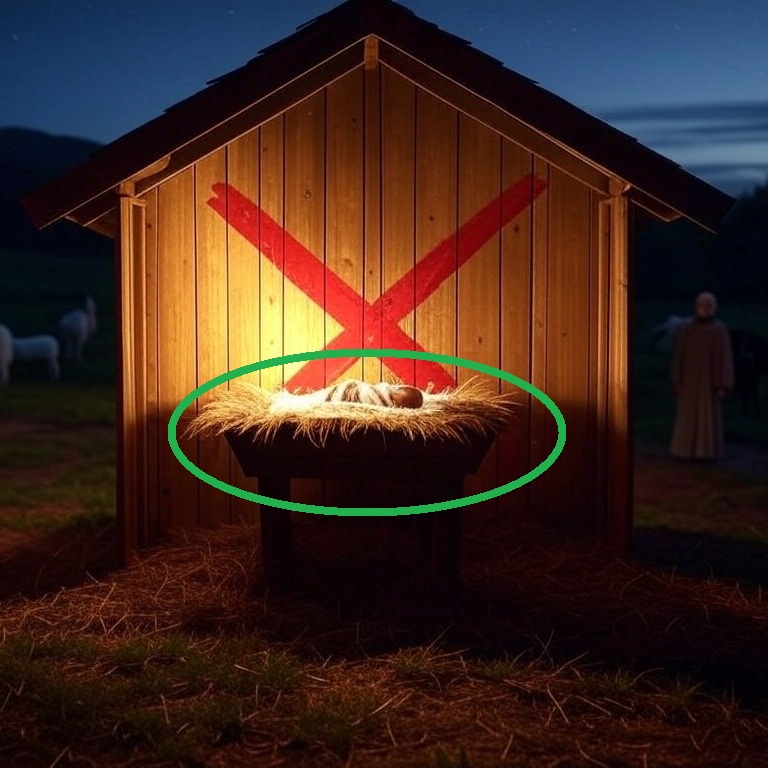
Another thing I didn’t know when I was younger was what a manger is. I assumed the manger was the stable because whenever someone would point out a “manger scene” what I always noticed was the big wooden barn. The shelter in Bethlehem where Jesus was born was actually more like a cave. But regardless, a manger is not a barn; it’s an animal feeding trough that holds dry feeds, like grain. So Mary wrapped up Jesus in swaddling clothes and laid him in a feed box.

These are interesting details, but why does St. Luke mention them? The details do reflect the humility of our Savior and King. Our Lord could have arranged providence instead to have himself born inside a palace with wealth, but he chose to enter into our human poverty and discomfort. But there is another reason why St. Luke notes these things: they foreshadow what would come later.

One day, decades after Christmas, assisted by another Joseph, the Blessed Mother Mary would wrap her Son’s body with cloths and lay him down inside another borrowed cave. And it is fitting that on Christmas night Jesus’ body was placed inside of a feedbox for grain, for he would go on to offer his full self as food for us, as Bread for the life of the world. It’s all connected and the beginning contains the end. Christmas leads to Holy Week, and Holy Week gives us the Faith, the Church, the Holy Eucharist.

A third and final thing I misunderstood when I was younger was when the Magi (or “Wisemen”) really arrived in Bethlehem. Having followed ‘the Christmas Star,’ I assumed they showed up on Christmas night. The Magi actually came later, sometime between forty days and perhaps two years after Christmas. We know this because Joseph and Mary did not yet have the Magi’s gift of gold to buy a sacrificial lamb for the Presentation at the Temple. And King Herod, in his attempt to kill Baby Jesus in Bethlehem, ordered the death of all the baby boys “two-years-old and under.The Magi responded to Christ’s birth and came after Christmas. They entered the house of the Holy Family and they came with gifts.

It is good that we are gathered for this holy night. Jesus has called you here to be with him and to be with us. But like the Magi, we all are also called to respond to his birth by coming after Christmas. This is the house of his Holy Family, and we must honor and adore him, bearing for him the gift of ourselves. Jesus’ wish this Christmas is for you, and each of us need him. Christmas, Easter, the Holy Mass; the Faith, the Church, the Eucharist; the past, the present, eternity; they’re all connected here, in Jesus Christ. Behold, I proclaim to you good news of great joy! A Savior has been born for you who is Christ and Lord. So come, let us adore him!

Imitate The Visitation

December 21, 2024

4th Sunday of Advent
By Fr. Victor Feltes

When Archangel Gabriel informed the Virgin Mary that she would conceive the Son of God, the last recorded thing he told her was: “[B]ehold, Elizabeth, your relative, has also conceived a son in her old age, and this is the sixth month for her who was called barren; for nothing will be impossible for God.” Notice how the angel does not tell Mary what to do with this final bit of news. Yet soon after in response, likely encouraged by the Holy Spirit, “Mary set out and traveled to the hill country in haste to a town of Judah, where she entered the house of Zechariah and greeted Elizabeth.”

St. Luke records that “Mary remained with her about three months and then returned to her home.” Luke’s Gospel contains details about the Annunciation, the Visitation, the Nativity, and Jesus’ early years which are not told in the other Gospels, including things upon which Mary “pondered in her heart.” Now how would you know what someone pondered in their heart unless they told you? This suggests that the original source for the stories in the first chapters of Luke was the Blessed Virgin Mary herself.

At the Visitation, at least four persons are brought together: Elizabeth, with John the Baptist at least twenty weeks along, and Mary her kinswoman, with Jesus who was perhaps only days old within her. Although Mary believed in what was spoken to her by the angel, she may not have known how far his words had been fulfilled. If that is the case, then the first person on earth to recognize and herald the presence of Christ Incarnate was another unborn child.

The angel never commanded Mary to make the journey, but she wanted to be there for Elizabeth. For about three months, apparently until the circumcision and naming of John eight days after his birth, Mary was there to help and support Elizabeth around the house and through her first delivery. Elizabeth, in turn, was an encouragement and help to Mary, sharing Spirit-inspired words, like “blessed are you among women and blessed is the fruit of your womb,” and offering wise advice, such as whether and how Mary should reveal the news of her pregnancy to Joseph. Unborn Jesus and unborn John depended upon their mothers for life itself, yet even these little ones were helpful as well. John’s tiny leaping kicks confirmed to Elizabeth what the Holy Spirit was revealing to her, while the grace of the Son of God was mystically supporting them all. They were called to community and to help and accept help from each other. We are called to help and accept help from one another sharing community in this parish as well.

When I was in seminary, we would gather for meals at round tables in the refectory (or cafeteria). We ate from plates and bowls on top of dinner trays. Sometimes at the end of meals, my fellow seminarians would offer to take up others’ trays to the dishwasher racks. I would gladly accept the offer and thank them for it. However, occasionally when I would offer to take up other seminarians’ trays, someone might adamantly refuse. So I would ask, “How come it’s okay for you to take up my tray but not okay for me to take up yours? Come on, allow me to merit with God from doing some good deeds too!” Mary and Jesus, Elizabeth and John, were all together and helpful to each other. Christians are called not only to serve but to be humble enough to accept and even seek out kindness and help from others.

The providence and grace of God led to the beautiful mystery of the Visitation. This week, God will draw many people to our church for the first time in a long time. Joyfully greet our guests, like Elizabeth welcomed Mary. Like little John the Baptist, express excitement that they are here. Invite them to be with us and be present yourself, at Sunday Mass, as part of our Parish Council of Catholic Women or our Knights of Columbus, in the That Man Is You men’s group, at parish meals or at activities, like my next Trivia Night this January. You have nothing to lose from this, while others have much to gain. And please prayerfully consider creating community events for our parish yourself. Would you like to start a Bible study, or a Catholic video series, or a book or movie club, or host an after-Mass social? Talk to me about whatever you have in mind because I desire your rewarding work to bear much good fruit. Blessed are you who believe that the Lord could do great things through you.

Jesus Christ Is King

November 24, 2024

Solemnity of Christ the King
By Fr. Victor Feltes

Today’s psalm says: “The Lord is King, in splendor robed… Your throne stands firm from of old… Your decrees are worthy of trust indeed…” The Old Testament prophets agreed. Isaiah said “the Lord is our King, it is he who will save us.” Jeremiah said our God “is the living God, the eternal King.” And Zephaniah said “the King of Israel, the Lord, is in your midst.” At the center of human history, when Jesus Christ is born among us, he comes as King as well.

Behold, magi from the east arrived in Jerusalem, saying, ‘Where is the newborn king of the Jews?’” And when Jesus rode into Jerusalem, the crowd cried out, “Hosanna! Blessed is he who comes in the name of the Lord, even the king of Israel!” Pontius Pilate unknowing proclaimed this truth when he had a sign placed above Christ’s head on the Cross: “This is Jesus the Nazorean, the King of the Jews.” This Sunday, we celebrate that our Lord Jesus Christ is King of the universe now.

After his Resurrection, when Jesus appeared to his apostles on a mountain in Galilee, he told them, “All power in heaven and on earth has been given to me” and he gave his Church our Great Commission to spread his Kingdom, reassuring us, “Behold, I am with you always, until the end of the age.” This raises a challenging question for us: why is Jesus not visibly doing more now? All power in heaven and on earth has been given to him, so why is he not making more things happen?

His disciples wondered about this, too. Before the Risen Jesus ascended into Heaven, they asked him, “Lord, are you at this time going to restore the Kingdom to Israel?” He answered, “It is not for you to know the times or seasons that the Father has established by his own authority. But you will receive power when the Holy Spirit comes upon you, and you will be my witnesses in Jerusalem, throughout Judea and Samaria, and to the ends of the earth.” The Kingdom of God is among us, and Jesus calls us to work with him to spread it and deepen it, everywhere in everyone.

But why doesn’t Jesus just force everything to be better? As God, he is omnipotent. He has the power to do all possible things. But one thing he cannot do is to force someone’s free “No” into a free “Yes.” When Jesus returns in unveiled glory, coming upon the clouds and flanked by his angels in full-force, humanity’s time for decision will be over. That day will bring the Last Judgment and sin will no longer be given any quarter. After that, there will be only God’s Kingdom and the outer darkness. Now is the time for freely choosing.

Do we desire God’s Kingdom? Around 1000 B.C., the elders of Israel came to the Prophet Samuel asking, “Appoint a king over us to rule us like other nations.” Samuel was displeased they said, “Give us a king to rule us,” but he brought the matter to the Lord in prayer. And the Lord replied: “Listen to whatever the people say. You are not the one they are rejecting. They are rejecting me as their king.” And during Christ’s Passion, Pilate asked the crowd, “Shall I crucify your king?” The chief priests answered for the mob, “We have no king but Caesar.” They were rejecting the Lord as their King. When we pray “thy Kingdom come, thy will be done, on earth as it is in Heaven,” do we really mean what we are saying?

When Pilate asked Jesus if he was a king, Jesus answered, “You say I am a king. For this I was born and for this I came into the world, to testify to the truth. Everyone who belongs to the truth listens to my voice.” Pilate then responds with a line which today’s Gospel reading cuts off. Pilate dismissively replies, “What is truth,” and then turns his back on Truth himself, and walks away. If you desire Jesus as your Savior, you must let him be your Lord.

Advent begins next Sunday—our annual season of preparation for the coming of the Lord. Here are three wise steps for a better Advent. First, his decrees are worthy of trust. Which of his words will you neglect no more but specifically begin putting into practice? Make yourself a short list. Second, make an Advent Confession, for a fresh beginning, a new infusion of grace. And third, pray every day, for you cannot thrive without him. The saints worked wonders in this world by following Christ and doing his will. So can you. The Lord is in your midst. He is the living God, our eternal King. And if we will let him, it is he who will save us.

Do Not Fear The Ending

November 16, 2024

33rd Sunday in Ordinary Time
By Fr. Victor Feltes

The Prophet Daniel says of the end of days, “It shall be a time unsurpassed in distress…” And Jesus foretells, “In those days after that tribulation the sun will be darkened, and the moon will not give its light, and the stars will be falling from the sky, and the powers in the heavens will be shaken.” Many Christians today regard the end times with aversion and dread. Many fear Jesus Christ as judge, as if he were coming to destroy us. And yet, at the conclusion of the Book of Revelation, in response to the One who declares, “Yes, I am coming soon,” God’s people cry out in answer, “Amen! Come, Lord Jesus!

The early Christians saw the arrival of God’s Kingdom for us—either when we die or at Christ’s Second Coming—as Good News. St. Paul the Apostle wrote, “For me, life is Christ and death is gain!” “Jesus Christ is the same yesterday, today, and forever,” and he tells us over and over, “Do not be afraid.” There will be trials before the end, in our own individual lifetimes and in the earthly pilgrimage of the Church, but what comes after this will be much, much better.

Out of fear of escapism, we fail to reflect upon Heaven enough. Great hope comes from having something great you’re looking forward to. Imagine Heaven, where sin will be no more; no shame or temptation; no guilt or condemnation; no ugliness, decay, or corruption; no sickness or suffering; no fear or tears; no pain or death; no more crime or injustice; no more separation from God and his saints. And remember not only what evils are absent in Heaven, but also what supreme goods are found there. In Heaven, there is peace and blessings; praise and rewards; knowledge and wonders; perfection and joys; beauty, delights, and unending love; reunion with loved ones; fellowship with the saints; and complete union with God.

The Prophet Daniel foretold about the Day of Resurrection: “At that time, [God’s] people shall escape, everyone who is found written in the book. Many of those who sleep in the dust of the earth shall awake; some to everlasting life, others to reproach and everlasting disgrace.” Sometimes Christians worry whether or not they are in that Book of Life. I do believe more of us need to be praying, going to Confession, and attending Holy Mass, but I like to reassure people by asking them this: First, what is your greatest desire? Next, what do you think is the greatest desire of a saint? If your answers are similar, then you have the desires of a saint—and that’s a very good sign.

Imagine another person just like you in every way; the same past, all the same strengths and weaknesses as you. What would you think of that person? Could you be friends with them? Do not treat yourself worse than you treat others, but love yourself like your neighbor. Be not afraid and remember that the Lord is preparing you for Heaven because God loves you.

A Proud Member of this Holy Family — Funeral Homily for Jesse LaGesse, 85

October 11, 2024

By Deacon Dick Kostner

When Father sent out the readings for today I was bewildered about the Gospel Sharon had chosen for the Mass today. Funeral homilies are supposed to direct our thoughts not to this world but to our heavenly home and the hereafter. I sent Father a text about the choices picked directed to the Holy Family saying I could not see what the readings had to do with our next life. He gave me a call and told me about the worry Mary and Joseph had about not knowing where he was and that it took “three days” before they finally found him. I have read and recited this Gospel many times in my life but I never picked up on “three days” until his call. This was to be a preview of what was to happen in the future for Mary to prepare for the death of Jesus. It is a preview of all of us to prepare ourselves to the fact that our family members will someday experience death and that we will be separated from them in body at least until our bodies are resurrected at the end of time. But the good news is that because of Jesus we are all invited to rejoin and be a part of the Holy Family for all eternity without ever being required to experience again, the loss felt when someone we love dies. Now I have given you Fr. Feltes’ interpretation of the Gospel now I will give you mine.

This story about Jesus expresses to me that Jesus was, in fact, human. He was centered on his mission of helping others learn more about scriptures and its meaning and perhaps forgot that his parents would worry about what happened to him. Lesson to be learned, we need to acquire the necessity to think and teach our loved ones about how their actions may affect those they love. If Jesus could drop the ball we too should be patient when we try to educate our young people of how their actions can and will affect those they love, and share with them your thoughts and opinions as to how this will affect lives.

The bad news is that during our earthly life we still are required to carry crosses in life as did Jesus, and Jesse, knowing that we will be separated in body from our earthly blood family and from the family of Jesus which the Church refers to as the Holy Family of God because of a one time death.

This December, I will be celebrating my 25th year of being a Permanent Deacon. It will also be my 30th year of offering to this parish the Stations of the Cross on Tuesday evenings during the Lenten season. One of the Fathers of this Parish gathering for prayer was none other than Jesse, who was the first to offer his help in carrying that cross over there as this Holy Family reflected upon the Passion and death of Jesus the Lamb of God, who was willing to suffer and die so that we could find everlasting life with Him as a member of the Holy Family of God.

I have always invited members of the parish to help by carrying the cross during our Stations when it was first introduced to us by our Father Tom, but many were too bashful to accept the invitation, but not Jess. When he and Sharon would show up he would always ask if I needed someone to carry the cross. It was his personal desire to be a partner with Jesus in accepting whatever crosses he was asked to bear to make the life of his blood family and his spiritual church families crosses easier to bear. He did this for over 25 years until his own health would not allow him to carry that cross shown over there, as he had other heavier crosses to carry before his life would end. Now he has moved up to receive his reward for all the gifts of service that he gave, not only his family but the city of Bloomer and his church, as a proud member of this Holy Family.

Long ago, I had told my wife that the cross Jess carried for years for us would be present at his funeral. If it wasn’t so big it should have been buried with him but I think maybe we who have been left, need it here, at St. Paul’s, to honor and thank him for his living with and being a active member of the Holy Family of St. Paul’s Catholic Church and the people of Bloomer. Jesus tells us the two greatest commandments to obey is love of God and love of our neighbor. Thanks Jess for living out your life in service to God, your family, and your Bloomer faith family. We will always be together with you in spirit, and please pray for us as we try to bear our crosses of life.

What is Good for Us?

September 1, 2024

22nd Sunday in Ordinary Time
By Fr. Victor Feltes

Jesus said to the crowd, “Hear me, all of you, and understand. Nothing that enters one from outside can defile that person; but the things that come out from within are what defile.” Jesus speaks to the Old Covenant’s rules about the ritual purity of objects and foods. With the arrival of his New Covenant those ordinances passed away. “Thus,” St. Mark writes, “he declared all foods clean.” After carefully forming his Jewish people as a unique group set apart from the world, God lifts the burden of those purity laws to open the door to true religion for all the nations. That has led to gentiles like you and me worshipping him here together this Sunday.

So what substances should enter our bodies? Millions of Americans now use illegal drugs, abuse alcohol or prescription drugs. I can imagine someone asking: “If nothing from outside the body defiles, if God has created all things good, then how could any substance be forbidden?” Yes, all that God created is good, very good, but recall how one of his first commandments in the Garden of Eden was not to eat from a certain plant. The woman saw how that tree was good for food, pleasing to the eyes, and desirable for gaining wisdom, but it was not good for Adam and Eve to then eat of its fruit. Fire is another of God’s good creations, a blessing very useful for life, but misusing it can burn you or may entirely consume you.

Alcohol is a similar case; a good thing which can be harmful. Psalm 104 says God gives man “wine to gladden their hearts.” Jesus transformed water into wine at the Wedding Feast of Cana, and we know wine back then was more than just grape juice. No one put their new wine into old wineskins because the alcoholic fermentation would burst them. St. Paul even once counseled St. Timothy, “Stop drinking only water, but have a little wine for the sake of your stomach and your frequent illnesses.” So alcohol is a blessing, but Scripture also describes its dangers. Proverbs says, “Wine is arrogant, strong drink is riotous; none who are intoxicated by them are wise.” And St. Paul taught the Ephesians, “Do not get drunk on wine, in which lies debauchery.”

Intoxication or drunkenness carries both personal and communal consequences. Opposition alcohol’s harms was once so intense in our country that the 18th Amendment banned “the manufacture, sale, or transportation of intoxicating liquors” beginning in 1919. After almost 15 years, because of increased crime and corruption and the government’s desire for more tax revenue during the Great Depression, Prohibition was repealed in 1933. Of course, just because something is legalized doesn’t mean it’s safe, healthy, or helpful for me. For instance, smoking is highly-addictive and causes cancer but it’s legal in all fifty states. And now many places are legalizing or decriminalizing marijuana use despite its known health and social harms. Just because an activity is legal doesn’t mean we or those we love should do it.

True freedom is not unchecked license. It’s the ability to choose and do what’s right and best. Our addictions make us slaves. Consider your habits. Are their fruits good or bad? Jesus said the sins which come out of us are what defile us. Look at what comes from you because of this or that habit. What habits, then, should you moderate or abstain from entirely? St. James urges us in today’s second reading to “be doers of the word and not hearers only, deluding yourselves… Humbly welcome the word that has been planted in you and is able to save your souls.” Accept the pruning of correction and the nourishing support of others to bear better and more abundant fruit.

Why do we freely chose to sin – to do what we know is wrong? Because it feels like a shortcut to peace and happiness. But the holes in human hearts are meant to be filled by love instead of sins — divine and neighborly love, poured out and received. Jesus calls all sinners to change but he does not expect us to achieve this change alone. Ask for his help, his grace, his inspiration and strength, “for what great nation is there that has gods so close to it as the Lord, our God, is to us whenever we call upon him?” And through the support of fellow Christians, helping each other be better, embrace Christ’s ways which bring fruitful joys without any regrets.