Archive for the ‘Passion’ Category

Born to Die & Rise — Funeral Homily for Matthew “Matt” Jaworski, 63

December 23, 2025

By Fr. Victor Feltes

In one sense, no date on the calendar is a good time for a funeral. Any day for a loved one’s funeral rites will feel off, discordant. But today, on this eve of Christmas Eve, it feels like an especially strange time to have Matt’s funeral. We will soon be marking the glorious birth of Baby Jesus — how God becomes man and lives among us. We rightly celebrate that as one of the most joyous feasts of the year. But the life and joy of Christmas seems to be stark contrast with the loss and sadness of today. And yet it may be said that Jesus Christ “was born to die.” If Jesus Christ, the God-Man, had lived without ever becoming our redeeming sacrifice, we would still remain hostages to Satan, sin, death, and suffering forever. Instead, God the Father “did not spare his own Son but handed him over for us all.

The signs of Christ’s salvific mission were there from the beginning. The very name “Jesus” (or “Yeshua”) means “God Saves.” He was born in the hometown of David the shepherd-king, at Bethlehem, from where lambs to be sacrificed at the temple came. Jesus would go on to be sacrificed as our Good Shepherd-King, at Jerusalem, as the Lamb of God who takes away the sins of the world. On Christmas night, his Mother Mary wrapped his body in cloth and laid him down inside a borrowed cave. Years later on Good Friday, she would wrap his body in cloth again and lay his body down inside another borrowed cave. Jesus’ Christmas birth and Easter resurrection, these sources for our hope, did not come without difficult trials.

The first Christmas was not easy but the Holy Family was always in God’s care. Imagine being poor, being far from home, and having your first child in a place for animals. Yet Mary and Joseph carried faith and peace within them, from the words and miracles from heaven recorded in salvation history and experienced in their own lives. Jesus Christ’s young and unexpected death stunned those who knew and loved him; however, even that awful day was foreseen in heaven’s providence. God’s Beloved One was remembered and soon would rise again. Blessed were those who mourned for him and prayed for him, for they were soon comforted. Matt’s unexpected passing saddens and a day like this is always painful. But we carry faith and hope from God, for Matt—for whom we pray—and for every one of us. Though God’s beloved one must pass through Good Friday, Christmas leads us to Easter joy.

Our Crucified King

November 23, 2025

Solemnity of Christ the King
By Fr. Victor Feltes

Our English word “Excruciating” comes from the Latin words for “Cross” and “Torment.” The Romans did not invent crucifixion, the Persians and the Greeks practiced it first, but the Romans more widely used the method. It was an easy way to execute people very visibly, horrifically, and slowly as a warning example to others. Typically, when the Romans crucified someone, they would place a sign above the condemned person’s head to indicate why they were being killed. St. John’s Gospel records that Governor Pilate put a sign on Jesus’ Cross written in Hebrew, Latin, and Greek. You sometimes see the initials “INRI” atop crucifixes. This represents the Latin phrase “Iesus Nazarenus Rex Iudaeorum,” the charge against our Lord. That is, “Jesus the Nazorean, the King of the Jews.” He was killed because of who he was and who he is: Jesus the Christ and the King of the universe.

Of course, the people who killed him did not believe this. They thought he was deluded or a fraud. Hence, the triple call for him to save himself and prove them wrong. The Jewish rulers sneered and said, “Let him save himself if he is the chosen one, the Christ of God.” The Roman soldiers jeered and called out, “If you are King of the Jews, save yourself.” And one of the criminals reviled him by saying, “Are you not the Christ? Save yourself and us.” Could Jesus have saved himself from his crucifixion?

St. John’s Gospel quotes Jesus before his Passion saying, “No one takes (my life) from me, but I lay it down on my own. I have power to lay it down, and power to take it up again. This command I have received from my Father.” And St. Matthew quotes Jesus later declaring in the Garden of Gethsemane, “Do you think that I cannot call upon my Father and he will not provide me at this moment with more than twelve legions of angels? But then how would the Scriptures be fulfilled which say that it must come to pass in this way?” So Jesus possessed the power to escape the Cross, but that was not the will or plan of God, which the Eternal Son was party to from the beginning. Jesus assumes “our bone and our flesh” to achieve our reconciliation as a descendant of David, “making peace by the blood of his Cross.” Perhaps the Holy Trinity could have inspired less painful prophecies to achieve our redemption and forgiveness of our sins, but Christ’s crucifixion is what they chose. They chose this path to win our love.

Matthew and Mark’s Gospels suggests that the Penitent Thief (traditionally known as St. Dismas) had derided Jesus, too, at first. But seeing the extraordinary way Jesus acted, hearing the things he said, all while crucified, won over that man’s mind and heart. ‘This man has done nothing criminal and this is how he dies? He truly knows my suffering and this is how he lives. This is the Christ I want to be allied with.’ St. And Luke quotes him saying, “Jesus, remember me when you come into your Kingdom.”

That movement saved the man’s soul, and we enjoy the benefit of understanding Jesus Christ even better than him. St. Paul writes that God “proves his love for us in that while we were still sinners Christ died for us.” Be moved by this manifestation of God’s great love. Submit to Jesus Christ as your King so that he may be your Savior and one day we may all be with him in Paradise.

The River From The Temple

November 9, 2025

Feast of the Dedication of the Lateran Basilica
By Fr. Victor Feltes

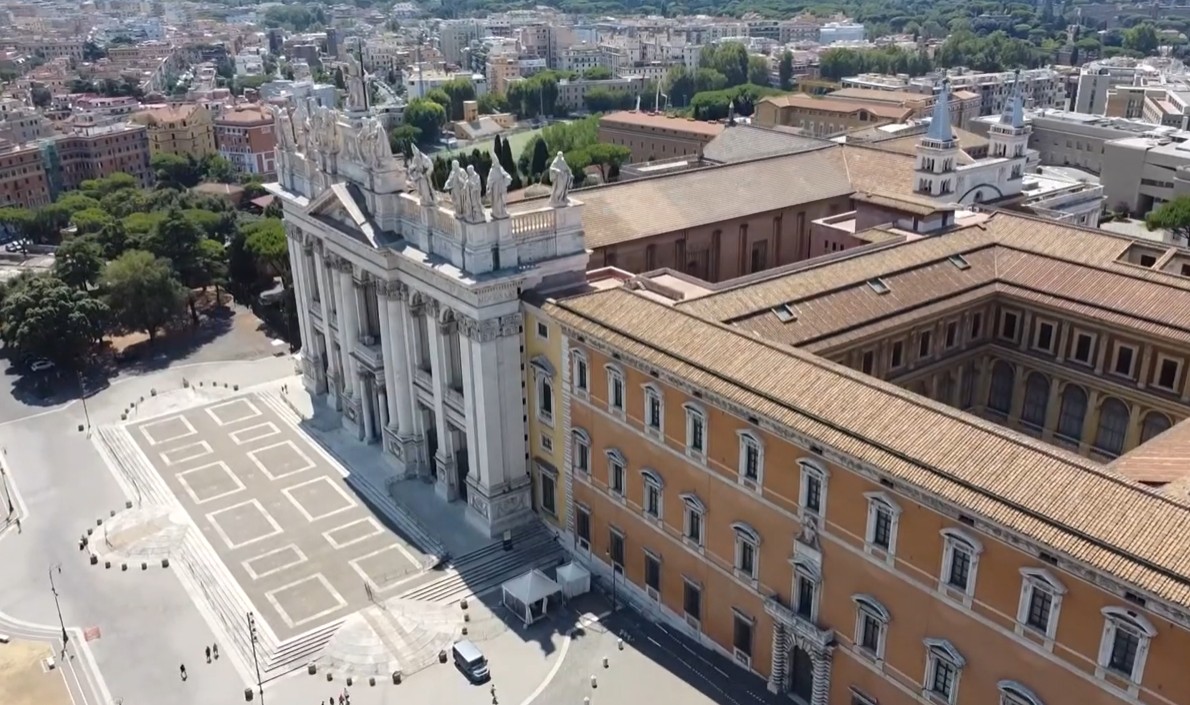
This Sunday, the Church throughout the world celebrates the dedication of the Lateran Basilica in Rome, which turns 1,701 years old this year. While St. Peter’s Basilica in Vatican City is more famous, the Lateran Basilica is the pope’s cathedral, the cathedral of the Archdiocese of Rome. This is why the Lateran Basilica is called “the mother and head” of the hundreds of thousands of Catholic churches around the world. Even if we had to go forward without any of these beautiful buildings, we could still practice our Catholic Faith through celebrating the Sacraments and offering our lives and prayers to God. But for Jews during much of the Old Testament, only one building was their place for sacrificial worship and considered God’s holy dwelling place on earth. In today’s first reading, the Prophet Ezekiel is taken by an angel to that Jewish temple in Jerusalem.

Of this vision, Ezekiel writes: “I saw water flowing out from beneath the threshold of the temple toward the east, for the façade of the temple was toward the east; the water flowed down from the southern side of the temple, south of the altar.” Ezekiel records that trickling water flowing through the gates of the temple and out of the city into the east, somehow becoming a river. The angel declares, “This water flows… and empties into the sea, the salt waters [of the Dead Sea], which it makes fresh. Wherever the river flows, every sort of living creature that can multiply shall live, and there shall be abundant fish, for wherever this water comes the sea shall be made fresh. Along both banks of the river, fruit trees of every kind shall grow; their leaves shall not fade, nor their fruit fail. Every month they shall bear fresh fruit, for they shall be watered by the flow from the sanctuary. Their fruit shall serve for food, and their leaves for medicine.” Ezekiel’s mysterious vision of this miraculous river which purifies and renews, producing abundant life, is a prophesy which finds its fulfillment in Jesus Christ and his Church.

In today’s Gospel, when Jesus forcefully clears out the animal sellers and money-changers from the temple area, the Jews ask him, “What sign can you show us for doing this?” And Jesus answers, “Destroy this temple and in three days I will raise it up.” The Jews were incredulous at hearing this and said, “This temple has been under construction for forty-six years and you will raise it up in three days!?” But, as St. John the Gospel writer notes in the text, Jesus “was speaking about the temple of his Body.” After Jesus had risen from the dead, his disciples remembered that Christ had said this and understood its significance.

On Good Friday, when the soldiers saw that Jesus was already dead on the Cross, one of them “thrust his lance into his side, and immediately blood and water flowed out.” Today, physicians affirm that the traumas of Jesus’ Passion and death could cause red and clear fluids to build up in his chest around his heart, resulting in “blood and water” flowing out when the spear was withdrawn, just as St. John witnessed. Do we know into which side of Jesus’ body the spear entered — was it Jesus’ left side or his right side?

Recall how Ezekiel saw the water flowing out in his vision: “The façade of the temple was toward the east” and “the water flowed down from the southern side of the temple, south of the altar.” If Jesus on the Cross faces “east” like the front-face of the Jewish temple, then water coming down from the “south side of the temple (of his Body)” would be flowing from Christ’s right side. And 2,000-year-old forensic evidence may actually confirm this detail. The Shroud of Turin, which appears more likely than not to be an authentic image of Jesus’ body in the tomb, after accounting for the image’s mirror-reflective nature, shows a wound in Christ’s right side. St. Augustine and other Church Fathers recognize flowing from Christ’s side the water of baptism and the blood of the Eucharist. In the beginning, Adam was put into a deep sleep and God fashioned a bride for him from the rib of his side. Jesus Christ on the Cross, asleep in death, has his Bride the Church fashioned from his side through his Holy Sacraments. And when the nations are one day assembled before Christ the King, for the Final Judgment described in Matthew 25, it is the sheep gathered to his right side who will be saved.

Now that trickle from Christ’s side is become a mighty river of grace; purifying and renewing, generating abundant new life in whomever and wherever it flows. Faithful Christian people and places which grow close to that river and are fed by its waters shall endure and produce good growth, healing, and nourishment. We are blessed to enjoy this beautiful church, but wherever we worship our true temple and center of grace prepared for us by divine providence across millennia is our Lord and Savior, Jesus Christ. So with awe, reverence, gratitude, and love, let us turn to him and draw near to his Eucharistic sacrifice.

Jesus’ Love Succeeds

April 18, 2025

Good Friday
By Fr. Victor Feltes

The story of Christ’s Passion is a chronicle of human failures. Simon Peter, chief of his disciples, denies being his friend three times. Caiaphas and Annas, the highest Jewish leaders, reject, condemn, and hand over their Messiah. Pilate and Herod, representing the world’s political powers, tolerate injustice, persecute, and execute the Innocent One. The mob of humanity chooses the violent rebel, Barabbas (whose name means “Son of the Father”) instead of God’s Son, the peaceful Savior.

It is poignant and fitting how our liturgy has us speak the mob’s words, “Crucify him! Crucify him! …Take him away! Crucify him!” since it was our sins too which sent Jesus to the Cross. And yet, even as we are humbled and convicted at Jesus being crucified because of us, remember that Jesus accepted humiliation, pain, and death because of his love of us.

Though we may fail, Jesus’ love succeeds. He said, “When I am lifted up from the earth I will draw everyone to myself.” He stretches out his arms between heaven and earth as the everlasting sign of his New Covenant to invite and embrace us. And from the Cross, he says, “I thirst,” because his love thirsts for you and me.

Consolations In The Passion

April 12, 2025

Palm Sunday
By Fr. Victor Feltes

We rightly recall Christ’s sufferings during his Passion but have you ever meditated upon his consolations?

When Jesus went out to pray and await his betrayal at the Mount of Olives, his disciples followed him. Their flesh was weak but their spirits were willing, and in that dark hour he was glad not to be alone. Jesus also had constant recourse to his Father. Though not all of his prayers were immediately granted, he knew his Father always heard him.

When Pilate condemned Jesus, they led him away but made Simon of Cyrene help carry his Cross. That was a welcome relief in his weakened condition. A large crowd followed Jesus, including many women who mourned and cried for him. Those women felt powerless, but their expressions of devotion strengthened him.

Once they had crucified Jesus, one of the condemned men mocked him but the other honored Christ, expressing saving faith in him. Jesus could behold his sacrifice already bearing fruit. Standing by his Cross were his mother and his beloved disciple, and “all his acquaintances stood at a distance, including the women who had followed him from Galilee” witnessing these events. And he saw them there for love of him, and it consoled him.

Therefore, if Jesus during his greatest suffering received some consolations, then in our trials we should not be ashamed to ask for help and comforts too. Jesus’ disciples were not perfect and they sometimes let him down, but the presence and support of his friends helped him to press on. So pray to God for consolation, invest in your personal relationships, and stay close to your Christian community. If you are going to pick up your cross daily and follow Christ in his sufferings you must also share in his consolations.

Why Bread & Wine

February 17, 2025

6th Sunday in Ordinary Time
By Fr. Victor Feltes

This Sunday, our seven week exploration of the sacraments culminates and concludes with the Most Holy Sacrament, the Most Blessed Sacrament, the Source and Summit of the Christian life. It is called the Breaking of the Bread, the Lord’s Supper, our King’s Heavenly Banquet, the Marriage Supper of the Lamb. It is the Bread from Heaven, the Bread of Angels, the Bread of Life; the antidote for death and the medicine of immortality. This sacrament is the Holy Sacrifice, our Holy Communion, the Most Holy Eucharist. After this homily, following our profession of the Creed and our prayers of the faithful, gift-bearers will carry up bread and wine along with water and our Sunday collection. Why did our Lord in his divine wisdom choose bread and wine for use in a sacrament, for this greatest sacrament? There are many reasons.

One reason is that the Last Supper was a Passover meal, and Passover meals featured unleavened bread and wine with a sacrificed lamb. The Passover celebrated how the angel of death harmlessly passed over the homes marked with the blood of the lamb, freeing God’s people from Egyptian slavery to Pharaoh, and enabling them to journey toward the Promised Land. The Eucharist frees us from slavery to Satan, sin, and death, enabling us to enter heaven and the new Creation, passing over unharmed into freedom and new life.

During the exodus, God’s people ate flakes of Manna in the desert. This Manna resembled and was called bread from heaven strengthening and preserving them on their journey. Jesus proclaims himself the new Bread from Heaven: “I am the living bread that came down from heaven; whoever eats this bread will live forever; and the bread that I will give is my flesh for the life of the world.”

Jesus changing water into wine at Cana reveals Christ can transform one thing into another. And Jesus’ multiplication of loaves shows that he can multiply something so that a multitude can partake of it. These miracles foreshadow how Jesus changes bread and wine into himself so that all of us can receive him in the Eucharist.

Daily bread” and wine were staple foods for Gentiles and Jews in the ancient world. Psalm 104 says God gave “wine to gladden the heart of man,” and “bread to strengthen man’s heart.” Though wine was more commonplace in those days, it was a symbol of special rejoicing as well. Jeremiah noted how people typically tread grapes with “shouts of joy,” and Ecclesiastes observed “wine gives joy to the living.” A feast of bread and wine combines the humblest of common foods with the peak of luxurious royal drinks. Likewise, the Eucharist unites the ordinary and extraordinary, our earthly everyday combines with the height of heavenly celebration.

Wheat and grapes grow on every continent on earth besides Antarctica, making these sacramental ingredients available to people throughout the world. God provides the raw materials, fruits of the earth and vine, to be worked by human hands into the bread and wine we offer the Lord God of all Creation. We are called to serve as his faithful stewards. Christ then takes our works and makes them still more bountiful. He does this in this sacrament and also throughout our lives.

The processes for making bread and wine reflects the Passion of Christ. Wheat is beaten, ground, and pummeled. Grapes are crushed, drained, and outpoured. They suffer along their way to God-honoring sacrificial glory.

The baked bread resembles human skin and red wine resembles human blood. And at the words of Consecration these things really become Jesus Christ through and through—his Body, Blood, Soul, and Divinity; living, whole, and undivided—with only the outward appearances of bread and wine remaining. To symbolically separate the Body of Christ from his Precious Blood is a symbol of death. And their reunion within us is a symbol of resurrection. Christ is truly risen in history and risen in us. As Jesus says, “Whoever eats my flesh and drinks my blood remains in me and I in him.”

This sacred sacrifice is also a communal meal. The Eucharist which unites us to Jesus Christ unites us to one another in him. As St. Paul writes to the Corinthians, “The cup of blessing which we bless, is it not a participation in the blood of Christ? The bread which we break, is it not a participation in the body of Christ? Because there is one bread, we who are many are one body, for we all partake of the one bread.”

Finally, consider how instead of coming to us as a frightening fire, Jesus Christ comes as non-threatening food. He says, “Take this, all of you, and eat of it, for this is my Body… Take this, all of you, and drink from it, for this is the chalice of my Blood…” It is very important that we approach him lovingly and reverently, in a state of grace, but Jesus urges us to partake of him. Christ’s desire is for us and him to live as one, to become the Body of Christ you receive in this Most Blessed Sacrament.

Why Did They Do It?

March 29, 2024

Good Friday
By Fr. Victor Feltes

Why did they do it? Judas, the Jewish leaders, Pilate — why did they send Jesus to his death? Understanding their motives can help us avoid their errors.

Governor Pilate was actually not eager to kill Jesus. He did not want to get involved in that religious squabble. Pilate declared three times that he found no guilt in Jesus, but then people were saying, “If you release him, you are not a Friend of Caesar!” When Pilate’s interests were threatened he acted selfishly rather than doing justice, and condemned to death an innocent man whom he had a duty to protect. We have a responsibility to care for the vulnerable too.

As for the Jewish leaders, Pilate knew that they had handed over Jesus out of envy. Jesus did not belong to their circles but hailed from rural Galilee, and his miracles and teachings were drawing crowds of thousands. He challenged those religious figures’ hypocrisy, their vanity, their neglect of justice, mercy, and faithfulness — the weightier things of the law. And the proud Jewish leaders, instead of despising their sins and repenting, despised and condemned the messenger. We must be humble enough to love Jesus more than our sins.

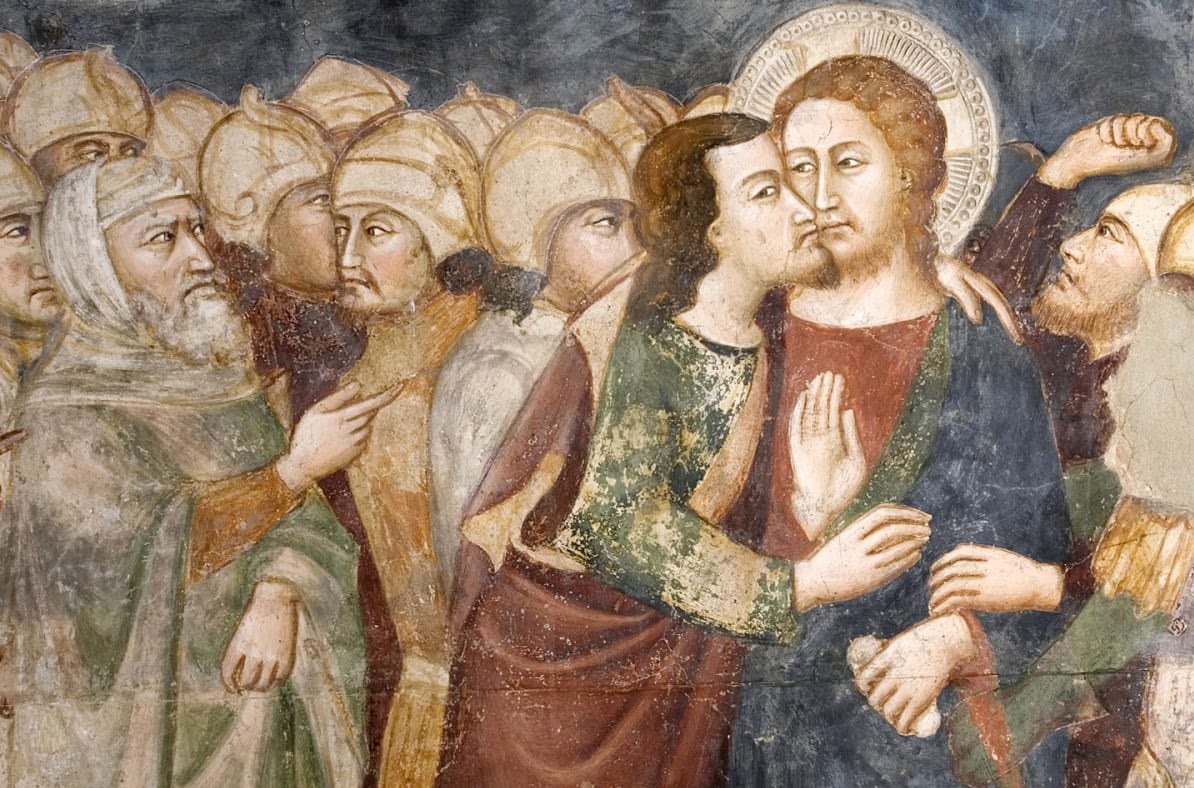
Why did Judas Iscariot betray him? St. John reveals that Judas carried the apostles’ money bag and used to steal the contributions. In exchange for his betrayal, he accepted thirty pieces of silver, about a month’s wages for a day-laborer, so the greed of Judas was one factor. Yet when he saw that Jesus had been condemned to death Judas tried to return the money, to undo what he had done. It appears that he did not want Jesus to die but wished to force him into a confrontation where he would wield his might and claim King David’s throne. Perhaps he greeted Jesus with a kiss in the garden to conceal his treachery, hoping to soon enjoy power alongside him in luxury. Judas wanted Jesus to be his king but on Judas’ own terms. We need to accept Christ as our Lord according to his will.

So that is why they did it, but why did Jesus do it? Why did Jesus allow himself to be killed? He did it for love. He was obedient unto death because of his love for God the Father and he became our saving sacrifice because of his love for us. The crucifixion is Jesus Christ’s glory because it reveals to everyone for all time his great goodness, holy virtue, and incredible love.

Jesus Our Passover Lamb

March 28, 2024

Good Friday
By Fr. Chinnappan Pelavendran

On Good Friday, Jesus took our place, our shame, our chains, our disfigured personalities, our toils, enslavement, and disgraced. He demonstrated the nature of the human condition through his pains, suffering, and disgrace. By his suffering and death, Jesus took our position. He exchanged our shame with his glory. This is an indescribable love. The passion and death of Jesus is a mystery beyond our comprehension. It is a mystery because it is God’s love for us. We understand bits and pieces, but our minds are too finite to understand the whole thing.

We are also conscious today of the reason Jesus underwent his passion and death for us. The prophecy of Jesus’ passion in our first reading today from the prophet Isaiah tells us:

It was our infirmities that he bore,
our sufferings that he endured. . .
he was pierced for our offenses,
crushed for our sins;
upon him was the chastisement that makes us whole,
by his stripes we were healed.  (Isa 53:4-5)

In the Old Covenant, before an animal was sacrificed in the temple, the priest would put his hand on the animal’s head to signify the sins of the person making the offering being transferred onto that animal which was then offered for his sins. In the New Covenant, our sins went on Jesus during his passion and death. He willingly submitted to the torture of his passion and death to take our sins on himself.

St. John tells us that when Jesus was offered wine on the cross to dull his pain, the sponge was put on a hyssop stick. Hyssop was the plant used by the Hebrews at the first Passover to put the blood around their doors to protect them during the night when the firstborn of the Egyptians died.

When the Passover lamb was killed and prepared for cooking, not one of its bones was to be broken. The soldiers broke the legs of the two crucified criminals next to Jesus to make them suffocate and die, but Jesus had already died so they did not break his legs.

The blood of the first Passover lamb spared the lives of the Hebrews in Egypt; the blood of Jesus our Passover Lamb saves us from the damnation due because of our sins. The Passover lamb had to be consumed and not just killed, and we consume Jesus our Passover Lamb in the Eucharist.

So, let us confidently approach his throne of grace to receive mercy and to find grace when we are in need. Therefore, beloved brothers and sisters, as we celebrate the mystery of the Lord’s passion and death, may God forgive our sins, assist us in our sufferings, and give us the grace to identify with those who suffer.

Psalm 22 Fulfilled

March 24, 2024

Palm Sunday
By Fr. Victor Feltes

A thousand years before Christ’s Passion, King David was inspired by the Holy Spirit to pen the Twenty-Second Psalm. Jesus quotes this psalm’s opening words from the Cross: “My God, my God, why have you abandoned me?” Psalm 22 contains passage after passage prophetically predicting details of Good Friday.

It foretells how Christ’s enemies would deride him: “Scorned by men, despised by the people… they mock me with parted lips, they wag their heads: ‘He relied on the Lord; let him deliver him, let him rescue him, if he loves him.’”

It reveals what Jesus would endure in his chest, mouth, limbs, and back: “My heart has become like wax, it melts away within me. As dry as a potsherd is my throat; my tongue cleaves to my palate… They have pierced my hands and my feet; I can count all my bones.”

It predicts what all four gospels writers record the soldiers did: “They stare at me and gloat; they divide my garments among them, and for my vesture they cast lots.

Despite expressing great anguish at feeling as if God were distant throughout these sufferings, the psalm declares hope in deliverance, a restoration to life: “I will proclaim your name to my brethren; in the midst of the assembly I will praise you. …All the ends of the earth will remember and turn to the Lord; All the families of nations will bow low before him… The poor will eat their fill… And I will live for the Lord; my descendants will serve you. The generation to come will be told of the Lord, that they may proclaim to a people yet unborn the deliverance you have brought.”

These accurate prophesies have been realized in God’s Church, where our Lord is with and in his Eucharistic people proclaiming his resurrection to every land and generation. The Twenty-Second Psalm was fulfilled in Jesus Christ and he continues today to fulfill it in our midst.

He Set His Face Like Flint

March 23, 2024

Palm Sunday
By Fr. Chinnappan Pelavendran

This week, the Holy Week, is a week like no other in the year, a week when we celebrate in our special celebrations on Holy Thursday, Good Friday, and the Easter Vigil, what Jesus did for us. This week is a week to take time out, to stop, to reflect, to spend time with Jesus who gave his life for us, a week to pray.

Today I want to share my thoughts briefly on the words of the Prophet Isaiah: “I gave my back to those who beat me, my cheeks to those who tore out my beard; my face I did not hide from insults and spitting. The Lord God is my help, therefore I am not disgraced; Therefore, I have set my face like flint, knowing that I shall not be put to shame.” (Isaiah 50:6-7) This passage from the prophet Isaiah is very striking and every detail of his prophecy of Isaiah was fulfilled in the passion of Jesus.

The face is very important because, in many ways, the face represents the inner person. “The front part of the human head including the chin, mouth, nose, cheeks, eyes, and the forehead.” Therefore, the expressions of the mouth, such as smiling, tight lips, and shaking lips form part of facial expressions. Emotions of cheerfulness, fearfulness, troubled mind, and anger are often expressed on the face. The eye is called the light of the body and the window of the soul.

The face not only gives an idea of the emotional state of a person but also the mental state. One can imagine the facial expression of Jesus in those moments of his suffering and distress. Jesus also communicated to God with his face. When he went into the Garden of Gethsemane, he fell on his face to pray. Falling to the face was a mark of humility and total surrender to God’s will.

Therefore, it is not surprising that the detractors of Jesus targeted his face. “Then they spat in his face and struck him, while some slapped him. The soldiers weaved a crown of thorns and placed it on his head (his forehead, his face)…They spat upon him took the reed and kept striking him on the head.”

There is something great to learn from Jesus. Even when his body was wounded and his face suffered bashing, He set his face like flint meant he remained positive and strong. In his wounds, he never lost the spirit of fortitude, endurance, patience, and boldness. He carried his cross with dignity without a word of insult to his persecutors. What is more, even in the face of agony he sought the face of God and the will of God.

Therefore, He teaches us the necessity of seeking the face of the Lord when we are in difficulty, even when our detractors try to put our faces to shame. “Seek the Lord and His strength; Seek His face continually.” (1 Chronicles 16:11)

The Meaning of Malchus

March 21, 2024

By Fr. Victor Feltes

Judas Iscariot came to the Garden of Gethsemane with soldiers and guards who carried swords and clubs, lanterns and torches. Jesus’ disciples realized what was about to happen and asked, “Lord, shall we strike with a sword?” When one struck the high priest’s slave, cutting off his right ear, Jesus shouted, “Stop, no more of this!” Jesus then touched the man’s ear and healed him. All four gospels record the event but only St. John reveals it was St. Peter who had wielded the sword. Perhaps there was no longer a need to conceal his role in this violent episode once Peter had been martyred. St. John also tells us the wounded man was named Malchus.

Why did Peter strike at Malchus? It’s hard to imagine Peter attacking him if Malchus were unarmed and posed no immediate threat. That Peter slashed at him suggests Malchus was one of the most aggressive among those threatening to capture Jesus dead or alive. Why do all four gospels note that Malchus’ wound was his ear? Perhaps this is highlighting the truth that it’s harder for people to hear the Good News when the use of violence deafens them. Christ converts through loving persuasion, not force.

Given the apparent zealousness with which this slave served his master, risking life and limb to achieve Jesus’ quick arrest, Malchus may have been the kind of slave described in Deuteronomy 15. A Hebrew could sell himself into slavery but it was not automatically for life. The Old Covenant said: “If your kin, a Hebrew man or woman, sells himself or herself to you, he or she is to serve you for six years, but in the seventh year you shall release him or her as a free person. However, if your slave says to you, ‘I do not wish to leave you,’ because he loves you and your household, since he is well off with you, you shall take an awl and put it through his ear into the door, and he shall be your slave forever.” An awl resembles an icepick, a small pointed tool typically used to pierce holes through leather or wood. A Hebrew slave whose devotion was such that he wished to permanently serve the same household would get his ear pierced in this way. The hole in the servant’s ear and the matching imprint and blood stain on the house’s wooden door would be visible signs of the servant’s permanent commitment.

To whom did Malchus belong? Whether his ear had been awl-pierced or not, Malchus was enslaved to the high priest. “Malchus” comes from the Hebrew word for “King,” with sources saying the name means “My King.” His name providentially pointed to whom he truly belonged. Like everyone, Malchus rightfully belongs to Christ our King. Perhaps Jesus restored the ear of Malchus renewed, healed unpierced as a sign, since Christ through his Passion was setting him free. Jesus Christ is the Suffering Servant foretold of by Isaiah the Prophet. Jesus, because he loves you and your household, freely chose to dedicate himself to us forever. His body still bears the marks where we pierced him. And the wood of his Cross, which bears puncture holes and Christ’s blood stains, is our doorway to salvation—to living together with him forever.

The Mother & The Governor

March 3, 2024

By Fr. Victor Feltes

We say their names at every Sunday Mass. We recall them at the start of every Rosary. They are the only two, non-divine persons referred to by name in the Nicene and Apostles’ Creeds. They are the Virgin Mary and Pontius Pilate.

For us men and for our salvation he came down from heaven, and by the Holy Spirit was incarnate of the Virgin Mary, and became man. For our sake he was crucified under Pontius Pilate, he suffered death and was buried, and rose again on the third day in accordance with the Scriptures.

Consider how many other figures from salvation history could have been justifiably cited in these creeds; from Adam and Eve to Peter and Paul. Yet only Mary and Pilate are mentioned. Why? At the heart of human history, where on our timeline B.C. becomes A.D., the eternal Son of God became man. Our Savior lives not “Once upon a time.” He is born, suffers, dies, and rises in flesh and blood reality. Mary, the woman who gave him life and Pilate, the man who put him to death, ground Jesus Christ, our Gospel, and our salvation in real human history.

Mary and Pilate are not merely historical figures but also archetypes. They represent two patterns, two types of people we can learn from: Mary, whose good example we should follow, and Pilate, whose bad example we should avoid. Recounting the gospel accounts of the Roman trial during Christ’s Passion, let us compare, contrast, and profit from contemplating Governor Pontius Pilate and the Blessed Virgin Mary. Consider to these reflections for what lessons you can gain.

On Good Friday morning, all the chief priests and the elders of the people took counsel against Jesus to put him to death. They bound him, led him away, and handed him over to Pilate, the governor.

Confronted with Jesus the Christ, all four Gospels record Pilate asking this pivotal question: “Are you the king of the Jews?” Jesus responds affirmatively that it is so. At the Annunciation, after greeting and reassuring Mary, St. Gabriel the Archangel said, “Behold, you will conceive in your womb and bear a son, and you shall name him Jesus. He will be great and will be called Son of the Most High, and the Lord God will give him the throne of David his father, and he will rule over the house of Jacob forever, and of his Kingdom there will be no end.” When the Virgin Mary is confronted with Jesus the Christ, the king of the Jews, she asks a clarifying question too. She said to the angel, “How can this be, since I have no relations with a man?

Pilate and Mary have this in common: they both ask serious questions about Jesus Christ seeking to better understand. It is good for us ask honest questions about Jesus Christ, about God, or about our Catholic Faith. Jesus says, “Whoever asks, receives,” and “whoever seeks, finds.” But when we receive our answer, when we find the truth, how will we respond to the Word? Here we see a difference between Mary and Pilate.

Pilate then addressed the chief priests and the crowds, “I find this man not guilty.” But they were adamant and said, “He is inciting the people with his teaching throughout all Judea, from Galilee where he began even to here.” On hearing this, Pilate asked if the man was a Galilean; and upon learning that he was under Herod’s jurisdiction, he sent him to Herod who was in Jerusalem at that time.

After questioning Jesus, Pilate finds him not guilty of any crime. Realize that Pontius Pilate does not want to kill Jesus; however, the governor would be very glad to be rid of him. Jesus has done nothing worthy of punishment, but Pilate wants to keep those who hate their Roman governor at bay while avoiding making new enemies. He declares Christ not guilty but refuses to set him free. As soon as Pilate sees an opportunity to pawn off Jesus the Nazarene to King Herod across town, he does so. Rather than doing something brave and good, Pilate punts. In contrast, at the Annunciation, when Mary is first presented with Jesus Christ, she does not ask the angel if someone else could be given this task. She does not refuse to do something righteous and courageous. Mary lovingly receives Christ through her “fiat,” saying, “Let it be done to me according to your will.”

King Herod had been eager to meet Jesus and questioned him. Yet the Lord gave him no reply, even as the chief priests and scribes stood by accusing him harshly. Herod does not hold Jesus in prison or behead him as he did with St. John the Baptist. Instead, having grown tired of Jesus, Herod sends Jesus back to Pilate dressed in resplendent garb like a king as a joke. Even though Herod and Pilate had previously been enemies, St. Luke records that the two became friends that day. This shows you that neither ruler saw Jesus as much of a threat. The worldly, like Pilate, will judge by appearances, but the godly, like Mary, can be granted the gift to see deeper realities. When Jesus gets brought back to Pilate’s praetorium doorstep, the governor must deal with this problem anew.

Pilate said to him, “Then you are a king?” Jesus answered, “You say I am a king. For this I was born and for this I came into the world, to testify to the truth. Everyone who belongs to the truth listens to my voice.” And Pilate said to him, “What is truth?” When he had said this, he again went out to the Jews and said to them, “I find no guilt in him.

Our styles and technologies have changed since ancient times, generations and great empires have come and gone, but human nature remains the same. Pilate is a moral relativist, a postmodern man in the ancient world. “What is truth” he scoffs at Jesus, turns his back on Truth Incarnate, and walks away. He thinks that truth cannot be known, except for those “truths” which we choose for ourselves or impose upon others.

Later in the Passion, Pilate provokes Jesus’ enemies with the sign he orders to be posted above Jesus’ head on the Cross. When the chief priests complain to Pilate saying, “Do not write ‘The King of the Jews,’ but that “He said ‘I am the King of the Jews.’” Pilate replies dismissively, “What I have written, I have written.” Pilate does not believe in truth but serves the truth despite himself. The Virgin Mary believes in truth, belongs to the truth, and cooperates with the truth: “Let it be done to me according to your word.” Jesus says everyone who belongs to the truth listens to his voice.

Pilate knows worldly wisdom, he is clever and cunning.
Mary knows God’s wisdom, and she is truly wise.

Pilate seeks the glory of men.
Mary seeks the glory of God.

Pilate, despite all his worldly power, is ruled by fear.
Mary, despite her natural weakness, is freed from fear.

Pilate is the secular Man of the World.
Mary is the devoted Disciple of Christ.

While Governor Pilate was still seated on the judge’s bench, his wife sent him a message, “Have nothing to do with that righteous man. I suffered much in a dream today because of him.”

This is another similarity between Pilate and Mary: both of their spouses experienced prophetic dreams. St. Matthew recounts how Mary’s husband, St. Joseph, had at least four inspired dreams. One dream reassured him to take Mary into his home, one told him to flee with his family into Egypt, another later told him to return them to the land of Israel, and one more dream which led him to resettle them in Nazareth. Matthew likewise records the dream of Pontius Pilate’s wife, and her urging her husband to “have nothing to do with that righteous man.” Mary listened to her spouse and was blessed. Pilate did not heed his wife and walked into disaster. God gave spouses to each other as helpmates, and the Lord sometimes gives authentic mystical experiences to guide us. Now spouses are not always right and some dreams are just dreams—some fears and some visions are merely imagined. But it is wise not to dismiss out of hand the input of your helpmate or the possibility of mystical experiences from God.

The Jews answered Pilate, “We have a law, and according to that law he ought to die, because he made himself the Son of God.” Now when Pilate heard this statement, he became even more afraid and went back into the praetorium and said to Jesus, “Where are you from?” Jesus did not answer him. So Pilate said to him, “Do you not speak to me? Do you not know that I have power to release you and I have power to crucify you?” Jesus answered him, “You would have no power over me if it had not been given to you from above. For this reason the one who handed me over to you has the greater sin.”

Both Mary and Pilate were entrusted with power over Jesus from above. After Mary and Joseph found the boy Jesus at the temple, “He went down with them and came to Nazareth, and was obedient to them.” And Jesus told Pilate, “You would have no power over me if it had not been given to you from above.” When the Son of Man comes in his glory and the sheep are separated from the goats, we will be judged in part on whether we did what good was in our power: “Amen, I say to you, what you did [or did] not do for one of these least ones, you [did or] did not do for me.” Jesus says, “Much will be required of the person entrusted with much, and still more will be demanded of the person entrusted with more.” Who and what has been entrusted to you? How are you using your power?

The gospels show how Pilate knows that Jesus Christ is innocent, or at least believes he poses no real threat to society, yet Pilate is willing to have this innocent man whipped and even killed when that becomes the most expedient thing to do.

When Pilate saw that he was not succeeding at all, but that a riot was breaking out instead, he took water and washed his hands in the sight of the crowd, saying, “I am innocent of this man’s blood. Look to it yourselves.” … Then he handed him over to be crucified.

Governor Pilate washes his hands, as if he had no hand in Jesus’ death. He washes his hands as a sign to say ‘my hands are clean in this injustice.’ Yet all our sins caused Jesus Christ to die. Though Mother Mary was free from sin and her hands were truly clean, Christ’s sacrifice was for her too. The First Letter of St. John says if you or I say, “‘We are without sin,’ we deceive ourselves, and the truth is not in us. If we acknowledge our sins, he is faithful and just and will forgive our sins and cleanse us from every wrongdoing. If we say, ‘We have not sinned,’ we make him a liar, and his word is not in us. If we claim to be without sin, we deceive ourselves and the truth is not in us.” If we go looking for excuses for our sinful behavior, we will always find them. Instead, let us repent of sin and live in the truth.

Pilate had an inscription written and put on the cross. It read, “Jesus the Nazorean, the King of the Jews.” Now many of the Jews read this inscription, because the place where Jesus was crucified was near the city; and it was written in Hebrew, Latin, and Greek.

Sometimes you will see this titulus sign depicted at the top of crucifixes featuring the letters “INRI.” This is an abbreviation for the Latin phrase “Iesus Nazarenus, Rex Iudaeorum,” or “Jesus the Nazarene, King of the Jews.” It was the Romans’ custom to display upon condemned persons’ crosses the crime for which they were being executed. As I said before, through this inscription, Pilate was antagonizing or trolling the Jewish religious leaders. Pilate does not truly believe that Jesus is a king, the Jewish Messiah or the Christ. Yet he accurately identifies the reason for Jesus Christ’s death: Jesus was killed for being who he was, he was killed for being the Christ. St. John’s Gospel says, “He came to what was his own, but his own people did not accept him. But to those who did accept him he gave power to become children of God, to those who believe in his name.”

On Good Friday, Pilate wrote his sign’s message in three common languages of that day for all the world to see. In the centuries since, when Mary has appeared in various apparitions around the world, she speaks in the native tongue of the visionaries in order for her messages pointing to her Son to be better understood by all. God never directly wills evil. Sins are something which we freely choose. But God writes straight with crooked lines. In the end, all of us, both God’s friends and his enemies, will have been agents of God’s will. Some, like Mary, will cooperate with him willingly. Others, like Pilate, will serve him unwittingly.

Jesus said, “Amen, I say to you that you who have followed me, in the new age, when the Son of Man is seated on his throne of glory, will yourselves sit on twelve thrones, judging the twelve tribes of Israel. And everyone who has given up houses or brothers or sisters or father or mother or children or lands for the sake of my name will receive a hundred times more, and will inherit eternal life. But many who are first will be last, and the last will be first.

So where are Pilate and Mary now?
The last became first and the first became last.

She who wept, now laughs.
He who laughed, now weeps.

He was Roman governor of Judea.
She is now queen of heaven and earth.

He took root in the desert for self-glory, but was barren and uprooted.
She was planted beside the flowing waters of her Son, and endured, bore fruit, and shares in God’s glory.

When Jesus saw his mother and the disciple there whom he loved, he said to his mother, “Woman, behold, your son.” Then he said to the disciple, “Behold, your mother.” And from that hour the disciple took her into his home.

Mary and Pilate: the one who gives Christ life and the one who puts him to death, the one who serves the Lord and the one who serves himself, the faithful one and the faithless one. Are we Pilate or are we Mary? At different times, in different ways, we may be like one or the other. During this Lenten season, let us examine and discern who we are. “How and when am I like Pilate? Where and how am I like Mary?” May we reject his bad example and follow her good leading to draw closer to Jesus Christ and share in his rewards and glory.

His Stations of the Cross — Funeral Homily for Roger “Andy” Anderson, 91

January 14, 2024

By Deacon Dick Kostner

The Trailer of the Story of Human Life: Producer God- Actors- Andy, Jesus and Us. We lost a great member of the Holy Family on the Feast of the Holy Family. He was a quiet person in Spirit but a wonderful mentor for us in teaching us how to live a full life of happiness living out and experiencing the Stations of the Cross, of Life. Andy loved attending Mass with his faith family and loved attending our Stations of the Cross during our Lenten Season. He understood the directive from the Father that the doors to heaven are only unlocked for those who experience in their lives the Passion and Death of Life in our lives. So I thought he would like me to share with you what I saw as his personal Stations of the Cross:

The First Station: He is condemned to Die. We all know that at some point we must experience death of our body. Andy knew this but he never complained to anyone I know that this should stop us from enjoying life with our family, friends and God. He enjoyed every day that he was allowed to care for his family, friends, gardens, and lawn and never willingly failed to give thanks on Saturday Evenings and First Friday Liturgy with his Parish family.

The Second Station: He accepts and carries the Cross. Earthy life requires us to bear our crosses. Andy experienced many crosses in life from divorce to replaced knees, to bladder cancer, to death of friends, and yes family with the death of his wife Carol, and son Michael just prior to his passing. One of the greatest crosses one has to carry in living a long life is having to bury ones friends and family. I remember Father Hugh telling me at his 90th birthday party, when he had just been told he was dying, that one of the hardest things he had to experience in living so long was the fact that he lived so long that he had to be there to comfort and bury all of his dying friends.

The Third Station: The First Fall. As we grow older our bodies begin to fall apart. Andy was not a person who would ask for help. It was not in his nature to expect anyone to come to his aid he would just do the best he could to get along even when things were hurting. Most of us, like Andy, do not want anyone to know we are having problems. That’s why God gifts us with family, friends, and spouse. These special people know better then we do what is best for us. I remember Carol sneaking over to ask if I would mow his lawn for him while he was recuperating from his cancer treatments as she was suffering herself with her rheumatism, this I gladly did without his knowledge.

The Fourth Station: Meeting His Mother. I remember when I would get hurt the first person I would run to for help was my mom. Andy was a person of faith and knowing he was a prayerful person I would guess that the first person he would pray too for help and support when he found out that he was dying was our heavenly mother Mary. I witnessed many times Andy praying the rosary with his parish friends before Mass began. Mom’s don’t want their children to experience pain and suffering even when they are not the cause of the suffering and pain.

The Fifth Station: Simon helps Carry the Cross. Andy did not want to ask for help but friends and neighbors don’t need to be asked. Many times when Andy was not able to complete tasks his friends and neighbors knew that this would bother him. I witnessed his neighbors removing snow, fixing railings and painting things that needed attention, as well as raking and removing leaves when he was unable to do the same. He might not of been blood family to us but he was still thought of as being family.

The Sixth, Seventh, Eighth, Ninth and Tenth Stations: He falls two more time, is comforted by “Veronica’s”, Speaks to the Women and his friends, and is Stripped of his Garments. Andy continues to get worse and is cared for by Paul and Michelle at their home. He receives the Sacrament of the Sick by his Pastor, Holy Communion weekly by the Deacons and Deacon wives, and prayed for by his Parish Family. The illness progresses and he is now in need of 24 /7 care requiring him to be moved to the nursing home.

The Eleventh, Twelfth, Thirteenth, Fourteenth Stations: The Cross and his Body become one for him, on the Feast of the Holy Family he Dies, and he is taken down from the Cross and Duried. His journey has ended and his Spirit is now able to meet in person Jesus, Mary and Joseph along with Carol, and other saints and friends he spent his life with and who he will spend eternity with.

Andy and Carol were not only our neighbors but our friends. Barb and I were able to witness their marriage on Christmas Eve in 1989. Both of them wished to have that special day as their wedding anniversary day. Last year Barb and I with the assistance of Fr. Chinnappan, had a Mass said for the two of them as our Christmas present to them. The good news is that This Faith Family will be able to continue to experience the Anderson’s presence in spirit as members of God’s Holy Family at every celebration of the Holy Mass at St. Paul’s Catholic Church. So, On behalf of this assembly of Holy Family and friends I would like to wish Andy and Carol a Happy Easter Sunday and Anniversary! We all hope to see you in heaven after we complete our own “Stations of the Cross”!

8 Great Reflections on the Passion

April 1, 2023

Palm Sunday (Year A)
By Fr. Victor Feltes

Today’s Gospel is long, but this reading is rich. So here, briefly, are eight great reflections on the Passion.

  • At the Last Supper, Jesus told his apostles, “One of you will betray me.” They each replied, “Surely it is not I, Lord?” except for Judas Iscariot, who said, “Surely it is not I, Rabbi?” (Rabbi means teacher.) There is a big difference between Jesus just being a teacher and being your Lord.
  • In the Garden of Gethsemane, Jesus lovingly willed to save us but his humanity understandably dreaded the tortures his self-sacrifice could entail. He prayed: “My Father, if it is possible, let this cup pass from me; yet, not as I will, but as you will.” In this, Jesus shows us that we are allowed to pray for any good thing, even for ourselves, if we remain open to God’s will.
  • When Judas arrived in the Garden, he approached Jesus and kissed him saying, “Hail, Rabbi!” Jesus replied, “Friend, do what you have come for.” Jesus did not say this sarcastically; Jesus would die for Judas. Our Lord remains a friend towards us even if we betray him.
  • When the guards and soldiers laid hands on Jesus to arrest him, Peter struck the high priest’s servant, cutting off his ear with a sword. But Jesus commanded his disciple to sheathe the sword. Christian violence cuts off the ears of our enemies’ servants making them unable to hear the Gospel.
  • At his religious trial before the Sanhedrin, Jesus responded with silence, until the high priest said, “I order you to tell us under oath before the living God whether you are the Christ, the Son of God.” Then Jesus affirmed it was so. Even when the high priest’s judgment was erring, Jesus obeyed his legitimate religious authority.
  • In his trial before Pilate, the governor hoped to let Jesus go: “Which one do you want me to release to you, Barabbas, or Jesus called Christ?” The name “Barabbas” means “the son of the father.” Barabbas was a murderous rebel, a political revolutionary. Like the crowd that day, every generation is tempted to choose a different savior than Christ.
  • On his Cross, Jesus cried out, “My God, my God, why have you forsaken me?” This is the beginning of the 22nd Psalm. That psalm says, “They have pierced my hands and my feet; I can count all my bones.” Not only did this psalm prophesy Christ’s sufferings but also his resurrection, saying, “I will live for the Lord; my descendants will serve you.”
  • Finally, when Jesus died, “the veil of the sanctuary (inside the temple, which separated the place of God’s presence from the rest) was torn in two from top to bottom.” This veil was torn from the top as an act of God. Formerly, only the Jewish priests could even enter the building. Now, today, we as Christians are invited to approach and adore and receive our Lord in his temple.

The People at the Passion (Part 3 of 3)

April 1, 2023

By Fr. Chinnappan Pelavendran

From history, we know that our Lord Jesus Christ died because He was condemned to death by the Jewish authorities who handed Him over to the Romans to be executed. He was put to death, because he said He was the Messiah, the Son of God, the one to whom God had given the power to judge all men. This statement was considered blasphemy, so the Sanhedrin said that He had to die. The Sanhedrin closely followed the teachings of Moses. They did not believe that Jesus was the Messiah. Throughout the history of Israel, the prophets often had to suffer injustices in order to carry out the mission God had given to them.

On Wednesday night, I talked about many of the people who were against Jesus. They inflicted very much pain and abuse on Jesus. Today, I want to remind you of the people who loved, trusted, and followed Jesus through His life and to His death.

The Blessed Virgin Mary

Jesus’s Mother was the most faithful of His followers. From the Annunciation to the Crucifixion of her Son, Mary can be seen as God’s ultimate validation of free will. She was obedient to God when He sent the Angel Gabriel to her. She was a very young woman, but her faith in God was strong. She was willing to do whatever God asked of her. She and St. Joseph were very loving parents. They protected Jesus from His birth, and during His years of growing to manhood. They taught Him and took him to the temple, where He learned the Jewish laws about God.

St. Joseph died before Jesus began His public ministry, but Mary continued to follow Jesus to His death. Mary was actually His first apostle. She was the first human to kiss the face of God and the first to believe in Jesus as her Savior. She was the first Christian. She was also probably the only disciple of Jesus who never left his side or doubted Him. She stayed and accepted to the very end, even as Jesus died on the Cross. Down through the ages, the weeping Mary of the Cross witnessing her son’s torture and death stands in solidarity with all believers who also suffer and live under the shadow of the Cross. Can you imagine how Mary felt watching her child die such a terrible death? She was helpless and all she could do was watch. She stayed at the foot of the Cross until the end. She never left all morning and was there in the afternoon when Jesus took His last breath. When His body was taken down from the Cross, she followed Him to the grave. She wanted to stay with Him as long as possible, even though it hurt her to watch Him suffer. Mary loved her son so much, she did not want to leave Him even after He died.

As Christians, we know we have to accept that suffering and death are just a part of life. It does not make it easier when we are living through it, but we should look to Mary as an example. We can copy her strength and bravery for the sake of our family and do whatever we can out of love, it will help us through those times. Mary showed incredible love, courage, and strength.

Peter the Apostle

St. Peter was a fisherman. He and his brother Andrew, were among the first four disciples of Jesus. Jesus called and they left everything behind, including their boats and fishing equipment. Peter was always a leader. He wanted to protect Jesus and keep Him safe. When Jesus told him that he would suffer and die, Peter would not believe it. When Jesus was arrested in the Garden of Gethsemane, Peter drew his sword and cut the soldier’s ear off. Peter was with Jesus and witnessed all the miracles, including the cure of Peter’s mother–in–law, and in the home of Jairus. He was at the Transfiguration, the Last Supper, and the Garden of Gethsemane. During the passion, he followed Jesus along the road to Calvary. Jesus gave him the keys to make him the head of the church. He was our first pope.

John the Apostle

At the very beginning of his public ministry, Jesus chose John and his brother as His disciples. The two are the sons of Zebedee, a fisherman. Jesus calls them, “Sons of Thunder.” It is a title that James and John earn by their quick judgment of others and eager enthusiasm. The gospels give John a position of importance among the twelve apostles. He is one of the first four disciples called by Jesus.

From the very beginning of his call, John is always with Jesus. He is one of the few who was with Jesus during the public ministry. He is probably one of the few disciples to witness all of the miracles performed by Jesus. During the passion and death of Jesus, John was with Him. He even stayed at the foot of the Cross as Jesus suffered and died.

St. John is also the author of the fourth gospel. His gospel is the only one that tells us that St. John and Mary were among those at the foot of the Cross when Jesus died. As Jesus was dying, He looked down at them and said; “Woman, behold your son!” Then He said to the disciple, “Behold, your mother.” And from that hour the disciple took her to his own home. (John 19:26–27) When Jesus said this, He was actually giving Mary to all of us as our Spiritual Mother. John at the foot of the Cross is a loyal friend. Faithfulness and loyalty are Love.

The Roman Centurion

In the Bible, we are given a glimpse of the roman centurion. He was the commander of over 100 soldiers in the Roman army. He was in charge of overseeing the crucifixion of Jesus. He may have been in charge of arresting Jesus. And he would have accompanied Jesus on the road to Golgotha. He had probably presided over the crucifixion of hundreds or even thousands of men and had probably become insensitive to the agony these men suffered.

The Roman Centurion is mentioned in three of the four gospel accounts. He is not mentioned for his cruelty, but for a marvelous transformation that occurred at the death of Jesus. Most of the men that were crucified were criminals, thieves, and murderers. They cried out in agony and pleaded for their lives. When Jesus died, he knew that this was not an ordinary execution. The darkness, the earthquake, and the cry of abandonment from Jesus convinced the soldiers that this was NOT an ordinary man. The events terrified them. The roman centurion said this man IS TRULY THE SON OF GOD.

The Good Thief

We know from St. Luke’s Gospel, that there were two thieves crucified with Jesus, one on either side of Him. One of the thieves mocked Jesus saying, “Are you not the Christ? Save yourself and us!” But the other thief said to him, “do you not fear God, since you are under the same sentence of condemnation? And we indeed justly, for we are receiving the due reward of our deeds, but this man has done nothing wrong.” Then he said to our Lord, “Jesus remember me when you come in your kingly power.” Jesus replied, “truly, I say to you today you will be with me in Paradise.” (Luke 23:3943) This second criminal has become known to us as St. Dismas, he is the patron saint of all criminals and convicts, especially thieves.

Mary Magdalene

St. Luke’s gospel tells us that Jesus cast seven devils out of Mary Magdalene. He also tells us that she poured expensive perfume over Jesus’ feet as she cried. She dried his feet with her long hair. Mary Magdalene, Mary the mother of Jesus, and several other women followed Jesus on the road to Golgotha, and remained at the foot of the Cross, even following to His burial place. She was a faithful disciple, following Jesus during most of His public ministry, passion, death, and resurrection.

Joseph of Arimathea and Nicodemus

Joseph of Arimathea is described as a good and just man, he was apparently wealthy, and a follower of Jesus. After the crucifixion, he requested permission from Pilate to remove Jesus’ body from the Cross. With the help of Nicodemus, he wrapped the body in fine linen and had it placed in his own unused tomb. These men were both members of the Sanhedrin, the supreme Jewish council. They were secret followers of Jesus. Nicodemus came to Jesus secretly at night to discuss the Jewish laws.

Both Joseph and Nicodemus did a great sacrifice—Joseph gave up his tomb and Nicodemus paid for costly burial spices and ointments. The Gospel of John (19:39) says it was seventy-five pounds, an extraordinary amount. This was an act of love for Joseph and Nicodemus. Two high-ranking religious officials, exhausting themselves to honor their Lord.

The worst night of their lives, when darkness seemed to cover the world, became the dawn of something new. The men and women who witnessed the trial, crucifixion, death, and resurrection of Christ saw more than words could ever express. What they saw in their lifetime, we have seen in the scripture, and the result is amazingly the same. We may not have seen Him physically, but we see Him in our Faith.