Archive for the ‘Passion’ Category

Tobiah Prefigures Jesus

March 3, 2011

In the Gospels of Matthew, Mark, and Luke, Jesus declares to his disciples at the Last Supper, ‘I shall not drink again the fruit of the vine until the day when I drink it new in the kingdom of God.’ (Mt 26:26, Mk 14:25, Lk 22:18) This is as Tobiah says to the father of Sarah—his rightful and would-be bride: “I will eat or drink nothing until you set aside what belongs to me.” (Tobit 7:11)

In Matthew, Mark, and John, almost the final thing Jesus does on His cross before He dies is to consume some wine from a sponge. (Mt 27:48, Mk 15:36, Jn 19:29) Jesus drinks because the kingdom has come and His marriage to His bride, the Church, is sealed. He loves us as Tobiah loved Sarah, not out of lust (to control and exploit) but “for a noble purpose” (out of love.)  Like Tobiah, Jesus is willing to face death to gain His beautiful bride.

Evil: Unholy Holes — Tuesday, 5th Week of Ordinary Time—Year I

February 8, 2011

“God looked at everything he had made, and he found it very good.” Everything that God has made, everything that has being, contains God’s goodness. What then is this thing called evil?

Think of a hole in the ground. What is the hole made of? Nothing really. If not for the good earth surrounding it you would not even know that a hole was there. Evil is like that hole, it’s an absence, a deprivation, a negation of something good. Evil can only be present within something good, as a corruption. Even though evil is essentially nothingness, that doesn’t mean that it can’t still hurt you, like falling into a deep, gaping hole.

Let no one think that evil is necessary for there to be good. No one should think of evil as the Ying to God’s Yang. God created a universe which was entirely good. It has been the free choices of the demons and of us to rebel in sin which have brought evils upon us.

Because of the goodness that remains in them, God shall love and preserve the Devil, the demons, and the damned forever. They shall not be destroyed, but they shall no longer do harm. They shall be as the wounds in Jesus’ hands, feet and side, which are as they are due to evil, but which cause no more pain, only glory.

The Sorrowful Mysteries, Meditations on Vocation with the Saints

October 29, 2010

The 1st Sorrowful Mystery:
The Agony in the Garden

Years before Jesus agonized in the Garden of Gethsemane, the Blessed Virgin Mary had an agony of her own, when the Archangel Gabriel came to announce to her that she would bear the Son of God. Mary was “greatly troubled,” and the angel sought to reassure her “Do not be afraid, Mary….” Even after the plan was presented to her, she must have been full of questions about her future, like “What will Joseph and my parents think?” But Mary answered, “Behold, I am the handmaid of the Lord. May it be done to me according to your word,” and because she said that, Jesus could say years later, “Father… not my will but yours be done.”

God has a plan for every life, and a calling, a “vocation,” meant for them. Accepting God’s plan for our lives can take great, trusting courage, but answering “Yes” to Him will do more good than we know. Let us pray for the grace, trust, and courage to say “Yes” to our own God-given callings.

The 2nd Sorrowful Mystery:
The Scourging at the Pillar

Father Damien went to the Hawaiian island of Molokai to minister the spiritual and bodily needs of lepers exiled there. Last year, in 2009, Father Damien was canonized a saint. But in 1889, six months after his death, the following letter was published in a Protestant Christian newspaper:

Dear Brother,

In answer to your inquires about Father Damien, I can only reply that we who knew the man are surprised at the extravagant newspaper laudations, as if he was a most saintly philanthropist. The simple truth is, he was a coarse, dirty man, headstrong and bigoted. He was not sent to Molokai, but went there without orders; did not stay at the leper settlement (before he became one himself), but circulated freely over the whole island (less than half the island is devoted to the lepers), and he came often to Honolulu. He had no hand in the reforms and improvements inaugurated, which were the work of our Board of Health, as occasion required and means were provided. He was not a pure man in his relations with women, and the leprosy of which he died should be attributed to his vices and carelessness. Other have done much for the lepers, our own ministers, the government physicians, and so forth, but never with the Catholic idea of meriting eternal life.

– Yours, etc., “C. M. Hyde”

Hyde’s comments are noted today only because they were so exquisitely answered in an open letter by Robert Louis Stevenson, the author of Treasure Island (1883) and The Strange Case of Dr. Jekyll and Mr. Hyde (1886). Stevenson quite rightly wrote, “[If the world will] at all remember you, on the day when Damien of Molokai shall be named a Saint, it will be in virtue of one work: your letter to the Reverend H. B. Gage.” The whole reply, assessing Damien and rebuking Hyde, is worth your reading, but I will give you the closing words: “[Father Damien] is my father… and the father of all who love goodness; and he was your father too, if God had given you grace to see it.”

In yesterday’s gospel, Jesus asked, “Do you think that I have come to establish peace on the earth? No, I tell you, but rather division.” This is because when someone set about to do God’s will, the world, which opposes God, will attack that person. Criticisms will land on the just man like lashes on the back. Jesus said, “Woe to you when all speak well of you,” for ‘the world loves its own.’ If there is nothing very counter-cultural about your life, then you are not yet living out the Gospel as Christ calls you to do. Let us pray for the grace to be faithful to the Gospel, even at personal cost.

The 3rd Sorrowful Mystery:
The Crowning with Thorns

Once, when St. Maximillian Kolbe was a boy, his behavior began trying his mother’s patience. She said in exasperation, “Maximillian, what will become of you?” As St. Maximillian writes, “Later, that night, I asked the Mother of God what was to become of me. Then she came to me holding two crowns, one white, the other red. She asked me if I was willing to accept either of these crowns. The white one meant that I should persevere in purity, and the red that I should become a martyr. I said that I would accept them both.” How bold of him to imagine, and how bolder still to ask, that he might receive them both. St. Maximillian would receive both crowns, as a holy Franciscan brother, and as a victim of the Nazis at Auschwitz, where he took the place of another innocent man who was condemned to die.

At yesterday’s Mass you heard that God, by His power, “is able to accomplish far more than all we ask or imagine.” Yet we will receive little if we are too timid to imagine or ask much of Him. Let us pray for the grace to imagine and ask to be crowned by Christ with a life with far greater than whatever we would merely drift into on our own.

The 4th Sorrowful Mystery:
The Carrying of the Cross

In 1961, Gianna Molla was expecting another child. During her second month of pregnancy, a tumor developed in her uterus. She could have chosen to have her uterus removed—preserving her own life, but resulting in her baby’s death.  Instead, she chose to try having the tumor surgery removed. After the operation, complications continued throughout her pregnancy. Gianna told her family, “This time it will be a difficult delivery, and they may have to save one or the other—I want them to save my baby.” On Good Friday, 1962, Gianna gave birth to her daughter, Gianna Emanuela, but it was too late for the mother. St. Gianna Molla died one week later.

Naturally, we all hate to suffering, but if you were to ask St. Gianna Molla what was the greatest thing she ever did, the thing she least regrets and of which she is most proud, I bet she point to this final trial, carrying the cross for the life of her child. I suspect, that on the other side of death, we shall see how much good an offered suffering can do, and we will regret not having offered more. We should ask ourselves, would I rather live a great life, or merely an easy one. Let us pray for the grace to be a lasting blessing to others though the crosses that come our way.
The 5th Sorrowful Mystery:
The Crucifixion

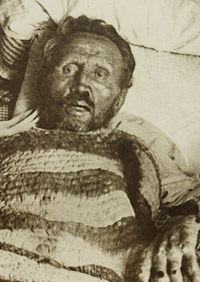
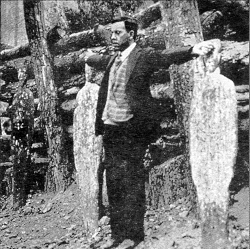
We think of Mexico as one of the most Catholic countries there are, but in 1920’s, it was illegal to celebrate Mass there.  That did not stop priests like Blessed Miguel Pro, S.J. from sneaking about to minister to people in their homes.  After many close calls, Fr. Pro was captured by police and condemned to death on false charges that he was somehow connected to a bombing assassination plot.

When he was led out for his execution by firing squad, Fr. Pro be blessed the soldiers, knelt and quietly prayed for a time. Declining a blindfold, he faced his executioners with a crucifix in one hand and a rosary in the other and held his arms out in imitation of the crucified Christ and shouted, “May God have mercy on you! May God bless you! Lord, you know that I am innocent! With all my heart I forgive my enemies!” Just before the firing squad was ordered to shoot, he proclaimed, “Viva Cristo Rey!” (“Long live Christ the King!”) When the first shots failed to kill him, a soldier shot him point-blank. The government had a photographer on hand, capturing these moments for propaganda purposes, but soon after the images were published their possession was made illegal—a Catholic priest dying faithfully and bravely was an inspiration giving new life to a people oppressed.

At the end of the Rosary we pray, “O God… grant, we beseech Thee, that, meditating upon these mysteries of the Most Holy Rosary of the Blessed Virgin Mary, we may imitate what they contain and obtain what they promise through the same Christ Our Lord. Amen.” If we are faithful to Christ, the mysteries of His life we be made manifest in our own. And if we are faithful to Christ, we will receive a glory similar to His own. Let us pray for the grace to live extraordinary lives in the likeness of Jesus Christ.
The Author of Life — Tuesday, 27th Week in Ordinary Time—Year II

October 5, 2010

If you took our Catholic faith and boiled it down to its most central and fundamental truths what would you have? I think you would end up with these four foundations:

First, that God is three divine persons who are one in being, a union we call the Trinity. Second, that Jesus Christ is both God and Man, a reality we call the Incarnation. Third, that Jesus Christ, to save us from sin and death, suffered, died, resurrected and ascended, an event we call the Pascal Mystery, and from which Jesus empowers His Church’s sacraments. And fourth, that every, single, human being has inherent worth and surpassing value, a truth we call the dignity of the human person. It is this fourth fundamental truth of our Catholic Faith that I will focus upon today.

The psalmist says to God:

“Truly you have formed my inmost being;
you knit me in my mother’s womb.
I give you thanks that I am fearfully, wonderfully made”

From the womb, God fashioned your inmost being, giving you an intellect to know, a freewill to act, and a desire for loving communion with others. Made in God’s own image and likeness, made for a purpose and made for love, every human life is precious from conception to natural death.

Sadly, laws sometimes disregard this dignity, and even Christians can forget it too. Martha looked down on her sister because she thought Mary was not being useful enough or productive enough. Martha only saw Mary as causing a burden to herself, yet Mary was exactly where the Lord willed her to be.

As Mrs. Eichstadt said before, God has a providential plan for each one of you. Like St. Paul, the Lord has set you apart from your mother’s womb for a great story which He has in mind. But anyone who would presume to cut short an innocent life would deprive God of a masterpiece.

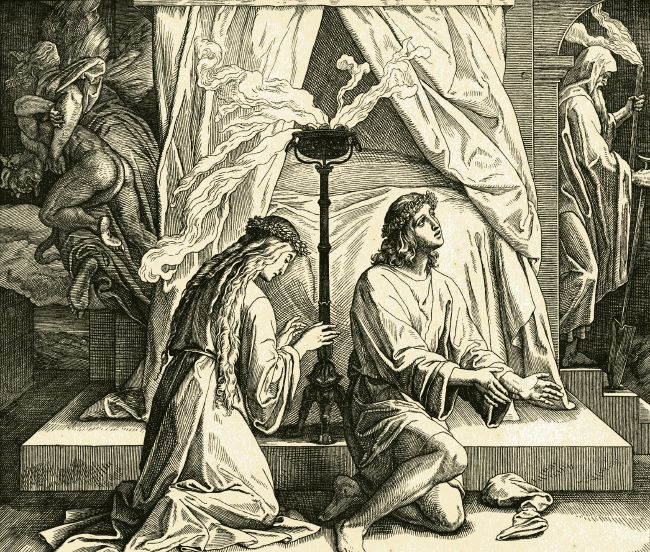
Assisted suicide or euthanasia rips out the crucial final chapters. Suicide, murder, or neglect of our neighbor unto death, would end a story halfway. And abortion prevents the story from ever being told. Jesus is the author of our lives and He is to be the one who decides when our lives end. Maybe you will always remember the homily when Father tore up a book, but remember this too: every human life is precious and worth more than many, many books.

The Scandalous Cross — September 14 — Exultation of the Holy Cross

September 14, 2010

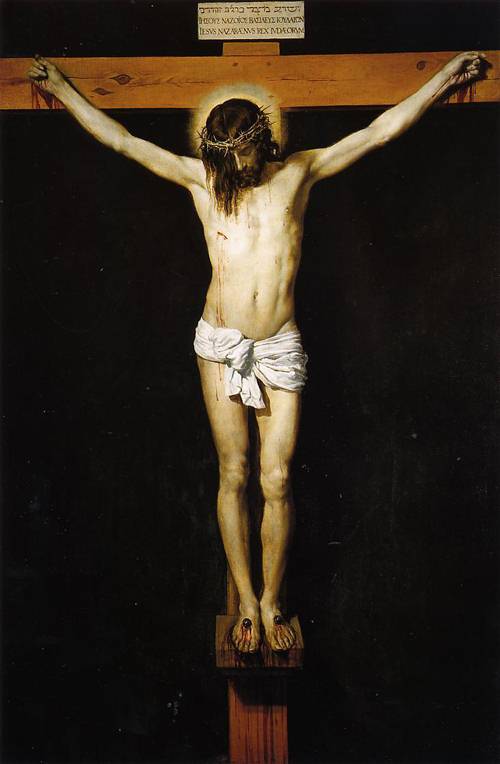
Jesus died on a cross. But what if Jesus had died differently? Then, instead of crosses, Christians might wear little nooses. Under different circumstances, we might be celebrating the Feast of the Holy Electric Chair, or the Exultation of the Lethal-Injection Syringe. These images unsettle us, but we are comfortable with the idea of Jesus’ cross. However, whenever we find ourselves complaining, we are feeling the scandal of the cross.

We will naturally dislike it when life is hard on us, but “do not forget the works of the Lord.” Jesus’ crucifixion, despite its pain, injustice, and seeming futility, was the means for His glory and for our salvation. With Christ we become invincible, because even our suffering profits us. So when unavoidable crosses come, patiently bear them and use them as a powerful offering to God.

Enduring Injustices — Tuesday, 23rd Week in Ordinary Time—Year II

September 7, 2010

St. Paul rebukes the Corinthians today, saying, “[It is] a failure on your part that you have lawsuits against one another.” Then he says something that rubs us the wrong way: Paul asks, “Why not rather put up with injustice? Why not rather let yourselves be cheated?” We resist, saying, “It’s just common sense that we shouldn’t let ourselves be cheated.” But sometimes common sense falls short. That’s why we need the teachings Jesus Christ revealed. Jesus said:

“When someone strikes you on your right cheek, turn the other one to him as well. If anyone wants to go to law with you over your tunic, hand him your cloak as well. Should anyone press you into service for one mile, go with him for two miles. Give to the one who asks of you, and do not turn your back on one who wants to borrow.”

Now this does not mean that we should be indifferent to injustices done to others, nor that we should seek out opportunities to be wronged by others ourselves. But when we are personally wronged, Paul suggests that we try imitating Jesus. St. Peter would agree, for he wrote:

“If you are patient when you suffer for doing what is good, this is a grace before God. For to this you have been called, because Christ also suffered for you, leaving you an example that you should follow in his footsteps. ‘He committed no sin, and no deceit was found in his mouth.’ When he was insulted, he returned no insult; when he suffered, he did not threaten; instead, he handed himself over to the one who judges justly. He himself bore our sins in his body upon the cross, so that, free from sin, we might live for righteousness. By his wounds you have been healed.”

The next time you find yourself wronged, try imitating Christ. Jesus trusted that the Father would provide for Him, and He was provided for. Jesus accepted His unjust suffering, and it changed the world. Jesus invites you to accept a cross and to follow Him into this mystery.

Saintly Vigilance — Thursday, 21st Week in Ordinary Time—Year II

August 26, 2010

The usual reading of today’s Gospel sees Jesus warning His followers to be ever watchful and prepared for the coming of the Lord. When we hear his image of a mud-brick house being broken into (or literally, dug through) we think of the devil as that thief, robbing us of the treasure in our souls. This interpretation is good and true. We should be vigilant in the keeping of our own immortal souls. But let me suggest that He teaches us another lesson as well, for Jesus words are autobiographical.

Jesus is that “master of the house.” He is the husband in His household, the Church. And Jesus did know the pivotal hour of night to “stay awake” and “keep watch” in the garden of Gethsemane. When His enemies arrived, Jesus did not allow His household be broken into and robbed. He said, “…If you are looking for me, let these men go.” He did not lose any of His own which the Father had given to Him.

“Who then is the faithful and prudent servant, whom the master has put in charge of his household to distribute to them their food at the proper time?” Jesus is that faithful and prudent servant, who feeds us our needed food. And seeing His suffering servant’s love, God the Father, who the master of all, has placed Jesus over all His property.

Yes, we should be vigilant in the keeping of our own immortal souls, but Jesus’ example suggests something more, to be have concern for the care of others’ souls as well. Who has God entrusted to you? Perhaps family members come first to mind, but think of your friends, co-workers, and others as well. Ask yourself in what ways you can be of good to their souls as well. God rewards those who love like this with a greater glory than just salvation alone.

Across the Waters — Tuesday, 18th Week in Ordinary Time—Year II

August 3, 2010

Today’s gospel follows from yesterday’s. In yesterday’s gospel, Jesus hears that his relative and friend, John the Baptist, has been murdered—for that is what it is to intentionally kill the innocent, even when kings and governments do it. Jesus tries to go to a deserted place, but insistent crowds meet his boat. John’s death turns Jesus’ thoughts to the events ahead of Him. He has the people sit, takes the bread, says the blessing, breaks it, and gives it to His disciples, that they may share this miraculous bread with the people.

When evening comes, He sends off the Twelve ahead of Him in the boat and He dismisses the crowds on their way. Jesus climbs the mountain and communes with His Father in that solitude He longed for. Imagine if you were there with Jesus, giving Him silent company on that hill overlooking the Sea of Galilee, as He contemplated the things that were before Him.

Perhaps Jesus would turn to you, and ask, “Do you see that boat captained by Peter, the likeness of my Church? Shall I walk through the darkness across the waters of this world’s chaos and death? Should I face the headwinds of spiritual evil for you and them?” Of course, Jesus knows what He is going to do, but He wants to hear you answer. Let Him hear how precious His sacrifice is, for you and all His own.

Getting Slapped — Monday, 11th Week in Ordinary Time—Year II

June 16, 2010

Jesus taught:

“…Offer no resistance to one who is evil. When someone strikes you on your right cheek, turn the other one to him as well. If anyone wants to go to law with you over your tunic, hand him your cloak as well. Should anyone press you into service for one mile, go with him for two miles.”

Should we always offer no resistance to those who would do evil against us?

Notice that each of the examples Jesus gives are of injustices that do no real lasting harm. If you are slapped on the cheek, it stings awhile, but in a few minutes you’re fine. Even Jesus’ disciples owned spare clothes–we know because He told them to leave their second tunics behind when He sent them two by two. There is no lasting harm until your last tunic or cloak is taken. (cf. Exodus 22:25-26) In those days, Roman soldiers could force Jews to carry their gear for up to a mile down a road. Jesus teaches that one should go the extra mile for these enemies and occupiers.

In each example Jesus gives of offering no resistance to evil-doers, the affliction is felt in one’s pride more than anywhere else. Jesus is teaching us to be humble when people wrong us in small ways, so that they will be struck by our magnanimous patience and strength and be converted.

But what if the evil someone would do to us would do us grave and lasting harm? Should we offer no resistance then? Two incidents for Jesus’ life come to mind. When the money changers and animal sellers were doing business in the temple’s court of the Gentiles, profaning it and impeding the nations’ worship of the One True God, Jesus resisted. He made a whip out of cords and drove out the people who were doing what was evil. On the other hand, in the Passion, Jesus offered no resistence. He let His enemies slap Him, strip Him, and force Him to carry a cross.

It seems that there are times when we are called to resist evils for the sake of the common good, and times when we are called to accept evils, even grave injustices against us, in the pattern Jesus Christ. Let us trust the Holy Spirit to guide us to know when is the time for which.

The Savior’s Hands — Good Friday

April 7, 2010

This Good Friday, let us meditate on our Savior’s hands.

These hands held the scrolls of the Jewish Scriptures, from which He learned the Word of God. These hands held the hand of Joseph, and reassured him for his happy death. These hands fashioned the products of a carpenter to support His mother and Himself in their needs.

When the time came for His public ministry, these hands touched the ears and toungue of a deaf and mute man, allowing him to hear and speak. They smeared mud in the eyes of a blind man, who then washed and was able to see. They touched a leperous man and cured him of his affliction.

These hands formed a whip out of cords and drove out the moneychangers and salesmen out of the court of the Gentiles so that the temple could be a place for all peoples to worship the True God. These hands blessed and broke a few loaves of bread and multiplied them to feed thousands.

Today, these hands are nailed to the cross. Jesus’ crucified hands can do nothing, apart from perhaps twitching a couple fingers with excruciating pain. Yet of all the wonderful things that Jesus did with His hands, this was the greatest.

I offer two obeservations for us today.

First, that when Jesus could do nothing, He could still speak and pray. We can do the same we when faced with the things beyond our power (which is really nearly all things.)  We can bind our hands in prayer, a symbol and  acknowledgement of our own limitations, and pray.

Second, it was when Jesus was powerless he performed his greatest good. We worship a crucified God; who suffered, died, and rose from it triumphant. We should expect and understand that this mystery will be replayed within our own Christian lives. As St. Paul observed when he considered his own life, “when I am weak, it is then that I am strong.” The same applies for us.

Sometimes we suffer because of loved ones we cannot seem to help, or serious illnesses that befall ourselves or others. Our crosses take different forms, and can feel powerless with them. But we do more good through our crosses than we know.  Remember, that of all the things that Jesus did with His hands, the greatest was when He suffered them to be nailed to the cross for us today.

A Premature Passion? — Palm Sunday—Year C

March 28, 2010

So why did we just proclaim the Passion?  Isn’t the Passion a bit premature? It’s Palm Sunday, not Holy Thursday or Good Friday. Aren’t we jumping the gun? No, like the two disciples Jesus instructed in our opening Gospel, we’re being told what we are going to see. The Church has us recount the Passion on Palm Sunday to prepare us; to prepare us for encountering Christ’s Passover through the special ceremonies and symbols of this Holy Week.

Now the celebration of the Eucharist actually makes the events of the Pascal mystery present for us every time we come to Mass. Jesus’ Last Supper, His Passion and Death, His Resurrection and Ascension into glory, are all truly presented to us at each and every Mass; but during Holy Week, we unpack and encounter these events in unique and special ways.

Today you have waved palms, an ancient symbol of victory, to Christ, welcoming Him into our city. On Holy Thursday, you can go where the Blessed Sacrament is reserved and give company to Christ in his lonely solitude, with Him in His agony before His arrest and with Him as He spends the night awaiting His trial. On Good Friday, you can reverence the crucifix; you can kiss the wood of Jesus’ cross and kiss His body hanging upon it, as He dies for us. And at the Easter Vigil, you can see the sign of the light of Jesus Christ resurrecting out of darkness and death.

And so I invite you to encounter Jesus’ Pascal mystery, at this Mass, at every Mass, and through the special signs and ceremonies of this Holy Week.

Sin Means Death — 5th Sunday in Lent—Year C

March 21, 2010

The scribes and the Pharisees were jealous of Jesus. When He came to the temple all the people gathered round Him to listen to Him teach. His words were compelling; the truths of God taught with gentle mercy. All the people were flocking to Jesus and this made the scribes and the Pharisees deeply jealous. We ourselves must beware of jealousy, for it can lead us to hate the good and condemn the innocent.

The scribes and the Pharisees bring before Jesus an adulterous woman and say to him, “Teacher, this woman was caught in the very act of committing adultery. Now in the law, Moses commanded us to stone such women. So what do you say?”

This scene raises some questions. For instance, how did Jesus’ enemies know where to find an adulteress when they needed one? It’s unlikely this affair was discovered just that morning. It must have been known from days, weeks, months, or even years before.

This prompts another question: if this affair had occurred much earlier, then why had the Jews not executed judgment on this woman before now. There seems to be two reasons for this. First of all, under Roman rule, the Jews had no authority to impose the death penalty on anyone. We will see this come into play in the Passion, where the Jewish leaders must convince Pilate that Jesus is an enemy of the state if they are going to do away with this “blasphemer.”

But there is another reason, too. Even though the Law of Moses had commanded death for certain sins, based upon what I’ve read the actual use of capital punishment for sins was very, very rare among the people of Israel, even before the Romans came along. And, as we can see in this scene, not even the scribes and the Pharisees are really serious about applying the law in strict and absolute terms. If they had been, they would have brought along the adulterous man for judgment too. Where is he? He was just as guilty as her, if not more (considering their culture.)

So the penalty of death was very rarely employed for punishing sinners, but then why were these severe punishments in the Old Covenant at all?  It seems that the point of those rarely applied laws was to teach an important lesson, a lesson repeated over and over again in countless ways throughout the Old Testament, a lesson for the Jews and a lesson for us today:

Sin is serious stuff, because sin leads to death.
Sin brings us death in our bodies and our souls.
Sin means death.

The scribes and the Pharisees round up a known adulteress and set their trap against Jesus (which is the only thing this is really about for them.) Jesus’ enemies will try pitting justice against Jesus’ mercy. They’re thinking to themselves, “Surely he’s not going to tell us to stone her, that’s not his way. He says he ‘has come not to destroy, but to seek and to save what is lost.’ So when he tells us not to stone her, then we’ve got him. He’ll be telling us to disobey the Law of Moses, and then we’ll have a charge to bring against him.”

“So Jesus… what do you say?” Jesus says nothing. He stoops down and writes with His finger on the ground the only thing we have record of Him writing in the entire Gospels. What did Jesus write? We don’t know. The Greek verb used indicates that Jesus was writing letters or words, and not drawing disinterested doodles or drawing a line between the accused and her accusers.

A common explanation is that Jesus’ finger was writing on the ground the names of sins, sins which those in the crowd had committed, sins which the finger of God had written of long before, on the stones of the commandments atop Mount Sinai. Perhaps Jesus wrote the words: “Sacrilege, Rebellion, Adultery, Theft, Deception, Coveting.”

The accusers continue harassing Jesus, but He rises again, and gives his well-known reply. The crowd of evil doers slowly scatters, and Jesus is left there alone with the woman. The threatening mob is gone, and you think that the woman would flee, but the woman does not run away. She knows she has sinned. She knows that she cannot run away from her sins or from God. She stays there before Jesus.

Jesus rises again and says to her, “Woman, where are they? Has no one condemned you?”
She replies, “No one, sir.”
Jesus says, “Neither do I condemn you. Go, and from now on do not sin any more.”

Jesus condemns the sin, but not the sinner. Jesus is merciful, but He is not indifferent to the prospect of her continuing in sin, nor is he indifferent to us continuing in our old sins. He does not say, “Go, and live as you will: presume on my deliverance: for however great your sins may be, it doesn’t really matter one way or the other.”

Jesus does not say this, for sin means death, and Jesus died to free us from sin and death. So let us come before Jesus to receive His pardon, but then let us go forth seriously and, from now on, sin no more.

The Scales Myth — Friday, 1st Week of Lent

February 26, 2010

In ancient myths and modern imagination, the judgement of our lives will be done with a pair of scales, with our good deeds one one side and our bad on the other.  If our good deeds outwiegh the bad ones (so the story goes) then we’re in good shape.  If not, we’re toast. However, our first reading from the prophet Ezekiel shows that this not how God judges things.

If the wicked man turns away from all the sins he committed, if he keeps all my statutes and does what is right and just, he shall surely live, he shall not die. None of the crimes he committed shall be remembered against him; he shall live because of the virtue he has practiced.

And if the virtuous man turns from the path of virtue to do evil, the same kind of abominable things that the wicked man does, can he do this and still live? None of his virtuous deeds shall be remembered, because he has broken faith and committed sin; because of this, he shall die.

God is more interested in where we’re headed than where we’ve been. This is encouraging good news for the long-time sinner who needs to repent and it is a warning to us who have done well in the past.  It’s not what we’ve done in the past that matters, because each of us can make a definitive turn toward or away from the Lord today.

What advantage then do we who are faithful to the Lord have over those who have deathbed conversions, over those steal heaven like the good thief on his cross next to Jesus? Very much indeed, for our lives’ holiness and good deeds will be weighed and our personal degree of heavenly glory and reward will be measured out accordingly. In heaven we shall all be filled and satisfied, but those who love most in this life shall enjoy the most love in the next.

So whether you are far from God or serving Him faithfully, heed these holy words: “If today you hear His voice, harden not your hearts.”

Three Temptations — 1st Sunday in Lent—Year C

February 23, 2010

In today’s gospel Jesus is led into the desert by the Holy Spirit for forty days of prayer, penance, and preparation and there He is tempted by the devil.  We have been led to this season of Lent and we also find ourselves being tempted. This morning I would like to talk about how the devil’s three temptations present themselves to us and to let you know about an allowance in Lent that you will be happy to hear.

Most of us here have chosen to take on a penance during Lent.  You have probably resolved to abstain from something good, like cookies, candies, ice cream, TV or the internet, to grow in disciple and virtue, and to offer some sacrifice to God. The devil first said to Jesus, “command this stone to become bread,” and we will probably be tempted in a similar way; “Put down the rock of your penance for awhile and let it nourish you.” It is the way of demons to first entice and then condemn. The rationalization, “Go ahead, it’s just a little cookie,” will afterwards become the accusation, “You couldn’t even sacrifice one cookie for God.” Let us preserve in our Lenten penances, for the joy of having carried a cross for the Lord is far preferable to the discouragement of a moment’s compromise.

As a second temptation, the devil, in a vision, showed Jesus all the kingdoms of the world in a single instant and said, “I shall give to you all this power and glory; for it has been handed over to me, and I may give it to whomever I wish. All this will be yours, if you worship me.” Scripture calls Satan the Father of Lies, so we ought to be skeptical about whether he really had this authority over the nations, and even if he did we should disbelieve that he would give Jesus the world if He were to worship him. Instead, I suspect that the devil would have simply laughed and left Jesus with nothing for having fallen into sin.

We human beings are creatures of habit. The same sins which you have struggled with in the past are probably the same ones that challenge you today. When we are tempted by sins they promise us the world, great peace and satisfaction. Yet we can look back at our own experiences and see that these are lies. Our past sins show us that they only lead to disappointment and dissatisfaction. We should stop swallowing the bait. We should stop accepting the lie. This Lent is a perfect time for us to commit to crushing the habitual sins in our lives, for our sins will not make us happy, even if they promise us the world.

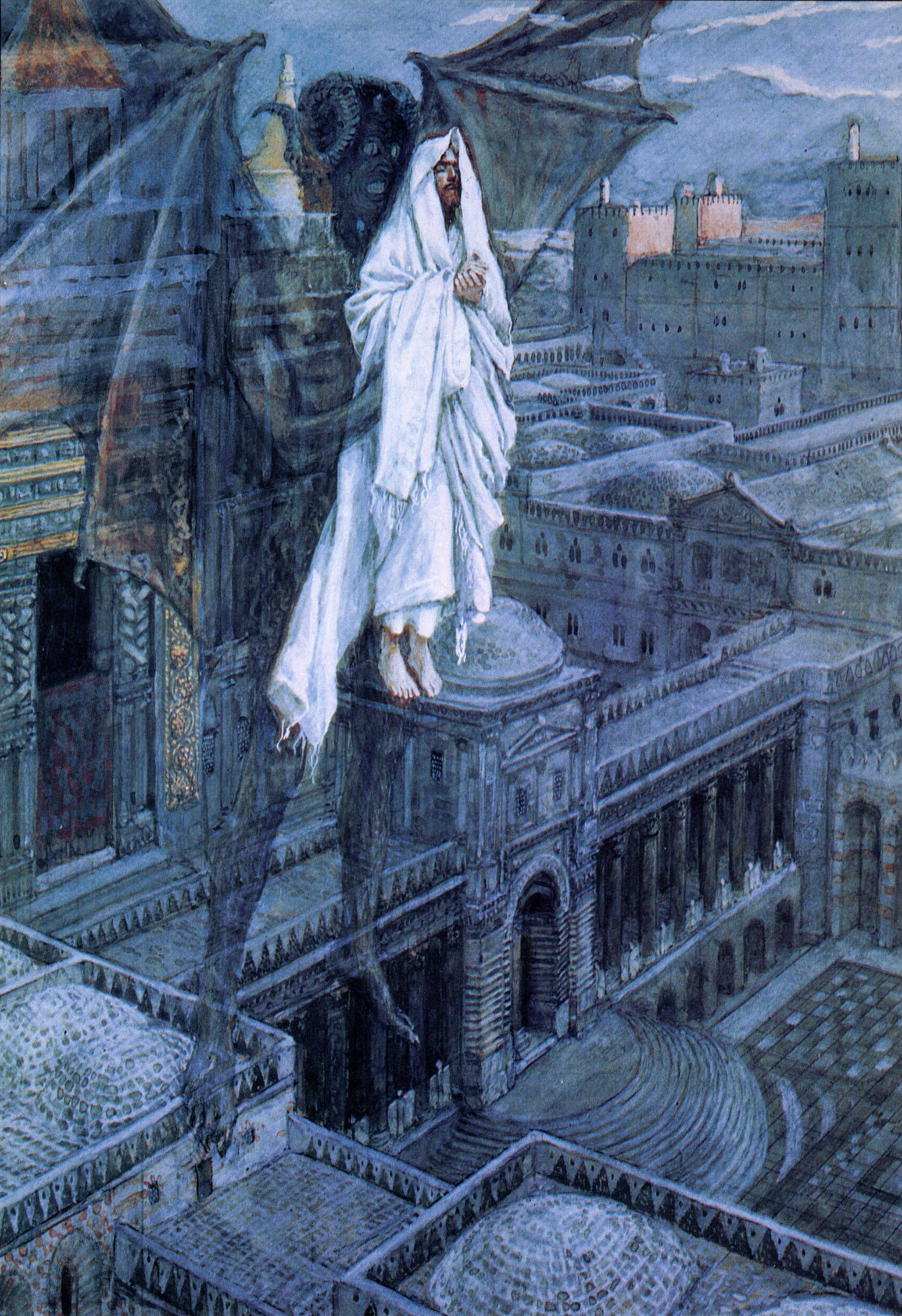
As a third temptation, the devil took Jesus up (in a vision or in the body we do not know) to the top of the temple in Jerusalem. He said to Him, “If you are the Son of God, throw yourself down from here, for it is written: He will command his angels concerning you, to guard you, and: With their hands they will support you, lest you dash your foot against a stone.” The temptation addressed to us sounds differently. “You are not the Son of God, you’re not even close to being saint! You should throw yourself down in shame for your sins and not dare to pray or present yourself to God!” On the contrary, as we heard in the second reading, “No one who believes in him will be put to shame.” Lent calls us to sorrow and conversion for our sins, not to shame and aversion from God.

We see the one-two combo of enticement and shame modeled in the case of Adam and Eve.  When they heard the sound of the Lord God moving about the garden they hid themselves among the trees, for they realized that they were naked before Him, and they were ashamed and afraid. Much later, in the case of Judas Iscariot, the devil led him to betray Jesus, one of the worst sins ever, and then after regretting it he was led to kill himself. If Judas had gone from the temple to Calvary, instead of to his tragic tree, Jesus would have forgiven him, because Jesus wanted to forgive him.

Jesus loves us. He doesn’t just love us because He’s God and He “has to” love everybody. Jesus loves us and He actually likes us for all the good things that we are and for all the good things He sees we can become. This is why He created us and died for us, because He loves us. So we should not be ashamed to come to Christ in the sacraments; in confession with our big sins, or at communion with our small ones. As Jesus told St. Faustina, the greater our sins the more entitled we are to his mercy. When it comes to God’s forgiveness, only we ourselves can get in His way.

Finally, I mentioned that there is an allowance during Lent which is a cause for consolation amidst our Lenten struggles. But first, did you know that there are more than forty days in Lent?  The season is longer than forty days because we don’t count the Sundays.  There are 40 days of penance, but every Sundays (from Saturday evening to Sunday night) we are released from our penances. At Sunday Mass the priest still wears the Lenten season’s purple, we might do less singing, and we don’t say the Gloria or say the “A”-word before the gospel, but we are freed from penances that day, for every Sunday is a “little Easter. ”

In the first reading, we heard how Moses commanded the Hebrews that once they came into the Promised Land they should come before God to present their first fruits and recount the story of how God had delivered them from slavery, brought them into the Promised Land, and filled them with blessings. Each Sunday we come before God and recall how His Son, Jesus Christ, delivered us from our slavery, brought us into His kingdom, and has filled us with His blessings, especially the gift of Himself in the Eucharist. Each Sunday gives us consolation, and this release from our penances encourages us to offer still more penance to God in the week ahead, for it is an easier thing abstain for just six days than to do it for forty in a row.

So in conclusion, be faithful to your penances, your faithfulness will have its reward. Commit to crushing your habitual sins, for sins cannot make us happy, even if they promise the world. Shame and fear are the devil’s traps, so whenever you sin, come to the Lord with trust and sorrow. And know that you are released from penances on Sundays in Lent.  May this gift be a cause for thanksgiving and joy and inspire us to make a still greater gift of ourselves to Christ in this Lenten season.

The Two Ways — Thursday, 6th Week in Ordinary Time—Year II

February 21, 2010

In the first reading Moses sets before the people ‘the two ways’: life and prosperity, or death and doom. In the gospel Jesus tells us to deny ourselves, take up our cross and to follow Him. From this we might think that one could choose to bypass the cross, to never take it up, and to avoid the burden of the cross, but the cross is unavoidable.

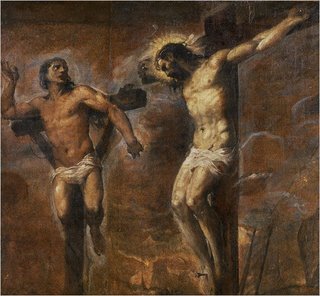
Jesus was crucified along with two others, one on His left and one on His right; one who rejected Him, and one who accepted Him. These two people represent us. We are all crucified with Christ, and He is crucified with us. The question is how we will respond to Him.

In life there is no avoiding the cross, but in which way will we respond to it?  Will we rage and despair, or embrace it and follow Christ? Today I have set before you life and prosperity, death and doom. Let us follow the Lord, ‘for whoever wishes to save their life will lose it, but whoever loses their life for Christ’s sake will save it.’