Archive for the ‘Resurrection’ Category

Heavenly Feasts — Funeral Homily for Angeline “Angie” Rihn, 98

July 1, 2025

By Fr. Victor Feltes
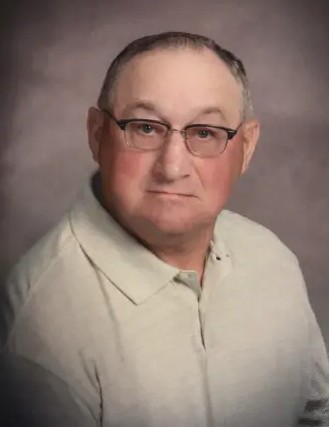
One theme in Angie’s earthly life, from the stories her family shares about her, is meals: the meals she prepared and the meals she shared. The meals on the farm with Herman and their children always began with a prayer, thanking the Lord and asking for his blessings. And her spouse would always praise her cooking with compliments, like calling it “A meal fit for a king!” On the farm, with the animals they raised and the produce they grew and often canned, there was never a need to buy any food. For holidays such as Christmas and Thanksgiving, Angie would cook for days. Three rooms of their farmhouse a couple miles out of town would be filled with tables and chairs for guests. Angie would always have guests over for a meal. For example, her beloved grandkids could show up anytime to enjoy sharing a meal with her. As a leader in the parish Altar-Rosary Society, she headed the organizing of funeral luncheons. And with unfaltering faith, she never skipped our Lord’s feast of the Holy Mass.

Scripture often speaks of our God preparing feasts. The Prophet Isaiah foretells that the Lord God on his holy mountain will “provide a feast for all peoples of rich food and choice wines, of juicy, rich food and pure, choice wines.” King David pens the 23rd Psalm saying of the Lord, “You spread the table before me in the sight of my foes. You anoint my head with oil; my cup overflows.” Jesus declares to his apostles, “I confer a Kingdom on you, just as my Father has conferred one on me, that you may eat and drink at my table in my Kingdom….” And Jesus announces “many will come from the east and the west, and will recline with Abraham, Isaac, and Jacob at the banquet in the Kingdom of Heaven….” During the heavenly visions of the Book of Revelation, an angel tells St. John “Write this: Blessed are those who have been called to the wedding feast of the Lamb,” adding, “These words are true; they come from God.”

Are these prophesies about eating and drinking in the Kingdom of Heaven literally true? Jesus says in his Sermon on the Mount: “Blessed are they who hunger and thirst for righteousness, for they shall be satisfied,” but that is metaphorical language. And how could we eat foods or drink drinks after death separates our souls from our bodies? But we must remember that our well-founded Christian hope is not only for an eternal afterlife for our souls but also a physical resurrection of our bodies one day. Recall how St. Luke reports that the Resurrected Jesus in the Upper Room on Easter Sunday asked, “‘Have you anything here to eat?’ They gave him a piece of baked fish; he took it and ate it in front of them.” Why does Jesus eat with his resurrected body? It was not because of hunger, for his glorified body has no need of such nourishment. He ate as a demonstration for the apostles and us that he is not a ghost or mirage but truly risen again. But then why does Jesus eat again later, as recorded by St. John, when he had breakfast with seven disciples along the Sea of Galilee? Since the fact of his resurrection was already firmly established, it appears it simply pleased him to share a meal with them. So ‘feasting in God’s Kingdom’ appears to be more than merely a metaphor.

After the Resurrection of the dead, once our souls reunite with our bodies, many will come from east and west and recline with Abraham, Isaac, and Jacob for the Lord’s promised feast. A supper not of necessity but of joy, with delights not merely from fine food and drink but from sharing the fond table fellowship of God and his friends. Angie’s delight in preparing meals reflected our Lord’s delight in preparing meals for us: at every Mass and in the world to come. Angie rejoiced to have family and friends flock to her feast like our Lord longs for us to join him for his feast, too. So pray for Angie’s soul, that she may be perfectly purified, and let us live our lives faithfully so as to be well-prepared to one day take our places at the banquet in the Kingdom of God.

Half-Measures Or Full Devotion?

April 18, 2025

Easter Sunday
By Fr. Victor Feltes

St. Peter the Apostle proclaimed: “We are witnesses of all that [Jesus] did… They put him to death by hanging him on a tree. This man God raised on the third day and granted that he be visible…to us, who ate and drank with him after he rose from the dead.” Jesus went to his Passion and Cross after the Last Supper, and from death and his tomb to the Resurrection. His apostles witnessed these events and were willing to die to testify to them, and nobody ever dies for what he knows to be a lie. The first Christians had full devotion because Christ did not go halfway in his saving mission.

But what if our Lord, instead of enduring pain and death, had chosen to spare and save himself? Jesus had told the apostles he “must suffer many things and be rejected by the elders, the chief priests and the teachers of the law, and that he must be killed and after three days rise again.” He said he had come “to give his life as a ransom for many,” shedding his blood “for the forgiveness of sins.” How could we ever find forgiveness of our sins in Christian faith and the sacraments, like Baptism and Confession, if Jesus never suffered and died?

Or imagine if Jesus had just gone halfway with the Last Supper, which was the first Holy Mass. What if he had taken the bread and given it to his disciples saying, “This is like my Body. Do this with a thought of me”? Jesus said, “Amen, amen, I say to you, unless you eat the flesh of the Son of Man and drink his blood, you do not have life within you. Whoever eats my flesh and drinks my blood has eternal life, and I will raise him on the last day. … Whoever eats my flesh and drinks my blood remains in me and I in him.” What would become of us if we could not receive Jesus in the Eucharist?

Or what if instead of Easter, Jesus Christ had merely suffered and died and never rose again? St. Paul’s answer is emphatic: “If Christ has not been raised, your faith is vain; you are still in your sins. Then those who have fallen asleep in Christ have perished. If for this life only we have hoped in Christ,” Paul says “we are the most pitiable people of all!” Therefore, if Jesus had stopped at half-measures in his mission, we would not be saved!

At the beginning of Easter Sunday Mass we sang “Jesus Christ is risen today!” We celebrate him risen not like some celebrate the Easter Bunny hiding eggs or Santa Claus bringing gifts for Christmas. A savior of merely “once upon a time” cannot save us. We celebrate Jesus Christ who was truly risen on Easter morning in 33 AD, but who is also risen, living and active, in our world today. And in the face of sin of death, he is our only hope.

This is the day the Lord has made; let us rejoice and be glad!” Embrace today’s good news, the joy of the Gospel, firmly resolved to go forward in such a way that you may be saved. Realize that you cannot safely clear a six-foot chasm by only taking three-foot hops. Half-measures are not enough.

In his suffering, in his sacraments, in his dying and his rising, Jesus shows us how far he goes in love to reach and save us. So in your daily prayers and weekly worship, in virtue and noble service, in Christian faith and fellowship, by your gratitude and love, walk with our Lord Jesus Christ with your full measure of devotion.

The Deaths of Lazarus

April 6, 2025

5th Sunday of Lent
By Fr. Victor Feltes

God does not do bad things, for “God is not subject to temptation to evil” and “what he hates he does not do.” However, God is all-knowing and all-powerful. There is nothing knowable that God does not know, and nothing good and doable that he cannot do. Therefore, when a bad thing happens, God has allowed that to happen. Yet we also “know that God causes all things to work together for the good of those who love him.” We see these truths reflected in today’s Gospel reading.

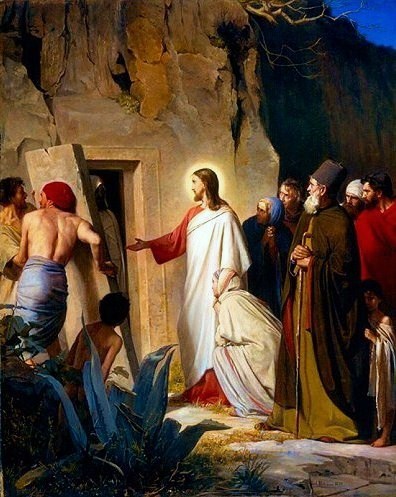
God clearly permitted Lazarus to fall ill. And when Jesus received the urgent message from Martha and Mary that their brother was sick, he remained in the place where he was and allowed Lazarus to die. “Now Jesus loved Martha and her sister and Lazarus.” So why did Jesus not come earlier, when he was told “the one you love is ill.” Or why did Jesus not heal his friend Lazarus’ sickness from a distance, like he cured the centurion’s servant or the royal official’s son? Jesus says the dying and rising of Lazarus was “for the glory of God, that the Son of God may be glorified through it,” and “that you may believe.”

Earlier in his public ministry, Jesus had raised Jairus’ daughter from the dead, having told mourners that the little girl was “asleep.” But that resurrection miracle was performed privately, shortly after death, and with strict orders to its witnesses that no one should know of it. By publicly raising Lazarus from the tomb in the presence of a crowd, Jesus manifests his power not only to heal the sick but to restore the dead to life.

Picture this: One moment, Lazarus was ailing and fading out of consciousness on his deathbed. The next thing he knows, he wakes up wrapped in bandages inside of a cave, and comes out toward the light at the sound of his friend Jesus’ call. His sisters would have filled him in on what he missed when he was dead.

The Gospels tell us Lazarus later attended a dinner with Jesus the day before Palm Sunday at the house of Simon the Leper. Martha served the meal while Mary took costly perfumed oil and poured it on Jesus’ head as he reclining at table. “A large crowd of the Jews found out that he was there and came, not only because of Jesus, but also to see Lazarus… And the chief priests plotted to kill Lazarus too, because many of the Jews were turning away and believing in Jesus because of him.” After Holy Week, the New Testament tells us no more of what happened to Lazarus. But we can imagine what it was like, years after Easter Sunday, when Lazarus died again.

Knowing that Jesus died and was risen, and having personally experienced death and resurrection himself, must have given Lazarus great peace even during his final passion. Consider Martha or Mary watching their brother die once more; having to burying him again. There would naturally still be sadness and ache in that parting, but I imagine the sisters would feel different this time: ‘We know he will rise in the Resurrection on the Last Day. Jesus Christ is the resurrection and the life who has come into the world, and whoever believes in him, even if they die, will live.’ Our brother Jesus died and has risen from the dead “for the glory of God” and “that you may believe.” Knowing and embracing this reality changes our life and how we face death. Do you believe this?

Last week, April 2nd, marked the twentieth anniversary of the passing of Pope St. John Paul the Great. And if you are like me, having witnessed how he lived and died, is inspiring. Pope John Paul’s famous motto was “Be not afraid!” In this, of course, he was quoting Christ who frequently said, “Be not afraid!” “Be not afraid,” Jesus tells us, “If you believe you will see the glory of God.”

Lord, Let Your Face Shine on Us

April 18, 2024

3rd Sunday of Easter
By Fr. Chinnappan Pelavendran

We have been reading and reflecting on the appearances of Jesus to his disciples, and the experiences of those disciples. Jesus appeared to Mary Magdalene who was weeping by the gravesite of Jesus. Mary Magdalene did not recognize Jesus. She mistook Jesus to be a gardener. Jesus opened her eyes to recognize him. The effect of the experience was that Jesus made her the first bearer of the good news of his resurrection.

Jesus appeared to the two men returning to their village called Emmaus. They did not recognize Jesus. They mistook him to be a stranger. Their eyes opened to recognize him at the breaking of bread. The effect of the experience was that Jesus empowered them to go back to Jerusalem to share the good news of his resurrection with the other disciples.

Today, we read that Jesus appeared to his disciples and they mistook him to be a ghost. He opened their eyes and sent them to be witnesses to the power of his resurrection. He said to them, “These are my words that I spoke to you while I was still with you, that everything written about me in the Law of Moses and in the prophets and psalms must be fulfilled.” Then he opened their minds to understand the scriptures. And he said to them, “Thus it is written that the Messiah would suffer and rise from the dead on the third day and that repentance, for the forgiveness of sins, would be preached in his name to all the nations, beginning from Jerusalem. You are witnesses of these things.”

Peter preached these words of Jesus as we see in the first reading. Peter said, “Repent, therefore, and be converted, that your sins may be wiped away.” Peter who was fearful and denied Jesus three times became transformed by the power of the resurrection. He began to preach boldly to the Jews whom he feared.

Many people in the world do not know Jesus and do not experience him. Some see Jesus as a gardener; some as a stranger, and others as a ghost. They can only know him and experience him through us who are his followers. We are to share the good news of the transforming power of the resurrection to the world.

Jesus needs us as witnesses to continue his mission. Jesus needs Spirit-filled followers to be his eyes, ears, hands, and feet, to bear witness to his love, mercy, and forgiveness through our interactions with our brothers and sisters.

We must daily invite Jesus and the Holy Spirit to help us, especially when we read the scriptures. Therefore, let us pray with the psalmist today: “Let the light of your face shine on us, O Lord.” The light of His face will illuminate and cast away the shadows of ignorance from our minds, increase our faith, and finally, make us firm witnesses to the resurrected Christ.

A Glorious Moment

April 14, 2024

3rd Sunday of Easter
Fr. Victor Feltes

Boys and girls, I want to tell you about an adventure I went on last week. I took a short trip to see the solar eclipse on Monday in Indiana. (An eclipse is a very rare event where the Moon gets in front of the Sun in just the right way that, for a few minutes in particular places, the Moon blocks out the Sun’s light.) My friends and I had looked forward to that day for seven years, ever since 2017 when we traveled to see the total eclipse in Missouri. Widespread clouds had been forecasted for Monday, but the skies were providentially clear for millions of eclipse-watchers from Texas to Ohio.

The Moon began covering the Sun over the course of an hour. At first, to the naked eye, you couldn’t notice anything had changed, but the sunlight slowly became like an overcast day. (Remember kids, do not stare at the Sun because that can permanently damage your eyes.) In the final moments before the full eclipse, it was like seeing the world’s dimmer switch being turned down. Then, the Moon totally covered the blinding light of the Sun. You could see the Sun’s corona resembling white wisps of motionless smoke. Jupiter and Venus were visible in the darkened sky, while every horizon around us looked like twilight. All the birds were quiet. After three minutes, the Sun began to reemerge and several seconds later, its light became too bright again for us to look at without our special, filtered safety glasses. Imagine if colorful sunsets only occurred on Earth at particular places on a handful of dates each decade. Seeing the total eclipse was as special as that.

Besides its beauty, a wondrous thing about a total eclipse is our ability to predict them. The orbits of the Earth and Moon around the Sun are well-known, such that we can calculate with high accuracy, years in advance, when and where eclipses will occur. For instance, unless the second coming of Christ occurs first, the United States’ next total eclipses will be in 20 and 21 years. (You children will be grown up by then.) And 75 years from now, a total eclipse is forecast over Bloomer, Wisconsin, on September 14, 2099 at 10:45 AM, lasting four minutes. (So far, I have nothing else scheduled on my calendar for that day, but we’ll see.)

Another wondrous thing about total eclipses is that they are even possible. The Moon is 400 times smaller than the Sun. The Moon it is also about 400 times closer to us than the Sun. For this reason, our Moon and Sun appear the same size in our sky and one can closely cover the light of the other. Scientists have not identified any reason why their relative sizes and distances would have to be this way, but if their ratios were just a bit different then the stunningly beautiful eclipses we have would never occur; the Moon would cover either too much or not enough of the Sun. Countless things about our universe are fine-tuned in this way.

The physical laws of the universe fit together so providentially to allow and sustain living and interesting and beautiful things that some want to imagine there’s an infinite number of universes to explain away this fact. St. Paul wrote to the Romans about people who deny our Creator, “Ever since the creation of the world, [God’s] invisible attributes of eternal power and divinity have been able to be understood and perceived in what he has made. As a result, they have no excuse; for although they knew God they did not accord him glory as God or give him thanks. Instead, they became vain in their reasoning, and their senseless minds were darkened.” Our lives are not an accident. We are willed by God. Heaven and earth are full of God’s glory. We and our world are wonderfully made.

The coming of Christ, the sacrifice of Christ, and the resurrection of Christ we heard about it today’s gospel reading are like a total eclipse; beautiful, awesome, and stunning; happening in real history at a particular place at a particular time; and “announced beforehand through the mouth of all the prophets.” These things draw the attention of millions, though many disregarded them. God was like the Sun, our source of life, yet too hot, too blinding, and too far away to approach. Jesus Christ is like a solar eclipse. Like the Sun and Moon during a solar eclipse he is God and man united, allowing us to see God’s glory. Jesus Christ performs a similar wonder today for you. Behind the appearances of bread you can gaze upon his very self. Jesus has chosen this day, this place, this glorious moment to give you his Most Holy Eucharist, this most precious gift of himself.

Peace Be With You

April 11, 2024

Divine Mercy Sunday
By Fr. Chinnappan Pelavendran

On Good Friday, Jesus suffered and died for our sins. His trusted disciples abandoned him. Judas sold him for thirty pieces of silver. Peter denied him three times. The rest of the disciples went into hiding themselves except John. When Jesus needed their help, they failed him. One reason for this must be fear of the Jews and their peace was completely disturbed. After the resurrection of Jesus, they were afraid to face Jesus because of what they had done to him. They thought he would surely condemn them for their infidelity. Now, Jesus appeared to them for the first time. He stood in their midst and the first words he uttered were “Peace be with you!

The resurrection of Jesus changed everything. It was a new experience for the disciples, even though Jesus constantly preached and explained about his rising from the dead, they were unable to understand it. Today’s gospel helps us to move from fear to joy, seclusion to mission, absence to presence, disbelief to faith, and mere existence to new life. Just look at how Thomas changed. Before he met Jesus, he was depressed, absent from the group of apostles, and disbelieving: “Unless I see the mark of the nails in his hands and put my finger into the nail marks and put my hand into his side, I will not believe.” (John 20:25) after His resurrection, Jesus offered Thomas the proof he needed. Thomas was amazed, and he exclaimed, “My Lord and my God!” (John 20:28) In that moment, Thomas’s doubt turned to faith.

During his apparition to the disciples, Jesus gave the mission; telling them that just as the Father had sent him, he was sending them to continue the mission that was given to Jesus by his Father. He was commissioning the Church through His disciples to continue the work of salvation. They are called upon to live like Jesus and draw others to share their personal experience of knowing and loving Jesus and being loved by him. Now they have a mission to spread the love of Jesus, to form a community, and celebrate the Eucharist.

Jesus’ mission to his disciples was to restore their peace. He said to them Peace be with you, do not be afraid. In the same way, Jesus says to all of us this Sunday, “Peace be with you, do not be afraid,” because I have truly risen. Therefore, this is one message that we must bring to our world as we witness the risen Christ this season. This is because our world lacks peace and needs the peace that comes from Christ. This is very important in a world where all we hear every day is about wars, bombing, hatred, accidents, shooting, fighting, killing, broken relationships, and fractured families. We must accept and bring the peace of the risen Christ to our families, to our neighbors, to our communities, and our world.

On the second Sunday of Easter, we celebrate Divine Mercy Sunday. Let us celebrate the mercy of God. Like the disciples of Jesus, we, too, have been unfaithful to Him. We have turned our backs on Him and have failed Him so many times. However, Jesus does not condemn us, nor is He angry with us. It is because He is the God of mercy. Mercy is the word for generous love towards sinners.

Encountering Our Risen Lord

March 31, 2024

Easter Sunday
Fr. Victor Feltes

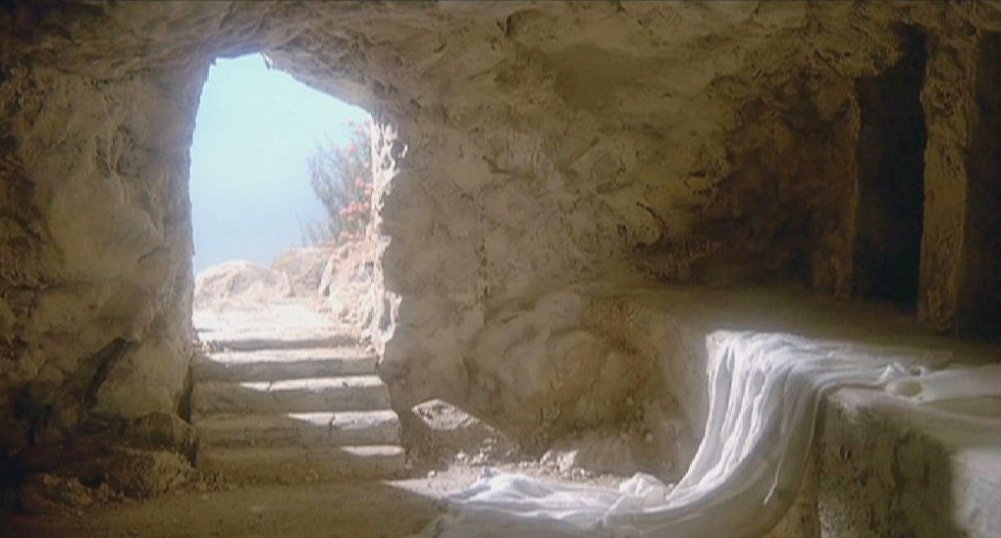
This gospel reading is a curious one to proclaim on Easter Sunday. It’s the one we read on Easter Sunday morning every year: John’s story of Mary Magdalene, Peter, and the Beloved Disciple at the empty tomb. Other gospel reports about Jesus’ resurrection have miracles and appearances of angels or of Christ himself. St. John’s Gospel recounts examples of these on Easter as well; for instance, after where our reading ends, Mary is greeted by Jesus and angels at the tomb, and Peter sees and touches the Risen Lord in the Upper Room. This morning’s gospel reading, however, does not find Jesus and sees no angels or miracles in progress. Mary Magdalene discovers Jesus’ body is missing and runs away distressed. She finds Peter and the Beloved Disciple (traditionally, the Apostle John) and the men run back to the tomb. Both of them go inside but only find burial cloths. They had not yet understood Jesus’ previous remarks nor the Old Testament passages which foretold “that [Christ] had to rise from the dead.” But, when the other disciple went inside the tomb after Peter, “he saw and believed.”

So what convinced him? Was it something about those burial cloths? Was it because the cloth which had covered Jesus’ head was “not with the burial cloths but rolled up in a separate place” with a tender delicacy which a grave robber would not show? Was it because tomb raiders in the ancient world would typically steal fine burial linens and leave the body behind? Was it because a body-snatcher would not peel the dry-blood-caked shroud away from the body to carry away a naked corpse? Perhaps the cloths looked deflated, as though Jesus’ body had vanished or passed through without disturbing them. Or maybe a miraculous image of Jesus’ body had been left behind upon the shroud. Whatever it was, the Beloved Disciple reasoned from what he saw to firm conviction. Was Peter convinced by seeing the same scene? Maybe not. Mary Magdalene was not consoled by her first glances at the tomb. It was later encounters, typically together with other friends of Jesus, which led Christ’s disciples to faith in him as the risen Lord.

Many people come to church on Easter Sunday morning. And this is a good thing. Our Lord is pleased that you are here. On the first Easter Sunday evening, when Jesus Christ appeared in the Upper Room even though he had died for their sins, even though they had previously deserted him, he said to all those gathered: “Peace be with you… Peace be with you.” Many people come to church on Easter Sunday morning. But typically, on the following Sunday, a fewer number attend. Jesus may touch your heart this morning, he may give new insight to your mind, you may “see and believe” in a new way. Or maybe you will encounter Jesus’ empty Easter tomb this morning and walk away unchanged. Remember that it was later encounters, typically together with other friends of Jesus, which led disciples to faith in him as the risen Lord.

Jesus desires a personal relationship with each one of us; a relationship which will bless, console, strengthen, and guide us. A life of daily prayer, weekly worship, and true devotion. Praying to God only when I need something is like talking to a friend only when I want something. If you have been away from Christ, he calling you to return, to draw nearer, so your personal relationship and conviction may deepen. Realize that if Jesus Christ had not been risen, nothing else in life would matter. But since Jesus Christ has been risen, nothing else in life matters as much as this.

Building Community

March 31, 2024

Easter Vigil
By Fr. Victor Feltes

A theme of Easter Sunday was Jesus Christ’s disciples being reunited. When some female disciples find the stone rolled away, an angel announces that Jesus has risen and instructs them to “go and tell his disciples and Peter…” Later, when Jesus himself appears to Mary Magdalene outside the empty tomb, he tells her to “go to my brothers and tell them…” The two disciples on the road to Emmaus would not have returned to Jerusalem if they had not encountered Jesus along the way. And all of the remaining apostles (except for Thomas) were together Easter Sunday evening when Jesus appeared in the Upper Room. Notice that for St. Thomas the Apostle coming to full faith in Christ and accomplishing his Christian calling involved him rejoining the other disciples and sharing in their community. Now Jesus did not need to employ messengers. Post-resurrection, he could have opted to appear to each of his disciples personally, individually. Mary Magdalene, Peter, and Paul each had private first-encounters with the risen Lord. Yet Jesus wants his friends to help share the good news about him with others and he prefers to reveal himself when they are gathered together.

June of last year, our church renovation pledge drive concluded. Since then, your contributions, generously fulfilling those pledges, have been flowing into the parish. This January, we signed the building contract to renovate our vestibule. And tonight we see that project substantially compete, though a few details remain to be finished. In just a nine-month span, St. Paul’s entryway has been transformed, under budget and sooner than we had imagined. I wish to thank God and St. Paul our patron, who helped all of this come together better than we could have planned. And I wish to thank you for your generosity, those of you who served on our committees and all who have contributed to our Inspired by the Spirit campaign. Based upon some back-of-the-envelope calculations I made this afternoon, with the capital campaign monies we have received and at the rate your campaign contributions have been coming in, I estimate we could have all the money needed for our next stage, the renovation of our nave—that is, the front portion of our church—about a year and a half, eighteen months from now, or less.

Our new vestibule is a wonderful thing. The elderly or handicapped who may have stayed away from Mass now have recourse to a first floor bathroom. Parents self-conscious about their babies now have a cry-room space and a first floor changing station. Funeral mourners now have a space for casual visitations onsite, and no longer need to go outside on school days to find a restroom. And now our parish has a natural place to mingle after Mass respecting the prayerful quiet of this sacred space while strengthening bonds of holy friendship between us. The growing and deepening of this community is the greatest reason for our vestibule renovation.

Tonight we are delighted to be initiating through Baptism, Confirmation, and Holy Communion, new Catholic Christians among us. We welcome you and feel great joy that our collective witness has drawn and not repulsed you to full communion with Jesus Christ’s Church on earth. We treasure you and rejoice to share with you the precious gifts of grace and wisdom which we have received from the Lord. But brothers and sisters, we must do more to be inviting and share these gifts.

Jesus wants us, his friends, to help share the good news about him with others and he prefers reveal himself when we are gathered together. An old joke goes, “I don’t know why people say our parish is unfriendly — I always say ‘hello’ to everyone I know.” If you see someone new at Mass, please make them feel welcome. If you would like to organize after-Mass socials for our vestibule, with coffee and doughnuts, or ice cream, or something else to promote community, let me know. Invite a non-practicing Catholic back. Invite a non-Catholic Christian or even a non-believer to come and see. Invite them to come here with you to some weekday or Sunday Mass or to Eucharistic Adoration. Maybe offering to treat them to a coffee or meal after. Pause and ask the Holy Spirit: “Whom are you calling for me to invite here?” Let’s see how many more souls we can help bring into communion with Christ’s Church at next year’s Easter Vigil. If Jesus Christ had not been risen, nothing else would matter. But since Jesus Christ has been risen, nothing else matters so much.

Glimpses of our Future Glory

August 17, 2023

Solemnity of the Assumption
By Fr. Victor Feltes

The Church of Jesus Christ celebrates our Blessed Mother Mary. For instance, we mark her conception, her birth, and today the beginning of her life in glory. It is fitting the Church does this since her Lord commands us: “Honor your Father and mother.” And when the people we love have birthdays or anniversaries, we love to celebrate with them. Today we celebrate how the Virgin Mother of God was assumed body and soul into heaven.

She is the icon of the Church, the beginning and image of the Church’s coming to perfection. We are happy for Mary, but what we see in her is good news for us too. She is a sign of sure hope and comfort for our future, for what awaits for us in our resurrection to glory. To unpack what I mean, consider what the Blessed Virgin Mary has been up to in the centuries since her Assumption.

Enthroned beside her Son in a place of close intimacy and high honor, she is an intercessor for us, her spiritual children. How many children does Mary have? The Book of Revelation says “her offspring [are] those who keep God’s commandments and bear witness to Jesus.” Therefore, she has many, many millions of children. And how many “Hail Marys” and other prayers are sent her way every minute? Yet we believe that she hears us without becoming overwhelmed and that she knows each of us personally, as a mother knows her children. We also have reason to think that Mary has not merely remained in heaven for nearly 2,000 years, but has been active here below.

Though we are not obliged to hold belief any particular Marian apparition (since none of these later events belong to the ancient Deposit of the Faith) the Church has judged many proclaimed appearances of Mary to be credible, or “worthy of belief.” These apparitions offer us clues about Mary’s life now and what life will be like for us in resurrected glory.

In her Church-approved apparitions, the Blessed Virgin Mary comes in varying appearances. For example, in her appearances to St. Juan Diego in 1531, Our Lady of Guadalupe in Mexico had darker skin and black hair and wore traditional clothing indicating she was with child. In her appearances to the Belgian immigrant Adele Brise in 1859 near Green Bay, Wisconsin, Our Lady of Good Help had white skin and blonde hair in different apparel.

In Mary’s Church-approved apparitions she also speaks in varied languages. For instance, to St. Bernadette Soubirous at Lourdes, or the three shepherd children at Fatima, she did not speak ancient Aramaic, Hebrew, Greek, or Latin. She spoke to them in their local dialects. Mary resembles her seers and speaks their mother tongues because she is the mother of each of them.

Mary’s apparitions suggest a saint in his or her glorified body will have the power to change its age or appearance. Mary remains a woman, but race presents no barrier and different languages are no hindrance to communication. And if our glorified consciousness will become like hers, it will be no strain to know and be close friends with more than a billion people at once. Won’t that be wonderful?

Another detail that seers of Mary’s apparitions agree on is that she is now exceedingly beautiful. During the years of her life on earth, Mary may have looked quite ordinary. We do not imagine that Jesus Christ had to be the tallest, most muscular, or handsomest man who ever lived, so Mary need not have been the most beautiful woman alive either. In this fallen world, the holy can look ugly while the wicked can look very attractive. But now there appears to be no mismatch between Mary’s inner and outer beauty. This interior beauty is called holiness.

After our resurrection, the abundance (or lack) of holiness we have cultivated with God within us will be seen in our endless beauty (or ugliness) forever. The glory we are called to in Christ is like Mary’s and that gives us reason to rejoice with her today all the more.

The Risen Lord with the Most Beautiful Smile

April 23, 2023

3rd Sunday of Easter
By Fr. Chinnappan Pelavendran

A small boy was walking home after Sunday school. He was thinking about the lesson. When you give something to another person, you are really giving it to Jesus, and you will find the risen Jesus in everyone you meet. As he was walking, he noticed an old woman sitting on the roadside. She looked lonely and hungry. He sat down beside her and gave her chocolate. She accepted it with a beautiful smile. Then they sat together in silence, just smiling at each other. Finally, the small boy gave the woman a big hug and went home with a smile on his face. His mother saw a big smile on his face and asked, what made you so happy today? He said, I shared my chocolate with Jesus. Then, he added, you know, she has the most beautiful smile in the world. Meanwhile, the old woman returned to her home where she lived with her sister, and said to her you know, today I ate chocolate with Jesus. Today’s Gospel tells us that we will meet and experience the risen Jesus in unexpected places and persons.

In the Old Testament lot of people encountered God in an unexpected way. Abraham entertained three Angels when he was unaware. Jacob laid his head on a stone while he slept and saw a stairway to Heaven. While Moses was taking care of the sheep, he heard the voice of the Lord coming from the burning bush. Prophet Isaiah says, “In the year that King Uzziah died, I saw the Lord seated on a high and lofty temple, Seraphim singing Holy, Holy, Holy is the Lord of Hosts, the whole earth is full of His Glory,” before his own cleansing and consecration as a Prophet of the Lord. (Isaiah 6:1–6) Saul of Tarsus met Jesus on the road to Damascus, and Jesus got Saul’s attention by knocking him to the ground and making him blind.

Our readings today have one common and encouraging theme. No matter what happens in our lives, the risen Jesus is always with us. God is near to those who seek Him. The Emmaus incident is the story of a God who will not abandon us when we are disappointed.

God’s self–disclosure to the two disciples on the road to Emmaus was unexpected, but radically different from others. While they were walking with Jesus on the road to Emmaus, their eyes were closed from recognizing Him. When Jesus was at the table with them, He took the bread, blessed it, broke it, and gave the bread to them. At that moment, the eyes of the disciples were open and they recognized Jesus just before He vanished from their sight. Jesus will come to us in an unfamiliar way to support and strengthen us, when we least expect our risen Lord.

The Easter and the Emmaus journey tells us that God never forces Himself on us. He joins us in a walk in the garden, enjoying the beautiful scenery, visiting with a friend, sadness of death, or reading a letter from someone we love. God speaks to us in the voices of those who are hurt and sorrowful, in the faces of the poor and the needy.

We need to find Jesus in the Breaking of the Bread, as the Emmaus disciples understood. When we approach the altar to receive the Sacrament, we see and receive Christ Himself. The Eucharist is the true body and blood of Christ; it feeds us and fulfills our spiritual needs. When you receive the body of Christ let us recognize the risen Lord who is smiling at you.

Meet our Risen Lord at Mass with Opened Eyes and Burning Hearts

April 22, 2023

3rd Sunday of Easter
By Fr. Victor Feltes

On Easter Sunday afternoon, two of Jesus’ disciples were walking seven miles to Emmaus. Everyone journeys down the road of life. They have heard stories of Jesus’ Resurrection yet feel uncertain, pondering it, discussing it, and debating it. This is how they first meet the Risen Lord, with eyes not yet recognizing him as he walks with us. Jesus initiates the encounter. One whose name means “Glory to the Father” (whose life is meant to give glory to the Father) has questions about Jesus, the Nazarene called Christ. Cleopas and another disciple discover on their journey the very best person to answer the questions on their hearts. This meeting on the road to Emmaus parallels, beat-for-beat, how Jesus meets us in the Holy Mass.

Upon greeting and gathering his disciples near himself, Jesus begins a presentation of God’s Word. Starting with the Old Testament, he proclaims and explains how the Scriptures refer to him. Jesus preaches a homily pointing to himself. They hear, listen, and believe. These Christians would now profess as their creed, “I believe in Jesus Christ… For our sake he was crucified under Pontius Pilate; he suffered, died, and was buried, and on the third day he rose again in fulfillment of the Scriptures.” Next, they repeatedly petition the Lord: ‘Stay with us, for it is nearly evening and the day is almost over. We pray, Lord, that you will grace us amid the darkness of this world.’ And the Lord grants their requests.

Before, his disciples’ spirits had been heavy and downcast. But now that the Lord is with them, with a new spirit they lift up burning hearts to the Lord our God, rightly giving him thanks. Then at table, having presented to Jesus the customary bread and wine, he takes the bread, says the blessing, breaks it, and gives it to them. With that their eyes are opened and they recognize his real presence, made known to them in the breaking of bread. In conclusion, they go at once and with rapid steps walk seven miles more to share their Good News about Jesus Christ with others.

Every Sunday since those early days, Christ’s Church has celebrated the Breaking of Bread, the Holy Eucharist, the Mass, in fulfillment of his instruction to “Do this in memory of me.” As the Catechism of the Catholic Church notes, we have testimony from the second century showing that the basic outlines of early Eucharistic celebrations match the Holy Mass today. Around the year 155 A.D., St. Justin Martyr composed an open letter to the pagan Roman emperor to explain Christians’ beliefs and worship. St. Justin wrote:

On the day we call the day of the sun (that is, Sunday), all who dwell in the city or country gather in the same place. The memoirs of the apostles and the writings of the prophets are read… When the reader has finished, he who presides over those gathered admonishes and challenges them to imitate these beautiful things. Then we all rise together and offer prayers for ourselves…and for all others… Then someone brings bread and a cup of water and wine mixed together to him who presides over the brethren. He takes them and offers praise and glory to the Father of the universe, through the name of the Son and of the Holy Spirit and for a considerable time he gives thanks that we have been judged worthy of these gifts. When he has concluded the prayers and thanksgivings, all present give voice to an acclamation by saying: ‘Amen!’ [Then] those whom we call deacons give to those present the ‘eucharisted’ bread, wine and water and take them to those who are absent.

And St. Justin Martyr adds:

This food we call the Eucharist, of which no one is allowed to partake except one who believes that the things we teach are true, and has received the washing for forgiveness of sins and for rebirth (that is, baptism), and who lives as Christ handed down to us (that is, the Christian moral life). For we do not receive these things as common bread or common drink… [W]e have been taught that the food consecrated… is the flesh and blood of that incarnate Jesus.

Like the disciples on the road to Emmaus and St. Justin Martyr, we today are invited to encounter Jesus Christ at Holy Mass. Let us always recognize him, rejoice in him, and receive him with eyes opened with faith and hearts burning with love.

His Resurrection has Changed Everything

April 16, 2023

Divine Mercy Sunday
By Fr. Chinnappan Pelavendran

The resurrection of Jesus was a new experience for the disciples, even though Jesus had often explained to them about His resurrection. The apostles must have been afraid beginning on Holy Thursday, because their friend and the messiah was dead. They all abandoned Him. His own disciple betrayed Him. The crowd which welcomed Jesus with palms turned against Him and called for the release of Barabbas. The apostles, now afraid of the crowd, stayed in their homes for their own protection.

The harmony among the first Christians that we see in our first reading is the fruit of Jesus’ resurrection. The new community, gathered around the resurrection, was no longer afraid. In the second reading, St. Peter reminds us that we have been transformed through the resurrection of Jesus. His resurrection gave us a new birth and hope. Through our baptism, we share in Jesus’ resurrection. St. Peter reminds us that we have “an inheritance that is imperishable, undefiled, and unfading.” The resurrection of Jesus has changed everything. Nothing will ever again be the same.

Look at how Thomas changed. Before he met the risen Jesus he was depressed, absent from the group of apostles, and disbelieving. At first, he said: “Unless I see the mark of the nails in his hands and put my finger into the nail marks and put my hand into his side, I will not believe.” (John 20:25) After seeing the Risen Jesus, he proclaimed: “My Lord and My God.” (John 20:28) What a difference after seeing Jesus: from fear to Joy, seclusion to the mission, absence to presence, disbelief to faith, and a mere existence to new life. His life was completely changed after seeing Jesus.

Jesus presented Himself to His disciples during their time of fear and confusion. He restored their peace. He commissioned them as ministers of the sacraments. The sacrament of reconciliation is the sacrament of mercy.

As we celebrate today Divine Mercy Sunday, we are reminded that God extended His mercy to us by allowing His son to pay the ransom for our sins. Christ accomplished this through His paschal mystery.

We must also extend this mercy to others. We are called to be apostles of mercy. As we spread the good news of Christ’s resurrection, we must thank God the Father of our Lord Jesus Christ because His Mercy and generosity endure forever.

We, too, are the witnesses of the Risen Lord. We shall certainly encounter people who will doubt our faith. This must not discourage us; we must remain focused on our mission. So, as the true disciple of Christ, let us continue to announce the good news to the whole world that Jesus Christ, our Lord has truly risen from the dead.

Today, Jesus invites us to see Him and touch Him. He invites us to encounter his wounded and glorified body. In that encounter with Jesus, he will help us to have faith in Him. One day, despite our wounds and weaknesses, our bodies will be glorified like Him.

From Fear to Peace: Celebrating Divine Mercy

April 15, 2023

Divine Mercy Sunday
By Fr. Victor Feltes

During the Exodus, before descending in fire and smoke upon a trembling Mount Sinai, God gave instructions to prepare the Hebrews for this encounter. The Lord said to Moses:

“Go to the people and have them sanctify themselves today and tomorrow. Have them wash their garments and be ready for the third day; for on the third day the Lord will come down on Mount Sinai in the sight of all the people. Set limits for the people all around, saying: ‘Take care not to go up the mountain, or even to touch its edge. All who touch the mountain must be put to death. No hand shall touch them, but they must be stoned to death or killed with arrows. Whether human being or beast, they must not be allowed to live.’ Only when the ram’s horn sounds may they go up on the mountain.”

Then Moses came down from the mountain to the people and had them sanctify themselves, and they washed their garments. He said to the people, “Be ready for the third day.

On the third day, as all the people witnessed the thunder and lightning, the blast of the ram’s horn and the mountain smoking, they became afraid and trembled. So they took up a position farther away and said to Moses, “You speak to us, and we will listen; but do not let God speak to us, or we shall die!” Moses answered the people, “Do not be afraid, for God has come only to test you and put the fear of him upon you so you do not sin.” So the people remained at a distance, while Moses approached the dark cloud where God was.

A pair of themes throughout the Old Testament are the holy otherness of God and the deadly sinfulness of man. Our Fall made it dangerous to approach God carelessly. And even Moses was mysteriously told, “You cannot see my face, for no one can see me and live.” Compare and contrast that with this Sunday’s Gospel.

On the third day, despite the doors being locked where the disciple were, the Risen Jesus came and stood in their midst and said to them, “Peace be with you.” When he had said this, he showed them his hands and his side. And he said again, “Peace be with you.” A week later when Thomas was there, Jesus appeared again and said, “Peace be with you.” He then invited Thomas, “Put your finger here and see my hands, and bring your hand and put it into my side, and do not be unbelieving, but believe.”

In former times, seeing the Lord or merely touching the mountain or ark of his holy presence could mean death. But disciples in the New Testament are invited to see his face and touch his wounds. In the New Covenant, we are called to receive Jesus Christ alive in the Eucharist. Today we celebrate Divine Mercy, mercy reflected in how — even after our sins led him to his Cross — Jesus returns and repeatedly wishes us “Peace.” In forgetting our past, we fail to appreciate what the Lord has done for us. And too few rejoice in his Divine Mercy because so many do not realize their need for it.

On Easter Sunday evening, Jesus breathed on his apostles saying, “Receive the Holy Spirit. Whose sins you forgive are forgiven them, and whose sins you retain are retained.” Why would Jesus give them this power to forgive sins if he did not intend them to use it? Why would he give his Church such a Sacrament if we did not need it? Jesus wishes you a peace beyond your fear. He desires to forgive your sins and personally give himself to you in the Eucharist. Will you trust him enough to regularly encounter his healing Divine Mercy in the confessional so that you may receive him all the more reverently, fittingly, lovingly and joyfully at his altar?

Easter Makes All Things New — Funeral Homily for Donna Falkenberg, 75

April 12, 2023

By Fr. Victor Feltes

On the first Good Friday, Christ’s Church lost her bridegroom. What would become of her children, already born and yet to be born? However, Jesus had said, “I will not leave you orphans.” In God’s good providential plan, they would not be left abandoned. Behold how Easter Sunday made all things new. Similarly, in 1966, when Donna was eighteen years old, her husband “Sonny” Braden, Jr. tragically died. She had one infant daughter then and was pregnant with another. What would she do? God’s providence lovingly provided for them. She found and wedded Rodger in 1972, gifting her children a wonderful dad.

Donna’s daughters, Kelly and Lisa, tell me she loved traveling and made friends everywhere she went because she would talk to anybody. She had words of wisdom to share and a way of knowing what people needed to hear. Many of her daughters’ friends consider Donna a second mother. Her Lord, Jesus, also journeyed far from place to place and struck-up conversations with strangers. A woman at a well, a tax collector at his post, or a disabled beggar on the street could each have their lives forever changed and blessed by encountering and befriending him.

Donna sold Home Interiors and Gifts for thirty-two years and ranked sixteenth in the nation for sales. She had a knack for beautifying things and could make a house a home. Before Jesus died and rose he said, “I will prepare a place for you. In my Father’s house there are many dwelling places. … I am going to prepare a place for you, …come back again, and take you to myself, so that where I am you also may be.” Jesus intends to beautifully transform us, first our souls and later our bodies, that we may live after this life in a beautiful home with him.

Donna loves an eclectic combination of foods, including ice cream, popcorn, candy corn, and ketchup (though not necessarily mixed together). She would clean out the refrigerator to make what she called “Messy Meals,” adding spaghetti sauce, cream of mushroom soup, or creamy cheese sauce to make leftovers deliciously new. Interestingly, even after being resurrected in a glorified body, Jesus still eats food. St. Luke records how on Easter evening Jesus appeared to the disciples in the Upper Room and while they were still amazed and incredulous for joy he asked them, “Have you anything here to eat?” They gave him a piece of baked fish and he ate it in front of them. Now Jesus did this partly as a proof that he was truly alive and not merely a ghost. But John recounts how later along the shore of the Sea of Galilee the risen Jesus invited seven disciples to a meal. “Come, have breakfast,” he said, and he shared his fish and bread. Though Jesus has no need for food to live, for “death no longer has any power over him,” he still seems to enjoy eating.

Donna’s daughters tell me of her quick wit. “It sometimes shocked you how she snuck it in, but it kept you on your toes.” And Donna could be playful, such as putting a cherry tomato in her cheek and saying, “Tomato, what tomato?” We see that Jesus can be playfully witty, too. After his resurrection, he appeared incognito to a pair of disciples going to Emmaus. He asked, “What are you discussing as you walk along?” One of them, Cleopas, said to him in reply, “Are you the only visitor to Jerusalem who does not know of the things that have taken place there in these days?” And Jesus slyly and dryly replied: “What sort of things?” That is subtly very funny.

As a faithful Catholic, Donna attended Masses here at St. Paul’s Church. As her health declined, if you visited her at home in this past year you would find her enjoying Hallmark movies, since she kept that channel always on. I think one reason she loved both our Catholic Faith and those Hallmark movies is that these stories have happy endings. God has built within us an innate longing for happiness, and he intends to fulfill our longings through Jesus Christ. Jesus became like us so that we may become like him—perfectly holy in our souls and gloriously resurrected in our bodies. Through Jesus Christ, we can live with God forever, free of death and sadness and full of peaceful happiness.

Jesus’ resurrection shows us that goodness will not be lost to death, but raised up again in a beautiful way to endure forever. In these examples from Donna’s life I have shared we see that whatever good things we love, and whatever good there is in us, can find a happy home united with Christ who loves them, too. Behold how Easter makes all things new.

Why the Third Day?

April 8, 2023

Easter Sunday
By Fr. Victor Feltes

Why did Jesus rise from the dead on Easter? Christ’s resurrection was foretold, for instance in the 16th Psalm: “You will not abandon my soul to the netherworld, nor will you suffer your faithful one to undergo corruption.” Furthermore, Jesus rose again because without the Resurrection our Redemption would be incomplete. As St. Paul told the Romans, “[Our Lord] was handed over for our transgressions, and was raised for our justification.” In the words of the Church’s Catechism: “The Paschal mystery has two aspects: by his death, Christ liberates us from sin; by his Resurrection, he opens for us the way to a new life.” Jesus Christ came to redeem and save not only our souls but also our bodies and the rest of creation as well. Easter changes everything. Instead of living in a secular world where nothing really matters because cold death claims all, we now can live forever with God in Christ’s Kingdom.

Jesus rose again on Easter, but why did he resurrect on the third day in particular? Why not choose the first or second day, or the fourth or fortieth day to rise again? I see several reasons why God chose the third day to be Easter.

First of all, this number of days helps to confirm Jesus’ death. If Jesus had resurrected right away, immediately after being taken down from the Cross or sealed in the tomb, some would wonder if he had ever really died. Absent a miracle, no one could survive flagellation, crucifixion, and two nights alone in a cave without medical aid. The three days establish that Jesus was definitely dead.

Another reason for the three days was to fulfill the Scriptures. Post-resurrection, Jesus said, “Thus it is written that the Messiah would suffer and rise from the dead on the third day.” Many Old Testament passages foreshadowed this. For instance, Jesus and St. Paul both liken resurrection to plants sprouting, and it was on the third day of creation that God said, “Let the earth bring forth… every kind of plant.” It was “on the third day” that Abraham obediently offered Isaac in sacrifice, reasoning that God would keep all of his promises by raising his only son from the dead. But Heaven halted Abraham’s hand and he received back his beloved son alive on the third day. Jesus told the scribes and Pharisees, “Just as Jonah was in the belly of the whale three days… so will the Son of Man be in the heart of the earth.” Jesus also said, “Destroy this temple, and I will raise it again in three days.” (He said this in reference to the temple of his body.) The Book of Ezra records that the second Jewish Temple was completed on the third day of the month. And there are other Old Testament stories and signs one could cite as well. Jesus rose again on the third day in fulfillment of the Scriptures.

A third reason for the third day is what Jesus was doing on the second day. While his body was in the tomb observing a perfect Sabbath rest, his soul descended to the abode of those who had died before Christ. St. Peter writes in his First Epistle how Jesus “went and made proclamation to the imprisoned spirits;” that “the gospel was preached even to the dead.” Christ declared on earth, “Amen, amen, I say to you, the hour is coming and is now here when the dead will hear the voice of the Son of God, and those who hear will live.” Jesus used these three days to open heaven’s gates for all the just who had died before him.

Another reason for the third day is to signify a New Creation. “The third day,” Easter, was a Sunday. In Genesis, God’s work of Creation began on this first day of the week. Likewise, Easter Sunday and the Resurrection mark the beginning of a New Creation with Christ.

Though there may be millions of more reasons in the mind of God, a final, important reason I see for why Jesus rose on the third day is to give his Church a saving lesson in faithful endurance. The apostles had witnessed Jesus work many miracles. For example, they saw him use five loaves and two fish to feed five thousand men. Then, the following day, they heard him speak about the Real Presence. “My flesh is true food and my blood is true drink,” he said, and “unless you eat the flesh of the Son of Man and drink his blood, you do not have life within you.” However, people would not accept this teaching and in his Gospel St. John records, “as a result of this, many of his disciples returned to their former way of life and no longer accompanied him.” Then Jesus asked his apostles, “Do you also want to leave?” Simon Peter answered, “Lord, to whom shall we go? You have the words of eternal life. We have come to believe and are convinced that you are the Holy One of God.”

They believed in Jesus. His teachings were challenging, but they stayed with him. How shocking then was it for them to witness the torture and death of their Messiah, the Christ. Throughout Holy Saturday, they were full of doubts and fears, yet the disciples remained together in the Upper Room in which they had eaten the first Eucharist. Those apostles might have discreetly fled for home and missed out on Easter entirely, if they had not religiously respected the Sabbath which kept them from traveling far from the gathered Church. Therefore, when Jesus appeared on the third day, none of them had strayed too far away. Except for Judas and Thomas, all of them were there on Sunday to encounter their Risen Lord. They saw Jesus, and touched him, and he opened their minds to understand the Scriptures and the deeper meaning of their past and present and future. Then their doubts and fears and desires to be elsewhere, which had felt so very strong before, were now emptied of power, replaced with joy and peace. However, they never forgot what they experienced on that Holy Saturday leading to Easter Sunday, and they present to us a saving lesson for our faithful endurance.

Jesus Christ works miracles. He teaches beautiful, challenging things. And today, he is risen from the dead. The betrayals of Judases and doubts of Thomases do not change the reality of these things. Called here by God, you have gathered in this Upper Room for Easter. You have drawn near to Christ’s Holy Eucharist and his Church. Whatever doubts or fears (or even desires to be elsewhere) you might feel, I pray you will hereafter never stray nor remain far away. To whom else would you go? Only Jesus Christ has the words of eternal life. Remain here for him with his Church so that you may encounter and know the Risen Lord and us more deeply. As I said before, Easter changes everything. Instead of living in a secular world where nothing really matters because cold death claims all, we can now rejoice that we can live forever with God in Christ’s Kingdom.