Archive for the ‘Temple Cleansing’ Category

Zeal for Your House Will Devour Me

March 2, 2024

3rd Sunday of Lent
By Fr. Chinnappan Pelavendran

Like the desert (Lent week 1) and the mountain (week 2), the Temple is a place of special encounter with God. However, today we are not going to see the glorious face of Jesus; we are going to see his angry face. At the same time Jesus is kind and merciful, we should not take his kindness for granted. His love is forever yet, he corrects our faults. By chasing those buying and selling out of the Temple, Jesus gives us a foretaste of his wrath on those who do not obey the commandments of God. The Ten Commandments (Ex. 20:1-17) given by God are meant to be obeyed and kept by all. Yet many of us are taking it for granted. God is the Father of us all and he wants us to be upright.

For this reason, St. Paul tells us that, “while the Jews demand miracles and Greeks look for wisdom, here are we preaching a crucified Christ.” (1 Cor. 1:22-25) We preach Christ because he is the power and wisdom of God. Those who follow Christ are on the right path because he has the message of eternal life. Those who do not know Christ lack wisdom.

Since they lack wisdom, they turned the house of God, which is meant for prayer into a marketplace. Jesus proved to them that he had a strong desire to dwell in God’s house forever. He exclaimed, “zeal for your house will devour me.” (Jn. 2:13-25) This zeal to dwell in God’s house forever is the motivating factor behind Jesus’ mission. He has come to serve, not to be served, and to give his life as a ransom for many. The house of God is the house of prayer and worship.

On the spiritual level, the temple refers to every one of us. St. Paul tells us in the First Letter to the Corinthians (3:16-17) that we are God’s temple and God’s Spirit dwells in us. Therefore, if anyone destroys God’s temple, God will destroy the person, for God’s temple is Holy, and that we are.

For those who feel that going to church to worship God is not necessary, Jesus has proved to them that we meet in God’s house for adoration and prayers. The church is a sacred place. It should be kept holy and reserved for things concerning God. When we gather in the church, we are in the presence of the almighty and ought to maintain the decorum befitting his presence. May our Lenten observance help us to experience the presence of God among us.

Let us love our parish Church as “our Heavenly Father’s house” and make it a holier place by our care for it, by our active participation in the liturgy, by offering our time and talents in the various ministries, and by our financial support for its maintenance and development.

Revere What Is Holy

March 2, 2024

3rd Sunday of Lent
By Fr. Victor Feltes

On a spring day before Passover, Jesus went up to the Jewish temple in Jerusalem. He found people there selling animals to be sacrificed; oxen, sheep, and doves. He also saw money changers doing business there, seated at their tables exchanging foreign currencies. Jesus Christ, the Prince of Peace, then made a whip out of cords and drove them all out of the temple area along with the sheep and oxen. He spilled the money changers’ coins and overturned their tables. The doves for sale were kept in cages, so Jesus told those vendors, “Take these out of here!” Jesus proclaims peacemakers blessed, yet we see that he is not a pacifist. His disciples who witnessed the event recalled a verse from Psalm 69, “Zeal for your house consumes me, and the insults of those who insult you fall on me.” So why was what was going on at the temple upsetting to Jesus and insulting to his Father?

Jesus said, “Stop making my Father’s house a marketplace!” He also quoted to them a verse from Isaiah, “My house will be called a house of prayer for all nations.” “But you,” Jesus said, “are making it ‘a den of thieves!’” Jesus was angered by how they were profaning the temple, exploiting the Jewish faithful, and being obstacles to foreign peoples’ coming to worship God. The Jews regarded marketplaces as impure places. St. Mark’s Gospel notes how “on coming from [marketplaces], they would not eat without purifying themselves.” Running a market at the temple was treating the holy place like somewhere base or ordinary. Jesus likened the vendors and temple officials to a den of thieves for charging the Jews who came for worship inflated animal prices and exploitive rates of exchange. And their marketplace was setup inside the Court of the Gentiles, the temple courtyard for all the nations, where God desired non-Jews to come and worship him. Consider how much harder it is to pray when surrounded by the noise of others. (This is why we encourage people after Mass to gather to chat in our vestibule or basement—to preserve the quiet of this holy place for the benefit of others at prayer.) Ultimately, Jesus cleanses the temple because the ways in which it was being profaned were creating obstacles to peoples’ deeper relationship with God.

A physical holy place can be profaned. Holy names can be treated profanely as well. God commands his people, “I, the Lord, am your God… You shall not take the name of the Lord, your God, in vain. For the Lord will not leave unpunished the one who takes his name in vain.” This second of the Ten Commandments forbids the misuse of God’s holy name. Swearing false oaths, invoking God to declare untruths, is taking his name in vain. Neglecting or spurning doing something that you have vowed to God, is taking his name in vain. And most commonly of all, using the Lord’s name without reverence and love (that is, blasphemy), is taking his name in vain. Using God’s name carelessly like a joke, employing the name of Christ like a word for excrement, treating holy things as base or ordinary creates a stumbling block for others as they see our Faith as foolishness. If we do not lovingly respect our holy friends in heaven and holy things on earth, then why should they? Only say “O my God” as an act of prayer. Only say “Bless your heart” if you sincerely mean it. And only say “I swear to God” about things which are gravely important and true.

The Second Commandment demands reverence for the Lord’s name for the same reason Jesus forcibly cleansed the temple; that people may come into deeper loving communion with God. Let us love God, and his holy ones, and everyone by word and deed, and respect his holy things and places. By our lived Christian example, may others come to do the same.

Christ Was Lifted Up

March 7, 2021

3rd Sunday of Lent

People would pilgrimage to the Temple in Jerusalem from across the known world to worship, often bringing money to purchase oxen, sheep, or doves for sacrifices to God. So vendors had set up shop in the Temple’s outermost court exchanging foreign currencies into Hebrew coins for a percentage fee and selling animals for a healthy profit. God, however, had designated that large, marble-paved court as the Court of the Gentiles where non-Jews (that is, the Gentiles) could come to worship him at his Temple. The Father willed his Temple to be “a house of prayer for all the nations,” but the moneychangers and animal sellers were making it a noisy, smelly “marketplace.” And by charging unlawful interest and demanding excessive prices even of the poor, they were also “making it a den of thieves.

A place intended to be free for holy worship and communion with God had become unclean, profaned by sin. So Jesus personally comes to Jerusalem at the time of Passover and does something dramatic. He zealously cleanses the Temple, conquering evil, achieving justice, restoring relationship between God and man, drawing people to himself, and indeed sacrificing himself; for when the chief priests and scribes heard of this incident they began seeking a way to put him to death. Their plotting would lead to the Pascal Mystery at the heart of The Apostles’ Creed:

He suffered under Pontius Pilate,
was crucified, died and was buried,
he descended into hell,
on the third day he rose again from the dead,
he ascended into heaven,
and is seated at the right hand of God the Father Almighty.

Why does Jesus Christ do these things? Because sin had caused the human race to fall far from God and paradise. Suffering, dying, and being barred from Heaven were our human lot. We had become slaves to sin and the Evil One, held hostage against our will. Our offenses against the All-Holy One required an incalculable repayment. And our separation from God had made us doubtful of his goodness and love for us. It was a slavery we could not escape, a debt of justice we could not repay, and a broken relationship we could not heal. But God had a plan to save us. He would aid humanity with his divinity by fashioning a remedy for us out of our weakness and suffering and mortality, that from fallout of our downfall would come the means to our salvation. By his Incarnation, the Son of God enters our sinful world as one of us and by his Pascal Mystery sets us free, cleansing us, for holy worship and communion with God. First, Jesus assumes our nature, and then he offers a perfect sacrifice.

As the Letter to the Hebrews says, since we “share in blood and Flesh, Jesus likewise shared in them, that through death he might destroy the one who has the power of death, that is, the Devil, and free those who through fear of death had been subject to slavery all their life.” Jesus said that he came “to give his life as a ransom for many.” And lest it be unclear, St. Paul proclaims that the Lord “gave himself as a ransom for all.” Christ’s death frees the slaves and ransoms the captives, and now saints and angels sing to Jesus, the Lamb of God, in Heaven: “Worthy are you… for you were slain and with your blood you purchased for God those from every tribe and tongue, people and nation.

To some, the idea of Almighty God dying on a cross seems impossible, unbecoming foolishness. Yet Christ crucified is the power and wisdom of God. “The foolishness of God is wiser than human wisdom, and the weakness of God is stronger than human strength.” This mysterious, hidden, wisdom, planned by God before the ages for our glory, was not understood by the devil and his demons; “for if they had known it, they would not have crucified the Lord of glory.” In sinning God, Adam had handed himself and his descendants into the devil’s clutches, but in crucifying Christ (the sinless New Adam) the serpent overplays his hand and loses big. St. Augustine uses the image of a mousetrap in which Jesus is the bait. The devil takes this bait in putting Jesus on the Cross, but by shedding Christ’s innocent blood the devil is forced to release his claims on those who are joined to Christ. The trap snapped down and crushed the serpent.

Jesus’ sacrifice was also able to pay the incredible debt of human sins before God. All sin is wrong, but consider which sin is worse: to lie to a stranger or to betray a friend; to slap your enemy or to slap your mother? The greater the generous goodness and love that a person has shown us, the greater is the offense of our trespasses against them. So how great a crime then are our sins against God, whose love created us and from whom all good things come? How very great a debt of justice must then be satisfied? Our sins caused a debt no sinner could repay. God had commanded his Old Covenant people to offer animal sacrifices for their sins, the idea being that the creature was dying in the place of the sinner whose sins had merited death. However, as the Letter to the Hebrews says, “it is impossible that the blood of bulls and goats take away sins. For this reason, when [Jesus] came into the world, he said: ‘Sacrifice and offering you did not desire, but a body you prepared for me; holocausts and sin offerings you took no delight in. Then I said, as is written of me in the scroll, “Behold, I come to do your will, O God.”’

Jesus Christ, God become man, perfectly fulfills the Law, keeping the commandments and doing his Father’s will. He lives for God without sin, honoring his Father and mother, proclaiming the Kingdom of God without idolatry or blasphemy, without murder or adultery, without thievery or lying or coveting, but with abundant love. And in his death, Christ obediently offers the perfect, acceptable sacrifice we were incapable of on our own; a divinely-perfected offering of humanity to God. By his Incarnation, Jesus has in a certain way united himself with every human person, inviting them to become one with him. Through his sacraments, we are more perfectly joined to Jesus to share in his life and enjoy the benefits of what he has accomplished. Christ is the Victor over sin and death, over the tomb and the underworld, over the world and the devil, and he invites us to partake in his victory.

In the beginning, though the Holy Trinity did not desire humanity to sin and fall, our freely-chosen rebellion did not come as a surprise. Before Creation, the eternal, all-knowing Trinity foreknew what it would cost to save us. And God still said Yes, “Let there be light.” Jesus Christ was freely delivered up crucifixion by lawless men according to the set plan and foreknowledge of God, as foreshadowed by the Old Testament Scriptures. But could God, if he had wished, before Creation or in the course of time, have ordained a manner for the Son’s saving sacrifice other than dying upon a Roman Cross? If so, if there were other unchosen options, then the Cross of Christ was chosen as a most effective and compelling sign for us. A less painful, less ignoble, less public, less striking death — if such a death could have saved us — would not speak to us so clearly as a powerful sign of God’s love for us as this. Jesus makes himself so vulnerable and so lowly so as to awaken a response of love in our hearts. He extends his arms on the Cross in hopes that the whole world will be drawn to his embrace. As Jesus said, “When I am lifted up from the earth, I will draw all people to myself.”

After Jesus died, the Apostles’ Creed says, “he descended into hell.” What are we to make of this? Death is the separation of one’s soul from one’s body. On Holy Saturday, while Jesus’ dead body laid in his sealed tomb keeping a perfect Sabbath rest, Jesus’ soul visited the souls of those in the realm of the dead. Our creed translates this abode of the dead (called “Sheol” in Hebrew or “Hades” in Greek) as “hell” because all souls there, whether righteous or unrighteous, were deprived of the vision of God. But this does not mean that the situations of the Just and Unjust there were identical. Jesus’ Parable of the Rich Man and Lazarus describes the afterlife before the gates of Heaven had opened, showing Lazarus comforted in the bosom of Father Abraham while the uncaring, anonymous rich man (whose name is not written in the Book of Life) suffers torment in the flames.

Jesus descends to hell as Savior, proclaiming the Good News to the souls imprisoned there. He does not descend into hell to deliver the damned, nor to destroy the hell of damnation, but to free the souls of the Just. Jesus had said, “Amen, amen, I say to you, the hour is coming and is now here when the dead will hear the voice of the Son of God, and those who hear will live.” By proclaiming the Gospel in the underworld and inviting souls to Heaven, Jesus extends his saving victory to all the faithful people who had preceded him in death.

On the third day he rose again from the dead,
he ascended into heaven,
and is seated at the right hand of God the Father Almighty.

I do not have the time to speak much about these lines this Sunday, but in closing, note what St. Paul beautifully observes about Christ in his Letter to the Philippians:

Though he was in the form of God, Jesus did not deem equality with God something to be grasped at. Rather, he emptied himself and took the form of a slave, Being born in the likeness of men, …it was thus that he humbled himself, obediently accepting even death, death on a cross!

Because of this, God highly exalted him and bestowed on him the name that is above every other name, so that at Jesus’ name every knee must bend in the heavens, on the earth, and under the earth, and every tongue proclaim to the glory of God the Father: Jesus Christ is Lord!

Jesus empties himself in his Incarnation, humbles himself in his holy obedience, submits himself to his Passion and death, descends to the depths of the underworld, lower and lower and then Jesus is raised up from there, higher and higher, to life and rewards, glory and honor and power, enthroned at the favored righthand of God the Father. St. Paul says to “have among yourselves the same attitude” as this in your Christian life, for as Jesus teaches, “Whoever exalts himself will be humbled; but whoever humbles himself will be exalted.

Getting Slapped — Monday, 11th Week in Ordinary Time—Year II

June 16, 2010

Jesus taught:

“…Offer no resistance to one who is evil. When someone strikes you on your right cheek, turn the other one to him as well. If anyone wants to go to law with you over your tunic, hand him your cloak as well. Should anyone press you into service for one mile, go with him for two miles.”

Should we always offer no resistance to those who would do evil against us?

Notice that each of the examples Jesus gives are of injustices that do no real lasting harm. If you are slapped on the cheek, it stings awhile, but in a few minutes you’re fine. Even Jesus’ disciples owned spare clothes–we know because He told them to leave their second tunics behind when He sent them two by two. There is no lasting harm until your last tunic or cloak is taken. (cf. Exodus 22:25-26) In those days, Roman soldiers could force Jews to carry their gear for up to a mile down a road. Jesus teaches that one should go the extra mile for these enemies and occupiers.

In each example Jesus gives of offering no resistance to evil-doers, the affliction is felt in one’s pride more than anywhere else. Jesus is teaching us to be humble when people wrong us in small ways, so that they will be struck by our magnanimous patience and strength and be converted.

But what if the evil someone would do to us would do us grave and lasting harm? Should we offer no resistance then? Two incidents for Jesus’ life come to mind. When the money changers and animal sellers were doing business in the temple’s court of the Gentiles, profaning it and impeding the nations’ worship of the One True God, Jesus resisted. He made a whip out of cords and drove out the people who were doing what was evil. On the other hand, in the Passion, Jesus offered no resistence. He let His enemies slap Him, strip Him, and force Him to carry a cross.

It seems that there are times when we are called to resist evils for the sake of the common good, and times when we are called to accept evils, even grave injustices against us, in the pattern Jesus Christ. Let us trust the Holy Spirit to guide us to know when is the time for which.

Friday, 33rd Week in Ordinary Time—Year I

November 23, 2009

In the year 167 before Christ, the empire dominating the Jews, in attempt to unify their peoples, forbid the Jewish sacrifices, banned observance of the Sabbath and feasts, and outlawed circumcision. Altars to Zeus and other Greek gods were set up in the temple, and unclean animals, like pigs, were sacrificed upon them. In response, Mattathias Maccabeus and his sons led a Jewish revolt against their oppressors. Two years later, they had crushed their enemies and went up to purify the temple and to rededicate it for proper worship.

Two hundred years later, another zealous lover of God’s law went up to the temple to cleanse it and rededicate for true worship. Jesus entered the temple area and proceeded to drive out those who were selling things, saying to them, “It is written, My house shall be a house of prayer, but you have made it a den of thieves.”

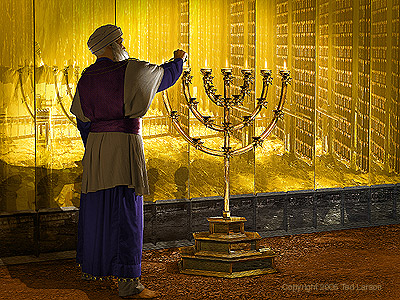
After the Maccabees had rededicated the temple they celebrated for eight days.  When they relit the seven wicks of the menorah in the sanctuary they only had enough olive oil on hand to keep it burning for one day.  But, by a miracle, it is said that the lamp kept burning for eight days, long enough to press, prepare and consecrate more fresh oil. The rededication of the temple and this miracle are still commemorated in our time as a Jewish holy day.  From the Hebrew word for “dedication” or “consecration”, the Jews call this celebration “Hanukkah.”

Christ has dedicated and consecrated us as the new temple and house of God. How are we to keep our temple lamps lit? How are we to obtain oil for our souls? We are not to do it by grasping, by stealing things from the world, in a vain effort to fill ourselves. The Lord’s house is not to be a den of thieves. Instead, we must pray, asking for the grace we need to remain burning brightly. As Jesus said, “My house shall be a house of prayer.”