Archive for the ‘Typology’ Category

The River From The Temple

November 9, 2025

Feast of the Dedication of the Lateran Basilica
By Fr. Victor Feltes

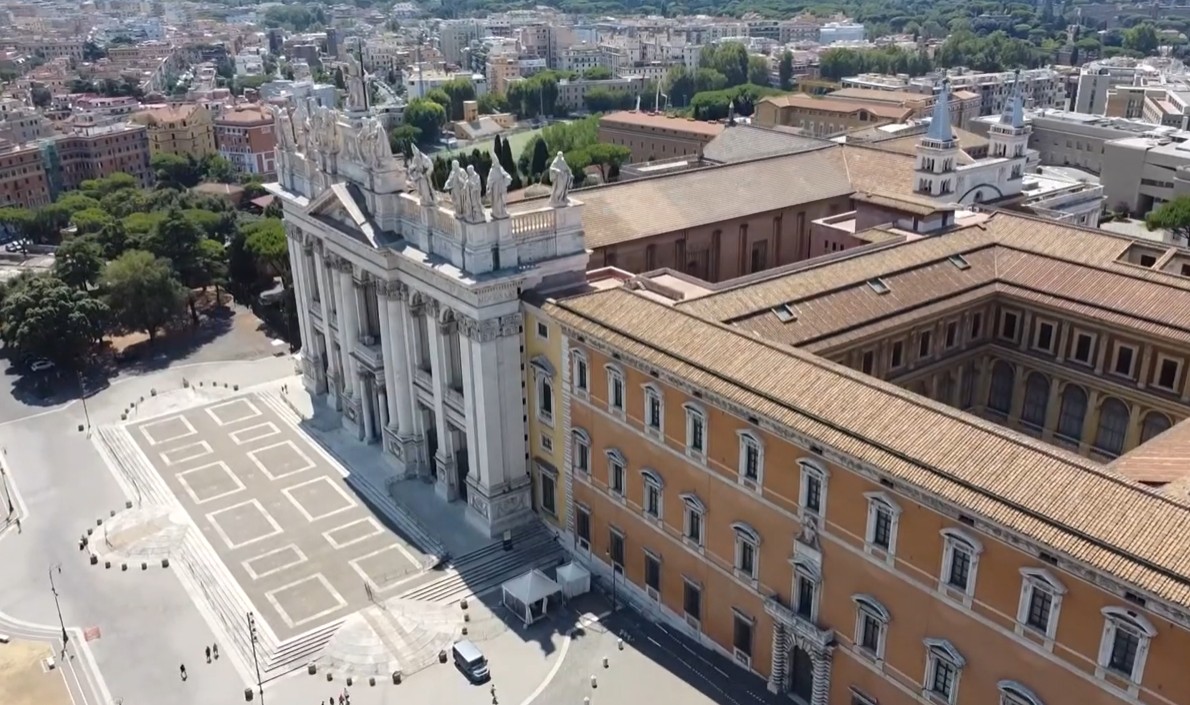
This Sunday, the Church throughout the world celebrates the dedication of the Lateran Basilica in Rome, which turns 1,701 years old this year. While St. Peter’s Basilica in Vatican City is more famous, the Lateran Basilica is the pope’s cathedral, the cathedral of the Archdiocese of Rome. This is why the Lateran Basilica is called “the mother and head” of the hundreds of thousands of Catholic churches around the world. Even if we had to go forward without any of these beautiful buildings, we could still practice our Catholic Faith through celebrating the Sacraments and offering our lives and prayers to God. But for Jews during much of the Old Testament, only one building was their place for sacrificial worship and considered God’s holy dwelling place on earth. In today’s first reading, the Prophet Ezekiel is taken by an angel to that Jewish temple in Jerusalem.

Of this vision, Ezekiel writes: “I saw water flowing out from beneath the threshold of the temple toward the east, for the façade of the temple was toward the east; the water flowed down from the southern side of the temple, south of the altar.” Ezekiel records that trickling water flowing through the gates of the temple and out of the city into the east, somehow becoming a river. The angel declares, “This water flows… and empties into the sea, the salt waters [of the Dead Sea], which it makes fresh. Wherever the river flows, every sort of living creature that can multiply shall live, and there shall be abundant fish, for wherever this water comes the sea shall be made fresh. Along both banks of the river, fruit trees of every kind shall grow; their leaves shall not fade, nor their fruit fail. Every month they shall bear fresh fruit, for they shall be watered by the flow from the sanctuary. Their fruit shall serve for food, and their leaves for medicine.” Ezekiel’s mysterious vision of this miraculous river which purifies and renews, producing abundant life, is a prophesy which finds its fulfillment in Jesus Christ and his Church.

In today’s Gospel, when Jesus forcefully clears out the animal sellers and money-changers from the temple area, the Jews ask him, “What sign can you show us for doing this?” And Jesus answers, “Destroy this temple and in three days I will raise it up.” The Jews were incredulous at hearing this and said, “This temple has been under construction for forty-six years and you will raise it up in three days!?” But, as St. John the Gospel writer notes in the text, Jesus “was speaking about the temple of his Body.” After Jesus had risen from the dead, his disciples remembered that Christ had said this and understood its significance.

On Good Friday, when the soldiers saw that Jesus was already dead on the Cross, one of them “thrust his lance into his side, and immediately blood and water flowed out.” Today, physicians affirm that the traumas of Jesus’ Passion and death could cause red and clear fluids to build up in his chest around his heart, resulting in “blood and water” flowing out when the spear was withdrawn, just as St. John witnessed. Do we know into which side of Jesus’ body the spear entered — was it Jesus’ left side or his right side?

Recall how Ezekiel saw the water flowing out in his vision: “The façade of the temple was toward the east” and “the water flowed down from the southern side of the temple, south of the altar.” If Jesus on the Cross faces “east” like the front-face of the Jewish temple, then water coming down from the “south side of the temple (of his Body)” would be flowing from Christ’s right side. And 2,000-year-old forensic evidence may actually confirm this detail. The Shroud of Turin, which appears more likely than not to be an authentic image of Jesus’ body in the tomb, after accounting for the image’s mirror-reflective nature, shows a wound in Christ’s right side. St. Augustine and other Church Fathers recognize flowing from Christ’s side the water of baptism and the blood of the Eucharist. In the beginning, Adam was put into a deep sleep and God fashioned a bride for him from the rib of his side. Jesus Christ on the Cross, asleep in death, has his Bride the Church fashioned from his side through his Holy Sacraments. And when the nations are one day assembled before Christ the King, for the Final Judgment described in Matthew 25, it is the sheep gathered to his right side who will be saved.

Now that trickle from Christ’s side is become a mighty river of grace; purifying and renewing, generating abundant new life in whomever and wherever it flows. Faithful Christian people and places which grow close to that river and are fed by its waters shall endure and produce good growth, healing, and nourishment. We are blessed to enjoy this beautiful church, but wherever we worship our true temple and center of grace prepared for us by divine providence across millennia is our Lord and Savior, Jesus Christ. So with awe, reverence, gratitude, and love, let us turn to him and draw near to his Eucharistic sacrifice.

Pray Without Ceasing

October 18, 2025

29th Sunday in Ordinary Time
By Fr. Victor Feltes

Once upon a time, the pope summoned his Vatican chauffeur. When his driver had brought the car around, the Holy Father confided, “Ever since I got elected pope, I have sorely missed not driving anymore. Please, sit in the backseat and let me take the wheel.” The chauffeur reluctantly agreed and the pope was beaming with joy. But soon the Holy Father accidentally went the wrong way down an empty one-way street and got pulled over by City of Rome police. An officer approached their vehicle intending to write them a ticket, but after a brief chat he soon returned to his partner waiting in the squad car. His partner asked, “What, no ticket? Who’s riding in that limo?” “I don’t know, but whoever it is he must be really important—the pope is his chauffeur!

Jesus (although in a much sounder, wiser way than this) also speaks from the lesser to the greater. This classic mode of rhetoric argues that something true in a smaller case is surely true for the larger case as well. For example, Jesus says a “person who is trustworthy in very small matters is also trustworthy in great ones; and the person who is dishonest in very small matters is also dishonest in great ones.” Elsewhere, he points out: “Are not two sparrows sold for a small coin? Yet not one of them falls to the ground without your Father’s knowledge. … So do not be afraid, [for] you are worth more than many sparrows!” And on another occasion, Jesus tells us: “If you, who are wicked, know how to give good gifts to your children, how much more will your heavenly Father give good things to those who ask him!

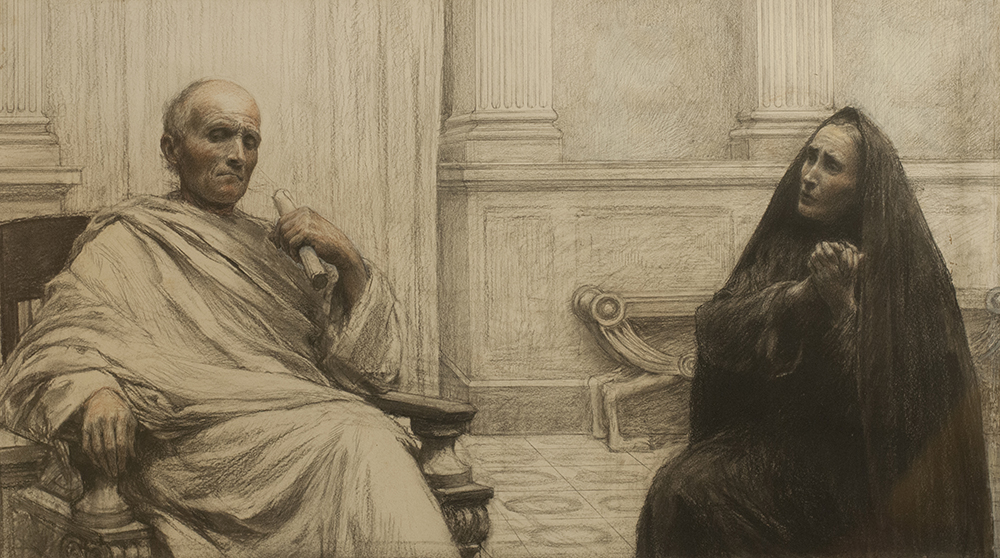
Jesus argues from the lesser to the greater in today’s Parable of the Unjust Judge. This bad judge does not care about justice. He neither fears God nor respects any human being. However, we see a widow wear him down to give her what she rightfully asks for through her dogged persistence. Jesus says, “Pay attention to what the dishonest judge says.” If a wicked judge with a heart of stone will eventually give in to a poor, weak widow, then, as Jesus argues, “will not God secure the rights of his chosen ones who call out to him day and night? Will he be slow to answer them? I tell you, he will see to it that justice is done for them speedily.” Unlike that unjust and indifferent judge, God is just and cares about us deeply, so we ought to ask God for good things and keep asking without becoming weary.

Our Sunday lectionary reinforces this lesson in today’s first reading. During the Exodus, when the Israelites entered a battle against the Amalekites, Moses climbed a hill overlooking the battlefield carrying the staff of God that had split the Red Sea. As long as Moses held that wooden staff raised above his head, Israel had the better of the fight. But whenever Moses let his tired arms rest, their enemy had the better of the fight. This scene prefigures Jesus’ crucifixion upon the hill of Calvary, where Christ’s arms upraised on the wooden Cross bring victory over our enemies. Just as Jesus had support from John the Apostle and the Virgin Mary and others at the Cross, so Moses had Aaron and Hur supporting his arms until the day was done and the battle was won. So who can support you in the battle of prayer? I can recommend spiritual allies divine, angelic, and human.

How often do we lack motivation to pray or, once beginning to praying, lack enthusiasm, inspiration, or insight? “We do not know how to pray as we ought,” but if we ask the Holy Spirit himself to help us to pray he will come to the aid of our weakness. Each of us is also accompanied by at least one sinless, loving, brilliant, and powerful guardian angel tasked by God to help us be saints. Ask your guardian angel to help you pray more faithfully and fervently. And finally, we have fellow Christians to help us. There are saints in heaven to intercede for us and people around us to pray with us, encourage us, and help keep us accountable. Ask the Holy Spirit, your guardian angels, other Christians to help you pray better.

Jesus expresses the necessity for us to pray always without becoming weary. St. Alphonsus Liguori, a doctor (or great teacher) of the Church, believed enduring in prayer is key to our salvation. St. Alphonsus said: “He who prays is certainly saved; he who does not pray is certainly damned. All the saints in heaven, except infants, were saved because they prayed; and all the damned in hell were damned because they did not pray, and this is their greatest torment to see how easily they could have been saved, had they prayed, and that now the time for prayer is over.” Jesus asked whether when he comes again he find faith on earth? If we keep on praying, he at least will find us faithful.

Lifted Up & Exalted

September 13, 2025

Feast of the Exultation of the Holy Cross
By Fr. Victor Feltes

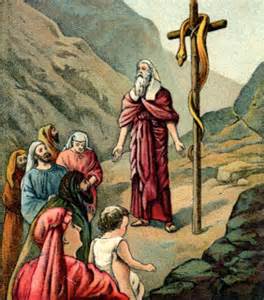
During their long Exodus journey, the Hebrews once again began rebelling, despising God and his servant Moses. They even sinfully complained about the Manna bread God was providing for their survival in the desert saying, “We are disgusted with this wretched food!” So God sent venomous serpents—or perhaps he merely lifted his shield of protection around their camp—resulting in many getting snakebitten and dying. So the people repented and pleaded with Moses, who prayed to the Lord. The Lord then commanded Moses to fashion a bronze serpent and affix it to a pole so that whoever looked at it would live. Moses and the Hebrews did not realize this at the time, but that bronze serpent on a wooden pole was a symbol pointing ahead to Jesus Christ who would die for our sins on his wooden Cross so that we may live.

In today’s Gospel, Jesus says: “Just as Moses lifted up the serpent in the desert, so must the Son of Man be lifted up, so that everyone who believes in him may have eternal life.” Later in John’s Gospel, Jesus uses the same Greek verb to declare, “When I am lifted up from the earth, I will draw everyone to myself.” And the inspired author notes, “[Jesus] said this indicating the kind of death he would die.” But this same Greek word for “lifted up” or “exulted” appears again later to recount Jesus’ Ascension and heavenly enthronement. The Book of Acts says, “God exulted/lifted up [Jesus] to his right hand as leader and savior to grant repentance to Israel and forgiveness of sins.” “Jesus, exulted/lifted up to God’s right hand, received the promise of the Holy Spirit from the Father and poured it forth….” This is what I want to highlight: how the first lifting up of Jesus leads to the second; his exultation on the Cross leads to his exultation in heaven.

Christ Jesus, though he was in the form of God, endured our human suffering and death, even death on a cross. And because of this, God greatly exalted him, and bestowed on him a heavenly glory above any other glory. The early Christians fully believed in Jesus’ death by crucifixion, but they did not depict Jesus on the Cross in sacred art for several centuries. This was partly due to persecution but also because crucifixion still remained so scandalous, horrific, and shameful in their culture. This Sunday, we celebrate the Exultation of the Holy Cross and I want you to behold Christ crucified. Too many are turned away from him—the God who suffered, died, and rose for them—and we see where their dark paths lead. But the message I feel moved to preach to you who have kept your eyes on Jesus and walked with him for years is to understand that our crosses lead to glory.

Each of us is going to suffer in this world and—unless Jesus Christ comes back first—each of us will taste death. But just because you suffer greatly does not necessarily mean you are being punished for doing something wrong like the Hebrews in the desert were. And suffering does not mean that you are not loved by God. (Jesus Christ was perfectly good yet God’s Beloved Son was murdered.) And when you suffer, no matter how incomprehensible or unjust the pain, realize where you are: on your Cross with Jesus Christ. Whatever you endure with him advances his mission of salvation in this world and increases your heavenly glory, for it conforms you to himself. St. Peter wrote, “Beloved, do not be surprised that a trial by fire is occurring among you, as if something strange were happening to you. But rejoice to the extent that you share in the sufferings of Christ, so that when his glory is revealed you may also rejoice exultantly.” Whatever may happen, let nothing deprive you of your Christian peace or purpose and never forget the incredible love that our God has for you and everyone.

A City on a Mountain — The Garrett Mikula & Annabelle Wittrock Wedding

June 7, 2025

By Fr. Victor Feltes

“You are the salt of the earth…
  You are the light of the world.
  A city set on a mountain cannot be hidden.”

This is a classic Gospel reading. It encourages all Christians to be salt on this earth and light in this world in ways which cannot go entirely unnoticed. Yet in all my years, despite this reading being a valid option for weddings, I cannot recall it ever being selected. This got my mind wondering: “How is Christian marriage like a city set on a mountain?” How does Sacred Scripture connect mountains, cities, and marriage? Let’s look at three episodes.

In the 6th century B.C., the Prophet Daniel interpreted King Nebuchadnezzar’s secret dream which featured a huge statue representing ancient empires. A stone hewn from a mountain by God struck the statue, shattering it to pieces. Daniel foretells that the stone which struck the statue would become a great mountain, fill the whole earth, and stand forever.

Earlier, in the 8th century B.C., the Lord had declared through the Prophet Isaiah that he was “creating new heavens and a new earth.” “Indeed, I am creating Jerusalem to be a joy and its people to be a delight; I will rejoice in Jerusalem and exult in my people. … None shall harm or destroy on all my holy mountain….”

Finally, in the Book of Revelation, St. John describes his vision: “I saw a new heaven and a new earth… I also saw the holy city, a New Jerusalem, coming down out of heaven from God, prepared as a bride adorned for her husband.” John hears a loud voice from God’s throne say, “Behold, God’s dwelling is with the human race. He will dwell with them and they will be his people and God himself will always be with them as their God.” Then John hears an angel say: “Come here. I will show you the bride, the wife of the Lamb.” Then the angel takes him in spirit to a great, high mountain and shows him the holy city Jerusalem coming down out of heaven from God.

So we see Sacred Scripture associating and connecting a holy mountain, a holy city (Jerusalem), and holy marriage. Now the Bible repeatedly calls God a Rock (“my Rock,” “our Rock,” an “eternal Rock”) and the city is identified as the Bride. God’s holy city appears to marry the earth upon the holy mountain.

In Ephesians 5, St. Paul gives instructions for husbands and wives: ‘Wives, follow your husbands. Husbands, sacrificially love your wives. The two shall become one flesh.’ And then St. Paul concludes, “This is a great mystery, but I speak in reference to Christ and the Church.” Bringing all of this together, I would suggest that the mountain and the city, Christ and the Church, you Garrett and Annabelle, are all (soon to be) joined in the same mystery. She, the city, relies on the mountain’s firm foundation, immovable core, quiet strength, loyal defense, strong support, provident resources, and enduring presence. And he, the mountain, delights in the city’s closeness, beauty, community, festivity, fruitfulness, joy, and laughter.

Garrett and Annabelle, your marriage is meant to share in this mystery. Behold, God’s dwelling is meant to be with the human race. So you must always allow Jesus Christ to be your Rock, the living Lord of your dwellings and daily lives. Only then will your marriage be salt for this earth and light to this world, a city set on a mountain which cannot be hidden.

Why Bread & Wine

February 17, 2025

6th Sunday in Ordinary Time
By Fr. Victor Feltes

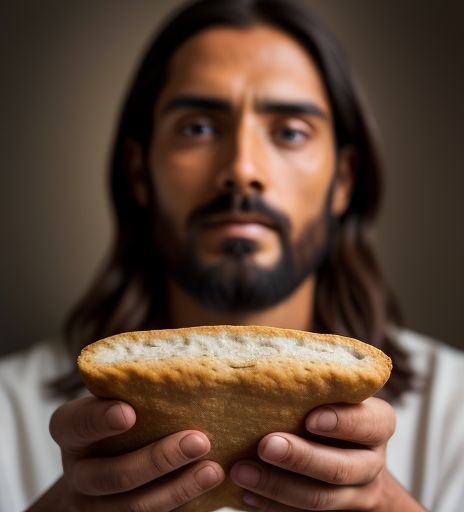
This Sunday, our seven week exploration of the sacraments culminates and concludes with the Most Holy Sacrament, the Most Blessed Sacrament, the Source and Summit of the Christian life. It is called the Breaking of the Bread, the Lord’s Supper, our King’s Heavenly Banquet, the Marriage Supper of the Lamb. It is the Bread from Heaven, the Bread of Angels, the Bread of Life; the antidote for death and the medicine of immortality. This sacrament is the Holy Sacrifice, our Holy Communion, the Most Holy Eucharist. After this homily, following our profession of the Creed and our prayers of the faithful, gift-bearers will carry up bread and wine along with water and our Sunday collection. Why did our Lord in his divine wisdom choose bread and wine for use in a sacrament, for this greatest sacrament? There are many reasons.

One reason is that the Last Supper was a Passover meal, and Passover meals featured unleavened bread and wine with a sacrificed lamb. The Passover celebrated how the angel of death harmlessly passed over the homes marked with the blood of the lamb, freeing God’s people from Egyptian slavery to Pharaoh, and enabling them to journey toward the Promised Land. The Eucharist frees us from slavery to Satan, sin, and death, enabling us to enter heaven and the new Creation, passing over unharmed into freedom and new life.

During the exodus, God’s people ate flakes of Manna in the desert. This Manna resembled and was called bread from heaven strengthening and preserving them on their journey. Jesus proclaims himself the new Bread from Heaven: “I am the living bread that came down from heaven; whoever eats this bread will live forever; and the bread that I will give is my flesh for the life of the world.”

Jesus changing water into wine at Cana reveals Christ can transform one thing into another. And Jesus’ multiplication of loaves shows that he can multiply something so that a multitude can partake of it. These miracles foreshadow how Jesus changes bread and wine into himself so that all of us can receive him in the Eucharist.

Daily bread” and wine were staple foods for Gentiles and Jews in the ancient world. Psalm 104 says God gave “wine to gladden the heart of man,” and “bread to strengthen man’s heart.” Though wine was more commonplace in those days, it was a symbol of special rejoicing as well. Jeremiah noted how people typically tread grapes with “shouts of joy,” and Ecclesiastes observed “wine gives joy to the living.” A feast of bread and wine combines the humblest of common foods with the peak of luxurious royal drinks. Likewise, the Eucharist unites the ordinary and extraordinary, our earthly everyday combines with the height of heavenly celebration.

Wheat and grapes grow on every continent on earth besides Antarctica, making these sacramental ingredients available to people throughout the world. God provides the raw materials, fruits of the earth and vine, to be worked by human hands into the bread and wine we offer the Lord God of all Creation. We are called to serve as his faithful stewards. Christ then takes our works and makes them still more bountiful. He does this in this sacrament and also throughout our lives.

The processes for making bread and wine reflects the Passion of Christ. Wheat is beaten, ground, and pummeled. Grapes are crushed, drained, and outpoured. They suffer along their way to God-honoring sacrificial glory.

The baked bread resembles human skin and red wine resembles human blood. And at the words of Consecration these things really become Jesus Christ through and through—his Body, Blood, Soul, and Divinity; living, whole, and undivided—with only the outward appearances of bread and wine remaining. To symbolically separate the Body of Christ from his Precious Blood is a symbol of death. And their reunion within us is a symbol of resurrection. Christ is truly risen in history and risen in us. As Jesus says, “Whoever eats my flesh and drinks my blood remains in me and I in him.”

This sacred sacrifice is also a communal meal. The Eucharist which unites us to Jesus Christ unites us to one another in him. As St. Paul writes to the Corinthians, “The cup of blessing which we bless, is it not a participation in the blood of Christ? The bread which we break, is it not a participation in the body of Christ? Because there is one bread, we who are many are one body, for we all partake of the one bread.”

Finally, consider how instead of coming to us as a frightening fire, Jesus Christ comes as non-threatening food. He says, “Take this, all of you, and eat of it, for this is my Body… Take this, all of you, and drink from it, for this is the chalice of my Blood…” It is very important that we approach him lovingly and reverently, in a state of grace, but Jesus urges us to partake of him. Christ’s desire is for us and him to live as one, to become the Body of Christ you receive in this Most Blessed Sacrament.

3 Things I Didn’t Know About Christmas

December 24, 2024

Christmas Eve
By Fr. Victor Feltes

O holy night! Christmas has come! Jesus Christ is born! Tonight we celebrate and hear the story again of his world-changing birth. And though it is a familiar story, we all still have things to learn from it. For example, do you know what swaddling clothes are? “Mary wrapped her Son in swaddling clothes and laid him in a manger.

When I was younger, I didn’t know what swaddling clothes were. Maybe because “swaddle” sounded like “squalid” and I had seen the inside of messy barns, I imagined they were dirty pajamas. It’s actually an ancient and modern practice to use cloth to wrap up infants’ arms and legs tightly to their bodies. This is called “swaddling,” and babies enjoy it — it reminds them of the warm close comfort of the womb.

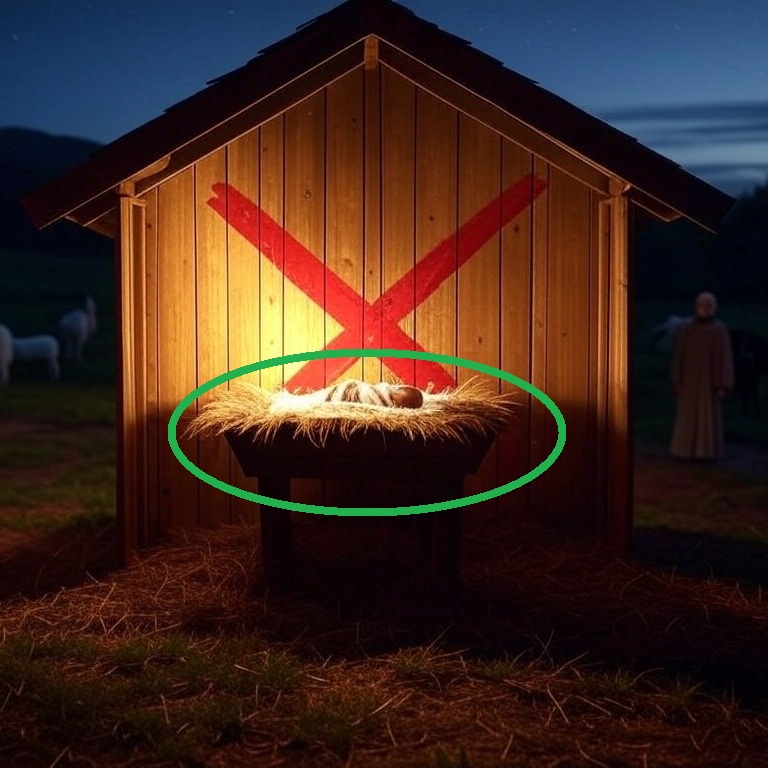
Another thing I didn’t know when I was younger was what a manger is. I assumed the manger was the stable because whenever someone would point out a “manger scene” what I always noticed was the big wooden barn. The shelter in Bethlehem where Jesus was born was actually more like a cave. But regardless, a manger is not a barn; it’s an animal feeding trough that holds dry feeds, like grain. So Mary wrapped up Jesus in swaddling clothes and laid him in a feed box.

These are interesting details, but why does St. Luke mention them? The details do reflect the humility of our Savior and King. Our Lord could have arranged providence instead to have himself born inside a palace with wealth, but he chose to enter into our human poverty and discomfort. But there is another reason why St. Luke notes these things: they foreshadow what would come later.

One day, decades after Christmas, assisted by another Joseph, the Blessed Mother Mary would wrap her Son’s body with cloths and lay him down inside another borrowed cave. And it is fitting that on Christmas night Jesus’ body was placed inside of a feedbox for grain, for he would go on to offer his full self as food for us, as Bread for the life of the world. It’s all connected and the beginning contains the end. Christmas leads to Holy Week, and Holy Week gives us the Faith, the Church, the Holy Eucharist.

A third and final thing I misunderstood when I was younger was when the Magi (or “Wisemen”) really arrived in Bethlehem. Having followed ‘the Christmas Star,’ I assumed they showed up on Christmas night. The Magi actually came later, sometime between forty days and perhaps two years after Christmas. We know this because Joseph and Mary did not yet have the Magi’s gift of gold to buy a sacrificial lamb for the Presentation at the Temple. And King Herod, in his attempt to kill Baby Jesus in Bethlehem, ordered the death of all the baby boys “two-years-old and under.The Magi responded to Christ’s birth and came after Christmas. They entered the house of the Holy Family and they came with gifts.

It is good that we are gathered for this holy night. Jesus has called you here to be with him and to be with us. But like the Magi, we all are also called to respond to his birth by coming after Christmas. This is the house of his Holy Family, and we must honor and adore him, bearing for him the gift of ourselves. Jesus’ wish this Christmas is for you, and each of us need him. Christmas, Easter, the Holy Mass; the Faith, the Church, the Eucharist; the past, the present, eternity; they’re all connected here, in Jesus Christ. Behold, I proclaim to you good news of great joy! A Savior has been born for you who is Christ and Lord. So come, let us adore him!

Jesus Our Passover Lamb

March 28, 2024

Good Friday
By Fr. Chinnappan Pelavendran

On Good Friday, Jesus took our place, our shame, our chains, our disfigured personalities, our toils, enslavement, and disgraced. He demonstrated the nature of the human condition through his pains, suffering, and disgrace. By his suffering and death, Jesus took our position. He exchanged our shame with his glory. This is an indescribable love. The passion and death of Jesus is a mystery beyond our comprehension. It is a mystery because it is God’s love for us. We understand bits and pieces, but our minds are too finite to understand the whole thing.

We are also conscious today of the reason Jesus underwent his passion and death for us. The prophecy of Jesus’ passion in our first reading today from the prophet Isaiah tells us:

It was our infirmities that he bore,
our sufferings that he endured. . .
he was pierced for our offenses,
crushed for our sins;
upon him was the chastisement that makes us whole,
by his stripes we were healed.  (Isa 53:4-5)

In the Old Covenant, before an animal was sacrificed in the temple, the priest would put his hand on the animal’s head to signify the sins of the person making the offering being transferred onto that animal which was then offered for his sins. In the New Covenant, our sins went on Jesus during his passion and death. He willingly submitted to the torture of his passion and death to take our sins on himself.

St. John tells us that when Jesus was offered wine on the cross to dull his pain, the sponge was put on a hyssop stick. Hyssop was the plant used by the Hebrews at the first Passover to put the blood around their doors to protect them during the night when the firstborn of the Egyptians died.

When the Passover lamb was killed and prepared for cooking, not one of its bones was to be broken. The soldiers broke the legs of the two crucified criminals next to Jesus to make them suffocate and die, but Jesus had already died so they did not break his legs.

The blood of the first Passover lamb spared the lives of the Hebrews in Egypt; the blood of Jesus our Passover Lamb saves us from the damnation due because of our sins. The Passover lamb had to be consumed and not just killed, and we consume Jesus our Passover Lamb in the Eucharist.

So, let us confidently approach his throne of grace to receive mercy and to find grace when we are in need. Therefore, beloved brothers and sisters, as we celebrate the mystery of the Lord’s passion and death, may God forgive our sins, assist us in our sufferings, and give us the grace to identify with those who suffer.

The Meaning of Malchus

March 21, 2024

By Fr. Victor Feltes

Judas Iscariot came to the Garden of Gethsemane with soldiers and guards who carried swords and clubs, lanterns and torches. Jesus’ disciples realized what was about to happen and asked, “Lord, shall we strike with a sword?” When one struck the high priest’s slave, cutting off his right ear, Jesus shouted, “Stop, no more of this!” Jesus then touched the man’s ear and healed him. All four gospels record the event but only St. John reveals it was St. Peter who had wielded the sword. Perhaps there was no longer a need to conceal his role in this violent episode once Peter had been martyred. St. John also tells us the wounded man was named Malchus.

Why did Peter strike at Malchus? It’s hard to imagine Peter attacking him if Malchus were unarmed and posed no immediate threat. That Peter slashed at him suggests Malchus was one of the most aggressive among those threatening to capture Jesus dead or alive. Why do all four gospels note that Malchus’ wound was his ear? Perhaps this is highlighting the truth that it’s harder for people to hear the Good News when the use of violence deafens them. Christ converts through loving persuasion, not force.

Given the apparent zealousness with which this slave served his master, risking life and limb to achieve Jesus’ quick arrest, Malchus may have been the kind of slave described in Deuteronomy 15. A Hebrew could sell himself into slavery but it was not automatically for life. The Old Covenant said: “If your kin, a Hebrew man or woman, sells himself or herself to you, he or she is to serve you for six years, but in the seventh year you shall release him or her as a free person. However, if your slave says to you, ‘I do not wish to leave you,’ because he loves you and your household, since he is well off with you, you shall take an awl and put it through his ear into the door, and he shall be your slave forever.” An awl resembles an icepick, a small pointed tool typically used to pierce holes through leather or wood. A Hebrew slave whose devotion was such that he wished to permanently serve the same household would get his ear pierced in this way. The hole in the servant’s ear and the matching imprint and blood stain on the house’s wooden door would be visible signs of the servant’s permanent commitment.

To whom did Malchus belong? Whether his ear had been awl-pierced or not, Malchus was enslaved to the high priest. “Malchus” comes from the Hebrew word for “King,” with sources saying the name means “My King.” His name providentially pointed to whom he truly belonged. Like everyone, Malchus rightfully belongs to Christ our King. Perhaps Jesus restored the ear of Malchus renewed, healed unpierced as a sign, since Christ through his Passion was setting him free. Jesus Christ is the Suffering Servant foretold of by Isaiah the Prophet. Jesus, because he loves you and your household, freely chose to dedicate himself to us forever. His body still bears the marks where we pierced him. And the wood of his Cross, which bears puncture holes and Christ’s blood stains, is our doorway to salvation—to living together with him forever.

His Manifest Devotion

February 24, 2024

2nd Sunday of Lent
By Fr. Victor Feltes

How could Abraham do what he did? He fully trusted in God, and through this trust he and us were greatly blessed. God had promised descendants to Abraham through his son, Isaac, declaring, “Through Isaac descendants shall bear your name.” Because of the miraculous birth his son and other experiences with God, Abraham believed the Lord could and would keep all his promises.

So when Abraham reached the mountain of sacrifice, where the Jewish temple would be built about 900 years later in Jerusalem, he told his servants (in a passage omitted from our first reading): “Stay here with the donkey, while the boy and I go on over there. We will worship and then we will come back to you.” The Holy Spirit tells us in the Letter to the Hebrews that Abraham “reasoned that God was able to raise even from the dead, and he received Isaac back as a symbol.”

After Jesus was transfigured and proclaimed by the Eternal Father to be his beloved Son, “as they were coming down from the mountain, [Jesus] charged [Peter, James, and John] not to relate what they had seen to anyone, except when [he] had risen from the dead. So they kept the matter to themselves, questioning what rising from the dead meant.” The sacrifice of Isaac, in which Abraham’s son was spared, foreshadows the sacrifice of Jesus offered by God the Father for us.

Upon staying the hand of Abraham, the Lord’s messenger said, “I know now how devoted you are to God.” After Christ’s sacrifice, we now know how devoted God is to us. St. Alphonsus Liguori agrees with St. Thomas Aquinas in saying, “God loves man just as if man were His god, and as if without man He could not be happy; ‘as if man were the god of God Himself, and without him He could not be happy.’”

Such is God’s devotion to us. And brothers and sisters, as St. Paul writes, “If God is for us, who can be against us? He who did not spare his own Son but handed him over for us all, how will he not also give us everything else along with him?” So let us fully trust God as Abraham did, and through this well-founded trust be greatly blessed and greatly bless others as well.

Rites of Miraculous Cleansing

February 11, 2024

6th Sunday of Ordinary Time
By Fr. Victor Feltes

The gospels record how a man with some advanced form of skin disease once came to Jesus in one of Israel’s towns. Seeing Jesus, he approaches and kneels and bows beseeching him, “Lord, if you wish, you can make me clean.” Our Lord, who can read human hearts, probably knows how much this particular miracle will cost him, but he is moved with compassion. Jesus reaches out his hand, touches the leprous man and says, “I do will it. Be made clean.” And the leprosy left him immediately.

One can imagine that man’s joy and excitement. He wants to tell everyone about his miracle! However, Jesus warns him sternly, “See that you tell no one anything.” Apparently, at this point in his public ministry, Jesus does not want to attract too much attention too quickly. Instead, Jesus tells the cured man, “Go, show yourself to the priest and offer for your cleansing what Moses prescribed; that will be proof for them.” What did this offering prescribed in the Mosaic Law look like?

We read in the Old Testament Book of Leviticus: “This is the law for the victim of leprosy at the time of his purification. He shall be brought to the priest, who is to go outside the camp to examine him.” This reference to ‘going outside of the camp’ dates back to the days when the Hebrews were still wandering in the Sinai desert. “If the priest finds that the sore of leprosy has healed in the leper, he shall order the man who is to be purified, to get two live, clean birds, as well as some cedar wood, scarlet yarn, and hyssop.” So this offering involves a curious collection of items: two birds, some cedar, scarlet yarn, and at least a branch of hyssop plant.

Then Leviticus says, “The priest shall then order him to slay one of the birds over an earthen vessel with spring water in it. Taking the living bird with the cedar wood, the scarlet yarn and the hyssop, the priest shall dip them all in the blood of the bird that was slain over the spring water, and then sprinkle seven times the man to be purified from his leprosy. When he has thus purified him, he shall let the living bird fly away over the countryside.”

Jesus told the man he cured to perform to this peculiar ritual saying, “that will be proof for them.” But what would it prove? First, it would demonstrate to the Jewish leaders at the Temple that Jesus had not come to transgress God’s Law but to fulfill it. Also, the cured man himself would be living proof of Jesus’ greatness, for the miracle of a leper being suddenly healed is documented only twice in the Old Testament (i.e., the case of Moses’ sister Miriam and that of Naaman the Syrian). Yet ultimately, this ritual provides proof for all people that Jesus Christ’s saving sacrifice had been long-foreseen by God.

The scarlet yarn, the wood, and the hyssop would each have a role in his Passion. The scarlet yarn foreshadows the robe in which they clothed him. That cedar wood points to the Cross connected to his death. And St. John’s Gospel notes how a sprig of hyssop was employed to lift a sponge of sour wine up to Jesus’ lips. The two birds in that purification ritual were of symbolic importance as well. One bird is slain, while the other is spared. That second bird, after being dipped in the water and the blood of its brother, is set free. That spring water, risen from the earth, points to the liberating water of Christian baptism which receives its power from Jesus’ blood.

In addition to its commandments regarding sometimes contagious skin diseases, the Book of Leviticus has rules for evaluating, quarantining, and purifying fungal infections of houses, fabrics, or leather. These commandments were useful in helping protect peoples’ physical health. But these teachings also illustrate, in an allegorical way, lessons about sin in our lives. Mold in your home can harm the health of your whole household. Knowing this, people take black growths on their walls seriously. How seriously do you take diseases in your flesh? How seriously do you take the sins in your soul?

If you had been a leper back then, would you have come to Jesus? Lent begins this week, so decide what you will you do. Go, show yourself to the priest in Confession and faithfully offer the holy Sacrifice of the Mass. Remember and honor the scarlet yarn, the wood, and hyssop of the Innocent One who took your place and through whom you can be cleansed and freed.

Why Five & Five? What Is Our Oil?

November 11, 2023

32nd Sunday in Ordinary Time
By Fr. Victor Feltes

Jesus tells us, “The Kingdom of Heaven will be like ten virgins who took their lamps and went out to meet the bridegroom.” In those days, the Jewish custom was for a man and woman to get betrothed. This marked the start of their marriage covenant, yet the husband and wife would live separately for the first year. In the meantime, the bridegroom would return to his father’s house and prepare a dwelling place for their life together. Once all was ready, he would joyfully return to bring her to himself. She would be expecting him, but would not know the hour, so she awaited his arrival with her bridesmaids. The bridegroom and his groomsmen would come and escort the bride and her bridesmaids to his father’s house for the consummation of their marriage and seven days of feasting.

This is the cultural context for what Jesus tells us at the Last Supper, as recorded in St. John’s Gospel: “In my Father’s house there are many dwelling places. If there were not, would I have told you that I am going to prepare a place for you? And if I go and prepare a place for you, I will come back again and take you to myself, so that where I am you also may be.” These Jewish marriage customs also provide the setting for today’s gospel parable about ten virgins awaiting the bridegroom.

Five of them were wise and five of them were foolish, with the foolish ones foregoing flasks of extra oil and, as a result, being shut out of the wedding feast. Jesus Christ called himself the Bridegroom and the Book of Revelation says his saints will enjoy “the wedding feast of the Lamb.” Before unpacking how we can avoid the foolish ones’ fate, consider this question: why five foolish ones and five wise?

Like other storytellers, our Lord theoretically could have crafted his parable’s details differently. Given ten female characters, instead of five foolish and five wise, Jesus could have told a tale about one foolish virgin and nine wise ones, or preached a parable about nine foolish virgins and one wise one, or shaped his story as one of the six other mixtures where some were foolish and some were wise. So why did he say five and five?

Jesus knew that if his parable had featured just one fool beside nine wise virgins, we might presumptuously assume this story’s warning does not apply to us. On the other hand, if Jesus’ parable had featured nine fools and only one wise virgin, we might despair of being among those who enter the feast. Instead, Jesus speaks of five and five so that we will take this parable seriously yet also have confidence that we can take prudent steps to follow the Bridegroom.

What do the five wise and five foolish virgins teach us? What sort of persons were they, and what oil do we require? For an answer, recall another parable of Jesus.

In the Parable of the Rich Man and Lazarus, after a life in which he callously neglected to care for poor Lazarus at his doorstep, a rich man suffers punishment in flames. He calls out to Abraham above: “I beg you, father, send [Lazarus] to my father’s house, for I have five brothers, so that he may warn them, lest they too come to this place of torment!” St. Jerome, the fourth-century Church Father and Doctor of the Church, saw symbolism in this rich man’s five brothers. Jerome sees them as the wicked man’s five bodily senses which were not ordered and dedicated to God. St. Jerome declares to that rich man:

[Y]ou have five brothers: sight, smell, taste, hearing, and touch. These are the brothers to whom formerly you were enslaved. Since they were the brothers you loved, you could not love your brother Lazarus. Naturally you could not love him as brother, because you loved them. Those brothers have no love for poverty. Your sight, your sense of smell, your taste, and your sense of touch were your brothers. These brothers of yours loved wealth and they had no eye for poverty. … They are the brothers who sent you into these torments.

God created and bestowed us our bodily senses, and they are good. Through them we sustain our lives, experience one another and this world, and delight in God’s good creations. The goodness of these material things reflect the goodness of their Maker. But it is easy for sinful humanity to become fixated on these delightful things resulting in the distracted neglect or sinful contempt of our Creator.

What is to keep our flame of faith from going out, plunging us into darkness, stopping us from following the Bridegroom? How can we properly order our five senses, and be like the wise virgins rather than the foolish, lest the Lord declare, “Amen, I say to you, I do not know you”? We need oil to keep our lamps faithfully burning and follow Christ in the light. But what is that oil?

In the Old Testament, priests, prophets, and kings were anointed with holy olive oil. Jesus was revealed to be the Christ, the Messiah – titles which mean “Anointed One.” At Jesus’ baptism, St. John the Baptist knew Jesus was the “Anointed One” when he saw the Holy Spirit descend upon him. And then at Nazareth, Jesus proclaimed, “The Spirit of the Lord is upon me, because he has anointed me…” So the Holy Spirit, who descended upon Jesus, our priest, prophet, and king, is like anointing oil. The Holy Spirit is the oil we need for our burning lamps. If we are wise we will invite and welcome this third divine Person to pour out upon us, fill us, and fuel us. He will keep our faith burning and direct our bodily senses so that we may wisely follow Christ our Bridegroom into joy.

Come Holy Spirit,
fill the hearts of your faithful
& kindle in them the fire of your love
.”

Jesus’ Praising & Rebuking of Simon Peter

September 3, 2023

22nd Sunday in Ordinary Time
By Fr. Victor Feltes

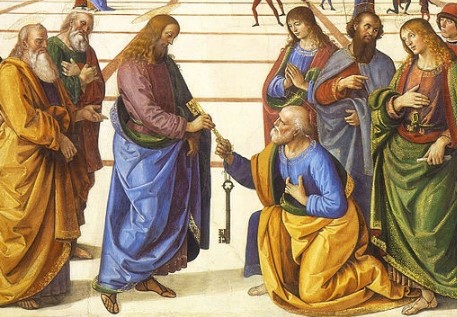
When Jesus asked his disciples, “Who do you say that I am,” Simon answered, “You are the Christ, the Son of the living God.” And Jesus replied, “Blessed are you, Simon son of Jonah. For flesh and blood has not revealed this to you, but my heavenly Father. And so I say to you, you are Peter, and upon this rock I will build my Church.” Jesus changed Simon son of Jonah’s name to “Rock,” or “Petros” in Greek, which we render as “Peter.” In the entire Old Testament, God changed the names of only three people: Abram to Abraham, Abram’s wife Sarai to Sarah, and Jacob to Israel, so the changing of Simon’s name is a big deal in salvation history. Jesus then declared to Peter, “I will give you the keys to the Kingdom of Heaven. Whatever you bind on earth shall be bound in Heaven; and whatever you loose on earth shall be loosed in Heaven.”

In last Sunday’s readings we heard of how in the days of the Prophet Isaiah the Lord chose “Eliakim son of Hilkiah” to become chief steward of the royal house, that is, prime minister for the reigning Davidic king. The Lord declared, “I will place the key of the House of David on Eliakim’s shoulder; when he opens, no one shall shut, when he shuts, no one shall open.” The holder of that office possessed plenary power under the king throughout the kingdom and reportedly carried a visible key indicating this authority that he would pass on to his successors.

The great Doctor of the Church, St. Augustine of Hippo, taught that the New Testament is concealed in the Old and that the Old Testament is revealed in the New. In the Old Testament, the Lord gave Eliakim “the key of the House of David” and authority to open and close. Likewise, Jesus Christ the new Davidic king gave Peter “the keys to the Kingdom of Heaven” and authority to bind and loose. Eliakim’s authority extended throughout an earthly kingdom, but Jesus promised Peter that his earthly decrees for the Church would also be confirmed in Heaven. Eliakim would become, in the words of the Lord through Isaiah, “a father to the inhabitants of Jerusalem and to the house of Judah.” St. Peter became the Church’s first “pope,” a title which comes from the Greek word for a “papa” and an office held today by Peter’s successor, our Holy Father Pope Francis. Jesus foresaw that without a visible shepherd his Christian flock would inevitably scatter. Like Moses for the Hebrews in the desert, or like King David for God’s people in Israel, Christ established a chief shepherd for his Church on earth through his popes, beginning with St. Peter.

That highlight moment for Simon Peter is followed this Sunday in St. Matthew’s Gospel by a very humbling event. Jesus begins revealing to his disciples that he must suffer greatly from the Jewish leaders, be killed, and be raised on the third day. So Peter takes Jesus aside and starts rebuking him, “God forbid, Lord! No such thing shall ever happen to you!” Jesus turns and says to Peter, “Get behind me, Satan! (That is, “Get behind me, Adversary!”) You are (being) an obstacle to me. You are thinking not as God does but as human beings do.” Notice how Jesus here reproaches Peter differently than how he once rebuked Satan in the desert, to whom he said, “Get away, Satan!” Jesus does not cast Peter away but tells him to “get behind me,” that is, “Follow me again.” Whenever you or I go wrong, Jesus calls us to follow him anew. Satan wants you to fall and stay down, but Jesus wants you to rise again.

Why was Simon Peter praised last week and why was he corrected today? First, Jesus tells him, “Blessed are you, Simon…. Flesh and blood has not revealed this to you but my heavenly Father.” Now, Jesus reproves him, “You are thinking not as God does but as human beings do.” Peter was praised for accepting the truth God had revealed and rebuked for trying to substitute his own ideas for God’s will. In today’s second reading, St. Paul urges us:

Do not conform yourselves to this age
but be transformed by the renewal of your mind,
that you may discern what is the will of God,
what is good and pleasing and perfect.”

Who in this age could correctly discover these things in our world apart from Christ’s one Church built on rock? Our Catholic Faith is a religion revealed by God with infallible teachings about what is true and how we are to live. Being faithful can be a cross, but our Lord always sees us, and he will repay each person according to our deeds with punishments or rewards. Jesus tells us, “Whoever wishes to come after me must deny himself, take up his cross, and follow me.” To get fully behind Christ and receive his endless blessings, receive everything that God has revealed to us through his Holy Catholic Church.

The Keys to the Kingdom

August 26, 2023

21st Sunday in Ordinary Time
By Fr. Victor Feltes

The great doctor of the Church St. Augustine of Hippo taught that the New Testament is concealed in the Old and that the Old Testament is revealed in the New. We see an example of this in our readings. In the days of the Prophet Isaiah, the Lord chose “Eliakim son of Hilkiah” to become chief steward of the royal house, that is, prime minister for the reigning Davidic king. The Lord declared, “I will place the key of the House of David on Eliakim’s shoulder; when he opens, no one shall shut, when he shuts, no one shall open.” The holder of this office possessed plenary power under the king throughout the kingdom. He reportedly carried a visible key indicating this authority that he would pass on to his successors.

In our gospel today, when Jesus asks his disciples, “Who do you say that I am,” Simon answers, “You are the Christ, the Son of the living God.” And Jesus replies, “Blessed are you, Simon son of Jonah. For flesh and blood has not revealed this to you, but my heavenly Father. And so I say to you, you are Peter, and upon this rock I will build my Church.” Jesus changes Simon son of Jonah’s name to “Rock,” or “Petros” in Greek, which we render as “Peter.” In the entire Old Testament, God only changed the names of three people: Abram to Abraham, Abram’s wife Sarai to Sarah, and Jacob to Israel, so the changing of Simon’s name is a big deal in salvation history.

Jesus then declares to Peter, “I will give you the keys to the Kingdom of Heaven. Whatever you bind on earth shall be bound in Heaven; and whatever you loose on earth shall be loosed in Heaven.” In the Old Testament, the Lord gave Eliakim “the key of the House of David” and authority to open and close. Likewise here, Jesus Christ the new Davidic king gives Peter “the keys to the Kingdom of Heaven” and authority to bind and loose. Eliakim’s power extended throughout an earthly kingdom, but the Lord promises Peter that his earthly decrees for the Church will also be confirmed in heaven. Eliakim would become, in the words of the Lord through the Prophet Isaiah, “a father to the inhabitants of Jerusalem and to the house of Judah.” St. Peter became the Church’s first “pope,” a title that comes from the Greek word for a “papa” and an office held today by Peter’s successor, our Holy Father Pope Francis. Jesus knew that without a visible shepherd his Christian flock would inevitably scatter. Like Moses for the Hebrews in the desert, or like King David for God’s people in Israel, Christ establishes a chief shepherd for his Church on earth through his popes, beginning with St. Peter.

Yet, this highlight moment in Simon Peter’s life is immediately followed by a humbling event in St. Matthew’s Gospel, which will be our gospel reading next Sunday. Jesus starts revealing to his disciples that he must suffer greatly from the Jewish leaders, be killed, and be raised on the third day. So Peter takes Jesus aside and begins to rebuke him, saying, “God forbid, Lord! No such thing shall ever happen to you!” Jesus turns and says to Peter, “Get behind me, Satan! (That is, “Get behind me, Adversary!”) You are (being) an obstacle to me. You are thinking not as God does, but as human beings do.” Notice how Jesus here reproaches Peter differently than how he rebuked Satan in the desert, to whom he said, “Get away, Satan!” Jesus does not cast Peter away. He tells him to “get behind me,” that is, ‘Follow me again.” Whenever you or I go wrong, Jesus calls us to follow him anew.

For what was Peter praised by Jesus and for what was he corrected? First Jesus tells him, “Blessed are you, Simon…. For flesh and blood has not revealed this to you, but my heavenly Father.” But later Jesus reproves him, “You are thinking not as God does, but as human beings do.” Peter was praised for accepting the truth God had revealed and rebuked for trying to substitute his own ideas for God’s will. In today’s second reading, St. Paul reflects, “Oh, the depth of the riches and wisdom and knowledge of God! How inscrutable are his judgments and how unsearchable his ways! For who has known the mind of the Lord or who has been his counselor?” Our Catholic Faith is a revealed religion with infallible teachings about what is true and how we are to live. Who could discover all of these things correctly apart from Christ’s one Church built on rock? Jesus says, “Whoever wishes to come after me must deny himself… and follow me.” To get fully behind Jesus Christ, always accept what God has revealed to us through his Holy Catholic Church.

Fruitful Love Despite Our Flaws — The Justin Wachtendonk & Brenna Werner Wedding

July 8, 2023

By Fr. Victor Feltes

Justin and Brenna, you have chosen beautiful readings for your wedding Mass. Including your second reading, the most popular of all wedding reading options: St. Paul’s famous poetic hymn about love. In the 13th chapter of his 1st Letter to the Corinthians, St. Paul teaches what love does and does not do. These words contain blessed lessons for us all. Today, I wish to highlight the rarely-considered context of those passages to help married couples and people within Christ’s Church of our day.

When we think of the early Church, we tend to picture it as a golden age. The apostles were still alive on earth preaching the Gospel, performing miracles, and founding Christian communities. Divinely inspired books were still being written for what would become the New Testament of the Bible. The Church’s membership was growing widely and rapidly, while producing great saints and martyrs. But this does not mean that everything was perfect. Far from it!

You can see this in St. Paul’s 1st Letter to the Corinthians. He writes them to address the many things that were going wrong at the Church in Corinth. For instance, Paul corrects the Corinthian Christians’ bitter internal rivalries and factionalism. He notes the external scandal caused by them suing each other in secular courts. He critiques the Corinthians’ inflated pride. He excommunicates a certain man for his unrepentant sexual sins. He condemns the Church at Corinth’s liturgical abuses (against the Real Presence of Jesus and one another) at their celebrations of the Holy Eucharist. And St. Paul cites still more controversies than these. So things in the early Church were not so idyllic as we might imagine. And that can be a great encouragement for us today!

The early Church, despite the many flaws of her members, produced good, much good, world-transforming good and the salvation of many souls, in those days and thereafter. The Church today, despite the many flaws of her members, still produces much good, world-transforming good and the salvation of many souls. His Church build upon a rock is, as Jesus says in our Gospel, “a city set on a mountain which cannot be hidden.” She remains, “the salt of the earth” and “the light of the world” — purifying, enlightening, enhancing, and saving.

Whatever goodness is found in Christ’s Bride, the Church, is like the worthy wife the Book of Proverbs describes in our first reading. As the pearl of great price, “her value is far beyond pearls.” “Her husband, entrusting his heart to her, has an unfailing prize. She brings him good, and not evil, all the days of her life.” She labors alongside him, “reaches out her hands to the poor,” and he will “give her a reward of her labors, and let her works praise her.” This is a great encouragement for us in his Church, but also a great encouragement for all Christian married couples here.

Justin and Brenna, you are about to enter a new covenant with Christ. In your sacramental marriage, you will encounter each other’s flaws and experience trials, as every married couple will. Do not be surprised when not everything is perfect and do not be alarmed. Maintain your peace. With a love that is patient, a love that is kind, a love that most importantly has its origin and strength in Christ, you will ‘bear all things and endure all things.’ His “love never fails.” Like his Church, which despite the imperfections of her members produces much good fruit, your marriage — if united to Christ — will never fail.

The New Manna

June 11, 2023

Solemnity of Corpus Christi
By Fr. Victor Feltes

In the Old Testament, God freed his people with the Prophet Moses. The Hebrews in Egypt were slaves to Pharaoh since birth, but God’s mighty works through Moses liberated them. Though he had led them through the waters of the Red Sea their journey was not yet completed. They were still in the arid desert and God wished to lead them into his Promised Land, “a land of milk and honey” he had promised to their ancestors. God had already blessed his people, yet he wished to give them his even fuller blessings there.

How were the Hebrew people sustained for forty years in the desolate Sinai desert? What did they eat to survive? Every day, God made fine flakes appear on the ground around their camp. These flakes were “white, and tasted like wafers made with honey.” Upon seeing them the people asked, “What is this?” (in Hebrew, “Manna?”) Moses told them, “It is the bread which the Lord has given you to eat.” Without that manna they would have starved to death. God’s people ate this bread until they entered the Promised Land.

Here we see things and events of the Old Testament foreshadowing events and things of the New. In the New Testament, God liberates his people with Christ Jesus his Son. We all were slaves to sin, Satan, and hopeless death, but God’s mighty works through Jesus Christ freed us. He has led us through the waters of baptism; however, our journey is not yet completed. We possess renewed life in this fallen world but God wishes to lead us into his Promised Land of Heaven. God has already blessed us, yet he wishes to give us his even fuller blessings there.

So how are we to endure as we walk through the present desert of this world? Every day, in churches like this one, God offers us the Bread that has come down from Heaven. Jesus says, “I am the living bread that came down from heaven; whoever eats this bread will live forever; and the bread that I will give is my flesh for the life of the world.” He gives us himself in the Eucharist. People see the Blessed Sacrament and wonder, “What is this?” It is the New Manna; the Body and Blood, Soul and Divinity of Jesus Christ.

In addition to Sacred Scripture, the Early Church Fathers attest to this. These theologians living in the first centuries of the Church teach and document what the earliest Christians believed about Jesus Christ’s Real Presence in the Eucharist. For instance, shortly after 100 AD, St. Ignatius of Antioch said, “The Eucharist is the Flesh of our Savior Jesus Christ.” Around 150 AD, St. Justin Martyr taught, “The Eucharist… is both the Flesh and the Blood of that incarnated Jesus.” St. Augustine of Hippo wrote in the early 400’s that, “Christ was carried in his own hands when, referring to his own body, he said, ‘This is my body.’ For he carried that body in his hands.” And there are many other examples of such teaching from that era.

This is what Christ’s one, holy, catholic, and apostolic Church has always believed and taught, and God has affirmed its truth here and there by Eucharistic miracles throughout the centuries. In the Old Testament, God’s people ate the manna until they entered the Promised Land. Had they not regularly eaten of it, they would have died from starvation. This reflects how important faithfully receiving and promoting the Holy Eucharist must be for you and me.

Never neglect Sunday Mass. To skip Mass from Saturday evening through Sunday night (without a grave reason for doing so) is to prioritize something else above of Jesus, spurning the Lord who commands us to keep his day holy. Let Jesus Christ be first in your life through faithfully worshipping and receiving him at Mass. And opportunities to worship and receive our Lord at Mass are not limited to the weekends.

If your schedule permits, I welcome and invite you to try weekday Mass, celebrated at St. Paul’s on Monday through Friday at 7:15 AM and mornings at St. John’s on Mondays, Thursdays, and First Fridays. Weekday Mass is only a half-hour long, it features a homily, and is among the best devotions for drawing closer to Jesus.

Are any of your friends or relatives interested in our Catholic Faith? Invite them to come with you to Mass or bring them to that other great way to encounter our Eucharistic Lord: Eucharistic Adoration.

What greater treasure do we have than Jesus, truly present in the Eucharist? Let us treasure him as we ought and introduce this treasure to others. Strengthened by his food, our Lord would bring us all together into his Promised Land of Heaven.