18th Sunday in Ordinary Time—Year B

August 17, 2009

We humans are forgetful creatures. Look at the Hebrews, running short on food and patience in the first reading. It’s only one month since they’ve walked freely out of Egypt; after ten miraculous plagues, after the parting of a sea before them, after the total destruction of their enemies behind them. It’s just one month later and they’ve already forgotten God’s desire and creative ability to care for them. They’ve forgotten, and their hope is gone.

In the Gospel there’s more forgetfulness.  The people come to Jesus and they ask Him, “What sign can you do, that we may see and believe in you?  What can you do?” Have they already forgotten about His recent miraculous sign, how just the other day he multiplied loaves and fish for them?  Recalling that miracle to mind would have strengthened their faith and hope.

We’re forgetful too. I, for example, often have a problem remembering how the responsorial psalm goes.  I hear it, I repeat it, and then it’s gone. We’re forgetful people. For instance, can you remember what I preached about the last Sunday I was here? I wouldn’t expect you to.

I spoke about how we should be hopeful because of Jesus Christ. I also strongly emphasized the importance of each of us to pray every day. This morning I want to teach you how we can be strengthened in faith and hope by recalling in prayer our most grace-filled memories.

Maybe you pray as the first thing when you wake up. Maybe you pray before you go to bed each night. Maybe you pray while you’re driving, perhaps imagining Jesus or Mary in the seat beside you. Maybe you make a daily visit to Jesus here really present in our tabernacle. When and where you pray each day is not as important as the prayers you offer and the connection and consolation that Christ wants to give you.

Anyone who prays frequently will have times when they sometimes seem to wander about in a desert of unfocused thoughts. By an act of will, we can try digging a hole here or there, looking for new, fresh, spiritual water. But there is an easier way to go about things when our prayer time feels hard and dry.

If we search our memories we can find places and times when God was obviously close and active. Perhaps a time when He silently but clearly spoke to you, or a time when He provided for you in answer to your prayers. Perhaps the births of your children or day you got married are moments that perceivably touched the eternal.

These memories can be wellsprings of grace and consolation for you. Just because we have left a well behind in your past doesn’t mean that well is run dry. What was true then, is still true now and you can go back their in your memories and draw graces from it again. Our grace-filled memories can serve as an anchor of hope, our ever-accessible source for faith and hope in prayer.

There is one more thing I on which I want to speak.  Our psalm said today:

“What we have heard and know, and what our fathers have declared to us, We will declare to the generation to come the glorious deeds of the LORD and his strength and the wonders that he wrought.”

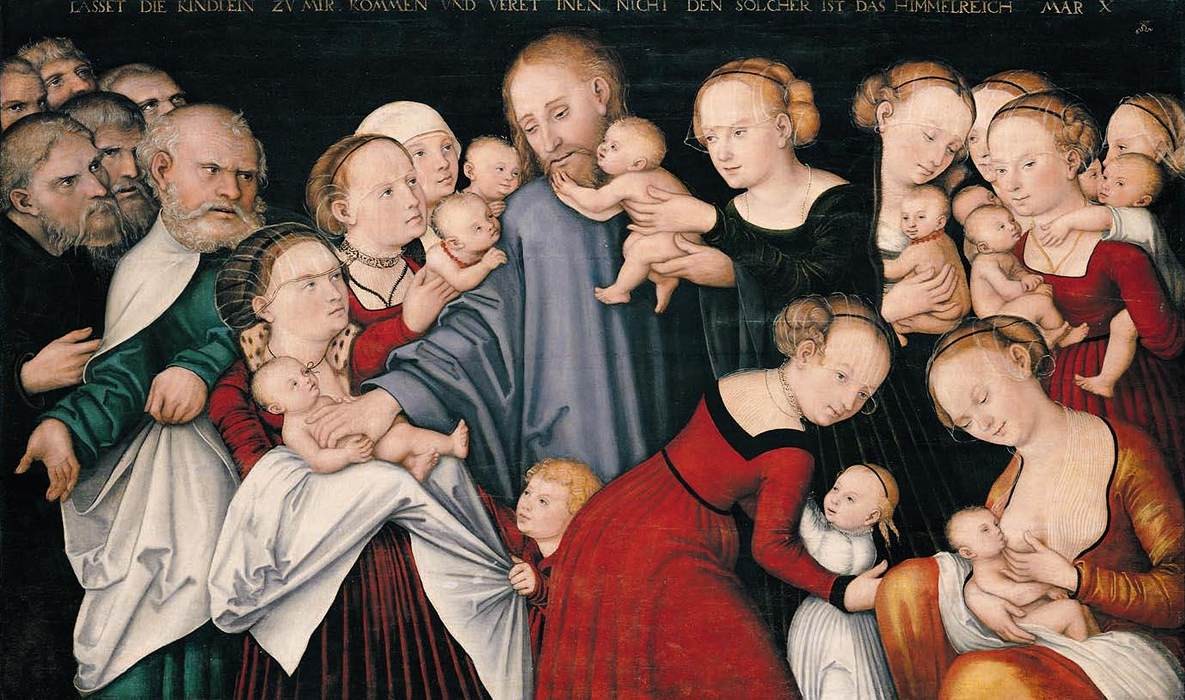
This psalm is not only written for the Old Testament Jews, its meant for us as well. And when it mentions “fathers” here, priests like me are not the fathers it has foremost in mind. Fathers, if your children only hear about God from me, your silence will speak a message to them. It is important that you be a spiritual leader for your family and tell the stories of our faith and of your faith.

Parents, have you ever told your children of “the glorious deeds” that the Lord has done for you? If not, why not? Do you feel reluctant to tell? Or do you think that there is nothing to tell? Either way, a change needs to happen.

So remember, whether you are dry at prayer, or raising children for the Lord, remember to remember.

16th Sunday in Ordinary Time—Year B

August 17, 2009

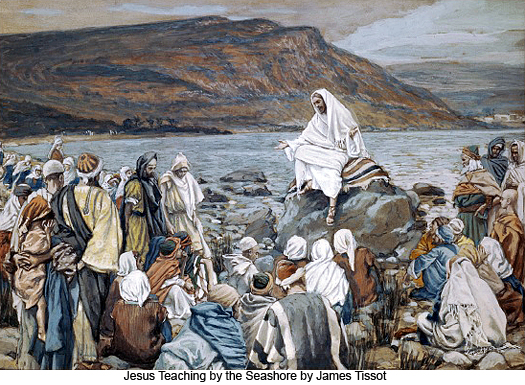
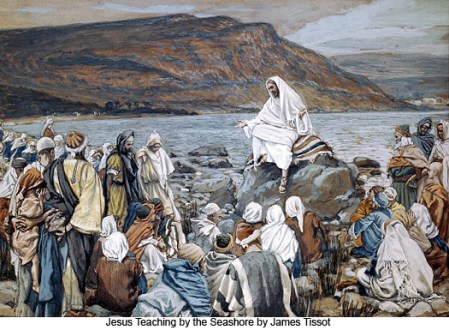
Their boat set out for a deserted place along the Sea of Galilee. But the word got out and lots of people “hastened” there, that is, they eagerly ran on foot, and arrived there faster than Jesus and the apostles could.

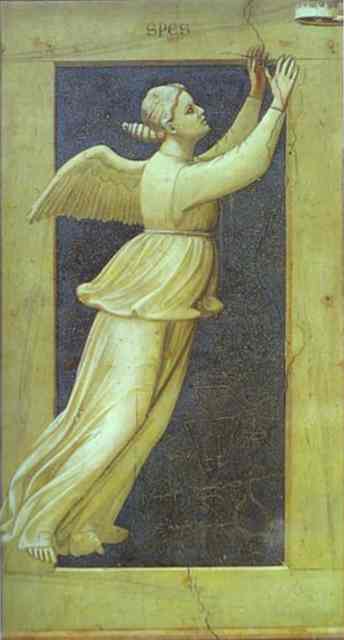
Why did those people run? They ran because they anticipated good things. They ran because they believed their desires would be fulfilled. In a word, they ran because Jesus and the Apostles had given them hope.

What can we hope for as Christians? Can we hope that if we stay close to Christ and to His Church that we’ll go to heaven someday?   Yes.  But is that all there is?  No. Our hope in Christ is not only for the time beginning once we’ve died.

Moments ago we heard Psalm 23, a psalm commonly heard at funerals. Though we tend to associate it with the holy dead, the blessings this psalm speaks of are for the living as well. For example, in the Gospel, Jesus leads the Apostles to a place beside restful waters to refresh their souls. He teaches the vast crowds that come many things, guiding them in right paths, and giving them courage. He has the people lay upon the green grass and, breaking bread, He spreads a meal before them.

We can confidently hope that Jesus will do these things for us.

Jesus wants to give you peace.  But what is peace? It means, in part, being liberated from worthless worry, having anxiety at all. As Christ inspired St. Paul to write the Philippians,

“Have no anxiety at all, but in everything, by prayer and petition, with thanksgiving, make your requests known to God.  Then the peace of God that surpasses all understanding will guard your hearts and minds in Christ Jesus.”

Jesus wants to teach you wisdom, and give you the courage you need to live it. Jesus Christ, teaching through our Church and its Scriptures, proclaims to you truths that the world doesn’t know and isn’t going to teach you. Jesus not only tells you how to live well but empowers you to do it too through the Holy Spirit alive within you.

Jesus wants to give you the bread you need. In a few moments, you will be receiving the body, blood, soul, and divinity of Jesus Christ in His Eucharist. And in addition to that, Jesus doesn’t only provide for you on this one day at Church. He provides for us all week long in the world out there. We pray for “daily bread”, and this is not just food, but whatever it is we need. Christ is rich, and wants to give you good things. If we a frugal and generous, He will provide us with whatever we need.

There is a lot of hopelessness about our times and the way things are headed, but we Christians should live with hope about our lives and about the world we live in. Now bad things are going to happen, but with Christ, a more glorious resurrection always follows the cross. With this truth in mind, we should be a people of hope.

At the same time, we should be wary of unchristian hopes, which are too worldly. Consider the crowds that eagerly flocked to Jesus. They held hope in this world because of Him. Unfortunately, their hope was often because they thought Jesus might become some militant, revolutionary messiah, who would ascend to the throne of David by slaying the Roman armies that occupied Israel. They were invested in hopes that he would establish a kingdom for Israel that would provide them with cheap food and easy money for the rest of their lives. John’s Gospel says that after the miracle of the loaves they wanted to carry Jesus off and make him king. The people wanted change, but Jesus wasn’t interested in their kind of change. Jesus knew that changing this world would be ultimately fruitless, unless we ourselves could first somehow be changed.

Our world is broken, but man is more broken more by sin. Give two sisters identical dolls, or give two brothers identical trucks, and a short time later you might come back to find them fighting over the exact same toy. Even if you handed everyone on earth everything they wanted, there would not be peace. The problem isn’t out there somewhere, the problems always in here. Money can do good things, but wealth in not our salvation. Good laws can help people, but politics are not our salvation. Christ is our salvation.

Christ is real and active with power in the world out there, but He tends to work from the inside-out.  That is to say, the kind of change that He is interested in usually begins within souls, like ours. Christ first changes Christians, and then through us, He transforms the world.

He wants to give us trusting peace inside, so we can live with freedom. He wants to give us contentment inside, as the antidote for our over-consumption. But first and foremost of all, He wants to give you prayer inside.

If you only hear one thing I say, this is the final and most important thing: A Christian has to pray, every single day. Daily prayer is the means to our conversion. Daily prayer is the first step to transforming our world. Daily prayer is the key to realizing our hopes, for this life and the next.

Christ has good things He wants to give you. So run to Him, with eager hope.

Tuesday, 19th Week in Ordinary Time—Year I

August 17, 2009

The disciples ask, “Who is the greatest in the kingdom of heaven?” Jesus says, “Whoever becomes humble like this child is the greatest in the Kingdom of heaven.” In fact, Jesus teaches us, becoming humble is essential to entering into His kingdom.

So what is humility?

“Now humility is nothing but truth,” says St. Vincent de Paul, “while pride is nothing but lying.” He says, “The reason why God is so great a lover of humility,  is because he is the great lover of truth.”

Now humility is not about believing we are garbage. It’s a lie to say we’re of little worth. Even the seemingly least person among us is attended to by angels and bears a likeness to the God whom those angels ceaselessly worship. We are of great worth, but to be humble we need to know where our true treasure is.

We must abandon over-confidence in our own faulty and limited powers and trust in our reliable Rock—“how faultless are his deeds, how right all his ways.” In Christ, our Rock, we are secure; and as G.K. Chesterton notes, “It is always the secure who are humble.”

To strip away our illusions and to know our true treasure let’s pray today for the two gifts which it is said God always promptly gives whenever we prayer for them: Humility and Faith.

We can be leery of praying for humility, because when you pray for humility, humility shows up. I myself cannot recall a time when my prayer for humility was not answered by the end of the next day. But let’s have courage, and not allow our entry into Christ’s Kingdom be delayed by our disordered self-love or timidity.

What Moses said before the Israelites on the edge of the Promised Land is just as true for us: “It is the Lord who marches before you; he will be with you and will never fail you.  So do not fear or be dismayed.”

Thursday, 19th Week in Ordinary Time—Year I

August 17, 2009

Today we heard the parable of the debt-ridden servant. You and I, of course, are the first servant with the unpayable debt. The debt of our sins. And the Lord, our King, has taken the loss, upon Himself, to gratuitously forgive our debt. But, at our judgment, He will receive important testimony about how we have treated those who have owed us much lesser personal debts.

This is why some Christians pray, “forgive us our debts and we forgive our debtors,” while we pray, “forgive us our trespasses, as we forgive those who trespass against us.”

Who is it that you’re not sure you’ve forgiven?

Remember this:  To forgive another’s sin is not to say that the wrong wasn’t wrong, and it is not trying convince yourself that the hurt doesn’t hurt. If you can pray for the good of your offenders, you have a forgiving heart.

Wednesday, 18th Week in Ordinary Time—Year I

August 17, 2009

St. Therese of Lisieux says, “We obtain from [God] as much as we hope for.” Today’s readings show this to be true.

On the very edge of Canaan, the Promised Land, the Hebrews lose all hope, and thereby they lose the land that the Lord wanted to give them. The Lord wanted to fight along their side, but they became so discouraged that they were unwilling to even go to the battle. They obtained from God as much as they hoped for, and died in the desert. They gave Lord nothing to work with, and there was nothing for the Lord to do but to let others to take their place.

The Canaanite woman in the Gospel is another story. She hopes against hope, and wins from our seemingly reluctant Lord her daughter’s healing. St. John of the Cross says: “The more the soul hopes, the more it attains.”

So let’s be bold.  Let’s hope and strive for bigger things than we do already. And let’s see how much the Lord can do with what we offer Him.

Thursday, 17th Week in Ordinary Time—Year I

August 17, 2009

In the daytime, the Hebrews saw the cloud of the Lord over the meeting tent. But at night, fire was seen in the cloud. In the daytime, the cloud above the meeting tent seemed to invite communion. But at night, the cloud seemed to threaten.

Was there always fire in the cloud, night and day? I suspect that there was, even though it could only be seen in the night, for God appeared to Moses in the burning bush as fire, and as the letter to the Hebrews says, “our God is a consuming fire.” The cloud itself did not change. The difference was one of perspective, whether you looked at the presence of God from within the light, or in darkness.

The same thing may apply for vastly different experiences of heaven and hell. In the parable about the end of this age, Jesus describes how the good and bad fish will be sorted out, as Wisconsin fishermen separate carp from bass, muskie, & trout. The bad will be separated from the good.  In this way, after the judgment, the wicked will no long be able to cause harm to the saints. The good will be gathered together. The bad will be widely scattered.

For the saints, God’s presence will be as the welcoming, mysterious cloud; but for the condemned, even the outermost reaches of God’s presence will be a fiery furnace. There will be no escaping Him, for nowhere in the universe is there a perfect hiding place from God. Our God is a consuming fire of goodness, truth, justice, and love.

Forever frustrated and angry, the wicked will long to be farther and farther from Him, for this movement away from Him has defined their lives on Earth. But for the saints, the goodness, truth, justice, and love belonging to God will be like home. For in their lives, the saints, like the psalmist, prefer the house of God to dwelling in the tents of the wicked.

So Christian disciples, yearn and pine for the courts of the Lord. Continue to follow the cloud of His presence, and He will lead to your promised home.

Tuesday, 16th Week in Ordinary Time—Year I

August 16, 2009

The book of Exodus says,

“In the night watch just before dawn the Lord cast upon the Egyptian force through the column of the fiery cloud a glance that threw them into a panic; and he so clogged their chariot wheels that they could hardly drive.”

Israel would soon see those Egyptians lying dead on the seashore.

During another night watch, many, many years later, as one Sunday was dawning on a tomb outside the walls of Jerusalem, an angel of the Lord descended from heaven. As the Gospel of Matthew describes it,

“His appearance was like lightning and his clothing was white as snow. The guards [there] were shaken with fear of him and became like dead men.”

When Pharaoh’s Egyptians saw the glance the Lord cast through the column of the fiery cloud they sounded the retreat before Israel, because the Lord was fighting for them against the Egyptians.

Since the resurrection of Jesus, the spirits of evil have been on a retreat, because the Lord is fighting for us against them. Their uneven retreat continues today, but we shall witness their total defeat. Then, the book of Revelation says, we who followed the Lord shall sing among the angels the “song of Moses,” or something like it.  And, in the presence of God our Father, Christ our brother, Mary our Mother, with the saints and one another as brothers and sisters, with the Holy Spirit as our bond, we will rejoice at the Lord’s victory for us.