The Voice & the Noise

August 13, 2023

19th Sunday of Ordinary Time
By Fr. Victor Feltes

When God visits the Prophet Elijah at Mt. Horeb the Divine Presence is preceded by powerful winds, quaking earth, and raging fire. Yet the Lord is not in the wind, nor the earthquake, nor the fire. Then there is a tiny whispering sound. Hearing this, Elijah goes forth to speak with God. In today’s gospel, Jesus calls Peter to “Come” forth to him out of the boat. Peter begins walking on the water, but seeing how strong the wind is he becomes frightened, begins sinking, and shouts “Lord, save me!” Jesus immediately stretches out his hand, lifts him up, and speaks to him. There is a common theme in these two episodes. In these encounters with God, Elijah and Peter must distinguish the Divine Voice from the noise. God is speaking to us, or he would like to. How can we listen without getting distracted or misled?

What do the demons want? They want the worst for us. They don’t want us listening to the Lord. They want us fully preoccupied with less important things. They want us too afraid or too discouraged to take good steps forward. How much time do we waste obsessing on things that don’t matter? How often do we worry about things that won’t happen? And how easily do we accept the lie that life cannot be better, that there’s nothing we can do? When our eyes and ears drift away from Jesus we sink. He chides us, ‘O you of little faith, of small trust in me, why do you doubt?’ Today I wish to share three great mens’ true discernment stories.
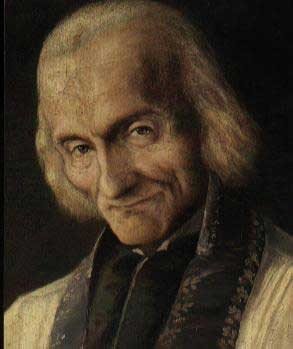
My first story is one about the 19th century saint, John Vianney, the patron saint of parish priests. His humble holiness and miraculous ability to read souls made crowds flock to his small French town for confessions, which he would hear for hours on end. His faithful fruitfulness made him a target of demonic harassment. Apparently, typical temptations were ineffective against him, so sometimes they would assault him as he tried to sleep at night, but Fr. John would take this as a good sign. It usually meant some “great sinner” was coming to town the next day to be reconciled to God in the confessional.

I have encountered people whose emotions very much did not want to go to confession or attend a spiritual retreat yet they could think of an actual good reason not to go. So they come, and experience God’s grace, and it’s more wonderful than they imagined! Who do you think was influencing their feelings in hopes they would not come encounter and listen to God? Emotions can be helpful and powerful fuel in your gas tank, but let your informed conscience and sound reason hold your steering wheel.
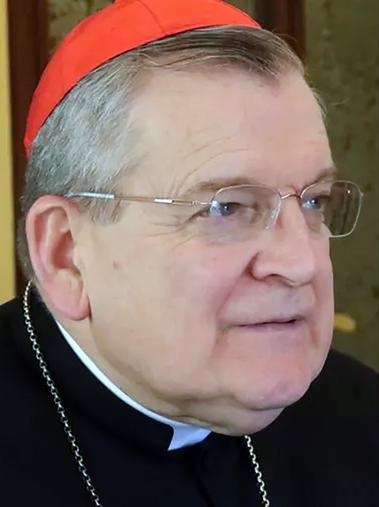
My second discernment story is about our former bishop, Cardinal Raymond Burke. He saw a need for a richer devotional culture in our diocese and felt peace and joy in the thought of establishing a pilgrimage shrine. He has a personal devotion to Our Lady of Fatima and initially pursued a shrine dedicated to her 1917 Portuguese apparitions, but nothing was coming together. So he revised the plan, opting to create a Marian shrine dedicated to Our Lady of Guadalupe and her Mexican apparitions in 1531. With that adjustment, everything began falling into place; a donation of beautiful land and financial contributions resulting in the shrine we know today. So not all obstacles come from the enemy. Some hindrances can be God’s providence to channel us into doing his will.

Midway through my time in seminary, I really believed for good reasons that priesthood was my calling, yet I still could easily question my vocation. (How could I be sure?) I would go in circles doubting myself with no greater clarity or benefit. So I decided to say to God, “Lord, this is my fair warning and my RSVP: I intend to continue towards ordination, but if that’s not what you want please make it obvious or impossible for me. If it’s not your will, I don’t want it to happen.” I left it to him, and after that I felt much more peace, and here I am now. Peace is a strong sign that you’re doing the will of God.
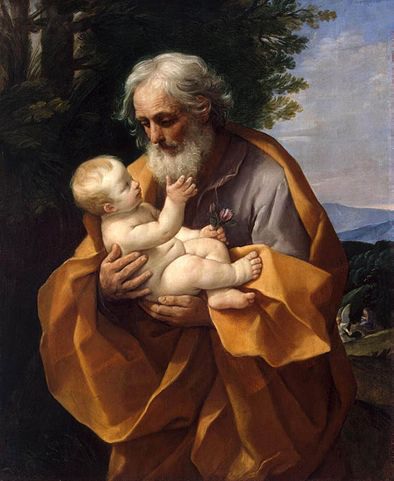
My third discernment story is about of St. Joseph. You will recall that when he learned that Mary was with child (either because he doubted her and thought her unworthy of him, or else because he believed her and thought himself unworthy or her and her holy child) Joseph concluded he should not be Mary’s husband. However, it only took an angel’s visit in one night’s dream to get Joseph back on the right track. This is because Joseph was a just man who wanted to do whatever God willed. God is supremely intelligent, powerful, and creative; so he can provide a clear sign if he needs to. However, having a heart and mind open to doing God’s will is a necessity.

You cannot see God’s signs with your eyes closed shut. You cannot hear him if you refuse to listen. God prefers to speak to us with a tiny whispering Voice, but if we ignore him he may allow some disruption in our lives. Those figurative winds, earthquakes, and fires are supposed to get our attention so that we will heed him and listen to his Voice. Our psalmist says, “I will hear what God proclaims; the Lord — for he proclaims peace. Near indeed is his salvation to those who fear him…” Fearing God is not about terror, but regarding and respecting him. Those who do, seek God’s will. They hear his Voice and listen, and thereby gain his blessings.

Jesus Saves Us From Sinking

August 12, 2023

19th Sunday in Ordinary Time
By Fr. Chinnappan Pelavendran

God’s presence is usually felt in tiny and small ways. He comes to us in gentle, little ways, and He will be with us when we need him the most. Jesus expects from us the openness to call on him for help and he will be there to support us and guide us. He wants us to be aware of his voice in our life, which often goes unnoticed. Jesus is always there with his guiding and supporting hands.

The background of the first reading is that, after the death of Solomon, the northern tribes broke away from the tribe of Judah and from its priests. They formed an independent country called Israel. As the years passed, many of the Jews in this country lost their Faith in Yahweh. Their seventh king, Ahab, married Jezebel, the daughter of a pagan king. He allowed her to build a temple for her god Baal and then she encouraged him to take part in idol worship and immorality. During this time, the prophet Elijah was sent by God to Israel to bring His people back to true worship. Having faith and confidence in Yahweh, he defeated and killed the 450 pagan priests of Baal on Mount Carmel.

For this reason, Queen Jezebel sent murderers to kill the prophet Elijah. However, God saved him from the dangers and gave him food through an angel. He fled for forty days and forty nights to Mount Horeb. Once there, he realized that the presence of God was not in the thunder, earthquake, or fire but in a tiny “whispering sound.” Elijah acknowledged God’s presence by covering his face and coming out of the cave where he had taken shelter. The first reading remains us that we have to experience God’s presence in our lives. We must listen carefully to everything going on around us because we encounter God in all the small events of our life. Failure, as well as success, offers us the opportunity to feel the presence of God, who saved the Prophet Elijah’s life.

In today’s Gospel, Jesus approaches his disciples walking on the water. The disciples are terrified by seeing someone walking on the water so they cried out in fear. Jesus reveals himself to them, saying “Courage, it is I. Do not be afraid.” Encouraged by the words of Jesus, Peter is the first to respond. At his invitation, he walks towards Jesus across the water, but his courage fails and begins to sink. Jesus reaches out his hand to him and saves him. The Gospel ends with Jesus calming the storm and being acknowledged as the Son of God by the disciples.

Courage! It is I Do not be afraid.” Jesus speaks these same words to us every day in our life. The gospel invites us to deepen our faith and maintain our focus on Jesus. We need to fix our eyes on Jesus.

We need to realize that the presence of Jesus is always with us. He gives us peace even in the storms of life. The storms of anxiety and worries about the future, storms of sorrow, storms of doubt, storms of tension, storms of anger and despair, storms of temptations, and storms in family relationships. So, try to feel the presence of God always in your life.

We need to imitate the short prayer of sinking Peter, “Lord, save me,” or the prayer of the mother of the possessed girl, “Lord, help me,” or the blind man’s prayer, “Son of David, have mercy on me,” or the repentant sinner’s prayer, “Lord have mercy on me a sinner.” We must begin every day by offering all our day’s activities to God and asking for His grace to do His will. Then we must conclude every day before we go to sleep by asking God’s pardon and forgiveness for our sins.

The Transfiguration of Jesus

August 8, 2023

Feast of the Transfiguration
By Fr. Chinnappan Pelavendran

Today we celebrate the feast of the transfiguration. When God the Son, the Second Person of the Holy Trinity, came down to earth to suffer, die, and rise again for our redemption, He took on human flesh. In doing so, He veiled His divine glory and appeared like anyone of us. What a grace for Sts. Peter, James, and John to see Jesus transfigured. They got a preview of the glory of heaven. It was also a preview of the glory we all hope to share in heaven.

Jesus shared the special grace with Peter, James, and John. Just before receiving this special grace, Jesus transfigured, Jesus told his disciples that he must suffer greatly, be rejected by the elders, chief priests, and scribes, be killed, and rise after three days. Peter rebuked Jesus for saying this and Jesus responded, “Get behind me, Satan. You are thinking not as God does but as human beings do.” The disciples had to learn that Jesus was not the type of messiah they were expecting. What a shock! They needed this grace now. They left everything to follow Jesus and he had just told them he would be killed. They needed reassurance, and Jesus did not let them down. They received grace now on the mountain as they saw Jesus transfigured.

These three disciples, Peter, James, and John, were invited on three separate occasions into three privileged moments in the life of Jesus. They were present at the house of a synagogue official Jairus when his daughter was brought back to life. Again, they were with him in the agony of the garden. Finally, they were present at the Transfiguration where Moses and Elijah were also present speaking with Jesus about his approaching death. These disciples would have liked to remain on the mountaintop, but they did not want to stay in the Garden of Gethsemane. Here we can all identify with the apostles because in our mountain–top experiences of joy we also want to stay. And then in the moments of trial, we want to flee.

Now they hear the words of the Father, “This is my beloved son, listen to Him.” They have a task to listen attentively to his words and put them into practice.

The transfiguration was the mountain–top experience of the apostles which prepared them for their future trials. The glory they saw on the high mountain helped them understand that the Lord’s Passion was not the end of His mission. The Mass is our mountain–top experience which prepares us for the trials of the day. The Mass is not a transfiguration but a transubstantiation, in which bread and wine are transformed into the Body and Blood of Jesus. Now we say with St. Peter “Lord, it is good for us to be here” And we do not want to leave. But it is not to be. Soon we will hear the words, “The Mass is ended, go in peace to love and serve the Lord.” So we pick up our cross and leave to face the trials of the day.

As the disciples had wonderful movements with Jesus, we too meet Jesus in a most intimate way every time we receive Jesus in the Eucharist. It is the time when we are close to Jesus.

We also meet Jesus in the Scriptures as they touch our hearts. Jesus speaks to us now when we read the scriptures. And we meet Jesus in a very special way in all the sacraments.

We all want change. We all want to be transformed and yet we find it difficult to do so. May the transfiguration event inspire us to return to Jesus for He alone can lead us and transform us so we can see His Glory.

Feast on the Transfiguration

August 5, 2023

Feast of the Transfiguration
By Deacon Dick Kostner

Today we celebrate the Transfiguration. Peter, James and John are invited by Jesus to join him on the mountain. They are invited to share an experience with Jesus and see that Moses and Elijah are still alive and conversing with Jesus. Is this a dream they say to themselves? And then, they witness an epiphany, a revealing of who Jesus, their friend, really is. They hear the voice of God from a cloud, shouting a truth: “This is my beloved Son, with whom I am well pleased; listen to him!” The three men are in awe, they feel special but are confused and do not understand why they cannot share this experience when Jesus tells them to be silent, until he is raised from the dead.

Although they are confused Peter relates their feelings when he proclaims, “Lord, it is good that we are here!” Folks, we too need to reflect upon the fact that we too can share in and experience the Transfiguration for through our baptism we have received a personal invitation like Peter, James and John, to join Jesus on the mountain. We, too, are special people and members of the Holy Family; we too can experience that Jesus does not live in the sky, but is really with us every minute of every day here on earth all we need to do is open our eyes and ears and as the Father said, “Listen to Him.

As I reflect on this Gospel the first thing that came to my mind was our Church and Eucharist. Jesus calls to us and says, “Folks, you are special to me, please come with me and we will climb out of this world and rise way above it on a mountain I have created for us, and we can vacation from the problems and trials of this world to the peace found only at the home of the family of God.” A mountain place that He has named, “Church.” Mass is for us a mountain escape. A place for us to join people who are family to us to pray, and listen to Jesus speak to us through Scripture and celebrate as a family, a meal with Jesus, with our friends, sharing our love for each other and pledging support for each other as we all journey on the road to salvation.

The second thing that came to my mind as I was doing my morning prayer intercessions a week or so later, was the great gift God shares with us which are his creatures here on earth. The prayer read, “Lord show us your goodness, present in every creature, that we may contemplate your glory everywhere.” The birds, and animals are many times directed by God to help mitigate for us the problems of life, and how although we are maybe confused or even frightened by their existence and intelligence, we are awed by the joy they give to us by allowing us to, join them on a mountain and receive a mini-vacation from the challenges of life. What a gift God gives to his Holy Family.

I believe God gives to all of his creatures vocations. For us, Jesus gave us an 11th Commandment to love others as he has loved us. For animals their vocation is to display to us God’s goodness through his love and care for those creatures as well as his love for us humans as his children.

I had previously told you about my holy cat who taught me the virtue of being patent with others even if they hate you. I have witnessed a hen duck whose mate was run over and killed by a car, sit by her mate in the middle of the road for three day’s before leaving his side. And look at our police departments and how they have learned to ask the help of our canine friends, to make this world a safer place for us to live and to give us comfort. Finally, how about the resident cat I read about a few years ago who was given the vocation and ability to know when people in the nursing home it lived in were about to die, and who would sit with that resident until they died to give them comfort. The staff had indicated that this cat had a 98% record of knowing who would die within three days of when it took up residency with a patient.

Although this world has a lot of challenges for us to bear let us fear not for we have been invited to join Jesus and his creatures, and experience God, and the Transfiguration on a “mountain” with family and friends. When climbing the mountain and experiencing an epiphany, I encourage you to say a prayer that I have named the prayer of St. Peter, “Lord, it is good … that we are here! And as the Father directed us to do, I do listen to you! Amen.

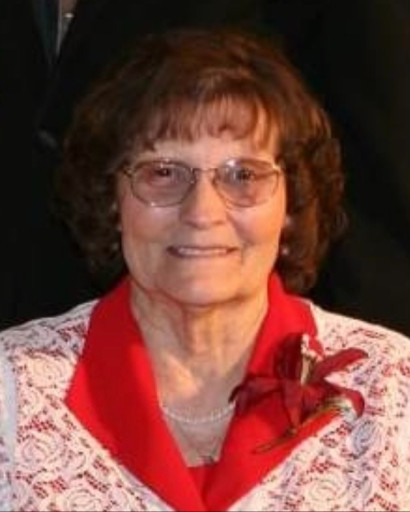
Blessed Life — Funeral Homily for Maria Boehm, 85

August 1, 2023

By Fr. Chinnappan Pelavendran

On behalf of the parish community of St. Paul’s, I would like to extend our sincere condolence and sympathy to the members of Maria’s family. I would like to assure you of our continued prayers. Life has merely changed not ended. She is now with Jesus, His Blessed Mother, and all the saints to whom she was so devoted. She is now enjoying the presence of family and friends who have preceded her in death.

In the readings, we just heard from the book of Prophet Isaiah, God will destroy death forever, and the Lord will wipe away the tears from all faces. God is so merciful and generous toward his people. In the second reading, St. Paul describes the life of Christians, if we live, we live for the lord, and if we die, we die for the Lord. So then, whether we live or die, we are God’s people.

In the Gospel, we have blessedness today. The Beatitudes describe as blessed, those simple followers of God that quietly, faithfully, and patiently wait, thirst and hunger for all that is good under heaven. When I spoke with Maria’s family, the overriding memory of her and the words they used when describing her life were words of simplicity, faith, and love.

Maria Boehm was born on April 7th, 1938, in Romania. During the Russian invasion, the family fled to Germany but they did not want to be communist. While her mother was working for the rich family cooking and gardening, they built a small structure in the garden and moved with her family. During this time, Maria Boehm met her first husband Kenneth who was an American serviceman and Maria married Kenneth on March 17th, 1956. They moved together to America, Maria learned English by watching soap operas. Together with her husband Kenneth, they raised four children. After the death of Kenneth, she married a long-time family friend John whose wife passed away five years prior, and helped raise his children. John and Maria together enjoyed their life by loving each other with their children, grandchildren, and great-grandchildren.

In the family gathering, Maria shared her talents as a homemaker; she loved cooking, and food was her way of sharing love with others. She took pride in her flowers, she use to collect angels, she was a devout Catholic, Maria was forever the caregiver, tending to the garden, feeding the birds, and was an Eucharist minister at St. Jude’s Catholic Church at New Auburn.

Blessed are the gentle, for they shall inherit the earth. Maria was a gentle and simple woman with a lot of love. Maria was kind and showed no jealousy, she did not seek her own. Maria did not rejoice in unrighteousness, but she rejoiced with the truth. She bore all things quietly, believed all things sincerely, and hoped all things even death. Blessed are the merciful, for they shall receive mercy, God quietly, mercifully, and gently took Maria home with him. Blessed are the pure in heart, for they shall see God.

Being a True Disciple Requires Total Commitment

August 1, 2023

17th Sunday in Ordinary Time
By Fr. Chinnappan Pelavendran

A few months ago, I came across a student who was training himself to make the school’s football team. He got up every morning at 5:00 AM to train himself. He would run and lift weights for two hours. Then he would go back to shower, eat breakfast and go to school. After his classes, he would go back to the athletic facility and work for three more hours with his teammates. The next morning at 5:00 AM, he will start the same routine again. He had very little time for his parents, social life, and other work.

Today we have the pearl merchant who sacrificed everything to buy the pearl of great price. We hear of a treasure hunter who sold everything he owned to buy a field with treasure in it. So, what is the connection between a pearl merchant, a treasure hunter, and this young football player? What do they have in common? They have a total commitment to their dream. All of them are willing to sacrifice everything for the goal that they have set for themselves.

This is what Jesus points out in today’s gospel. To be a true follower of God requires total commitment on our part. Citizenship in God’s Kingdom requires us to give 100% all of the time, not just when we feel like it. God’s Kingdom must be the top priority of our life. We cannot be true followers of Jesus only part-time. Being a true disciple of Jesus is like being a pearl merchant. Being a true disciple of Jesus is like being a treasure hunter. Being a true disciple of Jesus is like being a football player. It involves total dedication and commitment.

There is a big difference between a true disciple of Jesus, and our pearl merchant, treasure hunter, and football player. Those three people are striving for earthly rewards, while followers of Jesus are striving for eternal and permanent rewards.

When the pearl merchant dies, his pearl will no longer be of any value to him. When the treasure hunter dies, his treasure will be just as useless to him. When the football player dies, his trophies will only be a keepsake for his family. However, when the true disciple of Jesus dies, the whole kingdom of God rejoices because it will now shine brighter and brighter. All of God’s people will be edified eternally.

Money is good when it is used to help others, not when it is only spent on ourselves. Influence and power can be great when used to lift up those who are down. Think about this. If our pearl merchant and treasure hunter and football player were willing to sacrifice so much for a prize that will never last, how much more should we be willing to sacrifice for a prize that will last forever? Earthly prizes can be good and even satisfying for a time, but eternal prizes are the best.

As true disciples of Jesus, we need to keep our greatest treasure safe, which is our personal relationship with Jesus. We do this by accepting him every day as our God and Savior. By allowing God to have total control over our lives through our loving obedience to His will, by asking for the guidance of the Holy Spirit, by talking to Him daily in prayer, and by listening to Him in our meditative reading of the Holy Scripture. By getting reconciled to Him and others, asking for pardon and forgiveness for our sins, by offering Him our lives on the altar during the Holy Mass, and by receiving Jesus in Holy Communion.

Victory Over the Sirens’ Song

August 1, 2023

17th Sunday in Ordinary Time
By Fr. Victor Feltes

This morning, I wish to recount two tales from Greek mythology which shed light on how we can fully live the Gospel. I want to tell you the stories of how Odysseus and his ship’s crew and Jason with his sailors each survived encounters with the mythical Sirens. The Sirens were beautiful half-woman/half-bird creatures who would sing from their island to passing ships. Their song was so alluring and entrancing that sailors would jump overboard and drown in the sea or steer their vessels into deadly shipwrecks on the rocks.

In The Odyssey, the poet Homer tells how Odysseus on his epic voyage wished to hear the Sirens’ song but also wanted to survive with his men. So Odysseus instructed his crew to tie him to the ship’s mast telling them that, no matter how much he might beg them, they were not to untie him but bind him down all the more. Then Odysseus put wax into the ear canals of all his men so they could not hear the Sirens’ song. While rowing their ship past the Sirens, Odysseus pleaded to be released, but his crew faithfully followed his previous instructions until the Sirens were left far behind them and all of them survived.

In the Greek tale of Jason and the Argonauts, Jason and his crew survived the Sirens using a different approach. Aboard their ship was a great musician named Orpheus, a master of an ancient harp called the lyre. As they passed the Sirens’ island, Orpheus plucked the strings of his instrument. And though the Sirens’ sang their evil song, Jason and all his men were so engrossed in the beauty of their friend’s music that none of them were drawn to the Sirens’ temptation.

So we see three strategies reflected in these tales: Odysseus tying himself to the mast, his men keeping wax in their ears, and Jason and his crew being captivated by something more beautiful.

Some people approach certain sins like Odysseus, asking, “How far can I entertain this temptation without falling? How much can I enjoy this sin without suffering consequences?” But having such a divided heart makes it is very hard to restrain oneself. Others, with more success, approach such sins like Odysseus’ men by giving temptation no hearing. They are not seduced by temptation because they prudently avoid its near occasions. They know where they are weak and adjust their habits accordingly. This strategy should have some place in aspects of all our lives. However, the third strategy against the allure of sin is best of all: to be led by, delighting in, and loving the holy, good, and beautiful.

Jesus says, “The Kingdom of Heaven is like a treasure buried in a field, which a person finds and hides again, and out of joy goes and sells all that he has and buys that field.” The person in Christ’s parable sacrifices joyfully because he so values the treasure he has found. Jesus says, “The Kingdom of Heaven is like a merchant searching for fine pearls. When he finds a pearl of great price, he goes and sells all that he has and buys it.” A wise merchant can peacefully trade everything else for one most beautiful and desirable thing, to his great personal profit. Jesus, God, is the Pearl of Great Price. Christ’s Kingdom and life with his saints is the treasure we have found.

Let us pray: “Lord God, help me to love you more your goodness and beauty and love and to love all that you love as you love it.” Ask Jesus Christ to grow and deepen your love so that as you journey on your life’s voyage your faith may not be shipwrecked but be lived in fullest freedom with peaceful, loving joy.

Spread the Good Seed

July 16, 2023

15th Sunday in Ordinary Time
By Fr. Chinnappan Pelavendran

Jesus’s favorite way of teaching was by using stories and parables. The story makes it more approachable and leads us to discover it for ourselves. We recall stories much more than abstract things; today’s gospel narrates the familiar parable of the sower and the different kinds of soil on which the seed falls. This story encourages us to reflect on our own lives and our response to the good news of God’s loving reign. It invites each of us to ask, what kind of soil am I?

Today Jesus speaks about four types of land, path, stones, thorns, and the last is good ground. The seed fallen on the path stands for those who hear the message of the kingdom of God but do not understand it, thus the evil one comes and snatches it away. The evil one does not want the seed of the Gospel to sprout in the heart of man.

The second is that of the seed fallen among the stones, this represents the people who hear the word of God and understand it immediately, but when trials and tribulations arise, these people give up immediately.

The third is that of the seed fallen among the bushes with thorns; Jesus explains that this refers to the people who hear the word but care about the world and the temptation of riches, being choked. Finally, the seed that fell on the fertile soil represents those who hear the word, accept it, cherish it, and understand it.

The enemy of our life here is ignorance, trials, tribulations, focus on money, possessions, pleasure, comfort, and indifference. All these may lead to the seed of God’s word to wither and die, or be carried away by the winds of the world.

Jesus invites us to have good dispositions be docile to His word, grow, and bear fruit in us. Today we must ask ourselves how our heart is. Which soil does it resemble? That of the path, the rocks, the thorns? It is up to us to become good soil and bear good fruit for us and for our brothers and sisters.

Today we must examine ourselves, Am I a catholic who actively practices my faith and love of God? or am I simply someone who attends church on Sundays and just identify as a catholic without truly living out my beliefs? Do I truly understand and put into action the teaching of Jesus as found in the Gospel?

Let’s remember that for a plant to grow, it needs to be watered, cared for, and protected from bugs or diseases. To practice our faith, we must nurture it by reading scripture and continually deepen our prayer, the sacraments, and ongoing education, in order to live our faith well. As St. Jerome says ignorance of Scripture is ignorance of Christ.

At the same time, we are also sowers for people who rely on us. Do we make an effort to teach others about the faith through our prayers, actions, and words? Our words and actions have the power to do both good and harm, they can build up or cause scandal, they can inspire or discourage, can bring souls closer to Christ, or push them away. So try to be good soil and sower of the word of God to His people.

Seed, Soil, & Fruit: Parish Transformation

July 16, 2023

15th Sunday in Ordinary Time
By Fr. Victor Feltes
(As preached at St. Paul’s Parish)

Imagine if St. Paul’s Parish had turned out very differently than what we see today. Imagine if we had not only failed to reach our capital campaign pledge goal for renovating this church — imagine we had never even attempted it. Imagine unmet maintenance needs all around our campus: Our church roofs in desperate need of re-shingling. Our church attic lacking proper insulation. Our undercroft walls in clear need of refreshing. Our crumbling parking lot in need of repaving. No digital sign promoting our parish on our front lawn. Imagine there was never a new extension added between our church and the school. The gym, library, computer lab, and other rooms were never built. They would not be needed now anyway, since our school closed down years ago. All our grade school children enrolled in the secular public school.

A lack of sufficient volunteers ended our CCD/religious education program, teen youth ministries, and Vacation Bible Schools. Sunday Masses’ Children’s Liturgies never even began. Our Thrift Sale pavilion building, likewise deprived of sufficient volunteers, became used for nothing more than storage. At parish funerals, no resurrection singers in the balcony, nor ladies providing luncheons for the mourners after. No Family Life Committee meals marking each year’s marriage anniversaries and dearly departed souls. No Sojourner House evenings, no KC or PCCW events, no Fall Festival. No Eucharistic Adoration, no prayer chain, no prayer shawls, and few Communions being brought to the homebound. Not only no associate priest coming to our parish, but also no priestly vocations coming out of our parish. And many more lost things than this. Imagine all these things gone and the resulting missing goodness.

The good things we enjoy in our parish are the result of the seed Jesus speaks of in our Gospel. He is the Sower who goes out to sow, but some seed falls on hardened hearts and quickly gets gobbled up. Some seed falls on weedy hearts and gets choked by the worldly fears or earthly desires living there. Some seed falls on shallow hearts and is betrayed as soon as trials or difficulties come. But the Sower’s seed has found rich soil in some, in the hearts of those who listen to his word and understand it, bearing fruit a hundred or sixty or thirtyfold in our parish.

Now ordinary soulless soil cannot choose to change, but you can! Make a decision of your will and invite the Sower to cultivate you. Ask Jesus to help you to believe and understand him. Ask him to calm your fears and disordered desires. Ask him to deepen the personal connection between you. With Jesus Christ, you can change the sort of soil you are in order to bear more fruit with him. The Sower sows the seed in hopes it will produce much fruit, and along with it, more seed. Together with the Sower, we should scatter seed too.

Imagine a St. Paul’s Parish of tomorrow greater than we see now: Each pew of our renovated and beautified church filled on Sundays. More families worshipping here with their children. A full set of altar servers and a choir for every Sunday Mass. Our great Catholic school, enrolled to its full capacity. New parishioner initiatives and efforts to bless our community. And scores of your relatives, friends, and neighbors returning to the Church or joining her for the first time.

Is this not what the Sower of the seeds wills for our parish? He desires each of us to play a part in his mission, and our role is simple. Pray to God and offer sacrifices for these good things to come be. Pray earnestly to those around you and boldly invite them to join us. (Remember how the Sower casts the seed all around him on every ground.) And be living saints, whose lives, devotion, words, and deeds, bear good and lasting fruit for yourself and others, thirty, sixty, or a hundredfold.

“Take My Yoke Upon You & Learn From Me”

July 9, 2023

14th Sunday in Ordinary Time
By Fr. Chinnappan Pelavendran

When we are tested with trials and overburdened with pain and suffering, we ask, “God, Why me?” and we fail to count the innumerable blessing that we received. Arthur Robert Ashe was an American professional tennis player. He is considered the best African – American male tennis player of all time. He won three Grand Slam titles. Ashe was the first black player selected to the unites States David Cup team and the only black man ever to win the singles title at Wimbledon, the U.S. Open, and the Australian Open. At the end of his life, Ashe was dying of AIDS, which he got due to infected blood received during heart surgery in 1983. From the world over, he received letters from his fans. One of them asked, ‘Why does God have to select you for such a bad disease?’ To this Arthur Ashe replied, “The world over fifty million children start learning tennis, five million of them learn to play tennis, 50,000 come to the circuit, 5,000 reach the grand slam, fifty reach the Wimbledon, four to semi–finals, two to finals. When I was the one holding the cup, I never asked God why me. And today in pain, I should not be asking, ‘God, Why Me?’

All of us have problems in life. Big or small, these problems burden us and make us sad, tired, and distressed. When these problems go unsolved for a long time, we feel disappointed and become depressed. One of the most comforting words of Jesus in the gospel is, “Take my yoke… and you will find rest.” Anyone who feels tired, disappointed, abandoned, or depressed can easily be uplifted by the comforting promise of Jesus that He will give rest.

Here is the Good News. To all those who are alone and in need of someone to talk to, those who have no one to ask for help, and those who feel lost, lonely, and hopeless, worry no more. There is someone to turn to, someone who can listen to our endless complaints, a shoulder to cry on. He is Jesus who says, “Come to me, all you who labor and are burdened, and I will give you rest. Take my yoke upon you and learn from me, for I am meek and humble of heart, and you will find rest for yourself. For my yoke is easy, and my burden light.

Today’s readings give the same message in a more powerful way. In the first reading, the Prophet Zechariah consoles the Jews living in Palestine under Greek rule, promising them a meek Messianic King of peace riding on a donkey, who will give them rest and liberty. The Responsorial Psalm praises and thanks a kind and compassionate God who raises up those who are bowed down. In the second reading, St. Paul tells the Christian community in Rome about two yokes, namely, the flesh and the Spirit. He challenges them to reject the heavy yoke of flesh and to accept the light of the yoke of the Holy Spirit. In the gospel, Jesus offers rest to those “who labor and are burdened.”

We need to unload our burdens before the Lord. That may be our worries, anxieties, problems in the family, suffering, health, security, and a thousand other things. Give everything to Jesus. Our Lord will transform our lives. Try to count on your blessing, not your worries.

Fruitful Love Despite Our Flaws — The Justin Wachtendonk & Brenna Werner Wedding

July 8, 2023

By Fr. Victor Feltes

Justin and Brenna, you have chosen beautiful readings for your wedding Mass. Including your second reading, the most popular of all wedding reading options: St. Paul’s famous poetic hymn about love. In the 13th chapter of his 1st Letter to the Corinthians, St. Paul teaches what love does and does not do. These words contain blessed lessons for us all. Today, I wish to highlight the rarely-considered context of those passages to help married couples and people within Christ’s Church of our day.

When we think of the early Church, we tend to picture it as a golden age. The apostles were still alive on earth preaching the Gospel, performing miracles, and founding Christian communities. Divinely inspired books were still being written for what would become the New Testament of the Bible. The Church’s membership was growing widely and rapidly, while producing great saints and martyrs. But this does not mean that everything was perfect. Far from it!

You can see this in St. Paul’s 1st Letter to the Corinthians. He writes them to address the many things that were going wrong at the Church in Corinth. For instance, Paul corrects the Corinthian Christians’ bitter internal rivalries and factionalism. He notes the external scandal caused by them suing each other in secular courts. He critiques the Corinthians’ inflated pride. He excommunicates a certain man for his unrepentant sexual sins. He condemns the Church at Corinth’s liturgical abuses (against the Real Presence of Jesus and one another) at their celebrations of the Holy Eucharist. And St. Paul cites still more controversies than these. So things in the early Church were not so idyllic as we might imagine. And that can be a great encouragement for us today!

The early Church, despite the many flaws of her members, produced good, much good, world-transforming good and the salvation of many souls, in those days and thereafter. The Church today, despite the many flaws of her members, still produces much good, world-transforming good and the salvation of many souls. His Church build upon a rock is, as Jesus says in our Gospel, “a city set on a mountain which cannot be hidden.” She remains, “the salt of the earth” and “the light of the world” — purifying, enlightening, enhancing, and saving.

Whatever goodness is found in Christ’s Bride, the Church, is like the worthy wife the Book of Proverbs describes in our first reading. As the pearl of great price, “her value is far beyond pearls.” “Her husband, entrusting his heart to her, has an unfailing prize. She brings him good, and not evil, all the days of her life.” She labors alongside him, “reaches out her hands to the poor,” and he will “give her a reward of her labors, and let her works praise her.” This is a great encouragement for us in his Church, but also a great encouragement for all Christian married couples here.

Justin and Brenna, you are about to enter a new covenant with Christ. In your sacramental marriage, you will encounter each other’s flaws and experience trials, as every married couple will. Do not be surprised when not everything is perfect and do not be alarmed. Maintain your peace. With a love that is patient, a love that is kind, a love that most importantly has its origin and strength in Christ, you will ‘bear all things and endure all things.’ His “love never fails.” Like his Church, which despite the imperfections of her members produces much good fruit, your marriage — if united to Christ — will never fail.

Marriage & the Eucharist — The Jonathan Lynch & Abigail Butek Wedding

July 5, 2023

By Fr. Victor Feltes

Johnathan and Abigail, the three readings you chose for your wedding are each about divine love. The First Letter of St. John says “in this is love: not that we have loved God, but that he has loved us and sent his Son as expiation for our sins.” Jesus tells us in St. John’s Gospel, “As the Father loves me, so I love you. …Love one another as I love you.” And the third reading you chose (the first we heard today) comes from The Song of Songs. This Old Testament book is curious in the canon.

The Song of Songs is a collection of sometimes graphic love poetry. Though traditionally attributed to King Solomon, and so sometimes called The Song of Solomon, scholars’ estimates for the year it was written range between 1,000 and 100 BC. And most extraordinarily, the book contains no explicit references to God, or religion, or spirituality. So why is it in the Bible and a fitting source for a Catholic wedding reading?

For starters, The Song of Songs it is not an ode to fornication, for at the center of the book we find a royal wedding procession; the man and woman are husband and wife. And just as Jewish writers saw it as an allegory of God’s love, early Christian saints see it depicting Jesus Christ’s love for us, his Bride, the Church. All four Gospels, two Pauline epistles, and The Book of Revelation call Christ a bridegroom or husband, and Jesus describes himself as such. Therefore, the saints’ view of The Song of Songs is not an outrageous reading but a natural interpretation.

Johnathan and Abigail, you have fittingly chosen to enter marriage today in a wedding Mass. Though getting married in a simple Catholic ceremony is an option, being married at a Holy Mass is best. Like the titles “King of Kings” or “Lord of Lords,” the title of The Song of Songs proclaims it as the most excellent or greatest of songs. In the same way, the Holy Mass may be called the meal of meals, our prayer of prayers, the sacrifice of sacrifices, the covenant of covenants. “Blessed are those called to the supper of the Lamb.

Today, I wish to highlight for you a few parallels found in the sacraments of marriage and the Eucharist. First, both sacraments establish covenants. The covenantal nature of the Eucharist is made clear at the Last Supper when Jesus offers us his Blood in the chalice. “Take this, all of you, and drink from it,” this is “the Blood of the new and eternal covenant, which will be poured out for you…” Marriage is likewise a covenantal union between bridegroom and bride.

Second, both marriage and the Eucharist are effected by words and action. With the priest’s words of consecration, you have the Real Presence of Jesus on the altar at Mass. With your exchange of vows, you will be married before God’s altar. But that is not the consummation of these sacraments. If neither priest nor people consumed Communion after the consecration, an aspect of the sacrament would remain unfulfilled. Both of these holy sacraments are effected by words and action.

Third, these covenantal unions are ongoingly renewed. Much is made of the day of First Communion and one’s wedding day. These firsts are worthy of celebration, but they are just the beginnings. Through the mutual gifting of one’s whole self to the other, these sacraments are renewed through repetition. Jesus tells us at every Mass, “Take this… this is my Body,” and we are called to offer our whole selves to him in return. Many Catholic couples have placed a crucifix above their headboard reflecting the sacrificial self-giving each spouse is called to. These two sacraments reflect and reveal each other; husband and wife, Christ and his Church. “Love one another as I love you… Do this in memory of me.”

Before receiving Jesus in the Eucharist, we proclaim: “Lord, I am not worthy that you should enter under my roof…” Jonathan, Abigail, and all married spouses, maintain your reverence towards each other. Like approaching Jesus in the Eucharist, do not take each other for granted.

Before receiving him in the Eucharist, we also declare to Jesus: “Only say the word and my soul shall be healed.” Jonathan and Abigail, realize the power of your words for each other. They can wound and they can heal; you too can strengthen and transform each other through the power of your words.

And finally, Jonathan and Abigail, always remain close to Jesus and do his will. He tells us, “If you keep my commandments, you will remain in my love, just as I have kept my Father’s commandments and remain in his love.” As the Song of Song tells us, “As stern as death is [his] love, relentless as the nether-world is [his] devotion; its flames are a blazing [divine] fire. Deep waters cannot quench [his] love, nor floods sweep it away.” Remain in his mighty love and your love will fruitfully endure.

Great Rewards From Small Deeds

July 2, 2023

13th Sunday in Ordinary Time
By Fr. Victor Feltes

The Old Testament Prophet Elisha was the immediate successor to the Prophet Elijah, ministering as a traveling prophet and wonderworker in the 800’s BC. One day, he came to a town of northern Israel called Shunem in which lived a “woman of influence.” Other Bible translations of this same text describe her as “prominent, influential, and wealthy”—“a great lady.” Curiously, she along with her husband go unnamed in the text. Perhaps, as with “the beloved disciple” in the Gospel of John, this is intended by providence to encourage us to envision ourselves in her place.

This great lady urges the prophet to dine with her. He accepts, and thereafter, whenever passing through that town, he would visit to eat there. So she says to her husband, “I know that Elisha is a holy man of God. Since he visits us often, let’s arrange a little room on the roof and furnish it for him with a bed, table, chair, and lamp, so that when he comes to us he can stay there.” Her husband apparently agreed, because sometime later Elisha lodges in that new room overnight. They may have been simple accommodations but Elisha really appreciated them.

While staying there, Elisha asks his servant to call the woman. Once she stands before him Elisha asks his servant to say to her (apparently in her own language): “You have troubled yourself greatly for us; what can we do for you? Can we say a good word for you to the king or to the commander of the army?’” She replies, “I am living among my own people.” By this response, she is expressing that she lives contently and secure, far removed from the royal court and its concerns. Her needs are satisfied. She has not shown Elisha hospitality to win favors from him. She receives him because he is a prophet. She receives him because he is a righteous man. She serves him because she knows he is a holy man of God.

Later Elisha asks, “Can something be done for her?” His servant, with great confidence in the prophet, replies, “Yes! She has no son, and her husband is getting on in years.” So Elisha has her called again and once she stands at the door, Elisha promises, “This time next year, you will be fondling a baby son.” She replies, “My lord, you are a man of God; do not deceive your servant.” Yet, the woman would conceive, and by that time the following year she had joyfully given birth to a son as promised. From God, she receives the prophet’s great reward.

Jesus says, “Whoever receives a prophet because he is a prophet will receive a prophet’s reward, and whoever receives a righteous man because he is a righteous man will receive a righteous man’s reward.” And what of goodness shown toward those of lesser stature? “Whoever gives but a cup of cold water to one of these little ones to drink because the little one is my disciple—amen, I say to you, he will surely not lose his reward.”

Sometimes, Catholics look at our great saints and imagine we must do extraordinary things to be holy and greatly blessed. Thinking that such great deeds are beyond them, they despair of ever becoming saints themselves. In the late 1800’s, young St. Therese of Lisieux felt that way too, but then she found her “Little Way” to holiness. Her little way to great holiness was to do many little things for the right reason, with the right heart, that is, with great love.

In her highly recommended autobiography “Story of a Soul”, she writes:

Miss no single opportunity of making some small sacrifice, here by a smiling look, there by a kindly word; always doing the smallest right and doing it all for love.” “You know well enough that our Lord does not look so much at the greatness of our actions, nor even at their difficulty, but at the love with which we do them.” “Without love, deeds, even the most brilliant, count as nothing.” “To pick up a pin for love can convert a soul.

Like the great lady of Shunem and St. Therese of Lisieux, realize and remember that doing many little things for the right reason, with the right heart, out of love, will surely not lose its reward.

The New Manna

June 11, 2023

Solemnity of Corpus Christi
By Fr. Victor Feltes

In the Old Testament, God freed his people with the Prophet Moses. The Hebrews in Egypt were slaves to Pharaoh since birth, but God’s mighty works through Moses liberated them. Though he had led them through the waters of the Red Sea their journey was not yet completed. They were still in the arid desert and God wished to lead them into his Promised Land, “a land of milk and honey” he had promised to their ancestors. God had already blessed his people, yet he wished to give them his even fuller blessings there.

How were the Hebrew people sustained for forty years in the desolate Sinai desert? What did they eat to survive? Every day, God made fine flakes appear on the ground around their camp. These flakes were “white, and tasted like wafers made with honey.” Upon seeing them the people asked, “What is this?” (in Hebrew, “Manna?”) Moses told them, “It is the bread which the Lord has given you to eat.” Without that manna they would have starved to death. God’s people ate this bread until they entered the Promised Land.

Here we see things and events of the Old Testament foreshadowing events and things of the New. In the New Testament, God liberates his people with Christ Jesus his Son. We all were slaves to sin, Satan, and hopeless death, but God’s mighty works through Jesus Christ freed us. He has led us through the waters of baptism; however, our journey is not yet completed. We possess renewed life in this fallen world but God wishes to lead us into his Promised Land of Heaven. God has already blessed us, yet he wishes to give us his even fuller blessings there.

So how are we to endure as we walk through the present desert of this world? Every day, in churches like this one, God offers us the Bread that has come down from Heaven. Jesus says, “I am the living bread that came down from heaven; whoever eats this bread will live forever; and the bread that I will give is my flesh for the life of the world.” He gives us himself in the Eucharist. People see the Blessed Sacrament and wonder, “What is this?” It is the New Manna; the Body and Blood, Soul and Divinity of Jesus Christ.

In addition to Sacred Scripture, the Early Church Fathers attest to this. These theologians living in the first centuries of the Church teach and document what the earliest Christians believed about Jesus Christ’s Real Presence in the Eucharist. For instance, shortly after 100 AD, St. Ignatius of Antioch said, “The Eucharist is the Flesh of our Savior Jesus Christ.” Around 150 AD, St. Justin Martyr taught, “The Eucharist… is both the Flesh and the Blood of that incarnated Jesus.” St. Augustine of Hippo wrote in the early 400’s that, “Christ was carried in his own hands when, referring to his own body, he said, ‘This is my body.’ For he carried that body in his hands.” And there are many other examples of such teaching from that era.

This is what Christ’s one, holy, catholic, and apostolic Church has always believed and taught, and God has affirmed its truth here and there by Eucharistic miracles throughout the centuries. In the Old Testament, God’s people ate the manna until they entered the Promised Land. Had they not regularly eaten of it, they would have died from starvation. This reflects how important faithfully receiving and promoting the Holy Eucharist must be for you and me.

Never neglect Sunday Mass. To skip Mass from Saturday evening through Sunday night (without a grave reason for doing so) is to prioritize something else above of Jesus, spurning the Lord who commands us to keep his day holy. Let Jesus Christ be first in your life through faithfully worshipping and receiving him at Mass. And opportunities to worship and receive our Lord at Mass are not limited to the weekends.

If your schedule permits, I welcome and invite you to try weekday Mass, celebrated at St. Paul’s on Monday through Friday at 7:15 AM and mornings at St. John’s on Mondays, Thursdays, and First Fridays. Weekday Mass is only a half-hour long, it features a homily, and is among the best devotions for drawing closer to Jesus.

Are any of your friends or relatives interested in our Catholic Faith? Invite them to come with you to Mass or bring them to that other great way to encounter our Eucharistic Lord: Eucharistic Adoration.

What greater treasure do we have than Jesus, truly present in the Eucharist? Let us treasure him as we ought and introduce this treasure to others. Strengthened by his food, our Lord would bring us all together into his Promised Land of Heaven.

God is a Loving Communion of Persons

June 4, 2023

Trinity Sunday
By Fr. Victor Feltes

A Muslim man once accused me of what he called an “unforgivable sin.” My supposed offense was espousing a core truth of our faith, the foundation of all reality: Trinitarianism — that God is one being in three persons. (That man’s charge struck me as a rather poor conversion strategy. I mean, if proclaiming the Trinity were really an unforgivable sin, why would I bother converting to Islam?) I was dialoguing on that occasion with generally friendly and thoughtful Muslims, Jews, and Unitarians in a website’s comments section, responding to something a man who believes in God but rejects the Trinity had posted. This is what he wrote:

The Jews had no idea of the Trinity. Their faith was centred in the Shema: a unitary monotheistic confession. Jesus clearly affirmed that very same unitary monotheism in Mark 12:29″ where Jesus says, “Hear, O Israel! The LORD our God, the LORD is one!” This fellow concluded by chiding, “How is it that Christians today have abandoned their rabbi on this point?

Both that online poster and Jesus Christ referenced the Shema, which faithful Jews would recite every morning and evening. “Shema” is the Hebrew word meaning “hear” or “listen,” and the Shema prayer quotes Deuteronomy 6:4: “Hear, O Israel: The Lord our God, the Lord is one.” Does this oneness proclaimed by God’s Word refute our Trinitarian Christian Faith? Should we reject our belief in the Trinity because Jews in the Old Testament did not profess it? No, and here’s why.

This famous scripture verse declaring, “the Lord is one,” uses the Hebrew word “echad” for “one.” Now echad can mean singularity, solitary oneness, but this same word sometimes points to a unified oneness. For instance, when Genesis recounts the creation of the two sexes it says, “For this reason a man will leave his father and mother and be united to his wife, and the two shall become one (echad) flesh.” Later in Genesis, in the story of the Tower of Babel, God laments, “If now, while they are one (echad) people and all have the same language, they have started to do this, nothing they presume to do will be out of their reach.” God, by selecting the word “echad” to proclaim “the Lord is one,” inspired a passage with providential flexibility. Echad allows for the unified oneness of the Persons of the Trinity without requiring that interpretation from the Jewish generations who came before Christ.

In the Bible, we see God gradually leading humanity along from darkness to light, from error to truth. For example, from unchecked blood vendettas, to “an eye for an eye” taught in the Mosaic Laws, to the Gospel teaching of loving our enemies. Or from polygamy, to monogamy, to sacramental marriage. Or in this case, from polytheism (belief in many gods), to monotheism (belief in one God), to Trinitarianism (our belief in one God in three divine Persons).

We see God’s progressive revelation occurring at the Burning Bush, where Moses must ask God to clarify for him, “If I go to the Israelites and say to them, ‘The God of your ancestors has sent me to you,’ and they ask me, ‘What is his name?’ what do I tell them?” The Lord replies, “I AM (the God) WHO AM.” That the Lord was not just another god among many pagan gods — that the Lord is, in fact, the only God — was a revelation God’s people were taught and accepted over time.

So who reveals to us that God is a Trinity; that the one divine being is three distinct Persons? This is revealed to us through Jesus Christ himself. Jesus claims authority to forgive sins, declares himself Lord of the Sabbath, demands an absolute and total commitment to himself, and presents himself as the one way of salvation. He accepts peoples’ worship, which would be idolatrous if he were not divine. And Jesus says “the Father and I are one” and “whoever has seen me has seen the Father,” yet he speaks to God his Father as another Person.

You and I are single-person beings, so we would naturally assume a personal God would be a singular-person like us. But through Jesus Christ we discover that God as a solitary one would be less perfect, less complete, less great than our God is. Our triune God, Father, Son, and Holy Spirit, is a loving communion of Persons. God the Father entirely gifts himself to his Son. God the Son entirely gifts himself back to his Father. And God the Holy Spirit proceeds from this eternal, self-gifting exchange. Indeed, as St. John writes, “God is love,” and we are made in and called to the image and likeness of God.

What does this teach us for our lives? The Holy Trinity teaches us our personal perfection will not come in isolation. God the Son calls us to be God’s children with himself, while God the Holy Spirit calls us to be animated with himself, while God the Father calls us to offer all things to himself, so that he — the source of all good things — may give us all good things in return. Loving personal relationships are the meaning of life. Our lives come from a loving communion of persons, and we are called to a loving communion of persons, the Trinity and their Church. We will only become Christian saints through self-gifting and receiving in the oneness of a holy, loving communion of persons.