“They Rest in You” — Funeral Homily for Dr. John Eberle, 97

December 11, 2022

By Fr. Chinnappan Pelavendran

On behalf of the parish of St. Paul’s, I would like to extend our sympathy to the members of Dr. John’s family. He will be remembered in our thoughts, prayers, and Masses. Whenever we gather together as a community of faith to celebrate the Eucharist, we always remember our faithfully departed and their families.

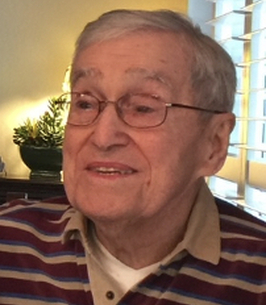
Dr. John reached the age of 97 and was still able to live in his own home. He was married to Frances for almost 72 years. His son, John, and two daughters Marcia and Michele survive him. He also has five grandchildren and one great–grandchild. During his life, Dr. John was self–employed for many years as an optometrist. He enjoyed many hobbies, such as working in his yard, golfing, flying his own airplane, and tinkering with old cars.

As we heard from the book of the Prophet Daniel we are reminded that many of those who sleep in the dust of the earth shall awake; some shall live forever, but the wise shall shine brightly like the splendor of the firmament, and those who lead the many to justice shall be like stars forever. St. Paul reminded us, through death we shall be united with him in the Resurrection; our old self was crucified with him so that our sinful body might be done away with. The Gospel of St. Matthew tells us about the Sermon on the Mount. Jesus tells us that good people will be blessed, such as those who mourn will be comforted, those who are merciful will be shown mercy and those who are clean of heart will see God. We believe that Dr. John is one of the good people.

When someone dies, we experience many emotions. Sadness is one of those. We are going to miss Dr. John. As Catholics, we know that we will see him again. His life has changed not ended. Near the end of Jesus’s life on earth, He spoke to his disciples these very comforting words; “Do not let your hearts be troubled. Have faith in God and have faith in me also. In my Father’s house, there are many dwelling places…” Our houses here are only temporary. Heaven is our permanent home. Death reminds us that there is no final resting place in this world. Even the grave is temporary. We live in the hope that when our earthly journey is done, we will be at home with God forever. Only God can satisfy the deepest longings of the human heart. St. Augustine’s understanding of this truth led him to write, “You have made us for Yourself, O Lord, and our hearts are restless until they rest in you.”

While we are truly saddened over the passing from this life of Dr. John, our faith reassures us that the sadness we are experiencing, will be transformed into joy because Dr. John, like Jesus, has died, but he died in the Resurrection. Even now as we continue to celebrate his funeral liturgy, he is enjoying the fullness of God’s presence and will continue forever.

Hope, Joy, & Salvation

December 11, 2022

3rd Sunday of Advent
By Fr. Victor Feltes

On Friday afternoon, while Fr. Chinnappan offered the funeral Mass for Dr. John Eberle, I drove to McDonnell high school in Chippewa Falls to hear sacramental Confessions with several other area priests. Before everyone else arrived, I was able to spend some time with Fr. Paul Hoffman, whom I had not seen for a while. He heard my Advent confession and afterwards I asked him about what he had been reading lately. Fr. Paul has previously told me that his senior priest status allows him read more theology books like he has desired, to learn more about God before he ultimately departs to go to him. One of the questions Fr. Paul has been pondering lately is, “What will bring them back?” That is, what will bring the younger generations back to church?

I am now almost 42 years old, and I am among the youngest people at most Sunday Masses. This is a troubling trend. Young adults today usually do not believe they need the Church. Many disbelieve they even need Jesus Christ’s salvation. What could change this outlook? What might bring them back? The answer which occurred to me was: “Real Hope.”

As the culture continues to abandon the wisdom it has inherited from Christianity, the consequences of foolishness and sin will become increasingly clear. It will be seen in the sickness of society and felt in the pain of peoples’ personal lives. A life without true meaning or purpose in a world “with no hell below us and above us only sky” is an emptiness full of suffering. Where can people discover real hope—hope in something within this world and yet beyond this world? This real hope is found in Jesus Christ and his Catholic Church.

After our first round of hearing confessions from students and staff in the gym, we priests got a bit of a break, so I walked over to see Fr. Bill Felix and Fr. Brandon Guenther. We chatted a bit about Bishop Callahan, who was hospitalized with an illness this week, Then I asked them a question: “What are you thinking about preaching this weekend? I’m still looking for ideas.” Fr. Felix said, “Well, there’s always the obvious: Joy.” (“Oh, of course,” I thought. This Third Sunday of Advent is Gaudete Sunday and in Latin, “Gaudete” means “Rejoice.”)

Fr. Felix said the great thing about joy is that we can have it even when many things in our lives are bad. Happiness depends upon what happens, but joy does not and so it endures. To press this idea, I asked them in so many words how someone can feel joy when things are crummy? The answer given by both priests was: “Hope.” Fr. Guenther added, “Joy without hope is just optimism.” This reminded him of an old, witty observation: “An optimist is a happy fool. A pessimist is an unhappy fool. But someone with hope (real hope) is not a fool and will one day be happy.

We then returned to our confessionals to hear the older students’ confessions. Some people come to Confession after many months and confess rather superficially, but I was edified by hearing these teenagers confessed. Unlike many young people of their generation, their earnestness, honestly, and striving after God and his holiness were evident. I expect Christ’s Church to struggle in the coming decades, but our Faith is far from dead. Christian hope produces joy and manifest joy shines out. It shines out in the darkness of this world, drawing others to Jesus Christ and his Church. Our Lord lives and we possess a real hope. So let your Christian hope generate joy in you, and your joy will help save souls.

“My Portion is the Lord” — Funeral Homily for Audrey Schillinger, 87

December 5, 2022

By Fr. Victor Feltes

When her husband, Marvin, passed away in 2013, Audrey became a widow. In these recent years, she has endured breast cancer, Parkinson’s disease, and other bodily ailments. We all walk through dark valleys in this life. Who strengthened Audrey to endure all of this with unconquered joy? She was not alone through her trials. She had her dear friends, siblings, sons, and granddaughters, but most importantly of all, Audrey had the Lord Jesus. With him, as we heard from St. Paul’s Second Letter to the Corinthians, “although our outer self is wasting away, our inner self is being renewed day by day.”

Her Lord, the Good Shepherd, was near. The 23rd Psalm says of him: “You spread the table before me… and I shall dwell in the house of the Lord for years to come.” For many years, Audrey faithfully approached the Lord, at his table in this, his house. She came here to St. Paul’s Church for Mass every Sunday until the arrival of the pandemic. Thereafter, concern for her vulnerable health kept her at home but she continued to watch the Mass on TV. Yet the Lord Jesus still came to her and she eagerly welcomed him to her home.

Rod Ramlow (the lector for today’s funeral) and his wife Betsy have lived next door to Audrey since 2016. In the final seasons of her life, each Sunday morning, Rod brought Jesus Christ to Audrey in the Holy Eucharist. Rod tells me that when he would arrive at her door, he would have barely rung the doorbell when Audrey would quickly answer. He says it was as if she were practically waiting at the door. Like we heard from the Book of Lamentations: “My portion is the Lord… Good is the Lord to one who waits for him, to the soul that seeks him.

As an aside, are you or someone you know homebound or greatly hindered from coming to Mass? Please contact the parish office so we can organize Holy Communion to be regularly taken to you or them. Others have simply neglected to come back to church without good reason, or else they have never known that Jesus is really here in the Holy Eucharist. Whatever the case, the Lord awaits to encounter them.

Who does Jesus tell us is blessed, or blest? We just heard from St. Matthew’s Gospel the Beatitudes of Jesus’ Sermon on the Mount. Jesus says, “Blessed are the poor in spirit, for theirs is the Kingdom of Heaven.” Someone who knows the poverty in their spirit or soul, will seek out and rely on the Lord’s fullness and strength. Jesus says, “Blessed are they who hunger and thirst for righteousness, for they will be satisfied.” Someone who hungers and thirsts for righteousness, will hunger and thirst for the Righteous One. Jesus says, “Blessed are the clean of heart, for they will see God.” Someone whose heart is clean or pure — uncluttered by lesser things — will intensely desire God. Audrey sought out and relied upon Jesus Christ in the Eucharist. She hungered and thirsted for him, saw him and received him, the one who drew her to himself. So today, as we pray for her soul, we have well-founded hope that the desire of Audrey’s heart will be satisfied by entering the Kingdom of Heaven to be with her Lord.

Prepare for Christmas

December 4, 2022

2nd Sunday of Advent
By Fr. Chinnappan Pelavendran

On my way to Bloomer, I see pretty lights in windows and houses, in the trees, and even Christmas trees through windows. The streets in Bloomer and the stores are beautiful as well. We are preparing for Christmas. St. John the Baptist is also telling us to prepare for the coming of Christ. All the pretty decorations are getting us ready externally for Christmas, so we must prepare ourselves internally.

Sin entered into the world through Adam and Eve. In the beginning, God was already preparing to send His Son for our salvation. “I will put enmity between you and the woman and between your seed and her seed.” (Gen 3: 15) God knew our weaknesses but loved us so much that He did not want to lose us.

God prepared Joachim and Anne for the birth of our Blessed Mother. Her Immaculate Conception occurred in their later years, but their faith in God was strong, and they prayed for a child. God was forming them.

Mother Mary was free from original sin as part of God’s plan for the redemption of humanity. The Blessed Mary was living an ordinary life as a young girl and did not know man. The Angel of the Lord appeared to Mother Mary and said “Do not be afraid, Mary, for you have found favor with God. And behold, you will conceive in your womb and bear a son, and you shall call his name Jesus.” (Luke 1: 30) Through their conversation, the Angel of the Lord prepared Mother Mary to receive Jesus. God was preparing her.

St. Joseph was a just man and he was betrothed to Mother Mary. Before they came together she was found to be with child. He did not want to cause her any shame or embarrassment and planned to send her quietly. “The Lord appeared in a dream to Joseph saying, Joseph, son of David, do not fear to take Mary for your wife, for that which is conceived in her is of the Holy Spirit.” ( Matthew 1:20) When Joseph awoke, he knew that he was OK to take Mother Mary as his wife. God was preparing him.

In Luke, we have the prodigal son, who collected all his inheritance from his father and left home. He squandered all of his wealth. A great famine arose in that country and he had nothing. He realized that he needed to go back home and ask for his father’s forgiveness. “Father I have sinned against heaven and before you, I am no longer worthy to be called your son; treat me as one of your hired servant’s.” (Luke 15:19) The prodigal son prepared himself to meet his father.

Zacchaeus was a rich tax collector. He wanted to see Jesus. “He ran on ahead and climbed up into a sycamore tree to see him, for he was to pass that way.” (Luke 19: 4)He was not embarrassed by climbing the tree in spite of his high position in society. Zacchaeus prepared himself to meet Jesus.

We prepare ourselves for so many material things in life, like for school tests, for our jobs, for parties, for marriages, for building homes, and for raising children. We are so busy getting ready for Christmas with gifts and decorations. More important than these are our spiritual needs.

St. John the Baptist asks us to prepare a way for the Lord and make his paths straight. What does this mean for us today? When people heard John speak, they confessed their sins and were baptized. An important part of our Advent Journey is acknowledging sins and confessing them. Let us not forget to prepare a place in our hearts to welcome Jesus!

God made sure to prepare for the birth of Jesus Joachim and Anne, Mother Mary and St. Joseph for their roles in the Incarnation of God’s only begotten Son. The prodigal son and Zacchaeus had to focus their lives towards God and His Mercy. These are all internal preparations to meet the Lord. What are your internal preparations? If you have not started, maybe it’s time for you to prepare to meet the Lord.

The Allegory of the Jordan River

December 4, 2022

2nd Sunday of Advent
By Fr. Victor Feltes

Preceding Jesus’ public ministry, St. John the Baptist appeared preaching in the Judean wilderness. People from Jerusalem, all Judea, and the Jordan River region were going out to see him. John said, “Repent, for the kingdom of heaven is at hand!” The crowds regarded him as a prophet and were being baptized by him as they acknowledged their sins. Like a bath which cleanses one’s outer self of dirt and odor, John’s baptism was an appeal to God for an inner self cleansed from sin. John’s ministry prepared for Jesus Christ and foreshadowed Christian baptism. The Jordan River in which John baptized embodies an allegory whose symbolism remains important for us today.

The fresh waters of the Jordan River originate in the north from the living Sea of Galilee, a large lake full of fish and ringed by trees. The Jordan’s waters flow south and come to one of either two notable ends. Most of the river’s water just goes with the flow. It flows downhill (as all rivers naturally do) ultimately descending seven hundred vertical feet. These waters remain on the edge of the Promised Land without entering in. And at the end of their journey, they empty out into the Dead Sea. The Dead Sea is the lowest place on the face of the earth. After the river drains there, the water has nowhere else to go. As it evaporates to nothingness, the water leaves behind trace amounts of salt which over many, many millennia has made that sea ten times saltier than the oceans. In this oppressive saltiness, no plants nor fish can live. The Dead Sea is thoroughly dead.

Some of the Jordan River’s water, however, does not simply go with the flow downhill. This water escapes the fate of the Dead Sea, by giving itself to the Promised Land. This water enables life and generates fruit among many trees in an otherwise arid place. Jeremiah the Prophet writes of a tree planted beside the stream: “It does not fear heat when it comes; its leaves stay green. In the year of drought it shows no distress, but still produces fruit.” And the 1st Psalm likewise says: “a tree planted near streams of water… yields its fruit in due season; its leaves never wither.” These baptismal waters are willed by God to give life and bear fruit for the Promised Land.

Most of John the Baptist’s contemporaries were convinced he was a prophet, yet the Jewish religious leaders disbelieved. When John saw many Pharisees and Sadducees coming to his baptism, he admonished them: “Produce good fruit as evidence of your repentance! … Every tree that does not bear good fruit will be cut down and thrown into the fire!” It would not be enough (for them or us) to just say the right things and go through the motions. Our faith and repentance must be real, producing of good fruit.

As the life-giving Sea of Galilee is the River Jordan’s source, so God above is the source of every spiritual grace and good thing in creation here below. Having received Christian baptism, we can respond in one of two ways on this life’s journey. In this world, we can go with the natural flow of things, descending more and more, ending in the dead abyss without entering the Promised Land. But that is not Jesus’ will for us. As G.K. Chesterton once observed: “A dead thing can go with the stream, but only a living thing can go against it.” Jesus wills for us to cooperate with him, to be changed, and to change the world around us. So believe in the Lord, acknowledge your sins and repent, and bear good fruit with Christ. What is one area — just one thing — one habit or virtue, you can acknowledge today and grow in throughout this Advent season with the grace of God?

The Kingdom in his Garage — Funeral Homily for John Schwartz, 81

December 2, 2022

By Fr. Victor Feltes

Many stories could be shared about John; as a friend or neighbor, as a father to six children, or as a husband to Vernetta, whom he married sixty-one years ago today. He did interesting work for both multinational businesses and local organizations throughout the years. And even after his final job concluded, his kids tell me “he never retired.” I wish to tell you today about one of the ways John kept himself busy.

Whenever he drove a load to the Bloomer Recycling Center he might return home with more stuff than he had left with. In what others had rejected as trash, John saw value. He often said, “Everything is fixable.” John took his found-treasures back to a four-car garage in the backyard of his home. His kids tell me, “When he wasn’t working, he was there…” working.

The interior of John’s garage featured cupboard cabinets; each one painted to match and labeled to indicate the tools, parts, or materials stocked inside. John’s garage was a warm place—in both senses of the word. Throughout the colder months, John used his wood stove to keep the inside temperatures around 75 or 80 degrees. And once hotter weather came, John would open up his garage doors, sit in the doorway with a toothpick between his teeth, drinking coffee and waiting for people to stop-by to visit.

He was happy to share his time and talents with them, generous in sharing his tools or efforts whenever asked. His children tell me John loved that garage, saying, “His garage is his kingdom.” All good things in this world reflect the goodness of our Creator and our Redeemer. The beautiful realities we see are icons of invisible realities. And so, John’s garage is a partial glimpse of the Kingdom of God.

Because of humanity’s sins and corruption, we were rightly condemned. But we were not to be rejected, left to be abandoned, forever. God continued to value us. He saw treasure in our trash. And Jesus came down to redeem us, intending to take us home. Christ is always working, and everything is fixable, because “all things are possible for God.”

Jesus prepares a special place for each of us. Enthroned in heaven, he opens the doors to receive us. His Father’s house is a very warm place—in both senses of the word. We must be prepared to stand in the intense fire of God’s all-holy presence and infinite love for us. Thankfully, Christ is generous in sharing with us his tools and helping graces, so that we may become perfect (truly “good enough”) through faith in him. Through Jesus Christ, our Lord, about whom countless stories could be told, John and you and I can all be together in the Kingdom of Heaven.

“Keep Watch!”

November 27, 2022

1st Sunday of Advent
By Fr. Chinnappan Pelavendran

Today we begin the season of Advent. The Church invites us to be ready and prepared to receive the Lord. The word Advent means waiting. The 1st Sunday of Advent gives us the warning to be watchful, waiting, and prepared.

The Titanic was the world’s largest ship when it was built. It was considered unsinkable. During the night of April 14–15, 1912 it struck an iceberg, ripping a three–hundred-foot hole in the ship. The crew received many warnings that they were speeding into an ice field, but the messages were ignored. The crew was preoccupied with dinner menus and other unimportant matters. They disregarded the danger of the weather and there were not enough lifeboats on board. It sank in two and a half hours killing 1,513 people. Sometimes we believe that our ‘ship’ is unsinkable, our life is all well planned, and the unthinkable can never happen to us. We need to pay attention to the warning signals.

Jesus is coming again and He is coming whether we are ready or not. Today’s Gospel tells the story of what happened in the time of Noah. In the days leading up to the flood, people were very naughty, not keeping the commandments and they did not care. They did not heed the warnings of God. God sent the flood. Only Noah and his family were safe inside the Ark. Everyone else was destroyed by the flood. No one knows when the end will come, ONLY GOD KNOWS!

Jesus gives us another example “Two men will be in a field; one will be taken and the other will be left. Two women will be grinding their meal; one will be taken and the other will be left behind.” Jesus then says to his listeners: “Stay awake! You do not know the day your Lord is coming. Be sure of this, if the owner of a house knew when a thief was coming, he would be watchful and prepared. You also must be prepared. The Son of Man is coming when you least expect it.

To be ready means to be awake. It means that we live in the present moment with God. Always be aware of His presence in our life. Everything we do, work, rest, eat and drink, we give glory to God. Today we celebrate the Sunday of Hope in God, and His Son, Jesus Christ, through whom God has promised to save and redeem us.

What is the pattern of your life? Do you share your time, talents and love with your family, your neighbor or even people you do not know? if we choose to do these things, we are preparing to welcome Christ. Shouldn’t we pray every day Lord, Show me someone today with whom I am to share your love, mercy, and forgiveness. St. Mother Teresa said, “Whatever you do in your family, for your children, for your husband, for your wife, you do for Jesus.” Every night let’s ask ourselves, where have I found Christ today? The answer will be God’s Advent gift to us that day. By being alert and watchful, we will be getting an extra gift: Christ Himself.

Ready for Christ’s Coming? Then & Now

November 26, 2022

1st Sunday of Advent
By Fr. Victor Feltes

Our season of Advent has now begun — a season of Christian preparation. Throughout Advent, we the Church are getting ready in two different respects: we are preparing to celebrate and commemorate the historical birth of Christ at Christmas and, at the same time, we are preparing for the day Jesus will return to this world in unveiled glory. In today’s Gospel, Jesus recalls the story of the days of Noah’s Ark, in which a few were prepared for the flood and saved while most were unprepared and swept away. “So too, you also must be prepared,” Jesus tells us, “for at an hour you do not expect, the Son of Man will come.” Will we be prepared for the day of Jesus’ return? How well prepared and open were people for Christ’s first arrival and what can their examples teach us?

Local shepherds of Bethlehem were the first to hear of Christ’s birth on Christmas. An angel of the Lord appeared to them and said, “[B]ehold, I proclaim to you good news of great joy… a savior has been born for you who is Messiah and Lord!” Now these shepherds were working, keeping night watch over their flock. They could have claimed they were too busy to accommodate Christ into their schedules. Instead they said, “Let us go… to see this thing… which the Lord has made known to us!” They went in haste and found Mary and Joseph, and their Lord lying in the manger.

Sometime later, word of Christ’s birth came to King Herod in Jerusalem, but he did not welcome this good news into his heart. This man loved to reign in his own domain and did not wish to share control. So the king sent soldiers to kill the children who could be Jesus. King Herod refused to change for Christ.

Where had Herod learned of Christ’s birth? Through Magi from the east who came to Jerusalem in good faith expecting to find the newborn king of the Jews. “We saw his star at its rising,” they said. They came with their gifts to honor him. Now most had missed the important sign from heaven (they were focused on other things) but the Magis’ attentions were not distracted, and based on what they saw, they acted. They too found the Lord amidst his Holy Family.

The examples of the shepherds, King Herod, and the Magi show us ways of either being ready and open for Christ or not. So ask yourself this Advent, will I allow work and responsibilities to crowd out my time for Jesus, or will I be like the shepherds who came to him and his Holy Family with joy? Will I cling to my own control, my wealth and my sinful pleasures like King Herod did, or will I offer and sacrifice these things to Christ? Will be distracted by the many diversions of this world and overlook what really matters, or will I be attentive like the Magi to act for the Lord?

At the start of this Advent season, St. Paul tells us, “You know the time; it is now the hour for you to awake from sleep. For our salvation is nearer now than when we first believed; the night is advanced, the day is at hand.” Let us prepare to celebrate and commemorate the historical birth of Christ at Christmas, while at the same time preparing for the day Jesus will return to this world in unveiled glory.

David’s Kingdom Prefigures Christ’s Kingdom

November 20, 2022

Solemnity of Christ the King
By Fr. Victor Feltes

When the ancient Romans would crucify someone they displayed upon the cross the person’s name and the reason they were punished. For the Holy Cross on Good Friday, Governor Pilate had a sign inscribed in Hebrew, Latin, and Greek with Christ’s identity and the why he was condemned. It read: “Jesus the Nazorean, the King of the Jews.” (The famous first letters of this phrase in Latin were “I.N.R.I.”) The Jewish chief priests told Pilate, “Do not write ‘The King of the Jews,’ but that he said, ‘I am the King of the Jews.’” But Pilate replied, “What I have written, I have written.” Pilate did not have faith in Jesus — he wrote what he did to troll the Jewish leaders — but what he had written was true. Jesus was condemned, suffered, and rose again as the King of the Jews and King of the Universe. This Sunday, we celebrate Christ the King, but where is Christ’s Kingdom today?

During his public ministry, Jesus preached, “Behold, the Kingdom of God is among you!” And at the Last Supper, Jesus prophesied, “Amen, I say to you, I shall not drink again the fruit of the vine until the day when I drink it new in the Kingdom of God.” The next time Jesus drinks “the fruit of the vine,” (that is to say, wine) is on his Cross, when he drinks it from a sponge held up to his lips. From these passages, we can gather that the Kingdom of God has arrived. Yet we can also see that his Kingdom has not yet reached every place and every heart in every way. This is why the world was able to hand Jesus over to death and why Christians still pray to our Father above: “thy Kingdom come, thy will be done, on earth as it is in Heaven.” So where are we to find Christ’s Kingdom on earth? There are clues for us present in Sacred Scripture and history.

In our first reading, all the tribes of Israel become joined to David as their king. The Jews believed that the coming Messiah, their Christ, would be the King of Israel. And Jesus in the Gospels is repeatedly called the Son of David (that is, King David’s descendant, the heir to David’s throne). As St. Augustine taught, the Old Testament is the New Testament concealed, and the New Testament is the Old Testament revealed. The old foreshadows and points to the new. And though imperfect, the Old Testament Kingdom of David and his successors prefigures Jesus’ New Testament Kingdom. Several aspects of the old Davidic Kingdom help us to identify Jesus’ Kingdom in our midst; in particular, the Queen Mother, the Chief Steward, and the royal eunuchs.

One flawed feature of the old Davidic dynasty was that the kings each had multiple wives. From the beginning, God intended marriage to be a union of one man and one woman, but the kings of Israel — believing blood is thicker than water — used multiple marriages to seal their peace treaties and alliances with other lands. However, this creates a problem: when the king has many wives, who is the queen? You can imagine the rivalry and discord this question could cause. The Davidic dynasty’s solution to this problem was for the mother of the king to hold that prominent place as Queen Mother. The Queen Mother had a throne of honor at the king’s right hand and she served as an intercessor for the kingdom. If people had a request, they might bring it to her to present to the king. And if her request were pleasing to her son and served the kingdom’s good, the king would happily grant it to please his beloved mother.

Like in other kingdoms of past and present, the Davidic Kingdom had many royal ministers serving the king. But there was one prime minister among them: the king’s chief steward, the master of the royal household. The Davidic king’s chief steward bore on his shoulders a large wooden key as a sign of his office and authority. Today we honor citizens by giving them a symbolic key to the city; but this chief steward carried a symbolic key to the kingdom. His power was that of the king, on whose authority and with whose authority he acted, to open or to close, to permit or to forbid. However, any chief steward acting contrary to the king’s will would soon find himself replaced by another.

In the courts of ancient kingdoms like Israel’s, one would find royal eunuchs. A eunuch is a male who is either born or made physically incapable of marrying and having children. Kings preferred eunuchs for practical reasons: first, these men were safe to be around the king’s harem; and second, since they had no wife or children of their own, these eunuchs were fully-focused on the work of the kingdom.

The trusted eunuch’s mission, personal success, and legacy were wedded to that of the king and his kingdom. Perhaps you may already realize how the old Davidic kingdom foreshadows the Kingdom of God among us now. Jesus calls disciples who are willing and able to be “eunuchs for the sake of the Kingdom of Heaven.” Today, in his Church, celibate clergy and consecrated religious are dedicated to serving Christ’s Kingdom. Jesus told St. Peter, “I give you the Keys to the Kingdom of Heaven. Whatever you bind on earth shall be bound in Heaven, and whatever you loose on earth shall be loosed in Heaven.” Jesus made Peter his prime minister, the first Pope, his chief steward and master of his household on earth Pope Francis is St. Peter’s successor in that office today.

Jesus has sealed his peace treaty and alliance with peoples of all lands through a single marriage: his marriage to his bride, the Church, bone of his bone and flesh of his flesh. But among the Church’s many members, is anyone the queen? As before, our queen is the mother of our King. Christ the King has raised up his Blessed Mother Mary to a throne at his right hand where she intercedes for his Church. We can ask her to present any request to her Son, and if it is pleasing to him and serves his Kingdom’s good, Christ our King will happily grant it, because he loves his mother and us so much.

The beginning of the Kingdom of God on earth is the one Church of Jesus Christ. Let us remain loyal to Christ our King, and remain loyal to his Kingdom, a Kingdom that is among us now, his Holy Catholic Church.

Our Lord Jesus Christ, King of the Universe

November 20, 2022

By Fr. Chinnappan Pelavendran

Many years ago, Mohandas Gandhi the great Hindu religious leader in India wanted to overthrow the British Empire through love not violence. Christianity has not failed. It’s never been tried. As we celebrate this Feast of Christ the King, we need to follow Jesus peacefully.

What’s wrong with calling Jesus the King? A king is identified three ways: power, wealth, and force. With Jesus none of this is true. The power of kings is to control people and be the boss over them. His apostles James and John wanted the honor to be seated at the right and left hand of Jesus. Jesus was upset and rebuked them saying that the power of Jesus is to love and be a servant to all people.

The kings of this world are identified with wealth, they have more than they could possibly ever need. They draw money from everyone even the poor and build up their own prosperity. There is an incident in the Gospel where a young man asks Jesus “what must I do to gain everlasting life?” Jesus says, “Keep my commandments.” He replies, “I have done that from my youth.” And Jesus says if you want to truly be perfect to follow me now, go sell everything you have. Give it to the poor then come and follow me. The wealth of Jesus is His people especially the poor. He loves all of us and wants best of everything for us.

The kings of this world want to have superior dominance and control in this world. They will even go to war to get their ways. Jesus rejected all violence. While Jesus was praying in the garden of Gethsemane, the soldiers came to arrest Him. One of the disciples drew his sword and cut off the ear of the high priest’s servant. Jesus said put away your sword. Jesus healed the servants’ ear. Jesus rejected violence. Those who want to live by the sword die by the sword.

Human kings follow the ways of the world, not the ways of Jesus. So it’s really a contradiction to think of Jesus as a king of this world. We think of the aspects of earthly kings: power, wealth and force and try to make that the way of Jesus. If we are going to follow the way of Jesus, live Christianity, don’t talk about it. Gandhi says “it has never been tried, it has not failed, it just has not been tried.” Each of us is called now to try to live the way of Jesus, really change according to his ways and his thoughts.

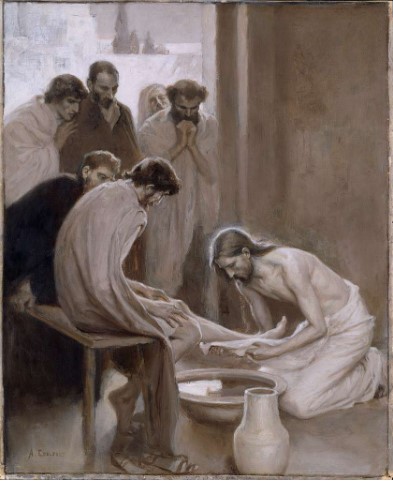
Is not this one of the reasons why we and the church and everyone throughout the world are fascinated with Pope Francis, the Bishop of Rome. When he was elected the first thing he did was bow and seek the blessing of the people. He wants to be our servant. In a short time after he was elected, he went to visit the prison, knelt down and washed the feet of the prisoners. He’s showing time after time how he reaches out to the poor, the vulnerable, the way Jesus did. We rejoice in it because it’s clearly the way of Jesus and that’s what we are called to do.

The kings and rules of this world want to dictate and control everyone. The kingship of Jesus is different from the kings of this world. He loves, forgives, accepts, and He rules over us with mercy and compassion. We are all equally important to him.

Re-Presenting His Mysteries — Funeral Homily for Sara Caron, 59

November 19, 2022

By Fr. Victor Feltes

When Sara was first diagnosed with breast cancer, her two boys (Mick and Jake) were just twelve and seven years old. She thought of how hard it could be for them to have to grow up as children without her. She did not know how much time she had left, but one of her goals was to be around for them, to raise them throughout their high school years. Today, thirteen years later, her sons are twenty and twenty-five years old. She successfully brought them both to adulthood.

Her family tells me Sara has worked at fifteen different places over the course of her career, and even with cancer, she never stopped working. They say she went “above and beyond” at work and would never take time-off for herself, but she would take days away from work to care for her family; for instance, keeping vigil with Mick in the hospital. Sara also kept on working for another reason: to preserve her continued health insurance coverage. You can imagine how much out-of-pocket cancer treatments would have cost. Sara did not wish to burden her beloved husband, John, and their household with terrible medical debts.

To echo the words of St. Paul in his Letter to the Romans, only with difficulty does a person give their life for others, though a good person might have the courage to lay down their life for those they love. St. Paul speaks of how “God proves his love for us, in that while we were still sinners Christ died for us.” When we witness someone, despite their flaws, give their life not just once but year after year for those they love, it is that much easier to believe that our perfect, holy, loving Lord has lived, and died, and risen for us.

Recall Christ’s words from the Book of Revelation: “Behold, I make all things new.” Our Lord, to whom Sara prayed every day, dwells within his faithful Christians, re-presenting his mysteries in their lives. “Behold, God’s dwelling is with the human race. He will dwell with them and they will be his people and God himself will always be with them as their God.”

Jesus prays in St. John’s Gospel, “Father, those whom you gave me are your gift to me. I wish that where I am they also may be with me.” Christ’s longing within us makes the psalmist’s words resonate with us: “There is one thing I ask of the Lord; this I seek: To dwell in the house of the Lord all the days of my life. That I may gaze on the loveliness of the Lord and contemplate his temple.

Christ who has called us, who dwells in us, who re-presents his mysteries in our lives, who inspires eternal longings within us, desires us to be with him forever where “he will wipe every tear from [our] eyes, and there shall be no more death or mourning, wailing or pain, for the old order [will have] passed away.” This is our cause for our firm and happy hope, for Sara and for every Christian.

Faithful Through the End

November 14, 2022

33rd Sunday in Ordinary Time
By Fr. Chinnappan Pelavendran

A devout, Catholic man came to a priest for advice. He had been coming to the church for some thirty years. He estimated he had listened to over three thousand sermons but couldn’t remember any of them. He felt that he was wasting his time and also the priest’s time. The priest thought about it for a short while and then asked the man. “How long have you been married?” the man responded he had been married forty-two years. The priest then asked what were his memorable meals during his marriage? The man replied that he couldn’t remember any specific meals that his wife prepared, but they certainly nourished him or he wouldn’t be healthy. The priest then replied that definitely all those sermons he had listened to were nourishing his soul because he keeps coming back to the Church.

Today’s first reading from the Prophet Malachi addresses the problem of why evildoers prosper and just people suffer. What is the value of living a just and pious life when the irreligious people look down on the observance of the Law? The prophet tells them that the end of the world and the judgment will be terrible for the evildoer but joyful for the faithful. For those who have based their lives on being loyal to the Truth and have spent their lives in the service of God, and sought the well – being of their brothers and sisters, the sun of righteousness will shine out with healing in its rays.

In the second reading from the Second Letter of St. Paul to the Thessalonians, we hear that those people unwilling to work, should not eat. Here St. Paul commands and exhorts in the Lord to do their work quietly and earn their living. St. Paul gives them his own example to show how he toiled day and night to earn his livelihood and never to expect anyone to take care of him. Even though he ministered and worked for the people of God, he lived by his own hard work.

The Gospel today begins with Jesus commenting on the Temple of Jerusalem, a temple which was one of the great wonders of the ancient world. It was the heart and center of all Jewish life; the very symbol of God’s presence among them. Yet Jesus tells his hearers, “All these things you are starting now, the time will come when not a single stone will be left on another, everything will be destroyed.”

Jesus warns his followers not to be deceived. The Christian life is to focus on the here and now and that will require strength and faith. The world will continue with wars and insurrections and there will continue to be natural disasters. The teaching of Jesus must help us not to live in fear and anxiety regarding the future. Rather, we are to focus on the present time, today, here and now. Jesus promises his followers if they bear sufferings for Christ’s name they will earn true life, the eternal life of Heaven.

During life we need to continue to listen to sermons, read the Bible, pray the Rosary, and read the lives of the saints to help us to nourish our souls. We know that we need to work hard in this life for ourselves and others. The sufferings in this life will help us to gain eternal life with God. We must have faith that God is always with us. In our life we go through lots of problems and difficulties, but we also have joy. But our joy will not end here. It will go on forever with God in Heaven.

Minutes from a Demonic Meeting

November 13, 2022

33rd Sunday in Ordinary Time
By Fr. Victor Feltes

Once upon a time, an unknown number of years ago, there was an important meeting of demons. Amidst hell’s fires and shadows, with putrid smoke hanging in the air, the demonic hierarchy plotted their next strategy for how to mislead humanity. Since the rebel angels cannot hurt God directly, they tempt and attack those he loves, hoping to corrupt and dominate us. When the Lord Jesus comes again to rule the earth with justice, the demons do not want us to experience his healing rays; they want us to burn and suffer like themselves.

As the demons met and brainstormed schemes, one of them suggested, “What if we try deceiving them that there’s no such thing as evil?” The chairman, after pouring out a stream of insults, said, “The humans will never believe that! Do you think that we can pit person against person, nation against nation, souls against our Enemy above, without them noticing the sadness, sufferings, envies, jealousies, impurities, rivalries, hatreds, resentments, injustices, murders, and cruelties which follow? Humans see proof of evil in nearly every headline! They are reminded something is wrong with their world whenever their alarm clocks ring, their toes get stubbed, or their weather is less than perfect! You’ll have to do better than that!

Then another demon dared to suggest, “What if we deceive them that there is no such thing as goodness?” The chairman spewed abuse at that one and said, “The humans will never believe that either! Our Enemy above has littered their world with too many beauties and blessings to count! They have this inherent desire for happiness that our Enemy has built into them! Everything they do is in pursuit of something they perceive as somehow good! Is anyone here not a useless fool?

Finally, one of the chairman’s most cunning underlings proposed another strategy, an idea which was immediately welcomed with cruel smiles by the malevolent assembly. This dangerous demon said, “Let us deceive the humans that there is no need to hurry.

In every generation, there has been Christians who believed that their generation would be the last. In his Second Letter to the Thessalonians, St. Paul admonishes some idlers, freeloaders, and busybodies living there who have quit their labors because they assumed the Lord was returning very soon. Personally, I do not expect the second coming of Christ to happen in the very near future since it remains legal to be a Christian throughout so many regions of the world. There are grave evils on this earth, including in our country, but the final attack of hell against Christ’s Church in the final days should be far worse than this. Yet whether or not Christ’s return is imminent, we must always ready to go to him. We do not know when he will return, nor do we know when any of us will die. But the certainty of our coming encounter with Christ should not make us afraid but motivate us to prepare.

Rather than being idlers and busybodies, neglecting our spiritual growth and enthralled by our distractions, let us get busy treating the most important things as the most important things. If you knew with certainty that you would die three months from today, how would you begin living differently? Would you pray more every day? Would you go to confession and Mass more often? Would you crush your lingering vices? Would you work harder to do good works? Would you forgive your enemies? Would you show more love toward God and the people around you? Thinking seriously about what you should you do differently knowing you are going to die is a good place to start in living more intentionally for Christ, with your eternal goal in mind. Do not believe the demonic deception that there is no need to hurry, for your last day is closer than it was yesterday, and it may be much closer than you think.

God Cares for His Children — Funeral Homily for Andrew Bohl, 28

November 11, 2022

By Fr. Victor Feltes

More than twenty-eight years ago, God blessed Andrew’s parents, Cletus and Amy, to conceive another child. In the midst of their pregnancy, prenatal screening revealed that their unborn son had a nervous system disorder called spina bifida. Their doctor said this meant their child would have a low quality of life and be a constant burden. He strongly recommended that they choose the Culture of Death’s solution, its final solution to every problem. But Andrew’s parents adamantly refused. They would love and care for their child in spite of any malady.

When Andrew was six years old, he spent two months in a children’s hospital. And while he was being treated there, this ailing boy came very close to dying. His mother cannot forget one episode at that hospital when she heard an emergency announced over the PA system. She ran back upstairs to Andrew’s room and, as she had feared, found that her son was the patient who was coding. But his care team, gathered around him, resuscitated Andrew from the edge of death.

After he returned home from the hospital, Andrew insisted on visiting his beloved maternal grandmother. Upon arriving at Grandma Lelah’s house, he crawled out of his wheelchair, laid down on the grass, and gazed up at the sky. He called his grandma over and asked her, “Did you see Jesus, too?” “No,” she replied, “When did you?” “When there was lots of people in the room and mom was crying. [Jesus] said it would be O.K. because he takes care of the sick children.” Grandma offered Andrew her explanation that “only special people get to see Jesus.” But Andrew, ever the debater, argued with her saying that she was such a special person that she should get to see Jesus, too.

Later that same year, the Children’s Wish Foundation sponsored a Florida vacation for Andrew and his family. On the jet flight, looking out the window at the white, puffy clouds, Andrew excitedly told his brother, Matthew, “This is what it looked like when I saw Jesus!

In our lives, we all experience both glorious mountaintop moments and difficult days in dark valleys. We can see this in Andrew’s life. He has experiencing both strength and weakness, such as being able to do more push-ups than all his peers from having propelled himself everywhere in his wheelchair. Andrew has lived through sorrows and joys. He never wanted others to think of him as different, and truly indeed, we are the same.

Do we not share the same heavenly father, God, and the same spiritual mother, Mary, who love us dearly? Is not our Lord Jesus Christ every Christian’s brother? Are not we all, each and every one of us, ailing and weak in various ways? Yet God the Father loves and cares for all of his children in spite of any malady. And Jesus assures us that things will be O.K. because he takes care of the sick children — that is to say, you and me. Christ desires for everyone to see him, because all of us are so special to him. Our Lord blessed Andrew in this life and accompanied him through his trials. Today we pray our brother Andrew may behold Jesus Christ again, in his full glory and forever.

Good Tweetman Speaks

November 7, 2022

By Fr. Victor Feltes

This image from The Simpson’s provided the avatar (or avi) which Goodtweet_man used for his pseudonymous Twitter account.

Good Tweetman (Goodtweet_man) is a Catholic attorney in Kansas who, until recently, had a significant and devoted following on Twitter. There he would crack jokes, post others’ prayer requests, and offer sometimes salty commentary on religion and politics. But on October 27th, the same day that Elon Musk was completing his purchase of Twitter, Goodtweet_man’s account was ‘permanently suspended’ by the company for “violating our rules against abuse and harassment.”

Goodtweet_man had tweeted in reference to the Catholic bishops of Germany, whose ongoing “Synodal Way” drew a warning from the Holy See this July. (The Vatican statement clarified that “the ‘Synodal Way’ in Germany does not have the power to compel the bishops and the faithful to adopt new ways of governance and new approaches to doctrine and morals” and to do so “would represent a wound to ecclesial communion and a threat to the unity of the Church.”) The image below is a screenshot of Goodtweet_man’s suspension notice from Twitter which includes his flagged tweet and the policy Twitter found he had violated:

As word of his suspension spread throughout the Twitterverse, The Pillar editor and cofounder J.D. Flynn and others posted the hashtag #FreeGoodTweetman, and various tributes, satires, and jokes, were shared about the situation. The next day, the ambassador of Hungary to the Holy See and the Sovereign Order of Malta, Eduard Habsburg, tweeted: “This is a reminder that @Goodtweet_man is still suspended. Twitter, you don’t want all of us to lose faith in you, right?” Though the online clamor has since died down, many of Goodtweet_man’s former followers still hope for his account’s reinstatement.

This is his first public interview following the suspension.

What is your perspective on this suspension by Twitter?
While I should very much not have said what I said as it was uncharitable, it is completely silly that this of all things garnered a permanent suspension. I am aware that even people who aren’t particularly fond of me thought the same. It was likely just an algorithm.

Have you appealed your suspension? What are your hopes your account will be restored?
I have appealed the suspension, and I would have to imagine it gets restored if a human being at their offices gets some eyes on it. Of course, that may be the biggest obstacle I face.

What has your life been like unplugged from Twitter?
Well I do have an alt account which I’m slowly introducing. The name isn’t particularly vulgar but I don’t think it particularly would fit an interview from a priest we’ll say. Also, for now, it’s somewhat nice not having to deal with the people I don’t like knowing about my twitter. It’s been nice to have a little bit of a respite in any event.

Are you concerned that this other account might run afoul of Twitter’s ban evasion policy?
No, I made that account a couple years ago and the rules specifically state that only accounts made to evade the ban are subject. My account wasn’t made to evade the ban, therefore it is fine.

Any thoughts on Twitter’s new owner, Elon Musk, and the hot topic of content moderation on the platform?
As for Musk: I’m pretty indifferent overall, and I expect most people will find things aren’t terribly different once the dust settles. There’s advertisers and users to take into account after all.

What would you like to say to your friends on Twitter?
I’ll be back.


(Twitter owner @ElonMusk, @TwitterSupport, and @TwitterSafety had not responded to requests for comment on the @Goodtweet_man account suspension by the time of this interview’s publication.)