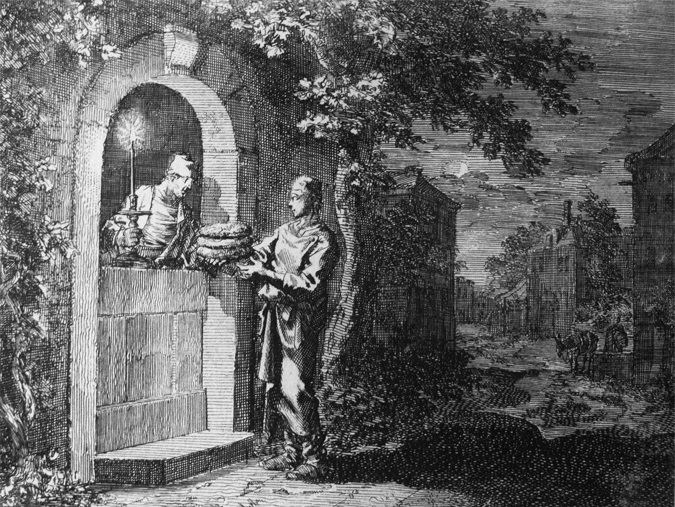
Meet Your Hero

August 29, 2022

22nd Sunday in Ordinary Time
By Fr. Victor Feltes

Have you ever met a famous person? There’s feelings of excitement and pleasure when you get that opportunity but often there’s some nervous awkwardness as well. You know a little about celebrities, about the things they’ve done, but you don’t really know them. You are really strangers to each other and that colors your encounter, limiting your connection. But by spending an hour sharing company and conversation of your admired person you would begin to deepen your acquaintance.

What if you had a sibling, a childhood friend, or a best friend in college who went on to fame and success? Encounters with that celebrity would feel very different because of your existing relationship. The pope, the president, tech billionaires, and movie stars have family and friends who have known them since long before they were famous. And when those close relations get personal invites to the Vatican, to the White House, to go yachting, or to attend a film premiere they rejoice at the opportunity, but they do not come to meet a celebrity but be with their friend or family member.

Imagine yourself back again in high school or at your first job, but possessing the wisdom that you have now. If it were revealed to you that one of your peers, one of your classmates or coworkers, would become truly great, like one day be canonized a saint, would you be interested in befriending them? Of course! You would be blessed to share their friendship. What sort of person would neglect the opportunity to get to know such a person better? One day, “at the name of Jesus every knee shall bend, of those in heaven and on earth and under the earth, and every tongue confess that Jesus Christ is Lord, to the glory of God the Father.” Jesus Christ is our admired hero whom we can get to know in deeper, more intimate, friendship now before his greatness is acknowledged by all the world.

The Letter to the Hebrews says, “You have approached Mount Zion and the city of the living God, the heavenly Jerusalem, and countless angels in festal gathering, and the assembly of the firstborn enrolled in heaven, and God the judge of all, and the spirits of the just made perfect, and Jesus, the mediator of a new covenant…” Yet these realities, present at every Mass surrounding Jesus in the Eucharist, remain veiled to our sight. They are not yet clearly manifest like the blazing fire, gloomy darkness, storms, and trumpet blasts which terrified the Hebrews at Mount Sinai. These supernatural realities are hidden for now, such that non-believers dismiss them and even believers can neglect them. Too often, Catholics neglect the Lord who calls us to celebrate the Holy Mass and to worship him truly present in the Eucharist.

Jesus says, “When you are invited by someone to a wedding banquet… go and take the lowest place so that when the host comes to you he may say, ‘My friend, move up to a higher position.’ Then you will enjoy the esteem of your companions at the table.” It takes humility to consistently come and worship him, the proud refuse, but faithfulness will be rewarded with glory, for “the one who humbles himself will be exalted.” The Prophet Sirach wrote, “My child, conduct your affairs with humility, and you will be loved more than a giver of gifts.” Who does the Lord delight in more: those who give their gifts of money or those who give him themselves? “Humble yourself,” as Sirach says, “and you will find favor with God.”

One way to humble yourself, to grow in friendship with Christ and open yourself to receive his graces, in addition to coming to Sunday Mass, is through praying Holy Hours in the presence of our Lord. The Eucharist is “the Source and Summit of the Christian life” because it is the encounter with Jesus Christ and his one sacrifice. And at the conclusion of the Mass the Real Presence of Jesus (his Body and Blood, Soul and Divinity, his whole living person) endures in all of the consecrated Hosts which remain. We keep these Host of our Lord inside the tabernacle. This is why when we enter, or exit, or cross this church, we genuflect (bending our knee) towards Jesus present there. So even outside of times of Mass, we can take a seat or kneel before Christ’s enduring presence sharing his company and conversation in worship. When you do this for sixty minutes it’s called a Holy Hour, which is a practice highly-recommended by the saints.

One of the best ways to pray a Holy Hour is at Eucharistic Adoration, when our Lord is placed upon the altar in a golden holder called a monstrance, which has a window so that you may gaze upon him. Adorers speak silently to Jesus and listen in their minds and hearts for his occasional replies. Some people bring their bibles or spiritual books to read and then relate to the Lord about what they’re read. Some people pray devotions, like the Chaplet of Divine Mercy. Some people simply sit with Christ; they look at him and he looks at them. Once it becomes a habit, these Holy Hours pass swiftly, like an episode of your favorite TV show. Simply sitting in the sunlight—doing nothing—will give you a tan. Likewise, spending time with the Lord in this way will change you, it will not be without effect. Your personal relationship with Jesus Christ will grow and what is more important than that?

For years, St. John the Baptist’s Church in Cooks Valley has had 1st Friday Eucharistic Adoration on Thursdays before the 1st Friday of each month, from their 8:30 AM Thursday Mass until the 10:30 AM Mass on Friday. Now, St. Paul’s Church in Bloomer is beginning monthly Eucharistic Adoration as well, on Thursdays before the 2nd Friday of each month, following their Thursday morning Mass until 7 PM that day. Please say to our Lord, “Yes Jesus, I can devote one Holy Hour a month to you in the Blessed Sacrament.” Give him this gift, because God will not be outdone in generosity, and you will grow in your friendship with Jesus Christ, our hero, whose name shall be exalted above every name.


The Gift of Eternal Life ― Funeral Homily for Leonard & Jean Halfman

August 26, 2022

By Fr. Victor Feltes

Imagine if, one night in a dream, an archangel visited you. His incredible glory fills your vision and you are convinced he comes from heaven. He bears a message for you. “Behold,” he announces, “the Lord God has decreed that you shall never die.” Then the angel departs from you and you awake in the morning wondering what this means.

A few years pass and you notice nothing unusual. You wonder if you might have imagined it. But a few more years pass and you realize that you’re not aging. A decade passes, and then another, but your age remains the same. If anything, you seem a little bit younger, while you see your friends and relatives grow older. You delight to be healthy and able to join them for their good times and you are grateful you can be there for them in their hard times. Eventually, you attend all of their funerals. You mourn their passing, but your life still contains joy.

Through the years, you make new friends. Perhaps you marry, or remarry, and have many children. You collect new hobbies, go back to school to earn degrees, and start careers in various fields. Eventually, you explore other regions of the world, learn new languages, and experience the best of other cultures. Your unending lifetimes would fill centuries, and your centuries might span millennia, but the longing within you would remain unfulfilled.

Your eyes may be filled by beautiful sights, your mouth may be filled with delicious tastes, and your ears may be filled with lovely sounds, but you would become envious of those who die because this world’s good things cannot fully satisfy. God places within us a natural wariness of death, and this is healthy and good. (If human beings failed to take proper care of themselves—if we were naturally apathetic towards survival—how could God’s purposes be accomplished in our lives?) But after having lived for multiple lifetimes, the blessing of earthly immortality would feel like being left out, left behind, like a curse. You would envy those who get to experience what’s next, while you continue to wait, with great impatience, for the Second Coming of Jesus Christ.

This funeral is unique in all my years of priesthood. Never before have I celebrated a Mass of Christian Burial for more than one person at once. And thankfully, today’s double funeral does not follow a horrific tragedy, such as a family’s fatal car crash or a double murder. Leonard and Jean lived longer lives than most people: eighty years and seventy-seven years respectively. And they lived fuller lives than most people, with strong Catholic Faith which they imparted to their children through fifty-six years of marriage.

Though a quiet, introverted pessimist was paired with a talkative, extroverted optimist, together they reflected Christian excellence to the world – feeding others through an extraordinary dairy herd, and supporting and caring for the sick and dying. Both endured physical sufferings, realizing along the way that the brain is a bodily organ which can require a physician’s help as much as any other. And finally, after sharing a lifetime together, their earthly lives came to natural ends less than ten weeks apart from each other. Despite living only one lifespan each, Leonard and Jean did not see their coming deaths as tragedies. I am told by their children, “In their own way, each experienced joy when they realized that they were nearing the end of this life and entering eternal life, and they were ready to go.”

Jesus says, “Come, you who are blessed by my Father. Inherit the kingdom prepared for you from the foundation of the world. For I was hungry and you gave me food, I was thirsty and you gave me drink… ill and you cared for me…” The Book of Wisdom says, “Chastised a little, they shall be greatly blessed, because God tried them and found them worthy of himself. As gold in the furnace, he proved them, and as sacrificial offerings he took them to himself. In the time of their visitation they shall shine, and shall dart about as sparks through stubble…” So while there is naturally some sadness today, we do not mourn a tragedy but rejoice in a triumph. As St. Paul said: “Where, O death, is your victory? Where, O death, is your sting? … Thanks be to God who gives us the victory through our Lord Jesus Christ!

Are you Friends with Jesus?

August 21, 2022

21st Sunday in Ordinary Time
By Fr. Victor Feltes

How many friends do you have on earth? When was the last time you counted them? It’s not the same as the number of Facebook friends you have. Each of us have many acquaintances, but fewer friendly acquaintances, and still fewer true friends. What is it that makes you and your friends friends? Are you friends with Jesus and how can you tell?

Luke’s Gospel relates a parable which foreshadows that not all will die as friends of Christ. The Lord Jesus is the master of the house and he plainly warns us that after he has arisen and locked the door, many will stand outside knocking and saying, “Lord, open the door for us… We ate and drank in your company and you taught in our streets.” But he will answer, “I do not know where you are from. Depart from me, all you evildoers!” In the parallel passage to this which appears in Matthew’s Gospel, Jesus cautions us, “Not everyone who says to me, ‘Lord, Lord,’ will enter the kingdom of heaven… I will declare to them solemnly, ‘I never knew you.’” Seeing many figures from the Old Covenant and from around the world saved, reclining at table, and feasting in the kingdom of God, those kept outside will be angry and grieved, wailing and grinding their teeth, at having squandered their chance to enter.

But doesn’t Jesus say elsewhere: “Knock and the door will be opened to you. For everyone who asks, receives; and the one who seeks, finds; and to the one who knocks, the door will be opened”? That is true for us during this lifetime, but at the moment of death one’s eternal fate is sealed. As the Catechism of the Catholic Church teaches: “Death puts an end to human life as the time open to either accepting or rejecting the divine grace manifested in Christ.” (CCC #1021) We must come to Jesus. Jesus says, “I am the gate…. No one comes to the Father except through me… Whoever believes and is baptized will be saved; whoever does not believe will be condemned.” Now is the time to approach him and befriend him for our salvation. We know that he loves us, but are we friends with Jesus?

When I was growing up, I thought about how many friends I had. I wondered, “Who counts as a friend?” I came up with a test: my close friends were those who could invite me to their house for supper with their family, or whom I could have over to eat with mine, without it being strange. With most of my grade school peers such invites would have felt weird, but with my handful of friends it felt fine. Eating with other people has been a sign of fellowship since ancient times. This is partly why Jesus calls us to Mass, to this meal together with him and the family of God. What greater dinner invitation could we receive than this?

Yet, simply eating with our Lord does not guarantee our closeness. During his public ministry, Pharisees invited Jesus to dine with them while regarding him with suspicion, and recall what those locked outside in the parable say to our Lord: “We ate and drank in your company and you taught in our streets.” Merely being present for these activities does not automatically yield a close friendship with Christ. At every Mass, Jesus’ Word is taught and his Body and Blood are consumed, but friendship with Christ is about more than just coming to church. So how can we be closer to him?

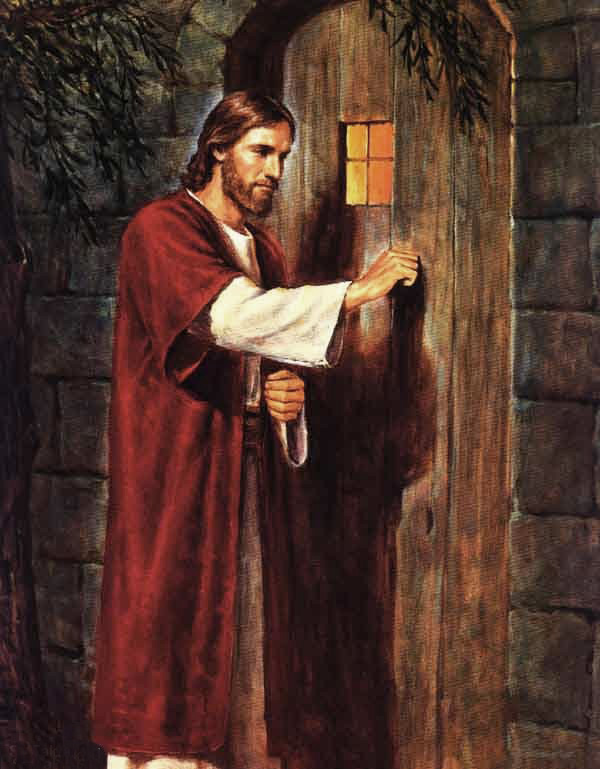
I recognized my boyhood friends in those whom I would visit for meals and whom I would likewise welcome to dine with me. Jesus invites us to visit him in the Eucharist but desires that we in turn would invite him to our homes. In the Book of Revelation, Jesus says, “Behold, I stand at the door and knock. If anyone hears my voice and opens the door, I will enter his house and dine with him, and he with me.” How can we invite Jesus inside? How do we receive him into the places where we live?

Jesus knocks upon the door of our souls and hearts and minds each day, and through daily prayer we let him in. Open the door to him by prioritizing your relationship with habits of devotion. Be a gracious host to your great guest and make him feel at completely home, listening to his voice and fulfilling all his requests. Seek to serve the Kingdom of Christ and embody his righteousness as a saint like him. Reject your sins and love like him, for Jesus says, “You are my friends if you do what I command you.” Jesus knows we’ll mess up sometimes, but Christ’s true friends will strive to be his close friends.

Choose the Narrow Gate

August 20, 2022

21st Sunday of Ordinary Time
By Fr. Chinnappan Pelavendran

Salvation is a past, present, and future event. We were saved from the bondage of sin when we were baptized as children or adults. We are being saved in the present, when we cooperate with God’s grace by loving others as Jesus did, by sharing our blessing with the needy, and being reconciled with God daily through His forgiveness of our sins. We will be definitively saved when we hear the loving invitation from Jesus, our Judge, at the moment of our death when we hear Him say, “Good and faithful servant, you were faithful in little things enter into the joy of your Master.”

Today’s first reading about the prophesy of Isaiah, we hear about the return of God’s people to Jerusalem. It is an assurance that God will fulfill His promise to His People. God will soon fulfill his promise of restoring us to Himself. He will do this to show His saving power. God has the purpose for this gathering, this is for the glory of his name. In other words, every work he does has the remote aim of giving Him Glory. In addition to gathering us unto Himself, God will also make us his ambassadors to other nations.

Today’s second reading from the letter to the Hebrews gives us the “narrow gate” theology. The road less often taken and the gate less often chosen are the paths of God’s discipline. The pain and suffering Christians experience are the parts of God’s discipline given in love. We are being disciplined by our afflictions, strengthened to walk that straight and narrow path – that we may enter the gate and take our place at the banquet of the righteous. The experience is similar to that of a child being disciplined by loving parents who desire only to help him grow, mature, and become responsible.

In the Gospel, Jesus answers a very difficult question, “Lord, will there be only a few saved?” His response was very simple, “Try your best to enter by the narrow door.” Jesus affirms that God wants all persons to enjoy eternal life. But he stresses our need for constant fidelity and vigilance to His commandments throughout our lives. Thus Jesus reminds us that, even though God wants all of us to be saved, we all need to work at it. Entry into God’s Kingdom is not automatically granted. Jesus came to bring God’s love and freedom to the whole world. The message of his Gospel is that there is not a single person, people, nation, race or class which will be excluded from experiencing the love and liberation that God offers.

We need to make wise decisions and choose the narrow gate. God allows us to decide every day what road we will walk down and what gate we will choose. He encourages us to choose His way and His life. “If anyone desires to come after Me, let him deny himself, and take up his cross daily, and follow Me,” this means a consistent denial of self for the steady follower of Jesus.

We need to cooperate with God’s grace every day, by choosing the narrow way and the narrow gate of self – control of our evil tendencies, evil habits, and addictions. God gives us divine strength to practice self – control. We are enabled to love others, see the face of Jesus in them, and share our blessings with them. The Holy Spirit guides us through the narrow way in daily prayer, bible reading, and reception of the Sacraments of Reconciliation and Eucharist.

The Way to Peace

August 14, 2022

20th Sunday of Ordinary Time
By Fr. Chinnappan Pelavendran

In today’s world, every morning we see and hear multiple stories of division and violence, in families, cities and countries. In today’s gospel Jesus asked his disciple a question? “Do you think that I have come to establish peace on the earth? No, I tell you, but rather division.” He then talks about households being divided and family members turning on each other. What is the message Jesus is trying to convey to the disciples and to us? Is He trying to open our minds and hearts to the reality of our world and the reality of our human condition?

In the first reading, the prophet Jeremiah experiences the consequences of the word of God burning within him. His message was so disturbing to the leading men in the society so their simple and selfish plan was to get rid of him by setting the king up against him. Although they succeeded in their lot, God proved himself a powerful Savior. As the one who sent the prophet, He did not allow him to perish, but in His way came to his aid. Our God is ever faithful and ready to deliver us in times of difficulty.

Today’s second reading is from the letter to the Hebrews. It reminds the early Christians of what an authentic Christian life consists of, that is, to remain faithful to the will of the Heavenly Father even to the point of enduring opposition and suffering death just as Jesus did. The author of this letter reminds the community not to lose sight of Jesus by remaining steadfast to Him and not becoming discouraged in their commitments to his teaching. Jesus promises that the faithful follower will receive a divine reward. This passage is clearly encouraging the new converts to reject the previous way of life in favor of a life in Christ.

In today’s gospel, Jesus, the Prince of peace invites his disciple to a holy war against sin and evil forces. The message of Jesus brings love, compassion, harmony, and peace. Love brings people together so that there is neither Jew nor Greek, slave or free, male or female. It is Jesus nature challenges injustice, corruption, discrimination, abuse, dishonesty, and all attacks on human dignity. Jesus has come to set fire on earth and bring division instead of peace. Fire is the sign of purification – Jesus would baptize with the Holy Spirit and fire. Fire is the symbol of the Holy Spirit. The Holy Spirit is a consuming fire. The ministry of Jesus on earth included preparing the way for the coming of the Holy Spirit, the as Sanctifier.

The Spirit of Jesus is given to all freely who choose to follow him through baptism. This is a fire planted within us, to guide us, to direct us, and to admonish us when we deviate from the path. The fire of Jesus that lives in each of us helps to mold us into what we are meant to be, a burning flame that warms our hearts and encourages us to continue the work of Jesus today.

During our baptism we received the light of Christ and were instructed to keep that light burning brightly until the return of Christ Jesus. The Holy Spirit was sent into our hearts at Confirmation to set us on fire. We have to inflame people to care, to serve, and to bless one another with all the gifts of Faith. We should allow that fire to burn the impurities in us that may be war, violence, and division and to discover the pure gold and silver within us.

Our Many Friends in Heaven

August 14, 2022

20th Sunday in Ordinary Time
By Fr. Victor Feltes

We are surrounded by a great cloud of witnesses. The New Testament Letter to the Hebrews celebrates the faith and actions of Old Testament heroes: beginning with Abel, Enoch, and Noah; Abraham and Sarah; Isaac, Jacob, and Joseph; Moses and Rahab; Israel’s judges Gideon, Barak, Samson, and Jephthah; David, Samuel, and all the prophets. Then comes the passages of today’s second reading:

Since we are surrounded by so great a cloud of witnesses, let us rid ourselves of every burden and sin that clings to us and persevere in running the race that lies before us while keeping our eyes fixed on Jesus, the leader and perfecter of faith.”

These witnesses surrounding us who can help us follow Jesus are not far away. As The Letter to the Hebrews tells us later in the same chapter:

You have approached Mount Zion and the city of the living God, the heavenly Jerusalem, and countless angels in festal gathering, and the assembly of the firstborn enrolled in heaven, and God the judge of all, and the spirits of the just made perfect, and Jesus, the mediator of a new covenant, and the sprinkled blood that speaks more eloquently than that of Abel.

St. Paul once wrote, “Be imitators of me, as I am of Christ.” But can the holy dead help us in more ways than merely being a good examples? Indeed. First we must understand that the holy dead are still alive.

The Sadducees who questioned Jesus about the resurrection of the dead did not believe in life after death and only accepted the first five books of the Old Testament. So using only those five books (known as the Torah), Jesus proves that the dead still live. Jesus asks them: “Have you not read in the Book of Moses, in the passage about the [burning] bush, how God told him, ‘I AM the God of Abraham, the God of Isaac, and the God of Jacob’? He is not God of the dead, but of the living, for to him all are alive.

But have the holy dead ever been of any help to the living? “Behold,” at Jesus’ Transfiguration on Mount Tabor, “two men were conversing with him, Moses and Elijah, who appeared in glory and spoke of his exodus that he was going to accomplish in Jerusalem.” Even before he opened the gates of heaven, they are aware of the nature of Jesus’ salvific mission and encourage him before he undergoes his Passion. By the will of God, Jesus was aided by the saints and they would help us too. The Book of Revelation shows saints in heaven now, before the end of the world. They express concern about events down here on earth and offer their prayers to God.

Offering prayers to the saints above goes back to the Early Church. The first centuries saw huge theological fights over things like deciding on which date to celebrate Easter or choosing the very best word in Greek to articulate a tenet about the Trinity, but the Early Church never blinked at prayers asking the intercession of the saints. If this practice had been some novel innovation alien to the Faith passed down by the apostles, it would have raised major upheaval. The presence of such prayers in the historical record and the simultaneous absence of major controversy tells us something.

Now when some non-Catholic Christians hear about us praying to saints, they assume this means we worship saints. We love and honor saints, but we worship God alone. The objectors misunderstand by equating all prayer with worship. The word “pray” is an old English word which means “to ask, or request.” This word is commonly seen in Shakespeare plays, as in “I pray thee, hold thy peace.” Praying to saints is asking them to ask God to help us.

At this point some critics counter, “Then why not simply go to Jesus? Why not just pray directly to him?” We can and we do, but I would ask these persons if they ever ask their family members or friends to pray for them and whether they consider this a good and worthwhile thing to do. Scripture indeed teaches us to “pray for one another,” noting that “the fervent prayer of a righteous person is very powerful.” If you’re going to ask anyone to pray for you, who better than a holy saint in Heaven?

In preparing for this homily, it occurred to me to look up the saint for today to use as an illustration of what we can learn from them and how they can help us. I typed into my search engine: “August 13 feast day” and information about St. Anthony of Padua popped up. This was both a outstanding and peculiar result; outstanding because he’s a great and fascinating saint, peculiar because his feast day is not August 13th but June 13th. I took this as a sign that acquaintance with St. Anthony is meant to be more widely shared today.

St. Anthony of Padua was born in Portugal in 1095. Though from a prominent family, he entered religious order at the age of fifteen. He sought to become a martyr by preaching Christ in Muslim lands, and eventually received his superiors’ permission to do so, but illness prevented his journey. He then tried to live quiet life of prayer and penance as a hermit, but God again had other plans for him. When asked to give a short sermon during a meal held for Dominicans and Franciscans following an ordination Mass, Anthony’s previously unknown brilliance shined through.

Anthony was reportedly “gifted with a prodigious memory, so that he retained all he read, and could have it ready at hand whenever needed.” St. Thomas Aquinas is also said to have had a memory like that, having written his book “The Golden Chain” (a collection of the Church Fathers’ commentary on each chapter of the Gospels) from memory. These anecdotes are plausible to me because I personally know a cardinal who could have met you once years before and at your next meeting would remember your face, your name, where you had met, and what you talked about. Though you and I lack this incredible gift, there is an encouragement for us in it. If natural human brains in this fallen world can sometimes possess this amazing ability, then our minds in glorified bodies will be capable of the same and more one day.

St. Anthony met and befriended St. Francis of Assisi, who sent him forth to be a traveling preacher. His preaching drew crowds so large that the churches could not hold all of the people. One of the things I love about saints’ stories is learning about how they handled difficulties, be they personal, interpersonal, or practical problems. For instance, how does one preach to a crowd of 30,000 gathered in an open field in the time before electricity? St. Anthony would stand and speak from a raised platform in the center, then brothers posted at increasing distances around him would repeat his message, phrase by phrase, to the crowd.

Like many other saints, we can read St. Anthony’s wisdom online for free. Some quotes from St. Anthony include: “Actions speak louder than words; let your words teach and your actions speak.” He said, “Earthly riches are like the reed. Its roots are sunk in the swamp, and its exterior is fair to behold; but inside it is hollow. If a man leans on such a reed, it will snap off and pierce his soul.” And, “Attribute to God every good that you have received. If you take credit for something that does not belong to you, you will be guilty of theft.”

St. Anthony was once a victim of theft. One of the monks ran away from his monastery and took with him one of Anthony’s books. In those days before the printing press, books could be very pricey and might be resold for fast cash. This particular book was dear to St. Anthony so he prayed it might return. His prayer was answered when the runaway brother had a change of heart, returned to the community, and repentantly gave back the book. This story is the reason why St. Anthony is the patron saint of lost items.

His intercession in finding lost items is powerful. I encourage small children be taught to say this delightful prayer while spinning: “Tony, Tony, come around, help what’s lost to soon be found.” (Of course, adults may choose different words and omit the action entirely if they prefer). This February, during the process of selling St. Jude’s Church, I realized that the key to the church I needed for a meeting in New Auburn that same hour was missing. I checked all over my rectory’s floors, tables, and countertops. It occurred to me I might have lost it amongst the dirty laundry, so I took my hamper down to the laundry room. Before searching my fresh, clean clothes I began checking my dirty clothes’ pockets. Then I thought, ‘I should pray for St. Anthony of Padua’s help.’ At the very moment I began to speak to him, my hand touched the key in a pants pocket. It was surreal and I felt very, very grateful.

Like the story I told at yesterday’s funeral, as Anthony lay dying (at the age of 35 from an illness) he had a vision of a heavenly visitor. One of the friars asked Anthony what he was staring at so intently. He replied, “I see my Lord!” Saints’ stories also contain weird and wonderful miracles, which show that there is more to reality than the world we see. When Anthony’s tomb was opened thirteen years after his passing, his body had naturally decayed to dusty bones, but his motionless tongue—which had proclaimed Jesus Christ so well—appeared healthy, moistened, and alive.

Are you called to be a European religious brother, priest, and Doctor of the Church like St. Anthony of Padua? Almost certainly not. Nor are you called to be an celibate Middle Eastern carpenter like Jesus Christ. But the saints show us powerful and beautiful reflections of Christ, different ways of being like our Lord, in every age and walk of life.

I hope that you will get closer to St. Anthony and the many friends we have in heaven. Ask God to introduce you, learn about them and befriend them. By the time you discover a new saint, he or she knows and loves you already, for the knowledge and love possessed by the saints in glory partakes of the wisdom and love of God.

Invited Home ― Funeral Homily for Kathleen Zwiefelhofer, 82

August 12, 2022

By Fr. Victor Feltes

In my priesthood, I have visited many dying people and heard many stories told by family members about them. In this, I have found patterns among Christians dying. For instance, as I have spoken about before, the dying person may or may not know they are in their final week of life, yet he or she is often blessed to have “a last good day.” A happy day shared with loved ones or enjoying a dearly-loved activity is gifted to them by God, from whom all good things come.

Another providential pattern I often see when visiting the dying is how people come to for the Anointing of the Sick. Though wavering in consciousness when I call their names and they open their eyes and they realize a priest has come to share God’s grace. When I came Kathleen’s side in the emergency room to give her the sacrament for those in danger of death, I called her name and she opened her eyes, and knowingly received this consolation from God. Kathleen’s journey from this life features two more elements dying Christians commonly experience. The first was her desire “to go home.”

As we grow old, our bodies are beset with infirmities. This reminds us that all of us must “appear before the judgment seat of Christ, so that each may receive recompense, according to what [we] did in the body, whether good or evil.” Our physical frailty helps to detach us from this world so that we are open to something greater. Our weakness leads us pray like the psalm: “Put an end to my affliction and my suffering; and take all my sins away. … To you, O Lord, I lift my soul.”

Throughout this year, burdened in her mind and body, Kathleen has expressed a desire “to go home.” She said this while still living at home, in the house she grew up in, next-door to St. Paul’s Church. So what “home” did she mean? Kathleen, in faith, was expressing her longing for heaven. St. Paul writes, “We know that if our earthly dwelling, a tent, should be destroyed, we have a building from God, a dwelling not made with hands, eternal in heaven. [And so] we are courageous, and we would rather leave the body and go home to the Lord.

The second detail from Kathleen’s story which I have encountered before in others is visions of visitors. Kathleen’s parents, George and Catherine, and her husband, Leon, each died many years ago. Yet Kathleen reported being in dialogue with them. She said they discussed with her whether or not it was “time for her to go.” We are surrounded by a great cloud of witnesses, by saints and angels who desire us to dwell with them in God’s holy city, the new and heavenly Jerusalem. They pray for us and help us. On the morning before Kathleen was taken to the hospital, she had another vision. She extended her palm before her saying, “He’s right here. He’s right here,” though she did not clarify whom.

Jesus says, “I am the resurrection and the life; whoever believes in me, even if he dies, will live, and everyone who lives and believes in me will never die.” “Behold, I make all things new,” Jesus declares, “I am the Alpha and the Omega, the beginning and the end.” Jesus is the reason we are here. He is why Kathleen did not fear to die. And he is the cause we have for hope in unending life and a greater home. Let us pray for Kathleen’s soul, entrusting her to our loving Lord.

In the Boss’s Shoes

August 7, 2022

19th Sunday in Ordinary Time
By Fr. Victor Feltes

Once upon a time, you had an idea, an idea to bless the entire world by starting a new business from scratch. You fully invested yourself into the project – your time and talent and treasure – to make this enterprise successful, and it was very successful. After leading your business for many years without a single vacation, you announced you would be taking some time away. You reassured your employees the company would continue and that you would be back, perhaps in a few weeks or maybe several months.

You gave careful instructions to all of your managers for what they were to do in your absence, and then you left on a journey which was out of this world. You celebrated a beautiful, destination wedding which you had long-looked forward to and enjoyed many other things. Then one Friday afternoon around 3:00 PM, you returned to your workplace, your creation.

Driving into the parking lot, you’re surprised by how few cars there are. Your confusion turns into shock when you discover the building’s front doors are locked, despite it being business hours. Fishing out your keys from your pocket you unlock the door and walk into an empty lobby. First, you go to your office and find your dear secretary, Mary, at her desk.

Thank God you’re here,” she says and she begins to tear up. “After you left, everything became horrible. Despite what you told them, people started doing their own thing. When I tried to correct them, they wouldn’t listen and were cruel.” “Where are they now?” you ask. “Most of the salaried employees have simply stopped showing up, and the rest are skipping work today to make it another ‘long weekend.’” “Mary, I thank you for your faithfulness. I’m sorry this happened to you, and I will make it up to you.

As you walk throughout the building you notice many empty beer bottles and pizza boxes laying around. The cubicles and warehouse are nearly deserted, except for Jennifer helping customers over the phone at her computer and Michael moving shipping crates on his forklift. Then you find several of the junior employees goofing-off in the break room. They become very quiet when you enter.

Why aren’t you working?” “Because… no one has told us what to do.” “Fine! Start by clearing these tables and picking up the floor. Clean these workspaces and take out the trash. Then report back to me.

Returning to your office, you immediately dictate two memos: the first, firing all of your current managers for cause, and a second memo giving large raises and promotions to Mary, Jennifer, and Michael, appointing them as the new leaders of their departments. I trust this tale sounds familiar; it is similar to Jesus’ parables but dressed in modern clothes.

In today’s Gospel, Jesus urges us to be prepared “like servants who await their master’s return from a wedding, ready to open immediately when he comes and knocks.” Blessed will such servants be upon his arrival, especially if he finds them vigilant in nighttime’s “second or third watch,” that is, during this world’s darkest hours. Their joyfully returning lord and master will be so grateful for their proven faithfulness. “Amen, I say to you, he will gird himself, have them recline at table, and proceed to wait on them,” just like Jesus washes his disciples’ feet, dries their feet with a towel wrapped around his waist, and gives them his Eucharist at the Last Supper. Our Lord and Master, who shall come knocking on an unknown future day – either on the day we die or on the Last Day – is Jesus Christ himself.

As for those who say “the master is delayed in coming” or imagine he is never coming back, who mistreat other people (the menservants and the maidservants) and serve their own selfish desires (eating and drinking and getting drunk), our Lord will come at an unknown hour and punish them severely, condemning them to where the unfaithful go.

In the beginning, God had an idea, an idea to bless our entire world, creating this universe from scratch. Jesus Christ, through whom all things were made, has fully invested himself into his enterprise’s success. Yet Jesus has given us all freewill. Though never far, Christ leaves us free to choose to be his good co-workers or to do our own wicked thing. Today I hope that, having imagined yourself in the Boss’s shoes, you may better personally feel and appreciate how much our Lord treasures your faithfulness and how eager he is to reward it.

Being Found Faithful

August 6, 2022

19th Sunday in Ordinary Time
By Fr. Chinnappan Pelavendran

We love the word “Faithful,” so when we talk about a faithful friend, faithful parishioner, faithful worker, faithful husband, faithful wife, faithful Christian, faithful in prayer or being faithful in keeping a promise this means that we need to be “Faithful or Watchful in waiting” for Jesus. Jesus speaks about the faithful servant. We are therefore invited to be faithful to the end. The combination of Faith and Love create good works together and lead man towards God.

Today’s readings call us to have faith and trust in God. Today’s first reading says about how the providence of God has protected the chosen people throughout their history, especially during the time of their enslavement in Egypt and during their Exodus to freedom to the promised land under the leadership of Moses.

In today’s second reading, we heard of the faith and patience of Abraham, his wife Sarah, his son Isaac, and grandson Jacob. Abraham shined in faith and patience. Even though Sarah was barren, Abraham believed his wife would conceive, even when she was too old because God told him, he would have many descendants would be born of him, these numbering as many as the stars of heaven and as the innumerable grains of sand by the seashore. When asked to sacrifice his son Isaac, he believed that God could raise someone from the dead. In all things, Abraham had faith in God. He patiently waited to see how the goodness of God would develop. Such faith and patience is the model that all Christians should strive to imitate.

In the Gospel, Jesus challenges his disciples to trust the Father’s promise to give them eternal happiness in His kingdom. However, they are to be prepared at all times because the Son of Man will come at an unexpected hour, either at the moment of their death or at the end of the world, whichever comes first. Using the master – thief parable, Jesus warns us to be on our guard so that the thief (or the devil), may not steal our treasure of Divine grace and our relationship with God by his temptations. Using the master – servant parable, Jesus reminds us always to do the will of God by obeying Jesus’ commandment of love and offering humble and sacrificial service to others.

We always need to be prepared to meet Our Lord as our Judge, let us always remember the words of the scripture “Behold, I stand at the door and knock. If anyone hears my voice and opens the door, I will enter his house and dine with him and he with me.” Since nobody is sure about the time of his or her death, we must always be prepared to face Jesus our Lord and Savior as our Judge. At the moment of our death, we must give an account of our lives.

He wants to see that we have kept our personal relationship with him by growing in holiness; such a growth is assisted by talking with Him daily and listening to His voice in the Bible readings, by asking for the guidance of the Holy Spirit every day, through offering our lives on the altar , receiving spiritual nourishment in Holy Communion during the Holy Mass, by becoming reconciled with God every day, asking for His pardon and forgiveness with a repentant heart, and seeking His forgiveness through the Sacrament of Reconciliation for sins. And finally by obeying Jesus’ commandment of love of thy neighbor which is proven by service for God’s people all around us with faith and trust in the Lord.

What Truly Lasts

July 31, 2022

18th Sunday in Ordinary Time
By Fr. Chinnappan Pelavendran

Our God is a personal God who is concerned about each and every one of us and personally takes care of us. He is a benevolent Father caring for the needs of his children and planning a future for each one. The Bible presents God as a father who takes care of His children. His concern is beyond our understanding. The readings of today invite us to place our trust in God. We are invited to focus our attention on the heavenly realities more than on the earthly shadows.

Today we are also reminded that we are in a transitory world. This means that everything here changes. Everything passes. Hence, it is a call to make use of the things of this world prudently without losing our ultimate goal. Heaven is our goal. In heaven, nothing passes away.

The first reading of this Sunday begins with a warning, “Vanity, vanity,” the reading says, “vanity.” The author reminds us that there will be an ultimate end to all created things. This strikes a reality that most of us have neglected. However, one day each of us will come to terms with it. The author also calls us to remember God in all we do. And, he reminds us that the ultimate goal here on earth is to walk our way straight to heaven.

In the second reading, St. Paul advises the Colossian community that they must look for the things of heaven where Christ is. He wanted all thoughts to be centered on heavenly things, not on the things that are on earth. He reminded the Colossian community that in Baptism they have become new persons as they have been raised with Christ. There we find the perfect image of God in Jesus who is the perfect pattern of our life.

In today’s Gospel, in the parable of the foolish rich man, Jesus warns us against all types of greed, because greed takes our life’s focus away from God-away from serving and loving God and other people. Jesus says that God calls the greedy rich man a fool because the man thought he would not die soon and that he was not accountable for the way he used his riches. The rich man forgot the fact that his wealth had been lent to him by God for sharing with the needy. Jesus also warns us that our eternal life does not consist of earthly possessions. These we should share to gain eternal life.

We are invited to share our blessings with others, the parable of the rich fool gives us a warning as an invitation. It reminds us that our possessions are merely lent to us by God. And that we are accountable for their use. We must be generous in sharing our time, our treasure, and our talents in Christian stewardship. Even if we are financially poor, we may be blessed with intelligence, good will, a sense of humor, or the ability to console, encourage, inspire, support, and help others. God expects us to give our thanks to Him for all these blessings by sharing them with others for His glory.

Let us control our greed. Our greed takes different shapes and forms. For some, it may be the desire for the approval and praise of others, for some it may be an uncontrolled desire for power, control, or fame. For some still others, greed takes the form of excessive and sinful indulgence in eating, drinking, gambling, or drugs. Greed also turns our life away from God and away from loving and serving Him and other people. Greed directs all our energy and attention to fulfilling the self. We need to come out of ourselves and understand God and His creation, all the created things will pass away, but God never changes or passes away.

Stories of Three Fruitful Conversions

July 30, 2022

18th Sunday in Ordinary Time
By Fr. Victor Feltes

Leah Darrow grew up in a strong Catholic family, but she recalls that in high school her Catholicism started to get “fuzzy.” By the time she was in college, Leah says she had become a “Catholic But,” as in, “I’m Catholic but I don’t agree with the Church’s teaching on cohabitation… I’m Catholic but I don’t see the problem with a couple who love each other sleeping together before their marriage… I think the Church is behind the times.”

One evening at college Leah watched a reality show called “America’s Next Top Model.” She thought to herself, “I’m pretty cute, maybe I could be on that show.” Leah tried out, got accepted, and competed on national television against other gorgeous women. Even though she didn’t win the competition this exposure and fame jump-started her modeling career. She still recalls her excitement at receiving her first modeling paycheck featuring a number with a comma in it. Leah’s chosen path eventually led her to an experience in a New York City skyscraper which forever changed her life.

She came to pose for a risqué, international, men’s magazine. They brought out a number of itsy-bitsy outfits for her, she put one on, and the photoshoot began. Yet while Leah was posing, a vision flashed into her mind: three images in the span of perhaps a second or two. First, she saw herself standing in a large white space wearing that immodest outfit. She felt no pain in that moment, but had a sense that she had died. In the second image, Leah was looking up, holding out her open hands at her waist with the knowledge that she was in God’s presence. In her third and final scene, Leah saw herself holding her hands all the way up, offering God all that she had, but she saw that she was offering him nothing. She realized that with all of the blessings, talents, and gifts God gave her she had wasted them on herself. She saw that if she had died at that moment she would have nothing to offer Christ.

Leah abruptly abandoned the photo session, changed back into her own clothes, and ran down 5th Avenue balling. She called home saying, “Dad, if you don’t come get me I am going to lose my soul.” So her father drove across the country from Oklahoma to New York City. When her dad arrived, though Leah wanted to leave for home immediately, her father insisted upon seeing the sights. “But first,” he said, “we go to confession.” Leah made a good confession through tears, and came out of the confessional healed, like a new woman. In the years since, Leah Darrow has been bearing good fruit as a national Catholic speaker.

I was reminded of Leah’s story by a young man’s testimony this week. My spiritual retreat house in Illinois was a short distance from the Mundelein Seminary, which allowed me to take in a portion of the Courage International conference being held there now. Courage is a fellowship helping men and women who experience same-sex attractions to live chastely — faithful to Jesus Christ and Catholic teaching on sexuality.

Part of the training day for clergy was hearing a Courage member share his story. He grew up Catholic with faithful, loving parents, but like the Prodigal Son went off on his own way. He says his lifestyle had many pleasures but there remained an unsatisfied sadness. He knew what he was doing wasn’t right. One night, awakening from sleep, he also had a life-changing vision. He saw his heart of flesh descending over a dark ocean, dropping deeper and deeper down into the depths. And then he heard the Lord say two things to him (if I recall the phrasing precisely): “My son, come home,” and “Time is running out.” This experience helped him see he was God’s beloved but needed to change his life. He was called by Christ to something greater, and now his joyful life is bearing good fruit.

A different speaker at the conference shared another great story. It was an anecdote about a husband and father who had an addiction to viewing indecent images. Through renewed devotion and the help of God’s grace, this man began to experience victory and freedom from this sin. One day, as he was driving down the road chit-chatting with his four-year-old daughter in the backseat, she remarked, “I like new daddy more than old daddy.” (To be clear, both “old daddy” and “new daddy” were references to him.) This man’s four-year-old daughter did not know why things were now different, but she delighted in how much more present, attentive, and open her dad had become for her by valuing pure love more than sin.

As St. Paul urges us in today’s second reading, “Put to death, then, the parts of you that are earthly: immorality, impurity, passion, evil desire, and the greed that is idolatry.” Your old self and its practices must give way to the new. “Think of what is above,” Paul writes, “not of what is on earth.” Be renewed in God to share in his delight and great rewards.

The rich man in today’s parable gathered earthly wealth, planning and preparing for himself pleasures in this life. He thought he still had many years ahead of him to enjoy, but his time was running out. God calls him a fool since he is soon to appear before the Lord with empty hands, poor “in what matters to God.” “Vanity of vanities,” our first reading says; this world is full of vanities! Stop chasing after and clinging to worthless things. Remember that you are loved, that you were made for great things, and that the joy and freedom Jesus Christ has given to others he can also give to you.

On Prayer

July 24, 2022

17th Sunday in Ordinary Time
By Fr. Chinnappan Pelavendran

We hear very often people say, ‘Pray for me or remember me in your Prayers.’ There is nothing wrong with that, it is our duty to pray for each other. Our prayer life is a reflection of our true faith in God. Prayer is understood as a form of communication, a way of talking to God, and raising our hearts and minds to God. In our prayer, we strengthen that recognition of the presence of God, which draws us close to Him.

The first reading today gives us the model for intercessory prayer provided by Abraham in his dialogue with God. Abraham, our father in faith, demonstrated great confidence. He approached God as a father. He acknowledged that he was dust and ashes. “If you find fifty righteous people in those wicked and immoral cities,” Abraham said, “you won’t destroy it, will you God?” God said, “No, if I find fifty righteous people in the city, I will not destroy it.” How about forty, thirty, twenty, or ten? But not even ten people were in those cities, so God went beyond the terms of negotiation and spared the only just inhabitants of the cities. God is merciful than we are.

The Responsorial Psalm is a declaration of God’s fidelity and willingness to listen to our prayers. “Lord, on the day I called for help, you answered me,” we are invited to remember this truth at all times. Our prayers are never a waste of time. God always listens to us.

The second reading is from St. Paul’s Letter to the Colossians. He talks about baptism. In Jesus, we were baptized, and this made us God’s beloved children and inheritors of His Kingdom. We are assured by St. Paul that God will always be gracious and merciful to us for we are His beloved children. When we pray, let this be our source of inspiration and hope.

The Gospel sets us the formula for all prayers, namely the gift of “Our Father.” This prayer contains the teaching of Jesus in its totality. Jesus begins the prayer by calling God, Abba Father a most endearing term used in a close parental bond. The Kingdom of God that Jesus came to proclaim is understood as a world that is built on truth, love, compassion, justice, freedom, human dignity, and peace. In the second half of the prayer, we pray more directly for our own needs. And we begin with present needs, we ask God for today’s bread, food, and today’s material needs. We offer God our present, our past, and our future. By this prayer we also invite the Trinitarian God into our lives, God the Father, the Creator and Provider, by asking for daily bread, God the Son, Jesus, our Savior, by requesting forgiveness of our sins, and God the Holy Spirit by asking for deliverance from temptations.

When we want something from God, we must keep asking. “Ask, and it will be given to you, search, and you will find, knock, and the door will be opened to you.” Second, Jesus reminds us that we are dealing with a loving and compassionate father. Who is ready to provide. We must not give up the habit of prayer because it is a gift of Jesus through which He empowers us to be constantly in touch with God. If we pray according to the mind and will of God, we shall gladly join the Psalmist in saying, “on the day I called, you answered me, O Lord.

The Parable of the Midnight Visitor

July 24, 2022

17th Sunday in Ordinary Time
By Fr. Victor Feltes

Imagine a visitor arrives at your home. He’s hungry but you have nothing to feed him. Suppose it’s so late at night that all the stores are closed. So you go down the road to the house of your friend and knock on his door. You rap gently and quietly at first, but then beat more firmly and loudly. It’s midnight, and your friend won’t answer the door. So you call out, “Friend, lend me three loaves of bread, for a friend of mine has arrived at my house from a journey and I have nothing to offer him!” But your annoyed friend replies from within, “Do not bother me; the door has already been locked and my children and I are already in bed. I cannot get up to give you anything.”

Is it really true that he cannot give you anything, or just that he would rather not? Notice what he doesn’t say; he doesn’t say he has no bread. Jesus assures us that if this neighbor of yours does not get up to give you those loaves of bread because of your friendship, he will surely get up to give you whatever you need because of your persistence. Why is this so? Because of his kids. Your neighbor inside says he and his children are already in bed. Are his children asleep? They were… before you came knocking. What will happen if you’re persistent and keep on calling at the door? The kids will not be happy. They will cry and complain, and their father will find no peace. That’s why his surrendering of some bread is guaranteed.

So what is Jesus really teaching us through this story? How to bother your friends and extort their food? The meaning of this parable is revealed by its context. Right before this story, Jesus’ disciples are taught how to pray to our Father. They are encouraged to ask him to “give us each day our daily bread.” And right after the parable, Jesus invites his disciples to seek and knock and ask, that we may find that we receive at an opened door. Jesus then reminds us that if even sinful fathers know how to give their children good gifts when asked, how much more so will our sinless Father give good gifts like the Holy Spirit to those who ask him? Today’s parable about knocking and asking at our friend’s door is likewise a lesser example teaching a greater truth: if your flawed and annoyed earthly neighbor can be persuaded to get out of bed in the middle of the night to give you bread, how much more readily will your perfect, patient, heavenly Father give you the daily bread, gifts, and graces you ask of him in prayer?

Later in the New Testament, St. James writes, “You do not possess because you do not ask.” So why don’t we ask God for more things in prayer? Perhaps you don’t ask because you’re afraid of being selfish or needy. But it’s not selfish to ask for what you or others need. Our parable’s protagonist had a praiseworthy purpose, to feed a hungry guest. To ask our Father for his good gifts is a good thing we are commanded to do. So if you never pray for yourself, or if you never pray for others, then definitely add such petitions to your prayers. Perhaps you don’t ask for more things in prayer because you worry you will ask for the wrong things. But that is not something to fear. If your son asks you for a poisonous snake or scorpion, would you then hand them over to him? Of course not. Nor will your heavenly Father grant wishes which would harm you.

And here’s a final reflection. If we are the main character in today’s parable (the one who is seeking and knocking and asking), and God is the father whom we approach with our request, then who are the father’s children at rest with him in his house? Who else in heaven can hear our prayers and add their voices to our requests, not because of annoyance at us but from their great love for us? We see in the Book of Revelation that in this present age (before the Second Coming) the saints in heaven are offering prayers to God. They do not pray for themselves, but for us. Like Abraham who once interceded before God for Sodom, the saints in heaven can intercede for us now. So ask them. As St. James wrote, “The fervent prayer of a righteous person is very powerful.

Jesus’ parable would teach us to not be bashful but be bold in asking for good things from God. So knock on the door of heaven, with your prayers to our Father and his children above.

The Third-Day Surprise — Funeral Homily for Greg Seidling, 60

July 23, 2022

By Fr. Victor Feltes

Greg often said, “If you don’t get up in the morning, you won’t get anything done in the morning.” And I imagine he would say you’d have to wake up pretty early before “the shank of the day” if you were going to successfully pull his leg. Earlier this year, one scheme which took three days to prepare gave him a great surprise.

His son Mike began calling him daily pretending he had begun renovating his house. As a self-employed contractor and Jack-of-all-trades, Greg was interested in his son’s project. But on the third day, Mike called his dad and said, “I cut a supporting wall! The roof is falling down! Come and help me!” “What were you doing!?” Greg exclaimed. (The great outdoorsman had swallowed the bait.)

Greg could fix anything, from picnic tables to chicken coops, and he sprang into action. He and Valeria started driving to Mike’s home and Greg got on the horn to call for others’ help – to bring their tools and add their muscle. It was Saturday, March 26th, 2022, Greg’s 60th birthday, and the people Greg was calling were already at his surprise party.

Greg had his suspicions. On the way, he asked his high school sweetheart, his wife of nearly forty years, if there was some kind party planned. Valeria did not lie to her husband, she denied having anything to do with planning a surprise party, and it was true – she hadn’t done any of the organizing. But her spouse finally knew what was up when they reached Mike’s house and saw the driveway full of cars.

Greg found Mike and said, “It doesn’t look like you need anymore help, you’ve got plenty of help here! … I don’t know if I should be upset that I fell for this or happy that my son was not as dumb as I thought.” Greg, always ready to find a reason to party, greeted his gathered family and friends and started enjoying his party with them.

The Gospel we heard today featured the Beatitudes of Jesus from his Sermon on the Mount. It is a list of character traits suited for the Kingdom of God. These traits belong to Jesus Christ, and he calls us to believe in him and become like him.

It took three days to prepare Greg’s great surprise, and it took three days for Jesus to accomplish his great plan. Christ suffered, died, and was buried, rested and rose again, and when he appeared to his disciples they were very surprised and overjoyed.

Like Greg, Jesus is also a skilled repairman and builder, through whom “we have a building from God, a dwelling not made with hands, eternal in heaven.” So even in the face of death “we are courageous” and have peace in the thought of going “home to the Lord.” Death can seem like a disaster, like our walls are failing, our roof is falling, and all might be lost. “Come and help me, Lord!” And Jesus comes to us, because he loves us.

Like Valeria on Greg’s birthday, Christ the bridegroom, the Holy Spouse of his Holy Church, did not lie to us. In life, we won’t always know exactly what Jesus Christ is up to, but if you follow him as your Good Shepherd you will be joyfully welcomed at his house. There is a party prepared for us where Jesus would gather all of us together, with Greg and one another.

Parish Directory Photoshoots

July 20, 2022

Be included in the next parish directory by scheduling your free photo session. Both St. Paul’s and St. John the Baptist’s can have your household’s photos taken at St. Paul’s. Participants will receive a free 8×10 photo and the completed directory. Please sign up today to help make our new parish directory a complete success.

  • To reserve a time at St. Paul’s Church on September 6th-10th or September 20th-24th, CLICK HERE and enter Church Code “wi193” with Church Password “photos”.

If you have five or more in your family, please claim two adjacent timeslots. Online scheduling may be unavailable on Saturdays and Sundays to accommodate paper sign-ups at Mass.