Dorothy at Home — Funeral Homily for Dorothy Turner, 85

February 22, 2022

I am informed that Dorothy dreaded snowstorms. In years past, she would urge her family not to travel on a day with weather like today’s. But for love of Dorothy you have gathered here to spiritually aid her on her journey and for your mourning hearts to be blanketed by heavenly grace. Today, I would like to share and reflect on a handful of Dorothy stories.

When her kids were growing up, her beloved husband Bob would come home in time for supper when his work schedule permitted. Bob loved everything and everyone to be in their right and proper place. So, near five o’clock, Dorothy would glance out the window to glimpse her husband’s approach. “He’s coming around the corner,” she would yell, and the whole household would spring into action. One child would run into the living room, to tidy up the toys and homework materials. Meanwhile in the kitchen, one kid set the table, another prepared the dessert, while another helped mom put the food into bowls. When dad walked in, Dorothy had everyone seated and ready, awaiting him at the table.

Four years ago, after sixty years of marriage together, Bob passed away. In addition to her many relatives and friends, one of Dorothy’s great consolations in these last years has been her favorite dog, Bud. After suffering a stroke and heart attack eight years ago, Dorothy moved with much more difficulty. Yet Bud would not impede her path or bump into Dorothy’s legs. He would walk with her, behind her all the way. When Dorothy sat or slept, he was there nearby.

A few days before her recent passing at home, Dorothy was saying, “I need to go upstairs. I need to go upstairs.” Josh, her devoted caregiver, asked her, “Why do you need to go upstairs?” She answered, “Because Pa and Ma and all my brothers and sisters are waiting for me.” Dorothy lived in a ranch duplex, it has no second story upstairs. But like others who have approached the end of their earthly lives with perceptions of the hereafter, Dorothy referred “not to what is seen but to what is unseen.” As St. Paul writes, though our bodies (“our earthly dwellings”) may be destroyed, we have a building from God, eternal in heaven.

And who through the many years of Dorothy’s life has most faithfully accompanied her? When she would rest or rise, he was there. He was never an obstacle but her constant companion. Who was her Good Shepherd who has never misled or abandoned her and would seek her out if she ever strayed? He is our Lord Jesus Christ, of whom the blessed say, “You spread the table before me.”

We rightly pray for Dorothy’s soul today but it is also right for us to hope that our holy family upstairs is now in a flurry of activity, making last-minute arrangements, preparing her place at the heavenly banquet. In the difficult moments ahead as you mourn Dorothy’s passing imagine an archangel announcing in our Father’s house, “She’s coming around the corner! Dorothy is coming home!

Mercy Like Christ’s

February 20, 2022

7th Sunday in Ordinary Time
By Fr. Chinnappan Pelavendran

The mystery of Christian life is loving our enemies and praying for our persecutors. Forgiveness, prayer, and love for those who seek to destroy us is the path Jesus has laid out for us. The challenge of the Christian life is asking the Lord for grace to bless our enemies and to love them.

Today I like to give you the example of St. Maria Goretti, who was born in 1890 in Italy. Her father began to work for a landlord south of Rome and made a deal with another family who would share the same house with them. Unfortunately, Maria’s father died of malaria. Alessandro began to cause trouble for Maria. Her big mistake was that she did not tell her mother because she did not want to cause trouble. One day he wanted to take her to the bedroom, but she refused shouting, “No! It is a sin! God does not want it.

He stabbed her fourteen times. In addition to this horrible pain, she underwent twenty hours of surgery without anesthesia. During that time she forgave Alessandro and prayed for him. On the following day, she died. Alessandro was sentenced to thirty years of hard labor. While he was in prison, Maria appeared to him in his cell. She smiled and was surrounded by lilies symbols of purity. That was the turning point in Alessandro’s life.

His first deed after release from prison was to visit Maria’s mother and ask her pardon. He accompanied her to Christmas Mass in the parish church where he spoke before the congregation, acknowledging his sin and asking forgiveness from God and the community. In June 1950, Pope Pius XII canonized Maria Goretti declaring her to be a saint and martyr before a huge crowd. Her mother was there with her four children.

There are other well-known examples of forgiveness in the Scriptures. The patriarch Joseph in the latter part of the book of Genesis (Gen 37-50) was also the subject of jealousy. His brothers sold him into slavery and he ended up down in Egypt but rose to second in command to Pharaoh. During the famine, he forgave his brothers when they came looking for food. They had been merciless to Joseph but he was merciful to them. He invited the entire family down to Egypt as guests of Pharaoh.

The first reading tells us that David was merciful to King Saul. King Saul tried to kill David twice, and twice David could have killed King Saul but did not. David spared the life of King Saul twice; once in the cave where David cut off the corner of his cloak instead of killing him (1st Sam 24); and once when David took away his spear and jar of water when he was asleep instead of killing him (1st Sam 26). David was very merciful to King Saul.

Jesus gives his disciples a challenge. He tells them: “Love your enemies, do good to those who hate you, bless those who curse you.” Jesus challenges us at the deepest level of our being. Each one of us has been wounded, betrayed or rejected at differing times in our lives. Jesus shows us the perfect example of how to love our enemies through His Crucifixion You can reflect on Jesus’ life and character, he demonstrated how much he loved those who were against him. Remember when he was on the cross, he said: “Father, forgive them, for they do not know what they are doing.” This can only flow from a heart that has been transformed by the love of God and the power of the Holy Spirit.

Jesus continually invites us not only to free the individual who wounded us but also to free ourselves from the pain, anger, and hurt that binds us. Jesus is patient and yet persistent. He continually invites us and calls us to forgive. Thus today we can take one small step in this direction.

How Far is East From West?

February 20, 2022

7th Sunday in Ordinary Time

Today we praise the Lord with Psalm 103, a psalm written by King David: “Merciful and gracious is the Lord, slow to anger and abounding in kindness. Not according to our sins does he deal with us, nor does he (repay) us according to our crimes. As far as the east is from the west, so far has he put our transgressions from us.” David rejoices that the Lord is merciful and slow to anger, not punishing our sins in the measure we deserve. God forgives our sins and removes them from us, “as far as the east is from the west.

Let’s look more closely at that last line: “As far as the east is from the west, so far has he put our transgressions (our sins) from us.” How far away is the east, the place of sunrise, from the west, the place of sunset? Depending upon where you’re standing, your horizons may not be far away. But when ancient peoples walked beyond the next range of hills which blocked their view they did not imagine they had reached the ultimate place of the sun’s rising or setting. They knew that both east and west went on and on, farther still. What they likely did not know when King David wrote his psalms 3,000 years ago is that our Earth is spherical.

We know a number of facts that they didn’t back then, but ancient peoples were not less intelligent thinkers than us today. Could you, without using modern technology, prove that the world is round? Well, in the 3rd century B.C., Greek astronomers did and calculated the Earth’s circumference without using telescopes, photographs, airplanes, or satellites. So, given what we know now, how far is the east from the west?

Because the world is a globe, east and west eventually come together. If you were to travel from here due east while I journeyed due west, if we both kept going on making equal progress, we would meet once more near a border of China and Mongolia. If east and west actually meet together how are sins taken far from us “as far as the east is from the west” like this God-inspired psalm says?

Now some may say I’m taking biblical poetry too literally. A figure of speech doesn’t need to be painfully accurate to be true. We may know that each new morning comes from our perspective upon this spinning planet, but in ordinary conversation it’s not wrong to say the Sun rises. Or, in romantic poetry, a woman’s skin need not be made of real porcelain nor a man’s chin actually be chiseled for such metaphors to convey truths about their beauty. Saying the Lord removes our sins far away from us like the east is distant from the west is a straight-forward enough image on first impression. But humanity’s later discovery that these two opposites unite suggests an additional interpretation for this scripture passage about how our Lord takes our sins away.

Here is the puzzle God faced in regards to our redemption: how could the all-holy Trinity ever forgive humanity’s sins? If the Lord were to forgive us by merely ignoring our crimes, then what of cosmic justice and divine righteousness? There was a price to be paid which we sinners could not pay, but God found a way. As was foretold in the 85th Psalm: ‘Kindness and truth met; justice and peace kissed. Truth sprung out of the earth and justice looked down from heaven.’ Just as east and west were distant contraries which surprisingly converged, so sinless divinity and estranged humanity were amazingly joined through the Incarnation and Sacrifice of Jesus Christ. Jesus separates us from sin by uniting himself to us.

What our Lord Jesus has done to save us is reflected in all of this Sunday’s readings. In our first reading, Jesus’ great ancestor David took King Saul’s spear and water jug and then returned them, thereby proving his goodness to his persecutors. Later on the Cross, Jesus takes the soldiers’ spear into his side and water pours out with Christ’s blood, proving his love for us. In our second reading, St. Paul notes the first man, sinful Adam, is saved by the new God-man, Christ. “The first man was from the earth, earthly; the second man, from heaven.” And in our Gospel, Jesus observes that if you love those who love you and do good to those who do good to you, what is so remarkable about that? Jesus says, “Love your enemies and do good to them.” St. Paul wrote to the Romans that “God proves his love for us in this: that while we were still sinners Christ died for us.” We struck him on one check and he offered the other one as well. We took his cloak and he let us strip him of his tunic. We could not purchase our own redemption but Jesus paid the cost knowing we could not pay him back. “Indeed,” as St. Paul writes, “while we were enemies, we were reconciled to God through the death of his Son…”

Jesus Christ, the first of the Most High’s children, is kind to the ungrateful and the wicked, and merciful, just as his Father is merciful. He has loved his enemies, done good to those who hate him, blessed those who curse him, and prayed for those who mistreat him. He calls us to follow his own Christian example that we may share in his resurrected glory and heavenly rewards, “a good measure, packed together, shaken down, and overflowing,” poured into our laps. Praised be Jesus Christ! Let us always praise and thank him – for who he is and what he’s done. “From the rising of the Sun to its setting, may the name of the Lord be praised.”

Trusting God

February 12, 2022

6th Sunday in Ordinary Time
By Fr. Chinnappan Pelavendran

Trusting God is simply a belief in His Love and His Goodness. He has the power to help you, and He wants to help you. Christians are called believers, but many times, we are more like unbelieving believers. We trust our friends, the bank, the stock market, or the government more than we trust God and His Word. Lot of people go to church, hear what they should do and then go home and try to do it on their own. They usually end up desperately telling God how hard they’re trying to do what they need to do, and they’re leaving Him out! God wants us to put Him first in our lives. He wants us to put our confidence and trust in Him, all the time, in everything.

In the first reading, the Prophet Jeremiah explains the benefits of placing one’s trust in God rather than himself. Then he compares the wicked to a barren bush in a desert and the just to a well-watered tree growing near a running stream. In essence, this “beatitude” teaches us that if we choose God as our hope, our security, and our happiness, we will be blessed, truly happy. On the other hand, if we choose human standards for our guidance, self-sufficiency and the meeting of our own needs and desires as our happiness, we will find ourselves living in increasing misery and confusion, that is, in woe. Jeremiah tells us that the only source of lasting happiness is trust in God and hope in His promises.

In today’s second reading, St. Paul writes that trusting hope in the Resurrection of Jesus is the basis of our Faith. Through Jesus’ death and Resurrection, believers are now welcomed into a new relationship with God as His sons and daughters, and with each other as dear brothers and sisters who have Jesus as our Elder Brother and Redeemer. This means that all the blessings of the Beatitudes are now available to us, provided we choose to follow them.

In our Gospel today, Jesus did not say that poverty, or hunger, or sadness, or hatred is a blessing but these conditions of need and dependence make us rely on God. When we rely on God humans in relationship with God our creator. So the poverty, hunger, sadness, hatred, or whatever the cross can be an instrument to draw us closer to God. Whatever cross we have in our lives is there for a purpose, to bring us closer God. In that sense, our cross is also our blessing.

We have a long way to go to make it a reality. It is not God who is to be blamed; rather it is for all of us to hang our heads in shame. Jesus expects us to perform the same acts of goodness that he did for the poor, the alienated, the sick, the deprived, and the oppressed. Our trust should be in the Crucified and Risen Christ, the Savior and hope of the world. May we trust in God, not in human power, to lead us all into His kingdom and to keep us on His path.

Jesus Invites You

February 12, 2022

6th Sunday of Ordinary Time

When we come before our Lord for the Holy Mass it is good to prepare ourselves. Greet Jesus present for us in the Tabernacle. Ask his help so that you may also be fully present and worship well. Also before Mass, form Mass intentions; choose which persons or problems you wish to be especially blessed by the graces which will flow from this Sacrifice on the altar. Having a Mass intention helps ward off distractions because you will not be merely a spectator—just watching the priest pray—but an invested, active-participant in offering his sacrifice and yours, for the needs of many. If you have prayerfully prepared for Mass and there’s still a few minutes remaining before it begins, perhaps look over the day’s readings printed in the missalette.

There’s a feature in our missalettes you may or may not have noticed: for each Sunday, the readings are preceded by an introductory reflection. The entry for this Sixth Sunday in Ordinary Time begins with an illustration which struck me: “How would you feel if you received an invitation today to a simple but free meal, maybe a plate with beans, some bread, and a tall glass of cool water? If you are wealthy, you would likely refuse, for you know you could afford a much more sumptuous meal elsewhere. But if you are having difficulty putting food on your table and your family is starving, this complimentary meal would be a godsend.”

Would I go to attend that meal? If the invitation to this meal were addressed to everyone in the general public rather than a personal invitation specifically to me, I can easily imagine myself staying at home, most likely to enjoy some reheated leftovers. But what if this invitation came from the Lord Jesus himself, wishing to be our host and companion at his simple meal? Then who would attend? We would like to think everybody would, yet how many people skip Sunday Mass for other activities instead? It is very possible to overlook or to undervalue the invitations of Jesus Christ.

Unlike the famous Sermon on the Mount (with its eight “blessed” Beatitudes recorded by St. Matthew), this morning’s Sermon on the Plain recounted by St. Luke features four blessings paired with four woes. “Woe” was the cry of Israel’s prophets (such as Isaiah, Amos, and Habakkuk) who warned people of impending distress. Jesus says:

Woe to you who are rich…
  Woe to you who are filled now…
  Woe to you who laugh now…
  Woe to you when all speak well of you…

The danger is, if we’re comfortable, satisfied, happy, and at home in this world, we may imagine that we don’t need God or may refuse to make personal sacrifices we’re called to make for him. We can easily ignore the needs of other people, if we decide not to care. We can distract ourselves from the reality of our own mortality, sometimes up until the very end. We can dismiss our impending judgment by the holy, righteous God and refuse to change our ways. The poor, the hungry, the suffering, and the mistreated are blessed, in part, because they more easily see that all is not right with this world. They more readily recognize, they are more open to accepting, that our flawed hearts and sinful cultures need the Divine Savior, Christ. And that openness is a blessing.

You accepted Jesus’ invitation to his meal here today, and that is very good, but in what areas of your life do you still decline him? The thing about even a free meal of beans and bread and water is that this menu seems unappetizing, unappealing. Many good things Christ wants to share with us feel like that at first. We have plenty of free time for the internet or television, but do we want to spend more time with the Lord in prayer? If we take home $30,000-a-year after taxes, our individual income is greater than 95% of people on earth, but do we want to share as generously as Jesus calls us to? We see the needs of our neighbors, near and far, but do we want to offer penances and acts of service for them, serving Christ within them?

The season of Lent is only two-and-a-half weeks away. To what new engagement with himself is Jesus personally inviting you? Blessed are you who respond to him, for this is the kingdom of God. Blessed are you who share his simple table, for he promises you will be satisfied. And blessed are you who accept Christ’s invitations, for your reward will be great in heaven.

“Here I Am. Send Me!”

February 6, 2022

5th Sunday in Ordinary Time
By Fr. Chinnappan Pelavendran

Our human existence is a gift of God to us. God constantly comes into our lives and invites us to partake in his life. Through faith in Christ, human beings are oriented toward God. God reveals himself to us continuously through persons, words, and situations. He comes to us in various ways and we must recognize him. He invites each person individually with a mission. Holy Scripture tells us about the call of Abraham, Moses, Samuel, and others who had to fulfill the mission of God. God calls each one to fulfill a purpose. Thus the entire Church is said to be in a state of vocation and of mission. Therefore, each members the Church, has their own vocation and mission. Every one of us is called to play our individual role in building up the life of the Church.

Some 2,000 years ago, when Jesus first founded his Church, He called some of the people at that time to be apostles, he called others to be prophets, he called others to be evangelists, others were called to be pastors and teachers, but despite their different ministries what united all of them was that they were all entrusted with the same mission and the same type of service in building up the Body of Christ.

Today’s readings also teach us that God has His own plan for selecting people to be His disciples, ministers and prophets. The readings challenge us to examine our own personal change of life and commitment to our discipleship. The background of today’s first reading the kings of Israel and Judah focused on political schemes to ensure their nations’ safety, instead of relying faithfully on the Lord God to sustain them. This was the situation in which Isaiah received God’s mission to speak God’s word to the kings and people of Judah and Israel.

Yahweh permitted Isaiah to experience His magnificence in a vision in the Temple of Jerusalem. Experiencing the glory of God, Isaiah at once confessed his unworthiness, calling out, “Woe is me, For I am a man of unclean lips, living among a people of unclean lips.” In the presence of God’s holiness, Isaiah became painfully aware of his own sinful human nature. However, when cleansed by God, he was ready for His ministry: “Here I am. Send me!” God gave him the courage to speak His word, interpret His will, and call His people and their leaders to repent and return to God’s ways.

In today’s second readings Corinthian Christians questioned Paul’s authority and disputed the doctrine of the resurrection of the dead. Paul silenced them by presenting the evidence for the Resurrection of Jesus. Then he recounted the story of how he had been chosen to be an apostle to the Gentiles by the Risen Lord who appeared to him on his trip to Damascus. But Paul confessed his unworthiness to be an apostle because of his former persecution of Christians and gave the full credit to God for his call to the ministry: “By the grace of God I am what I am.”

In today’s Gospel reading, Jesus is speaking to a crowd when he gets into a boat near the shore, sits down, and continues teaching. When he finishes, he tells Simon to lower his nets again for a catch. Simon, frustrated from a day of catching nothing but, trusting Jesus, agrees to once again lower his nets. He pulls out an extremely bountiful catch. At this, Simon Peter sees Jesus for what he is and says, “Depart from me, Lord, for I am a sinful man.” But Jesus does not depart from him. He replies, “Do not be afraid; from now on you will be catching men,” and Simon Peter, James, and John leave their lives behind to follow Jesus.  All of them were weak. All of them made mistakes. But what was most important, all of them had sincere hearts and overcame their weaknesses by placing their complete trust in the Lord.

At times we feel like Isaiah, Paul or Peter. We feel so unworthy of our call that we can hardly do anything for the sake of the Gospel. However, we should realize that it is God who cleanses us of our sins and makes us worthy to be his messengers. Therefore, we are not to be afraid. Rather, we should be docile to the spirit of Jesus Christ. He makes us available, worthy, and capable for his mission. If we are ready to say like Isaiah: “Here I am, Lord send me.” Christ is also ready to make us “fishers of men.”

Divine Callings & Accompanying Feasts

February 5, 2022

5th Sunday in Ordinary Time

The fishermen brothers, Simon and Andrew, along with their partners James and John, the sons of Zebedee, had their best ever day of fishing ever, and then decided to quit their jobs. After Jesus’ instruction to go deeper with him, their catch of fish was so great that their two boats were filled to the point of nearly sinking. How much fish are we talking about?
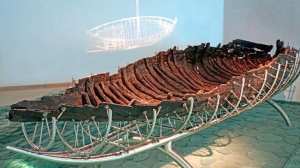
In 1986, during a severe drought in Israel, a remarkably well-preserved, 2,000-year-old, 27-foot-long fishing boat was discovered at the Sea of Galilee and rescued from the mud. There’s no proof this boat now on display at a museum in Israel belonged to any of the apostles, but because its wood has been carbon dated to the 1st century A.D. it is dubbed “The Jesus Boat.” If the boats in today’s gospel were like that example, then accounting for the weight of the men and fishing gear, the boats could hold an estimated 31,000 pounds of fish apiece. Even if the average fish they caught that day weighed, say, six pounds, this would be a catch of over 10,000 fish. (Notice the gospels do not say the fishermen cast their nets just once; they record that both boats were filled despite their nets tearing from wear.) Simon, Andrew, James, and John were stunned, but Jesus said, “Do not be afraid; from now on you will be catching men.” Upon returning to shore, they immediately left their boats to follow him. That day changed the lives of these future apostles. But no one ever asks, “What happened to all the fish?

Jesus calling the fishermen and that huge catch of fish reminds me of Elijah the Prophet calling the future prophet Elisha to follow him. Elijah finds Elisha plowing in a field behind twelve yoke of oxen. Upon being chosen, Elisha asks, “Please, let me kiss my father and mother goodbye and I will follow you.” Elijah pretty much replies, ‘Go ahead, I’m not stopping you.‘ So Elisha leaves, slaughters his oxen and boils their flesh using his plowing equipment for fuel. Then he gives the meat away to his relatives and neighbors and departs to follow Elijah.

If Simon, Andrew, James, and John “immediately” left their boats to follow Jesus (as Matthew’s Gospel says) then what did Mr. Zebedee and the hired men who were left behind do with 60,000 pounds of fish? The city of Capernaum reportedly had a population of about 1,500 back then and the nearby town of Chorazim, perhaps 500 to 1,000. So some of the fish could be sold at market. Some of the fish could be processed and preserved for later through drying and/or salting. But I imagine many of the fish were simply given away or sold for next to nothing. Like Elisha with his neighbors, Jesus calling of the fishermen brought a feast to their community. Answering your calling, embracing your God-given vocation, brings blessings for yourself and others.

For most Christians, God’s calling, their personal vocation, is to marriage. The bride and groom at the wedding feast of Cana were embracing their holy vocations and God abundantly blesses them. Jesus is invited to their wedding and he transforms the contents of six stone jars, roughly 150 gallons of water, into about 1,250 pounds worth of excellent wine, more than enough for their feast. The choice of the fishermen to become “fishers of men,” Elisha’s choice to become a prophet, and the Cana couple’s choice to become man and wife, each in answer to their callings, were marked by overwhelming feasts. These are signs to us about how doing God’s will by embracing our vocations brings joyful blessings for ourselves which overflow for others.

Preaching about vocations typically highlights priesthood and religious life because they are so important, but the vocation of marriage is also extremely important for the sanctification of those called to it and others. You are called to be a saint. If you are married, you are called to help your spouse, and any children you may have, to become saints as well. Your marriage, your family, is meant to sanctify one another and sanctify this world. So pray every single day. Pray for each other in your household. Pray as a couple and pray as a family. Help each other to be holy. Share conversations, books and films, and sacrificial acts with this goal in mind. Speak of your faith and what we believe, enjoy Catholic media which forms and inspires, offer penances and enable each other’s growth in holiness. I would love for all spouses to ask each other: “How can I help you be a saint?” Help each other to be holy and see what blessings flow.

Even if your children have educators elsewhere, you are their foremost teachers. Make your home a school for holiness. And bring your household, as God demands, to his house every weekend for Mass. Jesus calls us to follow and feast with him each week, and all-day Sunday is meant for joy. Make every Sunday’s rest and activities more enjoyable than any weekday, more special than any Saturday. Jesus wants to give you himself, along with a one-day vacation, a fun, full-day to enjoy each week.

Jesus says, “Let the children come to me.” Teach your children about vocations, facilitate their healthy discernment of Christ’s call, and never be an obstacle to God. A parent who resists their child pursuing a priestly or religious vocation by saying, “but I want grandchildren,” risks placing their own wishes ahead of God’s will. Imagine how much blessing might have been lost if James and John’s father or Elisha’s folks had tried convincing their sons not to go. Imagine if Elisha, James, or John had decided not to answer their callings.

Jesus says, “Do not be afraid.” No one will find a greater, fuller life than embracing their God-given vocation. A surgeon may save a thousand lives throughout a long career, and that is a wonderful thing, but all of those patients will eventually go on to die. The life’s work of a priest or religious sister or brother can save a thousand souls, bestowing eternal life in heaven. Saints and families of saints, are what our world needs and what we are all called to be. I challenge you to recognize and embrace your own God-given vocation. Answer Christ’s call, to follow him or to go deeper, and then behold his feast of blessings.

God Chooses People Like You

January 29, 2022

4th Sunday of Ordinary Time
By Fr. Chinnappan Pelavendran

“Isn’t this the son of a carpenter?” —Luke 4:22

God chooses and uses ordinary people to do extraordinary things. He doesn’t need our ability, but rather our availability. He uses ordinary people who have nothing of their own to offer except their faithfulness and willingness to say “Yes” to God. One important point to note is that God does not call anyone by accident. Instead, He carefully considered before calling us. He knew each one of us personally. He also knows what he wants us to do for him. He calls us by our own names, with a plan in His mind.

We see this in the First Reading, which speaks of the calling of Jeremiah to be a prophet who will communicate God’s Word to his people. It was a calling that went back to the time before he was born. “Before I formed you in the womb I knew you, before you were born I dedicated you, a prophet to the nations I appointed you.” All of us have actually been called in this way. But our reaction is often similar to Jeremiah’s: “‘Ah, Lord God!’ ‘I know not how to speak; I am too young.’” But the Lord responded, “Say not, ‘I am too young’. To whomever I send you, you shall go; whatever I command you, you shall speak…” Then the Lord extended his hand and touched his mouth, saying: “See, I place my words in your mouth.” An ordinary youth called by God to do His Mission.

Look at the Apostle Paul. Whose feast day we celebrated on January 25th. St. Paul was one of the most educated men of his day and yet God brought him down in Acts 9. God opened his eyes to the beauty and glory of Jesus. Once Paul knew Jesus, all of his education, gifts, and talents were directed towards the Gospel. The Lord uses those humbled by a vision of His greatness and glory to testify to the proud and religious. The Lord humbled the Apostle Paul and used him mightily to plant churches, preach the Gospel, write more than a dozen New Testament letters, and so much more. God used educated people for His glory but often humbled them because of their pride so they will rely on Him.

Peter was a fisherman by trade, along with his brother Andrew. He grew into a gifted preacher and bold leader. Jesus told Peter that he would deny Him three times, but Peter didn’t believe Him. Imagine Peter, the leader of the Apostles and a member of the inner circle of the Son of God, denied him three times. Peter felt devastation, shame, and guilt. He may have thought “I’m such a failure that God could never use me again,” but that isn’t true. God uses our failures, hardships and trials for His glory. He turns what was meant for bad to testify to His grace. You say that you are a failure and yet God says because of the finished work of Christ you are victorious. The Apostle Peter went on to be mightily used by God because He was broken. You may be broken right now but in due season God will build you up and use you for His glory. Don’t run from Him, run to Jesus. God uses ordinary people for His glory.

Jesus is a good manual worker from a small village. He is just another person in the town. But the rumors being spread about his actions in Capernaum and the words he has just spoken seem to indicate a special connection with God. On the one hand, his origins are well-known, but on the other hand his origin is completely unknown. Who is Jesus really? The ordinary carpenter, Jesus, is the Son of God who has become man in order to redeem us from our sins.

How could God use you? Look at your situation and your surroundings. Perhaps God has placed you in your school, your job, your family, or your neighborhood to do something special for the Lord Jesus Christ. God is calling you right now; all you have to do is say, “Yes, Lord!” Will you make yourself available to Him? Remember, God uses ordinary people to do extraordinary things for His glory!

Why They Rejected Christ

January 29, 2022

4th Sunday in Ordinary Time

When Jesus preached at Nazareth near the start of his public ministry, his own hometown neighbors rose up, filled with fury against him. They drove him out of their village intending to toss him head first off a cliff. Later, near the end of Jesus’ public ministry, one his own twelve apostles, after spending years in his close company, chose to betray Jesus to his enemies. And sometimes in our present day, lifelong Christians experience painful events and give up on their commitment to Christ. Why did Jesus’ neighbors in Nazareth reject him? Why did his apostle, Judas Iscariot, betray him? And why do Christians sometimes abandon him in hard times? All of these expected our Lord to do certain things for them but were disappointed. In each case, Jesus failed to do for them what they desired.

Part of the problem at Nazareth was that Jesus was too familiar to them. He grew up there as a little kid playing in their streets, he worked locally as a carpenter’s son, and he quietly attended their small-town synagogue for years. So when they heard him preaching they asked, “Where did this man get all this?” How could this guy be someone foretold of in the Scriptures? As Jesus acknowledges, “No prophet is accepted in his own native place.”

They wanted him to prove he was somebody special by working miracles before them. A sick doctor should be able to apply his talents for his own recovery and prove he is a real doctor; so the Nazoreans would say to Jesus, “Physician, cure yourself! Do here in your native place the things that we heard were done in Capernaum.” But God’s prophet does not owe them miracles. Jesus notes that neither Elijah nor Elisha, two of the Old Testament’s greatest prophets, worked miracles for Israel’s individual widows or lepers, respectively. St. Mark’s Gospel reports that Jesus did not perform many mighty deeds in Nazareth, apart from curing a few sick people by laying his hands on them. Their lack of faith and lack of openness seems to have limited the gifts of God they could receive. So Jesus failed to match their expectations, and they took great offense at him.

Why did Judas Iscariot betray our Lord for thirty silver pieces? St. John tells us in his gospel that Judas “was a thief and held [Jesus and the apostles’] moneybag and used to steal the contributions.” Those thirty coins represented thirty days’ wages back then, something akin to $3,000 today. Was Judas so greedy for that relatively-modest amount of money that he couldn’t resist? When Judas saw that Jesus had been condemned to death he felt deep regret at what he had done. He tried to return the money to the high priest and elders saying, “I have sinned in betraying innocent blood.” He wishes to undo his deed, but the Jewish leaders brush him off: “What is that to us? Look to it yourself.” Judas goes away in despair and foolishly kills himself. If Judas did not wish for Jesus to die, then why did he sell him out? It seems that this apostle was disappointed by Jesus’ public ministry.

Most Jews expected the Messiah to come as a warrior-king like David. They imagined the Christ would drive out their pagan overlords, conquer Jerusalem, and lead an earthly kingdom of vast power, prestige, privilege, and wealth. But Jesus was not pursuing that popular dream. He devoted his efforts instead to teaching and healing the lowly and poor. When, after feeding thousands with five loaves and two fish, Jesus perceived “they were going to come and carry him off to make him king,” he firmly sent that crowd away and withdrew up the mountain alone. Judas had run out of patience waiting for Jesus’ Kingdom to come. Maybe Judas had given up on Jesus, and took that money to start a new life without him. Or maybe he hoped that Jesus—with his back to the wall—would finally wield his mighty, miraculous power to claim his royal throne, with Judas at his side. Either way, Judas’ disappointed expectations led this disciple to betray Jesus Christ and lose everything.

In our own day, some Christians leave the Lord Jesus after following him for decades. Oftentimes, this happens after a painful tragedy: a terrible diagnosis, a failed marriage, a Church scandal, a child’s tragic death. It is not the Christian life they had envisioned. They likely asked God for a particular miracle but it was not given. I know a man from a previous parish who attends Mass with his wife every Sunday, but he stopped receiving Holy Communion many years ago after their teenage daughter died in a car crash. I know of another long-time Catholic who reportedly became embittered at losing his good health and refused a Catholic funeral. How should a follower of Jesus Christ respond to life’s profound and painful trials?

On the first Good Friday, when Jesus died on the Cross, the Gospel of St. Luke tells us “all his acquaintances stood at a distance, including the women who had followed him from Galilee and saw these events.” St. John’s Gospel highlights that the Blessed Virgin Mary was there at the Cross of Christ along with his beloved disciple. What did they feel like amid that horror? What miracles did they plead for that day? Their prayers to heaven seemed to go unheard. The next day, in shock and grieving on Holy Saturday, they may have questioned in their hearts, “Where was God? How could he let this happen? Does he not care? Where is his faithfulness to his faithful ones? How could this be part of a loving plan?” But the next day, on Easter Sunday, they witnessed the joyful resurrection Jesus had promised, and God’s loving, mysterious purposes became clearer.

Jesus told his disciples and says to us, “Whoever wishes to come after me must deny himself, take up his cross, and follow me.” Jesus does not promise us a life exactly as we would plan it for ourselves. Not every prayer for a miracle will be granted exactly as we would imagine. But remember, the Kingdom of Jesus Christ will come for his faithful ones.

Called to Seek & Save

January 22, 2022

3rd Sunday of Ordinary Time
By Fr. Chinnappan Pelavendran

“The Spirit of the Lord is upon me,
  because he has anointed me
  to bring glad tidings to the poor
  He has sent me to proclaim liberty to captives
  and recovery of sight to the blind,
  to let the oppressed go free
  and to proclaim a year acceptable to the Lord.”

—Luke 4:18-19

In the beginning, God created everything by His words. When God created the first human being, He created him out of the dust in His own image and likeness. God’s creation was perfect, yet Adam and Eve chose to disobey God. Instead of following his instructions, Adam and Eve ate from the Tree of the Knowledge of Good and Evil, bringing darkness and death into the world. But God did not abandon them. He gave them hope by sending them a savior who would be born from the seed of a woman and would crush the head of the serpent who tricked them. This Savior would save His people from sin and death. From that moment on, God’s mission started.

In our time we have a wonderful saint, Mother Teresa, who continued God’s mission to the poor, the orphan, the refugees and all those who are considered least in the society. Mother Teresa was born in 1910 in Yugoslavia in ordinary family. At the age of twelve she had a call from Jesus to serve the poor. When she was eighteen years old, she left her home to join a community of Irish nuns. One of Mother Teresa’s first assignments was to teach in the school, Later she discovered that God was calling her to do more. She received a second calling, “a call within a call.” She left the convent life and started to work with the poor in the streets. She started this mission with 5 rupees, which is Indian money worth less than a penny. People witness her nuns ministering to the suffering Jesus whom they encountered in the poor, especially those who were dying in the streets. She quickly attracted both financial support and volunteers. This is the way God continues His mission even today.

Today’s first reading is a beautiful scene of Nehemiah, who was a layman, not a priest, not a king. During the Babylonian exile, Nehemiah served under the Persian king as a cup bearer, a position of great importance and influence with the king’s court. Nehemiah was a man who was dependent on God, always praying, always seeking to be sensitive to God’s will in his life. One day he had a chance to speak to the king about helping the people of Israel to rebuild the wall of Jerusalem. Under Nehemiah’s leadership, the Jews came together to accomplish the goal of reconstructing the walls of Jerusalem, Judea’s capital city. Nehemiah and Ezra led the spiritual renewal of the people and directed the political and religious restoration of the Jews in their homeland after the Babylonian captivity. God shows us how He can take an ordinary layman like Nehemiah to continue His extraordinary mission to His people.

The mission begins in the heart of God. God sent his only Son to this world to save His people. Jesus’ mission was to save that which was lost. Jesus was convinced that he was able to fulfill his mission because God had anointed him with the Holy Spirit. When Jesus entered Zacchaeus’ house He said, “The Son of Man came to seek and to save the lost.” Jesus had just been criticized for going to the house of a sinner. Jesus responded by affirming His mission to save the lost; sinners whose reputation for sinfulness was not a reason avoid then, rather, it was a reason to seek them out. In Matthew chapter nine, when Jesus went to Matthew’s home for dinner, while he was at table, once again Jesus was criticized for “eating with the tax collector and sinners,” and once again Jesus responded by stating of His mission “I have not come to call the righteous but sinners.” Jesus’ mission was to save His people. Jesus did not passively wait for the lost to come to Him, but He went after them. He explained His mission in the Parable of the Lost Sheep (in Luke chapter fifteen). In this parable, Jesus talks about a shepherd who loses his sheep and leaves the rest of his herd to find that lost sheep. Jesus concludes this parable saying “there will be more joy in heaven over one sinner who repents than over ninety-nine righteous’ persons who need no repentance.”

The Church by its nature is missionary because her founder, Jesus Christ, was the first missionary. God the Father sent God the Son Incarnate in Jesus into the world with a message of God’s love and salvation. Thus, the evangelizing mission of the Church is essentially the announcement of God’s love, mercy, forgiveness, and salvation, as these are revealed to mankind through the life, death, and Resurrection of Jesus Christ our Lord. How should we evangelize? By exemplary and transparent Christian life. The most powerful means of preaching Christ is by living a truly Christian life — a life filled with love, mercy, kindness, compassion, and a spirit of forgiveness and service.

On Having Christian Joy

January 22, 2022

3rd Sunday in Ordinary Time

A subtle theme threads throughout this Sunday’s readings: the theme of joy. When the Jews return to Jerusalem from the Babylonian Exile their leaders read the Old Covenant to them. And the crowd weeps as the scrolls are read because they realize they have not been keeping God’s laws. But Nehemiah the governor, Ezra the priest, and the many Levites say: “Do not be sad and do not weep—for today is holy to our Lord. Do not be saddened this day, for rejoicing in the Lord must be your strength!” They tell the assembly to celebrate, to feast on rich food and sweet drinks. God’s covenant is cause to be joyful, for the Lord is offering not only his teaching but also his friendship. As a passage we hear today from Psalm 19 says: “The precepts of the Lord are right, rejoicing the heart.” God’s words are true and reliable and proof that he cares about us. And that’s always reason for us to rejoice.

In today’s Gospel, Jesus comes to his hometown synagogue and is handed a scroll of Isaiah the prophet. The words Jesus reads to the people of Nazareth are “fulfilled in their hearing” because they describe the Christ and his mission: “The Spirit of the Lord is upon me, because he has anointed me to bring glad tidings to the poor.” Jesus Christ tells us an important part of his mission is to bring us joy. He does this together with the Holy Spirit. Ezra, Nehemiah, and the Levites instructed the Jewish people to feast, and that was a good thing to do, but Christian joy goes beyond passing pleasure. Like St. Paul teaches the Christians in Rome: “the Kingdom of God (is more than mere) eating and drinking, but righteousness and peace and joy in the Holy Spirit.

What is Christian joy and how can it be ours? First, realize that joy is a delight which is different from happiness. Happiness depends upon what happens: good things please us and bad things pain us, but joy endures despite changing happenstance. Unlike happiness – which is fickle – joy is grounded in unchanging things providing lasting hope. If our treasure is confined to this earth, thieves can steal it, moths can eat it, and decay can destroy it, plunging our hearts into despairing darkness. But if our great treasure is in heaven, a treasure that cannot be destroyed or stolen (namely, our Lord, his promises and rewards) then our hearts can persevere in hopeful light. “For where your treasure is, your heart will be there also.

Now I am not saying clinical depression is impossible for a Christian. We would not tell a diabetic to “just perk up and make more insulin.” Likewise, clinical depression is not merely a matter of the will, and someone burdened by it should pursue medical help. As the Book of Sirach teaches, “from God the doctor has wisdom.” Seeking out a doctor’s help is an ordinary means by which God heals. If visiting a doctor meant a Christian lacked faith in God’s healing power, then visiting your grocer would mean a lack of faith in God’s power to give daily bread. We should not refuse the good gifts God makes so easily available to us.

Possessing joy does not mean that Christians will never suffer. St. Paul teaches in today’s second reading that we Christians are one Body of Christ in one Holy Spirit, and “if one part suffers, all the parts suffer with it, (and) if one part is honored, all the parts share its joy.” Joy can be present at the same time as suffering. As St. Paul later wrote to the Corinthians, “I am overflowing with joy in all our affliction.” Jesus – even while suffering on his Cross – had joy, and we can also possess such joy.

How can this joy be ours? First recognize that joy comes from God, then pray asking for this gift, and then be open to living joyfully. God is the cause and reason for our Joy. St. Paul mentions to the Galatians that joy is a fruit of the Holy Spirit. And Jesus Christ, his promises and rewards, are our joyful treasure that cannot be taken away. Jesus says at the Last Supper: “Ask (in my name) and you will receive, so that your joy may be complete.” So be sure to pray and ask for joy. And be open to receiving this holy gift.

Who would refuse the gift of joy? Maybe someone who uses discontent as a comfortable cop-out. If I have no wealth, no one can ask me to share. If my cup is empty, no one can expect me to pour myself out. The joyful cup, however, will richly runneth over. Or perhaps the joy-resistant person has been wounded by past disappointments and hesitates to hope again. But consider: if you can’t trust God, who can you trust? Besides, without God you have nothing, so what do you have to lose from accepting joy?

Jesus says: “I have told you this so that my joy may be in you and your joy may be complete.” Today, may this scripture passage be fulfilled in your hearing.

The Mother of Jesus was There

January 16, 2022

2nd Sunday in Ordinary Time
By Fr. Chinnappan Peleabendran

My dear brothers and sisters in Christ Jesus, today we celebrate the second Sunday of ordinary time. After the Solemnities of Christmas, Epiphany, and Baptism of the Lord, we enter into an ordinary time. In the beginning of Ordinary Time, I invite you to think about Mother Mary’s role in the life of Jesus.

Every child’s vocation is the parents’ constant prayer, not only after the birth of a son or a daughter but as prophet Jeremiah says, “Before I formed you in the womb I knew you; before you were born I dedicated you.” I used to see my father attend Mass every day in my parish. As a family, we prayed the Rosary every evening. My mother used to say three Rosaries each day even though she was illiterate. One day, I asked her, “Do you know the Mysteries of the Rosary?” She replied to me, “No.” I asked her then, what are you saying? She said, “Just an Our Father and Hail Mary.” Her simple prayers helped me to become a priest.

Mothers are timeless teachers in the classroom of life and, alongside fathers, the most influential educators. Mothers teach us to believe in God. Mothers teach us the value of God’s word through their lives. Mothers are one of the first indications of God in our lives.

Moses was one of the major figures in the Old Testament. Although we are not told much about his mother, she played a very important role in his life. The Jews had been in Egypt for 400 years under the rule of the pharaohs. One pharaoh then ordered all male Hebrew babies to be killed. When Moses’ mother gave birth to a healthy son, instead of killing him she took a basket and coated the bottom with tar to make it waterproof. She put her baby in it and set him among the reeds on the bank of the Nile River.

Just imagine the sorrow and agony of that mother, how much she cried when she returned home. Her prayer was answered by God. Pharaoh’ daughter came to bathe in the river and one of her maidservants saw the basket and brought it to her. She adopted the baby as her own (Moses’ mother was even paid to nurse him) and he grew up in the palace. Years later, after many hardships, Moses was used by God as His chosen instrument to free the Hebrew people from slavery and lead them to the edge of the Promised Land. Moses’ mother showed great trust in God’s faithfulness. Her prayers helped Moses to grow in faith and trust and to liberate and lead their people from bondage to the Promised Land.

When we look at today’s Gospel, on the third day, a wedding took place at Cana in Galilee. Jesus’ mother was there Jesus and his disciples had also been invited to the wedding. When the wine was gone, Jesus’ mother said to him, “They have no more wine.” “Dear woman, why do you involve me?” Jesus replied. “My time has not yet come.” His mother said to the servants, “Do whatever he tells you.” Jesus is withdrawing Himself from her authority. Jesus knew what His mission was and whom it was that was leading and guiding Him. The miracle itself served to draw others to follow Jesus.

Mary had the gift of prayer or intercession. She knew that her Son would not refuse her anything good. So, she immediately interceded on behalf of her people. This was Jesus’ first miracle. When Mary and Joseph presented their newborn Son, Jesus, to the priest in the Temple, they consecrated Him to God. Mary acknowledged that God had a plan for her Son and agreed to do everything in her power to cooperate with God’s purpose for him. Likewise, you Christian parents consecrate your children to God in the Sacrament of Baptism and promise to do everything possible to help your children to do what God wants in their lives.

Herod tried to kill Jesus, so Mary and Joseph fled to Egypt to protect their Son. Christian mothers keep your children away from evil forces that could harm them. Mary and Joseph took their Son, Jesus, to the synagogue in Nazareth each week in observance of the Sabbath and took him to the Temple in Jerusalem each year for Passover. Mothers, follow Mary’s example by going to Mass each week and taking your children with you because it is so important to pray with others. When Jesus was crucified, Mary stood at the foot of the Cross and suffered with him. She never abandons her child, particularly when things are at their worst. This sort of enduring love is exemplary for Christian mothers. Children get into trouble; sometimes for the right reasons, sometimes not. Mothers, like Mary, stand with your children throughout life, especially when things go bad.

Yes, my dear parents, be with your children all the time like Mother Mary, so that your children will grow like Jesus: doing good work in society, being faithful to God, and being faithful to you.

Three Persons to Know

January 9, 2022

The Baptism of the Lord

We are born into a mysterious universe. We enter this world, which we did not design or create, experiencing instincts and desires we do not understand. In the beginning it is not even obvious that the milk we nurse on has a source outside of us. But soon we realize that mother is an other, something separate from ourselves. Through our senses — by touching, seeing, hearing, tasting, and smelling — we realize that material things exist outside of us. Yet it takes still more lived experience for us to realize that these objects tend to have permanence, that they don’t stop existing when we cease seeing them. Until then, Peek-a-boo is an amazing magic trick. We go on to grasp that people are more than things, that they have thoughts and feelings of their own. As babies we begin as egocentric creatures but we grow to learn that we are meant to be in relationship with others. Just as humans grow in our understanding of the world and other people, humans have grown in our understanding of God.

Since Adam and Eve, the overwhelming majority of people throughout history have been theists: believers in realities beyond the material and worshippers of deity to whom praise and thanks is owed. But among the many peoples of the world, the one, true God chose a particular man (Abraham) and a particular people (Israel) to become personally known by anew. God showed them that divinity is not to be found in many gods; some good, some bad, all imperfect, and feuding over power. The one, true God is complete and perfect in being, and goodness, and knowledge, and power. When asked for a name by Moses at the Burning Bush to identify which god he is, the Lord answers, “I Am Who Am.”

In the Book of Deuteronomy, God inspires Moses to proclaim to his people: “Hear, O Israel! The Lord is our God, the Lord is one. Therefore, you shall love the Lord, your God, with your whole heart, and with your whole being, and with your whole strength.” This teaching helped Israel resist the temptation to worship many false gods like the pagans, but this famous passage contains an interesting feature. When the text says “the Lord is one,” the word for “one” is not the Hebrew word for solitary oneness but the Hebrew word for unified oneness. God is unified in every perfection, so you should love God with the fullness of these three aspects of yourself: “with your whole heart, and with your whole being, and with your whole strength.” Looking back, we now can see that God was foreshadowing revelation still to come — a fuller understanding of God not previously known which would be revealed to us through Jesus Christ.

Jesus declares to Jews at the Temple, “Amen, amen, I say to you, before Abraham came to be, I Am.” Jesus is invoking the divine name in reference to himself. The Jews realize this and pick up stones to throw at him for speaking blasphemy, but Jesus hides from them and escapes that day. On another occasion, Jesus proclaims, “The Father and I are one,” and the scandalized Jews again pick up rocks to stone him. After his Resurrection, when Jesus appears to Doubting Thomas, Thomas says to him, “My Lord and my God!” Thomas worships Jesus as God and Jesus does not correct him. If we were limited to these scripture passages alone, we might conclude that Jesus and the Father are identical; that God is one eternal person who reveals himself by wearing different masks in time. (This mistaken belief that God is just one person who expresses himself in different modes is a heresy called Modalism.) Thankfully, Jesus does show us more.

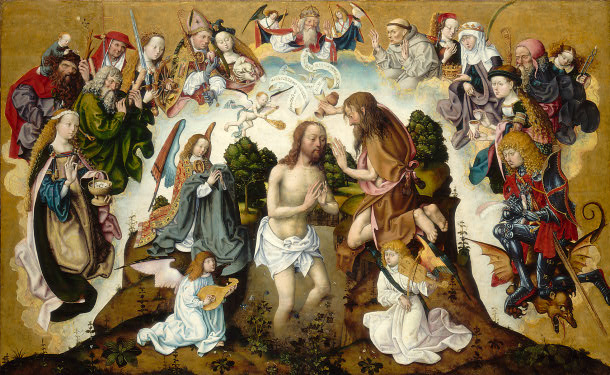
At the Jordan River with John the Baptist, “after all the people had been baptized and Jesus also had been baptized and was praying, heaven was opened and the Holy Spirit descended upon him in bodily form like a dove. And a voice came from heaven, ‘You are my beloved Son; with you I am well pleased.’” It is not the Holy Spirit Dove who says, “You are my beloved Son.” God the Father does not say, “I have been washed this day.” The Father in heaven declares to Jesus Christ on earth, “You are my beloved Son; with you I am well pleased.” At Jesus’ baptism, the Father, Son, and Holy Spirit are seen as three, distinct, divine persons who know and act and love. The reality of God is revealed to be more mysterious and interesting than we would have first imagined.

What is a personal application for this knowledge? When I was a kid, I used to pray to God as if God were a hybrid-person of all three divine Persons smeared together. But there is no God apart from the three Persons, there is no God in addition to the three Persons, and there is no God who is more than the three Persons. When you pray, consider: “Who am I praying to? The Father, the Son, or the Holy Spirit?” At Mass, the majority of the liturgical prayers are addressed to the Father and a few are said to the Son. Be intentional about to whom you are praying to help deepen your personal relationship with each.

As we grow spiritually we learn that we are meant to be in friendship with each person of the Trinity. You probably feel most familiar with Jesus, but what are God the Father and God the Holy Spirit like? Jesus tells us, “Whoever has seen me has seen the Father.” The Father is like his Son. All three divine persons possess the same divine nature: eternal, all-powerful, all-knowing, all-good, and all-loving. The Trinity eternally knows and loves one another, and it is their will for us to know and love each one of them personally and forever.

He is Baptized for Us

January 8, 2022

Baptism of the Lord
By Fr. Chinnappan Pelavendran

The Baptism of the Lord is a great event in the history of the Church because it is the first public manifestation of our Lord; the official revelation of Jesus as the Son of God to the world in the River Jordan by God the Father. John the Baptist was preaching and preparing in the wilderness and was baptizing all those who responded to his call of repentance. The purpose of his ministry of preaching and baptizing was to direct people towards Jesus who would baptize them with the Holy Spirit. Scripture tells us that Jesus came from Galilee to the River Jordan to be baptized by John the Baptist. Baptism is a call for the purification of sins, but Jesus is the Holy one of Trinity He does not need any purification. Though He is Son of God, He subjects himself to be baptized by another man to teach us the great virtue of humility.

The first reading taken from the Book of Isaiah tells us that the promised Messiah would be God’s chosen Servant in whom the divine soul would delight. The Messiah would have the Spirit of God upon Him bringing forth justice to all the nations, not just God’s chosen people. As the Servant of God, Jesus’ mission is modest and gentle in nature. He operates by His example and works. He brings a message of hope and consolation to all God’s people. Christ, the Anointed One of God is with us to bring us healing. Most importantly, He is here to restore our peace. Isaiah says in this way: “Console my people, console them…here is the Lord coming with power, his arm subduing all things to him, the prize of his victory is here with him…” This is exactly the ministry for which Christ was anointed and he empowered the human race for the entire salvation of God’s plan.

In the second reading, St. Paul invites us to recall our own Baptism — the gift of the Father, Son and the Spirit. He reminds us that the Lord has come to give us salvation and he gives us through the sacrament of baptism: “God saved us by the cleansing water of baptism and by renewing us with the Holy Spirit which he poured over us through Jesus Christ our Savior.” Through His own baptism, Christ sanctified and opened the fountain of baptism for us. He also initiated our redemptive process.

Today, the baptism of Jesus gives us our own identity. It reminds us who we are and to whom we are sent. By Baptism we become sons and daughters of God, brothers and sisters of Jesus, members of his Church, heirs of Heaven, and temples of the Holy Spirit. We are called to live as the children of God in thought, word and action. We are expected to lead a holy and transparent Christian life. The human body is the temple of the Holy Spirit and we belong to God who created us in his own image and likeness. Let us therefore grow and live in intimacy with God by personal and family prayers, by meditatively reading of the Word of God and fervently participating in the Holy Mass. Let us ask God to shower on us the divine graces to live out our baptismal life in a worthy manner. May the name of Jesus be glorified!

How we Know the Magi Arrived Later (and What That Means for Us)

January 2, 2022

Feast of the Epiphany

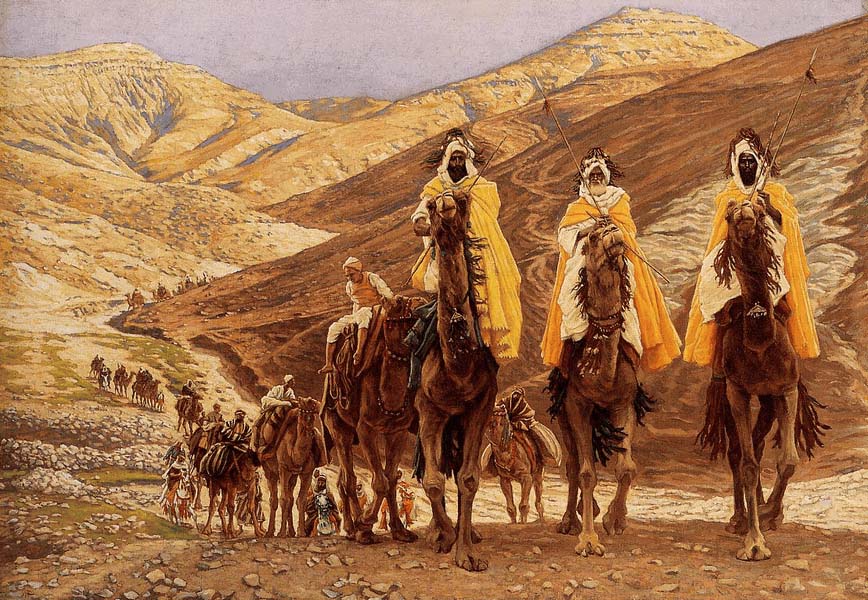
Did you notice that our three wise men statues arrived in our manger scene only on this Sunday of the Epiphany? That’s because the Magi were not in Bethlehem on Christmas Day. In many movies and imaginations, the visit of the shepherds and the arrival of the Magi get smushed together as events of the same night. St. Luke’s Gospel recalls Jesus being wrapped and laid in a feedbox and speaks about the shepherds, but St. Matthew’s Gospel tells us the Magis’ tale with several signs that the Magi came quite a bit later.

For starters, the Magi arrive in Jerusalem after their long journey from the east expecting that the new king has already been born. “Where is the newborn king of the Jews?” they ask. “We saw his star at its rising and have come to do him homage.” Once Herod had “ascertained from them the time of the star’s appearance” and had learned from the Jewish chief priests and scribes where the Christ was to be born, the wicked king sent the Magi to Bethlehem.

St. Matthew says “on entering the house they saw the child with Mary his mother.” There’s no mention of a cave or stable; it appears that the Holy Family has moved into better lodgings since Jesus’ birth. The Magi “prostrated themselves and did him homage. Then they opened their treasures and offered him gifts of gold, frankincense, and myrrh.” This happy encounter occurs at least forty days after Christmas. We know this because of a detail from the Gospel of Luke.

According to the Law of the Old Covenant, a Jewish woman who had given birth was required to wait a certain number of days and then provide sacrifices at the temple. For a baby boy, the mother had to wait at least forty days, then she was to bring the priest two animals for sacrifice; namely, a one-year-old lamb and either a turtledove or a pigeon. However, if she could not afford the lamb, God’s Law allowed her to just offer either two turtledoves or two pigeons instead.

St. Luke indicates that for Jesus’ Presentation at the Temple, after the completion of those forty days, Mary and Joseph were poor enough to take that second option, offering “a pair of turtledoves or two young pigeons in accordance with the dictate in the law of the Lord.” If the Magi had already visited, the Holy Family would have had some gold for buying a lamb. But Mary and Joseph did not have that gift because the Magi had not yet come. In fact, what King Herod goes on to do suggests it could have been more than a year later before the Magi arrived.

When Herod realizes the Magi have evaded him (for they were warned in a dream not to return to Herod) the paranoid and ruthless king does a horrifically evil thing. He orders that all the baby boys in Bethlehem – not just newborns but all those two years old and younger – be killed. This suggests King Herod thought the baby which the Magi sought could already be up to one or two years old.

The Magi arrive at our manger scene today on Epiphany Sunday because the Gospels show they celebrated the birth of Jesus Christ together with his Holy Family a time after Christmas Day. It’s interesting to learn about the Gospels and the life and times of Jesus, but collecting bits of biblical or historical trivia is not the point. What significance does the Magis’ later arrival have for our lives as Christians? One thing it means for Christ’s Church is that Christmas is not just a one day event but a whole season to celebrate.

What happens in our world on December 26th or 27th? Lots of people take down their decorations and throw out their Christmas trees. The Christmas songs played since before Thanksgiving disappear from the radio. Mentions of Christmas vanish from mass media because the opportunity to sell things to people has passed. Our secular culture uses Advent as its Christmas season, filling it with stressful hustling and hassles like Joseph and Mary experienced preceding Jesus’ birth. That birth is allowed one day of restful, spiritual, joyful peace and then the event is over. But for Catholics and Christians of times past, Christmas Eve is not the beginning of the end of Christmas, but the start of the Christmas Season. We are in that season now, decked in the liturgical color of white through the third Sunday after December 25th, the Feast of the Baptism of the Lord, which is next Sunday.

Beware of taking too many cues from the world of Herod, whose interests in Christmas are not pure. Let us learn instead from the Magi about celebrating this season. They come after Christmas day but are still “overjoyed” to celebrate his birth. They come to him, honor him, savor their time with him. They rest with him at Bethlehem. It appears the Magi did not come and leave in just one day, but were able to be warned in a dream not to return to Herod because they chose to rest with Christ and his Holy Family.

Living differently for Christ bears unexpected blessings and benefits. For instance, my good friend Katie told me yesterday that she gets a Christmas tree and puts it up on Christmas Eve. Doing it this way not only helps keep the whole season special but she gets a tree each year for free. (By that point, Christmas tree sellers are just happy to have her take one away.) Imagine no longer having to fit everything that is Christmas into the month of December. Like the Magi, you can plan trips and gatherings for after Christmas Day.

There’s still one week of Christmas left this year. Make a plan to keep it special. Play and sing your Christmas songs. Keep on feasting. Create some fun. And think of how next year you and yours can celebrate throughout the entire Christmas season. Like the Magi before you, let how you celebrate Christmas be guided by heavenly light.