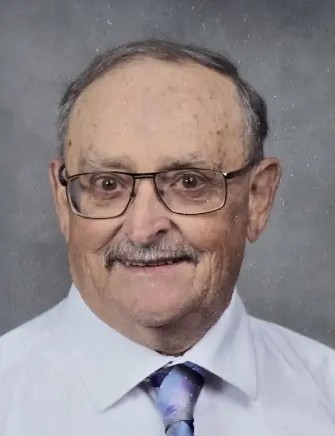
Life Eternal — Funeral Homily for Ronald “Ron” Woolever, 75

August 6, 2025

By Fr. Victor Feltes

We are courageous, and we would rather leave the body and go home to the Lord.” That is what St. Paul writes about himself and the Christians at Corinth in our second reading. But is this true for us today? Would we rather leave the body and go home to the Lord?

Imagine if you could have endless more years of this life on earth. Would you wish for that? Pondering such a wish you would be wise to reflect upon the burdens of bad health. The coming of such crosses in the later years of life makes many people more open to the next life. Ron endured poor health but he is freed from that burden now.

But suppose you could live an endless life on earth free from all illness and pain; the next thing you might consider is the prospect of outliving everybody you know now, as well as everyone you would ever know. Even with our well-founded hope for Heaven, where all friends of God will be reunited, the temporary separation between us and our dearly departed causes sadness in us who remain behind. It is okay to mourn at Ron’s passing, though we do ‘not grieve like those who have no hope,’ for we have hope in him who said “Do not let your hearts be troubled. You have faith in God; have faith also in me.”

But imagine if each person on earth were granted pain-free immortality; the next thing to consider is what life in that world would be like. After Adam and Eve sinned at the tree they were deprived of the fruit of another—the Tree of Life—lest they eat of it and live forever in their unhappy fallen state. Even if scientists were to develop a treatment to eradicate all pain and all death, moral sickness would remain untreated in many human souls. Endless life without Christian conversion would create a hell of moral evils on earth. Ron’s love for Jesus and our Catholic faith led to his deep devotion to the Holy Eucharist and St. Paul’s Parish. He hungered and thirsted for holiness, and our holy religion helped him to go deeper, change, and grow with God in his grace.

Now suppose if everyone on earth were forever freed from pain and death and sin, to live peacefully together on earth forever—what would life in that world be like? Ron delighted in many things in our world. Beyond family and friends, there were monster trucks and parade floats, old cars, new movies, and countless good things more. But after living in our world a few decades, which is far less time than millennia, we can think to ourselves, “These things are nice but is this really all there is?” Every heart contains a God-shaped hole which can only be fully satisfied by the infinite beauty, goodness, and love of the Holy Trinity. Understanding this changes how we see our lives in this world (which we must not cling to) and our future deaths (which we must not grasp at) until the Lord finally calls us home to be with him. Jesus tells his disciples, “I am going to prepare a place for you… [and] take you to myself, so that where I am you also may be.”

Therefore,” St. Paul writes, “we aspire to please him, whether we are at home or away. For we must all appear before the judgment seat of Christ, so that each may receive recompense, according to what he did in the body, whether good or evil.” Pray for Ron’s soul, that he may now enjoy the endless bliss of Heaven. And let Jesus Christ be the good and loving Lord of your life so that you may enter eternal life, for ‘no one comes to the Father except through him.’

Can One Man Save A City?

July 27, 2025

17th Sunday in Ordinary Time
By Fr. Victor Feltes

This morning, I believe I should preach to you about the City of Sodom and the City of God, about the importance of Christ and the importance of Confession. In today’s first reading, Abraham intercedes with the Lord concerning the possible destruction of Sodom. Abraham asks: ‘Will you sweep away the innocent with the guilty? Suppose there were fifty innocent people in the city; would you wipe out the place, rather than spare it for the sake of the fifty innocent people within it? What if there are five less than fifty innocent people? Will you destroy the whole city because of those five? What if only thirty are found there? What if there are no more than twenty? What if there are at least ten there?’ The Lord replies that if there are fifty, or forty-five, or thirty, or twenty, or even ten innocent people in the city of Sodom, for their sake “I will not destroy it.” But the city of Sodom was destroyed, and God does not lie, so we know that there was not ten innocent people in that city when it was destroyed. Abraham stopped at ten, but suppose if he had pressed on further? Imagine if Abraham had asked the Lord, ‘What if one innocent person is found there? Will you spare the city?’ Could one righteous man have saved the city?

In the fifth century A.D., St. Augustine wrote of two cities: the City of Man and the City of God. These cities exist side by side extending throughout the earth with every human person belonging to one city or the other. The City of Man embraces sin, with pride, ambition, greed, lust, hated and immorality reigning. But the City of God is led by the Lord, with Christian love and virtues lived in an alliance with Jesus Christ. To which city do we belong?

St. Paul told the Christians in Ephesus, “You are fellow citizens with the holy ones and members of the household of God.” This citizenship was bestowed to us through baptism, as St. Paul teaches in our second reading: “You were buried with [Christ] in baptism, in which you were also raised with him…. And even when you were dead in transgressions… he brought you to life along with him, having forgiven us all our transgressions….” In Jesus Christ, an innocent man is found among us at last. The Son of God became one of us so that on his account our city may be spared. Yet to benefit from his righteousness, we must continue living close to him.

Baptism forgave our past sins, but Jesus teaches us to seek that our new sins be forgiven. He told his disciples, “When you pray, say… Give us each day our daily bread and forgive us our sins…” Realize that all wrongdoing is sin but not all sin is mortal (or spiritually fatal) and know that forgiveness can require more than just a prayer. As St. John writes in his First Epistle: “If anyone sees his brother sinning, if the sin is not deadly, he should pray to God and he will give him life. This is only for those whose sin is not deadly. There is such a thing as deadly sin, about which I do not say that you should pray. All wrongdoing is sin, but there is sin that is not deadly.” If you have sinned, you should pray to God for mercy and grace. But if you have sinned gravely, you should also seek out Confession. This is a sacrament Jesus Christ has given us for the forgiveness of grave sins after baptism.

Your priests care deeply about this sacrament and we are at your service, at both announced times and upon request. Considering how many people are in our parishes, it concerns me that we are not busier with confessions than we are. You bathe every day. You probably take out garbage every week. The practice of monthly confession, even absent grave sins, is good spiritual hygiene for your soul and helps you live closer to Christ. If you wander away from the City of God into the City of Man, come to Confession for a rapid to return home. Please allow our Lord to show you his mercy.

Catholic Diversity In Unity

July 3, 2025

Solemnity of Saints Peter & Paul
By Fr. Victor Feltes

Today, I wish to speak to you about Saints Peter and Paul, vocations, the Catholic Church and the Churches in her, and two aspects of the Holy Mass. This homily will be a bit longer than usual, but each of its parts are interesting. Saints Peter and Paul shared many similarities but manifested in different ways:

🔸 Both were personally called by Christ to become apostles; Peter quite early during Jesus’ public ministry, but Paul rather late, after Jesus’ Ascension.

🔸 Both beheld Jesus in his transfigured glory; making his friend Peter feel ecstatic, but making his persecutor Paul go temporarily blind.

🔸 Both preached the Gospel; Peter primarily to the Jews, but Paul particularly to the Gentiles.

🔸 Both taught the Faith; Paul the Pharisee was highly-educated, but Peter the uneducated fisherman was not.

🔸 Both experienced weakness; Peter in conquering his passions, but Paul by enduring “a thorn in the flesh.”

🔸 Both were martyred by the Roman Empire in Rome; Peter was crucified upside-down, but Paul the Roman citizen was beheaded.

That Saints Peter and Paul whom we celebrate this Sunday shared one Faith, one Lord, and one calling, and yet manifested these differently in their faithful lives. We also see this in the Catholic Church today. Peter and Paul were called to be apostles. Today, some are called to be bishops, priests, or deacons. Others are called to be consecrated male or female religious. Many more are called to the vocation of holy marriage. Others live out their baptismal mission and call as single persons or consecrated virgins. Which of these ways is the greatest way to live a Christian life? The greatest, most glorious, most fruitful path for you is the one Christ has called or is calling you to. Your life may look differently than others’, even amongst people living out the same vocation, but you can still be living a faithful, fruitful Christian life.

We belong to Christ’s Catholic Church. The word “Catholic” comes from Greek, meaning “universal, worldwide, (or) all-inclusive.” The Catholic Church, established by God for all people and places in this present age, unites humanity in our diversity, but even within our unity we see legitimate variety. Did you know that the one Catholic Church contains 24 Churches with apostolic roots and varying liturgical traditions practiced in full communion with the pope? The largest of these Catholic Churches is the Roman Catholic Church, to which we belong along with more than 98% of the world’s 1.3 billion Catholics. About 18 million other Catholics are in Churches in full communion with Rome; the three largest being the Ukrainian Greek Catholic Church (mainly in Western Ukraine), the Syro-Malabar Catholic Church (mainly in India), and the Maronite Church (mainly in Lebanon). Our one Faith differently celebrated. (Other Churches called the Orthodox Churches have nearly 300 million members put together, with valid priests and bishops and all seven sacraments like us, yet they are not in communion with the pope. Pray for our reunion. The gap between us is less than any Protestant group.) There is even legitimate variation within the Holy Mass of our Roman Catholic Church. I wish to highlight two examples: one in how one receives the Eucharist and another in how the Eucharist is celebrated.

The early Church Fathers mention the Eucharist being placed upon communicants’ hands. Other Communion customs also existed but Communion in the hand was explicitly described. For instance, St. Cyril in Jerusalem and St. Theodore in Turkey instructed the faithful to lay one hand over the other to create a throne (for both saints declare one is about to receive a King) cupping one’s palm to receive “The Body of Christ” and answering “Amen.” St. John Chrysostom observes how a communicant’s hands “hold [the Eucharistic Sacrifice] but for a time.” He writes, “Oh! What a marvel! What love of God to man! He who sits on high with the Father is at that hour held in the hands of all…” And St. Basil the Great records “in the church, when the priest gives the portion, the recipient takes it with complete power over it, and so lifts it to his lips with his own hand.” These and the writings of other Church Fathers show that receiving Communion in the hand existed in the Early Church.

However, though Communion in the hand is allowed today, the many-centuries-long tradition of receiving Communion on one’s tongue is also permitted, either standing or kneeling. Some find receiving our Lord on the tongue strengthens their reverence and devotion; acknowledging the glory of their Great Guest, extending the red carpet of one’s tongue for him to enter under one’s roof through the doors of one’s lips, humbly receiving this priceless Gift of pure grace. After next summer’s church renovation, once there is more space in front of these steps to our sanctuary, I plan to place a kneeler in the center-front as an option, as you may have seen offered already at churches in Chippewa Falls. How you receive our Lord, standing or kneeling, on your hand or on your tongue, is for you to personally discern, since they each option is permitted for you by the present liturgical rules of the Church.

The next legitimate Mass option I would like to explain pertains to the celebrant leading the congregation. Since the Second Vatican Council, the most common way priests have celebrated Mass is versus populum, or “towards the people.” Yet the much-longer-practiced custom has been for the priest and the people to face (literally or symbolically) towards the east together, or “ad orientem.” Like the Jews used to pray towards the Holy Temple in Jerusalem, the writings of the Church Fathers show the early Christians prayed toward the east. St. Clement of Alexandria writes “prayers are made looking towards the sunrise in the east.” And Origen notes: “…Of all the quarters of the heavens, the east is the only direction we turn to when we pour out prayer…” Tertullian records that Christians facing east to pray caused some non-Christians to mistakenly believe we worshiped the sun. But the Christians praying toward the sunrise saw a symbol of Christ rising from the dead and of his promised return to earth in radiant glory one day. Throughout the centuries, even in churches which were not built to face east like our St. Paul’s Church, the priest and the people faced the same direction (or “liturgical east”) together. However, since the 1970’s the prevailing custom has been for the priest to face the congregation.

The Catholic Church approves both versus populum and ad orientem as valid options, and these two ways of celebrating the Mass emphasize different truths. Celebrating versus populum, toward the people, emphasizes the horizontal aspect, the communal meal. And the Holy Mass is indeed a meal, a memorial of the Last Supper, where Jesus Christ and his disciples gather at his table. Celebrating ad orientem, toward the east, emphasizes the vertical aspect, the sacrificial offering. And the Holy Mass is indeed a sacrifice, a memorial of the Cross, where Jesus Christ is offered up for us from his altar.

I experienced my first ad orientem Mass when I was still in seminary. The celebrant was a visiting alumnus and priest of our diocese, Fr. Derek Sakowski. I remember fearing that I would hate the Mass being said that way because I often dislike changes. (For instance, our seminary once changed the toaster in the dining hall and—even though I almost never used the old familiar toaster—I was annoyed when they had replaced it with a new one.) Fr. Sakowski said the same English prayers as at other Masses but watching him celebrate that Mass ad orientem, facing us when speaking to us and facing God when praying to God, I found it surprisingly beautiful and it made a lot of sense. When weekday Massgoers at St. John the Baptist Parish first experienced Mass ad orientem more than five years ago, the attendees reported positive experiences similar to mine.

I mention all this because I would like our weekday Massgoers to experience ad orientem in at least a few Masses this July and hear their feedback. After Vatican II, when Mass facing the people became the prevailing custom in the Church, pastors often introduced that liturgical change abruptly, without consultation, and without adequate explanation. It was jarring, and many lay people were bewildered and hurt. I do not wish to repeat such mistakes going in the opposite direction. Nothing will change without thorough consultation and consensus support. At the end of such a dialogue at St. John the Baptist’s Parish, one weekend Mass changed and the other stayed the same and today everyone seems happy or content with that. Our Faith, our calling, and our Lord are one, even as our faithful lives will manifest them differently. We are Catholic. So in essential things, unity. In non-essential things, liberty. And in all things, charity—that is, love.

Heavenly Feasts — Funeral Homily for Angeline “Angie” Rihn, 98

July 1, 2025

By Fr. Victor Feltes

One theme in Angie’s earthly life, from the stories her family shares about her, is meals: the meals she prepared and the meals she shared. The meals on the farm with Herman and their children always began with a prayer, thanking the Lord and asking for his blessings. And her spouse would always praise her cooking with compliments, like calling it “A meal fit for a king!” On the farm, with the animals they raised and the produce they grew and often canned, there was never a need to buy any food. For holidays such as Christmas and Thanksgiving, Angie would cook for days. Three rooms of their farmhouse a couple miles out of town would be filled with tables and chairs for guests. Angie would always have guests over for a meal. For example, her beloved grandkids could show up anytime to enjoy sharing a meal with her. As a leader in the parish Altar-Rosary Society, she headed the organizing of funeral luncheons. And with unfaltering faith, she never skipped our Lord’s feast of the Holy Mass.

Scripture often speaks of our God preparing feasts. The Prophet Isaiah foretells that the Lord God on his holy mountain will “provide a feast for all peoples of rich food and choice wines, of juicy, rich food and pure, choice wines.” King David pens the 23rd Psalm saying of the Lord, “You spread the table before me in the sight of my foes. You anoint my head with oil; my cup overflows.” Jesus declares to his apostles, “I confer a Kingdom on you, just as my Father has conferred one on me, that you may eat and drink at my table in my Kingdom….” And Jesus announces “many will come from the east and the west, and will recline with Abraham, Isaac, and Jacob at the banquet in the Kingdom of Heaven….” During the heavenly visions of the Book of Revelation, an angel tells St. John “Write this: Blessed are those who have been called to the wedding feast of the Lamb,” adding, “These words are true; they come from God.”

Are these prophesies about eating and drinking in the Kingdom of Heaven literally true? Jesus says in his Sermon on the Mount: “Blessed are they who hunger and thirst for righteousness, for they shall be satisfied,” but that is metaphorical language. And how could we eat foods or drink drinks after death separates our souls from our bodies? But we must remember that our well-founded Christian hope is not only for an eternal afterlife for our souls but also a physical resurrection of our bodies one day. Recall how St. Luke reports that the Resurrected Jesus in the Upper Room on Easter Sunday asked, “‘Have you anything here to eat?’ They gave him a piece of baked fish; he took it and ate it in front of them.” Why does Jesus eat with his resurrected body? It was not because of hunger, for his glorified body has no need of such nourishment. He ate as a demonstration for the apostles and us that he is not a ghost or mirage but truly risen again. But then why does Jesus eat again later, as recorded by St. John, when he had breakfast with seven disciples along the Sea of Galilee? Since the fact of his resurrection was already firmly established, it appears it simply pleased him to share a meal with them. So ‘feasting in God’s Kingdom’ appears to be more than merely a metaphor.

After the Resurrection of the dead, once our souls reunite with our bodies, many will come from east and west and recline with Abraham, Isaac, and Jacob for the Lord’s promised feast. A supper not of necessity but of joy, with delights not merely from fine food and drink but from sharing the fond table fellowship of God and his friends. Angie’s delight in preparing meals reflected our Lord’s delight in preparing meals for us: at every Mass and in the world to come. Angie rejoiced to have family and friends flock to her feast like our Lord longs for us to join him for his feast, too. So pray for Angie’s soul, that she may be perfectly purified, and let us live our lives faithfully so as to be well-prepared to one day take our places at the banquet in the Kingdom of God.

Feeding the Multitude

June 24, 2025

Solemnity of Corpus Christi
By Fr. Victor Feltes

All four Gospels recount the miracle of Jesus multiplying the loaves and the fishes. He receives five loaves and two fish and successfully feeds (in the words of St. Matthew) “about five thousand men, not counting women and children,” with twelve wicker baskets full of fragments leftover. Now this event cannot be reduced to a so-called “miracle of sharing.” That would be a deed less impressive than what Elijah the great miracle-working prophet did in 2nd Kings: feeding one hundred people with twenty barley loaves and having some leftover. Merely persuading people to share food for one meal would not cause a crowd to declare somebody “the prophet who is to come into the world” and make them want to carry him off to make him king, as St. John records. This miracle was a true miracle, and it foreshadows the Last Supper and the miracle of the Eucharist.

St. John mentions ‘the Passover, the feast of the Jews, was at hand.’ This Passover was at least one year before the Passover of Holy Week, yet John mentions it all the same. And then there is the way the Gospel writers describe what Jesus does with the food for the meal: “Taking the five loaves and the two fish, and looking up to heaven, he said the blessing…, broke them, and gave them to the disciples to set before the crowd.” These phrases should sound familiar. They closely resemble what Jesus does at the Last Supper and what his priests celebrate at every Holy Mass.

Without Jesus, the apostles felt powerless to provide for such a great number of people. But Jesus commanded his apostles to “have them sit down in groups of about fifty,” in more than one hundred clusters on the green grass. The flock obeys the apostles as they are obeying Christ, and Jesus proceeds to feed them all through his ministers. The miracle at every Mass is greater than the one Jesus performed with the loaves and fishes. There, he made the food he was offered far greater in quantity. Now, he transforms the food we give him into something far greater, not in number but kind.

At Mass, we are figuratively fed by the Inspired Word, by both the Old Testament and the New Testament, drawn like two fish from the stream of salvation history. And at Mass we behold the Incarnate Word, the Body and Blood of Christ, which suffered the five famous wounds of his Passion. But greatest of all, at Mass we can be invited to truly partake of the Eternal Word, the Son of God, Jesus Christ, receiving his living Body, Blood, Soul, and Divinity in the Eucharist. In the Gospel we heard “They all ate and were satisfied. And when the leftover fragments were picked up, they filled twelve wicker baskets.” So rejoice in these holy gifts as your precious treasure. Tell others about them and invite them to join us here, for Jesus Christ desires this great feast to nourish everyone.

Love & Eight — The Jacob Pake & Kayla Bowen Wedding

June 22, 2025

By Fr. Victor Feltes

We read in the Genesis Creation account that it was not good for mankind to live in solitude, so God made a suitable partner for the man. “That is why a man leaves his father and mother and clings to his wife, and the two become one body, one flesh.” Man and woman were made for each other. Psalm 128 notes how marriage, that first blessing from the original Garden, remains visible in the world even after the Fall: “Your wife like a fruitful vine in the heart of your house; your children like shoots of the olive around your table.” However, after the Fall, we are wounded by sin and drawn by temptation. Humanity commonly does not do as we should.

That is why St. Paul’s exhortation to the Corinthians reminds their divided and squabbling community what love is and what it is not. He lists eight things that love “is” or does alongside eight things love “is not.” Love is not jealous, not pompous, not inflated, not rude, not self-seeking, not quick-tempered, not brooding over injury, not rejoicing over wrongdoing. But love is patient, love is kind, it rejoices in the truth, bears all things, believes all things, hopes all things, endures all things, and love never fails. These groupings of eight are interesting because Jesus in his Sermon on the Mount lists eight beatitudes. (Some may count nine beatitudes, but the Greek indicates that the final “blessed” is an expansion on the eighth one.) These beatitudes describe Christian saints, but first and foremost they describe Christ himself.

So eight, eight, and eight — What does this have to do with how we are to love today? In Genesis, God begins creating on the first day of the week, which is Sunday. He works six days and then rests on the seventh day. That is why the Jewish Sabbath, their holy day of rest, was Saturday. Jesus Christ, who on Good Friday worked his perfect Sacrifice, whose lifeless body on Holy Saturday kept a day of perfect rest, rose again on Easter Sunday. Christians beginning in the 1st or 2nd century called that Sunday “the eighth day,” the eighth day of Creation on which Jesus Christ transforms humanity and our lives in this world. Now we have hope beyond this life, hope for blessed endless life with God. And the Passion, Death, and Resurrection of Jesus have opened access to grace, the help of God, enabling us to live and love like him.

How can we achieve and preserve true unity and harmony among us in our homes and community? This is not possible merely on our own. We must let God give us his grace which allows us to live and love like him. This is why daily prayer, weekly worship, and consistent devotion to the Lord must be top priorities for any Christian. Jacob and Kayla, draw near to him and remain with him, so that you both may live and love like him and be blessed together. Like the psalmist said, ‘Blessed are all who fear, who reverence, the Lord and walk in his ways. You will be blessed and prosper. May you see your children’s children. May the Lord bless you all the days of your life.’

A City on a Mountain — The Garrett Mikula & Annabelle Wittrock Wedding

June 7, 2025

By Fr. Victor Feltes

“You are the salt of the earth…
  You are the light of the world.
  A city set on a mountain cannot be hidden.”

This is a classic Gospel reading. It encourages all Christians to be salt on this earth and light in this world in ways which cannot go entirely unnoticed. Yet in all my years, despite this reading being a valid option for weddings, I cannot recall it ever being selected. This got my mind wondering: “How is Christian marriage like a city set on a mountain?” How does Sacred Scripture connect mountains, cities, and marriage? Let’s look at three episodes.

In the 6th century B.C., the Prophet Daniel interpreted King Nebuchadnezzar’s secret dream which featured a huge statue representing ancient empires. A stone hewn from a mountain by God struck the statue, shattering it to pieces. Daniel foretells that the stone which struck the statue would become a great mountain, fill the whole earth, and stand forever.

Earlier, in the 8th century B.C., the Lord had declared through the Prophet Isaiah that he was “creating new heavens and a new earth.” “Indeed, I am creating Jerusalem to be a joy and its people to be a delight; I will rejoice in Jerusalem and exult in my people. … None shall harm or destroy on all my holy mountain….”

Finally, in the Book of Revelation, St. John describes his vision: “I saw a new heaven and a new earth… I also saw the holy city, a New Jerusalem, coming down out of heaven from God, prepared as a bride adorned for her husband.” John hears a loud voice from God’s throne say, “Behold, God’s dwelling is with the human race. He will dwell with them and they will be his people and God himself will always be with them as their God.” Then John hears an angel say: “Come here. I will show you the bride, the wife of the Lamb.” Then the angel takes him in spirit to a great, high mountain and shows him the holy city Jerusalem coming down out of heaven from God.

So we see Sacred Scripture associating and connecting a holy mountain, a holy city (Jerusalem), and holy marriage. Now the Bible repeatedly calls God a Rock (“my Rock,” “our Rock,” an “eternal Rock”) and the city is identified as the Bride. God’s holy city appears to marry the earth upon the holy mountain.

In Ephesians 5, St. Paul gives instructions for husbands and wives: ‘Wives, follow your husbands. Husbands, sacrificially love your wives. The two shall become one flesh.’ And then St. Paul concludes, “This is a great mystery, but I speak in reference to Christ and the Church.” Bringing all of this together, I would suggest that the mountain and the city, Christ and the Church, you Garrett and Annabelle, are all (soon to be) joined in the same mystery. She, the city, relies on the mountain’s firm foundation, immovable core, quiet strength, loyal defense, strong support, provident resources, and enduring presence. And he, the mountain, delights in the city’s closeness, beauty, community, festivity, fruitfulness, joy, and laughter.

Garrett and Annabelle, your marriage is meant to share in this mystery. Behold, God’s dwelling is meant to be with the human race. So you must always allow Jesus Christ to be your Rock, the living Lord of your dwellings and daily lives. Only then will your marriage be salt for this earth and light to this world, a city set on a mountain which cannot be hidden.

Fly High — Funeral Homily for Elle Jo Kramschuster, 24

June 5, 2025

By Fr. Victor Feltes

Elle’s loved ones will remember many beautiful things about her. In her, seemingly contradictory personality traits are joined. Young but old-souled. A center of attention not looking for attention. Initially the quietest person in a room but who, once comfortable, becomes its biggest presence. Never an early-riser, except to see the sunrise. A world-traveler who loves being back home with family and friends the most. Elle took some twenty-two jet flights, mostly in the last five years, to places like Colorado, Texas, Dubai, or Sri Lanka. She would say, “Happiness is a flight away.” But her favorite thing was being home, having everyone together. For instance, at the annual family rendezvous in Hayward her favorite thing was waking up and everyone being there. Today, we are all gathered here to mourn Elle’s passing and pray for her soul.

Last week, Christ’s Church around the world celebrated the Ascension of Jesus into Heaven. Many places marked this event last Thursday, while others transferred the celebration to Sunday. It is a bittersweet feast day. After spending forty days with Jesus after his Easter Resurrection, his disciples watch him fly into the sky until a cloud takes him from their sight, symbolizing his entry into Heaven. Jesus tells his disciples it is better that he goes. They are given assurances that he will visibly return again someday. And Jesus promises them, “Behold, I am with you always, until the end of the age.” Yet this time of visible separation is still a sad thing.

Jesus understands this. He knows our human loves, joys, and sorrows, for he is not only truly God but truly man. As Pope Francis wrote, “The eternal Son of God, in his utter transcendence, chose to love each of us with a human heart.” Jesus possesses “genuine human emotions and feelings like ourselves, albeit fully transformed by his divine love. … Entering into the heart of Christ, we feel loved by a human heart filled with affections and emotions like our own.” As much as you love Elle, realize that our Good Lord Jesus Christ loves her even more.

“Do not let your hearts be troubled,” he says. ‘Have faith in God; have faith in me.’ Christ is our Good Shepherd. Sweet Elle’s passing from this world is not the end of her story, any more than Jesus’ bodily Ascension was the end of his. Though she has a beautiful soul, earnestly pray for Elle, that the Lord may purify whatever remains imperfect in her so that she may ascend to glory, too. One day, the friends of God will awaken to a new and endless day, rising again in joy at having all of us together. Elle, you are loved, both on earth and in Heaven, where God’s family gathers. Happiness is a flight away. Fly high, Elle.

A Christian Philosopher–Engineer — Funeral Homily for William “Bill” Hable, 87

June 5, 2025

By Fr. Aro (Arockiaraj Paristham)

There is a time for everything. A time to be born, and a time to die. A time to weep, and a time to laugh. A time to mourn, and a time to dance.” This is the time to celebrate the death of our beloved William, who is known as Bill. A man who lived a full life, pleasing God and people.

Dear brothers and sisters, we have gathered together today to say goodbye to our brother Bill, whose life has touched us all in profound ways. It is said that he was an engineer who rooted in science but he saw himself as a philosopher first. If you asked him what the time is, he would tell you how a clock worked. As we reflect on his journey, it is comforting to turn to the words of Jesus in the Sermon on the Mount, particularly the Beatitudes in the gospel. These words offer hope in times of sorrow, pointing us toward the deep truths of God’s love and the promise of eternal life. Jesus says, “Blessed are those who mourn, for they will be comforted.” (Matthew 5:4) In this moment of loss, we are mourning the passing of Bill, someone who meant so much to all of us especially the family members. Bill cherished spending time with his loved ones and instilled a strong sense of self-reliance in his family. Mourning is a natural response to love, when we lose someone dear, we feel the deep void their absence creates. But Jesus promises us comfort. He assures us that in our grief, God is close to us, offering His presence, His peace, and His comfort. As we mourn, we can hold on to the promise that God sees our tears and walks with us in our sorrow.

Jesus also says, “Blessed are the poor in spirit, for theirs is the Kingdom of Heaven.” (Matthew 5:3) This verse reminds us that humility and dependence on God bring us closer to His Kingdom. Bill in his lifetime was simple and humble person. He always admitted his mistakes. One of his favorite quotes was “show me a person who has not made a mistake and I’ll show you a person who has not done much.” Bill may have shown us what it means to be poor in spirit, whether through acts of kindness, quiet strength, or a deep faith in God. When we are humble, we recognize our need for God, and He promises to meet us with His grace. Today, we remember that Bill now rests in the presence of God, in the Kingdom of heaven, where there is no more pain or suffering.

Jesus also says, ‘Blessed are the pure in heart, for they will see God.’ (Matthew 5:8) Purity of heart is a quality of those who seek God with sincerity, love others selflessly, and live with integrity. As we reflect on Bill’s life, we may see the ways in which he lived with a pure heart, perhaps through his love for family. Bill was known for his quiet sensitivity and steadfast loyalty, always offering support to those around him. He was a loving husband to his wife, Judy, for many joyful years. Because of his pure heart and compassion for others, and unwavering faith, now, Bill has seen God face-to-face, and he dwells in the fullness of God’s glory.

Jesus says, “Blessed are the peacemakers, for they will be called children of God.” (Matthew 5:9) Peacemaking is more than the absence of conflict; it is the active pursuit of reconciliation, love, and unity. Bill was a problem solver and he wanted his children to be problem solvers like himself. If Bill was someone who brought people together, mended relationships, or simply offered a calming presence in times of difficulty, we honor that legacy today. In the Kingdom of God, they are now embraced as a beloved child of God, resting in perfect peace. Bill will be remembered for his unwavering love and dedication to family and friends.

Let us be grateful to God for him in our lives as family or relative or a friend. Let us try to follow one of the good values that we learned from our beloved Bill which touched our lives and carry it over. Let us continue our prayer for his soul rest in peace and for the family to have comfort and hope and faith.

A Leader Like Us

May 31, 2025

Solemnity of the Ascension
By Fr. Victor Feltes

As a child in CCD class, I remember being told that a pope from the United States would never happen in our lifetimes. The common view was that having the earthly leader of the Catholic Church come from the world’s strongest superpower was something most cardinals would want to avoid. So it was quite surprising when the 69-year-old, Chicago-born Cardinal Robert Prevost was introduced to the world as Pope Leo XIV. But that concern about coming off as “America’s Pope” is probably why he only spoke Italian, Spanish, and Latin during his first public appearance.

If you’re like me, it’s surreal having so much in common with the pope. Like all of us here, he’s a Midwesterner. He speaks English without a foreign accent. He has consumed our movies, TV shows, and music and been active on social media. He has enjoyed American sports, like when he attended a White Sox World Series game. He has voted in our U.S. elections and attended the March for Life in Washington, D.C. He ministered in Peru for many years but we have something in common there too. Our diocese has supported Servant of God Fr. Joe Walijewski’s Casa Hogar orphanage in Lima for several decades. Like me, the new pope has a mathematics degree. My parents and relatives come from the Chicagoland area too. And we both picked the name “Leo XIV” — this new pope was literally named after my 12-year-old cat. He has a friendly smile and a sense of humor, he’s easygoing but takes Catholic teaching and worship seriously, he sings well, and writes out homilies to help him preach clearly. You probably have personal connections to our new pope yourself, like belonging to the same American Baby Boom generation.

Of course, the pontificate of Pope Leo XIV is still very young and its substantial fruits have yet to unfold. In the first week following his election, a reporter shook Pope Leo’s hand as he passed by and asked, “Holy Father… any message for the United States?” The pope smiled, lifted his hands, and replied, “Many! May God bless you all!” It’s exciting to have a pope who probably understands us, our country and our culture, both the good and the bad, better than any pope before him. So what does any of this have to do with the Solemnity of the Ascension we celebrate today? Much! And it relates to our June celebration of the Sacred Heart as well.

The Ascension marks the definitive entrance of Jesus Christ’s human nature into heaven. His humanity enters everlasting divine glory, symbolized by the cloud and sky. And from heaven, seated at God’s right hand, he constantly intercedes for us before the Father. Jesus Christ, being true God and true man, has a human intellect and will perfectly attuned to his divine intellect and will, knowing us and loving us all with a human heart. As Pope Francis wrote about the Sacred Heart last year, “The eternal Son of God, in his utter transcendence, chose to love each of us with a human heart.” Jesus possesses “genuine human emotions and feelings like ourselves, albeit fully transformed by his divine love. … Entering into the heart of Christ, we feel loved by a human heart filled with affections and emotions like our own.” Divine knowledge and love are eternal and we have had popes before. But the Ascension and Sacred Heart of Jesus are significant. Like a pope who intimately understands us, because he is one of us, we can rejoice that we now have a Lord in heaven, Jesus Christ, who knows us and loves us with a human heart like ours.

How Is Christ’s Peace Different Than The World’s?

May 24, 2025

6th Sunday of Easter
By Fr. Victor Feltes

Jesus tells his disciples at the Last Supper, “Peace I leave with you; my peace I give to you. Not as the world gives do I give it to you. Do not let your hearts be troubled or afraid.” If through his Gospel Jesus is speaking these words not only to his apostles but to us today, then we can conclude several things: Jesus would give us his peace. This gift of peace is different from how the world offers “peace.” And it should grant us calm consolation and courage. So how is peace from Jesus different from this world’s peace? How have previous popes and great saints answered this question?

Three years ago, Pope Francis said one difference is in the manner which Christ brings about his peace: “This is how Christ brings peace into the world: through meekness and mildness, symbolized by that tethered colt, on which no-one had ever sat. No-one, because God’s way of doing things is different to that of the world. … The peace Jesus gives to us at Easter is not the peace that follows the strategies of the world, which believes it can obtain it through force, by conquest and with various forms of imposition. That peace, in reality, is only an interval between wars…. The peace of the Lord follows the way of meekness and mildness: it is taking responsibility for others. Indeed, Christ took on himself our evil, sin and our death. He took all of this upon himself. In this way he freed us. He paid for us. His peace is not the fruit of some compromise, but rather is born of self-giving.

St. Pope John Paul the Great shared similar reflections in 2004: “The world is longing for peace and needs peace, today as in the past, but often seeks it by inappropriate means, sometimes even with recourse to force or by balancing opposing powers. In these situations, people live with the distress of fear and uncertainty in their hearts. Christ’s peace, instead, reconciles souls, purifies hearts, and converts minds.

St. Thomas Aquinas highlighted this internal/external distinction about peace in the 13th century, saying “the peace of the world is a pretended peace since it is only on the outside: ‘The wicked… speak of peace with their neighbors while malice is in their hearts.’ But the peace of Christ is true, because it is both on the outside and inside. …The peace of Christ brings tranquility both within and without.

Aquinas also noted that worldly peace “is directed to the quiet and calm enjoyment of passing things, with the result that it sometimes helps a person to sin: ‘They live in strife due to ignorance and they call such great evils peace.’ But the peace of the saints is directed to eternal goods. … The world gives peace so that external goods can be possessed undisturbed; but [Christ gives] peace so that you can obtain eternal things.”

St. Augustine of Hippo said likewise in the 5th century: “For [the worldly,] their aim in giving themselves peace is so that, exempt from the annoyance of lawsuits and wars, they may find enjoyment—not in God, but in the friendship of the world. And although they sometimes give the righteous peace in ceasing to persecute them, there can be no true peace where there is no real harmony because their hearts are at variance.”

It is the alignment of our hearts with Jesus Christ’s heart which gives us harmony and true unity with one another and the Lord. As Jesus says, “Come to me … and learn from me, for I am meek and humble of heart; and you will find rest for yourselves. … My peace I give to you. … Do not let your hearts be troubled or afraid.” Go to Jesus and learn from him. Align your heart with his and rest.

As St. Augustine once concluded, “Let us, therefore, beloved, with whom Christ leaves peace and to whom he gives his own peace, not after the world’s way but in a way worthy of Him by whom the world was made, that we should be of one heart with himself, having our hearts run as one, that this one heart set on that which is above may escape the corruption of the earth.

8th Grade Graduation Homily

May 23, 2025

By Fr. Victor Feltes

Each year, our La Crosse Diocese surveys all its Catholic school eighth graders about their religious views and attitudes. In order to encourage sincere responses these surveys are anonymous, but schools do receive a report indicating what percentage of its students affirmed various statements. Following this year’s assessment, we received word that our eighth graders had some of the most faithful answers in the entire diocese. For instance, 100% of you ‘agreed’ or ‘strongly agreed’ with these statements (among others):

• I believe that God knows and loves me personally.
• Sin offends God and harms me.
• There is a heaven and hell.
• It is important for me to be with God in heaven.
• Living a faithful life is the path to becoming happy and fulfilled.
• I am proud to be a Catholic.
• Belonging to the Catholic Church is an important part of my relationship with Jesus.
• I believe that Jesus is truly present in the Eucharist.
• I am willing to speak up to defend my faith.
• I have a duty as a Christian to help those in need.
• I believe that God has a calling or vocation for every person.

Jesus told his students, his disciples, “I have told you this so that my joy might be in you and your joy might be complete.” St. Paul’s School exists so that the joy of Christ and his Church might be in you and your joy may be complete. Your teachers and I—all of whom could probably be making much more money doing something else somewhere else—are at this school to help gift to you the great treasures of Christianity, so your responses give us joy. Your answers also reflect something of the good influence and priorities of your parents, for they have made sacrifices to send you to this school and 100% of you agree that you ‘enjoy spending time with your family.’ I wished to begin my words to you young people tonight with this praise, but now I must also share a word of warning, challenge, and calling.

Jesus gave his disciples this important message: “As the Father loves me, so I also love you. Remain in my love. If you keep my commandments, you will remain in my love, just as I have kept my Father’s commandments and remain in his love.” Graduating from our school and entering another leaves behind the close, sheltering Christian community of this school. Even if you go on to enroll in a Catholic school, your faith will be challenged. Remember that Jesus loves you and that you must remain close to him.

You will remain in his love if you keep his commandments. He commands us to pray daily, to worship at the Eucharist on Sunday, to approach him in the Sacrament of Confession as needed, to always be striving to grow in faithful friendship with him. If you are doing this, keep it up. If you neglect this, pick it up. Simon Peter was very fond of Jesus but his triple failure during the Passion of Christ caught him by surprise. Realize that you are called to be faithful friends of Christ even in a hostile world. Give us joy and make us proud. Jesus loves you. Remain in his love. If you strive to love him and keep his commandments, you will remain and live in his love.

Love Like Christ

May 19, 2025

5th Sunday of Easter
By Fr. Victor Feltes

The Lord is gracious and merciful, slow to anger and of great kindness. The Lord is good to all and compassionate toward all his works.” In times past, God spoke in partial and various ways through prophets (like in the previous psalm) validating his words with saving miracles. But at the beginning of this present age he spoke to us through his Son, through whom he has worked the greatest miracles of salvation.

We bow before the wonder of the Incarnation, that the Divine Person through whom all things were made would become man in the womb of the Virgin Mary and be born among his creatures. We are blessed that Jesus has revealed to us his way of Christian living, not only through the wisdom he preached but through his lived example. And greatest of all, we have access to peace, hope, and joy because of his willingness to suffer, die, and rise for us. Pause to consider where you would be if not for Christ’s love for you.

Now, Jesus gives us a new commandment: “Love one another. As I have loved you, so you also should love one another. This is how all will know that you are my disciples, if you have love for one another.” Now this love we are called to is not mere emotion. Oftentimes love is a warm, fuzzy, pleasure, but love will not always feel good. And this love we are called to is more than intellectual. The demons know that Jesus is Lord, but that does not save them, because they do not love him. We are called to love as Jesus has loved us.

This means we are called to love everyone like he does, the good and the wicked, our friends and foes. What this looks like will vary in life’s various circumstances, but we must will the good for everyone. And willing the good for others must lead to action. We are finite beings and cannot do everything for everyone all the time, but as St. James taught in his New Testament letter: “Faith by itself, if it does not have works, is dead.” And these loving works we are called to will not always feel good, but as Saints Paul and Barnabas preached: “It is necessary for us to undergo many hardships to enter the Kingdom of God.” Jesus entered his Kingdom’s glory through painful trials, and so must we.

For the sake of the joy that lay before him, [Jesus] endured the cross, despising its shame, and has taken his seat at the right of the throne of God.” Supreme happiness also awaits Christ’s faithful followers as well. In his Revelation, St. John sees a New Heaven and a New Earth and a New Jerusalem coming down out of Heaven from God. “Behold,” John writes, “God will dwell with the human race… and will always be with them as their God. He will wipe every tear from their eyes, and there shall be no more death or mourning, wailing or pain, for the old order has passed away.”

Jesus Christ loves us. He offers us his peace and joy and has placed his hope before us. And Christ calls us to love like him by loving him and remaining close to him, for apart from him we can do nothing. Our Christian life begins with Baptism, but must continue with daily prayer, Sunday Mass, regular Confession, a life of true discipleship. You must remain close to—or return to—his grace to enter the Kingdom of God. Remember Christ’s love for you, hold onto his hope, peace, and joy, and love everyone as he has loved you.

On Pope Leo’s First Homily

May 16, 2025

By Fr. Victor Feltes

In Pope Leo XIV’s first homily after his election he spoke on how people at the time of Jesus fall into two camps or attitudes about him. The wealthy and powerful consider Jesus “a completely insignificant person, at best someone with an unusual and striking way of speaking and acting. And so, once his presence becomes irksome because of his demands for honesty and his stern moral requirements, this ‘world’ will not hesitate to reject and eliminate him.”

The other group and attitude is “that of ordinary people. For them, the Nazarene is not a charlatan, but an upright man, one who has courage, who speaks well and says the right things, like other great prophets in the history of Israel. That is why they follow him, at least for as long as they can do so without too much risk or inconvenience. Yet to them he is only a man, and therefore, in times of danger, during his passion, they too abandon him and depart disappointed.”

What is striking about these two attitudes is their relevance today. They embody notions that we could easily find on the lips of many men and women in our own time, even if, while essentially identical, they are expressed in different language. Even today, there are many settings in which the Christian faith is considered absurd, meant for the weak and unintelligent. Settings where other securities are preferred, like technology, money, success, power, or pleasure. These are contexts where it is not easy to preach the Gospel and bear witness to its truth, where believers are mocked, opposed, despised or at best tolerated and pitied. Yet, precisely for this reason, they are the places where our missionary outreach is desperately needed. A lack of faith is often tragically accompanied by the loss of meaning in life, the neglect of mercy, appalling violations of human dignity, the crisis of the family and so many other wounds that afflict our society.”

Today, too, there are many settings in which Jesus, although appreciated as a man, is reduced to a kind of charismatic leader or uber-man. This is true not only among non-believers but also among many baptized Christians, who thus end up living, at this level, in a state of practical atheism. This is the world that has been entrusted to us, a world in which, as Pope Francis taught us so many times, we are called to bear witness to our joyful faith in Jesus the Savior. Therefore, it is essential that we too repeat, with Peter: ‘You are the Christ, the Son of the living God.’”

This homily was an excellent reflection for us but there is one more takeaway I wish to share with you. In its reporting, The New York Times’s headline read: “Leo XIV Vows to Lift Up ‘Ordinary People’ in first Mass as Pope. In Pope Leo XIV’s first homily on Friday, he put himself squarely on the side of ‘ordinary people,’ and against the rich and powerful…” Someone who only read that would think the new pope’s homily was about political class struggle, but having read his words yourself you can see what Leo really taught: that if we consider Jesus to be merely a man, we will either despise him or abandon him. “Therefore, it is essential that we too repeat, with Peter, ‘You are the Christ, the Son of the living God.’”

I have learned a lesson from watching the coverage of both Francis and Benedict’s pontificates which prompts me to offer this word of warning at the start of Leo’s pontificate: Do not trust the media to accurately report on what the pope teaches. Through ignorance, bias, or malice they will regularly have things wrong. It is good for us that a pope now speaks English as his first language, but expect the press to sometimes misleadingly excerpt even those remarks. So if and when you hear a strange report about the pope, do not let your heart be troubled. Learn from Leo directly and trust in the Lord.

The Church Reveals His Beauty

May 11, 2025

4th Sunday of Easter
By Fr. Victor Feltes

Churches should be marked by great beauty. Beauty attracts and delights. God, among his other perfections, is capital “B” Beauty, so a beautiful church glorifies God among us and helps draw people to him. One of the most famous and beautiful churches in the world is St. Peter’s Basilica in Rome. St. Peter’s Basilica is actually a shrine for the burial site of St. Peter the Apostle. He was crucified upside-down on Vatican Hill by the Romans and buried in a nearby cemetery. And in the early 1940s, archeological excavations below the main altar discovered what are most likely his bones. Jesus gave Peter his name, which means “Rock,” and said, “Upon this Rock, I will build my Church.” And today we see the largest and most renowned Christian Church in the world is built above that Rock.

It is wonderful for churches to be beautiful, but it is also important for our church architecture and decorations and to be meaningful—reflecting truths of our faith. For instance, St. Peter’s Basilica is capped by a dome designed by Michelangelo which is the world’s tallest. And two colonnades designed by Bernini, extend out in front of the basilica on both sides around St. Peter’s Square. The effect of this dome and these colonnades together present an image of God the Father. As one approaches St. Peter’s Square, the dome is like his head, the church is like his chest, and the colonnades are like his arms. God the Father is reaching out to beckon, welcome, receive, and embrace all people of the world. When St. Peter’s Square is filled with pilgrims as we saw last week it is like St. John’s vision in today’s second reading, “a great multitude… from every nation, race, people, and tongue,” joyfully standing before God the Father and the Lamb of God. The Kingdom of Heaven begins for us now in his Church on earth.

Once you enter inside St. Peter’s Basilica the architecture there also conveys spiritual truth. The dimensions are huge. The distance from the floor to ceiling—not under dome but in the nave of the basilica—is 152 feet. That’s about twelve stories high; and yet because of architectural tricks of perspective you do not feel tiny. For instance, there are two tiers of statues in alcoves along the sides—lower and higher—but the statues on the higher level are actually bigger than the lower statues so that when you look up at those saints they do not seem so distant. The scale of the arches, doors, and windows make you feel like you are inside of, not a hollow skyscraper, but a great, beautiful mansion. It is an image of the Father’s house, where there is room enough for a countless multitude but where no one is made to feel small or unimportant. In heaven, everyone is valued and has a place with God.

Last Thursday, from the exterior balcony of St. Peter’s Basilica called the Loggia of the Blessings, Pope Leo XIV was introduced to the world. It was quite a surprise and a moment we will remember the rest of our lives. In this Sunday’s Gospel, Jesus says his sheep have been given into his hand by the Father. Our Lord has now entrusted us into Pope Leo’s hands as well. I did not know much about him before the conclave, but I am excited by what I have seen and heard since.

Some people have predicted and hoped for a quiet papacy where very little will happen. But I do not want a quiet pope when so many people need Jesus, his Gospel, and his Church. Pope Leo has spoken insightfully—both years before and following his election—about evangelization in our time, and I look forward to him being a “Lion” for the Gospel. I do not expect our American pope to show the United States special favoritism, nor should he, but I believe this pope will be a great blessing for the Church in our country. When you freeze or boil water, nothing happens before the temperature reaches a threshold. But with the addition or subtraction of just a few more degrees the liquid transforms into a solid or gas. I believe this new American pope will trigger many fruitful responses in those whom God is already calling. There is a new openness and hunger in our culture and I believe great things will happen.

Yet do not just sit back and wait for the pope and priests to draw people closer to Christ. By your sacrificial love, by your Christian joy, by your growing devotion, by your deepening holiness, by your Catholic witness, by your unashamed invitations, the Lord wants you to help bring others—people you know—to a fuller relationship with him and his Church. The papal motto of Pope Leo XIV is the same as he chose when he became a bishop. It comes from a homily of St. Augustine: “In the One, we are one.” (That is, “In Christ, we are one.”) In Christ we are called to all be truly one, and each of us in these years of Pope Leo ahead have important parts to play.