The Great Restoration — Funeral for Donald “Don” Sokup, 76

January 15, 2020

Today, St. John the Baptist Parish is humbled, honored, and pleased to be able to offer our greatest prayer, the Holy Mass, for Don’s soul. We earnestly hope that our prayers will be a blessing to him, and a consolation to you, who know and love him best. A life like Don’s has many, many parts. And no brief funeral homily can examine or present them all. But just as you can look at a machine and draw some conclusions about the engineer who designed it, so parts of our lives can reflect truths of our Maker.

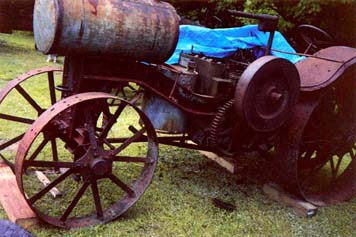
In the June/July 1996 issue of Gas Engine Magazine, a publication dedicated to “preserving the history of internal combustion engines,” there was an article entitled “Titan with a Top.” It was authored and submitted by a gas engine enthusiast from Elk Mound, Wisconsin: a Mr. Don Sokup. The titular Titan was a tractor, a 10-20 Titan tractor, manufactured in 1918. When Don found it, it was broken, buried, and decayed; the head of the engine had been buried in dirt for who knows how long. Most people said it would never run again, but Don believed he could restore it. This first picture is what it looked like, unearthed but dead.

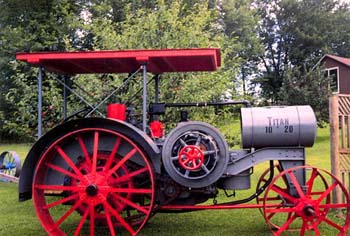
After a year of hard labor,” Don wrote, “she came back to life and now purrs like a kitten. In the photo [below], you can see what a difference all my hard work made.” Don noted, “the top [the new red roof] is my own invention.” His resurrected and restored tractor was made greater and more glorious than it had been before. This is what our divine maker and restorer desires to do with each of us.

As our first reading from the Book of Wisdom says:

“The souls of the just.. seemed, in the view of the foolish, to be dead; and their passing away was thought an affliction and their going forth from us, utter destruction. But they are in peace… and their hope full of immortality…”

Jesus declares to us in our Gospel:

“This is the will of the one who sent me, that I should not lose anything of what he gave me, but that I should raise it on the last day.”

We heard St. Paul teach the Romans:

“If we have grown into union with him through a death like his, we shall also be united with him in the resurrection. … [If] we have died with Christ, we believe that we shall also live with him.”

May the words of our psalm today be our prayer, for Don and for ourselves:

“Preserve my life and rescue me;
let me not be put to shame, for I take refuge in you.
Let integrity and uprightness preserve me,
Because I wait for you, O Lord.”

As we commend Don’s soul to Jesus, entrust yourself to our good Lord as well, so that in Christ’s Resurrection we may all be gloriously restored and happily reunited one day.

The Holy Stream — Baptism of the Lord—Year A

January 13, 2020

When you think of the River Jordan, maybe you imagine something broad, vast, and impressive, like the mighty Mississippi or even the Chippewa River. But the Jordan River is a lot more like Duncan Creek. Ever heard of Duncan Creek? It’s not far from here. Duncan Creek flows out of the south end of Lake Como in Bloomer. You know the bridge between Dairy Queen and the post office? That bridge crosses over Duncan Creek. In terms of size and color, the Jordan River is much like Duncan Creek; small and muddy with shrubs and trees growing along its banks. But unlike the rivers around here in Wisconsin, which are numerous and flow though green and lush countryside, the Jordan is among the few rivers passing through its region’s mostly arid lands. This is the body of water Jesus chose to be baptized in. A humble river of life flowing through a desert. Joshua led God’s Old Covenant people into the earthly Promised Land through this river. And Jesus, the new Joshua, leads God’s New Covenant people to the true Promised Land through holy baptism.

Jesus did not need John’s baptism for himself. John the Baptist sensed this and tried to prevent him, saying, “I need to be baptized by you, and yet you are coming to me?” Jesus insists, so John relents, but what is the purpose of his baptism? Jesus is baptized not to be made holy by the water, but to make the water holy, so that this most plentiful substance on the face of the earth could serve as the material for Christ’s gateway sacrament all throughout the world.

Jesus is baptized to allow us, through baptism, to be united to himself. His baptism foreshadows what comes in Christian baptism, what happened for you and me when we were baptized. The water, the decent of the Spirit, and the voice of the Father all signify effects of our first sacrament. Through baptism our souls were cleansed, the grace of the Holy Spirit was imparted to us, and we were acknowledged as a beloved children of God. We might take these things for granted: that sins can be forgiven, that the divine can dwell with us, that we can be more than mere servants, or slaves, or distant acquaintances to the transcendent God of the universe. That we can be treasured sons and daughters of God our Father. We need to remember and appreciate these things, for what goes unappreciated can be neglected to our loss.

The Jordan River flows about one hundred and fifty miles on the eastern border of Israel, south from the Sea of Galilee into the Dead Sea. These physical bodies of water contain a spiritual allegory. The Sea of Galilee is a large lake. Its fresh water, full of fish, pours out as the Jordan River. And this river, flowing through the arid desert, blesses its shores with life. But once these waters descent seven hundred vertical feet down into the Dead Sea, to the lowest place on earth, the water has no place else to go. So there the water sits, evaporating away in the heat, leaving its trace amounts of salt behind, causing the Dead Sea today to be an intensely salty sea in which no plants, nor fish, nor any other visible life lives.

The pure waters from above, received from the holy stream, bear no life in this recipient. Likewise, the sacraments offer grace from Heaven above, through Jesus Christ the stream of living water, but in the unrepentant soul they bear no life. Even a priest, baptized, confirmed, and ordained, saying the Mass every day, can be spiritually dead, causing spiritual harm to many, if he does not turn away from mortal sin. If you are in mortal sin, for God’s sake, for your sake, and for the sake of those around you, repent and be reconciled to God through his Sacrament of Confession. Jesus desires us to flow with his graces as a great blessing to others in this spiritually-arid world.

The words of Isaiah in our first reading point to Jesus, but because of your baptism you are in Christ. So Isaiah’s inspired words are spoken to every soul in a state of grace:

Thus says the Lord:
“You are my servant whom I uphold, my chosen one with whom I am pleased, upon whom I have put my spirit;
I, the LORD, have called you for the victory of justice, I have grasped you by the hand; I formed you… a light for the nations, to open the eyes of the blind, to bring out prisoners from confinement [and darkness.]”

You might not be called to cry out or shout, making your voice heard in the streets, breaking this and crushing that. But Jesus wants to use you as his powerful instrument to do transforming good in this world. Jesus is still quietly saving souls through his faithful ones, who receive his graces and pour them forth for others. Let this be you, for Him, and for many.

The Magi Sought Jesus — Epiphany of the Lord

January 7, 2020


The Magi from the east arrived in Jerusalem, saying, “Where is the newborn king of the Jews? We saw his star at its rising and have come to do him homage.” When King Herod heard this, he was greatly troubled, and all Jerusalem with him.

Why was King Herod greatly troubled? Because he saw this rumored, newborn king as a threat to his power and rule. No one ever mistook King Herod himself for being the Messiah or the Christ. Herod was not descended from David (as it was prophesied the great king of the Jews would be) and King Herod was not a godly ruler. The Roman Senate had installed him as king of Jerusalem and Judea, and he ruled as a brutal tyrant. Herod imposed harsh taxes, killed large numbers of his political opponents, and executed members of his family as well, including several of his wives and sons. The Magi, these wise astronomers from the east, had rightly interpreted the signs of heaven, but they badly misjudged Herod’s intentions. They had come, naturally enough, to Jerusalem to find the newborn King, but King Herod had no such son, so Herod hatched a wicked plan to murder any innocent child reputed to be the Christ.

Assembling all the chief priests and the scribes of the people, He inquired of them where the Christ was to be born. They said to him, “In Bethlehem of Judea, for thus it has been written through the prophet  [Micah]: And you, Bethlehem, land of Judah, are by no means least among the rulers of Judah; since from you shall come a ruler, who is to shepherd my people Israel.”

When King Herod was greatly troubled, all of Jerusalem was troubled with him because, knowing Herod, they knew the Magis’ message would likely lead to death and violence. Why did the Jewish religious leaders plainly-reveal to Herod where the Messiah might be born? They had reason to fear Herod, yet they could have demurred in Herod’s presence at responding to his inquiry. We must never tell lies, but we need not tell everything we know to everyone who asks us; for example, you don’t tell a killer where to find his next victim. The religious leaders could have replied to Herod, “Well, there are various disagreeing opinions about where the Christ will be born,” and that would have been true. The Jewish rabbis enjoyed theological debates about every question – and there was no need to let Herod know their best and most-accepted answer. Or, they could have replied, “Moses does not clearly tell us where the Christ will be born,” and that also could have been true – the prophet Micah provides that particular answer. Instead, the religious leaders tell Herod exactly where to look: “In Bethlehem of Judea,” they said to him. Without even realizing it, this was the Jewish religious leaders’ first betrayal, first denial, first rejection of Jesus Christ on earth.

Then King Herod called the magi secretly and ascertained from them the time of the star’s appearance. He sent them to Bethlehem and said, “Go and search diligently for the child. When you have found him, bring me word, that I too may go and do him homage.” After their audience with the king they set out [and found the fulfillment of their hearts’ hopes.]

If the Magi were “overjoyed at seeing the star,” imagine how they felt upon entering the house and finding Jesus with his mother. The Magi had traveled hundreds of miles to seek out the newborn king, to give him their precious gifts, and to show him their homage. But did any of Jerusalem’s priests or scribes travel the five miles to Bethlehem to do the same? Did any of them seek out the Magi or the Holy Family to privately warm them that they were in grave danger? Apparently not, for it required dreams from Heaven to warn the Holy Family and the Magi to flee from Herod. It is as if the religious leaders didn’t believe the Messiah, their Christ, would or could be born for them; like they did not believe that God was alive and active in their present day. Despite their vast religious knowledge, these men lacked faith. You and I profess to be Catholic Christians, and that is important. We have come to Mass today, and that is very well. But the Jewish leaders show us the danger of our faith being just a theory, an idea we hold without it prompting our full response to God.

The Magi sought out Jesus. Are we seeking a daily encounter with Christ? The Magi gave Jesus their precious gifts. Are we offering our Lord our time, talents, and treasures generously? The Magi prostrated themselves before Jesus and showed him their homage. Are we loving Jesus as merely an idea, or as the most important person in our lives? The beginning of this new year is a good time to take stock of ourselves and make resolutions to follow Christ better. Do not be afraid, for it will be the fulfillment of your heart’s hopes. If you are willing, he will lead and guide you on your journey.

Lord of wonder, Lord of light,
Lord with royal beauty bright,
Heaven leading, still proceeding,
guide us to thy perfect light.

Naming Jesus — January 1 — Mary the Mother of God

January 7, 2020

“When eight days were completed for his circumcision, he was named Jesus, the name given him by the angel before he was conceived in the womb.”

Who named Jesus? In one sense, it was his parents; Mary his mother and Joseph his adoptive-father. Yet this name was not their own idea. At the Annunciation, the Archangel Gabriel told Mary: “you will conceive in your womb and bear a son, and you shall name him Jesus.” And later on, an angel of God, likely Gabriel but perhaps another, told Joseph in a dream: “[Mary, your wife,] will bear a son and you are to name him Jesus, because he will save his people from their sins.” So this name was communicated to Jesus’ parents, and both parents were instructed to name him so, but the idea of this name and the commands to bestow it did not originate with the angels.

The word “angel” comes from the Greek and Latin words for “messenger,” and the angel spirits are messengers of God. The Archangel Gabriel was sent from God to Nazareth to announce to Mary the plan and will of God. So who named Jesus? First and foremost, God. The Letter of St. Paul to the Philippians declares, “[God] bestowed on him the name that is above every name, that at the name of Jesus every knee should bend, of those in heaven and on earth and under the earth”.

And what does the name of Jesus mean? The name “Jesus” (or “Iēsous” in Greek) is “Yeshua” in Hebrew, which means “Yahweh helps,” or “God saves.” The name of Jesus, given him by his Heavenly Father, denotes the message and the mission of the Son, And this message and mission was given him by the Father. Jesus declares, “I did not speak on my own, but the Father who sent me commanded me what to say and speak,” and “I came down from heaven not to do my own will but the will of the one who sent me.” The Father names his Son, and the Son is obedient to his Father’s authority.

Naming someone or something is to author its name, and authorship denotes authority over that person or thing. In the story of Creation, God creates and names the Day and the Night; the Sky, the Earth, and the Sea. Then the Lord forms man from the ground and settles him in the garden, with a mission to cultivate, protect, and care for it. Then God forms the animals from the ground, bringing each to the man to see what he would call them; and whatever the man called each living creature was then its name. Since none of these would be a suitable partner for the man the Lord formed another from the man’s rib, perhaps the bone closest to the core of man’s being, God’s last and ultimate creature. When the Lord brought her to the man, he rejoiced: “This one shall be called ‘woman,’ for out of man this one has been taken,” and the man gave his wife the name “Eve.” God blessed them and said to them: “Be fertile and multiply; fill the earth and subdue it. Have dominion over the fish of the sea, the birds of the air, and all the living things that crawl on the earth.

The man has sovereignty and dominion over the creatures he named. Parents, likewise, have authority over their children. As we heard last Sunday from the Book of Sirach, on the Feast of the Holy Family, “God sets a father in honor over his children; [and] a mother’s authority he confirms over her sons.” Both Joseph and Mary name Jesus on this eighth day after his birth and they exercise authority over the Child-God. “[Jesus] went down with them and came to Nazareth, and was obedient to them.” All legitimate authority (in a family, a workplace, a government, or the Church) is to be exercised in accord with God’s will. And when authority is exercised in this way, we can expect the household, business, nation, or Church to thrive—provided that legitimate, godly authority is likewise obeyed in accord with God’s will. ‘Jesus went down with Joseph and Mary, and was obedient to them; and his mother kept all these things in her heart. And Jesus advanced in wisdom and age and favor before God and man.’

Who have you been entrusted with authority over? For whom has God given you a mission to cultivate, protect, and care for as their Christ-like servant-leader? Recognize your mission, and exercise your authority in accord with God’s will as a blessing for others. And realize that those with spiritual authority over others (as you may have in your household) can literally bless them. Usually when we say “God bless you,” (that is, when we say this to a peer) we are not really blessing them ourselves but desiring, hoping, wishing, praying that God might bless them. As the Letter to the Hebrews says, “Unquestionably, a lesser person is blessed by a greater.” When we have spiritual authority for someone we can personally speak blessings upon them.

Words can not only encourage, but they also seem to have metaphysical power. Our first reading recounts how Aaron and his sons as priests of Israel were given authority to bless God’s people. The Old Testament patriarchs blessed their children and we see their words fulfilled. God creates and Jesus works miracles through spoken words; God said “let there be light” and there was light. Jesus said to the paralytic your sins are forgiven; stand up, pick up your mat, and go home, and the man was healed inside and out. Your words of blessing, in accord with God’s authority, can have great power, too.

[After preaching this homily last night, a parishioner shared with me that she and her husband learned about blessing and claiming dominion your household from friends a decade ago. They notice a difference in their family in their years of marriage before and after. For example, when she begins to fell minor health issues coming on, she asks for her husband’s blessing, and reports that she can “feel the power of his prayers.”]

So husbands, bless your wives and children, mothers bless your children, and bless your grandchildren, too. And on this first day of the year, ask God our Father and Holy Mary, the Mother of God and our spiritual mother too, to bless you and yours in this new year ahead.

The Visiting Shepherds — Christmas Mass

December 25, 2019

Early on the first Christmas Eve, in a field outside of Bethlehem, I imagine one of the shepherds complaining to his companions: “Wouldn’t you know it, we have to work on Christmas!” That’s just a joke, of course. The shepherds near Bethlehem, living in the fields and keeping watch over their flock, had no reason to expect that night would be anything special. Indeed, if not for Jesus’ birth into our world, today would be just another workday and there would be no reason to celebrate. But Jesus did come into our world to save us, and those shepherds were his first invited guests. “Do not be afraid; for behold, I proclaim to you good news of great joy that will be for all the people. For today in the city of David a savior has been born for you who is Christ and Lord.”

These shepherds would seem to be unlikely guests. Not rich, not powerful, not admired; but poor, dirty, and smelly. They lived apart from the community like outcasts. Shepherds were so little trusted that they could not give testimony in court. And yet, God’s Good News was offered to them. The Emperor Caesar Augustus, whose census brought the Holy Family to Bethlehem, was not given an angelic invitation. Perhaps the Roman Emperor was too proud to receive one; unwilling to admit that he was not a god over anything and that one God deserved his full worship, love, and obedience. But the shepherds were humble, humble enough to listen to the Heaven-sent message and act on it. “Let us go, then, to Bethlehem to see this thing that has taken place, which the Lord has made known to us.

The city of Bethlehem is to the south and west of Jerusalem. Bethlehem was only about 5½ miles away from the Jewish Temple, roughly the same direction and distance that St. John the Baptist Church in Cooks Valley is from here. Just as Bethlehem and Jerusalem are situated closely to each other, so Christmas points to Easter. The two are closely linked. It was specifically from Bethlehem’s flocks that sheep were provided to be sacrificed in Jerusalem for the peoples’ sins. In this region, the Lamb of God was born and to this region Jesus would return to die and rise to take away the sins of the world. Mary wrapped her little newborn snugly in swaddling clothes. Mary would later wrap his body in a linen burial shroud. Tradition says Joseph prepared a cave for the place of Jesus’ birth when other accommodations were unavailable. Later, another Joseph would make last-minute arrangements for Jesus to be buried in a rock-hewn tomb. Baby Jesus was born in Bethlehem, a city whose name means “House of Bread.” He was laid in a manger, a feed-box for grain. Later, on the day before he was to suffer, Jesus would take bread in hand and say, “Take this, all of you, and eat of it: for this is my body which will be given up for you.

The shepherds went in haste into Bethlehem and found Mary, Joseph, and the baby Jesus there. “When they saw this, they made known the message that had been told them about this child. … Then the shepherds returned, glorifying and praising God for all they had heard and seen, just as it had been told to them.” After Christmas, after that beautiful day, did the shepherds ever come back to visit the Holy Family? I doubt you could find two people more friendly and welcoming than holy Joseph and Mary, but did the shepherds ever take the opportunity to visit them and the Christ Child again? The Magi were soon to travel hundreds of miles to see Jesus just once, but these shepherds lived only a short, walking distance away. Did the shepherds ever take time come back and adore Jesus, to rest and to contemplate what he meant for their lives, to praise and thank the God for his presence in their midst? Did the shepherds ever get to know Mary and Joseph better, these holy saints and friends of God?

If the shepherds had spent a single hour each week in the presence of Christ and his holy family, imagine how it would have improved their daily lives; their work, their relationships, their whole outlook on life? Great graces flow from being close to Jesus. What do you think they should have done? What would you have done? We don’t know whether the shepherds ever came back again after Christmas, but if they didn’t, they really missed out. Living a life with Jesus Christ is better than a life neglecting him.

Christmas is a truly special day, a happy day and rightly so, but a day that points beyond merely itself to Easter and the fullness of Christ’s Gospel, Good News of great joy. For a Savior has been born for you who is Christ and Lord. Do not be too proud, do not be too busy, do not be afraid, make the short journeys to visit Jesus here again. Do not feel too unworthy to come, for even shepherds were his first guests. Feel welcome in this his dwelling place and find friends here among his family. Will you come back again after Christmas? I hope you will, but if you don’t, you’re really missing out; because living your life with Jesus Christ is better than life without him.

Rose in His Garden — Funeral for Rose “Rosie” Schindler, 90

December 17, 2019

After seeing ninety-one falls and ninety springs, Rosie has come to her funeral day. Today we pray for her soul with our greatest prayer, the Mass, that Rosie may rise to glory. A full Christian life like Rosie’s, married sixty-seven years, bearing five children, ten grandchildren and fifteen great-grandchildren, cannot be fully captured in one brief homily. But by taking one aspect of her life and holding it up in the light of Christ, we can see truths about her and God and us.

Rosie has many interests and loves, the farmstead, this parish, her family, her friends, but her hobby of first note was gardening. I’m told that Rosie had a huge garden and loved her flowers. She delighted in her plants, the beauty of their flowering, in the goodness of their fruits: raspberries, strawberries, blue berries, and blackberries: even crab-apples had their pleasing place for her. It is hard work to cultivate a garden well, but she rejoiced in her results.

Now something Rosie could have done, had she preferred it, would have been to raise just a single plant; but she wanted more than just one. Or, Rosie could have chosen to grow only one variety of plant in her huge garden; a mass of plants all uniform, every one the same. But what gardener does this? Raising just a single plant, or having just one breed of plant, is not what God does either in the garden of this world. Listen to these words of “the Little Flower,” St. Therese of Lisieux, about the divine gardener’s design:

“Our Lord showed me the book of nature, and I understood that every flower created by him is beautiful, that the brilliance of the rose and the whiteness of the lily do not lessen the perfume of the violet or the sweet simplicity of the daisy. I understood that if all the lowly flowers wished to be roses, nature would lose it’s springtime beauty and the fields would no longer be enameled with lovely hues.”

God the Father did not plant his Son into the world to raise him up alone. God plants and tends and grows verities of people with Jesus. Jesus possessed the fullness of the beatitudes in their beauty, while we (in greater or lesser measure) bear blossoms and fruits of humility, mercy, purity, & sacrifice.

But what if I am struggling to live and grow because I’m not planted in his good soil? What if my behaviors are choking off the life of my neighbors in the garden? What if I am unfruitful because I have refused to be pruned? What if I am in danger of one day being uprooted as a weed? Then I must allow myself to be replanted and pruned by Jesus through his sacraments and through my choices, cooperating with the divine gardener, growing day-by-day, until my fall and harvest comes.

Look at these flowers donated for Rosie’s funeral. They have a variety of colors and flower types and the church is more beautiful for their uniqueness and diversity. Likewise, there is a is place for each of us in this church. Today we mourn yet rejoice in a beautiful Rose. May this day cause you and me to live in Christ, grow and blossom in our Lord, and bear sweet fruits in him as well.

A Life for Christ — 2nd Sunday of Advent—Year C

December 8, 2019


This weekend the Catholic Church Jesus Christ established joyfully celebrates and remembers one of her martyrs. Moved by the Holy Spirit, he answered God’s calling. He renounced his possessions, left his home and family behind, and lived in a different land. He lived differently, he dressed differently, and lived a celibate life for the love of God and the service of God’s people. His life was a prophetic sign for others, pointing them to Christ and his Kingdom. He was humble but brave in doing what was right. And for this faithfulness, the wicked had him killed. Today we celebrate him as one of those blessed in the Kingdom of Heaven. This description sounds a lot like St. John the Baptist, featured in today’s Gospel, but I speak of another: Brother James Miller, born in our diocese, a native son of Stevens Point, who became a Christian Brother and a missionary. He was martyred in Guatemala and, in a Mass celebrated there yesterday (December 7, 2019) was beatified by the Catholic Church, that is, declared one of the blessed in Heaven.

James Miller was born in Stevens Point in 1944, grew up on a dairy farm, and graduated from Pacelli High School. Discerning his religious vocation, he entered the novitiate of the Christian Brothers in 1962, and taught for them in St. Paul, Minnesota. In addition to teaching religion, Brother James taught English and Spanish, coached football, and worked in the maintenance of the school building. In fact, his skill and pleasure in doing such repairs would win him the nickname “Brother Fix-it.” After taking final vows in 1969, Brother James was sent abroad. He worked as a teacher, an administrator, and even a builder of schools in both Nicaragua and Guatemala, serving the poor with Christ’s love.

It was a time of great violence in Latin America, of war and terrorism between the region’s dictatorial governments and communist rebels. In these conflicts, Catholic priests and religious could be marked for death by either side. The Sandinista rebels put Brother James on a list of people to be “dealt with,” viewing him as an ally of the Nicaraguan government, but it may have been his religious community’s resistance to the Guatemalan government’s wrongdoing which led to his martyrdom.

Despite the students at Brother James’ school in Guatemala being exempt from being drafted, four men abducted a local youth from the city marketplace and forced him into military service. The Christian Brothers went to the authorities objecting to this breach and demanding their young man’s release. Soon after, on February 13, 1982, the 37-years-old Brother James Miller was up on a ladder outside, repairing a wall of the school building. There, he was shot, point-blank, multiple times, by three still-unknown gunmen. It is suggested that Brother James died before his body hit the ground.

When I read the story of St. John the Baptist’s martyrdom — of how his objection to the king’s sin landed him in a prison, of how the dancing of Herod’s daughter, the rash vows of the king, and the scheming of his vengeful queen, resulted in an executioner being dispatched to the dungeon with orders to bring back John’s head on a platter — I wonder if John the Baptist knew what was coming. Did he have any awareness of the events at the party leading to his death? I think quite likely not. I can easily imagine the sword-bearing henchman entering John’s dark cell, giving a curt command for him to bend down, and ending his holy life without any warning or explanation.

This reflection comes to mind because when Brother James was getting into the car to depart for dangerous Guatemala and, though they did not know it, he would never return, his biological brother Ralph told him to “be careful.” Brother James replied, “I’m no martyr.” And yet Brother James Miller and John the Baptist did become martyrs. They may not have expected the day or hour, but they had already made the decision to live for Christ and even die for Christ years before. Whether to love and serve Christ the King is a decision, a resolution, we each have to make and constantly renew. There is no hedging – not making the choice is making a choice; and everything follows from the choice we make.

St. Ignatius of Loyola, in his Spiritual Exercises, has a famous prayer reflection: “The Meditation on Two Standards.” (The word “Standard” in this case means a military or ceremonial flag carried on a pole.) St. Ignatius asks us to imagine a great field near Jerusalem, the holy city, where the supreme commander-in-chief of the good is Christ our Lord; and another field in the region of Babylon, the city of sin, where the chief of the enemy is Lucifer.

Imagine that chief of all the enemy seated in that field of Babylon in a great throne of fire and smoke, horrible and terrifying in shape. Consider how he issues a summons to innumerable demons and how he scatters them, some to one city and others to another, and so through all the world not one province, place, state, nor particular person is omitted. Consider how he instructs them to cast out nets and chains; to tempt human beings to a longing for riches, to a desire for the vain honor of this world, and to vast pride, thereby leading them to all other sins besides.

And then, on the contrary, imagine the supreme and true captain, who is Christ our Lord. Consider how Christ our Lord puts himself in a great field near Jerusalem, in a humble place, beautiful and welcoming. Consider how the Lord of all the world chooses so many persons – apostles, disciples, and others – and sends them through all the world spreading his holy teaching to people of all conditions and states of life. Consider the discourse which Christ our Lord gives to all His servants and friends whom He sends on this expedition, counseling them to poverty rather than riches; to contempt for worldly honor, and to humility against pride, leading them to all other virtues besides.

Whose side, whose standard will you rally to today? John the Baptist appears in our Gospel crying out to us: “Repent, for the Kingdom of Heaven is at hand!” Blessed James Miller and St. John the Baptist gloriously rejoice today with their Lord, Jesus Christ the King. Now, which side do you choose? With whom and for whom will you live and die?

Our Partner at the Table — Funeral for Lucille Meier, 86

December 2, 2019

Today, St. Paul’s Parish is humbly honored to be offering our greatest prayer, the Holy Mass, for Lucy; a wife of 66 years, a mother of seven daughters, a grandma to 22 grandchildren, and a great-grandma to 11 great-grandchildren. May Jesus Christ, present in the Holy Eucharist and everywhere in our world, give peace to you all. No funeral homily can fully reflect the beauty and mystery of a faithful Christian life, but the facets of our lives can point to Christ and illustrate truths about him and us.

One interesting thing I’ve learned about Lucy is her skill at cards, especially Bridge, which she played here in Bloomer for years. And not only was she a “card-shark,” but Lucy played in a noteworthy way: she never criticized her partners. As a Bridge partner and as a wife and mother, she might roll her eyes at someone’s particularly dumb move, but she never berated them. Lucy was merciful with others and their errors. She never said, “I told you so,” but remained to support them in a quiet way. And Lucy had such an excellent mind at Bridge that she could carry people to victory. Even in her later years, when her mind was weakened, Lucy could still play cards and pull out a win for her partner. Jesus is like that too.

Jesus partners himself with us in a bid to win our salvation. Jesus wants us to play faultlessly without flaw, but what does he do when we sin? He does not berate us. “The Lord is kind and merciful.” Jesus is for us. Now he is not indifferent to seeing our wrongdoing; and if we give up on playing hands with him, if we walk away from the Bridge table, we’re lost. But if we come back and keep partnering with him, Jesus’ sharpest of minds can finds ways to lead us to a shared victory. If Jesus is for us, who can be against us? By cooperating with his love, we win overwhelmingly through Jesus Christ who loves us.

As Jesus tells us in the Gospel, “Do not be afraid any longer, little flock, for your Father is pleased to give you the Kingdom.” Like the Prophet Daniel writes in our first reading, the Lord desires to raise up many, North and South, East and West, to eternal life. So partner with Jesus, remain at his table, or make a good confession to return to this table, and keep fearlessly striving for him.

Lucy loves Jesus Christ. Quite recently, Thor arranged for a Communion minister from this parish to bring our Eucharistic Lord to Lucy in her memory care unit. He tells me that Lucy could no longer speak, but her face clearly spoke of her love for the One who was held up before her. And she smiled at Him.

St. Monica, in her last dying days, told her son, St. Augustine: “Bury my body wherever you will…. Only one thing I ask of you, that you remember me at the altar of the Lord wherever you may be.” So pray for Lucy, and partner with Jesus Christ like she did, so that we may all enjoy his victory together forever.

What Happens When You Die — 32nd Sunday of Ordinary Time—Year C

November 9, 2019

Our days are growing shorter and shorter. In the fall, it’s impossible not to notice the dark night encroaching. The trees are being drained of the color of life, their foliage is falling dead to the ground, turning the trees into bare skeletons. The farmer’s field has yielded its harvest; the once-living crops have been cut down. This changing of nature chills us in our flesh. During this season of dying, we are reminded in the world and in the Church, of our own mortality. This is a topic personally relevant to us all. Unless Jesus comes back first, each of us is going to die. What happens next is what I’ll preach about today.

Human nature is a unity of body and soul. At death, our body and soul will separate. Our mortal remains, our dead bodies, will decay according to natural processes. Sometimes God works a miracle, causing a saint’s corpse to remain incorruptible in part or in whole, but ordinarily our dead bodies return to the dust from which we were made. Our immortal souls, however, will not go into the grave with our bodies; at death; the who that is you behind your senses, your soul, will appear for the judgment of your Creator. As the Letter to the Hebrews says, “it is appointed that human beings die once, and after this the judgment.”

In the words of the Catechism of the Catholic Church: “Death puts an end to human life as the time open to either accepting or rejecting the divine grace manifested in Christ… each will be rewarded immediately after death in accordance with his works and faith. … Each man receives his eternal retribution in his immortal soul at the very moment of his death, in a particular judgment that refers his life to Christ: either entrance into the blessedness of Heaven—through a purification or immediately,—or immediate and everlasting damnation.”

Those who die in God’s grace and friendship and are perfectly purified live for ever with Christ. This perfect life with the Most Holy Trinity – this communion of life and love with the Trinity, with the Virgin Mary, the angels and all the blessed – is called ‘Heaven.’ Heaven is the ultimate end and fulfillment of the deepest human longings, the state of supreme, definitive happiness. … [Jesus] makes partners in his heavenly glorification those who have believed in him and remained faithful to his will.

But what if we die spurning his friendship? We cannot be united with God unless we freely choose to love him. But we cannot love God if we sin gravely against him, against our neighbor or against ourselves. To die in mortal sin without repenting and accepting God’s merciful love means remaining separated from him for ever by our own free choice. This state of definitive self-exclusion from communion with God and the blessed is called “Hell.” Jesus speaks repeatedly of Hell in the Gospels, so we cannot dismiss its reality. The numerous rebel angels, the demons, experience Hell, and it seems that many human beings will experience it forever as well. It’s a terrible thing, but recall C.S. Lewis’ words: “The gates of Hell are locked from the inside. … There are only two kinds of people in the end: those who say to God, ‘Thy will be done,’ and those to whom God says, in the end, ‘Thy will be done.’ All that are in Hell, choose it. Without that self-choice there could be no Hell.

What if I die as a friend of God but I’m still not yet perfect? What if I sincerely love God and my neighbor but I still retain a fondness for my sins. The Book of Revelation says of God’s Heavenly city “nothing unclean will enter it,” so how can I be cleansed to enter in? The Catechism teaches: “All who die in God’s grace and friendship, but still imperfectly purified, are indeed assured of their eternal salvation; but after death they undergo purification, so as to achieve the holiness necessary to enter the joy of Heaven. The Church gives the name ‘Purgatory’ to this final purification of the elect, which is entirely different from the punishment of the damned.

On earth we know that personal conversion and change of lifestyle can be difficult. Private revelation suggests that the purifying process of Purgatory is both painful and joyful at the same time. It’s like a soldier returning victorious from a war overseas, traveling to his wife and family. His long trip home may be exhausting, but his great love for those who await him sweetens his journey and focuses his efforts to join them.

We should pray for one another on earth and we should pray for the dead as well. From her beginning, the Church has honored the memory of the dead and offered prayers for them, above all at Christ’s great sacrifice, the Mass, so that, thus purified, they may attain the beatific vision of God. The Church also commends us, especially in the month of November, to almsgiving, indulgences, and works of penance on behalf of the dead to help them on their way to the fully-unveiled presence of God. The saints in Heaven now behold the divine essence with an intuitive vision, without the mediation of any creature. The Blessed Virgin Mary, and possibly Elijah, Moses, and Enoch, already have their bodies there, but the reunited bodies and souls of all the dead, of both the just and the unjust, will rise again one day.

The resurrection of the dead, which in today’s Gospel the Sadducees denied and Jesus affirms, will precede the Last Judgment. This will be “the hour when all who are in the tombs will hear [the Son of man’s] voice and come forth, those who have done good, to the resurrection of life, and those who have done evil, to the resurrection of judgment.” Then Christ will come “in his glory, and all the angels with him… Before him will be gathered all the nations, and he will separate them one from another as a shepherd separates the sheep from the goats, and he will place the sheep at his right hand, but the goats at the left… And they will go away into eternal punishment, but the righteous into eternal life.” This Last Judgment will reveal even to its furthest consequences the good each of us has done or failed to do during our earthly life.

After this last and universal judgment, the universe itself will be renewed into what Scripture calls “a new Heavens and a new Earth.” Recall how Jesus’ resurrected body is the body that was pierced (for he still bears some wounds as trophies,) and it is the body that was buried (for the Easter tomb is empty,) but Jesus’ resurrected body is now gloriously transformed. The same body, but renewed Likewise, our resurrected bodies and this material universe will be renewed and transformed as well. Then the righteous will reign with Christ, glorified in body and soul, in a new heavens and new earth, forever.

From these reflections on the last things, I offer you these three takeaways. First: care for your soul. Be committed to prayer and the sacraments (particularly confession for the forgiveness of your sins.) Second: pray for the dead. They will appreciate it forever and pray for you too. Third and finally: remember that our time on earth is short. And forever is a very long time. You have just one life, so live and love heroically in Christ.

A Well-Nourished Tree — Funeral for Lois Eastman, 93

November 9, 2019

I offer my personal sympathy and the condolences of St. Paul’s parish at the passing of Lois, whom you know and love. In this church, 69 years ago, Lois married Jerry, her husband of 42 years. They went on to be blessed with six children. Today, we pray for Lois to have a special place among God’s children at the wedding feast of Heaven. No brief homily can capture the full mystery of a Christian life. At funerals, I just try to preach about one true aspect of the departed person’s life that reflects an important lesson for us with Jesus Christ and his Church.

Lois’ family told me a number of stories about her, and one theme I noticed was her fierce independence. For many years now, until quite recently, Lois always lived on her own. Not long ago, when her children suggested she use something to help her keep her worsening balance, she replied, “Canes and walkers are for old people.” Lois was 93 years old. Lots of people are set in their ways or stubborn, but here’s the really remarkable thing: not long after that remark to her kids Lois actually took their advice and started using a cane. In this and other things, Lois’s independence did not prevent her from accepting the help she needed.

Years before she absolutely needed a cane, Lois had trouble negotiating steps. But she would drive somewhere, by herself, with a plan: ‘someone will help me up and down the stairs when I get there.’ She would show us and say to someone she saw, “Hey, you over there, can you help me?” If the streets were icy in the wintertime, she would stand by her car until a person came along to help her up the curb and across the sidewalk to where she was going.

Lois was fiercely independent, but she acknowledged her need for help – and Lois knew she needed Jesus. Lois prayed every night, and until a couple years ago went to Mass every day, every day of the week except Sunday. (That’s because she went to the Sunday vigil Mass on Saturday night.) She sat in front pew to hear Jesus’ word and receive his very self. Lois knew that other people needed him too, so she would pick people up to bring them to church and brought our Lord in the Holy Eucharist to others at their houses or nursing homes.

We all want to be free. We all want our lives to be full and fruitful. And Jesus wants that, too. But people imagine that living their best life means keeping Jesus away while we do our own thing. Do you keep Jesus at arm’s length? Hear then the Parable of the Solitary Tree:

Once upon a time, there was a tree. This tree wanted to be free, to be its own tree, free to do its own thing, and not rely on anyone. So it told the Sun to go away, along with the rain clouds above it, the air all around it, and the ground beneath it. And the tree soon found itself in cold darkness – thirsting, gasping, and falling. Realizing its serious error, the tree asked, the tree begged them all to return, and they returned to the tree; which then lived and grew and produced much fruit.

In the same way, you and I were never meant be completely independent. Almighty God, the source and the sustainer of the universe, is not a solitude, but a Trinity, a loving communion of persons. So we are most fully ourselves when we’re connected to God and each other through Jesus Christ.

Pray for Lois, but do not fear for her. You know how she loved and relied on Jesus. And if you’ve been away from Jesus, I urge you to call him back and return to his house, his Church. Do not be afraid to rely on our Good Lord. To quote one of Lois’ favorite songs:

If you wonder how long he’ll be faithful
I’ll be happy to tell you again
He’s gonna love you forever and ever
Forever and ever, amen.

Preaching Aid for Advent, Year A

November 7, 2019

This is a homily creation aid for preaching on themes of marriage and family during the seasons of Advent and Christmas during Year A of the lectionary cycle. I wrote this guide back in seminary and I welcome its being put to good use.

Obstacles to Jesus — 31st Sunday of Ordinary Time—Year C

November 6, 2019

Last week, Jesus told us a parable about a penitential tax collector. This Sunday, St. Luke recounts for us a true story about real one. Jesus came to Jericho and a man there named Zacchaeus, a chief tax collector and a wealthy man, was seeking to see him. You just heard the ending of that story; Zacchaeus joyfully succeeds in to beholding and encountering Jesus, and Jesus happily succeeds in finding and saving Zacchaeus. But Zacchaeus’ story would have ended differently if he had allowed any earthly obstacle or any human excuse to stop him. What sort of things could have gotten in Zacchaeus’s way of seeing and encountering Jesus? Many of the same things that can get in our way.

For starters, Zacchaeus could have believed or claimed that he was too busy to devote time for Jesus. Zacchaeus was a chief tax collector, a busy man, and this appears to have been a working business day. Faithful Jews did not walk long distances on the Sabbath day of rest. The rabbinic tradition set the limit for Saturday travel at 2,000 cubits or about ¾ of a mile. (That’s not very far.) But Jesus walked to Jericho and had intended to pass through the town, suggesting that tolls and taxes from toilers and traders and travelers were there for the tax man’s taking. But Zacchaeus made time for Jesus in his busy day.

Are we busy? I’d bet that most people would say that they are, but busy with what? Last year, the average American adult spent 3 hours and 44 minutes a day watching television; that’s more than 28 hours per week, that’s a full 56 days in a year! Maybe you don’t watch TV at home (I don’t) but how much time do we expend with games and social media and entertainments online? Whether we have time or not for something is really a question of priorities.

We just celebrated All Saints’ Day’s. Have you ever considered, if you get canonized as a saint someday, what you would like to become the patron saint of? If I get canonized I’d like to be the patron saint of packing. I have a number of reasons for desiring this niche but needed patronage, but it all goes back to a lesson from my father. One time, for an Illinois trip, he taught me how to pack a car trunk. He said, “Put the big things in first, and then fit the smaller things in around them.” So it is with life; put the big things in first. Make time for weekly Mass, daily prayer, spiritual study, and spiritual growth. Make them your priority.

Another reality that could have made Zacchaeus give up on Jesus when they got in his way was other people. “Zacchaeus was seeking to see who Jesus was; but he could not see him because of the crowd, for he was short in stature.” (In other words, Zacchaeus wasn’t tall.) The crowd was not only an imposing physical barrier, but a hostile obstacle as well. They all knew him by sight and despised him as a sinner. Because of Zacchaeus’s small size, they could easily and effectively block him out or even push him away from Jesus.

On this occasion, the short of statue Zacchaeus was one of the “little ones” whom Jesus warns us not to despise: “It is not the will of your heavenly Father that one of these little ones be lost.” And Jesus warns of great woe for anyone who causes his little ones spiritual harm: “Whoever causes one of these little ones who believe in me to sin, it would be better for him to have a great millstone hung around his neck and to be drowned in the depths of the sea.” It is gravely wrong to push people away from Jesus through sin, but it is also a great error for us to allow others to push us away from Jesus. Jesus’ Church is holy but it’s the home of sinners, too. Do not let Judas’s betrayals or Peter’s denials, as horrible as these scandals are, keep you away from meeting Jesus here.

Zacchaeus did not let the obstacle of other people thwart him. When he was unable to penetrate the crowd, “he ran ahead and climbed a sycamore tree in order to see Jesus, who was about to pass that way.” It is debated within scripture commentaries whether is was considered undignified for a first century Jewish man to run apart from an emergency. But another embarrassing aspect of this story remains recognizable for us today. When was the last time you saw a grown man climb a tree for any reason other than to cut down a branch? Climbing trees is something kids do. When people saw Zacchaeus, the rich man, sitting in a tree on Main Street they probably pointed and laughed at him. But Zacchaeus ignored their gossip and mockery to do this for Jesus, and that made the difference for his soul.

Jesus expects us to be different from the world sometimes, both in the things we do and the things we don’t or refuse to do. And people will not always respect us or like us because of it. There are various reasons for this hostility, but a major one was noted in the second century by a Christian who wrote: “the world hates the Christians not because they have done it any wrong, but because they are opposed to its enjoyments.” Jesus tells his disciples at the Last Supper before his death: “If the world hates you, realize that it hated me first. If you belonged to the world, the world would love its own; but because you do not belong to the world, and I have chosen you out of the world, the world hates you.”

Do you sometimes avoid doing good things because you’re afraid of looking too pious or of being thought of as a goody-two-shoes? Do pray before meals to give thanks to God and ask him to bless your food at home but never at restaurants? Do you avoid receiving Jesus’ absolution in sacramental confession because you’re afraid of what the priest or others might think? When and where was the last time you mentioned the name of Jesus outside of church or apart from prayer? We need to be unashamed to be Christians, unashamed to be Catholics, not cowed by peer pressure but bold in doing what Jesus desires of us.

Let’s make a quick review of the things that might have prevented Zacchaeus, or might prevent us, from seeking and encountering Jesus: believing or saying we’re too busy; obstacles from other people, their sinfulness or peer pressure; and finally, our own resistance to full or true conversion.

When Jesus reached the tree he saw a fruit hanging in it for his harvest. Jesus looked up and said, “Zacchaeus, come down quickly, for today I must stay at your house.” And Zacchaeus came down quickly and received him with joy. Jesus was not content to simply exchange pleasantries and then go their separate ways. Jesus says, “I must stay at your house.” This more than merely a historical detail–this is a profound utterance; the Lord desires to dwell with Zacchaeus for all his days.

In encountering Jesus Christ, Zacchaeus realizes he must change the way he lives. He can’t play host to Jesus one day and then behave like it never happened. Well, he could, that’s the temptation. He can keep clinging to his sins, but his sins haven’t made him happy. If Zacchaeus had been content with his life he would not have been trying so hard to see Jesus. Now, Zacchaeus is free to change his life with Christ, and he’s excited by the new hope set before him. Zacchaeus declares: “Behold, half of my possessions, Lord, I shall give to the poor, and if I have extorted anything from anyone I shall repay it four times over.” The focus of Zacchaeus’ life has changed. No more defrauding. No more hoarding. Now, the Lord dwells in Zacchaeus’ house as his honored guest. And giving away one-half of all his wealth suggests his heart’s intention to love his neighbor as himself. And Jesus says to him, “Today salvation has come to this house.

The name Zacchaeus is a Hebrew name. It means “clean” or “pure.” While Zacchaeus was still imperfect, still unclean, still impure, Jesus called out to him by name and said “today I must stay at your house.” And Zacchaeus, by finding and knowing Jesus, became true to his name, realized his true identity, became his true self. The Lord desires the same for each of us. So allow nothing to get in your way of seeing and encountering Jesus.
Preserved for Life — Funeral for Mark Schoonover, 65

November 6, 2019

Mark is loved and mourned by many in our community and in this parish. That’s seen in the many people here today. And we will miss him. Dying at age 65, Mark is one of the youngest people I have had a funeral for in my time here at St. Paul’s. And Mark will also be the closest parishioner, the closest friend, that I have buried here thus far. I often say that no mere homily can capture the fullness of the mystery of a Christian life well-lived. But I offer this brief reflection to reveal a truth about Mark’s life and the mystery of Jesus working in it. Mark’s family told me a number of great stories about his life that I hadn’t heard before, and I noticed a theme. Mark has faced death several times before.

In 1969, his family was driving in a car together when a drunk driver ran through a stop sign in front of them. His father, Tom, saw the crash coming and warned everyone to brace. There were no car seats, no seat belts in the car. Mark, just 15 years old, reached over and grabbed his 11-month-old sister, Wendy. He suffered a broken rib, broken collarbone, 30 stitches and a concussion, but he saved his sister’s life.

Later, as an A-6 Intruder Bombardier-Navigator in the Navy, I suspect there were a number anxious brushes with death he might not have ever mentioned. Flying hundreds of miles-per-hour in a complex military machine, in all sorts of weather, catapulting-off and landing upon aircraft carriers in the Pacific Ocean surely has its dicey, dangerous moments.

I’m told that one time, on the ground near his airbase in Washington State, Mark went sheep hunting alone in the mountains. He got his big sheep, and the family still has the picture of it, but he realized he would not make it out of the wilderness by nightfall. Something told him, to sit, to stay there. He sensed he should just stay there. So Mark sat vigil with the sheep. In the morning, when the sun rose and brought more light to his situation, he realized that he had been sitting just feet from the edge of the mountain. If he had tried to walk by himself in the darkness of that night, he may well have gone over the edge.

When Mark was diagnosed with brain cancer, there was great concern that he would die then. He told Traci, “God will get us through this.” And they were granted a gracious respite. Mark’s health recovered almost fully-back to normal for some blessed, precious months. However, his cancer treatments did a number on his liver, the organ in the body charged with expelling toxins. I was recently able to see Mark with Traci and Abby in the hospital. I was honored to anoint him and give him the Apostolic Pardon. Soon after, when his death was imminent, they brought him home, to the cabin on the lake up north. On the morning he died, Traci tells me that they watched the sun rise over the lake together. That is a beautiful death.

Sometimes older people in nursing homes, up in years and burdened with weakness and pains, ask me, not without faith but actually with a great deal of faith, “Why am I still here?” Their children are grown, most of their friends have passed away, they have grown tired of life and they wonder why the Lord has not taken them already. I always tell them the same thing, “If you are still alive on this earth, either God is doing something in you, or through you, or both.

Why did God preserve Mark throughout his years up till now? Because the Lord was working in him, and through him, both. Did God fail Mark in this last illness? Did God the Father fail his Son on the Cross? No. He who pleased God was loved, glorified through his passion, and brought to God by God himself.

The Book of Wisdom says of the just man who dies young:
Having become perfect in a short while,
he reached the fullness of a long career;
for his soul was pleasing to the Lord,
therefore he sped him out of the midst of wickedness.

And St. Paul reminds us:
If we live, we live for the Lord,
and if we die, we die for the Lord;
so then, whether we live or die, we are the Lord’s.

A day like this is challenging, and it is sad. Pray for Mark, but do not fear for him. You know of his life and of his faith in Christ. Talk to him. I ask him to pray for me. We are not abandoned, not without the helping graces we need. So cooperate with that grace, that grace of God working in you and through you, so that one day all of us may be reunited in Christ, rejoicing with Mark, forever.

Humility, Truth, & Love — 30th Sunday of Ordinary Time—Year C

October 28, 2019

Today’s second reading from the Second Letter to Timothy has St. Paul declaring near the end of his earthly life: “I have competed well, I have finished the race, I have kept the faith. From now on the crown of righteousness awaits me, which the Lord, the just judge, will award to me…” Recall how at the Visitation, after encountering her cousin Elizabeth, St. Mary declares about herself: “[God] has looked with favor on his lowly servant; from this day all generations will call me blessed.” Are these humble things for Mary and Paul to say about themselves?

Well, they’re both true statements, inspired by the Holy Spirit. Paul, having finished his race, is now a triumphant saint in Heaven, and the Church calls Mary the Blessed Virgin in every generation even to our day. True humility is not thinking that you’re dirt, it is being down-to-earth, well-grounded, and rooted in reality. Jesus says, “Let your light shine before others,” and the Blessed Virgin Mary pleases and honors God when she states, “The Almighty has done great things for me and holy is his name.” God has done good things for you as well, so thank and praise and glorify him for it!

But wait a minute, someone might object, wasn’t the Pharisee who went up to pray at the Temple in Jesus’ parable today also thanking God and declaring true statements about himself? What if this Pharisee did fast twice a week; what if he did pay tithes on his entire income; and was neither greedy, dishonest, nor adulterous? That is what’s implied by the parable, and those are all very good things! So why then does he incur our Lord and God’s displeasure?

Today’s gospel says “Jesus addressed this parable to those who were convinced of their own righteousness and despised everyone else.” Jesus says the Pharisee took up his position at the Temple and spoke this prayer to himself, “O God, I thank you that I am not like the rest of humanity – greedy, dishonest, adulterous – or even like this tax collector.” Imagine the Pharisee praying these words out loud, within earshot of this tax collector in front of everybody. Yet, even if the Pharisee prayed silently, or quietly to himself, and his neighbor did not hear him; the Pharisee despised the tax collector and the rest of humanity, and did not gain God’s pleasure. Like St. Paul once wrote, “If I give away everything I own, and if I hand over my body so that I may boast but do not have love, I gain nothing.” In order to gain Heaven; truth, love, and sacrifice all need to go together within us.

We see the truth, authentic love, and self-sacrifice combined in the inspiring life of the twentieth century saint, Edith Stein. She was born into a Orthodox Jewish family but renounced her faith by the age of thirteen and embraced atheism. She went on to become a respected PhD in philosophy. Then, one night while staying with friends on a vacation, she read the entire autobiography of St. Teresa of Avila. The following morning she put the book down and declared, “That is the truth,” and responded accordingly. She was baptized a Catholic at the age of thirty, became a Carmelite nun and took the name Teresa Benedicta of the Cross, like the Carmelite St. Teresa of Avila before her. During World War II, because of her Jewish ancestry, the Nazis came to arrest her along with her biological sister Rosa, who worked at the convent. Teresa Benedicta reportedly said to Rosa, “Come. Let us go and die for our people.” They were taken to Auschwitz where survivors of the death camp testified that the nun helped other sufferers with great compassion. A week after their arrest, she and her sister were killed in the gas chamber. St. Teresa Benedicta comes to my mind this Sunday because of one of her most famous quotes: “Do not accept anything as truth that lacks love and do not accept anything as love that lacks truth. One without the other is a destructive lie.

It could be said that the proud Pharisee in our parable had the truth without love, while our culture today has many (so called) loves apart from the truth. Through our friendship, our prayers, and our perseverance, the tax collectors we know today need to encounter love and the truth, that they might turn to Jesus and say “O God, be merciful to me a sinner,” and be saved. If you think you see someone seriously sinning; perhaps in your circles or our community, on TV or in the news; be sure—at very least—to pray for them. Maybe you’re right, which means that they are greatly in need of your prayer. Or perhaps you’re judging rashly or too harshly, in which case you are in need more prayer. In any case, you cannot both hate someone and pray for someone at the same time, because praying for someone is an act of love.

As Jesus tells us, “the one who humbles himself will be exalted.” Praying for and loving sinners makes you their servant in the likeness of Christ. Jesus came to us, he told us the truth, he prayed and interceded for us, and he even died for us – you and me and everyone. Jesus wants all of us to be like him, loving in truth and sharing the truth in love.

Jesus and His Wounded Church

October 27, 2019

On October 15th, her feast day, I heard a story told of St. Teresa of Avila I had never heard before. It may be a pious legend (as I have not found any primary sources for the tale) but it contains a truth all the same. The story goes that Satan once appeared to the 16th century Spanish nun in the glorious guise of Jesus. Satan intended to lead Teresa astray, but she quickly saw he was not Christ. Before departing from her the Devil asked how she was so certain. She replied, “Because you have no wounds.”

In the Book of Acts we read that on the road to Damascus Saul heard a voice say, “Saul, Saul, why are you persecuting me?” “Who are you, sir,” asked the afflictor of the Early Church. “I am Jesus, whom you are persecuting.” Jesus had already, some months or years before, bodily ascended into Heaven, but Our Lord felt all the afflictions of the Church on earth as his own. Saul repented, converted, and became St. Paul.

Jesus hates the grave mistreatment and harming of his members but his Body suffers and bears wounds still; wounds inflicted both from outside and within his Church. Jesus told his disciples, “Things that cause sin [literally “skandala,” scandals or stumbling-blocks] will inevitably occur, but woe to the person through whom they occur.” Yet even as Jesus heals and avenges his innocent, injured sheep he desires the salvation of wrongdoers too – that, justly-chastised, the sinner would ultimately appear before God as a saint.

Pray for our whole Church without despairing, for the victory of our Faithful Bridegroom is assured. St. Teresa of Avila said, “I do not fear Satan half so much as I fear those who fear him,” and she urged her sisters to unshakable confidence in Jesus Christ:

“Let nothing disturb thee; Let nothing dismay thee:
All thing pass; God never changes.
Patience attains all that it strives for.
He who has God finds he lacks nothing:
God alone suffices.”