The 1st Glorious Mystery:
The Resurrection of Jesus from the Dead
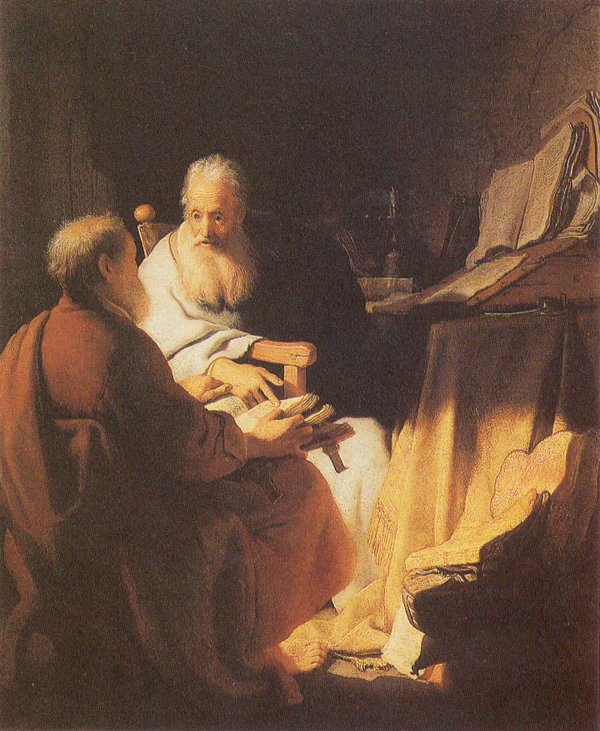
St. John Bosco, an Italian priest, founded a famous school for boys in the mid-1800’s and is the patron saint of students. He is known to have worked many miracles, but one from 1849 stands out. Returning from a journey, he learned that Charles, a 15 year old student, had died. He went immediately to the teenager’s home where the family informed him that Charles had been dead for over 10 hours. The body was laid out in the living room, already dressed for burial.
Fr. Bosco asked everyone to leave except the mother and the aunt. After some time in silent prayer, he cried out: “Charles, rise!” Charles emitted a long sigh, stirred, opened his eyes, stared at his mother and asked, “Why did you dress me like this?” Then, realizing Fr. Bosco was present, he told him how he had cried out for him and how he had been waiting for him. He exclaimed, “Father, I should be in hell!” He told of how a few weeks before he had fallen into serious sin. Then he said he had a “dream” of being on the edge of a huge fiery furnace, and as he was about to be thrown into the flames, a beautiful lady appeared and prevented it. She said, “There is still hope for you, Charles. You have not yet been judged.” Then he heard the voice of Fr. Bosco calling him back.
Charles asked Fr. Bosco to hear his confession. After his confession, the mourners filled the room again, and Fr. Bosco said, “Charles, now that the gates of heaven lie wide open for you, would you rather go there or stay here with us?” A profound silence filled the room. Charles, with tears in his eyes said, “I’d rather go to heaven.” Then he leaned back on the pillows, closed his eyes and breathed his last.
Unless Jesus’ Second Coming happens first, each of us here will die, and rise. As we meditate on Jesus’ resurrection, let us consider how ready we are to meet Him.
 The 2nd Glorious Mystery:
The Ascension of Jesus into Heaven.
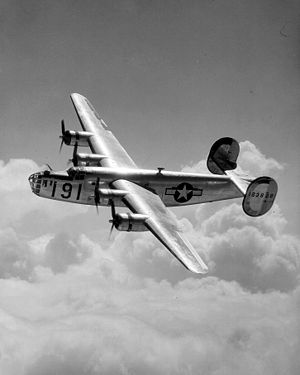
St. Padre Pio is another Italian priest from not so long ago who also worked remarkable miracles. During WWII, Allied planes flew bombing raids over Italy. Almost all of the centers of the region were subjected to repeated bombardment, but no bombs ravaged the town of San Giovanni Rotondo. Every time the aviators approached that place, they saw a monk flying in the air who prevented them from dropping their bombs. Understandably, reports of this flying friar did not amuse the superior offices.
Bernardo Rosini, a general of the Italian Air Force, recounts this story: “One day, an American commander wanted to lead a squadron of bombers himself to destroy the German arms depository of war material that was located at San Giovanni Rotondo. The commander related that as he approached the target, he and his pilots saw rising in the sky the figure of a friar with his hands held outward. The bombs released of their own accord, falling in the woods, and the planes completely reversed course without any intervention by the pilots.”
Someone told the commanding general that in a convent at this town, there lived a saintly man. At war’s end, the general wanted to go meet this person. “He was accompanied by several pilots… He went to the convent of the Capuchins. As soon as he crossed the threshold of the sacristy, he found himself in front of several friars, among whom he immediately recognized the one who had ‘stopped’ his planes. Padre Pio went forward to meet him, and putting his hand on his shoulder, he said, `So, you’re the one who wanted to get rid of us all!’”
As we meditate on the Ascension of Jesus, to the right hand of the Father in Heaven, let us pray that He would establish justice and peace, in this country and the whole world, in our time.
 The 3rd Glorious Mystery:
The Descent of the Holy Spirit at Pentecost
We usually don’t associate India with Christianity, but that nation has over 24 million Christians. That’s about as many people as live in Texas, our second largest state. If you were to ask them how the faith reached their land they would point to St. Thomas the Apostle.
What led St. Thomas, who at first refused to even believe in the Good News, to travel over 2,500 miles to bring them the Gospel? It was not merely seeing the risen Christ. Jesus knew His disciples would need more to strengthen them then merely their memories of Him. St. Thomas journeyed because the Lord had sent the Holy Spirit at Pentecost, to fill them with gifts, like wisdom, courage, and zeal.
If we are in the state of grace, God the Holy Spirit dwells in us too, and He wants to empower us with His gifts. As we meditate on the descent of the Holy Spirit at Pentecost, let us pray for whatever spiritual gift that we need the most.
 The 4th Glorious Mystery:
The Assumption of the Virgin Mary.
No Church, in the East or the West, claims to contain the body of St. Mary. This is because “the Immaculate Mother of God, the ever Virgin Mary, having completed the course of her earthly life, was assumed body and soul into heavenly glory.” This is because Jesus would not suffer Mary, His sinless, faithful beloved, to undergo corruption.
Death is a consequence of human sin, and without human intervention, as in embalming or mummification, our dead bodies will ordinarily experience its corruption. But, sometimes, the Lord preserves the dead bodies of his saints, to give a sign of their holiness, and to show that death is not all that awaits us.
Among the numerous saints whose incorrupt bodies you can still see today are: St. John Bosco, St. John Vianney, St. Catherine Laboure (the visionary of the Miraculous Medal), St. Bernadette Soubirous (the visionary of Lourdes), and St. Maria Goretti.
As we meditate on the Assumption of the Virgin Mary, let us pray for purity in our lives.
 The 5th Glorious Mystery:
The Coronation of Mary as the Queen of Heaven and Earth
Once, when St. Maximillian Kolbe was a boy, his behavior began trying his mother’s patience. She said in exasperation, “Maximillian, what will become of you?” As St. Maximillian writes, “Later, that night, I asked the Mother of God what was to become of me. Then she came to me holding two crowns, one white, the other red. She asked me if I was willing to accept either of these crowns. The white one meant that I should persevere in purity, and the red that I should become a martyr. I said that I would accept them both.” St. Maximillian would receive both crowns, as a holy Franciscan brother, and as a victim of the Nazis at Auschwitz, were he took the place of another innocent man who was condemned to die.
Jesus crowns his holy ones. He wills that those who share in His sacrifice should also share in His glory. As we meditate on the Coronation of Mary, let us pray to accept whatever crowns of burden and glory the Lord wants to give to us.