Archive for August, 2013

The “In Brief” Catechism on the Transmission of Divine Revelation (CCC #96-100)

August 25, 2013

● What Christ entrusted to the apostles, they in turn handed on by their preaching and writing, under the inspiration of the Holy Spirit, to all generations, until Christ returns in glory.

● Sacred Tradition and Sacred Scripture make up a single sacred deposit of the Word of God in which, as in a mirror, the pilgrim Church contemplates God, the source of all her riches.

● The Church, in her doctrine, life and worship, perpetuates and transmits to every generation all that she herself is, all that she believes.

● Thanks to its supernatural sense of faith, the People of God as a whole never ceases to welcome, to penetrate more deeply and to live more fully from the gift of divine Revelation.

● The task of interpreting the Word of God authentically has been entrusted solely to the Magisterium of the Church, that is, to the Pope and to the bishops in communion with him.

Falsely Accused

August 21, 2013

In his time, Jesus was accused of being a glutton and a drunk, a sinner, a madman, a blasphemer, an insurrectionist, a false prophet, & demon-possessed. (And these are just some of the slanders that were included in the Gospels. Imagine what was left out!) Jesus was not surprised by these hostile reactions; he understood human nature well.

In our time, terrible things are constantly said about the Church and her leaders. Remember when Pope Benedict was even accused of being a Nazi? Is there any “controversial” teaching for which the world does not condemn the Church as being hateful, hypocritical, or cruel? We will experience hostility personally as well for standing with Jesus’ Church, but this should not surprise us. The Body of Christ, the Church, will share the experiences of Jesus Christ, our Head.

As Jesus said, “If the world hates you, realize that it hated me first. … If they persecuted me, they will also persecute you. …In the world you will have trouble, but take courage, I have conquered the world.”

Important Church Documents Revealed

August 20, 2013


● Encyclicals by the First Catholic Pope:

Blessed be the God” (ευλογητος ο θεος – Eulogetos o Theos)
As Everything to Us” (ως παντα ημιν – Hos Panta Amin)


● An Online Archive of Little-Known Documents from the 21st Ecumenical Council.

The Saints of the Week

August 18, 2013

●  August 20—St. Bernard of Clairvaux

He was a 12th century abbot and a reformer and Doctor of the Church. You may know the beautiful Memorare Prayer he composed:

Remember, O most gracious Virgin Mary, that never was it known that anyone who fled to thy protection, implored thy help, or sought thy intercession was left unaided. Inspired with this confidence, I fly to thee, O Virgin of virgins, my Mother; to thee do I come; before thee I stand, sinful and sorrowful. O Mother of the Word Incarnate, despise not my petitions, but in thy mercy hear and answer me.  Amen.

 ●  August 21—St. Pope Pius X

This Holy Father, who reigned from 1903 t0 1914, notably promoted the daily reception of Jesus in the Holy Eucharist:

“If the Angels could envy, they would envy us for Holy Communion.”

“My advice is that you receive holy communion frequently—if you cannot do so daily—and unite yourself to the Savior. Make frequent visits to him in the solitude and silence of the tabernacle.”

●  August 22—The Queenship of St. Mary

Why do we celebrate the Blessed Virgin Mary as a queen? In the days of the Davidic kingdom, Jerusalem’s kings took multiple wives. Who, then, was considered the queen? The king’s mother was acknowledged as queen mother. She had a throne at the king’s right hand, the seat of honor, and served as a special intercessor in the kingdom, bringing subjects’ requests to her son. (See 1 Kings 2:17-20)

St. Mary, our sweet Lady, is the mother of Jesus, the everlasting Davidic king whose reign extends over all. Therefore, in his Kingdom, Mary is the queen mother, the queen of heaven and earth, the celebrated queen of all creation. She now sits enthroned at Christ’s right hand and serves as a powerful and compassionate intercessor for us all.

What do the Virgin Mary & the Ark of the Covenant Have in Common?

August 17, 2013

The Ark of the Covenant bore the presence of God and three other important things, while Mary’s womb bears Jesus Christ, our Priest, Prophet and King. (Hebrews 9:4)

The Ark bore the Ten Commandments, the word of God in stone, while Mary’s womb carries Jesus Christ, the Word of God in flesh. (Deuteronomy 31:26, John 1:14)

The Ark bore the staff of Aaron which had miraculously blossomed, while Mary’s womb carries Jesus Christ, a bud blossoming miraculously from the stump of Jesse. (Numbers 17:10, Isaiah 11:1)

The Ark bore a gold container of Manna from heaven, while Mary’s womb carries Jesus Christ, the Bread from heaven. (Hebrews 9:4, John 6:41)

The Ark was made of wood overlaid with pure gold, inside and out, while Mary is a human being who is made “full of grace.” (Exodus 25:10-11, Luke 1:28)

King David joyfully leaped and danced before the Ark, while St. John the Baptist leaps within his mother’s womb at Mary’s arrival. (2 Samuel 6:14, Luke 1:44)

David asks, “How can the ark of the Lord come to me,” while St. Elizabeth asks, “And how does this happen to me, that the mother of my Lord should come to me?” (2 Samuel 6:9, Luke 1:43)

The Ark remained in the house of Obed-edom outside Jerusalem for three months and God blessed his whole house, while Mary remains in the house of Zechariah in Judea for three months. (2 Sam 6:14, Luke 1:56)

No man was to touch God’s holy Ark, lest they die. St. Joseph holds a similar reverent regard towards Mary, his wife. (Numbers 4:15, 2 Samuel 6:7, Matthew 1:25)

The Ark was a mercy-seat which served as the throne for God’s presence on earth. “On entering the house [the Magi] saw the child with Mary his mother.” (Exodus 25:22, Matthew 2:11)

In his vision of heaven, St. John saw the Ark revealed. The next thing he sees is a glorious woman pregnant with the Christ child. (Revelation 11:19, 12:1)

Just as the Ark of the Covenant was of central, though secondary, importance in the Old Covenant, so God gives the Blessed Virgin Mary an essential role in his New Covenant.

The “In Brief” Catechism on the Revelation of God (CCC #68-73)

August 17, 2013

● By love, God has revealed himself and given himself to man. He has thus provided the definitive, superabundant answer to the questions that man asks himself about the meaning and purpose of his life.

●  God has revealed himself to man by gradually communicating his own mystery in deeds and in words.

●  Beyond the witness to himself that God gives in created things, he manifested himself to our first parents, spoke to them and, after the fall, promised them salvation (Genesis 3:15) and offered them his covenant.

●  God made an everlasting covenant with Noah and with all living beings (Genesis 9:16). It will remain in force as long as the world lasts.

●  God chose Abraham and made a covenant with him and his descendants. By the covenant God formed his people and revealed his law to them through Moses. Through the prophets, he prepared them to accept the salvation destined for all humanity.

● God has revealed himself fully by sending his own Son, in whom he has established his covenant forever. the Son is his Father’s definitive Word; so there will be no further Revelation after him.

20 Good Reasons

August 8, 2013

Twenty good reasons to attend Mass on Sundays and every holy day of obligation: 

  1. Jesus wants you there.

  2. Mary wants you there.

  3. The angels and saints want you there.

  4. Father wants you there.

  5. Jesus, through his Church, insists.

  6. Our Church needs prayers.

  7. Our world needs prayers.

  8. Our country needs prayers.

  9. Your family and friends need prayers.

  10. Your absence would deprive our parish.

  11. We must put God first in our lives.

  12. We must keep the 3rd Commandment.

  13. Kids must see that Mass is important.

  14. Joining at Mass prepares us for Heaven.

  15. If we refuse, we are unready for Heaven.

  16. The Mass empowers you for daily life.

  17. The Holy Spirit would speak to you.

  18. The Son would come to you.

  19. The Father would bless you.

  20. God is not outdone in generosity.

The “In Brief” Catechism

August 8, 2013

In 1992, Pope John Paul the Great released the Catechism of the Catholic Church as “a sure norm for teaching the faith.” It is an excellent resource for anyone wishing to practice or understand the Catholic Faith better, but who has the time to read it?

Thankfully, the Catechism summarizes its extensive teaching into 59 “In Brief” sections. If you are committed to learning more about your Catholic Faith in an easy though comprehensive way, then study the “In Brief” Catechism in this year ahead.

On Man’s Capacity for God (CCC #44-49)

● Man is by nature and vocation a religious being. Coming from God, going toward God, man lives a fully human life only if he freely lives by his bond with God.

● Man is made to live in communion with God in whom he finds happiness: “When I am completely united to you, there will be no more sorrow or trials; entirely full of you, my life will be complete.” (St. Augustine)

● When he listens to the message of creation and to the voice of conscience, man can arrive at certainty about the existence of God, the cause and the end of everything.

● The Church teaches that the one true God, our Creator and Lord, can be known with certainty from his works, by the natural light of human reason.

● We really can name God, starting from the manifold perfections of his creatures, which are likenesses of the infinitely perfect God, even if our limited language cannot exhaust the mystery.

● Without the Creator, the creature vanishes. This is the reason why believers know that the love of Christ urges them to bring the light of the living God to those who do not know him or who reject him.

Catholic Word Puzzles

August 6, 2013

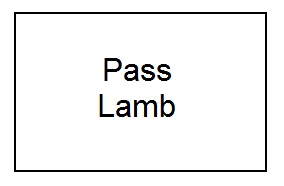
Can you decipher the Catholic phrases represented in these word puzzles? The first, for example, is “Walking on Water”:
Walking on WaterGo in PeaceThree Days in the TombPass Over LambJesus Rose on the Third DayVirgin MarySeparated BrethrenArk of the CovenantLove Covers a Multitude of SinsThe Second Letter of Paul to the Thessalonians

Solutions [Highlight to Reveal]: “Go in Peace,” “Three Days in the Tomb,” “Passover Lamb,” “Jesus Rose on the Third Day,” “Virgin Mary,” “Separated Brethren,” “Ark of the Covenant,” “Love Covers Many (a Multitude of) Sins,” “The Second Letter of Paul to the Thessalonians.”

Pope Francis’ August Prayer Intentions

August 6, 2013

General Intention: Parents and Teachers
That parents and teachers may help the new generation to grow in upright conscience and life.

Missionary Intention: The Church in Africa
That the local Church in Africa, faithfully proclaiming the Gospel, may promote peace and justice.

We Keep Only What We Have Given

August 6, 2013

By St. Basil the Great (330-379 AD)

You are going to leave your money behind you here whether you wish to or not. On the other band, you will take with you to the Lord the honor that you have won through good works. In the presence of the universal judge, all the people will surround you, acclaim you as a public benefactor, and tell of your generosity and kindness.

Do you not see how people throw away their wealth on theatrical performances, boxing contests, mimes and fights between men and wild beasts, which are sickening to see, and all for the sake of fleeting honor and popular applause? If you are miserly with your money, how can you expect any similar honor? Your reward for the right use of the things of this world will be everlasting glory, a crown of righteousness, and the kingdom of heaven; God will welcome you, the angels will praise you, all men who have existed since the world began will call you blessed. Do you care nothing for these things, and spurn the hopes that lie in the future for the sake of your present enjoyment. Come, distribute your wealth freely, give generously to those who are in need. Earn for yourself the psalmist’s praise: He gave freely to the poor; his righteousness will endure forever.

How grateful you should be to your own benefactor; how you should beam with joy at the honor of having other people come to your door, instead of being obliged to go to theirs! But you are now ill-humoured and unapproachable; you avoid meeting people, in case you might be forced to loosen your purse-strings even a little. You can say only one thing: “I have nothing to give you. I am only a poor man.” A poor man you certainly are, and destitute of all real riches; you are poor in love, generosity, faith in God and hope of eternal happiness.

A Multiple Choice Meditation

August 6, 2013

In the Gospel’s Parable of the Rich Fool, a rich man’s land produces bountifully. Upon seeing this, which of the following does the rich man say:

A) “I shall fill my barns and give the rest to the poor.”
B) “I shall tear down my barns and build larger ones to store everything away.”
C) “I shall keep only what I need and give the rest away.”
D) “Lord, what do you want me to do with all of this wealth?”

Which response do you think would have pleased the Lord most?

The Work & Riches God Esteems

August 6, 2013

Two weeks ago, Martha approached Jesus to complain about her sister, “Tell her to help me.” Today, a man goes to Jesus to complain about his brother, “Tell my brother to share the inheritance with me.” While both complaints are seemingly appeals for justice, Jesus refuses them. They are actually centered on selfishness rather than love. Jesus says, “it will not be taken from her,” and “take care to guard against all greed.”

The rich man in the parable says to himself, “You have so many good things stored up for many years, rest, eat, drink, be merry,” but the God says, “You fool, this night your life will be demanded of you.” The rich man is about to come to face his judgment as a truly poor man—possessing no wealth “in what matters to God.”

Martha is corrected for being obsessed with her anxious, self-centered work. The Rich Man is condemned for aspiring to an easy life of leisure. We are called to avoid both errors as we work diligently with generous love to accrue the kind of riches that God esteems.

Misquoting the Pope

August 6, 2013

They say a rumor can travel around the world while truth is still pulling its boots on.

  • In 2006, media reports suggested that Pope Benedict, in referencing the statement of a 14th century Byzantine emperor, had insulted Mohammad in a speech on faith and reason. Muslim protests and violence followed.
  • In 2010, news reports said that Pope Benedict had loosened the Church’s teachings against contraception in an interview.
  • Last May, the media indicated that Pope Francis had preached in a homily that atheists would go to heaven by merely doing good.
  • This week, reports made it seem that Pope Francis was diverging with the Church’s teaching on the wrongness of homosexual acts because of one reply in an interview with reporters on his flight returning from World Youth Day in Brazil.

In each of these cases, the initial headlines and news reports took the popes’ words out of their larger contexts and trumpeted them with a significance which they never had. Many reporters know little about religion and misunderstand the Catholic news stories they cover. Some reporters are hostile toward Catholicism and tend to report on the Church as if it were changing to accord with their views. The lesson here is that initial media coverage about a Pope saying something controversial can be relied upon to be unreliable. Do not be unsettled when you hear such “news reports.” Just wait a few days for the neglected facts and the unremarkable full story to catch up.