The St. Wenceslaus parish bulletin (PDF) for the 21st Sunday in Ordinary Time on August 21st, 2016.
Archive for August 19th, 2016
August 21st Parish Bulletin
August 19, 2016Mary, the World’s First Love
August 19, 2016
“When Whistler painted the picture of his mother, did he not have the image of her in his mind before he ever gathered his colors on his palette? If you could have preexisted your mother (not artistically, but really), would you not have made her the most perfect woman that ever lived—one so beautiful she would have been the sweet envy of all women, and one so gentle and so merciful that all other mothers would have sought to imitate her virtues? Why, then, should we think that God would do otherwise? When Whistler was complimented on the portrait of his mother, he said, “You know how it is; one tries to make one’s Mummy just as nice as he can.” When God became Man, He too, I believe, would make His Mother as nice as He could—and that would make her a perfect Mother.
She existed in the Divine Mind as an Eternal Thought before there were any mothers. She is the Mother of mothers — she is the world’s first love.”
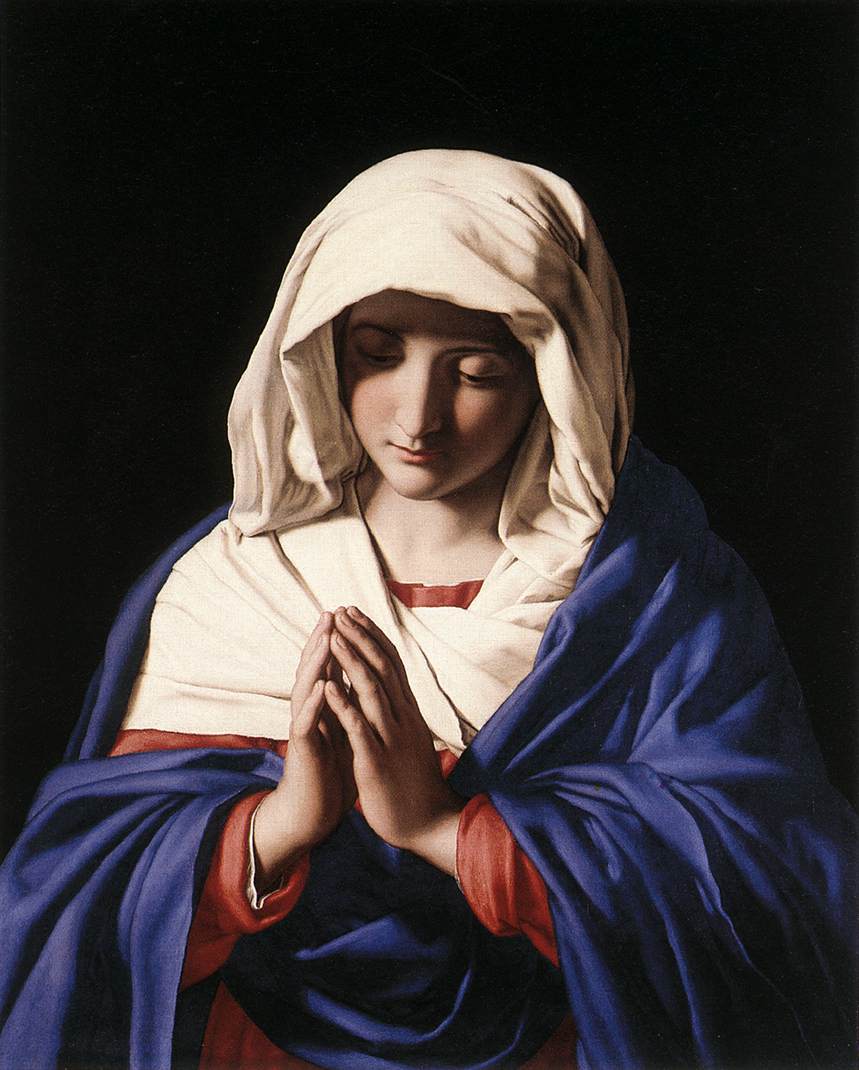
—Venerable Fulton Sheen (1895–1979 A.D.)
in The World’s First Love: Mary, Mother of God
How Many Will Be Saved?
August 19, 2016In this Sunday’s gospel, someone asks Jesus from the crowd, “Lord, will only a few people be saved?” Jesus replies, “Strive to enter through the narrow gate, for many, I tell you, will attempt to enter but will not be strong enough.” (Luke 13:24) Instead of quoting some particular figure, like one million or ten billion souls, Jesus says, “Strive to enter through the narrow gate…” We are left to wonder: in the end, will the number saved be numerous or few?
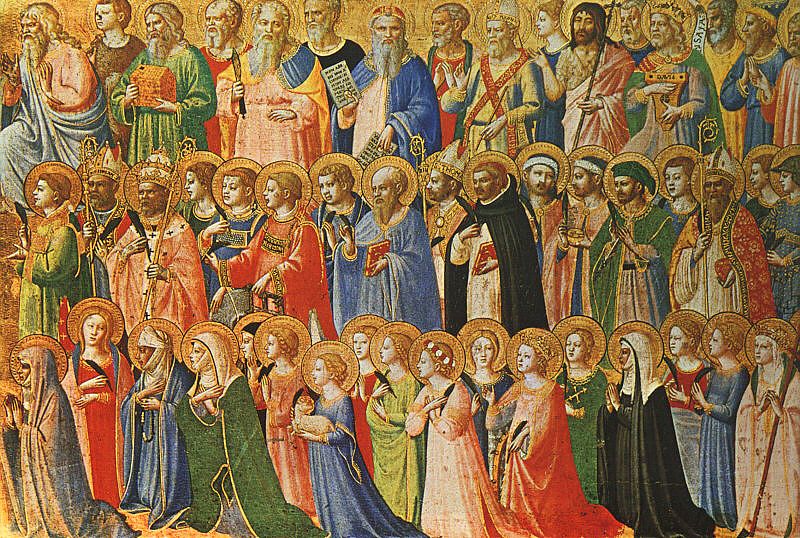 In the Book of Revelation, St. John witnesses a vast number of saints worshiping God in heaven. He beholds “a vision of a great multitude, which no one could count, from every nation, race, people, and tongue.” (Revelation 7:9) Note that this ‘countless multitude’ is different and much larger than the “one hundred and forty-four thousand marked from every tribe of the Israelites” that St. John enumerates several verses before. Jesus came to save souls not only from the twelve tribes of Israel. As the Lord declares through the prophet in Sunday’s first reading, “I come to gather nations of every language; they shall come and see my glory.” (Isaiah 66:18) Based on this, we can confidently say that a great number will be saved.
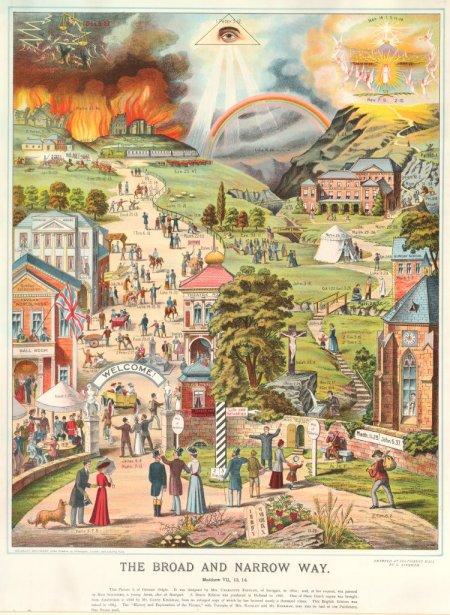
On the other hand, in our gospel’s parallel passage from St. Matthew, Jesus says, “Enter through the narrow gate; for the gate is wide and the road broad that leads to destruction, and those who enter through it are many. How narrow the gate and constricted the road that leads to life. And those who find it are few.” (Matthew 7:13-14) The ‘few’ who enter the narrow gate to life sounds smaller than the ‘many’ who do not. Based on this, it would seem that the number saved will be comparatively small.
However, “few” and “many” are relative terms which depend upon the context. For example, more than 18,000 Olympic medals have been awarded in the modern Summer and Winter Games and that is indeed many. But how many Olympic medalists have you personally ever met? Probably, at most, only a few. In a more tragic example, around 130,000 Americans die annually in accidents and that is awfully many. But at the same time, roughly 99.96% of Americans do not perish in accidents each year, making the 0.04% who do a relative few. The word “many” sometimes refers to a majority of people, but not always.
Jesus Christ suffered and died on the cross to redeem all mankind. Even if there were only one sinner on earth in all of human history, it seems that Jesus would have become man in order to offer himself for just him, or her, or you. Suppose that the number of human souls condemned on the last day turns out to be only a dozen. Knowing how much our Lord loves each and every person, will not those twelve feel like many in the heart of Jesus and those billions he saves seem too few? In any case, Jesus never reveals to us whether most human beings will be saved or lost. Either outcome is possible.
Why was Jesus not more clear about exactly how many people would be saved? Because he knew how such knowledge would be harmful for us. He knew that if we were told that most people would be saved in the end, it would lead us into dangerous presumption. If we were told that most people would be lost, he knew it would lead us into poisonous despair. Jesus “did not need anyone to testify about human nature. He himself understood it well.” (John 2:25)
Instead of providing us with some number or percentage, Jesus gives us some much more valuable and beneficial advice: “Strive to enter through the narrow gate (for whether you are saved or not depends, in part, upon you.)” God “wills everyone to be saved and to come to knowledge of the truth.” (1st Timothy 2:4) And to “as many as did accept him, [Jesus] gave power to become children of God.” (John 1:12) Let us strive to cooperate with God, let us accept the Lordship of Jesus Christ in our lives, so that we may be numbered among “the few” who are saved and enter into life.
 Parishable Items