The St. Wenceslaus parish bulletin (PDF) for the 1st Sunday of Advent on November 27th, 2016.
Archive for November, 2016
November 27th Parish Bulletin
November 24, 2016Ten Preparations for Dying Well
November 24, 2016 Make the preparations your funeral years before it arrives. Do you have any preferences concerning your headstone and gravesite, Mass readings and hymns, funeral home and parish? Making these details known to your family members in advance will ensure your wishes are met and spare them later stress in a difficult time.
Talk about your future passing with your loved ones. They otherwise may be too afraid to raise the topic of death. Yet such conversations can be an opportunity for faith-sharing, a cause of greater peace of mind for you, and a consolation to them down the road.
Deathbed conversions do happen, but rarely. Most people die as they have made a habit of living. Do not put off your personal conversion.
Practice daily prayer, at least weekly communion, regular (even monthly) confession, and constant Christian virtue.
Keep in mind the ancient Latin phrase Memento mori: “Remember that you have to die.” And heed, also, the wisdom of Sirach 7:36: “In all you do, remember the end of your life, and then you will never sin.”
Tell the most important people in your life the most important phrases in life: “I’m sorry,” “Please,” “Thank you,” and “I love you.” Say these things to friends, family, and God often.
Prepare an “advanced directive” and designate a trusted person as your “medical power of attorney” in case you become incapable of making your own health care decisions. (Otherwise you could be deprived of the ordinary care Catholic medical ethics require; for example, by being deprived of nutrition and hydration.) These legal documents can be freely downloaded and completed from Pro-Life Wisconsin.
Receive the Sacrament of Anointing in light of serious illness or surgery (i.e., general anesthetic.) As the Catholic Catechism says, “The anointing of the sick is not a sacrament for those only who are at the point of death. Hence, as soon as anyone of the faithful begins to be in danger of death from sickness or old age, the fitting time for him to receive this sacrament has certainly already arrived.”
Pray for help from the patron saint of a happy death, St. Joseph, who likely died with Jesus and Mary with him at his bedside.
Explore an excellent website created by the Roman Catholic Church of England and Wales: ArtOfDyingWell.org.
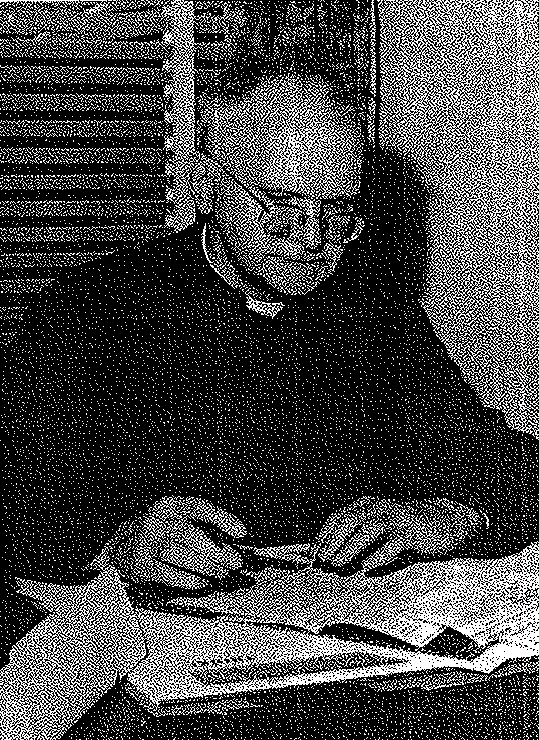
Msgr. Urban Baer’s Funeral Homily
November 20, 2016This is the text of part of the homily given by Fr. Francis Mulligan of St. John Church, Wilton, Wisconsin at the funeral Mass for Msgr. Urban Baer, former diocesan rural life director, former veterans’ chaplain, and former pastor of St. Wenceslaus Church in Eastman. Father Mulligan was a classmate of Msgr. Baer and he concelebrated the Mass of the Resurrection with La Crosse Bishop F.W. Freking and other priests in St. Wenceslaus Church in Eastman on November 19, 1973.
What shall we say about our friend on this occasion? He had the faith and appreciated it. It may have come to him through God-given channels of a good home, good parents, good schooling, good priests and sisters. He has a special vocation: he was called to serve God and he answered that call. He knew what it meant; he was an adult, capable of making a serious decision. There was no turning back.
I stopped to see him shortly before Fr. Charles Brady celebrated his 40th anniversary in the priesthood, and because he could not attend, I asked him to send greetings. “Just tell him the words of Father Feber,” he said: “To the noble shrine of love divine my lowly feet have trod; I ask no fame, no other name than this, a priest of God.” This was his own life motto.
In these days when the boat is being rocked by thoughtless children, we hear much about identity and fulfillment, personality and growth. Who would dare say that Monsignor Baer did not have all of these qualities? …
We knew him as a man who knew his vocation and loved it. In it he walked the way of humility and obedience and dedication. The capital sin of pride was not in him, whether he served as assistant or pastor. He worked for the salvation of people and the honor of the Church of God. When he served in the army, he was there to bring men to God. His highest rank was that of a priest of God. When he was sick and suffering, he bore his pains like a Francis of Assisi, knowing it was God’s will, and he knew that “Brother Body” would soon return to dust.
Father Urban loved the Church, and the Holy Father, and his bishop, and all men. He saw the need for her attributes of authority , infallibility and indefectibility. His theology was that of his Master, “obedience is better than sacrifice.” Among his theology books were the Holy Bible, the Missal, the Breviary, and the Crucifix. Of course he had read and learned the decrees of Vatican II. But he knew that the purpose of the Council was to make men holy.
His theology was not destructive or rebellious. Confession before or after first Communion, or receiving Communion in the hand or on the tongue — these were not disturbing questions for him. These were pastoral problems that could easily be solved. He also knew that “he who eats the Pope dies of ulcers.”
He was sad when his friends turned away and walked no more with him. He was pleased with aggiornamento, which cleaned out the dust of ages and made the house ready for renewal. But he was violently opposed to those who pull down the house because they wish to play with novelty.
Father Baer loved people—particularly the little people, and with them he identified himself. He knew that every man has the stamp of God and is a work of art.
Father Baer: I am here to express our thanks to you for all you have done for us. On a few occasions you told me that I should preach your homily when you died. It was presumptive to say that I would. We walked the road together, and walking with you was an experience and an inspiration. We met in St. Louis, in September of 1925, when we entered Kenrick seminary. Four years later we marched up the aisle together to be ordained priests. Nervously but unhesitatingly we made our commitment: “We are here.”
We offered our first Mass together, concelebrating with Archbishop John Glennon (later first cardinal of St. Louis.) After Mass he gathered us around him at the altar, where he spoke words that were not given to the rest of the congregation. He spoke about the priesthood and priestly service, of the honor and dignity connected with it. We were young, but we were old enough to make a decision and know that it meant. Gradually we advanced in the knowledge of our own ignorance and proceeded to grow up. We became fools for Christ.
I watched you work as a curate and saw you serve as a pastor where you were sent. It did not take an “act of Congress” to change you from one assignment to the next. You served in the little places, but you knew there were no little people.
When you served in the army, you were there to bring the men to God. The men knew their padre, and your greatest rank was that of Catholic priest. They knew you were like them, a civilian soldier. When the war ended, you returned to be appointed pastor here in the town of Eastman, where you served well for 15 years. This was your home, and now your body will rest with the people you loved.
Here you showed your ecumenical spirit. You served in the ministerial association and occasionally presided at meetings. You were an active member of the American Legion and the Veterans of Foreign Wars. But you were always the padre and you wore your uniform.
You were interested in farmers and farming, and you were appointed head of the rural life program in the diocese. Your activities branched out far beyond the limits of the diocese. I am sure that many here today visited farmers’ meetings at which you put on your act for better communication. We recall the red handkerchief and the corncob pipe with which you distracted us sometimes from a heated discussion. You were suited for this office, and I know that your book of advice on farming adorns a bookshelf in many homes.
Father Baer taught in season and out that every good gift comes from above. Of old the farmer had been described as a man “with the emptiness of ages on his face and on his back the burden of the world.” But Monsignor helped to change that idea. For him farming was the most dignified profession and the one closest to God.
For him this was God’s work, and this was loving his neighbor. In all of his service to people, he did not neglect his parish. First things came first. He administered the sacraments faithfully, offered the Holy Sacrifice daily, said the divine office for himself and all the people, for this was his business. He took care of the sick, and buried the dead, and you loved him and he loved you.
Then came sickness, eight years of sickness, and I suppose, loneliness. For he was human and the world was busy, and friends were slow to visit the sick. He helped where and when he could for a time. He accepted all of this as God’s will. He never seemed to lose his sense of humor, because, I think, humor is a daughter of charity. He knew he was dying. Each of us should know this. The sentence was passed when we began to live.
Today, Father Urban, the evidence is all in. Your case has been submitted. For you, I think, there will be a short hearing. This is your Father’s house. He has been waiting. Here is your Brother Christ. You were an Alter Christus. You communicated Christ to others. And here is Mary from whom the Word was made Flesh. Hail her again, as you did so often during your life and sickness. You know her, for she wears a rosary. And when you look around in astonishment at the wonder of it all, take a little time out to ask the Mother of God to pray for us sinners here below.
Father Urban, as a member of the Church Triumphant, help us who are still soldiering, sometimes plodding alone where the mud is heavy, and our eyes blinded with filth and the devil’s pollution, and our shoulders ache beneath the pack, our own and those of the fallen. Help us to keep looking up, beyond the margin of the earth, where we have not a lasting city, but where we seek one that is to come.
November 20th Parish Bulletin
November 17, 2016The St. Wenceslaus parish bulletin (PDF) for the Feast of Christ the King on November 20th, 2016.
November 13th Parish Bulletin
November 10, 2016The St. Wenceslaus parish bulletin (PDF) for the 33rd Sunday in Ordinary Time on November 13th, 2016.
Catholic Teachings About The End Times
November 10, 2016Catechism of the Catholic Church #668-679
I. HE WILL COME AGAIN IN GLORY
Christ already reigns through the Church…
 “Christ died and lived again, that he might be Lord both of the dead and of the living.” Christ’s Ascension into heaven signifies his participation, in his humanity, in God’s power and authority. Jesus Christ is Lord: he possesses all power in heaven and on earth. He is “far above all rule and authority and power and dominion,” for the Father “has put all things under his feet.” Christ is Lord of the cosmos and of history. In him human history and indeed all creation are “set forth” and transcendently fulfilled.
As Lord, Christ is also head of the Church, which is his Body. Taken up to heaven and glorified after he had thus fully accomplished his mission, Christ dwells on earth in his Church. The redemption is the source of the authority that Christ, by virtue of the Holy Spirit, exercises over the Church. “The kingdom of Christ [is] already present in mystery,” “on earth, the seed and the beginning of the kingdom.”
Since the Ascension God’s plan has entered into its fulfillment. We are already at “the last hour.” “Already the final age of the world is with us, and the renewal of the world is irrevocably under way; it is even now anticipated in a certain real way, for the Church on earth is endowed already with a sanctity that is real but imperfect.” Christ’s kingdom already manifests its presence through the miraculous signs that attend its proclamation by the Church.
…until all things are subjected to him.
Though already present in his Church, Christ’s reign is nevertheless yet to be fulfilled “with power and great glory” by the king’s return to earth. This reign is still under attack by the evil powers, even though they have been defeated definitively by Christ’s Passover. Until everything is subject to him, “until there be realized new heavens and a new earth in which justice dwells, the pilgrim Church, in her sacraments and institutions, which belong to this present age, carries the mark of this world which will pass, and she herself takes her place among the creatures which groan and travail yet and await the revelation of the sons of God.” That is why Christians pray, above all in the Eucharist, to hasten Christ’s return by saying to him: Marana tha! “Our Lord, come!”
Before his Ascension Christ affirmed that the hour had not yet come for the glorious establishment of the messianic kingdom awaited by Israel which, according to the prophets, was to bring all men the definitive order of justice, love, & peace. According to the Lord, the present time is the time of the Spirit and of witness, but also a time still marked by “distress” and the trial of evil which does not spare the Church and ushers in the struggles of the last days. It is a time of waiting and watching.
The glorious advent of Christ, Israel’s hope
Since the Ascension Christ’s coming in glory has been imminent, even though “it is not for you to know times or seasons which the Father has fixed by his own authority.” This eschatological coming could be accomplished at any moment, even if both it and the final trial that will precede it are “delayed.”
The glorious Messiah’s coming is suspended at every moment of history until his recognition by “all Israel,” for “a hardening has come upon part of Israel” in their “unbelief” toward Jesus. St. Peter says to the Jews of Jerusalem after Pentecost: “Repent therefore, and turn again, that your sins may be blotted out, that times of refreshing may come from the presence of the Lord, and that he may send the Christ appointed for you, Jesus, whom heaven must receive until the time for establishing all that God spoke by the mouth of his holy prophets from of old.” St. Paul echoes him: “For if their rejection means the reconciliation of the world, what will their acceptance mean but life from the dead?” The “full inclusion” of the Jews in the Messiah’s salvation, in the wake of “the full number of the Gentiles,” will enable the People of God to achieve “the measure of the stature of the fullness of Christ,” in which “God may be all in all.”
The Church’s ultimate trial

Before Christ’s second coming the Church must pass through a final trial that will shake the faith of many believers. The persecution that accompanies her pilgrimage on earth will unveil the “mystery of iniquity” in the form of a religious deception offering men an apparent solution to their problems at the price of apostasy from the truth. The supreme religious deception is that of the Antichrist, a pseudo-messianism by which man glorifies himself in place of God and of his Messiah come in the flesh.
The Antichrist’s deception already begins to take shape in the world every time the claim is made to realize within history that messianic hope which can only be realized beyond history through the eschatological judgment. The Church has rejected even modified forms of this falsification of the kingdom to come under the name of millenarianism, especially the “intrinsically perverse” political form of a secular messianism.
The Church will enter the glory of the kingdom only through this final Passover, when she will follow her Lord in his death and Resurrection. The kingdom will be fulfilled, then, not by a historic triumph of the Church through a progressive ascendancy, but only by God’s victory over the final unleashing of evil, which will cause his Bride to come down from heaven. God’s triumph over the revolt of evil will take the form of the Last Judgment after the final cosmic upheaval of this passing world.
II. TO JUDGE THE LIVING AND THE DEAD
 Following in the steps of the prophets and John the Baptist, Jesus announced the judgment of the Last Day in his preaching. Then will the conduct of each one and the secrets of hearts be brought to light. Then will the culpable unbelief that counted the offer of God’s grace as nothing be condemned. Our attitude about our neighbor will disclose acceptance or refusal of grace and divine love. On the last day Jesus will say: “Truly I say to you, as you did it to one of the least of these my brethren, you did it to me.”
Christ is Lord of eternal life. Full right to pass definitive judgment on the works and hearts of men belongs to him as redeemer of the world. He “acquired” this right by his cross. The Father has given “all judgment to the Son.” Yet the Son did not come to judge, but to save and to give the life he has in himself. By rejecting grace in this life, one already judges oneself, receives according to one’s works, and can even condemn oneself for all eternity by rejecting the Spirit of love.
The Common Good & Our Duty to Vote
November 6, 2016CCC #1906-1909, 2239-2240
By “common good” is to be understood the sum total of social conditions which allow people, either as groups or as individuals, to reach their fulfillment more fully and more easily. The Catechism of the Catholic Church lists these “essential elements” as comprising the common good:
- The fundamental and inalienable natural rights of human persons.
- The basic common goods of society (food, clothing, health, work, education and culture, suitable information, the right to establish a family, etc.)
- The stability and security that comes with a just social order.
 The Church teaches it is the duty of citizens to contribute along with the civil authorities to the good of society in a spirit of truth, justice, solidarity, and freedom. The love and service of one’s country follow from the duty of gratitude and belong to the order of charity. Submission to legitimate authorities and service of the common good require citizens to fulfill their roles in the life of the political community. Submission to authority and co-responsibility for the common good make it morally obligatory to pay taxes, to exercise the right to vote, and to defend one’s country.
Election Day is this Tuesday, November 8th.
November 6th Parish Bulletin
November 3, 2016The St. Wenceslaus parish bulletin (PDF) for the 32nd Sunday in Ordinary Time on November 6th, 2016.
A Litany for the Souls in Purgatory
November 2, 2016O Jesus, Thou suffered and died that all mankind might be saved and brought to eternal happiness. Hear our pleas for further mercy on the souls of:
My dear parents & grandparents,
[Response: “My Jesus, Have Mercy”]
My brothers & sisters & other near relatives,
My godparents & sponsors of Confirmation,
My spiritual & temporal benefactors,
My friends & neighbors,
All for whom love or duty bids me pray,
Those who have suffered disadvantage or harm through me,
Those who have offended me,
Those whose release is near at hand,
Those who desire most to be united to Thee,
Those who endure the greatest sufferings,
Those whose release is most remote,
Those who are least remembered.
Those who are most deserving on account of their services to the Church,
The rich, who are now the most destitute,
The mighty, who are now powerless,
The once spiritually blind, who now see their folly,
The frivolous, who spent their time in idleness,
The poor who did not seek the treasures of heaven,
The tepid who devoted little time to prayer,
The indolent who neglected to perform good works,
Those of little faith, who neglected the frequent reception of the Sacraments,
The habitual sinners, who owe their salvation to a miracle of grace,
Parents who failed to watch over their children,
Superiors who were not solicitous for the salvation of those entrusted to them,
Those who strove for worldly riches & pleasures,
The worldly minded, who failed to use their wealth & talent for the service of God,
Those who witnessed the death of others, but would not think of their own,
Those who did not provide for the life hereafter,
Those whose sentence is severe because of the great things entrusted to them,
The popes, kings, & rulers,
The bishops & their counselors,
My teachers & spiritual advisors,
The priests & religious of the Catholic Church,
The defenders of the Holy Faith,
Those who died on the battlefield,
Those who fought for their country,
Those who were buried in the sea,
Those who died of stokes,
Those who died of heart attacks,
Those who suffered & died of cancer,
Those who died suddenly in accidents,
Those who died without the last rites of the Church,
Those who shall die within the next twenty-four hours,
My own poor soul when I shall have to appear before Thy judgment seat,
Eternal rest grant unto them, O Lord, and let perpetual light shine upon them: For evermore with Thy Saints, because Thou art gracious. May the prayer of Thy suppliant people, we beseech Thee, O Lord, benefit the souls of Thy departed servants and handmaids: that Thou mayest both deliver them from all their sins, and make them to be partakers of Thy redemption. Amen. Eternal rest grant unto them, O Lord. And let perpetual light shine on them. Amen. May their souls & the souls of all the faithful departed through the mercy of God, rest in peace. Amen.
 Parishable Items