Archive for December, 2017

What if Jerusalem were in Western Wisconsin?

December 29, 2017

(Not all will personally resonate with the reference city
chosen for this reflection, but I share this article because
its device and style may be fruitfully employed by others.)

One thing I brought back with me from my first trip to Israel was a better grasp of its geography. A visit to the Holy Land yields a previously unknown sense of scale offering new insights to the Gospel. In lieu of flying everyone abroad, perhaps I can bring its holy places closer to home. Let’s allow Bloomer, Wisconsin to represent the location of ancient Jerusalem and examine where other sites in the region would be situated relative to it.

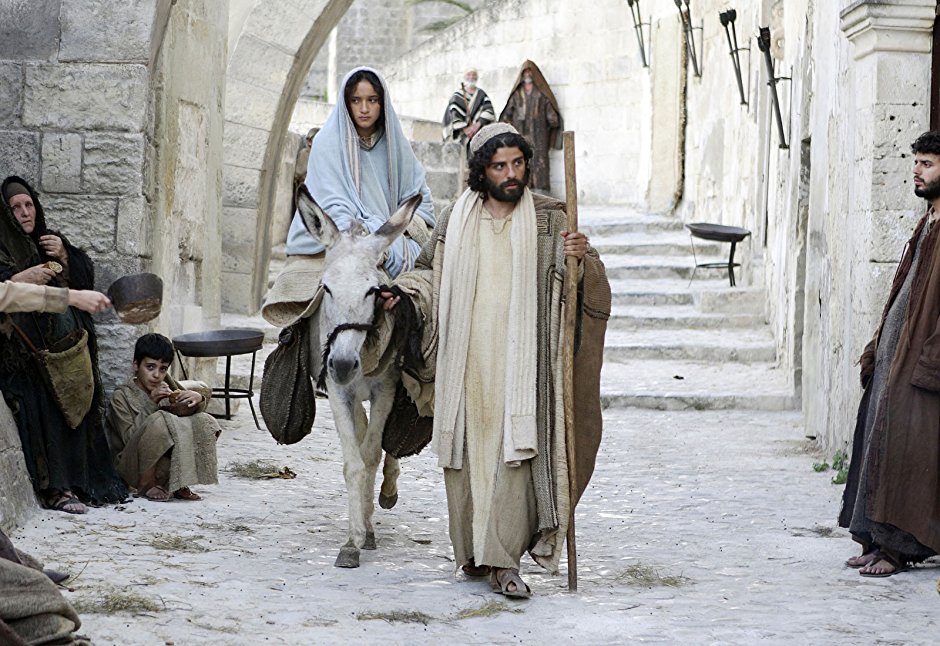
The town of Bethlehem is about five and a half miles (in a straight line, as the crow flies) south-southwest (SSW) from Jerusalem. So, allowing Bloomer to be Jerusalem, Jesus was born not far from St. John the Baptist’s Catholic Church in Cooks Valley, Wisconsin. If the Holy Family, retracing the steps of their Hebrew ancestors during their flight into Egypt, passed by the Great Pyramids of Giza (273 miles WSW from Jerusalem) they fled almost as far as Sioux Falls, South Dakota. After King Herod the Great’s death, Joseph and Mary brought Jesus to their hometown of Nazareth, 64 miles north of Jerusalem. Each year, Jesus’ parents would pilgrimage from Nazareth to Jerusalem, as from Hayward, Wisconsin to Bloomer and back, for the Jewish festival of Passover.

One of the things that struck me about seeing the Old City of Jerusalem in person is how very small it is. There is just 0.35 square miles – only twice the area of Vatican City – within its high stone walls. The locales of Jesus’ Passion, Resurrection, and Ascension are all reasonably short walks from each other.  If we take St. Paul’s Catholic Church in Bloomer as the location of the Jewish Temple, the Cenacle (or “Upper Room” where the Last Supper was celebrated) is located to the southwest at the intersection of Riggs Street & 19th Avenue. The site of Jesus’ crucifixion and tomb (the Church of the Holy Sepulcher) is almost due west of the church, in the middle of Bloomer’s Lake Como behind the A.J. Manufacturing building. And the traditional site of Jesus’ Ascension into Heaven from the Mount of Olives would be almost due east from the church, in the first field south of the Bloomer Public Elementary School.

As the young Church spread, a Pharisee named Saul of Tarsus obtained authority from the Jewish High Priest to arrest any Christians he might find in Damascus, 134 miles NNE from Jerusalem in Syria. However, the Lord Jesus enlightened him on his journey as to (quite fittingly) the Apostle Islands off of Wisconsin’s northern shore. This Saul, who became St. Paul, would go on to preach and win converts as in the Canadian provinces of Manitoba & Saskatchewan (i.e., Turkey & Greece.) Just like St. Peter, St. Paul was martyred for Christ far from home, 1,432 miles from Jerusalem in Rome, a distance like that of Seattle, Washington from Bloomer.

Following the Apostles, Jesus’ Church continued to grow through the centuries and around the world, winning new souls in new lands, including our own. Our Christian Faith has come to us today from ancient Jerusalem to St. Paul’s Catholic Church, wondrously spanning a distance equaling that of Bloomer, Wisconsin to Kyoto, Japan.


The two gray domes of the Church of the Holy Sepulcher appear behind the Islamic Dome of the Rock shrine atop the Temple Mount
in this photo I took in November 2016 from the western slope
of the Mount of Olives in Jerusalem.

Jesus Christ, the Center of History

December 25, 2017

If you had walked through the streets Bethlehem or Rome asking people on the first Christmas Eve, “What year is this,” the answers you’d hear might vary. The Sun numbers our days, the Moon tracks our months, and the seasons indicate the passage of years, but answering what year it is requires people to make reference to some shared historical event.

If you had bumped into one of the ancient world’s many sports fans on the first Christmas Eve, they might have told you that it was 3rd year of the 194th Olympiad. Once every four years, famous athletic competitions were held in Olympia, Greece. Freeborn Greek men would compete in footraces, chariot races, wrestling matches, javelin tosses, discus throws, and other events; for the honor of the Greek god Zeus, for the pride of their home city-states, and for their own personal glory. The winners received crowns or wreaths made of green olive leaves that would fade. All that remains of some of those ancient sports superstars today are their names in texts read less often today than last month’s newspapers.

If you had run into a merchant on the first Christmas Eve who used the Roman coins and roads to trade goods, he might have said that it was 752nd year since the founding of the City of Rome. Considering the wealth and influence of Rome at that time, it might have seemed like that empire would live and reign in the world without end. However, from decay within and barbarian attacks from without, much of what that empire built remains today, if at all, only as ruins for tourists.

If you had encountered someone enamored with power and celebrity on the first Christmas Eve, they might have answered that it was 42nd year of the reign of Emperor Caesar Augustus. It was a census he decreed that sent Joseph and Mary to Bethlehem. Early in his reign, Caesar Augustus claimed that the passage of Halley’s Comet over Rome was the spirit of his predecessor, Julius Caesar, rising into heaven. And so, since Julius Caesar had been a god, Caesar Augustus, as his heir, presumed to call himself “the son of a god.” Caesar Augustus would go on to die at age seventy-five and never be heard from again.

If you had spoken on the first Christmas Eve to someone focused on the politics and current events of the land of Israel, they might have replied that it was 38th year of the reign King Herod the Great, the King of Judea under the Romans. Herod the Great was a very controversial figure, with some Jews praising him and still more despising him: he expanded and gloriously refurbished the Temple in Jerusalem but was also a murderous tyrant, like when he ordered the deaths of the innocent baby boys in Bethlehem. Because the Roman Senate had appointed him as “the King of the Jews,” and since he was not descended from King David, nobody mistook Herod for being the Christ.

On the first Christmas Eve, some two thousand and eighteen years ago, only a handful of people on earth had any clue of the world-changing significance of what was about to occur. The baby born that night was the source of the universe and the center of human history.

In the year we call 525, a new way of numbering years was introduced by a monk named Dionysius the Humble. Dionysius numbered years using this baby’s birth as the starting point, naming it “1 A.D.” A.D. stands for the Latin phrase “anno Domini / in the year of our Lord.” 1 A.D. was dubbed the first year of our Lord on earth, and this is currently the 2,017th year of our Lord, Jesus Christ. Now I should mention that Dionysius has reason to be humble here as well. He estimated the time of Jesus’ birth as best as he could, but he seems to have been a little bit off. The best evidence today points to Jesus being born in 2 or 3 B.C. But regardless, it is most fitting that we mark and celebrate the birth of Jesus Christ as the center of human history and the most important person who has ever lived.

  • Christ is the undefeated champion whose glory does not fade. Even when he seems to be down, he triumphs in overtime. (And, unlike Aaron Rodgers, “not one of his bones shall be broken.”)
  • Christ’s holy kingdom has outlasted the Romans. In fact, he conquered them peacefully by converting their hearts. And today, his kingdom extends to all lands and people through his Holy Catholic Church.
  • Christ is greater than Caesar, he is stronger than death. When Jesus died, he rose again. And now he reigns, because he is truly the Son of God.
  • Christ is the King of Kings and Lord of Lords. He is our leader untainted by sin, who is truly wise, and cares about me and you.

Even those without any Christian faith must acknowledge Jesus’ positive influence on the world: in children treasured; in women respected; in slaves freed; in strangers welcomed; in millions and millions fed, clothed, treated, or taught, around the world and across centuries, all because of the baby born on Christmas.

A.D. does not stand for an “Arbitrary Date.” Anno Domini is no accidental demarcation of before and after. Jesus Christ merits more than our apathetic dismissal. Jesus deserves to be at the center of our years and the center of our lives. As he, this Christmas night, so humbly gives himself to you, please give yourself to him anew. He is the Christ, yesterday and today, the beginning and the end, the Alpha and Omega, all time belongs to him and all the ages; to him be glory and power, through every age and forever, in you and in me. Amen.

The Ox, the Ass, & the First Manger Scene

December 20, 2017

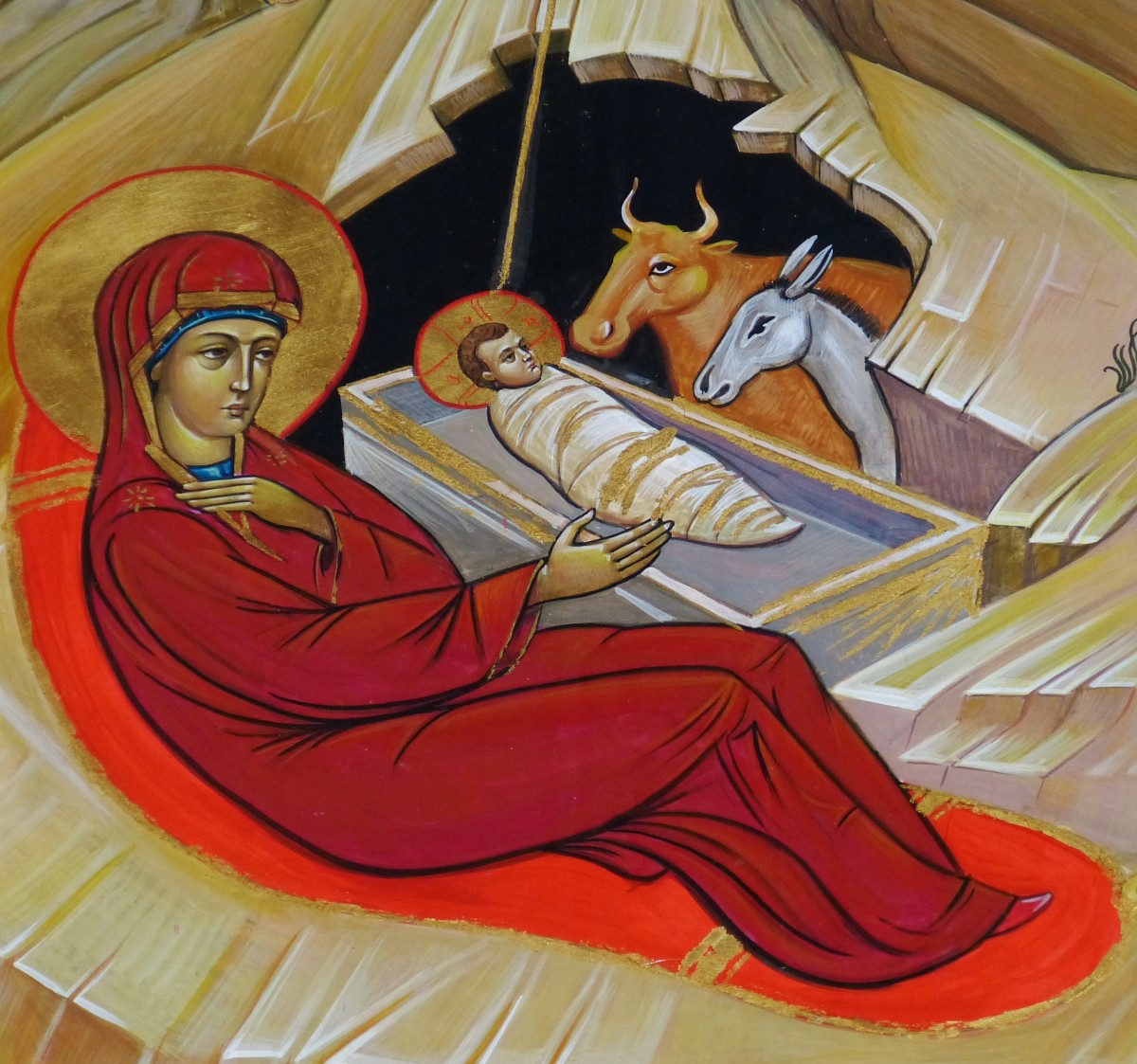
In the year 1223 A.D., about two weeks before Christmas and three years before his death, St. Francis of Assisi shared an innovative idea with a beloved friend: “I want to do something that will recall the memory of that child who was born in Bethlehem, to see with bodily eyes the inconveniences of his infancy, how he lay in the manger, and how the ox and ass stood by.” With Pope Honorius III’s approval and his generous friend’s help everything was ready for Christmas Eve.

Blessed Thomas of Celano (writing just six years after) recounts the unveiling of that first manger scene, or crèche:

“With glad hearts, the men and women of that place prepared, according to their means, candles, and torches to light up that night which has illuminated all the days and years with its glittering star. Finally the holy man of God arrived and, finding everything prepared, saw it and rejoiced. … The manger is ready, hay is brought, the (live) ox and ass are led in. The brothers sing, discharging their debt of praise to the Lord, and the whole night echoes with jubilation. The holy man of God stands before the manger full of sighs, consumed by devotion, and filled with a marvelous joy. The holy man of God wears a deacon’s vestments, for he was indeed a deacon, and he sings the holy gospel with a sonorous voice. Then he preaches sweetly to the people standing about, telling them about the birth of the poor king and the little city of Bethlehem.”

The Gospel accounts of Jesus’ birth make no mention of an ox or donkey, but St. Francis included them in his scene because the duo had so commonly appeared in Christian imagery and writings since the Early Church.

Like the crucified thieves beside Jesus’ cross, this pair of creatures beside Jesus’ crib can represent two types of people in our world. Some respond to the birth of God among us like a donkey, with a foolish, stubborn resistance. But others, like an ox, humbly take the yoke of Christ upon their shoulders, learn from him, and produce a great harvest. Some attend Christmas Mass eager to leave early and without plans to soon return, like Judas Iscariot at the Last Supper. Yet Jesus calls us to attend to him week in and week out as his faithful oxen so that we may have peace in this world: “Take my yoke upon you and learn from me, for I am meek and humble of heart; and you will find rest for yourselves. For my yoke is easy, and my burden light.”

The Temptations of the First Christmas

December 19, 2017

If I were a demon prowling about the world seeking the confusion, discouragement, and ruin of souls, how might I have tried to wickedly snare God’s beloved ones in the events leading up to the first Christmas?

If I were a demon, I would say to St. Elizabeth during her early months of pregnancy, “Did people suppose that your husband had some kind of vision when he took so long in the temple and came out unable to speak? He simply had a stroke. Zechariah will never speak again. Now you’re feeling sick every day and your abdomen is expanding. How could it possibly be a baby at your age? A cancer is growing inside of you. You’ll be dead soon. It’s hopeless.

If I were a demon, I would say to the Blessed Virgin Mary soon after the Annunciation, “You think you saw an angel? That’s crazy! You only dreamed or imagined it. Who are you to be the mother of God’s son? Who do you think you are! Don’t bother going to visit Elizabeth – you’ll only embarrass yourself. You had better hope this isn’t real, because none of your family, friends, or neighbors will believe you. Joseph will divorce and abandon you. You’ll be all alone.

If I were a demon, I would say to St. Joseph after he learned that Mary was with child, “Do you really believe she conceived by God’s Spirit? Who ever heard of such a thing? She’s lying and taking you for a fool. Even if it were true, who are you to be a foster-father to the Messiah? True or not, the best thing is for you to just get a divorce. Whatever you were thinking when you married her, you certainly made a terrible mistake.

Even once Christmas arrived, my diabolical efforts would not cease. I would caution Bethlehem’s shepherds to steer safely clear of that holy child and to keep watching over their flocks. I would counsel the Magi to dismiss the starry signs as coincidences and not to hazard a long, uncertain journey from the East. I would pressure Joseph to ignore the dream directing him to take his family into Egypt, and I would goad Mary not to trust in her loving husband’s lead: “God surely would have told you instead of only telling Joseph.” Thankfully, none of these people were kept from doing God’s will, tripped-up by these or other temptation traps, in relation to the first Christmas.

Some people think of temptation strictly as promptings to immoral pleasures. But temptation comes in many forms. We can be led to harmful inaction or disaster by temptations such as fear, doubt, sadness, and despair.

Some people assume that saints do not know temptation like the rest of us. But were Mary, Joseph, and Elizabeth oblivious to thoughts and unassailed by feelings like those I realistically described? Saints come to understand temptation quite well as they discern and persevere through the trials of life.

Some people believe that God only watches over and guides a few, favored saints – while having less care and concern for the rest of us – but this is also a temptation. Even if your life takes a shocking turn and you don’t know what to do, even if you have a stroke, or cancer, or your mind begins to fail, even if you are betrayed or abandoned by everyone, you are his dearly beloved one. Don’t listen to anyone who tells you otherwise, even if they speak to you in your own voice.

Sometimes we envision the first Christmas and all the events surrounding it in idyllic postcard pastels, as if they were flawless occasions of comfort and joy. But imagine being far from home and not being able to find a room for your very pregnant wife, or having to undergo labor and delivery on the floor of a stable. God was with Mary and Joseph and both experienced unforgettable happiness that night, but it was not a time preserved free from hardship or trial.

Sometimes we hope or expect our Christmas to be perfect, and strive for everything to go just right. Yet circumstances never fully cooperate. Things are less organized, less harmonious, less supremely happy than we wished them to be. From its beginning, Christmas has never been “perfect,” but its intrinsic goodness is always present for us — for Jesus Christ has come. This year, do not allow disquieting or perfectionistic temptations rob you and yours of Christmas joy.

Holy Days: Jesus’ Gift List — 1st Sunday of Advent—Year B

December 5, 2017

The prophet Isaiah, who pairs with St. John the Baptist as the one of the two most prominent prophets of the Advent season, cries out in our first reading today:

“Why do you let us wander, O Lord, from your ways,
and harden our hearts so that we fear you not?
Return for the sake of your servants, [your people.]”

“Oh, that you would rend the heavens and come down…
Would that you might meet us doing right,
that we were mindful of you in our ways!”

Can you relate to that? Does that resonate within you? Do you long for such things, too? We know that Christ has already come, that he will come at Christmas like he did last year, the re-celebration of his first coming some 2,017 years ago. Jesus has already been granted to us, and we too often take him for granted. He told his disciples, “Blessed are the eyes that see what you see. For I say to you, many prophets and kings [and righteous people] desired to see what you see, but did not see it, and to hear what you hear, but did not hear it.” Many ancient peoples waited and longed and hoped and prayed for the Christ to come. In the season of Advent, we cultivate a deeper longing for God like those generations past. This longing leads to devotion, and this devotion to more perfect love. Our long, devotion, and long prepare us for the Lord.

Jesus says in today’s Gospel:

“Watch… you do not know when the Lord of the house is coming, whether in the evening, or at midnight, or at [the wee hours], or in the morning. May he not come suddenly and find you sleeping. What I say to you, I say to all: ‘Watch!'”

In Jesus’ parable, a man travels abroad, leaving home and placing his servants in charge of their duties. The gatekeeper is ordered to be on the watch, and all are told to be prepared for whatever hour the Lord might arrive. His parable teaches us to be always ready, for either the day of Jesus’ Second Coming or the hour of your death.

Allow me to somewhat alter and re-imagine the parable Jesus told: Imagine the master and lord gathering all of his servants together and saying, “I want each of you to return to meet me here, at my house, on such-and-such a day, at a particular time.” This commandment would be even easier to keep than the instructions in the original tale. Knowing what we know of Jesus’ parables, what could we expect of the wise servants and what would the foolish ones do? A scenario much like this one faces us.

At the Last Supper, when Jesus said “do this in memory of me,” he willed for all his Church to often gather together as one to celebrate his sacrifice, his sacrament, the Eucharist. Through his Church, he instructs us when to gather; on Sundays (that is, the Lord’s Day) and other Holy Days. Unless there exists some grave or serious reason, like sickness, dangerous travel conditions, the need to care for another, or inescapable work, he expects us all to come. The Letter to the Hebrews says, “we should not stay away from our assembly, as is the custom of some…”

In Old Covenant, there were three annual Jewish pilgrimage festivals held in Jerusalem: the Feast of Passover, the Feast of Pentecost, and the Feast of Booths. The Lord obliged his often-busy people to journey far to Jerusalem. Luke’s Gospel tells us the Holy Family journeyed to Jerusalem each year for Passover. The road distance from their Nazareth home to Jerusalem is about 120 miles (or 90 if you cut straight through Samaria.) So, every year, Joseph, Mary, and Jesus walked or rode between 180 and 240 miles round-trip. God insisted on his people’s attendance so they would experience the gifts these Holy Days were. Some Jews may have felt this obligation an unwelcome burden, but their faithful observance gave their hearts an opportunity to be transformed by celebrating the festival and by encountering the Lord at his house, his temple.

The paradox or problem of preaching on the importance of attending Mass is that the people who need to hear it the most are least likely to. The family that comes half of the time has a 50% of hearing; the person who nine out of ten weekends is elsewhere has only a 10% chance; but maybe God’s providence will provide for them to encounter this message, perhaps you could pass along to them the main points.

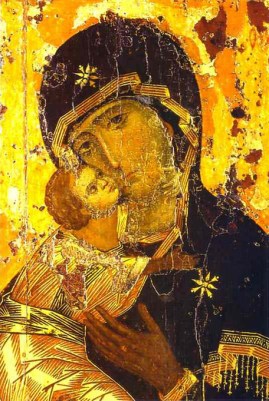
Our Lady of Vladimir, icon c. 1130 ADI’m preaching about this topic on this First Sunday of Advent in light of the Holy Days of Obligation in this season. For instance, this Friday, December 8th is the Solemnity of the Immaculate Conception, the creation of he Virgin Mary free from sin and filled with grace. Jesus wants us to celebrate this feast together with him and his mother. This year, Fourth Sunday of Advent (Dec 23rd / 24th) comes right before Christmas (Dec 25th.) So people are wondering, “Do we have to come to Mass twice?” Some ask in order to plan accordingly out of love for our Lord, while some ask hoping to get out of something. Either way, the answer is yes.

Maybe you feel a temptation to rebel, or an involuntary interior groan at that news. But remember how it goes for the wise in Jesus’ parables and the rewards they receive. Jesus says, “To the one who has, more will be given; from the one who has not, even what he has will be taken away.” Instead of regarding the call of this binding obligation (which it is) as merely a rule, re-frame it as a gift on Jesus’ list this year. Our faithful observance is a gift to him that may entail some small measure of sacrifice from us, but Jesus hopes to give us far surpassing gifts in return; the gift of himself and every good thing that comes with him. Our Lord is never outdone in generosity, so let us give him the generous gift of ourselves on Holy Days and throughout this Advent season.