Alongside other security personnel, the Holy Father and the Vatican City State are protected by one hundred and thirty-five men who have been called “the world’s smallest army.” Pilgrims and tourists to St. Peter’s Basilica may see them on duty wearing uniforms inspired by the Renaissance era – in garments comprised of yellow, blue, and red stripes and helmets topped with colored ostrich feathers. Yet these soldiers are not merely there for ceremonial decoration. Each of them takes a solemn vow to, if necessary, lay down their lives in defense of the pope. All of them are Roman Catholics, citizens of Switzerland, and have completed basic training with the Swiss Armed Forces. They are known as the Swiss Guard and have served the Holy Father semi-continuously for more than 500 years. But why Swiss guards, rather than Italian, Spanish, or French?
Before answering that, here is another small mystery of history. During the Revolutionary War, on the night of December 25th, 1776, General George Washington led his men in boats across the icy Delaware River to attack 1,500 enemy troops garrisoned in Trenton, New Jersey the next day. This daring tactic found their opponents unprepared. Our Continental Army suffered only two dead and five wounded in the mission but captured about nine hundred German soldiers. Yes that’s right, Germans. What were Germans doing in America during the Revolutionary War?
The reason why German soldiers fought for Great Britain in 1776 and why the pope began having Swiss guards in 1506 is that these troops were mercenaries, third-party soldiers-for-hire. In an era of conflict between Italian factions and his Papal States, the pope hired soldiers from friendly Switzerland five hundred miles away. It’s been the tradition to have Swiss guards ever since. And when the Revolutionary War broke out, the Holy Roman Emperor, Frederick II, saw an opportunity. He leased his German soldiers (nicknamed Hessians) to the British Empire to fight for them overseas.
Those serving in Swiss Guard today are remarkable and devout young men. And even if the pope were unable to continue paying their salaries I would not be surprised if almost all of them would faithfully complete their terms of service. The classic, mercenary soldier-for-hire, however, does not serve because he loves the king, country, or people he sides with, he does not risk his life because he believes in some just and noble purpose. The mercenary’s motivation is the money he is paid or promised. Deny him that payment and his loyalty and services will disappear with him. Similarly, the saints throughout the centuries have observed that many Christians have a “mercenary love” for God. That is, they love the Lord when times are easy, so as long as he “pays” them with many graces, consolations, and good things. But when those sensible blessings dry up, their loyal service and devotion disappear. Though God’s love does not depart from them, but they abandon him.
The Hebrews in the desert had witnessed God’s care for them. They saw the mighty deeds he wrought in the Exodus. But when they became hungry, the whole Israelite community grumbled. “Would that we had died at the Lord’s hand in the land of Egypt, as we sat by our fleshpots and ate our fill of bread! But you had to lead us into this desert to make the whole community die of famine!” God knew they needed food, he fully intended to meet their need, but he wanted them to trust in him and rely on him as a good Father. The Lord Jesus likewise desires a closer personal relationship with each one of us.
In today’s gospel, Jesus calls out the crowds at Capernaum on their mercenary motives. They love the gifts, but not yet the Giver. “Amen, amen,” he says to them, “you are looking for me not because you saw signs but because you ate the loaves and were filled. …Believe in [me,] the one [the Father] sent.” Jesus calls them higher, to a devoted love for himself, “Do not work for food that perishes but for the food that endures for eternal life, which the Son of Man will give you. … I am the bread of life.” When we look at ourselves, what is the quality of our love for God?
St. Basil the Great wrote in the fourth century: “If we turn away from evil out of fear of punishment, we are in the position of slaves. If we pursue the enticement of wages, …we resemble mercenaries. Finally, if we obey for the sake of the good itself and out of love for him who commands… we are in the position of [devoted] children.” The Doctor of the Church, St. Bernard Clairvaux observed in the twelfth century: “Whosoever praises God for his essential goodness, and not merely because of the benefits he has bestowed, does really love God for God’s sake, and not selfishly.” So how can we develop a more perfect love for God, and how can we be more faithful when our next dry time of trial comes?
One way to a purer, more personal love for God is to realize that when you come to the sacraments, Jesus Christ meets you there. The Eucharistic Host you receive is him. It is he who forgives your sins through the priest in Confession. And when you receive the Anointing of the Sick, Jesus is uniting your suffering to his and his strength to your weakness. So do not avoid encountering him and do not meet him on autopilot. Recognize whom you are approaching, appreciate the Gift and appreciate the Giver, and your relationship with Jesus will grow.
This personal relationship with the Lord is also cultivated through daily prayer. Memorized prayers can be very good. Our Fathers, Hail Marys, litanies, and chaplets are great. But they can also become routine and impersonal, like chores. Regularly speak to our heavenly friends in your own words as well. When you boil it down, there are basically four things we can say whenever we pray: “I’m sorry, please, I love you, and thank you.” That is, there are prayers of Sorrow, Asking, Loving, and Thanking. (That’s S-A-L-T or SALT.) Many people spend their prayer times focused on the first two: Sorrow and Asking: “I’m sorry, Lord, please forgive me. Please Lord, grant this good thing for me and for them.” Jesus wants to pray for such things, but be mindful that your prayers are properly seasoned with expressions of Loving and Thanking as well. “I love you, Lord, and I praise you. You are holy and worthy and good. I thank you for your blessings all around me.” Focus more on rejoicing in who he is and what he’s done, not just on the things you want, and your love for him will deepen.
And when you find yourself in your next dry desert, tried and hungering like the Hebrews, or fighting on your next battlefield, serving without appearing payment, do not spurn or abandon the Lord. Go to him with your needs, recognizing how much you need him. Realize that even when the pleasant, warm fuzzies of consolation are withdrawn for a time, the Lord’s love for you remains and he offers you his sufficient grace to keep going in his will. And be patient knowing, that sooner or later, felt consolations and peace will return. With a more personal, more pure, and more perfect love for God, you can persevere as far more than a slave or mercenary, but as a devoted child of the Father and a true friend of Christ, as you are meant to be.
 In today’s gospel, Andrew the brother of Simon Peter sees the hungry crowd of thousands and says to Jesus, “There is a boy here who has five barley loaves and two fish; but what good are these for so many?” Andrew is discouraged and despairing. He has located some food – five loaves and two fish, and if they’re for sale he perhaps has enough coins on his person to purchase them. “But what good are these for so many?” Does what Andrew has to offer really matter? Will it make any real difference?
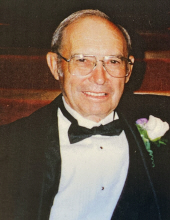 He is known and loved by many. A man others are drawn to because they feel welcome and loved around him. He is wise and witty, joyful and just, honest and unpretentious; a strong, steady, peaceful presence. A great storyteller and a great listener. A hardworking craftsman who both builds and repairs. He’s faithful and devout, hating no one, a lover of God’s word and a believer in the Resurrection. He is the reason that we are all gathered here today. The man I speak of is Jesus Christ.
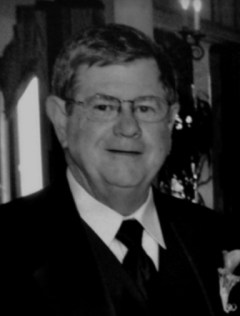 St. John the Baptist Parish is honored welcome you and to offer our greatest prayer, the Holy Mass, for John’s soul and the consolation of all who know and love him. No short funeral homily can capture the fullness of a person. If I were to preach to you for an hour about his life, afterwards I bet that each of you here could add another unique story. This morning, I’m going to reflect upon just a single aspect of John’s life, one that all of you who are his family and friends are already familiar with: his being a chef.
 The “ninth of Av,” also known as Tisha B’Av, is no ordinary day for observant Jews, but a day of fasting and abstaining, because ninth of Av has seen multiple calamities in Jewish history. First, during the Exodus, when the twelve spies sent by Moses returned from scouting the Land of Canaan, most of them voiced negative reports, saying there was no way The Promised Land could be conquered. The Hebrews despaired and cried and refused to proceed. As a consequence, God made his people spend 40 more years in the desert until almost all the adults of that generation had died without entering The Promised Land. The next calamity came in the days of the Prophet Jeremiah, after the founding of the Kingdom of Israel. In the sixth century B.C., the Jewish Temple built by King Solomon in Jerusalem was destroyed by the conquering Babylonians. With that disaster, the Jews were forced to leave their homeland and resettle in the East, and this Babylonian Exile lasted about seventy years until a significant number of Jews were able to return. A third catastrophe occurred in 70 A.D., when the Second Temple in Jerusalem was destroyed by the Romans in response to a Jewish revolt. Not one stone was left upon another, as Jesus had foretold about 40 years before it came to pass. All of these devastating catastrophes, all three of these traumatic, mournful events (the denial of The Promised Land and the destruction of the first and second Temples) are remembered as occurring over the ninth day of Av.
 Today St. Paul’s Parish is pleased to open our church and offer our prayers at this wake service for Len, whom you know and love so well. No brief homily can capture the fullness of someone’s life. But I believe that aspects of a Christian’s life will contain images of Christian mysteries. Jesus preached about the Kingdom of God using images like captured fish, sprouting seeds, precious pearls, and other things as illustrations. Similarly, a particular part I learned about Len’s life—though surely not the most important aspect of his life—especially strikes me as an icon of important Christian truths.
 On my last homily I talked about the fact that faith can produce miracles. Today’s scripture readings helps us to understand how we acquire that gift of faith and participate in God’s divine partnership plan.