Archive for August, 2021

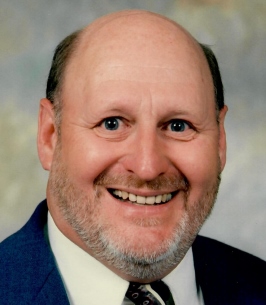
A Labor of Love — Funeral Homily for Alice Karr, 91

August 31, 2021

No funeral homily can present the complete fullness of a Christian’s life. At best, I think a funeral homily can focus on aspects of a person’s life, and through this, help reveal the beautiful, saving mysteries of God. In the brief, less than 200-word obituary which Alice wrote for herself, she noted that she taught and was the principal of schools in Gary, Indiana; Milwaukee, Marshfield, and Eau Claire, Wisconsin; and in Littleton and Denver, Colorado. Today, I would like to reflect upon these years of Alice as an educator/administrator.

In 1984, she became principal of Good Shepherd Catholic School in Denver, Colorado. The school’s prospects at the time were very bleak, having a registered enrollment of just 34 students. But “during her first two years on the job, [she] put herself on a 78-hour week, organized a recruitment program, showed maintenance men how to clean bathrooms and mop floors, opened the first middle school in the Archdiocese, organized many elective classes, and involved parents in maintenance.” Her pastor at the time praised her “exceptional leadership and organizational abilities” and observed how her “relationship with faculty, students, and parents has been unusually successful; and all are supportive of her administration.” By her third year on the job, the total student enrollment was 280 and still growing. As one parent recalled, Alice “made a personal commitment to each child by providing the best possible educational environment … I remember the dire warnings we all received about the lack of future our school faced. Without [her] loving, dedicated, and wise guidance—not to mention the 12-hour days she puts in—we would be without our school. She is truly a remarkable person.” This story of Alice’s faithful fruitfulness was featured in a 1987 article of Today’s Catholic Teacher Magazine when they named her their November “principal of the month.”

This was not this first time Alice had made the press. She was also profiled in the summer of 1970, within the pages of The School Sisters of Notre Dame Magazine, in a piece entitled “Educator for the Special Child.” It describes her work at the Lorenz Institute, a private, non-sectarian, residential treatment center in Eau Claire for emotionally-disturbed children. When Alice accepted the invitation to become the principal at a facility such as this, the article recalls “she knew what she could expect—anything, at any time.” The author notes how “hours of duress, frustration, and Excedrin strain [would take] their toll” on Alice and her teaching staff, but Alice would buoy them with her seemingly constant smile, ready humor, and practical wisdom. One man interviewed said he saw Alice’s work with the staff as even more valuable than that with the children. She was a dynamo of productive energy back in those days, too. The staff affectionately dubbed her “the black and white tornado.” Why did Alice labor so incessantly? 12-hour days, six-and-a-half days a week, quite possibly until she had eventually burnt herself out. Why did she so dedicate herself to her work like this? The answer, the reason, is love.

At The Lorenz Institute, the magazine author records, the staff didn’t know what to make of Alice at first, but “evidence of [her] concern for the boys and girls unfolded day by day.” For example, “An upset boy expecting a scolding was taken off guard by the firm hand [she] laid on his shoulder, by the penetrating gaze of her steady eyes, and—once the lad’s defenses were lowered—a teasing word and/or serious directive reached its mark.” The article includes a photo of one corner of her office at that facility. The caption describes “a unique conference setting: a plain folding chair for her, a brightly decorated milk-can stool for the child. This arrangement puts the child higher than the adult, and, immeasurably, the child grows.” Alice believed love to be the very best behavior modifier. “It is not enough to teach children how to read and write,” she said, “we must show them how to live with each other.” Alice believed we must teach others to love through loving them, by loving them like God loves us.

Jesus has a great love for children. Once, calling a child over and putting his arms around it, he said, “Whoever humbles himself like this child is the greatest in the Kingdom of Heaven.” “Whoever receives one child such as this in my name receives me.” “See that you do not despise one of these little ones, for I say to you that their angels in heaven always look upon the face of my heavenly Father.” “It is not the will of your heavenly Father that one of these little ones be lost.” When children in the Gospels knew Jesus’ love towards them they were being shown God the Father’s love as well. And when children experienced Alice’s love for them they were being shown a partial reflection of God’s love for them.

Let the children come to me, and do not prevent them,” Jesus says, “for the Kingdom of Heaven belongs to such as these.” “Unless you turn and become like children, you will not enter the Kingdom of Heaven.” Brothers and sisters in Christ, realize that we are God’s children now. The Father has adopted us as his own sons and daughters because he loves us. Today we pray for Alice’s soul, as is right and just, for who among us is perfect? But if you have ever witnessed Alice’s love for you, then realize that you have seen a small reflection of God’s love for you.
Many Good Gifts

August 28, 2021

22nd Sunday in Ordinary Time

Dear brothers and sisters, as St. James tells us in our second reading: “All good giving and every perfect gift is from above, coming down from the Father of lights.” We at St. Paul’s and St. John the Baptist’s Parishes have lately been blessed with many good gifts. Our churches are open for the celebration of the sacraments and parishioners are returning to Mass. We have COVID vaccines which appear to be very effective in preventing hospitalizations and deaths among the vaccinated, and are helping get lives back to normal.

Our local RCIA classes, for any adults interested in getting baptized, for any Christians interested in becoming Catholic, and for any Catholic adults who desire the Sacrament of Confirmation, will begin at St. Paul’s on September 16th with the largest class we’ve had in years. And for our children, Bloomer’s Catholic school will be open for classes, returning to safe, in-person instruction this week with over one hundred students enrolled. St. Paul’s School had multiples gaps to fill in our faculty and staff this year, but God’s Providence provided us with great new hires, a mixture of new and familiar faces.

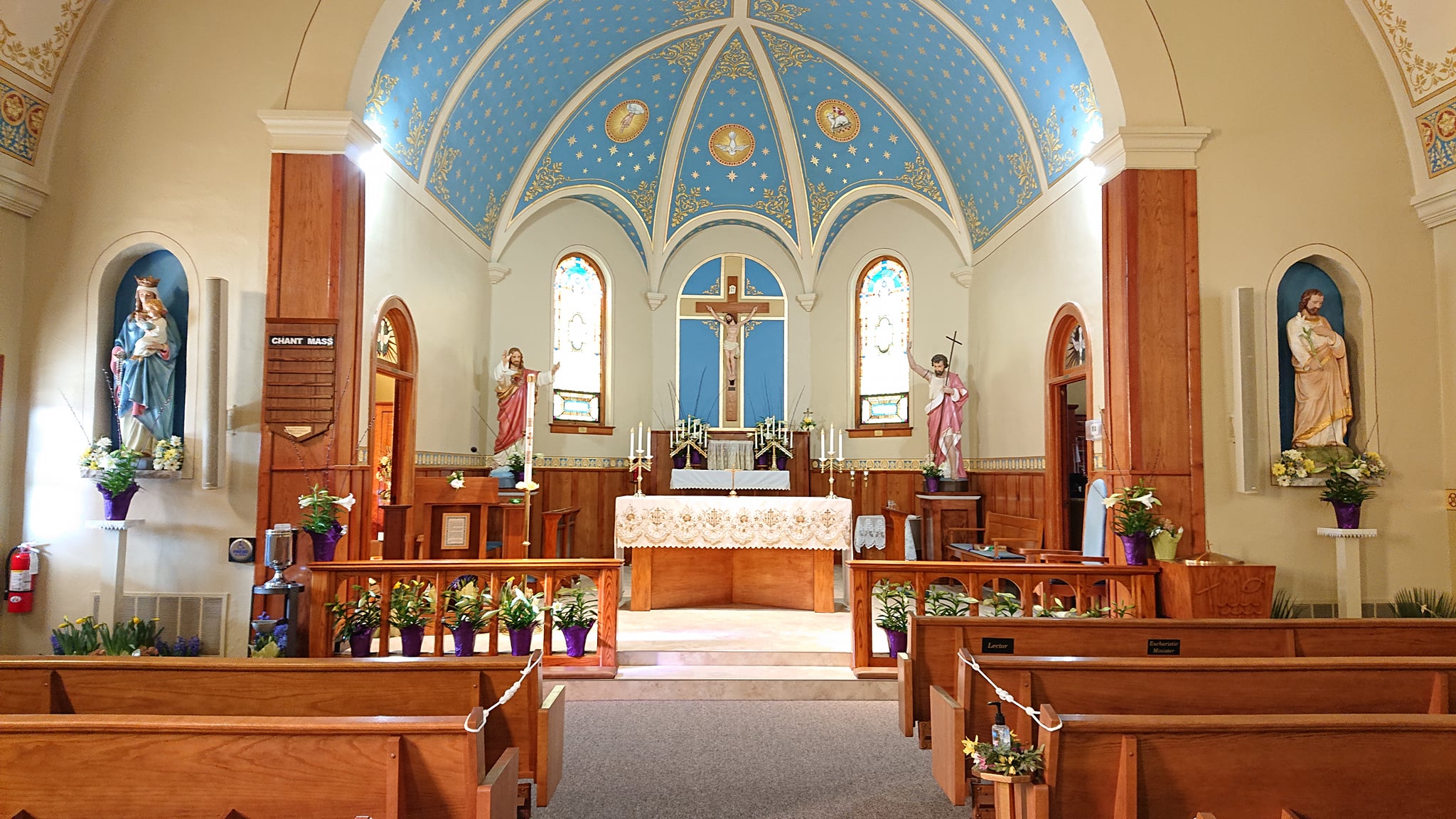
St. John the Baptist’s church interior renovation project is complete. And the widespread consensus is that it turned out absolutely beautifully. If you haven’t already, check it out in two weeks, during St. John’s Fall Festival on Sunday, September 12th. And today, St. John the Baptist Parish is completely free of long-term debt.

St. Paul’s Parish has wonderful news regarding its finances as well. St. Paul’s has been paying down a long-term debt which at times over the past ten years has exceeded $160,000. Parishioners’ generous giving towards the school roof and parish debt fundraising campaign (which ends at the end of August), plus a $100,000 gift from the estate of Sylvan Prill and a very recent $25,000 gift from the estate of Alta Beranek, will allow St. Paul’s to pay off all of our long-term debts next month. (Alta also graciously left a $25,000 gift to St. John the Baptist Parish.) Please consider remembering your parish in your will as well.

Both parishes being debt-free is a excellent thing, but please, please do not give up on or reduce your tithing. St. Paul’s, in years past, has come out of and back into debt before. If people stop giving, new debt will surely follow. Your generosity carried us successfully through the pandemic lockdown, and by the end of September both St. Paul’s and St. John’s will be completely debt free. That is something to celebrate and a hopeful sign for the future.

The faithfulness of the Thrift Sale’s many volunteers and customers is generating one of its best years ever, and St. Paul’s September 26th Fall Festival is just around the corner. Both parishes’ Finance Councils have happily adopted balanced budgets for the current fiscal year; but the outcome of these budgets, of course, depends upon your continued giving.

We are more blessed than we realize. Recent, terrible news from abroad reminds us that not all places on earth have the peace and freedom we enjoy. We all have much to be thankful for. “All good giving and every perfect gift is from above, coming down from the Father of lights.” So, echoing the words of the opening prayer of today’s Mass, with a deepening sense of reverence and love in our hearts for God’s name, let us give thanks to our God of might, the giver of every good gift.

Mary & the Holy Eucharist

August 14, 2021

Solemnity of the Assumption
(20th Sunday in Ordinary Time – Year B)

The first three evangelists, Saints Matthew, Mark, and Luke, all detail the same event from the Last Supper. In his First Letter to the Corinthians, St. Paul recounts it in these words:

“I received from the Lord what I also handed on to you, that the Lord Jesus, on the night he was handed over, took bread, and, after he had given thanks, broke it and said, ‘This is my body that is for you. Do this in remembrance of me.’ In the same way also the cup, after supper, saying, ‘This cup is the new covenant in my blood. Do this, as often as you drink it, in remembrance of me.’”

At every Mass, we recall how Jesus instituted the Holy Eucharist the night before he died. But the Gospel of John does not feature these words of institution. The Last Supper spans five full chapters in John’s Gospel—spending far more verses detailing Jesus’ words and deeds at table that night than is done by Matthew, Mark, and Luke combined—yet the phrase “This is my Body” is not included there. Why is this?

Both the early Church Fathers and modern scripture scholars agree that John’s was the last canonical gospel to be written. St. John probably thought it was unnecessary to retread again the same familiar ground as his predecessors, so he chose to omit the institution narrative. Instead, St. John shares with us the Bread of Life discourse. We’ve been listening to this chapter from John for the previous two weeks. Next Sunday presents the resolution of this story. And this Sunday, we would ordinarily be hearing the climax of Jesus’ teaching. Rather than being quoted saying “This is my body” at the Last Supper, in this gospel Jesus declares at the synagogue in Capernaum:

“Amen, amen, I say to you, unless you eat the flesh of the Son of Man and drink his blood, you do not have life within you. …For my flesh is true food, and my blood is true drink. Whoever eats my flesh and drinks my blood remains in me and I in him. …The one who feeds on me will have life because of me. …Whoever eats this bread will live forever.”

The other gospels include the eucharistic words of institution, but John particularly emphasizes Jesus’ real eucharistic presence.

As I said, we would ordinarily be hearing this climax to Jesus’ Bread of Life discourse this weekend, but it is preempted this year by the August 15th Solemnity of the Assumption of the Blessed Virgin Mary. Now I’m a very big fan of Mary but I also love that particular gospel reading from John 6, so I was a bit disappointed when I realized the first would be cancelling the second. But then I reflected upon Mary’s profound connections to Jesus’ Real Presence in the Eucharist, and there is actually great beauty in the convergence of these two holy days.

Consider: from where did Jesus receive the flesh he gives us in the Holy Eucharist? God ordained that Jesus Christ receive his human nature from his mother, Mary. At the Annunciation, Mary gave God her pure flesh and pure “yes,” saying “Let it be done to me according to your word,” on behalf of all humanity. That she might respond with a truly free “yes” and be a truly worthy source and vessel for her Son, the most Blessed Virgin Mary was preserved in flawless holiness by the grace of God from the first moment of her life. She lived all her days on earth in sanctity untainted by sin. The 16th psalm proclaims of God: “You will not allow your holy one to see decay.” And so, “the Immaculate Mother of God, the ever Virgin Mary, having completed the course of her earthly life, was assumed body and soul into heavenly glory.” This is the wonderful event which we remember and celebrate with Jesus and Mary today.

The sacred body and precious blood of Jesus we see held aloft at Mass come to us through the Blessed Virgin Mary. She is symbolically present on the altar as well. Consider the chalice. It is made from a precious metal and fashioned for a sacred purpose. It is traditionally veiled, denoting its dignity and sanctity. It is femininely curved, a vessel open to receiving and holding God’s gifts. The chalice is a symbol of the Virgin Mary, who is not to be adored as God and yet who is most profoundly close to him. Like Mary at the visit of the Magi, the chalice holds Jesus for all peoples to adore him.

At the Annunciation, after Mary responded, “Behold, I am the handmaid of the Lord. May it be done to me according to your word,” did she feel anything the instant the Word became flesh within her? Maybe she had the most enrapturing mystical experience ever known. Or maybe, when the angel departed from her, she felt nothing at the moment of the Incarnation. Either extreme seems possible, or it may have been something in between. When you receive the Holy Eucharist, you may or may not be graced to feel any different from the presence of Jesus within you. But consider how Jesus Christ has come to dwell in you at the center of your being as he did first within the Blessed Virgin Mary.

May Blessed Mary, the source of Christ’s flesh; the Lord’s holy chalice; the first Christian to commune with Jesus; intercede for you, helping you to know, love, and follow her Son. May you join them both in heaven one day so that all generations may call you blessed.

Jesus Christ Joined Our Team — Funeral Homily for Russell “Russ” Dachel, 73

August 12, 2021

There are many humorous stories about Russ. He loved to leave you with a smile, a smile on your face and a smile on his. So today, I would like to share with you the funniest story I’ve heard about him, and I believe Russ will be amused at its retelling. It happened over forty years ago. Some of the finer details are uncertain, but an eyewitness who was there confirms that the broad strokes of this story are true.

Once, in the second half of the 1970’s, Russ was officiating at a junior high school basketball game; Eau Claire Memorial versus Eau Claire North. The young men on both sides were giving it their all, and so was Russ. His friend Jim, a former coach who was at the game, tells me that Russ was a good official. Russ had refereed games before, and would go on to ref games after, but this game won him some local fame.

In one telling, Memorial had the ball and dribbled it down court. On this possession, Russ the Ref was the back official, standing nearest to the empty backcourt. Suddenly, a North player stole the ball and made a fast break for the unguarded basket. As the young man went in for what he, both teams, and all the spectators in the bleachers expected to be a routine lay-up, they witnessed something rarely—if ever—seen since James Naismith invented basketball in 1891.

Recall that Russ loves sports. He’s intensely competitive, he hates to lose, and always gives one hundred percent. On this occasion, it seems that Russ got so wrapped-up into the action that he forgot what he was supposed to be doing. As that young man drove to the basket, Russ’ instincts kicked in. Despite not being tall, his feet leaped from the floor to an impressive height, and with his up-raised hand, Russell the Muscle blocked the shot. His friend Jim recalls it was “The Defensive Play of the Game.” Everybody laughed and Russ wanted to disappear, but “change of possession” was signaled and the game went on. A referee becoming a player in the game is against the rules in that setting, but Jesus Christ does something similar to this in our most important story.

Our fallen human race was up against sin and death, the devil and his demons, and we were sure to be beaten. In our wounded condition we could never win on our own. But the Son of God did not wish to merely be our judge, which would guarantee our total defeat. Jesus Christ entered the game on our side, divinity joined humanity. He gave his all, one hundred percent, as someone who hates to lose. And if we die with him who died for us, we shall also live with him. And if we persevere in the struggle before us we shall also reign with him.

Because of the importance of his Catholic Faith, Russ was dedicated to Holy Mass here each Sunday, sitting in his pew near the confessional. He said, “I have to go to church. I feel better when I do.” He felt that way because Jesus Christ is here. As you pray today for Russ’ soul, if you’ve been away from Jesus Christ, I ask you to resolve to get back on his bench and to strive on his side in the contest of life with all your heart, that you may share in his great victory.

Drawn to Jesus by God’s Grace

August 8, 2021

19th Sunday in Ordinary Time
By Deacon Matthew Bowe

There are many things that we are drawn to. I am drawn to delicious food, as you can tell. I am also drawn to playing golf, watching the Olympics, and spending time with friends and family. I have noticed that we can easily talk about the tangible and physical things that we are drawn to, whether it be sports, fishing, hunting, outdoor activities, card-playing, work, or any other thing. Curiously, I wondered how do we tell others about the spiritual things that we are drawn to? Examples include praying, going to Mass, charitable works, retreats, and any other sort of thing. Do we not tell people because we are not drawn to spiritual things, or do physical things attract us more than the spiritual things?

Currently, we are in the middle of the Bread of Life discourse from the Gospel of John. Two weeks ago, it was the reading about the multiplication of the loaves. Jesus fed five thousand people with just five barley loaves and two fish. In that story, the power of Jesus can do a lot with the little that we can give Him. Last week, the crowds pursued Jesus seeking to have this bread always, and the reading concluded with Jesus saying that he was the bread of life. Whoever comes to Him will never hunger, and whoever believes in Him will never thirst. In his writings, the evangelist John never uses the word “miracle.” Rather, he writes about the signs that Jesus worked. A sign points toward something. A stop sign signifies that it is the law to stop at this intersection. In this Gospel, the physical signs point to a spiritual reality. In this Bread of Life discourse, the physical sign is the bread, and the spiritual reality is that Jesus is the bread of life. This is one reason John wrote the Gospel – to show that Jesus was not only fully human but also fully divine.

Now, we turn to today’s Gospel reading. The Jews are murmuring and struggling that Jesus said that He is the bread that came down from heaven. The crowd could see the physical reality, or the humanity, of Jesus. They knew that Jesus was the son of Joseph and of Mary. However, they were spiritually blind. Despite the wonders and the signs that Jesus worked, they saw not the divinity of Jesus, the true bread that came down from heaven. Our culture today disbelieves the spiritual reality of the created world and idolizes the physical world. It is a culture that espouses that “science is everything,” “follow the science,” and “do whatever makes you happy,” yet the culture fails to recognize that the created world is more than just the physical and the pleasurable. That is not to say that the Church is anti-science. The Church promotes and espouses the arts and the sciences. Science leads us to a deeper understanding of the created world and thus of our Creator. Science serves to deepen our knowledge of God. The culture says that it is unreasonable to believe in God, but I say that is unreasonable to not believe in God and the spiritual reality of Creation.

Then, Jesus sternly answers the murmurs of the crowd. There is a lot here, most of which I will leave for your spiritual meditation. In each of our lives, God always makes the first move. When we pray, it is because He first drew us to pray. When we give charitably, it is because He first gave us the grace to do so. Everyone is capable of being drawn by the Father, but not everyone responds to that invitation. The early Church Fathers, who wrote commentaries on this passage, noted that the Arians, fourth-century heretics who denied the divinity of Christ (even after the Church declared otherwise), were not drawn by the Father. Because they denied a truth of the faith, they denied Truth Himself, who is Jesus Christ. Thus, they could not be drawn by the Father because the Father does not draw us partially. He draws us to Himself fully. Even people today who support and are gravely involved in any immorality or injustice condemned by the Church or hold opinions contrary to the teachings of the Church deny Truth and are thus not drawn by the Father. There is something that is lacking.

This is why we should pray, my brothers and sisters, that everyone may be drawn in by the Father, into the Catholic Church, which safeguards the fullness of Truth and Faith. There is always hope, for God is merciful and kind, as the Psalmist says. Repentance and conversion are always possible for us so long as there is life in us. This is the first way in which we are drawn by the Father. To repent of our sinful ways and to turn back toward Him. As St. Paul wrote to the Ephesians, we should remove all bitterness, fury, anger, shouting, reviling, and malice and replace it with kindness compassion, and forgiveness. We should imitate Christ. The ultimate imitation is sacrifice (even death on a cross). Then, we listen to Father, humbly being taught by God, and we will come to Jesus. Jesus is the bread of life, of life eternal. It is not by our bodies that we believe, but it is by our spirits that we choose to believe, through divine assistance. We who believe will be raised up on the last day and have eternal life.

How is it that we are intimately drawn into a spiritual union with Jesus? Foremost, it is via the Sacrament of the Holy Eucharist. The classic expression “You are what you eat” holds exceptionally true. Not only is there spiritual contact with Jesus, but we can also physically touch Jesus, for what was once ordinary bread becomes, by sacramental grace, the Real Presence, the Body of Christ. Jesus left us a Sacrament by which He is ever present on Earth. The Eucharist is the bread that comes down from heaven to lead us into heaven just as God came down from heaven and became Man. Whoever eats this bread will live forever, for this bread is the very flesh of Christ, Who is Life, and Jesus Who gives Life to the world. Brothers and sisters, let us pray that we may be drawn to Jesus today in this Blessed Sacrament, to believe more deeply in the Life of the world, and to delight in the heavenly things which are to come.