Archive for December 22nd, 2022

Immanuel: God Among Us

December 22, 2022

Advent Retreat Reflection
By Fr. Chinnappan Pelavendran

Emmanuel means God is with us. From the beginning even today God is with His people through His presence, He Strengthens us, comforts us, guides us, cares for us, and loves us. First, God is with us always. Secondly, he is coming every day, every hour to those who believe in him and those who do not believe in him. Third, he will come again in his glorified body, the same Jesus who was here two thousand years ago. He will be coming to judge the living and the dead.

In the beginning, God created Adam and Eve in His Image and likeness, which means God lives with everyone. God lives in you, God lives in me and God lives in each and every human being in the world. God was with Adam and Eve in the Garden of Eden. He wanted to care for them and be with them. He created us with love because he wanted to be with us.

When Abram was 75 years old, God told him to move out of his country and to go land that God would lead him to. He told Abram:

I will make of you a great nation,
And I will bless you;
I will make your name great
so that you will be a blessing.
I will bless those who bless you
And curse those who curse you.
All the communities of the earth
Shall find blessing in you.” (Genesis 12:2–3)

Abram had a strong faith in God. He knew that God would always be with him. He gathered his family together and they left his country just as the lord told him. Abram was 75 years old when he left the country, Abram trusted God to lead him. He didn’t know where they were going, so a map or GPS would not have helped. Everything was unknown. God was with Abram and led him to the land of Canaan. God was with him in a strange land among strangers.

God heard the cries of His people. They were slaves of the Pharaoh of Egypt. They were being treated with much cruelty. They called out to God to save them. God appeared to Moses from a burning bush and called him, “Moses! Moses!” He answered, “Here I am.” And God said to him, “I have witnessed the affliction of my people in Egypt and have heard their cry of complaint against their slave drivers, so I know well what they are suffering. I have come down to rescue them and lead them out of that land into a good and spacious land, a land flowing with milk and honey.” (Exodus 3:7–8)

The suffering they endured is unimaginable to us. The Israelites worked long hard days, were frequently beaten and all male children were killed at birth. Through all their suffering the lord was always with them.

Moses was a shepherd, a common man, and not eloquent in speech. He led his people out of Egypt. They were in the desert for forty years and Moses was able to take care of all their needs (food, and shelter, Clothing and water) because God was with him.

Judith was a widow and a member of the Israelites. God was with her. They knew that they were going to be attacked by the Assyrian army led by a chief general, Holofernes. He had 120,000 soldiers and also 12,000 archers on Horseback. He took provisions to provide for his entire army. Judith’s people found safety on top of a mountain. The army camped at the base of the mountain cutting of the water supply for the Israelites that was located there. Judith came down from the mountain to meet with the captain of the enemy. She had prayed to God to help her save her people. God enabled her to take the head of Holofernes back to her people. God was with Judith.

In the New Testament, God continued to be with his people. A good example is the Blessed Mother. She was conceived without original sin because she was chosen by God. She was a single young girl when the Angel came to her and said, “Behold, you will conceive in your womb and bear a son, and you shall name him Jesus. He will be great and will be called Son of the Highest, and the Lord God will give him the throne of David his father, and He will rule over the house of Jacob forever, and of his kingdom, there will be no end.” (Luke 1:31-33) And Mary said yes to God. Mary was well aware of the possible difficulties she could encounter, pregnant and single. If she were found out, she could be stoned to death. It would cause embarrassment to her and her entire community.

During the birth of Jesus, there was no one to deliver her baby. They did not have a place to stay. They finally found a barn and when Jesus was born he was placed in a manger.

St. Joseph was a just man and the earthly father of Jesus. When Jesus was born, King Herod issued a command to kill all the male children under the age of two. He was afraid that Jesus was an earthly king and would overthrow him. “Angel of the Lord appeared to Joseph in a dream and said Rise and take the child and his Mother, flee to Egypt, and stay there until I tell you. Herod is going to search for the child to destroy him.” (Matthew 2:13) In their life with Jesus, God was with them.

Jesus was very good friends with Martha, Mary and Lazarus and frequently stayed at their home. When Lazarus was sick, Mary and Martha sent word to Jesus. “When Jesus heard this He said, this illness is not to end in death, but is for the glory of God, that the Son of God may be glorified through it.” (John 11:4) Jesus came after the death of Lazarus. Martha was disappointed and told Jesus that Lazarus would not have died if Jesus had been there. Jesus went to the tomb of Lazarus and prayed, “Father, I thank you for hearing me. I know that you always hear me; but because of the crowd here I have said this, that they may believe that you sent me.” (John 11:41–42) Then He called Lazarus out of the tomb and told them to remove the burial bands. God was with his people through their pain and suffering.

Saul was a Jew, educated under Gamaliel a teacher of the law. Saul received permission to kill the Christians that were following Christ. On his way to Damascus, he met the Lord. “On his journey, as he was nearing Damascus, a light from the sky suddenly flashed around him. He fell to the ground and heard a voice saying to him, Saul, Saul, why are you persecuting me? He said, who are you, Sir? The reply came, I am Jesus whom you are persecuting.” (Acts 9:3-5) Saul then continued his journey to Damascus, then became a believer in Jesus. Saul became Paul. After his conversion, He traveled to many countries spreading the Good News of Jesus. He also wrote many of the letters in the New Testament.

During his ministry, he suffered a lot. St. Paul told the people of his suffering, “Five times at the hands of the Jews I received forty lashes minus one. Three times I was beaten with rods, once I was stoned, three times I was shipwrecked, I passed a night and a day on the deep; on a frequent journey in dangers from rivers, dangers from robbers, dangers from my own race, dangers from gentiles, dangers in the city, dangers in the wilderness, dangers at sea, dangers among false brothers; in toil and hardship, through many sleepless nights, through hunger and thirst, through frequent fasting, through cold and exposure.” (2nd Corinthians 11:24–27). Through all of his sufferings, God was with him.

The first time God spoke the promise of Emmanuel was to Judah’s king Ahaz. The Assyrian forces occupied the land and the king was afraid. God said if you do not stand firm in the faith, you will not stand at all. (Isaiah 7:9) Ahaz refused what God offered him. God then gave his own sign, one that would be fulfilled long after Ahaz. “The virgin will be with child and will give birth to a Son, and you will call Him Emmanuel. He will eat curds and honey when He knows enough to reject the wrong and choose the right.” (Isaiah 7:14)

In the Gospel of Matthew, we are told of the fulfilled prophecy. It is fulfilled through Mary with the birth of Jesus. The Angel appeared to Mary, a young woman from Nazareth, who was betrothed to a man named Joseph. The Angel appeared to him in a dream telling him that the child Mary was expecting was from God. Joseph then took Mary as his wife. “All this took place to fulfill what the Lord said through the prophet Isaiah; ‘The virgin will be with child and will give birth to a Son, and they will call Him Emmanuel – which means God with us.’” (Matthew 1:20–23)

The New Testament makes it clear, that Jesus God’s Son was the fulfillment of the Old Testament prophesy. He was the long-promised Emmanuel, sent by God to save His people. He came as the mediator between God and man, as our Redeemer, Savior, and Friend.

From the beginning of creation, even today and in the future, God is always with His people. Because of Jesus, Emmanuel, we never have to be alone. We never have to wonder how to please God or worry if our efforts are not enough. We know that Jesus is with us, in us, loves us, and will never leave us.
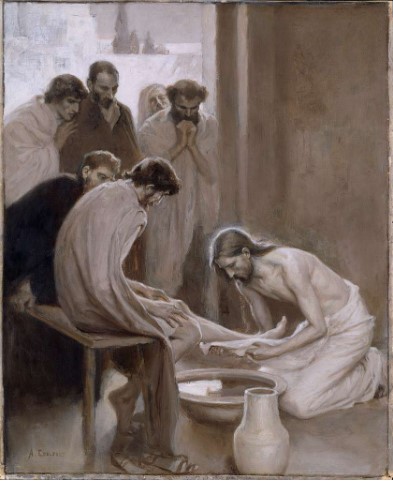
The Humility of Jesus

December 22, 2022

Advent Retreat Reflection
By Fr. Chinnappan Pelavendran

God loves the humble. St. Augustine once said, “The first virtue of Christianity, I will tell you that it is humility. If you ask me again, what is the second, I will say to you it is humility. Again, if you ask me a third time, I will say that it is humility, and as you ask me this question, I shall always give you the same answer.”

Humility enables us to accept others as God’s children, our brothers and sisters, redeemed by the blood of Christ. It encourages us to do loving and sacrificial services for them through acts of charity, mercy, and forgiveness. It enables us to accept ourselves as we are before God with all our defects.

You are all familiar with St. Mother Teresa of Calcutta and the good works she did. One time she was asking for donations for the poor in the city of Calcutta. She went to the rich man’s house and asked for help and he spit in her hand, she held that hand toward her and said this is enough for me. Do you have anything for the poor? He was humbled and now wanted to give her money to help the poor.

In the Second Book of Kings (5:1–19), we have the story of Naaman. He was no ordinary man, for he was an important figure during king Aram’s reign. He was wealthy and powerful. One day he developed the condition of leprosy. Being a leper was more than a person having a skin condition at that time. It signified that a person with leprosy was filthy and untouchable. So Naaman wanted to be cured as soon as possible because his condition was taking away everything he had. Power, wealth, and even people.

He needed and wanted help. A female slave told him to meet Elisha who was a well-known Hebrew prophet with a reputation for healing people. So he went to meet Elisha, but Elisha sent out his servant. This servant told Naaman to go into the River Jorden seven times and he will be cured. However, Naaman did not believe the servant and felt insulted. To him, he was suffering a severe disease, and to give such a simple and straightforward solution was insulting.

The servant was able to convince him to do as told. Finally, Naaman agreed, so he dipped his body into the Jordan River seven times. After doing so, he was completely healed and vowed to serve the Lord forever. It was not the Jordan River that healed him, it was the humility of receiving help from a servant. When Naaman humbled himself, he was able to witness the healing hand of God through the advice of the servant.

Solomon is good example of humility in the Bible. He was not an ordinary man. He was the king of one of the most powerful nations at the time, he was blessed with splendor, power, and vast riches. Wealth is usually accompanied by pride, boastfulness, and arrogance but, Solomon did not have any of that in his heart. One day, God appeared to Solomon in his dreams.

God asked Solomon what he wanted. Being the humble person that he was, he asked god for wisdom to rule and lead God’s people. God was very pleased to hear this and granted him wisdom, along with all the other things he already possessed. Solomon spent his life honoring the Lord. He built temples and prayed to God and he was humble until his death.

The humility of Solomon reveals the blessing received by those who are humble. He did not boast about his riches, he was powerful but knew it was only because of god’s blessing. Solomon is known to kneel in front of many people, which shows his humility. God blessed him with abundance and happiness. The world makes us think that we need many possessions to be important. However, Solomon knew that what he needed was wisdom and a relationship with God. These were the only things he really wanted. If we read about Solomon in the bible, he lived a great life. Solomon was humble.

In the Second Book of Chronicles, we read about Manasseh who became the king of Judah when he was only twelve years old. He offended God in many ways; he worshipped foreign gods and built altars to them in God’s holy temple. God spoke to Manasseh about his people’s sins but he did not listen. Because Manasseh did not listen, God brought the king of Assyria and his army to fight against Manasseh’s kingdom. It was a victory for the Assyrians who then captured the king and took him away.

During his imprisonment, Manasseh was able to see who god really is. He humbled himself before God and prayed wholeheartedly. God knew that Manasseh was genuinely sorry. He helped Manasseh by rescuing him, bringing him back to Jerusalem, and restoring his kingdom. Despite the many things Manasseh had done against God, the Lord blessed him the moment he decided to live under the influence of humility.

The Lord even gave Manasseh another chance to be king! Manasseh, honored God with all his heart. He changed his ways, and got rid of all the foreign gods and their altars. Then, he built the altar of God in which he gave praise and thanked the Lord. He used his voice to tell people, to serve God, and only God, just as the Lord wanted him to do. If you are feeling bad because you know you offended God, it is never too late to tell God you are sorry. You can humble yourself to God, like Manasseh.

In the New Testament, Jesus was often in the company of Pharisees, He noticed that many of them boasted of their good deeds and despised others. He told them this parable: “Two men went up into the Temple to pray. Once was a Pharisee, the other a publican. The Pharisee stood proudly and said this prayer to himself; O God, I thank you that I am not like the rest of men, greedy, dishonest, adulterous or even like this tax collector, and particularly that I am not like this publican. I fast twice a week, and pay tithes on all I receive.” This prayer was said with vanity and pride. The Pharisees did not come to ask god for his grace, but to praise himself, and to despise those who really were praying.

The publican, on the other hand, stood some distance away from the altar, not daring, even to raise his eyes to heaven. He struck his breast and said, “My God, have mercy on me, a sinner.” Jesus said, this man went home justified, the other did not. The publican had his sins forgiven; the Pharisee, with all his good deeds, went home, more in sin than when he left.

Although he was a sinner, the publican’s humility was more pleasing to God than all superficial good works of the proud Pharisee. Jesus Christ demonstrates with the example that everyone who exalts himself shall be humbled, and he who humbles himself shall be exalted.

When we hear about St. John the Baptist, we know that he was concerned about the work he was doing for our Lord. He was preparing the way for people to know about Jesus. The Gospel of Matthew tells us that John’s shirt was made of camel’s hair, and it must have been very itchy. His food was locusts and wild honey.

St. John the Baptist is like a road sign. A road sign gives direction but does not get attention for itself. The road sign is there to show us the way. Like a road sign, St. John pointed to Jesus, the way to the Father.

St. John the Baptist was with two of his disciple as he saw Jesus walk by, he said, “Behold the lamb of God the two disciples heard what he said and followed Jesus.” The next day Andrew introduced Simon to Jesus, who named him Peter (which means Rock). It then became a chain effect and many began to follow Jesus.

St. Luke tells us the people were filled with expectation, and all were asking whether John might be the Messiah. St. John the Baptist remains humble saying, “I am baptizing you with water, but one mightier than I is coming. I am not worthy to loosen the straps of his sandals.” (Luke 3:16)

St. John the Baptist humbled himself saying that he was only the prophet. He was there to prepare the way of the Lord. He pointed out to his disciple behold the Lamb of God and his disciple followed Jesus. He baptized with water and said, “He must increase, I must decrease.

We have been looking at the way God wants us to live. Jesus Christ by his example showed us how to live. He was humble. Jesus identified totally as a man. To be a man, He was not ashamed and He called us his brothers and sisters. Sometimes we feel superior to others. We feel more educated or better than other people. All of this pride is because Adam sinned. He came and became one of the lowest in the social level of His day. He came below everybody because he wanted to be a servant of everybody. St. Paul tells how Jesus humbles himself and became man:

Though he was in the form of God, did not regard equality with God something to be grasped. Rather, He emptied himself, taking the form of a slave, coming in human likeness; and human in appearance, he humbled himself, becoming obedient to death, even death on a cross. Because of this, God greatly exalted him and bestowed on him the name that is above every name, that at the name of Jesus every knee should bend, of those in heaven and on earth and under the earth, and every tongue confess that Jesus Christ is Lord, to the glory of God the Father. (Philippians 2: 6 – 11)

From the time he came to earth as a human being, he steadily went down in social status. He became a servant, then a slave, and finally like a criminal to die on the cross. Because it was His father’s will, He accepted and obeyed. He was humble during his entire time on earth. So God raised him up. That every knee shall bend at the name of Jesus, on the earth, above the earth, and below the earth. Every tongue shall confess that Jesus Christ is Lord.

You have heard about St. Mother Theresa, Naaman, Solomon, Manasseh, and the Publican. They were human like all of us, and during their lives had many difficulties and problems, but they were all faithful to God. They were humble. It does not matter if you are a king like Solomon and Manasseh, or poor like St. Mother Theresa and the Publican, if you are humble before God, He will raise you up.