Archive for the ‘Catholic Church’ Category

False Presumptions — Wednesday, 7th Week of Ordinary Time—Year II

February 28, 2014

Readings: James 4:13-17, Mark 9:38-40

We must be careful not to cling to false presumptions about God’s activity regarding the present or the future. It is prudent to make plans for tomorrow and also good to strive for the reunion of all Christians into Christ’s one, holy, catholic, and apostolic Church. However, James warns us not to be presumptuous about our plans (instead of remaining open to God’s will,) while Jesus reminds us that even those who “do not follow us” can ‘perform mighty deeds in his name.’ “Whoever is not against us is for us.” God is never against us, and (unusually) neither are our separated brethren.

Catholicism

February 14, 2014
  • We love marriage and celebrate celibacy.
  • We scandalize with hard truths and easy mercy.
  • We feed the poor and hungry with food and beauty.
  • We observe days for fasting and feasting.
  • We insist that men lead as servants.
  • We help mothers and their children.
  • We respect women and men as unique and equal.
  • We condemn communism and critique capitalism.
  • We advocate for peace and, as a last resort, Just War.
  • We want everyone to go to Heaven and no one to be killed.
  • We have faith in human reason and employ reason in our Faith.
  • We believe in miracles and demons and investigate them critically.
  • We accept science and Divine Revelation.
  • We canonized God’s books and canonize His saints.
  • We honor Jesus’ Father and mother like He did, as our own.
  • We pray for living and dead neighbors and ask their prayers for us.

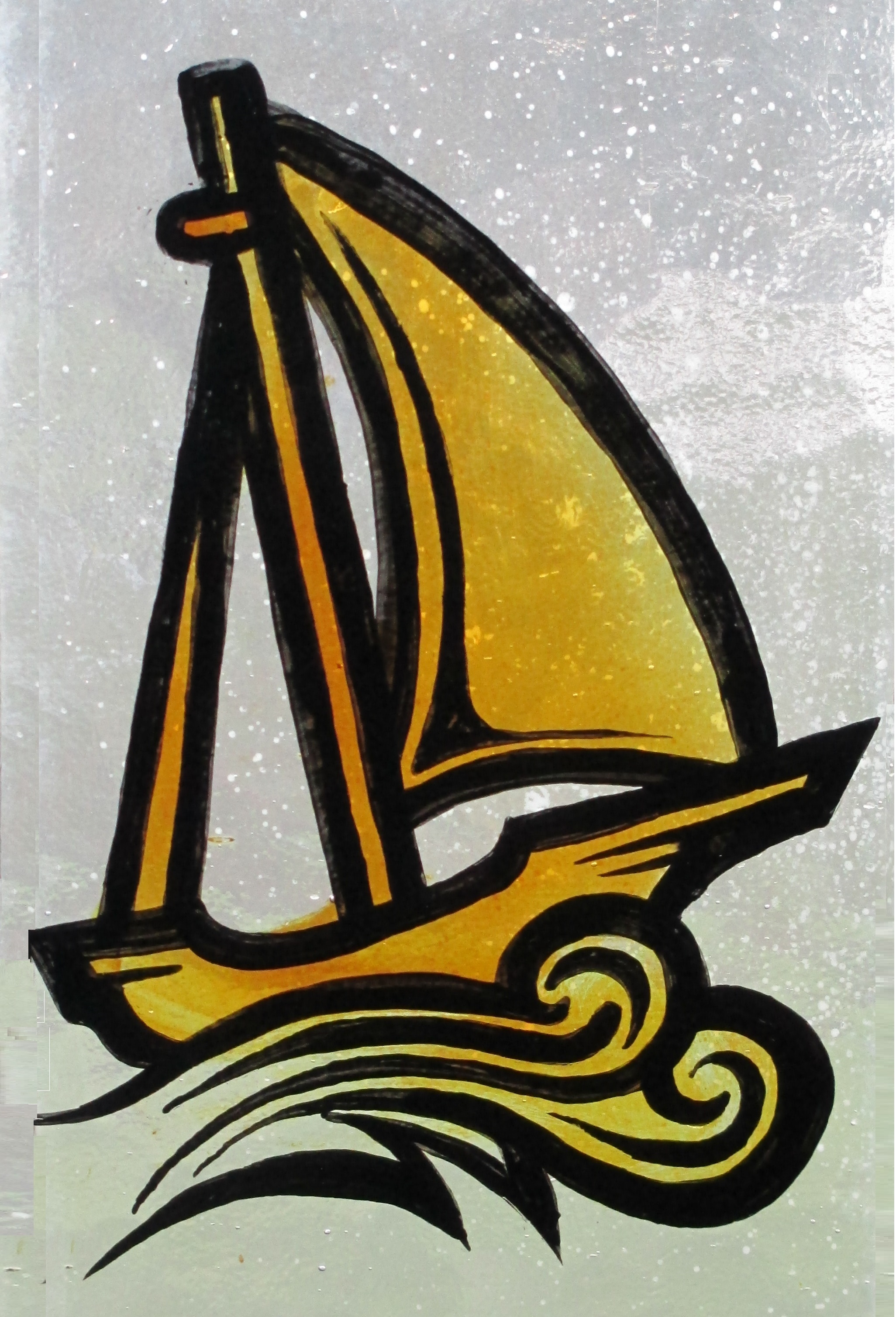
Stained Glass Symbols — The Sailboat

February 5, 2014

Sailboat - Sacred Heart Catholic Church -  Wauzeka WIA Symbol of the Church

Like Noah’s Ark, the Church carries God’s people through the world’s deadly and chaotic waters. The Holy Spirit fills the sails of this “barque (boat) of St. Peter,” guiding her course through time and leading her safely to the distant shore of Heaven.

Answering Evangelicals

November 16, 2013

Evangelicals are often some the finest non-Catholic Christians. They get many things right, but  they regrettably do not understand Catholicism very well. (If they did, they would become Catholic.) Here is how you can answer some of their most common misunderstandings:

“Why do you Catholics worship Mary?”
Nobody worships Mary, she is only a creature, but she is highly honored as the Mother of God. In this we follow Jesus, who surpassingly fulfilled the commandant “Honor your Father and Mother.” Indeed, Mary is our mother too. (See John 19:27 & Revelation 12:17)

“Why do you pray to Mary and the saints when we can pray to Jesus directly?”
Have you ever asked someone to pray for you? Of course you have, and rightly so. The Bible tells us to “pray for one another” because “the fervent prayer of a righteous person is very powerful.” (James 5:16) We can always pray to Jesus, but sometimes we also ask the saints, our holiest friends, to offer prayers with us and for us (as we see them doing in Revelation 5:8.)

“Have you been ‘born-again?'”
Yes, because I am baptized. As Jesus told Nicodemus, one enters the kingdom of God by being “born of water and Spirit.” (John 3:5) Demonstrating what he meant, “After this, Jesus and his disciples went into the region of Judea, where he spent some time with them baptizing.” (John 3:22) Indeed, as St. Peter wrote, “baptism now saves you.” (1st Peter 3:21)

“Have you accepted Jesus Christ as your personal Lord and Savior?”
Yes. For example, I often receive him as my Lord and Savior in the Eucharist. As Jesus said, “Whoever eats my flesh and drinks my blood remains in me and I in him.” (John 6:56)

“Do you believe you can earn salvation by your works, rather than by faith alone?”
No one can earn the initial grace of salvation by their works. (Ephesians 2:8-9) But once God has brought us into his friendship we must cooperate with his grace in our actions, “otherwise [we] will be cut off.” (Romans 11:22) “Faith without works is dead.” (James 2:17)

“How can you believe that the Pope, a sinner like every man, is infallible?”
The Holy Spirit used sinful men to write the inspired Scriptures. Likewise, God protects the Pope from teaching in error about Christian faith and morals lest the whole Church be led astray. Jesus made St. Peter both the Church’s rock foundation and its chief shepherd on earth. (Matthew 16:18-19) The Pope is St. Peter’s successor in that office.

Popes or Presidents Quiz

September 19, 2013

There have been 266 papal reigns, from Pope St. Peter to Pope Francis, and 44 U.S. presidential tenures, from President Washington to President Obama. Take this quiz to see how well you know your popes from your presidents.

The Ever-Timely G.K. Chesterton — Wednesday, 24th Week in Ordinary Time—Year I

September 18, 2013

Today’s readings remind me of things said by G.K. Chesterton (1874-1936,) the British journalist, writer, husband, and convert to the Faith, whose cause for canonization has just been opened.

In the Gospel, the same critics who rejected John the Baptist, who came “neither eating food nor drinking wine,” as too extreme are rejecting Jesus for being too lax, on account of his “eating and drinking.” This is akin to something Chesterton noticed about criticisms of Christianity while he was still a non-believer. Christianity was supposedly too meek, and the cause of countless wars. It was condemned for its penitential austerity, and condemned for its opulence. The Church imprisoned women, yet was criticized as being “too feminine.” The Church promoted celibacy against the good of marriage, and it promoted marriage, forcing the shackles of marriage and family upon us. The Church feared sexuality, and Catholics had too many children. (Though this was a century ago, similar arguments are still made today.) Chesterton eventually concluded that Christianity was sane and all its critics mad—in various ways.

Why did Chesterton go on to become a Catholic? Partly because he did not see how the Bible could be wielded as a weapon against the Catholic heritage:

The ordinary sensible skeptic or pagan is standing in the street (in the supreme character of the man in the street) and he sees a procession go by of the priests of some strange cult, carrying their object of worship under a canopy, some of them wearing high head-dresses and carrying symbolical staffs, others carrying scrolls and sacred records, others carrying sacred images and lighted candles before them, others sacred relics in caskets or cases, and so on. I can understand the spectator saying, “This is all hocus-pocus”; I can even understand him, in moments of irritation, breaking up the procession, throwing down the images, tearing up the scrolls, dancing on the priests and anything else that might express that general view. I can understand his saying, “Your croziers are bosh, your candles are bosh, your statues and scrolls and relics and all the rest of it are bosh.” But in what conceivable frame of mind does he rush in to select one particular scroll of the scriptures of this one particular group (a scroll which had always belonged to them and been a part of their hocus-pocus, if it was hocus-pocus); why in the world should the man in the street say that one particular scroll was not bosh, but was the one and only truth by which all the other things were to be condemned?  Why should it not be as superstitious to worship the scrolls as the statues, of that one particular procession? Why should it not be as reasonable to preserve the statues as the scrolls, by the tenets of that particular creed? To say to the priests, “Your statues and scrolls are condemned by our common sense,” is sensible. To say, “Your statues are condemned by your scrolls, and we are going to worship one part of your procession and wreck the rest,” is not sensible from any standpoint, least of all that of the man in the street.

What is the “pillar and foundation of truth?” Most Protestants would say “the Bible,” yet Sacred Scripture (in today’s first reading from St. Paul’s 1st letter to Timothy) answers “the Church.” The Bible cannot be trusted more than Catholic Church, which wrote and canonized its books (not to mention taught, revered, and preserved them for two millennia.)

(May the works and prayers of G.K. Chesterton aid us in the world today.)

Deciphering Catholic Codes

September 16, 2013

Recently we noted that A.D. signifies that we are living in the 2,013th “Year of our Lord.” Today we present the meanings behind other enigmatic Catholic acronyms & symbols.

INRI = “Jesus the Nazarene, King of the Jews”
At the crucifixion, Pilate ordered a sign to be written in Hebrew, Greek and Latin and placed atop Jesus’ cross to display the charge against him. The Latin read “Iesus Nazarenus, Rex Iudaeorum,” from which INRI comes. Though the punishment of Jesus was unjust, this charge against him was true.

CCD = “Confraternity of Christian Doctrine”
In other words, a group in service of teaching the faith to children.

RCIA=“Rite of Christian Initiation for Adults”
The process, involving lessons and sacraments, by which adults and older youths are gradually introduced into full communion with the faith of Christ’s  Roman Catholic Church.

IHS = “Jesus”
In Greek, the name Jesus is ΙΗΣΟΥΣ. These first three letters were Latinized into “IHS,” forming a symbol for the Holy Name of Jesus.

= “Christ”
In Greek, the title Christ, or “anointed one,” is ΧΡΙΣΤΟΣ. These first two letters, the Chi and Rho, were merged to form a symbol for   Christ known as the Chi-Rho.

Jesus Fish = “Jesus Christ, God’s Son, Savior”
The fish was an early Christian symbol containing a summary of the faith. The letters of the Greek word for fish, ΙΧΘΥΣ (or “ichthys,”) are an acronym for the phrase above.

Falsely Accused

August 21, 2013

In his time, Jesus was accused of being a glutton and a drunk, a sinner, a madman, a blasphemer, an insurrectionist, a false prophet, & demon-possessed. (And these are just some of the slanders that were included in the Gospels. Imagine what was left out!) Jesus was not surprised by these hostile reactions; he understood human nature well.

In our time, terrible things are constantly said about the Church and her leaders. Remember when Pope Benedict was even accused of being a Nazi? Is there any “controversial” teaching for which the world does not condemn the Church as being hateful, hypocritical, or cruel? We will experience hostility personally as well for standing with Jesus’ Church, but this should not surprise us. The Body of Christ, the Church, will share the experiences of Jesus Christ, our Head.

As Jesus said, “If the world hates you, realize that it hated me first. … If they persecuted me, they will also persecute you. …In the world you will have trouble, but take courage, I have conquered the world.”

Important Church Documents Revealed

August 20, 2013


● Encyclicals by the First Catholic Pope:

Blessed be the God” (ευλογητος ο θεος – Eulogetos o Theos)
As Everything to Us” (ως παντα ημιν – Hos Panta Amin)


● An Online Archive of Little-Known Documents from the 21st Ecumenical Council.

Misquoting the Pope

August 6, 2013

They say a rumor can travel around the world while truth is still pulling its boots on.

  • In 2006, media reports suggested that Pope Benedict, in referencing the statement of a 14th century Byzantine emperor, had insulted Mohammad in a speech on faith and reason. Muslim protests and violence followed.
  • In 2010, news reports said that Pope Benedict had loosened the Church’s teachings against contraception in an interview.
  • Last May, the media indicated that Pope Francis had preached in a homily that atheists would go to heaven by merely doing good.
  • This week, reports made it seem that Pope Francis was diverging with the Church’s teaching on the wrongness of homosexual acts because of one reply in an interview with reporters on his flight returning from World Youth Day in Brazil.

In each of these cases, the initial headlines and news reports took the popes’ words out of their larger contexts and trumpeted them with a significance which they never had. Many reporters know little about religion and misunderstand the Catholic news stories they cover. Some reporters are hostile toward Catholicism and tend to report on the Church as if it were changing to accord with their views. The lesson here is that initial media coverage about a Pope saying something controversial can be relied upon to be unreliable. Do not be unsettled when you hear such “news reports.” Just wait a few days for the neglected facts and the unremarkable full story to catch up.

Eliakim the Prime Minister Prefigures Peter

April 28, 2013

Eliakim, son of Hilkiah, was master of the palace, the prime minister in the Davidic kingdom. (Isa 22:15,20)
Simon Peter, son of Jonah, is always first in lists of Jesus’ Apostles—while Judas is listed last. (Matt 16:17, Matt 10:2, Mark 3:16. Luke 6:14, Acts 1:13)

Eliakim’s predecessor, Shebna, had hewn a tomb in a great rock which he hoped would be a lasting a resting place. (Isa 22:16)
Simon Peter is declared to be the “rock” (“Petros”) upon which Jesus will build his Church. (Matt 16:18)

Eliakim was clothed with a robe and girded with a sash. (Isa 22:21)
Peter stretches out his hands to be dressed by another. (John 21:18)

Eliakim was “a father to the inhabitants of Jerusalem and to the house of Judah.” (Isa 22:21)
Peter is the pope (“papa” or “Holy Father”) to the Church on earth.

Eliakim was given authority, “the key of the House of David.” (Isa 22:22)
Peter is given “the keys to the kingdom of heaven.” (Matt 16:19)

The Lord said of Eliakim, “What he opens, no one will shut, what he shuts, no one will open.” (Isa 22:22)
Jesus says to Peter, “Whatever you bind on earth shall be bound in heaven; and whatever you loose on earth shall be loosed in heaven.” (Matt 16:19)

Love Against Indifference — 5th Sunday of Lent—Year C

March 22, 2013

The scribes and Pharisees do not care about the woman caught in adultery. They do not care about her sin. If they actually cared about the adultery, the man she sinned with would be there too. They do not really care whether this woman gets punished or forgiven. They only want to trap Jesus. They want Jesus to say something against the Law of Moses that they can use to attack him. When it becomes clear that their scheme will not work, they leave Jesus and the woman. She has merely been their tool for a failed task.  Now she is left alone with Jesus.  Jesus neither denies the woman’s sin nor withholds his mercy. He says, “Neither do I condemn you. Go, and from now on sin no more.”

Jesus does not deny the truth. What the woman has done is wrong and it needs to end. But Jesus encounters her with love. We need to be the same way with the persons in our lives. Sharing the truth without love is repulsive. Who can embrace the truth when served with a sour taste? On the other hand, loving someone without sharing important truths is an imperfect love. We each have the duty to share the truth seasoned with love.

Like many of you, I am very happy concerning our new Holy Father. Pope Francis is a pleasant gift. He is an interesting and refreshing character who seems very holy. He comes to us from Argentina and is the first pope from Latin America, where more than forty-one percent of world’s Catholics live. One of my hopes is that Pope Francis will renew the Catholic faith there and here. Sometimes Catholicism can be widely present but not deeply held. Many claim our Faith but neglect to live lives moved by it.

I am honored to come here to celebrate Mass for few or for many and I am happy to do it. But how many people do you know that are absent from Mass? Invite them lovingly to come to the Mass here in the special weeks ahead. Next Sunday is Palm Sunday, which includes the reading of the Passion. And in two weeks is Easter Sunday, the most important of all Christian celebrations.

The scribes and Pharisees did not care about the sinning woman. Let’s be unlike them. Let us help the people in our lives with love, truth, and the invitation of Jesus Christ to the sacraments in his Church.

Lost Children — Feast of the Holy Family—Year C

March 3, 2013

Joseph and Mary loved their faith. Every year they journeyed with family and friends to celebrate the Passover in Jerusalem. But one year, when the festivities had ended and they were heading for home, Jesus stayed behind.

It takes a day for them to realize He’s even missing, and then his parents hastily retrace their steps, with impassioned prayers on their lips for the safety of their Son. (Perhaps Mary wondered if these days would bring the sword that was to pierce her soul.) But then, on the third day, they find Jesus safe and sound, dialoguing ably with the religious teachers in the temple.

He seems surprised that his parents would be searching for Him, “Why were you looking for me?” Jesus still has some “advancing” to do in both wisdom and in the experience that comes with age. Not telling His parents where He was going to be was perhaps the boy Jesus’ honest mistake, and when Mom and Dad tell Him it’s time to come home He leaves with them and is obedient to them.

Today, on the Feast of the Holy Family, we recall Saints Mary and Joseph, the ideal parents, who lost track of their only Son in the big city; and we recall Jesus, the holy Child, the sinless Lamb, who wandered off from them. This episode goes to show that even perfect people sometimes make mistakes. Remember: not every personal failure is a personal sin.

Sometimes parents come to me with great sadness because their children have wandered from the Catholic Faith. They often blame themselves. Now it is possible to be negligent in not handing on the Faith, but the kind of parents who grieve over their children leaving the Church are probably ones who raised their children in the best way they knew how. These parents should not be so hard on themselves. Even Mary and Joseph had a child who wandered off on His own.

In this Year of Faith, who are the ones who have wandered from the Church that we should be seeking out? Pray for them and invite them back. Tell them, “It’s time to come home.”

Remain Within — 21st Sunday in Ordinary Time—Year B

March 3, 2013

In our first reading, Joshua led the Hebrews into a new country. Joshua told the people: “Say here now whom you will serve.” (The Lord, or another god?) They had to make a choice. They had to do this many times again later, amid the temptations of their new home.

In our gospel we hear: “From that time many of his disciples withdrew and did not want to walk with him.” This is John, chapter six, verse sixty-six (interestingly: six, six, six.) Some disciples of Christ still leave him today. In the gospel, they left because of his teaching on the Eucharist. Today many leave to enjoy forbidden pleasures, leaving the God of true love. Other people become very rich and comfortable and think they do not need the creator of all these things.

We say: “Far from us to forsake the Lord to serve other gods, for the Lord is our God.” But even if we approach the Lord every week here in the parish, we must remember that serving the Lord means more than saying the right things. Remember, Jesus said: “Not every one that saith unto me, Lord, shall enter into the kingdom of heaven, but he who does the will of my Father who is in heaven.”

What is that will? Jesus tells his bride, the Church. Christ loves the Church and gave himself for her to sanctify. In it, Jesus purifies us with the sacraments, the Scriptures and the teachings of the apostles.
Stay in it, and you will be one with him. The Catechism of the Catholic Church says: ‘A word of St. Joan of Arc to her judges sums up the faith of the holy doctors and the good sense of the believer: “About Jesus Christ and the Church, I simply know that they’re just one thing, and we shouldn’t complicate the matter.”‘ Remain in her in this new country and you will be one with him. Say: “As for me, my family and I will serve the Lord.”

En nuestro primera lectura, Josué ha conducido a los hebreos en un nuevo país. Josué le dijo al pueblo: “Digan aquí y ahora a quién quieren servir. (El Señor, o un otro dios.) Tuvieron que hacer una elección. Que tenían que hacer esto muchas veces de nuevo más tarde, en medio de las tentaciones de sus nuevo hogar.

En nuestro evangelio escuchamos: “Desde entonces, muchos de sus discípulos se echaron para atrás y ya no querían andar con él.” Esto es Juan, capítulo seis, versículo sesenta y seis (interesante: seis, seis, seis.) Algunos discípulos de Cristo todavía le abandonan hoy. En el evangelio, se fueron porque de su enseñanza sobre la Eucaristía. Hoy en día muchos lo dejan para disfrutar pleasures prohibidos, abandonando al Dios del amor verdadero. Otras personas llegar a ser muy rico y cómodo, y no piensan que necesitan el creador de todas estas cosas.

Nosotros decimos: “Lejos de nosotros abandonar al Señor para servir a otros dioses, porque el Senor es nuestro Dios.” Pero, incluso si nos acercamos al Señor cada semana aquí en la parroquia, hay que recordar que servir al Señor significa mucho más que decir las cosas correctas. Recuerde, Jesús dijo: “No todo el que me dice: Señor, Señor, entrará en el reino de los cielos, sino el que hace la voluntad de mi Padre que está en los cielos.”

¿Cuál es esa voluntad? Jesús le dice a su esposa, la Iglesia. Cristo ama a su Iglesia y se entregó por ella para santificarla. En ella, Jesús nos purifica con los sacramentos, las Escrituras, y las enseñanzas de los apóstoles. Permanece en ella, y tú serás uno con él. El Catecismo de la Iglesia Católica dice: ‘Una palabra de Santa Juana de Arco a sus jueces resume la fe de los santos doctores y expresa el buen sentido del creyente: “De Jesucristo y de la Iglesia, me parece que es todo uno, y que no es necesario hacer una dificultad de ello.”’ Permanece en ella, en esto nuevo país, y tú serás uno con él. Digamos: “En cuanto a mí toca, mi familia y yo serviremos al Señor.”

Testimony To The Real Presence — Corpus Christi—Year A

July 18, 2011

Jesus Christ is truly present Body and Blood, Soul and Divinity, in the Most Blessed Sacrament. This is called the Real Presence of Jesus Christ in the Eucharist. It is true that Jesus is present whenever the scriptures are read, or wherever two or three are gathered in his name, but the Holy Eucharist is His presence in the fullest sense, for this is Jesus Christ Himself. Some people accuse the Catholic Church of making up this idea during the Middle Ages or something, but Catholics have always believed in the Real Presence of Jesus Christ in Eucharist, unceasingly, in every age of the Church. For example, around 110 A.D., St. Ignatius of Antioch, a bishop and a prisoner in chains, wrote this on the way to his martyrdom in Rome:

“I have no taste for corruptible food nor for the pleasures of this life. I desire the bread of God, which is the flesh of Jesus Christ…; and for drink I desire his blood, which is love incorruptible”

Based upon rumors, the Romans despised and persecuted the early Christians and accused them of many things without understanding. The Christians were accused of atheism, because they refused to worship the pagan gods. The Christians were accused of incest, perhaps because others misunderstood the Christians’ love for each other as “brothers and sisters.” And, most interestingly, the Christians were falsely accused of cannibalistic feasts, of eating the flesh and blood of their offspring. Around 150 A.D., to help dispel rumors and to quell Roman hated, St. Justin Martyr wrote an open letter to the emperor explaining the actual beliefs of Christians. One of the things Justin touches upon is the Real Presence of Jesus Christ in the Eucharist. He writes:

“Not as common bread nor common drink do we receive [this Eucharist]; but since Jesus Christ our Savior was made incarnate by the word of God and had both flesh and blood for our salvation, so too, as we have been taught, the food which has been made into the Eucharist by the Eucharistic prayer set down by him, …is both the flesh and the blood of that incarnated Jesus”

Where did the early Christians get this idea? The Real Presence was taught them by the apostles and through the Holy Scriptures. For example, in today’s second reading, the Apostle St. Paul mentions the Real Presence to the Corinthian Christians as a given, as a settled matter. Paul says:  “The cup of blessing that we bless, is it not a participation in the blood of Christ? The bread that we break, is it not a participation in the body of Christ?” Is Paul only speaking symbolically? Well, a little later, He warns them, “…Whoever eats the bread or drinks the cup of the Lord unworthily will have to answer for the body and blood of the Lord.” Both the apostles and Scripture agree that Jesus Christ was the source of this belief. St. Paul writes the Corinthians:

“I received from the Lord what I also handed on to you, that the Lord Jesus, on the night he was handed over, took bread, and, after he had given thanks, broke it and said, ‘This is my body that is for you. Do this in remembrance of me.’”

The first three Gospels relate these words from the Last Supper as well, but the Gospel of John presents the subject differently. Jesus’ words of institution do not appear in John’s Gospel. (Perhaps St. John, writing His Gospel last, thought it wasn’t necessary to repeat them.) Yet John gives the words of Jesus where He emphatically teaches the truth of the Real Presence. In today’s gospel reading from the sixth chapter of John, Jesus tells followers that they will need to eat the bread which is His flesh six times. And the word used several times in this passage is not the normal Greek word for eating, but a more literal Greek verb, which means “to munch” or “to gnaw.” He says, “…My flesh is true food, and my blood is true drink.” John’s gospel tells us that “many of his disciples who were listening said, ‘This saying is hard; who can accept it?’” and, “as a result of this, many of his disciples … no longer accompanied him.” And Jesus let them go because they had heard Him right. As hard as it was to believe, they were called to eat His flesh and drink His blood. Curiously, there are Christian groups who take a very literal approach to everything in the Book of Genesis, yet who switch to a symbolic interpretation to what Jesus says six times in today’s Gospel.

Did you know that there have been Eucharistic miracles affirming the Real Presence of Jesus Christ in the Eucharist throughout the centuries? For instance, consecrated hosts forming drops of blood, hosts transforming into human heart muscle, or hosts which remain perfectly preserved after hundreds of years. In fact, this feast of Corpus Christ was established by Pope Urban IV after one such Eucharistic miracle in 1263. Some Christian groups have beliefs about communion which bear some resemblances to the Catholic belief in the Real Presence; but Eucharistic miracles are not heard of within Anglican, Episcopalian, and Lutheran communions.

Did you know that Satanic worshipers affirm the truth of the Real Presence? When they seek out hosts to abuse and misuse in profoundly depraved ways, it is the Holy Communion of the Catholic Church that they seek to steal for use in “Black Masses.” Andrew, a friend of mine from seminary, used to spend his summers at a parish in Paris, France. There he met a former satanic worshiper who had returned to the Lord and the Catholic Church. Andrew asked him whether it was true that Satanists could sense the difference between a consecrated and unconsecrated Host. His Parisian friend informed Andrew this was true, that he and others used to identify consecrated hosts out of a line up as something of a test. How did he know which one was consecrated? Andrew’s friend answered, “You could tell which one was the Lord because that was the one you felt hatred towards.” If Satanists can believe in the Real Presence of Jesus in the Eucharist, then why can’t every Catholic?

When I was a boy I had good teachers in the faith. When they taught us about the Real Presence I asked, “Do we really, really believe that?” I mean I could understand a symbolic understanding. Thinking of the Eucharist as a symbol like the American flag, which reminds us of our blessings and of sacrifices made for our freedom, that came easily to me. However, my catechists challenged me when they assured me, “We really do believe that the bread and wine really, really becomes Him.” I researched whether the whole Church taught this, and found that it did. I studied whether the Church had always taught this, and discovered they had through the ages. I explored whether Scripture supported the belief in the Real Presence, and indeed, it did. Yet there was still an important piece missing.

When I was a boy, I would look around at the faces of other people at Mass and, though looks can be deceiving, they didn’t look as if they were kneeling before God Almighty. But then our parish got a new pastor, Fr. Paul Gitter. When he celebrated the Mass you could tell that he believed that he was holding Jesus in his hands. Because I knew that he believed, I could too. For the sake of our families and our neighbors, it is important that we give witness to our belief in the Real Presence, too.

[From here, I encouraged everyone to attend Marshfield’s Corpus Christi procession, June 26, 2011 with our bishop. More than 200 people processed on that beautiful Sunday, from Sacred Heart to Our Lady of Peace, witnessing to their belief in Jesus Christ as truly present in the Holy Eucharist.]