Archive for the ‘Chrisitian Virtues’ Category

You Can Ask Jesus Your Questions

December 13, 2025

3rd Sunday of Advent
By Fr. Victor Feltes

St. John the Baptist, despite his continued imprisonment, had heard about the works Jesus was doing and sent two of his disciples to ask him, “Are you the one who is to come, or should we look for another?” John was no pushover, not some reed swayed by the wind, but from this question we can gather that while John sat in Herod’s prison some doubt arose about whether Jesus was their long-awaited Messiah.

Notice how Jesus reacts to the question. He does not lose his temper or condemn them for asking. He gives them a helpful response: “Go and tell John what you hear and see: the blind regain their sight, the lame walk, lepers are cleansed, the deaf hear, the dead are raised, and the poor have the good news proclaimed to them. And blessed is the one who takes no offense at me.” In other words: “Report to John my mighty works for these show that I am the Messiah of whom Isaiah wrote (e.g., ‘Then will the eyes of the blind be opened, the ears of the deaf be cleared; then will the lame leap like a stag, then the tongue of the mute will sing.’) How I accomplish my purposes may appear strange, but remember that a person who takes no offense at me is blessed.” Jesus was patient with people who asked him questions in good faith.

Nicodemus did not want to be seen in public with Jesus. That’s why Nicodemus approached him at night. But Jesus still engaged with his questions. The Samaritan woman at the well may have first thought the man speaking to her was weird, but Jesus invited her probing questions. And the rich young man who asked Jesus about the way to eternal life wasn’t quite ready to fully commit to following Christ, but Jesus looked at him, loved him, and gave personalized responses. Despite their flaws, they asked Jesus questions in good faith and Jesus answered them. What Jesus does not like is questions asked in bad faith.

When the Pharisees would set traps for him, Jesus knew their ill intent, saying, “Why are you testing me, you hypocrites?” He knew they were just looking for ways to condemn and reject him. And when Jesus appeared before King Herod during his Passion, Herod questioned him at length because he had heard about him and hoped to see him perform some sign. But when Jesus gave him no replies, Herod treated him with contempt and mocked him and sent him away. Wicked Herod was merely curious about Jesus and uninterested in repenting of his sins. We should not test God like the Pharisees and Herod did. Jesus delights, however, in genuine seekers and is pleased to answer them.

Whoever asks, receives,” and “whoever seeks, finds,” though the answer might not be instantaneous. Job, while doing nothing wrong, questioned for some time before the Lord answered him. Sometimes our answer is already readily available through Christ’s Church, and we should listen to him through her. But sometimes God, who is supremely brilliant and creative, will answer us through different avenues (though without contradicting himself). Sometimes his answer will come during prayer, or maybe through something we providentially see or hear, or perhaps through a friend or a stranger.

What are your questions for the Lord? I encourage you to ask him and keep your eyes and ears and heart open. If you’re seeking the truth and not seeking excuses; if you’re looking to love and serve Jesus better, pay Christ the compliment of approaching him as the One who knows all things and loves you. Blessed is the one who does so.

Our Crucified King

November 23, 2025

Solemnity of Christ the King
By Fr. Victor Feltes

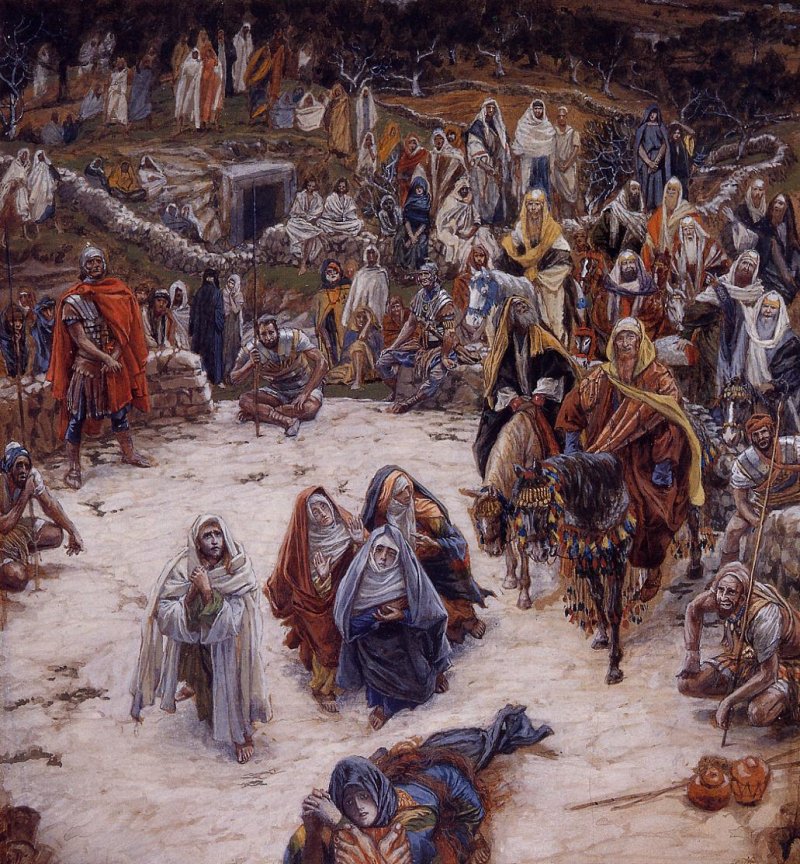
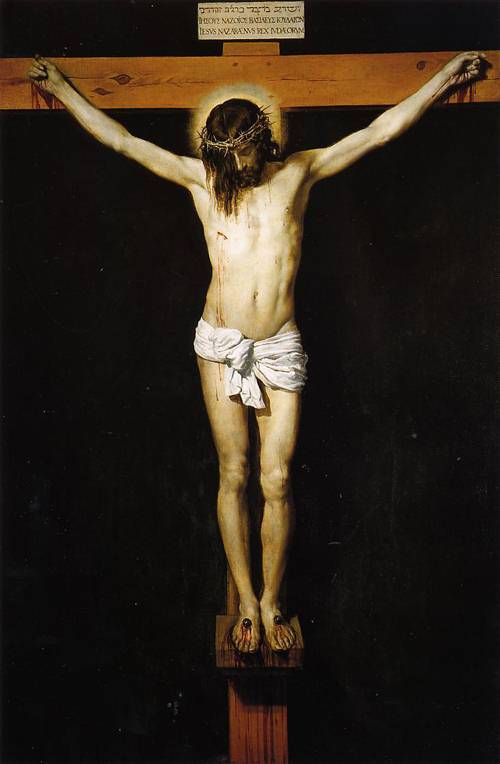
Our English word “Excruciating” comes from the Latin words for “Cross” and “Torment.” The Romans did not invent crucifixion, the Persians and the Greeks practiced it first, but the Romans more widely used the method. It was an easy way to execute people very visibly, horrifically, and slowly as a warning example to others. Typically, when the Romans crucified someone, they would place a sign above the condemned person’s head to indicate why they were being killed. St. John’s Gospel records that Governor Pilate put a sign on Jesus’ Cross written in Hebrew, Latin, and Greek. You sometimes see the initials “INRI” atop crucifixes. This represents the Latin phrase “Iesus Nazarenus Rex Iudaeorum,” the charge against our Lord. That is, “Jesus the Nazorean, the King of the Jews.” He was killed because of who he was and who he is: Jesus the Christ and the King of the universe.

Of course, the people who killed him did not believe this. They thought he was deluded or a fraud. Hence, the triple call for him to save himself and prove them wrong. The Jewish rulers sneered and said, “Let him save himself if he is the chosen one, the Christ of God.” The Roman soldiers jeered and called out, “If you are King of the Jews, save yourself.” And one of the criminals reviled him by saying, “Are you not the Christ? Save yourself and us.” Could Jesus have saved himself from his crucifixion?

St. John’s Gospel quotes Jesus before his Passion saying, “No one takes (my life) from me, but I lay it down on my own. I have power to lay it down, and power to take it up again. This command I have received from my Father.” And St. Matthew quotes Jesus later declaring in the Garden of Gethsemane, “Do you think that I cannot call upon my Father and he will not provide me at this moment with more than twelve legions of angels? But then how would the Scriptures be fulfilled which say that it must come to pass in this way?” So Jesus possessed the power to escape the Cross, but that was not the will or plan of God, which the Eternal Son was party to from the beginning. Jesus assumes “our bone and our flesh” to achieve our reconciliation as a descendant of David, “making peace by the blood of his Cross.” Perhaps the Holy Trinity could have inspired less painful prophecies to achieve our redemption and forgiveness of our sins, but Christ’s crucifixion is what they chose. They chose this path to win our love.

Matthew and Mark’s Gospels suggests that the Penitent Thief (traditionally known as St. Dismas) had derided Jesus, too, at first. But seeing the extraordinary way Jesus acted, hearing the things he said, all while crucified, won over that man’s mind and heart. ‘This man has done nothing criminal and this is how he dies? He truly knows my suffering and this is how he lives. This is the Christ I want to be allied with.’ St. And Luke quotes him saying, “Jesus, remember me when you come into your Kingdom.”

That movement saved the man’s soul, and we enjoy the benefit of understanding Jesus Christ even better than him. St. Paul writes that God “proves his love for us in that while we were still sinners Christ died for us.” Be moved by this manifestation of God’s great love. Submit to Jesus Christ as your King so that he may be your Savior and one day we may all be with him in Paradise.

How The Pharisee Fell Short

October 26, 2025

30th Sunday in Ordinary Time
By Fr. Victor Feltes

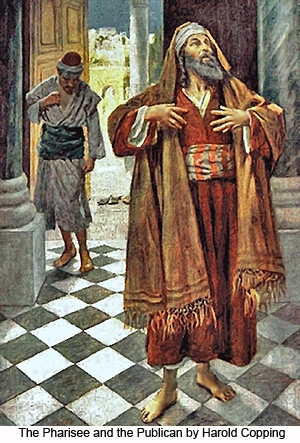
When the Pharisee in Jesus’ parable went up to the temple, he stood and spoke this prayer to himself: “O God, I thank you that I am not like the rest of humanity — greedy, dishonest, adulterous — or even like this tax collector.” And yet, Jesus tells us that this Pharisee did not go home justified, or righteous in God’s sight. Why is that?

When the Pharisee said ‘I am not like the rest of humanity — I am not greedy, dishonest, or adulterous…’ was it true that he had conquered sin? Very likely not. Psalm 130 rhetorically asks, “If you, O Lord, should mark our iniquities, who could stand?” And the Gospels record Jesus criticizing the Pharisees repeatedly, saying things like “Oh you Pharisees! Although you cleanse the outside of the cup and the dish, inside you are filled with plunder and evil.” But assuming this Pharisee quietly spoke his prayer to himself in a way which no one else could hear, why would he lie? Maybe he believed everything he said.

When we compare ourselves to others, like this Pharisee compared himself to the tax collector, we can imagine the great faults of others make our own faults unimportant. But just because somebody else is ten billion dollars in debt doesn’t mean that I am solvent. My own debts still remain. Some people accuse and make much of others’ sins because they are projecting at others what they dislike in themselves. It is much easier to condemn the faults in others than to change the faults in me.

Another phenomenon common to people and cultures is to condemn a person or group for the problems of the day. Sometimes, these are merely scapegoats for shifting blame. At other times, particular persons really are at fault and should be corrected or stopped. But we should not imagine that we can banish, purge, and kill our way to earthly paradise. Even after the Great Flood in Genesis, sinners disembarked from Noah’s ark. As the Christian Russian dissident and winner of the 1970 Nobel Peace Prize winner, Aleksandr Solzhenitsyn, famously wrote: “If only it were all so simple! If only there were evil people somewhere insidiously committing evil deeds, and it were necessary only to separate them from the rest of us and destroy them. But the line dividing good and evil cuts through the heart of every human being. And who is willing to destroy a piece of his own heart?

The Pharisee’s heart was probably not so pure of sin as he thought. He needed Jesus Christ to cleanse and heal and change it. But imagine if it really were true that the Pharisee was unlike the rest of humanity; not greedy, not dishonest, and not adulterous. Why then did this Pharisee not go home justified before God? What more did he lack?

Our Gospel tells us Jesus addressed today’s parable “to those who were convinced of their own righteousness and despised everyone else.” The Pharisee looked down on that tax collector and despised him with contempt. Greed, dishonesty, and adultery are hateful things, but Jesus forbids us from hating anyone. Jesus says you will be hated, you will have enemies, but he commands you to “love your enemies, and pray for those who persecute you, that you may be children of your heavenly Father.” If there is ever people you may be hating, be sure to pray for them (since you cannot pray for someone — willing their good — and hate them at the same time). Otherwise, when you die and you see someone whom you hate on the other side of the pearly gates, you might refuse to enter into Heaven.

Without ever denying right and wrong, without ceasing to share the truth, we must remain humble as sinners living among sinners. ‘For whoever exalts himself amongst others will be humbled, and the one who humbles himself will be exalted.’ That’s some food for prayerful thought today as we stand to pray in this temple and go back to our homes in the world.

Two Lessons from the Ten Lepers

October 12, 2025

28th Sunday in Ordinary Time
By Fr. Victor Feltes

I want to highlight two lessons from this Sunday’s Gospel which could greatly bless your life and soul. When ten lepers meet Jesus at the edge of a village, they keep a respectful distance from him. (Their skin disease made them religiously unclean and people feared them as being contagious.) The lepers shout out: “Jesus, Master! Have pity on us!” Jesus sees them and tells them, “Go show yourselves to the priests.” (The Old Covenant had a ritual for declaring lepers clean involving a physical inspection by a priest and a sacrifice.)

So the ten depart as they are commanded to by Christ and as they are going their skin diseases are cleansed. Notice how the lepers were not cleansed right away—they were not healed the moment Jesus spoke to them. They were going when they were healed, maybe miles away from Jesus when it happened. In this miracle, they were healed while walking in obedience.

Many blessings in our faith are only experienced once we step out in obedience. First we do what Jesus asks of us, in response to his grace which goes before and follows after us, and then we see its fruits in our lives. As you read this list of examples, which one or two are meant for you to add into your life?

• Daily prayer
• Consistent Sunday Mass-going
• Keeping Sunday rest
• Generous tithing
• Forgiving enemies
• Staying sober
• Volunteering
• Practicing chastity
• Being open to life
• Living more simply
• Regular confession
• Eucharistic adoration
• Going on a spiritual retreat or pilgrimage
• Entering a seminary, convent, or monastery
• Attending weekday Mass
• Praying the Rosary

Embracing one or two of these according to God’s will shall bless you and your loved ones. This Sunday’s Gospel story also suggests another valuable lesson.

One of those ten lepers happens to be a Samaritan, and once he realizes he has been healed, he goes back to Jesus. Glorifying God in a loud voice, he falls at Jesus’ feet and thanks him. Jesus says in reply, “Ten were cleansed, were they not? Where are the other nine? Has none but this foreigner returned to give thanks to God?” Then he tells the newly cured man, “Stand up and go; your faith has saved you.”

Jesus informs us that all ten lepers were cured. But consider this: eventually, each of those lepers died. Even if it was many years later from some cause of death other than a skin disease, every one of them died. Their healings were a great thing, but not the most important thing. The Samaritan’s healing produced in him great gratitude toward Jesus Christ and God the Father. He eventually lost the gift of good health, but his relationship with God could endure forever.

Some people only pray to God when they need something. But for Christ to fix our problems without us engaging in deeper relationship and gratitude towards him profits us little. Do not be one of those who are locked outside the door to whom the Master of the House will say, “I never knew you. Depart from me, you evildoers.” It is good for us to say, “Jesus, Master! Have pity on us,” like the ten lepers did. But let us always remember gratitude and relationship with the Giver of all good gifts.

The Seed of Faith & Bearing Fruit

October 4, 2025

27th Sunday in Ordinary Time
By Fr. Victor Feltes

Once upon a time, a pastor prayed to God, “Lord, please let me win the lottery.” This pastor was not a greedy person—he planned on giving almost all of the winnings away—he just really, really wanted to win the lottery. He prayed for weeks and weeks and when nothing happened he became frustrated with God, “Lord, why haven’t you let me win?” And he heard the voice of God reply, “You have to buy a ticket.” Having Christian faith is like having that ticket, it makes possible the blessings which follow.

Without faith, the complex beauty and order of this universe are dismissed as merely incredible coincidences. Without faith, supernatural miracles can be rationalized away. Without faith, a person will not seek after God for they do not believe he is real and good. As the Letter to the Hebrews says “without faith it is impossible to please God, because anyone who comes to him must believe that he exists and that he rewards those who earnestly seek him.

In today’s Gospel, the apostles ask of the Lord: “Increase our faith.” Jesus replies, “If you have faith the size of a mustard seed, you would say to this [deeply-rooted] tree, ‘Be uprooted and planted in the sea,’ and it would obey you.” When I was a boy and I read this verse I felt discouraged because “My faith is not even the size of a tiny seed!” But Jesus intends this teaching as an encouragement; he’s saying that even a little faith can achieve a lot!

Sometimes people in Confession confess to lacking trust in God. I point out that if a person trusted God perfectly they would be a perfect person, so it’s a common human problem. Trusting God has been our primordial human problem since the Garden of Eden. Yes, faithfulness can be challenging, but you do believe in God.

There was a time in college when I attended Mass without approaching for Communion because I feared that I did not have enough faith to receive the Lord in the Eucharist worthily. After weeks of this worry, it came to me in prayer that “people who don’t believe in God don’t spend time worrying about whether or not they believe in God—that’s something only believers do.” In retrospect, my worry was rather silly, since so much of how I was living my life would not make sense without faith in God. I bet the same is true for you who freely came to Mass today. Why else would you be here?

Realize that having faith is different than having feelings. You can have great faith both when your heart is joyful and when it’s torn with sorrow. Whatever one may be feeling, faith choses to respond faithfully in trusting love. Notice when the apostles ask the Lord to increase their faith how Jesus does not rebuke them for it. They are asking for a good thing. Like greater humility and greater love, increased faith is a gift God is always eager to give.

Although your faith could be strengthened, do not imagine that your faith is too feeble to do anything now. Scripture says faith can uproot trees and move mountains. Faith has worked miracles, changed unjust laws, and converted nations. Jesus wants you to know that even the tiny faith you have can work great good for you and those around you. So pray for more faith and resolve to act in faith more often. There are great jackpots to be won, but you have to buy a ticket.

Can One Man Save A City?

July 27, 2025

17th Sunday in Ordinary Time
By Fr. Victor Feltes

This morning, I believe I should preach to you about the City of Sodom and the City of God, about the importance of Christ and the importance of Confession. In today’s first reading, Abraham intercedes with the Lord concerning the possible destruction of Sodom. Abraham asks: ‘Will you sweep away the innocent with the guilty? Suppose there were fifty innocent people in the city; would you wipe out the place, rather than spare it for the sake of the fifty innocent people within it? What if there are five less than fifty innocent people? Will you destroy the whole city because of those five? What if only thirty are found there? What if there are no more than twenty? What if there are at least ten there?’ The Lord replies that if there are fifty, or forty-five, or thirty, or twenty, or even ten innocent people in the city of Sodom, for their sake “I will not destroy it.” But the city of Sodom was destroyed, and God does not lie, so we know that there was not ten innocent people in that city when it was destroyed. Abraham stopped at ten, but suppose if he had pressed on further? Imagine if Abraham had asked the Lord, ‘What if one innocent person is found there? Will you spare the city?’ Could one righteous man have saved the city?

In the fifth century A.D., St. Augustine wrote of two cities: the City of Man and the City of God. These cities exist side by side extending throughout the earth with every human person belonging to one city or the other. The City of Man embraces sin, with pride, ambition, greed, lust, hated and immorality reigning. But the City of God is led by the Lord, with Christian love and virtues lived in an alliance with Jesus Christ. To which city do we belong?

St. Paul told the Christians in Ephesus, “You are fellow citizens with the holy ones and members of the household of God.” This citizenship was bestowed to us through baptism, as St. Paul teaches in our second reading: “You were buried with [Christ] in baptism, in which you were also raised with him…. And even when you were dead in transgressions… he brought you to life along with him, having forgiven us all our transgressions….” In Jesus Christ, an innocent man is found among us at last. The Son of God became one of us so that on his account our city may be spared. Yet to benefit from his righteousness, we must continue living close to him.

Baptism forgave our past sins, but Jesus teaches us to seek that our new sins be forgiven. He told his disciples, “When you pray, say… Give us each day our daily bread and forgive us our sins…” Realize that all wrongdoing is sin but not all sin is mortal (or spiritually fatal) and know that forgiveness can require more than just a prayer. As St. John writes in his First Epistle: “If anyone sees his brother sinning, if the sin is not deadly, he should pray to God and he will give him life. This is only for those whose sin is not deadly. There is such a thing as deadly sin, about which I do not say that you should pray. All wrongdoing is sin, but there is sin that is not deadly.” If you have sinned, you should pray to God for mercy and grace. But if you have sinned gravely, you should also seek out Confession. This is a sacrament Jesus Christ has given us for the forgiveness of grave sins after baptism.

Your priests care deeply about this sacrament and we are at your service, at both announced times and upon request. Considering how many people are in our parishes, it concerns me that we are not busier with confessions than we are. You bathe every day. You probably take out garbage every week. The practice of monthly confession, even absent grave sins, is good spiritual hygiene for your soul and helps you live closer to Christ. If you wander away from the City of God into the City of Man, come to Confession for a rapid to return home. Please allow our Lord to show you his mercy.

Love & Eight — The Jacob Pake & Kayla Bowen Wedding

June 22, 2025

By Fr. Victor Feltes

We read in the Genesis Creation account that it was not good for mankind to live in solitude, so God made a suitable partner for the man. “That is why a man leaves his father and mother and clings to his wife, and the two become one body, one flesh.” Man and woman were made for each other. Psalm 128 notes how marriage, that first blessing from the original Garden, remains visible in the world even after the Fall: “Your wife like a fruitful vine in the heart of your house; your children like shoots of the olive around your table.” However, after the Fall, we are wounded by sin and drawn by temptation. Humanity commonly does not do as we should.

That is why St. Paul’s exhortation to the Corinthians reminds their divided and squabbling community what love is and what it is not. He lists eight things that love “is” or does alongside eight things love “is not.” Love is not jealous, not pompous, not inflated, not rude, not self-seeking, not quick-tempered, not brooding over injury, not rejoicing over wrongdoing. But love is patient, love is kind, it rejoices in the truth, bears all things, believes all things, hopes all things, endures all things, and love never fails. These groupings of eight are interesting because Jesus in his Sermon on the Mount lists eight beatitudes. (Some may count nine beatitudes, but the Greek indicates that the final “blessed” is an expansion on the eighth one.) These beatitudes describe Christian saints, but first and foremost they describe Christ himself.

So eight, eight, and eight — What does this have to do with how we are to love today? In Genesis, God begins creating on the first day of the week, which is Sunday. He works six days and then rests on the seventh day. That is why the Jewish Sabbath, their holy day of rest, was Saturday. Jesus Christ, who on Good Friday worked his perfect Sacrifice, whose lifeless body on Holy Saturday kept a day of perfect rest, rose again on Easter Sunday. Christians beginning in the 1st or 2nd century called that Sunday “the eighth day,” the eighth day of Creation on which Jesus Christ transforms humanity and our lives in this world. Now we have hope beyond this life, hope for blessed endless life with God. And the Passion, Death, and Resurrection of Jesus have opened access to grace, the help of God, enabling us to live and love like him.

How can we achieve and preserve true unity and harmony among us in our homes and community? This is not possible merely on our own. We must let God give us his grace which allows us to live and love like him. This is why daily prayer, weekly worship, and consistent devotion to the Lord must be top priorities for any Christian. Jacob and Kayla, draw near to him and remain with him, so that you both may live and love like him and be blessed together. Like the psalmist said, ‘Blessed are all who fear, who reverence, the Lord and walk in his ways. You will be blessed and prosper. May you see your children’s children. May the Lord bless you all the days of your life.’

How Is Christ’s Peace Different Than The World’s?

May 24, 2025

6th Sunday of Easter
By Fr. Victor Feltes

Jesus tells his disciples at the Last Supper, “Peace I leave with you; my peace I give to you. Not as the world gives do I give it to you. Do not let your hearts be troubled or afraid.” If through his Gospel Jesus is speaking these words not only to his apostles but to us today, then we can conclude several things: Jesus would give us his peace. This gift of peace is different from how the world offers “peace.” And it should grant us calm consolation and courage. So how is peace from Jesus different from this world’s peace? How have previous popes and great saints answered this question?

Three years ago, Pope Francis said one difference is in the manner which Christ brings about his peace: “This is how Christ brings peace into the world: through meekness and mildness, symbolized by that tethered colt, on which no-one had ever sat. No-one, because God’s way of doing things is different to that of the world. … The peace Jesus gives to us at Easter is not the peace that follows the strategies of the world, which believes it can obtain it through force, by conquest and with various forms of imposition. That peace, in reality, is only an interval between wars…. The peace of the Lord follows the way of meekness and mildness: it is taking responsibility for others. Indeed, Christ took on himself our evil, sin and our death. He took all of this upon himself. In this way he freed us. He paid for us. His peace is not the fruit of some compromise, but rather is born of self-giving.

St. Pope John Paul the Great shared similar reflections in 2004: “The world is longing for peace and needs peace, today as in the past, but often seeks it by inappropriate means, sometimes even with recourse to force or by balancing opposing powers. In these situations, people live with the distress of fear and uncertainty in their hearts. Christ’s peace, instead, reconciles souls, purifies hearts, and converts minds.

St. Thomas Aquinas highlighted this internal/external distinction about peace in the 13th century, saying “the peace of the world is a pretended peace since it is only on the outside: ‘The wicked… speak of peace with their neighbors while malice is in their hearts.’ But the peace of Christ is true, because it is both on the outside and inside. …The peace of Christ brings tranquility both within and without.

Aquinas also noted that worldly peace “is directed to the quiet and calm enjoyment of passing things, with the result that it sometimes helps a person to sin: ‘They live in strife due to ignorance and they call such great evils peace.’ But the peace of the saints is directed to eternal goods. … The world gives peace so that external goods can be possessed undisturbed; but [Christ gives] peace so that you can obtain eternal things.”

St. Augustine of Hippo said likewise in the 5th century: “For [the worldly,] their aim in giving themselves peace is so that, exempt from the annoyance of lawsuits and wars, they may find enjoyment—not in God, but in the friendship of the world. And although they sometimes give the righteous peace in ceasing to persecute them, there can be no true peace where there is no real harmony because their hearts are at variance.”

It is the alignment of our hearts with Jesus Christ’s heart which gives us harmony and true unity with one another and the Lord. As Jesus says, “Come to me … and learn from me, for I am meek and humble of heart; and you will find rest for yourselves. … My peace I give to you. … Do not let your hearts be troubled or afraid.” Go to Jesus and learn from him. Align your heart with his and rest.

As St. Augustine once concluded, “Let us, therefore, beloved, with whom Christ leaves peace and to whom he gives his own peace, not after the world’s way but in a way worthy of Him by whom the world was made, that we should be of one heart with himself, having our hearts run as one, that this one heart set on that which is above may escape the corruption of the earth.

Love Like Christ

May 19, 2025

5th Sunday of Easter
By Fr. Victor Feltes

The Lord is gracious and merciful, slow to anger and of great kindness. The Lord is good to all and compassionate toward all his works.” In times past, God spoke in partial and various ways through prophets (like in the previous psalm) validating his words with saving miracles. But at the beginning of this present age he spoke to us through his Son, through whom he has worked the greatest miracles of salvation.

We bow before the wonder of the Incarnation, that the Divine Person through whom all things were made would become man in the womb of the Virgin Mary and be born among his creatures. We are blessed that Jesus has revealed to us his way of Christian living, not only through the wisdom he preached but through his lived example. And greatest of all, we have access to peace, hope, and joy because of his willingness to suffer, die, and rise for us. Pause to consider where you would be if not for Christ’s love for you.

Now, Jesus gives us a new commandment: “Love one another. As I have loved you, so you also should love one another. This is how all will know that you are my disciples, if you have love for one another.” Now this love we are called to is not mere emotion. Oftentimes love is a warm, fuzzy, pleasure, but love will not always feel good. And this love we are called to is more than intellectual. The demons know that Jesus is Lord, but that does not save them, because they do not love him. We are called to love as Jesus has loved us.

This means we are called to love everyone like he does, the good and the wicked, our friends and foes. What this looks like will vary in life’s various circumstances, but we must will the good for everyone. And willing the good for others must lead to action. We are finite beings and cannot do everything for everyone all the time, but as St. James taught in his New Testament letter: “Faith by itself, if it does not have works, is dead.” And these loving works we are called to will not always feel good, but as Saints Paul and Barnabas preached: “It is necessary for us to undergo many hardships to enter the Kingdom of God.” Jesus entered his Kingdom’s glory through painful trials, and so must we.

For the sake of the joy that lay before him, [Jesus] endured the cross, despising its shame, and has taken his seat at the right of the throne of God.” Supreme happiness also awaits Christ’s faithful followers as well. In his Revelation, St. John sees a New Heaven and a New Earth and a New Jerusalem coming down out of Heaven from God. “Behold,” John writes, “God will dwell with the human race… and will always be with them as their God. He will wipe every tear from their eyes, and there shall be no more death or mourning, wailing or pain, for the old order has passed away.”

Jesus Christ loves us. He offers us his peace and joy and has placed his hope before us. And Christ calls us to love like him by loving him and remaining close to him, for apart from him we can do nothing. Our Christian life begins with Baptism, but must continue with daily prayer, Sunday Mass, regular Confession, a life of true discipleship. You must remain close to—or return to—his grace to enter the Kingdom of God. Remember Christ’s love for you, hold onto his hope, peace, and joy, and love everyone as he has loved you.

Jesus’ Love Succeeds

April 18, 2025

Good Friday
By Fr. Victor Feltes

The story of Christ’s Passion is a chronicle of human failures. Simon Peter, chief of his disciples, denies being his friend three times. Caiaphas and Annas, the highest Jewish leaders, reject, condemn, and hand over their Messiah. Pilate and Herod, representing the world’s political powers, tolerate injustice, persecute, and execute the Innocent One. The mob of humanity chooses the violent rebel, Barabbas (whose name means “Son of the Father”) instead of God’s Son, the peaceful Savior.

It is poignant and fitting how our liturgy has us speak the mob’s words, “Crucify him! Crucify him! …Take him away! Crucify him!” since it was our sins too which sent Jesus to the Cross. And yet, even as we are humbled and convicted at Jesus being crucified because of us, remember that Jesus accepted humiliation, pain, and death because of his love of us.

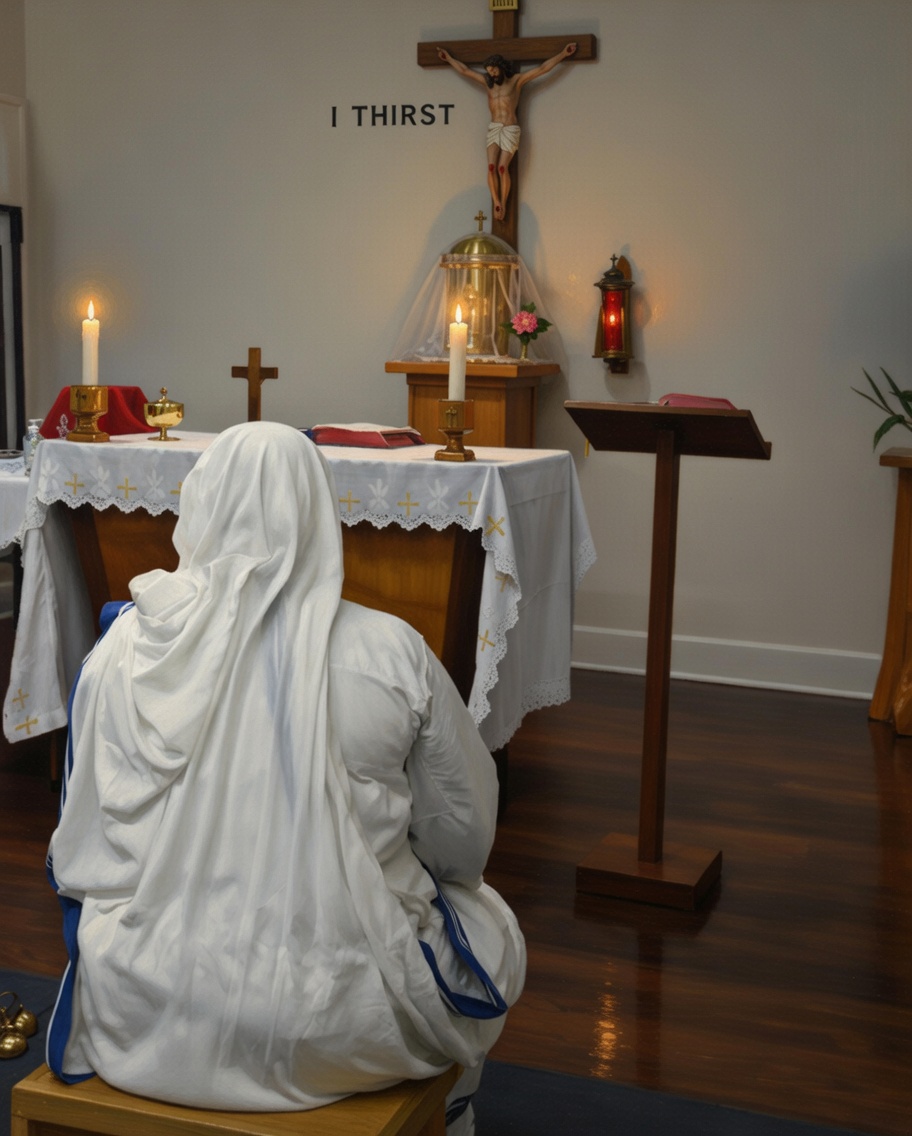
Though we may fail, Jesus’ love succeeds. He said, “When I am lifted up from the earth I will draw everyone to myself.” He stretches out his arms between heaven and earth as the everlasting sign of his New Covenant to invite and embrace us. And from the Cross, he says, “I thirst,” because his love thirsts for you and me.

Half-Measures Or Full Devotion?

April 18, 2025

Easter Sunday
By Fr. Victor Feltes

St. Peter the Apostle proclaimed: “We are witnesses of all that [Jesus] did… They put him to death by hanging him on a tree. This man God raised on the third day and granted that he be visible…to us, who ate and drank with him after he rose from the dead.” Jesus went to his Passion and Cross after the Last Supper, and from death and his tomb to the Resurrection. His apostles witnessed these events and were willing to die to testify to them, and nobody ever dies for what he knows to be a lie. The first Christians had full devotion because Christ did not go halfway in his saving mission.

But what if our Lord, instead of enduring pain and death, had chosen to spare and save himself? Jesus had told the apostles he “must suffer many things and be rejected by the elders, the chief priests and the teachers of the law, and that he must be killed and after three days rise again.” He said he had come “to give his life as a ransom for many,” shedding his blood “for the forgiveness of sins.” How could we ever find forgiveness of our sins in Christian faith and the sacraments, like Baptism and Confession, if Jesus never suffered and died?

Or imagine if Jesus had just gone halfway with the Last Supper, which was the first Holy Mass. What if he had taken the bread and given it to his disciples saying, “This is like my Body. Do this with a thought of me”? Jesus said, “Amen, amen, I say to you, unless you eat the flesh of the Son of Man and drink his blood, you do not have life within you. Whoever eats my flesh and drinks my blood has eternal life, and I will raise him on the last day. … Whoever eats my flesh and drinks my blood remains in me and I in him.” What would become of us if we could not receive Jesus in the Eucharist?

Or what if instead of Easter, Jesus Christ had merely suffered and died and never rose again? St. Paul’s answer is emphatic: “If Christ has not been raised, your faith is vain; you are still in your sins. Then those who have fallen asleep in Christ have perished. If for this life only we have hoped in Christ,” Paul says “we are the most pitiable people of all!” Therefore, if Jesus had stopped at half-measures in his mission, we would not be saved!

At the beginning of Easter Sunday Mass we sang “Jesus Christ is risen today!” We celebrate him risen not like some celebrate the Easter Bunny hiding eggs or Santa Claus bringing gifts for Christmas. A savior of merely “once upon a time” cannot save us. We celebrate Jesus Christ who was truly risen on Easter morning in 33 AD, but who is also risen, living and active, in our world today. And in the face of sin of death, he is our only hope.

This is the day the Lord has made; let us rejoice and be glad!” Embrace today’s good news, the joy of the Gospel, firmly resolved to go forward in such a way that you may be saved. Realize that you cannot safely clear a six-foot chasm by only taking three-foot hops. Half-measures are not enough.

In his suffering, in his sacraments, in his dying and his rising, Jesus shows us how far he goes in love to reach and save us. So in your daily prayers and weekly worship, in virtue and noble service, in Christian faith and fellowship, by your gratitude and love, walk with our Lord Jesus Christ with your full measure of devotion.

The Deaths of Lazarus

April 6, 2025

5th Sunday of Lent
By Fr. Victor Feltes
God does not do bad things, for “God is not subject to temptation to evil” and “what he hates he does not do.” However, God is all-knowing and all-powerful. There is nothing knowable that God does not know, and nothing good and doable that he cannot do. Therefore, when a bad thing happens, God has allowed that to happen. Yet we also “know that God causes all things to work together for the good of those who love him.” We see these truths reflected in today’s Gospel reading.

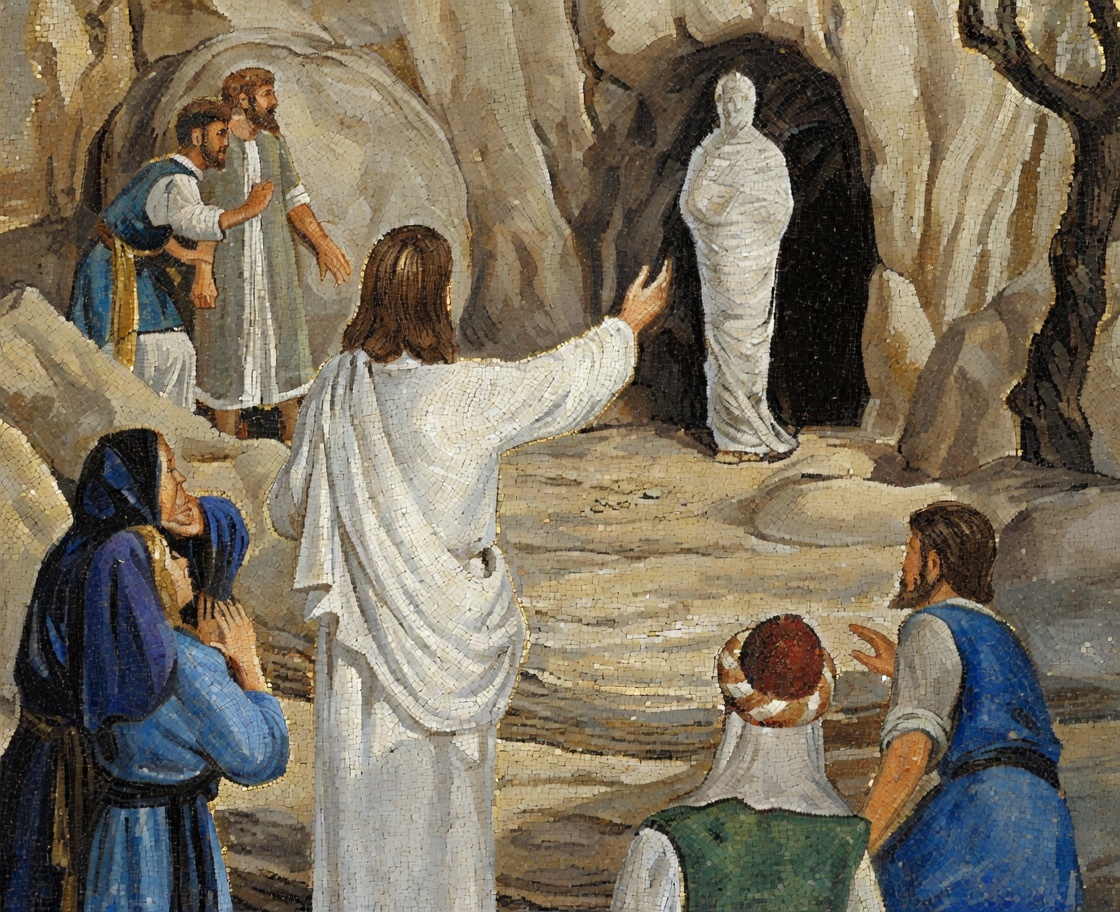
God clearly permitted Lazarus to fall ill. And when Jesus received the urgent message from Martha and Mary that their brother was sick, he remained in the place where he was and allowed Lazarus to die. “Now Jesus loved Martha and her sister and Lazarus.” So why did Jesus not come earlier, when he was told “the one you love is ill.” Or why did Jesus not heal his friend Lazarus’ sickness from a distance, like he cured the centurion’s servant or the royal official’s son? Jesus says the dying and rising of Lazarus was “for the glory of God, that the Son of God may be glorified through it,” and “that you may believe.”

Earlier in his public ministry, Jesus had raised Jairus’ daughter from the dead, having told mourners that the little girl was “asleep.” But that resurrection miracle was performed privately, shortly after death, and with strict orders to its witnesses that no one should know of it. By publicly raising Lazarus from the tomb in the presence of a crowd, Jesus manifests his power not only to heal the sick but to restore the dead to life.

Picture this: One moment, Lazarus was ailing and fading out of consciousness on his deathbed. The next thing he knows, he wakes up wrapped in bandages inside of a cave, and comes out toward the light at the sound of his friend Jesus’ call. His sisters would have filled him in on what he missed when he was dead.

The Gospels tell us Lazarus later attended a dinner with Jesus the day before Palm Sunday at the house of Simon the Leper. Martha served the meal while Mary took costly perfumed oil and poured it on Jesus’ head as he reclining at table. “A large crowd of the Jews found out that he was there and came, not only because of Jesus, but also to see Lazarus… And the chief priests plotted to kill Lazarus too, because many of the Jews were turning away and believing in Jesus because of him.” After Holy Week, the New Testament tells us no more of what happened to Lazarus. But we can imagine what it was like, years after Easter Sunday, when Lazarus died again.

Knowing that Jesus died and was risen, and having personally experienced death and resurrection himself, must have given Lazarus great peace even during his final passion. Consider Martha or Mary watching their brother die once more; having to burying him again. There would naturally still be sadness and ache in that parting, but I imagine the sisters would feel different this time: ‘We know he will rise in the Resurrection on the Last Day. Jesus Christ is the resurrection and the life who has come into the world, and whoever believes in him, even if they die, will live.’ Our brother Jesus died and has risen from the dead “for the glory of God” and “that you may believe.” Knowing and embracing this reality changes our life and how we face death. Do you believe this?

Last week, April 2nd, marked the twentieth anniversary of the passing of Pope St. John Paul the Great. And if you are like me, having witnessed how he lived and died, is inspiring. Pope John Paul’s famous motto was “Be not afraid!” In this, of course, he was quoting Christ who frequently said, “Be not afraid!” “Be not afraid,” Jesus tells us, “If you believe you will see the glory of God.”

Loving Everyone, Our Enemies & Ourselves

February 23, 2025

7th Sunday in Ordinary Time
By Fr. Victor Feltes

Jesus never promised that we would not have enemies. Jesus says, “You will be hated by all nations because of my name. … No disciple is above his teacher, no slave above his master. … If they persecuted me, they will also persecute you. … Woe to you when all speak well of you,” for false prophets were treated in this way. But “blessed are you when they insult you and persecute you and utter every kind of evil against you falsely because of me. Rejoice and be glad, for your reward will be great in heaven.” Thus were true prophets and servants of God treated. The faithful will encounter enemies in this world, yet Christ commands us to love everyone.

He says to his disciples: “Love your enemies, do good to those who hate you, bless those who curse you, pray for those who mistreat you.” You will have enemies, but you must love them. Love sometimes has warm, fuzzy feelings, but not always. This is because love is choice, a choice to will the good of the other. You will not always like everyone, but you must always love everyone.

Jesus tells us, “To the person who strikes you on one cheek, offer the other one as well, and from the person who takes your cloak, do not withhold even your tunic.” Our love of enemies, however, does not mean we must permit grave harms to be done to ourselves or others. This is reflected in the examples Jesus cites. Losing one’s cloak and outer tunic would not leave someone naked, since people in those days also wore an inner tunic. And a slap on the cheek in those days—unlike a stab in the chest—wounds one’s dignity more than one’s long-term health.

We should oppose and resist grave evil, but we must not be undone by the sins and slights of life. Jesus wants us to be magnanimous, large-souled; merciful and forgiving others’ trespasses and debts, generous and giving to those who ask of us, patiently loving people and doing for them what we would have others do for us. Pray for those who mistreat you, bless those who curse you, and do good to those who hate you. Then you will be loving them like Jesus has loved us.

God proves his love for us in that while we were still sinners Christ died for us.” Be like God, who is generous and kind and merciful towards the ungrateful and the wicked. Then your reward will be great, packed together, shaken down, and overflowing, for you will be godlike, children of the Most High. St. Paul declares, “Just as we have borne the image of the earthly one, we shall also bear the image of the heavenly one.” Then, as St. John writes, “we shall be like [God], for we shall see him as he is.” “God is love,” and to become like God it is important that we love and forgive like him. We must also extend this love and forgiveness to ourselves.

A person who believes that God can love and forgive everyone but themselves is singling themselves out as somebody super-extra special. Remember that our Lord is much more concerned with your future than your past. To Christians who are too hard on themselves, I suggest this thought experiment: Imagine somebody just like you, with the same past, the same strengths and weaknesses, the same loves and desires. What would you think of that person? Could you be friends with that person? How would you treat that person? If kindly, then love yourself like your neighbor. If God loves you, you should also love yourself. If God has forgiven you, you should also forgive yourself. And since God loves everyone, you should love everyone too.

Rejoice, The Lord Is Near – Have No Anxiety At All

December 14, 2024

3rd Sunday of Advent
By Fr. Victor Feltes

A story is told of an old American Indian speaking to his young grandchild seated at his feet. “Inside of me there are two wolves,” the grandfather explains. “One of these wolves is virtuous: patient, kind, chaste, generous, forgiving, and loving. But the other wolf is vicious: angry, cruel, lustful, greedy, unforgiving, and hateful. These wolves are battling within me in a fight to the death.” The child asks, “Which wolf is gonna win, Grandpa?” The grandfather replies, “The one that I feed.”

One bit of encouragement I often give in the confessional concerns the ideas, feelings, memories, or temptations which enter people’s minds. When people confess to having had bad thoughts or temptations, I ask, “Did you will them? Did you choose them? Did you welcome them? Did you say ‘Yes’ to them, or did you resist them?” Unhelpful thoughts and feelings can come to us against our will. We only sin or merit when we engage our will to accept or reject them. A saint is not someone who never feels temptation but someone who, even when tempted, choses what is good and true and loving. If we do not realize this, we will believe every temptation we think or feel is a sinful defeat when it is merely a call to battle.

Some people think temptations only attract us to pleasures, to set us up for a fall. However, some temptations draw us downwards, to grumbling, bitterness, unhappiness, and despair. In today’s second reading from the Letter to the Philippians, St. Paul presents an antidote. He says, “Rejoice in the Lord always. I shall say it again: rejoice!” A person rejoices when they have gratitude for the present and the past and have hope for the future.

Our days may be very challenging but even amidst our sufferings we have much to be grateful for. We can always find a reason to complain. (Somebody with nothing to complain about could even choose to complain about that!) But most of our complaints are completely unnecessary. Instead, count your blessings—perhaps literally on your ten fingers—especially in hard times, and remember that you have great cause for hope in good things to come. When I replace pointless complaining with rejoicing my blessing cup is no longer empty but full enough to overflow for others. Because of this, St. Paul says, “Your kindness should be known to all.”

Another of our common unpleasant temptations is to anxiety. One of the things Jesus says most in the Gospels is “be not afraid!” Realize that worry (which is the natural fruit of fear) is worthless; concern is enough. If I were totally unconcerned about this homily then I would have prepared nothing to say. But if I had been worried about this homily there would still be just as much work to do but with added stress besides. What can you do when you are showing proper concern and you are doing your part but still feel the burden of anxiety? St. Paul provides this prescription: Remember that “The Lord is near.” So “have no anxiety at all, but in everything, by prayer and petition, with thanksgiving, make your requests known to God. Then the peace of God that surpasses all understanding will guard your hearts and minds in Christ Jesus.

We are called to zero anxiety, “to have no anxiety at all.” When you’ve done what you can, you can refer the rest to God. Lift up your prayers and petitions with a thankful heart. And then, even if nothing visibly changes in the situation immediately, the peace of God which surpasses our understanding will guard and protect your heart and mind from pointless worry. The Lord is near. Give thanks and rejoice. Have no anxiety at all. For the Lord is with you, fighting on your side in the battle.

The Widow’s Gift Was Love

November 9, 2024

32nd Sunday in Ordinary Time
By Fr. Victor Feltes

Jesus sat down opposite the temple treasury and watched how people gave money at God’s house. There were thirteen donation trumpets attached to sturdy chests into which people were dropping their contributions. Many rich people were donating large sums, causing loud commotions. But one poor widow’s two small coins went in quietly; a little click-click. Why did Jesus highlight her gift above everyone else’s that day?

Our Father in heaven is rich. He created the universe out of nothing. All things belong to him. Being the Almighty, he does not strictly need anything from us. In the 50th Psalm, God tells his people that he does not rebuke them for their animal sacrifices—he had commanded them to make them—but he notes “every animal of the forest is mine, beasts by the thousands on my mountains. I know every bird in the heights; whatever moves in the wild is mine. Were I hungry, I would not tell you, for mine is the world and all that fills it.” And yet, God insists upon our sacrifices for him.

God places us in a material world in which what we do matters. Whether and how we work and pray, learn and teach, plant and harvest, build and repair, save and donate, visit and invite, feed and clothe and care and love, these things really matter—for good or evil—for ourselves and others. It is true Almighty God could do everything all by himself, entrusting us with no mission and zero responsibility. But then, how would we ever mature and grow as glorious saints? Instead, God chooses to work through us, and with us, and in us. Our holy gifts and sacrifices, inspired and empowered by grace, advance God’s Kingdom while transforming us in Christ. Though, strictly speaking, God has no need of our gifts or praises, he insists upon them for our own good.

When Jesus saw that poor widow give God’s house just two coins worth only a few cents, he called his disciples to himself and said, “Amen, I say to you, this poor widow put in more than all the other contributors to the treasury; for they have all contributed from their surplus wealth, but she, from her poverty, has contributed all she had, her whole livelihood.”

Jesus condemns those who “devour the houses of widows,” but he celebrates this woman’s evident trusting, love for God. Jesus says to beware the scribes who love the robes, the titles, the honored seats at synagogues and feasts, who recite lengthy prayers in order to be seen by men. “They will receive a very severe condemnation,” Jesus says, because their focus is not on love of God and neighbor. That poor, loving widow, however, receives the praise of God. “The last shall be first, and the first shall be last.

As I preached in a homily three weeks ago, hierarchies are normal and natural, though some are better than others. The secular world has hierarchies according to power, wealth, or status. Christ establishes a hierarchy for his Church on earth according to sacramental holy orders. But amongst the Church in heaven, a hierarchy exists according to love. In heaven, God reigns supreme and God is love pouring out for all. There is no money to be had there, the sacraments are no longer needed, and there is perfect, perpetual peace. Greatness above is according to one’s capacity to give and receive love. So whoever wishes to be great in God’s Kingdom must imitate the faithful, self-gifting love Jesus highlights in that widow and which we see modeled for us by Jesus Christ himself.

How you love and what you do matters. In the words of St. Paul, “Let us not become weary in doing good, for at the proper time we will reap a harvest if we do not give up.” “Whatever you do, do it with all your heart as for the Lord … knowing that you will receive an inheritance from the Lord as a reward.” For when Christ comes “he will bring to light what is hidden in darkness and will manifest the motives of our hearts, and then everyone will receive praise from God.”