Archive for the ‘Faith’ Category

Her Core — Funeral Homily for Rose Lankey, 97

May 12, 2022

By Fr. Victor Feltes

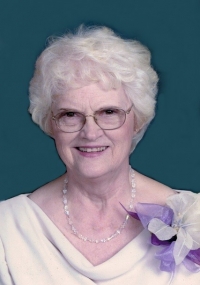
Rose was born August 15, 1924, on the Solemnity of Mary’s Assumption into heaven. Today we offer her funeral Mass at St. Paul’s to aid Rose’s own journey to heaven. Three days after Easter in 1947, Rose got married here at St. Paul’s to her beloved husband, “Bud.” He himself joined the Church at this parish and Rose was proud to brag “he’s better than most Catholics!” They were married for 71 years. Rose often volunteered to serve funeral luncheons at St. Paul’s. After retirement, she came here for Mass six days a week; enjoying the holy meal of her dear Lord Jesus typically followed by having coffee with his friends and hers.

Rose had a lifetime of happy memories with her family and friends. During her last ten years on earth she would remark, “I’ve had a wonderful life.” But after Rose turned ninety years old, her mind began to fail her. Throughout the past two or three years her memory had become quite poor. For instance, she knew she had three daughters, but would fail to recognize their fully-grown faces. Yet, even as her human frailty in this damaged world stripped away so much from Rose, there was a deepest core which endured in her. What was that core within her? Her Catholic faith in Jesus Christ.

Rose’s faith and devotion would manifest even in final days. About a month ago, when her daughter handed her a Rosary, Rose looked at the beads not seeming to register their purpose or use. But when she was told “these are rosary beads which were blessed by the pope,” Rose cupped them in her hands and kissed them with her lips. About two weeks before her passing, her mind and body were so weakened that Rose had stopped speaking. Chaplain Lynn from Hospice visited her bedside and suggested to the family, “Let’s pray the Lord’s Prayer.” Rose’s three daughters and son-in-law had not heard Rose verbalize for days, but when they began saying the Our Father together they were in awe when Rose audibly joined in. Later, while Fr. Tim from St. Odilia gave Rose the Last Rites, her lips attempted at times to voice the words of prayer. She looked at the priest, that icon for Christ, with a look of comfort in her eyes.

Jesus tells us it is the will of God the Father that Christ lose nothing that our Father has given him, and Christ shall raise it all up on the last day anew. The poor will have the Kingdom. The mournful will be consoled, for “the Lord God will wipe away the tears from all faces.” And the meek will inherit the earth. And to those like Rose who lost nearly everything but him Jesus will restore to them everything again, “to dwell in the house of the Lord” forever. On that day it will be said: “Behold our God, to whom we looked to save us! This is the Lord for whom we looked; let us rejoice and be glad that he has saved us!” Jesus Christ is the good Lord to whom our beloved Rose faithfully looked. Let us rejoice and be glad that he has saved her.

His Glorious Light Overcomes the Darkness

March 13, 2022

2nd Sunday of Lent
Fr. Victor Feltes

Once upon a time, little Billy’s grade school teacher was teaching her class about outer space. She said, “In 1969, the American astronaut Neil Armstrong became the first person to walk on the Moon.” Little Billy raised his hand and asked, “Teacher, has anyone ever walked on the Sun?” “Oh, no,” she said, “the Sun is far too hot for that.” But Billy replied with confidence, “I know how I can be the first.” Curious and bemused, she asked him how. “Easy. I’ll go at night!

The Sun, of course, does not turn off at night like a lamp on a switch. The Sun still blazes and shines with incredible heat and light even when the Earth obscures it from our sight. And even on the darkest, stormiest day the Sun remains in the heavens above us even though clouds prevent us from perceiving it clearly.

In this Sunday’s first reading from Genesis, Abram (before God changed his name to Abraham) seems discouraged. He’s lamenting to the Lord: “Look, you have given me no offspring.” Though God has promised him descendants, he and his wife have become very old without having any children together. The Lord God guides him outside and says, “Look up at the sky and count the stars, if you can. Just so, shall your descendants be.” We can easily picture this as a nighttime scene: Abram exits his dwelling and sees a billion stars in the Milky Way. Indeed, more than that number of people today recognize him as our spiritual ancestor, “our Father in Faith.” But this episode strikes as even more profound if, instead of during nighttime, it happened during the day.

‘Look up at the blue sky and count the stars, if you can. Just so, shall your descendants be. You know the stars are up there, Abram. You know they don’t stop being real each morning, it’s just that you can’t see them. Your many descendants will exist, though you cannot see them now, though you do not yet know how. I assure, you my promises to you will be kept.’ And “Abram put his faith in the Lord, who credited it to him as an act of righteousness.

Then God reaffirms his promises to Abram in a strange and mysterious way. The Lord directs him to sacrifice five animals. Abram slays them and lays them out, and then.. nothing happens. Birds of prey, scavengers, swoop down upon the carcasses to pick them over. Yet Abram does not give up; he patiently remains there. As the sun is about to set, a deep, terrifying darkness envelops Abram. And when the sun has set and it is dark, Abram sees a flaming torch and a smoking fire pot appear and pass between the sacrifices. This is a sign from God against any discouragement, doubt, and fear; it is the Lord’s light overcoming the darkness.

Christ’s Church pairs this reading from Genesis today with Jesus’ Transfiguration. After telling the disciples of his coming death, Jesus manifests to them his glory; a divine glory which is always present but which they cannot always see. This event seems to take place in the dark of night since Peter, John, and James were overcome by sleep while Jesus prayed. But upon becoming fully awake, their eyes are opened: they see Jesus’ face shining like the sun and his clothing now dazzling white, as he speaks with Moses and Elijah. These two, great prophets after their trials share in Christ’s radiant glory and speak of the exodus he will accomplish in Jerusalem (that is, they speak of his approaching paschal sacrifice which will set God’s people free).

In his Transfiguration, Jesus reveals his glory to the disciples to strengthen them for the scandal of the Cross. He wants to prepare them to accept, even by the testimony of the law and the prophets, that the Passion leads to the glory of the Resurrection. Christ’s glory shines forth from a body like our own, to show that we, his Church, the body of Christ, can likewise share his glory.

The stories of little Billy, Father Abraham, and Christ’s Transfiguration teach important truths believers will be blessed to remember and hold on to. Even more so than the Sun or stars, our good God endures unchanging. Though this world obscures the light of heaven, heaven’s light remains undimmed. Birds of prey may swoop down and impiously scavenge as enemies of Christ, but we are not forgotten. The innocent one may suffer like Christ, but he is not abandoned. Our times may be dark and frightening, but we need not be afraid: God’s promises will be kept. This is our faith: that despite doubt, discouragement, and distress, the glory of our Lord will overcome the darkness.

Why They Rejected Christ

January 29, 2022

4th Sunday in Ordinary Time

When Jesus preached at Nazareth near the start of his public ministry, his own hometown neighbors rose up, filled with fury against him. They drove him out of their village intending to toss him head first off a cliff. Later, near the end of Jesus’ public ministry, one his own twelve apostles, after spending years in his close company, chose to betray Jesus to his enemies. And sometimes in our present day, lifelong Christians experience painful events and give up on their commitment to Christ. Why did Jesus’ neighbors in Nazareth reject him? Why did his apostle, Judas Iscariot, betray him? And why do Christians sometimes abandon him in hard times? All of these expected our Lord to do certain things for them but were disappointed. In each case, Jesus failed to do for them what they desired.

Part of the problem at Nazareth was that Jesus was too familiar to them. He grew up there as a little kid playing in their streets, he worked locally as a carpenter’s son, and he quietly attended their small-town synagogue for years. So when they heard him preaching they asked, “Where did this man get all this?” How could this guy be someone foretold of in the Scriptures? As Jesus acknowledges, “No prophet is accepted in his own native place.”

They wanted him to prove he was somebody special by working miracles before them. A sick doctor should be able to apply his talents for his own recovery and prove he is a real doctor; so the Nazoreans would say to Jesus, “Physician, cure yourself! Do here in your native place the things that we heard were done in Capernaum.” But God’s prophet does not owe them miracles. Jesus notes that neither Elijah nor Elisha, two of the Old Testament’s greatest prophets, worked miracles for Israel’s individual widows or lepers, respectively. St. Mark’s Gospel reports that Jesus did not perform many mighty deeds in Nazareth, apart from curing a few sick people by laying his hands on them. Their lack of faith and lack of openness seems to have limited the gifts of God they could receive. So Jesus failed to match their expectations, and they took great offense at him.

Why did Judas Iscariot betray our Lord for thirty silver pieces? St. John tells us in his gospel that Judas “was a thief and held [Jesus and the apostles’] moneybag and used to steal the contributions.” Those thirty coins represented thirty days’ wages back then, something akin to $3,000 today. Was Judas so greedy for that relatively-modest amount of money that he couldn’t resist? When Judas saw that Jesus had been condemned to death he felt deep regret at what he had done. He tried to return the money to the high priest and elders saying, “I have sinned in betraying innocent blood.” He wishes to undo his deed, but the Jewish leaders brush him off: “What is that to us? Look to it yourself.” Judas goes away in despair and foolishly kills himself. If Judas did not wish for Jesus to die, then why did he sell him out? It seems that this apostle was disappointed by Jesus’ public ministry.

Most Jews expected the Messiah to come as a warrior-king like David. They imagined the Christ would drive out their pagan overlords, conquer Jerusalem, and lead an earthly kingdom of vast power, prestige, privilege, and wealth. But Jesus was not pursuing that popular dream. He devoted his efforts instead to teaching and healing the lowly and poor. When, after feeding thousands with five loaves and two fish, Jesus perceived “they were going to come and carry him off to make him king,” he firmly sent that crowd away and withdrew up the mountain alone. Judas had run out of patience waiting for Jesus’ Kingdom to come. Maybe Judas had given up on Jesus, and took that money to start a new life without him. Or maybe he hoped that Jesus—with his back to the wall—would finally wield his mighty, miraculous power to claim his royal throne, with Judas at his side. Either way, Judas’ disappointed expectations led this disciple to betray Jesus Christ and lose everything.

In our own day, some Christians leave the Lord Jesus after following him for decades. Oftentimes, this happens after a painful tragedy: a terrible diagnosis, a failed marriage, a Church scandal, a child’s tragic death. It is not the Christian life they had envisioned. They likely asked God for a particular miracle but it was not given. I know a man from a previous parish who attends Mass with his wife every Sunday, but he stopped receiving Holy Communion many years ago after their teenage daughter died in a car crash. I know of another long-time Catholic who reportedly became embittered at losing his good health and refused a Catholic funeral. How should a follower of Jesus Christ respond to life’s profound and painful trials?

On the first Good Friday, when Jesus died on the Cross, the Gospel of St. Luke tells us “all his acquaintances stood at a distance, including the women who had followed him from Galilee and saw these events.” St. John’s Gospel highlights that the Blessed Virgin Mary was there at the Cross of Christ along with his beloved disciple. What did they feel like amid that horror? What miracles did they plead for that day? Their prayers to heaven seemed to go unheard. The next day, in shock and grieving on Holy Saturday, they may have questioned in their hearts, “Where was God? How could he let this happen? Does he not care? Where is his faithfulness to his faithful ones? How could this be part of a loving plan?” But the next day, on Easter Sunday, they witnessed the joyful resurrection Jesus had promised, and God’s loving, mysterious purposes became clearer.

Jesus told his disciples and says to us, “Whoever wishes to come after me must deny himself, take up his cross, and follow me.” Jesus does not promise us a life exactly as we would plan it for ourselves. Not every prayer for a miracle will be granted exactly as we would imagine. But remember, the Kingdom of Jesus Christ will come for his faithful ones.

Keeping the Faith During Trying Times

December 25, 2021

Feast of The Holy Family
By Deacon Dick Kostner

“Mary, did you know that your baby boy is Lord of all creation?  Mary, did you know that your baby boy would one day rule the nations?  Did you know that your baby boy is Heaven’s perfect Lamb?  That sleeping child you’re holding is the great “I Am“?

The answer to the lyrics just quoted from the popular Christmas Song “Mary did you know?” is “No! Not everything,” according to Pope John Paul II. She did not know everything at once and it is displayed in our gospel proclaimed in today’s Liturgy.

The morning I began to prepare for this homily I saw some very disturbing statistics from an article in The Wall Street Journal. Americans who pray daily was 58% in 2007, this dropped to 45% in 2021; Americans who identified themselves as Christians was 78% in 2007, in 2021 this dropped to 63%. This downward trend began long before COVID but increased during the pandemic. At our own parish we have experienced a substantial decline in attendance at Sunday Mass, especially family attendance. Other parishes have had similar declines.

So what’s going on? Our gospel displays to us the problem but it also gives us the answer to the problem. The problem is rooted in both mental and physical sufferings that are a part of the human experience. Sacred Scripture lays it out very well. Humans get sick, go blind, struggle with raising children, have disagreements with spouses and family, and yes the big one, death and when we pray for help we expect results not tomorrow but right now. All of these were experienced by Jesus the big question is: “Why?” The answer is a mystery we are incapable of understanding, but God did gift us with how we can get through these sufferings and anxieties when he sent His Son to experience these struggles and to supply us with the cure, and that is faith that the Father loves us, His Holy Family, and has a plan for us to follow and find happiness even while suffering, through His Holy Spirit and His Holy Family. The problem is our world has become secularized. Secularization is the process of removing religious and moral influence from our society. The significance of God and the Holy Family in our world is looked down upon and is been reduced.

Lets reflect on our Gospel this Feast of the Holy Family, and “Mary did you know?”. Humans are wired by our creator to care for and protect children we are blessed with. Mary was no exception and when her and Joseph realized Jesus was missing and days had passed panic hit them. They backtracked and found Jesus in the temple listening to the elders and conversing with them. They were upset and asked why Jesus had not told them where he was going. His reply was that he thought they would know that he was going to His fathers house. And then we are told that Mary and Joseph “did not understand what he said to them.” Thus we are given the answer to some of the songs questions of her that she did not know. But then we are told that Mary “kept all these things in her heart.” and thus she reflected upon her son’s words and she came to understand that Jesus had assumed she knew his vocation, to learn and be involved with public ministry. Jesus also realized they did not know this and felt sorry for not telling them his plans to visit his Fathers house, for we are told that “Jesus advanced in wisdom and age and favor before God and man and was there after obedient to them.”

Jesus made a mistake for causing anxieties to his Mother and his step father and corrected his behavior and honored his human parents. This is the guide line for human families becoming members of the Holy Family. They care for and correct mistakes they make within their Holy Family relationships and its members.

Being human will carry with it sufferings. There will be mistakes that we will make as members of the Holy Family that will cause not only us but other members of God’s family to suffer. We are called to reflect upon our mistakes and make corrections to assure those we have caused to suffer that this will not happen again. We are called by God to place other members of the family of Jesus ahead of ourselves when we realize that others need our help and support as Jesus, Mary and Joseph have taught us, by reflecting on our actions and praying to the Father for wisdom and direction in helping our brothers and sisters overcome their sufferings and anxieties of life.

Like Mary, there are many questions in life we don’t know answers to. It is faith that allows us to trust that the Father knows our fears and anxieties and will answer us through His Holy Family when the time is right, for as told to us by God we are to look to His Holy Family and the Word for help and guidance and as far as fear, He tells us: “Be still and know that I AM!

Drawn to Jesus by God’s Grace

August 8, 2021

19th Sunday in Ordinary Time
By Deacon Matthew Bowe

There are many things that we are drawn to. I am drawn to delicious food, as you can tell. I am also drawn to playing golf, watching the Olympics, and spending time with friends and family. I have noticed that we can easily talk about the tangible and physical things that we are drawn to, whether it be sports, fishing, hunting, outdoor activities, card-playing, work, or any other thing. Curiously, I wondered how do we tell others about the spiritual things that we are drawn to? Examples include praying, going to Mass, charitable works, retreats, and any other sort of thing. Do we not tell people because we are not drawn to spiritual things, or do physical things attract us more than the spiritual things?

Currently, we are in the middle of the Bread of Life discourse from the Gospel of John. Two weeks ago, it was the reading about the multiplication of the loaves. Jesus fed five thousand people with just five barley loaves and two fish. In that story, the power of Jesus can do a lot with the little that we can give Him. Last week, the crowds pursued Jesus seeking to have this bread always, and the reading concluded with Jesus saying that he was the bread of life. Whoever comes to Him will never hunger, and whoever believes in Him will never thirst. In his writings, the evangelist John never uses the word “miracle.” Rather, he writes about the signs that Jesus worked. A sign points toward something. A stop sign signifies that it is the law to stop at this intersection. In this Gospel, the physical signs point to a spiritual reality. In this Bread of Life discourse, the physical sign is the bread, and the spiritual reality is that Jesus is the bread of life. This is one reason John wrote the Gospel – to show that Jesus was not only fully human but also fully divine.

Now, we turn to today’s Gospel reading. The Jews are murmuring and struggling that Jesus said that He is the bread that came down from heaven. The crowd could see the physical reality, or the humanity, of Jesus. They knew that Jesus was the son of Joseph and of Mary. However, they were spiritually blind. Despite the wonders and the signs that Jesus worked, they saw not the divinity of Jesus, the true bread that came down from heaven. Our culture today disbelieves the spiritual reality of the created world and idolizes the physical world. It is a culture that espouses that “science is everything,” “follow the science,” and “do whatever makes you happy,” yet the culture fails to recognize that the created world is more than just the physical and the pleasurable. That is not to say that the Church is anti-science. The Church promotes and espouses the arts and the sciences. Science leads us to a deeper understanding of the created world and thus of our Creator. Science serves to deepen our knowledge of God. The culture says that it is unreasonable to believe in God, but I say that is unreasonable to not believe in God and the spiritual reality of Creation.

Then, Jesus sternly answers the murmurs of the crowd. There is a lot here, most of which I will leave for your spiritual meditation. In each of our lives, God always makes the first move. When we pray, it is because He first drew us to pray. When we give charitably, it is because He first gave us the grace to do so. Everyone is capable of being drawn by the Father, but not everyone responds to that invitation. The early Church Fathers, who wrote commentaries on this passage, noted that the Arians, fourth-century heretics who denied the divinity of Christ (even after the Church declared otherwise), were not drawn by the Father. Because they denied a truth of the faith, they denied Truth Himself, who is Jesus Christ. Thus, they could not be drawn by the Father because the Father does not draw us partially. He draws us to Himself fully. Even people today who support and are gravely involved in any immorality or injustice condemned by the Church or hold opinions contrary to the teachings of the Church deny Truth and are thus not drawn by the Father. There is something that is lacking.

This is why we should pray, my brothers and sisters, that everyone may be drawn in by the Father, into the Catholic Church, which safeguards the fullness of Truth and Faith. There is always hope, for God is merciful and kind, as the Psalmist says. Repentance and conversion are always possible for us so long as there is life in us. This is the first way in which we are drawn by the Father. To repent of our sinful ways and to turn back toward Him. As St. Paul wrote to the Ephesians, we should remove all bitterness, fury, anger, shouting, reviling, and malice and replace it with kindness compassion, and forgiveness. We should imitate Christ. The ultimate imitation is sacrifice (even death on a cross). Then, we listen to Father, humbly being taught by God, and we will come to Jesus. Jesus is the bread of life, of life eternal. It is not by our bodies that we believe, but it is by our spirits that we choose to believe, through divine assistance. We who believe will be raised up on the last day and have eternal life.

How is it that we are intimately drawn into a spiritual union with Jesus? Foremost, it is via the Sacrament of the Holy Eucharist. The classic expression “You are what you eat” holds exceptionally true. Not only is there spiritual contact with Jesus, but we can also physically touch Jesus, for what was once ordinary bread becomes, by sacramental grace, the Real Presence, the Body of Christ. Jesus left us a Sacrament by which He is ever present on Earth. The Eucharist is the bread that comes down from heaven to lead us into heaven just as God came down from heaven and became Man. Whoever eats this bread will live forever, for this bread is the very flesh of Christ, Who is Life, and Jesus Who gives Life to the world. Brothers and sisters, let us pray that we may be drawn to Jesus today in this Blessed Sacrament, to believe more deeply in the Life of the world, and to delight in the heavenly things which are to come.

Faith – The Miracle Worker

June 28, 2021

Blessed Mother Teresa with a happy, armless baby, photo by Eddie Adams of AP

13th Sunday in Ordinary Time
By Deacon Dick Kostner

What stood out for me with today’s readings is the fact that even though we have entered and begun “Ordinary Times” in our Church calendar, that since the Incarnation there does not exist anything that is “Ordinary” in our lives anymore. Miracles appear everywhere and everyday if we but possess the mustard seed of faith. Jesus has taught us that faith as small as a mustard seed will allow his followers to heal those who are ill, will allow us to accomplish supernatural tasks and move mountains that are not physically or humanly possible to move.

My mind journey began when I heard Deacon Matt’s homily on Trinity Sunday and how God has gifted those who have been baptized with supernatural abilities through membership into the family of the Trinity. Through the Sacraments we enter into a unitive state of being one in spirit with the Creator. A state of being where we communicate spiritually with the Trinity and God’s plan to make us one in thought and vocation with him.

Our gospel tells us that the key to life now and forever is “faith.” Jesus has shown us and told us to pick our friends carefully and listen to them. Follow their teachings to see miracles happen before our eyes. Let me tell you three stories about people of great faith who most of you lived with and know by name who have accomplished supernatural tasks through faith. Two are Christmas stories. The first involves Cecelia.

Cecelia and I were friends and she many times would tell me how much she enjoyed my homilies. Her and her sister were friends of my mom and were golf buddies. Cecelia was a daily Mass person and a person of prayer. She was very much concerned about the struggles the Church was having with its ministers and she would ask my advice on things that bothered her. When I had no good answer to the problems she would say, “I guess I will have to pray harder.” When I heard of her death on the Sunday before Christmas I was saddened and knew that I needed to attend her funeral to pray for her and say goodbye to her. The next day, Fr. Victor asked if I would do a Communion Service as he had three funerals scheduled for that week.

On the way to church that Monday, I was listening to Phlash Phelps on Sirius 60 Radio and he told how when he was a young boy his parents had invited their pastor to join them for Christmas Dinner. Phlash said that as a child he was in charge of putting the angel on the Christmas tree by using a hook pole to elevate the angel to the top of the tree. At Christmas dinner the Pastor had asked him what he liked most about Christmas and he responded proudly, “Getting the hooker to put the angel on their Christmas tree.” His parents turned very red and all had a good laugh over his response. I thought to myself, Cecelia would have loved that story and after the final blessing I shared that thought and story with the daily Mass people as a farewell to Cecelia.

That afternoon I began getting thoughts from Cecelia that were asking me to do the homily for her funeral. I called Father and told him that I could do that if he so desired. He was more than happy as he had two other funerals to do for that week. As I was preparing my homily, I thought about how Cecelia and her sister always got into it and argued and I had made the comment that Jesus would have to put up with the “girls” arguing at his birthday party and would have his hands full keeping them in line.

That evening, I received a call from her niece who said she very much enjoyed my homily and that she had been with Cecelia the day that she died. She shared with me that just before she died Cecelia had said, “I think it is time now for me to join my sisters and Jesus for Christmas.” The niece said that she asked Cecelia who Jesus would listen to more with all the “girls” being present and pressuring for recognition from Jesus? Cecelia answered: “The one who is the loudest.” I told Father about this when I told him that I believed we had just buried a Saint. Knowing Cecelia I am sure Jesus was gifted with the hooker story on his birthday that I had gifted Cecelia with at church that day.

The second faith story is about Kathleen when she died some years before on Christmas Day. I had been called over to her home by the family to do some prayers for the family that Christmas evening. Kathleen was one of my original RCIA ministers when I began that program at St. Paul’s and I was well aware of how strong her faith was in Jesus. The family shared with me that she had been dying for many days and the family kept telling her to not worry and that it was OK for her to leave and join Jesus for his birthday party. Her response was, “I know but I just want to savor this time and I will not leave until after we enjoy our customary Christmas meal.” Right after they had eaten she passed. I told her niece that I believe we were blessed with having lived with and prayed with a saint.

The final faith story is a story my cousin Bishop Bob told me about Mother Theresa. Bishop Bob was Bishop for the Diocese of San Diego. Mother Theresa had scheduled some dental work to be done on her mouth and while visiting the area she met with Bishop Bob and asked him if he would drive her around to look at some houses she was thinking about acquiring in the area to set up a new Home for the poor. He agreed and after looking at one house she said to Bob, “I like this one let’s take it.” The bishops’ jaw dropped. Now you need to know Bob is not a person who just jumps into a situation and he explained to her that the house was very expensive and it would take some time to raise the funds necessary to purchase it. Her response was to smile and say, “Oh Robert, you have such little faith!” She reached into her pocket and produced a small medal of Mary. She instructed him to place the medal over the door of the house that she wanted, and they left.

That Sunday, Bishop Bob introduced Mother to the parish and told of her plans to purchase a house for the poor in the area. He indicated that they were planning on a fundraiser in the parish to accomplish this task. After Mass Bishop Bob heard a knock on his door and a lady appeared saying she had been at Mass and heard him talk about raising money to purchase this house that Mother Theresa wanted. She proceeded to take out her checkbook and said, “What is the cost of the house?” He told her and she proceeded to sign a check for the entire amount. I can only imagine the look on Bob’s face of “little faith.” I am sure you too will be able to see and experience that with the faith of a mustard seed anything is possible, even moving a mountain, and that fear will never be able to overcome faith’s power.

Before I began to write this homily I said Morning Prayer and this statement appeared: Ephesians 4:3-6. In closing I share this scripture statement with you:

“Make every effort to preserve the unity which has the Spirit as its origin and peace as its binding force. There is but one body and one Spirit, just as there is but one hope given all of you by your call. There is one Lord, one faith, one baptism; one God and Father of all, who is over all, and works through all, and is in all.”

Amen.

A Treasured & Entrusted Child — Funeral Homily for Adelaide Marie Borofka

April 26, 2021

The dominant culture in the days of Jesus’ public ministry oftentimes did not treasure children. A firstborn baby boy might have value to a Roman father, but a baby who was a girl, or malformed or disabled, or simply unwanted might be killed or abandoned in the woods, exposed to die. The early Christians, however, rejected infanticide and adopted foundlings, raising them as their own. This is reflected by a first century Christian text called The Didache (also known as “The Lord’s Teaching Through the Twelve Apostles to the Nations”) which commands: “You shall not procure an abortion, nor destroy a newborn child…” From where did the Christians get this countercultural concern for all children, born and unborn? From our Lord Jesus Christ, of course.

Adelaide Borofka feetThough children are small and weak, Jesus says, “See that you do not despise one of these little ones, for I say to you that their angels in heaven always look upon the face of my heavenly Father.” They have no wealth or worldly power, but Jesus says, “Unless you turn and become like children, you will not enter the kingdom of heaven.” Jesus, calling a child over and putting his arms around it, says, “Whoever humbles himself like this child is the greatest in the kingdom of heaven.” Jesus says that children are to be treasured and loved like himself: “Whoever receives one child such as this in my name receives me.” Jesus says, “Let the children come to me, and do not prevent them; for the kingdom of heaven belongs to such as these.” In just the same way as a good shepherd hates to lose even one of his many sheep, Jesus says, “it is not the will of your heavenly Father that one of these little ones be lost.” Indeed, ‘Jesus loves the little children, all the little children of the world.’

So even when a child dies without baptism, we can entrust them to God’s mercy with great hope, that the love of God which has brought us into being will transform the painful mysteries of the Cross into a reunion of Easter joy. In the midst of any tragedy, we always have a general Christian hope that God will bring good out of what is bad. But in regards to little Adelaide it appears that God has granted us a special, particular consolation. This is Veronica’s story, which she has given me permission to tell you, and which she wants me to share for your benefit.

On Easter Sunday, Veronica began to feel severe abdominal pain. She was admitted to Sacred Heart Hospital in Eau Claire with a blood pressure so high that she was in grave danger of suffering a stroke, even dying. Then, through an ultrasound, it was discovered that the child within her, the child she lovingly carried for seven months, no longer had a heartbeat. Around 2 AM on Monday, April 5th, while she was in great physical and emotional pain, her husband Zach and their gathered family members were praying a Rosary with her. Veronica was praying along with them, off-and-on, as she could manage. And in the midst of all this painful suffering, as she paused with her eyes closed, she saw something. Even though Veronica is certain that she was awake at that moment, she beheld something remarkable. Before I describe Veronica’s experience and what she saw, I will speak briefly about private revelation.

As Catholics we believe that Jesus is not dead, but risen and living. We believe that his saints in heaven are all alive with him. We believe that Jesus and his saints and angels know us, that they care about us, and that they continue to lovingly help us here on earth. We believe visions, messages, and miracles still happen in our day. And sometimes instances of these phenomena are judged by the Church’s authority to be “worthy of belief.” However, unlike public revelation (which consists of Sacred Scripture and the apostolic teachings in the Deposit of Faith) private revelation, even when officially recognized by the Church, is not binding to be believed by all the faithful. I am not personally qualified to make any official judgment for the Church about private revelations, but I tell you: if I did not personally believe that what Veronica saw was of a heavenly origin, I would not be about to share it with you.

Veronica, with her eyes closed during that Rosary in the hospital, saw a woman standing before her bed. There were pretty, puffy, white clouds behind the woman and to each side of her. And rays of sunlight from the left peaked through gaps in the clouds. The woman wore a dazzling, bright white gown. The fabric of her beautiful, full-length dress looked like satin. It had a modest scoop neckline and sleeves that went down to her wrists. The woman also wore a blue, cathedral-length veil of traditional lace, which extended down to the floor. She was dressed similarly to a statue of the Blessed Virgin Mary from Germany which Veronica’s grandfather had given her years before; a statue Veronica used to play with as a girl.

The woman had long, curly, dark hair, snow white skin, and beautiful blue eyes which gazed at Veronica. The expression on the woman’s face was very pleasant, calming and peaceful, concerned for Veronica and reassuring. Veronica says “she looked absolutely beautiful and gorgeous,” such that “no model could compare.” The woman’s lips moved as she slowly spoke with a very feminine, light and calming, beautiful voice, which echoed with some reverberation. And this is what she said: “Veronica, do not be afraid. I will take care of this child as I have taken care of my Son, Jesus. Do not worry and do not cry.

In this vision, Veronica held in her hands her swaddled baby, wrapped in the gray swaddling cloth she had bought for its birth. (Veronica did not yet know whether she had a girl or a boy, since Adelaide had not yet been delivered.) Hearing the Virgin Mary’s words gave Veronica great relief, for who could be better than the Blessed Mother to care for her lost child? Veronica raised up her arms in the vision, completely entrusting her child to Mary. Mysteriously, Mary remained where she stood but seemed to come closer. Veronica says, “I handed her my child and then she was gone.” The entire vision was very brief, perhaps just ten or fifteen seconds, about the length of one Hail Mary prayer.

Veronica was left with feelings of peace, calm, reassurance that everything was OK, and wonder that the Blessed Mother would make herself known to her. Veronica did not share her story right away—she was worried people might think she was crazy—but after this vision she began comforting those gathered around her bedside. When her mother began to cry, Veronica told her, “Don’t cry, you don’t have to cry.” As St. Paul told the Corinthians, “[God] encourages us in our every affliction, so that we may be able to encourage those who are in any affliction with the encouragement with which we ourselves are comforted by God.

Veronica is saddened, of course, still grieving and mourning, but not crushed or depressed like one might expect. She always had faith in God and Jesus Christ, but this experience has reinforced it, and she desires the same growth in Christian faith for you. “There’s beauty in the suffering,” she told me, adding, “I just want everyone to know what I know and to feel the peace that I feel with God and his love.” This is the Lord Jesus Christ’s wish for you, too. Clouds may limit our vision in this world, preventing us from seeing all that God is up to, but even in the hardest times rays of light still shine through. This light comes from the Lord Jesus who loves us, who treasures little Adelaide and who also treasures you.

Three Ways to Strengthen your Faith

April 12, 2021

Divine Mercy Sunday

St. Thomas the Apostle, a martyr for Jesus Christ, is famously nicknamed “Doubting Thomas.” He gets a lot of flack for being slow to believe because of today’s reading from the Gospel of John. One week after Easter Sunday, Jesus appears in the Upper Room once again. This time Thomas is there and Jesus says to him: “Put your finger here and see my hands, and bring your hand and put it into my side, and do not be unbelieving, but believe.” Yet the Gospels show that other disciples were slow to believe as well. The last chapter of St. Mark’s Gospel summarizes Jesus’ post-Resurrection appearances in this way:

“When he had risen, early on the first day of the week, he appeared first to Mary Magdalene, out of whom he had driven seven demons. She went and told his companions who were mourning and weeping. When they heard that he was alive and had been seen by her, they did not believe. After this he appeared in another form to two of them walking along on their way to the country. They returned and told the others; but they did not believe them either. But later, as [the apostles] were at table, he appeared to them and rebuked them for their unbelief and hardness of heart because they had not believed those who saw him after he had been raised.”

St. Luke records how at that first appearance in the Upper Room, even after Jesus had shown them his wounded hands and his feet, the disciples were “still incredulous for joy.” And later, when the eleven apostles went back up north to Galilee, to a mountain to which Jesus had ordered them, St. Matthew notes, “when they saw him, they worshiped, but they doubted.” There Jesus gave them The Great Commission to make disciples of all nations, even though their faith was not yet perfect.

After everything that the apostles had witnessed Jesus do during his ministry; including multiplying loaves and fishes to feed thousands of people, walking on water, and bringing at least three persons back to life, they still felt doubt. Jesus had raised Jairus’ 12-year-old daughter from the dead. He raised the only son of a widow of the city of Nain from the dead. And Jesus raised Lazarus, the brother of Martha and Mary of Bethany, from the dead. Yet the apostles still doubted, despite evidence, that Jesus himself had resurrected from his tomb. This seems senseless, but I can’t be very hard on them.

When I was in school, our science teacher once attached a bowling ball to a rope and attached that rope to the ceiling. The challenge was to hold the ball up to your nose (so that the rope was without slack) and then to release it, allowing the bowling ball to swing away and swing back toward your face, without flinching. Now I knew that if I didn’t push the ball away when I released it, and if no one touched the ball while it was in motion, if the whole thing held together and if I stood in place, there was no way that bowling ball could possibly hit my face. But when I saw it coming toward my face, I still flinched and stepped back. What we feel doesn’t always match what we think.

It’s like when you fly on an airplane. You know its the safest form of travel. But maybe you still get a bit anxious as you’re boarding, or when the jet accelerates faster and faster down the runway, and climbs thousands of feet up with nothing but empty air between you and the ground. You’re a little alarmed when you hear the aircraft make its mechanical sounds, or when you’re descending to land and you see everything on the ground getting closer and closer, hurtling by. You feel nervous flying, even though your car trips to and from the airports put your life in greater danger than the flight. I think this is just a part of our present human condition; we can doubt even the things we know with certainty. So how can you nurture and deepen your faith? First, in Christian community. Second, by asking and seeking. And third, by being it into being.

Christian community, both here at Mass and outside of Church, helps sustain our faith and grow it. We Christians are like lit charcoals inside of a cookout grill. If you were to dump and scatter these coals across your driveway, they would cool off entirely, achieving nothing but a mess. But by gathering these lit coals together, they become hotter and remain hot by sharing one another’s warmth. As the Letter to the Hebrews says, “We must consider how to rouse one another to love and good works. We should not stay away from our assembly, as is the custom of some, but encourage one another.” When St. Thomas was not yet fully convinced that Jesus had arisen, he still remained within the Christian community. Inside the Upper Room, where the first Eucharist was celebrated, Thomas went on to become convinced of the wonderful truth about our Lord and our God. So do not neglect, but prioritize in your life, your Christian friendships and our community.

Another important way to nurture and deepen your faith is by asking good questions about it and seeking out the truth. The two disciples on the road to Emmaus were discussing and debating with one another about Jesus’ life, death, and resurrection. Then, though they did not fully recognize his presence, Jesus himself drew near and walked with them. He opened their minds to understand the Scriptures and set their hearts burning with new faith and joy. Jesus calls us to be childlike but he wants our faith to be mature. He invited Doubting Thomas to investigate and probe him. Jesus says, “Whoever asks receives, and whoever seeks finds.” So ask mature, challenging questions about our Faith, in conversation, in study, and in prayer. Ask good questions and you will find solid answers to strengthen your faith.

And a third way to deepen your faith is by being it into being. What are the true and beautiful things we believe that you tend to doubt? What are some Christian truths you profess but sometimes have a hard time feeling or living out? Maybe it’s the belief that you’re loved. Maybe it’s the belief that you’re forgiven, or that you could be reconciled to God. Maybe it’s believing that you’re never truly alone. Or maybe it’s believing that Jesus is alive and active today in your life and our world. Ask God to show you your half-accepted Christian beliefs and reflect on them. Ask God for grace to accept these more fully and then be them into being, by which I mean, act as you would if you accepted these truths completely. Then you will begin living more like Jesus wills for you.

On one occasion, the apostles pleaded with Jesus, “Increase our faith!” And the Lord replied, “If you have faith the size of a mustard seed, you would say to this mulberry tree, ‘Be uprooted and planted in the sea,’ and it would obey you.’” Here Jesus is saying that even if your present faith is tiny, know that your small, imperfect faith is already enough for you to begin doing and becoming everything that he desires for you.

Who Conquers the World?

January 9, 2021

The Baptism of the Lord

I have a friend, Kathy, a former parishioner of mine now living in Michigan, whom I often call to converse about upcoming Sunday readings. She’s quite knowledgeable about the Scriptures and our Faith and, even now as she endures cancer, delights to discuss them. Talking with her always makes my homilies better. When we chatted this week I shared my hope, frustration, and challenge in preaching compellingly about the Baptism of the Lord. Virtually everyone who will encounter my homily is already baptized, a baptism they do not remember – they were baptized so young that they can’t remember any time in their lives when they were unbaptized. Getting people to appreciate having been baptized is like trying to get them excited about having once been born; or like getting an American to appreciate living their whole lives in a country where freedoms of religion, speech, and representative government are taken for granted. I didn’t know what message I was going to preach when I spoke with Kathy, but she encouraged me that God would give me something and promised to pray for me. Today I’d like to share with you some threads from other interesting conversations I’ve had this week and in the end I promise to tie their lessons together.

On Monday evening, my fortieth birthday, I spoke with my life’s longest friend. Josh is nine days older than me, we were in school together all the way from pre-K through college, and he grew up into a dynamic Christian businessman. Josh remarked that he is struck and bewildered by how much New Year’s matters to people – it’s far less big a deal for him than it seems to be for others. I likewise have memories of being underwhelmed by New Year’s Eve ever since I was a kid. Even though the ball that drops over Times Square is now covered with high-tech shimmering lights, the sight of that sphere’s slow descent still remains a disappointment to behold. A new year is just a change in number on our calendars and forms, a number whose only significance comes in reference to Jesus Christ. Maybe people like it in the way some of us have enjoyed watching a car’s mileage rollover to 100,000 on the odometer. Maybe people just like any excuse to party. But I think New Year’s appeal in popular culture owes greatly to the idea of a new time beginning, the start of a new chapter in our lives. Lots of people make New Years resolutions, typically related to health. They’re hoping for change, hoping this year will be different, yet their resolutions typically fail quickly because our human nature, by itself, is so very weak.

Thursday morning I did spiritual direction through Facebook for another past parishioner and friend of mine. I met Stephanie at my first priestly assignment, helped her become a Catholic, and today she is her parish’s Coordinator of Religious Education and Director of Youth Ministry in Neillsville. Stephanie’s family has an annual tradition of watching “It’s a Wonderful Life” and this year she saw it twice. I asked her if she took away any new insights from that rich film and indeed she had. The first time George Bailey goes to Martini’s Bar it’s a calm and friendly establishment where people show concern about him. George quietly prays there, “Dear Father in Heaven… Show me the way,” leaves, meets Clarence, and returns to the bar again in a world where he was never born. The bar is called “Nick’s” now and like the rest of town it has become more crowded and less wholesome, rude and cruel. These scenes impressed on her anew how much one life well-lived can make an extraordinary difference to all the lives around it.

On Thursday afternoon I partook of spiritual direction myself through Zoom with Fr. Bill Dhein, the thoughtful Chancellor of our diocese who sometimes celebrates Masses here for us. Father and I were both drawn by the Spirit to this passage from today’s second reading from the 1st Letter of John:

“Whoever is begotten by God conquers the world.
And the victory that conquers the world is our faith.
Who indeed is the victor over the world
but the one who believes that Jesus is the Son of God?”

Who indeed conquers the world? If the rioters at the Capitol this week or the rioters from this summer had succeeded, if they had prevailed and conquered, would they find peace in this world? History suggests not. Violence and death would continue to accompany them. In today’s first reading, the Lord tells us through the Prophet Isaiah:

“My thoughts are not your thoughts,
nor are your ways my ways, says the Lord.
As high as the heavens are above the earth
so high are my ways above your ways
and my thoughts above your thoughts.”

Fr. Bill told me one of his admired spiritual heroes is St. Mother Teresa of Calcutta. She was in the world but not of the world, and in Jesus Christ she conquered the world through a holy power which transforms this world for the better. Today’s gospel says:

“[Jesus of Nazareth] was baptized in the Jordan by John.
On coming up out of the water he saw the heavens being torn open and the Spirit, like a dove, descending upon him.
And a voice came from the heavens,
‘You are my beloved Son; with you I am well pleased.’”

Remember, Christian, that you have been baptized into Christ, the Holy Spirit rests on you, and the Father acknowledges you as his beloved child. Your human nature, by itself, is weak and frail, but you are clothed in Christ and ‘can do all things through Christ who strengthens you.’ Do you want to change yourself? Do you want to be a blessing to others? Do you want to change this world wonderfully for the better? Then ask God for his indispensable, gracious help; and also seek the support of Christian friends, for iron sharpens iron and coals stay hot when gathered.

As our culture becomes increasingly less Christian we can expect to see increasing examples of social decay and religious persecution. Just as you cannot remove the foundation of a house and expect its walls and ceiling to stand upright and level, so our nation will suffer in many ways from discarding its Christian faith. But when worse things come, do not fear and do not despair – ‘God works all things for the good of those who love him.’ Do not be afraid and do not give up. The good of this community depends on you and those around you. Who indeed is the victor over the world? Those who believe that Jesus is the Son of God, the children of God, whose faith shall conquer the world.

The Holy Family — Funeral Homily for Cecilia Paulus, 95

December 26, 2020

By Deacon Dick Kostner

Today we gather not to be sad because we will no longer see one of St. Paul’s and St. Jude’s “elders”, one of St. Paul’s and St. Jude’s parish family members, but rather that we will have sent a very special person from our community to be personally present as our representative for Jesus’ birthday party tomorrow night. It is there that Cecilia will be present with all Holy Family members to celebrate God’s gift to all Children of our heavenly Father who created us to proclaim to the world His love for us shown through the birth of His son Jesus, our Savior and our mentor.

Having known both Cecilia and Toni for my whole life I can only imagine what that party will be like with all three “Lang girls” sharing their life stories with Jesus at one time. My mom and dad were good friends of the Erickson family. My mom golfed with Cecelia and my dad was on the Bank Board of Directors for many years with both Jim and Arndt. After Arndt died my dad retired from the Board and I replaced him as a Director for the Bank in 1977 and after Jim sold the Bank I was asked to stay on as a Director with the Ogrin Family and I still serve on that Board to this day. Cecilia stayed connected with that Bank for many years after Arndt’s death and would attend the Banks Annual meeting to be sure the new owners would continue to serve her “family” in the New Auburn area.

Our First Reading today from the Book of Wisdom identifies the importance of “Family” in God’s plan of Salvation for all of God’s children. It talks of God’s “elect” those born into the Holy Family of God through their Baptism. It proclaims that Cecilia is safe and sound for it says “The souls of the just are in the hand of God and no torment shall touch them.” It goes on to say:…because God tried them and found them worthy of himself, he proved them, and he took them to himself. In the time of their visitation they shall shine.” One thing is known for sure about the “Lang girls”, they are not bashful and they will want answers from God as to why there is need for so much suffering in this world, and why does it take so long sometimes for God to answer our calls for help.

Cecilia was a person of great faith and she cherished and loved not only her blood relatives and family but also her extended Parish Family and Friends. She acknowledged that she did not understand everything that God wanted of her but through Faith said yes to those challenges. She was one of St. Paul’s daily Mass people. She would join her “family” every day for Mass arriving early enough to participate in Mark leading her Parish family in praying the Rosary and then celebrating Eucharist with that family followed by going to Main Street after Mass for breakfast to get caught up on the lives of she loved. She was the community historian. She knew the blood lines of most everyone in the Bloomer Area. If someone wondered why so and so was at a person’s funeral or wedding, one only needed to call Cecelia to find out their family tree and relationship to that family.

And yes she could be stubborn. When I would be doing a Communion Service for Father some mornings I would always see her walking from her apartment to the Church. While I would always ask if she wanted a ride when the weather was bad she would say: “No thanks, I need the exercise.” I think this was her time to have some one on one talks with Jesus. I finally would not even bother to ask if she wanted a ride so I would just blow the horn at her. She would just give me a big smile and wave me bye. One day I asked her why she always had a big smile for me when I honked the horn at her and she gave me the answer. She said: “I may be in my eighties but the boys still honk their horns at me!” That was our Cecilia, loving and as honest as the day is long. We were all blessed to have known the Lang Girls in this life and all of us will await the day when we can join our Holy Family in person at a party with Jesus without any fears or struggles. Jesus instructed us of the two great Commandments Love of God and Love of neighbor. He also instructed us of who is Blessed by giving us the Beatitudes. Cecilia showed us how to fulfill those Commandments and how to be blessed. Cecilia will always be our community Holy Family Mentor. Remember her in your prayers and Mass celebrations, and ask for her prayers for us during these very trying times in our world.

Merry Christmas Cecilia and please continue to stay in touch with this faith family through our celebrations of the Mass.

The Source of her Devotion — Funeral Homily for Donna Hedler, 88

December 3, 2020

St. John the Baptist Church is honored to be offering our greatest prayer, the Holy Mass, for our well-known and well-loved parishioner, Donna. We also pray today for you who love her and mourn her passing, for your consolation and the strengthening of your spirits in Jesus Christ. No brief funeral homily can capture the fullness of a faithful Christian’s life, but when I spoke with Donna’s children about her they emphasized her devotedness: her devotion as a wife, her devotion as a mother, her devotion to her friends and extended family, her devotion to her Catholic Faith.

She was married to Jerome for fifty-five full years and was devoted to him even after his passing. She never removed her wedding band and at the first Christmas after his death she set an empty place for him at the dinner table. Yet she did not grieve like those who have no hope. Several years ago, while she was visiting Jerome’s grave in Thorp, she lost her footing and fell down backwards into about one foot of snow. At that, she made a snow angel. Today, her earthly remains will be buried alongside his there to await the resurrection.

Her children tell me of Donna’s devotion to her friends, grandchildren, nieces and nephews; reflected, for instance, in her visits and hosting, in her correspondence and gifts, in her lit-up smile and kindly words. Her kids tell me she was always there for them, desired the very best for them, and gave them a moral compass. What was the source of Donna’s devotion?

When family gathered at her house around her table to enjoy a Polish meal upon her fancy china, Donna led the prayer – an individual prayer she would compose herself, giving thanks to him from whose bounty we have all received through Christ our Lord. While she was able to attend church she sang his praises here, and once poor health confined her to home she gratefully received Jesus in his Blessed Sacrament. Her devotion was like that of the psalmist who wrote, “This I seek: To dwell in the house of the Lord all the days of my life. That I may gaze on the loveliness of the Lord.

He, our Lord Jesus Christ, is the source of all our devotion. God is devotion, because God is love, and he calls us to be like himself. But without God and Jesus and the Holy Spirit all human devotion is negated and futile. Without more than just this world alone, the view of the foolish, that the dead are gone forever and their going forth from us is utter destruction, would be right. Instead, like the Song of Songs says, “[As] stern as death is love, relentless as the nether world is devotion; its flames are a blazing fire. But Jesus tells us, ‘Do not let your hearts be troubled. Have faith in God; have faith also in me. In my Father’s house there are many dwelling places. And I desire to prepare a place for you so that we all may dwell together always.’

So while we pray for Donna’s soul, that she may now joyfully dwell in our Father’s house forever, let us also learn from her devotion. Reconsider and renew your devotion, for the love with which Christ loves us is true, it is life-giving, and it is the way that leads us to Heaven.

The Questions & Answers of Easter Vigil

April 11, 2020

Easter Vigil

Tonight’s Easter Vigil Mass features many readings and accompanying psalms. The Church says the celebrant may chose to skip some of these readings, but tonight we are doing them all; seven from the Old Testament and two from the New, a journey from Genesis to the Gospel. But how does one preach about nine readings in one homily? As I pondered that question, I wondered, “What questions are asked in the readings themselves?

In the beginning in Genesis, when God created the heavens and the earth, there are no questions, only God’s declaring word. Thus the heavens and the earth and all their array were completed. God looked at everything he had made and they were very good. From the beginning, God knows his plan.

By the time of our next reading from Genesis, sin has entered our history. Humanity’s rejection of God, reflected in every sin, not only leads to death but creates injustices which must be rectified, hearts which must be converted, relationships which must be reconciled, and evils which must be undone, through sacrifice. “Father!” Isaac says, “Here are the fire and the wood, but where is the sheep for the holocaust?” “Son,” Abraham answers, “God himself will provide the sheep for the holocaust.

Isaac was spared but would God always provide? Generations later, Moses and the Hebrews are alarmed on the shores of the Red Sea when Pharaoh’s army threatens them. The Lord says to Moses, “Why are you crying out to me? Tell the Israelites to go forward. And you, lift up your staff and, with hand outstretched over the sea, split the sea in two, that the Israelites may pass through it on dry land.” God delivers his people, destroys their enemy, and leads them to his Promised Land.

How great is God’s love for his people? Isaiah proclaims that the Lord loves and desires Israel as a man does his bride: “The One who has become your husband is your Maker; his name is the Lord of hosts.” Yet Israel would often stray from him. Elsewhere Isaiah asks her, “Why spend your money for what is not bread, your wages for what fails to satisfy?” Later the Prophet Baruch asks, “How is it, Israel, that you are in the land of your foes, grown old in a foreign land, defiled with the dead, accounted with those destined for the netherworld? You have forsaken the fountain of wisdom!” Baruch asks “who has found the place of wisdom, who has entered into her treasuries? The One who knows all things knows her; he has probed her by his knowledge—the One who established the earth….

Through the Prophet Ezekiel, the Lord promises to bring his people to their true home, to wisdom, to holiness, to communion with himself: “I will take you away from among the nations, gather you from all the foreign lands, and bring you back to your own land. I will sprinkle clean water upon you to cleanse you from all your impurities, and from all your idols I will cleanse you. I will give you a new heart and place a new spirit within you, taking from your bodies your stony hearts and giving you natural hearts. I will put my spirit within you and make you live by my statutes, careful to observe my decrees. You shall live in the land I gave your fathers; you shall be my people, and I will be your God.”

How is all this to come about? Through Jesus Christ. St. Paul asks the Romans, “Are you unaware that we who were baptized into Christ Jesus were baptized into his death? We were indeed buried with him through baptism into death, so that, just as Christ was raised from the dead by the glory of the Father, we too might live in newness of life.

When Jesus Christ was so shockingly, so horrifically, so unjustly murdered, his heartbroken disciples were full of questions. Is there no reward for the just man? Is there no victory for righteousness? Is evil more powerful than goodness? Is God indifferent to our suffering? Does he not care? Is there no deliverance from sin? Do we have any reason to hope? God answers with Christ’s empty tomb.

Do not be afraid,” the angel says. “I know that you are seeking Jesus the crucified. He is not here, for he has been raised just as he said.” The women, fearful yet overjoyed, run to share this good news when they encounter Jesus on the way. They approach, embrace his feet, and do him homage. Then Jesus says to them, “Do not be afraid. Go tell my brothers to go to Galilee, and there they will see me.”

This was God’s plan from the beginning. That sin would be conquered through self-offering. That all would trust in God’s providence and love the perfect Bridegroom. Why spend yourself on what does not satisfy? Why live any longer away from the Lord in foolishness? You have access to a new and transforming Holy Spirit through your baptism, a baptism which has its power from the death and resurrection of Jesus. Jesus is God’s answer to our greatest questions. How will you respond to him? Answer with your faith and love.

Why Jesus Wept

March 28, 2020

5th Sunday of Lent—Year A

When Mary came to where Jesus was and saw him, she fell at his feet and said to him, “Lord, if you had been here, my brother would not have died!” When Jesus saw her weeping and the Jews who had come with her weeping, he became perturbed and deeply troubled, and said, “Where have you laid him?” They said to him, “Sir, come and see.” And Jesus wept.

Why did Jesus weep on his way to Lazarus’ tomb? Was it because he had only just learned of his dear friend Lazarus’ death? No, for Jesus had known long before he reached the village. He had already told his disciples, “Lazarus has died. And I am glad for you that I was not there, that you may believe.” Did Jesus weep because he had not planned to immediately resurrect Lazarus until sorrow changed his mind? No, for when the news of Lazarus’ sickness first arrived he told his disciples, “This illness is not to end in death,” and two days later he added, “Our friend Lazarus is asleep, but I am going to awaken him.” Were Jesus’ tears in fact not shed for Lazarus at all?

Here’s a thought experiment. Imagine if I informed you of two facts (about which, let’s suppose, you would have zero doubts): first, that someone you love had recently died — but also, that twenty minutes from now, this same person would be completely alive and healthy, living among us again. How long and profoundly would you mourn for this person? I do not weep over my friends and family going to sleep at night because I believe they will be fully awake again in the morning. Why would Jesus cry for someone he was about to resurrect? But if Jesus was not grieving over the very-soon-to-be-resurrected Lazarus, then why did Jesus weep?

When Mary ran to Jesus and fell at his feet crying, was there a hurt reproach in her voice when she said, “Lord, if you had been here, my brother would not have died”? (‘We sent you a message days ago that our brother was very ill. Why didn’t you save him?‘) Some of the Jews who came to comfort Martha and Mary seemed to doubt Jesus’ care or power. “Could not the one who opened the eyes of the blind man have done something so that this man would not have died?” When Jesus saw Mary weeping and the Jews who had come with her weeping, he became perturbed and deeply troubled. Jesus beholds grave anguish, doubt, and despair amidst the faith-testing scandal of death. And because of this, Jesus wept.

On Friday, in the midst of our worldwide pandemic, Pope Francis preached a message of hope in a rainy, dark, and empty St. Peter’s Square. He reflected on another gospel story where facing death challenged peoples’ faith in the love and power of the Lord: Jesus is asleep in the boat during a storm on the Sea of Galilee and his disciples wake him up and ask him, “Teacher, do you not care that we are perishing?!” In the words of Pope Francis:

It is easy to recognize ourselves in this story. What is harder to understand is Jesus’ attitude. While his disciples are quite naturally alarmed and desperate, he [is] in the stern, in the part of the boat that sinks first. And what does he do? In spite of the tempest, he sleeps on soundly, trusting in the Father; this is the only time in the Gospels we see Jesus sleeping. When he wakes up, after calming the wind and the waters, he turns to the disciples in a reproaching voice: “Why are you afraid? Have you no faith?

Let us try to understand. In what does the lack of the disciples’ faith consist, as contrasted with Jesus’ trust? They had not stopped believing in him; in fact, they called on him. But we see how they call on him: “Teacher, do you not care if we perish?” Do you not care: they think that Jesus is not interested in them, does not care about them. One of the things that hurts us and our families most when we hear it said is: “Do you not care about me?” It is a phrase that wounds and unleashes storms in our hearts. It would have shaken Jesus too. Because he, more than anyone, cares about us. (…)

Why are you afraid? Have you no faith?” Faith begins when we realize we are in need of salvation. We are not self-sufficient; by ourselves we founder: we need the Lord, like ancient navigators needed the stars. Let us invite Jesus into the boats of our lives. Let us hand over our fears to him so that he can conquer them. Like the disciples, we will experience that with him on board there will be no shipwreck. Because this is God’s strength: turning to the good everything that happens to us, even the bad things. He brings serenity into our storms, because with God life never dies.

His Cause for Joy — Funeral for Michael “Mike” Rufledt, 67

February 28, 2020

If you had the chance to visit Mike over these past months of his final illness, might have come expecting to see a man anguished and crushed in the face of impending death. You might expect to find a quiet, somber, sad, inconsolable house. But if you visited, you encountered a house of joy; tears—but tears of love; and a joyful man, full of peace. How is this possible? It is the Lord. God had prepared him, God strengthened him, and God accompanied him through it all. And this began long ago.

When Mike was 31 years old, his father Ted died, and this event hit Mike really hard. Mike struggled with heavy grief, a grief he could not let go of or move beyond. He confided his pain to his mother and she gave him wise advice: “Pray to the Holy Spirit, Mike.” He took her advice and prayed. And that night or the next, he had a remarkable dream. He saw his father, standing before him, glowing with light, and smiling a large smile. His father did not say any words in the vision, but his presence and appearance were the message. Despite death, Mike’s father lived on, departed but not gone, still very much alive in God. Mike said that he was fine after that, so happy for his father that he was never stressed about his dad’s death again.

When Mike was 37, his mother Toni also died. Sometimes death’s approach is foreseen and we have time to prepare for it, but her death was sudden and unexpected. Mike was the first into her hospital room after she passed. He mournfully asked, not expecting a response, “What happened, Mom?” and kissed her on the forehead. And then, Mike reports, “I could feel her presence in the room.” Her spirit, her soul, was in his midst. And he heard her say, “It’s OK.” As you can imagine, that was incredibly consoling for Mike. About that time, his sister Mary called him on the phone. She was understandably distressed, like he had been just moments before. He told her, “It’s OK. It’s OK.” She said, “It’s not OK!” But he repeated the same words, “It’s OK.” He was too embarrassed, until recently, to share the story of the source of and reason for his peace that day.

Last year, Mike was up at his hunting cabin when he got the call from his doctor. He called with a grim diagnosis: it was cancer, serious cancer; and most likely, in the not very distant future, it would kill him. Imagine how it would be to receive such a diagnosis yourself. Mike felt like you might imagine. As he drove back home to break the news to Patti, he prayed, “I really need you now, Lord. You’re going to have to help me with this one. Let’s make the best out of this that we can.” To either miraculous recovery or death, they would take this journey together. In that hour Mike was not giving up, but surrendering himself, entrusting himself, to the Lord Jesus. And by the time he arrived back home to the farm, Mike felt peace, an incredible peace that remained with him through the months, weeks, and days that followed. Mike said towards the end of his illness. “[The Lord] really took the reigns on this one. And he stepped up immediately. He’s always there, but he went overboard on this one. I couldn’t thank him enough. He’s there for us all the time, all we have to do is ask. This has been a wonderful journey.

This Wednesday, we were marked with ashes for the beginning of Lent, for we are dust and to dust we shall return. Today we come to a Good Friday; not because death is good—death is not good—but because it is a more than OK thing to die with Jesus Christ. His life, passion, death, and resurrection—it’s all real, it’s true, and Mike’s great wish, then and now, is that you will believe in it, too. Jesus has given us the signs we need, so repent and believe in the Gospel.

Christ, the Peace Light, is Born

December 27, 2018

In the city of Israel that is called Bethlehem, the ancient Church of the Nativity marks the site of the first Christmas. There one can actually stoop and bend down beneath the central altar & touch the celebrated spot where Jesus Christ was born. It is fitting that the pilgrims bend low to do this, because the miracle of God becoming a human being — to live and die and rise for us — surely deserves humble reverence with everything that we are.

Earlier this year, as has happened for a number of years now, an Austrian child and their family was selected to travel to Bethlehem. Candles and lamps are always burning within the Church of the Nativity, and there this chosen child transferred their fire into two blast-proof lanterns. Then they all flew back to Austria, where this flame (called “The Peace Light”) has spread from lamp to lamp, light to light, candle to candle, into more than thirty European countries and to places around the world. On December 1st of this year, the Peace Light arrived at J.F.K. Airport in New York City and it has traveled from there across our country. This week, it providentially came to our parish.

Last Friday, a Hudson couple traveling with the Peace Light approached me after morning Mass at St. Paul’s. I had never heard of the Peace Light before, but I happily received it and kept it for this Christmas celebration. All the flames you see burning our sanctuary this Christmas were originally lit from Bethlehem’s flame. Now I carefully carried, protected, and preserved this light; especially when I only had one vigil candle. I realized that one error, one jostling of the liquid wax, could extinguish the fire; and then what would become of this, my Christmas homily? I’d be lost. But, thanks be to God, these candles are lit here today.

So why do we have candles at Mass? Since the early days of Christianity, when Catholic Mass was celebrated in hiding, underground in the catacombs, lamps have provided useful illumination. But these lights are not merely practical. In the late 300’s A.D., a heretic named Vigilantius criticized Christians in the East about many of their practices, including their lighting of great piles of candles while the sun was still shining in the sky. St. Jerome declared in answer to him that candles are lighted where the Gospel is proclaimed not merely to put darkness to flight, but as a sign of joy. As an added symbol, these candles on the altar (and the Easter Candle) are, by tradition, mostly made of beeswax. Because beeswax, which is the product of the virginal female bee, is like the flesh of Our Lord supplied by the Blessed Virgin Mary.

Of course, the celebrated Peace Light is not merely a symbol of some abstract notion or idea of peace; it’s a symbol of the very real person of Jesus Christ. The “Light of the World” entered our world from his mother’s womb in Bethlehem. And his light has spread across the world and throughout time to this place and our day. Today, our candles burn and shine for him.

Within you there is also candle, but it is a very vulnerable light. Through error or neglect its light can go out. And without this light we are in darkness without true joy. So Jesus commands us to regularly gather all our candles together here, to be re-lit from the Source, the Light of Christ. In conclusion, in case my symbolism has been too subtle: Have a very joyful Christmas, and know that Jesus Christ (who loves you) wishes you to return here again for his Holy Mass next Sunday.