Archive for the ‘Chrisitian Virtues’ Category

Five Reflections on St. Joseph

December 11, 2020

By Fr. Victor Feltes

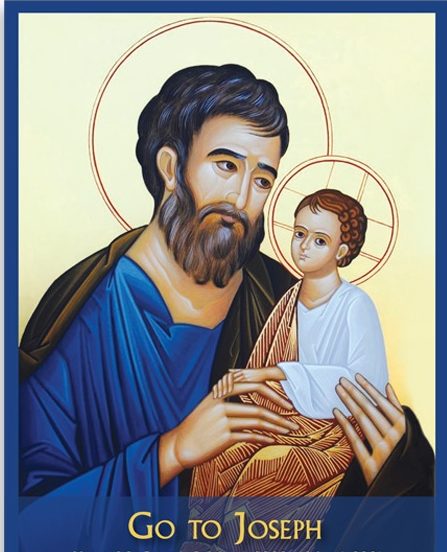
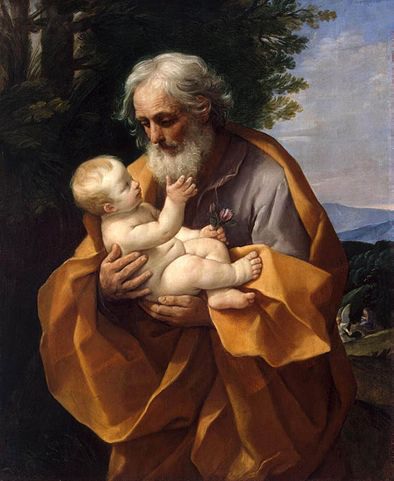
This week, on the Solemnity of the Immaculate Conception and the 150th anniversary of the proclamation of St. Joseph as patron of the Universal (that is, the entire) Church, Pope Francis declared this “The Year of St. Joseph” through December 8th, 2021. The Holy Father also published an apostolic letter about Jesus’ beloved foster-father entitled “Patris Corde” (or “With a Father’s Heart”). In it, Pope Francis writes about Christian devotion to this great saint and mentions how the phrase “Go to Joseph” has an Old Testament origin. These are five of my personal reflections on St. Joseph.

Go to Joseph

In the Book of Genesis, during a time of famine across the known world, the Egyptians begged their pharaoh for bread. He in turn replied, “Go to Joseph and do whatever he tells you.” Pharaoh was referring to Joseph the son of Jacob who had risen from a very lowly state to become the viceroy of the kingdom. Enlighted by divinely-inspired dreams, this Joseph’s leadership went on to feed and save the whole world from death, including his own family. According to the genealogy at the beginning of Matthew’s Gospel, the New Testament’s Joseph also had a father named Jacob. Though poor and obscure, St. Joseph’s heaven-sent dreams enabled him to guide and protect his Holy Family, leading to the world’s salvation through the Bread of Life, Jesus Christ. Today, as a powerful intercessor in the Kingdom of God, we are wise to “go to Joseph” for needed help.

His One Word

Within the Gospels, St. Joseph has no recorded words. There is no indication the foster-father of Jesus and spouse of the Virgin Mary was physically unable to speak or ever took a vow of silence; he is simply never quoted. Yet the Gospels suggest he said at least one specific word.

Matthew’s Gospel records how an angel (probably the Archangel Gabriel though perhaps another) told Joseph in a dream: “‘[Mary, your wife,] will bear a son and you are to name him Jesus…’ When Joseph awoke, he did as the angel of the Lord had commanded him and took his wife into his home. He had no relations with her until she bore a son, and he named him Jesus.” Just as John’s Gospel tells us “Jesus did many other signs in the presence of his disciples that are not written in this book,” so St. Joseph almost certainly said many unrecorded things. But the one word that Scripture most clearly suggests St. Joseph said is “Jesus.” The name of Jesus is the sum total proclamation of St. Joseph’s life. May it be so for us as well.

Image of the Father

The Letter to the Colossians says of Christ, “He is the image of the invisible God.” Something analogous was true of St. Joseph for Jesus in being the earthly image of his Father in Heaven. Joseph’s life has no recorded beginning or end in the Bible. We know that he was a carpenter craftsman – a creator of many things to be blessing for others. Perhaps he looked at everything he made and found it very good. Alongside Mary, Jesus was obedient to Joseph; he was Jesus’ boyhood teacher, deliverer, and role-model. Jesus lovingly called him, “Abba, father.” St. Joseph was a holy and loving image of God the Father for his Son. Though imperfect, may we likewise be images of God for each of our biological and spiritual children.

The Hour of his Death

When did St. Joseph die? Luke’s Gospel tells us that when 12-year-old Jesus was found at the Temple in Jerusalem he went down with his parents to Nazareth and was obedient to them. After that joyful reunion, St. Joseph makes no further personal appearances in the Gospels. Joseph had apparently passed away by the time of Christ’s Passion since Jesus on the Cross does not entrust his blessed mother’s care to her faithful husband but to a beloved disciple. Other episodes in the Gospels suggest that Joseph died before the start of Jesus’ public ministry.

How did St. Joseph die? If Joseph, the heir to the throne of David, had been murdered we would expect this prefigurement of Jesus’ own death to be described in the Gospels like the death of St. John the Baptist. Unless some sudden catastrophe befell him, an ailing Joseph would have reached his deathbed. And who would have been compassionately comforting him and powerfully praying for him at his bedside as he reached his hour of death? His having most likely died peacefully in the loving presence of Jesus and Mary is what makes St. Joseph the patron saint of a happy death.

The Terror of Demons

St. Joseph is called “the Terror of Demons” and his spouse “the Queen of Angels.” Yet the Virgin Mary at the Annunciation was greatly troubled and afraid at the Archangel Gabriel’s greeting, and when resettling his Holy Family from Egypt Joseph feared mere flesh and blood – avoiding Judea because Herod’s son ruled there. How can this man and woman now be leaders of awesome angels or banes of dangerous demons?

One key trait Joseph and Mary shared is obedience. The Book of Exodus displays Moses’ obedience by recording God’s instructions to him and then repeatedly presenting Moses doing “just as the Lord had commanded.” Whenever St. Joseph receives instructions from God (to take Mary into his home, to escape to Egypt, or to return to Israel) the text that follows has Joseph doing exactly as God commanded. Mary was also radically open to God’s will, as when she famously said, “Behold, I am the handmaid of the Lord. May it be done to me according to your word.” The demons, for their part, fell from Heaven’s glory because they refused to do God’s will.

Joseph and Mary were also among the first on earth to accept and love the (then still-unborn) baby Jesus. The demons, in contrast, were the first to reject the Son of God. We do not know the exact reasons for their primordial rebellion but some theorize the demons took offense at God’s plan that the Eternal Son would become an incarnate human being, crowning that creature with a greater glory than the angels. “By the envy of the devil, death entered the world,” says the Book of Wisdom.

Joseph and Mary’s obedience to God’s will and their love for Jesus on earth lead to them being gloriously empowered in Heaven. Jesus told his disciples, “you who have followed me will also sit on twelve thrones, judging the twelve tribes of Israel,” and St. Paul reminded the Corinthians “we will judge angels.” It seems that faithful human creatures who, by God’s grace, love and serve the Lord in the likeness of Christ himself are best suited to become powerful, humble, servant rulers in the Kingdom of Heaven.

St. Joseph, patron of the Universal Church, pray for us throughout this holy year!

He Rose Before Us — Funeral Homily for Roland “Rolle” Shadick, 85

December 7, 2020

Today St. Paul’s Parish offers our greatest prayer, the Holy Mass, for Rolle, one of our own. He is well-known and loved by you, and well-known and loved by our Lord. No brief funeral homily can present the fullness of a Christian life, but a Christian’s words and deeds, upon reflection, will reflect the person and life of Jesus Christ.

One of the things his children tell me is that Rolle worked really, really hard, first as a farmer, and then in other jobs, and helping others where he could well into his retirement. To support his wife and family, to do his good works, Rolle would wake up very, very early. He might wake up at 3 or 4 AM to milk the cows or bale some hay, or go out fishing on the lake and bring back his catch to feed his family for breakfast. Through the years, he would rouse his children from bed with a call: “Come to life, come to life!” A new day awaited them. Rolle was so busily active, he did so much, that his family would kid that he had undiagnosed ADHD. “Don’t look back,” he said, “always look ahead.” There is much for us to do in our days on earth.

Rolle knew we have just one life to live and that it is given us as a gift. So he gave faithful thanks to God the Giver, praying and praising Him at church and at home, and supporting the work of Christ’s Church for the salvation of souls. Rolle noted that he and his fellow farmers who did this were successful through God’s blessing. In his final years he reminded others, “It’s later than you think. It’s later than you think.” With this in mind, Rolle renewed his already strong commitment to connecting with his family — whom he apparently loved more than life itself. He did not catch any illness from the 65th wedding anniversary his family threw for him and Clara back in October, but Rolle said at that time, “You know what, if I die from Covid, this day was worth it.” After that joyful celebration were forty days until Rolle came to his final day, dying like our Savior on a Friday afternoon.

As I said before, a Christian’s words and deeds will reflect the person and life of Jesus Christ. Jesus has been hard at work in this world; tending his flock, laboring in his field, fishing for men’s souls. He died and rose before us. He calls out to rouse us from our sleep, “Come to life, come to life,” through conversion on this day and through resurrection on the Last Day. It is good to treasure our memories. It’s OK to mourn, to cry. But we must not, cannot, live in the past. “Don’t look back. Always look ahead,” because a great new day awaits, for you and me and Rolle, a family reunion in our Father’s house with Jesus Christ our risen Lord.

Revealers of God — Funeral Homily for Kevin Lenfant, 70

December 3, 2020

In the beginning, when God created the heavens and the earth,” God said: “Let there be light, and there was light.” By God’s Word all things were made and his divine attributes are reflected in this universe he’s created. In the inspired word of God, the Holy Scriptures, we read about how he reveals himself to humanity throughout salvation history, through powerful deeds, prophetic words, and poetic images that reveal what he is really like. But ultimately and greatest of all, God reveals himself to us through the Son. “In the beginning was the Word, and the Word was with God, and the Word was God.“In times past, God spoke in partial and various ways to our ancestors through the prophets; (but) in these last days, he (speaks) to us through a Son, …through whom he created the universe,” the Word of God. Jesus Christ, the Bible, and God’s creation make use of familiar things to help reveal God to us. There’s warriors battling, couples marrying, fathers fathering, shepherds shepherding, and plants producing new life. A faithful Christian’s life will reveal God too, as his mysteries are reflected in the features of our lives.

There is a great deal of war and conflict in the Scriptures. This should not be surprising, since this world is broken and often evil. Wickedness is at war with goodness, so good men are called upon to defend the defenseless, to shield the innocent from evil assault. No nation is without flaws, but we should love and defend the goodness of our own. In the Old Testament, armed conflicts abound, but in the New Testament the martial imagery is turned to focus upon the spiritual battle which is being fought around us and within us. St. Paul tells us, “put on the armor of God, that you may be able to resist on the evil day,” for our greatest struggle is not with flesh and blood but with spiritual evils in this world. Our calling is to Semper Fi, being “always faithful”, but we know how difficult this is, “for a righteous man may fall seven times.” So when a brother dies we pray for him, like the Maccabean army prayed for their fallen in today’s first reading from the Old Testament, that whatever flaws or attachments to sin remain in them may be purged away, that those who die as friends of God may experience his full and splendid rewards in Heaven.

Another very plentiful thing found in the Bible is shepherds. Among the Old Testament patriarchs there is Abraham, Jacob-Israel, and his twelve sons – shepherds all. Later, there’s the prophet Moses, King David, and Amos the prophet, each of whom tended flocks for some time before receiving a higher calling from God. The first to hear the happy news of Christmas night were shepherds. The bond between a shepherd and his flock can be a very close one. So close that David, in writing today’s psalm, the most famous of all the psalms, depicts God as his shepherd and David himself as his well-cared-for sheep. The sheep of a good shepherd are like his children to him. He is as a father to his flock. “The sheep hear his voice, as he calls his own sheep by name… and they recognize his voice.” He knows his own and they know him. The good shepherd devotes his life to his sheep and little lambs. He delights in his flock and his presence comforts them. Rita tells me that family came first for Kevin. She tells me how he loves his children and grandchildren, that he loved to watch them grow, and how extremely proud he is of them. Such is his fatherhood.

A third common theme we encounter is married love. The saints see an allegory in the romantic Old Testament book The Song of Songs: God’s pursuit and love of his people Israel. In the Gospels, Jesus Christ calls himself the Bridegroom, and New Testament passages call the relationship of Jesus Christ with his Church a marriage. As Book of Revelation declares, “The marriage of the Lamb has come and His bride has made herself ready. … Blessed are those who are invited to the marriage supper of the Lamb.” This leads us to a mystery: did God use our familiar and intimate knowledge of human marriage, the covenantal love of a man and woman, to describe the union of Christ and his Church because this was the best available image for him to borrow, or rather did he create and establish marriage from the beginning to reveal and foreshadow the fulfillment with him that was always meant to be?

Rita told me the delightful story of how she and Kevin met. It was another Normal day at Illinois State University where they were both college students. Rita was having a hard time in a political science class, while political science was Kevin’s major, so he came over and tutored her. Apparently Rita was very impressed by many things about him because once he had left she turned to her friend and said, “Don’t let me marry him.” But she did. And it’s a good thing she did. Why was Rita afraid? ‘Well,’ she thought, ‘I’m so young, we’re both in college, he’s planning to be in the Marines, and how would all that work?’ But thankfully these doubts did not prevail. Imagine how much would have been lost if they had! When our Lord Jesus Christ proposes to be a greater part of our lives, we can similarly balk, all sorts of doubts and fears arise, but I urge you, I plead with you, to say “Yes” to him all the same. In this life, opportunities for some relationships pass by without another chance for something more. But with God, no matter where we’ve been or what we’ve done, all long as we still live, we can start more devotedly following him today.

Jesus often preached to the crowds using familiar things. For example, Jesus spoke about fish around fishermen, of bread and salt to bakers and cooks, and of plants to farmers in the countryside. He says, “Learn from the way the wild flowers grow. They do not work or spin. But I tell you that not even Solomon in all his splendor was clothed like one of them. If God so clothes the grass of the field, which grows today and is thrown into the oven tomorrow, will he not much more provide for you, O you of little faith?” At one point Kevin and Rita owned three flower shops. Now there is just the one they started in Bloomer more than forty years ago. Rita tells me that Kevin, between the two of them, probably likes flowers more. The flowers they sold would sprout and grow, beautifully blossom, and then fade and wither. This is a sad reality, but we are consoled by the knowledge that there are more flowers for us to enjoy. Similarly, in this world we are born and grow, we blossom and die, but we are consoled by the knowledge in Christ that this is not our end.

In today’s Gospel Jesus says, “unless a grain of wheat falls to the ground and dies, it remains just a grain of wheat; but if it dies, it produces much fruit.” Jesus was not eager to suffer, he asked his Father in the Garden if it were possible that this cup of suffering might pass him, but he was not unwilling to die because he knew that would not be the end of good things for him. It’s O.K. to want to live, to fight against illness and death, for life is a great good. But it is also O.K. to die. “For if we live,” as St. Paul says, “we live for the Lord, and if we die, we die for the Lord; …whether we live or die, we are the Lord’s.” It’s O.K. to mourn. It’s O.K. to cry. But God’s Word reveals to us that we should not despair. Heed God’s word, in creation, on the Sacred Page, and in the person of our Savior, so that you and I and Kevin may all be happily reunited in God story one day.

The Source of her Devotion — Funeral Homily for Donna Hedler, 88

December 3, 2020

St. John the Baptist Church is honored to be offering our greatest prayer, the Holy Mass, for our well-known and well-loved parishioner, Donna. We also pray today for you who love her and mourn her passing, for your consolation and the strengthening of your spirits in Jesus Christ. No brief funeral homily can capture the fullness of a faithful Christian’s life, but when I spoke with Donna’s children about her they emphasized her devotedness: her devotion as a wife, her devotion as a mother, her devotion to her friends and extended family, her devotion to her Catholic Faith.

She was married to Jerome for fifty-five full years and was devoted to him even after his passing. She never removed her wedding band and at the first Christmas after his death she set an empty place for him at the dinner table. Yet she did not grieve like those who have no hope. Several years ago, while she was visiting Jerome’s grave in Thorp, she lost her footing and fell down backwards into about one foot of snow. At that, she made a snow angel. Today, her earthly remains will be buried alongside his there to await the resurrection.

Her children tell me of Donna’s devotion to her friends, grandchildren, nieces and nephews; reflected, for instance, in her visits and hosting, in her correspondence and gifts, in her lit-up smile and kindly words. Her kids tell me she was always there for them, desired the very best for them, and gave them a moral compass. What was the source of Donna’s devotion?

When family gathered at her house around her table to enjoy a Polish meal upon her fancy china, Donna led the prayer – an individual prayer she would compose herself, giving thanks to him from whose bounty we have all received through Christ our Lord. While she was able to attend church she sang his praises here, and once poor health confined her to home she gratefully received Jesus in his Blessed Sacrament. Her devotion was like that of the psalmist who wrote, “This I seek: To dwell in the house of the Lord all the days of my life. That I may gaze on the loveliness of the Lord.

He, our Lord Jesus Christ, is the source of all our devotion. God is devotion, because God is love, and he calls us to be like himself. But without God and Jesus and the Holy Spirit all human devotion is negated and futile. Without more than just this world alone, the view of the foolish, that the dead are gone forever and their going forth from us is utter destruction, would be right. Instead, like the Song of Songs says, “[As] stern as death is love, relentless as the nether world is devotion; its flames are a blazing fire. But Jesus tells us, ‘Do not let your hearts be troubled. Have faith in God; have faith also in me. In my Father’s house there are many dwelling places. And I desire to prepare a place for you so that we all may dwell together always.’

So while we pray for Donna’s soul, that she may now joyfully dwell in our Father’s house forever, let us also learn from her devotion. Reconsider and renew your devotion, for the love with which Christ loves us is true, it is life-giving, and it is the way that leads us to Heaven.

Advent Hope

November 30, 2020

1st Sunday of Advent
By Deacon Dick Kostner

Today we begin the Holy Season of Advent. It is a time for us to be uplifted in Spirit. The year 2020 has been, and continues to be a difficult year for not only our Country but the whole world. The Coronavirus has transformed our life and threatens our economic prosperity. Hospitals are reaching capacity levels and our health professionals are wore out and tired. Our Bishops and priests struggle with trying to maintain Parish attendance and some type of normality. Civility and love thy neighbor seems to have vanished from our way of life. We are told to forgo our family get-togethers, having only “household” Thanksgiving meals and Christmas meals; no more packed Christmas Masses with standing room only; and yes no Christmas choir’s and singing Christmas songs with our family and friends. So you may ask, “Deacon, how can we have an uplifted Spirit when we are tired and down?

The answer can be found in our readings. Our Responsorial Psalm gives us the answer: “Lord, make us turn to you; let us see your face and we shall be saved.” Our first reading from Isaiah reminds us of our Christmas gift from our heavenly Father, “Oh, that you would rend the heavens and come down with the mountains quaking before you…No ear has ever heard, no eye ever seen any God but you doing such deeds for those who wait for him.

Advent is a time for us to prepare our inner selves for the gift of salvation from our heavenly Father. We are tired and wore out with our present life, but God is about to descend from heaven and become one with us in human body and form to save us from despair, to save us from our own weaknesses and fears.

If you are like me you want your prayers of deliverance answered like yesterday. That’s because we live our lives by and through a calendar, on a lineal schedule. Our scriptures teach us a new way to govern our lives, a biblical way to measure our lives and that is by realizing that there are “times” for everything. Times of happiness; times of sorrow; times for living; times for death. All of these “times” are controlled and governed by God. Scripture also instructs us on how to acquire more “happiness times”. We are told to obey God’s Commandments if we do so our “bad times” will be reduced. We are instructed to serve others instead of ourselves. If we do so we will have many “good times”. We are told that God will descend from heaven and join us through the “good and bad times”. We are told to Listen to and live out the teachings of Jesus and our “bad times” will be washed away with happiness.

Our Gospel tells us another way to have “good times” and that is to prepare ourselves for the Parousia, the second coming of Jesus, when we will be united with God for all eternity and where only “good times” will be allowed to exist. We have scripture to guide us to this holy reunion where body and spirit will be united with God and sickness and death will no longer be a part of our lives. Only love and peace will prevail.

Jesus tells us in our Gospel this First Sunday of Advent, to get on the ball and prepare for this coming feast for we do not know when this time event will happen. Advent is the time for us to structure our priorities of life around this ultimate Christmas Birthday Party and the death of bad times for all of eternity. We need to love God with all our heart, souls, and minds. We need to love our neighbors and serve them with our life even when they dislike us. We need to celebrate Christmas even during “bad times”, knowing that good times are awaiting us just around the corner. Scripture tells us that “time” is coming!

This weekend around the world we give witness to the individuals who are planning for the future life with God by becoming members of the Church of Jesus. The bride of Jesus. What a wonderful Christmas gift to our spiritual Savior. We have at St. Paul’s one individual who has made the pledge and is studying to rejoin our Catholic Faith Community through reception of the Sacraments of Initiation. It is a “good time” for Saint Paul’s Congregation to see and to pray for Heidi as she journeys to reception of these Sacraments. Through our Parish prayers and support we will have helped someone become a member of God’s family for all eternity. It is the “time” for joy and peace so let us all pray silently today’s Psalm: “LORD, MAKE US TURN TO YOU; LET US SEE YOUR FACE AND WE SHALL BE SAVED!

Have No Anxiety At All

October 4, 2020

27th Sunday in Ordinary Time

Do we believe in the power of prayer? To speak more precisely, we believe in the power of God, and that is why we pray for things. In today’s second reading, St. Paul tells the Christians of Phillipi, Greece, “Have no anxiety at all.” Why? Because of what he says immediately preceding (which is cut off by the beginning of our reading): “The Lord is near. Have no anxiety at all…”

Have no anxiety at all? One might ask whether that’s possible, or whether that’s even good? “Am I supposed to stop caring about anything?” Well, we must distinguish between two different things, one that’s good and healthy, and one that’s not: to have concern versus to worry. If I had not been concerned about preparing for this homily, I would have nothing to say to you right now. But when I worry about my homily, the task is a much more stressful burden for me, even though the Lord has never yet left me without something to say worth preaching in my entire eleven years of priesthood. Concern is necessary and important. Concern is good, but worry is worthless.

In his Sermon on the Mount, Jesus puts his finger on why we worry: we doubt that God is near for us, we fear that we’re on our own. But Jesus asks,

If God so clothes the grass of the field (with beautiful wild flowers), which grows today and is thrown into the oven tomorrow, will he not much more provide for you, O you of little faith?

Jesus tells us,

“Do not worry and say, ‘What are we to eat?’ or ‘What are we to drink?’ or ‘What are we to wear?’ …. Your heavenly Father knows that you need (all these things). Instead, seek first the kingdom of God and his righteousness, and all these things will be given you besides.”

God our Father knows us, and loves us, and cares for us, but both Jesus and St. Paul encourage us to pray. Presenting our requests in prayer deepens our relationship with God and offers us his supernatural peace. St. Paul writes:

Have no anxiety at all, but in everything,by prayer and petition, with thanksgiving, make your requests known to God.Then the peace of God that surpasses all understandingwill guard your hearts and minds in Christ Jesus.

Note how St. Paul’s says we are not just to ask for things but to give thanks to God at the same time. This helps us to be grounded in reality, which is much lighter than the darkness can appear, since even during our hardest times our lives’ blessings are more than we could possibly count – blessings past, present, and still to come.

And St. Paul notes how after offering our prayer requests, even if we do not see the world immediately transformed around us, a peace from God we cannot entirely explain, helps keep our hearts and minds — that is, our feelings and thoughts — rooted in Christ.

This year has been a challenging one for all of us. Many things now feel out of our control, but this was always the case for us. God is in control, and works all things in the end for the good of those who love him. The Lord Jesus, who is true and honorable, just and pure, lovely and gracious, excellent and praiseworthy, is with you; not just in the distant past, not just once this pandemic has passed, but here and now. So have no anxiety at all.

Forgiving others is crucial (and maybe easier than you think.)

September 12, 2020

24th Sunday in Ordinary Time

In Jesus’ parable today, a servant owes his king a huge debt, more precisely (in the original Greek) 10,000 silver talents. This was an amount equal to 150,000 years’ worth of labor in the ancient world, something akin to $4.5 billion today. It’s an unrepayable debt, but the servant’s king is rich in compassion; he feels pity and forgives the man’s entire loan.

Now, this servant was a creditor himself, and one of his fellow servants owed him a significant but much smaller amount, literally 100 denarii, which was 100 days’ wages back then. Think of it like $10,000. The newly debt-free man sought out this fellow servant and started to choke him, demanding, “Pay back what you owe!” Despite pleading for patient mercy, that first servant put the second into debtors’ prison until he should pay back his debt.

Now when other servants witnessed all of this they felt deeply troubled by it. They went and reported the whole situation to the king and master of them all. The king summoned the unforgiving servant and pronounced a swift judgment: “You wicked servant! I forgave you your entire debt because you begged me to. Should you not have had pity on your fellow servant, as I had pity on you?” Then, in anger, his master threw him into debtors’ prison as well until he should pay back his whole debt.

The king was clearly angry. One rarely-considered reason for his anger is that all of these servants were his own. The 100 denarii debtor suffered by being tossed into prison, his fellow servants suffered from witnessing the scandal, and all of this impacted the king personally. Their distress affects him deeply, for the king is compassionate, but it affected him in another way as well: his servants being detained or disturbed by this unhappy affair kept them from doing his important work. They’re all his servants, but the actions of one impeded the others from freely and fully fulfilling his will.

Of course, the king and master in this parable represents God. Who on earth forgives someone’s $4.5 billion personal debt like our Lord forgives the debt of our sins? And we are each his servants, like St. Paul says, “whether we live or die, we are the Lord’s.” So, if we are to learn a lesson from the servant whose great debt was forgiven, how can we avoid imprisoning or impeding our fellow servants? Through merciful love.

When someone is angry with you, yells at you, or criticizes you, when you know someone dislikes or despises you, how does that affect you? Does your tension and anxiety go up? Do you think about that person and the situation obsessively? Do you run scenarios in your mind about what you wish you had said or done previously, or what you’ll do the next time you cross paths? Do you avoid that person, or the places they could be, and feel uncomfortable in their presence? Do you gossip to others about your ongoing bitter conflict, thereby spreading the scandal to them? If so, then you’re being imprisoned, partially impeded in your peaceful service of our Lord.

We can easily have this effect on others by how we treat them. And cherishing and nurturing our own anger makes a prisoner of yourself to anger. When you experience some slight or shortcoming from another, be gracious. Maybe just let it be; let it pass. Give their actions a most-generous interpretation. Mistakes are more common than malevolence. And you yourself have bad days, too.

Sometimes, though, we need to address matters for the common good. As we heard about last week, love sometimes calls us to do fraternally correction. But when we do it, let’s do it with a kindly, gentle spirit, sharing the truth in love that they might be able to receive it. Merciful love is necessary to keep each other out of prison, the prison of unrepentance and the prison unforgiveness.

In the Our Father, we pray, “Forgive us our trespasses as we forgive those who trespass against us.” Jesus teaches his disciples, “If you do not forgive others, neither will your Father forgive your transgressions.” And at the end of today’s parable, Jesus warns us that our fate will be like that of the unforgiving servant ‘unless you forgive your brother from your heart.’ Now many Christians find this teaching deeply disconcerting. They’re troubled because they believe they just can’t forgive. But I usually find they think this because they imagine forgiveness means something it’s not.

Forgiving is not the same thing as forgetting. You can’t force yourself to have amnesia and forget. You might remember the misdeed for the rest of your life. And forgiveness doesn’t mean saying what someone did wasn’t serious or wrong. The offense committed may have been a grave sin and to say otherwise would be a lie. Forgiveness doesn’t mean that what someone did no longer hurts. Only grace and time can heal some wounds, but we can forgive even with lingering pains. Forgiveness doesn’t require you to pretend nothing happened. Forgiveness doesn’t mean that everything must go back to the way it was before. Forgiveness might lead to full reconciliation, but not always. You can forgive someone even before they can be trusted. You can forgive even before they are sorry for what they did. Why? Because forgiveness means loving someone despite the wrongs that they have done.

Forgiveness is loving someone despite their sins. Is there someone you’re worried that you haven’t forgiven? Then pray for them, because you can’t hate someone and pray for them at the same time. Is there someone you find it hard to pray for? Then that’s whom you should pray for, for their sake and for yours. Jesus came to reconcile us to one another and to the Father. So have mercy. Jesus works to heal the wounds of sin and division. So have mercy. And Jesus intercedes for us with our Father. So have mercy, too.

Saving Dates & Saving Souls

September 5, 2020

23rd Sunday in Ordinary Time

The just shall flourish like the palm tree… They shall bear fruit even in old age, they will stay fresh and green…” (Psalm 92)

In the time of Jesus, forests of Judean date palms covered the whole region from the Sea of Galilee to the Dead Sea. This plant, the date palm, symbolized ancient Israel. When the scriptures call Israel “the land of milk and honey” we today think of cow’s milk and the honey of bees. But milk in the Old Testament is just as likely to be goat’s milk and the honey it refers to is usually the sweet honey of dates. By the 1500’s, human activity or changes in the climate had caused the Judean date palm to disappear. Because of that species’ extinction, the date palm plants grown across Israel today were brought over from California in the 1950’s and 60’s; they’re different in species and originally native to elsewhere in the Middle East. However, the Judean date palm was not to be lost forever.

The Judean Date Palm Tree Methuselah in 2018

During the 1960’s, archaeologists excavated the mountaintop palace fortress of Masasda built by King Herod the Great near the Dead Sea. There they found, preserved dry and sheltered in an ancient jar, a cache of date seeds which carbon testing indicates are 2,000 years old. These seeds were kept in storage at an Israeli university in Tel Aviv for forty years. Then, in 2006, an American-educated horticulturalist in Israel planted several of those seeds. To her and her colleagues’ delighted surprise, one sprouted. They named that plant after the oldest person in the Old Testament, Methuselah. Today it’s over eleven feet tall. After their success with Methuselah, they planted more ancient date seeds from Masada and the caves in which the Dead Sea Scrolls were found, and six new samplings have grown. They hope to pollinate one or more of the new female palms with pollen from Methuselah, which is male palm, eventually yielding the famous delicious dates of ancient times.

While the fruit of Judean date palms was celebrated for its sweet flavor and medicinal uses, its palm branches are also noteworthy. They were probably the kind of palm branches that the crowds waved and laid before Jesus as he entered Jerusalem on the Sunday before he was killed, the day we call Palm Sunday. Jesus once lamented: “Jerusalem, Jerusalem, you who kill the prophets and stone those sent to you, how many times I yearned to gather your children together, as a hen gathers her young under her wings, but you were unwilling! Behold, your house will be abandoned, desolate. I tell you, you will not see me again until you say, ‘Blessed is he who comes in the name of the Lord.’”

Jesus knew the history of the prophets as he entered Jerusalem – how God would send them to proclaim the right path to his people, usually urging conversion from their sins. Heeding the truth will set you free; but first, it may make you uncomfortable, defensive, and angry. God’s people typically resisted the saving message and derided, denounced, attacked, imprisoned, and killed the prophets. And then, the unhappy consequences the prophets had foretold would follow naturally and unchecked. Knowing how reluctant sinners are to listen and change, why did the prophets bother? And what was the point of it all when people so rarely listened? I suggest God’s prophets had three motivations.

One was to personally avoid God’s judgment themselves. In our first reading, the Lord warns the prophet Ezekiel: “You, son of man, I have appointed watchman for the house of Israel; when you hear me say anything, you shall warn them for me. If I tell the wicked, “O wicked one, you shall surely die,” and you do not speak out to dissuade the wicked from his way, the wicked shall die for his guilt, but I will hold you responsible for his death. But if you warn the wicked, trying to turn him from his way, and he refuses to turn from his way, he shall die for his guilt, but you shall save yourself.” The prophets did not want to be condemned for failing to do their holy duty.

A second motivation of the prophets was love, love for God and love for their neighbors. As St. Paul told the Romans in our second reading: “the one who loves another has fulfilled the law… whatever other commandment there may be, [is] summed up in this saying, namely, “You shall love your neighbor as yourself.” If you were in danger, recklessly or unknowingly headed towards some serious physical or spiritual harm, don’t you wish someone would warn you? The prophets loved enough to try.

And a third motivation of the prophets was hope, hope that one day, perhaps many years later, the people they spoke to would be saved. The previously rebellious people, seeing their city ruined and their kingdom conquered as the prophets had foretold, would know that God had warned them and know that their next step should be to return to the Lord and walk in his ways. What motivated the prophets of old should motivate us as well, for many people go astray today.

Brothers… if a person is caught in some transgression,” St. Paul tells the Galatians, “you who are spiritual should correct that one in a gentle spirit…” Jesus teaches us in today’s gospel, “If your brother sins against you, go and tell him his fault (privately,) between you and him alone. If he listens to you, you have (successfully) won over your brother.” And as St. James writes in his New Testament letter, “My brothers, if anyone among you should stray from the truth and someone bring him back, he should know that whoever brings back a sinner from the error of his way will save his soul from death and will cover a multitude of sins.

Fraternal correction isn’t fun, I know, but “admonishing the sinner” is a spiritual work of mercy you and I as Christians are called to do. Like the prophets, we are to place seeds, seeds containing the power and potential to yield sweet and healing fruit. Sometimes these seeds produce an immediate holy harvest through conversion. Yet we know our seeds will often be set aside, discarded, and forgotten; until, perhaps many years later after much desolation, these dormant seeds’ true and precious value is recognized, they’re allowed to sprout with deep new roots, and life that was once lost and dead is fully restored, producing good fruits again, to the joy of all God’s people.

The Disciples’ Burdens

August 2, 2020

18th Sunday in Ordinary Time

Only one miracle (besides the Resurrection) appears in all four Gospels: that’s today miracle – Jesus’ multiplication of five loaves of bread and two fish into enough food to feed more than five thousand people. Bringing all four of these Gospel accounts together provides us with a detailed picture of that day, one of the most amazing days in Jesus’ ministry. However, for the apostles, much of that day probably felt far from awesome.

First, the terrible news had recently arrived that John the Baptist had been murdered by the government, his neck severed by a soldier at Herod’s command. John the Baptist was Jesus’ beloved relative. At least two of the apostles had once been John’s own disciples. They all held the Baptizer in high esteem. So the unjust killing of this righteous man was shocking, and the senseless death of their friend was sorrowful.

Another strain on them that day was their shared fatigue. The apostles had just come back from the villages Jesus had sent them out to in missionary pairs to preach, and heal, and cast out evil spirits. Upon their return to Jesus, Mark’s Gospel tells us that “people were coming and going in such great numbers that they had no opportunity even to eat.” So Jesus says to his apostles, “Come away by yourselves to a deserted place and rest a while.” The apostles might have thought to themselves, “Finally, a break.

Jesus and his apostles embark in the boat by themselves toward a deserted place called Bethsaida on the other side of the Sea of Galilee. But other people see them leaving, word gets around, and many come to know about it. They hasten there on foot from all the towns and arrive at the place even before the boat did. So when Jesus and the apostles disembarked, a vast crowd of thousands was already there waiting for them. Imagine the apostles’ mixed emotions; “Great, another massive crowd. I guess our retreat is over.” But Jesus beholds the crowd and his heart is moved with pity for them, for they are like sheep without a shepherd, unsettled and unled. Jesus cures their sick and proceeds to teach them many things. So maybe the apostles got a little break that afternoon after all.

When evening came, the apostles approached Jesus to say, “This is a deserted place and it is already late; dismiss the crowds so that they can go to the villages and buy food for themselves.” Jesus says to them, “There is no need for them to go away; give them some food yourselves.” They respond, “Five loaves and two fish are all we have here.” They’re already mourning an unexpected, painful loss. They’re burnt-out from their recent labors. And now, Jesus seems to expect the impossible from them. Can you relate to that today?

Of course, we’ve heard the gospel story and know how it ends. You and I now already know what happens next. Taking the five loaves and two two fish, and looking up to his Father in Heaven, Jesus says the blessing, breaks the loaves, and gives them to the disciples, who in turn (at Jesus’ command) give them to the crowds. They all eat an are satisfied and finish with more than they began. Jesus takes what his disciples offer him (as meager as it is), gives each of them an important role to lay, and works something amazing through them.

Brothers and sisters, what will separate us from the love of Christ? Will anguish, or distress, or persecution, or famine, or nakedness, or peril, or the sword? Do these things separate us from the love of Christ? What of pandemics, or quarantines, or closures, or face coverings, or financial troubles, or personal failures? Will these things separate us from the love of Christ? No, in all these things we can conquer overwhelmingly through him who loves us. For neither death, nor life, nor spirits, nor politicians, nor time, nor space, nor any other created thing will be able to separate us from the love of God in Christ Jesus our Lord. These are hard days, and we might be tired and discouraged. But do not doubt the good you are doing, nor the good that you will do, because Jesus Christ is with you.

Finding Your Treasure Map

July 27, 2020

17th Sunday in Ordinary Time

“The Kingdom of Heaven is like a treasure buried in a field, which a person finds and hides again, and out of joy goes and sells all that he has and buys that field. Again, the Kingdom of Heaven is like a merchant searching for fine pearls. When he finds a pearl of great price, he goes and sells all that he has and buys it.”

Jesus gives us few details but I imagine his first story like this. A traveler is walking a dusty road he has gone down many times before, but today as he looks out at a field nearby he notices a sunlit glint coming from the dirt. Now curious, he investigates and discovers a broken wooden crate full of gold and silver coins, apparently uncovered by recent plowing and rain. (Reportedly, in the turbulent conditions of the Holy Land in that era, it was not unusual to safeguard valuables by burying them in the ground.) Shoving the coins back inside, the man reburies the treasure on the spot with handfuls of dirt and then joyfully goes off to sell all he has in order to buy the entire field with the treasure in it. But why doesn’t he simply carry the treasure away? Who would ever know? Because that would be stealing, and in the words of our psalm the commands of God are “more precious (to him) than thousands of gold and silver pieces.” True happiness is not to be gained through evil, and one cannot come to possess the riches of God’s Kingdom using wicked means.

In Jesus’ second story today, a pearl merchant comes across a high-priced pearl for sale. Its price, let’s say, is a hundred thousand dollars. Others may have beheld this beautiful jewel before, but this pearl merchant has a discerning, expert eye. He recognizes that this pearl’s worth is significantly more than its cost and shrewdly sells everything he owns to possess it. To onlookers, he seems crazy. “Selling everything you own just for one pearl?” But the man knows what he’s about and that he will profit from this transaction.

Obviously, these two parables are similar. In both stories, men find things of great value and sell everything that they have to possess them. In this, both the traveler and the merchant display courage; courage against others’ judgments, and courage against their own natural fears. Onlookers might tell them, “What are you doing? Are you nuts? You’re giving up everything just for that?” And because we all have an incredible ability to doubt ourselves, the traveler and merchant might wonder, “What if I’m mistaken and the thing I found is a worthless fake? Or what if sell all I own and return to find the thing has disappeared?” These men will only possess the treasure or the pearl (and the profit which come from them) if they do not give in to their own unfounded fears or the misplaced criticisms of others.

We can also learn from these two stories’ differences. The fact that Jesus gives us two parables instead of just one suggests he’s teaching through their unique details. For instance, both the traveler and the merchant find valuable things, but the pearl merchant knows and actively seeks out what he’s looking for in market after market, while the traveler stumbles upon his treasure. As Jesus says, both of these parable stories describe aspects of the Kingdom of Heaven. “The Kingdom of Heaven is like…” he says.

Humanity seeks after Jesus and his Kingdom; some knowingly, but many without knowing. Some seek him everywhere and rejoice to find him. Others love truth, beauty, and goodness, and are surprised to find these in Christ in his Church. His parables tell us that when we find Jesus, he expects of us a total commitment, an all-in investment; that we would love and serve him more than all else, and that we would love everyone and everything in light of him. We do this especially by embracing and living out our vocation.

The word “vocation” comes from the Latin word “vocare,” which means “to call.” Your vocation is your life’s calling from God. Your vocation is the means by which he intends for you to become holy and a great blessing. Some people find their vocation like the traveler on the road – stumbling upon it without having sought it. I think this is often true for marriages. A man and woman can be drawn to each other, fall in love, delight in each other, and decide to spend their lives together with or without much discerning God’s purpose for their lives. Yet, since “we know that all things work for good for those who love God, who are called according to his purpose,” as St. Paul says in our second reading, leading us to where he wants us even despite ourselves. If you are in the sacrament of marriage, your vocation is clear: your primary mission in life is to be the best spouse and parent you can be and to help lead your spouse and children to Heaven. There will be other works to do and people to bless through your life, but your treasure is not to be found in different fields or shops; your means to holiness is already in your midst and in your grasp.

On the other hand, some people are still searching for their vocation, like the merchant for his pearl. One does not become a priest, a religious sister or brother, or a holy celibate person in the world without a firm commitment to live one’s life for God. To others, such a choice may seem crazy: “You won’t be happy! You’re throwing your life away! We want grandchildren!” And within ourselves, it’s possible to feel cold feet and doubts toward any real commitment in this life. (“What if… what if… what if?”) But when God calls us to our vocations, we will only possess the treasure or the pearl and the profit which come from them if we do not give in to their own unfounded fears or the misplaced criticisms of others. To find and embrace your vocation requires prayerful discernment, courage, and desire for what’s truly valuable, for what ever endures.

In today’s first reading, the Lord appears to Solomon in a dream and tells him, “Ask something of me and I will give it to you.” Solomon the new, young king, feels overwhelmed by his high office, and says, “I am a mere youth, not knowing at all how to act. I serve you in the midst of the people whom you have chosen, a people so vast that it cannot be numbered or counted. Give your servant, therefore, an understanding heart to judge your people and to distinguish right from wrong.” Solomon’s request of wisdom for the benefit of the kingdom of God pleased the Lord, so God granted him great wisdom and all the gifts he had not asked for as well. Likewise, Jesus says, “Seek first the Kingdom of God and his righteousness, and all these things will be given you besides.

Pray to God for the wisdom to find your vocation and, having found it, to joyfully embrace it (like the traveler and the merchant) with the investment of everything you have. In this way, you will come to possess treasure and the pearl of great price – Jesus Christ and his Kingdom.

Virtuous Thomas

July 14, 2020

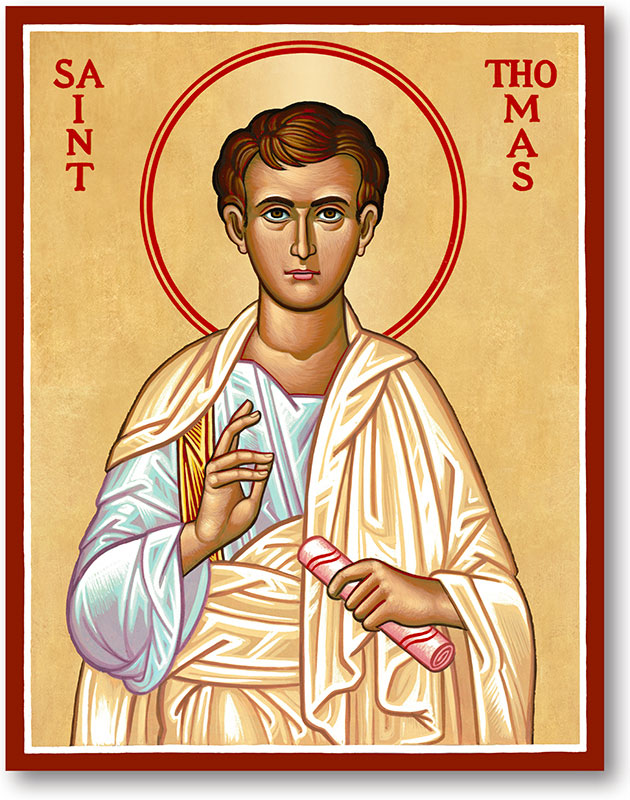
Doubting Thomas — That is how the apostle is remembered since he said, “Unless I see the mark of the nails in his hands and put my finger into the nailmarks and put my hand into his side, I will not believe.” Upon seeing Jesus alive he professed, “My Lord and my God,” but the ignoble nickname endures. St. Thomas has just four quotes in the gospels, all of them found in John; his two other quotes reveal more of his character.

After Lazarus had died, Jesus said, “Let us go back to Judea,” and the disciples objected, “Rabbi, the Jews were just trying to stone you and you want to go back there?” When Jesus insists on going, Thomas says to his fellow disciples, “Let us also go to die with him.” Then later, Jesus says at the Last Supper, “Where I am going you know the way.” And Thomas relies, “Master, we do not know where you are going; how can we know the way?

From his four quotes we glimpse Thomas’ weakness and his strengths. He should have believed his friends’ testimony that they had indeed seen and touched and spoken with Jesus resurrected (especially after having witnessed Lazarus risen from the dead) but Thomas was lacking in trust. Yet at the same time, Thomas possesses great loyalty and courage.

Where is Thomas one week after Easter Sunday? The disciples are gathered in the upper room, hiding behind locked doors for fear of those who murdered Jesus, and Thomas is right there with them. He could have chosen to retreat to someplace safer but he is loyal and brave and these virtues lead him to encounter the risen Christ.

We typically focus on our faults and flaws, on the vices and sins that hinder us. However we each possess virtues as well, areas where God has had success in us. Know and acknowledge these virtues, give thanks to God for them, and utilize them to grow. Pray for grace and use your strengths to lead you to perfect holiness like St. Thomas’ virtues led him to glory with Jesus Christ.

A Man for our Seasons

June 22, 2020

12th Sunday in Ordinary Time

June 22nd is the feast day of St. Thomas More, one of my favorite saints. Back in 1929, the great Catholic writer G.K. Chesterton wrote: “Thomas More is more important at this moment than at any moment since his death, even perhaps the great moment of his dying; but he is not quite so important as he will be in about a hundred years’ time.” This prediction’s one hundred year anniversary arrives this decade. So who is St. Thomas More, what made him a martyr, and what lessons does he have for us today?

In 1509, the new eighteen-year-old Catholic King of England, Henry VIII, married a smart and extremely beautiful Spanish princess, Catherine of Aragon. Seventeen years later, King Henry, without a male heir, with his affections now shifted toward a mistress, began citing a passage from the Old Testament book of Leviticus to argue that his marriage to Catherine was invalid and he asked the pope to annul his marriage. What happened thereafter is a story retold in my favorite movie, 1966’s Best Picture Winning film, A Man for All Seasons. That remarkable man for all seasons – adept in all circumstances – was St. Sir Thomas More.

A successful attorney, judge, diplomat, and statesman, Thomas More served in many official roles, including as Speaker of the British House of Commons. His brilliance is reflected by his witty quotes and writings. Four hundred ten English words have their invention (or at least their first-known appearances) from him, including the word “Utopia,” the title of his most famous book. A deeply devout Catholic, Thomas More had seriously considered becoming a monk, but instead discerned a call to marriage, family, and a career in public life. All these traits combined made him a great asset to the King. For instance, More once helped Henry VIII write a treatise in “Defense of the the Seven Sacraments” against Martin Luther’s errors for which the pope bestowed upon the king the title “Defender of the Faith.” The king trusted and admired Thomas More for years and appointed him to be the Lord Chancellor of England, a very high office. Then a season of great evil came to that land.

When King Henry asked Pope Clement VII to annul his marriage the pope refused. What Henry sought would have been a divorce, and Jesus said, “Whoever divorces his wife and marries another commits adultery.” Henry continued petitioning, but the Holy Father’s refusal was steadfast against this king spurning his queen. In response, Henry divorced and remarried anyway and went on to assert his supremacy over and against the pope, declaring himself to be the leader of the Catholic Church throughout his realm. Henry then used the power of the state to make all his subjects fall into line. It became a crime to agree with the pope against the king and all public figures were required to swear oaths affirming the king’s supreme headship over the Church in England. Those who denied the king’s claims would be executed.

Thomas had resigned his office and withdrawn from public life because of and prior to the king’s illegitimate remarriage and Thomas did not attend the wedding ceremony. Thomas was not going to endorse, by his words or actions what he did not believe. The king’s remarriage was wrong, but Thomas hoped that by maintaining public silence he and his family would be left alone. However, the compelled oath affirming the king’s supremacy would no longer tolerate Thomas’ neutrality. The oath was evil. Jesus, from his own lips while on this earth, had entrusted the role of supreme governance of the Church to St. Peter and his successors, the popes. Thomas was absolutely resolved not to swear a false oath, for Jesus warns us, “Whoever denies me before others, I will deny before my heavenly Father.”

When Thomas would not take the oath, he was imprisoned in the Tower of London and was charged with high treason. Thomas, the brilliant expert of law and debate, put up a sound defense that under the law they had no grounds to punish him, but following evidently false testimony from an ambitious acquaintance who betrayed him, Thomas More, under this pretext, was found guilty. The condemned man then spoke out against the unchristian oath and the injustice being done, yet in closing he said this to his judges: “More have I not to say, my lords, but that like as the blessed apostle Saint Paul, as we read in the Acts of the Apostles, was present and consented to the death of St. Stephen, and kept their clothes that stoned him to death, and yet be they now [both] holy saints in heaven and shall continue there friends forever: so I verily trust and shall therefore right heartily pray, that though your lordships have now in earth been judges to my condemnation, we may yet hereafter in Heaven merrily all meet together to our everlasting salvation.” At his beheading for being condemned as a traitor, at his martyrdom for being faithful to Christ and his Church, St. Thomas More spoke these words: “I die the king’s good servant and God’s first.”

Today, like willful King Henry VIII, much of our prevailing culture also wants things contrary to God’s will and Christ’s teachings. They declare that all who do not fully agree with them are evil and should be expelled, cancelled from society. And the powers of government, our courts and leaders, seem to be taking their side. Jesus said:

“Have you not read that from the beginning the Creator ‘made them male and female’ and said, ‘For this reason a man shall leave his father and mother and be joined to his wife, and the two shall become one flesh’? So they are no longer two, but one flesh. Therefore, what God has joined together, no human being must separate.”

God made us male and female, he created marriage, all peoples and races share a common origin and dignity from him, and Christ was sent to save us all. Thus, marriage is a lifelong union between one man and one woman, an adult female is a woman and an adult male is a man, no one should be judged for the color of their skin, and Jesus Christ is the only way to the Father. These beliefs are not always popular, but ignoring these truths leads to pain and loss. The story of St. Thomas More shows us that public silence and private disagreement may not be tolerated by this world. Sooner or later, it may be demanded that you too either submit or suffer. At that time, and all times, remember: do not lie, never ever lie, and do not be a party to a lie.

Jesus says, “Blessed are they who are persecuted for the sake of righteousness… thus they persecuted the prophets who were before you.” In years past, this passage made me think of suffering Christians in the distant mission lands of Asia or Africa, where they are the vulnerable minority, or of how the Roman pagans persecuted the early Church. But who was Jesus referring to when he said “they persecuted the prophets who were before you”? Who persecuted the Jewish prophets in the Old Testament? It wasn’t so much the unbelieving pagans as the prophets’ own leaders and neighbors they were sent to, the people of God. Likewise, a Christian can easily become a betrayer or a passive party to evil if he or she does not resolve like St. Thomas More to live in the truth and stand with Christ no matter what.

Though Thomas More was clearly innocent, it took his twelve jurors only fifteen minutes to find him guilty. They were afraid. There were fifteen judges at his trial, many of whom had been his friends, but none of them were willing to defend him. They were all afraid too. The saint might have been saved if only one had stood firm instead of just standing by. The Church in England might not have collapsed if there had been more upright men like St. Thomas More. What we do in the time that is given us matters. Stand with him and the Lord will strengthen you like he did the Prophet Jeremiah. You may feel alone, but you won’t be, and Jesus Christ will be proud of you.

This stand may cost you dearly. Will it be worth it? Jesus tells us, “Blessed are you when they insult you and persecute you and utter every kind of evil against you falsely because of me. Rejoice and be glad, for your reward will be great in Heaven.” So do not be afraid. Jesus says, “Fear no one.” Remember there is only One whose opinion ultimately matters. “Do not be afraid of those who kill the body but cannot kill the soul; rather, be afraid of the one who can destroy both soul and body in Gehenna. Everyone who acknowledges me before others I will acknowledge before my heavenly Father.” St. Thomas More said, “I do not care very much what men say of me, provided that God approves of me.”

Last Friday evening, a statue of St. Junipero Serra, the Franciscan missionary to California, was pulled down and desecrated by about one hundred people in San Francisco. The police did nothing to stop them. Those people who did this probably believed false and horrible things about the saint, and that would be some encouragement except that many people believe false and terrible things about our Church today. Along this path it’s not hard to imagine Catholic churches being firebombed sooner or later. But remember, even if this happens, whatever may come, whatever persecution we may face, Jesus says, “love your enemies and pray for those who persecute you.” Love God and everyone because it’s Christian love that saves. This is what Jesus Christ, St. Thomas More, and all the martyrs showed in their courageous words and actions. Let’s learn from them and imitate them in whatever seasons await us, and so come to share in the eternal reward of the Just in Christ’s Kingdom.


Jesus’ Longing for You

June 14, 2020

Corpus Christi Sunday—Year A

After the suspension in March, our parish went eleven weekends without the public celebration of Sunday Masses. Throughout Salvation History, the number forty symbolizes times of purification, preparation, and longing. For most people, being away meant about eighty days (forty twice over) without physically receiving our Eucharistic Lord. For many, their yearning for Jesus in the Eucharist has never been greater. Feast of Corpus Christi homily usually focus (quite fittingly) upon the Real Presence, the beautiful truth that Jesus Christ is truly present, body and blood, soul and divinity, alive in the Holy Eucharist. As St. Paul says in our second reading, “The cup of blessing that we bless, is it not a participation in the Blood of Christ? The bread that we break, is it not a participation in the Body of Christ?” You are probably well-informed about this already; that’s why you have been longing for Him in the Eucharist. Today I feel moved to speak about Jesus Christ’s Eucharistic longing for you.

Jesus Christ’s desire for us is foreshadowed in the Old Testament; for instance, in The Song of Songs. There the beloved says of her spouse: “My lover speaks and says to me, ‘Arise, my friend, my beautiful one, and come! Let me see your face, let me hear your voice, for your voice is sweet, and your face is lovely.’” Later this same man, prefiguring Christ, declares: “I have come to my garden, my sister, my bride; … I eat my honeycomb with my honey, I drink my wine with my milk. Eat, friends; [and] drink!

In the Book of Proverbs, God’s personified wisdom speaks: “Let whoever is naive turn in here; to any who lack sense I say, Come, eat of my food, and drink of the wine I have mixed! Forsake foolishness that you may live; advance in the way of understanding.” The foolishness we must forsake is our sins, for what is freely-chosen sin if not harmful foolishness? Jesus seeks to bring about sinners’ salvation, in part, through drawing them to his meal, to share his presence, his food and drink. Jesus once responded to criticisms of his ministry saying: “The Son of Man came eating and drinking, and they say, `Behold, a glutton and a drunkard, a friend of tax collectors and sinners!’ Yet wisdom is vindicated by her deeds.

A Samaritan woman with many sins once asked Jesus, “How can you, a Jew, ask me, a Samaritan woman, for a drink?” He answered her, “If you knew the gift of God and who is saying to you, ‘Give me a drink,’ you would have asked him and he would have given you living water.” Later, on the last and greatest day of a Jewish feast, Jesus stood up in the temple area and exclaimed: “Let anyone who thirsts come to me and drink.” Before his miraculous multiplication of loaves of bread, Jesus called his disciples to himself and said, “I feel compassion for the people, because they have remained with me now three days and have nothing to eat; and I do not want to send them away hungry, for they might faint on the way.” Jesus wants to feed us (we who have remained with him) as well, to strengthen us on our way. The food and drink Jesus desires you and I to receive are not mere objects for bodily sustenance — it is his very self. “I am the living bread that came down from Heaven; whoever eats this bread will live forever… For my flesh is true food, and my blood is true drink. Whoever eats my flesh and drinks my blood remains in me and I in him.

At the Last Supper, which was the first Mass, Jesus told his disciples, “I have earnestly desired to eat this Passover with you… Take this, all of you, and eat of it, for this is my body, which will be given up for you.” Jesus earnestly desires to share his feast, this Mass, to unite with us today. “Behold, I stand at the door and knock. If anyone hears my voice and opens the door, I will enter his house and dine with him and he with me.” Jesus is divine, but he’s also human. He dwells in Heaven, but he has human desires for you and me and our world. If you have yearned for Jesus in the Eucharist, if you have desired to receive him these past months, consider how much more Jesus Christ longs and desires for you.

Virtue in Obedience

June 11, 2020

According to likely tradition, St. Ignatius the bishop of Antioch learned about our Faith from St. John the Apostle. Around the year 110 A.D., St. Ignatius was brought by Roman guards from Syria to Rome for his martyrdom. On this long journey, he wrote seven famous letters which provide insight into the teachings and beliefs of the Early Church. In his letter to the Christians in Smyrna, he wrote:

See that you all follow the bishop even as Jesus Christ does the Father, and the presbytery [priests] as you would the apostles; and reverence the deacons as being the institution of God. Let no man do anything connected with the Church without the bishop. Let that be deemed a proper Eucharist which is administered either by the bishop or by one to whom he has entrusted it. Wherever the bishop shall appear, there let the multitude of the people also be; even as wherever Jesus Christ is, there is the Catholic Church.”

Catholic priests at ordination promise obedience to their bishop and his successors, but religious submission to one’s bishop-shepherd (in things which are not sinful) is Christ’s will for all the faithful. “Whoever hears you, hears me,” Jesus said, and “whatever you shall bind on earth shall be bound in Heaven, and whatever you shall loose on earth shall be loosed in Heaven.” “Let us be careful, then, not to set ourselves in opposition to the bishop,” St. Ignatius wrote to the Ephesians, “in order that we may be subject to God.” Before he lost the kingdom, King Saul was told by the Prophet Samuel, “Obedience is better than sacrifice; to listen, better than the fat of rams.” The Lord delighted in obedience to his will more than in burnt offerings and animal sacrifices because holy obedience is a sacrifice of one’s own self.

Even the yoke of Christ remains a yoke. It’s natural to feel frustration at our gradual return to normal, towards the careful procedures our bishop has promulgated throughout our diocese to help protect against a still-deadly pandemic. These policies may prove overly cautious in retrospect—and I hope that is the case rather than seeing our safeguards prove tragically inadequate—but the will of Christ for you and I is to obey our God-ordained successor to the apostles. Blessed is that servant whom the Lord on his arrival finds doing so.

Love Languages — Funeral for Audrey Stoik, 84

June 3, 2020

On behalf of St. Paul’s Catholic Church, I offer you my condolences on the passing of Audrey, one of our well-known and well-loved parishoners. During this challenging time, for you who know and love Audrey best and for everyone in our country, I am pleased and honored that we can offer this public funeral Mass for her soul and for yours’.

Have you ever heard of The Five Love Languages? They were first presented under that title in a 1992 book of the same name. The premise of the Five Love Languages is that we express and receive some forms of love more readily than other forms, and that different individuals tend to prefer differing love languages over others. What are these five general categories of love? They are: Gift Giving, Words of Affirmation, Quality Time, Affectionate Touch, & Acts of Service. What are your favorite love languages? Perhaps later you can try guessing the favorites of the people in your lives. The reason I mention all of this is because particular love languages came to my mind as I heard multiple stories about Audrey.

Her top two love languages seemed to be Gift Giving & Acts of Service. For example, when Audrey prepared meals for her family, she was loving them through both service and gifts. I’m told you never left her house without receiving something: cookies, brownies, muffins, potato dumplings, caramel popcorn, French dressing, or something else. If you asked something of her, whether it be making dozens of cookies for your wedding or making flip flops for the graduation class, she would get it done. The many afghan blankets she weaved and gifted continue to warm homes and families. Audery, even through trials, cared for nine children and her husband. In nine years, she and Frank had eight of their nine kids. She sacrificed for them all in many ways, for instance, driving a manual transmission milk truck through the countryside to the dairies to make some extra money for the family. One day, she delivered milk in the morning and delivered one of her children in the afternoon.

What is the source of such sacrificial love? What is the power empowering self-gifting love? That source and power why we are gathered here today for Audrey, rather than somewhere else. As St. Paul’s writes, “the love of God has been poured out into our hearts through the Holy Spirit who has been given to us. For Christ, while we were still helpless, died at the appointed time for the ungodly.” That is service and gift. And Jesus not only died for us, but rose from the dead before us, and calls each of us to follow him. Jesus declares, “I am the way and the truth and the life. No one comes to the Father except through me.” Whenever we come to God’s house, he wants us to come as his true family, true friends. This first requires our true conversion but Jesus desires we never have us leave his house without receiving a precious gift; the food of a meal and sacrifice which is his very Self. By the Holy Eucharist at Mass, Jesus loves us using all five love languages together:

Words:  “This is my body, given up for you.”
Time:  “Could you not [stay] one hour with me?”
Touch:  He places himself into our hands.
Service:  He offers himself up for us.
Gift:  He gives himself to us as a gift.

Jesus is the way and the truth and the life. When we approach God, in intimacy and likeness, we approach through him. So do not let your hearts be troubled. Audrey’s love reflects Christ’s love and our saving Lord has been its source.