Archive for the ‘Chrisitian Virtues’ Category

The Fear of Inadequacies

July 12, 2021

15th Sunday in Ordinary Time
By Deacon Dick Kostner

Jesus at Prayer, Overlooking the Sea of GalileeOn my last homily I talked about the fact that faith can produce miracles. Today’s scripture readings helps us to understand how we acquire that gift of faith and participate in God’s divine partnership plan.

When I was studying for my Masters Degree in Pastoral Studies one of the revelations that God shared with me and that stood out in my mind was the fact that although God has no need to ask for help from anyone, that contrary to that he desires humans to participate in advancing and growing the body of Christ through human involvement in preaching and practicing the gospel message of love and service to others. The gift he bestows on those he asks for help from, and who accept his requests, is peace and happiness not only in this life but also the gift of the key to everlasting life in heaven.

For humans this presents us with obstacles in accepting those requests God asks from us, the greatest of which is our fear of inadequacy. Let me give you an example of this. When I began ministry studies one of my greatest fears was facing death or witnessing death. When I first got out of law school one of the first things I did was draft a will for myself and I placed a directive in it that I wished no funeral and requested that I be buried within twenty-four hours of my death. My thoughts were that this would make it easier for my family and friends to move on with their lives.

This fear stayed with me until I became a deacon and one day when our priest was on vacation, I received a call late one evening from our hospital. A car accident had happened and the family of the victim was trying to find a priest to administer the Sacrament of Healing for this young man. I advised the nurse that Father was gone out of town. She asked if I could come and be with the family. Fear hit me, and I told the nurse that I could not administer the Sacrament as deacons cannot do this. She then asked if I would come and maybe say some prayers with the family. My thoughts were that I was not adequate for the job and I did not feel I could do anything that would be beneficial for the family or their loved one. Then I remembered that part of my training for deacon ministry was to walk with someone and minister to someone who was dying. Fr. Frank, my director had assigned me to a elderly gentleman in Eau Claire who was terminally ill. I would meet with him on a weekly basis, at his home, and I would take Communion to him and his wife while spending time with him. I remember how after he died his wife called me and asked if I would do the Wake Service for him as he so much appreciated the times we got together while he was dying. I remembered how good this made me feel to know that they appreciated my company even though I felt inadequate for the mission Fr. Frank had assigned to me.

I decided to go and pray with that family at the hospital, and after doing so the family said they so much appreciated that I was willing to come and be with them during their suffering I finally realized that all that one needs to do is to show up and be there for those suffering and fearing death as the representative body of Christ. Jesus and the Holy Spirit do the rest. God knows that this is difficult for us but he always rewards those who say “Yes” to his call for help.

Our Gospel this weekend has Jesus telling his friends that its time for them to stand up and accept the job of helping others overcome their fears through their presence and healing. Jesus knows they don’t feel adequate for the job and so he sends them out in two’s knowing that this will help them feel more comfortable and capable of accepting their ministry mission. He tells them to not prepare and to take nothing with them as he promises to provide all the help that they will need to be successful.

Our parish at St. Paul’s is having a meeting this coming Monday to request help for our Fall Festival. This event provides not only financial support for the Parish but also allows its members to participate and say “Yes” to God’s requests for help. This will give evidence that Jesus is with us in helping not only others but ourselves to overcome our feelings of inadequacies. Like Jesus, the Parish is going to ask groups to come together as a unit to accomplish fellowship and support within our Parish Family Ministry. To the St. Paul’s committee people please plan on attending the meeting and by saying you will help build and exercise the Body of Christ in our community. St. John’s people encourage others to join you in planning your Parish activities to help reduce the fear we all have of being inadequate for the ministries asked of us by Jesus.

Remember the words of Jesus in today’s Gospel: “Take nothing for the journey but a walking stick—no food, no sack, no money.” Remember that God will provide you with everything necessary for his mission requests.

Lessons From The Gulag Archipelago

July 3, 2021

14th Sunday in Ordinary Time

Aleksandr Solzhenitsyn was a captain in the Red Army of the Soviet Union serving bravely on the front lines against the Germans in 1945. Three months before World War II’s end in Europe, his brigade commander summoned him to headquarters and asked for his pistol. When Solzhenitsyn handed it over two counterintelligence officers suddenly crossed the room. They ripped off the insignia from his uniform and shouted: “You are under arrest!” “Me? What for?” The pair gave him no answer. But as Solzhenitsyn was being hauled to the exit, the brigade commander firmly addressed him: “Solzhenitsyn. Come back here.” With a sharp turn he broke loose and stepped back to his superior.

Solzhenitsyn had never known his commanding officer very well. This colonel had never condescended to run-of-the-mill conversations with him, but now his ever-stern face displayed thoughtfulness. “You have…” the colonel asked weightily, “a friend on the First Ukrainian Front?” Solzhenitsyn understood instantly: he was being arrested for criticizing Joseph Stalin in private letters to a school friend. Over the decades, many millions would suffer in the soviet prison camps (known as gulags) for offenses as small as this or less.

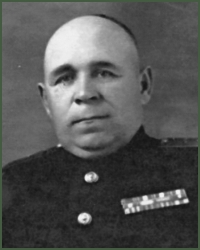
Travkin Zakhar Grigorevich

The counterintelligence officers objected. They shouted at the colonel for his revelation to the prisoner: “It’s forbidden! You have no right!” The colonel could get himself arrested, too. As Solzhenitsyn recalls in his own words, his colonel, “Zakhar Georgiyevich Travkin could have stopped right there! But no! Continuing his attempt to expunge his part in this and to stand erect before his own conscience, he rose from behind his desk — he had never stood up in my presence in my former life — and reached across the quarantine line that separated us and gave me his hand, although he would never have reached out his hand to me had I remained a free man. And pressing my hand… showing that warmth that may appear in an habitually severe face, he said fearlessly and precisely: ‘I wish you happiness. Captain!’ Not only was I no longer a captain, but I had been exposed as an enemy of the people… And he had wished [me] happiness…” Despite the danger to himself, the colonel did what little he could to bless and console a persecuted man – and Aleksandr Solzhenitsyn never forgot this.

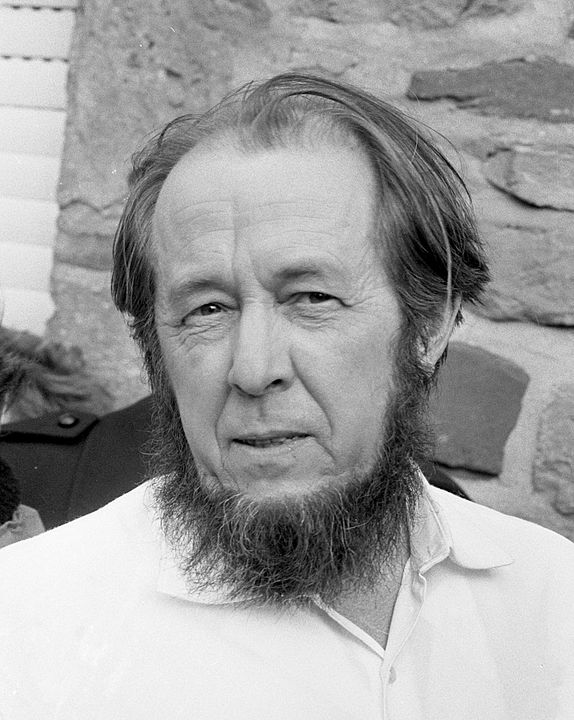
Aleksandr Solzhenitsyn in 1974Solzhenitsyn would go on to survive almost eight years inside prisons and forced labor camps. After his release, he became a world famous author, winning the Nobel Prize for Literature in 1970. But the publication of his most important work, The Gulag Archipelago in 1973, outraged the soviet authorities. They stripped him of his citizenship and expelled him from the USSR – they rejected him in his native place. Two Christmases ago, St. John the Baptist’s Altar Rosary Society gifted to me a subscription to Audible. A week and a half ago, I activated it and this non-fiction book, The Gulag Archipelago, is the first thing I’m listening to. It draws on interviews, documents, diaries, and Solzhenitsyn’s own experiences as a prisoner to detail the history and the horrors of soviet gulags from 1918 to 1956.

The dictator Joseph Stalin suspected and feared he had enemies everywhere, so he would hand down orders for entire groups to be arrested (“Arrest all the generals in the Red Army”) and he ordered large numbers of political arrests to be made (“Arrest 200 people in this city for political crimes by month’s end”). To fill their quotas, the police would arrest innocent people, employ terrible tortures to extract confessions, and then ship these condemned persons off to camps, often to die there from a bullet or from the inhuman conditions.

Getting confessions was very important for the corrupt and cynical interrogators. Caring nothing whether the accused were actually criminal conspirators, they inflicted intense physical and psychological sufferings to make them admit guilt and implicate others. These police were not afraid to lie, and any court trials there were were just for show. In that case, instead of breaking their victims, why didn’t the interrogators just forge signatures onto confessions? I suspect this was due to demonic influence. Demons delight to see the wicked do evil, but they are pleased still more by seeing the good fall, to see them sin by betraying the truth and betraying those they love. Solzhenitsyn urges us to have mercy on those who people fell: “Brother mine! Do not condemn those who, finding themselves in such a situation, turned out to be weak and confessed to more than they should have. … Do not be the first to cast a stone at them.”

Vera Korneyeva as a young womanSome prisoners did not lie or betray anyone, but even took the opportunity to proclaim the truth. Solzhenitsyn tells the story of one Vera Korneyeva who was arrested with all seventeen members of a Christian group. Her interrogator had left her alone in a large office of the police building where half a dozen employees were sitting. A conversation started and Vera launched into a sermon. In freedom, she had been no more than a lathe operator, a stable girl, and a housewife. But the typists, stenographers, and file clerks of the secret police listened, sometimes asking her questions. People came in from other offices and the room filled up. She spoke mostly about religious faith and religious believers, and asked why anyone would need to persecute Christians.

“Believers don’t need to be watched,” she said, “they do not steal, and they do not shirk [their duties]. Do you think you can build a just society on a foundation of self-serving and envious people? Everything in the country is falling apart. Why do you spit in the hearts of your best? … Why arrest [religious] people?” At that point, her interrogator reentered and started to rudely interrupt her. But everyone shouted at him: “Oh, shut up! Keep quiet! Go ahead, woman, talk.” Solzhenitsyn notes they were forbidden to call her comrade or citizen, but they referred to Vera with the honorable title Christ used: “woman,” and she continued in the presence of her interrogator. So there in an office of the police headquarters they listened to Vera Korneyeva — and why did the words of an insignificant prisoner touch them so? Like Ezekiel, a prophet had been among them.

Soviet prisons and gulags were hellish places, but like Mount Calvary, the Lord was present even there. Nikolai Aleksandrovich Kozyrev, whose brilliant career in astronomy was interrupted by his arrest, sustained himself in prison by doing theoretical work in his mind. His line of mental exploration, however, was blocked by forgotten figures. He could not build any further — he needed the data to develop his theory, but how could he obtain this from his solitary-confinement cell? The scientist prayed: “Please, God! I have done everything I could. Please help me! Please help me continue!” His eyes were fixed on the Lord, pleading for his mercy.

At that time, he was entitled to receive one book every ten days. Half an hour after his prayer, they came to exchange his book. As usual, without asking anything at all, they pushed a book at him. It was entitled A Course in Astrophysics! What was a book like this doing in a prison library? Kozyrev threw himself into it and began memorizing everything he needed and everything he might need later on. After two days, the prison chief made a surprise inspection of his cell and immediately noticed the book. “But you are an astronomer?” “Yes,” he answered. “Take this book away from him!” Yet its providential arrival had opened the way for the scientist’s further work, helping his mind and spirit survive his ten years of detention. Following his release, Dr. Kozyrev would go on to be the discoverer, through telescopic observations, of tectonic activity on the Moon. In other words, he discovered that there is hot magma inside of the Moon. Like Jesus Christ, the Moon is not long-dead (as many have thought) but is dynamically alive today.

Nikolai Aleksandrovich Kozyrev in 1958

Solzhenitsyn observed in 1983, “There always is this fallacious belief [around the world about great atrocities]: ‘It would not be the same here; here such things are impossible.’ Alas, all the evil of the twentieth century is possible everywhere on earth.” Will this church one day be torched by arsonists, as Catholic churches are now being burned down in Canada? Could we one day be fired, beaten, or arrested, be separated from our families, be deprived of our material possessions, or die because of our faith? Jesus Christ was perfect and sinless, “and they took offense at him.” He was hated, denounced, tortured, and murdered. If they persecuted him, why wouldn’t the world persecute us? I do not know how severe the persecution of Christians will become in our lifetimes, but I see no reason not to prepare our souls for this eventuality.

If we are to be like Jesus, even up to the point of dying like Christ rather than denying him (and indeed we are each called to be willing to do this) then we must begin practicing with the little things. Jesus says, “Whoever is trustworthy in very small matters is also trustworthy in great ones; and whoever who is dishonest in very small matters is also dishonest in great ones.” So we must never lie. Make no false professions or false confessions. As Jesus teaches us, “Let your ‘Yes’ mean ‘Yes,’ and your ‘No’ mean ‘No.’ Anything more is from the evil one.”

In addition to never telling falsehoods, we are called to speak the truth, like the woman Vera in the heart of the police organization. Are you afraid of what other people will think? Realize that they are concerned about what you think, too. If you are open, the Holy Spirit will give you opportunities to share the truth with others. Like Colonel Travkin with his accused Captain Solzhenitsyn, we must also be courageous enough to remain loyal to our peers when others would denounce and abandon them. And we must pray and rely on God, like Dr. Kozyrev (who was seemingly, but not truly) alone in his prison cell. Remember that Christ’s grace is sufficient for you, and his power is made perfect in weakness.

Practice these four things: never lie, share the truth, be loyal, and rely on Christ. Even if, in God’s Providence, you never come to suffer like Christ’s martyrs, by practicing these things you will become more like our Lord Jesus Christ.

Faith – The Miracle Worker

June 28, 2021

Blessed Mother Teresa with a happy, armless baby, photo by Eddie Adams of AP

13th Sunday in Ordinary Time
By Deacon Dick Kostner

What stood out for me with today’s readings is the fact that even though we have entered and begun “Ordinary Times” in our Church calendar, that since the Incarnation there does not exist anything that is “Ordinary” in our lives anymore. Miracles appear everywhere and everyday if we but possess the mustard seed of faith. Jesus has taught us that faith as small as a mustard seed will allow his followers to heal those who are ill, will allow us to accomplish supernatural tasks and move mountains that are not physically or humanly possible to move.

My mind journey began when I heard Deacon Matt’s homily on Trinity Sunday and how God has gifted those who have been baptized with supernatural abilities through membership into the family of the Trinity. Through the Sacraments we enter into a unitive state of being one in spirit with the Creator. A state of being where we communicate spiritually with the Trinity and God’s plan to make us one in thought and vocation with him.

Our gospel tells us that the key to life now and forever is “faith.” Jesus has shown us and told us to pick our friends carefully and listen to them. Follow their teachings to see miracles happen before our eyes. Let me tell you three stories about people of great faith who most of you lived with and know by name who have accomplished supernatural tasks through faith. Two are Christmas stories. The first involves Cecelia.

Cecelia and I were friends and she many times would tell me how much she enjoyed my homilies. Her and her sister were friends of my mom and were golf buddies. Cecelia was a daily Mass person and a person of prayer. She was very much concerned about the struggles the Church was having with its ministers and she would ask my advice on things that bothered her. When I had no good answer to the problems she would say, “I guess I will have to pray harder.” When I heard of her death on the Sunday before Christmas I was saddened and knew that I needed to attend her funeral to pray for her and say goodbye to her. The next day, Fr. Victor asked if I would do a Communion Service as he had three funerals scheduled for that week.

On the way to church that Monday, I was listening to Phlash Phelps on Sirius 60 Radio and he told how when he was a young boy his parents had invited their pastor to join them for Christmas Dinner. Phlash said that as a child he was in charge of putting the angel on the Christmas tree by using a hook pole to elevate the angel to the top of the tree. At Christmas dinner the Pastor had asked him what he liked most about Christmas and he responded proudly, “Getting the hooker to put the angel on their Christmas tree.” His parents turned very red and all had a good laugh over his response. I thought to myself, Cecelia would have loved that story and after the final blessing I shared that thought and story with the daily Mass people as a farewell to Cecelia.

That afternoon I began getting thoughts from Cecelia that were asking me to do the homily for her funeral. I called Father and told him that I could do that if he so desired. He was more than happy as he had two other funerals to do for that week. As I was preparing my homily, I thought about how Cecelia and her sister always got into it and argued and I had made the comment that Jesus would have to put up with the “girls” arguing at his birthday party and would have his hands full keeping them in line.

That evening, I received a call from her niece who said she very much enjoyed my homily and that she had been with Cecelia the day that she died. She shared with me that just before she died Cecelia had said, “I think it is time now for me to join my sisters and Jesus for Christmas.” The niece said that she asked Cecelia who Jesus would listen to more with all the “girls” being present and pressuring for recognition from Jesus? Cecelia answered: “The one who is the loudest.” I told Father about this when I told him that I believed we had just buried a Saint. Knowing Cecelia I am sure Jesus was gifted with the hooker story on his birthday that I had gifted Cecelia with at church that day.

The second faith story is about Kathleen when she died some years before on Christmas Day. I had been called over to her home by the family to do some prayers for the family that Christmas evening. Kathleen was one of my original RCIA ministers when I began that program at St. Paul’s and I was well aware of how strong her faith was in Jesus. The family shared with me that she had been dying for many days and the family kept telling her to not worry and that it was OK for her to leave and join Jesus for his birthday party. Her response was, “I know but I just want to savor this time and I will not leave until after we enjoy our customary Christmas meal.” Right after they had eaten she passed. I told her niece that I believe we were blessed with having lived with and prayed with a saint.

The final faith story is a story my cousin Bishop Bob told me about Mother Theresa. Bishop Bob was Bishop for the Diocese of San Diego. Mother Theresa had scheduled some dental work to be done on her mouth and while visiting the area she met with Bishop Bob and asked him if he would drive her around to look at some houses she was thinking about acquiring in the area to set up a new Home for the poor. He agreed and after looking at one house she said to Bob, “I like this one let’s take it.” The bishops’ jaw dropped. Now you need to know Bob is not a person who just jumps into a situation and he explained to her that the house was very expensive and it would take some time to raise the funds necessary to purchase it. Her response was to smile and say, “Oh Robert, you have such little faith!” She reached into her pocket and produced a small medal of Mary. She instructed him to place the medal over the door of the house that she wanted, and they left.

That Sunday, Bishop Bob introduced Mother to the parish and told of her plans to purchase a house for the poor in the area. He indicated that they were planning on a fundraiser in the parish to accomplish this task. After Mass Bishop Bob heard a knock on his door and a lady appeared saying she had been at Mass and heard him talk about raising money to purchase this house that Mother Theresa wanted. She proceeded to take out her checkbook and said, “What is the cost of the house?” He told her and she proceeded to sign a check for the entire amount. I can only imagine the look on Bob’s face of “little faith.” I am sure you too will be able to see and experience that with the faith of a mustard seed anything is possible, even moving a mountain, and that fear will never be able to overcome faith’s power.

Before I began to write this homily I said Morning Prayer and this statement appeared: Ephesians 4:3-6. In closing I share this scripture statement with you:

“Make every effort to preserve the unity which has the Spirit as its origin and peace as its binding force. There is but one body and one Spirit, just as there is but one hope given all of you by your call. There is one Lord, one faith, one baptism; one God and Father of all, who is over all, and works through all, and is in all.”

Amen.

Lovingly Received — Funeral Homily for Allen Pietz, 62

June 22, 2021

Allen is a dear acquaintance of mine. Unlike many of the persons I offer funerals for, I know him really well. But today I’m going to begin by telling you about another warm acquaintance of mine and the story he once told me. I went to seminary with a fellow who is now a diocesan priest in South Carolina named Fr. Andrew Trapp. Fr. Andrew looks a lot like the actor Tobey Maguire (who starred in the Spider-Man movie franchise) and Andrew also has a Peter-Parker-like friendly goodness. Fr. Andrew got a little famous back around 2010 when he beat the champion poker player Daniel Negreanu on a TV game show. He won $100,000 and donated his whole prize (after taxes) to his parish’s renovation project. Before he was ordained, Andrew spent a summer in Paris, France improving his French and helping out at a Catholic church.

There he met a former satanic worshipper who had repented, reconciled to God, and became a member of that parish. Andrew knew that Satanists were known to steal the Holy Eucharist, the Body of Christ, for use and abuse in their rituals. (I’ve heard elsewhere that Satanists are interested in stealing only the Catholic Church’s Communion Hosts to perform Black Masses and other sacrileges.) Andrew asked the man whether it was true that Satanists test their followers using these stolen Hosts, placing a Consecrated Host in a line-up of identical, unconsecrated wafers to see if the person could identify which one it is. The man responded that he had undergone this test and successfully passed it. Andrew asked him, “How did you know which host was the Lord?” And the man replied, “It was the one that I felt hatred towards.”

No brief funeral homily can tell the whole story of a person’s life, but sometimes a particular aspect of a Christian’s life can proclaim the most important things. Allen did not grow up Catholic. He started attending Mass at St. Paul’s in the front row with Sylvia. And it was here that he fell in love with the Holy Eucharist. Sylvia remembers Allen pointing to the altar and saying, “I want that Bread.” This desire was the main reason Allen became Catholic, got Confirmed, and received his First Holy Communion here in 2020, exactly a year and one week before his death. Allen was always eager to receive the Holy Eucharist on Sundays. And whenever he couldn’t come, he missed it profoundly. Sometimes he could barely walk and he still came to Mass. What fueled this intense longing and devotion in Allen? It was the love he felt for Jesus in the Eucharist.

It was Jesus, who said, “I am the living bread that came down from heaven; whoever eats this bread will live forever; and the bread that I will give is my Flesh for the life of the world.” When those in the crowd murmured at this, objecting, “How can this man give us his flesh to eat?” Jesus answered, “Amen, amen, I say to you… [M]y Flesh is true food, and my Blood is true drink. Whoever eats my Flesh and drinks my Blood remains in me and I in him.” Jesus says, “Whoever eats my Flesh and drinks my Blood has eternal life, and I will raise him on the last day.”

In truth, Allen’s great love for Jesus in the Eucharist was only a weak reflection of Jesus’ love for Allen. And what will separate friends of Jesus Christ from the love of Christ? Neither death nor life, neither present things nor future things, neither height nor depth, neither angels nor powers, nor any other created thing will be able to separate them from the love of God in Christ Jesus our Lord. It is right that we pray today for the perfection and glory of our friend Allen’s soul, but we do so with great peace and confidence that Allen, who was so eager to receive our Lord in the Eucharist, will himself be eagerly received by our loving Lord.

Allen Pietz after his 1st Communion

Allen Pietz on the day of his First Communion, June 7, 2020

Valuable Lessons for Life — The Craig & Debbie Zwiefelhofer Wedding

June 22, 2021

Ring Heart Shadow on Bible

Craig and Debbie, today you are here in this beautiful church to freely give yourselves to each other in marriage. Christ’s Church has discerned and affirms that you are both free to marry, and we gather together to celebrate this day with you. The excellent Scripture readings that you selected, and which we all just heard, contain valuable lessons for life. May their inspired insights bless your marriage and every household which takes them to heart.

In our first reading, on their wedding night, Tobiah arises from bed and says to his wife, “Sister, get up. Let’s pray…” Sarah gets up and they start to pray, praising and thanking God, and asking for his help and blessings. And they conclude, saying together, “Amen, amen.” There are couples who have shared a bed for decades who have never shared their prayers like this. They may go to church on Sunday or pray before meals—and that’s great—but sharing prayer as a couple like this is a greater intimacy. You do not need to be eloquent. You can even pray together silently. On a regular basis, offer two or three personal things for your spouse to pray about for you, and ask your spouse to share two or three things you can pray about to God for them. You can pray silently for each other for even just a minute or two and simply wrap up with an Our Father and Hail Mary.

A couple that prays together, and for each other, will be more perfectly one. A life of prayer is also a cure for our anxieties and fears. St. Paul reminds us in our second reading, “The Lord is near.” Therefore, he writes:

“Have no anxiety at all, but in everything,
  by prayer and petition, with thanksgiving,
  make your requests known to God.
  Then the peace of God
  that surpasses all understanding
  will guard your hearts and minds in Christ Jesus.”

The world and my problems may be bigger than me, but God is bigger than them both. Pray often and God’s peace, even without your fully understanding what he is doing, will secure and calm your hearts and minds. St. Paul then goes on to teach the Philippians and us another lesson:

“[B]rothers and sisters,
  whatever is true, whatever is honorable,
  whatever is just, whatever is pure,
  whatever is lovely, whatever is gracious,
  if there is any excellence
  and if there is anything worthy of praise,
  think about these things.”

If you ask someone, “How you doing?” and they say, “I can’t complain,” they don’t mean it literally. Everybody can complain. Things to complain about are all around us. Even good things can be complained about for not being better. Anybody can complain because complaining is easy. But to focus on what is lovely, excellent, and praiseworthy is a choice. Highlighting the good in your everyday life will nurture peace within you, peace between you, and peace around you. Finally, we come to Jesus’ words in our Gospel. Jesus tells his disciples:

“This is my commandment:
  love one another as I love you.
  No one has greater love than this,
  to lay down one’s life for one’s friends.”

Ahead of you are good times and trials, both joys and sufferings, Mount Tabors and Mount Calvarys. Choose to love through them all and your Good Fridays will lead to Easter Sundays. In conclusion, pray together, focus on what is good, and choose to love like Jesus loves you and you will be blessed.

Hearts Like His — The Nathan & Cassandra Hagenbrock Wedding

June 12, 2021

Solemnity of the Most Sacred Heart of Jesus

Sacred Heart of JesusNathan and Cassie’s wedding day lands upon this, the third Friday after the Feast of Pentecost, the eleventh day of June. God’s providence has arranged it that they be married on this special day – a feast day, the Solemnity of the Sacred Heart of Jesus, during a month especially dedicated to Jesus’ Sacred Heart. You can see depictions of the Sacred Heart inside this church. There is the statue of Jesus behind me, here in the sanctuary, and presently another statue in our devotional corner in the back. In artistic depictions, you may see Jesus’ Sacred Heart resting upon his chest, or maybe he holds it in his hand offering it to you, and sometimes his heart is depicted by all itself. In every depiction it is a human heart, crowned with thorns, pierced on the side, with flames and a cross emerging from the top. What is the meaning of these things? What do they reveal about Jesus? And what do they mean for Nathan and Cassie and us?

The heart is the organ within every human being which is most associated symbolically with emotion, devotion, and love. Since becoming man through his Incarnation two thousand years ago, the Eternal Son of God, Jesus Christ, has possessed a literal human heart in himself. And Jesus has personally experienced human feelings as well. But Jesus and his heart are not merely human, but divine. This reality is symbolized by the flames. As at the burning bush in Exodus, these flames do not consume his heart, but coexist with it and glorify it. Jesus feels and loves with a divine intensity, and this love leads him to sacrifice for love. This love gives rise to the Cross, upon which he suffered for us. This love occasions the crown of thorns, which he wore for us. And this love led to Jesus’ heart being pierced, the event we hear about in today’s Gospel. Jesus’ Sacred Heart is human and compassionate, divine and loving, long-suffering and glorious. And it is the will of Jesus, meek and humble of heart, to make our hearts like unto his, that you may endure suffering, be loving, and be made glorious.

You can see that this world is broken. Other people are broken. And you know, Nathan and Cassie, that though there is a great deal to like about you both, neither of you is yet perfect. Know that in your marriage, you will inevitably encounter suffering; sufferings caused by the world, sufferings caused by other people, and sometimes sufferings caused by each other. But when these thorns and small cuts come, do not let the fire of your love go out. Choose to keep loving, willing the good of each other. This is how Jesus loves us, and how he calls us to love.

This persistent decision to love is essential, but it is not enough. To love beyond human strength requires God’s strength; divine fire burning in your heart. You must love with Jesus’ love by connecting with him; praying daily, worshipping weekly, and communing with him constantly (spiritually or sacramentally) as you are able. Love each other by the love with which he loves you.

Choosing to love with the love of Christ in marriage is now your calling. This vocation together is to be for your joy, fruitfulness, and glory in the likeness of Christ. May Jesus Christ make your our hearts like unto his Sacred Heart, so that you may endure suffering, be loving, and be made glorious, like Jesus Christ himself.

“As the Father Loves Me, so I Also Love You”

May 8, 2021

6th Sunday of Easter

Who was the first person on earth to know you in your lifetime? Upon reflection, you realize it was your mother. Your mother knew you long before you knew her. And I would wager that she loved you as herself, even willing perhaps to lay down her life for you with the greatest love.

An unborn baby’s understanding of things, of its mother and of itself, is limited. But the mother surrounds the baby. She is responsible for and behind the child’s entire universe. The little one is totally dependent upon her, and experiences everything in the midst of mom. Though the sound is quiet and somewhat muffled with distracting noises, the listening little child can hear the mother’s voice and feel her pulse. Imagine an unborn baby doubting and asking, “Does Mom really exist? Is there really a mother at all?”

It is right that we love our mothers, though we ought not to make them into idols. When Cornelius met St. Peter, the Roman centurion fell at his feet to do him homage, but Peter raised him back to his feet, saying, “Get up. I myself am also a human being.” Only one mother in human history has been perfect, but our parents present us with our first living image and icon of God.

The Holy TrinityAs much as a baby receives from his or her mother, the Son of God receives still more so from his Father. How does God the Father give life to his Son? The Son is eternally begotten of the Father; “God from God, Light from Light, true God from true God.” The Father gives his whole being to the Son, and his Son, so loved, receives everything with joy. In today’s Gospel, Jesus says, “As the Father loves me, so I also love you.” How does God love you and me like the Father loves the Son?

For starters, God loves us first. The Father and Son are coeternal, but the self-gifting of the Father is the source of the Son, who then loves the Father, self-gifting himself in return. Likewise, God loves us and gives himself to us first, before inviting us to do the same. “In this is love,” St. John writes in our second reading, “not that we have loved God, but that he loved us and sent his Son as expiation for our sins.” And St. Paul tells the Romans, “God proves his love for us in that while we were still sinners Christ died for us.”

Another way we are loved like the Father loves the Son is in how we receive every good thing from God. Like an unborn child receives from its mother, and the eternal Son receives from the Father, you receive everything from God through Jesus Christ. St. Paul speaks of the importance of the Son to the Colossians: “In him everything in heaven and on earth was created, things visible and invisible… all things were created through him… He is before all things, and in him everything continues in being.” For us, Jesus Christ is the one through whom all good things come.

Now would it make any sense for an unborn child, who is cherished by its mother, to see his or her mommy as an enemy? Or could God the Father and God the Son ever be rivals? Of course not! And yet we are guarded against Jesus. We hesitate to share our time with him, we hesitate to give our money for him, we hesitate to forsake our habitual sins for him. So I challenge you, I dare you, to trust more in him who loves you.

When Jesus says, “Remain in my love. If you keep my commandments, you will remain in my love,” he is not threatening to stop loving us. No—we must keep Christ’s commandments, doing his loving will, to fully receive everything he wants to give us. Jesus, who is first loved by God, who receives everything from God, who does God’s will, who rejoices and remains in God, who loves God and self-gifts himself fruitfully in return to God, desires you and me to experience the same blessedness. “If you keep my commandments,” he says, “you will remain in my love just as I have kept my Father’s commandments and remain in his love. I have told you this so that my joy may be in you and your joy might be complete. … It was not you who chose me, but I who chose you and appointed you to go and bear fruit that will remain.”

This Sunday, let us love, honor, and pray for the mothers from whom we were born on earth; while we love, honor, and trust all the more the eternal Son through whom we are born again from above.

HABITS Produce Much Fruit

May 1, 2021

5th Sunday of Easter
By Deacon Dick Kostner

Descending VineyardOur Gospel from John has Jesus telling his disciples, telling us, how we can survive and be happy not only in this life but gain for us everlasting life if we but realize our dependence for success and life depends on our acceptance of the fact that we cannot succeed without help from the “Vine,” without Jesus. In preparing for this homily, I went to Formed to get their take on today’s gospel. The minister who reflected upon the Gospel said that we need “HABITS” to allow us to produce fruits from the vine of God, who is Jesus, in order to deal with the challenges that we will face if we wish to be followers of Christ and find peace and experience a successful life as we journey to the Father’s house.

“H” stands for Holy Time. We need to commit and schedule within our busy life “time” to communicate with Jesus. Many refer to this communication as prayer. I like to think of it as conversation with Jesus about challenges that we are facing as we journey as well as pleasures and great happiness gifts that we appreciate and recognize as being given to us by God, the “dog treats” God graces us with for being fruitful branches of His divine vine. The minister suggested starting with a commitment of ten minutes a day to communicate with Jesus and letting it grow from there.

“A” stands for Accountability. The minister said this stands for us having at least one close friend that we can confide in and request guidance, when we need help and direction. I would suggest that this be a person who has already established a close relationship with Jesus and who is a healthy branch of the vine of Jesus. I can remember when shortly after I was ordained I met with our new priest, Fr. Norm Boneck, and asked him if I could develop a per-baptism class at St. Paul’s as we had no program at that time and he responded by saying, “NO! I want you to start an RCIA program for the parish!” Panic hit me. I had absolutely no experience or knowledge of how that could happen. I thought to myself, “Man, you picked the wrong dude to tackle that job.” Barb remembered that one of my deacon friends had mentioned that he and his wife had done a program at their parish, and she suggested I call him and yell “help!” I did that and he invited us to go to Wisconsin Rapids and met with him for some advice. The first thing he said to me is to not worry and that he had experienced the same panic and that the Holy Spirit would not let be get into too deep of water so as to drown. With His help and guidance St. Paul’s began an RCIA program which has produced much fruit from this Branch.

“B” stands for Bible. We need to get to know Jesus as a person and that can best be accomplished by reading about him and living a life based on the Gospel messages. Through Scripture we learn that Jesus was given to us to shepherd his followers. We discover that there does exist an evil one who uses the tools of confusion, deception, and fear to control us and lead us away from the protection of the Good Shepherd and his guard dog His Church. We have witnessed this first hand this last year where the world has become afraid and confused by the Covid. We see how evil has attacked our guardian the Church and the faith it teaches to leave us feeling helpless. All this helps separate us from truth and the protection our faith gives us to suppress and overcome the evil in this world.

“I” stands for Investing and supporting the parish we are assigned too. The message from Jesus is that we not only read his Word but also live his Word by example. Good fruit requires commitment in the form of financial support of our parish as well as a commitment of our time and talents to our parish so that it may remain healthy and fruitful. Our parish needs your commitment of time, talent, and treasures to be a successful and healthy branch of God that will produce much fruit. Statistics show that only about 30% of a parish membership support their church with their commitment. Only 30% of the people are helping to keep the branch of Christ active and healthy. That percentage needs to increase if we are to produce a good crop of fruit during our lives.

“T” stands for Tell Others. We need to share with others the benefits that we will be gifted with if we are productive branches of Christ. We need to share with others the “dog treats” the graces that God has bestowed upon us for being active followers of Jesus. Jesus tells us to spread the Good Word.

Finally, “S” stands for Sacraments. The Church of Jesus is one that is based on Sacrament. Sacrament bestows upon us graces which can and will produce super natural powers that will be gifted upon those who celebrate the Sacraments. These gifts from Jesus will provide us with energy and powers of accomplishment beyond human capabilities. Through the spiritual graces gifted us through participation in the Sacraments the Branches are fed nutrients from the Vine that will allow us to accomplish tasks that would otherwise be humanly impossible.

Bottom line is that we are all dependent upon the Vine for protection from the storms of life and production of fruit. Let us all form HABITS that will make us healthy branches that will produce much fruit from the vine for all who wish to enter the Kingdom of God.

A Treasured & Entrusted Child — Funeral Homily for Adelaide Marie Borofka

April 26, 2021

The dominant culture in the days of Jesus’ public ministry oftentimes did not treasure children. A firstborn baby boy might have value to a Roman father, but a baby who was a girl, or malformed or disabled, or simply unwanted might be killed or abandoned in the woods, exposed to die. The early Christians, however, rejected infanticide and adopted foundlings, raising them as their own. This is reflected by a first century Christian text called The Didache (also known as “The Lord’s Teaching Through the Twelve Apostles to the Nations”) which commands: “You shall not procure an abortion, nor destroy a newborn child…” From where did the Christians get this countercultural concern for all children, born and unborn? From our Lord Jesus Christ, of course.

Adelaide Borofka feetThough children are small and weak, Jesus says, “See that you do not despise one of these little ones, for I say to you that their angels in heaven always look upon the face of my heavenly Father.” They have no wealth or worldly power, but Jesus says, “Unless you turn and become like children, you will not enter the kingdom of heaven.” Jesus, calling a child over and putting his arms around it, says, “Whoever humbles himself like this child is the greatest in the kingdom of heaven.” Jesus says that children are to be treasured and loved like himself: “Whoever receives one child such as this in my name receives me.” Jesus says, “Let the children come to me, and do not prevent them; for the kingdom of heaven belongs to such as these.” In just the same way as a good shepherd hates to lose even one of his many sheep, Jesus says, “it is not the will of your heavenly Father that one of these little ones be lost.” Indeed, ‘Jesus loves the little children, all the little children of the world.’

So even when a child dies without baptism, we can entrust them to God’s mercy with great hope, that the love of God which has brought us into being will transform the painful mysteries of the Cross into a reunion of Easter joy. In the midst of any tragedy, we always have a general Christian hope that God will bring good out of what is bad. But in regards to little Adelaide it appears that God has granted us a special, particular consolation. This is Veronica’s story, which she has given me permission to tell you, and which she wants me to share for your benefit.

On Easter Sunday, Veronica began to feel severe abdominal pain. She was admitted to Sacred Heart Hospital in Eau Claire with a blood pressure so high that she was in grave danger of suffering a stroke, even dying. Then, through an ultrasound, it was discovered that the child within her, the child she lovingly carried for seven months, no longer had a heartbeat. Around 2 AM on Monday, April 5th, while she was in great physical and emotional pain, her husband Zach and their gathered family members were praying a Rosary with her. Veronica was praying along with them, off-and-on, as she could manage. And in the midst of all this painful suffering, as she paused with her eyes closed, she saw something. Even though Veronica is certain that she was awake at that moment, she beheld something remarkable. Before I describe Veronica’s experience and what she saw, I will speak briefly about private revelation.

As Catholics we believe that Jesus is not dead, but risen and living. We believe that his saints in heaven are all alive with him. We believe that Jesus and his saints and angels know us, that they care about us, and that they continue to lovingly help us here on earth. We believe visions, messages, and miracles still happen in our day. And sometimes instances of these phenomena are judged by the Church’s authority to be “worthy of belief.” However, unlike public revelation (which consists of Sacred Scripture and the apostolic teachings in the Deposit of Faith), private revelation, even when officially recognized by the Church, is not binding to be believed by all the faithful. I am not personally qualified to make any official judgment for the Church about private revelations, but I tell you: if I did not personally believe that what Veronica saw was of a heavenly origin, I would not be about to share it with you.

Veronica, with her eyes closed during that Rosary in the hospital, saw a woman standing before her bed. There were pretty, puffy, white clouds behind the woman and to each side of her. And rays of sunlight from the left peaked through gaps in the clouds. The woman wore a dazzling, bright white gown. The fabric of her beautiful, full-length dress looked like satin. It had a modest scoop neckline and sleeves that went down to her wrists. The woman also wore a blue, cathedral-length veil of traditional lace, which extended down to the floor. She was dressed similarly to a statue of the Blessed Virgin Mary from Germany which Veronica’s grandfather had given her years before; a statue Veronica used to play with as a girl.

The woman had long, curly, dark hair, snow white skin, and beautiful blue eyes which gazed at Veronica. The expression on the woman’s face was very pleasant, calming and peaceful, concerned for Veronica and reassuring. Veronica says “she looked absolutely beautiful and gorgeous,” such that “no model could compare.” The woman’s lips moved as she slowly spoke with a very feminine, light and calming, beautiful voice, which echoed with some reverberation. And this is what she said: “Veronica, do not be afraid. I will take care of this child as I have taken care of my Son, Jesus. Do not worry and do not cry.”

In this vision, Veronica held in her hands her swaddled baby, wrapped in the gray swaddling cloth she had bought for its birth. (Veronica did not yet know whether she had a girl or a boy, since Adelaide had not yet been delivered.) Hearing the Virgin Mary’s words gave Veronica great relief, for who could be better than the Blessed Mother to care for her lost child? Veronica raised up her arms in the vision, completely entrusting her child to Mary. Mysteriously, Mary remained where she stood but seemed to come closer. Veronica says, “I handed her my child and then she was gone.” The entire vision was very brief, perhaps just ten or fifteen seconds, about the length of one Hail Mary prayer.

Veronica was left with feelings of peace, calm, reassurance that everything was OK, and wonder that the Blessed Mother would make herself known to her. Veronica did not share her story right away—she was worried people might think she was crazy—but after this vision she began comforting those gathered around her bedside. When her mother began to cry, Veronica told her, “Don’t cry, you don’t have to cry.” As St. Paul told the Corinthians, “[God] encourages us in our every affliction, so that we may be able to encourage those who are in any affliction with the encouragement with which we ourselves are comforted by God.”

Veronica is saddened, of course, still grieving and mourning, but not crushed or depressed like one might expect. She always had faith in God and Jesus Christ, but this experience has reinforced it, and she desires the same growth in Christian faith for you. “There’s beauty in the suffering,” she told me, adding, “I just want everyone to know what I know and to feel the peace that I feel with God and his love.” This is the Lord Jesus Christ’s wish for you, too. Clouds may limit our vision in this world, preventing us from seeing all that God is up to, but even in the hardest times rays of light still shine through. This light comes from the Lord Jesus who loves us, who treasures little Adelaide and who also treasures you.

Three Ways to Strengthen your Faith

April 12, 2021

Divine Mercy Sunday

St. Thomas the Apostle, a martyr for Jesus Christ, is famously nicknamed “Doubting Thomas.” He gets a lot of flack for being slow to believe because of today’s reading from the Gospel of John. One week after Easter Sunday, Jesus appears in the Upper Room once again. This time Thomas is there and Jesus says to him: “Put your finger here and see my hands, and bring your hand and put it into my side, and do not be unbelieving, but believe.” Yet the Gospels show that other disciples were slow to believe as well. The last chapter of St. Mark’s Gospel summarizes Jesus’ post-Resurrection appearances in this way:

“When he had risen, early on the first day of the week, he appeared first to Mary Magdalene, out of whom he had driven seven demons. She went and told his companions who were mourning and weeping. When they heard that he was alive and had been seen by her, they did not believe. After this he appeared in another form to two of them walking along on their way to the country. They returned and told the others; but they did not believe them either. But later, as [the apostles] were at table, he appeared to them and rebuked them for their unbelief and hardness of heart because they had not believed those who saw him after he had been raised.”

St. Luke records how at that first appearance in the Upper Room, even after Jesus had shown them his wounded hands and his feet, the disciples were “still incredulous for joy.” And later, when the eleven apostles went back up north to Galilee, to a mountain to which Jesus had ordered them, St. Matthew notes, “when they saw him, they worshiped, but they doubted.” There Jesus gave them The Great Commission to make disciples of all nations, even though their faith was not yet perfect.

After everything that the apostles had witnessed Jesus do during his ministry; including multiplying loaves and fishes to feed thousands of people, walking on water, and bringing at least three persons back to life, they still felt doubt. Jesus had raised Jairus’ 12-year-old daughter from the dead. He raised the only son of a widow of the city of Nain from the dead. And Jesus raised Lazarus, the brother of Martha and Mary of Bethany, from the dead. Yet the apostles still doubted, despite evidence, that Jesus himself had resurrected from his tomb. This seems senseless, but I can’t be very hard on them.

When I was in school, our science teacher once attached a bowling ball to a rope and attached that rope to the ceiling. The challenge was to hold the ball up to your nose (so that the rope was without slack) and then to release it, allowing the bowling ball to swing away and swing back toward your face, without flinching. Now I knew that if I didn’t push the ball away when I released it, and if no one touched the ball while it was in motion, if the whole thing held together and if I stood in place, there was no way that bowling ball could possibly hit my face. But when I saw it coming toward my face, I still flinched and stepped back. What we feel doesn’t always match what we think.

It’s like when you fly on an airplane. You know its the safest form of travel. But maybe you still get a bit anxious as you’re boarding, or when the jet accelerates faster and faster down the runway, and climbs thousands of feet up with nothing but empty air between you and the ground. You’re a little alarmed when you hear the aircraft make its mechanical sounds, or when you’re descending to land and you see everything on the ground getting closer and closer, hurtling by. You feel nervous flying, even though your car trips to and from the airports put your life in greater danger than the flight. I think this is just a part of our present human condition; we can doubt even the things we know with certainty. So how can you nurture and deepen your faith? First, in Christian community. Second, by asking and seeking. And third, by being it into being.

Christian community, both here at Mass and outside of Church, helps sustain our faith and grow it. We Christians are like lit charcoals inside of a cookout grill. If you were to dump and scatter these coals across your driveway, they would cool off entirely, achieving nothing but a mess. But by gathering these lit coals together, they become hotter and remain hot by sharing one another’s warmth. As the Letter to the Hebrews says, “We must consider how to rouse one another to love and good works. We should not stay away from our assembly, as is the custom of some, but encourage one another.” When St. Thomas was not yet fully convinced that Jesus had arisen, he still remained within the Christian community. Inside the Upper Room, where the first Eucharist was celebrated, Thomas went on to become convinced of the wonderful truth about our Lord and our God. So do not neglect, but prioritize in your life, your Christian friendships and our community.

Another important way to nurture and deepen your faith is by asking good questions about it and seeking out the truth. The two disciples on the road to Emmaus were discussing and debating with one another about Jesus’ life, death, and resurrection. Then, though they did not fully recognize his presence, Jesus himself drew near and walked with them. He opened their minds to understand the Scriptures and set their hearts burning with new faith and joy. Jesus calls us to be childlike but he wants our faith to be mature. He invited Doubting Thomas to investigate and probe him. Jesus says, “Whoever asks receives, and whoever seeks finds.” So ask mature, challenging questions about our Faith, in conversation, in study, and in prayer. Ask good questions and you will find solid answers to strengthen your faith.

And a third way to deepen your faith is by being it into being. What are the true and beautiful things we believe that you tend to doubt? What are some Christian truths you profess but sometimes have a hard time feeling or living out? Maybe it’s the belief that you’re loved. Maybe it’s the belief that you’re forgiven, or that you could be reconciled to God. Maybe it’s believing that you’re never truly alone. Or maybe it’s believing that Jesus is alive and active today in your life and our world. Ask God to show you your half-accepted Christian beliefs and reflect on them. Ask God for grace to accept these more fully and then be them into being, by which I mean, act as you would if you accepted these truths completely. Then you will begin living more like Jesus wills for you.

On one occasion, the apostles pleaded with Jesus, “Increase our faith!” And the Lord replied, “If you have faith the size of a mustard seed, you would say to this mulberry tree, ‘Be uprooted and planted in the sea,’ and it would obey you.’” Here Jesus is saying that even if your present faith is tiny, know that your small, imperfect faith is already enough for you to begin doing and becoming everything that he desires for you.

Christ Was Lifted Up

March 7, 2021

3rd Sunday of Lent

People would pilgrimage to the Temple in Jerusalem from across the known world to worship, often bringing money to purchase oxen, sheep, or doves for sacrifices to God. So vendors had set up shop in the Temple’s outermost court exchanging foreign currencies into Hebrew coins for a percentage fee and selling animals for a healthy profit. God, however, had designated that large, marble-paved court as the Court of the Gentiles where non-Jews (that is, the Gentiles) could come to worship him at his Temple. The Father willed his Temple to be “a house of prayer for all the nations,” but the moneychangers and animal sellers were making it a noisy, smelly “marketplace.” And by charging unlawful interest and demanding excessive prices even of the poor, they were also “making it a den of thieves.”

A place intended to be free for holy worship and communion with God had become unclean, profaned by sin. So Jesus personally comes to Jerusalem at the time of Passover and does something dramatic. He zealously cleanses the Temple, conquering evil, achieving justice, restoring relationship between God and man, drawing people to himself, and indeed sacrificing himself; for when the chief priests and scribes heard of this incident they began seeking a way to put him to death. Their plotting would lead to the Pascal Mystery at the heart of The Apostles’ Creed:

He suffered under Pontius Pilate,
was crucified, died and was buried,
he descended into hell,
on the third day he rose again from the dead,
he ascended into heaven,
and is seated at the right hand of God the Father Almighty.

Why does Jesus Christ do these things? Because sin had caused the human race to fall far from God and paradise. Suffering, dying, and being barred from Heaven were our human lot. We had become slaves to sin and the Evil One, held hostage against our will. Our offenses against the All-Holy One required an incalculable repayment. And our separation from God had made us doubtful of his goodness and love for us. It was a slavery we could not escape, a debt of justice we could not repay, and a broken relationship we could not heal. But God had a plan to save us. He would aid humanity with his divinity by fashioning a remedy for us out of our weakness and suffering and mortality, that from fallout of our downfall would come the means to our salvation. By his Incarnation, the Son of God enters our sinful world as one of us and by his Pascal Mystery sets us free, cleansing us, for holy worship and communion with God. First, Jesus assumes our nature, and then he offers a perfect sacrifice.

As the Letter to the Hebrews says, since we “share in blood and Flesh, Jesus likewise shared in them, that through death he might destroy the one who has the power of death, that is, the Devil, and free those who through fear of death had been subject to slavery all their life.” Jesus said that he came “to give his life as a ransom for many.” And lest it be unclear, St. Paul proclaims that the Lord “gave himself as a ransom for all.” Christ’s death frees the slaves and ransoms the captives, and now saints and angels sing to Jesus, the Lamb of God, in Heaven: “Worthy are you… for you were slain and with your blood you purchased for God those from every tribe and tongue, people and nation.”

To some, the idea of Almighty God dying on a cross seems impossible, unbecoming foolishness. Yet Christ crucified is the power and wisdom of God. “The foolishness of God is wiser than human wisdom, and the weakness of God is stronger than human strength.” This mysterious, hidden, wisdom, planned by God before the ages for our glory, was not understood by the devil and his demons; “for if they had known it, they would not have crucified the Lord of glory.” In sinning God, Adam had handed himself and his descendants into the devil’s clutches, but in crucifying Christ (the sinless New Adam) the serpent overplays his hand and loses big. St. Augustine uses the image of a mousetrap in which Jesus is the bait. The devil takes this bait in putting Jesus on the Cross, but by shedding Christ’s innocent blood the devil is forced to release his claims on those who are joined to Christ. The trap snapped down and crushed the serpent.

Jesus’ sacrifice was also able to pay the incredible debt of human sins before God. All sin is wrong, but consider which sin is worse: to lie to a stranger or to betray a friend; to slap your enemy or to slap your mother? The greater the generous goodness and love that a person has shown us, the greater is the offense of our trespasses against them. So how great a crime then are our sins against God, whose love created us and from whom all good things come? How very great a debt of justice must then be satisfied? Our sins caused a debt no sinner could repay. God had commanded his Old Covenant people to offer animal sacrifices for their sins, the idea being that the creature was dying in the place of the sinner whose sins had merited death. However, as the Letter to the Hebrews says, “it is impossible that the blood of bulls and goats take away sins. For this reason, when [Jesus] came into the world, he said: ‘Sacrifice and offering you did not desire, but a body you prepared for me; holocausts and sin offerings you took no delight in. Then I said, as is written of me in the scroll, “Behold, I come to do your will, O God.”’”

Jesus Christ, God become man, perfectly fulfills the Law, keeping the commandments and doing his Father’s will. He lives for God without sin, honoring his Father and mother, proclaiming the Kingdom of God without idolatry or blasphemy, without murder or adultery, without thievery or lying or coveting, but with abundant love. And in his death, Christ obediently offers the perfect, acceptable sacrifice we were incapable of on our own; a divinely-perfected offering of humanity to God. By his Incarnation, Jesus has in a certain way united himself with every human person, inviting them to become one with him. Through his sacraments, we are more perfectly joined to Jesus to share in his life and enjoy the benefits of what he has accomplished. Christ is the Victor over sin and death, over the tomb and the underworld, over the world and the devil, and he invites us to partake in his victory.

In the beginning, though the Holy Trinity did not desire humanity to sin and fall, our freely-chosen rebellion did not come as a surprise. Before Creation, the eternal, all-knowing Trinity foreknew what it would cost to save us. And God still said Yes, “Let there be light.” Jesus Christ was freely delivered up crucifixion by lawless men according to the set plan and foreknowledge of God, as foreshadowed by the Old Testament Scriptures. But could God, if he had wished, before Creation or in the course of time, have ordained a manner for the Son’s saving sacrifice other than dying upon a Roman Cross? If so, if there were other unchosen options, then the Cross of Christ was chosen as a most effective and compelling sign for us. A less painful, less ignoble, less public, less striking death — if such a death could have saved us — would not speak to us so clearly as a powerful sign of God’s love for us as this. Jesus makes himself so vulnerable and so lowly so as to awaken a response of love in our hearts. He extends his arms on the Cross in hopes that the whole world will be drawn to his embrace. As Jesus said, “When I am lifted up from the earth, I will draw all people to myself.”

After Jesus died, the Apostles’ Creed says, “he descended into hell.” What are we to make of this? Death is the separation of one’s soul from one’s body. On Holy Saturday, while Jesus’ dead body laid in his sealed tomb keeping a perfect Sabbath rest, Jesus’ soul visited the souls of those in the realm of the dead. Our creed translates this abode of the dead (called “Sheol” in Hebrew or “Hades” in Greek) as “hell” because all souls there, whether righteous or unrighteous, were deprived of the vision of God. But this does not mean that the situations of the Just and Unjust there were identical. Jesus’ Parable of the Rich Man and Lazarus describes the afterlife before the gates of Heaven had opened, showing Lazarus comforted in the bosom of Father Abraham while the uncaring, anonymous rich man (whose name is not written in the Book of Life) suffers torment in the flames.

Jesus descends to hell as Savior, proclaiming the Good News to the souls imprisoned there. He does not descend into hell to deliver the damned, nor to destroy the hell of damnation, but to free the souls of the Just. Jesus had said, “Amen, amen, I say to you, the hour is coming and is now here when the dead will hear the voice of the Son of God, and those who hear will live.” By proclaiming the Gospel in the underworld and inviting souls to Heaven, Jesus extends his saving victory to all the faithful people who had preceded him in death.

On the third day he rose again from the dead,
he ascended into heaven,
and is seated at the right hand of God the Father Almighty.

I do not have the time to speak much about these lines this Sunday, but in closing, note what St. Paul beautifully observes about Christ in his Letter to the Philippians:

Though he was in the form of God, Jesus did not deem equality with God something to be grasped at. Rather, he emptied himself and took the form of a slave, Being born in the likeness of men, …it was thus that he humbled himself, obediently accepting even death, death on a cross!

Because of this, God highly exalted him and bestowed on him the name that is above every other name, so that at Jesus’ name every knee must bend in the heavens, on the earth, and under the earth, and every tongue proclaim to the glory of God the Father: Jesus Christ is Lord!

Jesus empties himself in his Incarnation, humbles himself in his holy obedience, submits himself to his Passion and death, descends to the depths of the underworld, lower and lower and then Jesus is raised up from there, higher and higher, to life and rewards, glory and honor and power, enthroned at the favored righthand of God the Father. St. Paul says to “have among yourselves the same attitude” as this in your Christian life, for as Jesus teaches, “Whoever exalts himself will be humbled; but whoever humbles himself will be exalted.”

“I Believe in Jesus Christ”

February 27, 2021

2nd Sunday of Lent

In the words of The Apostles’ Creed:

I believe in Jesus Christ, his only Son, our Lord,
He was conceived by the power of the Holy Spirit
and born of the virgin Mary.
He suffered under Pontius Pilate,
was crucified, died, and was buried.

At the heart of our Christian Faith is a Person, the Person of Jesus of Nazareth. He is the Word become flesh, “the Father’s only Son, full of grace and truth.” Jesus comes to us as “the way, and the truth, and the life,” and Christian living consists in following him. As Pope Emeritus Benedict XVI has said, “Being Christian is not the result of an ethical choice or a lofty idea, but the encounter with an event, a person, which gives life a new horizon and a decisive direction.”

I believe in Jesus Christ, his only Son, our Lord

Jesus’ name in Hebrew means: “God saves.” And this name, first announced by the archangel Gabriel, expresses his identity and mission. Through the incarnation, God made man “will save his people from their sins.” Jesus is the “name which is above every name” and “there is no other name under heaven given among men by which we must be saved.” He is called the Christ or the Messiah. These are Greek and Hebrew titles which mean “anointed one.” In Israel, those consecrated for a God-given mission were anointed in his name; kings, priests, and sometimes prophets had precious, shining olive oil poured upon them. Jesus Christ fulfills the messianic hope of Israel by coming anointed in the Holy Spirit as priest, prophet, and king, to inaugurate the Kingdom of God.

Jesus Christ the Son is eternally begotten of the Father. They are one God but two persons. This is why Jesus can say, “The Father and I are one,” and, “Whoever has seen me has seen the Father,” while he prays to, honors, and loves his Father as another Person. The Jews in holy reverence for God’s divine name Yahweh would substitute the word Adonai in Hebrew or Kyrios in Greek, both of which mean “Lord.” So when the early Christians professed “Jesus Christ is Lord” they were not merely announcing him as a king above Caesar but proclaiming him as God from God.

He was conceived by the power of the Holy Spirit
and born of the virgin Mary.

God becomes man not as a full-grown adult descending from the clouds; nor as an infant, delivered in a blanket by the Holy Spirit stork. Jesus Christ is conceived as a tiny embryo because that is how human life begins. Jesus Christ is not part God and part man, or some mixture of the two. He’s not half-and-half, or like 99.44% divine. The Son became truly man while remaining truly God; two natures united in one person, true God and true man. He is born among us, as one of us, to die for us as our saving sacrifice.

Roughly 3,800 years ago, God put Abraham to the test. “Take your son Isaac, your only one, whom you love, and go to the land of Moriah. There you shall offer him up as a holocaust [a sacrifice] on a height that I will point out to you.” Early the next morning Abraham saddled his donkey, took with him two of his servants and his son Isaac, and after cutting the wood for the burnt offering, set out for the place of which God had told him. On the third day, Abraham caught sight of the place from a distance. He said to his servants: “Stay here with the donkey, while the boy and I go on over there. We will worship and then come back to you.”

‘We‘ will come back to you? Why lie to the servants? Why not just say, “Wait here”? You see, Abraham was in fact neither lying nor trying to deceive. As the Letter to the Hebrews teaches, God had promised him “through Isaac descendants shall bear your name,” so Abraham reasoned that God was able to raise even from the dead, and he received Isaac back as a symbol, a foreshadowing sign of things to come. God provides the sheep for the sacrifice upon Mount Moriah. There the city of Jerusalem would be established. There the Jewish Temple would be built, destroyed, and raised up again. And there Jesus Christ, the Lamb of God, would be sacrificed on the Cross. God the Father offers his own beloved Son in our place.

Born of the virgin Mary,
he suffered under Pontius Pilate,
was crucified, died, and was buried.

Holy Mary of Nazareth and Governor Pontius Pilate of Judea stand for the two types of people in this world in regards to Jesus: those who receive him, love him, and serve him like Mary, and those like Pilate who would prefer to ignore him but who will reject and destroy the Christ if he stands in the way of their desires. But Mary who bore him and Pilate who killed him are not merely types, symbols, or metaphors – they are real people who ground Jesus’ life in real history. Jesus’ public ministry, his Passion, death, and Resurrection were not “once upon a time,” but in the early 30’s AD. As the 2nd Letter of St. Peter testifies:

“We did not follow cleverly devised myths when we made known to you the power and coming of our Lord Jesus Christ, but we had been eyewitnesses of his majesty. For he received honor and glory from God the Father when that unique declaration came to him from the majestic glory, ‘This is my Son, my beloved, with whom I am well pleased.’ We ourselves heard this voice come from heaven while we were with him on the holy mountain.”

He speaks here of the Transfiguration, recounted in today’s gospel. Jesus, “after he had told the disciples of his coming death, on the holy mountain he manifested to them his glory, to show, even by the testimony of the law and the prophets, that the Passion leads to the glory of the Resurrection.” His disciples Peter, James, and John “were so terrified” at this experience, but then “Jesus came and touched them saying, ‘Rise, and do not be afraid.’”

Brothers and sisters, we must take God seriously, but we need not be afraid. “Perfect love drives out fear.” The Word became flesh so that we might know God’s love. As Scripture says: “In this the love of God was made manifest among us, that God sent his only Son into the world, so that we might live through him.” – “God proves his love for us in that while we were still sinners Christ died for us.” – “God so loved the world that he gave his only Son, that whoever believes in him should not perish but have eternal life.”  – And “if God is for us, who can be against us?” If the Father has given us his Son, “how will he not also give us everything else along with him?” Jesus Christ, who died and was raised, sits at God’s right hand and intercedes for us.

So during this Lent, cultivate your personal relationship with Jesus, which is so very important. Yes, he is your Lord God and King, but you can personally relate to him in other true ways as well. He is your brother, for you share the same heavenly Father and blessed mother. He is your friend, for “no one has greater love than to lay down one’s life for one’s friends” and he has laid down his life for you. He is your teacher who said, “You call me ‘teacher’… and rightly so, for indeed I am.” He is your hero, champion, and star who by his excellence wins glory throughout the world. And he is your bridegroom, in whom his beloved bride and his best man rejoice. At the heart of our Christian Faith is a Person, Jesus Christ, the Word become flesh who died for you, and Christian life consists in knowing, and loving, and following him.

Living Christ’s Mysteries — Funeral Homily for Deacon Ed Feltes, 65

February 23, 2021

On the day Victor and Ramona brought their eighth son to be baptized, while his little head was still damp from holy water, Edward Joseph was draped with white linen. And the priest said (in Latin), “Receive this white garment, which mayest thou carry without stain before the judgment seat of our Lord Jesus Christ, that thou mayest have life everlasting.” Today, we bring Ed’s body before the Lord, draping him in white cloth once more. My uncle Ed told me that as a deacon he would always say yes to doing baptisms. It was, he said, “the introduction of a new life into the Church. By baptizing them you are basically installing them into a Catholic environment and hopefully they will grow in it and not back away from it.” Ed has been a Catholic Christian for more than sixty-five years, ever since he was baptized into Christ’s death and resurrection. And throughout his nearly twenty-four thousand days Jesus Christ accompanied him through life. The life of a Christian is found in Jesus Christ. And the mysteries of Christ’s life are reflected in, shared with, the faithful Christian. We see this throughout Ed’s life.

At his First Communion, young Edward approached and saw the Real Presence of his Lord held before his eyes: “The Body of Christ / Corpus Christi.” Ed received Jesus and Jesus received Ed into a more profound union, a more intimate relationship, between them. In receiving Christ’s Body, Ed was called to be the Body of Christ for this world. When Jesus tells us at the Last Supper, “Do this in memory of me,” he not only commands that we would receive him at the Holy Sacrifice of the Mass, but that we would imitate him in his self-gift: “This is my body, which will be given up for you. Do this in memory of me.” When Ed was sealed with the gift of the Holy Spirit at his Confirmation, he entered a more powerful relationship with that same Spirit of inspiration, grace, and power who led Jesus in his works on earth. The Holy Spirit’s gifts manifested through Ed not merely for himself, for his own salvation, but to serve the wider mission of Christ’s Church, that every person in this wayward world might be saved.

The main vehicle of Ed life’s work and witness would be through his first vocation: marriage. Ed and Jessica met during his studies at Notre Dame University and the year he graduated they entered a new covenant together. Almost forty years ago, they freely committed without reservation to give themselves to each other in marriage, to love and honor each other for as long as they both would live, and to accept children lovingly from God—raising them up according to the law of Christ and his Church. Recall that Jesus Christ called himself the Bridegroom and that in Sacred Scripture his Church is called his Bride. Every Christian is called to imitate Christ, and every Christian soul is spiritually his Bride. But just as the Holy Eucharist we celebrate is not merely a symbol or a memory but Jesus’ Real Presence among us so the Sacrament of Marriage makes present the mystical marriage of Jesus and his Church, within and between a husband and a wife. In beholding a holy, Christian marriage, in its loving, mutual, and lasting fidelity, we see a sign for us and for the world. That love is real, that love is foundational, that love is fruitful. That we were made in love, made to love, made for a holy communion of love, a family. We saw this in Ed and Jessica’s strong marriage which bore fruit, not least of all in their children: in their living son, Christopher, of whom they are so proud, and four other loved children who passed away very, very young; Francis, Steven, Elizabeth, and Meagan. Ed said he looked forward to meeting them and now has that opportunity.

In his marriage, together with Jessica, Ed discerned and pursued a call within his call, a second vocation. Relying on the help of the Lord God and our Savior Jesus Christ, Ed was chosen and ordained for the Order of the Diaconate. After the laying of the bishop’s hands and being dressed with stole and vestment, he was handed a Book of the Gospels with this admonition: “Believe what you read, teach what you believe, and practice what you teach.” Deacon Ed then ministered here at St. Catherine’s, celebrating in this sanctuary and serving throughout this parish. Teaching and preaching, even though he often found preaching difficult. Ed told me that he primarily sought to advance the Kingdom by sharing his life, showing how he lived. He said, “Always live your life such that people want the same that you do.” Looking back at the end of his quiet life, Ed had few regrets, but he did wonder if he was “maybe quiet too long.” Deacon Ed understood well that we need not enter into every pointless, unhelpful argument, but the Spirit does call and help us to speak the important words people need to hear alongside seeing our deeds.

In these last years, these final years, Ed reflected Christ and became configured to him in a new way, by joining him in suffering. Ed had at least six different strokes—twice nearly dying yet surviving—and endured strokes’ debilitating effects. Ed and Jessica described these past several years to me as an experience of continuous loses and grief, but also of continuous mercy and grace. Reportedly, the devastating impact of strokes often breaks up families, but this family grew closer through the trials. I think Ed also became bolder in Christ. While under hospice care at home he never stopped offering good things to his guests; blessings, prayers, holy water and blessed salt, to anyone who visited, wherever they might be in their faith walk.

When I last spoke with my uncle Ed I asked him what he was looking forward to. He simply said, “Heaven. I poured a lot of my life into experiencing, into living life on earth with a heavenly approach.” Asked as to what his near future held, he said, “It’s really up to God. I accept everything he has for me.” Ed and Jessica related to me that it was last March, almost a year ago, over a lunch at Panera Bread, that he told her, “I’m going to go to the Lord in six months to a year.” And he was right. Ed knew he was in God’s hands, being led and offered like an oblation for his glory and as a blessing for many. Knowing that this day was not in the far-distant future, I asked Ed about his wish for all of you on this day of his funeral. He answered, “Pray that they seek God more closely and live a more Christian life. I wish they would seek God for the answers and not just rely on themselves.” So if you have seen Jesus Christ in the life of Deacon Ed Feltes, please listen and heed his words.

And now, in conclusion, like Edward heard in his Last Rites:

I commend you, our dear brother, to almighty God and entrust you to your Creator. May you return to God who formed you from the dust of the earth. May holy Mary, the angels, and all the saints come to meet you as you go forth from this life.

May Christ who was crucified for you bring you freedom and peace. May Christ who died for you admit you into his garden of paradise. May Christ, the true Shepherd, acknowledge you as one of his flock.

May the Lord forgive all your sins and set you among those he has chosen. May you see your Redeemer face to face and enjoy the vision of God for ever.

“I Believe in God”

February 20, 2021

1st Sunday of Lent

“I believe in God,
  the Father almighty,
  creator of heaven and earth.
  I believe in Jesus Christ,
  his only Son, our Lord.”

Thus begins the Apostles’ Creed, the earliest known Christian creed. Like the later Nicene Creed, it opens with a statement: “I believe” which in Latin is “Credo,” and from this the Church’s authoritative summaries of our Christian Faith are called creeds. The Apostles’ Creed is so named because it is rightly considered a faithful profession of the Faith the apostles believed and preached. Since our return to public Masses, we have been proclaiming the Apostles’ Creed together on Sundays and solemnities. For this season of Lent, I am going to do something I have never tried before. Beginning this Sunday and continuing through the 5th Sunday of Lent, I will be preaching a homily series on the Apostles’ Creed. Week by week, we will unpack this, “the oldest Roman catechism,” and explore its meaning and implications for us. The Apostles Creed begins, as all things began, with God.

“I believe in God.” The whole creed speaks of God, and when it also speaks of man and of this world it does so in relation to God. Each passage in the creed tells us more about him, much like how God has progressively revealed himself to us, who he is and what he is like, more and more throughout salvation history. Who is God? God is the fullness of Being and of every perfection. God is without beginning and without end. God is Truth who cannot lie. The beginning of sin and of man’s fall was due to a lie of the tempter who sowed doubt concerning God’s word, faithfulness, and love. God is love. God’s very being is love. By sending his only Son and the Spirit of love in the fullness of time, God has revealed his innermost secret: God is an eternal exchange of love between Father, Son, and Holy Spirit. They call us to share in their personal communion of love now and forever, but the choice whether to respond is ours.

“I believe in God, the Father almighty, creator of heaven and earth.” God the Father is the Father of all. He is the origin of everything, of the Holy Trinity in eternity and of all Creation in history. The Father fashions the material universe and the spiritual realms distinct from and outside of himself, and by his gift he creates new life inside of them, including the angels and us. God the Father is transcendent authority, perfectly just, while providing good things and loving care for all his children.

The story of Noah’s Ark and the Great Flood from the Book of Genesis communicates important truths. God is our Creator with sovereignty over all he has made. He is holy and hates sin in his creatures. God’s Great Flood aims to wash away sin from the face of the earth and then begin anew through a new covenant with Noah. Yet the consequences of the Fall were neither cured nor cleansed; Noah and his household carried sin with them onto the ark and humanity’s waywardness continued after they disembarked.

This represents a cautionary tale for us against a common human error or misconception about how evil might be cancelled or conquered in this world. In 1945, the Russian writer Aleksandr Solzhenitsyn was sentenced to a Soviet forced labor camp for his criticism of communist tyranny. After his release he went on to write his most famous work, “The Gulag Archipelago.” In it, the Christian Solzhenitsyn shares this true insight:

“If only it were all so simple! If only there were evil people somewhere insidiously committing evil deeds, and it were necessary only to separate them from the rest of us and destroy them. But the line dividing good and evil cuts through the heart of every human being. And who is willing to destroy a piece of his own heart?”

We can and should work for change in this world, but advocacy for changing evils “out there” will prove ultimately futile without accompanying spiritual change within us. But how are we to accomplish this most difficult transformation inside our own hearts? Human history and our personal experience show we cannot achieve this on our own, so how shall we be saved?

“I believe in Jesus Christ, his only Son, our Lord.” On the cusp of his fruitful public ministry,

“The Spirit drove Jesus out into the desert,
  and he remained in the desert for forty days,
  tempted by Satan. He was among wild beasts…”

After the Fall of man, the garden paradise is replaced by a desert. The animals, formerly tame in the Garden of Eden, have become wild in our fractured world. Humanity now had a great debt with God it could not pay, a vast chasm between him and us we could not cross. The first Adam died unatoned, but a new Adam has come. The Eternal Son of God entered time and space and became human to reconcile God and man and establish a new covenant between us. Jesus comes to undo the Fall, dwelling in the desert among the wild beasts, to be tempted by the ancient serpent, the devil. Jesus comes to reclaim the crown that Adam had lost. Jesus Christ, God’s only Son, would be the Lord of all. He comes and proclaims:

“This is the time of fulfillment.
  The Kingdom of God is at hand.
  Repent, and believe in the gospel.”

During these forty desert days of Lent, Jesus invites you to approach him, asking his forgiveness in the Sacrament of Confession. He invites you dwell with him, spend time with him, encountering him through daily prayer and the Holy Eucharist. Jesus would accompany and strengthen you in your earnest battles against temptation, growing you in his virtues. And he would perfect your love, forming you in his likeness, preparing you for more fruitful works on earth and for the supreme, communal joy of Heaven. Now is the time for Confession, for prayer, for the Mass, growth in virtue, and growth in love.

The Holy Spirit would lead you out to Jesus during this desert retreat of Lent. And everything Jesus does for you, everything he does within you, is to lead you back to God our Father. I believe and proclaim that this is the Father’s will for you. Yet, despite all of almighty God’s infinite, omnipotent power, only you can freely choose whether to answer him with your “Yes.”

Christ the Bridegroom and His Bride — The John and Megan Salm Wedding

February 13, 2021

When Jesus saw the crowds, he went up the mountain. He sat down and his disciples came to Him. Jesus began to teach them, and his first teachings in this Sermon on the Mount were the Beatitudes we just heard. Blessed are the poor in spirit, the mourners, the meek, the merciful, the pure of heart, the peacemakers, those who hunger and thirst for righteousness, those who are persecuted for the sake of righteousness. What do these things mean? How can we best understand them? Who best models these blessed paths for us to follow? Realize that Jesus’ Beatitudes are autobiographical. These Beatitudes describe Jesus himself.

Jesus is poor in spirit, relying upon his Father-God, and personally connecting with him every day through prayer. Jesus mourns because he loves and cares about us, our brokenness, our pains, our sorrows. Jesus is meek, not coming as a warrior on a warhorse imposing his will by force, but rather–for instance–entering Jerusalem humbly on a donkey, inviting the world and all people to freely accept his Kingdom and himself. Jesus is merciful, he forgives us because he loves us. Jesus is pure of heart, he loves with pure motives and true devotion. Jesus is the peacemaker whose peace is true peace. More than bread alone, Jesus hungers and thirsts for righteousness. And because of this, he is persecuted for the sake of righteousness, and blesses many through his self-sacrifice.

Jesus went up the mountain and his disciples came to him. There are many crowds in this world, but Jesus’ disciples, his Church, they come to him. And Jesus teaches us to imitate his own example. The saints give us excellent examples of how to be Christlike. As St. Paul tells the Corinthians, “Be imitators of me, as I am of Christ.” Get to know saints, those alive on earth and those alive in Heaven, and you’ll become holier, growing ever closer to the best version of yourself through their friendship. John and Megan, be saintly friends for each other to help each other, and your children, be saints. And meditate upon the relationship of Christ and his Church to guide you in your marriage.

Recall that Jesus calls himself the Bridegroom and his Church is called his Bride. Now every Christian is called to imitate Jesus Christ, and every Christian soul is spiritually his Bride. But just like the Holy Eucharist we celebrate today is not just a symbol or a memory of Jesus but his Real Presence among us, so the Christian Sacrament of Marriage you are about to enter makes present the mystical marriage of Jesus Christ and his Church between you and within you. John, love your wife, even as Christ loved the church, handing himself over for her, to bless and sanctify her. Megan, love and follow your husband, becoming fruitful and holier together with him.

Pray as a couple, with your kids, and individually on your own, stay close to the Lord’s Sacraments in his Church, relying on God to enrich your spirits, personally connecting with God every day. Have compassion for each other, mourning each others’ trials and consoling each other through them. Be meek toward each other, leading or following as is proper, but always inviting rather than imposing. Be merciful, forgiving each others’ faults in love. Be pure of heart, devoted to each other with pure motives. Be peacemakers, not merely content with an absence of conflict, but cultivating true harmony together. And be not content with just the pursuit of daily bread but hunger and thirst for righteousness, and be willing to suffer for righteousness, that your lives may be a blessing to many.

John and Megan, we are happy for you, we are excited for you, and we anticipate great things from the two of you together. May our Lord Jesus Christ, who has begun his good work in you, bring it to fulfillment.