Archive for the ‘Chrisitian Virtues’ Category

Mary’s Advice — 2nd Sunday in Ordinary Time—Year C

March 3, 2013

The Blessed Virgin Mary is the greatest woman who has ever lived. She is the mother of God, but also our mother, our sister, and our friend. Mary is so easy for us to love because she is so lovable and she loves us a lot. God loves Mary even more than we do and, like a man in love, he speaks about her throughout the Bible, from the beginning to the end.

In Genesis, God speaks of Mary when he says to the serpent-devil, “I will put enmity between you and the woman, and between your offspring and hers.” And in the book of Revelation, ‘A great sign appears in the sky, a woman clothed with the sun, with the moon under her feet, and on her head a crown of twelve stars. She gives birth to a son, a male child, destined to rule all the nations….’

In our first reading today, when the Lord professes his love for Mount Zion and the city of Jerusalem, he is speaking about the people symbolized by these places.  First among these is Mary, the virgin and bride, in whom God, the builder and bridegroom, rejoices.

Maybe you will be surprised to learn that, despite her great importance, Mary speaks on only four occasions in all the Scriptures. (Her husband, St. Joseph, utters no words at all, and so we imagine him as being a quiet man.) Mary speaks at the Annunciation, at the Visitation, upon the Finding of the Boy Jesus in the Temple, and at today’s Wedding Feast of Cana.

Mary’s words are few, but powerful. For instance, today we hear the profound last words that Mary speaks in the Bible. Mary says to the servants, “Do whatever he tells you.” That’s good advice for Christians in every age. “Do whatever Jesus tells you.” This has essentially been Our Lady’s message to us at every Marian apparition throughout the centuries since then. Mary never tells us anything different from the Gospel’s message, but encourages, or gravely reminds us: “Do whatever he tells you.”

This is not only Mary’s message, but also the way she lived and lives her life. At the Annunciation, when Mary said, “I am the handmaid of the Lord; let it be done unto me according to your word,” she was essentially saying, ‘Lord, I want to do whatever you say.’ When Mary gave the servants her instruction she did not know what Jesus was going to do, it seemed like he might do nothing, but she trusted in him. She trusted that whatever the Lord wished would truly be best.

Mary wants us to have this attitude our lives too; to trust in his care when unexpected problems arise; to trust him when we are burdened by carrying the heavy waters of our duty. Jesus’ plans may not be what we would prefer but they will always be the best. Jesus transformed Cana’s water into wine. Mary says, “Do whatever he tells you.” Listen to Mary and see what he transforms in your life.

La Santísima Virgen María es la mujer más grande que jamás haya vivido. Ella es la madre de Dios, sino también nuestra madre, nuestra hermana y nuestra amiga. María es tan fácil que nos encanta, porque es digno de ser amado y nos ama mucho. Dios ama a María incluso más que nosotros y, como un hombre enamorado, habla de ella a través de la Biblia, desde el principio hasta el final.

En el Génesis, Dios habla de María cuando le dice a la serpiente-demonio, “Y pondré enemistad entre ti y la mujer, y entre tu descendencia y la suya.” Y en el libro de Apocalipsis, ‘aparecia entonces en el cielo una figura prodigiosa: una mujer envuelta por el sol, con la luna bajo sus pies y con una corona de doce estrellas en la cabeza…. La mujer da a luz un hijo varón, destinado a gobernar todas las naciones….’

En nuestra primera lectura de hoy, cuando el Señor le declara su amor por el monte de Sión y la ciudad de Jerusalén, está hablando acerca de la gente simbolizados por estos lugares. La primera de ellas es María, la doncella y la esposa, en quien Dios se alegra.

Tal vez usted se sorprenderá al saber que, a pesar de su gran importancia, Mary habla en sólo cuatro ocasiones en todas las Escrituras. (Su esposo, San José, pronuncia ninguna palabra en absolute, y así nos imaginamos a José como un hombre tranquilo.) Ella habla en la Anunciación, en la Visitación, en el hallazgo del Niño Jesús en el Templo, y en la banquete de la boda de Caná de hoy.

Las palabras de María son pocas, pero poderosas. Por ejemplo, hoy oímos las palabras últimas María habla en la Biblia. María dice a los servían: “Hagan lo que Él les diga.” Es un buen consejo para los cristianos de todas las épocas. “Hagan lo que Jesús les diga.” Esto ha sido esencialmente el mensaje de Nuestra Señora a nosotros en cada aparición mariana a través de los siglos desde entonces. Ella nunca nos dice nada diferente que el mensaje del Evangelio, sino que alienta o gravemente nos recuerda: “Haced lo que Él os diga.”

Esto no es sólo María mensaje, sino también la forma en que vivió y vive su vida. En la Anunciación, cuando María dijo: ” Yo soy esclava del Señor, que Dios haga conmigo cono me has dicho,” fue básicamente diciendo: “Señor, quiero hacer lo que dice.” Cuando María dio a los criados su instrucción, María no sabía que Jesús iba a hacer, parecía como si fuera a hacer nada, pero ella confiaba en él. Confía en que cualquier cosa que el Señor ha querido realmente sería lo mejor.

María quiere que tengamos esta actitud en nuestra vida también, a confiar en el cuidado de Jesús cuando se producen problemas, confiar en Jesús cuando estamos agobiados por llevar las aguas pesadas de nuestros deberes. Los planes de Jesús no puede ser lo que nosotros preferiríamos, pero siempre será mejor. Jesús transformó el agua en vino de Caná. María dice, “Haced lo que Él os diga.” Escuche a María y ver lo que se transforma en su vida.

What Jesus is Like — 4th Sunday in Ordinary Time—Year C

March 3, 2013

You may recognize today’s second reading from many weddings. This beautiful discourse on love from Saint Paul’s first letter to the Corinthians is often chosen by couples to be read at their ceremony. Ironically, Saint Paul wrote these words to the Christians at Corinth because they were not living together in love. However, these words gave to them, and give to us, a pattern to follow. This pattern for love is Jesus.

As Saint John has told us, “God is love.” Also, Jesus Christ is truly God. Therefore, whatever is true for love, is true about Jesus Christ. And likewise, knowing Christ gives us understanding into love.

Jesus is patient, Jesus is helpful and does not envy; Jesus is not boastful nor conceited, not rude nor selfish, not irritable nor resentful; he does not rejoice in unrighteousness, but rejoices with the truth. Jesus bears all things, hopes all things, preserves all things. Jesus endures forever.

Meditating on these words help us to know Jesus better. They can also serve as a list for ourselves. In which area do you need and want to improve the most? Choose one virtue and pray at this Mass for the help of God.

Never be afraid because your growth in holiness is slow. In today’s Gospel, the people of Nazareth, neighbors and acquaintances of Jesus, “were filled with wrath, and rose up, drove him out of the city and took him to a ledge of the mountain … to thrust him down. But passing through the midst of them, went away from there. You or I, in the situation of Jesus, could begin to hate these people. But Jesus’ love lasts forever.

Jesus can be patient and merciful towards people who hate him. Imagine the intense joy he has for people who want to serve and please him.

Usted podría reconocer la segunda lectura de hoy de muchas bodas.  Este discurso hermoso en el amor, de la primera carta de San Pablo a los Corintios, se elige a menudo por las parejas para ser leído en su ceremonia. Irónicamente, San Pablo escribió estas palabras a los cristianos de Corinto porque no estaban viviendo juntos en el amor. Sin embargo, estas palabras dio a ellos, y daran a nosotros, un modelo a seguir. Esto modelo del amor es Jesús.

Comosan Juan nos ha dicho: “Dios es amor”. Además, Jesucristo es verdaderamente Dios. Por lo tanto, todo lo que es verdadero para el amor, es verdad acerca de Jesucristo. Y de igual manera, sabiendo que Cristo nos da la comprensión en el amor.

Jesús es comprensivo, Jesús es servicial y no tiene envidia; Jesús no es presumido ni se envanece; no es grosero ni egoísta; no se irrita ni guarda rencor; no se alegra con la injusticia, sino que se goza con la verdad. Jesús disculpa sin límites, confía sin límites, espera sin límites, soporta sin límites. Jesús durara por siempre.

Meditando sobre estas palabras nos ayudan a conocer mejor a Jesús. También pueden servir como una lista para nosotros. ¿En qué área te necesito y quiero mejorar más? Elija una virtud y rezar en esta Misa por la ayuda de Dios.

Nunca tengas miedo porque su crecimiento en la santidad es lento. En el evangelio de hoy, la gente de Nazaret, los vecinos y los conocidos de Jesús, “se llenaron de ira, y levantándose, lo sacaron de la ciudad y lo llevaron hasta una saliente del monte…  para despeñarlo. Pero Él, pasando por en medio de ellos, se alejó de ahí”.  Usted o yo, en la situación de Jesús, podría comenzar a odiar a esta gente. Pero el amor de Jesús durara por siempre.

Jesús puede ser paciente y misericordioso hacia las personas que lo odian. Imaginen se la legría intensa que él tiene para las personas que quieren servirte y agradarte él.

Infinite Power at Work

August 27, 2012

“What if God visited to you today and said, “Here.  It’s all yours.  Everything.  I put it all under your feet.  Anything you want done.  The universe will be your servant.  Just speak and it will respond.”

…I bet you wouldn’t do what Jesus did… ”Jesus knew that the Father had put all things under his power.”  So he cured all disease, ended all suffering, erased all evil, wiped away every tear.  He answered all our prayers.  He stopped the nonsense and rebellion and asserted his lordship.

No.  Not this God.

“Jesus knew that the Father had put all things under his power… so he got up from the meal, took off his outer clothing, and wrapped a towel around his waist.  After that, he poured water into a basin and began to wash his disciples’ feet, drying them with the towel that was wrapped around him.”

Love is what God is after and power has no power to prompt love.  So behold the Master of the Universe, the Ancient of Days, the Lord of Heaven’s Armies: Jesus Christ the Foot Washer.”

-Chris Travis

Parables About Jesus — Monday, 17th Sunday in Ordinary Time—Year A

July 26, 2011

Jesus speaks of Kingdom of God (or the Kingdom of Heaven) more times in the Gospel than perhaps anything else. But what is this kingdom? The Kingdom dwells among us when God’s will is done on earth as it is in Heaven. The Kingdom reigns wherever the will of God is known and followed. His Kingdom is not equally present at all times and everywhere, which is why we pray for the kingdom to fully come, yet it can be present within a good community, in a loving family, or within a Christian’s soul.

Jesus leads us into the Kingdom of God. He teaches us how to live as kingdom people. There’s an interesting twist contained in Jesus’ teachings: whenever He speaks about the kingdom of God, He is usually teaching us something true about Himself. This is so, because Jesus is the kingdom incarnate. Wherever Jesus is, you find the Kingdom, and wherever the Kingdom is, Jesus is there.

Because of this close identification between Jesus and the Kingdom, we can substitute between these terms and reread Scripture with new eyes. For example, “In those days John the Baptist appeared, preaching in the desert of Judea saying, ‘Repent, for (Jesus Christ) is at hand!’” The beatitude becomes: “Blessed are the poor in spirit, for theirs is (Jesus Christ).” One time, when Jesus sees how his disciples are shooing the little children away, He becomes indignant and says to them, “Let the children come to me; do not prevent them, for (I) belong to such as these.” And we hear it said, “Seek ye first (Jesus Christ) and his righteousness, and all these things will be given you besides.” When applied to today’s Gospel, Jesus three parables become revelatory of Jesus Himself.

Jesus is like a treasure buried in a field. This means that Jesus must be found. In the movie Forrest Gump, a down-in-the-dumps Lt. Dan Taylor asks Forrest derisively, “Have you found Jesus, Gump?” Forrest replies, “I didn’t know I was supposed to be looking for Him, Sir.” If I ask you if you’ve found Jesus you might feel like a bit Forrest; you’re baptized, you’re here at church, how could you still need to find him?

Well, think of it this way: do you have a joy and excitement in your relationship with Christ anything like a man who finds a hidden treasure? Does you life feel rich and full of opportunity because you know Him? If not, then you have not yet found Him like He wants you too. We need to seek after Him in prayer and learning. Encounter Him in the Gospels, especially if you never have before. (Do you want to reach the end of your days without ever having read the Gospels?) Jesus is a rich treasure whom we must seek out and discover.

The second parable: Jesus is like a merchant searching for fine pearls. (Notice that Jesus was first the treasure, now He’s the searcher.) This means that Jesus searches after us. We should not despair. He pursues more passionately than a man searching a profit. Jesus seeks us as a man in love. A pearl may get dirty and think it is no longer desirable, but Jesus has the solution for cleansing pearls. He emptied Himself of glory to become man for us, and then he gave everything He had to die as a man for us. Do not forget that if we were the only sinner on earth He would have still come for you. Never despair. Jesus will always pursue you like a man in love.

In the third and final parable, Jesus is like a net thrown into the sea, which collects fish of every kind. This means that Jesus confronts us all. As Simenon foretold of The baby Jesus when Mary and Joseph brought Hi to the temple, “Behold, this child is destined for the fall and rise of many in Israel, and to be a sign that will be contradicted so that the thoughts of many hearts may be revealed.” The truth of Jesus Christ confronts all people, even if they’ve never heard the name of Jesus. But we have heard His name, and we must not put off responding to Him forever.

Jesus is the treasure we must seek. We must not despair, for Jesus relentlessly seeks after us. Jesus is the net who confronts us all, so we must not put Him off forever.

Whom Her Heart Loves — July 22 – St. Mary Magdalene

July 23, 2011


Mary Magdalene in today’s gospel shares obvious parallels with the woman in the first reading from the Song of Songs. The woman in the Song of Songs rose to find him whom her heart loves. Mary Magdalene rose early in the morning and came to the tomb. The woman in the Song of Songs sought her beloved but did not find him. Mary Magdalene reported to the apostles, “They have taken the Lord from the tomb, and we don’t know where they put him.” The watchmen came upon the woman in the Song of Songs. As Mary wept, she saw two angels in white. The woman in the Song of Songs asked, “Have you seen him whom my heart loves?” Mary said (unknowingly to Jesus), “Sir, if you carried him away, tell me where you laid him, and I will take him.” The woman in the Song of Songs had hardly left the watchmen when she found him whom her heart loved. Jesus said Mary’s name; she turned and said to him, “My rabbi!” The woman in the Song of Songs goes on to say, “I took hold of him and would not let him go.” Jesus had to say to Mary Magdalene, “Stop holding on to me, for I have not yet ascended to the Father.”

So what is the reason behind this providential parallel between Mary Magdalene and the woman in the Song of Songs? I have heard it said that the Song of Songs is the book of the Bible on which the saints have written about most. Perhaps God gave us Mary’s example so that we would not interpret the Song of Songs merely as a description of the corporate love between Yahweh and the people of God, or between Jesus and His bride the Church, but so that we would also see in it the love affair between Him and every person individually.

Our faith is not based upon feelings alone. (Feelings are too fickle to be our foundation.) Yet, feelings of the heart are an important part of our relationship with God. As Jesus said, “You shall love the Lord you God with all your heart, with all you mind, with all your strength, and with all your soul.” We must love Him with the intellect of our minds, with the strength of our bodies, and with the will of our souls, but we must also love Him with the emotions of our hearts. Stir up your affections for Christ, pattern the emotions of Mary Magdalene, who showed true devotion to Him whom her heart loved.

The Desert Problem—Thursday, 16th Week in Ordinary Time—Year I

July 21, 2011

This morning I would like to talk with you about something I call “the Desert Problem.” We see it with the children of Israel during the Exodus. They had seen the ten plagues that were afflicted on their Egyptian oppressors. They had seen the Red Sea split before them. They heard God speak so powerfully and intensely with Moses at the mountain that they trembled. They accepted God’s covenant. They saw, they heard, but then they forgot. The Israelites seem to always be sinning in the desert and we can feel annoyance at them. However, we should not judge them harshly, for their story is our own. We also struggle with the desert problem.

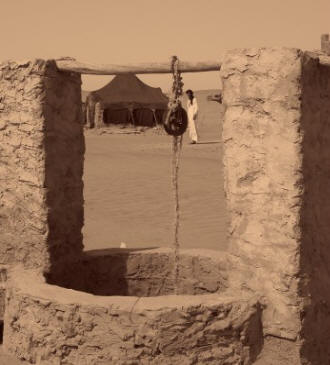
We come to dry and difficult places in our own lives, too. When we face difficulties we too often forget what we have seen and heard and give in to depression, despair, and sin. The solution to the desert problem is the refreshing water of memory. When you are in a desert you need water, but you don’t need to dig a new well every time you need refreshment; you can go back to an old and reliable well. Before you come to your next desert, think of times in the past when you knew God was close, perhaps an intense consolation experienced in prayer, or a providential miracle you’ve witnessed in life. And when you enter your next desert (or if you find yourself in one now) recall these memories to mind and be refreshed in faith. ‘Blessed are your eyes, because they have seen, and your ears, because they have heard,’ but to remain faithful to God in the desert you must remember the great things of God you have seen and heard.

Seek As To Find — Monday, 16th Week in Ordinary Time—Year I

July 18, 2011

When I was a kid, I was neither hot nor cold. I was a cradle-Catholic and wouldn’t renounce Christ, but I wasn’t much of a disciple of Christ either. I would have pseudo-philosophical religious conversations with friends, asking questions like, “How do we know that God is real? How do we know the Bible is really true? Couldn’t the Apostles have been hallucinating on Easter? Doesn’t science contradict religion?” And other objections of that type.

One day, when I was about 12-13 years old, I imagined myself  standing before the judgement seat of God after my death. He looked disappointed and annoyed like I had promised to meet Him somewhere and never showed up. He asked, “Why didn’t you live your life like I wanted you to live it?” (At the time I thought, “Whether this idea is coming by God or just from my own imagination, I have to honestly address this question. What would I say in this situation?”) “God,” I said, “I wasn’t even sure that you were really real. How could I commit my one life to you while I was still uncertain? Who would stand out on a cliff-ledge unless they knew that it could bear their weight?”  He promptly replied, “Well, did you ever really try to find out [if I was real?] I mean, did you even read my book?” When I heard this, I had two reactions. I laughed (because it was funny) and I said, “Oh crud,” (though I didn’t say “crud.”) God had called me out. If I had really been searching for the truth, I would’ve been searching differently. Instead of just asking questions I’d be looking for answers. After that, I began praying more, reading the Bible, and exploring my Catholicism more deeply. Because of this, I stand here today.

Jesus refused to give the Pharisees a sign because they weren’t really looking for the truth but excuses.  If you meet someone who doubts God and says they would believe in Him if He gave them a sign, perhaps ask them if they are really searching for the truth or just raising doubts about God in order to be free from the demands of the Gospel. Whoever truly seeks, finds. As a corrolary for our own lives, for we who believe in God, don’t expect the Lord to explicitly reveal His will for you, unless you are willing to accept His will.

Enduring Despite Scandal — 16th Sunday in Ordinary Time—Year A

July 17, 2011

I know of a man who was called and chosen to lead, to preach, and to be a minister on behalf of Christ. Good and powerful things were done through his ministry and he was respected by many Christians. However, despite outward appearances, this man was a sinner (a great sinner,) and when his sins became known he brought great scandal to the Church. It was revealed that he had repeated stolen from funds collected for the poor. It also became known that he had betrayed Christ, his people, and his vocation in a vastly more terrible way. So terribly, in fact, that Jesus said, “It would be better for that man if he had never been born.”  (Better for him if he had never lived life outside his mother’s womb.) This man, who preached the gospel, who worked mighty deeds, who drew crowds to Jesus Christ, was the Apostle Judas Iscariot.

Could you imagine being one of those Christians who had been evangelized by the Apostle Judas? What if he had preached the gospel and ministered in your hometown? Imagine how your faith might be shaken by his sins. How tragic it would be if any Christians had parted ways with Jesus Christ, the apostles and the Church because of the scandal of this one man.

Though the one, apostolic, and Catholic Church is holy, she does contain sinners. Jesus said that there would be weeds that grow alongside the wheat. It has always been this way, and so it shall be, until the separating harvest at the end of the age. There have been terrible sinners among the Church’s popes and priests, her lay men and women; children of the evil one. Yet, these sinners, should not make us forget about the Church’s many canonized and uncanonized saints, the children of the kingdom, through whom far greater good has been done.

Like the mustard seed Jesus described, His Catholic Church, which began as a speck in history, has grown into the largest of plants, a peaceful dwelling place which brings together all peoples. And like the yeast in the dough that Jesus spoke of, the works and teachings of His Catholic Church have raised up the whole world for the better. For instance, the Catholic Church is the largest charitable organization in the world and she has been the defender of universal human dignity through the centuries. The modern world accepts the concept of universal human rights as a given because the Catholic Church first championed human dignity by her teachings and deeds. Despite the sins of some of its members, let no one say that the Catholic Church has not been a source and a force for good in the world.

We see that Jesus foreknew what Judas was freely going to do. Jesus said, “Did I not choose you twelve? Yet is not one of you a devil?” “Amen, I say to you, one of you will betray me.” (He said this in reference to Judas.) Why did Jesus, who knew all the while what Judas would freely do, permit him to remain in their company? One could rightly say it was because the Father had ordained it so, or that it was necessary to fulfill Old Testament prophesies, or so that the Son of Man and Savior of mankind would experience the human suffering of betrayal by someone who knew Him well and should have loved Him. Perhaps there are one thousand true reasons for it in God’s providential plan, but I am convinced that one of these reasons is this: So that in the future, whenever one of Jesus’ own betrayed Christ’s Church, be they a member of the clergy or laity, it would not destroy our faith in Christ.      Ultimately, the only person our Catholic faith depends upon is Him, and Jesus will never let us down.

For those who have been alienated from the Faith because of scandals, let us pray whatever the offense, that no Judas shall keep them away from Jesus Christ and His Church.

St. Benedict & The Pharoah — Monday, 15th Week in Ordinary Time—Year I

July 11, 2011

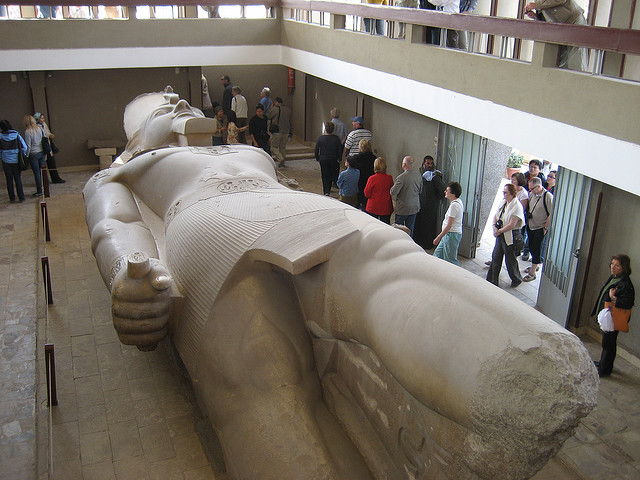
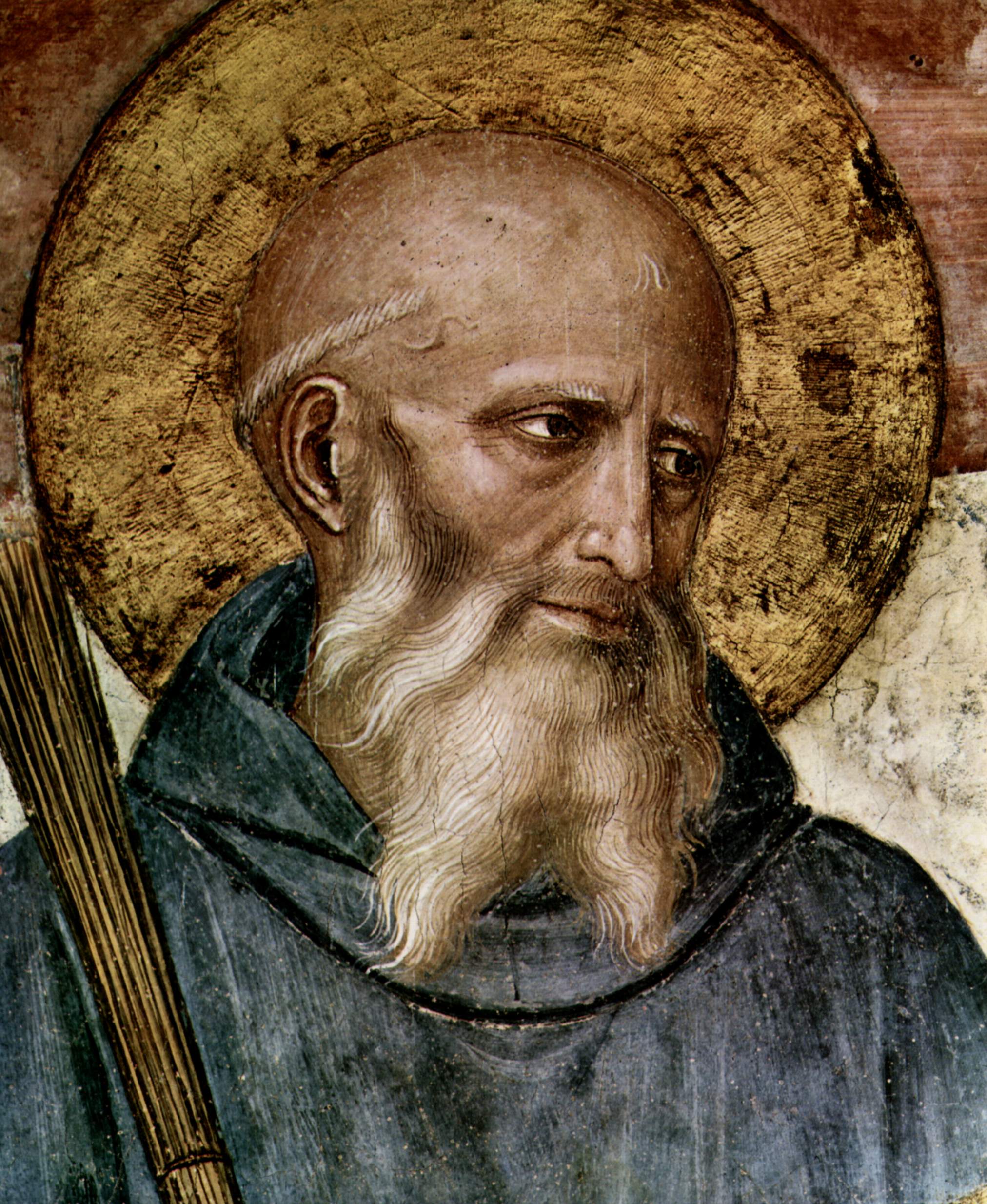
Today we recall two lawgiving rulers, one Egyptian and one Italian, one who was wicked and one who is good. This morning we hear of Pharaoh, who oppressed the Israelites, and we celebrate St. Benedict, who is called the founder of Western monasticism.

When Pharaoh saw the growing demographics of the children of Israel, he saw them as a threat and devised a new social strategy. Pharaoh had the Israelites enslaved and ordered that their male babies be sacrificed to Hapy, the fertility god of the River Nile. This would then force Israeli young women to take Egyptian husbands. In this way, if everything went according to plan, after a few generations of cultural assimilation, the children of Israel would be effectively no more.

St. Benedict, for his part, also established new laws over those he governed. His “Rule of St. Benedict” has directed the spirituality and administration of Benedictine monastic life for more than fifteen hundred years. Both Benedict and Pharaoh were shrewd men, clever and astute about practical matters like human behavior, but Pharaoh’s strategy was evil and failed while St. Benedict’s was good and still endures. Both men had intelligence, but only one had wisdom.

Pharaoh and St. Benedict demonstrate that intelligence is not the same thing as wisdom, that being clever is not the same thing as being good. Just because we know how to do something doesn’t mean we should. We see this in science, which teaches us how to do certain things, but which (of itself) cannot tell us whether we should. Governments can pass new laws, but that does not mean that all laws are just or serve the common good. Intelligence without wisdom is almost a curse. The devil is a brilliant creature, but he is without wisdom.

Where do we find wisdom? We find it in Jesus Christ, who presents Himself as the definitive prophet and righteous man, who presents His life as our pattern to follow. Whoever receives Him receives wisdom, and will receive wisdom’s reward.

Teachings Hardly Heard — 15th Sunday in Ordinary Time—Year A

July 10, 2011

Like the rains that come down from heaven to water the earth, so we are called to live lives of self-gift, fruitfulness, and peace. Jesus comes down from heaven to give us life, to free us from futility and slavery to corruption. But sometimes when Jesus preaches, people hear without understanding and the evil one steals away the seed of truth He sows. For others, worldly fear and the attraction of riches prevent Jesus’ word from bearing fruit. But when His word lands on a person of openness and discernment, it bears a great fruitfulness for that person and others.

What are teachings that we as Catholics have tended to hear but not understand, to glace at but never really examine. What are the teachings of Jesus Christ’s Church which we hardly hear with our ears and toward which we are most tempted to close our eyes? These are the issues about which clergy are most hesitant to preach. Nevertheless, Jesus wills that we hear these things with our ears, understand them with our hearts, and be converted, that He may heal us. Please pray now, for the grace of the Holy Spirit, that your heart may receptive to His word.

One area about which we hardly hear with our ears is the harm in sensual or romantic fantasizes.

For men, this temptation tends to be toward indecent images. For women, it tends towards things like romance novels. With these things, a person looks at another, or imagines being with another, without ever touching them, but that does not make sensual or romantic fantasies o.k. or harmless. Recall how Jesus said, “Everyone who looks at a woman with lust has already committed adultery with her in his heart.”

What is the harm in these things? Real love is only found and shared in the real world. Sensual or romantic escapism leaves behind those we are called to love. Compared to these fantasies, no real man or woman, no wife or husband, can possibly measure up. These fantasies can be addictive and they change the way we look at and relate to others in daily life.

If books, magazines, or movies tempt you in this way, throw them out. If the internet is the gateway to fantasy, place near the monitor a picture of someone you love. Commit yourself to loving the real people in your life, for that is the only place where real love is found.

Another topic about which we hardly hear is the harm of contraception.

In the beginning, upon creating the first man and woman, “God blessed them, saying: ‘Be fertile and multiply.’”  To unite husband and wife in love, and to bless the world with new human life, God designed the one-flesh marital embrace. God created and wills this embrace for life as well as love. Contraception, however, separates life from love, to the harm of both.  This must not be done for as Jesus said, in the context of marriage, “What God has joined together, no human being must separate.”

Forms of contraception are not new, they’re actually quite ancient. And from the start, the Catholic Church has recognized the wrongness of intentionally contracepted acts. In fact, as late as 1930, all Protestant groups agreed with Catholics on this principle (before they began to splinter off.) If the constant teaching of the Church of Jesus Christ is not persuasive enough, consider the fallout of contraception.

A contracepting couple closes off their marriage, their embrace, to life. Therefore, if they unexpectedly conceive a child, the little one is not felt to be a gift from God but a mistake. Whenever the surprise blessing of a child is considered to be a curse, love for that child is wounded, and even the unspeakable becomes tempting.

Contraception also threatens the love of couples. Pope Paul VI foresaw this danger, as he wrote in Humanae Vitae, “It is also to be feared that the man who grows accustomed to contraceptive methods may forget the reverence due to a woman, and, disregarding her physical and psychological equilibrium, reduce her to being a mere instrument for the satisfaction of his own desires, and no longer as his partner whom he should surround with care and affection.” Contraception separates life and love to the harm of both.

What then does the Church ask couples to do; to have as many children as they physically possibly can? No—For serious physical, psychological, economic, or social reasons, a couple may limit their marital embraces to her cycle’s naturally infertile periods. This is called Natural Family Planning (or NFP) and its methods, when used as directed, are as effective as the pill. But unlike the pill, Natural Family Planning has no unhealthy side-effects, is not an abortifacient, and conforms with God’s will. Practicing NFP is fruitful within marriage, whether God blesses a couple with more children or not.

A third subject about which we do not hear is the harm of fornication, or partaking of the marital embrace without the covenant of marriage.

Body language speaks, and the message of the body in the marital embrace is one of total self-gift. It says, “I joyfully give myself to you, all of me, completely and forever.” Fornication, however, makes this language of the body a lie. Unless a relationship has been sealed, before God and the world, in the bond of marriage, either one of the couple can back out at any time, and the couple knows this. It’s always in the back of their minds. For this reason, these couples tend to repress anger and complaints, avoid facing problems in their relationship, and put off the hard questions about their future together.

The embrace of man and woman naturally forges strong emotional bonds between the couple. In marriage, that’s a good thing, but before a marriage this clouds judgment and can plaster over serious flaws, serious cracks, in a bad relationship, at least for awhile. And what if their embrace conceives a child they don’t think they’re ready for? The woman, to preserve the relationship, may be tempted or coerced toward an unspeakable choice she’ll always regret.

Cohabitating couples can slouch into marriage; sometimes the man doesn’t really choose marriage so much as finally give in to others’ expectations. Then, after their wedding, nothing really seems different from before, and psychologically, the assumptions of their dating relationship carry into the marriage. Once their wedding day (which wasn’t as special for them as it should have been) drifts further away into the past, and marital difficulties inevitably arise, the old idea, the old escape hatch of breaking up and moving out, naturally returns, increasing the risk of divorce.

Fornication and cohabitation expose a person to emotional and spiritual pains, decrease one’s chances of marrying the right person, and increase one’s chances of divorcing in the future. No matter where you are in your dating relationships, Jesus Christ calls you to pre-marital chastity, for true love is found in purity.

A final topic about which we hardly hear is the harmfulness in acting out according to one’s same-sex attractions.

As the Catechism of the Catholic Church notes, “The number of men and women who have deep-seated [tendencies of this kind] is not negligible. This inclination, which is objectively disordered, constitutes for most of them a trial. They must be accepted with respect, compassion, and sensitivity. Every sign of unjust discrimination in their regard should be avoided. These persons are called to fulfill God’s will in their lives and, if they are Christians, to unite to the sacrifice of the Lord’s Cross the difficulties they may encounter from their condition.”

It is important for all of us to remember that a temptation, whatever it is, by itself, is not sin. Unless we go out looking for temptation, we are not responsible for the temptations which our genetics, upbringing, or environment send our way. What important is how we respond to our temptations, whether we give in to them and fall, or if stand strong with God like His saints before us.

As a Christian, and a fellow sinner, it would be wrong for me to look down on anyone. God loves everyone like He loves me. But at the same time, it would not be loving for me as a follower of Jesus Christ to say that acting out on one’s same-sex attractions is o.k. or harmless. The Old and New Testaments and the constant teachings of Christ’s Church are clear.

People of the same sex may be friends, even the dearest of friends with each other, but they’re not meant to be lovers. Man and wife were made each other. Their masculine and feminine differences compliment and complete each other and husbands and wives, as mothers and fathers. This is seen physically, in their marital embrace and in the conception of new life; but also psychologically and spiritually as well, in faithful marriages that last a lifetime. Persons of the same sex do not have this complimentarity and to ignore truth this leads to suffering, for such relationships are unhealthy for one’s body or soul. The tragically higher rates of promiscuity, transmittable diseases and cancers, domestic violence, drug and alcohol abuse, depression, and attempted suicide, point to the brokenness of these lifestyles. (And one notes that these comparatively higher rates are found not only in our country, but also aboard, like in the Netherlands where such relationships are more common and much more socially accepted.) Jesus calls these brothers and sisters of His and ours to a different, better, happier way of life.

Regardless of our temptations, there is hope. Freedom from sin and joyful peace are possible for all of us, by the grace of Jesus Christ the support of one another. For example, Courage international is a Catholic organization which ministers to help those with same-sex attractions live chaste and happy lives. For more information about Courage groups in our area, or about how to enroll in Natural Family Planning classes see me after Mass or give me a call. If you are cohabitating and wish to return to chastity but you don’t know how you as a couple can practically achieve it, talk to me. God has solutions for those who seek His will. May the seeds of Jesus’ teachings find rich soil in your hearts and bear an abundant harvest for you and for others.

Instructions For Missionaries — Thursday, 14th Week in Ordinary Time—Year I

July 7, 2011

Today, Jesus teaches His Apostles how they are to behave as they proclaim the Gospel and do His works. Why does Jesus give them the instructions He does, and what do they mean for us?

Jesus said, “Do not take gold or silver or copper for your belts, no sack for the journey.”  He wants us to depend on God, so that we can learn that God is dependable. But if we depend on God for nothing, then how can our trust grow? The things in your life that you worry about are the places in your life where He wants you to depend on Him more.

Jesus said, “take no second tunic, nor sandals, nor walking stick.” He did not want the Apostles making long trips. They wouldn’t need gear for long-distance hikes, such as a second tunic to sleep in outside overnight. They were to witness in one small village after the next, so that, working separately for the same goal together, everyone in every place would be reached with the Gospel. Like the Apostles, your mission territory is not far away.

Jesus said, “Whatever town or village you enter, look for a worthy person in it, and stay there until you leave.” Of course a person has to stay somewhere until they leave, but a person who has been welcomed into one house could receive a tempting invitation to stay in the same town with someone “better.” We too must beware the temptation to alienate Christ’s “little ones” in order to ingratiate ourselves to others.

Jesus said, “As you enter a house, wish it peace. If the house is worthy, let your peace come upon it; if not, let your peace return to you.” Like the Apostles, we are sure to encounter people who would snub, ignore, insult, or be cold to us, but that should not rob us of our peace.

What Jesus said to the Apostles, He is saying to us as well. Let us do as He instructs us as we proclaim the Gospel and do His works.

The Age of the Donkey — 14th Sunday in Ordinary Time—Year A

July 4, 2011


Jesus tells us in today’s gospel, “All things have been handed over to me by my Father.” But if that is so, why do so many things in the world seem so out of hand? We see that many things are sinful, broken, and not as they should be. Zechariah foretold that the true king would proclaim establish peace among the nations. Yet, this Fourth of July weekend sees our country fighting in at least two wars abroad. If we take our faith seriously, and think seriously about our faith, we’re led to ask, “Where is the reign of Jesus and where is His promised peace?”

In our first reading, we heard Zechariah prophesy that the true king, the Messiah, the Christ, would come to Jerusalem riding on a donkey. You will recall, of course, how Jesus fulfilled this passage when he rode into Jerusalem on Palm Sunday to the people’s shouts of joy. So what is the significance of His riding in on a donkey? The significance of the donkey is that it points to the meekness of Jesus’ reign.

In the ancient world, when a general sieged and took a fortified city, he would most often ride through its city gates by means of horse power. That conqueror would either be saddled upon one of these magnificently fast and powerful animals, or else he would ride in a chariot pulled by them. Then, upon entering, one would expect him to ruthlessly establish the new order of things. Oftentimes, to secure the conqueror’s rule, new laws would be proclaimed and severely enforced, prominent enemies would be put to death, and all local resistance would be crushed.

Jesus, however, comes into Jerusalem in a different way; not on a warhorse or in a chariot, but on a slow and humble donkey. This signifies that His reign shall be different. Apart from the relatively tame activism of scattering livestock and tipping tables at the temple, Jesus introduces his reign without any sign of force. In fact, the only person who would be murdered in the course of Jesus’ rise to power… would be Jesus Himself.

When Jesus stood accused before the high priest and the Sanhedrin, when He was in chains before Pilate and his troops, do you not think that He could have called upon His Father to provide Him in an instant with more than twelve legions of angels? Jesus could have backed Himself up with the power of more than 60,000 angelic warriors, but then He would not have died, and His kingdom would have been very different.

Let me speak for a minutes about the angels. God’s angels, in the first instant of their created existence, had a clear knowledge into God’s goodness and preeminence. In that moment, some of them decided that they would rather live as their own gods. As the Book of Revelation tells us, a war broke out in heaven; St. Michael the Archangel and his angels battled against Satan. Satan and its angels fought back, but they did not prevail and there was no longer any place for them in heaven. Satan was thrown down to earth, and his angels were thrown down with him, where they have tempted us to share in their rebellion ever since. Sometimes people ask if Satan and the demons could be someday be saved. However, angels and demons are creatures that do not change their minds. Unlike human beings, they do not change over time. We human beings are a different sort of creatures. We learn through experience and (hopefully) grow in maturity. If one of us chooses to rebel through grave sin, hope remains for us, as long as we live, that we will repent and turn again to God, to love Him and others as we ought. Even after Caiaphas and Pilate condemned Jesus and handed Him over to for execution, hope remained for their conversion and salvation.

What if Jesus had called in His angelic reinforcements, unveiling before them the Heavenly armies in their terrifying fierceness? What if Christ had tolerated no resistance to the advent of His reign, to the coming of His Kingdom, in 33 AD?        In that case, all of humanity would be confronted with a sudden and inescapable choice, a choice either for Christ or against Him; a moment of choosing like that experienced by the angels and demons.

Some human beings, when confronted with Christ in this way, would sinfully refuse to follow Him, and that refusal would be a rebellion. And here we come to the heart of the problem: How can Christ allow these rebels to remain on the earth, in hopes that they may repent, unless He is willing to show some tolerance and patience toward their sinful resistance for a time? Jesus could wipe away all sin from the face of the earth in an instant, but He would have to wipe out all of the earth’s unrepentant sinners in the process. A sudden judgment would bring a quick and clean end to sin, but less of mankind would be saved. The approach Jesus has taken with us is more merciful, but is also messier. God hopes that all shall turn to Him freely, and not by force, because love cannot be forced. Jesus Christ hopes and works for the conversion and salvation of all. As St. Peter writes, “The Lord’s patience is directed towards salvation.” And though it can be difficult for us to see God’s providential purposes and plans in our lives, “we know that,” as St. Paul says, “all things work for good for those who love God.”

Where is the peace that was promised to the world? Its total reign, the fullness of the kingdom of God, is yet to come. For now, the spirit of the world and the Spirit of life do battle. But we can experience peace in our souls, peace in our families, and peace in our communities, if we live by the Spirit of Christ.

In this age, Jesus comes to us on a donkey, but in the age to come He shall ride a warhorse. As the Book of Revelation says:

“I saw the heavens opened, and there was a white horse; its rider was called ‘Faithful and True.’ He judges and wages war in righteousness.… He wore a cloak that had been dipped in blood, and his name was called the Word of God. The armies of heaven followed him, mounted on white horses and wearing clean white linen. Out of his mouth came a sharp sword to strike the nations. He will rule them with an iron rod, and he himself will tread out in the wine press the wine of the fury and wrath of God the almighty. He has a name written on his cloak and on his thigh, ‘King of kings and Lord of lords.’”

In this age, Jesus rides the donkey, for this is the time of patient mercy. But on the Last Day, Jesus shall ride the white warhorse, for that is the time of decisive and definitive judgment. Let sinners take note; we shall not be permitted to keep sinning forever. And let those who mourn the brokenness, the sin, the suffering and death in the world take courage, for these things shall pass away. ‘See, your king shall come to you; a just savior is he. He shall proclaim peace to the nations. And His rule shall be to the ends of the earth.’

United Hearts — The Kristopher and KayLee Schnitzler Wedding

July 4, 2011

Kristopher and KayLee, when you chose this day, July 2nd, to be your wedding day you were probably not aware that you were choosing an extra special date. We unite your hearts today in holy matrimony amidst Sacred Heart of Jesus and the Immaculate Heart of Mary. Yesterday was the Solemnity of His Sacred Heart and today is the Memorial of her Immaculate Heart. We celebrate these two feasts so closely on the calendar, one after the other, because no two human hearts are so intimately united in a perfect love. I present them to you as role models for your love

Mary and Jesus were mother and Son. They were never married in the way we think of marriage, so how can they be role models for your marriage? In Jesus and Mary, we see the perfect man with the perfect woman, we see the New Adam together with the New Eve, we see the King and Queen of Heaven and Earth. Jesus is the Bridegroom and Mary is the flawless image of the Church, which is His Bride. By seeing how Jesus loves her and how Mary loves Him we can learn much about how men and women are to serve and love each other.

How does Jesus love Mary? For one thing, he listens to her. He is receptive to her wants and needs. It was true at the wedding feast of Cana, He worked a miracle to provide wine at her request, and it is still true now in heaven, where she continues to ask for good things for us. A good husband must be receptive to his wife’s wants and needs. On the other hand, in what manner do you think Mary asks things of Jesus? Mary does not nag Jesus, asking Him in plaintive tones. She doesn’t sit next to Jesus in Heaven and sigh, “I see you still haven’t taken care of the garbage down there.” Instead, I imagine she says to Him, “It would make me very happy if you would do this for me.” A good wife must allow pleasing her to be her husband’s joy, not his burden.

A good husband must die to himself in many ways for his family, and a good wife must support him through his sacrifices. Look how Jesus goes to the cross and offers Himself for the good of Mary and her children. He suffers for her and lays down his life for her. And how does Mary support Him? She is right there, at the foot of the cross, faithful and consoling. God gave Eve to Adam as a partner, to support him in the garden. Mary continues to be a helpmate to Jesus in His work of harvesting the vineyard of this world. A good husband lays down his life for his wife and a good wife must support him through his sacrifices.

From the cross, Jesus make Mary the mother of all Christians. He desired Mary to be the mother of many children, and now, Mary’s motherhood is perhaps her greatest joy. A good husband and wife must be open to children. This is the will of God for you and He will bless you with joy for saying “Yes” to Him.

The worship of God and following His will was at the center of the relationship between Jesus and Mary. Every Sabbath they came to join the worship at the synagogue (the Church of their day) and every day they said prayers and remained close to God. So too, God must be at the center of every good marriage. You must come to Mass every Sunday and pray every day. Good husbands and wives share the same mission in life, to assist each other and their children in getting to Heaven.

From earth to Heaven, Jesus led Mary through life with love, and Mary faithfully followed Him. A good husband must have the integrity not to phone it in, but to lead, and a good wife must have the courage to follow that lead. Kristopher and KayLee, May the hearts of Jesus and Mary reign in your homes. May you model their virtues on earth. And may you draw each other, and your children, to share their heavenly joy forever.

The Way, Truth, & Life — 5th Sunday in Easter—Year A

May 22, 2011

Jesus said, “I am the way and the truth and the life. No one comes to the Father except through me.”

The Mass is an encounter with Jesus Christ, leading us to God the Father. Like Jesus Himself, the Mass contains the Way, the Truth, and the Life of Jesus. First, we journey on the Way to Jesus, then we come to the Truth of Jesus, finally we join in the Life of Jesus.

The Mass begins with the sign of the cross, for God is the beginning and end of everything. Next, we confess our unworthiness to approach the Lord, asking mercy for our sins, so that we may dare to take this journey to God. The, from the Holy Scriptures, we hear of God’s words and deeds among the Old Testament peoples and within the New Testament Church. In this, we learn of the providential way that God has prepared throughout time for us to encounter Jesus Christ today. Just as the journey on this Way through history leads to Jesus Christ, so the liturgy of the Word leads to the Gospel. Certainly, Jesus Christ the Word of God is present throughout the entire Word of God which is Sacred Scripture, but for the reading of the Gospel, we all stand up for Him and sing “Alleluia,” “Praise the Lord,” because we have come to Jesus Christ and He is more fully present among us in the proclamation of the Gospel.

The Gospel reading proclaims Jesus, who is the Truth. The homily that follows proclaims that the Truth matters for us here and now and demands our personal response. To this call, we answer with the Creed, proclaiming our faith in who God is and what He has done for us. In the Creed, we proclaim our acceptance of Jesus, the Truth. In the prayers of the faithful, we petition the Lord for our needs and concerns, saying in so many words, “Lord, let your kingdom come, on earth as it is in Heaven! Let us share you life! Give us your life!” At Mass, the Way leads to the Truth, and from the Truth we long for God’s Life. At Mass, the Liturgy of the Word leads to the Liturgy of the Eucharist.

The presentation of the gifts is not merely about moving around cash and bread and water and wine. The presentation of the gifts is about the presentation of everything that we have, and everything that we are, to God. We lift up our hearts to be one with our sacrifice. Amidst praises to the Father, the one life-giving sacrifice of the Last Supper, of the cross, and of Heaven becomes present here to us. We join in offering this sacrifice through Jesus, with Jesus, and in Jesus, in union with the Holy Spirit, to God the Father in Heaven.

Through this offered sacrifice, we join in God’s Life. We pray “Our Father,” because uniting with the paschal mystery, the great Easter deeds of Jesus, gives us life as the Father’s sons and daughters. Then we share with one another the sign of peace, the loving peace that is possessed by God’s holy ones. Finally, at the climax, we partake of Jesus Christ, Life Himself, most truly present in the Holy Eucharist.

Sometimes people say, “I just don’t get anything out of going to Mass. Father, I know that you say all this important and wonderful stuff is going on, but I don’t see it and I don’t feel it. The Mass is boring for me.” I understand. When I was a boy, I made a point of going to the bathroom (sometimes twice) during every Mass, just to break up the monotony. When I would see the priest cleaning the dishes at the altar—that was a good sign, because it meant that the Mass was almost done. I didn’t really know what was happening at Mass, so I really didn’t believe in what was happening at Mass. But as I grew older I began to learn what was happening, and as I grew in faith I began to believe in what was happening, and my experience of the Mass was transformed.

People who say that the Mass is boring resemble St. Phillip in something he said to Jesus at the first Eucharist, the Last Supper: “Master, (we don’t see or feel the presence of God the Father,) show us the Father, and that will be enough for us.” And Jesus said to him, “Have I been with you for so long a time and you still do not know me, Philip? Whoever has seen me has seen the Father. (Whoever has been to Mass has encountered my mysteries.) How can you say, ‘Show us the Father’? (How can you say, ‘The Mass is boring?’)” The awesome mystical realities of the Mass are true, and real, and present and active at every Mass we attend, whether we see them, or feel them, or believe in them, or not.

Jesus Christ and the Holy Mass contain the Way, the Truth, and the Life, and we shall receive from them according to our faith. Let us pray, that at this Mass and every Mass, we may be as fully present to Jesus Christ and His mysteries as they are to us at every Mass.

The Significance of Standing — Tuesday, 3rd Week of Easter

May 10, 2011

There’s a curious detail about Stephen’s vision of Heaven in our first reading today:

“Stephen, filled with the Holy Spirit, looked up intently to heaven and saw the glory of God and Jesus standing at the right hand of God, and Stephen said, ‘Behold, I see the heavens opened and the Son of Man standing at the right hand of God.’”

Stephen looks up to Heaven and sees Jesus standing at the Father’s right hand, but both the Apostles’ Creed and Nicene Creed (which we say each Sunday) describe Jesus as “seated at the right hand of the Father.” What are we to make of this?

In the ancient world, to be seated at someone’s right hand gave you the place of higher honor. At a meal, this favored seat granted a special closeness to the host. In a kingdom, the one seated at the right hand of the throne would share in the king’s authority and rule. Of course, describing Jesus as “seated at the right hand of the Father” is only an image (God the Father is unlimited, pure spirit and doesn’t have a right hand.) But this phrase from our creeds does describe a reality: that Jesus is now in the intimate presence of God the Father, sharing supremely in His glory and rule. In his vision, Stephen beholds Jesus in the place of honor, at the Father’s “right hand,” but Stephen sees Jesus standing. So why is Jesus standing?

Did you know that whenever the President of the United States enters a room, everybody stands up? It doesn’t matter if it is a room full of Democrats or Republicans, members of the press, or ordinary citizens, everyone stands up for the President. The same goes for a judge in his courtroom: “All rise, the Honorable Judge So-and-so presiding.” And a gentleman knows that he ought to stand up whenever he greets a lady. Why do they stand? Because it is a sign of respect. If you think about it, whenever we’re offering prayers in the Mass, provided we’re not kneeling, we’re standing up to pray. We stand to pray as a sign of respect to God.

Sometimes, people stand as a sign of respect not so much for the individual but for the greatness of the office they possess. Even a U.S. President’s most hostile critics in Congress, political opponents who couldn’t say one good thing about him, will stand up when he arrives to give his State of the Union address out of respect for the office he holds. It wasn’t for this reason that Jesus stood. No one on earth could have demanded Jesus’ respect by holding an office higher than his.

Jesus stood up because he wanted to show Stephen a sign of His respect. Jesus stood up because he was proud of Stephen. I think that we forget that Jesus is a real human being, with human feelings and emotions about the human events he sees. At the same time, He is also God; and therefore, He sees us all.

When you’re alone, and overcome temptation to do what you know is good, Jesus sees you and He’s proud of you. When you give an anonymous contribution or do a secret kindness, Jesus sees it and He’s proud of you. When you are opposed like Stephen, by people who hate you, or that just don’t understand you, when all the while you’re trying act with love, you do not stand alone. Remember that when you do what’s hard for Jesus, He sees it, and He sees you and He’s proud of you for it.