Archive for the ‘Chrisitian Virtues’ Category

Enduring Despite Scandal — 16th Sunday in Ordinary Time—Year A

July 17, 2011

I know of a man who was called and chosen to lead, to preach, and to be a minister on behalf of Christ. Good and powerful things were done through his ministry and he was respected by many Christians. However, despite outward appearances, this man was a sinner (a great sinner,) and when his sins became known he brought great scandal to the Church. It was revealed that he had repeated stolen from funds collected for the poor. It also became known that he had betrayed Christ, his people, and his vocation in a vastly more terrible way. So terribly, in fact, that Jesus said, “It would be better for that man if he had never been born.”  (Better for him if he had never lived life outside his mother’s womb.) This man, who preached the gospel, who worked mighty deeds, who drew crowds to Jesus Christ, was the Apostle Judas Iscariot.

Could you imagine being one of those Christians who had been evangelized by the Apostle Judas? What if he had preached the gospel and ministered in your hometown? Imagine how your faith might be shaken by his sins. How tragic it would be if any Christians had parted ways with Jesus Christ, the apostles and the Church because of the scandal of this one man.

Though the one, apostolic, and Catholic Church is holy, she does contain sinners. Jesus said that there would be weeds that grow alongside the wheat. It has always been this way, and so it shall be, until the separating harvest at the end of the age. There have been terrible sinners among the Church’s popes and priests, her lay men and women; children of the evil one. Yet, these sinners, should not make us forget about the Church’s many canonized and uncanonized saints, the children of the kingdom, through whom far greater good has been done.

Like the mustard seed Jesus described, His Catholic Church, which began as a speck in history, has grown into the largest of plants, a peaceful dwelling place which brings together all peoples. And like the yeast in the dough that Jesus spoke of, the works and teachings of His Catholic Church have raised up the whole world for the better. For instance, the Catholic Church is the largest charitable organization in the world and she has been the defender of universal human dignity through the centuries. The modern world accepts the concept of universal human rights as a given because the Catholic Church first championed human dignity by her teachings and deeds. Despite the sins of some of its members, let no one say that the Catholic Church has not been a source and a force for good in the world.

We see that Jesus foreknew what Judas was freely going to do. Jesus said, “Did I not choose you twelve? Yet is not one of you a devil?” “Amen, I say to you, one of you will betray me.” (He said this in reference to Judas.) Why did Jesus, who knew all the while what Judas would freely do, permit him to remain in their company? One could rightly say it was because the Father had ordained it so, or that it was necessary to fulfill Old Testament prophesies, or so that the Son of Man and Savior of mankind would experience the human suffering of betrayal by someone who knew Him well and should have loved Him. Perhaps there are one thousand true reasons for it in God’s providential plan, but I am convinced that one of these reasons is this: So that in the future, whenever one of Jesus’ own betrayed Christ’s Church, be they a member of the clergy or laity, it would not destroy our faith in Christ.      Ultimately, the only person our Catholic faith depends upon is Him, and Jesus will never let us down.

For those who have been alienated from the Faith because of scandals, let us pray whatever the offense, that no Judas shall keep them away from Jesus Christ and His Church.

St. Benedict & The Pharoah — Monday, 15th Week in Ordinary Time—Year I

July 11, 2011

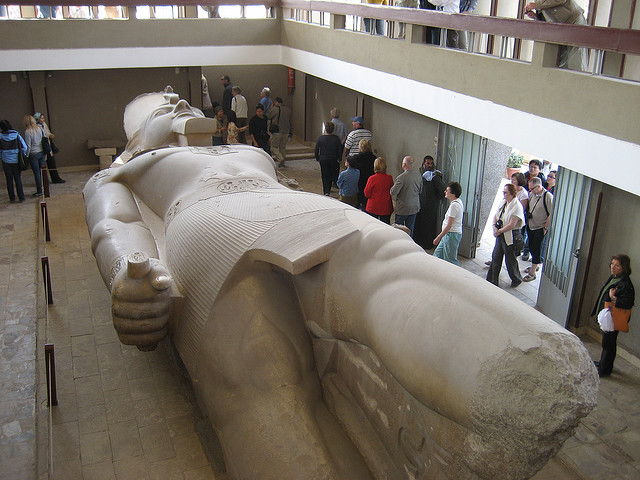
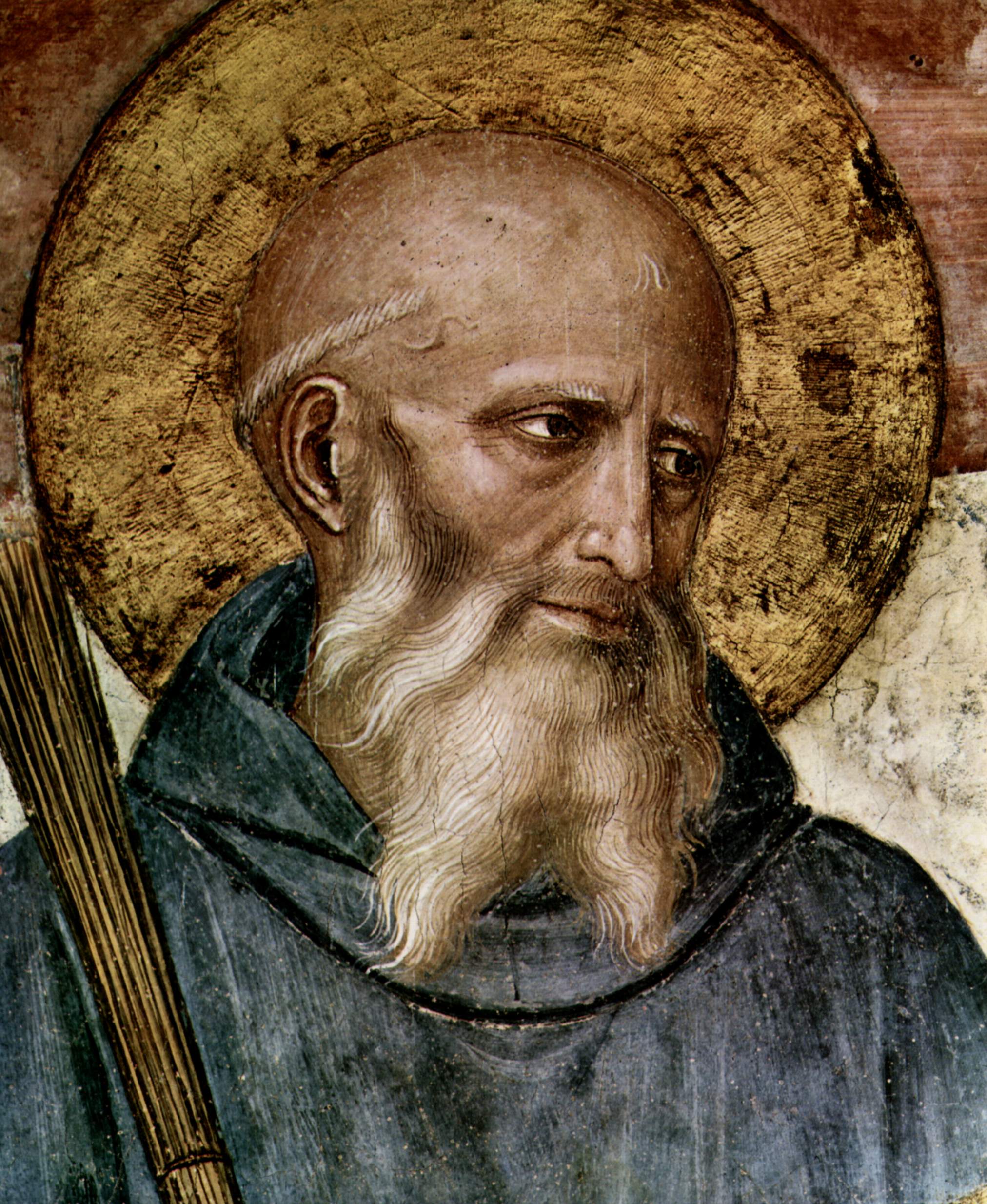
Today we recall two lawgiving rulers, one Egyptian and one Italian, one who was wicked and one who is good. This morning we hear of Pharaoh, who oppressed the Israelites, and we celebrate St. Benedict, who is called the founder of Western monasticism.

When Pharaoh saw the growing demographics of the children of Israel, he saw them as a threat and devised a new social strategy. Pharaoh had the Israelites enslaved and ordered that their male babies be sacrificed to Hapy, the fertility god of the River Nile. This would then force Israeli young women to take Egyptian husbands. In this way, if everything went according to plan, after a few generations of cultural assimilation, the children of Israel would be effectively no more.

St. Benedict, for his part, also established new laws over those he governed. His “Rule of St. Benedict” has directed the spirituality and administration of Benedictine monastic life for more than fifteen hundred years. Both Benedict and Pharaoh were shrewd men, clever and astute about practical matters like human behavior, but Pharaoh’s strategy was evil and failed while St. Benedict’s was good and still endures. Both men had intelligence, but only one had wisdom.

Pharaoh and St. Benedict demonstrate that intelligence is not the same thing as wisdom, that being clever is not the same thing as being good. Just because we know how to do something doesn’t mean we should. We see this in science, which teaches us how to do certain things, but which (of itself) cannot tell us whether we should. Governments can pass new laws, but that does not mean that all laws are just or serve the common good. Intelligence without wisdom is almost a curse. The devil is a brilliant creature, but he is without wisdom.

Where do we find wisdom? We find it in Jesus Christ, who presents Himself as the definitive prophet and righteous man, who presents His life as our pattern to follow. Whoever receives Him receives wisdom, and will receive wisdom’s reward.

Teachings Hardly Heard — 15th Sunday in Ordinary Time—Year A

July 10, 2011

Like the rains that come down from heaven to water the earth, so we are called to live lives of self-gift, fruitfulness, and peace. Jesus comes down from heaven to give us life, to free us from futility and slavery to corruption. But sometimes when Jesus preaches, people hear without understanding and the evil one steals away the seed of truth He sows. For others, worldly fear and the attraction of riches prevent Jesus’ word from bearing fruit. But when His word lands on a person of openness and discernment, it bears a great fruitfulness for that person and others.

What are teachings that we as Catholics have tended to hear but not understand, to glace at but never really examine. What are the teachings of Jesus Christ’s Church which we hardly hear with our ears and toward which we are most tempted to close our eyes? These are the issues about which clergy are most hesitant to preach. Nevertheless, Jesus wills that we hear these things with our ears, understand them with our hearts, and be converted, that He may heal us. Please pray now, for the grace of the Holy Spirit, that your heart may receptive to His word.

One area about which we hardly hear with our ears is the harm in sensual or romantic fantasizes.

For men, this temptation tends to be toward indecent images. For women, it tends towards things like romance novels. With these things, a person looks at another, or imagines being with another, without ever touching them, but that does not make sensual or romantic fantasies o.k. or harmless. Recall how Jesus said, “Everyone who looks at a woman with lust has already committed adultery with her in his heart.”

What is the harm in these things? Real love is only found and shared in the real world. Sensual or romantic escapism leaves behind those we are called to love. Compared to these fantasies, no real man or woman, no wife or husband, can possibly measure up. These fantasies can be addictive and they change the way we look at and relate to others in daily life.

If books, magazines, or movies tempt you in this way, throw them out. If the internet is the gateway to fantasy, place near the monitor a picture of someone you love. Commit yourself to loving the real people in your life, for that is the only place where real love is found.

Another topic about which we hardly hear is the harm of contraception.

In the beginning, upon creating the first man and woman, “God blessed them, saying: ‘Be fertile and multiply.’”  To unite husband and wife in love, and to bless the world with new human life, God designed the one-flesh marital embrace. God created and wills this embrace for life as well as love. Contraception, however, separates life from love, to the harm of both.  This must not be done for as Jesus said, in the context of marriage, “What God has joined together, no human being must separate.”

Forms of contraception are not new, they’re actually quite ancient. And from the start, the Catholic Church has recognized the wrongness of intentionally contracepted acts. In fact, as late as 1930, all Protestant groups agreed with Catholics on this principle (before they began to splinter off.) If the constant teaching of the Church of Jesus Christ is not persuasive enough, consider the fallout of contraception.

A contracepting couple closes off their marriage, their embrace, to life. Therefore, if they unexpectedly conceive a child, the little one is not felt to be a gift from God but a mistake. Whenever the surprise blessing of a child is considered to be a curse, love for that child is wounded, and even the unspeakable becomes tempting.

Contraception also threatens the love of couples. Pope Paul VI foresaw this danger, as he wrote in Humanae Vitae, “It is also to be feared that the man who grows accustomed to contraceptive methods may forget the reverence due to a woman, and, disregarding her physical and psychological equilibrium, reduce her to being a mere instrument for the satisfaction of his own desires, and no longer as his partner whom he should surround with care and affection.” Contraception separates life and love to the harm of both.

What then does the Church ask couples to do; to have as many children as they physically possibly can? No—For serious physical, psychological, economic, or social reasons, a couple may limit their marital embraces to her cycle’s naturally infertile periods. This is called Natural Family Planning (or NFP) and its methods, when used as directed, are as effective as the pill. But unlike the pill, Natural Family Planning has no unhealthy side-effects, is not an abortifacient, and conforms with God’s will. Practicing NFP is fruitful within marriage, whether God blesses a couple with more children or not.

A third subject about which we do not hear is the harm of fornication, or partaking of the marital embrace without the covenant of marriage.

Body language speaks, and the message of the body in the marital embrace is one of total self-gift. It says, “I joyfully give myself to you, all of me, completely and forever.” Fornication, however, makes this language of the body a lie. Unless a relationship has been sealed, before God and the world, in the bond of marriage, either one of the couple can back out at any time, and the couple knows this. It’s always in the back of their minds. For this reason, these couples tend to repress anger and complaints, avoid facing problems in their relationship, and put off the hard questions about their future together.

The embrace of man and woman naturally forges strong emotional bonds between the couple. In marriage, that’s a good thing, but before a marriage this clouds judgment and can plaster over serious flaws, serious cracks, in a bad relationship, at least for awhile. And what if their embrace conceives a child they don’t think they’re ready for? The woman, to preserve the relationship, may be tempted or coerced toward an unspeakable choice she’ll always regret.

Cohabitating couples can slouch into marriage; sometimes the man doesn’t really choose marriage so much as finally give in to others’ expectations. Then, after their wedding, nothing really seems different from before, and psychologically, the assumptions of their dating relationship carry into the marriage. Once their wedding day (which wasn’t as special for them as it should have been) drifts further away into the past, and marital difficulties inevitably arise, the old idea, the old escape hatch of breaking up and moving out, naturally returns, increasing the risk of divorce.

Fornication and cohabitation expose a person to emotional and spiritual pains, decrease one’s chances of marrying the right person, and increase one’s chances of divorcing in the future. No matter where you are in your dating relationships, Jesus Christ calls you to pre-marital chastity, for true love is found in purity.

A final topic about which we hardly hear is the harmfulness in acting out according to one’s same-sex attractions.

As the Catechism of the Catholic Church notes, “The number of men and women who have deep-seated [tendencies of this kind] is not negligible. This inclination, which is objectively disordered, constitutes for most of them a trial. They must be accepted with respect, compassion, and sensitivity. Every sign of unjust discrimination in their regard should be avoided. These persons are called to fulfill God’s will in their lives and, if they are Christians, to unite to the sacrifice of the Lord’s Cross the difficulties they may encounter from their condition.”

It is important for all of us to remember that a temptation, whatever it is, by itself, is not sin. Unless we go out looking for temptation, we are not responsible for the temptations which our genetics, upbringing, or environment send our way. What important is how we respond to our temptations, whether we give in to them and fall, or if stand strong with God like His saints before us.

As a Christian, and a fellow sinner, it would be wrong for me to look down on anyone. God loves everyone like He loves me. But at the same time, it would not be loving for me as a follower of Jesus Christ to say that acting out on one’s same-sex attractions is o.k. or harmless. The Old and New Testaments and the constant teachings of Christ’s Church are clear.

People of the same sex may be friends, even the dearest of friends with each other, but they’re not meant to be lovers. Man and wife were made each other. Their masculine and feminine differences compliment and complete each other and husbands and wives, as mothers and fathers. This is seen physically, in their marital embrace and in the conception of new life; but also psychologically and spiritually as well, in faithful marriages that last a lifetime. Persons of the same sex do not have this complimentarity and to ignore truth this leads to suffering, for such relationships are unhealthy for one’s body or soul. The tragically higher rates of promiscuity, transmittable diseases and cancers, domestic violence, drug and alcohol abuse, depression, and attempted suicide, point to the brokenness of these lifestyles. (And one notes that these comparatively higher rates are found not only in our country, but also aboard, like in the Netherlands where such relationships are more common and much more socially accepted.) Jesus calls these brothers and sisters of His and ours to a different, better, happier way of life.

Regardless of our temptations, there is hope. Freedom from sin and joyful peace are possible for all of us, by the grace of Jesus Christ the support of one another. For example, Courage international is a Catholic organization which ministers to help those with same-sex attractions live chaste and happy lives. For more information about Courage groups in our area, or about how to enroll in Natural Family Planning classes see me after Mass or give me a call. If you are cohabitating and wish to return to chastity but you don’t know how you as a couple can practically achieve it, talk to me. God has solutions for those who seek His will. May the seeds of Jesus’ teachings find rich soil in your hearts and bear an abundant harvest for you and for others.
Instructions For Missionaries — Thursday, 14th Week in Ordinary Time—Year I

July 7, 2011

Today, Jesus teaches His Apostles how they are to behave as they proclaim the Gospel and do His works. Why does Jesus give them the instructions He does, and what do they mean for us?

Jesus said, “Do not take gold or silver or copper for your belts, no sack for the journey.”  He wants us to depend on God, so that we can learn that God is dependable. But if we depend on God for nothing, then how can our trust grow? The things in your life that you worry about are the places in your life where He wants you to depend on Him more.

Jesus said, “take no second tunic, nor sandals, nor walking stick.” He did not want the Apostles making long trips. They wouldn’t need gear for long-distance hikes, such as a second tunic to sleep in outside overnight. They were to witness in one small village after the next, so that, working separately for the same goal together, everyone in every place would be reached with the Gospel. Like the Apostles, your mission territory is not far away.

Jesus said, “Whatever town or village you enter, look for a worthy person in it, and stay there until you leave.” Of course a person has to stay somewhere until they leave, but a person who has been welcomed into one house could receive a tempting invitation to stay in the same town with someone “better.” We too must beware the temptation to alienate Christ’s “little ones” in order to ingratiate ourselves to others.

Jesus said, “As you enter a house, wish it peace. If the house is worthy, let your peace come upon it; if not, let your peace return to you.” Like the Apostles, we are sure to encounter people who would snub, ignore, insult, or be cold to us, but that should not rob us of our peace.

What Jesus said to the Apostles, He is saying to us as well. Let us do as He instructs us as we proclaim the Gospel and do His works.

The Age of the Donkey — 14th Sunday in Ordinary Time—Year A

July 4, 2011


Jesus tells us in today’s gospel, “All things have been handed over to me by my Father.” But if that is so, why do so many things in the world seem so out of hand? We see that many things are sinful, broken, and not as they should be. Zechariah foretold that the true king would proclaim establish peace among the nations. Yet, this Fourth of July weekend sees our country fighting in at least two wars abroad. If we take our faith seriously, and think seriously about our faith, we’re led to ask, “Where is the reign of Jesus and where is His promised peace?”

In our first reading, we heard Zechariah prophesy that the true king, the Messiah, the Christ, would come to Jerusalem riding on a donkey. You will recall, of course, how Jesus fulfilled this passage when he rode into Jerusalem on Palm Sunday to the people’s shouts of joy. So what is the significance of His riding in on a donkey? The significance of the donkey is that it points to the meekness of Jesus’ reign.

In the ancient world, when a general sieged and took a fortified city, he would most often ride through its city gates by means of horse power. That conqueror would either be saddled upon one of these magnificently fast and powerful animals, or else he would ride in a chariot pulled by them. Then, upon entering, one would expect him to ruthlessly establish the new order of things. Oftentimes, to secure the conqueror’s rule, new laws would be proclaimed and severely enforced, prominent enemies would be put to death, and all local resistance would be crushed.

Jesus, however, comes into Jerusalem in a different way; not on a warhorse or in a chariot, but on a slow and humble donkey. This signifies that His reign shall be different. Apart from the relatively tame activism of scattering livestock and tipping tables at the temple, Jesus introduces his reign without any sign of force. In fact, the only person who would be murdered in the course of Jesus’ rise to power… would be Jesus Himself.

When Jesus stood accused before the high priest and the Sanhedrin, when He was in chains before Pilate and his troops, do you not think that He could have called upon His Father to provide Him in an instant with more than twelve legions of angels? Jesus could have backed Himself up with the power of more than 60,000 angelic warriors, but then He would not have died, and His kingdom would have been very different.

Let me speak for a minutes about the angels. God’s angels, in the first instant of their created existence, had a clear knowledge into God’s goodness and preeminence. In that moment, some of them decided that they would rather live as their own gods. As the Book of Revelation tells us, a war broke out in heaven; St. Michael the Archangel and his angels battled against Satan. Satan and its angels fought back, but they did not prevail and there was no longer any place for them in heaven. Satan was thrown down to earth, and his angels were thrown down with him, where they have tempted us to share in their rebellion ever since. Sometimes people ask if Satan and the demons could be someday be saved. However, angels and demons are creatures that do not change their minds. Unlike human beings, they do not change over time. We human beings are a different sort of creatures. We learn through experience and (hopefully) grow in maturity. If one of us chooses to rebel through grave sin, hope remains for us, as long as we live, that we will repent and turn again to God, to love Him and others as we ought. Even after Caiaphas and Pilate condemned Jesus and handed Him over to for execution, hope remained for their conversion and salvation.

What if Jesus had called in His angelic reinforcements, unveiling before them the Heavenly armies in their terrifying fierceness? What if Christ had tolerated no resistance to the advent of His reign, to the coming of His Kingdom, in 33 AD?        In that case, all of humanity would be confronted with a sudden and inescapable choice, a choice either for Christ or against Him; a moment of choosing like that experienced by the angels and demons.

Some human beings, when confronted with Christ in this way, would sinfully refuse to follow Him, and that refusal would be a rebellion. And here we come to the heart of the problem: How can Christ allow these rebels to remain on the earth, in hopes that they may repent, unless He is willing to show some tolerance and patience toward their sinful resistance for a time? Jesus could wipe away all sin from the face of the earth in an instant, but He would have to wipe out all of the earth’s unrepentant sinners in the process. A sudden judgment would bring a quick and clean end to sin, but less of mankind would be saved. The approach Jesus has taken with us is more merciful, but is also messier. God hopes that all shall turn to Him freely, and not by force, because love cannot be forced. Jesus Christ hopes and works for the conversion and salvation of all. As St. Peter writes, “The Lord’s patience is directed towards salvation.” And though it can be difficult for us to see God’s providential purposes and plans in our lives, “we know that,” as St. Paul says, “all things work for good for those who love God.”

Where is the peace that was promised to the world? Its total reign, the fullness of the kingdom of God, is yet to come. For now, the spirit of the world and the Spirit of life do battle. But we can experience peace in our souls, peace in our families, and peace in our communities, if we live by the Spirit of Christ.

In this age, Jesus comes to us on a donkey, but in the age to come He shall ride a warhorse. As the Book of Revelation says:

“I saw the heavens opened, and there was a white horse; its rider was called ‘Faithful and True.’ He judges and wages war in righteousness.… He wore a cloak that had been dipped in blood, and his name was called the Word of God. The armies of heaven followed him, mounted on white horses and wearing clean white linen. Out of his mouth came a sharp sword to strike the nations. He will rule them with an iron rod, and he himself will tread out in the wine press the wine of the fury and wrath of God the almighty. He has a name written on his cloak and on his thigh, ‘King of kings and Lord of lords.’”

In this age, Jesus rides the donkey, for this is the time of patient mercy. But on the Last Day, Jesus shall ride the white warhorse, for that is the time of decisive and definitive judgment. Let sinners take note; we shall not be permitted to keep sinning forever. And let those who mourn the brokenness, the sin, the suffering and death in the world take courage, for these things shall pass away. ‘See, your king shall come to you; a just savior is he. He shall proclaim peace to the nations. And His rule shall be to the ends of the earth.’

United Hearts — The Kristopher and KayLee Schnitzler Wedding

July 4, 2011

Kristopher and KayLee, when you chose this day, July 2nd, to be your wedding day you were probably not aware that you were choosing an extra special date. We unite your hearts today in holy matrimony amidst Sacred Heart of Jesus and the Immaculate Heart of Mary. Yesterday was the Solemnity of His Sacred Heart and today is the Memorial of her Immaculate Heart. We celebrate these two feasts so closely on the calendar, one after the other, because no two human hearts are so intimately united in a perfect love. I present them to you as role models for your love

Mary and Jesus were mother and Son. They were never married in the way we think of marriage, so how can they be role models for your marriage? In Jesus and Mary, we see the perfect man with the perfect woman, we see the New Adam together with the New Eve, we see the King and Queen of Heaven and Earth. Jesus is the Bridegroom and Mary is the flawless image of the Church, which is His Bride. By seeing how Jesus loves her and how Mary loves Him we can learn much about how men and women are to serve and love each other.

How does Jesus love Mary? For one thing, he listens to her. He is receptive to her wants and needs. It was true at the wedding feast of Cana, He worked a miracle to provide wine at her request, and it is still true now in heaven, where she continues to ask for good things for us. A good husband must be receptive to his wife’s wants and needs. On the other hand, in what manner do you think Mary asks things of Jesus? Mary does not nag Jesus, asking Him in plaintive tones. She doesn’t sit next to Jesus in Heaven and sigh, “I see you still haven’t taken care of the garbage down there.” Instead, I imagine she says to Him, “It would make me very happy if you would do this for me.” A good wife must allow pleasing her to be her husband’s joy, not his burden.

A good husband must die to himself in many ways for his family, and a good wife must support him through his sacrifices. Look how Jesus goes to the cross and offers Himself for the good of Mary and her children. He suffers for her and lays down his life for her. And how does Mary support Him? She is right there, at the foot of the cross, faithful and consoling. God gave Eve to Adam as a partner, to support him in the garden. Mary continues to be a helpmate to Jesus in His work of harvesting the vineyard of this world. A good husband lays down his life for his wife and a good wife must support him through his sacrifices.

From the cross, Jesus make Mary the mother of all Christians. He desired Mary to be the mother of many children, and now, Mary’s motherhood is perhaps her greatest joy. A good husband and wife must be open to children. This is the will of God for you and He will bless you with joy for saying “Yes” to Him.

The worship of God and following His will was at the center of the relationship between Jesus and Mary. Every Sabbath they came to join the worship at the synagogue (the Church of their day) and every day they said prayers and remained close to God. So too, God must be at the center of every good marriage. You must come to Mass every Sunday and pray every day. Good husbands and wives share the same mission in life, to assist each other and their children in getting to Heaven.

From earth to Heaven, Jesus led Mary through life with love, and Mary faithfully followed Him. A good husband must have the integrity not to phone it in, but to lead, and a good wife must have the courage to follow that lead. Kristopher and KayLee, May the hearts of Jesus and Mary reign in your homes. May you model their virtues on earth. And may you draw each other, and your children, to share their heavenly joy forever.

The Way, Truth, & Life — 5th Sunday in Easter—Year A

May 22, 2011

Jesus said, “I am the way and the truth and the life. No one comes to the Father except through me.”

The Mass is an encounter with Jesus Christ, leading us to God the Father. Like Jesus Himself, the Mass contains the Way, the Truth, and the Life of Jesus. First, we journey on the Way to Jesus, then we come to the Truth of Jesus, finally we join in the Life of Jesus.

The Mass begins with the sign of the cross, for God is the beginning and end of everything. Next, we confess our unworthiness to approach the Lord, asking mercy for our sins, so that we may dare to take this journey to God. The, from the Holy Scriptures, we hear of God’s words and deeds among the Old Testament peoples and within the New Testament Church. In this, we learn of the providential way that God has prepared throughout time for us to encounter Jesus Christ today. Just as the journey on this Way through history leads to Jesus Christ, so the liturgy of the Word leads to the Gospel. Certainly, Jesus Christ the Word of God is present throughout the entire Word of God which is Sacred Scripture, but for the reading of the Gospel, we all stand up for Him and sing “Alleluia,” “Praise the Lord,” because we have come to Jesus Christ and He is more fully present among us in the proclamation of the Gospel.

The Gospel reading proclaims Jesus, who is the Truth. The homily that follows proclaims that the Truth matters for us here and now and demands our personal response. To this call, we answer with the Creed, proclaiming our faith in who God is and what He has done for us. In the Creed, we proclaim our acceptance of Jesus, the Truth. In the prayers of the faithful, we petition the Lord for our needs and concerns, saying in so many words, “Lord, let your kingdom come, on earth as it is in Heaven! Let us share you life! Give us your life!” At Mass, the Way leads to the Truth, and from the Truth we long for God’s Life. At Mass, the Liturgy of the Word leads to the Liturgy of the Eucharist.

The presentation of the gifts is not merely about moving around cash and bread and water and wine. The presentation of the gifts is about the presentation of everything that we have, and everything that we are, to God. We lift up our hearts to be one with our sacrifice. Amidst praises to the Father, the one life-giving sacrifice of the Last Supper, of the cross, and of Heaven becomes present here to us. We join in offering this sacrifice through Jesus, with Jesus, and in Jesus, in union with the Holy Spirit, to God the Father in Heaven.

Through this offered sacrifice, we join in God’s Life. We pray “Our Father,” because uniting with the paschal mystery, the great Easter deeds of Jesus, gives us life as the Father’s sons and daughters. Then we share with one another the sign of peace, the loving peace that is possessed by God’s holy ones. Finally, at the climax, we partake of Jesus Christ, Life Himself, most truly present in the Holy Eucharist.

Sometimes people say, “I just don’t get anything out of going to Mass. Father, I know that you say all this important and wonderful stuff is going on, but I don’t see it and I don’t feel it. The Mass is boring for me.” I understand. When I was a boy, I made a point of going to the bathroom (sometimes twice) during every Mass, just to break up the monotony. When I would see the priest cleaning the dishes at the altar—that was a good sign, because it meant that the Mass was almost done. I didn’t really know what was happening at Mass, so I really didn’t believe in what was happening at Mass. But as I grew older I began to learn what was happening, and as I grew in faith I began to believe in what was happening, and my experience of the Mass was transformed.

People who say that the Mass is boring resemble St. Phillip in something he said to Jesus at the first Eucharist, the Last Supper: “Master, (we don’t see or feel the presence of God the Father,) show us the Father, and that will be enough for us.” And Jesus said to him, “Have I been with you for so long a time and you still do not know me, Philip? Whoever has seen me has seen the Father. (Whoever has been to Mass has encountered my mysteries.) How can you say, ‘Show us the Father’? (How can you say, ‘The Mass is boring?’)” The awesome mystical realities of the Mass are true, and real, and present and active at every Mass we attend, whether we see them, or feel them, or believe in them, or not.

Jesus Christ and the Holy Mass contain the Way, the Truth, and the Life, and we shall receive from them according to our faith. Let us pray, that at this Mass and every Mass, we may be as fully present to Jesus Christ and His mysteries as they are to us at every Mass.

The Significance of Standing — Tuesday, 3rd Week of Easter

May 10, 2011

There’s a curious detail about Stephen’s vision of Heaven in our first reading today:

“Stephen, filled with the Holy Spirit, looked up intently to heaven and saw the glory of God and Jesus standing at the right hand of God, and Stephen said, ‘Behold, I see the heavens opened and the Son of Man standing at the right hand of God.’”

Stephen looks up to Heaven and sees Jesus standing at the Father’s right hand, but both the Apostles’ Creed and Nicene Creed (which we say each Sunday) describe Jesus as “seated at the right hand of the Father.” What are we to make of this?

In the ancient world, to be seated at someone’s right hand gave you the place of higher honor. At a meal, this favored seat granted a special closeness to the host. In a kingdom, the one seated at the right hand of the throne would share in the king’s authority and rule. Of course, describing Jesus as “seated at the right hand of the Father” is only an image (God the Father is unlimited, pure spirit and doesn’t have a right hand.) But this phrase from our creeds does describe a reality: that Jesus is now in the intimate presence of God the Father, sharing supremely in His glory and rule. In his vision, Stephen beholds Jesus in the place of honor, at the Father’s “right hand,” but Stephen sees Jesus standing. So why is Jesus standing?

Did you know that whenever the President of the United States enters a room, everybody stands up? It doesn’t matter if it is a room full of Democrats or Republicans, members of the press, or ordinary citizens, everyone stands up for the President. The same goes for a judge in his courtroom: “All rise, the Honorable Judge So-and-so presiding.” And a gentleman knows that he ought to stand up whenever he greets a lady. Why do they stand? Because it is a sign of respect. If you think about it, whenever we’re offering prayers in the Mass, provided we’re not kneeling, we’re standing up to pray. We stand to pray as a sign of respect to God.

Sometimes, people stand as a sign of respect not so much for the individual but for the greatness of the office they possess. Even a U.S. President’s most hostile critics in Congress, political opponents who couldn’t say one good thing about him, will stand up when he arrives to give his State of the Union address out of respect for the office he holds. It wasn’t for this reason that Jesus stood. No one on earth could have demanded Jesus’ respect by holding an office higher than his.

Jesus stood up because he wanted to show Stephen a sign of His respect. Jesus stood up because he was proud of Stephen. I think that we forget that Jesus is a real human being, with human feelings and emotions about the human events he sees. At the same time, He is also God; and therefore, He sees us all.

When you’re alone, and overcome temptation to do what you know is good, Jesus sees you and He’s proud of you. When you give an anonymous contribution or do a secret kindness, Jesus sees it and He’s proud of you. When you are opposed like Stephen, by people who hate you, or that just don’t understand you, when all the while you’re trying act with love, you do not stand alone. Remember that when you do what’s hard for Jesus, He sees it, and He sees you and He’s proud of you for it.

The Death of Bin Laden — May 3 — Sts. Philip and James

May 3, 2011

Osama Bin Laden has caused the deaths of countless people worldwide, he has spread hatred and division among peoples, and he has exploited religion for these purposes. He has done evil things, and now he is dead. How should we take this news? On Sunday night, some people celebrated in the streets of New York City and Washington, DC. Many people said with unrestrained delight that not a man, but a vermin, or a thing of pure evil, had been exterminated. But what is God’s opinion? What are His feelings on these events? God speaks to us in his words from Ezekiel 33:11: “Answer them: As I live, says the Lord God, I swear I take no pleasure in the death of the wicked man, but rather in the wicked man’s conversion, that he may live.” If God does not rejoice in the death of the wicked, then neither should we.

Our U.S. Special Forces’ successful mission in Abbottabad, Pakistan rightly pleases us in many ways, like in how this achievement may prevent future terrorist attacks or the fact that al-Qaeda is now deprived of their most charismatic leader, but a Christian should not rejoice in the death of a sinner. It should be noted here, that Jesus the Prince of Peace loves peace, but He is not a pacifist. (A pacifist is someone who condemns the use of force in all situations.) Recall that Jesus did not drive out the money-changers and animal-sellers from the temple solely by endlessly asking them nicely. “He made a whip out of cords and drove them all out of the temple area…” Force, even deadly force, is sometimes just and necessary, as I believe it was in Abbattabad this Sunday. And yet, even in wartime, we must not hate those who hate us, nor rejoice in the death of wrongdoers, not even when it’s Osama Bin Laden. The death of a sinner is a tragedy to the heart of Jesus, whose Divine Mercy and Love we celebrated on that same Sunday.

Perhaps someone might hear this and ask, “What difference does it make whether or not I hate Bin Laden or other people I’ve never met? Or what difference does it make whether or not I hate some of the people I actually know?” This is why it matters. You heard Jesus say to Thomas, “I am the way and the truth and the life. No one comes to the Father except through me.” No one comes to the Father, except through Him. Jesus is the way. He is our way to Heaven not just by our saying that He’s our Lord and Savior. Jesus is the way because He is the way we must become. No one comes to the Father in Heaven except they who conform themselves to the person of Jesus Christ. Therefore, if you die hating anyone in your heart, when you come to the gates of Heaven, whether the persons you hate are inside or not, you will not enter in; either you will be prevented from entering until your heart is cleaned to be like Christ’s, or you will never enter in, because you will have decided that you do not want Heaven’s ways, Heaven’s truths, or Heaven’s life.

You’re unlikely to hear the message of this homily said anywhere on TV. Imagine how the world would react if someone went on FOX News or CNN and suggested we shouldn’t hate Bin Laden. If you’ve heard anything like this homily since Sunday’s events, it was probably here at Columbus, through one of your teachers. What makes them different from the world is that they have been formed by the Gospel and a Catholic Christian worldview. Our Catholic Faith is the only thing that frees from the slavery of merely being a child of one’s time. It allows us to see the world more through Jesus’ eyes and to conform our hearts to His. This is important, because if you and I want to enter into Heaven someday, we must be converted into Him.

“I Thirst” — Good Friday

April 22, 2011

Shortly before He died on the cross, Jesus said, “I thirst.” Why did He say, “I thirst”? He was certainly physically dehydrated. As Psalm 22 foretells, His throat was as dry as broken pottery and His tongue stuck to His palate, but there was more reason for His words than just this.

Last night, at the Last Supper, Jesus had postponed drinking the traditional fourth and final cup of Passover. He said “I thirst” so that they would bring Him wine, so that He could drink, and unite the Last Supper and His Passion as one event. However, there is even more reason for His words than this.

Beside the crucifixes, in all of the chapels, in all of her religious houses around the world, Blessed Mother Teresa had written the words, “I thirst.” She understood that what Jesus thirsts for on the cross is us. Mother Teresa wrote, “Jesus is God, therefore His love, His Thirst, is infinite. He the Creator of the universe, asked for the love of His creatures. He thirsts for our love…” 

As we come to Him on the cross today, let us satisfy His thirst with the refreshment we can give to Him.

We Owe Him Big — Tuesday of Holy Week

April 20, 2011

When I was your age, there was a popular show on TV that I liked to watch that maybe you’ve heard of, the show was called The Simpsons. And though it was 20 years ago, I still remember my favorite episode: “Bart Gets an F.” This episode happens to be the most highly-rated Simpsons of all-time and Entertainment Weekly once picked it as the “31st Greatest Moment in Television [History].”

Bart Simpson was failing the fourth grade, and Mrs. Krabappel told him that if he failed his next exam he would forced to repeat the year. Bart tries to prepare by teaming up with Martin to study, but Martin abandons him. And so, the night before the exam, Bart has run out of time. Bart goes to his bedside, kneels down, and prays.

“I know I haven’t always been a good kid, but, if I have to go to school tomorrow, I’ll fail the test and be held back.  I just need one more day to study, Lord.  I need Your help! A teachers strike, a power failure, a blizzard… Anything that’ll cancel school tomorrow.  I know it’s asking a lot, but if anyone can do it, You can!  Thanking You in advance, Your pal, Bart Simpson.” Bart turns off the light, goes to bed, and outside, snowflakes begin to fall.

The next day, the whole world is white and deep. Kids are throwing snowballs, building forts, and riding sleds downhill. Even the adults are joining in the fun. Mayor Quimby solemnly proclaims, “I hereby declare this day to be Snow Day, the funnest day in the history of Springfield!” Bart grabs his sled and makes to rush out the front door, but when arrives at the door, Lisa’s ominous shadow blocks the way.

“I heard you last night, Bart.  You prayed for this.  Now your prayers have been answered.  I’m no theologian; I don’t know who or what God is exactly, all I know is He’s a force more powerful than Mom and Dad put together, and you owe Him big.”

Bart pauses and says, “You’re right.” He removes his goggles from his head and hands them to Lisa. “I asked for a miracle, and I got it.  I gotta study, man!” He goes up stairs and studies like he’s never studied before, or probably since. The next day Bart passes his exam, and the fourth grade, with a D—, and mother Marge puts his test proudly on the fridge.

This weekend, we are going to have a lot of days off from school. Let us remember whom we have to thank for that, what he did for us, and what this long weekend is for. I know you will all be in church on Easter. Everybody’s in church on Easter. But Holy Thursday evening, and Good Friday afternoon, Jesus would enjoy your company at church then, too. If you can’t come at least think of Him then, and of what He’s done for us. Let’s not be like Judas, who was without gratitude, and was the first one out the door. Let us be like Bart Simpson, at least in this much, in showing our thanks to the God who saved our butts, because we owe Him big.

3 Mountains / 3 Montañas — 2nd Sunday in Lent—Year A

March 20, 2011
In the life of Jesus, he climbs three significant mountains; The mountain of the sermon on the mount, the mountain of Transfiguration (in today’s reading) and the mountain of the crucifixion. In the Christian life, we must also visit these three mountains. 
 
The three mountains are united. The wisdom of the sermon on the mount, on the first mountain, brings the pleasures and pains of the other mountains. The life of the Gospel brings the joys of the light and the suffering of the cross. Wisdom, glory and sacrifice; the three are a trio here on this earth. Our glories without sacrifice pass quickly. Our sacrifices without wisdom we regret quickly. And our wisdom will be without glory forever if we do not follow Christ in sacrifice. Which mountain should visit more this season of Lent?
 
Do you lack wisdom? Do you not know well that Jesus and his Church teaches? Go to the first mountain to learn, like the disciples at the Sermon on the Mount, with the Bible, or the Catechism or many popular resources available in audio or visual forms.
 
Do you need consolation? Do you not feel well that Jesus is your beloved friend? Go to the second mountain, to feel like Jesus and his disciples at the Transfiguration, through time in a quiet place with God.
 
Do you need perfection in your love? Do you not carry the cross well? Go to the last mountain to practice it, like Jesus at the crucifixion, through good works for others.
 
Jesus climbed the mountains of wisdom, glory and sacrifice. To be with him, we must climb these also.
 

En la vida de Jesús, él sube tres montañas notables. La montaña del sermón del monte, la montaña de la transfiguración (en la lectura de hoy) y la montaña de la crucifixión. En la vida cristiana, debemos visitar estas tres montañas también.

Las tres montañas están unidas. La sabiduría del sermón del monte, de la primera montaña, trae los placeres y dolores de las otras montañas. La vida del Evangelio trae las alegrías de la luz y los sufrimientos de la cruz.  Sabiduría, gloria y sacrificio; los tres son un trío unido en esta tierra.

Nuestras glorias sin sacrificio pasan rápidamente. Nuestros sacrificios sin sabiduría lamentamos rápidamente. Y nuestra sabiduría será sin gloria para siempre si no nos siga a Cristo en sacrificio. ¿Qué montaña deben visitar más esta temporada de Cuaresma?

¿Faltas de sabiduría? ¿No sabes bien lo que Jesús y su Iglesia enseñan? Vaya a la primera montaña para aprender como los discípulos al sermón del monte, con la Biblia, o el catecismo o muchos recursos populares disponibles en formularios visuales o de audio.

¿Necesitas consuelo? ¿No te sientes bien que Jesús es tu amigo amado? Vaya a la segunda montaña para sentirlo como Jesús y sus discípulos a la transfiguración, con tiempo con Dios en un lugar tranquilo.

¿Necesitas perfección en tu amor? ¿No llevas bien la cruz? Vaya a la última montaña para practicarlo como Jesús a la crucifixión, con buenas obras para otros.

Jesús subió las montañas de sabiduría, de gloria y de sacrificio. Para estar con él, debemos subir estas también.

The Passion of Lent — 1st Sunday in Lent—Year A

March 14, 2011


Today Satan approaches Jesus in the desert at the end of His forty days of prayer and fasting and attempts to divert Him from the Father’s plan.   The ancient serpent employs the same tactics he used on Eve in the garden, twisting God’s words and playing on human desires. So how much did Satan know about what Jesus intended to do in the years ahead? St. Matthew suggests the Devil knew something of this, because the three temptations Satan puts to Jesus foreshadow His future Passion.

First, Satan comes and says to Jesus, “If you are the Son of God, command that these stones become loaves of bread.” Is it a coincidence that at the Last Supper Jesus will command bread to transformation into His very Self? It is as if the Devil were saying, “Why not simply give everyone bread. Why give yourself into their hands?” Jesus answers, “Man does not live on bread alone, but on every word that comes forth from the mouth of God.”

Jesus knows that a lifetime supply of bread would not save us. To live forever the Bread of Life must nourish us. Jesus is the Bread of Life. We do not live by bread alone, with whatever this world can offer, but by the Word that comes forth from the mouth of God. The Word of God is Jesus Christ.

This first temptation and Jesus’ answer point to the importance of prayer and the Eucharist. Prayer lifts our minds above having worldly thoughts alone. The Eucharist empowers our hearts to live for God. Do you pray every day? Prayer must be a top priority in Lent. Do you frequently receive Jesus in the Eucharist? In Lent, try coming to weekday Masses. Those who do so find it so powerful and precious that they often wonder how they ever used to make it a full seven days without receiving Jesus in between.

For his next temptation, Satan takes Jesus to the very top of the temple in Jerusalem. About three years later, not far from that place, the hostile Sanhedrin will gather and put Jesus on trial, questioning Him, demanding to know, ‘Are you the Son of God?’ and they’re not going to like His answer. The Devil says, “If you are the Son of God, throw yourself down.  [God’s angels will protect you.]” It is as if the Devil were saying, “Since you are a child of God He will be with you to save you no matter what, so why not do your own will and decline to give difficult witness?” But Jesus answers, “You shall not put the Lord, your God, to the test.”

You and I are also children of God and He is always with us,  but this must not lead us to presumption. We need to seek His will and give witness in the world by our words and deeds. If we sin, God always offers forgiveness, but we must take Him up on the offer. God always welcomes sinners, but we must turn to Him. To keep sinning without any words or actions of repentance is to put God to the test.

This second temptation and Jesus’ response point to the importance of confession and conversion. This Lent, turn from sin, come to confession at least once, and put some serious thought into planning how you will “sin no more and to avoid the near occasions of sin.”

For the third temptation, the Devil takes Jesus up to a very high mountain and shows him all the kingdoms of the world in their magnificence. He says, “All these I shall give to you, if you will prostrate yourself and worship me.” Jesus plans to claim His universal kingdom by climbing another mountain by Himself, Mount Calvary, and by taking his throne on the cross. (This is why Jesus tells James and John that they do not know that they are asking when they request to sit ‘one at His right hand and one at His left when He enters His kingdom and glory.’) Here it is as if the Devil were saying, “If you simply give up you won’t have to sacrifice, you won’t have to suffer. Lay down your cross and lay down before me.” But Jesus rebukes the devil, (much like he will later rebuke St. Peter for saying, ‘God forbid such a thing should ever happen to you): “Get away, Satan! The Lord, your God, shall you worship and him alone shall you serve.”

This third temptation and Jesus’ answer point to the importance spiritual sacrifices and patiently bearing our burdens. We have taken on Lenten penances, let us not give them up; and when unforeseen trials come to us, let us trust that Jesus knows what He’s doing; for it is through crosses like these that God makes us holy.

Prayer and the Eucharist, confession and conversion, spiritual sacrifices and patiently bearing our burdens. Let these things be in your response as you are tested these forty days.

3 Myths / 3 Mitos — 9th Sunday in Ordinary Time—Year A

March 6, 2011

Many today assume three modern myths: One, that we get into Heaven based on whether our good works out-weigh our sins. Two, that as long as we claim Jesus Christ as our personal Lord and Savior we are assured Heaven. And three, that one Christian church is just as good as another. Let us consider these common myths one by one, and come to understand the truth about Christianity.

If you ask people whether they think they’ll go to Heaven, many say something like this, “I’m a pretty good person. I mean I’ve never robbed any banks or killed anybody. I’ve done good things, so yeah, I think I’ll go to Heaven.” In their minds, such people seem to envision the Last Judgment as a giant scale, with their good deeds on one side and their sins on the other.

The truth is, we cannot earn our own salvation. God is all good and deserving of all our love. When we do good we are just giving Him what He deserves. But when we sin, we disfigure ourselves and our relationship with God in ways that only He can repair. “…All have sinned and are deprived of the glory of God.” But thanks be to God, we “are justified freely by his grace through the redemption in Christ Jesus…. What occasion is there then for boasting?” asks St. Paul. “It is ruled out.” We do not save ourselves. We are saved only through Jesus Christ.

Many Christians like to ask, “Have you accepted Jesus Christ as your personal lord and savior?” Do not hesitate to answer “Yes,” for every time you receive Him worthily in the Eucharist you are accepting Him as your Savior and Lord. Evangelical Christians also like to ask, “Are you saved?” They say this because they think whoever professes faith in Christ is assured of their salvation. However, according to Jesus, “Not everyone who says to me, ‘Lord, Lord,’ will enter the kingdom of heaven, but only the one who does the will of my Father in heaven.”

Think of it this way: the demons recognize that Christ is Christ, but that does not save them. They are not saved because they do not love Him, and love is about more than just words. As Jesus told His Apostles, “If you love me, you will keep my commandments. … This is my commandment: love one another as I love you.” (Jn 14:15, 15:12)

Consider the New Testament words of St. James, “What good is it, my brothers, if someone says he has faith but does not have works? Can that faith save him? If a brother or sister has nothing to wear and has no food for the day, and one of you says to them, ‘Go in peace, keep warm, and eat well,’ but you do not give them the necessities of the body, what good is it? So also faith of itself, if it does not have works, is dead.” (James 2:14) As St. Paul observes, “If I have all faith so as to move mountains but do not have love, I am nothing.” Our salvation in Christ requires faith and love in action.

We know that more than a few Catholics have wandered away from the Church. Some have been drawn away, after being told the Catholic Church does not know the Bible. Others have simply left, thinking that one Christian church is just as good as another. Do not be misled by myths.

In truth, Jesus Christ has built only one house, one Church. And, being a wise man, he built the house on a rock, St. Peter, our first Pope. However, men have built other houses. These Christian denominations have many good characteristics from the one Church of Christ: like Scripture, prayer, the Apostles’ Creed, baptism, marriage, and Christian morals. However, in time, the rains fall, the floods come, and the winds blow and buffet their houses and they collapse ruined. Those houses separate from the truth and separate from within into new houses. Therefore, never abandon the beliefs and the sacraments of the Catholic Church. There is one true house of Jesus Christ. Do not be misled by myths.

Muchos hoy aceptan tres mitos modernos: Uno, que entramos en el cielo si nuestras buenas obras son más que de nuestros pecados. Dos, si nos declararía Jesucristo como nuestro Señor personal y Salvador estamos seguros de entrar en el cielo. Y tres, que una iglesia Cristiana es tan buena como la otra. Consideremos estos mitos populares uno por uno y comprender la verdad acerca del cristianismo.

Si se pregunta a las personas si piensan que van a ir al cielo, muchos dicen algo como esto, “Soy una persona buena bastante. Yo nunca he robado al banco ni matado a nadie. He hecho cosas buenas, entonces sí, creo que voy a ir al cielo.” Estas personas imaginan el juicio final para ser una escala gigante, con sus buenas acciones en un lado y sus pecados en el otro.

La verdad es que no podemos ganar nuestra propia salvación personal. Dios es el sumo bien y digno de ser amado sobre todas las cosas. Cuando hacemos bueno sólo damos lo que se merece Dios. Pero cuando pecamos, nos hacemos daño a nosotros mismos sino a nuestra relación con Dios in maneras que solo Dios puede reparar. “Como todos pecaron, todos están privados de la presencia salvadora de Dios; pero todos son justificados gratuitamente por su gracia, en virtud de la redención llevada a cabo por medio de Cristo Jesús… por medio de la fe.” “¿Dónde, pues, quede el orgullo del hombre ante Dios,” pregunta de San Paulo. “Queda eliminado!” Nosotros no ganamos nuestra salvación por nosotros mismos. Somos salvados sólo a través de Jesucristo.

A veces otros cristianos nos preguntan, “Has aceptado a Jesucristo como tu Señor personal y Salvador?” No duden en responder “Sí”, porque cada vez que le reciban dignamente en la Eucaristía  lo aceptan como su Salvador y Señor.  Nuestros amigos cristianos evangélicos también quieren preguntar, “¿Eres salvado?” Dicen porque piensan que la person que profesa la fe en Cristo se asegura su salvación. Sin embargo, según Jesús, “No todo el que me diga ‘Señor, Señor!’, entrará en el Reino de los cielos, sino el que cumpla la voluntad de mi Padre, que está en los cielos.”

Consideren esto: los demonios reconocen que Cristo es Cristo, pero no los salva. No se salva porque ellos no lo aman, y amor es más que decir palabras. Como Jesús les dijo a sus apóstoles, “Si ustedes me aman, obedecerán mis mandamientos. … Mi mandamiento es este: Que se amen unos a otros como yo los he amado a ustedes.”

Consideren las palabras del Nuevo Testamento de San Santiago, “Hermanos míos, ¿de qué le sirve a uno decir que tiene fe, si sus hechos no lo demuestran? ¿Podrá acaso salvarlo esa fe? Supongamos que a un hermano o a una hermana les falta la ropa y la comida necesarias para el día; si uno de ustedes les dice: ‘Que les vaya bien; abríguense y coman todo lo que quieran’, pero no les da lo que su cuerpo necesita, ¿de qué les sirve? Así pasa con la fe: por sí sola, es decir, si no se demuestra con hechos, es una cosa muerta.” Como San Pablo observa, “Si tengo la fe necesaria para mover montañas, pero no tengo amor, no soy nada.” Nuestra salvación en Cristo requiere fe y amor en acción.

Sabemos que más que unos católicos pocos han vagado de la Iglesia Católica. Algunos son atraídos, oyen falsamente que la Iglesia Católica no conoce la Biblia. Otros simplemente dejaron, piensan falsamente que una iglesia cristiana es tan buena como la otra. No se engañen por mitos.

En verdad, Jesucristo ha construido sólo una casa, una iglesia. Y, siendo un hombre sabio, construyó la casa sobre una roca, San Pedro, nuestro primer Papa. Pero, hombres han construido otras casas. Estas denominaciones cristianas tienen muchas características buenas de la única casa de Cristo: como escritura, oración, el credo de los apóstoles, bautismo, matrimonio, las morales cristianas. Pero, en tiempo, viene la lluvia, bajan las crecientes, se desatan los vientos, contra esas casas y las arras an.  Esas casas sparan de las verdad y sparan desde los interiors en las casas nuevas. Por lo tanto, nunca abandonen las creencias y los sacramentos de la Iglesia Católica. Es la única casa de Jesucristo. No se engañen por mitos.

The Giving Tree — Tuesday, 8th Week in Ordinary Time—Year I

March 1, 2011

Do you remember The Giving Tree, that very green childrens book by Shel Silverstein? It’s a story about a boy and the tree that loved him. When he is a boy, the tree gives him her leaves to play with and her apples to eat. However, when the boy becomes a young man he comes asking for money, so that he can buy things and have fun. Since money doesn’t grow on trees, she gives him her apples for him to sell. Time passes, and he comes back, this time asking for a house. The tree lets him cut off her branches so that he may build one. Later, much later, the boy returns again, but he is now a much older and sadder man.”I want a boat that will take me far away from here,” he says. “Can you give me a boat?” The tree offers her trunk and he takes it. He fashions a boat, and sails far away. After a long time, the boy returns, now a very tried and very old man. The tree is now just an old stump. He has taken everything, but she still gives. The story closes with these words: “‘Come, Boy, sit down. Sit down and rest.’ And the boy did. And the tree was happy.”

Now if The Giving Tree has always been one of your favorite books, that’s ok. If it has a special place in your heart, don’t let me or anybody take that from you. But, as for me, this book has always bothered the heck out of me. Even when I was a kid, the story filled me with indignation. Do you know what I’m taking about?

It’s the boy! The selfish, ungrateful boy, who never gives anything back. He receives everything the tree has to give and he never says, “Thank you.” He takes everything she has to give, uses all of it up on himself, and he never says, “I’m sorry.” This book would have been so much better if he just said “thank you” at the end. Does this kid’s behavior in the story of The Giving Tree bother you like it bothers me? If so, then you and I should make sure that we’re not doing the same in our own lives.

So who would be the “giving tree” we take for granted in our lives? Our moms and dads come first to mind. They’ve given us life, food, shelter, clothing, and love our entire lives. What have we given back to them? They probably don’t need your material support right now, but they would appreciate signs of your love. (It’s probably no coincidence that Shel Silverstein dedicated The Giving Tree to his own mom.) But there is another “Giving Tree” we can take for granted, who is even greater and more generous than our parents. I speak of God, and of Jesus Christ, “from whom all good things come.” What should we do for our parents and for God? We should honor them with our words. We should obey them in our actions. We should be grateful for everything and show it.

For God, we do this by way of sacrifices. (This Eucharist is a thanksgiving sacrifice. The name itself means thanksgiving in Greek.) Yet our sacrifice is not merely what happens here at church, but the offering of our whole lives. Those who make no sacrifices for God in their daily lives bring nothing to His altar. What do we have to offer Him today? What will we have to offer him tomorrow?

Jesus Christ is The Giving Tree. At this sacrifice, let us say to Him, “I’m sorry, for misusing your gifts.” Let us say, “Thank you, for your generosity to us.” And let us say, “I love you,” because that will make Him happy.