Archive for the ‘Chrisitian Virtues’ Category

His Manifest Devotion

February 24, 2024

2nd Sunday of Lent
By Fr. Victor Feltes

How could Abraham do what he did? He fully trusted in God, and through this trust he and us were greatly blessed. God had promised descendants to Abraham through his son, Isaac, declaring, “Through Isaac descendants shall bear your name.” Because of the miraculous birth his son and other experiences with God, Abraham believed the Lord could and would keep all his promises.

So when Abraham reached the mountain of sacrifice, where the Jewish temple would be built about 900 years later in Jerusalem, he told his servants (in a passage omitted from our first reading): “Stay here with the donkey, while the boy and I go on over there. We will worship and then we will come back to you.” The Holy Spirit tells us in the Letter to the Hebrews that Abraham “reasoned that God was able to raise even from the dead, and he received Isaac back as a symbol.”

After Jesus was transfigured and proclaimed by the Eternal Father to be his beloved Son, “as they were coming down from the mountain, [Jesus] charged [Peter, James, and John] not to relate what they had seen to anyone, except when [he] had risen from the dead. So they kept the matter to themselves, questioning what rising from the dead meant.” The sacrifice of Isaac, in which Abraham’s son was spared, foreshadows the sacrifice of Jesus offered by God the Father for us.

Upon staying the hand of Abraham, the Lord’s messenger said, “I know now how devoted you are to God.” After Christ’s sacrifice, we now know how devoted God is to us. St. Alphonsus Liguori agrees with St. Thomas Aquinas in saying, “God loves man just as if man were His god, and as if without man He could not be happy; ‘as if man were the god of God Himself, and without him He could not be happy.’”

Such is God’s devotion to us. And brothers and sisters, as St. Paul writes, “If God is for us, who can be against us? He who did not spare his own Son but handed him over for us all, how will he not also give us everything else along with him?” So let us fully trust God as Abraham did, and through this well-founded trust be greatly blessed and greatly bless others as well.

What Is “The Gospel”?

February 17, 2024

1st Sunday of Lent
By Fr. Victor Feltes

God loves us despite our sins. Sin divides people from God and one another. So to forgive our sins, to heal our divisions, and to make us saints, God the Father sends his Eternal Son. Jesus Christ, the Son of God and Son of Mary, suffers, dies, and rises again to achieve our reconciliation. Through baptism into Christ and his Church we can be saved from sin and death, similar to the story of Noah whose family is saved through the Flood inside of the ark. As God the Holy Spirit drove Jesus out into the desert so he guides his Church, forming saints in Christ’s likeness.

This is an expression of what today we call the gospel. God loves us and wants to deliver us from sin and death and to bless us in his Church through Christ’s saving sacrifice. This is our Faith. This is the Good News both you and I are called to share with others. Who will you invite to receive the gifts of God you have known and enjoyed? If you are open to it, the Holy Spirit will arrange opportunities for you to do so.

Today we hear St. Mark recount how “Jesus came to Galilee proclaiming the gospel of God: ‘This is the time of fulfillment! The Kingdom of God is at hand! Repent, and believe in the gospel!’” This is how Jesus preached at the beginning of his public ministry years before his Passion, Death, and Resurrection. We have an idea of what “the gospel” means now, but what was “the gospel of God” that Jesus called people to believe in before his saving sacrifice had happened?

All of the New Testament writers wrote in Greek. The word our English bibles translate as “gospel” is the Greek word “euangelion” (εὐαγγέλιον). Euangelion is a compound word which combines eu which means “good” and angelia meaning “announcement.” In the ancient Greco-Roman world, the news of a new ruler coming to power or of some major military victory were proclaimed as euangelion. In that cultural setting, Jesus proclaims the great announcement that God’s Kingdom is near.

A divine victory was imminent. Time had come for fulfillment of God’s Old Covenant promises. The will of God would soon be done more fully on earth as it’s done in heaven. Jesus says, “This is the time of fulfillment! The Kingdom of God is at hand! Repent, and believe in the gospel!” Jesus is calling his hearers to believe that things can get better.

Pessimists imagine this world is forever getting worse. But if that were true, if things were always becoming worse and worse what good would there remain for any of us to see now? How could any of us still be left alive? Things can get worse or they can get better. In days past, at the beginning of his public ministry, and now, at the start of this season of Lent, Jesus calls for repentance and faith in the gospel. He calls us to believe that we can become more perfectly like himself; to believe this world around us, as a result of grace and cooperation with Christ, can be more fully God’s Kingdom come.

When he came to his hometown, the people of Nazareth were unwilling to believe in Jesus and what he preached. They refused to believe that Jesus could change their lives and change their world. “So,” St. Mark records, Jesus “was not able to perform any mighty deed there, apart from curing a few sick people by laying his hands on them. He was amazed at their lack of faith.” Peoples’ trust and openness was a factor in how much they could receive from Christ.

What could Jesus do in us and in our world beginning in this Lent? Jesus calls you to “repent and believe in the gospel!

Obey Christ For Abundant Life

January 28, 2024

4th Sunday of Ordinary Time
By Fr. Victor Feltes

The people of Capernaum witnessed the authority and power of Jesus, “He commands even the unclean spirits and they obey him.” The demons are mere creatures, but Jesus Christ is Lord. Will we heed and obey him? According to Catholic exorcists, a good confession is more powerfully effective than an exorcism. This makes sense. It is difficult to root out demonic influence in a person’s life when the person is siding with the demons in rebellions against God through grave sin. But once that person comes to Confession — repentant, seeking to sin no more — they are rejecting those sins and the demons lose some in-roads.

I once received a request from an unmarried, non-Catholic couple to help them with spiritual disturbances occurring in their home. They were hearing strange noises and voices, seeing and finding inanimate objects moving about, and their dogs were behaving strangely. Unless they were lying to me (and I can see no purpose in them lying) the couple sometimes witnessed phenomena together, which rules out the possibility of these being mere hallucinations. I visited and spoke with them, blessed their house, prayed for them, and blessed them.

When I reached out to them some months later, they said they had been thinking about contacting me again. They said that following the house blessing things had gotten better — quieter, for a time — but then the disturbances resumed and maybe worse than before. So I came back and blessed their house and both of them anew, but I admonished them again, just as I had before, that it was gravely important that they cease fornicating. I told them God’s will for them was either to marry, to live separately, or to live chastely like a brother and sister. Behaving otherwise is to lie with one’s body; simulating a permanent gift of self without vowing that same commitment before God and the world.

That man and woman and I did not know whether spiritual disturbances had occurred in that house before they moved in. However, I can see why the Lord might permit these unsettling signs for the couple’s own good: to deepen their faith in spiritual things, to help them recognize their sin, and to motivate them to change. I believe my first blessings had some effect to reveal to these non-Catholics that such blessings hold power and to validate me as a messenger. Yet these blessings did not make the disturbances go away forever since that would do them little good; making the symptoms disappear without curing the underlying disease. The couple was grateful for my visits, but I do not know what they went on to choose.

Jesus manifests his full authority over demons. “He commands…the unclean spirits and they obey him.” So one might ask, “Why doesn’t Jesus simply constrain all of the demons now, making them completely incapable of doing anything?” I suppose some imagine that without any demons there would be no further evil in the world, but temptations and sins would still remain. As St. James writes in his New Testament letter, “each person is tempted when he is lured and enticed by his own desire. Then desire conceives and brings forth sin, and when sin reaches maturity it gives birth to death.” Would our temptations be less if the demons were no more? Quite possibly. So why does Jesus allow them to prowl about the world at all? It must be for our greater good and glory, for “God works all things for the good of those who love him.” Why was Satan allowed to tempt Jesus in the desert if not for Christ’s glory and our greater good? And notice how once Jesus said, “Get away, Satan,” then the devil left him. Jesus Christ offers each of us the grace to do his will, but will we heed and obey him?

Someday, I would like to write a book imagining modern-day America if it suddenly became impossible to commit the vast majority of sins. How would people react to God the Father decreeing that much more of his active will must be done on earth as it is in heaven? My story would describe the initial disruptions for a society in which the markets for immoral things evaporate overnight, and many other goods and jobs (like door locks and security guards) are no longer needed. Then I would tell how much society would benefit from the abolishment of sin. Imagine all of the wealth wasted on sins or on repairing sins’ effects instead being spent more usefully; not to mention the greater peace people would enjoy from never being willfully mistreated anymore. Yet my narrative would also note how much people would complain; for instance, they would insist upon their “rights” to speed or curse or lie, or to misuse their bodies or their money however they desire. They would denounce God for his tyranny, and wail and grind their teeth. For these people, it would be like a hell on earth.

In Deuteronomy, Moses proclaims to the Hebrews, “A prophet like me will the Lord, your God, raise up for you from among your own kin; to him you shall listen.” God declares about that prophet, “[I] will put my words into his mouth… Whoever will not listen to my words which he speaks in my name, I myself will make him answer for it.” Jesus is that promised prophet raised up from his own people, the Incarnate Word of God. “People were astonished at his teaching, for he taught them as one having authority and not as the scribes.

Jesus does not instruct us in order to control us. He does not command us so that he may dominate us. Jesus declares, “A thief comes only to steal and slaughter and destroy; I came so that [you] might have life and have it more abundantly.” In this age, we are free to disobey God like the demons did. But in the age to come, such sins will no longer be permitted. If we die as friends of God, before we can enter heaven our love for sins will need to first be fully purged. God shall not force his enemies into heaven against their will.

Brothers and sisters, Christ is Lord. He is here to help us, not to destroy us. So choose love over sin, end your rebellions, and encounter him in the confessional. Heed his authority, obey his teachings, and embrace the more abundant life Jesus is offering you.

A Protest Against Paradise

Let Us Be Like the Magi

January 6, 2024

Feast of the Epiphany
By Fr. Chinnappan Pelavendran

Today we celebrate the feast of Epiphany. The word epiphany means revelation or manifestation. This feast is the revelation of God’s love for his people in the birth of Jesus Christ, who is Emmanuel: God is with us. For centuries, the prophets had proclaimed God’s love for his people, and now that love has been revealed to his people. God himself has been born into the world as a human child. He is with us, close to us in each moment, sharing his life with us. Jesus came into our human condition to seek out what was lost, and to bring us back into union with God and to himself. This is the good news for everyone: no one is excluded. Today’s psalm makes this clear. “Lord, every nation on earth will adore you.

In the gospel, we see two kinds of people. On the one hand, the Gentile ‘Magi from the East’ seek out the newborn king of the Jews to do him homage. On the other hand, Herod and his court seek the Messiah not to do him homage but to destroy him. Let us focus our attention on the Magi; the actions of the Magi in the presence of Jesus give us a beautiful example of divine worship. The Gospel tells us: “They prostrated themselves and did him homage. Then they opened their treasures and offered him gifts of gold, frankincense, and myrrh.”

Their first gift was gold. Among ancient people, gold was regarded as the king of metals. It was therefore the ideal gift for a king. The Magi gave Jesus all their love as pure, solid, lasting, and purified from selfish motives. They wanted to love Jesus with all their heart and mind. Their love was sincere. The second gift was frankincense. Ancient people used incense in their religious worship. The aroma and smoke, spiraling upward to heaven, spoke to them of gods and divinity. The gift of incense, therefore, is a symbol of the divinity of Jesus. It tells us that Jesus always had the nature of God but became a man and appeared in human likeness. The magi adored Jesus as God. Even today, we use incense in the liturgy as a sign of worship. We incense the gospel in which Jesus is present, the altar representing Christ, and the gifts of bread and wine on the altar, which will become the Body and Blood of Christ. The third gift was myrrh. Myrrh was used to prepare the dead for burial. Later in the Gospel, we see that the women brought myrrh to the tomb of Jesus. This gift of the Magi made an ideal symbol of human vulnerability and foreshadowed the Lord’s death. Jesus experienced sorrows, joys, fears, frustrations, loneliness, and all human emotions. He was like us in all things but sin.

The Magi also teach us how to proceed on our journey. They do not return the way they came, which would have taken them back to Herod. Their experience of being with Jesus has enlightened them. They have an inner light, a new gift of discernment and wisdom. When we meet Jesus and worship him, we do not have to return to Herod, back to the darkness, fear, and selfishness of our past and our sinful nature. The Lord gives us the grace to walk a new way. It is the way that is love: love of God and love of our neighbor.

Just as the Magi did, let us prostrate ourselves before the Lord, offering him our love, praise, and gratitude. Our “gold” is everything we have, all that we possess, and all that we consider most precious; we offer it all to him. Our “frankincense” is our prayer, devotion, zeal, contrition, thanksgiving, and all our petitions. Our “myrrh” is our sacrifices and sufferings which we offer in union with Jesus’ Passion, for the glory of God and the salvation of souls. We know our gifts are imperfect and they certainly seem meager as we set them before him. However, his humility as he reveals himself before us as a poor, helpless infant strengthens our humility, and therefore makes us bold enough to give whatever we have, knowing that our every gift comes from his generosity to us.

God’s Holy Family of Saints

December 30, 2023

Feast of the Holy Family
By Deacon Dick Kostner

Today we celebrate the Holy Family the mentor of “Patience.” I like many Americans suffer from the illness I call “Patienitus” an illness that attacks those who demand results in conquering life struggles and challenges not tomorrow but rather right now- before any suffering can occur. Oh I know the rules of nature that God is not governed by “time” as we know it and you will hear me say “…remember God does not wear a watch like we wear” because God has no beginning nor end. But I also know that God has no limitations so God can speed things up or slow things down, if he so desires.

Today’s Gospel tells us the story about the Presentation of Jesus at the Temple as was required by the Law of Moses and two old people of faith Simeon and Anna who believed in the coming of Jesus and were awaiting his arrival to meet him before they died. They knew God is not governed by time but they also knew that their age was getting up there and I am sure they worried that they would die before they could meet Jesus and the Holy Family. They were beginning to show symptoms of coming down with “Patienitus.” But their faith held strong and they were finally blessed with meeting the Holy Family. Simeon and Anna knew the vaccination for not getting “Patienitus” was faith in God. God did not speed up their prayers to meet Jesus rather God just extended their life span so that they could witness their prayers being answered.

We live in troubled times. As a Parish family we continue to meet and offer our prayers to God together as a family asking for help for ourselves and help and direction for the welfare of our children and friends. But we sometimes wonder if God is really listening to our prayer petitions. The world needs divine help now not sometime in the future. We need Jesus to come to us now before we loose are freedoms, and before we just give up and that’s when we are most likely to become a disciple of the evil one who is working very hard to destroy our faith that God will always be there for us.

You have heard the saying, “Only death and taxes are certain.” Well I learned a new certainty at my Deacon Education session a few weeks ago. The priest speaker said it is a certainty that as followers of Christ we must experience suffering before we are able to be admitted into heaven. He also said that we all expect that maybe we can get a pass but that cannot happen. Even Jesus prayed that the cup of suffering might pass, but then he ended his prayer with saying “but not my will but the will of the Father be done.” We need to remember to include that phrase in all our prayers for relief from suffering. No one, not even Jesus or Mary escaped the certainty and need for suffering as a requirement to enter into the Kingdom of God.

This is when we need to ask for help from the saints like Simeon and Anna who were growing old waiting to see in person, the Redeemer of the world, who would bring light to the darkness we experience during our journey to join Jesus and the Saints in the land of light. Mary and Joseph did not know what their experience would be like raising the Son of Light before their trip to the Temple with Jesus. But, God gifted them with the presence of two special people who shared with them a look into the future by sharing communications they had received from God on what life would be like raising the Son of God in a very troubled world.

The gift that God gave the Holy Family is also given to us as a member of the Holy Family, and that is the gift of faith. Faith that God has us covered even though things may seem hopeless, and time is running out for us to see in person our friend and redeemer, Jesus. Remember that Jesus has many faces and many bodies in people we call Saints who are members of the Holy Family who are living with and praying with us, and for us, every day.

No Jesus does not have a watch to keep track of time, but he does give us members of His Church to guide and support us here and now who will reveal to us our future life as Simeon and Anna did for Jesus and Mary. Let us remember today to give thanks to God for allowing us to become a member of the Holy Family and join them in prayer and thanksgiving celebrating our faith that Jesus is present with us for support and waiting for a hug from his brothers and sisters of faith.

From Creation to this Cradle

December 24, 2023

Christmas, the Nativity of the Lord
By Fr. Victor Feltes

Before all time’s beginning,
before creation’s making,
was our Lord, who is living.

Omnipotent, all-knowing,
unlimited, all-loving,
the self-existent Being.

This eternal deity
was not solely unity,
but divine community.

Father and Son, self-giving,
Spirit from both, proceeding,
Trinity, ever-living.

Though God could not be more great,
goodness loves to propagate,
so he opted to create.

The Lord said, “Let there be light,”
earth” and “sky” and “day” and “night,”
man” and “woman” in his sight
and in each did he delight.

Blessing us was his concern,
gifting gifts we did not earn,
minds to know and hearts to yearn
so we’d love him in return.

Like all things, he made us good,
yet, as God, he understood
human beings sadly would
freely choose to sin;
distaining the divine,
disturbing our domain.

Dissolution, desolation.
Division and dismay.
Despair and death.

Behold how in our world and lives,
sins stab and slice and scar like knives.
But our Lord lowers his lifeline,
a long thread throughout our timeline.

After the Flood and Babel’s tower,
God’s plan was launched with Abraham.
Summoned by the Higher-Power,
he journeyed to the Holy Land.

God vowed to him to give that earth,
to bless all peoples through his name,
and cause his barren wife to birth
a boy who would extend his fame.

Isaac was that wondrous son,
received back as from the dead.
His sacrifice was left undone;
as God supplied a ram instead.

(Note in Abraham’s descendants,
the Messianic lineage,
persons presenting precedents
repeated on the Gospel page.)

Next, from Isaac, Jacob came,
and suffered much from sinful deeds.
To “Israel” God changed his name,
and through twelve sons a kingdom seeds.

This tribe then west to Egypt fled
and grew up becoming many,
until from slavery God led
to “the land of milk and honey.”

For this nation, God appointed
from Bethlehem to kingly throne,
shepherd David, God’s anointed,
one with a heart after his own.

He was betrayed, mistreated,
but overcame each enemy.
God pledged there’d always be seated
a true son of his dynasty.

King Solomon, the peaceful one,
built with wisdom beyond compare
God’s temple in Jerusalem
for everyone from everywhere.

Isaiah’s prophesies foretold
and his consoling words record
how every nation would behold
salvation from our bridegroom Lord.

Then Babylon’s empire came
and took the Jews captive by sword.
But God removed his people’s shame
when to their homeland he restored.

These ups and downs had set the stage
for one night prepped thousands of years.
Between the old and current age,
the Son of God on earth appears.

It’s simple for our little ones,
the way in which our Savior comes.

A stable full of yellow hay?
Kids see a perfect place to stay.

Tiny Jesus is in his box,
asleep beside the sheep and ox.

His mom and dad on Christmas day,
as still as statues, kneel and pray.

That manger scene lit by a star
draws friends to Christ from near and far.

Our children lack experience
but maintain pure, sweet innocence.

They see with awe and gentle joy
our God become a baby boy.

Now that you and I are older,
we recognize complexity;
what Christ’s parents had to shoulder,
the burdens of humanity.

Joseph and Mary were displeased
when turned away from that hotel
and then unpleasant odors breathed
while giving birth where livestock dwell.

Stress-filled was that nativity,
mixed with their joys, feelings of dread,
as they combatted poverty
and unseen forces wished them dead.

The way of Christianity
is not promised to be easy,
but life with Christ, our deity,
has mercy, grace, and great beauty.

Our little ones are right in this,
though much in our world is amiss,
it’s right and wise to reminisce
on Christmas Day and feel great bliss.

Now to conclude, let us review:
God’s great goodness is real and true,
an ancient love that’s ever new
and through Christ’s birth comes into view.

So come to Mass — yes, please do!
His family’s less when lacking you.

The Divine Master Plan

December 23, 2023

4th Sunday of Advent
Fr. Chinnappan Pelavendran

On this last Sunday before Christmas, the Liturgical readings speak about the preparations that God made for His Son to be born among us, and one of us. We wait for his coming into the world and into our lives. During this advent, we have been thinking of Mary bearing Jesus in her womb. We remember Jesus growing silently and invisibly in Mary’s womb.

The first reading from the second Samuel, speaks of King David, the peace and comfort he had found in Jerusalem, and how he wanted to build a temple for the Ark of God. The Lord spoke to Nathan the prophet and told him that David did not need to be in charge of everything, but was reminded that God himself had been with him every step of the way to peace. God himself will take care of his house, like everything else that David had succeeded in doing. We too, are not in charge of our successes, we should let the Lord lead us and prepare us for the work in his house.

In the Second reading, St. Paul reminds us that each one of us is the temple of God. Through his teaching, God makes known to us His mysteries. God spiritually prepares the minds of the believers who hear the proclamation of Jesus. It is Jesus who revealed God’s mystery that was kept secret for centuries and which has now been revealed to His people.

In the Gospel, Mother Mary is described as “full of grace,” filled with God’s favor and graciousness, something which she has in no way earned. God prepared her to be a worthy dwelling place for His Son. At the same time, Mary exercises her right to freedom of choice. A request was made of her and she freely responded with a wholehearted “Yes!” “I am the handmaid of the Lord, let what you have said be done to me.” Mother Mary’s “Yes” changed the world. Her obedience to God’s call changed the lives of all of us.

Obedience is not popular in today’s world. When people want to be independent, obedience is understood wrongly: the word obedience is associated with weakness. True obedience requires courage because it can involve going against social expectations. When Mary said yes and desired that God’s will be fulfilled in her, a great event took place in history. The Son of God took human nature in the womb of the Blessed Virgin. The Angel had told her that it would be the savior of the world. He would be the King but the nature of kingship was not clear to her. However, she understood one thing clearly: the person whom she would carry in her womb would change the world.

With courage and generosity, we need to say “yes” to God. True obedience comes from the choice we make to follow God’s will. We need the courage to be obedient because sometimes it can go against social expectations. True obedience also aims at putting oneself in the service of God.

We need to learn God’s plan for our lives. The Good News in today’s Scripture message is not only that God is making provision for the salvation of His people, but also that He has a plan for each person. In many cases, our work for God seems rather ordinary, but each ordinary task that we carry out fits into God’s plan in a way that we cannot yet understand. God desires not only the skill of our hands and talents but also the love of our hearts. The Babe in the Manger reminds us of what God has done and is still doing for us. What are we doing for Him in return? Let us show our gratitude to God by living as true followers of Christ.

Do Whatever He Tells You

December 18, 2023

3rd Sunday of Advent
Dcn. Dick Kostner

Today we celebrate “Rejoice” Sunday Take notice of the pink candle on our Advent wreath. We are getting close to celebrating the birthday of Jesus the “Light” of the world. We celebrate this birthday by decorating a tree with bright lights overshadowing the darkness we experience in the world we live in. For this Deacon, the fact that I was called to preach on this Sunday, displays the fact that God does have a sense of humor for he knows how much I like to be vested in bright pink. Usually this happens only twice a year but this year I will be gifted with this color for four Masses instead of only two.

As people faith we are very much aware of how dark it is living in this world. How can we be joyful always as St. Paul calls us to do in our Second Reading? How can we be joyful when our loved ones are dying or seriously ill? Or joyful about the cost of living, or being laid off or fired from our job? Or joyful that crime is at an all time high with people not caring about the rights or feelings of others? Or, to put it bluntly, what is joyful about this world going to hell in a basket?

The answer is easy. Nothing! That’s the point of our readings this Sunday. There is nothing great about what our readings refer to as “darkness.” Darkness is a part of the world that we live in. No I am not saying that there is no good in this world and that God does not love this world. It was through the love of our Creator that we were gifted with the birth of a new King and a new world or Kingdom where “darkness” cannot exist. A world gifted with a light so bright that evil darkness cannot sneak in. One of the revelations I received while studying to get my masters degree in Pastoral Studies was that we do not have to wait for death to occur to witness and partake in the Kingdom of God for it shows its presence within our present world.

We are surrounded with darkness in this world, that is why Jesus made the statement that his Kingdom was not of this world. The new Kingdom, the new world of Jesus is a place of love and respect. It is a place where sin and darkness cannot exist. And guess what? All of us have been given an invitation to become a citizen of this new Kingdom by its King. All of us have been given the mission of being a light shinning in the darkness of a world heading for the dark city scripture calls “Gehenna”.

How do we get to shine bright and experience the new Kingdom of God? Well, we can’t shine if we are dirty so we need to get cleaned up. Jesus gives us the necessary soap and water to accomplish this task. He gives us Sacraments to not only clean us up but also also provide us with the battery power to make our light shine bright. Jesus also gives us the help and support of his faith family to help us not only get clean but to stay clean so that our light will maintain its brightness.

We only have a short time to get ready for the Christmas Party of light. We are called to be the lights of Christ which will decorate the tree of everlasting life and let the Kingdom shine through. We have in our Parish many mentors of light both living and deceased that will help us be a bright light so pray for their help. Are we ready? We might think we are not ready but that’s OK. Jesus himself maybe felt he was not ready for public ministry when his mother asked him to perform his first miracle of changing water into wine to celebrate the Sacrament of Marriage for a young couple. But his mother knew better and he gave in to her wishes. It is here that Mary gives us the key to the Kingdom of God when she proclaims to the servants and to us “Do whatever he (Jesus) tells you.” St. Paul and St. Peter likewise also maybe felt they were not the right people to take on being the light of Christ, but they gave it a try, and look how bright the Kingdom of God got from their acceptance of the challenge to help light up the world.

It’s our time now to make a decision on whether we will join other parish family members this Christmas, on becoming one of the lights on the Christmas tree to present to Jesus on his birthday, of the tree of life in the Kingdom of God. It is a matter of life and death on how we will proceed as a follower of Jesus. The bottom line folks is for us to listen to the words of Mary, and “Do whatever he tells you.”

One of my most blessed gifts of ordination is when on a dark and scary night of darkness I, as a Deacon of Christ, am able to provide to my people of Bloomer at the Easter Vigil, the light of salvation, by proclaiming for all the parish to see “THE LIGHT OF CHRIST!

Repentance & Humility

December 10, 2023

2nd Sunday of Advent
By Fr. Chinnappan Pelavendran

The season of Advent is a time of grace for us. It is a time of grace given to us to prepare our hearts so that we are ready to receive Christ at Christmas. Advent is a time of grace to remind us that Jesus is the reason for Christmas. We have just heard the beginning of the Gospel of Mark, which reminded us of the prophecy of Isaiah fulfilled in John the Baptist. “Behold I am sending my messenger ahead of you; he will prepare your way. The voice of one crying out in the desert. Prepare the way of the Lord make straight his paths.” (Mark 1:2-3)

The call to prepare the way for the coming of the Lord is urgent and strong. The voice of the prophets calls out to us today; make straight in the wasteland a highway for our God. We tend to avoid the message and the urgency of the prophets. For thousands of years, people have been saying that the Lord will come, but it has not happened. Why should I bother about his coming? St. Peter tells us why in our second reading today. What looks to us like “delay” is divine patience; He “delays” only because he sees our need for repentance. For Him, a thousand years are like one day. Whether He comes in one day or a thousand years, the prophetic message remains the same.

John the Baptist gives us two essential elements of our Advent preparation: repentance and humility. When he appears in the desert, his main message is the proclamation of “a baptism of repentance for the forgiveness of sins”. This shows us that sin is the main obstacle to a proper welcoming of the Lord. We cannot, on our own, do anything about the problem of sin, but when we repent, we deliberately turn away from sin and express our sorrow. This opens the way for the Lord to restore us. The great sacrament of repentance is Confession. In the season of Advent, we should prepare the way by making a thorough, thoughtful, prayerful examination of conscience and then make a worthy Confession.

Humility is the other lesson we learn from John the Baptist. A powerful preacher and forceful witness, he is at the same time an extraordinarily humble man, well aware that he was not worthy even to stoop before the Messiah and loosen the thongs of his sandals. We are even less worthy than John the Baptist and are called to humble ourselves before the Lord. When we do, we welcome the voice of the prophets who call us to repentance, and we open our hearts to the Lord’s power to heal us and care for us. When we acknowledge our dependence on God and dedicate time to be alone with him in prayer, He can speak to our hearts and change them from rough and rugged to smooth and open. As we continue to prepare for the Christmas festivities, let us prepare space in our hearts for the birth of our Savior by taking time in prayer and by repenting of our sins.

Since we are blessed with this Advent time of mercy, we should want to receive as much grace as we can from God. The Lord has no limits on what He can grant to us; it is we who put limits on what he wants to give us. The Lord is waiting to receive you in the Sacrament of Reconciliation, to take you in his arms and hold you close to his heart.

Christmas will lack its full meaning if we do not prepare in our hearts a way for the Lord. It is in our hearts that we need to make a straight highway for God. It is the valleys of sin in our hearts that are to be filled with God’s mercy and healing, and the mountains and hills of pride in our hearts that are to become low.

The Fearfulness & Faithfulness of Mary & Joseph

December 8, 2023

Solemnity of the Immaculate Conception
By Fr. Victor Feltes

After our first parents ate the forbidden fruit, when they heard the sound of God walking about in the Garden of Eden, they hid themselves among the trees. The Lord God called to Adam and asked him, “Where are you?” He answered, “I heard you in the garden; but I was afraid, because I was naked, so I hid myself.” Did Blessed Mary the New Eve or St. Joseph her husband ever feel afraid? Indeed, Scripture records several such occasions.

In today’s gospel, at the Annunciation the Archangel Gabriel comes to Mary saying, “Hail, full of grace! The Lord is with you!” “But she was greatly troubled at what was said…” Then the angel said to her, “Do not be afraid, Mary, for you have found favor with God.’”

Later, when Joseph learned of Mary’s unprecedented pregnancy, he either suspected her and feared she was unworthy of him, or he believed her and feared he himself was unworthy of her and this holy child. “Since (Joseph) was a righteous man and not wanting to expose her to shame, (he) decided to divorce her quietly.” Such was his intention when an angel appeared to him in a dream and said, “Joseph, son of David, do not be afraid to take Mary your wife into your home.”

After the birth of Christ and the visit of the magi, Joseph was told by God’s angel in dream to flee with Mary and Jesus into Egypt. Once the murderous King Herod had died, the angel told Joseph in another dream to return to the land of Israel. “But when he heard that Archelaus was ruling over Judea in place of his father Herod, he was afraid to go back there. And because he had been warned in a dream, he departed for the region of Galilee” and resettled his Holy Family in the town of Nazareth.

In another episode from the Gospels, when Jesus was 12 years old Mary and Joseph lost track of him during their family pilgrimage to Jerusalem for Passover. They found him on the third day engaging with the religious teachers at the temple. When his parents saw him, they were astonished, and his mother said to him, “Son, why have you done this to us? Your father and I have been looking for you with great anxiety.

That’s four incidents of fearfulness in Mary, Joseph, or both, which are clearly referenced in the Gospels. What are we to make of this?

Jesus Christ had holy parents on earth. At this Mass we celebrate how Mary was sinless from the moment of her Immaculate Conception and full of grace throughout her life. Joseph her husband was a righteous and virtuous man. However, both Mary and Joseph sometimes experienced fear. This shows us that feeling fear is not the same as sin or lacking in faith.

Realize and remember that faith is not primarily a feeling. Though it is nice when our feelings line up with our beliefs, sometimes they won’t match. You can believe one thing while feeling something else and still choose to act faithfully. For example, you can believe that commercial air travel is safe. Perhaps you have seen the data showing that flying compared to other modes of ground-based travel is, mile-for-mile, safer by far. When the moment comes for you to board your important flight, you might feel natural anxiety. But if you get on that airplane anyway, your faith in flight is on display. You trust in the pilots, in the aircraft, and in what you know, and this trusting faith enables you to reach your good destination.

Mary had such trusting, loving faith in Joseph. One night, her husband woke from sleep and told her he had received another message from God’s angel in a dream; they were in danger from King Herod and must quickly escape to Egypt. Mary had not beheld Joseph’s dream, but whatever she was feeling she trusted him and took the flight with him into Egypt, and her acceptance of this hard thing enabled their salvation.

Mary also had trusting, loving faith in God. St. Elizabeth praises her faith at the Visitation. Filled with the Holy Spirit, Elizabeth cries out, “Most blessed are you among women… Blessed are you who believed that what was spoken to you by the Lord would be fulfilled!” Years later, during Jesus’ public ministry, a woman in a crowd called out to him, “Blessed is the womb that carried you and the breasts at which you nursed!” Jesus replied, “Rather, blessed are those who hear the word of God and observe it.” The Blessed Virgin Mary can be called “most blessed among women” because of her enduring faithfulness — she hears God’s word and keeps it.

It is essential that we not only hear God’s word but also faithfully obey it. Jesus declares, “Not everyone who says to me, ‘Lord, Lord,’ will enter the Kingdom of Heaven, but only the one who does the will of my Father in Heaven.”

Mary and Joseph loved and trusted God and each other, and God loved and trusted them to raise our Lord. Their faithfulness on earth is now rewarded with heavenly glory. God has entrusted them with shares in the spiritual care of his people on earth today. St. Joseph is the patron and protector of the entire Church, and St. Mary is the spiritual mother of every Christian. Ask Mary and Joseph to pray for you and ask Jesus to give you his grace to be always faithful despite whatever you might feel. For faith in Christ is not so much about feelings but about loving and trusting Jesus enough to be faithful to him.

Give Others The Royal Treatment

November 25, 2023

Solemnity of Christ the King
By Fr. Victor Feltes

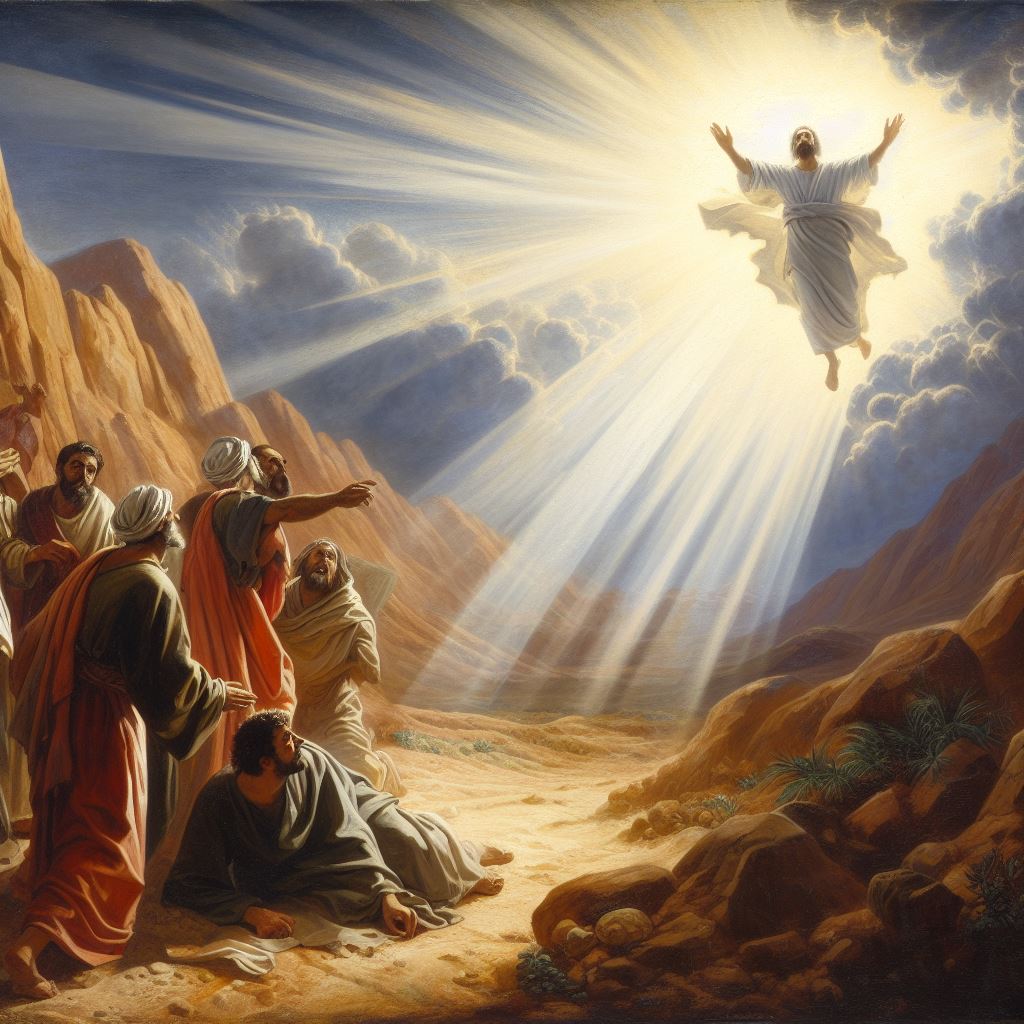
After having supported the murder of St. Stephen the Martyr, Saul of Tarsus was trying to destroy the early Church. He entered house after house, dragging out Christian men and women and handing them over for imprisonment. Still breathing murderous threats against the disciples of the Lord, Saul went to the high priest and obtained official authorization to arrest any Christians he might find in Damascus and bring them back to Jerusalem in chains. But on his way to Damascus, this future saint saw the light.

Light from the sky suddenly flashed around him. He fell to the ground and heard a voice ask him, “Saul, Saul, why are you persecuting me?” “Who are you, sir,” Saul replied. “I am Jesus, whom you are persecuting.” Notice how Jesus did not ask “why are you persecuting my people” or “why are you persecuting my Church,” though both of these descriptions would have been accurate. Jesus asks, “Why are you persecuting me? … I am…whom you are persecuting.”

Imagine if you and I are standing side-by-side in a buffet line and I willfully knock your hand out of the way as we both reach for the delicious deviled eggs. Will your feelings of offense be any less if I reply, “Oh, I didn’t hit you—I merely slapped away your hand”? No, every part of your body is one with you. If I mistreat one of your members, I am mistreating you.

St. Paul and the Holy Spirit teach us in the New Testament: “You are now Christ’s body, and individually parts of it… He is the head of the body, the Church, … [and] we, though many, are one body in Christ.” Jesus himself teaches, “Whoever eats my flesh and drinks my blood remains in me and I in him.” This is why he will declare at the Last Judgment “what you did not do for one of these least ones, you did not do for me” and “whatever you did for one of the least brothers of mine, you did for me.” Our mystical union with Jesus Christ is more intimate than we realize and this has important implications.

The 1st Letter of St. John tells us, “If anyone says, ‘I love God,’ but hates his brother, he is a liar; for whoever does not love a brother whom he has seen cannot love God whom he has not seen. This is the commandment we have from him: whoever loves God must also love his brother.” Now man does not live by bread alone, but we are called to practice Corporal (that is, bodily or material) Works of Mercy. St. James writes, “If a brother or sister has nothing to wear and has no food for the day, and one of you says to them, ‘Go in peace, keep warm, and eat well,’ but you do not give them the necessities of the body, what good is that?” Jesus is hungry and thirsty, ill-clothed and a stranger, sick and imprisoned in his brothers and sisters, and our love for him is reflected in our care for them.

Yet do not fall for the demons’ trap; their persistent accusations which sound like: “You could be doing more; you should always be doing more!” They seek to rob you of your peace and lead you to ultimately give up the good things you are doing because of discouragement. God our Maker knows that our time, talents, and treasure are finite; resources spent on one holy effort cannot be spent on another. Nevertheless, it is important for us to be self-reflective and truly generous with ourselves and what we have.

When you see others or interact with people, try to remember the One whom you mystically encounter. Give them the royal treatment. Notice how both the saved and the damned will someday ask our King, ‘When did we see you hungry or thirsty or a stranger or naked or ill or in prison?’ He will reply, ‘Indeed, whatever you did for one of the least of mine, you did for me.’ It is a truer reality than we realize and all too easily forgotten, yet valuable for us to remember always.

Invest Yourself in Heaven’s Reward

November 19, 2023

33rd Sunday in Ordinary Time
By Fr. Victor Feltes

As Jesus traveled from place to place he preached parables to different people. He told stories, for instance, featuring fields, fish, and flocks to teach farmers, fishermen, and shepherds about the Kingdom of God. It makes sense that Jesus would tell the same stories more than once, for different crowds to hear them for the first time and for his apostles to hear them repeatedly. But the gospels suggest Jesus sometimes changed his parables’ details to highlight different truths. What Jesus says in his Sermon on the Plain is similar but not identical to his Sermon on the Mount. As the Church journeys through our three-year cycle of Sunday readings we hear some parables retold by more than one gospel. And each fall, as we near the end of the Church year, our readings reflect upon the Four Last Things. Today, we have another such parable, about death and judgment, Heaven and Hell, Jesus Christ and us.

Christ is our Lord, our journeying master who shall return. We are his servants to whom he has entrusted our fortunes. And each of us one day will stand before him to give an account of our faithful or unfaithful service, with generous rewards or just punishments to follow. In Jesus’ telling through St. Matthew’s Gospel, the master entrusts weighty slabs of precious metal (called talents) in varying numbers to his servants, each according to their abilities. Upon his return, his faithful servants have doubled what they were given and receive the same words of praise: “Well done, my good and faithful servant! Since you were faithful in small matters, I will give you great responsibilities. Come, share your master’s joy!” One servant, however, who buried his talent and returned it ungrown, receives his master’s condemnation and is tossed into the darkness outside.

When Jesus retells his parable in St. Luke’s Gospel, the master is a nobleman who goes off to claim his kingdom, entrusting to ten servants one gold coin each. Upon his return, his faithful servants reveal their various positive returns on his investment. One has earned ten more gold coins and his king declares, “Well done, good servant! You have been faithful in this very small matter; take charge of ten cities.” Another servant has earned five more coins and the king decrees, “You, take charge of five cities.” One servant, however, hid his coin in a napkin and returned it unmultiplied. The king condemns that servant and orders all of his enemies who did not want him as their king to be slain.

The differences between these two parables highlight different truths about Heaven. In the first parable, the master speaks the same blessing to each faithful one: “Well done, good servant! … Come, share your master’s joy!” But in the other parable, the king gives his servant with ten additional coins ten cities and gives his servant with five additional coins five cities. So is Heaven’s reward the same for all the saints or can one’s reward be greater than another’s? One parable suggests their reward is the same, while the other suggests their rewards vary. On one hand, the reward of every saint is the same: they experience God’s unveiled glory forever in happy, loving communion with him and all who are in Christ. On the other hand, a great saint’s capacity for love and joy and glory may be greater than another’s.

Doctor of the Church St. Therese of Lisieux recounts in her great autobiography (“Story of a Soul”) how this idea once troubled her as a child: “One day, I expressed surprise that God does not give an equal amount of glory to all the elect in Heaven—I was afraid that they would not all be quite happy. [My older sister Pauline] sent me to fetch Papa’s big tumbler and put it beside my tiny thimble, then, filling both with water, she asked me which seemed the fuller. I replied that one was as full as the other—it was impossible to pour more water into either of them, for they could not hold it. In this way [she] made it clear to me that in Heaven the least of the Blessed does not envy the happiness of the greatest…

Notice how in both forms of Jesus’ parable all the faithful servants are entrusted with greater responsibilities. The saints in Heaven are likewise given higher roles as our intercessors now and in the family and household of God forever. Consider how many churches, religious communities, and cities around the world are dedicated to St. Paul. They are blessed to have him as a loving patron praying for them. And consider how the Blessed Virgin Mary shall always hold a privileged place in Heaven as the spiritual mother of every Christian.

St. Paul says, “Consider this: whoever sows sparingly will also reap sparingly, and whoever sows bountifully will also reap bountifully.” The generosity of our loving gifts to Christ, the additional sacrifices we make and good deeds we do, will surely not go unrewarded. Jesus tells us, “Give, and it will be given to you. Good measure, pressed down, shaken together, running over, will be put into your lap. For the measure with which you measure will be measured out to you.” Our individual hustle, cooperating with Christ’s grace, can win us greater glory, therefore “run so as to win!

We should not fear that we lack sufficient talents or gifts to produce good fruits for glory. In the first parable, every faithful servant was able to double his money and won his master’s praise. The issue with that unfruitful, condemned servant is that he never tried. His master calls him “wicked” and “lazy” because that servant did not make even the most minimal effort to grow his gift. “Should you not then have put my money in the bank so that I could have got it back with interest on my return?” That servant did not love his lord but rather resented his lordship over him. Which is easier: to digging a hole or visiting the bank? He did not want to be his master’s servant, he did not want him as his king, and so he finds himself condemned and cast out forever. But if we love our Lord we will produce fruit, just as “every good tree bears good fruit.” As Jesus declares, “Whoever remains in me and I in him will bear much fruit.”

What is something more that you will do with the talents and gifts our Lord has lent you? It could be something large or small, in private or with others. You could be a more-focused prayer warrior, or offer secret penances for the salvation of souls. You could start a Catholic book or movie club at your home, or organize a regular Bible study that discusses the upcoming Sunday readings. You could visit shut-ins as an extraordinary Eucharistic minister, or invite somebody new each week to come with you to Mass. There are many good things you could do and I urge you to consider and answer this call, for Jesus Christ will honor your faithful, loving efforts with glorious rewards.

Humility & Service

November 5, 2023

31st Sunday in Ordinary Time
By Fr. Chinnappan Pelavendran

This week’s readings offer a clear invitation to all of us to be humble and give loving service to God and others. To help us reflect on the readings and understand their context, let us recall some of the history of Israel. God the Father gave the Law through Moses and appointed him the Law’s official teacher. Moses handed his responsibility to Joshua, Joshua transmitted it to the elders, and the elders passed it down to the next generation. From them, the scribes and Pharisees received the Law, and the authority to teach and interpret it to His people. Their duty is to interpret the true meaning of the Law to his people.

In the first reading, then, God expresses his personal love towards Israel. However, the people of Israel did not respond to his divine love. Both the people and the priests had become prideful. For this reason, God was angry with the people of Israel at the same time, they had also become sinful in their lives, walking away from the righteousness of the Lord.

We have a different example in St. Paul, who, in our second reading today tells us his description of his humility among the Thessalonians, that he was a caring and dedicated leader. He tells them that he worked day and night while preaching the gospel. He was not trying to impress them or gain anything from them. Thus, he was giving to people not simply human words but the words of God. St. Paul is truly a great example, putting into practice what Jesus teaches today: “The greatest among you must be your servant.

In today’s gospel, Jesus affirms the leadership of Pharisees and Scribes. He tells His disciples to obey and respect them but not to follow their example. What they say is true so follow them, but in practice, they are misusing their authority for the sake of their selfish advantage. So, do not imitate their example. Authority is entrusted to us by God not to dominate or exploit others but for humble service to others. The Scribes and Pharisees had lost sight of this.

On the other hand, Jesus and Mother Mary are two great examples of humility and service. Mary said to the angel Gabriel, “Behold the handmaid of the Lord. Be it done unto me according to your word.” (Luke 1:38) When Mary consented to become the mother of Jesus, she ran the risk of being stoned to death because that was the penalty for an unmarried mother. Therefore, Mary, in her humility and desire to serve God. Mary is a model of humility and service for us. She is a model of giving and not counting the cost.

Jesus is our other greatest model of humility and service. In Gethsemane, in prayer, Jesus let go of his human will and submitted to the will of his Father. “Not my will but yours be done.” (Luke 22:42) Crucifixion was the form of the death penalty for common criminals at that time in the Roman Empire. Jesus was executed as a common criminal. He knew that this was the sort of death that awaited Him. However, through his death, he won life for us all. The Son of Man came to serve, not to be served.

Humble people are happy because they accept themselves for who they are – children of God. They are willing to learn and willing to serve. Are you a humble person?

Love God & Neighbor

October 29, 2023

30th Sunday in Ordinary Time
By Fr. Chinnappan Pelavendran

Love is a universal as well as an eternal value. Without it, we will all cease to exist. In the words of Saint Paul, “If I speak in the tongues of men or of angels, but do not have love, I am only a resounding gong or a clanging cymbal. If I have the gift of prophecy and can move mountains, but do not have love, I am nothing.” (1 Corinthian 1:1–2) Love is not only a feeling, it is also an action. It must be seen by serving God and others with our time, talent, and treasure. In short, the proof of love is service.

The readings today clearly remind us how God expresses His love for us. Often, God shows His love for us through the people that enter our lives. Truly, we love God when we sincerely love our brothers and sisters. Our first reading, from the book of Exodus, explains the second greatest commandment: loving one’s neighbors as oneself, especially the underprivileged. The chosen people of Israel should remember that once they were aliens in the land of Egypt. Just as God loved them, protected them, and treated them kindly, it is now their turn to protect others and treat them with kindness. By doing these things they become human in a society rooted in the religious concept of loving God and in loving their neighbor.

In the second reading, St. Paul invites the Thessalonians to live the life of example. He tells them to imitate him as he imitates Jesus Christ. To live one’s Christian life, it is necessary to become imitators of God. Christ loved us and gave himself up for us as a sacrifice to God. St. Paul acknowledged that through persecution, the Thessalonians persisted in their living Faith by receiving the word of God with joy.

In the Gospel, a man asks the Lord: “Which is the greatest commandment?” This is a very good question, but the man is not actually interested in gaining new knowledge. He asked the question to test Jesus. Jesus responded with two answers: love God and love your neighbor. How do we love God with all our heart, soul, and mind? Loving God means making God our number one priority in our life. Our entire being must be directed towards God. This means that everything that we think and do must give honor to God.

Our love for God is meaningless unless we love our neighbor. The scripture explains, “Whoever claims to love God yet hates a brother or sister is a liar. For whoever does not love their brothers and sisters, whom they can see, cannot love God, whom they have not seen.” (1st John 4:20) Let us, therefore, pray that God who loved us first will continue to melt and mold our hearts so that we will really love Him back and love our neighbor.

Mother Theresa and Fr. Damien are examples for us to imitate in how we can love God and love our neighbor. She expressed her love for God by serving the poorest of the poor, and the most abandoned people in the society. Fr. Damien expressed his love for God by caring for the lepers of Molokai. Towards the end of his life, he even became a leper himself.

Jesus gave us a new commandment. “Love one another as I have loved you.” As Christians, we have to imitate Jesus in our love for one another. Thus will the world know we are Christians. “This is how all will know that you are my disciples if you have a love for one another.” (John 13:35)

Our Greatest Moral Act

October 29, 2023

30th Sunday in Ordinary Time
Fr. Victor Feltes

Prior to his passing in 2011, the British author and journalist Christopher Hitchens was famously an atheist. In a June 2007 speech he said, “…I have a wager that I put to the religious… And you may be interested to know that I’ve tried it with everyone from the guy who founded Bush’s faith-based initiative… to various Baptist pastors, a Buddhist nun, a rabbi, a Charismatic Catholic, various pastors on radio and television, all up-and-down the country, no-not yet an answer from them. It’s simple: you have to name or cite a moral action performed or a moral statement made by a believer that could not have been made by an atheist. That’s all you have to do, and it cannot be done.” What moral thing can a Christian do that an atheist cannot?

Pastor Mike Winger is an Evangelical Christian in California who was watching footage of Christopher Hitchens and heard him pose this question in a debate, as he often would. Pastor Mike paused the video, sat and thought, “How would I answer that? …What is a moral thing a Christian could do that an atheist can’t do?” “And then,” he says, “it hit me—the most important moral thing that anybody can do: loving God. Like it doesn’t occur to the atheist, or even many Christians that were debating Christopher Hitchens, that loving God—the most important moral imperative of the universe—is something an atheist cannot do. So the atheist is deprived of the highest moral imperative that a Christian or a human is made for. That’s a big deal.

Indeed, Jesus cites this as the greatest commandment: “You shall love the Lord, your God, with all your heart, with all your soul, and with all your mind.” God is worthy and deserving of such love. He is our Creator, the source of our life and of every good thing we enjoy. And he not only deserves our gratitude but is worthy of our praise, for God is not merely good but the very essence of Goodness and Love. This divine love and goodness for us is best revealed to us through Jesus Christ.

The modern world neglects the love and worship of God. Many disregard the greatest commandment yet attempt to keep the second, which is, “You shall love your neighbor as yourself.” But what is authentic love and the genuine good? Many lust and call it love. Many steal and call it justice. Many murder and call it mercy. Not all loves are love, and without God love and goodness are harder to know and fulfill.

Many assume that God is unnecessary, that we can get on fine without him. Yet, in the words of the Vatican II document Gaudium et Spes on the Church in the modern world, “Without the Creator, the creature vanishes.” This is true in two ways. First it is literally true, because without God, whose essence is Existence (or Being), none of us creatures could continue existing. It is also true in another sense, since without our Good Creator who loves us, the objective value and importance of the human race vanishes.

The atheist scientist Carl Sagan once observed, “We’re made of star stuff.” Indeed, natural science indicates that the carbon atoms and all the other heavy elements inside our bodies were formed long ago inside of stars. It might at first feel inspiring to hear we are made from “stardust,” but Carl Sagan also said “there are maybe 100 billion galaxies and 10 billion trillion stars.” Does the material universe care when a trillion stars fizzle out? Natural science forecast the eventual, permanent death of every star. Apart from ourselves as a part of the universe, does the universe care what we do or what happens to us? Even if we are stardust, we are still dust which returns to dust through death. However, nature is not all there is.

Our supernatural God—who is above all, before all, behind and beyond all—loves and treasures each of us. Good and evil are not merely opinions from human preference, but objectively grounded eternally in him. And God would have us live with him forever, through the death and resurrection of Jesus Christ.

Much of the modern world enjoys the fruits of Christianity without acknowledging its Tree. But how is this sustainable? What becomes of human dignity if we are insignificant cosmic accidents? What becomes of human rights if nothing is really right or wrong? What becomes of human meaning and purpose if nothing survives death? Christianity’s blessed fruits, our dignity, rights, meaning and purpose, come from Christianity’s Holy Tree. This Tree is Christ and his Holy Cross.

Jesus Christ and his Cross are not mere myths but revealed in actual history. They bridge heaven and earth, east and west — uniting humanity with God and human beings with each other. They teach and enable us to love God with all our heart, soul, and mind, and to truly love our neighbors and ourselves. In Jesus Christ we have real hope and love which does not pass away. So let us worship God, for this is our highest calling, our greatest moral act, the source and the summit of our Christian life.