Archive for the ‘Christian Perfection’ Category

Controversial Mercy in the Vineyard

September 23, 2023

25th Sunday in Ordinary Time
By Fr. Victor Feltes

The landowner in Jesus’ parable recruits workers throughout the day. He goes to the marketplace at dawn, at nine, at noon, at three, and at five, hiring laborers each time and sending them to work in his vineyard. At the end of the day, he pays his longest laborers one silver denarius coin (the wage to which they had previously agreed) but he surprisingly also pays even his briefest employees the same amount. When some grumble at this, the boss replies, “My friend, I am not cheating you. Did you not agree with me for the usual daily wage? …Am I not free to do as I wish with my own money? Are you envious because I am generous?” Why did the employer risk this HR controversy? Why did he wish to pay the later workers so generously? The Old Covenant gives us insight into his motivation.

God commanded in the Book of Leviticus, “Do not hold back the wages of a hired worker overnight.” Then the Book of Deuteronomy explains why: “On each day you shall pay the servant’s wages before the sun goes down, since the servant is poor and is counting on them.” Now, if this vineyard owner had promptly paid his one-hour workers proportionally less than his full-day workers, that’s equal pay for equal work. But he pays all of them the same full wage because he is acting mercifully. He understands that his servants are poor, that their families are poor, and that they depend upon this pay for their daily bread. Rather than letting them go hungry, he generously provides. We see expressed throughout the Scriptures God’s special care and concern for the poor and the vulnerable, and our God calls us to be like himself.

Still, we can feel the grumblers’ grievance when they complain: “These last ones worked only one hour, and you have made them equal to us, who bore the day’s burden and the heat!” And yet, those last-hired laborers were trying their best. They report that they were standing idle in the marketplace all day simply because nobody had hired them. Assuming they aren’t lying, these workers were not lazy, just unlucky. They came when they were called and received an equal reward.

In this parable, our Lord is the landowner, we are his laborers, and our payment is heaven. This parable presents hope for the unconverted. Though your days may have been wasted up to now, you can still heed our Lord’s calling and receive his merciful generosity as your reward. It may be your final hour, but do not despair and walk away forever. Answer Christ’s call. Believe, repent, and be saved.

For Christians who feel that they have labored hard and long for the Lord, I wish to address a bitter temptation you might be feeling: “If those who repent on their deathbeds get to go to heaven too, why shouldn’t I sin and just repent later?” For starters, this attitude is dangerously presumptuous. You do not know the final hour when the sun will set on your life. You may never get around to repenting before facing your eternal judgment. Furthermore, your repentance must be sincere, and God cannot be fooled.

And finally, do not imagine that the grass is greener away from Jesus. Yes, laborers in Christ’s vineyard must bear burdens and heat, yet those outside the vineyard are not at rest. They stand all day in the uncomfortable marketplace, spiritually impoverished, without true purpose, and anxious about their future. Remember that living a life apart from Christ is no paradise.

Jesus’ challenging parable about the generous landowner and his vineyard workers reminds us of God’s special concern for the poor and of our calling to practice the same. It reminds us of God’s incredible mercy and the need for all of us to answer his call to repentance. And it reminds us of God’s loving generosity, that he is all-good, and deserving of all our love.

‘Keep My Commandments & Love as I Love You’ — The Riley Henneman & Emily Holloway Wedding

September 11, 2023

By Deacon Dick Kostner

These words of Jesus in today’s gospel spell out a wedding gift to Riley and Emily that enables them to live out a life together of happiness not only in this life but also an eternal life with Jesus and the children of the creator of happiness, in the kingdom of God. To Riley and Emily, your Father in heaven tells you today, to listen to His Son and you will find eternal happiness.

These words of Jesus will not eliminate for you pain and suffering in this life but it will allow you endure the misfortunes that all human beings will encounter in an imperfect world. I have spent in my life many hours of prayer asking the Father to share with me his gift of wisdom, so today I will share my thoughts on what it means to follow the Eleventh Commandment Jesus gave us to “Love as I have loved you.”

Oh, it may seem like an easy task when you face each other today for you love one another and feel that you have found the “perfect” spouse to spend a lifetime with, but I must burst that bubble and share with you some wisdom and the fact is that there exists no human being that is “perfect.” To be human is to be imperfect. You might try and fool yourself into thinking you’re perfect, but time will prove you wrong. Trust me when I tell you that God programmed spouses to remind you that you are not perfect. All we have to do is look at our Bible readings and we will find that our first pope, St. Peter, thought he was perfect and would never turn against his friend, Jesus, but guess what happened; he was put to the test and failed not once but three times in saying he did not know Jesus.

We all have fears that we will encounter in life, such as job failures; broken friendships; illnesses; and yes that big one, deaths that we must experience and live through. How in the world can we love someone who hates us? Answer—Ask Jesus. How can we overcome the feeling we get when someone we love, does something to us that causes us to wonder if they really care about my feelings? Ask Jesus. How do we have love for a God that allows his only son to go through pain and suffering and yes even death without offering help? Ask Jesus. And how about the big one why would anyone be willing to surrender their life for someone that is not a friend or for someone who not only dislikes you but hates you? Ask Jesus.

Riley and Emily, I know you really enjoy hunting as I do. But I will share with you some wisdom that I discovered recently that made me appreciate animals more to the point that I enjoy watching them teach me how to love, more than I enjoy pursuing them in the field. Recently, I watched a program on Paramount entitled “1883” about early settlers making there way to Oregon to find a new life. On their way, they were confronted with a shortage of food and one of the travelers set out with his young son who was about ten years of age to hunt for some food. They came upon some deer and the father allowed and taught his son how to aim his rifle and acquire his first kill which was a nice buck. After the kill the father took some of the blood of the deer and smeared it on his sons face and told him that this deer gave up its life so that they might live so its important that hunters express their thanks to animals killed for providing us with food, by saying “thanks.” He then told his son to say “thanks” to the deer, which he did.

This stuck in my mind and I thought about how Jesus gave up his earthly life and his friends whom he loved, so that we might live and how that mirrors our directive from him to “Love as he has loved us.” It also opened my eyes to how all of God’s creation has that same vocation, to give of oneself so that someone or something else can live even if it means giving up your life. Some times this isn’t easy but its worth it to know that God has blessed you with a spouse. Riley and Emily, God has given you another set of hands, feet, heart, and mind to consult with and care for you when something breaks on you and you are hurting and who will lovingly remind you that you are not perfect when we get out of hand. I learned this first hand when I had my knees replaced and Barb babysat me.

I also would recommend that, as that young man in the episode did, to give thanks to your spouse for their gift to you of their lives. I would also encourage that you, as a couple, at least once each week to give thanks to Jesus by attending his Mass, receiving the Living Bread, and thanking him for giving up his life so that you two may live a life of happiness not only in this world but also Everlasting Life in the Kingdom of God. Giving thanks acknowledges are pledge to Jesus to love as he has loved us. Now let’s celebrate the “Love as I have loved you” Sacrament of Marriage, where Riley and Emily will pledge their love for one another and become one in being through the love of the Father.

Like Gentiles or Tax Collectors

September 9, 2023

23rd Sunday in Ordinary Time
By Fr. Victor Feltes

Jesus teaches us today about how to practice fraternal correction. In short, if a brother or sister in the Church sins against you, approach him or her privately. If that fails to persuade, come again with one or two others. If that does not work, bring the matter to the Church. And “if he refuses to listen even to the Church,” Jesus says, “then treat him as you would a Gentile or a tax collector.” Jesus says to treat an obstinately unrepentant Christian like “a Gentile or a tax collector.” What are we to make of this?

How would the Jewish crowds hearing Jesus’ preaching treat Gentiles or tax collectors? The Old Covenant kept Jews and Gentiles (that is, non-Jews) separate. For example, archeologists have found stone signs from the Jewish temple dating to the Gospel era which warned Gentiles or foreigners not to enter its inner courts. Those signs’ chiseled, red letters declared in Greek: “No foreigner is to enter within the stone railing [balustrade] around the sanctuary and the enclosure. Whoever is caught will himself be responsible for his ensuing death.” Without full conversion to Judaism, Gentiles in those days could not enjoy full communion with God’s people. Meanwhile, Jewish tax collectors were viewed as collaborators with Israel’s enemies, traitors harming their own people, and shunned. So how would the early Church respond in the case of a persistently unrepentant Christian?

In the First Letter to the Corinthians, St. Paul addresses a scandalous matter brought to him concerning the Church in Corinth. He writes, “It is widely reported that there is immorality among you, and immorality of a kind not found even among pagans — a man living with his father’s wife,” that is, his stepmother. I imagine if you had asked this romantic couple why they were together, they might have answered, with sincerity, “We love each other!” They might have said what they were doing made them happy. They might have even said, “All love is love.” How would St. Paul answer? In today’s second reading from God’s inspired word, he says, “Love does no evil to the neighbor; hence, love is the fulfillment of the law.” But not all things called “love” are loving in accord with Christ’s commands. Not all pleasures lead to true and lasting happiness. Not all paths lead to God.

In the case of that scandal at Corinth, St. Paul the Apostle declares to the Church:

“The one who did this deed should be expelled from your midst. I, for my part, although absent in body but present in spirit, have already, as if present, pronounced judgment on the one who has committed this deed, in the name of our Lord Jesus: when you have gathered together and I am with you in spirit with the power of the Lord Jesus, you are to deliver this man to Satan for the destruction of his flesh, so that his spirit may be saved on the day of the Lord.”

St. Paul excommunicates the man. It is a strong response because grave sin is serious business. (The man’s partner who goes unmentioned was apparently not a member of the Church.) The goal of an excommunication, beyond the spiritual welfare of the community, is the sinner’s conversion and salvation. St. Paul’s loving hope was that this offender’s sufferings would eventually lead to the salvation of his soul. For better or worse, formal excommunications are uncommon today. Nevertheless, just because one’s body remains inside the church building does not mean his or her soul remains with Christ. If we are living in grave sin, we need to repent and go to confession. And if someone else gravely sins, we could be called, with discernment and prayer, to share the truth in love.

When Jesus says to treat the unrepentant like “a Gentile or a tax collector,” recall how he himself treated Gentiles and tax collectors. Though not yet converted, he loved them. He cared about them and wanted to draw them to himself. He wished for them to change their ways and eventually come into full communion with him in his Church. If we are prayerful and loving, Jesus will enable us to correct the errant in a Christ-like way, and perhaps they will be saved.

Like our Lord appointed the Prophet Ezekiel in today’s first reading to be a watchman for the house of Israel, the Lord may call on you to invite sinners to change their way. As a watchman who loves God’s holy city and wishes the blessed number within her to grow, without abandoning your post on the walls of truth, encourage those who are spiritually outside of her walls to pass through the gate of mercy.

Jesus’ Praising & Rebuking of Simon Peter

September 3, 2023

22nd Sunday in Ordinary Time
By Fr. Victor Feltes

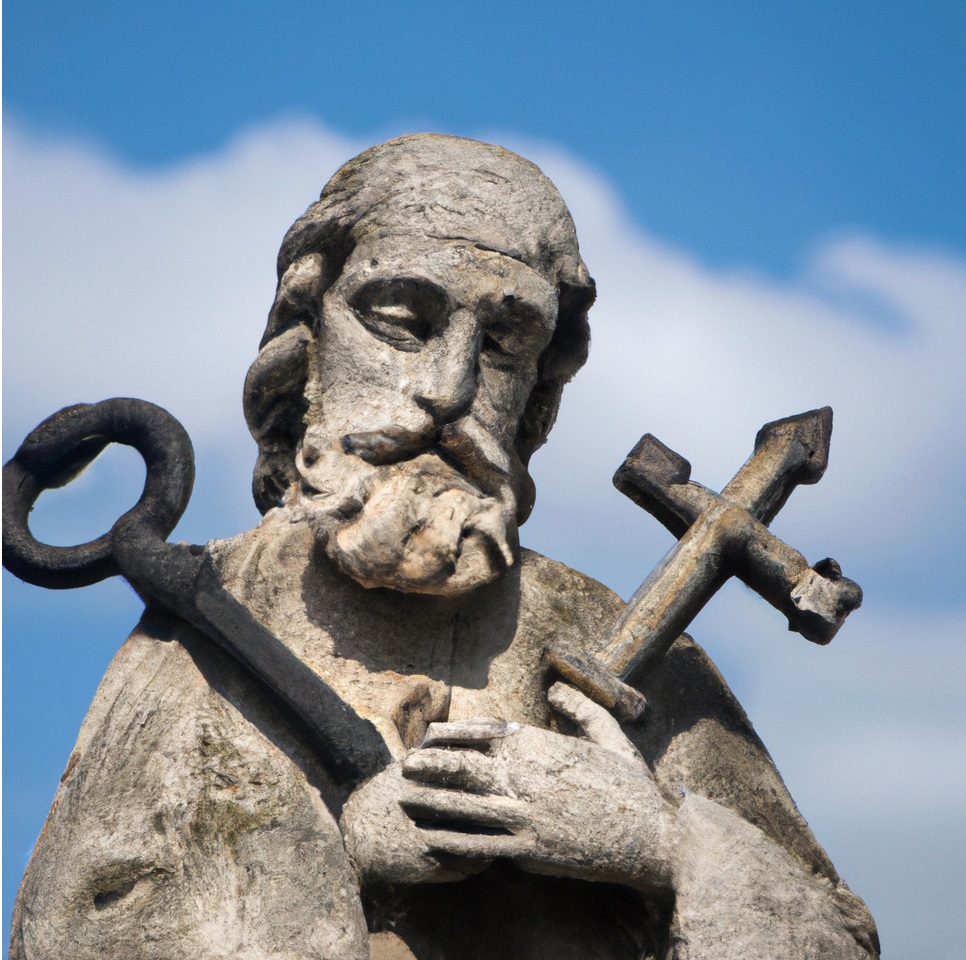
When Jesus asked his disciples, “Who do you say that I am,” Simon answered, “You are the Christ, the Son of the living God.” And Jesus replied, “Blessed are you, Simon son of Jonah. For flesh and blood has not revealed this to you, but my heavenly Father. And so I say to you, you are Peter, and upon this rock I will build my Church.” Jesus changed Simon son of Jonah’s name to “Rock,” or “Petros” in Greek, which we render as “Peter.” In the entire Old Testament, God changed the names of only three people: Abram to Abraham, Abram’s wife Sarai to Sarah, and Jacob to Israel, so the changing of Simon’s name is a big deal in salvation history. Jesus then declared to Peter, “I will give you the keys to the Kingdom of Heaven. Whatever you bind on earth shall be bound in Heaven; and whatever you loose on earth shall be loosed in Heaven.”

In last Sunday’s readings we heard of how in the days of the Prophet Isaiah the Lord chose “Eliakim son of Hilkiah” to become chief steward of the royal house, that is, prime minister for the reigning Davidic king. The Lord declared, “I will place the key of the House of David on Eliakim’s shoulder; when he opens, no one shall shut, when he shuts, no one shall open.” The holder of that office possessed plenary power under the king throughout the kingdom and reportedly carried a visible key indicating this authority that he would pass on to his successors.

The great Doctor of the Church, St. Augustine of Hippo, taught that the New Testament is concealed in the Old and that the Old Testament is revealed in the New. In the Old Testament, the Lord gave Eliakim “the key of the House of David” and authority to open and close. Likewise, Jesus Christ the new Davidic king gave Peter “the keys to the Kingdom of Heaven” and authority to bind and loose. Eliakim’s authority extended throughout an earthly kingdom, but Jesus promised Peter that his earthly decrees for the Church would also be confirmed in Heaven. Eliakim would become, in the words of the Lord through Isaiah, “a father to the inhabitants of Jerusalem and to the house of Judah.” St. Peter became the Church’s first “pope,” a title which comes from the Greek word for a “papa” and an office held today by Peter’s successor, our Holy Father Pope Francis. Jesus foresaw that without a visible shepherd his Christian flock would inevitably scatter. Like Moses for the Hebrews in the desert, or like King David for God’s people in Israel, Christ established a chief shepherd for his Church on earth through his popes, beginning with St. Peter.

That highlight moment for Simon Peter is followed this Sunday in St. Matthew’s Gospel by a very humbling event. Jesus begins revealing to his disciples that he must suffer greatly from the Jewish leaders, be killed, and be raised on the third day. So Peter takes Jesus aside and starts rebuking him, “God forbid, Lord! No such thing shall ever happen to you!” Jesus turns and says to Peter, “Get behind me, Satan! (That is, “Get behind me, Adversary!”) You are (being) an obstacle to me. You are thinking not as God does but as human beings do.” Notice how Jesus here reproaches Peter differently than how he once rebuked Satan in the desert, to whom he said, “Get away, Satan!” Jesus does not cast Peter away but tells him to “get behind me,” that is, “Follow me again.” Whenever you or I go wrong, Jesus calls us to follow him anew. Satan wants you to fall and stay down, but Jesus wants you to rise again.

Why was Simon Peter praised last week and why was he corrected today? First, Jesus tells him, “Blessed are you, Simon…. Flesh and blood has not revealed this to you but my heavenly Father.” Now, Jesus reproves him, “You are thinking not as God does but as human beings do.” Peter was praised for accepting the truth God had revealed and rebuked for trying to substitute his own ideas for God’s will. In today’s second reading, St. Paul urges us:

Do not conform yourselves to this age
but be transformed by the renewal of your mind,
that you may discern what is the will of God,
what is good and pleasing and perfect.”

Who in this age could correctly discover these things in our world apart from Christ’s one Church built on rock? Our Catholic Faith is a religion revealed by God with infallible teachings about what is true and how we are to live. Being faithful can be a cross, but our Lord always sees us, and he will repay each person according to our deeds with punishments or rewards. Jesus tells us, “Whoever wishes to come after me must deny himself, take up his cross, and follow me.” To get fully behind Christ and receive his endless blessings, receive everything that God has revealed to us through his Holy Catholic Church.

“Deny Yourself, Take Up Your Cross, & Follow Me”

September 2, 2023

22nd Sunday in Ordinary Time
By Fr. Chinnappan Pelavendran

In the lives of each one of us, there is a cross. The cross can be caused by someone else or brought upon ourselves due to our own decisions. Sometimes the cross is neither the fault of others nor ourselves. We are human and are not perfect like God? Whatever the cause, Jesus said, “Whoever wishes to come after me, must deny himself, take up his cross, and follow me.” To be the true disciple of Christ we must take up our own cross and follow Him. Today’s readings encourage us to overcome all obstacles and to surrender ourselves completely to God.

In the first reading, the prophet Jeremiah lamented, “Lord you have seduced me, and you have overpowered me.” He complained about his mission. “Lord God, you did not tell me it was this difficult.” Of course, at the beginning of his call, he resisted God, saying, “Lord truly I do not know how to speak, I am only a boy.” However, God chose him even from his mother’s womb. (Jer 1: 4) Faithfulness to God sometimes brings us pain, trials, and disappointment. Despite all this suffering, God shields and blesses us.

In the second reading, St. Paul invites us to “offer yourselves as a living sacrifice, holy and acceptable to God.” Submit yourself to God without resistance; this total submission is essential to a life of righteousness, joy, peace, and victory in Christ. We have to live as true Christians. Our daily lives must conform to the will of God. All our actions must be for the honor and glory of God.

In today’s gospel, we see the irony of life. Last week, St. Peter proclaimed that Christ was the Messiah but today Jesus said, “Get behind me, Satan.” Christ rebuked Peter for being an obstacle to His mission. Jesus explained to his apostles, that even though he is the Messiah, He has to undergo humiliation, suffering, and violent death at the hands of the Jewish authorities in Jerusalem. After correcting Peter, Jesus announces the three conditions of Christian discipleship: (1) deny yourself, (2) take up your cross, and (3) follow me.

First, denying oneself means, at every moment of our life, we must say no to self and yes to God. We must give first place to God whatever we do or say. Secondly, Jesus tells the disciples to take up their cross; this means our Christian life is a sacrificial service. We must abandon our personal ambition in order to serve God. We have to sacrifice our time and talent for Him. We must be constantly aware of the demands of God and the needs of others. We must accept the pains and difficulties of Christ and others. Finally, Our Christian life is a constant following of our Lord. Constant obedience in thought, word, and action to Jesus.

As true disciples of Christ, we need to ask ourselves every day, “Did I sacrifice a part of my time, and talents for Christ and others? Did I practice self-control over my thoughts, words, deeds, and use of mass media? Did I train my children in the faith?” Encourage them to spend some time together as a family praying and reading the Bible. Try to teach your children and others by your example of forgiving others and asking pardon for your own sins and failures. We must follow Christ by denying ourselves, taking up our crosses, and following Him in this way.

Christ Chooses to Make us Great

August 27, 2023

21st Sunday in Ordinary Time
By Fr. Chinnappan Pelavendran

God has all power and authority over earth and heaven. He is the source of all that lives and moves in this world and the next world. Authority for civil and religious leaders comes from God, so that they might govern His people and take care of the spiritual and material welfare of His children. The Lord could have found many different ways to establish His church. He could have entrusted it to the angels. Instead, the Lord puts the church in the hands of the faithful. Though He is all-powerful and has authority over everything, He needs to appoint a faithful person to work in His name.

In the first reading, God sent the prophet Isaiah to tell Shebna that the keys of authority would be taken away from him because he was not faithful to the Lord and His teaching. In his place, God exalted the humble and faithful Eliakim. The Lord demands faithfulness to His ways and His word.

In the responsorial Psalm, King David thanks God for having raised him from lowly origins and given him authority as a King over the people of Israel. In the second reading, St. Paul points out that God is the Source of all authority on earth and in Heaven. Again, St. Paul invites us to discipline ourselves because bad things still happen to good people.

In today’s Gospel, we have Peter’s confession about Jesus. “You are the Christ, the Son of the living God.” Peter was the first one to recognize Jesus as the Messiah, the Christ who came to save all his people. Jesus was pleased with Peter’s answer and said to Peter, “Blessed are you, Simon son of John.” Again, Jesus explained to His disciples that He was not a political Messiah. Rather, He is a Messiah who must suffer, die, and be raised to life again.

St. Peter was a man who grew in his faith. He was a fisherman. He was neither wealthy nor educated. When Jesus called Peter and his brother Andrew, they left everything and followed Him. Throughout Peter’s three-year journey with Jesus, He had moments of faith and doubts. When Jesus appeared to the disciples, walking on the water, Peter had enough faith to get out of the boat and come to Jesus. However, once he started having doubts, his faith began to shake and he began to sink. Immediately, Jesus stretched out his hand and saved him.

On the night of Jesus’ crucifixion, Peter denied Jesus not once but three times. Prior to this denial, Peter claimed that he would never deny Jesus and that he would even die for him. Even during Christ’s darkest hour, when he was dying on the cross, Peter was nowhere to be seen. He and most of the apostles had abandoned Jesus when he needed them the most.

Despite all of Peter’s shortcomings and failures, Jesus saw the best in him. Jesus saw so much potential in Peter that He made him the first leader and ‘Rock of His Church.’ If God used a man like him, it causes us to think that God can use our lives for greatness, too.

Eliakim in the first reading and St. Peter in the Gospel reading are prime examples of someone who was considered inadequate or not worthy enough to serve God. Jesus did not look at Peter’s inadequacy, he looked at His heart. When we feel inadequate or unworthy of Christ’s love, we can look at St. Peter. God looks at our hearts and invites us to be faithful to Him.

The Keys to the Kingdom

August 26, 2023

21st Sunday in Ordinary Time
By Fr. Victor Feltes

The great doctor of the Church St. Augustine of Hippo taught that the New Testament is concealed in the Old and that the Old Testament is revealed in the New. We see an example of this in our readings. In the days of the Prophet Isaiah, the Lord chose “Eliakim son of Hilkiah” to become chief steward of the royal house, that is, prime minister for the reigning Davidic king. The Lord declared, “I will place the key of the House of David on Eliakim’s shoulder; when he opens, no one shall shut, when he shuts, no one shall open.” The holder of this office possessed plenary power under the king throughout the kingdom. He reportedly carried a visible key indicating this authority that he would pass on to his successors.

In our gospel today, when Jesus asks his disciples, “Who do you say that I am,” Simon answers, “You are the Christ, the Son of the living God.” And Jesus replies, “Blessed are you, Simon son of Jonah. For flesh and blood has not revealed this to you, but my heavenly Father. And so I say to you, you are Peter, and upon this rock I will build my Church.” Jesus changes Simon son of Jonah’s name to “Rock,” or “Petros” in Greek, which we render as “Peter.” In the entire Old Testament, God only changed the names of three people: Abram to Abraham, Abram’s wife Sarai to Sarah, and Jacob to Israel, so the changing of Simon’s name is a big deal in salvation history.

Jesus then declares to Peter, “I will give you the keys to the Kingdom of Heaven. Whatever you bind on earth shall be bound in Heaven; and whatever you loose on earth shall be loosed in Heaven.” In the Old Testament, the Lord gave Eliakim “the key of the House of David” and authority to open and close. Likewise here, Jesus Christ the new Davidic king gives Peter “the keys to the Kingdom of Heaven” and authority to bind and loose. Eliakim’s power extended throughout an earthly kingdom, but the Lord promises Peter that his earthly decrees for the Church will also be confirmed in heaven. Eliakim would become, in the words of the Lord through the Prophet Isaiah, “a father to the inhabitants of Jerusalem and to the house of Judah.” St. Peter became the Church’s first “pope,” a title that comes from the Greek word for a “papa” and an office held today by Peter’s successor, our Holy Father Pope Francis. Jesus knew that without a visible shepherd his Christian flock would inevitably scatter. Like Moses for the Hebrews in the desert, or like King David for God’s people in Israel, Christ establishes a chief shepherd for his Church on earth through his popes, beginning with St. Peter.

Yet, this highlight moment in Simon Peter’s life is immediately followed by a humbling event in St. Matthew’s Gospel, which will be our gospel reading next Sunday. Jesus starts revealing to his disciples that he must suffer greatly from the Jewish leaders, be killed, and be raised on the third day. So Peter takes Jesus aside and begins to rebuke him, saying, “God forbid, Lord! No such thing shall ever happen to you!” Jesus turns and says to Peter, “Get behind me, Satan! (That is, “Get behind me, Adversary!”) You are (being) an obstacle to me. You are thinking not as God does, but as human beings do.” Notice how Jesus here reproaches Peter differently than how he rebuked Satan in the desert, to whom he said, “Get away, Satan!” Jesus does not cast Peter away. He tells him to “get behind me,” that is, ‘Follow me again.” Whenever you or I go wrong, Jesus calls us to follow him anew.

For what was Peter praised by Jesus and for what was he corrected? First Jesus tells him, “Blessed are you, Simon…. For flesh and blood has not revealed this to you, but my heavenly Father.” But later Jesus reproves him, “You are thinking not as God does, but as human beings do.” Peter was praised for accepting the truth God had revealed and rebuked for trying to substitute his own ideas for God’s will. In today’s second reading, St. Paul reflects, “Oh, the depth of the riches and wisdom and knowledge of God! How inscrutable are his judgments and how unsearchable his ways! For who has known the mind of the Lord or who has been his counselor?” Our Catholic Faith is a revealed religion with infallible teachings about what is true and how we are to live. Who could discover all of these things correctly apart from Christ’s one Church built on rock? Jesus says, “Whoever wishes to come after me must deny himself… and follow me.” To get fully behind Jesus Christ, always accept what God has revealed to us through his Holy Catholic Church.

Helplessness and Faith

August 21, 2023

20th Sunday of Ordinary Time
By Fr. Chinnappan Pelavendran

Many situations in life can make us feel broken. But, prayer in hopeless situations will help us to focus on Christ and His promises. God is merciful, when we cry out to the Lord, day and night, He will answer our prayers. What we wish will be done to us according to our faith. We need to turn to Jesus, acknowledging our helplessness even in matters of faith. We admit to Him how bad things really are. Then, again by faith, we leave everything with Him.

An example of this can be seen in the story of Naaman, found in 2nd Kings 5. Naaman was a powerful warrior in the Syrian army who had leprosy. He found out from a little girl that the prophet Elisha could heal him. He went to visit Elisha who told him to go dip in the Jordan River seven times. He was very upset about this instruction and initially refused to do it. But his servant spoke to him and he decided to follow Elisha’s direction. After dipping seven times, he was healed of his leprosy. Though he was a captain of the army and may have spent a lot of money, He was helpless and had faith in God, and came to the Prophet Elisha, who saved him from leprosy.

Then, in the New Testament, we have a wonderful example of a woman who had been bleeding for twelve years. She had suffered a great deal under the care of many doctors and had spent all she had, yet instead of getting better, she grew worse. When she heard about Jesus, she came up behind him in the crowd and touched his cloak, because she thought, “If I just touch his clothes, I will be healed.” Immediately her bleeding stopped and she felt in her body that she was freed from her suffering. She was helpless after spending all her money, but she had great faith in God.

The Canaanite woman in today’s gospel also showed great faith in the power and mercy of Jesus. She loved her daughter very much and desired healing for her. She heard about Jesus. He is the Lord, the Son of David. She knew that He is her only hope. Although there were obstacles on her quest, she would not give up until her request was granted. For example, she did not belong to the chosen people and she was considered a dog! However, she persevered and Jesus was so pleased with her faith that He granted her wishes immediately. She was helpless and her faith saved her daughter. This is the kind of faith Jesus wants from us.

The grace of God cannot be bought with silver and gold or power or position. In fact, power and position, silver and gold, can be a hindrance to coming to Christ. Only faith in God will help us to reach Him.

The woman remained humble even when she was rejected. She remained respectful even when the initial answer was no. She continued to worship because she realized who Jesus was. So, we need to remain humble when we come to God in prayer.

Faith is a quality that Jesus spoke highly of during His earthly ministry. Faith is powerful and without it, it is impossible to please God. Faith looks to God as the center of all things. Whenever we are helpless, our faith helps us to reach God.

Testing Hearts

August 19, 2023

20th Sunday in Ordinary Time
By Fr. Victor Feltes

A Canaanite woman calls out to Jesus, “Have pity on me, Lord, Son of David! My daughter is tormented by a demon.” And Jesus, surprisingly, ignores her. She persists and his annoyed disciples complain: “Send her away, for she keeps calling out after us.”

Jesus replies, “I was sent only to the lost sheep of the house of Israel.” This is similar to what Jesus said in this gospel five chapters earlier, when sending out his apostles to proclaim “the Kingdom of Heaven is at hand.” Jesus had instructed them, “Do not go into pagan territory or enter a Samaritan town. Go rather to the lost sheep of the house of Israel.” But now Jesus is in pagan territory meeting this non-Jewish woman.

She approaches him and does him homage, pleading, “Lord, help me.” Jesus replies, “It is not right to take the food of the children and throw it to the dogs.” “Please, Lord,” she parries, “for even the dogs eat the scraps that fall from the table of their masters.” Jesus praises her great faith and grants her request, and the woman’s daughter is healed that very hour.

Many people draw mistaken conclusions from this episode. If Jesus initially ignores her and then likens her people to “dogs,” must this mean that Jesus is prejudiced or racist? Did Love Incarnate, through whom all persons were created, lack love for this woman, her suffering child, and their people? That is not the Jesus whom we know.

Did the Incarnate Word forget his mission until he met this woman and realized, “Oh, maybe I’m supposed to save the Gentiles too.” No – as the Catechism of the Catholic Church teaches, “Christ enjoyed in his human knowledge the fullness of understanding of the eternal plans he had come to reveal.” (CCC 474) Jesus knew who he was and what he had come to do — to bring salvation to the whole world, to the Jews first and then the Gentiles. So why does Jesus resist the Canaanite woman, ignoring her, then rebuffing her, and saying that thing about the dogs? He did it for our good and her greater glory.

The Book of Proverbs says, “The crucible is for silver, and the furnace is for gold, and the Lord tests hearts.” (Proverbs 17:3) The purity of precious medals is proven by melting them. Our Lord likewise tests hearts. “But why,” one might ask, “would an all-knowing God bother to test anyone? It doesn’t tell him anything he doesn’t know already.” The testing of precious metals and the testing of hearts not only reveals to everyone what is inside them, but purifies and improves them. In the intense heat of a crucible or a furnace worthless dross separates off or burns away. Our Lord sometimes allows us to face adversity and challenges to purify and improve us. He was doing the same with her.

Though Jesus and this Canaanite woman were strangers, he knew her. Jesus knows all of us through and through. (John 2:24) He is not trying to insult her and make her walk away (that is why Jesus uses here a diminutive Greek word for dogs better translated as “little dogs, puppies, or doggies.”) He is playing hard to get in order to elicit something greater in her. St. Augustine wrote: “She was ignored, not that mercy might be denied but that desire might be enkindled; [and] not only that desire might be enkindled but… that humility might be praised.”

Jesus appears to have been testing the apostles as well. Why was their request of Jesus to “send her away,” rather than compassionately interceding for her, saying, “Lord, might something be done for her daughter?” In the end, we and the apostles are shown through her the wideness of Jesus’ mercy and love, and that persistence and humility in prayer and in life are praiseworthy and lead to our greater blessedness in Christ.

Glimpses of our Future Glory

August 17, 2023

Solemnity of the Assumption
By Fr. Victor Feltes

The Church of Jesus Christ celebrates our Blessed Mother Mary. For instance, we mark her conception, her birth, and today the beginning of her life in glory. It is fitting the Church does this since her Lord commands us: “Honor your Father and mother.” And when the people we love have birthdays or anniversaries, we love to celebrate with them. Today we celebrate how the Virgin Mother of God was assumed body and soul into heaven.

She is the icon of the Church, the beginning and image of the Church’s coming to perfection. We are happy for Mary, but what we see in her is good news for us too. She is a sign of sure hope and comfort for our future, for what awaits for us in our resurrection to glory. To unpack what I mean, consider what the Blessed Virgin Mary has been up to in the centuries since her Assumption.

Enthroned beside her Son in a place of close intimacy and high honor, she is an intercessor for us, her spiritual children. How many children does Mary have? The Book of Revelation says “her offspring [are] those who keep God’s commandments and bear witness to Jesus.” Therefore, she has many, many millions of children. And how many “Hail Marys” and other prayers are sent her way every minute? Yet we believe that she hears us without becoming overwhelmed and that she knows each of us personally, as a mother knows her children. We also have reason to think that Mary has not merely remained in heaven for nearly 2,000 years, but has been active here below.

Though we are not obliged to hold belief any particular Marian apparition (since none of these later events belong to the ancient Deposit of the Faith) the Church has judged many proclaimed appearances of Mary to be credible, or “worthy of belief.” These apparitions offer us clues about Mary’s life now and what life will be like for us in resurrected glory.

In her Church-approved apparitions, the Blessed Virgin Mary comes in varying appearances. For example, in her appearances to St. Juan Diego in 1531, Our Lady of Guadalupe in Mexico had darker skin and black hair and wore traditional clothing indicating she was with child. In her appearances to the Belgian immigrant Adele Brise in 1859 near Green Bay, Wisconsin, Our Lady of Good Help had white skin and blonde hair in different apparel.

In Mary’s Church-approved apparitions she also speaks in varied languages. For instance, to St. Bernadette Soubirous at Lourdes, or the three shepherd children at Fatima, she did not speak ancient Aramaic, Hebrew, Greek, or Latin. She spoke to them in their local dialects. Mary resembles her seers and speaks their mother tongues because she is the mother of each of them.

Mary’s apparitions suggest a saint in his or her glorified body will have the power to change its age or appearance. Mary remains a woman, but race presents no barrier and different languages are no hindrance to communication. And if our glorified consciousness will become like hers, it will be no strain to know and be close friends with more than a billion people at once. Won’t that be wonderful?

Another detail that seers of Mary’s apparitions agree on is that she is now exceedingly beautiful. During the years of her life on earth, Mary may have looked quite ordinary. We do not imagine that Jesus Christ had to be the tallest, most muscular, or handsomest man who ever lived, so Mary need not have been the most beautiful woman alive either. In this fallen world, the holy can look ugly while the wicked can look very attractive. But now there appears to be no mismatch between Mary’s inner and outer beauty. This interior beauty is called holiness.

After our resurrection, the abundance (or lack) of holiness we have cultivated with God within us will be seen in our endless beauty (or ugliness) forever. The glory we are called to in Christ is like Mary’s and that gives us reason to rejoice with her today all the more.

The Voice & the Noise

August 13, 2023

19th Sunday of Ordinary Time
By Fr. Victor Feltes

When God visits the Prophet Elijah at Mt. Horeb the Divine Presence is preceded by powerful winds, quaking earth, and raging fire. Yet the Lord is not in the wind, nor the earthquake, nor the fire. Then there is a tiny whispering sound. Hearing this, Elijah goes forth to speak with God. In today’s gospel, Jesus calls Peter to “Come” forth to him out of the boat. Peter begins walking on the water, but seeing how strong the wind is he becomes frightened, begins sinking, and shouts “Lord, save me!” Jesus immediately stretches out his hand, lifts him up, and speaks to him. There is a common theme in these two episodes. In these encounters with God, Elijah and Peter must distinguish the Divine Voice from the noise. God is speaking to us, or he would like to. How can we listen without getting distracted or misled?

What do the demons want? They want the worst for us. They don’t want us listening to the Lord. They want us fully preoccupied with less important things. They want us too afraid or too discouraged to take good steps forward. How much time do we waste obsessing on things that don’t matter? How often do we worry about things that won’t happen? And how easily do we accept the lie that life cannot be better, that there’s nothing we can do? When our eyes and ears drift away from Jesus we sink. He chides us, ‘O you of little faith, of small trust in me, why do you doubt?’ Today I wish to share three great mens’ true discernment stories.

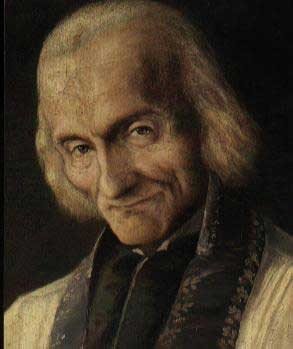
My first story is one about the 19th century saint, John Vianney, the patron saint of parish priests. His humble holiness and miraculous ability to read souls made crowds flock to his small French town for confessions, which he would hear for hours on end. His faithful fruitfulness made him a target of demonic harassment. Apparently, typical temptations were ineffective against him, so sometimes they would assault him as he tried to sleep at night, but Fr. John would take this as a good sign. It usually meant some “great sinner” was coming to town the next day to be reconciled to God in the confessional.

I have encountered people whose emotions very much did not want to go to confession or attend a spiritual retreat yet they could think of an actual good reason not to go. So they come, and experience God’s grace, and it’s more wonderful than they imagined! Who do you think was influencing their feelings in hopes they would not come encounter and listen to God? Emotions can be helpful and powerful fuel in your gas tank, but let your informed conscience and sound reason hold your steering wheel.

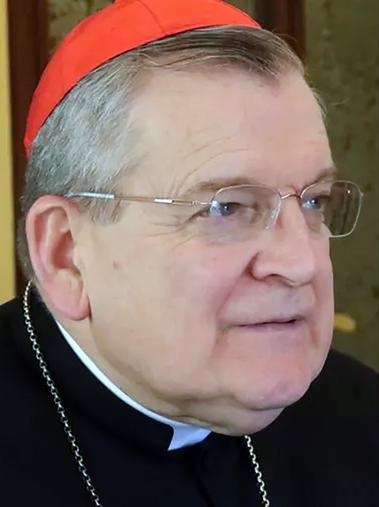
My second discernment story is about our former bishop, Cardinal Raymond Burke. He saw a need for a richer devotional culture in our diocese and felt peace and joy in the thought of establishing a pilgrimage shrine. He has a personal devotion to Our Lady of Fatima and initially pursued a shrine dedicated to her 1917 Portuguese apparitions, but nothing was coming together. So he revised the plan, opting to create a Marian shrine dedicated to Our Lady of Guadalupe and her Mexican apparitions in 1531. With that adjustment, everything began falling into place; a donation of beautiful land and financial contributions resulting in the shrine we know today. So not all obstacles come from the enemy. Some hindrances can be God’s providence to channel us into doing his will.

Midway through my time in seminary, I really believed for good reasons that priesthood was my calling, yet I still could easily question my vocation. (How could I be sure?) I would go in circles doubting myself with no greater clarity or benefit. So I decided to say to God, “Lord, this is my fair warning and my RSVP: I intend to continue towards ordination, but if that’s not what you want please make it obvious or impossible for me. If it’s not your will, I don’t want it to happen.” I left it to him, and after that I felt much more peace, and here I am now. Peace is a strong sign that you’re doing the will of God.

My third discernment story is about of St. Joseph. You will recall that when he learned that Mary was with child (either because he doubted her and thought her unworthy of him, or else because he believed her and thought himself unworthy or her and her holy child) Joseph concluded he should not be Mary’s husband. However, it only took an angel’s visit in one night’s dream to get Joseph back on the right track. This is because Joseph was a just man who wanted to do whatever God willed. God is supremely intelligent, powerful, and creative; so he can provide a clear sign if he needs to. However, having a heart and mind open to doing God’s will is a necessity.

You cannot see God’s signs with your eyes closed shut. You cannot hear him if you refuse to listen. God prefers to speak to us with a tiny whispering Voice, but if we ignore him he may allow some disruption in our lives. Those figurative winds, earthquakes, and fires are supposed to get our attention so that we will heed him and listen to his Voice. Our psalmist says, “I will hear what God proclaims; the Lord — for he proclaims peace. Near indeed is his salvation to those who fear him…” Fearing God is not about terror, but regarding and respecting him. Those who do, seek God’s will. They hear his Voice and listen, and thereby gain his blessings.

Jesus Saves Us From Sinking

August 12, 2023

19th Sunday in Ordinary Time
By Fr. Chinnappan Pelavendran

God’s presence is usually felt in tiny and small ways. He comes to us in gentle, little ways, and He will be with us when we need him the most. Jesus expects from us the openness to call on him for help and he will be there to support us and guide us. He wants us to be aware of his voice in our life, which often goes unnoticed. Jesus is always there with his guiding and supporting hands.

The background of the first reading is that, after the death of Solomon, the northern tribes broke away from the tribe of Judah and from its priests. They formed an independent country called Israel. As the years passed, many of the Jews in this country lost their Faith in Yahweh. Their seventh king, Ahab, married Jezebel, the daughter of a pagan king. He allowed her to build a temple for her god Baal and then she encouraged him to take part in idol worship and immorality. During this time, the prophet Elijah was sent by God to Israel to bring His people back to true worship. Having faith and confidence in Yahweh, he defeated and killed the 450 pagan priests of Baal on Mount Carmel.

For this reason, Queen Jezebel sent murderers to kill the prophet Elijah. However, God saved him from the dangers and gave him food through an angel. He fled for forty days and forty nights to Mount Horeb. Once there, he realized that the presence of God was not in the thunder, earthquake, or fire but in a tiny “whispering sound.” Elijah acknowledged God’s presence by covering his face and coming out of the cave where he had taken shelter. The first reading remains us that we have to experience God’s presence in our lives. We must listen carefully to everything going on around us because we encounter God in all the small events of our life. Failure, as well as success, offers us the opportunity to feel the presence of God, who saved the Prophet Elijah’s life.

In today’s Gospel, Jesus approaches his disciples walking on the water. The disciples are terrified by seeing someone walking on the water so they cried out in fear. Jesus reveals himself to them, saying “Courage, it is I. Do not be afraid.” Encouraged by the words of Jesus, Peter is the first to respond. At his invitation, he walks towards Jesus across the water, but his courage fails and begins to sink. Jesus reaches out his hand to him and saves him. The Gospel ends with Jesus calming the storm and being acknowledged as the Son of God by the disciples.

Courage! It is I Do not be afraid.” Jesus speaks these same words to us every day in our life. The gospel invites us to deepen our faith and maintain our focus on Jesus. We need to fix our eyes on Jesus.

We need to realize that the presence of Jesus is always with us. He gives us peace even in the storms of life. The storms of anxiety and worries about the future, storms of sorrow, storms of doubt, storms of tension, storms of anger and despair, storms of temptations, and storms in family relationships. So, try to feel the presence of God always in your life.

We need to imitate the short prayer of sinking Peter, “Lord, save me,” or the prayer of the mother of the possessed girl, “Lord, help me,” or the blind man’s prayer, “Son of David, have mercy on me,” or the repentant sinner’s prayer, “Lord have mercy on me a sinner.” We must begin every day by offering all our day’s activities to God and asking for His grace to do His will. Then we must conclude every day before we go to sleep by asking God’s pardon and forgiveness for our sins.

Being a True Disciple Requires Total Commitment

August 1, 2023

17th Sunday in Ordinary Time
By Fr. Chinnappan Pelavendran

A few months ago, I came across a student who was training himself to make the school’s football team. He got up every morning at 5:00 AM to train himself. He would run and lift weights for two hours. Then he would go back to shower, eat breakfast and go to school. After his classes, he would go back to the athletic facility and work for three more hours with his teammates. The next morning at 5:00 AM, he will start the same routine again. He had very little time for his parents, social life, and other work.

Today we have the pearl merchant who sacrificed everything to buy the pearl of great price. We hear of a treasure hunter who sold everything he owned to buy a field with treasure in it. So, what is the connection between a pearl merchant, a treasure hunter, and this young football player? What do they have in common? They have a total commitment to their dream. All of them are willing to sacrifice everything for the goal that they have set for themselves.

This is what Jesus points out in today’s gospel. To be a true follower of God requires total commitment on our part. Citizenship in God’s Kingdom requires us to give 100% all of the time, not just when we feel like it. God’s Kingdom must be the top priority of our life. We cannot be true followers of Jesus only part-time. Being a true disciple of Jesus is like being a pearl merchant. Being a true disciple of Jesus is like being a treasure hunter. Being a true disciple of Jesus is like being a football player. It involves total dedication and commitment.

There is a big difference between a true disciple of Jesus, and our pearl merchant, treasure hunter, and football player. Those three people are striving for earthly rewards, while followers of Jesus are striving for eternal and permanent rewards.

When the pearl merchant dies, his pearl will no longer be of any value to him. When the treasure hunter dies, his treasure will be just as useless to him. When the football player dies, his trophies will only be a keepsake for his family. However, when the true disciple of Jesus dies, the whole kingdom of God rejoices because it will now shine brighter and brighter. All of God’s people will be edified eternally.

Money is good when it is used to help others, not when it is only spent on ourselves. Influence and power can be great when used to lift up those who are down. Think about this. If our pearl merchant and treasure hunter and football player were willing to sacrifice so much for a prize that will never last, how much more should we be willing to sacrifice for a prize that will last forever? Earthly prizes can be good and even satisfying for a time, but eternal prizes are the best.

As true disciples of Jesus, we need to keep our greatest treasure safe, which is our personal relationship with Jesus. We do this by accepting him every day as our God and Savior. By allowing God to have total control over our lives through our loving obedience to His will, by asking for the guidance of the Holy Spirit, by talking to Him daily in prayer, and by listening to Him in our meditative reading of the Holy Scripture. By getting reconciled to Him and others, asking for pardon and forgiveness for our sins, by offering Him our lives on the altar during the Holy Mass, and by receiving Jesus in Holy Communion.

Victory Over the Sirens’ Song

August 1, 2023

17th Sunday in Ordinary Time
By Fr. Victor Feltes

This morning, I wish to recount two tales from Greek mythology which shed light on how we can fully live the Gospel. I want to tell you the stories of how Odysseus and his ship’s crew and Jason with his sailors each survived encounters with the mythical Sirens. The Sirens were beautiful half-woman/half-bird creatures who would sing from their island to passing ships. Their song was so alluring and entrancing that sailors would jump overboard and drown in the sea or steer their vessels into deadly shipwrecks on the rocks.

In The Odyssey, the poet Homer tells how Odysseus on his epic voyage wished to hear the Sirens’ song but also wanted to survive with his men. So Odysseus instructed his crew to tie him to the ship’s mast telling them that, no matter how much he might beg them, they were not to untie him but bind him down all the more. Then Odysseus put wax into the ear canals of all his men so they could not hear the Sirens’ song. While rowing their ship past the Sirens, Odysseus pleaded to be released, but his crew faithfully followed his previous instructions until the Sirens were left far behind them and all of them survived.

In the Greek tale of Jason and the Argonauts, Jason and his crew survived the Sirens using a different approach. Aboard their ship was a great musician named Orpheus, a master of an ancient harp called the lyre. As they passed the Sirens’ island, Orpheus plucked the strings of his instrument. And though the Sirens’ sang their evil song, Jason and all his men were so engrossed in the beauty of their friend’s music that none of them were drawn to the Sirens’ temptation.

So we see three strategies reflected in these tales: Odysseus tying himself to the mast, his men keeping wax in their ears, and Jason and his crew being captivated by something more beautiful.

Some people approach certain sins like Odysseus, asking, “How far can I entertain this temptation without falling? How much can I enjoy this sin without suffering consequences?” But having such a divided heart makes it is very hard to restrain oneself. Others, with more success, approach such sins like Odysseus’ men by giving temptation no hearing. They are not seduced by temptation because they prudently avoid its near occasions. They know where they are weak and adjust their habits accordingly. This strategy should have some place in aspects of all our lives. However, the third strategy against the allure of sin is best of all: to be led by, delighting in, and loving the holy, good, and beautiful.

Jesus says, “The Kingdom of Heaven is like a treasure buried in a field, which a person finds and hides again, and out of joy goes and sells all that he has and buys that field.” The person in Christ’s parable sacrifices joyfully because he so values the treasure he has found. Jesus says, “The Kingdom of Heaven is like a merchant searching for fine pearls. When he finds a pearl of great price, he goes and sells all that he has and buys it.” A wise merchant can peacefully trade everything else for one most beautiful and desirable thing, to his great personal profit. Jesus, God, is the Pearl of Great Price. Christ’s Kingdom and life with his saints is the treasure we have found.

Let us pray: “Lord God, help me to love you more your goodness and beauty and love and to love all that you love as you love it.” Ask Jesus Christ to grow and deepen your love so that as you journey on your life’s voyage your faith may not be shipwrecked but be lived in fullest freedom with peaceful, loving joy.

Fruitful Love Despite Our Flaws — The Justin Wachtendonk & Brenna Werner Wedding

July 8, 2023

By Fr. Victor Feltes

Justin and Brenna, you have chosen beautiful readings for your wedding Mass. Including your second reading, the most popular of all wedding reading options: St. Paul’s famous poetic hymn about love. In the 13th chapter of his 1st Letter to the Corinthians, St. Paul teaches what love does and does not do. These words contain blessed lessons for us all. Today, I wish to highlight the rarely-considered context of those passages to help married couples and people within Christ’s Church of our day.

When we think of the early Church, we tend to picture it as a golden age. The apostles were still alive on earth preaching the Gospel, performing miracles, and founding Christian communities. Divinely inspired books were still being written for what would become the New Testament of the Bible. The Church’s membership was growing widely and rapidly, while producing great saints and martyrs. But this does not mean that everything was perfect. Far from it!

You can see this in St. Paul’s 1st Letter to the Corinthians. He writes them to address the many things that were going wrong at the Church in Corinth. For instance, Paul corrects the Corinthian Christians’ bitter internal rivalries and factionalism. He notes the external scandal caused by them suing each other in secular courts. He critiques the Corinthians’ inflated pride. He excommunicates a certain man for his unrepentant sexual sins. He condemns the Church at Corinth’s liturgical abuses (against the Real Presence of Jesus and one another) at their celebrations of the Holy Eucharist. And St. Paul cites still more controversies than these. So things in the early Church were not so idyllic as we might imagine. And that can be a great encouragement for us today!

The early Church, despite the many flaws of her members, produced good, much good, world-transforming good and the salvation of many souls, in those days and thereafter. The Church today, despite the many flaws of her members, still produces much good, world-transforming good and the salvation of many souls. His Church build upon a rock is, as Jesus says in our Gospel, “a city set on a mountain which cannot be hidden.” She remains, “the salt of the earth” and “the light of the world” — purifying, enlightening, enhancing, and saving.

Whatever goodness is found in Christ’s Bride, the Church, is like the worthy wife the Book of Proverbs describes in our first reading. As the pearl of great price, “her value is far beyond pearls.” “Her husband, entrusting his heart to her, has an unfailing prize. She brings him good, and not evil, all the days of her life.” She labors alongside him, “reaches out her hands to the poor,” and he will “give her a reward of her labors, and let her works praise her.” This is a great encouragement for us in his Church, but also a great encouragement for all Christian married couples here.

Justin and Brenna, you are about to enter a new covenant with Christ. In your sacramental marriage, you will encounter each other’s flaws and experience trials, as every married couple will. Do not be surprised when not everything is perfect and do not be alarmed. Maintain your peace. With a love that is patient, a love that is kind, a love that most importantly has its origin and strength in Christ, you will ‘bear all things and endure all things.’ His “love never fails.” Like his Church, which despite the imperfections of her members produces much good fruit, your marriage — if united to Christ — will never fail.