Archive for the ‘Christian Perfection’ Category

Why Did Jesus Delay?

March 25, 2023

5th Sunday of Lent
By Fr. Victor Feltes
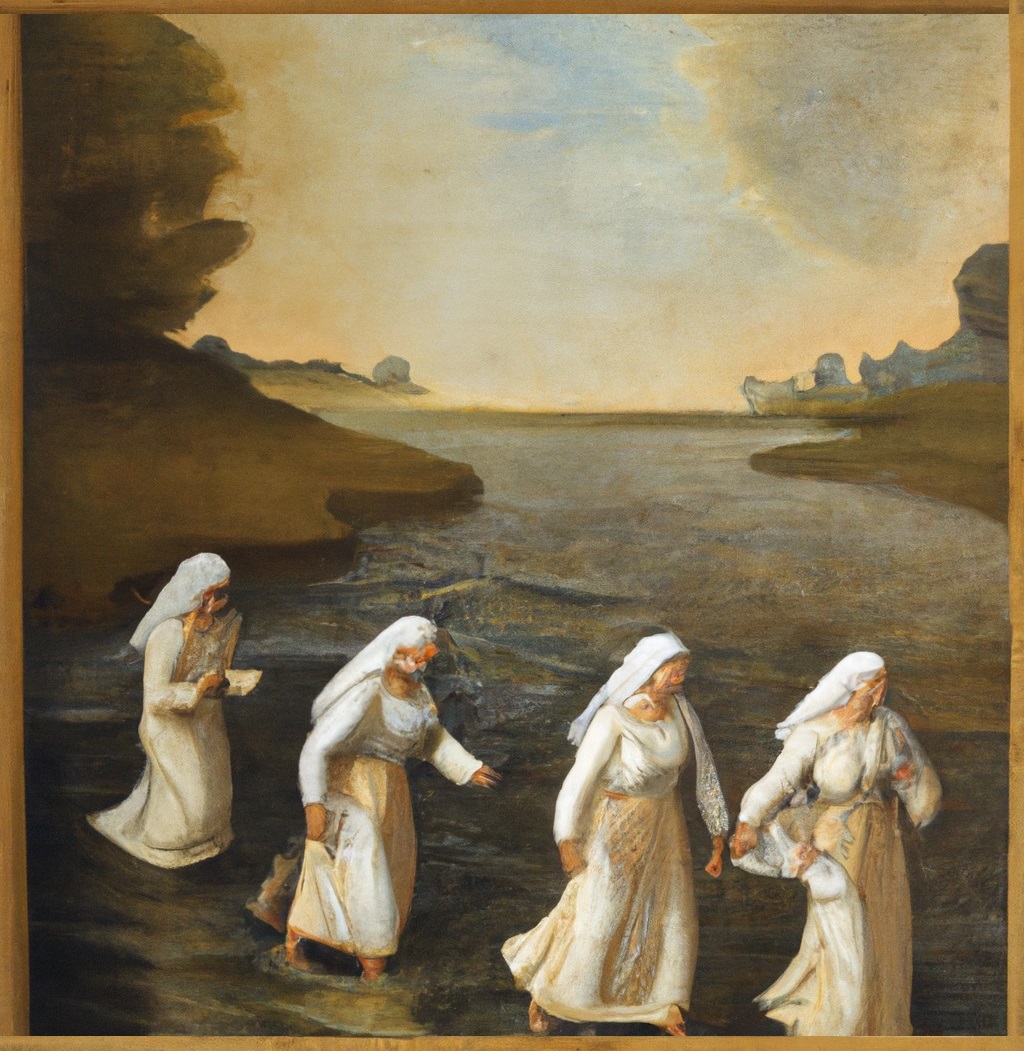
In 1582, St. Teresa of Ávila was journeying across Spain to establish new Carmelite convents. The rivers that season were so high that in some places the entire road was covered and obscured by water. It was clearly too dangerous to continue through those waters aboard the carriage, so Teresa and her companions advanced cautiously on foot, with Teresa leading the way. At one point, she lost her footing and fell down into the muddy water. Upon securing herself against the flowing current she exclaimed, “Oh, my Lord, when will you cease from scattering obstacles in our path?” Jesus replied to the mystical nun, “Do not complain, Daughter, for it is ever thus that I treat my friends.” And Teresa famously and dryly replied, “Ah, Lord, it is also on that account that you have so few!

In today’s Gospel, Martha and Mary send word to Jesus about their ailing brother, Lazarus: “Master, the one you love is ill.” “Now,” St. John records in his Gospel, “Jesus loved Martha and her sister and Lazarus. So when he heard that he was ill, he remained for two days in the place where he was.” Is not this a surprising twist? Because Jesus loved Lazarus and his sisters he delayed departing for their village for two additional days. And by the time Jesus arrives in Bethany with his disciples, Lazarus has been four days dead in the tomb.

Martha and Mary each say to Jesus what they had likely already lamented to each other: “Lord, if you had been here, my brother would not have died!” You can imagine their unspoken, anguished question: ‘You’ve healed others, you’ve helped strangers, so why didn’t you come to help us, your dear friends, when we needed you?’ When Jesus saw Mary weeping and those with her weeping, he became perturbed and deeply troubled, and Jesus wept. So the Judeans remarked, “See how he loved him.” But some of them said, “Could not the one who opened the eyes of the blind man have done something so that this man would not have died?” And Jesus, perturbed again, went to Lazarus’ tomb to resurrect him.

Jesus had told his disciples days before, “Our friend Lazarus is asleep, but I am going to awaken him.” And when they mistook him as saying Lazarus was merely napping, Jesus clarified, “Lazarus has died.” So Jesus came to Bethany fully-intending to raise Lazarus from the dead. But what troubled Jesus and why did Jesus weep? Was he mourning for Lazarus? Imagine if you learned one of your friends had died this morning but you were also certain that you friend would be alive and well again just fifteen minutes from now. How much would you mourn? As much as Jesus was crying for Lazarus, I believe Jesus wept more so for Mary and Martha and those in the crowd. He weeps for them and for all humanity in all of history who mourn and struggle with fear, doubt, and pain because of the scandal of suffering and death in our world.

We naturally desire to live easy lives; to be untouched by hardship or losses. But Jesus desires far greater things for us than mere ease. Before they left for Bethany, Jesus told his disciples, “This illness is not to end in death, but is for the glory of God, that the Son of God may be glorified through it.” These events were divinely permitted and intended for the greater glory of Lazarus and his sisters, too. Imagine if Lazarus had never gotten sick and died and been raised by Jesus — would we even know his name today? Instead, his story with Christ, his life because of Christ, has blessed the world, including us. Martha and Mary, through enduring this trial, were also blessed. Imagine the intensity of their faith in Christ and their courage in facing death after this experience. Jesus made these sisters a blessing for every generation to come.

Because Jesus loved Lazarus, Martha, and Mary, and St. Teresa of Ávila, he allowed all of them to experience trials. It is ever thus that he treats his friends. So be open to walking, to accepting, to trusting, Christ’s providential path for your life. Even if this journey may be harder than we would choose for ourselves, his path leads to better blessings and greater glory with Christ.

God Calls Unlikely People

March 19, 2023

4th Sunday of Lent
By Fr. Chinnappan Pelavendran

Today is the fourth Sunday of Lent, also known as Laetare Sunday, which means “rejoice.” The Church is joyful in anticipation of the Resurrection of our Lord. Today’s readings remind us that it is God who gives us proper vision in the body as well as in the soul. We need to be constantly on guard against spiritual blindness. God has a plan for each of us. He can call any of us to the vocation He has chosen for us. Being a priest, nun, or religious are not the only vocations. God has called some to married life or to be single. Prayer is very important to us in discerning our vocation.

When God called Moses, he was tending the sheep of his father–in–law, Jethro. God called him from the burning bush, but Moses had many excuses. If I say to the sons of Israel, the God of your father sent me, and they ask me what is His name? what shall I say to them? God said to Moses, “I am Who am.” I don’t think they will listen to me, I am not eloquent, I am afraid, I don’t want to go alone. God told him to take his brother Aaron with him and God would also be with him. Because God was with him, Moses was able to fulfill God’s request. He went to Pharaoh and led the Israelites out of Egypt. They were in the desert for forty years, and God provided everything they needed. Moses was able, with God’s help, to deliver His people to the land flowing with milk and honey.

In the New Testament, we have the call of Matthew. When Jesus called him, Matthew was a tax collector. Tax collectors were not upstanding citizens, they worked for the Romans, they kept some of the tax money for themselves, and they went after people to get the tax money from them. They did whatever it took to get the money. When Jesus said, “Follow me,” He followed Jesus leaving his work, money, and everything behind. He was completely changed. He became one of the Apostles and wrote the Gospel of Matthew in the Bible. He is the one who wrote the genealogy of Jesus.

In the first reading today, God sent the Prophet Samuel to the house of Jesse to anoint a king for Israel. Jesse had seven sons with him and presented each one to the Prophet Samuel. Samuel thought each one would be acceptable, but God said No. Jesse had one other son, David, who was tending the sheep. They sent for him and the Lord said, “Arise, anoint him, for this is he.” (1 Samuel 15:12) God chose the most unlikely candidate, the shepherd boy to be king of Israel. God told Samuel, Not as man sees does God see, because man sees the appearance, but the Lord looks into the heart.

Our Gospel today tells us about the healing of the blind man. After receiving his sight, he believed in Jesus and followed Him. Let us not be blind to Jesus, we need to believe and follow him as this man did. We are all called by God to be faithful to our vocation, whatever it is in life. Moses, Matthew, and David were faithful to God. As a religious, married, or single we also need to be faithful to God.

Those of you who are parents, bring your children to God. You presented them to God for baptism, don’t stop there. Pray with them. Bring them to church, and teach them to love God as you love them. Be a good example to them. Let them see you praying on your knees at home and in church. Teach them to be faithful to God by your example. God is calling us today to follow Him.

5 Deep Wells of Encounter with Christ

March 12, 2023

3rd Sunday of Lent
By Fr. Victor Feltes

Jesus Christ desires every person to know him better. Today we watch him draw a Samaritan woman into a deeper relationship with himself. He meets her at a well outside of her town in the middle of the day. People in that era typically fetched water in the cooler morning or evening, but she comes to draw water around noon apparently to avoid her neighbors. When she comes to the well, Jesus initiates an encounter: “Give me a drink.”

She replies, “How can you, a Jew, ask me, a Samaritan woman, for a drink?” Jesus is stranger to her and she is wary of him as a presumed enemy, for Jews and Samaritans often felt mutual hostility. How many people today keep God at a distance like a stranger, fearing he does not really love them or truly will their good?

When Jesus suggests he could give the woman “living water,” she skeptically replies, “Sir, you do not even have a bucket and the cistern is deep; where then can you get this living water? Are you greater than our father Jacob, who gave us this cistern and drank from it himself with his children and his flocks?” She seems to wonder, ‘Is this man a fool, incredibly arrogant, or delusional?’ Indeed, in light of other claims Jesus makes about his own authority and himself he is either a liar, or a lunatic, or our Lord.

Many today relegate Jesus to merely being “a wise teacher” or “a good man” while simultaneously denying he is Lord. However, if Jesus is not Lord, then he was neither good nor wise in claiming to be the Christ and to demand our full devotion. To be consistent we must be for him or against him, either hot or cold. We cannot safely cover our bets by going just halfway. As Jesus warns in the Book of Revelation, “because you are lukewarm, neither hot nor cold, I will spit you out of my mouth.”

When Jesus describes to her the water he will give, which shall satisfy all thirst and well up to eternal life she says, “Sir, give me this water, so that I may not be thirsty or have to keep coming here to draw water.” Though not yet convinced, the woman is intrigued by Jesus’ words and manner. Many people today, though only vaguely familiar with Jesus, are interested in his person.

Then, even though this is their very first meeting, Jesus gently alludes to the moral irregularities of her life. The Lord is not out to shame us, but our hidden sins do matter and he calls us to conversion. The amazed woman replies, “Sir, I can see that you are a prophet,” and understandably redirects the conversation to a less personal topic.

Now convinced Jesus is a man of God, she believes and seeks and finds. She says, “I know that the Messiah is coming, the one called the Christ; when he comes, he will tell us everything.” Jesus answers, “I am he, the one speaking with you.”

Full of joyful faith, the woman runs off to town leaving her water jar behind. She shares good news with her neighbors saying, “Come see a man who told me everything I have done! Could he possibly be the Christ?” From this, many of the Samaritans in that town began to believe in Jesus because of her personal witness to him.

The woman at the well began by regarding Jesus as a stranger, a presumed enemy, a crazy or arrogant fool, but she goes on to recognize him as an intriguing figure, then a holy man, a prophet, the Messiah, and the Savior of the world. Today, you and I are further blessed with the knowledge that Jesus Christ is God. However, Jesus not only desires that we know things about him, he wants us to believe in him. How do we move from the one to the other?

The Risen Jesus, though ascended into heaven, is alive and active in our world and in your life already. He would draw you into a deeper relationship with himself through personal encounters like he had with the woman at the well. I suggest to you five deep wells of personal encounter with Christ: Scripture, prayer, Sacraments, the stories of others, and your lived experiences.

  • Encounter Jesus Christ, the eternal Word of God, through Sacred Scripture, the inspired word of God. St. Jerome said ‘ignorance of Scripture is ignorance of Christ.’ So meet him in the Scriptures, especially the four Gospels.
  • Encounter Jesus in daily prayer. Jesus says in the Book of Revelation, “Behold, I stand at the door and knock. If anyone hears my voice and opens the door, I will enter his house and dine with him, and he with me.” He knocks on the door of our soul, and daily prayer opens our door to meet him.
  • Encounter Jesus in his Sacraments. In the Eucharist, Confession, Marriage, Anointing of the Sick, in every Sacrament, Jesus meets us in a personal, mystical, and grace-giving way.
  • Encounter Jesus in the stories of others; the stories of the saints whose lives are reflections of Christ and those told by other Christians who have personally experienced Jesus’ goodness and power. Meet Jesus through stories like those townspeople came to meet Jesus through the Samaritan woman’s report.
  • And encounter Jesus in your own lived experiences. The Lord who guides the galaxies likewise attends to the small things as well. Jesus would meet us in many moments of our days using our experiences of work or leisure, of nature or other people, to share revelatory signs of himself.

So encounter Jesus Christ in Scripture, prayer, Sacraments, in others’ stories, and your own experiences, that the living Lord may lead you into a deeper relationship with himself.

In conclusion, I wish to speak on a different but related topic. One year ago last week, St. Paul’s Church Renovation Subcommittee began exploring options to renew and beautify St. Paul’s Church — our first, major, interior renovation in three decades. This spring, enjoying the consensus support of our parish councils, we are excited to unveil our renovation plan and a capital campaign to fund it. Stay tuned for comprehensive details to be shared through talks and materials in the next few months. Until then, I ask for your patience and your prayers for the success of this effort for the greater glory of God and the salvation of souls through many people encountering him here in a renewed and beautified church.

Every Human Person is Special — Funeral Homily for Lynda Sykora, 58

March 6, 2023

By Chinnappan Pelavendran

On behalf of St. John the Baptist parish and I, I want to extend our sympathy to the family, her husband Roger, and children Rachel, Alex, and Hannah. Also, I extend our sympathy to the friends of Lynda. She will be missed by many for a very long time. We are pleased that she no longer has to suffer. I had the privilege of Anointing Lynda before she died. When I asked how she was, she said she was well. She was very calm and eager to receive Jesus. She was at peace.

Lynda grew up in Alabama and moved to Cooks Valley in 1994. She and Roger have been members of St. John the Baptist Catholic church since they were married in 1995. Lynda worked on the farm, was a great cook, and enjoyed gardening, flowers, and canning. She was also a 9-1-1 dispatcher for a while. She enjoyed spending time with her family. Attending her kids’ sporting events was a happy time for her.

Our readings this morning give us great consolation. In our first reading, we were told the Lord will wipe away tears from every cheek. We know that everything we do makes sense only if it is leading us to peace in God. We know there are many distractions and temptations in life, all pretending to offer us peace and happiness, but none of them do because we know that we will find this peace and happiness only in God. When we find our peace in God, we become friends of God, when we live with God’s love in our hearts, then we have peace. That is why our first reading said the Lord will wipe away the tears from every cheek. When we hope in the Lord for salvation, how blessed we are.

There is a truth that is good for us to reflect on at the time of death. The truth is that:

Every human person is special.
Everyone is unique.
Nobody ever takes anybody else’s place.

It is very clear in the gospel reading that being blessed does not always mean being materially blessed. The beatitudes which Jesus offers us are a sign of contradiction to the world’s understanding of happiness and joy. How can one possibly find happiness in poverty, hunger, mourning, and persecution?

Poverty of spirit finds ample room and joy in possessing God as the greatest treasure possible. Hunger of the spirit seeks nourishment and strength in God’s word and Spirit. Sorrow and mourning over wasted life and sin leads to joyful freedom from the burden of guilt and spiritual oppression. God reveals to the humble of heart the true source of abundant life and happiness. Jesus promises his disciples that the joys of heaven will more than compensate for the troubles and hardships they can expect in this world.

We are gathered here today to remember Lynda and pray for her. Let us also pray for Roger and their children during this difficult time. Let us also pray that we also will find peace in God.

May her Soul Rest in Peace.

Encounter Him & Return

March 4, 2023

2nd Sunday of Lent
Fr. Victor Feltes

What a grace for Peter, James, and John to see the Transfiguration of Jesus. Can you imagine? It was like a preview of the glory we all hope to share in heaven. Jesus shared other special times with Peter, James, and John. Earlier in the gospel, we read that Jesus only allowed Peter, James, and John to be with Him in the house of a synagogue official whose daughter he raised from the dead. These three apostles were also with Jesus in the Garden of Gethsemane.

Before the Transfiguration, Jesus told His disciples that He must suffer greatly, be rejected by the elders, the chief priest, and the scribes, be killed, and be raised from the dead in three days. They did not want to believe Him because they thought they could protect Him. Jesus responded, “Get behind me, Satan! You are thinking not as God does but as human beings.” The disciples had to learn that Jesus was not an earthly king, as they were expecting. They needed the special graces from Jesus so they could continue to follow Him and believe in Him. During the Transfiguration, God the Father said, “Listen to Him.” He revealed His glory to the disciples in order to strengthen them for the passion and death of Jesus Christ.

Let us review the events of Jesus’ Passion and Death, Peter denied Jesus three times. James, like the rest of the disciples, ran away. John was the only one who continued to follow Jesus during His Passion and Death on the Cross. He stayed with the women who followed Jesus. After the Resurrection and Pentecost, Peter, James, and John became great witnesses to Jesus. Peter became the first pope and was later martyred. James was killed by King Herod for witnessing Jesus. John wrote the fourth gospel in the bible, the Gospel of St. John.

How many times in your life have you let Jesus down or disappointed Him? We do this many times because we meet Jesus every day in our lives. The most intimate way we meet Jesus is when we receive Him in the Eucharist. It is the time when we are the closest to Jesus. We meet Jesus in the readings from the Bible as they touch our hearts. The Bible is not just about reading the life of Jesus, it is also about listening to His words. He is speaking to us about our lives. We meet Jesus in a very special way in all the sacraments.

Baptism makes us sons and daughters of God and heirs of heaven. Confirmation makes us the temples of the Holy Spirit. By the Sacrament of Reconciliation, God brings us, sinners, back to the path of holiness. By receiving the Sacrament of the Anointing of the Sick in Faith, we are spiritually, and, if God wills it, physically, healed but most importantly our sins are forgiven. The Sacrament of Marriage unites a man and a woman together for life according to His laws. In the Eucharist, we receive Christ’s Soul and Divinity into our body. With Holy Orders, a man becomes a Priest, an altar of Christ, and by the Power of the Holy Spirit, offers the Sacrifice of the Mass and serves as a shepherd of Jesus’ sheep.

We can share experiences like those of Peter, James, and John when we spend some extra time with Jesus in prayer during Lent. Maybe, we may want to fast for one day, taking only water, thus releasing spiritual energy, which in turn, can lift our thoughts to a higher level.

Our Mountaintops & Valleys

March 4, 2023

2nd Sunday of Lent
By Fr. Victor Feltes

Jesus went up a mountain to preach his Sermon on the Mount. Later, after feeding more than five thousand people using five loaves and two fish, he withdrew up a mountain alone for prayerful solitude. Today, Jesus leads Peter, James, and John up a high mountain by themselves to witness his Transfiguration. So why mountains? What is it about mountain heights which make them the preferred setting for so many biblical events?

Three themes occur to me: First, mountains remove people from the ordinary. They are remote places removed from everyday life. Second, mountains offer a greater perspective. A mountaintop can allow someone to see for many miles. And third, mountains elevate us. Mountaintops are not only literally higher but symbolically closer to heaven as well. Jesus takes Peter, James, and John to the top of Mount Tabor to give them an extraordinary experience, to give them a deeper vision into himself, and to give them strength for their trials ahead.

The Mass prefaces celebrating Jesus’ Transfiguration say:

“After he had told the disciples of his coming Death, on the holy mountain he manifested to them his glory, to show, even by the testimony of the law and the prophets, that the Passion leads to the glory of the Resurrection.”

“He revealed his glory in the presence of chosen witnesses… that the scandal of the Cross might be removed from the hearts of his disciples.”

The disciples had not imagined that the Jewish Messiah, God’s Holy Anointed One, would be gruesomely murdered. The Transfiguration helped prepare them to understand that Christ’s suffering was a part of God’s salvific plan. They also came to realize that Jesus’ teaching, “If anyone would come after me, let him deny himself and take up his cross and follow me,” would involve sufferings of their own. The apostles’ memories of beholding Christ’s miracles and glory and their ongoing relationship with their Risen and Ascended Lord strengthened them through their trials.

You and I will face trials as well. As St. Paul tells Timothy in today’s second reading: “Beloved: Bear your share of hardship for the Gospel with the strength that comes from God.” What have been the spiritual mountaintop experiences of consolation in your life? Remembering these moments gives us spiritual strength in hard times, and Jesus Christ walks alongside us through all our dark valleys.

Yesterday, I encountered the story of a man about my age named Mike. Not long ago, Mike was diagnosed with a cancer so advanced that he had back operation which removed one of his vertebrae. Mike is married and has two sons around middle school age. Though previously a somewhat lukewarm Christian, he began “searching for the understanding of the LOVE of Jesus.” Here is the amazing thing: Mike writes, “This last several months, with a few nudges from God, I have been overwhelmed with Jesus’ love. It’s been so powerful that the pain and uncertainty of the cancer have taken a back seat to it.” If he continues to carry this cross with Christ, no matter what happens, Mike is going to be OK.

Our spiritual mountaintop moments are extraordinary experiences that give us a greater perspective and draw us closer to God. But also remember the great consolation that Jesus Christ, our good and loving Lord, remains with us in our dark valleys as well.

Lent with Jesus in the Desert

February 26, 2023

1st Sunday in Lent
By Fr. Chinnappan Pelavendran

Welcome to the season of Lent. Lent is a time to repent, a time to be reconciled, a time to say I am sorry, and a time to make our lives right with God. This is a time for us to remember what Christ went through for us. Christ came to live with us, to love us, and to serve us. Christ came to die for us because of everything we do wrong. Our forty days of Lent are a reminder of Jesus’ forty days spent in the desert before His public ministry. It is also a reminder of the life, passion, and death of Jesus Christ.

The first reading today describes the original temptation by the devil. Satan told them they would be like gods. He made them believe that they did not have to depend on God. We don’t like it when our freedom is limited and to be dependent on anyone. We don’t want to be responsible for the consequences of our choices.

In the second reading, St. Paul compares the old Adam with the new Adam, who is Jesus Christ. Adam did not resist temptation. He believed in the lie that the devil said that he could be like God. Jesus Christ came to save us from ourselves. Jesus did not give in to the temptations of the devil. The first Adam brought disobedience, sin, and death. The new Adam brought obedience, righteousness, and eternal life.

The temptations that Jesus faced in the desert are temptations found in our everyday lives. God has blessed some people with material resources, some with spiritual powers, some with political, and others with social powers. Use the powers and resources that God has given you for the greater honor and glory of God. Use this Lent to overcome the temptations that could harm you or others. Jesus performed miracles of healing and cast out devils to help people. Christ never used His gifts for Himself, only for others.

Jesus serves as a model for us in overcoming temptations by strengthening himself through prayer, fasting, penance, almsgiving, and speaking the word of God. By resisting temptations, we become more powerful soldiers for Christ. God does not allow us to be tempted beyond our power! During this Lent, let us try to be more prayerful, come to daily mass, receive the Sacrament of Penance, try reading some of the Bible, Pray the Rosary, and maybe bring a friend to church. By doing this, we will be able to overcome some of our sins.

Little changes in our lives can help us grow in holiness. The more time we spend with God, the closer we will be to God. Living the gospel of God’s love, mercy, and forgiveness will make us better Christians. Lent is the time for the desert experience. We can set aside a place and time to be alone each day with God. We need time to distance ourselves from the many daily noises in our lives. We need time to hear God’s word and rediscover who we are before God. We need time, to say yes to God and no to Satan.

Loving & Devout, Inside & Out

February 11, 2023

6th Sunday in Ordinary Time
By Fr. Victor Feltes

Something Christians may not realize is that the Pharisees and scribes were admired in Israel. Many Jews looked up to them for their religiosity and learning in a culture which celebrated their shared religion. But Jesus criticized the scribes and Pharisees for caring more about outward appearances than the heart of true devotion. “All their works are performed to be seen,” Jesus said, “They preach but they do not practice. Woe to you, scribes and Pharisees, you hypocrites. Although you cleanse the outside of the cup and the dish, inside you are filled with plunder and evil.” That is why Jesus told his own disciples: “Unless your righteousness surpasses that of the scribes and Pharisees, you will not enter the Kingdom of Heaven.” Jesus wills us to be holy both outside and in.

He cites the ancient commandments: “You have heard that it was said… ‘Thou shall not kill,’ ‘Thou shall not commit adultery,’ ‘Thou shall not take the name of the Lord your God in vain.’’ But then, Jesus commands more. We may never have sworn a false oath, but do we secretly conceive lies? Jesus declares, “Let your ‘Yes’ mean ‘Yes,’ and your ‘No’ mean ‘No.’ Anything more is from the evil one.” We may never have had an affair, but do we entertain lust after others in our minds? Jesus declares, “Everyone who looks at a woman with lust has already committed adultery with her in his heart.” And we may never have murdered anyone, but do we hold contempt for others in our hearts? Jesus declares, “Whoever is angry with his brother will be liable to judgment.” Even the Ten Commandments themselves called for interior holiness. Acts of adultery or theft (forbidden by the 6th and 7th commandments) are usually preceded by coveting, by desiring what is not ours (which is against the 9th and 10th commandments).

Consider this: in Heaven, no one will be allowed to hate anyone, or to exploit anyone, or to lie to anyone. That is something beautiful for us to look forward to, but it is also a call to thorough conversion. Our secret sins matter and our hearts must be made pure. Jesus says that from within, from our “hearts, come evil thoughts, unchastity, theft, murder, adultery, greed, malice, deceit, licentiousness, envy, blasphemy, arrogance, [and] folly.” He teaches that “a good person produces good from the treasury of a good heart, and an evil person produces evil from the treasury of an evil heart.” What is going on in our hearts is very important. So when temptation comes, let us as St. Paul said, “take every thought captive in obedience to Christ.”

The season of Lent is near. It begins on Ash Wednesday, the week after next. Catholics often take on external sacrifices and penances during Lent, and that is a good thing. But I suggest that for this Lent you would aim to conquer a habitual sin or secret vice with Christ. Which fault should be your focus? If you do not know that already, the Seven Deadly Sins may suggest it to you; they are pride, greed, lust, envy, gluttony, anger, are sloth. You may respond to each of these Deadly Sins by embracing the corresponding Lively Virtue.

For pride, there is humility.
For greed, generosity.
For lust, chastity.
For envy, gratitude.
For gluttony, temperance.
For anger, patience.
And for sloth, diligence.

Forming a personal resolution is key. Rather than just passively hoping things change, actively renounce what is evil in your life. Your will must be engaged. However, your weak human nature needs God’s strengthening grace. And God, respecting your freedom, waits for your consenting “Yes.”

Connect more to Jesus Christ this year. Encounter him in his sacraments. Beyond Sunday Mass, there is thirty-minute weekday Mass. When I began attending weekday Mass in college it drew me closer to Jesus and improved my life. Beyond celebrating the Sacrament of Reconciliation only once or twice a year, gain new graces with forgiveness through more frequent Confession. This gives us accountability and a truer perspective on ourselves. I do not believe that even monthly confession is too frequent for someone serious about growing in holiness. And beyond praying at church on Sundays, or before meals, or during times of urgent need, commit to times of daily personal prayer. For instance, gift or consecrate your day to Jesus in the morning. Ask him, your angel, and your favorite saints to aid you throughout the day. And do an Examination of Conscience in the evening asking the Holy Spirit to show you both your victories and defeats.

In conclusion, do not let the perfect be the enemy of the good. Do not read all these ideas and think, “I can’t do all of that,” and wind up doing nothing. Between now and Easter, commit to good steps to conquer a habitual sin or a secret vice with Christ. Jesus wills to help you be more loving and devout, inside and out.

Three Imperfections in the Life of Saint Paul

February 4, 2023

5th Sunday of Ordinary Time
By Fr. Victor Feltes

 The oldest known depiction of St. Paul the Apostle, a fresco from the Catacomb of Saint Thekla in Rome dated to the 300’s A.D.

St. Paul is one of history’s greatest saints. Today I would like to talk about his vision, his preaching, and his early church communities. But what I would like show you (for your benefit) is that his vision, his preaching, and his early Church communities were not as perfect as you probably imagine.

First of all, St. Paul had vision problems. I do not mean anything was wrong with his inspired Christian insights, but that his physical ability to see was limited. When he beheld the glorified and risen Jesus on the road to Damascus, an intense light shone from the sky around him. Paul got up from the ground and opened his eyes but he could not see anything. After three days, our Lord sent a Christian named Ananias to prayerfully lay his hands upon him. “Immediately, things like scales fell from his eyes and he regained his sight.” Yet issues with Paul’s vision seem to have lingered or later reemerged. While writing to the Christians of Galatia more than a decade after his conversion, St. Paul recalls, “You know that it was because of a physical illness that I originally preached the gospel to you.” He does not directly identify his malady, but he observes, “Indeed, I can testify to you that, if it had been possible, you would have torn out your eyes and given them to me.” And in closing this letter to the Galatians, Paul writes, “See with what large letters I am writing to you in my own hand!” These clues suggest that swapping-out his eyes for another pair would have improved Paul’s poor and ailing eyesight.

Another historical detail few notice about St. Paul is that his letters were apparently more impressive than his public speaking abilities. In his second letter to Corinth, St. Paul addresses criticisms about himself, noting “someone will say, ‘his letters are severe and forceful, but his bodily presence is weak, and his speech is contemptible.’” Paul acknowledges in today’s second reading that he met the Corinthians and proclaimed the Gospel to them without “sublimity of words or of wisdom.” “I came to you,” he writes, “in weakness and fear and much trembling, and my message and my proclamation were not with persuasive words of wisdom…” By God’s grace, his preaching did bear fruit, but Paul’s writings came across as being more eloquent and powerful.

A third overlooked aspect of St. Paul’s life is that the Christian communities he led were far from perfect. People often think of the early Church as a golden age. We lament the Catholic Church’s present problems and idealize her past. Yet throughout his New Testament letters, St. Paul is constantly correcting the early Christians’ beliefs and behaviors. Consider the Church at Corinth. Paul admonishes those Corinthians for their pride, for their internal divisions, for their liturgical abuses, and for their toleration of “immorality of a kind not found even among pagans.” Early Christian communities had real issues, and St. Paul did not find it easy to pastor them.

So to recap, St. Paul’s health was not perfect, his human talents were not perfect, and his parishes were not perfect. And yet, neither his poor health, nor his uneven talents, nor the problems within the Church prevented St. Paul from faithfully bearing everlasting fruits. I wanted to highlight the weaknesses and imperfections of St. Paul and the early Christians to help us appreciate that our circumstances are not so different today. When Jesus Christ declares, “You are the salt of the earth,” and “You are the light of the world,” he really is talking about us too. Our Lord would do great and important things through you, and the good you are doing now does more good than you know. So carry your burdens, endure your trials, and keep the Faith like St. Paul did. As Jesus once said to console St. Paul in his struggles, “My grace is sufficient for you, for power is made perfect in weakness.”

Zephaniah & the Beatitudes Call to Conversion

January 29, 2023

4th Sunday of Ordinary Time
By Fr. Victor Feltes

Jesus’ Beatitudes are words of consolation and hope but they are also a call to conversion. Our first reading today comes from the Old Testament prophet Zephaniah who proclaimed God’s words in the land of Judah. Zephaniah denounced his people’s unfaithfulness, warning them:

“Near is the great day of the Lord,
near and very swiftly coming…
A day of wrath is that day,
a day of distress and anguish,
a day of ruin and desolation…
A day of trumpet blasts and battle cries
against fortified cities,
against lofty battlements…
Because they have sinned against the Lord.”

Less than one lifetime after Zephaniah preached, Jerusalem was conquered by the Babylonians and Judah’s earthly kingdom fell.

Zephaniah denounced those rich in material things, who hungered for feasts and comforts, who thirsted for wines and pleasures, who fashionably clothed themselves in unrighteousness. These proud rich would not be satisfied. Zephaniah said, “They will build houses, but not dwell in them. They will plant vineyards, but not drink their wine…. Their wealth shall be given to plunder and their houses to devastation…. Neither their silver nor their gold will be able to save them.

However, Zephaniah’s strongest condemnations denounced the idolatry among his people. Some worshipped idols in pagan temples, while some bowed down on roofs to worship stars, and some bowed down to the one true Lord God but would swear oaths by other gods. Zephaniah notes some said in their hearts, “The Lord will not do good, nor will he do harm.” They lacked faith, and hope, and love for him in their divided hearts. But with unclean hearts, they would not see God.

Today we hear Zephaniah say, “Seek the Lord, all you humble of the earth… seek justice, seek humility; perhaps you may be sheltered on the day of the Lord’s anger.” Then Zephaniah announces that the Lord “will leave as a remnant in your midst a people humble and lowly, who shall take refuge in the name of the Lord: the remnant of Israel. …They shall pasture and couch their flocks with none to disturb them.”

In fulfillment of God’s word, in response to a Jewish revolt, the Babylonians conquered Jerusalem in 587 B.C. They tore down the city’s walls, systematically burned its palaces and houses, and destroyed the Jewish temple. Those Jews who had made war were either killed or deported far away to Babylon, along with everyone else their conquerors saw as a threat. Yet “they left in the land of Judah some of the poor who had nothing and at the same time gave them vineyards and farms.” Blessed were the meek, for they inherited the land.

Yet even before Judah was conquered and thousands of Jews were carried off to Babylonian exile, God promised them a future return to Jerusalem. The Lord foretells through the Prophet Zephaniah: “At that time I will bring you home, and at that time I will gather you.” Blessed would be those people who remembered to mourn the loss of God’s temple and holy city, for they would be consoled. Less than one lifetime after their departure, once that Babylonian empire had been conquered by a Persian empire, the Jews were allowed to return home.

The words of Jesus and Zephaniah and the stories of their people should give us pause today, for “near is the great day of the Lord” always. How are we using our great riches? Which desires do we feed? Do we mourn the evils that we see in the world? Unless we hunger and thirst for righteousness, we will never be satisfied. We might not worship golden idols or swear by pagan gods, but idolatry still exists today. If our priorities (as reflected by our finances, Sunday sports or vacations, worldly desires or addictions, or any other things) usurp our Lord from his rightful throne in our hearts, then our hearts are not yet so pure as he wills them to be.

Seek the Lord… seek justice, seek humility… do no wrong and speak no lies.” Practice mercy and pursue peace. Christ offers you his strengthening grace. Blessed are they who heed what Jesus tells us gains his Kingdom.

Live the Beatitudes

January 29, 2023

4th Sunday of Ordinary Time
By Fr. Chinnappan Pelavendran

Today I would like to share an incident about a brother priest of mine. He was transferred to a new parish. Some weeks after he arrived, he needed to take the bus to a nearby town. When he sat down, he realized that the driver had given him an extra two rupees (about 25¢). He thought to himself, “I better give it back, it would be wrong to keep it.” Then he thought, “Oh, it is only two rupees, such a small amount, it is a gift from God.” When his stop came, he hesitated at the door and handed the money back to the driver. The driver smiled and asked, “Are you the new priest in the village?” And the priest said, “Yes.” “Well, I have been thinking about going somewhere to pray. I wanted to see what you would do if I gave you extra change. You will see me at church on Sunday.” When the priest got off the bus, he closed his eyes and said, “Oh God, I almost sold you for a quarter.

In that thirty minutes on the bus, that priest lived all seven of the Beatitudes. He was poor in spirit, not greedy. Blessed are they who mourn, he gained a new parishioner. He was meek and knew that the money was not his. He was righteous and he was satisfied. By giving the money back, he will receive mercy from God. His heart was clean, and he will see God. He was a peacemaker because he did not keep, what was not his.

Today’s readings explain our Christian goal of eternal happiness. They give us an outline for living like Christ. Jesus expected his disciples to live like Him. The Beatitudes present a positive way to live. The virtues we will receive from following the Beatitudes will lead to salvation for our souls.

Jesus teaches his disciples the blessedness of poverty, hunger, sorrow, and persecution. In poverty, we recognize God’s reign; in hunger, His providence; in sorrow, true happiness; and in persecution, true joy. In other words, the blessed ones are those who are poor in spirit, compassionate, meek, merciful, and clean of heart. They are the peacemakers and those who are willing to be insulted and persecuted for their faith.

The Beatitudes are almost like a guideline for the Ten Commandments. The Beatitudes simply guide us to a righteous and loving way of life. By living the Beatitudes, we will find happiness with God because only God can satisfy the heart. We will become better individuals and better members of our church. To be a true Christian, we give first place to God.

We need to respond to the challenges of the Beatitudes in our daily life. Millions of people are starving, persecuted, and homeless, and lead hopeless lives. The Beatitudes challenge us to be compassionate people, even when this exposes us to ridicule and persecution. We can learn from Saint Mother Teresa who showed us how to accept the challenges of living the Beatitudes in the modern world. Let us remember that each time we reach out to help the needy and the sick, we share the promises of the Beatitudes.

We need to choose wisely. The way of life is the way of Jesus that leads to eternal life. The challenge of the Beatitudes is this: Are you going to be happy in the world’s way, or in Christ’s way? If we choose the world’s way, we are seeking our blessings in the wrong place. The way of Jesus requires toil and suffering in working for the poor, the sick, and the hungry. The blessing of the Beatitudes is the possession of the Kingdom of God.

“Jesus Loves Me” — Funeral Homily for Mabel Klingbeil, 93

January 23, 2023

By Fr. Victor Feltes

Great love is powerfully expressed through great trials. When Mabel was only eleven years old, she experienced a shocking personal loss. Her ten-year-old sister Betty passed away from an appendicitis. And for the rest of Mabel’s life it seems she wanted to help make sure others were safe and well. Mabel would live to be the last-surviving member of the family of her birth. She served as a caregiver to her parents and her adult siblings as they passed on before her.

She was married in this church to her husband George in 1958. They gave life to four sons together, including two, John and Tim, who passed away in infancy. After fourteen years of marriage, Mabel became a widow at age forty-three. She raised her two boys, Michael and George, on her own; doing her best to fill the role of two parents, for instance, taking them out to go fishing. Then, after her retirement, Mabel began raising children anew at age seventy-two. She cared for her grandkids, Katie and Sarah, concerned for both their bodies and souls, for instance often saying, “Remember to pray and brush your teeth!” How did Mabel say she liked raising children? “I had a ball.”

Kindly but firm, Mabel was not swayed by the increasingly straying views of popular culture. She has been a well-known St. Paul’s parishioner for many years volunteering at our school and singing in our church choir. She would take the girls with her up to the balcony for funerals. The other choir members and widowed school teachers were often recipients of Mabel’s care.

I remember Mabel telling me in her room at Dove nursing home, that she had been a teacher for a total of thirty-three years (seven years elsewhere and then twenty-six years here in Bloomer). She loved teaching her students and said she would still like to teach—if she were not ninety-three years old. I saw her Tuesday afternoons when I brought her our Lord Jesus in the Holy Eucharist and she always received him with devotion.

Because of circumstances of her upbringing, Mabel had a hard time accepting God’s amazing love for us. She once remarked, “When I [was growing] up, I never knew that God loved me.” At times, she wondered, “How could Christ die just for me?” Yet Jesus Christ has powerfully revealed his great love for us, especially through his trials.

Why else would God become man in Jesus Christ if not from great concern that we would be safe and well? Jesus comes to us as a teacher in a visible life on earth thought to have numbered thirty-three years. Kindly but firm, he possesses and imparts truth in an errant world. He formed young disciples in his charge; sometimes he even took them fishing. He comes as our Good Shepherd, laying down his life for his sheep, desiring none of us to be lost.

Jesus worshiped at his Father’s house and offered himself in sacrifice on the Cross. Now he calls us to worship in his Church and receive the great gift of himself offered in the Holy Eucharist. Jesus, now risen, is the first-surviving member of his family. Raised from the dead, he lives forever to help us through this life into the next. He is the faithful, loving caregiver of his spouse and his brothers and sisters; that is, of his Church as a whole and each of us individually.

So you see, Jesus Christ forms faithful Christians to be more and more like himself, and shepherds them to be with him in paradise. “What will separate us from the love of Christ? Will anguish or distress, or persecution or famine, or nakedness, or peril, or the sword?” Despite all these things, we can conquer overwhelmingly through him who loves us. Mabel, in her final recent trial, found comfort in this truth, as she often sang that sweet children’s song: “Jesus Loves Me, This I Know.” Let us be faithful to Christ, so that together with Mabel we may “behold our God, to whom we looked to save us!

Barbershop Theology

January 21, 2023

3rd Sunday of Ordinary Time
By Fr. Chinnappan Pelavendran

Today I have another story to share. A man went to a barbershop to have his haircut and his beard trimmed. They talked about many things, and then the barber said, “I do not believe that God exists. Look at all the sick people, suffering, and pain in the world. I can’t believe that a loving God Would allow this.” The customer thought about it, but did not say anything and left the shop. Once he was outside, he saw a man with long, dirty hair. He went back into the barbershop and said, “You know what? Barbers do not exist.” “How can you say that?” asked the barber. “I am here and I am a barber.” “No,” the customer answered, “Barbers do not exist because if they did, there would be no people with dirty long hair, like that man outside.” “However, barbers do exist, that is what happens when they do not come to me.” “Exactly,” said the customer, “That is the point! God also DOES exist! That is what happens when people do not go to Him and don’t ask Him for help.”

The first reading today tells us that the people of Israel were living in darkness. They were living under the control of Assyrians. Isaiah declares that God’s power is greater than the oppression they are living under. Jesus is the great light and will lead them into abundant joy. By His resurrection, He has assured us that darkness can never overcome us. The light that Isaiah is talking about is the light of God which scatters the darkness of ignorance and sin.

In the second reading, St. Paul tells the Corinthians that they must stop fighting among themselves, and to follow the humility and obedience of Jesus. They need to work together as followers of Christ. They need to keep their focus on Jesus Christ.

Our Gospel today tells us about the beginning of Jesus’ public life, after John the Baptist had been arrested. The good news that Jesus preaches is hope, peace, promise, truth, and salvation. Jesus is the messenger of good news. As Jesus began his public life, He gathered his disciples. He found Andrew, and his brother Simon (who is called Peter). Next, He found James and John, the sons of Zebedee. They left everything and followed Jesus to be His disciples. The story of the calling of the first disciples showed their unconditional response to Jesus. The calling of the disciples is the beginning of the church. These disciples were drawn to Jesus like a magnet. They left everything not knowing where all this would lead.

We need to appreciate our call to be Christ’s disciples. Christ came two thousand years ago to share the good news with all of his people. There are still many people who don’t know about Christ, we need to be Christ’s disciples now to preach and bring them to God. God sends us to proclaim the good news of the kingdom. Jesus traveled, teaching in the synagogues, proclaiming the good news of the kingdom, and curing his people. We are asked to follow the example of love given to us by Jesus. We need to become the light of the world as Jesus. We need to receive the light of Christ and share it with everyone as love, forgiveness, and respect for all. If we want to improve our looks, we go to the barber. If we want to save our souls, we need to go to God.

How Could They Follow Him?

January 21, 2023

3rd Sunday of Ordinary Time
By Fr. Victor Feltes

When I read the four Gospels for the first time, I naturally began with Matthew’s Gospel, and I remember being offended by today’s gospel reading. Matthew tells us Jesus was walking by the Sea of Galilee and saw two brothers, Simon and Andrew, with their fishing nets. He said, “Come after me, and I will make you fishers of men.” And they followed him. Then the Lord saw two other brothers, James and John, mending their nets. He called them too, and they immediately left their boat and their father to follow him. This episode really bothered me. Imagine being at your home or at your workplace, and a stranger knocks on your front door or walks up to your desk and says, “Follow me.” So you quit your job and leave your family to follow this person. Who would do that? It’s crazy. How can the Lord expect anyone to do that? But John’s Gospel reveals that today’s gospel was not the first time Jesus had met these future apostles.

Simon Peter’s brother Andrew and (traditionally) John the son of Zebedee were the two disciples who heard John the Baptist point out Jesus and say, “Behold, the Lamb of God.” This declaration led them to meet Jesus and spend the day with him. After this, Andrew first found his brother Simon and told him, “We have found the Messiah!” (that is, the Christ). Then Andrew brought Simon to Jesus. Jesus looked at him and said, “You are Simon the son of John; you will be called Cephas” (which is translated Peter). If John the son of Zebedee was that other unnamed disciple, then he likely told his older brother James all about meeting Jesus too. So in today’s gospel, when Jesus called the four men to follow him as “fishers of men” he was not some total stranger.

The various Gospels sometimes include or omit different details when recounting the same events. Luke’s Gospel adds further context to this scene. He records there was a crowd pressing in on Jesus that day by the Sea of Galilee. So Jesus got into Simon and Andrew’s boat, sat down, and taught the people from there a short distance from the shore. When Jesus finished speaking, he told Simon, “Put out into deep water and lower your nets for a catch.” Skeptical Simon reluctantly agreed, and they proceeded to catch such a great number of fish that their nets were tearing. They signaled to their partners in the other boat to come help and both boats became so filled that they were in danger of sinking. Astonishment at that catch of fish seized Simon and Andrew, and likewise James and John, who were Simon’s business partners. Jesus said to Simon, “Do not be afraid; from now on you will be catching men.”

Therefore, reading the Gospels together, we learn that Jesus was not a random stranger who just showed up one day demanding their full devotion. They were already familiar with Jesus, had heard his teaching, and witnessed his power. This enabled Simon, Andrew, James, and John to reasonably and radically follow Jesus Christ like they did.

Among all famous figures, Jesus Christ may have the highest name recognition in the world. Everyone has heard of Jesus, but how well do people know him? Surely, Jesus would like to call many to more; to a deeper relationship with himself and a closer connection to his one, holy, catholic, and apostolic Church. How can you help? Your non-Catholic or non-practicing family, friends, and acquaintances know you, they like you, and regard you. They rarely (if ever) see or hear me, but they frequently encounter you. Simon Peter took Jesus seriously because his brother Andrew. Andrew already knew Jesus, told stories and spoke highly of him, and encouraged Simon to meet him. You can be like Andrew for people in your life. As I preached at the other Masses last Sunday, three ways you can draw people closer to Christ and his Church are by sharing your prayers, sharing your stories, and sharing your invitations.

Share your Prayers
When you share your prayers with others it reflects that you know Jesus. Whenever someone asks for your prayers, or even when someone entrusts their burdens to you, offer to pray with them then and there. It’s easy—just talk to Jesus out loud. The words of your prayer don’t need to be eloquent, just sincere. People are typically receptive to this and very grateful for it, and your shared prayer can open the door for a miracle in their lives.

Share your Stories
When you share your faith stories with others it reveals the power of Jesus in our world. How have you encountered Jesus? What has the Lord done for you? What are your personal miracles and spirit stories? Don’t hide these highlight experiences of your spiritual life under bushel baskets, but be humble enough to share them for others’ good. When the disciples realized what Jesus Christ could do, through the miracle of the great catch of fish, they left everything to follow him.

Share your Invitations
When you share your holy invitations with others this offers them an opportunity to encounter Jesus and his Church. Invite them to join you here in the house of the Lord, for Holy Mass, Eucharistic Adoration, or parish events. Invite them to share in our Christ-centered worship and close community. Even if they decline, you will have planted a seed that may bear fruit someday.

Simon, Andrew, James, and John encountered friends of Jesus, discovered his power to do good, and had the opportunity to personally encounter him. Your faithful prayers, your powerful stories, and your holy invitations, can offer your non-practicing or non-Catholic dear ones the opportunity to follow Jesus Christ more closely. Here is your homework for this week: share a prayer, or a story, or an invitation with someone it could help. Cast your net so that Jesus Christ may be better known, and let’s see what Jesus does with it.

The Lamb of God

January 15, 2023

2nd Sunday of Ordinary Time
Fr. Chinnappan Pelavendran

I want to tell you about a tourist, who was visiting Germany. Passing a church, he was surprised to see a figure of a lamb carved on the bell tower of the church. He asked why it was there and was told that when the bell tower was being built, a workman fell from a high scaffold. His co-workers expected to find him dead. But to their surprise and joy, he was alive and only slightly injured. How did he survive? A flock of sheep was passing beneath the tower at the time, and he landed on top of a lamb. The lamb broke his fall, but the man was saved. To commemorate that miraculous escape, a fellow stone artist carved a lamb, on the tower at the exact height, from which the workman had fallen.

This statue of the lamb expresses a bit of what John the Baptist means when he introduces Jesus to his disciples saying, “Behold, the Lamb of God who takes away the sin of the world.” Jesus the Lamb of God came to save us, from falling into hell.

In the Old Testament, lambs were sacrificed as an offering to God. The offering was to atone for the sins of the people. The first time in the Old Testament where they talked about lambs, was when Abraham was asked by God to sacrifice his son, Isaac. The boy asked where the sacrificial lamb was, and Abraham told him that God would provide. Abraham had faith in God and knew that everything would be okay.

On the day of Atonement, a lamb was brought to the temple. The high priest held his hands over its head, transferring all the sins of his people to the animal. The lamb was then released in the desert. There was also a daily atonement. Every morning and evening lambs were sacrificed to atone for the sins of the Jews.

Jesus is also referred to, as the Passover lamb. The first Passover occurred during God’s deliverance of the Israelites from Egypt. The angel of death passed over Egypt and killed the firstborn sons. The Israelites had been instructed to kill a lamb without blemish, and wipe the lamb’s blood over the doorpost. When the Angel of death saw the blood on their doors, he passed over. The Israelites were saved by the Lamb of God.

Jesus’ public life begins with his Baptism by John in the Jordan. Jesus fulfilled the Old Testament sacrificial system. He became the once-for-all offering for our sins. Jesus being the Lamb of God also refers to other prophecies regarding the Messiah. The book of Isaiah tells us that He was oppressed and he was afflicted, yet he opened not his mouth, like a lamb that is led to the slaughter. Like a sheep that is silent before its shearers is silent, so he opened not his mouth.

During Mass, we pray, “Lamb of God, who takes away the sins of the world, have mercy on us” and “grant us peace.” In this prayer, we show our understanding of the identity and purpose of Jesus Christ as our lamb and Lord. By His life of Love and sacrifice, he is the one who came and continues to come into our broken world to take our sins upon Himself.

We need to live like the Lamb of God. We need to lead our lives pure, innocent, and humble, obeying Christ’s commandment of love. If we truly appreciate the love and protecting care of the Good Shepherd, we will be able to share, that love and care with those around us.

We receive spiritual strength from his Holy Spirit through the sacraments and prayers. The more we are able to share our talents, time, wealth, and love with others; we enable ourselves to be better members of the church. We can also offer our suffering, illness, and pain for the salvation of souls and as reparation for our sins and those of others. We are called to be saints.