Archive for the ‘Culture’ Category

“We God’s People” — July 4th Weekend — 14th Sunday of Ordinary Time—Year C

July 3, 2016

Twelve score, or 240 years ago, our American forefathers began a revolution for freedom. For eight years, they fought to secure their independence from tyranny. They would go on to establish a national government; not meant create rights from nothing, but to help ensure and keep safe the human rights that “We the People” have from God. At the close of the 1787 Constitutional Convention in Philadelphia, a lady asked Dr. Benjamin Franklin, “Well Doctor, what have we got, a republic or a monarchy?” He replied, “A republic, if you can keep it.

U.S. FlagThe Framers established a government with three separate branches: a Legislative branch to create laws, an Executive branch to enforce the law, and a Judicial branch to resolve conflicts of law. This separation and balance of powers was designed to protect liberty against our fallen human nature. In the words of James Madison, who is called the architect of U.S. Constitution: “Ambition must be made to counteract ambition.” The Framers knew how leaders tend to consolidate power around themselves as dictators and the tendency of majorities to trample the rights of weaker minorities. James Madison adds, “It may be a reflection on human nature, that such devices should be necessary to control the abuses of government. But what is government itself, but the greatest of all reflections on human nature? If men were angels, no government would be necessary.

Our American republic depends not merely upon its laws but on the virtue of its people. George Washington said, “Religion and morality are the essential pillars of civil society.” John Adams said, “Our Constitution was made only for a moral and religious people. It is wholly inadequate to the government of any other.” Ben Franklin said, “Only a virtuous people are capable of freedom. As nations become corrupt and vicious, they have more need of masters.”

Our representative government is made in our image, and unfortunately it reflects and shares our errors and flaws today. For example, we live beyond our means. The average American household owes $7,400 on credit cards. And our government in our likeness cannot repay its debts, which are approaching $20 trillion, or about $60,000 of debt for each one us. We end the lives of our unborn children, almost one million of them each year, and our three branches of government are either unwilling or unable to safeguard in law every innocent human being’s God-given right to life. We are increasingly non-religious, leading people to think that churches serve no spiritual or social good and that their tax-exemption should be stripped. And we see our religious freedom diminishing, such that you can be financially-ruined for exercising your religious conscience in your occupation. We think it’s OK to do whatever it takes to win, we see parents and coaches encouraging kids to cheat or siding with them when they get caught. Meanwhile our political leaders are so brazenly lawless and tell such transparent lies, yet there are no consequences for any of it. How can our country remain free if virtue and our respect for the rule of law dies?

It appears that trying years are ahead for Catholic Americans, but there are (at least) three things we can do: pray, prepare, and keep perspective.

St. Michael the Archangel in the Battle of HeavenWe pray the St. Michael prayer near the end of our Masses to ask his help as the leader of the heavenly armies. We do this because evil spirits are real and active in our day. They are smarter than us and more powerful than us, but they are not more powerful than God and His angels. We should pray for our country. I cannot see how our country’s bad trends will be reversed, but God is cleverer and mightier than our imaginations so hope for a rebirth of virtue and freedom for our country remains.

In addition to prayer, we should prepare, beginning with ourselves. The final words before the signatures on the Declaration of Independence say, “[F]or the support of this Declaration, with a firm reliance on the protection of Divine Providence, we mutually pledge to each other our Lives, our Fortunes, and our sacred Honor.” How much are we willing to sacrifice in obedience to Christ? This is important to consider, for Jesus says, “Everyone who acknowledges me before others I will acknowledge before my heavenly Father. But whoever denies me before others, I will deny before my heavenly Father.” We should also endeavor to prepare our children, be they youths or adults, for a future living as “lambs among wolves.” For if the things we see now are done when the wood is green, what will happen when it is dry?

Besides prayer and preparation, we should also keep perspective. This American experiment has been, on a whole, a blessing for its people and the world. However, there is no guarantee that the United States will endure until Jesus returns. Only the Catholic Church is assured to remain until the end, even if as a small, beleaguered remnant. One of the benefits of studying Church history is that you realize how the Church has always appeared to be going down the drain, with troubles and persecutions in every age, and yet she endures. Let us remember that this is not our eternal home. In not so many years, each one of us will shake the dust of this earth from our feet to leave for our true homeland. As Isaiah says in our first reading, “In Jerusalem [that is, the heavenly Jerusalem] you shall find your comfort.” We are citizens of Heaven, and as for this country, we are only passing through.

So let us pray, prepare, and keep perspective. Things look bad for our country in the years and decades ahead. Nevertheless, do not despair at the advances of evil around us, but rejoice because your names are written in heaven, and we know who wins in the end.

Hollywood’s Pope: Little Faith on the Small Screen

June 29, 2016

This fall, HBO will begin airing an eight-episode miniseries imagining the first American to be elected pope. While this drama may or may not attract viewers, I predict “The Young Pope” will fail to truly capture the Catholic Faith and Church. I had similar doubts when Showtime floated a similar premise in 2013. (“The Vatican” was to star the actor who played Adolf Hitler in the movie “Downfall” but none of its episodes ever aired.) The creator and director of “The Young Pope,” Paolo Sorrentino, describes what his new series will be about:

Jude Law stars as “the complex and conflicted” Pope Pius XIII in “The Young Pope

The clear signs of God’s existence. The clear signs of God’s absence. How faith can be searched for and lost. The greatness of holiness, so great as to be unbearable when you are fighting temptations and when all you can do is to yield to them. The inner struggle between the huge responsibility of the Head of the Catholic Church and the miseries of the simple man that fate (or the Holy Spirit) chose as Pontiff. Finally, how to handle and manipulate power in a state whose dogma and moral imperative is the renunciation of power and selfless love towards one’s neighbor.”

Though some are more optimistic, I have low hopes for this series. The Catholic Church has beautiful stories to tell, but “The Young Pope’s” trailer and the quote above telegraph brooding agnosticism free of Christian joy. “The Young Pope’s” Pius XIII is reportedlya conflicted man who must find a way to balance his ultra-conservative views with his immense compassion for the sick and the poor.” In other words, Catholic teachings will be falsely pitted against Christian love. Which one do you imagine will prevail in our hero?

A Vatican TV drama could be made with either the cynicism of “House of Cards” or the hopeful idealism of “The West Wing.” Which set of plot-lines below (“A” or “B”) do you think we could expect to see these days in a major miniseries about the papacy?

The Dinner Guest

A:  The pope invites to dinner a priest-friend from seminary. At table, the priest asks the pope to lift the “impossible burden” of celibacy. The pope sympathizes but he explains (citing solely pragmatic reasons) that there is nothing he can do. By the meal’s end, the priest is asking to be released from the priesthood so that he might marry a former nun with whom he has fallen in love (and sin.) The pope, sadly subdued, grants his second request.

B:  The pope invites to dinner a Roman beggar who once served as a priest. At dessert, the pope asks him to hear his confession. “I cannot do that,” the man replies, “I have renounced the priesthood. My priestly faculties have been taken away from me. I am no longer a priest.” The pope answers, “Once a priest, always a priest…  As Bishop of Rome and head of the Catholic Church I can restore your priestly faculties to you…” The man’s priesthood is restored and he hears the pope’s confession. The priest is then assigned to the church where he had previously begged with a special responsibility for the poor who seek alms at the church door.

The Persecuted Refugees

A:  As the cause advances to beatify Pius XII (the pope who reigned during the Second World War) the current pope personally investigates his predecessor’s record in the Vatican’s Secret Archives. When the pope concludes that Pius XII should have done more to save persecuted Jews from the Nazis, he places the entire beatification project on (permanent) hold.

B:  The pope intervenes to help when a religious minority is threatened by an evil state. He facilitates the safe escape of thousands, even housing refugees within Rome’s convents and monasteries and at the Vatican itself. When peace returns, a world-famous agnostic scientist declares, “Only the Catholic Church protested against this onslaught on liberty. Up till then I had not been interested in the Church, but today I feel a great admiration for the Church, which alone has had the courage to struggle for spiritual truth and moral liberty.”

A Target of Controversy

A:  After the pope describes the theory of evolution as being “more than just a hypothesis,” right-wing Catholic extremists plot to kill him for teaching heresy. After the nearly-successful bomb plot is thwarted, the pope laments the need to ‘lead our Church out of the Dark Ages.’

B:  A Muslim gunman critically-wounds the pope as he greets crowds of pilgrims in St. Peter’s square. After the pope’s recovery from four gunshot wounds, he visits his would-be assassin in prison, enters his cell, and forgives him.

Which of these plot-lines could more believably appear on television? While the “A” stories above are my own works of fiction, each “B” story relates a true incident. The episode of the dinner guest who heard Pope John Paul II’s confession is told in an article by K. D’Encer entitled “The Priest, the Beggar and the Pope.” It was Pope Pius XII who hid and helped thousands of Jews during WWII, and the agnostic scientist who praised the Catholic Church for defending his people was Albert Einstein. St. John Paul II did call evolution “more than just a hypothesis” but no reactionary Catholic extremists tried to kill him for expressing this non-heretical view. In 1983, Pope John Paul visited Mehmet Ali Ağca, the man who had tried to kill him two years prior, and forgave him face-to-face.

This is not to say that a truly great drama about the papacy would or should ignore the realities of darkness, sin, and division. But secular treatments of the Catholic Church in this world trace her shadows without acknowledging her light. As the Latin adage says,  “No one gives what he does not have.” (Nemo dat quod non habet.) Lacking a well-formed faith, no screenwriter can be expected to do justice to Jesus’ Church in its complex but saving reality.

The Catechism on Current Events

June 19, 2016

On June 12, 2016, a gunman murdered 49 persons at a gay nightclub in Orlando. Discussions of terrorism and new gun control laws have followed. Below are teachings from The Catechism of the Catholic Church:

On Murder & Terrorism (CCC 2268, 2297)

The fifth commandment forbids direct and intentional killing as gravely sinful. The murderer and those who cooperate voluntarily in murder commit a sin that cries out to heaven for vengeance.

Terrorism threatens, wounds, and kills indiscriminately; it is gravely against justice and charity.

On Persons with Same-Sex Attractions (CCC 2357-2359)

Homosexuality refers to relations between men or between women who experience an exclusive or predominant sexual attraction toward persons of the same sex. It has taken a great variety of forms through the centuries and in different cultures. Its psychological genesis remains largely unexplained. Basing itself on Sacred Scripture, which presents homosexual acts as acts of grave depravity, tradition has always declared that “homosexual acts are intrinsically disordered.” They are contrary to the natural law. They close the sexual act to the gift of life. They do not proceed from a genuine affective and sexual complementarity. Under no circumstances can they be approved.

The number of men and women who have deep-seated homosexual tendencies is not negligible. This inclination, which is objectively disordered, constitutes for most of them a trial. They must be accepted with respect, compassion, and sensitivity. Every sign of unjust discrimination in their regard should be avoided. These persons are called to fulfill God’s will in their lives and, if they are Christians, to unite to the sacrifice of the Lord’s Cross the difficulties they may encounter from their condition.

Homosexual persons are called to chastity. By the virtues of self-mastery that teach them inner freedom, at times by the support of disinterested friendship, by prayer and sacramental grace, they can and should gradually and resolutely approach Christian perfection.

On Government Authority (See CCC 1897-1927)

Every human community needs an authority to govern it. … Its role is to ensure as far as possible the Common Good of the society. The authority required by the moral order derives from God… (see Romans 13:1-2.) [Authority] must not behave in a despotic manner, but must act for the Common Good as a moral force based on freedom and a sense of responsibility. A human law has the character of law to the extent that it accords with right reason, and thus derives from the eternal law. … If rulers were to enact unjust laws or take measures contrary to the moral order, such arrangements would not be binding in conscience. In such a case, “authority breaks down completely and results in shameful abuse.” (Pope St. John XXIII) The Common Good consists of three essential elements: respect and promotion of the fundamental rights of the person; development of the spiritual & temporal goods of society; and the peace & security of society and its members.

On Legitimate Self-Defense (CCC 2263-2264)

The legitimate defense of persons and societies is not an exception to the prohibition against the murder of the innocent that constitutes intentional killing. “The act of self-defense can have a double effect: the preservation of one’s own life; and the killing of the aggressor. … The one is intended, the other is not.” (St. Thomas Aquinas)

Love toward oneself remains a fundamental principle of morality. Therefore it is legitimate to insist on respect for one’s own right to life. Someone who defends his life is not guilty of murder even if he is forced to deal his aggressor a lethal blow: “If a man in self-defense uses more than necessary violence, it will be unlawful: whereas if he repels force with moderation, his defense will be lawful. … Nor is it necessary for salvation that a man omit the act of moderate self-defense to avoid killing the other man, since one is bound to take more care of one’s own life than of another’s.” (St. Thomas Aquinas)

Captain America, St. Thomas More, & the Spirit of Truth

May 14, 2016

In the new blockbuster movie Captain America: Civil War the titular hero is discerning an important decision when he hears this message in a church:

“Compromise where you can. And where you can’t, don’t. Even if everyone is telling you that something wrong is something right, even if the whole world is telling you to move. It is your duty to plant yourself like a tree, look them in the eye and say, no. You move.”

Captain America - No, You MoveAs I watched in the movie theater, that bit about the tree struck me as odd. Trees bend and can be cut down, but pillars of iron or stone mountains don’t budge. I later discovered that these movie lines were adapted from a famous comic book speech Captain America once addressed to Spider-Man:

“When the mob and the press and the whole world tell you to move, your job is to plant yourself like a tree beside the river of truth, and tell the whole world — ‘No, you move.’”

Did you spot the difference? “Plant yourself like a tree beside the river of truth.” That’s not only more beautiful, it’s also an allusion to Old Testament imagery. Psalm 1:3 says:

“[The Just Man] is like a tree planted near streams of water that yields its fruit in due season, whose leaves do not wither, and whatever he does prospers.”

And Jeremiah 17:8 says:

“[Those who trust in the Lord] are like a tree planted beside the waters that stretches out its roots to the stream: It does not fear heat when it comes, its leaves stay green; In the year of drought it shows no distress, but still produces fruit.”

These verses teach that the just man who is rooted in the Law (or the Truth) of God prospers, and that those who trust in the Lord prevail against adversity.

I wish that Hollywood had included the fuller quote in the new Captain America movie—not only because it’s better writing, not only because it echoes Sacred Scripture, but because it better reflects the truth about where Truth comes from. My all-time favorite film disappoints me in a similar way.

A Man for All Seasons - St. Thomas More at TrialA Man for All Season won the 1966 Academy Award for Best Picture, but its depiction of its hero, St. Thomas More, falls short of perfection. In the movie, as in real life, Thomas More suffers unjust imprisonment for refusing to swear an oath recognizing King Henry VIII as the supreme head of the Catholic Church in England. The movie’s screenwriter, the agnostic Robert Bolt, drew on More’s own writings to craft some fantastic dialogues, but Bolt somewhat misrepresents the saint’s true motivations.

In one scene, Thomas More’s friend, the Duke of Norfolk, asks why he won’t just “give in.” Thomas answers, “I will not give in because I oppose it — I do — not my pride, not my spleen, nor any of my appetites, but I do — I!” The real St. Thomas More’s motivations are portrayed more accurately in the scene at his trial. He tells the court:

“The indictment [against me] is grounded in an act of Parliament which is directly repugnant to the law of God, and his Holy Church, the Supreme Government of which no temporal person may by any law presume to take upon [himself.] This was granted by the mouth of our Savior, Christ himself, to Saint Peter and the Bishops of Rome whilst He lived and was personally present here on earth. It is, therefore, insufficient in law to charge any Christian to obey it.”

The real St. Thomas More refused to sign the King’s oath because he saw in it a denial of Christ. He preferred to die rather than lose Heaven; and he did go on to die, thereby gaining Heaven. But Robert Bolt has his Thomas More conclude his courtroom speech like this:

“Nevertheless, it is not for [refusing the King’s] Supremacy that you have sought my blood, but because I would not bend to the [King’s re-marriage]!” (In other words, “No one is going to make me act contrary to my own self-will!”)

The real St. Thomas More was not standing up against the world for individually-chosen truth. (More opposed heretics when he served as King Henry’s High Chancellor.) He knew that Truth and right and wrong are not things we create for ourselves. We receive them, as water from a river. They do not flow from us as their source. The real St. Thomas More was a champion for the Truth which comes from God.

So how can we be faithful to the Truth which comes from God? How can we be planted like trees beside the River of Truth that flows from God? By prayerfully welcoming the Holy Spirit.

At his interrogation before the Roman Governor Pontius Pilate, Jesus says: “Everyone who belongs to the truth listens to my voice.” (In the Holy Trinity, the Father is the Speaker, Jesus is the Word, and the Holy Spirit is the Voice) But Pilate refuses to listen. He retorts to Jesus, “What is truth?” He rejects the Spirit of Truth and walks away.

Later, at his Ascension, Jesus instructs his disciples to remain in Jerusalem until they are clothed with power from on high with the Spirit of Truth who will teach them everything and remind them of all he has told them. Unlike Pilate, the disciples listen to Jesus and obey him. Some 120 persons (including the apostles, the Virgin Mary, some women, and some male relatives of Jesus) gather together and all devote themselves to prayer. They pray for nine days—the Church’s first novena, and on the tenth day, on the Jewish feast of first fruits called Pentecost, the Holy Spirit, the Spirit of Truth, comes and fills them.

St. Peter PreachingOnce the Spirit’s fire touches their heads, the disciples know what to say and they are unafraid to say it. Previously they had been hiding behind locked doors, but now they go out into Jerusalem’s crowded streets praising and preaching Jesus. This new-found wisdom and courage are gifts from the Holy Spirit, who empowers them to begin reaping the Church’s first fruits from the world. Observe well what the disciples do, for we are called to do the same: they listen to Jesus and obey him, they gather together and pray, they receive the Holy Spirit’s inspiration and gifts, and then they go forth to speak and act powerfully in the world.

In the Gospel of John, on the last and greatest day of one of the Jewish feasts, Jesus stands up in the temple area and exclaims, “Let anyone who thirsts come to me and drink. Whoever believes in me, as scripture says: ‘Rivers of living water will flow from within him.’” Here the Gospel writer adds: “He said this in reference to the Spirit that those who came to believe in him were to receive.”

The Holy Spirit is our River of Living Water. As trees planted beside him we will prosper, and by being rooted in him we will prevail against adversity. In Holy Mass let us pray to receive the Spirit wholeheartedly and to be clothed with his power. And then, filled with the Spirit of Truth, even if the whole world tells us to move, we will have the words and courage to stand our ground. By the Holy Spirit, we can be heroes for this world in desperate need of heroes, in the likeness of Captain America, St. Thomas More, and the apostles after Pentecost.

The Eight Beatitudes at the Movies

May 2, 2016

At the start of his Sermon on the Mount (in Matthew 5) Jesus lists qualities which describe the blessed in his Kingdom. These eight Beatitudes are models for living our lives. On the silver screen, the fictional characters in these eight classic films manifest the Beatitudes:

Phil Connors in Groundhog Day: Blessed are the poor in spirit, for theirs is the kingdom of heaven. The arrogant self-sufficiency of Bill Murray’s character must be humbled before he can turn the corner towards living the perfect life by loving truly.

+  +  +  +  +  +  +  +

Most characters in The Sixth Sense: Blessed are they who mourn, for they will be comforted. In this film, both the living and the dead suffer great losses, but they ultimately receive their peace.

+  +  +  +  +  +  +  +

George Bailey in It’s a Wonderful Life:Blessed are the meek, for they will inherit the land.” Jimmy Stewart’s character repeatedly sacrifices his big dreams (of college, of riches & fame, of an around-the-world honeymoon) to save the little Building & Loan of Bedford Falls. By the end of the story, George realizes that he is truly “the richest man in town.”

+  +  +  +  +  +  +  +

“Juror 8” in 12 Angry Men: “Blessed are those who hunger and thirst for righteousness: for they will be filled. The eighth juror (played by Henry Fonda) shows how a principled advocacy for the truth can change minds and bring about true justice.

+  +  +  +  +  +  +  +

Jean Valjean in Les Misérables: “Blessed are the merciful, for they will be shown mercy.” Having received mercy, the former criminal Jean Valjean practices mercy, and so is saved.

+  +  +  +  +  +  +  +

Forrest in Forrest Gump: “Blessed are the clean of heart, for they will see God.” Forrest is “not a smart man, but [he] knows what love is.” His simple virtue and true devotion toward his friends blesses their lives together.

+  +  +  +  +  +  +  +

Mary & Bert in Mary Poppins: “Blessed are the peacemakers, for they will be called children of God. Julie Andrews’ Mary (with assistance from Dick Van Dyke’s Bert) delights in serious play to help heal the Banks Family.

+  +  +  +  +  +  +  +

Terry Malloy & Fr. Barry in On the Waterfront:  “Blessed are they who hunger and thirst for righteousness, for they will be satisfied.”  The courageous actions of Marlon Brando and Karl Malden’s characters prevail against the mob and manifest that ‘Jesus Christ is here on this waterfront.’

+  +  +  +  +  +  +  +

Quiz: Scripture or Shakespeare?

April 29, 2016

William Shakespeare Portrait     This year marks the 400th anniversary of the death of William Shakespeare. Arguably, behind the King James Bible, no English literature has been as celebrated as Shakespeare’s works. But can you tell the two apart? Which of these passages are verses from the Bible and which are quotes drawn from Shakespeare’s plays? (Highlight to reveal the answers.)

  1. “Lord, what fools these mortals be!”
    ● Archangel Raphael in Tobit 5:23
    ● Puck in A Midsummer Night’s Dream ◄◄◄
  2. “For he to-day that sheds his blood with me shall be my brother; be he ne’er so vile, this day shall gentle his condition…”
    ● Judas Maccabeus in 1st Maccabees 4:19
    ● King Henry in King Henry V ◄◄◄
  3. “How sweet are thy words unto my taste! Yea, sweeter than honey to my mouth!”
    ● Psalm 119:103 ◄◄◄
    ● Juliet in Romeo and Juliet
  4. “Pride goeth before destruction, and an haughty spirit before a fall.”
    ● King Solomon in Proverbs 16:18 ◄◄◄
    ● Brutus in Julius Caesar
  5. “Train up a child in the way he should go: and when he is old, he will not depart from it.”
    ● King Solomon in Proverbs 22:6 ◄◄◄
    ● Lady Macbeth in Macbeth
  6. “Neither a borrower nor a lender be; for loan oft loses both itself and friend…”
    ● King Solomon in Ecclesiastes 6:13
    ● Lord Polonius in Hamlet ◄◄◄
  7. “…Well done, good and faithful servant; thou hast been faithful over a few things, I will make thee ruler over many things…”
    ● Jesus Christ in Matthew 25:23 ◄◄◄
    ● King Lear in King Lear
  8. “For what shall it profit a man, if he shall gain the whole world, and lose his own soul?”
    ● Jesus Christ in Mark 8:36 ◄◄◄
    ● Antonio in The Merchant of Venice
  9. “There are more things in heaven and earth, Horatio, than are dreamt of in your philosophy.”
    ● St. Stephen in Acts of the Apostles 6:16
    ● Prince Hamlet in Hamlet ◄◄◄
  10. “Charity suffereth long, and is kind; charity envieth not; charity vaunteth not itself, is not puffed up…”
    ● St. Paul in 1st Corinthians 13:4 ◄◄◄
    ● Beatrice in Much Ado About Nothing
  11. “Thy husband is thy lord, thy life, thy keeper, thy head, thy sovereign; one that cares for thee, and for thy maintenance commits his body…”
    ● St. Paul in Ephesians 5:34
    ● Katharina in The Taming of the Shrew ◄◄◄

So how did you do? Leave a comment and, as it is written somewhere“Do the part of an honest man in it.”

Pro-Life Women to be Honored on New $10 Bill

April 22, 2016

The U.S. Capitol Statue of Elizabeth Cady Stanton, Susan B. Anthony, & Lucretia Mott

The U.S. Capitol sculpture of Elizabeth Cady Stanton,
Susan B. Anthony, and Lucretia Mott

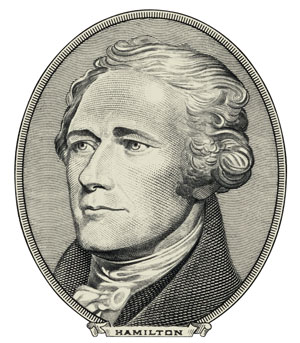
The U.S. Treasury recently announced plans to redesign the $5, $10, and $20 bills. The new ten-dollar bill will retain the portrait of Alexander Hamilton but its reverse side will feature Susan B. Anthony, Elizabeth Cady Stanton, Sojourner Truth, Alice Paul, and Lucretia Mott alongside the Treasury building. These five famous suffragists advocated for women’s right to vote, but lesser known are the pro-life convictions found among them and other feminists of their era.

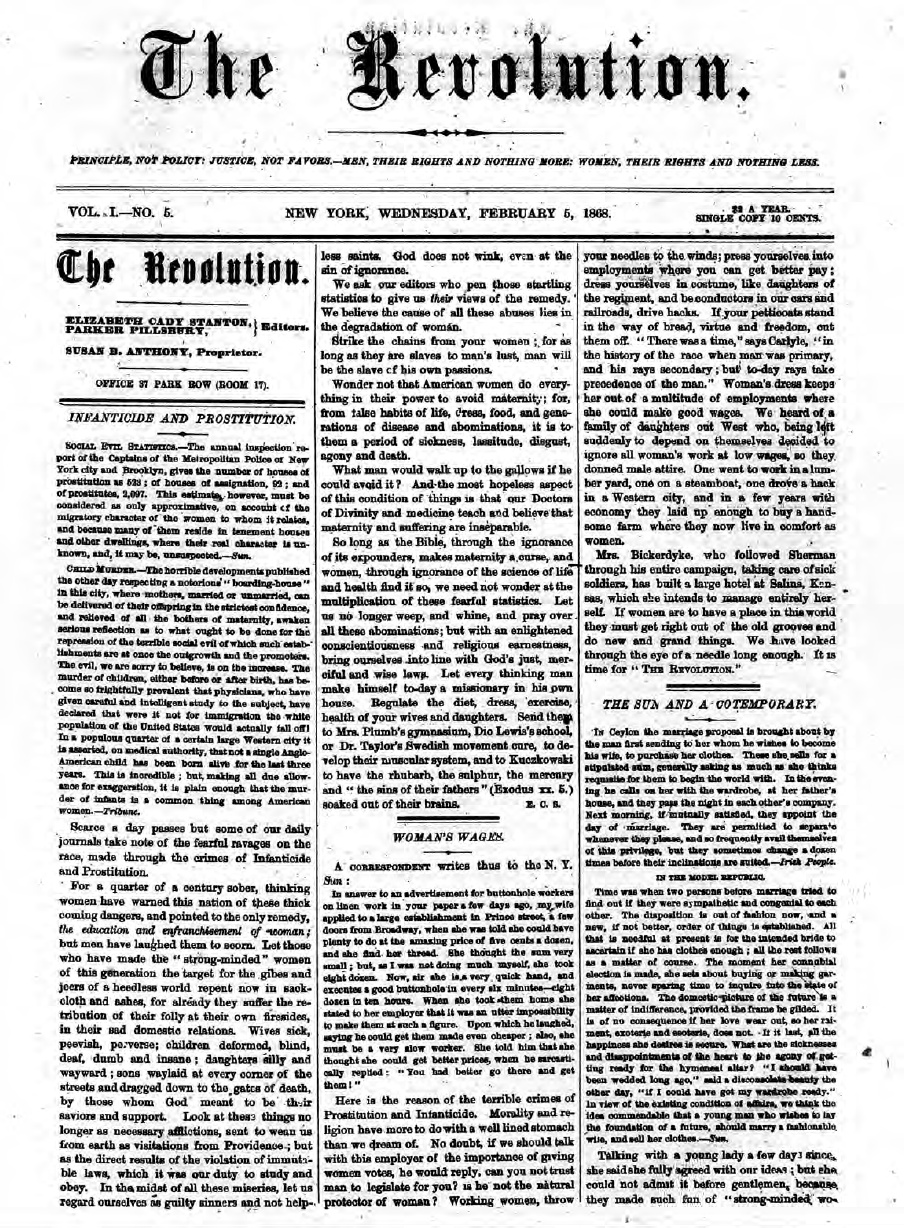
Susan B. Anthony and Elizabeth Cady Stanton co-founded a weekly women’s rights newspaper called The Revolution. From its beginning the paper had a policy against accepting ads for abortifacients: “Quack medicine vendors, …Foeticides and Infanticides, should be classed together and regarded with shuddering horror by the whole human race.” Their rejection of such revenue was a principled sacrifice for their struggling publication, since “child murder both before and after birth [was] a regular and, terrible to tell, a vastly extensive business.” In an 1868 editorial, Stanton called abortion “Infanticide,” declaring, “We believe the cause of all these abuses lies in the degradation of women.” (As honored suffragist Alice Paul, author of the first Equal Rights Amendment, wrote, “Abortion is the ultimate exploitation of women.”)

An 1869 Revolution piece denouncing abortion is frequently attributed to Susan B. Anthony, though its signature (“A.” rather than “S.B.A.”) may well stand for some “Anonymous” author. However, there is no doubt that in an 1875 speech about “the evil of intemperance” Anthony listed abortion among the society’s worst evils: “The prosecutions on our courts for breach of promise, divorce, adultery, bigamy, seduction, rape; the newspaper reports every day of every year of scandals and outrages, of wife murders and paramour shooting, of abortions and infanticides, are perpetual reminders of men’s incapacity to cope successfully with this monster evil of society.

These five suffragists devoted many words and efforts to women’s equality at the voting booth and throughout society. By comparison, they said relatively little about abortion. Yet this is not because early feminists accepted the killing of the unborn as normal but because they acknowledged its great evil as a given. In the 1880’s, all U.S. states had laws against abortion and for early feminists opposition to abortion was a commonly held conviction.Alexander Hamilton Bill Portrait

It is especially fitting that the women to be honored on the ten-dollar bill will be sharing the company of Alexander Hamilton. As the sensational, new musical about him dramatically recalls, by Providence, Alexander Hamilton, the out-of-wedlock son of a prostitute, was born impoverished and in squalor yet grew up to be a hero and a scholar. In our day, baby Alexander quite likely would have been aborted but his remarkable life demonstrates how even an unwanted child can bless an entire nation.

In this conviction, as on the new ten-dollar bill,
the pro-life suffragists have Hamilton’s back.

Tips for Raising Faith-Filled Children

April 13, 2016
  • Tell your children every day that you love them and that God loves them too.
  • Listen attentively and respectfully to what your child says.
  • Forgive frequently. Ask forgiveness when you have done wrong. Look for the humor in stressful situations and hug often.
  • Ask children to consider “what if…” when dealing  with challenging situations. Help them find creative, peaceful, and moral responses.
  • Tell your child that you pray for them every day and DO it. Thank God for the gifts they are.
  • Share your faith beliefs so your child can understand your hopes. Also share your doubts so they understand that doubts do not overwhelm faith.
  • Bless your child before bedtime by tracing the Sign of the Cross on their foreheads and saying: “God love you and keep you safe” or some other blessing. Teach your child to respond. “Amen.”
  • Encourage your child to value others for who they are – not what they have. Help them to develop Christian virtues and to treat others kindly and with respect.
  • Once a week, have a family night when you “unplug” to play board games, do crafts, read stories, or take time to talk together.
  • Honor family  dinner. The benefits are amazing and establish a sacred time to share the joys and trials of life with each other.
  • Pray before meals, before bed, during holidays and family celebrations, and any time when one needs guidance or comfort.
  • Have a family Bible and read the Gospel passages before Church.
  • Decorate your house for the liturgical seasons with an Advent wreath, purple during Lent, and a prominently placed crucifix.
  • Take time to ponder the beauty of creation with your child. Easter is a wonderful time to appreciate the new life of springtime.
  • During the fall and spring, help your child sort through their clothes and toys to donate to a shelter. Bring the child with you when you drop off your donations.
  • Select a patron saint to watch over your children when they become involved in a sporting activity. Pray to that saint every time they are at a practice or event.
  • Participate in the Catholic Relief  Services Rice Bowl program: read the prayers during Lent, look up the featured countries, and donate coins in the box provided.
  • Introduce your child to older people or those with disabilities in your neighborhood. Find out if they need assistance with chores or shopping.
  • When you can’t physically help someone, pray for them.
  • Choose sporting events that do not conflict with your Sunday Mass attendance.
  • Encourage “secret” good deeds.
  • Contribute to a food bank. Ask your child to help you with the collection and delivery.
  • Watch TV with your child and explain during commercials or afterward what you found to be good, wholesome, and valuable. If you find a program objectionable explain why when changing the channel.
  • Encourage your child to use their God-given talents to serve others.
  • Help your child find ways to participate in the of the parish, such as being an altar server, choir member, greeter, or reader.
  • Invite your parish priest over for dinner.
  • Volunteer in your child’s religious education program or Catholic school.
  • Have the sporting equipment your child uses get blessed.
  • Read stories from the Bible and biographies of saints to your child. Several great videos can also be found online.
  • Ask grandparents, godparents, and extended family to share stories about the family their faith lives.
  • On the anniversaries of your children’s Baptism, light their Baptismal candles and tell stories about that special day.
  • Display religious items in your home, such as a cross, artwork, or a picture of your child’s patron saint. Talk to your child about them.
  • By the way you live, let your child know that life is good, that your values and faith guide your decisions and how you interact with others, and that the happiness you experience is a direct result of your personal relationship with God.

Adapted from the pamphlet “Raising Your Child With Faith” by Cecilia P. Regan.

Jesus as an Undercover Boss

April 7, 2016

During the seven week span from Easter to Pentecost, the apostles were firsthand witnesses to Christ’s resurrection, but they lacked their mission. In those days, Jesus was not always visibly with them and the Holy Spirit was not prompting them to preach the Good News. And so, the apostles had extra spare time on their hands. But even if you’re a person who has seen Jesus Christ risen from the dead you still need to eat. Therefore, Peter says, “I am going fishing,” and six others decide to go along with him. Fishing the Sea of Galilee was Peter’s line of work before Jesus called him to become a ‘fisher of men.’

Jesus Appears on the Shore in John 21In today’s Gospel, Peter goes back to his old job. And then, unexpectedly, Jesus shows up at Peter’s workplace. Like an “undercover boss” on TV, Jesus comes in disguise. Jesus’ glorified and resurrected body allows him to conceal or change his appearance. At first, amid the routine of their work, the disciples fail to recognize him. But after catching their huge catch of (153!) fish, they realize “it is the Lord” and begin acting differently. How would you respond if the Lord appeared at your workplace as a customer, co-worker, or boss?

Sometimes we Christians slip into mentally separating our life at church from our life in the world; for example, working in the world without thinking of our faith. But we must remember to honor and serve Jesus Christ always and everywhere. You have probably heard of the importance of ‘seeing Christ in others.’ Seeing Christ in others means treating them like you would treat Jesus Christ himself. Now, of course, a Christian should not worship anything or anyone other than God, but Jesus wants you to love other people through the love you have for him.

As Jesus says in the Gospel of Matthew, when he comes in his glory with all the holy angels with him, Jesus will sit upon the throne of his glory and all the nations shall be gathered before him. And Jesus, the king and judge, shall declare to them, “Amen, I say unto you, inasmuch as you did it to one of these least of brethren of mine, you did for me.” Therefore, recognize Jesus encountering you, unexpectedly and disguised, at the place where you work—in your customers, your coworkers, and your bosses—and love them with your love for Christ.

Time Travel & God’s Prophesies

March 3, 2016

Many science-fiction stories have explored the idea of traveling through time and changing the past. For example, 1980’s “The Final Countdown” imagined a modern-day U.S. aircraft carrier being transported back to 1941 and facing the choice of either thwarting the Japanese attack on Pearl Harbor or allowing history to play out unchanged. In the early 1990’s, the TV time traveler Dr. Sam Beckett would “Quantum Leap” into other people’s lives, “striving to put right what once went wrong.” Just last fall, the internet hotly-debated the morality of going back in time to kill Adolf Hitler when he was still too young to have chosen or have committed any crimes.

ITardiss it possible to go back in history and change the past? There’s good reason to think that it is logically impossible. Here is why: Imagine traveling back in time and, by some tragic accident, killing your grandparent as a child. This would mean that one of your parents would have never been born… so you would have never been born… which raises the question: who killed your grandparent? Or imagine a time traveler’s intended history-changing mission succeeding, such as stopping JFK’s assassination. If so, then there is no cause for the time traveler to have ever been sent back from the future at all. This sort of logical contradiction is called a paradox.
Most serious time travel stories avoid this paradox problem using the premise that the past can be visited but never truly altered. Time travelers simply fulfill the role they have always played in those past events. Any and all attempts to avert some disaster in history will either prove useless or actually contribute to bringing about the calamity.

Time travel is merely fantasy, but the prophesies of God, which have correctly foretold future events, are very real. Consider, for instance, these passages from the 22nd Psalm written by King David under the inspiration of the Holy Spirit some 1,000 years before the coming of Christ:

“My God, my God, why have you abandoned me? … All who see me mock me… Like water my life drains away; all my bones are disjointed. My heart has become like wax, it melts away within me. As dry as a potsherd is my throat; my tongue cleaves to my palate… They have pierced my hands and my feet. I can count all my bones. They stare at me and gloat; they divide my garments among them; for my clothing they cast lots. … I will live for the Lord…”

This psalm is clearly fulfilled in Christ’s sufferings on the cross; the onlookers’ gloating mockery, the gambling over his garments, his dehydration and laboring heart, wounds cutting to his bones. What other form of torture is there that pierces the hands and feet? Jesus spoke this psalm’s opening words even while sharing the psalm’s closing hope in a life restored. These events were accurately described a millennium before they occurred.

God prophesying future events raises questions about human freewill. If Jesus’ crucifixion could be long foretold then what responsibility could Judas, Caiaphas, or Pontius Pilate possibly bear for their roles in the Passion? The answer is that Eternal God, from his vantage point outside of time, can behold all of history, including the free choices that each of us make. C.S. Lewis reconciles God’s knowledge and our freedom in these passages from his book “Mere Christianity”:

“…God is outside and above the Time-line. In that case, what we call ‘tomorrow’ is visible to Him in just the same way as what we call ‘today’. All the days are ‘Now’ for Him. He does not remember you doing things yesterday; He simply sees you doing them, because, though you have lost yesterday, He has not. He does not ‘foresee’ you doing things tomorrow; He simply sees you doing them: because, though tomorrow is not yet there for you, it is for Him. You never supposed that your actions at this moment were any less free because God knows what you are doing. Well, He knows your tomorrow’s actions in just the same way— because He is already in tomorrow and can simply watch you. In a sense, He does not know your action till you have done it: but then the moment at which you have done it is already ‘Now’ for Him.”

God’s knowledge of our free choices does not make our choices any less free. As St. Augustine once noted, “Just as you do not compel past events to happen by your memory of them, so God does not compel events of the future to take place by his knowledge of them.” God’s divine knowledge does not strip us of human freewill, but it does permit him to communicate perfect prophesies to his people concerning events further along our timeline. Such prophesies concern not only the Messiah’s life, but our times and future as well.

Jesus Christ has already victoriously prevailed. His Second Coming in glory is foretold and assured, and his people’s final victory over sin and death is prophesized and certain. This is the connection between time travel stories and the prophesies of God: like the futility of time travelers attempting to avert some historic disaster, any and all attempts to prevent the ultimate triumph of Christ will either prove useless or actually contribute to bringing about the coming of his Kingdom. The enemies of Jesus schemed to destroy him and his movement, but their very plotting led to the fulfillment of his mission and the birth of the Church. This knowledge is a cause for Christian endurance and joy, even amidst our times of struggle. We know that we are free to serve a faithful role in helping bring about the great, holy, happy ending of history.

Jesus is Risen, Not Undead

February 26, 2016

All the classics of horror are Catholicism twisted. Vampires are the shadow opposite of Jesus in the Eucharist; they prey on the blood of others to possess eternal life apart from God. Depictions of Frankenstein are distortions of the Mystical Body of Christ, with the dead parts of many monstrously combined as one. And what are zombie stories but corruptions of the Resurrection? A new friend of mine teaches a faith formation class with a 5th grader who periodically pipes up saying, “Jesus was a zombie.” So, this week, she taught them about how Jesus is different from zombies.

Zombies are typically said to be created by a virus or a magic spell, but Jesus lives by the power of God. Zombies lose their memory and intellects, but the risen Jesus knows his friends and converses with them. The bodies of zombies decay and they can be “killed,” but the risen Jesus is free from corruption and can die no more. Zombies “desire” to kill people, but Jesus would give them life. (What other differences can you find with your family?)

After seeing The Passion of the Christ in 2004, I heard a fellow seminarian say that the movie ending with Jesus walking from the tomb on Easter morning frustrated him—he want to see what happened next, he wanted the story to continue. Last Friday, I had the great pleasure of seeing a new film which tells that story: Risen. In it, a Roman soldier named Clavius is tasked by Governor Pontius Pilate to find the body of Jesus the Nazarene and end rumors of his resurrection. Only about a dozen people were in the theater on opening night, so if you want to enjoy this highly-recommended film on the big screen you should make a point to see it soon.


What the Catholic Church Teaches on Immigration

February 26, 2016

The Catechism of the Catholic Church #2241

        “The more prosperous nations are obliged, to the extent they are able, to welcome the foreigner in search of the security and the means of livelihood which he cannot find in his country of origin. Public authorities should see to it that the natural right is respected that places a guest under the protection of those who receive him.

        Political authorities, for the sake of the common good for which they are responsible, may make the exercise of the right to immigrate subject to various juridical conditions, especially with regard to the immigrants’ duties toward their country of adoption. Immigrants are obliged to respect with gratitude the material and spiritual heritage of the country that receives them, to obey its laws and to assist in carrying civic burdens.”

Remedial Kant

January 26, 2016

I produced this seminary skit in 2009. It’s not only funny, it’s (a little) educational, too.

Our philosophy teacher (of Spanish origins) had never heard the Mahna Mahna song before, so it took some clever editing to get her to “just say ‘phenomena.'”

The Real St. Nicholas

December 6, 2015

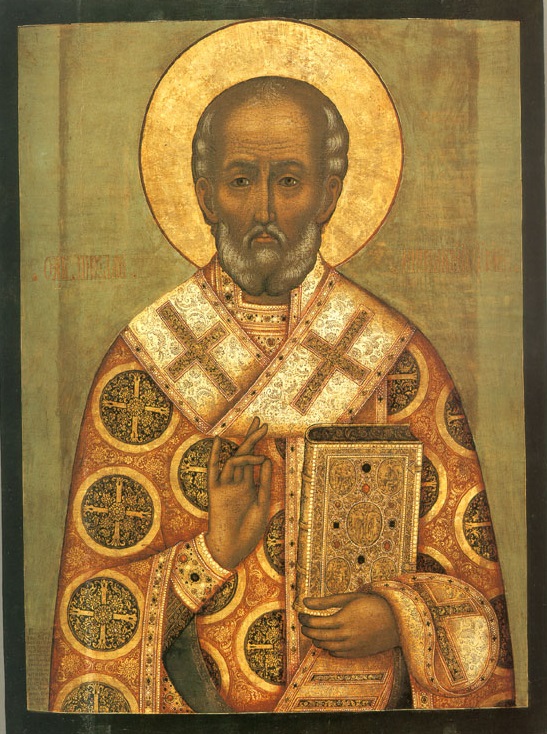
St. Nicholas by Fyodor ZubovSt. Nicholas (270-343 A.D.) was the bishop of Myra, a city on the southwestern corner of Turkey along the Mediterranean coast. He attended the Council of Nicaea in 325 A.D., opposed the Arian heresy, and signed the Nicene Creed (an early version of the creed that we profess at every Sunday Mass.) However, St. Nicholas is most well-remembered for his generous, secret alms-giving.

In one window in the back of St. Wenceslaus Church, St. Nicholas is depicted holding three sacks. This recalls how he once helped a family in serious need. There was a poor man who could not afford dowries for his three daughters to get married. (In those days, being without husbands would doom the women to lives of destitution, or worse.) Under the cover of night, St. Nicholas tossed three bags of gold coins through their window. (Alternate-tellings of the story have St. Nicholas dropping them down their chimney or leaving them in the daughters’ drying stockings.) We can imagine the family awaking the next morning, finding the gifts he had left, and celebrating the arrival of their salvation.

St. Nicholas’ feast day is celebrated December 6th

Related Link: How St. Nicholas of Myra became associated with Santa Claus

10 Ideas for Advent

November 29, 2015
  • Read & pray with the Book of Lamentations.
  • Meditate on the Gospel passages preceding the Nativity.
  • Learn about St. Nicholas and celebrate his day, December 6th.
  • Keep Jesus from your manger scene until Christmas comes.
  • Box Baby Jesus under the tree as the first gift you will open.
  • Have Joseph & Mary journey across your home to the manger.
  • Abstain from Christmas songs until Advent season ends.
  • Wait to light your tree and house until the light of Christ arrives.
  • Meditate upon what your life would be like without Jesus Christ.
  • Go to confession so that Christ may reign in your heart.