Archive for the ‘Culture’ Category

“Whose Image is This?”

October 18, 2020

29th Sunday in Ordinary Time

The Pharisees hated Jesus and were plotting how to entrap him in his speech, to cancel him though a politically incorrect gaffe. So they devised a cunning scheme in hopes of getting rid of him for good. In those days, Israel was under the pagan rule of the Roman Empire. The Jews resented this foreign occupation of their Promised Land and many favored a religious rebellion. The Romans’ chosen puppet-ruler and vassal in that region was King Herod Antipas, the son of Herod the Great who had slaughtered the infant boys of Bethlehem. King Herod’s supporters were called Herodians and, being the Romans’ collaborators, it was in their interest that the Roman taxes kept being paid. So the Pharisees sent their disciples along with some Herodians to ask Jesus a gotcha question about taxation.
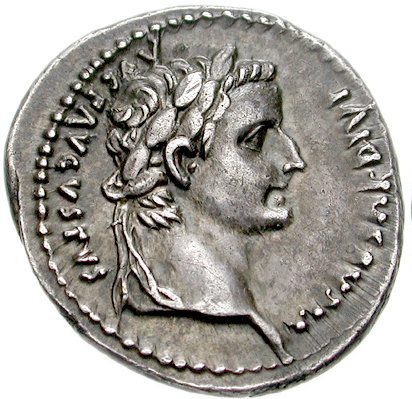
They prepare their trap for Jesus beginning with flattery, hoping to disarm him: “Teacher, we know that you are a truthful man and that you teach the way of God in accordance with the truth. And you are not concerned with anyone’s opinion, for you do not regard a person’s status. Tell us, then, what is your opinion: Is it lawful to pay the census tax to Caesar or not?” Now if Jesus answers that the Roman tax should not be paid, the Herodians will have him arrested, and Jesus will end up imprisoned or executed by Herod like his friend and relative, St. John the Baptist, was. But Jesus, knowing their malice and ill will, said, “Why are you testing me, you hypocrites? Show me the coin that pays the census tax.” They handed him the Roman coin. “Whose image is this and whose inscription?” “Caesar’s,” they replied. “Then repay to Caesar what belongs to Caesar and to God what belongs to God.” In other words, since Caesar creates the coins and the coins bear Caesar’s image, each coin is somewhat his already, they al belong to him, and one denies Caesar’s rightful claims on them at one’s own peril. Of course, Caesar’s authority is not unlimited; God’s authority is higher. And where Caesar’s rule conflicts with God’s, the earthly government should bow to the Kingdom of God.

Unlike people who lived in the past under the Roman emperor, we as American citizens have the right to vote to elect our leaders. In fact, voting is our moral duty. As the Catechism of the Catholic Church teaches, our “co-responsibility for the common good make[s] it morally obligatory… to exercise the right to vote”. (CCC 2240) Perhaps because of the Covid pandemic you are hesitant to visit a polling place on Election Day this November 3rd. If so, realize that you can request a Wisconsin absentee ballot from your local election office for any reason by Thursday, October 29th, eleven days from now. So there’s no reason we cannot safely vote.

But you might still be questioning, why should I bother? With the millions of votes to be cast in our state, what difference does my one vote really make one way or the other? It’s true, your single vote is unlikely to decide an election. But imagine if we all lived in together a forest, and one night a blazing wildfire surrounded our village on every side. When the cry went up for everyone to grab a water bucket and help fight the flames in the pivotal hour, would you? It’s true that your individual effort would be unlikely to decide the fate of our village, whether many lives were lost or saved, but how could you not be ashamed if you failed to answer the call? Or, picture a raincloud consisting of water droplets. A downpour is made of many such drops, and if any one single drop refused to fall it would probably make little difference below, but what happens if every drop has that attitude? The land would stay in deadly drought and the heavens would not renew the face of the earth with new life. Millions of us voting would transform our society for the better — provided of course that we not only vote but vote well.

There are many issues in this and every election, but which issue is the most important? Recall Caesar’s coin. He makes them and they bear his image, so they belong to him. Likewise, God makes human beings, we bear his image, so every life belongs to him, and we deny God’s rightful claim that we respect human life to our own peril. Psalm 139 praises God in these words: “You formed my inmost being; you knit me in my mother’s womb. I praise you, because I am wonderfully made.” Each new human life is created by God and precious to him. But since 1973, when the U.S. Supreme Court legalized abortion, an estimated sixty-one million little ones in our country have been killed in their mother’s womb. (That’s an average of more than one million a year.) These killings continue now, and it’s horrific. Sixty-one million deaths is like killing every person in every city in the State of Wisconsin… ten times over. If that happened would that be a big deal? Would it matter? How evil would that be?

In January of this year, when fifteen bishops from Iowa, Kansas, Missouri, and Nebraska visited Pope Francis at the Vatican for their once-every-five-years ad limina audiences with him, the Holy Father affirmed our U.S. bishops’ teaching that the protection of the unborn is the preeminent issue and priority of our time. “Of course, it is,” Pope Francis said. “[Life is] the most fundamental right… This is not first a religious issue; it’s a human rights issue.” In 2016, Pope Francis wrote: “I wish to restate as firmly as I can that abortion is a grave sin, since it puts an end to an innocent life. In the same way, however, I can and must state that there is no sin that God’s mercy cannot reach and wipe away when it finds a repentant heart seeking to be reconciled with the Father.” Our Holy Father is right. The intentional killing of unborn children is an ongoing grave evil that the Lord wants us to help end.

If we had been alive in America back when slavery was still legal would we have opposed slavery and worked to free slaves? If we had been living in Germany during the Holocaust would we have helped to protect Jews? We would all like to think so, but how much are we doing today? In one hundred years’ time, when school children learn about our present day, will they wonder scandalized at how we could be so indifferent, so blinded, to such cruelty in our midst?

In this election we are called to vote to protect life, but realize that voting is only a small sacrifice. It costs you nothing more than some minutes of your time. We are called to do more. Pray, fast, offer penances for the end of abortion, for in the words of St. Paul, “our struggle is not with flesh and blood but… with the evil spirits…” Donate, contribute your wealth, time, and helpful goods, to organizations that help new parents to choose life. Together with our personal witness, our pro-life words and loving example, God will change hearts and minds. By our work of faith, our labor of love, and our endurance in hope, many lives and many souls will be saved, and together we will rejoice in the victory of life for the Kingdom of God.


Coming Home — Funeral Homily for Michael “Mike” Morning, 69

September 7, 2020

The communities of St. Paul’s and St. John the Baptist’s offer you our sympathy at Mike’s passing. We also offer the support of our prayers with this, Jesus Christ’s perfect offering to the Father, in the Holy Mass. May our prayers help Mike on his way, and help all of you as well, whom he dearly loved and dearly loves; especially Jackie, whom he married at St. John the Baptist Church 43 years ago, and his siblings, his friends, his nieces and nephews, grandchildren and godchildren, and others.

I often say that no brief funeral homily can capture the full mystery of a Christian life, and you who have known Mike for years surely know him better than I. The best I can do is to examine one part of his life which reflects something of the whole story for Mike, and you, and me.

Among the many things Mike did on earth, he had an active role in establishing the Eagleton Softball and Baseball fields. If you don’t know it, Eagleton is a small, unincorporated town to the southeast from here, seven and a half miles down the road. Their baseball field is no Major League park like Wrigley or Fenway, but Mike was right to be proud of it. He looked at what he had made and saw that it was good. With outfield fences some 250 feet out, lights for nighttime play, four bases and a mound; it had everything needed to host the game.

Baseball and softball are somewhat unique among sports. In most sports, the offense side carries, catches, throws, or kicks the ball to score. But baseball and softball are among the few games where the defense side controls the ball. Batters who are up don’t exactly know what pitches will be thrown their way, but they get to choose their swings. Some of them advance, but many strike out.

A good coach can help them though; giving them signs and instructions on which pitches to swing at and which pitches to take, and, once on base, when and how to advance further. Through his past experience as a player, his intimate knowledge of the game, and his personal investment in training his players, a great coach can produce hall of famers. In addition to the indispensable coach, teammates are important too, in helping to get home.

As it is in baseball and softball so it is in life. We do not control what’s thrown our way, what curveballs come across the plate, but we each must decide how to swing in our at bat. Will we listen to the wisdom of our coach, who has been in our shoes himself, and who earnestly desires that after forming us in his likeness that we could be called up to the big leagues far from here.

Jesus encourages us in today’s gospel, “Do not let your hearts be troubled. You have faith in God; have faith also in me.” If we would listen and allow him, Jesus promises to lead us home, and tells us we know the way. “I am the way and the truth and the life,” he says, “No one comes to the Father except through me.”

In baseball and softball as in life, our goal is to get home. Mike might already be there with the holy hall of famers in Heaven, but in case he is still rounding the bases, let us as his teammates and friends aid him in getting home through our prayers. And may each of us heed and follow Christ our coach and play this one pivotal game of life so as to win.

Meet St. Paul’s Newest Teacher

July 20, 2020

Rachael Butek is a Cooks Valley native and graduate of Christendom College. She will be teaching English and Religion at St. Paul’s Catholic School this fall.

Why did you choose to teach at St. Paul’s?
Because to me teaching is a mission, not just a job, and as a member of St. John’s for the past 15 years I desired to give back to the community which has done so much for me.

What do you love about English?
Everything! I love the intricacy of our language, and delving into its origins in order to better understand how we communicate today. I also enjoy exploring the way that good literature can communicate Truth and Beauty to us.

What are ten other things you like?
In no particular order: Anglo-Saxon England, gardening, calligraphy, wild turkeys, book binding, singing, bugs, dancing, long walks, and good conversation. Feel free to ask me about any of them!

What do you wish to become patron saint of someday?
Good communication. I think about 90% of the worlds problems could be improved by better communication skills!

To learn more about enrolling into St. Paul’s Catholic School call our principal, Jackie Peterson, at 715-568-3233.

False Paths to Paradise

July 9, 2020

Early in the Book of Genesis we read about a great flood wiping out humanity (sparing only Noah, his three sons, and their wives) and then about people building a great city and high tower until God confounds their efforts. These two inspired tales hold important lessons for every society in history, including our’s today.

When God saw how wicked the human race was he decided to pour down judgment on the earth and start over. So he told Noah, the best of men, to build an ark for his family to survive. Once the floodwaters had receded, “God blessed Noah and his sons and said to them: Be fertile and multiply and fill the earth.” This was to be Eden anew. But when Noah drank wine to excess and became drunk he was somehow violated by his son while laying naked inside his tent. The flood was meant to cleanse the earth of sin, but sin stowed away upon the ark.

Then, after detailing Noah’s descendants, Genesis tells how people said, “Come, let us build ourselves a city and a tower with its top in the sky, and so make a name for ourselves!” The Lord said, “If now, while they are one people and all have the same language, they have started to do this, nothing they presume to do will be out of their reach.” God confused their language so that they stopped building the city and scattered across the earth. Why did God react this way? That city is called Babel because God made them babblers but also likely in reference to ancient Babylon, the enemies of God’s people who had high towers called zigguratts on which they worshiped false gods and offered human sacrifices. God thwarts Babel to limit the evils they can accomplish.

The tales of the Great Flood and the Tower of Babel reflect two ineffective strategies for eradicating evil: purging all the wicked and uniting everyone apart from God. Our world seeks scapegoats, persons and groups to blame for our problems. “If only it were all so simple,” writes Aleksandr Solzhenitsyn. “If only there were evil people somewhere insidiously committing evil deeds, and it were necessary only to separate them from the rest of us and destroy them. But the line dividing good and evil cuts through the heart of every human being. And who is willing to destroy a piece of his own heart?” Our world also clamors for greater unity in one leader or party, nation or race, economic system or secular ideology. We must not ignore politics, realizing that a movement detached from God and sufficiently empowered will lead people to physical and spiritual deaths.

God’s desire is to unite all peoples in Christ, undoing Babel with Pentecost. The Church, Christ in his members, is sent to save our world through conversion rather than destruction “for God did not send his Son into the world to condemn the world but that the world might be saved through him.” Sin and sinners must be opposed but not without the love which we ourselves have received as sinners reconciled to God. Take courage today by recalling the conversions of Saul and the Romans Empire, Christianity’s early enemies – by grace and virtue the Church can win over even her worst persecutors.

A Man for our Seasons

June 22, 2020

12th Sunday in Ordinary Time

June 22nd is the feast day of St. Thomas More, one of my favorite saints. Back in 1929, the great Catholic writer G.K. Chesterton wrote: “Thomas More is more important at this moment than at any moment since his death, even perhaps the great moment of his dying; but he is not quite so important as he will be in about a hundred years’ time.” This prediction’s one hundred year anniversary arrives this decade. So who is St. Thomas More, what made him a martyr, and what lessons does he have for us today?

In 1509, the new eighteen-year-old Catholic King of England, Henry VIII, married a smart and extremely beautiful Spanish princess, Catherine of Aragon. Seventeen years later, King Henry, without a male heir, with his affections now shifted toward a mistress, began citing a passage from the Old Testament book of Leviticus to argue that his marriage to Catherine was invalid and he asked the pope to annul his marriage. What happened thereafter is a story retold in my favorite movie, 1966’s Best Picture Winning film, A Man for All Seasons. That remarkable man for all seasons – adept in all circumstances – was St. Sir Thomas More.

A successful attorney, judge, diplomat, and statesman, Thomas More served in many official roles, including as Speaker of the British House of Commons. His brilliance is reflected by his witty quotes and writings. Four hundred ten English words have their invention (or at least their first-known appearances) from him, including the word “Utopia,” the title of his most famous book. A deeply devout Catholic, Thomas More had seriously considered becoming a monk, but instead discerned a call to marriage, family, and a career in public life. All these traits combined made him a great asset to the King. For instance, More once helped Henry VIII write a treatise in “Defense of the the Seven Sacraments” against Martin Luther’s errors for which the pope bestowed upon the king the title “Defender of the Faith.” The king trusted and admired Thomas More for years and appointed him to be the Lord Chancellor of England, a very high office. Then a season of great evil came to that land.

When King Henry asked Pope Clement VII to annul his marriage the pope refused. What Henry sought would have been a divorce, and Jesus said, “Whoever divorces his wife and marries another commits adultery.” Henry continued petitioning, but the Holy Father’s refusal was steadfast against this king spurning his queen. In response, Henry divorced and remarried anyway and went on to assert his supremacy over and against the pope, declaring himself to be the leader of the Catholic Church throughout his realm. Henry then used the power of the state to make all his subjects fall into line. It became a crime to agree with the pope against the king and all public figures were required to swear oaths affirming the king’s supreme headship over the Church in England. Those who denied the king’s claims would be executed.

Thomas had resigned his office and withdrawn from public life because of and prior to the king’s illegitimate remarriage and Thomas did not attend the wedding ceremony. Thomas was not going to endorse, by his words or actions what he did not believe. The king’s remarriage was wrong, but Thomas hoped that by maintaining public silence he and his family would be left alone. However, the compelled oath affirming the king’s supremacy would no longer tolerate Thomas’ neutrality. The oath was evil. Jesus, from his own lips while on this earth, had entrusted the role of supreme governance of the Church to St. Peter and his successors, the popes. Thomas was absolutely resolved not to swear a false oath, for Jesus warns us, “Whoever denies me before others, I will deny before my heavenly Father.”

When Thomas would not take the oath, he was imprisoned in the Tower of London and was charged with high treason. Thomas, the brilliant expert of law and debate, put up a sound defense that under the law they had no grounds to punish him, but following evidently false testimony from an ambitious acquaintance who betrayed him, Thomas More, under this pretext, was found guilty. The condemned man then spoke out against the unchristian oath and the injustice being done, yet in closing he said this to his judges: “More have I not to say, my lords, but that like as the blessed apostle Saint Paul, as we read in the Acts of the Apostles, was present and consented to the death of St. Stephen, and kept their clothes that stoned him to death, and yet be they now [both] holy saints in heaven and shall continue there friends forever: so I verily trust and shall therefore right heartily pray, that though your lordships have now in earth been judges to my condemnation, we may yet hereafter in Heaven merrily all meet together to our everlasting salvation.” At his beheading for being condemned as a traitor, at his martyrdom for being faithful to Christ and his Church, St. Thomas More spoke these words: “I die the king’s good servant and God’s first.”

Today, like willful King Henry VIII, much of our prevailing culture also wants things contrary to God’s will and Christ’s teachings. They declare that all who do not fully agree with them are evil and should be expelled, cancelled from society. And the powers of government, our courts and leaders, seem to be taking their side. Jesus said:

“Have you not read that from the beginning the Creator ‘made them male and female’ and said, ‘For this reason a man shall leave his father and mother and be joined to his wife, and the two shall become one flesh’? So they are no longer two, but one flesh. Therefore, what God has joined together, no human being must separate.”

God made us male and female, he created marriage, all peoples and races share a common origin and dignity from him, and Christ was sent to save us all. Thus, marriage is a lifelong union between one man and one woman, an adult female is a woman and an adult male is a man, no one should be judged for the color of their skin, and Jesus Christ is the only way to the Father. These beliefs are not always popular, but ignoring these truths leads to pain and loss. The story of St. Thomas More shows us that public silence and private disagreement may not be tolerated by this world. Sooner or later, it may be demanded that you too either submit or suffer. At that time, and all times, remember: do not lie, never ever lie, and do not be a party to a lie.

Jesus says, “Blessed are they who are persecuted for the sake of righteousness… thus they persecuted the prophets who were before you.” In years past, this passage made me think of suffering Christians in the distant mission lands of Asia or Africa, where they are the vulnerable minority, or of how the Roman pagans persecuted the early Church. But who was Jesus referring to when he said “they persecuted the prophets who were before you”? Who persecuted the Jewish prophets in the Old Testament? It wasn’t so much the unbelieving pagans as the prophets’ own leaders and neighbors they were sent to, the people of God. Likewise, a Christian can easily become a betrayer or a passive party to evil if he or she does not resolve like St. Thomas More to live in the truth and stand with Christ no matter what.

Though Thomas More was clearly innocent, it took his twelve jurors only fifteen minutes to find him guilty. They were afraid. There were fifteen judges at his trial, many of whom had been his friends, but none of them were willing to defend him. They were all afraid too. The saint might have been saved if only one had stood firm instead of just standing by. The Church in England might not have collapsed if there had been more upright men like St. Thomas More. What we do in the time that is given us matters. Stand with him and the Lord will strengthen you like he did the Prophet Jeremiah. You may feel alone, but you won’t be, and Jesus Christ will be proud of you.

This stand may cost you dearly. Will it be worth it? Jesus tells us, “Blessed are you when they insult you and persecute you and utter every kind of evil against you falsely because of me. Rejoice and be glad, for your reward will be great in Heaven.” So do not be afraid. Jesus says, “Fear no one.” Remember there is only One whose opinion ultimately matters. “Do not be afraid of those who kill the body but cannot kill the soul; rather, be afraid of the one who can destroy both soul and body in Gehenna. Everyone who acknowledges me before others I will acknowledge before my heavenly Father.” St. Thomas More said, “I do not care very much what men say of me, provided that God approves of me.”

Last Friday evening, a statue of St. Junipero Serra, the Franciscan missionary to California, was pulled down and desecrated by about one hundred people in San Francisco. The police did nothing to stop them. Those people who did this probably believed false and horrible things about the saint, and that would be some encouragement except that many people believe false and terrible things about our Church today. Along this path it’s not hard to imagine Catholic churches being firebombed sooner or later. But remember, even if this happens, whatever may come, whatever persecution we may face, Jesus says, “love your enemies and pray for those who persecute you.” Love God and everyone because it’s Christian love that saves. This is what Jesus Christ, St. Thomas More, and all the martyrs showed in their courageous words and actions. Let’s learn from them and imitate them in whatever seasons await us, and so come to share in the eternal reward of the Just in Christ’s Kingdom.


Called & Led into His Friendship & Community

June 17, 2020

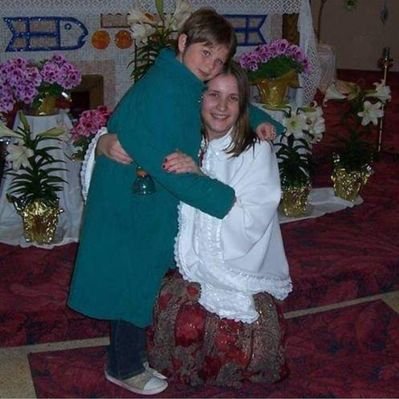
Elena Feick at 2007’s Easter Vigil where she received the Sacraments of Initiation

How does a 15-year-old unbaptized Canadian girl, a practicing Wiccan with SSA, come to find a relationship with Jesus in his Catholic Church? For Elena Feick, her journey began when she sought to join a coven.

Elena used to meditate by herself, worshiping the five elements and a pagan goddess, but she longed for more community. A particular coven, before they would admit her, asked that she research another religion besides Wicca first. Elena chose to read Christianity’s Gospels thinking she would be able to easily dismiss them. However, to her surprise, “I just… believed them. I didn’t want to. But when I got to Luke 11:9 (“And I tell you, ask and you will receive; seek and you will find; knock and the door will be opened to you”), I realised I did believe. But I didn’t like how the Christian God wasn’t willing to share me with other ‘gods’ so I resisted for a long time.” She still wanted to practice Wicca and worship a goddess yet she couldn’t say she didn’t believe in Christianity. So, instead of joining a coven, she joined the Unitarian Universalists (a creedless religious movement founded in 1961).

Elena’s journey to God was then helped by another unlikely source: “Sex and the City.” That was her favorite TV show as a teenager and her favorite character on it was Charlotte (played by Kristin Davis). In one episode, Charlotte converted to a new religion in hopes that her Jewish boyfriend would marry her. Elena was very disappointed in Charlotte, convinced that she had the ordering of things all wrong. “One’s relationship with God should come before even romantic relationships,” she thought. That’s when Elena decided not to date anyone seriously until she figured out for sure what she believed. She went on to explore lots of religions. Eventually, against her will, she ended up at a Catholic Mass.

The Mass was held at her new Catholic school and she was very afraid to attend. She thought the priest might supernaturally read her soul and denounce her as a witch. But when he gave her a blessing at Communion time something happened. In a way she couldn’t explain or put a finger on, she felt different and overwhelmed. “I can still sometimes feel his thumb tracing a cross on my forehead. It was the first time I really experienced the feeling of the love of God.” A few weeks later she decided to ask the priest about the experience and that was her inroad to the Church. A year later, she joined the local RCIA program to become Catholic. “It took quite a few conversations before I would agree to stop practicing Wicca though! But I did, just before I started RCIA.

Elena beside a reliquary of St. Therese of Lisieux in Scotland in the fall of 2019

When her RCIA teachers instructed the class about the Real Presence of Jesus in the Holy Eucharist, Elena was skeptical. “Ok, so they’re crazy,” she thought. But at the encouragement of the now-trusted priest who had blessed her (Fr. Terence Runstedler of Ontario) she began going to the perpetual adoration chapel every day and recognized its graces. “[I] realised that things I had prayed over at home that made no sense made perfect sense if I prayed over them in the chapel. …Every time I went to Adoration, Jesus spoke to me in some way. Every time. I couldn’t ignore it. … The Eucharist is the reason I didn’t completely ignore Church teaching on SSA [same-sex attraction] and find myself a girlfriend.

Elena had been in denial about her attractions growing up. After discovering Catholicism, she prayed for these feelings to go away but they wouldn’t. She decided that maybe the Church was wrong and started going to LGBT support groups. Her mind changed back again at her grandmother’s funeral. It was a non-Catholic service and everyone was invited to come forward and receive their communion, “but I just knew so powerfully that I couldn’t because it wasn’t *Him*. It was lacking the Real Presence. Which meant I still believed in the Eucharist. Which meant the Church has to be right. So I changed my whole life again even though I didn’t understand the teachings on chastity.”

In 2007, at the age of 19, Elena was baptized, confirmed, and received her First Communion at the Easter Vigil. “Right up to the night, I was still partially afraid that God would strike me down when the baptismal waters touched me. I wanted so much to belong to Him but half thought that maybe He didn’t want me… I thought if He wanted me in the Church, why didn’t He have me born in a Catholic family? But then I received Him for the first time and I just *knew*. I could hear Him (not like a voice but like thoughts that you know come from Him) saying that I always belonged to Him and always would.” Elena notes that some people have deeply intellectual reasons for converting but her reasons were more relational. “[The Lord] just kept inviting me and pulling me along and putting things in my path I couldn’t ignore. He kept introducing me to Himself, over and over, until I finally recognised it was Him I was longing for.

Elena at The March for Life UK in London, May 2019

Today, Elena is 32 years old, lives in Scotland, and prior to the pandemic she worked as a personal support healthcare worker. (I myself made her acquaintance and learned her story this year through the social media website Twitter.) In her spare time, Elena enjoys writing songs and making rosaries and is a member of both Courage International and Eden Invitation, two groups which support those with same-sex attractions in living chaste and saintly lives. Through Catholic faith and community, she says, “I started to learn my identity as belonging to Christ and as a daughter to the Father.” Elena hopes to help other LGBT-identifying persons to also discover a deeper self-identity in God. Even in the discouraging modern culture we live in, Elena’s story encourages us that Jesus Christ is still powerfully, lovingly, calling and leading people into his friendship and community.

Watch “The Chosen”

June 8, 2020

The Chosen” is a truly excellent dramatized series about Jesus’ early ministry. I highly recommend it. They flesh-out characters and scenes from the Gospel texts in creative but faithful ways. The depiction of Jesus is particularly compelling. You can see the first season’s episodes on YouTube or through this free app.


The Christian Commentary of the Ferengi Fathers

April 28, 2020

Though thoroughly pagan, Ferengi culture is very rich. While the love of money and of what tickles the ears leads to many sins and errors, the brilliance of hidden treasure may still be glimpsed shining forth through dirt. Like St. Justin Martyr wrote, God has planted “seeds of truth”, seeds of the Logos, within all pre-Christian peoples in preparation for the fullness of the Gospel.

Let us examine how aphorisms found within Ferengi society’s most influential text (Grand Nagus Gint’sThe Rules of Acquisition”) sometimes point, even despite themselves, to revealed Christian truths. I doubt many Ferengi will forgive me if my interpretations here are too generous, but I hope that many may gain some profit from them.


Jesus called them. So they left their father Zebedee in the boat along with the hired men and followed him.

Rule #6: Never allow family to stand in the way of opportunity.


“Everyone who belongs to the truth listens to my voice.”

Rule #7: Keep your ears open.


“You have drunk, but have not been exhilarated;
have clothed yourselves, but not been warmed;
and he who earned wages earned them
for a bag with holes in it.”

Rule #19: Satisfaction is not guaranteed.


“I give them eternal life, and they shall never perish.   No one can take them out of my hand.”

Rule #42: What’s mine is mine.


“I do not pray for the world but for the ones you have given me, because they are yours, and everything of mine is yours and everything of yours is mine, and I have been glorified in them.”

Rule #43: What’s yours can be mine.


Jesus said, “Father, glorify your name!” Then a voice came from heaven, “I have glorified it and will glorify it again.” The crowd there heard it and said it was thunder, but others said, “An angel has spoken to him.”

Rule #44: Never confuse wisdom with luck.


On that day, there broke out a severe persecution of the church in Jerusalem, and all were scattered throughout the countryside of Judea and Samaria, except the apostles.

Rule #45: Expand or Die.


As Jesus passed on from there, he saw a man named Matthew sitting at the customs post. He said to him, “Follow me.” And he got up and followed him.

Rule #46: Make your shop easy to find.


“God so loved the world that he gave his only Son, so that everyone who believes in him might not perish but might have eternal life.”

Rule #49: Everything is worth something to somebody.


The angel said to the women at the tomb, “I know that you are seeking Jesus the crucified. He is not here, for he has been raised… Go quickly and tell his disciples he has been raised from the dead… Behold, I have told you.”

Rule #55: Advertise.


“Are you the only visitor to Jerusalem who does not know of the things that have taken place there in these days?!”
And Jesus replied to them, “What sort of things?”

Rule #56: Be discreet.


“You must not distort justice: you shall not show partiality; you shall not take a bribe, for a bribe blinds the eyes even of the wise and twists the words even of the just.”

Rule #61: Never underestimate the power of bribery.


“We speak God’s wisdom, mysterious, hidden, which God predetermined before the ages for our glory, and which none of the rulers of this age knew; for if they had known it, they would not have crucified the Lord of glory.”

Rule #85: Never let the competition know what you’re thinking.


“Do not store up for yourselves treasures on earth, where moth and decay destroy, and thieves break in and steal. But store up treasures in heaven, where neither moth nor decay destroys, nor thieves break in and steal.”

Rule #90: The Divine Treasury awaits.


In those days John the Baptist appeared, preaching in the desert of Judea saying, “Repent, for the kingdom of heaven is at hand! … Even now the ax lies at the root of the trees.”

Rule #93: Act without delay! The sharp knife cuts quickly.


“Love your enemies, do good to those who hate you, bless those who curse you, pray for those who mistreat you… Then your reward will be great and you will be children of the Most High, for he himself is kind to the ungrateful and the wicked.”

Rule #118: There is no profit in revenge.


“[Jesus Christ] emptied himself… he humbled himself, becoming obedient to death, even death on a cross. Because of this, God greatly exalted him and bestowed on him the name that is above every name…”

Rule #154: Pain passes, but profits remain.


After they had crucified him, they divided his garments by casting lots…

Rule #162: Even in the worst of times, someone turns a profit.


Behold, the angel of the Lord appeared to Joseph in a dream and said, “Rise, take the child and his mother, flee to Egypt, and stay there until I tell you. Herod is going to search for the child to destroy him.”
Joseph rose and took the child and his mother by night and departed for Egypt.

Rule #173: Dream, plan, believe, act.


“Which of you wishing to construct a tower does not first sit down and calculate the cost to see if there is enough for its completion? Otherwise, after laying the foundation and finding himself unable to finish the work the onlookers should laugh at him… In the same way, everyone of you who does not renounce all his possessions cannot be my disciple.”

Rule #195: You can’t jump a twenty foot gorge in two ten foot jumps.


“I give praise to you, Father, Lord of heaven and earth, for although you have hidden these things from the wise and the learned you have revealed them to the childlike.”

Rule #207: Sense without education is better than education without sense.


The high priest asked him and said to him, “Are you the Messiah, the son of the Blessed One?”
Then Jesus answered, “I am;
and ‘you will see the Son of Man
seated at the right hand of the Power
and coming with the clouds of heaven.”

Rule #208: Sometimes the only thing more dangerous than a question, is an answer.


When the wine ran short, the mother of Jesus said to him, “They have no wine.”
Jesus said to her, “Woman, how does your concern affect me? My hour has not yet come.”
His mother said to the servers, “Do whatever he tells you.”

Rule #225: Always follow one step ahead.


(On the pride of Goliath and Absalom)

Rule #235: Duck; death is tall.


“Do not give what is holy to dogs, or throw your pearls before swine, lest they trample them underfoot, and turn and tear you to pieces.”

Rule #250: Precious things are for those that can prize them.


“Put to death, then, the parts of you that are earthly: immorality, impurity, passion, evil desire, and the greed that is idolatry. Because of these the wrath of God is coming upon the disobedient.”

Rule #257: Despise the things you cannot have.


“After this I had a vision of a great multitude, which no one could count, from every nation, race, people, and tongue. They stood before the throne and before the Lamb, wearing white robes and holding palm branches in their hands.”

Rule #276: Overbooking is standard practice.


Our Seminarians’ Coronavirus Stories

April 6, 2020

God has blessed our parishes with priestly vocations. Of the sixteen seminarians currently enrolled in major seminary for our La Crosse Diocese, three of them (fully 18%) belong to St. Paul’s or to St. John the Baptist’s Parishes. These young men have now returned safely home to us, but what was it like for them to be at seminary as this pandemic arose and what has life been like since? These are their stories.


Isaac Pecha of St. Paul’s Parish in Bloomer had been studying in 1st Theology at the North American College in Rome. He writes:

My experience of the Coronavirus outbreak has occurred in three stages: the initial outbreak in Italy, the two-week quarantine upon returning to America, and then the statewide stay-at-home order that started right as I left quarantine. Each has come with its own graces, which I share below.

In late February, a few towns in the north of Italy were put on lockdown, but Rome continued as normal. I even remember telling a classmate on March 4th, “I don’t think classes will be cancelled unless someone in the university gets sick.” The next day, the government announced that they were suspending all school activities. Then on March 9th, the lockdown was extended to the whole country. We were called back to America, with a flight out in 11 hours. I said my goodbyes, packed a single suitcase, and we left Rome. An hour after we landed on the 11th, the U.S. suspended travel from Europe. During this stage, my biggest graces were the clear reminder of how little we are in control of things, and having a bishop who acted so wisely as to call us home when he did.

When we got back to America, the four of us La Crosse seminarians had to quarantine together for two weeks before we could go to our families. In the unused rectory where we stayed, we established an horarium and continued to pray, study, and enjoy fraternal time as usual. There was a sliding glass door, and on Sundays a nearby priest would say Mass on the porch outside (with us safely contained in the house). This was the greatest grace of the personal quarantine—a concrete reminder of how lucky we are to have the sacraments, and the lengths to which priests will go to bring them to us.

The day before our release from personal quarantine, Governor Evers issued the statewide stay-at-home order, so as soon as the health department cleared us to leave, we all went straight back to our families. Since then, I have been at home, still taking classes online, spending time with my family. Having little to do besides pray, study, and hang out with my family members has been a great grace.

I am reminded of the words of one of my favorite holy women, Servant of God Chiara Corbella Petrillo. She said, “God does not want to take good things away from you, and if he takes, it is only to give you so much more.” Obviously, I cannot wait to go back to Rome, or receive a parish assignment here in our diocese, but it would be wrong to only long for those things without thanking God also for the good things he has given me in the meantime.


To this account, Eric Mashak, the 3rd year theologian from St. John the Baptist Parish in Cooks Valley, simply adds:

For us seminarians who study in Rome, it was very unexpected to be called back to the U.S. by our bishop. We found out that we were coming home around dinner time and were at the airport about 12 hours later. This, for me, was a simple lesson in obedience. There is a necessity for fast acting obedience in the priesthood. Like the Apostle Andrew who dropped his nets and instantly followed Christ, so too the priest needs to be ready to take a new parish assignment at a call from the bishop. Formation never stops! Even when we can’t be in a seminary.


Matthew Bowe of St. Paul’s was studying in 2nd Theology at St. Francis de Sales Seminary just outside of Milwaukee. He writes:

Greetings, brothers and sisters in Christ. I pray that everyone is doing well and is staying healthy. If you or your family or your friends have been deeply affected by the Coronavirus, please know that they are being prayed for in a special way.

Like other places, St. Francis de Sales Seminary had to adjust to the Coronavirus situation. After finishing our spring break, we had classes the week of March 9th. On Friday, March 13th, around 11 a.m., we received an email stating that the plan was to continue with classes on the following Monday. Later that evening around suppertime, all that changed when emails were sent about going to online classes until Easter and that formation would be suspended for a couple of weeks. Seminarians would be allowed to St. Francis Seminary under quarantine during that time if they so wished. For the seminarians of the Diocese of La Crosse, we received an email after supper stating that we were to go home as soon as possible. I have been home since March 14th.

Since then, classes will be conducted online through the end of the semester, and seminarians are to remain where they currently are until St. Francis Seminary tells us otherwise. At home, I have found balance in completing my schoolwork while maintaining prayer times and other healthy habits (e.g., eating well, exercise, and leisure activities). I have been catching up on some good movies and enjoying home-cooked meals with my parents. Further, I help out around the house. Other than that, my life is somewhat uneventful and routine, and there is a peace with that. The stress and pressure of a normal seminary life, which does give me life, have been removed, and I have a more comfortable position to reflect on the good that God has given me during my time as a seminarian. God has given me good gifts during this time of trial and tribulation.

I would like to conclude by asking everyone to continue to keep faith. Although this is a difficult time for everyone, let it bring forth good fruit that can only be achieved by uniting oneself to the will of God. Trust God, and He will do good things for you (in ways that you may not expect). While we brave this storm, let us pray for one another. I will continue to pray for the families of the parish, and I ask you to pray for my family and for my brother seminarians. May the merits of Jesus’ Passion enliven our faith during this Holy Week.

Screwtape on Pandemics

March 25, 2020

I was introduced to the Christian writing of C.S. Lewis years ago during a time of temptation. Alone at my uncle and aunt’s home, I prayed to God for some kind of diversion. “Lord, give me something (to change where I see things are headed).” The next moment, scanning the living room shelves, I saw a book cover with the image you see here. That paperback preserved me that evening and would go one to become one of my all-time favorite books: The Screwtape Letters.

In these letters, a senior demon named Screwtape instructs a junior demon, his “nephew” Wormwood, in the tactics of misleading humans. Screwtape describes how to draw the soul of one’s “patient” away from God (“the Enemy“) toward the devil (“Our Father Below“). The book is not only often seasoned with ironic, dry humor, but also contains great insights into human nature and spiritual realities.

At the time of Screwtape’s fifth letter to Wormwood, Britain had just recently entered the Second World War. However, as Lewis observes in his preface, “The history of the European War, except in so far as it happens now and then to impinge upon the spiritual condition of one human being, is obviously of no interest to Screwtape.” What the demon has to say about the influence of war in the greater battle for souls contains spiritual reflections that apply to our current time of pandemic as well.

Below is the text of that letter refashioned with pandemic being substituted for war.


My dear Wormwood,

It is a little bit disappointing to expect a detailed report on your work and to receive instead such a vague rhapsody as your last letter. You say you arc “delirious with joy” because [of this new pandemic.](1) I see very well what has happened to you. You are not delirious; you are only drunk. Reading between the lines in your very unbalanced account of the patient’s sleepless night, I can reconstruct your state of mind fairly accurately. For the first time in your career you have tasted that wine which is the reward of all our labours — the anguish and bewilderment of a human soul — and it has gone to your head. I can hardly blame you. I do not expect old heads on young shoulders. Did the patient respond to some of your terror-pictures of the future? Did you work in some good self-pitying glances at the happy past? — some fine thrills in the pit of his stomach, were there? You played your violin prettily did you? Well, well, it’s all very natural. But do remember. Wormwood, that duty comes before pleasure. If any present self-indulgence on your part leads to the ultimate loss of the prey, you will be left eternally thirsting for that draught of which you are now so much enjoying your first sip. If, on the other hand, by steady and cool-headed application here and now you can finally secure his soul, he will then be yours forever — a brim-full living chalice of despair and horror and astonishment which you can raise to your lips as often as you please. So do not allow any temporary excitement to distract you from the real business of undermining faith and preventing the formation of virtues. Give me without fail in your next letter a full account of the patient’s reactions to the war, so that we can consider whether you are likely to do more good by making him [a reactionary extremist of one kind or the other.](2) There are all sorts of possibilities. In the meantime, I must warn you not to hope too much from a [pandemic.](3)

Of course a [plague](3) is entertaining. The immediate fear and suffering of the humans is a legitimate and pleasing refreshment for our myriads of toiling workers. But what permanent good does it do us unless we make use of it for bringing souls to Our Father Below? When I see the temporal suffering of humans who finally escape us, I feel as if I had been allowed to taste the first course of a rich banquet and then denied the rest. It is worse than not to have tasted it at all. The Enemy; true to His barbarous methods of warfare, allows us to see the short misery of His favourites only to tantalise and torment us — to mock the incessant hunger which, during this present phase of the great conflict, His blockade is admittedly imposing. Let us therefore think rather how to use, than how to enjoy, this [worldwide pandemic.](4) For it has certain tendencies inherent in it which are, in themselves, by no means in our favour. We may hope for a good deal of cruelty and [greed.](5) But, if we are not careful, we shall see thousands turning in this tribulation to the Enemy, while tens of thousands who do not go so far as that will nevertheless have their attention diverted from themselves to values and causes which they believe to be higher than the self. I know that the Enemy disapproves many of these causes. But that is where He is so unfair. He often makes prizes of humans who have given their lives for causes He thinks bad on the monstrously sophistical ground that the humans thought them good and were following the best they knew. Consider too what undesirable deaths occur [in plagues.](6) Men [die](7) in places where they knew they might [die](8) and to which they go, if they are at all of the Enemy’s party, prepared. How much better for us if all humans died [of old age](9) in costly nursing homes amid doctors who lie, nurses who lie, friends who lie, as we have trained them, promising life to the dying, encouraging the belief that sickness excuses every indulgence, and even, if our workers know their job, withholding all suggestion of a priest lest it should betray to the sick man his true condition! And how disastrous for us is the continual remembrance of death which [pandemic](3) enforces. One of our best weapons, contented worldliness, is rendered useless. [During a plague](6) not even a human can believe that he is going to live forever.

I know that Scabtree and others have seen in [plagues](10) a great opportunity for attacks on faith, but I think that view was exaggerated. The Enemy’s human partisans have all been plainly told by Him that suffering is an essential part of what He calls Redemption; so that a faith which is destroyed by a war or a pestilence cannot really have been worth the trouble of destroying. I am speaking now of diffused suffering over a long period such as the [pandemic](3) will produce. Of course, at the precise moment of terror, bereavement, or physical pain, you may catch your man when his reason is temporarily suspended. But even then, if he applies to Enemy headquarters, I have found that the post is nearly always defended.

Your affectionate uncle
SCREWTAPE


Endnotes:

(1) – Originally, “the European humans have started another of their wars.”

(2) – “an extreme patriot or an ardent pacifist.”

(3) – “war”

(4) – “European war”

(5) – The original word here was “unchastity,” but the levels of that sin during this pandemic appear either decreased or the same as before. An intense and selfish attachment to material goods and wealth seems the more tempting vice at this time.

(6) – “in wartime”

(7) – “are killed”

(8) – “be killed”

(9) – These words are my insertion as a contrast to those dying in nursing homes from the Coronavirus.

(10) – “wars”


For more of The Screwtape Letters, I highly-recommend this excellent illustrated series on YouTube.

Beware of False Dilemmas

March 24, 2020

Tuesday, 4th Week of Lent

Now there is in Jerusalem at the Sheep Gate a pool called in Hebrew Bethesda, with five porticoes. In these lay a large number of ill, blind, lame, and crippled. One man was there who had been ill for thirty-eight years. When Jesus saw him lying there and knew that he had been ill for a long time, he said to him, “Do you want to be well?” The sick man answered him, “Sir, I have no one to put me into the pool when the water is stirred up; while I am on my way, someone else gets down there before me.” Jesus said to him, “Rise, take up your mat, and walk.” Immediately the man became well, took up his mat, and walked.


Jesus asks the infirm man lying near the pool, “Do you want to be well?” He answers, “Sir, I have no one to put me into the pool when the water is stirred up; while I am on my way, someone else gets down there before me.” The best early Greek manuscripts of John’s Gospel do not contain the verse (John 5:4) and many modern Bibles omit it, but this ancient passage explains what the surrounding verses imply: “From time to time an angel of the Lord would come down and stir up the waters. The first one into the pool after each such disturbance would be cured of whatever disease they had.

The afflicted man perceives only two possibilities, a dilemma; either be healed by being the fastest into the water or continue in his infirmity. The first path is impossible and the second leaves him miserable. The man is tempted toward despair yet he remains patiently near the pool. And there he encounters Jesus who reveals a new, third way he had not imagined, a better option he had not seen. Jesus says to him, “Rise, take up your mat, and walk,” and immediately the man arises cured.

Beware of accepting false dilemmas in life. They can take many forms. Should I keep on being late into the water or give up on ever being cured? Should I ignore the Church’s teaching or be unhappy for the rest of my life? Should I keep on sinning and confessing or give up on my fight against habitual temptation? Should we allow this pandemic to totally destroy our economy or just let everybody die? Realize that the Lord can deliver us through ways we are not perceiving. When facing a painful “either-or”, an intolerable Trolley Problem, ask Jesus to reveal a third track. What if Jesus can heal my legs? What if following the Church’s teaching will lead to both my holiness and my joyful peace? What if my necessary resolutions and humble appeals for Christ’s saving grace can lift me up from my struggle? What if, in the near future, more treatments, testing, and technologies will allow us to save both lives and livelihoods?

Do not despair of your deliverance. “Do not conform yourselves to this age but be transformed by the renewal of your mind, that you may discern what is the will of God, what is good and pleasing and perfect. … Now to him who is able to accomplish far more than all we ask or imagine, by the power at work within us, to him be glory in the Church and in Christ Jesus to all generations, forever and ever. Amen.” (Romans 12:2, Ephesians 3:20)

This is His Body Given up to Save Many

March 21, 2020

Laetare Sunday — 4th Sunday of Lent—Year A

This past Wednesday evening, I saw this image online with the caption: “Darkness has fallen: every single U.S. diocese has suspended public celebrations of the Mass.”

Our Laetare Sunday rejoicing is more subdued this Lent. The sad but necessary suspension of public Masses by our nation’s bishops is a painful loss. And for many of the faithful, the greater their love for the Lord the greater the pain they feel. They are like the woman at Simon the Pharisee’s house who could bathe Jesus’ feet with dripping tears ‘because she loved much.’ (Luke 7:47) However, darkness has not overcome us.

Brothers and sisters,” today’s second reading tells us, “you were once darkness, but now you are light in the Lord.” God is still God, Christ is still Lord, and we are still His. Though public liturgies have ended the Holy Mass continues to be privately offered in most every Catholic church. The graces of Jesus’ sacrifice pour forth from these altars into Christian souls throughout the world, for our good and the good of all his holy Church. Priests are celebrating these Masses in obedience to the command of Christ recalled at every Consecration, “Do this in memory of me.” Yet each of us, ordained and lay people alike, is called to keep this commandment of Christ in a deeper way; by personally imitating Jesus in his loving self-sacrifice for others.

Today, and in the critical weeks and months ahead, all of us are called to sacrifice in ways that will seriously limit our activities and impact our finances. Why are we doing this? To stop the spread of a deadly disease not merely to ourselves but to our many neighbors around us. From my research into this grave topic, it appears that hundreds of thousands—potentially millions—of American lives depend upon the extent of our collective and individual actions now. So please respond with a firm resolve from a Christian love for others.

When you ache today because you can neither gather for Mass nor physically receive our Lord, take heart in the reason for your sacrifice. This is his Body given up to save many; we do this in memory of Him. And soon, when you are asked to help people in the community meet their material needs, sacrifice for them knowing whom you are also serving. For whatever you do for the least of your brethren, you do it for Him. Invite Jesus now to enter into your heart and be with you, to console and strengthen you, today and in the trials ahead of us.

Concerning Coronavirus

March 12, 2020

Coronavirus is a Serious Concern

The Wuhan Coronavirus is very contagious and estimated by Dr. Anthony S. Fauci, head of the National Institute of Allergy and Infectious Diseases, to be ten times deadlier than the seasonal flu. This new pandemic poses some small danger to the young but puts the elderly and those with underlying health issues at much graver risk. In Italy, where 6% of those confirmed to be infected with Coronavirus have died thus far, the Italian Catholic bishops have suspended all public Masses in their churches until at least April 3rd. And in Washington State, where 31 people have died, the Catholic Archdiocese of Seattle has suspended all public Masses indefinitely.

Due to current limitations in the United States’ ability to test for the Coronavius, it is unclear how pervasively the illness is spreading in this country. For some idea of how bad things could become, according to the Centers for Disease Control and Prevention’s (CDC) figures the less contagious and less lethal Influenza virus has infected between 3% to 14% of Americans per year since 2010, resulting in 12,000 to 61,000 deaths annually. If, hypothetically, 14% of Americans go on to catch this new Coronavirus and its mortality rate proves to be 1% (as Dr. Fauci predicted this Wednesday in his testimony before Congress) it will result in 458,000 U.S. deaths. The Wuhan Coronavirus is clearly a matter for our serious attention.

Signs of Illness & Means of Prevention

What are the symptoms of the Wuhan Caronavirus? The World Health Organization (WHO) reports that among confirmed cases about 90% of patients manifest a high fever and about 70% have a dry cough. Shortness of breath is another noted symptom. If someone believes they are infected, the CDC recommends calling ahead to their personal doctor or hospital for instructions rather than just walking into their local E.R. and possibly infecting others. The sick are urged to stay home and to wear a mask to prevent spreading the disease. There is currently no vaccine to protect against this Coronavirus and a safe vaccine is not expected for at least another year.

The CDC says the virus is thought to spread mainly person-to-person, between people in close contact with one another (6 feet or less,) especially from the coughs or sneezes of an infected person. They recommend frequently washing your entire hands with soap and water for at least 20 seconds or (if soap and water are not available) to use hand sanitizer with at least 60% alcohol content. They also urge no touching of your eyes, nose, or mouth with unwashed hands, disinfecting commonly touched surfaces, avoiding contact with those who are sick, and distancing yourself from other people in general.

Missing Mass & Spiritual Communion

Common, good, and prudent reasons for missing Sunday Mass include being ill, dangerous conditions, or needing to care for another person. Therefore, when someone is sick, or believes that venturing out would be dangerous, or believes that the risk of bringing a sickness back home to someone in their care is too great, they are excused from attending Sunday Mass. However, if someone is avoiding Sunday Mass as a too-risky activity then it seems that person also should not be attending parties, going to the movies, out shopping for non-essential items, and the like, but rather social distancing in a way consistent with one’s concern. And if you will be missing Mass for an extended time, to help ensure the continued health of your parish consider registering for automatic withdrawal (ACH) giving from your checking account. Additionally, even if one has a legitimate reason to skip Mass, our duty to worship God and rest on the Lord’s Day remains.

Jesus Christ’s Catholic Church encourages frequent (even daily) Holy Communion, but if we cannot attend Mass we can still unite ourselves to Our Lord by making a Spiritual Communion. St. Teresa of Ávila wrote, “When you do not receive Communion and you do not attend Mass, you can make a Spiritual Communion, which is a most beneficial practice; by it the love of God will be greatly impressed on you.” Once, in a vision, Jesus showed St. Catherine of Siena two chalices, one gold and one silver. He said her Sacramental Communions were preserved in the gold chalice and her Spiritual Communions in the silver one. A Spiritual Communion with Jesus is the next best thing to physically receiving Him in the Eucharist.

If public Masses are suspended in your diocese, remember that the Holy Mass can be seen on TV or online as a next best alternative. Know that the daily Mass readings can be found at the U.S. Conference of Catholic Bishops (USCCB) website. And realize that Catholic priests, even if standing alone in their churches, will still be offering the Holy Mass daily for the whole world and bringing Confession, Holy Anointing, and Viaticum to the sick for as long as they are able. The Wuhan Coronavirus pandemic is rightfully concerning, but whatever comes we need not fear, for “we know that all things work for good for those who love God,” and “whether we live or die, we are the Lord’s.” (Romans 8:28,14:8) As Jesus often said, “Be not afraid.

Strong Reactions — 5th Sunday in Ordinary Time—Year A

March 3, 2020

My childhood memories of summer include the Osseo City Pool. I remember having fun in the water with friends, the 80’s songs playing from the lifeguards’ boombox, and the big brown door with red letters, warning something like: “Danger, Deadly Chlorine Gas, Staff Only!” As you might imagine, I never ventured into that room. Another memorable experience from my youth involving chemicals happened some years later. My science teacher, Mr. Hall, placed a bucket of water into the snow outside of our high school. Then, using tongs, he carefully dropped into it a chunk of pure sodium, and quickly backed away. The water steamed and bubbled and exploded a couple of times. It was intimidating and awesome. Two potent chemicals: chlorine and sodium. What happens when you combine them? You get sodium chloride. Today, this compound is present in the environment and inside of our homes. It’s in the oceans, on our streets, and even in the food we eat. Sodium Chloride may sound dangerous, but you know this common compound by another name: it’s salt.

Sodium Chloride (a.k.a. Salt)

Salt preserves, salt disinfects, and salt also adds flavor. Salt can preserve food from spoiling. In the days of sailing ships, unrefridgerated salted-pork could safely feed a crew for three months at sea. Salt has been used as a disinfectant and cleaning product since ancient times. The Egyptians, Greeks, and Romans employed salt water to treat cuts, wounds, and mouth sores. Even in 2010, a study from the Mayo Clinic found that gargling warm salt water reduces cold symptoms, including sore throat pain and mucus. And you know firsthand from a lifetime of eating that the addition of salt can make an otherwise bland dish taste much better.

Today, Jesus tells his disciples: “You are the salt of the earth.” Like salt, Christianity is found all over the world, preserving its good, purifying its evil, and adding flavor to what would otherwise be bland, meaningless life. And yet, like Sodium Chloride, Christianity is irrationally feared. This is nothing new. Listen to this second century Letter to Diognetus describing how Christians are present throughout the world, both helpful and good, and yet feared and opposed:

“Christians are indistinguishable from other men either by nationality, language or customs. They do not inhabit separate cities of their own, or speak a strange dialect, or follow some outlandish way of life. … With regard to dress, food and manner of life in general, they follow the customs of whatever city they happen to be living in, whether it is Greek or foreign. And yet there is something extraordinary about their lives. They live in their own countries as though they were only passing through. They play their full role as citizens, but labor under all the disabilities of aliens. Any country can be their homeland, but for them their homeland, wherever it may be, is a foreign country. Like others, they marry and have children, but they do not expose [their children to death]. They share their meals, but not their wives. They live in the flesh, but they are not governed by the desires of the flesh.”

“They pass their days upon earth, but they are citizens of Heaven. Obedient to the laws, they yet live on a level that transcends the law. Christians love all men, but all men persecute them. Condemned because they are not understood, they are put to death, but raised to life again. They live in poverty, but enrich many; they are totally destitute, but possess an abundance of everything. They suffer dishonor, but that is their glory. They are defamed, but vindicated. A blessing is their answer to abuse, deference their response to insult. For the good they do they receive the punishment of malefactors, but even then they rejoice, as though receiving the gift of life. They are attacked by the Jews as aliens, they are persecuted by the Greeks, yet no one can explain the reason for this hatred.”

Why does the world oppose devout Christianity? One reason is they imagine believing Christians behave like sodium in water, boiling hot with hatred and intolerance and violent in their reactions. Yet Christians’ allegiance to Jesus and his teachings on mercy, love, and the value of every human person are the best antidotes to mankind’s natural hatred and indifference toward others. Who is more responsible for sharing bread with the hungry, sheltering the oppressed and the homeless, and clothing the naked in world history than Christians in general and the Catholic Church in particular?

Another reason why worldly people oppose Christianity is that they think our faith is lethal to life’s pleasures; they fear that embracing Christianity would asphyxiate their happiness, like breathing chlorine gas. This too is nothing new. In Roman times, Christians were charged with “hatred of humanity” because the Romans believed ‘a lover of man should love what men love.’ The Early Christians would not partake of common sins for passing pleasures while, at the same time, living joyful lives. Joyful even at their martyrdom. As Diognetus’ pen-pal observed in the second century: “The world hates the Christians, not because they have done it any wrong, but because [Christians] are opposed to its enjoyments.” And so it is today. When we tell the world some things it loves are false roads to happiness the world hates us for it.

Jesus said, “If the world hates you, realize that it hated me first. If you belonged to the world, the world would love its own; but because you do not belong to the world, and I have chosen you out of the world, the world hates you. If they persecuted me, they will also persecute you. … In the world you will have trouble, but take courage, I have conquered the world.” So what are we to do? First, realize that the modern animosity to Christianity is nothing new. Don’t wait for that cultural hostility to pass; it won’t pass in our lifetimes. Next, never accept or act like your faith is a shameful thing. Jesus declares: “You are the light of the world. Your light must shine before others, that they may see your good deeds and glorify your heavenly Father.” If you are a Christian, Jesus wants the people around you to see something different in you and wonder, “What’s your secret.” Be unafraid to tell them the truth, “It’s my personal relationship to Jesus Christ and his Holy Church.” Cooperating with Christ to live like this saves souls and transforms our world.

There is another, more literal translation of Jesus’ words in our gospel: “You are the salt of the earth… You are the light of the world”: “You are the salt of the ground… You are the light of the cosmos.” Through your life, and every Christian life however humble, Jesus would reveal his divine light to the world, the glory and love that sustain the cosmos.

Acknowledging our Unjustly Missing Children

January 24, 2020

It is said that those who do not learn from history are doomed to repeat it. The past offers us perspective on the present that can help preserve us from falling for the fashionable fallacies of our day.

Before the American Civil War (about 160 years or just two lifespans ago) slavery was legal in many U.S. states. You could buy a Black person as a slave and do whatever you wanted with him or her. You could beat or even kill your slave and there were no laws against it. If your slave had a child, you could sell that child away, at any time for whatever price, never to be seen again. Before the Civil War, the Supreme Court of the United States ruled in their Dred Scott decision that Black slaves were ‘not persons‘ under the U.S. Constitution. These human beings had zero rights. The Southerners said they were fighting the Civil War over “States’ Rights,” but the right to do what? First and foremost, the right to practice slavery. They might argue, “If you northerners don’t like slavery, fine, then don’t have slaves, but don’t come down here and tell us what to do in our states, with our laws, with our slaves, our own property. Unless you’re a southerner, you have no right to an opinion.” If you had lived in the South in those days, would you have pro or anti-slavery? If you think you would have opposed it, what makes you so certain?

Before the Second World War (about 80 years or just one lifetime ago) the Nazis in Germany began eradicating people they considered inferior. They began with the mentally and physically disabled, publicly arguing that their lives were not worth living and that they were burdens to society. Doctors and nurses would administer lethal injections to kill them. From there, the Nazis went on to kill millions more, not only on battlefields but in concentration camps; Jewish people, Polish people, people from any group the Nazis considered less than fully human. If you had lived in Nazi Germany you might not have fully realized what was going on (their news media wasn’t eager to report what was happening to the people being carried off in cattle cars) but if you had been there and known, what do you hope you would have done?

On January 22nd, 1973, the United States Supreme Court ruled in their Roe vs. Wade decision that unborn human beings are ‘not persons‘ under the U.S. Constitution and overturned laws prohibiting abortion across the nation. Since then, more than fifty million legal abortions have occurred in our country. In an abortion, a mother goes to a doctor to end the life of the baby girl or boy growing in her womb. Today some say that abortion is a woman’s personal right, that her unborn baby is not fully human, that the death of such little ones is best for society and that their lives would not be worth living anyways. As we’ve seen, such arguments have been made before.

In the United States ten years ago, for every 1,000 live births, 228 unborn babies were aborted. That means in a present day classroom of ten-year-old students, for every four children we see there is one child missing. In a class of sixteen, four are absent. In a classroom of twenty, five were never born. If three local youths were to die in a car accident this weekend, our community would be devastated by the tragic loss of three young lives cut short. But those who are not allowed to be born largely go unmourned; they are unnamed and unknown, yet they are known to God.

Will justice flourish in our time? Will we see the fullness of peace in our days? That depends in large part upon our choices and our prayers. We must repent of our sins against innocent life or we will experience the consequences of our sins. God is merciful but also just and He does not allow grave evils to continue unchecked forever. We did not live in Nazi Germany or the antebellum American South, but we likewise live in a time of important moral decision. Be resolved to hunger and thirst for the victory of a culture of life in our country and around the world. Pray and act for an end to abortion.