Archive for the ‘Feast Day Homilies’ Category

Life Lessons From A Holy Family

December 29, 2024

Feast of the Holy Family
By Fr. Victor Feltes

The Holy Family went up to Jerusalem each year for the feast of Passover. Once, when Jesus was twelve years old, as they were leaving the city at the end of the festival, the Boy Jesus stayed behind without his parents knowing it. Whole communities would pilgrimage to and from these feasts together, so Joseph and Mary had assumed Jesus was walking with others in the caravan during that first day journeying on the road back to Nazareth. But then, perhaps when it was time to share a meal or set up camp for the evening, his parents could not find him. They would have asked all of their relatives and neighbors about the last place they had seen the boy and realized that he had not been with them for hours. Joseph and Mary would soon return to Jerusalem and find Jesus alive and well on the third day. In this difficult episode for the Holy Family, there are lessons for us today.

Jesus had the best parents in all of human history. His adoptive father was a great saint and his mother was filled with grace. And yet, one time, they lost track of their only child for three days. This shows us that sometimes we can try our hardest and things will still go wrong (at least in our own eyes). We can always choose to put forth our best effort, but we cannot control every outcome. Remember: Just because something goes wrong, even painfully wrong, does not necessarily mean that we have sinned. The Blessed Mother was sinless and yet she lost her Son.

When we are little, our parents might seem perfect. As we grow up, we are disappointed to see their imperfections. But as we advance in wisdom and age becoming adults ourselves, we better understand human weakness and limitations. This does not erase people’s flaws and sometimes grave faults, but it can help us have more mercy for people, including forgiving our parents and ourselves.

After three days, Joseph and Mary found Jesus in the temple, “sitting in the midst of the teachers, listening to them and asking them questions.” Jesus shows us that we can learn things even from imperfect people. Jesus’ parents were astonished when they found him, and his mother said to him, “Son, why have you done this to us? Your father and I have been looking for you with great anxiety.” Like holy figures in the Old Testament before her, Mary questions the Lord about the things she does not understand.

Being twelve years old, Jesus was years beyond the age of reason. He must have known his parents would be concerned after he concealed his plans from them. But the Sinless One does not offer an apology. Instead, he asks them, “Why were you looking for me? Did you not know that I must be in my Father’s house?” It is a mystery why it was God’s will for Jesus to remain in Jerusalem. Even after his reply, his parents did not understand what he said to them. But he returned home with them to Nazareth and was obedient to them as he advanced in wisdom and age and favor before God and man. Blessed Mother Mary kept this episode in her memory, remembering its stressful beginning and joyful end, and pondering its meaning in her heart.

The things which happen in our lives, like the circumstances of our upbringing or the crises that come our way, will not always make sense to us. But we can learn and grow from all these things, and become more holy families because of them, for “God works all things for the good of those who love him.”

3 Things I Didn’t Know About Christmas

December 24, 2024

Christmas Eve
By Fr. Victor Feltes

O holy night! Christmas has come! Jesus Christ is born! Tonight we celebrate and hear the story again of his world-changing birth. And though it is a familiar story, we all still have things to learn from it. For example, do you know what swaddling clothes are? “Mary wrapped her Son in swaddling clothes and laid him in a manger.

When I was younger, I didn’t know what swaddling clothes were. Maybe because “swaddle” sounded like “squalid” and I had seen the inside of messy barns, I imagined they were dirty pajamas. It’s actually an ancient and modern practice to use cloth to wrap up infants’ arms and legs tightly to their bodies. This is called “swaddling,” and babies enjoy it — it reminds them of the warm close comfort of the womb.

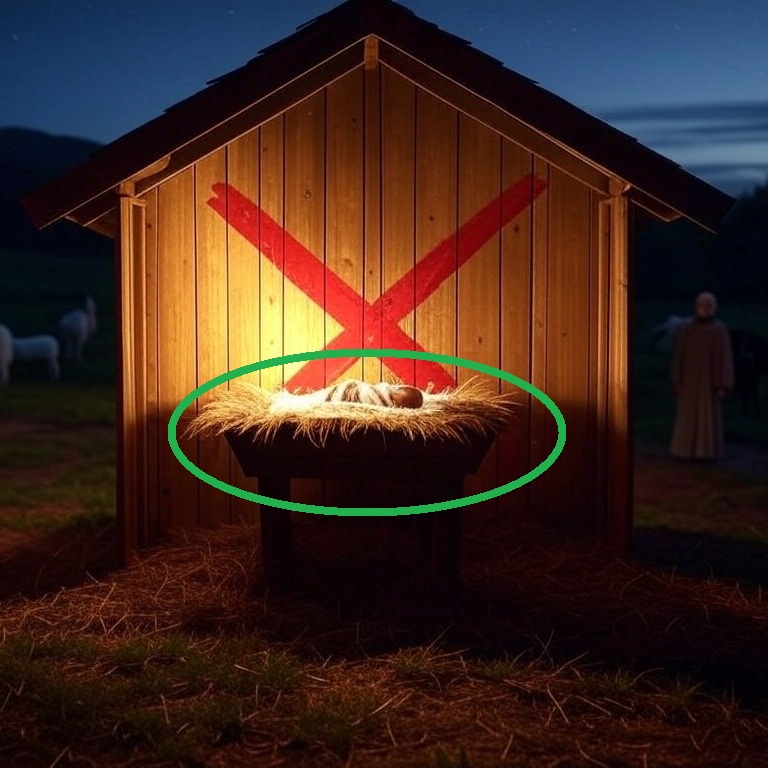
Another thing I didn’t know when I was younger was what a manger is. I assumed the manger was the stable because whenever someone would point out a “manger scene” what I always noticed was the big wooden barn. The shelter in Bethlehem where Jesus was born was actually more like a cave. But regardless, a manger is not a barn; it’s an animal feeding trough that holds dry feeds, like grain. So Mary wrapped up Jesus in swaddling clothes and laid him in a feed box.

These are interesting details, but why does St. Luke mention them? The details do reflect the humility of our Savior and King. Our Lord could have arranged providence instead to have himself born inside a palace with wealth, but he chose to enter into our human poverty and discomfort. But there is another reason why St. Luke notes these things: they foreshadow what would come later.

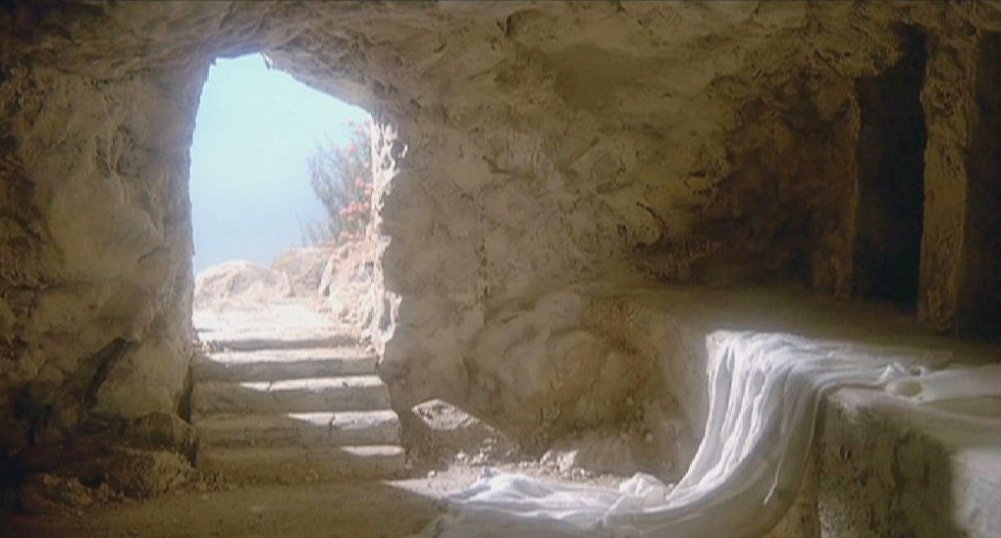
One day, decades after Christmas, assisted by another Joseph, the Blessed Mother Mary would wrap her Son’s body with cloths and lay him down inside another borrowed cave. And it is fitting that on Christmas night Jesus’ body was placed inside of a feedbox for grain, for he would go on to offer his full self as food for us, as Bread for the life of the world. It’s all connected and the beginning contains the end. Christmas leads to Holy Week, and Holy Week gives us the Faith, the Church, the Holy Eucharist.

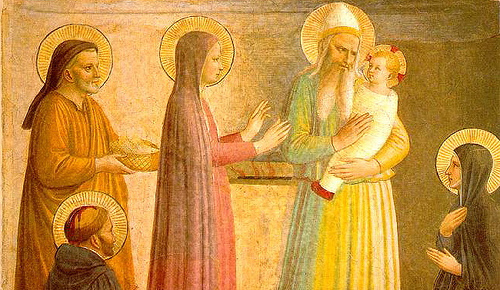
A third and final thing I misunderstood when I was younger was when the Magi (or “Wisemen”) really arrived in Bethlehem. Having followed ‘the Christmas Star,’ I assumed they showed up on Christmas night. The Magi actually came later, sometime between forty days and perhaps two years after Christmas. We know this because Joseph and Mary did not yet have the Magi’s gift of gold to buy a sacrificial lamb for the Presentation at the Temple. And King Herod, in his attempt to kill Baby Jesus in Bethlehem, ordered the death of all the baby boys “two-years-old and under.The Magi responded to Christ’s birth and came after Christmas. They entered the house of the Holy Family and they came with gifts.

It is good that we are gathered for this holy night. Jesus has called you here to be with him and to be with us. But like the Magi, we all are also called to respond to his birth by coming after Christmas. This is the house of his Holy Family, and we must honor and adore him, bearing for him the gift of ourselves. Jesus’ wish this Christmas is for you, and each of us need him. Christmas, Easter, the Holy Mass; the Faith, the Church, the Eucharist; the past, the present, eternity; they’re all connected here, in Jesus Christ. Behold, I proclaim to you good news of great joy! A Savior has been born for you who is Christ and Lord. So come, let us adore him!

The Subtle Spirit

December 9, 2024

Solemnity of the Immaculate Conception
By Fr. Victor Feltes

I would like to highlight certain stories about three people: Mary, Paul, and Caiaphas. First, consider the Blessed Virgin Mary. We celebrate how she was created by God, conceived entirely free from the wounds of original sin. Throughout her existence, she has been filled with God’s grace. She is the holiest woman who has ever lived. And yet, she was shocked that an angel would ever visit her. “Hail, full of grace,” announced the Archangel Gabriel, “The Lord is with you,” but she was greatly troubled at wondered at his greeting.

Next, consider St. Paul the Apostle. No human being has written more books of Sacred Scripture than he. These Pauline texts are usually letters written to particular Christian communities and they contain the particularities one finds in personal letters. For example, in the final chapter of his Letter to the Romans, Paul greets at least twenty-three persons by name. Now St. Paul believed that he was doing the Lord’s work, but if Paul had known the letters he was writing would go on to be as venerated and as widely read as the Old Testament’s books, I doubt he would have written, ‘Say Hi to Prisca and Aquila for me.’

Finally, consider Caiaphas. So many Jews were coming to believe in Jesus that the chief priests and the Pharisees convened and said, “If we leave him alone all will believe in him and the Romans will come and take away both our land and our nation!” Caiaphas, who was the high priest that year, said to them, “You know nothing, nor do you consider that it is better for you that one man should die instead of the people, so that the whole nation may not perish.” John’s Gospel notes, “He did not say this on his own, but since he was high priest for that year, he prophesied that Jesus was going to die for the nation….”

The High Priest Caiaphas was speaking prophesy but did not realize it. St. Paul the Apostle was writing inspired scripture but did not realize it. The Blessed Virgin Mary was living as the holiest of all women but did not realize it. They show us that the Holy Spirit is so agile, intelligent, and subtle that he can act through us without our realizing it.

Now, it is essential for us to remain in Christ, devoted to prayer and his Sacraments. Otherwise, the Holy Spirit will achieve his purposes in spite of us, as with the High Priest Caiaphas. But if you love our Lord, if you strive to please Jesus Christ, if you are open to doing the will of God, be encouraged and take heart. The Holy Spirit is working through you more profoundly than you realize.

Jesus Christ Is King

November 24, 2024

Solemnity of Christ the King
By Fr. Victor Feltes

Today’s psalm says: “The Lord is King, in splendor robed… Your throne stands firm from of old… Your decrees are worthy of trust indeed…” The Old Testament prophets agreed. Isaiah said “the Lord is our King, it is he who will save us.” Jeremiah said our God “is the living God, the eternal King.” And Zephaniah said “the King of Israel, the Lord, is in your midst.” At the center of human history, when Jesus Christ is born among us, he comes as King as well.

Behold, magi from the east arrived in Jerusalem, saying, ‘Where is the newborn king of the Jews?’” And when Jesus rode into Jerusalem, the crowd cried out, “Hosanna! Blessed is he who comes in the name of the Lord, even the king of Israel!” Pontius Pilate unknowing proclaimed this truth when he had a sign placed above Christ’s head on the Cross: “This is Jesus the Nazorean, the King of the Jews.” This Sunday, we celebrate that our Lord Jesus Christ is King of the universe now.

After his Resurrection, when Jesus appeared to his apostles on a mountain in Galilee, he told them, “All power in heaven and on earth has been given to me” and he gave his Church our Great Commission to spread his Kingdom, reassuring us, “Behold, I am with you always, until the end of the age.” This raises a challenging question for us: why is Jesus not visibly doing more now? All power in heaven and on earth has been given to him, so why is he not making more things happen?

His disciples wondered about this, too. Before the Risen Jesus ascended into Heaven, they asked him, “Lord, are you at this time going to restore the Kingdom to Israel?” He answered, “It is not for you to know the times or seasons that the Father has established by his own authority. But you will receive power when the Holy Spirit comes upon you, and you will be my witnesses in Jerusalem, throughout Judea and Samaria, and to the ends of the earth.” The Kingdom of God is among us, and Jesus calls us to work with him to spread it and deepen it, everywhere in everyone.

But why doesn’t Jesus just force everything to be better? As God, he is omnipotent. He has the power to do all possible things. But one thing he cannot do is to force someone’s free “No” into a free “Yes.” When Jesus returns in unveiled glory, coming upon the clouds and flanked by his angels in full-force, humanity’s time for decision will be over. That day will bring the Last Judgment and sin will no longer be given any quarter. After that, there will be only God’s Kingdom and the outer darkness. Now is the time for freely choosing.

Do we desire God’s Kingdom? Around 1000 B.C., the elders of Israel came to the Prophet Samuel asking, “Appoint a king over us to rule us like other nations.” Samuel was displeased they said, “Give us a king to rule us,” but he brought the matter to the Lord in prayer. And the Lord replied: “Listen to whatever the people say. You are not the one they are rejecting. They are rejecting me as their king.” And during Christ’s Passion, Pilate asked the crowd, “Shall I crucify your king?” The chief priests answered for the mob, “We have no king but Caesar.” They were rejecting the Lord as their King. When we pray “thy Kingdom come, thy will be done, on earth as it is in Heaven,” do we really mean what we are saying?

When Pilate asked Jesus if he was a king, Jesus answered, “You say I am a king. For this I was born and for this I came into the world, to testify to the truth. Everyone who belongs to the truth listens to my voice.” Pilate then responds with a line which today’s Gospel reading cuts off. Pilate dismissively replies, “What is truth,” and then turns his back on Truth himself, and walks away. If you desire Jesus as your Savior, you must let him be your Lord.

Advent begins next Sunday—our annual season of preparation for the coming of the Lord. Here are three wise steps for a better Advent. First, his decrees are worthy of trust. Which of his words will you neglect no more but specifically begin putting into practice? Make yourself a short list. Second, make an Advent Confession, for a fresh beginning, a new infusion of grace. And third, pray every day, for you cannot thrive without him. The saints worked wonders in this world by following Christ and doing his will. So can you. The Lord is in your midst. He is the living God, our eternal King. And if we will let him, it is he who will save us.

Are You Sinning Against The Holy Spirit?

June 9, 2024

10th Sunday in Ordinary Time
By Fr. Victor Feltes

Jesus says, “Whoever blasphemes against the Holy Spirit will never have forgiveness but is guilty of an everlasting sin.” This teaching makes some people mistakenly believe they are beyond forgiveness from somehow sinning against the Holy Spirit. What then is blasphemy against the Holy Spirit? It is good for us to know, lest we fall into despair.

Let’s look at the gospel context. Having heard of his miraculous healings, many people came to Jesus. The crowds were so great that Jesus and his disciples could not even eat, and Jesus soon needed to preach from a boat so as not to be crushed. Jesus was curing the sick and casting out demons, but the scribes who had come from Jerusalem said, “He is possessed by Beelzebul,” and “By the prince of demons he drives out demons!

Jesus dismantles their accusations as nonsense. “How can Satan drive out Satan,” he asks. “If I drive out demons by Beelzebul, by whom do your own people [your exorcists] drive them out?” Then, since they had said “he has an unclean spirit,” Jesus declares, “Amen, I say to you, all sins and all blasphemies that people utter will be forgiven them. But whoever blasphemes against the Holy Spirit will never have forgiveness, but is guilty of an everlasting sin.”

St. Athanasius observes that when the scribes and Pharisees credit “the works of God to the Devil… they have judged God to be the Devil, and the true God to have nothing more in His works than the evil spirits. … When the Savior manifested the works of the Father, raising the dead, giving sight to the blind, and other such deeds, they said that these were the works of Beelzebub. They might as well say,” Athanasius concludes, “that the world was created by Beelzebub.”

Blasphemy against the Holy Spirit is so deadly because it professes goodness and its Source to be evil. And if I declare Goodness “evil” how will I come to be reconciled to God? St. Thomas Aquinas wrote that “the sin against the Holy Ghost is said to be unpardonable by reason of its nature, in so far as it removes those things which are a means towards the pardon of sins.” A blasphemer against the Holy Spirit is blinding himself to the Light, yet St. Augustine encourages us “we should despair of no man, so long as Our Lord’s patience brings him back to repentance.”

It is spiritually deadly to denounce goodness as “evil.” Christians, however, profess faith in God as good and in Jesus Christ as our Savior. This makes a Christian unlikely to blaspheme the Holy Spirit. The dangerous error which we Christians are more likely to commit is in calling sinful evils “good.” Even while Christians claim Christ as Savior they sometimes deny his Lordship.

Jesus’ enemies did not want what he preached to be true. What he taught was challenging each of them to change. So they sought reasons to reject what he was teaching. Still today, we can rationalize sinfulness too, devising excuses to do what we want, refusing to repent, sometimes even reaching the point of celebrating shameful deeds as our pride. Willfully remaining in sin is a very serious thing so Jesus—who loves us—calls us to conversion.

In the gospels, we often see Jesus being gentle with sinners but hard on hypocrites. The Pharisees criticized him for being “a friend of sinners.” Jesus, in turn, denounced the Pharisees, saying, “You hypocrites! Isaiah was right when he prophesied about you: ‘These people honor me with their lips, but their hearts are far from me.’” So what is the difference between mere sinners and hypocrites?

Hypocrisy is more than just failing to live up to your professed morals, as all of us have done. The Greek word for “hypocrite” meant “actor” or “stage performer.” Hypocrites are farther off the narrow path than struggling sinners because hypocrites are only pretending to care about sin while ignoring the sins they have.

How can I distinguish whether I am a hypocrite versus a sinner striving to be faithful? One good sign is whether or not I am going to the Sacrament of Reconciliation. If I am complacent with my sins, if I have given up on spiritual growth, if I am refusing to convert for Christ, I won’t go to Confession. Adam hid after he sinned in the Garden of Eden. When the Lord called to him and asked “Where are you,” God was not ignorant of behind which trees the man was hiding. He calls out to us too, hoping we will come out to him.

What if you’re unaware of your sins? Then review a good, thorough examination of conscience to enlighten you. Are you well aware of your sins? Then come to Christ with a contrite heart to start a new beginning in the confessional. I hope that you will choose to meet our Lord Jesus there, for the only sinners he cannot forgive are those who refuse to repent.

We Become What We Eat

June 3, 2024

Solemnity of the Body and Blood of Christ – Corpus Christi
By Fr. Chinnappan Pelavendran

The Eucharist is the greatest sacrament of the Catholic Church. In the Eucharist, Christ is present for the assembly, in his words but above all, in the bread and wine transformed into his Body and Blood for his people. During his life on earth, Jesus expressed his love, especially for those who were rejected and unloved in society, he shared meals with them. For the Jew, shared meals were signs of acceptance and friendship. They invite only friends and important people, but not sinners and tax collectors. Jesus was challenging their tradition, eating with sinners, and making friends with those who had no friends. He was showing them respect and love, and drawing them into the family of God.

In the Old Testament, God worked great wonders for his people. He brought them together, led them through the desert, fed them with bread from heaven, freed them from slavery, and guided them through vast and dangerous lands. In the New Testament God brought us together through Jesus Christ. Jesus taught us how to walk in the light, and freed us from sin and its stain. Through Jesus Our Father feeds us, and the food we eat will give us life forever. He is the Father’s gift to us. Jesus told us that he and the Father are one, and if we see him, we see the Father.

When we celebrate the Eucharist, we are celebrating a meal to which all are invited and made to feel at home. God loves us so much that he wants to be with us and wants us to be with him. When we love someone, we want to be with him or her always. God desires to be with us in the most complete way possible. God became physically present in the person of Christ, the true God and true Man. The presence of God in the form of bread and wine is made available to us on the altar at Mass and preserved there for our nourishment and worship. Jesus gave us his Body and Blood so that he might live in us and become life for the world.

This is what happens in the Eucharist. God not only speaks his words to us. He enters into us. He takes possession of our hearts, minds, and bodies. He becomes one with us. He wants to make us one with him. Eating the Body of Christ and drinking his blood is the greatest moment of intimacy that can exist between God and us.

We become the body of Christ when we receive Christ in the Eucharist. From here, we start our mission, through our bodies, we carry Christ to others. It is our tongues which now speak the Good News to those longing to hear it. It is our feet now that Christ uses to walk the extra mile with people and seek out those who have gone astray in life and lost their way.

The Eucharist ends with a sending on Mission: “Go in Peace to love and serve the Lord.” We have to carry the Eucharist into the world. Just as the Lord has become our food, giving himself completely to us, so, too, we must give of ourselves for the sake of the world. We must become sources of nourishment for the world, as Christ has become a source of nourishment for us. Let us today approach the Eucharist with a more lively faith in the real presence of Jesus in the Eucharist and we shall experience therein God’s saving power and transforming love.

What did Jesus Sing at the Last Supper?

June 1, 2024

Solemnity of the Body and Blood of Christ – Corpus Christi
By Fr. Victor Feltes

The Last Supper was a Passover meal. Jesus says so when he instructs two of his disciples, “Go into the city and a man will meet you, carrying a jar of water. Follow him. Wherever he enters, say to the master of the house, ‘The Teacher says, “Where is my guest room where I may eat the Passover with my disciples?”’ Then he will show you a large upper room furnished and ready. Make the preparations for us there.

The disciples found the upper room following the sign of a water jar. At the start of Jesus’ public ministry in Cana there were six stone water jars. As his ministry comes to its climax, there is a seventh water jar. The number seven symbolizes “fullness” or “completeness” in the Bible, like the sum of seven days is the completion of one full week. At the wedding feast of Cana, Jesus changes water into wine. At the Last Supper, Jesus changes bread and wine into himself.

While they were eating, he took bread, said the blessing, broke it, gave it to them, and said, ‘Take it; this is my body.’ Then he took a cup, gave thanks, and gave it to them, [and] said to them, ‘This is my blood of the covenant, which will be shed for many….’ “Then,” St. Mark writes in his gospel, “after singing a hymn, they went out to the Mount of Olives.” St. Matthew recounts the same detail: “Then, after singing a hymn, they went out to the Mount of Olives.”

This presents a mystery: what hymn did they sing at the Last Supper? Would you be curious to know what lyrics Jesus was singing on the eve of his Passion? Since the Last Supper was a Passover meal, we have a well-founded answer to that a question. For thousands of years, the Jewish people have traditionally sung Psalms 113 through 118 at the ritual Seder meal for Passover. So Psalms 113 through 118 were very likely psalms which Jesus prayed at the Last Supper.

This Sunday’s responsorial psalm consists of passages from one of these, Psalm 116. Contemplate Jesus saying these words:

“How shall I make a return to the Lord
for all the good he has done for me?
The cup of salvation I will take up,
and I will call upon the name of the Lord.

Precious in the eyes of the Lord
is the death of his faithful ones.
I am your servant, the son of your handmaid;
you have loosed my bonds.

To you will I offer sacrifice of thanksgiving,
and I will call upon the name of the Lord.
My vows to the Lord I will pay
in the presence of all his people.”

Jesus is the Son of Mary, “the handmaid of the Lord.” He offers up the cup of salvation which contains the gift himself, a gift offered up to God the Father and offered up for us. The Jewish rabbis taught that all temple sacrifices would end with the coming of the Messiah or Christ except one: the thanksgiving sacrifice. In Greek, the word “Eucharist” means “thanksgiving.” Today across the nations, from the rising of the sun to its setting, the Holy Mass is Christ’s enduring thanksgiving sacrifice.

St. Luke notes how at the Last Supper, “when the hour came, [Jesus] took his place at table with the apostles and said to them, ‘I have eagerly desired to eat this Passover with you…’” Jesus spoke this to the apostles yet he speaks these words to us as well. The Last Supper, the Cross, the Holy Mass are all mystically joined as Christ’s one great sacrifice for all. Jesus Christ is really present, Body and Blood, Soul and Divinity, in his Holy Eucharist, and he eagerly desires to share this Passover feast with you.

The Most Holy Trinity

May 26, 2024

Solemnity of the Most Holy Trinity
By Fr. Chinnappan Pelavendran

Today we celebrate one of the greatest mysteries of our Christian faith, the Holy Trinity. This celebration reminds us that the Father, the Son, and the Holy Spirit are working together. No amount of philosophical debate or scientific research can fully explain it. We must see a mystery only with the “eyes of faith.” Celebrating this great feast, we ponder what it means for us that God is “Trinity.” in the Bible God reveals himself as a relational, loving, and compassionate God. He reveals himself to his people through his servant Moses, proclaiming his name and his essential qualities: “The Lord, the Lord, a merciful and gracious God, slow to anger and rich in kindness and fidelity.”

God is our Father, a loving and compassionate Father; he is the creator and giver of all life. All the good comes from him and through him. In him, through him, and with him all things exist. He is the one who cares, the one who waits for the Prodigal son to return and forgives completely and immediately. He is the father of truth, the Father of love, and compassion, and the Father of justice.

God communicates his love not in an abstract way, but in Jesus. His saving love is made most evident in the sacrificial Death of Jesus on the Cross. Jesus did not come into the world to condemn us but to save us. God the Son as a human being we can see, hear, and touch. Jesus Identified himself with the weak and the ordinary people. Though he is God, he emptied himself took human nature, and lived with us, so that he might open for us the way to true and unending life.

God created the plan of salvation, Jesus put the plan into action, and the Holy Spirit implements it in our daily lives. The Holy Spirit is the invisible force that allows us to accept Christ and what he did for us. The Holy Spirit allows us to walk with God along the straight and narrow path in our new relationship. The Holy Spirit reminds us of what Jesus did on earth. The Holy Spirit is infinite and indefinite. It can be everywhere and with everyone all of the time.

Since our baptism, we share in the love and relationship between the Father, Son, and Holy Spirit in a very special way. We were baptized in the name of the Father and of the Son, and the Holy Spirit. Through our baptism, God adopted us as his sons and daughters. Therefore, we are caught up in the love between the Father, the Son, and the Holy Spirit.

Let us respect others and ourselves because we are created in the image and likeness of God. Let us have the firm conviction that the Trinitarian God abides in us, that He is the Source of our hope, courage, and strength, and that He is our final destination. Let us practice the Trinitarian relationship of love and unity in the family relationships of father, mother, and children because by baptism we become children of God and members of God’s Trinitarian family.

Three Pillars

May 26, 2024

Solemnity of the Most Holy Trinity
By Fr. Victor Feltes

Sacred Scripture proclaims, “God created mankind in his image; in the image of God he created (us); male and female he created (us).” And our Catholic Faith teaches the divine image is present in every human person. The image of God also shines forth in the communion of human persons, communion in the likeness of the union of the Trinity’s Divine Persons among themselves. We are finite and sinful while God is infinite and perfect, yet we reflect his image and likeness in many ways: as individuals, as families, and as the Church of Jesus Christ.

Each one of us, made in God’s image, “possesses the dignity of a person, who is not just something, but someone.” Like God, we can know things, choose freely, and love. Like God, we can fashion things beyond ourselves, we can enter into relationship with others and reign over Creation. One psalmist in the Book of Psalms asks God: “What is man that you are mindful of him, and a son of man that you care for him? Yet you have made him little less than a god, crowned him with glory and honor. You have given him rule over the works of your hands, [and] put all things at his feet.” These words proclaim the glory of human persons, but also foretell the coming of Christ, who called himself “the Son of man.” Jesus Christ reveals to us that which was veiled yet always true before: God is not the solitary oneness of a single person but a unified oneness in three eternal Persons. This revelation of the Trinity opens our eyes to how the image of God is reflected among us not only individually but communally, such as in a family and as in the Church.

In the beginning, when God created the first human person, he saw that it was not good for the man to be in utter solitude. So, perhaps because it was the bone closest to his heart and core, God brought forth the woman from the man’s rib, ‘bone of his bone, flesh of his flesh.’ This is a reflection of God where, “God from God, Light from Light,” the Son is eternally begotten of the Father. God the Father lovingly gives all that he is to the Son and God the Son gives himself back as a total gift to the Father. And from this mutual self-gifting love, the Holy Spirit eternally proceeds. This is likewise reflected in marriage, where a husband and wife gift their whole selves to each other and a third distinct person can proceed.

Jesus Christ the Bridegroom founds the Church as his Bride, unites us in her and makes us fruitful, yet even though he makes us one he does not make us all the same. There are more than a billion Catholics spread across the earth. We have different strengths, cultures, and treasures, “different gifts according to the grace given to each of us.” No one of us mere creatures completely manifests the infinite goodness of God. But united together as his holy Church, our diversity of goods more fully reflects God’s glory.

God has created mankind in his image; in the image of God he has created us. So reverence each and every human person he has made, honor the holiness and fruitfulness of marriage, and celebrate the plethora of goodness present in the Church. For all of these are God’s creations, pillars of Christian civilization, and each one reflects the glory of our Triune God.

Holy Spirit Unites Us

May 18, 2024

Pentecost Sunday
By Fr. Chinnappan Pelavendran

Pentecost was a game changer. Just look at the behavior of the disciples before and after Pentecost. Before the descent of the Holy Spirit, the early Christians were timid and afraid. After the coming of the Advocate, they were fearless even to death. Before the death of Jesus, He said, “When the Counselor comes, whom I shall send you from the Father, who proceeds from the Father, he will bear witness to me; and you also bear witness, because you have been with me from the beginning.” (John 15:26-27) After the reception of the Holy Spirit at Pentecost, the disciples fearlessly bore witness to Jesus despite the cost.

Pentecost is an ongoing celebration of the gift of God’s Spirit, who is always with us, inseparable from believers. The fire that was ignited in the hearts of the disciples gathered in the upper room in Jerusalem continues to enflame in the hearts of all who have been gathered together here today. The Church is our upper room where we come together in communion of faith and love. The disciples gathered behind closed doors because they were uncertain about the future and were too frightened to publicly proclaim the risen Lord. Without a doubt, we have a lot in common with the first disciples.

Let us look at the Apostles, some of them were fishermen, simple people accustomed to living by the work of their hands, but there were also others, like Matthew, who was an educated tax collector. They were from different backgrounds and different social contexts, and they were from different names like Hebrew and Greek. In terms of character, some were meek and others were strong and excitable. They all had different ideas and emotions. They were all different. Jesus did not change them. He felt their difference and now he unites them by anointing them with the Holy Spirit. The union comes from the anointing at the Pentecost; the Apostles understand the unifying power of the Spirit. They see it with their own eyes when everyone, though speaking in different languages, comes together as one people, the people of God.

Let us focus on ourselves, and what it is that unites us, what is the basis of our unity? We too have our differences, for example, opinions, choices, and sensibilities. What unites us are our beliefs and morality. But there is much more, our principle of unity is the Holy Spirit. He reminds us that first of all, we are God’s beloved children, all the same, in this and all the differences. The Spirit comes to us, in our differences and difficulties, to tell us that we have one Lord Jesus and one Father and that for this reason, we are brothers and sisters.

Like the disciples after Pentecost, it is our job to bear witness to the Gospel. In humility, when we cooperate, the seven gifts of the Holy Spirit will come alive and assist us in carrying out this mission. May God the Holy Spirit inspire every one of you until the day you hear, “Well done, good and faithful servant; you have been faithful over a little, I will set you over much; enter into the joy of your master.” (Matthew 25:21)

Welcoming the Holy Spirit

May 18, 2024

Pentecost Sunday
By Fr. Victor Feltes

On Pentecost, about one hundred and twenty people, including the Blessed Virgin Mary and the apostles were together in the upper room. There on this day, the third Person of the Trinity “appeared to them as tongues as of fire, which parted and came to rest on each one of them,” and “they were all filled with the Holy Spirit.” Yet this was not actually the first time Mary or the apostles had encountered the Spirit.

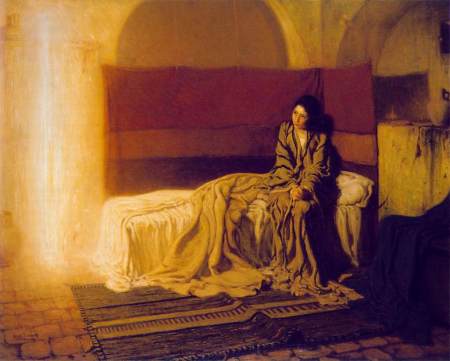
In response to Mary’s fiat, to her saying “Let it be done to me according to your word” at the Annunciation, the Holy Spirit descended to conceive the Christ Child within her. And we hear in today’s gospel how on Easter Sunday evening Jesus visited the apostles in the upper room, exhaled on them, and said, “Receive the Holy Spirit. Whose sins you forgive are forgiven them, and whose sins you retain are retained.” So Mary and the apostles had each received the Holy Spirit before, sort of like us on this Pentecost Sunday.

We received the Holy Spirit at our baptisms, and received him again at our confirmations, and we can always encounter him anew. Since the Holy Spirit is an infinite Divine Person we can always receive more from him. So how can we receive the Spirit and his gifts more abundantly? Here are three ways:

First, ask for the Holy Spirit and his gifts in prayer. Prior to Pentecost, Jesus’ disciples had been praying for nine days—the Church’s first novena. They prayed to receive the promised Gift of the Father of which Jesus had spoken, to be “clothed with power from on high.” The disciples’ Pentecost joy and courage, the manifested miracle of speaking many languages, and that day’s three thousand conversions won were all fruits of the Holy Spirit in answer to their prayers.

A second way to welcome the Holy Spirit is to prepare a place for him. At Jesus’ baptism, the Spirit descended upon him in the likeness of a dove. Offer the Holy Spirit a hospitable place to land with you. If we are combative towards a dove or simply being too noisy, the bird will not approach us or stick around for long. So renounce all hostility towards God and cultivate peace within your house that his peace may rest on you. In other words, renounce your sins and go confession, and focus more on quieting your soul and dedicating time to daily prayer.

A third way to be touched and changed by the Holy Spirit is to expect and watch for his influence. The Holy Spirit descended on Pentecost in the likeness of fire. Fire transforms everything it touches. It causes other objects to radiate heat like itself, to shine like itself, to become fire like itself. If you ask for the Holy Spirit and his gifts and you are open to his influence, watch with eager expectation for him to inspire, empower, and transform you.

Back in my college days, one afternoon I was lying on my bed praying rather apologetically to the Holy Spirit. I said, ‘Holy Spirit, you’re like the most neglected Person of the Trinity. You’re just as much God as the Father or the Son but we direct much more prayer and worship to them than you. And when we do pray to you it’s because we want something, but you’re not just some divine vending machine. I’m sorry.’ Then I heard in my mind these words: “I am gift.” Now whenever you possibly receive a heavenly message, it is wise to check its truth in light of true Catholic teaching, since God will not contradict himself. So I considered that statement seemingly from the Holy Spirit: “I am gift.”

From all eternity, God the Father gives all that he is to his Son and the Son gives himself back as a total gift to the Father. And from this mutual exchange of self-gifting love, the Holy Spirit eternally proceeds. The Father and the Son send the Holy Spirit to earth as a gift to sanctify and transform us so that we may participate in the life of the Trinity. The Holy Spirit rejoices to be gifted. He is gift. And when we ask for his gifts we are inviting his presence—for how could his gifts be manifested someplace where he is not? So from this I concluded the Holy Spirit does not begrudge us asking him for his great and holy gifts.

On this Pentecost Sunday, what gifts do you desire of the Holy Spirit? Pray for his powerful presence, like Mary and the apostles did. Turn away from sin and cultivate quiet peace, offering a welcoming place for the Holy Spirit to land. And watch with eager expectation for the transforming effects of the Spirit’s fiery influence.

The Graduation Party of the Holy Family

May 12, 2024

The Feast of the Ascension
By Deacon Dick Kostner

You have heard me say many times that “Family” is God’s plan for our salvation and the key to heaven. It is through family that we receive mentorship and instruction from Jesus on how to live a life bringing us happiness in this life and the key to heaven for all eternity. As I reflected upon the Ascension of Jesus into heaven I realized that this act of Jesus was his way of telling his disciples and us that we are ready to begin our “ascension” into God’s Kingdom. It’s time for us to celebrate our readiness to begin to share the good news with others of the Gospel message that Jesus tells us will bring us to fulfillment and life with him in heaven.

It is through family that we learn that we are called to care for others more than caring for ourselves. It is through family that we humans are gifted with the ability to co-create with God in bringing about new life. It is through family that we learn to share our gifts of faith and time to help others overcome life struggles. Today we also celebrate Mother’s Day. A time when we thank our mothers for not only giving us life, but also for their gift to us of giving up their desire for time for themselves for the welfare and happiness of their children. Jesus himself refers to them when he calls his Church and Mary our mother and his followers as his brothers and sisters.

Our readings today have Jesus telling his disciples and us that we are ready to begin our ascension into heaven. He has given us his teachings and sacraments. He has instilled in us his gift of wisdom. He has adopted us as his brothers and sisters though our baptism into His Holy Family and today he tells his followers that its time for us to begin our solo takeoff to our ascension into heaven. He gives us the power to bring others into the Holy Family. The power to drive out demons and speak many languages. The power to heal the hurts of others, and to lay hands on the sick to overcome their illnesses. He promises to send his very spirit to aid us when we are uncertain or afraid. Bottom line is that today is our Graduation our license to go out into this crazy world and to love others as Jesus has loved us. We are called into service. Our compensation for this will be out of this world.

Let me share with you my “out of this world experience” I recently was gifted with, as a Deacon and as an attorney. In February Barb and I decided to take a few days off and go with some friends to Arizona. We were to fly out of Eau Claire on a early Sunday morning flight. We arrived before daylight and were directed to get our boarding passes from one of three airport attendants. We got in line with 190 other people when all at once one of the airport attendants eyeballed me and pointed out to the other attendants, “Look, that guy is my Deacon!” Everyone turned around to look at me and then she said with a smile, “ That guy is the Deacon at my Church.” One of the other attendants said to me “she needs a Deacon, I could tell you some pretty nasty stories about her.” I told him that it sounds like she needs to go to confession but that Deacons are not allowed to forgive sins but I would be willing to hear her sins but I would require a fee for only the priests do that for free. Everyone laughed and we moved on. I felt like a rock star. Jesus had given me a thumbs up for my ministry as a Deacon. But my story continues.

All 190 of us boarded the plane and I was given the isle seat on the left side of the plane and Barb had the isle seat on the right side of the plane. We were seated at the rear of the plane where the bathrooms were located. About an hour into the flight I noticed a woman walking towards me from the front of the plane. As she got closer I recognized that she was one my clients from the Sand Creek area who had just lost her husband about a year earlier and whose funeral I had attended. I had done their legal work for over 30 years. As she got closer to me she looked twice at me and then recognized who I was. She yelled out, “Dick”, and threw her arms around me and gave me a big hug. Everyone around us looked at me including Barb. After she left Barb asked me ,“Who was that?” my response was, “oh, just a client.” God gave me another thumbs up for my vocation of being a deacon whose service area extends far beyond the walls of a church altar.

I was flying high and truly humbled and the last time I felt that happy was when I had found out that I had passed the Bar exam. God gives to the Holy Family out of this world “thank yous” when he is proud of his Family Ministers. It is time folks to start our ascension into heaven knowing that it might be scary, and thinking that we are not ready, but the time clock keeps ticking, but I promise you that you will feel great when others thank you for giving of your time and ministry so that they too can experience the joy of their “out of this world” ascension experience of ascending up the stairs to heaven. And to all the Mothers of our Parish both living and deceased and on behalf of all of us here at St. Paul’s, I wish to thank you and may God bless you for your sacrifices and your mentorship of love! Happy Mother’s Day!

The Ascension of Our Lord

May 12, 2024

Feast of the Ascension
By Fr. Chinnappan Pelavendran

Today, we are celebrating the Feast of the Ascension of the Lord. Jesus, after his resurrection, spent forty days with his disciples instructing them and encouraging them as they prepared for the mission. The Ascension of Jesus into Heaven completed his earthly work of our redemption. Jesus proved two things. First, he proved that he was the promised Messiah. Secondly, he proved that through him who overcame death, persons who persevere in their living faith in Jesus, also overcome death and inherit the Kingdom of God.

In today’s First Reading from the Acts of the Apostles Luke explains how for forty days, Jesus had appeared to his disciples after his resurrection, presenting himself to them and convincing them that he was alive. During this time, he explained to them the Scriptures and spoke about the Kingdom of God. He ate and drank with them and spent his time with them strengthening them in their ministry. He commanded them not to leave Jerusalem until they had been baptized with the Holy Spirit promised by the Father. Through his actions, Jesus was opening the eyes of his disciples about his mission. Some of them, even at this time, did not fully understand him and asked for the day of the political restoration of Israel. With immense patience, he told them that this restoration is in the eternal plan of the Father. Jesus then told the disciples that they would receive power when the Holy Spirit came upon them and they would be his witnesses in Jerusalem, in all Judea and Samaria, and to the ends of the earth.

In the second reading of today, Paul reminds the Ephesians of the marvelous generosity and goodness of God who had made them Christians and sharers-to-be in the glory of Christ, who was the eternal glory of God. St. Paul prayed that God would enlighten their minds to try to understand and appreciate the marvelous things God had done for them through the incarnation, death, resurrection, and finally the ascension of our Lord Jesus Christ.

The feast of the Ascension is not to commemorate a departure but the celebration of the living and lasting presence of Jesus in the church. Jesus tells the disciples of the present situation as he gives the command to “make disciples” of people everywhere. He now introduces them to his mission as he passes on his authority to his disciples. Pentecost will be the confirmation of this. They now have the power to reconcile sinful persons with God and with the community and to decide who is not yet ready for reconciliation and full participation in the community’s life. Hence there are four aspects to this mission which Jesus gives in today’s Gospel: to evangelize, that is, to communicate the life and vision of Jesus, to continue the healing mission of Jesus both physical and spiritual, to experience the power of the Holy Spirit, and experience the presence of Jesus.

Jesus’ Ascension marks the end of his physical presence on earth, but it also marks the beginning of his spiritual presence in our lives. Just as Jesus was taken up into heaven, so too we will be taken up to be with him one day. The Ascension reminds us that our ultimate citizenship is in heaven, and we are called to live as pilgrims on earth, longing for our true home. The Ascension also reminds us of the importance of prayer and the need to continually seek God’s presence in our lives.

Peace Be With You

April 11, 2024

Divine Mercy Sunday
By Fr. Chinnappan Pelavendran

On Good Friday, Jesus suffered and died for our sins. His trusted disciples abandoned him. Judas sold him for thirty pieces of silver. Peter denied him three times. The rest of the disciples went into hiding themselves except John. When Jesus needed their help, they failed him. One reason for this must be fear of the Jews and their peace was completely disturbed. After the resurrection of Jesus, they were afraid to face Jesus because of what they had done to him. They thought he would surely condemn them for their infidelity. Now, Jesus appeared to them for the first time. He stood in their midst and the first words he uttered were “Peace be with you!

The resurrection of Jesus changed everything. It was a new experience for the disciples, even though Jesus constantly preached and explained about his rising from the dead, they were unable to understand it. Today’s gospel helps us to move from fear to joy, seclusion to mission, absence to presence, disbelief to faith, and mere existence to new life. Just look at how Thomas changed. Before he met Jesus, he was depressed, absent from the group of apostles, and disbelieving: “Unless I see the mark of the nails in his hands and put my finger into the nail marks and put my hand into his side, I will not believe.” (John 20:25) after His resurrection, Jesus offered Thomas the proof he needed. Thomas was amazed, and he exclaimed, “My Lord and my God!” (John 20:28) In that moment, Thomas’s doubt turned to faith.

During his apparition to the disciples, Jesus gave the mission; telling them that just as the Father had sent him, he was sending them to continue the mission that was given to Jesus by his Father. He was commissioning the Church through His disciples to continue the work of salvation. They are called upon to live like Jesus and draw others to share their personal experience of knowing and loving Jesus and being loved by him. Now they have a mission to spread the love of Jesus, to form a community, and celebrate the Eucharist.

Jesus’ mission to his disciples was to restore their peace. He said to them Peace be with you, do not be afraid. In the same way, Jesus says to all of us this Sunday, “Peace be with you, do not be afraid,” because I have truly risen. Therefore, this is one message that we must bring to our world as we witness the risen Christ this season. This is because our world lacks peace and needs the peace that comes from Christ. This is very important in a world where all we hear every day is about wars, bombing, hatred, accidents, shooting, fighting, killing, broken relationships, and fractured families. We must accept and bring the peace of the risen Christ to our families, to our neighbors, to our communities, and our world.

On the second Sunday of Easter, we celebrate Divine Mercy Sunday. Let us celebrate the mercy of God. Like the disciples of Jesus, we, too, have been unfaithful to Him. We have turned our backs on Him and have failed Him so many times. However, Jesus does not condemn us, nor is He angry with us. It is because He is the God of mercy. Mercy is the word for generous love towards sinners.

Encounter Christ’s Divine Mercy

April 6, 2024

Divine Mercy Sunday
By Fr. Victor Feltes

On Easter Sunday evening, all of the apostles (besides Judas and Thomas) were gathered behind locked doors in the Upper Room. Yet the Risen Jesus came and stood in their midst and said, “Peace be with you.” St. Luke records that they “were startled and terrified and thought they were seeing a ghost.” So to reassure them, Jesus asked, “Why are you troubled? And why do questions arise in your hearts? Look at my hands and my feet, that it is I myself. Touch me and see, because a ghost does not have flesh and bones as you can see I have.” And Jesus showed them the enduring wounds in his hands and feet and side.

Jesus’ first order of business on Easter Sunday was to demonstrate to his disciples the fact of his bodily resurrection, and “the apostles bore witness to the resurrection of the Lord Jesus” for the rest of their lives. So either Jesus Christ rose again from the dead in his flesh or all the apostles lied; but who would ever die for what one knows to be a lie? They were amazed and overjoyed, and Jesus said again, “Peace be with you. As the Father has sent me, so I send you.” Then he breathed on them and said to them, “Receive the Holy Spirit. Whose sins you forgive are forgiven them, and whose sins you retain are retained.” Second to establishing the fact of his resurrection, of next importance was commissioning the apostles to spread Divine Mercy and giving them the authority to forgive sins.

Some people imagine that they themselves never commit sins. However, without great devotion, that is extremely unlikely. In his first New Testament letter, St. John taught that “if we say, ‘We are without sin,’ we deceive ourselves, and the truth is not in us.” Some Christians acknowledge their sins yet never come to confession and merely pray to God. Contritely praying to God is good, but if this were all the Lord desired for the forgiveness of your post-baptismal sins, then why did he give his Church’s priests the power to forgive sins? To do other than what he has ordained is presumptuous. Please do not be afraid to approach and receive this healing gift of mercy.

Since the year 2000, during the papacy of St. John Paul the Great, this 2nd Sunday of Easter has been celebrated as Divine Mercy Sunday. This is one fruit of private revelations (judged by the Church as being “worthy of belief“) to a Polish religious sister in the 1930s. Jesus told St. Faustina Kowalska, “When you go to confession, to this fountain of mercy, the blood and water which came forth from my heart always flows down upon your soul. … Here the misery of the soul meets the God of mercy. … Come with faith to the feet of my representative. … I myself am waiting there for you. I am only hidden by the priest… I myself act in your soul. … Make your confession before me. The person of the priest is, for me, only a screen. Never analyze what sort of a priest it is that I am making use of; open your soul in confession as you would to me, and I will fill it with my light.” Jesus declared, “The miracle of Divine Mercy restores that soul in full. Oh, how miserable are those who do not take advantage of the miracle of God’s mercy!” … Mankind will not have peace until it turns with trust to my mercy.

I know how much I regularly need and benefit from Confession and I hope that you will soon avail yourself of this sacrament soon. Please do not be presumptuous and do not be afraid. Promptly approach this great and holy sacrament of Divine Mercy. and Christ’s peace will be with you.