Archive for the ‘Homily’ Category

Watching & Waiting

December 3, 2023

1st Sunday of Advent
By Fr. Chinnappan Pelavendran

The season of Advent always calls us to a sense of hope, that God loves us, has sent his Son to redeem us, and that no one is excluded from God’s loving care and protection. That is the heart of our belief in God: He knows us by name, cares for us, and never abandons us. That does not negate the fact of our free will, the ability to choose what is right and good, to heed God’s voice and God’s grace in our lives. We are always free to choose the good, since God never forces us, but always lovingly invites us.

The first reading from the book of the Prophet Isaiah, and the second reading from the First Letter of St. Paul to the Corinthian Church, give us examples of looking forward in hope for the Lord’s coming. The people confessed their guilt and admitted that God was indeed right to punish them. They understand that they have given Yahweh their God plenty of reason to stay away. They feel that they are sinful, unclean, and full of guilt. And yet, for those who are awake and waiting in faith, the second coming is a joyful event.

In the gospel, Jesus encourages us to be prepared, to stay awake. If we fall asleep and forget the need to wait in hope, then we risk that the Lord comes at a time we do not expect. In that case, we would not be ready to welcome him and celebrate with him. (cf. Mt 15:1-13) The Lord uses the example of a man who leaves his servants in charge while he travels abroad. He warns the gatekeeper to stay on the watch because he does not know the day and hour of his master’s return. Jesus specifically mentions all four watches of the night. The Lord of the house may come in the evening, at midnight, at dawn (“cockcrow”), or in the morning.

Jesus is going to come in glory to judge all people and take the righteous to their reward. The first Sunday of Advent invites us to be ready to receive the Lord who is going to come. This is the time of waiting and we await the one who is certain to come to us. We must be ever alert and ready so that the coming of the Son does not find us unprepared. Advent is a season for us to renew our hope because of the coming of Christ. As we reflect upon the period of waiting for the first coming of Jesus at Bethlehem, and as we begin to prepare for his coming at Christmas, we also await his final coming into our lives.

In addition, the Readings remind us that while Heaven and Earth shall pass away, the Word of the Lord shall not pass away. Every promise that He has made shall be fulfilled. Thus, Jesus gives us the warning: The Christian who listens to the words of Jesus lives in permanent expectation of his coming and will welcome him as the long-awaited Master arrives from his journey. To be on watch is to be aware each day, through prayer and reflection, that the ‘today’ of salvation is here and now.

We should live in the living presence of Jesus every day waiting for his Second Coming. We can experience Christ’s living presence in the Holy Eucharist, in the Holy Bible, in our worshiping community in our parish, in our family, in our souls, and everyone around us. The early Christians experienced it, and that is why the mutual greeting among Christians was “Maran Atha” which means “Come, Lord Jesus.” This greeting acknowledged Jesus present in each of them and about to return. May God bless you and keep you ever-prepared for Christ’s second coming.

The Three Comings of Christ

December 3, 2023

1st Sunday of Advent
By Fr. Victor Feltes

During this Advent season, we are called to contemplate three distinct comings of Christ. The first is his coming in the past, twenty centuries ago at the first Christmas. Answering the Prophet Isaiah’s plea, our Lord rent the heavens and came down for the sake of his servants by assuming a human nature. Through the Incarnation, God wrought an awesome deed we could not have hoped for, something unheard of from of old. The Shepherd of Israel came down to save us. By his birth, the Lord let us see his face that we may be saved.

The second coming of Jesus Christ which we contemplate in Advent is literally called his Second Coming. Like a master leaving to travel abroad, our Lord has promised his servants he will return some unknown future day and hour. He will return in unveiled glory as both our King and Judge, so we must strive to be firm to the end, irreproachable for the day of our Lord Jesus Christ.

In the upcoming weeks, when you hear St. John the Baptist preach about ‘making straight the way for the Lord,’ realize that these words are addressed to you. Now is the time to go to Confession and cast your sins away. You do not know when the Lord is coming. So be watchful and alert, lest our Lord come suddenly — on the Last Day of this world or the last day of your life — and find you unprepared.

So what is the third coming of Jesus Christ we should contemplate this Advent? The first is his coming in the past, the second is his coming in the future, and the third is his coming now. He comes to us now most marvelously in the Holy Eucharist, but he also comes to us during our ordinary days.

The master in Jesus’ parable “leaves home and places his servants in charge, each with his own work, and orders the gatekeeper to be on the watch.” Each of us has work to do during this Advent season; some tasks which come as part of our regular duties and others which are particular to this time of year. Whatever your state in life, you will likely be busy this month. May you be occupied with the good work our Lord entrusts to you, rather than distracted and burdened by ill-chosen pursuits of your own. But amidst your daily tasks, whatever they may be, be watchful for our Lord.

Jesus concludes today’s parable declaring, “What I say to you, I say to all: ‘Watch!’” Each of us is called to be on watch for him. And Jesus tells us on another occasion, “Behold, I am with you always, until the end of the age.” So vigilantly keep watch for the Lord. The past has gone and the future is not yet here. The only time you can ever encounter our Lord is the present moment. So as you go throughout this Advent, contemplate his presence with you from moment to moment.

Be attentive to him in times of dedicated personal prayer, even if starting with just five or ten minutes a day. And converse with him, commune with him, throughout the tasks of your daily life. Jesus came to us first at Christmas. He will come again in glory on the Last Day. And he comes to us at any moment we watch for him.

Jesus Is The King

November 26, 2023

Solemnity of Christ the King
By Fr. Chinnappan Pelavendran

Today we celebrate the Feast of Christ the King. When I say “the King” to you, I am sure several images and concepts will immediately come to your mind, among them: a throne, white robes, kingship, servants, and feasts. judgment, glory, and dominion. The King we are going to reflect on today is something different from other kings. “His Kingdom will be a Kingdom of truth and life, a Kingdom of holiness and grace, and a Kingdom of justice, love, and peace.

The first reading today comes from the book of the Prophet Ezekiel and shows us God as a Shepherd. God himself will come personally to tend his sheep because the entrusted shepherds have not been found worthy of their charge. God will take care of the sick and weak sheep but will separate and punish those who have made themselves strong at the expense of the weak. This is the work of our king, something different from other kings. “I will seek the lost. I will bring back the strayed. I will bind up the injured. I will strengthen the weak.

The kingship of Jesus is different from that of other kings. During His life on earth, Jesus was born in the royal Davidic family. In the annunciation narrative, we have the angel Gabriel bringing the good news to Mary in Nazareth, saying, “He will be great and will be called Son of the Most High. The Lord God will give him the throne of his ancestor David. His Kingdom will never end.” When the Magi came to Jerusalem, they asked, “Where is he who is born King of the Jews?

Jesus preached the Kingdom of God and told the disciples to seek first the Kingdom of God and his righteousness. It means we must give first place in our lives to God. It means we must come under the rule of His kingship. We must confess that Jesus is the Lord and King. Yet, He called his disciples friends, not servants and bestowed on them a share in his priesthood and kingship. Though he died, unlike other kings, he died willingly to save his people, and his death was not a result of loss but of a glorious victory planned by his Father.

During his passion, he manifested that he was the King and died on the cross with the title that he was the King of the Jews. He was left alone to be mocked, insulted, beaten, humiliated, and finally to die a criminal’s death. His own disciples left him and ran away when he needed them the most. It was one of the thieves who was crucified with Him who recognized him as a king, and asked for a place in his Kingdom. Jesus promised him that place. The Lord’s death also shows that He is the king who came to serve all, even His enemies. He said: “Father, forgive them for they know not what they do.” His life, teachings, and death spell out a Kingdom of justice. At the same time, we know that when our King judges the world, his just judgment is balanced with radical love, mercy, peace, and forgiveness.

As the followers of Jesus, we need to surrender our lives to Christ’s rule because He is our King. We must do his will by sharing His forgiving love with others around us. This is what asked his disciples to do. And so, this feast is an invitation to all those who have power or authority in the government, in public office, in educational institutions, and in the family, to reflect. Are we using the authority we have been given by Jesus in the way He used His authority? Are we using our God–given authority to serve others with love and compassion as Jesus did? As parents, are we using our God–given authority to train our children in Christian values?

He is in the Hands of God — Funeral Homily for David Dachel, 81

November 25, 2023

By Fr. Chinnappan Pelavendran

On behalf of the parish community of St. Paul’s, I would like to extend our sincere condolences and sympathy to the members of David’s family. I would like to assure his children, grandchildren, and near and dear ones of my prayers.

We have heard in our first reading, “The souls of the virtuous are in the hands of God.” (Wisdom 3:1) What better place could we go after death than into the hands of God? What a beautiful way to describe God’s care for us. Do you remember when you were small and your parents took you up in their arms? You felt safe in the arms of your parents. When we die, God takes us up in his hands. We are in the hands of God. We believe that God has taken David up into his hands. The reading ends beautifully, expressing the faith of someone who believes in God’s goodness and who therefore is not afraid to die.

“Those who trust in him will understand the truth,
  those who are faithful will live with him in love,
 for grace and mercy await those he has chosen.” (Wisdom 3:9)

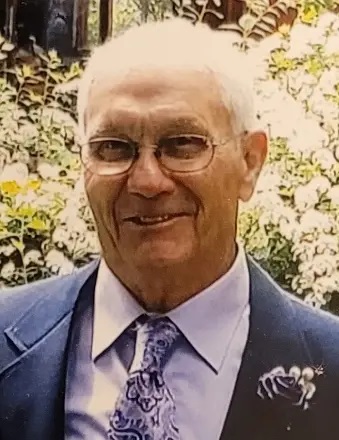
David peacefully passed away, surrounded by his family on Tuesday, November 14th, 2023. He married JoAnne Fanetti on February 27th, 1965, here at St. Paul’s Catholic Church. He was a simple and humble man, and friendly with everyone. He served his country in the National Guard and worked for Catalytic Combustion in Bloomer. He enjoyed golfing, bowling, and cruising around town. He used to call his grandchildren “Doodlers.” He enjoyed the T.V. program “Judge Judy.” Above all he enjoyed driving around the city and saying hello to everyone he saw.

In the Gospel today Jesus invites us, “Come to me, all you who labor and are burdened, and I will give you rest.” Look at Jesus’ invitation; it is an open invitation to all of us, and no one is excluded. Life is full of struggles and hardships. It is easy to grow weary, it is normal to get discouraged. Jesus offers us rest. This is a free gift from Jesus, we do not have to earn it, but we need to respond to Jesus’ invitation.

Here is Jesus’ invitation for “rest.” It is not physical rest, nor mental rest; He is talking about a more important rest, a deeper rest. He is talking about spiritual rest – rest for our soul. Sometimes we are restless people. Our lives are often filled with hurts regrets, guilt, and so many distractions. For these moments, we try to turn on our music or television or various activities, but none of that cures the restlessness in our souls. None of that can make us whole again. St. Augustine says, “O Lord, you have formed us for yourself, and our souls are restless until they find their rest in you.” Now our brother David is resting in the hands of God.

When we die, God takes us up in his hands. Those who trust in God will understand the truth that people only appear to die; their leaving us seems like a disaster. But we can look forward to God’s love, grace, and mercy after death. Anything else is of our own making and we have time to repent and reform before our death. So we ask God to take our brother David up in his arms, to pour his love, grace, and mercy upon him.

Eternal rest, grant unto him, O Lord,
and let perpetual light shine upon him
May he rest in peace! Amen.

Give Others The Royal Treatment

November 25, 2023

Solemnity of Christ the King
By Fr. Victor Feltes

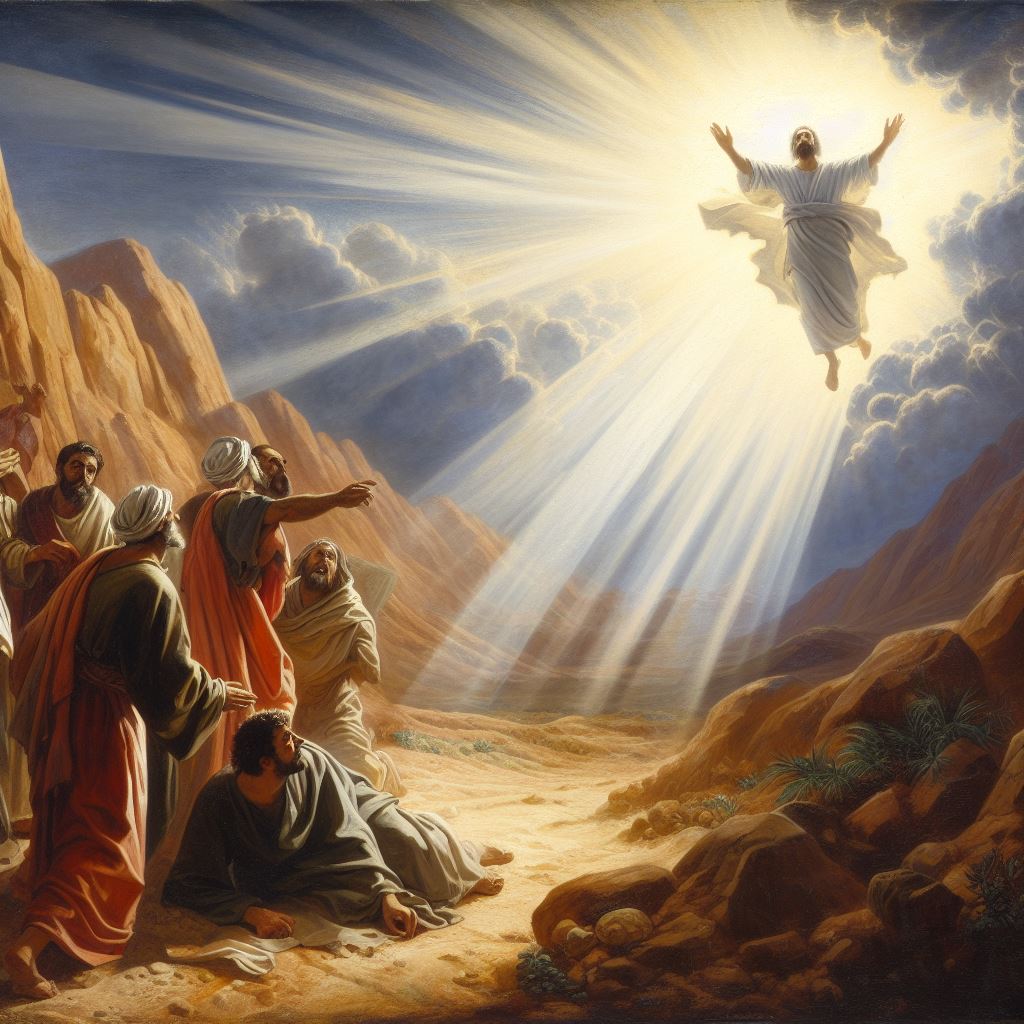
After having supported the murder of St. Stephen the Martyr, Saul of Tarsus was trying to destroy the early Church. He entered house after house, dragging out Christian men and women and handing them over for imprisonment. Still breathing murderous threats against the disciples of the Lord, Saul went to the high priest and obtained official authorization to arrest any Christians he might find in Damascus and bring them back to Jerusalem in chains. But on his way to Damascus, this future saint saw the light.

Light from the sky suddenly flashed around him. He fell to the ground and heard a voice ask him, “Saul, Saul, why are you persecuting me?” “Who are you, sir,” Saul replied. “I am Jesus, whom you are persecuting.” Notice how Jesus did not ask “why are you persecuting my people” or “why are you persecuting my Church,” though both of these descriptions would have been accurate. Jesus asks, “Why are you persecuting me? … I am…whom you are persecuting.”

Imagine if you and I are standing side-by-side in a buffet line and I willfully knock your hand out of the way as we both reach for the delicious deviled eggs. Will your feelings of offense be any less if I reply, “Oh, I didn’t hit you—I merely slapped away your hand”? No, every part of your body is one with you. If I mistreat one of your members, I am mistreating you.

St. Paul and the Holy Spirit teach us in the New Testament: “You are now Christ’s body, and individually parts of it… He is the head of the body, the Church, … [and] we, though many, are one body in Christ.” Jesus himself teaches, “Whoever eats my flesh and drinks my blood remains in me and I in him.” This is why he will declare at the Last Judgment “what you did not do for one of these least ones, you did not do for me” and “whatever you did for one of the least brothers of mine, you did for me.” Our mystical union with Jesus Christ is more intimate than we realize and this has important implications.

The 1st Letter of St. John tells us, “If anyone says, ‘I love God,’ but hates his brother, he is a liar; for whoever does not love a brother whom he has seen cannot love God whom he has not seen. This is the commandment we have from him: whoever loves God must also love his brother.” Now man does not live by bread alone, but we are called to practice Corporal (that is, bodily or material) Works of Mercy. St. James writes, “If a brother or sister has nothing to wear and has no food for the day, and one of you says to them, ‘Go in peace, keep warm, and eat well,’ but you do not give them the necessities of the body, what good is that?” Jesus is hungry and thirsty, ill-clothed and a stranger, sick and imprisoned in his brothers and sisters, and our love for him is reflected in our care for them.

Yet do not fall for the demons’ trap; their persistent accusations which sound like: “You could be doing more; you should always be doing more!” They seek to rob you of your peace and lead you to ultimately give up the good things you are doing because of discouragement. God our Maker knows that our time, talents, and treasure are finite; resources spent on one holy effort cannot be spent on another. Nevertheless, it is important for us to be self-reflective and truly generous with ourselves and what we have.

When you see others or interact with people, try to remember the One whom you mystically encounter. Give them the royal treatment. Notice how both the saved and the damned will someday ask our King, ‘When did we see you hungry or thirsty or a stranger or naked or ill or in prison?’ He will reply, ‘Indeed, whatever you did for one of the least of mine, you did for me.’ It is a truer reality than we realize and all too easily forgotten, yet valuable for us to remember always.

Invest Yourself in Heaven’s Reward

November 19, 2023

33rd Sunday in Ordinary Time
By Fr. Victor Feltes

As Jesus traveled from place to place he preached parables to different people. He told stories, for instance, featuring fields, fish, and flocks to teach farmers, fishermen, and shepherds about the Kingdom of God. It makes sense that Jesus would tell the same stories more than once, for different crowds to hear them for the first time and for his apostles to hear them repeatedly. But the gospels suggest Jesus sometimes changed his parables’ details to highlight different truths. What Jesus says in his Sermon on the Plain is similar but not identical to his Sermon on the Mount. As the Church journeys through our three-year cycle of Sunday readings we hear some parables retold by more than one gospel. And each fall, as we near the end of the Church year, our readings reflect upon the Four Last Things. Today, we have another such parable, about death and judgment, Heaven and Hell, Jesus Christ and us.

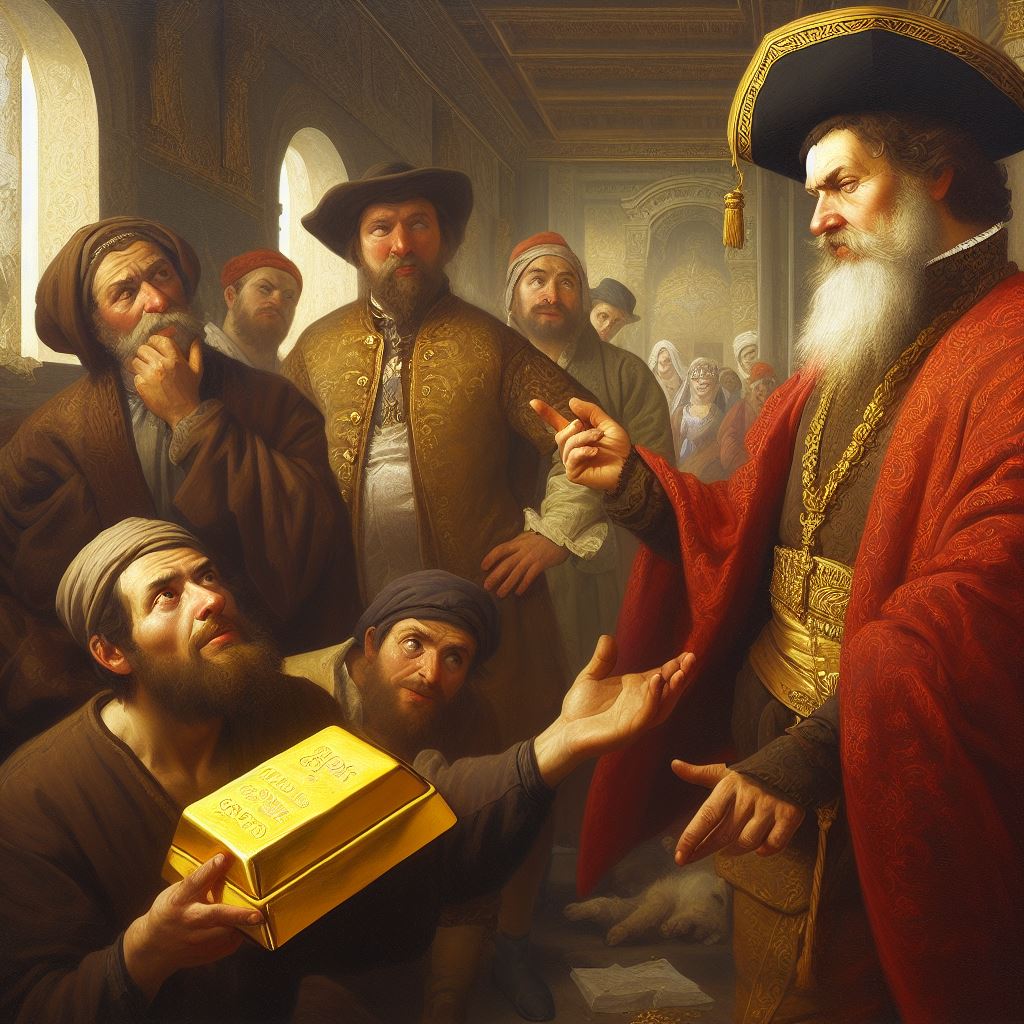
Christ is our Lord, our journeying master who shall return. We are his servants to whom he has entrusted our fortunes. And each of us one day will stand before him to give an account of our faithful or unfaithful service, with generous rewards or just punishments to follow. In Jesus’ telling through St. Matthew’s Gospel, the master entrusts weighty slabs of precious metal (called talents) in varying numbers to his servants, each according to their abilities. Upon his return, his faithful servants have doubled what they were given and receive the same words of praise: “Well done, my good and faithful servant! Since you were faithful in small matters, I will give you great responsibilities. Come, share your master’s joy!” One servant, however, who buried his talent and returned it ungrown, receives his master’s condemnation and is tossed into the darkness outside.

When Jesus retells his parable in St. Luke’s Gospel, the master is a nobleman who goes off to claim his kingdom, entrusting to ten servants one gold coin each. Upon his return, his faithful servants reveal their various positive returns on his investment. One has earned ten more gold coins and his king declares, “Well done, good servant! You have been faithful in this very small matter; take charge of ten cities.” Another servant has earned five more coins and the king decrees, “You, take charge of five cities.” One servant, however, hid his coin in a napkin and returned it unmultiplied. The king condemns that servant and orders all of his enemies who did not want him as their king to be slain.

The differences between these two parables highlight different truths about Heaven. In the first parable, the master speaks the same blessing to each faithful one: “Well done, good servant! … Come, share your master’s joy!” But in the other parable, the king gives his servant with ten additional coins ten cities and gives his servant with five additional coins five cities. So is Heaven’s reward the same for all the saints or can one’s reward be greater than another’s? One parable suggests their reward is the same, while the other suggests their rewards vary. On one hand, the reward of every saint is the same: they experience God’s unveiled glory forever in happy, loving communion with him and all who are in Christ. On the other hand, a great saint’s capacity for love and joy and glory may be greater than another’s.

Doctor of the Church St. Therese of Lisieux recounts in her great autobiography (“Story of a Soul”) how this idea once troubled her as a child: “One day, I expressed surprise that God does not give an equal amount of glory to all the elect in Heaven—I was afraid that they would not all be quite happy. [My older sister Pauline] sent me to fetch Papa’s big tumbler and put it beside my tiny thimble, then, filling both with water, she asked me which seemed the fuller. I replied that one was as full as the other—it was impossible to pour more water into either of them, for they could not hold it. In this way [she] made it clear to me that in Heaven the least of the Blessed does not envy the happiness of the greatest…

Notice how in both forms of Jesus’ parable all the faithful servants are entrusted with greater responsibilities. The saints in Heaven are likewise given higher roles as our intercessors now and in the family and household of God forever. Consider how many churches, religious communities, and cities around the world are dedicated to St. Paul. They are blessed to have him as a loving patron praying for them. And consider how the Blessed Virgin Mary shall always hold a privileged place in Heaven as the spiritual mother of every Christian.

St. Paul says, “Consider this: whoever sows sparingly will also reap sparingly, and whoever sows bountifully will also reap bountifully.” The generosity of our loving gifts to Christ, the additional sacrifices we make and good deeds we do, will surely not go unrewarded. Jesus tells us, “Give, and it will be given to you. Good measure, pressed down, shaken together, running over, will be put into your lap. For the measure with which you measure will be measured out to you.” Our individual hustle, cooperating with Christ’s grace, can win us greater glory, therefore “run so as to win!

We should not fear that we lack sufficient talents or gifts to produce good fruits for glory. In the first parable, every faithful servant was able to double his money and won his master’s praise. The issue with that unfruitful, condemned servant is that he never tried. His master calls him “wicked” and “lazy” because that servant did not make even the most minimal effort to grow his gift. “Should you not then have put my money in the bank so that I could have got it back with interest on my return?” That servant did not love his lord but rather resented his lordship over him. Which is easier: to digging a hole or visiting the bank? He did not want to be his master’s servant, he did not want him as his king, and so he finds himself condemned and cast out forever. But if we love our Lord we will produce fruit, just as “every good tree bears good fruit.” As Jesus declares, “Whoever remains in me and I in him will bear much fruit.”

What is something more that you will do with the talents and gifts our Lord has lent you? It could be something large or small, in private or with others. You could be a more-focused prayer warrior, or offer secret penances for the salvation of souls. You could start a Catholic book or movie club at your home, or organize a regular Bible study that discusses the upcoming Sunday readings. You could visit shut-ins as an extraordinary Eucharistic minister, or invite somebody new each week to come with you to Mass. There are many good things you could do and I urge you to consider and answer this call, for Jesus Christ will honor your faithful, loving efforts with glorious rewards.

Use Them Or Lose Them

November 18, 2023

33rd Sunday in Ordinary Time
By Fr. Chinnappan Pelavendran

This is the harvest season, the fall of the year. I have seen many farmers harvesting their crops. Just as the farmers hope to have good crops, so God expects a return on his investment in each of us. The problem is we do not know when our harvest day will come. Each person comes into the world with talents from God. We do not know how much God has given to us. There may be five talents, two talents, or one talent.

The main theme of the three readings today is an invitation to live in such a way that we develop and make the best use of the talents, skills, abilities, and gifts God has given us. So that, at the hour of our death, our Lord will say, “Well done, my good and faithful servant. Come and share the joy of your master.” (Matthew 25: 21)

In the first reading, we have a beautiful description of a ‘worthy wife.’ This praise-worthy woman dedicates herself to doing good, investing her talents for the benefit of all. A man with such a wife is greatly blessed; her value is far beyond pearls. He entrusts his heart to her. This woman represents each of us. She also represents the whole church, the bride of Christ, in joyful service of her groom, the Lord. Each of us brings honor to the Lord when we serve him freely, joyfully, and, generously.

The Parable of the Talents gives us several important lessons. First, it tells us God gives each person different gifts. The actual number and quality is not important, we are asked to make full use of what we have been given for the benefit of the community. When everyone does that, the community is enriched. Second, our work is never completed. We are asked to make full use of what we have. The servants in the parable were not told that they could sit back and rest. Rather, because of their trustworthiness, even greater responsibilities were given to them.

The man with one talent did not lose it. He did not do anything at all. If he had tried and failed, he would have met compassion and forgiveness. Every person has the responsibility to be active in the Kingdom of God. Finally, to the one who has, more will be given. For the one who has not used the talent, even what he has will be taken away. It seems rather unfair, like robbing the poor to pay the rich. However, Jesus is saying that those who share generously the gifts they have been given are likely to find themselves constantly enriched.

Let us focus our attention on the third servant. He does not do well. So what are his problems? He chose the least risky action available to him. This servant knew what was expected of him but failed out of fear. He tries to give all possible excuses to his master. Fear is a powerful force in some of our lives; those who have experienced a lot of criticism growing up can be slow to take a risk and may not develop. There is a saying that goes like this, “Praise the young and they will make progress. Criticize the young and they will be held back.” Unfair criticism can stop the growth of the person.

So let us help each other with words of encouragement. As St. Paul says, “Encourage one another and build each other up, as indeed you are doing.” There is much to learn from our mistakes of the past, but the Lord would not want us to bury ourselves and our talents in the ground. Now is not the time to hide our talents out of fear. Rather, it is a time to share them and to encourage each other to do the same. It is your choice now are you going to use them or lose them.

In Jesus, We Find Total Comfort — Funeral Homily for John “Jack” Clark, 89

November 17, 2023

By Fr. Chinnappan Pelavendran

On behalf of the parish community of St. Paul’s, I would like to extend our sincere condolences and sympathy to the members of John William Clark’s family. I would like to assure his children, grandchildren, and near and dear ones of my prayers.

Death is not the end but the beginning of a new life. We pray that our brother Jack is with God and enjoys eternal life with the communion of saints. A life with countless blessings, joy, love, and happiness. We are all hoping for that life.

Our brother Jack was born on March 1st, 1934. In the town of Auburn. Jack attended elementary school in Fox Settlement and graduated from Colfax High School in 1951. He married Marie Rubenzer at St. Paul’s Catholic Church and were they both longtime members. Jack served in the military for two years, and after that, he worked at the Sand Creek Creamery, and as a truck driver for various companies. Jack owned and operated a dairy for many years. Later he worked for ITW Corporation for eleven years.

After his retirement, he enjoyed deer hunting, cutting wood, gardening, and spending time with his grandchildren. He enjoyed the dance called Polka and the waltz, and fun conversations with his friends. He was known as a man with a beer in his hand who loved Friday Fish Fries.

Our readings this morning give us great consolation. In our first reading, we were told the Lord would wipe away tears from every cheek. We know that everything we do makes sense only if it is leading us to peace in God. We know there are many distractions and temptations in life, all pretending to offer us peace and happiness, but none of them do because we know that we will find this peace and happiness only in God. When we find our peace in God, we become friends of God, when we live with God’s love in our hearts, then we have peace. That is why our first reading says the Lord will wipe away the tears from every cheek. When we hope in the Lord for salvation, how blessed we are.

All of us have problems in life. Big or small, these problems burden us and make us sad. When these problems go unsolved for a long time, we feel disappointed and become depressed. In these moments from whom do we seek help? Here is the good news our gospel today. “Come to me, all you who labor and are burdened, and I will give you rest.” The most comforting words of Jesus in the gospel. Anyone who is feeling tired, disappointed, or depressed can be lifted up by the comforting promise of Jesus.

As we believe our brother Jack is in the arms of God, we pray for him during this Mass. We pray for him to be embraced by Jesus’ unconditional love and merciful judgment. We pray for him to be embraced by Mother Mary, the Mother of God who knows how to bring her children to Jesus.

Eternal rest, grant unto him, O Lord,
and let perpetual light shine upon him
May he rest in peace!
Amen.

Sometimes Just Being There Is Enough

November 12, 2023

32nd Sunday in Ordinary Time
By Deacon Dick Kostner

Today’s Gospel message of the ten women who had the job of greeting the bridegroom (Jesus) teaches us that we might not be able to be perfect in the mission God has for us but that’s OK God only asks for us to say “yes” and be present as his representative when we are challenged with his call for service. Our gospel today has five women who, in their mind dropped the ball on not being properly prepared to great a bridegroom because they did not anticipate that he would be late and that they would not have enough oil for their candles to be lit when he arrived so they left the scene to get more oil. They underestimated the fact that their presence was what was the gift to the bridegroom not their lit candle.

Sometimes we overestimate the details of a mission God has for us because we want to be “perfect” in doing ministry for God and we forget about what is really important to God, and so we miss out on seeing God smile at us for doing his will even though we missed out on being “perfect” in carrying out a request by God. Two examples that made me realize these facts come to my mind when I was asked by God to help out as a member of the Body of Christ.  The first was when I did my first Communion Service as a lay minister at St. Paul’s. I was nervous and after I had completed that mission request, I realized that I had forgot to do the prayer petitions. This bothered me all day but after Mass one Sunday a parishioner came up to me and thanked me for “being there for them” in doing a Communion Service when Father was not able to celebrate a Mass.

The second example was when I had just recently been ordained a deacon. Father was out of town and I received a call at 1:30 AM from the hospital saying a family had requested the Last Rites for their son who was involved in an accident and was dying.  I told the nurse that I was not able to anoint but she persisted and asked if I could just come and say some prayers with the family? I gulped hard, put on some clothes, grabbed my prayer book and left for the hospital. I did not know what I could  or should say to the family as I was unprepared for this event, kind of like the women in today’s gospel.  When I got there everyone was around the sons hospital bed and crying. The injured man was in great pain and was fighting for his life. I opened my prayer book and began saying a “Litany of Prayers.” It was not long and everyone began to stop crying and the injured person relaxed and settled down.

It was like a faucet of suffering had been shut off for both the family and their son through the prayers that I had shared with them.  After the prayers, the family thanked me for “being there” for their son and for them. As I left I realized that I had not put on my Deacon Shirt and collar which would have been proper if I had only thought of it and I felt bad for dropping the ball. As I was driving home I remembered the last words the family spoke to me. “Thanks for being there for us.” I envisioned Jesus smiling at me and saying, “You done good, thanks for being there for me!

Recently, I had an opportunity to talk to an adult within our community who is in constant touch with and contact with our young people.  I told that person that I was concerned about the our world and how we don’t have any tolerance for a difference of opinion. This person told me that within our community he has seen a very positive response from young people to be patient with other young people who are not only opposed to their idea of what being Christian is all about, and who have also been tolerant with those who feel that they need to oppose with aggression those who are not in agreement with their beliefs. He told me that it was not only with Catholic children but also children of other faiths within our community who are tolerant with others who have opposing views. A child’s primary mentor is its parents and family. God speaks to us through our mind and the mouths of his people, who St. Paul refers to as “The Body of Christ”.

Folks, “the Body of Christ” is alive and working even in our troubled world, and although we may not be as prepared as we would like to be I believe that Jesus looks upon us with a smile and as Jesus said to me he says to our faith community: “Bloomer, people, you have done good, and a big thanks for being there representing my presence!

Why Five & Five? What Is Our Oil?

November 11, 2023

32nd Sunday in Ordinary Time
By Fr. Victor Feltes

Jesus tells us, “The Kingdom of Heaven will be like ten virgins who took their lamps and went out to meet the bridegroom.” In those days, the Jewish custom was for a man and woman to get betrothed. This marked the start of their marriage covenant, yet the husband and wife would live separately for the first year. In the meantime, the bridegroom would return to his father’s house and prepare a dwelling place for their life together. Once all was ready, he would joyfully return to bring her to himself. She would be expecting him, but would not know the hour, so she awaited his arrival with her bridesmaids. The bridegroom and his groomsmen would come and escort the bride and her bridesmaids to his father’s house for the consummation of their marriage and seven days of feasting.

This is the cultural context for what Jesus tells us at the Last Supper, as recorded in St. John’s Gospel: “In my Father’s house there are many dwelling places. If there were not, would I have told you that I am going to prepare a place for you? And if I go and prepare a place for you, I will come back again and take you to myself, so that where I am you also may be.” These Jewish marriage customs also provide the setting for today’s gospel parable about ten virgins awaiting the bridegroom.

Five of them were wise and five of them were foolish, with the foolish ones foregoing flasks of extra oil and, as a result, being shut out of the wedding feast. Jesus Christ called himself the Bridegroom and the Book of Revelation says his saints will enjoy “the wedding feast of the Lamb.” Before unpacking how we can avoid the foolish ones’ fate, consider this question: why five foolish ones and five wise?

Like other storytellers, our Lord theoretically could have crafted his parable’s details differently. Given ten female characters, instead of five foolish and five wise, Jesus could have told a tale about one foolish virgin and nine wise ones, or preached a parable about nine foolish virgins and one wise one, or shaped his story as one of the six other mixtures where some were foolish and some were wise. So why did he say five and five?

Jesus knew that if his parable had featured just one fool beside nine wise virgins, we might presumptuously assume this story’s warning does not apply to us. On the other hand, if Jesus’ parable had featured nine fools and only one wise virgin, we might despair of being among those who enter the feast. Instead, Jesus speaks of five and five so that we will take this parable seriously yet also have confidence that we can take prudent steps to follow the Bridegroom.

What do the five wise and five foolish virgins teach us? What sort of persons were they, and what oil do we require? For an answer, recall another parable of Jesus.

In the Parable of the Rich Man and Lazarus, after a life in which he callously neglected to care for poor Lazarus at his doorstep, a rich man suffers punishment in flames. He calls out to Abraham above: “I beg you, father, send [Lazarus] to my father’s house, for I have five brothers, so that he may warn them, lest they too come to this place of torment!” St. Jerome, the fourth-century Church Father and Doctor of the Church, saw symbolism in this rich man’s five brothers. Jerome sees them as the wicked man’s five bodily senses which were not ordered and dedicated to God. St. Jerome declares to that rich man:

[Y]ou have five brothers: sight, smell, taste, hearing, and touch. These are the brothers to whom formerly you were enslaved. Since they were the brothers you loved, you could not love your brother Lazarus. Naturally you could not love him as brother, because you loved them. Those brothers have no love for poverty. Your sight, your sense of smell, your taste, and your sense of touch were your brothers. These brothers of yours loved wealth and they had no eye for poverty. … They are the brothers who sent you into these torments.

God created and bestowed us our bodily senses, and they are good. Through them we sustain our lives, experience one another and this world, and delight in God’s good creations. The goodness of these material things reflect the goodness of their Maker. But it is easy for sinful humanity to become fixated on these delightful things resulting in the distracted neglect or sinful contempt of our Creator.

What is to keep our flame of faith from going out, plunging us into darkness, stopping us from following the Bridegroom? How can we properly order our five senses, and be like the wise virgins rather than the foolish, lest the Lord declare, “Amen, I say to you, I do not know you”? We need oil to keep our lamps faithfully burning and follow Christ in the light. But what is that oil?

In the Old Testament, priests, prophets, and kings were anointed with holy olive oil. Jesus was revealed to be the Christ, the Messiah – titles which mean “Anointed One.” At Jesus’ baptism, St. John the Baptist knew Jesus was the “Anointed One” when he saw the Holy Spirit descend upon him. And then at Nazareth, Jesus proclaimed, “The Spirit of the Lord is upon me, because he has anointed me…” So the Holy Spirit, who descended upon Jesus, our priest, prophet, and king, is like anointing oil. The Holy Spirit is the oil we need for our burning lamps. If we are wise we will invite and welcome this third divine Person to pour out upon us, fill us, and fuel us. He will keep our faith burning and direct our bodily senses so that we may wisely follow Christ our Bridegroom into joy.

Come Holy Spirit,
fill the hearts of your faithful
& kindle in them the fire of your love
.”

Led by the Sacraments — Funeral Homily for Leona Rothbauer, 85

November 11, 2023

By Fr. Chinnappan Pelavendran

On behalf of the parish community of St. John’s, I would like to extend our sincere condolences and sympathy to the members of Leona’s family. I would like to assure her husband, children, grandchildren, and near and dear ones of my prayers.

The Lord first stretched out his hand to her in the waters of baptism so many years ago. As the water washed her clean of the stain of sin, the lord Jesus welcomed her as a member of his Body and opened the gates of his Church to her. Looking back on her life, we know that the hand of the Lord did not abandon Leona, but remained constantly with her.

Repeatedly the Lord stretched out his hand to her in the sacrament of Penance for the forgiveness of sins. In the Holy Communion, he continually offered himself to her. When she was sick, the Lord anointed her to strengthen her and supported her with his grace in her final days. In marriage, the hand of the Lord was with her, blessing her with children and a wonderful life. Indeed, the Lord stretches out his hand to each of us every day of our lives. He offers it to us and with his hand comes his grace, his power, and his love. This requires our cooperation with the Lord’s grace; it requires that we stretch out our hand to Him.

Leona had a wonderful life on Earth; she was born on August 2, 1938. She graduated from Cadott High School and married Sylvan at St. Joseph Catholic Church in Boyd, Wisconsin on October 17, 1959. Leona was a loving and hard-working farm wife, she gave first place to her family. She was very much interested in cooking, baking, gardening, crafting, and caring for animals. She enjoyed with her husband traveling to various places such as Canada, Europe, and Las Vegas. She loved spending time with her children and grandchildren. Leona and Sylvan have been longtime members of St. John the Baptized Catholic Church, where she was an active member of the altar Rosary Society.

In the gospel reading today, Jesus utters his final words, “Father, into your hands I commit my Spirit.” Jesus commits his spirit to the Father and points us to the Father throughout his life. Jesus spends his time alone in prayer with his father, accepting his will and his call. In the garden of Gethsemane, Jesus surrenders himself to the will of the Father. Jesus’s words in death remind us of the way he lived his life. Repeatedly placing himself into his father’s hands. Jesus is the best example for us to place our work and efforts, our relationships, our words and actions, and our spirits into God’s hands.

The best way to remember Leona is to live as she did; dying to yourself so that others might live and flourish, following the example of Jesus Christ. In this way, you will come to find your life, the life unending, the life of joy and peace.

Let us then commend Leona into the hand of God. May the Lord honor his servant and welcome her into the mansions of his glory, that, having taken his hand, she might see her Savior face to face.

Humility & Service

November 5, 2023

31st Sunday in Ordinary Time
By Fr. Chinnappan Pelavendran

This week’s readings offer a clear invitation to all of us to be humble and give loving service to God and others. To help us reflect on the readings and understand their context, let us recall some of the history of Israel. God the Father gave the Law through Moses and appointed him the Law’s official teacher. Moses handed his responsibility to Joshua, Joshua transmitted it to the elders, and the elders passed it down to the next generation. From them, the scribes and Pharisees received the Law, and the authority to teach and interpret it to His people. Their duty is to interpret the true meaning of the Law to his people.

In the first reading, then, God expresses his personal love towards Israel. However, the people of Israel did not respond to his divine love. Both the people and the priests had become prideful. For this reason, God was angry with the people of Israel at the same time, they had also become sinful in their lives, walking away from the righteousness of the Lord.

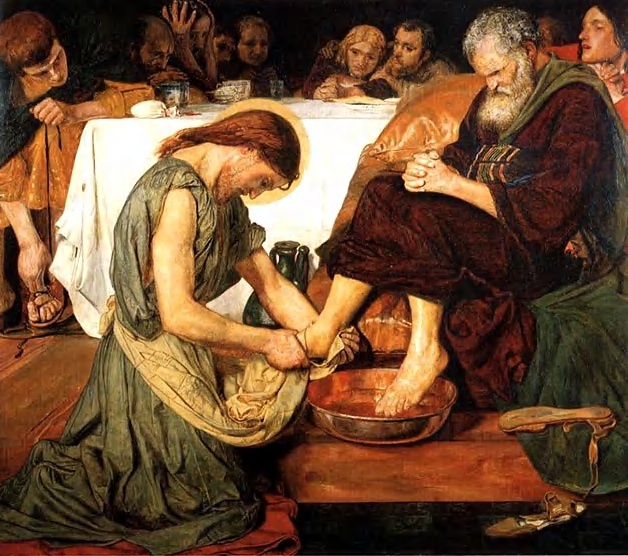
We have a different example in St. Paul, who, in our second reading today tells us his description of his humility among the Thessalonians, that he was a caring and dedicated leader. He tells them that he worked day and night while preaching the gospel. He was not trying to impress them or gain anything from them. Thus, he was giving to people not simply human words but the words of God. St. Paul is truly a great example, putting into practice what Jesus teaches today: “The greatest among you must be your servant.

In today’s gospel, Jesus affirms the leadership of Pharisees and Scribes. He tells His disciples to obey and respect them but not to follow their example. What they say is true so follow them, but in practice, they are misusing their authority for the sake of their selfish advantage. So, do not imitate their example. Authority is entrusted to us by God not to dominate or exploit others but for humble service to others. The Scribes and Pharisees had lost sight of this.

On the other hand, Jesus and Mother Mary are two great examples of humility and service. Mary said to the angel Gabriel, “Behold the handmaid of the Lord. Be it done unto me according to your word.” (Luke 1:38) When Mary consented to become the mother of Jesus, she ran the risk of being stoned to death because that was the penalty for an unmarried mother. Therefore, Mary, in her humility and desire to serve God. Mary is a model of humility and service for us. She is a model of giving and not counting the cost.

Jesus is our other greatest model of humility and service. In Gethsemane, in prayer, Jesus let go of his human will and submitted to the will of his Father. “Not my will but yours be done.” (Luke 22:42) Crucifixion was the form of the death penalty for common criminals at that time in the Roman Empire. Jesus was executed as a common criminal. He knew that this was the sort of death that awaited Him. However, through his death, he won life for us all. The Son of Man came to serve, not to be served.

Humble people are happy because they accept themselves for who they are – children of God. They are willing to learn and willing to serve. Are you a humble person?

Call No Man “Father”?

November 5, 2023

31st Sunday in Ordinary Time
By Fr. Victor Feltes

Today’s gospel understandably prompts a question. Jesus says, “Call no one on earth your father; you have but one Father in Heaven.” So why are Catholic priests called “Father”? Some non-Catholic Christians object to calling Catholic priests “Father” and abstain from doing so. However, I have never witnessed anyone similarly object to using the title “father” for their own beloved, male, biological parent. Jesus also says, “Do not be called ‘Rabbi,‘” and “Rabbi” means “Teacher,” yet every Christian school is staffed by “teachers.” Does Jesus intend us to take his words here literally or is he teaching us something deeper?

It is good to use Sacred Scripture to interpret Sacred Scripture, since the Holy Spirit inspired every passage and, rightly understood, God’s Word will not contradict itself. When we read the New Testament we see many men referred to as fathers. The 1st Letter of St. John says, “I write to you, children, because you know the Father. I write to you, fathers, because you know him who is from the beginning.” St. Paul writes in his Letter to the Romans about “our father Abraham” and “our father Isaac.” The Holy Spirit also inspired St. Paul in his 1st Letter to the Corinthians to call himself a spiritual father to those Christians. He writes, “Even if you should have countless guides to Christ, you do not have many fathers, for I became your father in Christ Jesus through the gospel.” St. Paul similarly says in his Letter to Philemon, “I urge you on behalf of my child Onesimus, whose father I have become…” So we see that it can be fine to call some living or deceased men fathers. It can even be good to call yourself someone else’s father. So what does Jesus mean to warn us about by teaching, “Call no one on earth your father”?

Today’s gospel says Jesus was speaking to the crowds and his disciples about the authority and the flaws of the scribes and the Pharisees. In the ancient world, teachers would teach seated. For instance, Jesus sat down to give his Sermon on the Mount and sat in Simon Peter’s boat to preach to people gathered onshore. Ancient rulers reigned from chairs called thrones, so Christ is now “seated at the right hand of the Father.” Jesus said the Jewish scribes and the Pharisees had “taken their seat on the chair of Moses.” Before the establishment of the Church they apparently possessed legitimate authority to teach. “Therefore,” Jesus said, “do and observe all things whatsoever they tell you, but do not follow their example. For they preach but they do not practice.

Jesus noted these teachers’ lack of concern for others: “They tie up heavy burdens hard to carry and lay them on people’s shoulders, but they will not lift a finger to move them.” He noted their vain egotism: “All their works are performed to be seen. … They love places of honor at banquets, seats of honor in synagogues, greetings in marketplaces, and the salutation ‘Rabbi.’” Instead of this, Jesus teaches us: “The greatest among you must be your servant.”

We who are fathers, or teachers, or who have any role of authority must remain humble. We are not flawless or perfect. We are not the Lord, our God. We are not given authority over others in order to serve ourselves. Jesus says, “Whoever exalts himself will be humbled; but whoever humbles himself will be exalted.” Resemble Jesus Christ in this and your reward will resemble his. Christians must also remember that our fathers, our teachers, and all people in roles of authority on earth are not perfect. Even if they are trying their best, they are not the Lord, our God. Even popes, preserved by the Holy Spirit from teaching errors “ex cathedra,” can still misstep as shepherds in their words and actions.

A faithful leader is a great blessing; promoting truth, and love, and righteousness within their sphere of influence. That is why it is so important for each of us to be good servant-leaders. But we must not make idols of ourselves or others, as if we were perfect, this world’s savior, or the source of every good. We have only one such Good Teacher. We have only one such Father, in Heaven. And we have only one such Master, Jesus Christ our Lord, who is worthy of our absolute trust and devotion.

Our Friends Who Have Gone Before Us

November 2, 2023

All Souls’ Day
By Fr. Victor Feltes

Yesterday, we celebrated all of the saints in Heaven. The saints in Heaven now enjoy supreme, definitive, enduring happiness. They are in the glorious presence of God, the Father, Son, and Holy Spirit, with all the holy angels. There, the saints’ deepest human longings are fulfilled without end. The Church’s recognized saints, beatified saints, and canonized saints, are Christianity’s hall of famers. We celebrate these saints on their feast days throughout the year. However, there are also many, many unknown saints in Heaven. How do I know that? Because of what St. John describes in the Book of Revelation.

In the Book of Revelation, when John describes his vision of Heaven, he says: “I had a vision of a great multitude, which no one could count, from every nation, race, people, and tongue.” Thirteen years ago, I printed out this list of recognized saints. It is eighty-one pages long and lists more than 13,000 names. But the number of those in Heaven is “a great multitude which no one could count.” I could count beyond 13,000 in less than a day, so there must be many more saints in Heaven than these.

Something I think many Christians do not realize is that if your relative, or friend, or neighbor who passed away is now in Heaven, yesterday was their feast day. We celebrated them on All Saints’ Day. Today, is All Souls’ Day. So what is the difference? Today, we remember and pray for those who have died as friends of God but are still on their way to Heaven.

Why are there any Christians who have died but are not yet in the full glory of Heaven? Well, what if we die as friends of God but we are not yet fully perfect? The Book of Revelation says “nothing unclean will enter [God’s holy, heavenly city].” What if we die still loving some of our sins? What if we die still a slave to certain vices? What if we die carrying hatred or unforgiveness towards others in our hearts? Psalm 24 asks, “Who can ascend the mountain of the Lord? Or who may stand in his holy place?” Then it tells us, “One whose hands are sinless, whose heart is clean, who desires not what is vain.” And Jesus tells us in the Beatitudes, “Blessed are the clean of heart, for they will see God.”

Jesus tells us in our gospel, “Everything that the Father gives me will come to me, and I will not reject anyone who comes to me.” But what if we die as his friends but with unclean hearts, not yet ready to stand before and behold God’s all-holy, fully-unveiled presence? Happily, God provides a way to perfect, to heal, to sanctify his friends (if, and as needed) after death. This purifying process is called Purgatory, and everyone who enters it will surely reach Heaven. Yet we know from lived experience that personal change is difficult, so we should help the souls of people in Purgatory with our prayers.

One spiritual problem in our culture these days is the idea that every Christian who dies is immediately in Heaven. We can hope for our loved one’s quick entry into Heaven, but an ordinary funeral Mass is not a canonization Mass. If I die and need the cleansing work of Purgatory, I hope that people will be praying for my soul instead of assuming that I’m already all the way home to Heaven. We can and should pray for the dead. We who are united in the Body of Christ, even if temporarily separated by death, remain joined in love. We on earth do not know with certainty whether our loved ones have reached Heaven yet, until the Church beatifies or canonizes them, or unless we receive some private revelation from God. But whether they are with the saints in Heaven or with the souls in Purgatory, they can still pray for us!

St. James writes in his New Testament letter that, “The prayers of a righteous person are very powerful.” We ask people on earth to pray for us, especially if someone is holy, and we are eager for the help of their prayers to God. How mighty are the prayers of those holy ones who began journeying closer to God before us? “The prayers of a righteous person are very powerful.

Here’s some homework for today: first, I invite you to think of the most loving, devout, holy people you know who have passed away and pray for them in case they need it. (No loving prayers are ever wasted.) Next, thank God for the great gift those people were and are. Finally, ask these holy souls to pray for you. They will be happy to help you.

“I believe no happiness can be found worthy to be compared with that of a soul in Purgatory except that of the saints in Paradise; and day by day this happiness grows as God flows into these souls, more and more, as the hindrance to His entrance is consumed.”

~St. Catherine of Genoa, Treatise on Purgatory

Love God & Neighbor

October 29, 2023

30th Sunday in Ordinary Time
By Fr. Chinnappan Pelavendran

Love is a universal as well as an eternal value. Without it, we will all cease to exist. In the words of Saint Paul, “If I speak in the tongues of men or of angels, but do not have love, I am only a resounding gong or a clanging cymbal. If I have the gift of prophecy and can move mountains, but do not have love, I am nothing.” (1 Corinthian 1:1–2) Love is not only a feeling, it is also an action. It must be seen by serving God and others with our time, talent, and treasure. In short, the proof of love is service.

The readings today clearly remind us how God expresses His love for us. Often, God shows His love for us through the people that enter our lives. Truly, we love God when we sincerely love our brothers and sisters. Our first reading, from the book of Exodus, explains the second greatest commandment: loving one’s neighbors as oneself, especially the underprivileged. The chosen people of Israel should remember that once they were aliens in the land of Egypt. Just as God loved them, protected them, and treated them kindly, it is now their turn to protect others and treat them with kindness. By doing these things they become human in a society rooted in the religious concept of loving God and in loving their neighbor.

In the second reading, St. Paul invites the Thessalonians to live the life of example. He tells them to imitate him as he imitates Jesus Christ. To live one’s Christian life, it is necessary to become imitators of God. Christ loved us and gave himself up for us as a sacrifice to God. St. Paul acknowledged that through persecution, the Thessalonians persisted in their living Faith by receiving the word of God with joy.

In the Gospel, a man asks the Lord: “Which is the greatest commandment?” This is a very good question, but the man is not actually interested in gaining new knowledge. He asked the question to test Jesus. Jesus responded with two answers: love God and love your neighbor. How do we love God with all our heart, soul, and mind? Loving God means making God our number one priority in our life. Our entire being must be directed towards God. This means that everything that we think and do must give honor to God.

Our love for God is meaningless unless we love our neighbor. The scripture explains, “Whoever claims to love God yet hates a brother or sister is a liar. For whoever does not love their brothers and sisters, whom they can see, cannot love God, whom they have not seen.” (1st John 4:20) Let us, therefore, pray that God who loved us first will continue to melt and mold our hearts so that we will really love Him back and love our neighbor.

Mother Theresa and Fr. Damien are examples for us to imitate in how we can love God and love our neighbor. She expressed her love for God by serving the poorest of the poor, and the most abandoned people in the society. Fr. Damien expressed his love for God by caring for the lepers of Molokai. Towards the end of his life, he even became a leper himself.

Jesus gave us a new commandment. “Love one another as I have loved you.” As Christians, we have to imitate Jesus in our love for one another. Thus will the world know we are Christians. “This is how all will know that you are my disciples if you have a love for one another.” (John 13:35)