14th Sunday in Ordinary Time
Aleksandr Solzhenitsyn was a captain in the Red Army of the Soviet Union serving bravely on the front lines against the Germans in 1945. Three months before World War II’s end in Europe, his brigade commander summoned him to headquarters and asked for his pistol. When Solzhenitsyn handed it over two counterintelligence officers suddenly crossed the room. They ripped off the insignia from his uniform and shouted: “You are under arrest!” “Me? What for?” The pair gave him no answer. But as Solzhenitsyn was being hauled to the exit, the brigade commander firmly addressed him: “Solzhenitsyn. Come back here.” With a sharp turn he broke loose and stepped back to his superior.
Solzhenitsyn had never known his commanding officer very well. This colonel had never condescended to run-of-the-mill conversations with him, but now his ever-stern face displayed thoughtfulness. “You have…” the colonel asked weightily, “a friend on the First Ukrainian Front?” Solzhenitsyn understood instantly: he was being arrested for criticizing Joseph Stalin in private letters to a school friend. Over the decades, many millions would suffer in the soviet prison camps (known as gulags) for offenses as small as this or less.
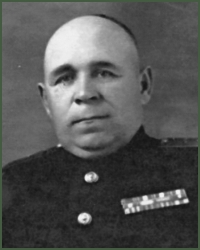
The counterintelligence officers objected. They shouted at the colonel for his revelation to the prisoner: “It’s forbidden! You have no right!” The colonel could get himself arrested, too. As Solzhenitsyn recalls in his own words, his colonel, “Zakhar Georgiyevich Travkin could have stopped right there! But no! Continuing his attempt to expunge his part in this and to stand erect before his own conscience, he rose from behind his desk — he had never stood up in my presence in my former life — and reached across the quarantine line that separated us and gave me his hand, although he would never have reached out his hand to me had I remained a free man. And pressing my hand… showing that warmth that may appear in an habitually severe face, he said fearlessly and precisely: ‘I wish you happiness. Captain!’ Not only was I no longer a captain, but I had been exposed as an enemy of the people… And he had wished [me] happiness…” Despite the danger to himself, the colonel did what little he could to bless and console a persecuted man – and Aleksandr Solzhenitsyn never forgot this.
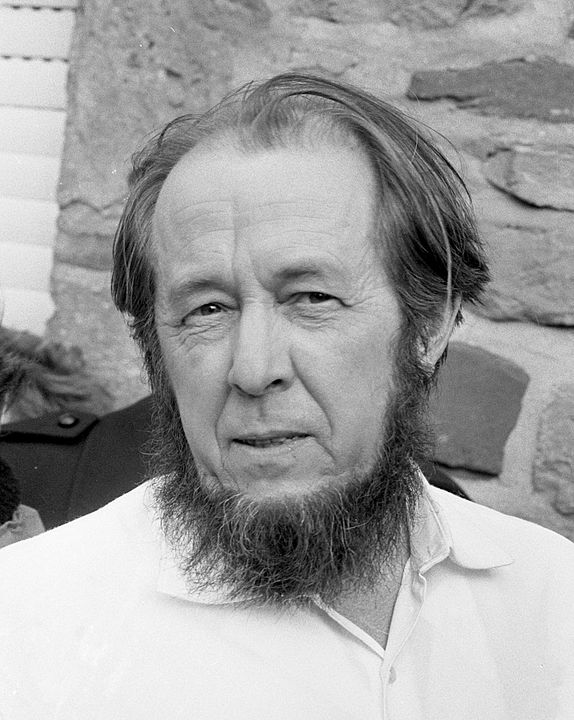 Solzhenitsyn would go on to survive almost eight years inside prisons and forced labor camps. After his release, he became a world famous author, winning the Nobel Prize for Literature in 1970. But the publication of his most important work, The Gulag Archipelago in 1973, outraged the soviet authorities. They stripped him of his citizenship and expelled him from the USSR – they rejected him in his native place. Two Christmases ago, St. John the Baptist’s Altar Rosary Society gifted to me a subscription to Audible. A week and a half ago, I activated it and this non-fiction book, The Gulag Archipelago, is the first thing I’m listening to. It draws on interviews, documents, diaries, and Solzhenitsyn’s own experiences as a prisoner to detail the history and the horrors of soviet gulags from 1918 to 1956.
The dictator Joseph Stalin suspected and feared he had enemies everywhere, so he would hand down orders for entire groups to be arrested (“Arrest all the generals in the Red Army”) and he ordered large numbers of political arrests to be made (“Arrest 200 people in this city for political crimes by month’s end”). To fill their quotas, the police would arrest innocent people, employ terrible tortures to extract confessions, and then ship these condemned persons off to camps, often to die there from a bullet or from the inhuman conditions.
Getting confessions was very important for the corrupt and cynical interrogators. Caring nothing whether the accused were actually criminal conspirators, they inflicted intense physical and psychological sufferings to make them admit guilt and implicate others. These police were not afraid to lie, and any court trials there were were just for show. In that case, instead of breaking their victims, why didn’t the interrogators just forge signatures onto confessions? I suspect this was due to demonic influence. Demons delight to see the wicked do evil, but they are pleased still more by seeing the good fall, to see them sin by betraying the truth and betraying those they love. Solzhenitsyn urges us to have mercy on those who people fell: “Brother mine! Do not condemn those who, finding themselves in such a situation, turned out to be weak and confessed to more than they should have. … Do not be the first to cast a stone at them.”
 Some prisoners did not lie or betray anyone, but even took the opportunity to proclaim the truth. Solzhenitsyn tells the story of one Vera Korneyeva who was arrested with all seventeen members of a Christian group. Her interrogator had left her alone in a large office of the police building where half a dozen employees were sitting. A conversation started and Vera launched into a sermon. In freedom, she had been no more than a lathe operator, a stable girl, and a housewife. But the typists, stenographers, and file clerks of the secret police listened, sometimes asking her questions. People came in from other offices and the room filled up. She spoke mostly about religious faith and religious believers, and asked why anyone would need to persecute Christians.
“Believers don’t need to be watched,” she said, “they do not steal, and they do not shirk [their duties]. Do you think you can build a just society on a foundation of self-serving and envious people? Everything in the country is falling apart. Why do you spit in the hearts of your best? … Why arrest [religious] people?” At that point, her interrogator reentered and started to rudely interrupt her. But everyone shouted at him: “Oh, shut up! Keep quiet! Go ahead, woman, talk.” Solzhenitsyn notes they were forbidden to call her comrade or citizen, but they referred to Vera with the honorable title Christ used: “woman,” and she continued in the presence of her interrogator. So there in an office of the police headquarters they listened to Vera Korneyeva — and why did the words of an insignificant prisoner touch them so? Like Ezekiel, a prophet had been among them.
Soviet prisons and gulags were hellish places, but like Mount Calvary, the Lord was present even there. Nikolai Aleksandrovich Kozyrev, whose brilliant career in astronomy was interrupted by his arrest, sustained himself in prison by doing theoretical work in his mind. His line of mental exploration, however, was blocked by forgotten figures. He could not build any further — he needed the data to develop his theory, but how could he obtain this from his solitary-confinement cell? The scientist prayed: “Please, God! I have done everything I could. Please help me! Please help me continue!” His eyes were fixed on the Lord, pleading for his mercy.
At that time, he was entitled to receive one book every ten days. Half an hour after his prayer, they came to exchange his book. As usual, without asking anything at all, they pushed a book at him. It was entitled A Course in Astrophysics! What was a book like this doing in a prison library? Kozyrev threw himself into it and began memorizing everything he needed and everything he might need later on. After two days, the prison chief made a surprise inspection of his cell and immediately noticed the book. “But you are an astronomer?” “Yes,” he answered. “Take this book away from him!” Yet its providential arrival had opened the way for the scientist’s further work, helping his mind and spirit survive his ten years of detention. Following his release, Dr. Kozyrev would go on to be the discoverer, through telescopic observations, of tectonic activity on the Moon. In other words, he discovered that there is hot magma inside of the Moon. Like Jesus Christ, the Moon is not long-dead (as many have thought) but is dynamically alive today.

Solzhenitsyn observed in 1983, “There always is this fallacious belief [around the world about great atrocities]: ‘It would not be the same here; here such things are impossible.’ Alas, all the evil of the twentieth century is possible everywhere on earth.” Will this church one day be torched by arsonists, as Catholic churches are now being burned down in Canada? Could we one day be fired, beaten, or arrested, be separated from our families, be deprived of our material possessions, or die because of our faith? Jesus Christ was perfect and sinless, “and they took offense at him.” He was hated, denounced, tortured, and murdered. If they persecuted him, why wouldn’t the world persecute us? I do not know how severe the persecution of Christians will become in our lifetimes, but I see no reason not to prepare our souls for this eventuality.
If we are to be like Jesus, even up to the point of dying like Christ rather than denying him (and indeed we are each called to be willing to do this) then we must begin practicing with the little things. Jesus says, “Whoever is trustworthy in very small matters is also trustworthy in great ones; and whoever who is dishonest in very small matters is also dishonest in great ones.” So we must never lie. Make no false professions or false confessions. As Jesus teaches us, “Let your ‘Yes’ mean ‘Yes,’ and your ‘No’ mean ‘No.’ Anything more is from the evil one.”
In addition to never telling falsehoods, we are called to speak the truth, like the woman Vera in the heart of the police organization. Are you afraid of what other people will think? Realize that they are concerned about what you think, too. If you are open, the Holy Spirit will give you opportunities to share the truth with others. Like Colonel Travkin with his accused Captain Solzhenitsyn, we must also be courageous enough to remain loyal to our peers when others would denounce and abandon them. And we must pray and rely on God, like Dr. Kozyrev (who was seemingly, but not truly) alone in his prison cell. Remember that Christ’s grace is sufficient for you, and his power is made perfect in weakness.
Practice these four things: never lie, share the truth, be loyal, and rely on Christ. Even if, in God’s Providence, you never come to suffer like Christ’s martyrs, by practicing these things you will become more like our Lord Jesus Christ.
 Jesus looks up to his Father God in heaven and groans, and says to the man, “Be opened!” (which is, “Ephphatha” in the Aramaic tongue). Behold the intensity of Jesus’ desire for this man’s good, the yearning in our Lord’s prayer. St. Paul writes in his Letter to the Romans that the Holy Spirit intercedes within us to help us intensely will what God wills, aiding our prayer with what Paul calls “inexpressible groanings.” St. Augustine preaches that the task of prayer “is generally accomplished more through sighs than words, more through weeping than speech.” So remember that you do not need many eloquent words in order to powerfully pray. A heartfelt groan can obtain a miracle.




 In today’s gospel, Andrew the brother of Simon Peter sees the hungry crowd of thousands and says to Jesus, “There is a boy here who has five barley loaves and two fish; but what good are these for so many?” Andrew is discouraged and despairing. He has located some food – five loaves and two fish, and if they’re for sale he perhaps has enough coins on his person to purchase them. “But what good are these for so many?” Does what Andrew has to offer really matter? Will it make any real difference?
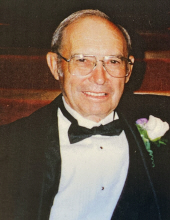 He is known and loved by many. A man others are drawn to because they feel welcome and loved around him. He is wise and witty, joyful and just, honest and unpretentious; a strong, steady, peaceful presence. A great storyteller and a great listener. A hardworking craftsman who both builds and repairs. He’s faithful and devout, hating no one, a lover of God’s word and a believer in the Resurrection. He is the reason that we are all gathered here today. The man I speak of is Jesus Christ.
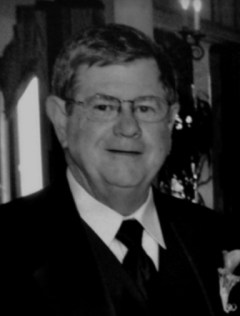 St. John the Baptist Parish is honored welcome you and to offer our greatest prayer, the Holy Mass, for John’s soul and the consolation of all who know and love him. No short funeral homily can capture the fullness of a person. If I were to preach to you for an hour about his life, afterwards I bet that each of you here could add another unique story. This morning, I’m going to reflect upon just a single aspect of John’s life, one that all of you who are his family and friends are already familiar with: his being a chef.
 The “ninth of Av,” also known as Tisha B’Av, is no ordinary day for observant Jews, but a day of fasting and abstaining, because ninth of Av has seen multiple calamities in Jewish history. First, during the Exodus, when the twelve spies sent by Moses returned from scouting the Land of Canaan, most of them voiced negative reports, saying there was no way The Promised Land could be conquered. The Hebrews despaired and cried and refused to proceed. As a consequence, God made his people spend 40 more years in the desert until almost all the adults of that generation had died without entering The Promised Land. The next calamity came in the days of the Prophet Jeremiah, after the founding of the Kingdom of Israel. In the sixth century B.C., the Jewish Temple built by King Solomon in Jerusalem was destroyed by the conquering Babylonians. With that disaster, the Jews were forced to leave their homeland and resettle in the East, and this Babylonian Exile lasted about seventy years until a significant number of Jews were able to return. A third catastrophe occurred in 70 A.D., when the Second Temple in Jerusalem was destroyed by the Romans in response to a Jewish revolt. Not one stone was left upon another, as Jesus had foretold about 40 years before it came to pass. All of these devastating catastrophes, all three of these traumatic, mournful events (the denial of The Promised Land and the destruction of the first and second Temples) are remembered as occurring over the ninth day of Av.
 Today St. Paul’s Parish is pleased to open our church and offer our prayers at this wake service for Len, whom you know and love so well. No brief homily can capture the fullness of someone’s life. But I believe that aspects of a Christian’s life will contain images of Christian mysteries. Jesus preached about the Kingdom of God using images like captured fish, sprouting seeds, precious pearls, and other things as illustrations. Similarly, a particular part I learned about Len’s life—though surely not the most important aspect of his life—especially strikes me as an icon of important Christian truths.
 On my last homily I talked about the fact that faith can produce miracles. Today’s scripture readings helps us to understand how we acquire that gift of faith and participate in God’s divine partnership plan.

