Archive for the ‘Homily’ Category

Travelers & Merchants — 17th Sunday in Ordinary Time—Year A

July 30, 2014

Readings: 1st Kings 3:5, 7-12; Romans 8:28-30; Matthew 13:44-46

The kingdom of heaven is like a treasure buried in a field, which a person finds and hides again, and out of joy goes and sells all that he has and buys that field. Again, the kingdom of heaven is like a merchant searching for fine pearls. When he finds a pearl of great price, he goes and sells all that he has and buys it.

What do these two analogies or parables of Jesus about the Kingdom of Heaven (or Kingdom of God) have in common? Both tell about men who find something precious and sell everything they have to possess it. These short stories are quite similar, but how do they differ? (There must be some significance to these differences otherwise Jesus would not have given us both images.)

Jesus does not give us many details, but in my imagining the first story goes like this: A traveler is walking a dusty road that he has walked many times before, but this time, as he is looking to one side at nothing in particular, a golden glint catches his eye from the adjacent field. Out of curiosity, he investigates and discovers a wooden crate full of gold coins which has been uncovered by recent plowing. Putting the coins back inside and fixing the lid, he reburies the treasure and joyfully goes to sell all that he has in order to buy that field. “Why doesn’t he simply carry the crate away?” Because that would be stealing and true happiness cannot be obtained through wickedness. One does not come to possess the treasure of the Kingdom of God through evil means.

Pearl MerchantIn the second story, a pearl merchant comes upon a high-priced specimen in a marketplace. Its price is, let’s say, one hundred thousand dollars. Many people have admired it before, but the merchant has an expert and discerning eye. He sees that this pearl is worth ten times more and he shrewdly sells everything he owns to possess it. To onlookers, he looks crazy (“Selling everything for just one pearl?”) but he knows what he is about. Those who forsake all else to possess the Kingdom of Heaven may likewise be thought foolish by some, but the wise one recognizes the pearl’s true value.

Both the traveler and the merchant find precious treasure, but one difference between them is that the merchant knew what he was looking for and actively sought it, while the country traveler did not. Some people seek out the true, the good, the beautiful, the eternal things. They seek God himself, and those who seek, find. Others do not seek the higher things of God, yet our humble Lord has been known to blindside them with the truth of his reality and love. So what do these parables mean for us here, who have already come to know Jesus Christ and his Church?

An important aspect to finding and possessing your treasure in the Kingdom of God is knowing and embracing your vocation. The word “vocation” comes from the Latin word “vocare,” which means “to call.” Your vocation is your life’s calling from God. Your vocation is the means by which God intends for you to become holy and a blessing to all.

Some people find their vocation like the traveler on the road—stumbling upon it without having sought it. I think this is true for many marriages. A man and woman can be drawn to each other, fall in love and delight in each other, and decide to spend their lives together without discerning God’s purpose for their lives. Yet, since “we know that all things work for good for those who love God,” (as St. Paul says in our second reading) the Lord still guides them according to his purposes. If you are in the sacrament of marriage your vocation is clear: your mission in life is to become the best spouse and parent you can be and to help lead them to heaven. You need not travel to a mountaintop monastery in a distant land to find your vocation and become a saint. Your vocation, your means to holiness, is as ordinary and close as a field or marketplace, yet your treasure is found there. Your vocation is sitting beside you.

Other vocations are usually discovered only with discernment, by searching like the merchant. One does not become a priest, a religious, or a dedicated single person without a firm decision to offer one’s life entirely to God. These people also find sanctity and bless others in the greatest way through their God-given callings. If you have not yet discovered your vocation, remain close to God in prayer and faithfulness, and he will reveal his will to you.

In our first reading, the Lord appears to Solomon in a dream and says, “Ask something of me and I will give it to you.” Solomon, the new, young king, feels overwhelmed by his office. “I am a mere youth, not knowing at all how to act. I serve you in the midst of the people whom you have chosen, a people so vast that it cannot be numbered or counted. Give your servant, therefore, an understanding heart to judge your people and to distinguish right from wrong.” Solomon’s request for wisdom to benefit the kingdom pleased the Lord, so God granted him great wisdom and all the gifts he had not asked for as well. As Jesus says, “Seek first the Kingdom of God and his righteousness, and all these things will be given you besides.” Pray to God for the wisdom to know your vocation and to embrace it (like the traveler and the merchant) with the investment of everything you are. In this way, you will come to possess the Kingdom’s precious treasure.

Theological Gifts & Obligations — Tuesday, 15th Week of Ordinary Time

July 15, 2014

Gospel: Matthew 11:20-24

Jesus began to reproach the towns where most of his mighty deeds had been done, since they had not repented. “Woe to you, Chorazin! Woe to you, Bethsaida! … For if the mighty deeds done in your midst had been done in Sodom, it would have remained until this day. But I tell you, it will be more tolerable for the land of Sodom on the day of judgment than for you.”

In the visitation of Jesus Christ, Chorazin and Bethsaida had advantages that no people before them had ever enjoyed. The Word of God was before them, but they did not accept him. Incarnate love was among them, but they did not embrace him. The hope of the world was in their midst, but they did not change their ways.

Consider how much more understanding we have of Christ and his teachings than they, how much we have experienced the love of Christ and his people, how many prophesies of Christ we have seen fulfilled. How much more cause do we have to respond to him with faith, hope, and love; how much more of an obligation. As St. Bonaventure said:

“Three things are necessary to everyone regardless of status, sex, or age, i.e., truth of faith which brings understanding; love of Christ which brings compassion; endurance of hope which brings perseverance. No adult is in the state of salvation unless he has faithful understanding in his mind, loving compassion in his heart, and enduring perseverance in his actions.”

As Seen in St. Kateri — Monday, 15th Week of Ordinary Time—Year II

July 14, 2014

Readings: Isaiah 1:10-17, Matthew 10:34-11:1

Today’s readings reflect three truths of Christian discipleship:

The first reading from Isaiah shows us that we must do good if we are going to worship of God:

Though you pray the more, I will not listen. Your hands are full of blood! Wash yourselves clean! Put away your misdeeds from before my eyes; cease doing evil; learn to do good.

The first half of the Gospel shows us that we will sometimes need to leave good things behind in order to follow Christ:

Whoever loves father or mother more than me is not worthy of me… and whoever does not take up his cross and follow after me is not worthy of me.

The second half of the Gospel encourages us that no good thing that we do or sacrifice will go unrewarded by the Lord:

And whoever gives only a cup of cold water to one of these little ones to drink because he is a disciple–amen, I say to you, he will surely not lose his reward.

These three truths of Christian discipleship are reflected in the life of St. Kateri Tekakwitha. She practiced penances to root out her sins and train herself in goodness. After her Catholic baptism, she was rejected by her own kin. And when she died, it is reported that the small pox scars she bore from childhood faded away, pointing to her spiritual beauty and her heavenly rewards hereafter.

Well-Equipped Missionaries — Thursday, 14th Week of Ordinary Time

July 11, 2014

Gospel: Matthew 10:7-15

Jesus said to his Apostles: “As you go, make this proclamation: ‘The Kingdom of heaven is at hand.’ … Do not take gold or silver or copper for your belts; no sack for the journey, or a second tunic, or sandals, or walking stick.”

Why were the Apostles sent without second tunics? Because they were not supposed to sleep outside, but to dwell with the people they met. Why no sandals or walking sticks? Because there was no need to travel far to find people who needed their message. Why no bags or money for their belts? Because they were to trust in God to provide.

Perhaps we imagine a missionary as a priest who works in a far away jungle evangelizing people of a different language and culture than our own. However, we are all called to be missionaries; to proclaim that the Kingdom of heaven is at hand by our words and deeds. There is no need to travel to distant lands. Your mission field is the people in your midst. Do not be afraid, but trust in God to show you these opportunities and to help you to take them.

Peter & Judas — Wednesday, 14th Week of Ordinary Time—Year II

July 11, 2014

Judas Iscariot and the chief priests and elders at the temple, their money on the floor.Readings: Hosea 10, Matthew 10:1-7

The names of the Twelve Apostles are these: first, Simon called Peter,  … and Judas Iscariot who betrayed Jesus.

What was the difference between Peter and Judas? Both were full-fledged apostles (although the Gospels always list the twelve apostles with Peter first and Judas last, much like how the Lord’s Prayer begins with “our Father” and ends with “the Evil One/evil.”) Was the difference that Peter believed Jesus was a good man and Judas did not? No, for Judas said after betraying Jesus, “I have sinned in betraying innocent blood.” Was the difference that Judas was a sinner and Peter was not? No, for at one of their first encounters, Peter “fell at the knees of Jesus and said, ‘Depart from me, Lord, for I am a sinful man.'” In the Passion, Judas betrayed Jesus and while Peter denied him three times beside the charcoal fire in the high priest’s courtyard. The vital difference between Peter and Judas was in their ultimate responses to their sins.

Judas fled and fell into utter despair. Like those in our first reading who “cry out to the mountains, ‘Cover us!’ and to the hills, ‘Fall upon us,’ Judas welcomed dark oblivion. After the resurrection, when Peter was fishing in his boat, Jesus appeared on the shore. Though Peter was lightly clad, he did not run and hide like Adam and Eve in shame, but swam to Jesus enthusiastically. At that second charcoal fire, Peter professed three times that he loved Jesus.

Let us follow Peter’s example rather than that of Judas and encounter Jesus in the confessional. For those who love Christ, hope in Christ, seek Christ, and run to Christ, will find his mercy.

Resting at the Well — Monday, 14th Week of Ordinary Time—Year II

July 7, 2014

Readings: Hosea 2:16-22, Matthew 9:18-26

In today’s first reading from the Book of Hosea, God uses one of his favorite images: Himself as the spouse of his people.

Thus says the LORD:
I will allure her; I will lead her into the desert and speak to her heart.
She shall respond there as in the days of her youth, when she came up from the land of Egypt.
On that day, says the LORD, she shall call me “My husband…”

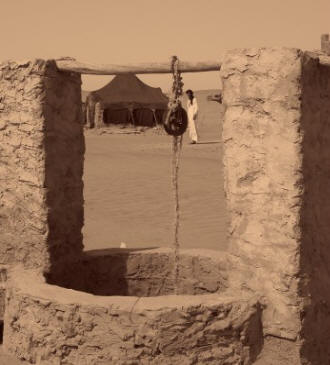
A Water Well in the DesertGod takes Israel back into the desert so that she will remember the first love they shared.

If we are going to live in the desert, we must have water to survive. Prayer is our water in the desert of this life. When you go to pray, you may feel as if you need to dig a new well every time, but the truth is that you can return to previous wells for water. As long as these provide, why busy yourself with digging? Simply rest beside them. When the Lord wants you to move along to another mode of prayer, he will let these wells dry up for a while.

How do you think the healed hemorrhaging woman or the resurrected little girl felt when they would remember their encounters with Jesus? These memories were refreshing wells for them, strengthening their faith and consoling their hearts. Likewise, by praying with our memories of when the Lord has manifested his closeness and power to us, we can nurture our intimacy with Jesus.


Heeding Our Earthly Mother & Heavenly Father — 14th Sunday in Ordinary Time—Year A

July 5, 2014

Readings: Zechariah 9:9-10; Romans 8:9,11-13; Matthew 11:25-30

A Wall Across the Road

Imagine an wall built across a road which has stood for as long as anyone can remember. The Catholic writer G.K. Chesterton suggested that when confronted by such a peculiar sight:

The more modern type of reformer goes gaily up to it and says, “I don’t see the use of this; let us clear it away.” To which the more intelligent type of reformer will do well to answer: “If you don’t see the use of it, I certainly won’t let you clear it away. Go away and think. Then, when you can come back and tell me that you do see the use of it, I may allow you to destroy it.”

It is said that human history has been constantly repeating two phases, summed up in two concise phrases:

First, “What could it hurt?
And second, “How were we supposed to know?

All of us are children of the same holy Mother, the Church. And she is united with God, our loving Father. Moms and dads sometimes tell us, “Don’t touch that–it will hurt. I know it glows enticingly, but it will burn you. We’re not saying this in order to control you or to make you miserable, but because we love you. We want you to be safe and happy.

Red_Hot_Coiled_Stove_Burner_3_by_FantasyStockWe then have three options in how we respond: Either we can touch the forbidden thing for ourselves and experience the pain firsthand. Or we can observe others who have touched the thing and learn from them (though they sometimes hide their pain and tears, even from themselves.) Or, and this is the best response, we can trust in the words of our Mother and Father and never get burned.

Sometimes the wise and the learned of this world refuse to see the truth, but to the little ones, to the childlike, the truth is revealed and they welcome it. In our first reading from Zechariah we find a prophesy about the Messiah. The Savior is not coming on a warhorse, but on a donkey—not as a conqueror imposing his will upon the earth by force, but meekly, inviting us to trust in him and freely embrace his will.

“Come to me, all you who labor and are burdened, and I will give you rest. Take my yoke upon you and learn from me, for I am meek and humble of heart; and you will find rest for yourselves. For my yoke is easy, and my burden light.”

This week’s Supreme Court’s verdict in the Hobby Lobby case comes as good news for religious liberty. However, we must keep praying. Though the five-to-four decision is a positive sign, religiously affiliated non-profit groups are not safely out of the legal woods yet. Many people of goodwill support Catholic institutions in their conscientious refusal to facilitate things they consider gravely immoral, but I wonder how many observers understand why Catholics have any objection to contraception and sterilization to begin with?

People fail to realize that contraception is not something new. For thousands of years, people have used various barriers, chemicals, and techniques to prevent the marital embrace from being fruitful. And most have never heard that before 1930 all Protestant denominations agreed with the Catholic Church’s teaching in condemning contraception as sinful. Most people have not realized what could be wrong with putting asunder what God has joined in the marital act; separating love-making from an openness to life. And though few recognize the harmful impact that contraception has on families and society, its consequences were not entirely unforeseen.

Pope Paul VI

In 1968, in the midst of a sexual revolution made possible by the birth control pill, some believed the Catholic Church would “update” its consistent teaching on contraception. (“What could it hurt?”) Instead, Pope Paul VI shocked the world with orthodoxy. His encyclical, Humanae Vitae or “Of Human Life,” was one of the most controversial documents of the twentieth century, yet the pope’s four predictions of what would happen if contraceptives gained widespread use have proven true:

  1. A general lowering of moral standards throughout society.
  2. A rise in infidelity.
  3. A lessening of respect for women by men.
  4. The coercive use of reproductive technologies by governments.

What is more, a contraceptive mentality has so pervaded our culture that healthy fertility is treated like a disease and conceived children are treated like a cancer. Because of procured abortion, in any room of people under 40 years old, there is on average one person missing for every three people you see. This is the fruit of a contraceptive mentality. (“How were we supposed to know?”)

Whether the Catholic Church teaches on indecent images, fornication, cohabitation, same-sex relations, divorce and remarriage without annulment, in-vitro fertilization, abortion, drug use and drunkenness, euthanasia or suicide; for every “no” in her teachings the Church proclaims a greater, more foundational “Yes” to love and life and true happiness. As St. Paul tells us:

“Brothers and sisters, we are not debtors to the flesh, to live according to the flesh. For if you live according to the flesh, you will die, but if by the Spirit you put to death the deeds of the body, you will live.”

Will we be childlike enough to listen to our Father in heaven and our Mother on earth? Learn from Christ and take his yoke upon you, for according to his promise you will receive rest. His ways require sacrifice, yet compared to the yoke of sin and death which comes with the ways of the world, Jesus’ yoke is easy and his burden is light.

The Untamed Christ — Wednesday, 13th Week of Ordinary Time

July 2, 2014

Gospel: Matthew 8:28-34

When Jesus came to the territory of the Gadarenes, two demoniacs who were coming from the tombs met him. They were so savage that no one could travel by that road. They cried out, “What have you to do with us, Son of God? Have you come here to torment us before the appointed time?” Some distance away a herd of many swine was feeding. The demons pleaded with him, “If you drive us out, send us into the herd of swine.” And he said to them, “Go then!” They came out and entered the swine, and the whole herd rushed down the steep bank into the sea where they drowned.

Though pigs were ritually-unclean to the Jews, these Gentiles raised them to eat and trade in order to secure a comfortable life. Once Jesus casts the demons into the swine the herd runs into the sea and drowns. (Perhaps the demons drove them, predicting the discord that would result, or perhaps the animals simply could not bear the demons’ terrible presence.)

The swineherds ran away, and when they came to the town they reported everything, including what had happened to the demoniacs. Thereupon the whole town came out to meet Jesus, and when they saw him they begged him to leave their district.

Rather than rejoicing at the restoration of their brothers, the townspeople grieve over the loss of their herds. They would wish for the demons to return to the men if that meant their pigs would be restored to their pastures. These people do not want to see any more mighty deeds from this clearly holy man, but instead beg Jesus to leave. Like the demons, they perceive Jesus as a threat to their lifestyle. The townspeople desired comfort more than righteousness. They loved bacon more than their brothers. They preferred being left alone to having Jesus.

Domesticating the person of Jesus Christ and his revolutionary gospel, so that he neither challenges nor demands anything from us, is a danger in the Christian life. The real, undomesticated Christ calls us to constant growth and sacrifice for the love of God and neighbor. As C.S. Lewis puts it, Aslan is not a tame lion, but he is good.

How God The Father Loves His Son

June 16, 2014

How does the Eternal Father love Jesus Christ his Son?
The Scriptures provide us insights into their relationship.


The Father gives his Son instruction and example

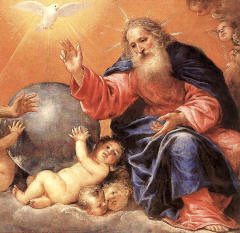
God the Father BlessingAs Jesus once said, “Amen, amen, I say to you, a son cannot do anything on his own, but only what he sees his father doing; for what he does, his son will also do,” adding, “I cannot do anything on my own.” The Father loves his Son and shows him everything that he does. Sometimes believers find it harder to relate to God the Father than Christ the Son. But what is the Father really like? He is just like his Son. Jesus “is the image of the invisible God.” As Jesus said, “Whoever has seen me has seen the Father.”  The Father offers his Son the perfect example, and his Son perfectly follows him.

The Father listens to his Son

Outside the tomb of Lazarus, Jesus said, “Father, I thank you for hearing me. I know that you always hear me…” Jesus shares his own attitude toward prayer when he tells us, “In praying, do not babble like the pagans, who think that they will be heard because of their many words. Do not be like them. Your Father knows what you need before you ask him. This is how you are to pray: Our Father…” Jesus knows that wordy, poetic prayers are not necessary because his Father is always listening.

The Father encourages his Son

At Jesus’ baptism in the Jordan River, the Father declared from heaven, “You are my beloved Son, in whom I am well pleased.” And on the summit of Mt. Tabor, at Jesus’ Transfiguration, the Father spoke from the cloud, “This is my beloved Son, listen to him.” The Father encourages his Son with reminders of his love.

The Father provides for his Son

Jesus said, “Everything that the Father has is mine.” Jesus’ Father is like the father in the parable of the Prodigal Son who told his first-born, “My son, you are here with me always; everything I have is yours.” Confident in his Father’s providence, Jesus tells us to be likewise unafraid concerning our basic needs, what we are to eat and drink, or what we are to wear: “Seek first the kingdom of God and his righteousness, and all these things will be given you besides.” The Father also provides his Son with gifts greater than material things. At the Last Supper, Jesus said of disciples, “Father, they are your gift to me.”

The Father welcomes closeness with his Son

It was a big deal when Jesus prayed, “Abba, Father.” As St. John Paul the Great observed, “An Israelite would not have used [“Abba” to address God] even in prayer. Only one who regarded himself as Son of God in the proper sense of the word could have spoken thus of him and to him as Father–Abba, or my Father, Daddy, Papa!” Because the Father welcomes intimate closeness with his Son, Jesus can say, “I and the Father are one.”

The Father loves his Son’s mother

At the Visitation, filled with the Holy Spirit, Elizabeth declared to Mary, “Most blessed are you among women,” and Mary rejoiced, “From this day all generations will call me blessed. The Almighty has done great things for me, and holy is his name.” By pouring his love and blessings into Mary, God the Father gave his Son a loving mother full of grace.

The Father fosters growth in his Son and sends him on mission

The Letter to the Hebrews says, “Son though he was, [Jesus] learned obedience from what he suffered; and when he was made perfect, he became the source of eternal salvation for all who obey him, declared by God high priest according to the order of Melchizedek.” But this raises a question: how can the divine Son grow in any way? Though perfect in heaven, the Son of God had no firsthand experience of weakness, suffering, or the trials of obedience, until his Incarnation. Through these things he was made complete so that he could be the savior of humanity. The Father prepares his Son and sends him on a mission to transform the world. “God did not send his Son into the world to condemn the world, but that the world might be saved through him.”

The Father as our model for Fatherhood

Whether we are biological or spiritual fathers, Jesus’ heavenly Father gives men a model for our fatherhood. We are to give our children instruction and good example. We should listen to them and encourage them, letting them know that they are well-beloved. We should provide for our children, according to our abilities, supplying their basic needs without neglecting the greater gifts. We are to welcome closeness with our children. We are to love our children by loving their mother, whether she be our spouse or the Church. We are to foster maturity and virtue in them so that they may go forth in mission to transform the world.  Which aspect of your fatherhood are you resolved to grow in with God the Father?

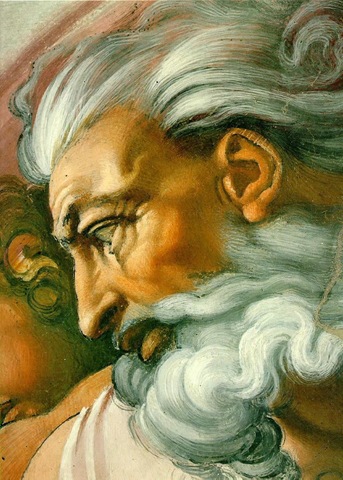
God the Father in the Creation of Man by Michelangelo, Sistine Chapel Ceiling, Vatican.Our Perfect Father

Some of us have had very good fathers, while some of our fathers were very far from perfect. But regardless of the quality of our earthly fathers, we all have a heavenly Father who loves us perfectly. As Jesus tells us, “the Father himself loves you, because you have loved me…” Our Father instructs us and shows us his example through his Word. He always listens, and we should not be surprised when he encourages us, speaking to us, in prayer. Our Father provides for our material needs and gives us the greater gifts. “For everyone who asks, receives…” Our Father welcomes intimacy with us, giving his children the spirit of his Son so that we too may cry, “Abba, Father!”  And he gives us Mary, the same perfectly loving mother he provided for his Son. Our Father would grow and mature us into greatness, into saints, into the likeness of his Son, and send us on mission for the transformation of the world.

Freed from Error — Friday, 5th Week of Easter

May 23, 2014

Readings: Acts 15:22-31, John 15:12-17

The first-century Church faced an important doctrinal question: was it necessary for Gentiles (i.e., non-Jews) to keep the full Mosaic Law in order to be saved? Self-professed Christians argued on opposing sides of the issue. Yet, after the Council of Jerusalem, the Church’s ordained leaders decreed to the Gentile Christians:

“‘It is the decision of the Holy Spirit and of us not to place on you any burden beyond these necessities…”

This conclusion was not merely the opinion of “the apostles and the presbyters.” As they themselves declare and Sacred Scripture affirms, the Holy Spirit was infallibly working with and through them. In his explanation of Why I Am a Catholic, G.K. Chesterton explained that, “[Catholicism] is the only thing that frees a man from the degrading slavery of being a child of his age.”  Jesus said:

“I no longer call you slaves, because a slave does not know what his master is doing. I have called you friends, because I have told you everything I have heard from my Father.”

The Church is the bride of Christ. She is his intimate friend with whom Jesus shares everything. And, by the power of the Holy Spirit, she offers us protection and deliverance from the limitations and blind spots of our own particular cultures, eras, and intellects in questions of our Faith.

Called by the Spirit — 3rd Sunday of Easter—Year A

May 5, 2014

Gospel: Luke 24:13-35

Let me tell you about the neatest thing that happened to me this week. Since Easter, our parish has been reading the book Rediscover Catholicism and discussing it on Thursday evenings in the rectory. In the latest chapter, Matthew Kelly writes that today’s Catholic Church will become all that she is meant to be only through the guidance of the Holy Spirit.

“[T]he ways of man will not get us from where we are today to where we are called to be. I also know that in every place and in every time since Pentecost the Holy Spirit has been present to guide you, me, and the whole Church. I am certain that the Church needs less and less of your ideas and mine, and more and more guidance from the Holy Spirit.”

Holy Spirit Dove - Sacred Heart Catholic Church -  Wauzeka WIMatthew Kelly then pauses in his text to invite the reader to pray the traditional prayer for the Holy Spirit to “renew the face of the earth.”

I was reflecting on these things while I was driving down the highway. Am I inviting the Holy Spirit to guide my everyday life? I try to do my best and make good choices, but my flesh is weak and my knowledge is limited. I work and hope for the best, but the Holy Spirit has power I ought to be open to and insight I should be more docile to. So I prayed to the Holy Spirit anew. And then a curious thing happened: the thought came mind to call my old friend, Colleen.

It was curious because I had not been previously thinking of her or thinking about calling anyone at all. Yet I wondered, “Is this coming from you, Lord, or is this just me?” I hesitated because I was aware of no reason to call. If she were to ask me what I was up to, or what I wanted to talk about, I would have nothing to say. So, to avoid embarrassment, I constructed some good reason for calling (to thank her and her husband for coming to a party I threw for old friends two weeks ago) before selecting her number on my cellphone.

She answered, and after greetings I asked, “So how are things going?”

Great,” she replied, less than enthusiastically.

“Is that an actually-great, or a sarcastically-great?”

It was the second. That morning, Colleen had quit her job without giving two-weeks notice. She said she had been at the end of her rope at work for some time and had quit in a fashion which precluded her return. She was anxious at losing her health insurance and uncertain about what she would do next. Then I knew the reason for my call. I mentioned that even though these events had come unexpectedly to her, they were no surprise to God. I encouraged her to ask Him to show her–and to lead her–where to go next. By the end of our chat, Colleen’s spirits were noticeably better than before.

I share this story because I cannot tell anyone else’s first-person account as well as my own, and as Pope Paul VI said, “Modern man listens more willingly to witnesses than to teachers, and if he does listen to teachers, it is because they are witnesses.” I may be misrecalling a phrase or two, but I know that my story is true. It reconfirms for me that God intervenes in our world, working miracles big and small, and that God would personally speak to you and me (not just to long-ago saints, or crazy people.)

Encounter on the Road to Emmaus — Luke 24A personal relationship requires two-way communication. Since God desires a personal relationship with every person, we should not be surprised that he would speak to us. When He speaks it is usually subtly, perhaps by a thought or through a friend. He comes discretely, like Jesus came veiled to the disciples on the road to Emmaus, and He does not force Himself upon us, just as Jesus “gave the impression that he was going on farther.” God can speak to us through whatever we’re paying attention to if we’re open to listening to Him and welcoming Him.

The apostles and the first disciples were ordinary people, made of the same stuff that we are. They worshiped just like we do, opening God’s Word and encountering Jesus in the Breaking of the Bread, but they also had the expectation that they would see God work mighty deeds in their midst and actively sought to be led by the Holy Spirit. Wouldn’t God want the same for us today?

What sort of things would the Lord like to do through us? In today’s gospel, the two men walking their road away from the holy city were visited that first Easter evening by Jesus incognito. Their encounter with Him restored their Christian faith and brought them back to the early Church in Jerusalem. One thing Jesus would like to do today is to encounter those who are far from His Church using us as His subtle disguise. Let us ask the Holy Spirit to inspire and lead us to invite and draw others to our parish. At worst, they’ll decline, but very possibly their lives could be changed and it could be the neatest thing that happens to you all week.

Come Holy Spirit, fill the hearts of your faithful and kindle in us the fire of your love.

Send forth your Spirit and we shall be created. And You shall renew the face of the earth.

One Bible, Many Interpretations

April 29, 2014

Mormons teach that the Father, Son, and Holy Spirit are three Gods, and that we too can become Gods in our own right someday.

You may reply to them, for instance, with James 2:19, “You believe that God is one. You do well. Even the demons believe that and tremble,” but Mormons will have some explanation for that New Testament passage which fits their theology.

Oneness Pentecostals teach that the Father, Son, and Holy Spirit are not three persons but three manifestations of one divine person, God.

You may ask them who Jesus is praying to in Matthew 26:39 when he says in the Garden of Gethsemane, “My Father, if it is possible, let this cup pass from me; yet, not as I will, but as you will,” yet Oneness Pentecostals will offer some answer for why Jesus is not praying to another person.

Jehovah’s Witnesses teach that Jesus is not God, not divine, but God’s first and greatest creature and that the Holy Spirit is not a person but the active force of God the Father in the world.

You may answer with the beginning and end of the Gospel of John: with John’s prologue where we see “the Word was with God, and the Word was God. … And the Word became flesh,” and the gospel’s climax, John 20:28, “Thomas answered and said to [Jesus,] ‘My Lord and my God!'” However, Jehovah’s Witnesses will surely have some reply for these verses.

A diagram of the ancient, orthodox, Christian conception of the Holy Trinity

A diagram of the ancient, orthodox, Christian conception of the Most Holy Trinity: One God, Three Divine Persons

In my personal experience, advocates of Mormon polytheism, Oneness Pentecostal modalism, or Jehovah’s Witnesses Arianism-esque theology have all been sincere, friendly, rational, and not unintelligent people. They were all well-versed in the Bible, regarded it as God’s infallible Word, and used it to support their beliefs. They all proudly claimed the name of “Christian.” However, the undeniable fact that their theologies contradict each other proves that these admirable personal traits are not enough to guarantee a true understanding of the Christian Faith. The problem is that there seems to be more than one possible internally-coherent interpretation of the Bible. Just as texts out of context can suggest several defensible, though incorrect, meanings; interpreting biblical texts outside the context of Christ’s one, holy, catholic, and apostolic Church leads to many errors.

Last week, two very nice Jehovah’s Witnesses visited me at my rectory and we spoke for a couple of hours. I believe we were debating whether one of Jesus’ “I Am” statements in John’s Gospel was a profession of his divinity when one of my guests remarked, “We can’t really be certain what he meant.” I replied to the effect, “You’re right!–If your opinion and my opinion are all we have to go on, if there’s no visible authority on earth with power from Jesus Christ to infallibly answer biblical questions, then we can never be certain our interpretations are true–since many sincere, reasonable, and even scholarly Christians firmly disagree. Without a clear, external teaching authority within the Church, we would be left as sheep without a shepherd and inevitably scatter.” Most Christians revere the Holy Scriptures as God’s infallible Word, and this is right and good, but for some reason many of them reject the Catholic Church through which the Scriptures come.

Recall that Jesus wrote nothing in the Gospels (except perhaps something in the dust near the woman caught in adultery) but Jesus did establish a Church. Through this Church the New Testament was written, collected, canonized, and revered. However, this process was certainly not completed in the first century AD. In the early Church there was much debate over which New Testament writings were inspired and should be included in the canon. The Shepherd of Hermas? The Book of Revelation? The Didache? The Letter to the Hebrews? The Epistle of Clement? Some early Church Fathers included works such as these in their lists of Bible books, while others left them out. It was the Catholic Church that ultimately canonized the New Testament books which all Christians acknowledge today.

One teaching shared by Mormons and Jehovah’s Witnesses is the belief that a Great Apostasy occurred in the early Church. The New Testament contains verses which warn about false teachers arising who will mislead many. A great deception, those religions say, happened soon after the death of the apostles and explains why the majority of self-professed Christians in history have held core doctrines widely different from their own. I would agree that false teachers and heresies arise in every age, but was there a Great Apostasy soon after the apostles that devastated Christ’s Church and caused his central teachings (like the true nature of God) to be discarded and forgotten?

Christ Handing the Keys to St. Peter by Pietro Perugino (detail)

Jesus entrusting the keys of his Kingdom to St. Peter (Matthew 16:19)

All Christians will agree that Jesus was a wise man. Jesus was a wise man indeed, who built his house on rock. Jesus declared to Simon, “‘I say to you, you are Peter [that is, you are “Rock” in Greek] and upon this rock I will build my church, and the gates of the netherworld shall not prevail against it.'” (Matthew 16:18) If Jesus was a wise man who built his house on rock we can be assured that even though “the rain fell, the floods came, and the winds blew and buffeted the house–it did not collapse; [his Church] had been set solidly on rock.” (Matthew 7:24-25)

After building his Church on Peter for some forty years, did Jesus let it go into shambles and fail to repair it for about eighteen centuries, until Joseph Smith or The Watchtower came along? If so, Jesus really dropped the ball. If the Mormons or Jehovah’s Witnesses are right, then God managed to get all of the New Testament books infallibly written, correctly canonized, and faithfully preserved throughout millennia, but could not maintain the truth about himself in his Church on earth in the hearts and minds of believers much beyond the death of the apostles. More likely, our Lord Jesus Christ succeeded in preserving his teachings and the visible hierarchical authority he gave to his Church, from St. Peter (the first pope) and the apostles to Pope Francis and the bishops in communion with him today. A clear and necessary line of teaching authority runs though the centuries, through the laying of hands and apostolic succession.

You may encounter people who will present you with internally-consistent but very different interpretations of Scripture. Do not let your hearts be troubled. There are good reasons for everything we believe as Catholics. They may “know” the Bible, but we are blessed to know God’s Church from which the Bible comes. If you love Jesus Christ, love his Catholic Church. As even St. Joan of Arc, who personally experienced the complexities of the Church as a divine and human institution, said, “About Jesus Christ and the Church, I simply know they are just one thing and we shouldn’t complicate the matter.” If you love Jesus’ Church you will love him well. Jesus Christ is risen and his Catholic Church, though ancient, has never died. Christ’s Church, the Bride he protects and for whom he laid down his life, is very much alive.

Pontius Pilate, Postmodern American

April 10, 2014

Anthony Lusvardi, SJ's avatarWhosoever Desires

Nathan’s post on Mel Gibson’s The Passion of the Christ last year generated a lot of discussion and ended with an intriguing question:  “Why does Pilate always get so much empathy from us?”

It would be easy, at this point, to start tossing around charges of anti-Semitism, charges which would allow us to feel a certain measure of moral superiority over those less enlightened than ourselves.  Then we could pray like the righteous Pharisee, “God, I thank thee that I am not like other men, extortioners, unjust, anti-Semites like Mel Gibson over there” (Lk 18:10).

Throwing around such charges is a way of doing precisely the same thing that blaming the Jews for the crucifixion once did:  deflecting guilt from ourselves.  I would suggest a far more troubling answer to the question, “Why do we empathize with Pilate?”

Because Pontius Pilate is the character in the Passion who is most…

View original post 867 more words

The Next Life — Monday, 4th Week of Lent

March 31, 2014

Readings:  Isaiah 65:17-21, John 4:43-54

Thus says the LORD: Lo, I am about to create new heavens and a new earth; The things of the past shall not be remembered or come to mind. Instead, there shall always be rejoicing and happiness in what I create; For I create Jerusalem to be a joy and its people to be a delight; I will rejoice in Jerusalem and exult in my people. No longer shall the sound of weeping be heard there, or the sound of crying; No longer shall there be in it an infant who lives but a few days, or an old man who does not round out his full lifetime; He dies a mere youth who reaches but a hundred years, and he who fails of a hundred shall be thought accursed. They shall live in the houses they build, and eat the fruit of the vineyards they plant.

What are we to make of this first reading of Isaiah? Has it been fulfilled in the two-dozen centuries since it was written? Clearly not, though just a few generations from now, because of medical and technological advances, people may be living up to 125 or 150 years on a regular basis. Yet what advantage does someone who dies at 150 without God have over someone who dies at 75? And even in a future with longevity and prosperity, there will still be weeping and crying.

I think the Lord gave this vision of a new heavens and a new earth in ancient times to help his people hope in something tangible and relatable: “What is eternal life? Would I really want that? But living a very long life without sadness would be something I’d desire.” In the new heavens and earth after Jesus’ return in glory there will be complete happiness and no death at all (Revelation 21:4.) We should imagine what that will be like; an intimate community of friends, conversation and feasting, sports and play, singing and dancing, and joyful worship; while at the same time realizing that our experience of the next life will surpass all of these earthly things as we know them.

Excuses Are Always Easy To Find — Thursday, 3rd Week of Lent

March 27, 2014

Readings: Jeremiah 7:23-28, Luke 11:14-23

One the easiest things in the world to find is an excuse. People can always find a seemingly good reason to do a bad thing, or a bad reason near at hand not to do something good. We like to rationalize and justify what we already desire.

Some in the crowd were made uncomfortable by Jesus, so they dismissed his obvious power to do good as a cunning trap of the devil: “By the power of Beelzebul, the prince of demons, he drives out demons.” Through the prophet Jeremiah, the Lord describes those too stubborn to turn to heed his voice or change their bad path as “stiffened-necked.”

Let us pray for those who “have stiffened their necks,” that they may have enlightened minds and open hearts, and for ourselves, to recognize and renounce our own weak excuses. “If today you hear his voice, harden not your hearts.”