Archive for the ‘Sunday Homilies’ Category

So what do we do now?

May 16, 2021

Ascension Sunday

Christ's Ascension by Fresken von Gebhard Fugel, 1893-1894.Where are we now in the Easter season? Let’s recap. Jesus resurrects and first appeared to his disciples on Easter Sunday. And for forty days, he is with them off and on, appearing and disappearing, teaching them about the Kingdom of God and preparing them for their important work ahead: that of sharing the Good News and shepherding his Church. On the last of those forty days, Jesus ascends to his Father in heaven. And for the next nine days, his disciples (as per Christ’s instructions) remain in Jerusalem praying for and awaiting the promise of the Father about which they had heard Jesus speak. Finally, on the fiftieth day, on the Jewish feast of Pentecost, the disciples are intensely filled with the Holy Spirit. They become empowered to begin sharing their stories about who Jesus is and what he has done, inviting others to know him, love him, serve him, and be saved through him. Today we celebrate the Feast of the Ascension, looking forward to the Feast of Pentecost next Sunday.

But wait a second… didn’t I just mention that there were nine days in between the Ascension and Pentecost? Indeed, the Feast of the Ascension is traditionally observed on Ascension Thursday, a few days ago earlier this week. But in our diocese and the vast majority of dioceses in the U.S., the bishops officially transfer the feast to today, the following Sunday, so that more of the faithful will encounter and celebrate this feast. Another quirky thing about today’s Mass is how the story of Jesus’ Ascension is recounted more thoroughly by our first reading, from the beginning of the Acts of the Apostles, than by our Gospel reading, which briefly mentions the event.

The Acts of the Apostles says, when Jesus’ disciples had gathered together they asked him, “Lord, are you at this time going to restore the kingdom to Israel?” In other words, ‘Will you now forcefully make your kingdom come, restoring the earthly kingdom of David and Solomon, or perhaps now even impose a still greater kingdom where God’s will is done as fully on earth as it is in heaven?’ Jesus answered them, “It is not for you to know the times or seasons that the Father has established by his own authority.” When Jesus comes again in manifest, unveiled glory, with all his angels with him, no one will be able to ignore Christ the King or harass his flock any longer, but regarding the time of that return, no one knows the day or the hour except God. In the meantime, Jesus says, “you will receive power when the Holy Spirit comes upon you, and you will be my witnesses in Jerusalem… and to the ends of the earth.”

When he had said this, as the disciples were looking on, Jesus was lifted up and a cloud took him from their sight. So there they were, looking intently at the sky, not quite exactly sure what they were supposed to do now. I wonder how many hours they would have stood gapping at the sky if not for what happened next. Suddenly, two men dressed in white garments stood beside them. (Though not explicitly stated, these seem to be angels in human appearance. Well-informed young men in white had also been at the tomb on Easter Sunday morning, announcing and helping the disciples understand Jesus having risen from the dead.) At the Ascension, the messengers said, “Men of Galilee, why are you standing there looking at the sky? This Jesus who has been taken up from you into heaven will return in the same way as you have seen him going into heaven.” With this reassuring redirection, the disciples return from the Mount of Olives into the city of Jerusalem to pray and prepare for the Holy Spirit’s next move. The Apostles had received the Holy Spirit before in some measure. On Easter Sunday evening, Jesus had breathed on them and said, “Receive the Holy Spirit.” But they required a further gift of the Spirit to know and act on what God specifically wished them to do.

Today, we are in similar circumstances as those first Christians. We each first received the Holy Spirit at our baptisms and entered a deeper, more extensive relationship with him through our confirmations. Now, as we anticipate the Feast of Pentecost, I urge you to pray for the Holy Spirit to enlighten and empower you for what God wants you to do next. Our community is now happily returning nearer to normal, but what will our new habits and endeavors be? This post-pandemic world needs God—it always has—and the people in your world you need Jesus Christ and his Church. By your words and actions, Jesus wants you to show and share with others who Jesus is for you and what he has done for you, inviting others to know him, love him, serve him, and be saved through him. Jesus Christ is not forcibly imposing his Kingdom but sharing and advancing it subtly, intricately, mysteriously, and most wonderfully, especially through persons who are open to doing his will.

I believe God wants to begin one or more new things with you. So I urge you to ask him in these days, “Lord, what do you want me to do?” To ask the question is the start of saying “Yes” to him, but to refuse to ask the question is to answer him “No.” So ask, and seek, and see what new and great things the Lord would do through you during this new springtime for the Church.

“As the Father Loves Me, so I Also Love You”

May 8, 2021

6th Sunday of Easter

Who was the first person on earth to know you in your lifetime? Upon reflection, you realize it was your mother. Your mother knew you long before you knew her. And I would wager that she loved you as herself, even willing perhaps to lay down her life for you with the greatest love.

An unborn baby’s understanding of things, of its mother and of itself, is limited. But the mother surrounds the baby. She is responsible for and behind the child’s entire universe. The little one is totally dependent upon her, and experiences everything in the midst of mom. Though the sound is quiet and somewhat muffled with distracting noises, the listening little child can hear the mother’s voice and feel her pulse. Imagine an unborn baby doubting and asking, “Does Mom really exist? Is there really a mother at all?

It is right that we love our mothers, though we ought not to make them into idols. When Cornelius met St. Peter, the Roman centurion fell at his feet to do him homage, but Peter raised him back to his feet, saying, “Get up. I myself am also a human being.” Only one mother in human history has been perfect, but our parents present us with our first living image and icon of God.

The Holy TrinityAs much as a baby receives from his or her mother, the Son of God receives still more so from his Father. How does God the Father give life to his Son? The Son is eternally begotten of the Father; “God from God, Light from Light, true God from true God.” The Father gives his whole being to the Son, and his Son, so loved, receives everything with joy. In today’s Gospel, Jesus says, “As the Father loves me, so I also love you.” How does God love you and me like the Father loves the Son?

For starters, God loves us first. The Father and Son are coeternal, but the self-gifting of the Father is the source of the Son, who then loves the Father, self-gifting himself in return. Likewise, God loves us and gives himself to us first, before inviting us to do the same. “In this is love,” St. John writes in our second reading, “not that we have loved God, but that he loved us and sent his Son as expiation for our sins.” And St. Paul tells the Romans, “God proves his love for us in that while we were still sinners Christ died for us.

Another way we are loved like the Father loves the Son is in how we receive every good thing from God. Like an unborn child receives from its mother, and the eternal Son receives from the Father, you receive everything from God through Jesus Christ. St. Paul speaks of the importance of the Son to the Colossians: “In him everything in heaven and on earth was created, things visible and invisible… all things were created through him… He is before all things, and in him everything continues in being.” For us, Jesus Christ is the one through whom all good things come.

Now would it make any sense for an unborn child, who is cherished by its mother, to see his or her mommy as an enemy? Or could God the Father and God the Son ever be rivals? Of course not! And yet we are guarded against Jesus. We hesitate to share our time with him, we hesitate to give our money for him, we hesitate to forsake our habitual sins for him. So I challenge you, I dare you, to trust more in him who loves you.

When Jesus says, “Remain in my love. If you keep my commandments, you will remain in my love,” he is not threatening to stop loving us. No—we must keep Christ’s commandments, doing his loving will, to fully receive everything he wants to give us. Jesus, who is first loved by God, who receives everything from God, who does God’s will, who rejoices and remains in God, who loves God and self-gifts himself fruitfully in return to God, desires you and me to experience the same blessedness. “If you keep my commandments,” he says, “you will remain in my love just as I have kept my Father’s commandments and remain in his love. I have told you this so that my joy may be in you and your joy might be complete. … It was not you who chose me, but I who chose you and appointed you to go and bear fruit that will remain.”

This Sunday, let us love, honor, and pray for the mothers from whom we were born on earth; while we love, honor, and trust all the more the eternal Son through whom we are born again from above.

HABITS Produce Much Fruit

May 1, 2021

5th Sunday of Easter
By Deacon Dick Kostner

Descending VineyardOur Gospel from John has Jesus telling his disciples, telling us, how we can survive and be happy not only in this life but gain for us everlasting life if we but realize our dependence for success and life depends on our acceptance of the fact that we cannot succeed without help from the “Vine,” without Jesus. In preparing for this homily, I went to Formed to get their take on today’s gospel. The minister who reflected upon the Gospel said that we need “HABITS” to allow us to produce fruits from the vine of God, who is Jesus, in order to deal with the challenges that we will face if we wish to be followers of Christ and find peace and experience a successful life as we journey to the Father’s house.

H” stands for Holy Time. We need to commit and schedule within our busy life “time” to communicate with Jesus. Many refer to this communication as prayer. I like to think of it as conversation with Jesus about challenges that we are facing as we journey as well as pleasures and great happiness gifts that we appreciate and recognize as being given to us by God, the “dog treats” God graces us with for being fruitful branches of His divine vine. The minister suggested starting with a commitment of ten minutes a day to communicate with Jesus and letting it grow from there.

A” stands for Accountability. The minister said this stands for us having at least one close friend that we can confide in and request guidance, when we need help and direction. I would suggest that this be a person who has already established a close relationship with Jesus and who is a healthy branch of the vine of Jesus. I can remember when shortly after I was ordained I met with our new priest, Fr. Norm Boneck, and asked him if I could develop a per-baptism class at St. Paul’s as we had no program at that time and he responded by saying, “NO! I want you to start an RCIA program for the parish!” Panic hit me. I had absolutely no experience or knowledge of how that could happen. I thought to myself, “Man, you picked the wrong dude to tackle that job.” Barb remembered that one of my deacon friends had mentioned that he and his wife had done a program at their parish, and she suggested I call him and yell “help!” I did that and he invited us to go to Wisconsin Rapids and met with him for some advice. The first thing he said to me is to not worry and that he had experienced the same panic and that the Holy Spirit would not let be get into too deep of water so as to drown. With His help and guidance St. Paul’s began an RCIA program which has produced much fruit from this Branch.

B” stands for Bible. We need to get to know Jesus as a person and that can best be accomplished by reading about him and living a life based on the Gospel messages. Through Scripture we learn that Jesus was given to us to shepherd his followers. We discover that there does exist an evil one who uses the tools of confusion, deception, and fear to control us and lead us away from the protection of the Good Shepherd and his guard dog His Church. We have witnessed this first hand this last year where the world has become afraid and confused by the Covid. We see how evil has attacked our guardian the Church and the faith it teaches to leave us feeling helpless. All this helps separate us from truth and the protection our faith gives us to suppress and overcome the evil in this world.

I” stands for Investing and supporting the parish we are assigned too. The message from Jesus is that we not only read his Word but also live his Word by example. Good fruit requires commitment in the form of financial support of our parish as well as a commitment of our time and talents to our parish so that it may remain healthy and fruitful. Our parish needs your commitment of time, talent, and treasures to be a successful and healthy branch of God that will produce much fruit. Statistics show that only about 30% of a parish membership support their church with their commitment. Only 30% of the people are helping to keep the branch of Christ active and healthy. That percentage needs to increase if we are to produce a good crop of fruit during our lives.

T” stands for Tell Others. We need to share with others the benefits that we will be gifted with if we are productive branches of Christ. We need to share with others the “dog treats” the graces that God has bestowed upon us for being active followers of Jesus. Jesus tells us to spread the Good Word.

Finally, “S” stands for Sacraments. The Church of Jesus is one that is based on Sacrament. Sacrament bestows upon us graces which can and will produce super natural powers that will be gifted upon those who celebrate the Sacraments. These gifts from Jesus will provide us with energy and powers of accomplishment beyond human capabilities. Through the spiritual graces gifted us through participation in the Sacraments the Branches are fed nutrients from the Vine that will allow us to accomplish tasks that would otherwise be humanly impossible.

Bottom line is that we are all dependent upon the Vine for protection from the storms of life and production of fruit. Let us all form HABITS that will make us healthy branches that will produce much fruit from the vine for all who wish to enter the Kingdom of God.

Jesus Christ our Cornerstone, Shepherd, & Brother

April 24, 2021

4th Sunday of Easter

We are here today because of our Lord and Savior, Jesus Christ. And as truly today as when St. Peter first preached these words, “There is no salvation through anyone else, nor is there any other name under heaven given to the human race by which we are to be saved.” Jesus Christ is the Cornerstone, he is the Good Shepherd, he is the Son of God.

St. Peter is quoting today’s psalm when he proclaims Jesus as the stone rejected by the builders which has become the cornerstone. Christ is foreshadowed in the Old Testament by passages about holy stones: cornerstones, keystones, and capstones. A cornerstone is the foundational basis of a building which makes the whole structure possible. A keystone is found at the top of an arch—maintaining its shape alongside its fellow stones. And a capstone is a building’s top-most stone, its crowning glory.

In his new Temple, the Church he builds, Jesus Christ is “the beginning and the end”: he is the cornerstone which makes all this possible, he is the capstone—our crowning glory, and he is our keystone, working alongside us. St. Peter would later write to Christians about Christ:

Come to him, a living stone, rejected by human beings but chosen and precious in the sight of God, and, like living stones, let yourselves be built into a spiritual house … to offer spiritual sacrifices acceptable to God through Jesus Christ.”

In today’s Gospel, Jesus Christ also declares, “I am the Good Shepherd.” He is our Good Shepherd. Unlike others who act for self-interest and profit, he deeply cares about us. He knows us and we can know him. If we recognize his voice and follow after him he leads us to lush pastures and cool waters, to true rest with him and to the fruitfulness in good works and holiness his care makes possible: much wool and much milk produced for his pleasure. If we become lost, he seeks us out, and brings us back rejoicing. And Jesus protects us, offering his life to save his flock from evil and death. Jesus says:

This is why the Father loves me, because I lay down my life in order to take it up again. No one takes it from me, but I lay it down on my own. … This command I have received from my Father.”

Jesus Christ is the Son of God the Father. It would have been enough for him to save us. (We were never in a position to demand even that.) But Christ goes further still, allowing us to be his Father’s children too. “See what love the Father has bestowed on us,” St. John writes, “that we may be called the children of God. Yet so we are. Beloved, we are God’s children now…” We are not kept as strangers, as slaves, or as mere subjects to him, but welcomed as precious and beloved sons and daughters.

In each of these true, biblical titles, Jesus the Cornerstone, the Good Shepherd, and Son of God, Christ is preeminent, most important among us; our foundation, our leader, and our divine Lord. Yet notice how Jesus in each of these realities offers a place for us with him: as stones within his Temple, as sheep within his flock, as children within his family. Jesus wants to be with us and wants you to be with him always, here at Holy Mass, in your daily times of prayer, and throughout your daily life. Will you respond to his invitation with the dedication of your time and devotion? We are here today because of Jesus Christ our Savior and Lord. Let him be your cornerstone, your shepherd, and your brother, for there is no other name under heaven by which we can be saved.

“You Have Nothing to be Ashamed of”

April 17, 2021

3rd Sunday of Easter

When I was 26 years old, in my second year of major seminary, I was bothered by a worrisome question or doubt. “Of course, God loves me,” I thought to myself. “He loves everyone – even those in hell. But does he like me? Even the eternally damned are loved by God though they don’t love him back. I know that God loves me, but is he pleased with me?” I was burdened by this question for several weeks until, I believe, God personally addressed my concern.

During the summer of 2007 near the end of an hour of prayer (which is called a “Holy Hour”) sitting in a chapel before Jesus in the tabernacle, I heard him say in my thoughts: “You have nothing to be ashamed of.” I replied that I would love for him to say that, but how could it possibly be true? I knew my sins, and he knew them far better than I. So he would have to convince me.

He asked me, again in my mind, “When you sin in a big way, you always try to get to Confession, right?

Yes,” I answered.

And when you sin in a small way, once you realize you’re doing it, you try to stop, right?

Yes, that’s true.”

And then he said, “You’re for me.”

I recognized in this an echo of a verse from the Letter to the Romans: “If God is for us, who can be against us?” Jesus was telling me, “If you’re for me, how could I possibly be against you?” The nagging doubt I had carried for a couple of months he resolved in a couple of minutes by highlighting my concern over the very sins which had made me feel ashamed.

On Pentecost Sunday, fifty days after Easter, St. Peter preaches to the crowd in Jerusalem:

[Jesus the Christ] you handed over and denied in Pilate’s presence when [the governor] had decided to release him. You denied the Holy and Righteous One and asked that a murderer be released to you. The Author of life you put to death, but God raised him from the dead; of this we are witnesses.

Peter is charging them as accessories to deicide. He is declaring them guilty accomplices in the murder of God. And this crime is ours as well, because the sins of all humanity sent Jesus to the Cross. But Peter is preaching not to condemn the world to hopeless shame, but so that the world might be saved through Christ. “Repent, therefore, and be converted,” Peter proclaims, “that your sins may be wiped away.

In our Gospel, Jesus shows his disciples the wounds in his hands and feet not as a bitter reproach but that they may share his joy. The greeting of the risen Lord is not “I condemn you,” but rather, “Peace be with you.

As St. John writes in our second reading:

My children, I am writing this to you
so that you may not commit sin.
But if anyone does sin,
we have an Advocate with the Father,

Jesus Christ the righteous one.
He is expiation for our sins,
and not for our sins only
but for those of the whole world.

In conclusion, know and remember that guilt is different than shame. We should feel guilt for the sins we commit. When I sin, guilt says, “I have done foul, ugly, and unlovely things, and I must repent.” But shame says, “I am foul. I am ugly. I am unlovable. And I cannot be saved.” The feeling of guilt can be a gift from God, but the Evil One wants you to feel ashamed. Shame is unhealthy, causing us to despair and hide from God. Guilt, on the other hand, is useful when it spurs us to conversion, to spiritual health and our salvation.

Jesus loves you and he likes and is pleased by every good thing about you. Repent, therefore, and be converted that your sins may be wiped away and your love of God may be truly perfected in you.

Three Ways to Strengthen your Faith

April 12, 2021

Divine Mercy Sunday

St. Thomas the Apostle, a martyr for Jesus Christ, is famously nicknamed “Doubting Thomas.” He gets a lot of flack for being slow to believe because of today’s reading from the Gospel of John. One week after Easter Sunday, Jesus appears in the Upper Room once again. This time Thomas is there and Jesus says to him: “Put your finger here and see my hands, and bring your hand and put it into my side, and do not be unbelieving, but believe.” Yet the Gospels show that other disciples were slow to believe as well. The last chapter of St. Mark’s Gospel summarizes Jesus’ post-Resurrection appearances in this way:

“When he had risen, early on the first day of the week, he appeared first to Mary Magdalene, out of whom he had driven seven demons. She went and told his companions who were mourning and weeping. When they heard that he was alive and had been seen by her, they did not believe. After this he appeared in another form to two of them walking along on their way to the country. They returned and told the others; but they did not believe them either. But later, as [the apostles] were at table, he appeared to them and rebuked them for their unbelief and hardness of heart because they had not believed those who saw him after he had been raised.”

St. Luke records how at that first appearance in the Upper Room, even after Jesus had shown them his wounded hands and his feet, the disciples were “still incredulous for joy.” And later, when the eleven apostles went back up north to Galilee, to a mountain to which Jesus had ordered them, St. Matthew notes, “when they saw him, they worshiped, but they doubted.” There Jesus gave them The Great Commission to make disciples of all nations, even though their faith was not yet perfect.

After everything that the apostles had witnessed Jesus do during his ministry; including multiplying loaves and fishes to feed thousands of people, walking on water, and bringing at least three persons back to life, they still felt doubt. Jesus had raised Jairus’ 12-year-old daughter from the dead. He raised the only son of a widow of the city of Nain from the dead. And Jesus raised Lazarus, the brother of Martha and Mary of Bethany, from the dead. Yet the apostles still doubted, despite evidence, that Jesus himself had resurrected from his tomb. This seems senseless, but I can’t be very hard on them.

When I was in school, our science teacher once attached a bowling ball to a rope and attached that rope to the ceiling. The challenge was to hold the ball up to your nose (so that the rope was without slack) and then to release it, allowing the bowling ball to swing away and swing back toward your face, without flinching. Now I knew that if I didn’t push the ball away when I released it, and if no one touched the ball while it was in motion, if the whole thing held together and if I stood in place, there was no way that bowling ball could possibly hit my face. But when I saw it coming toward my face, I still flinched and stepped back. What we feel doesn’t always match what we think.

It’s like when you fly on an airplane. You know its the safest form of travel. But maybe you still get a bit anxious as you’re boarding, or when the jet accelerates faster and faster down the runway, and climbs thousands of feet up with nothing but empty air between you and the ground. You’re a little alarmed when you hear the aircraft make its mechanical sounds, or when you’re descending to land and you see everything on the ground getting closer and closer, hurtling by. You feel nervous flying, even though your car trips to and from the airports put your life in greater danger than the flight. I think this is just a part of our present human condition; we can doubt even the things we know with certainty. So how can you nurture and deepen your faith? First, in Christian community. Second, by asking and seeking. And third, by being it into being.

Christian community, both here at Mass and outside of Church, helps sustain our faith and grow it. We Christians are like lit charcoals inside of a cookout grill. If you were to dump and scatter these coals across your driveway, they would cool off entirely, achieving nothing but a mess. But by gathering these lit coals together, they become hotter and remain hot by sharing one another’s warmth. As the Letter to the Hebrews says, “We must consider how to rouse one another to love and good works. We should not stay away from our assembly, as is the custom of some, but encourage one another.” When St. Thomas was not yet fully convinced that Jesus had arisen, he still remained within the Christian community. Inside the Upper Room, where the first Eucharist was celebrated, Thomas went on to become convinced of the wonderful truth about our Lord and our God. So do not neglect, but prioritize in your life, your Christian friendships and our community.

Another important way to nurture and deepen your faith is by asking good questions about it and seeking out the truth. The two disciples on the road to Emmaus were discussing and debating with one another about Jesus’ life, death, and resurrection. Then, though they did not fully recognize his presence, Jesus himself drew near and walked with them. He opened their minds to understand the Scriptures and set their hearts burning with new faith and joy. Jesus calls us to be childlike but he wants our faith to be mature. He invited Doubting Thomas to investigate and probe him. Jesus says, “Whoever asks receives, and whoever seeks finds.” So ask mature, challenging questions about our Faith, in conversation, in study, and in prayer. Ask good questions and you will find solid answers to strengthen your faith.

And a third way to deepen your faith is by being it into being. What are the true and beautiful things we believe that you tend to doubt? What are some Christian truths you profess but sometimes have a hard time feeling or living out? Maybe it’s the belief that you’re loved. Maybe it’s the belief that you’re forgiven, or that you could be reconciled to God. Maybe it’s believing that you’re never truly alone. Or maybe it’s believing that Jesus is alive and active today in your life and our world. Ask God to show you your half-accepted Christian beliefs and reflect on them. Ask God for grace to accept these more fully and then be them into being, by which I mean, act as you would if you accepted these truths completely. Then you will begin living more like Jesus wills for you.

On one occasion, the apostles pleaded with Jesus, “Increase our faith!” And the Lord replied, “If you have faith the size of a mustard seed, you would say to this mulberry tree, ‘Be uprooted and planted in the sea,’ and it would obey you.’” Here Jesus is saying that even if your present faith is tiny, know that your small, imperfect faith is already enough for you to begin doing and becoming everything that he desires for you.

“But Him They Did Not See”

April 5, 2021

Easter Sunday

Saint Peter and Saint John Running to the Sepulchre by James Tissot.

Holy Thursday Homily – The New Passover Lamb
Good Friday Homily – The New Adam
Easter Vigil Homily – The Beginning of the New Creation

It’s surprising and remarkable that the Church’s Gospel for this Mass, the Mass on Easter Sunday morning, does not feature even a brief cameo of Jesus. In this morning’s gospel, the risen Lord does not make any appearance. Mary of Magdala runs back from his tomb without having seen him. She goes to Peter and John and reports her fear that someone has stolen his body. So Peter and John run to the tomb. They arrive and investigate, but him they do not see. And then those two disciples return home.

Later that same day, in encounters recorded by the Gospels, they would see the Jesus alive in the flesh, and touch him, speak with him, and rejoice. As St. Peter announces in our first reading:

“This man God raised on the third day
and granted that he be visible,
not to all the people, but to us,
the witnesses chosen by God in advance,
who ate & drank with him after he rose from the dead.”

Jesus did not appear to everyone, but only some, mostly his friends and others open to receive him.

The Risen Lord did not appear to King Herod, whom he met briefly during his Passion. Herod was a man of vices and pleasures and was curious and excited to see this wonder worker. But when Jesus only answered him with silence, Herod was not entertained and, no longer interested, sent Jesus away.

The Risen Lord did not appear either to Governor Pontius Pilate, who presided over his Roman trial. Pilate thought Jesus had committed no capital crime, but this cynical man of the world (who had scoffed “What is truth?”) thought life would be easier with Jesus out of the way, and so he put him to death.

And the Risen Lord did not appear to the High Priest Caiaphas, who conspired against him. The High Priest was offended by Jesus’ calls to conversion and he envied his popularity and influence among the people. Caiaphas was too proud to learn from and follow Jesus, so he condemned the Christ and became his enemy.

The hedonism of Herod, the pragmatism of Pilate, and the conceitedness of Caiaphas kept them from accepting and following Jesus. Imagine if Jesus had appeared to Herod, Pilate, and Caiaphas after rising from the dead. Would they have loved him then? Seeing his power they might well have submitted to him, but that’s very different than devotion.

Jesus did, however, appear to his disciples, his friends, following his resurrection. For example, Jesus met Mary Magdalene at the tomb on Easter morning after Peter and John had left. On Easter evening, Peter, John, and other disciples were visited by Jesus within the Upper Room even though the doors were locked. And Jesus would go on to appear beside the Sea of Galilee, to reconcile and rehabilitate Simon Peter who had denied him. Each encounter with the Risen Lord was surprising, personal, and beautiful. But at the time of our gospel reading there was only Jesus’ Easter tomb, an open door paired with an inner emptiness, which pointed to something greater, something divine, something real but still unseen.

In 1937, when the Gallup polling organization first began asking the question, 73% of Americans said they were members of a church, synagogue, or mosque. That figure remained near 70% for the next six decades, until about twenty years ago when the number began steadily declining. This week, Gallup’s latest polling indicates for the first time, a majority of Americans (53%) report not belonging to a house of worship. It’s a discouraging trend.

This seems related to a different Gallup poll published in 2020. At the end of that very trying year, surveyed Americans’ self-assessed mental health was worse than it had been at any point in the last two decades. The percentage of those rating their mental health as “excellent” fell for almost every demographic compared to the year before. Every age group, men and women; the married and the unmarried; the wealthy, the poor, and the middle class; each of these groups polled eight to twelve points lower on this question. Only one group reported higher rates of excellent mental health than before, increasing by four points despite the trials of 2020. It was those who, at least once a week, attended religious services.

Like other churches around the country, our public liturgies were suspended for awhile, about three months last year, due to the pandemic. But we have been safely celebrating public Masses in my parishes since last June. I am very pleased that none of my parishioners who have been attending Church have died from Covid; which suggests our Masses here are quite safe. But next Sunday, the weekend after Easter, will all our Masses be filled again like this?

Jesus says, To anyone who has, more will be given and he will grow rich; from anyone who has not, even what he has will be taken away. Jesus here is not primarily speaking about earthly economics, but of spiritual wealth. Christian discipleship requires real investment to show a great return. Like the Easter Tomb, our church door is open. Like the Easter Tomb, perhaps you find an emptiness within you. These things point to something greater, something divine, something real but still unseen. I urge you to begin coming back to Mass again, because Jesus reveals himself in surprising, personal, and beautiful ways to his disciples and friends.

The Beginning of the New Creation

April 5, 2021

Easter Vigil

Empty Tomb Sunrise

On Holy Thursday, I spoke about Jesus as the New Passover Lamb who calls us to his feast. On Good Friday, I preached about Jesus as the New Adam who begins a marriage covenant with us, the Church, his bride. Tonight, we celebrate Jesus’ Resurrection from the dead, the beginning of the New Creation. In the beginning, when God created the heavens and the earth, he created everything from absolutely nothing and yet he created everything according to a logic, a reason, a Logos, a wisdom, a Word.

“The Word was with God,
and the Word was God.
He was in the beginning with God.
[And] all things came to be through him…”
according to a plan.

This divine plan was not merely to create a vast, material universe of stars, planets, moons and comets in reflection of God’s glory, but also to create (at least on one planet) many living things as well. Plants and trees were added to the dry land. Swimming creatures were added to the sea. Winged birds were added to the sky. and cattle, creeping things, and of all kinds wild animals were added across the earth. But God’s the ultimate living creation would be “the only creature on earth that God has willed for its own sake”:

God created man in his image;
in the image of God he created him;
male and female he created them.
And God blessed them, saying:
“Be fertile and multiply;
fill the earth and subdue it.”

God looked at everything he had made, and he found it very good.” And then, the Book of Genesis says, “on the seventh day God was finished with the work he had been doing, [so] he rested on the seventh day from all the work he had undertaken.” But it would be a short rest. Because of human sins and the Fall of Creation, there would be much more work for God to do.

This work is the story of Salvation History reflected throughout tonight’s Old Testament readings: words and deeds across places and times to reconnect with our human race, to reclaim, redeem, and restore us. These many works of God culminated in Jesus Christ. “The Word became flesh, and dwelt among us.” He lives as the New Adam who passes the test. He dies as the New Passover Lamb who sets us free. Saturday was the Jewish Sabbath Day of Rest. And on Holy Saturday, the seventh day of the week, Jesus perfectly fulfills the law, his lifeless body resting in the tomb. When the Sabbath was over, on Easter Sunday (which is the first day of the week again, or what Early Christians called the eighth day) Jesus begins the New Creation in himself, by his Resurrection.

As proclaimed in our Easter Gospel, the tomb was emptied. “Do not be amazed!” an angel told the women there, “You seek Jesus of Nazareth, the crucified. He has been raised; he is not here. Behold the place where they laid him.” Not merely had Jesus’ spirit been raised, but his physical body too. Were it otherwise, when he appeared to his disciples on Easter, his dead body would still be in the tomb. The risen Jesus visits them in the Upper Room and says, “Look at my hands and my feet, that it is I myself. Touch me and see, because a ghost does not have flesh and bones as you can see I have.” He shows them his hands, his feet, and his side because these still bear the wounds he suffered during his Passion. It seems his many other cuts and bruises are healed and gone, but Jesus retains these wounds without pain as trophies of his triumph.

He is the beginning, the firstborn from the dead.” He is the plan revealed, the pattern of what is to come, both for those in Christ and for our universe. For death is not the end of us and the Last Day is not the end of the world. The dead will live again and the universe will be glorified into “a new heavens and a new earth.” As St. Paul wrote:

“Creation waits with eager longing for the revealing of the children of God […] in hope because creation itself will be set free from its bondage to decay and share in the glorious freedom of the children of God. We know that the whole creation has been groaning in travail together until now; and not only the creation, but we ourselves who have the first fruits of the Spirit groan inwardly as we wait for […] the redemption of our bodies.”

In our lives we now struggle against evil and sin. This broken world causes painful wounds in us. But the glorious wounds which remain in the risen Savior’s body reveal something beautiful: that with Christ all our trials and sufferings will be weaved into the tapestry, into the New Creation, he is now fashioning. “He will wipe every tear from [our] eyes, and there shall be no more death or mourning, wailing or pain, the old order [will have] passed away.” In light of Jesus, St. Paul can say, “I consider that the sufferings of this present time are as nothing compared with the glory to be revealed for us.” The beginnings of that glory are revealed to us tonight, in the Easter resurrection of our Lord. “Behold,” Christ says, “I make all things new.

The Spirit’s Blessings Through God’s Church

March 20, 2021

5th Sunday of Lent

Right before ascending into heaven to sit at his Father’s right hand, Jesus gave his disciples these final instructions: “I am sending the promise of my Father upon you; but stay in the city until you are clothed with power from on high. …You will receive power when the Holy Spirit comes upon you.” After seeing Jesus ascend, the disciples returned to Jerusalem rejoicing. There in the Upper Room, the apostles, the Blessed Virgin Mary, and other Christians (a group of about one hundred twenty persons) devoted themselves with one accord to prayer. After nine days of prayer—the first Christian novena—the Holy Spirit descended upon them on Pentecost.

The apostles had received this eternal, divine Person before. On Easter Sunday evening, Jesus appeared in the Upper Room and breathed upon them saying, “Receive the Holy Spirit. Whose sins you forgive are forgiven them, and whose sins you retain are retained.” You and I first received the Holy Spirit at our baptisms, when we were “born again / born from above…of water and Spirit,” and made temples of the Holy Spirit. But just as the Spirit came down on Pentecost and filled the disciples in a new way, inspiring and empowering them to announce, make present, and spread Christ’s Church in the world, so we receive the Holy Spirit anew for mission in the Sacrament of Confirmation.

When God the Father sends his Word he also sends his Breath, and the mission of the Holy Spirit is united to the Son’s. Our faith in Jesus leads to our belief in the Spirit and in the good things which flow from both. These blessings are brought to completion through God’s Holy Catholic Church. As the Apostles’ Creed proclaims:

I believe in the Holy Spirit,
the Holy Catholic Church,
the communion of Saints,
the forgiveness of sins,
the resurrection of the body,
and life everlasting. Amen.

As Jesus Christ is the Church’s body, we being his members, so the Holy Spirit is the Church’s soul, our animating Spirit. The Holy Spirit inspires the Church’s Sacred Scriptures, he safeguards her Sacred Tradition and Magisterium from error, he is the Spirit of her liturgies, he empowers her sacraments, he intercedes in her prayers, he builds her up by charisms and ministries, and he manifests holiness in her by each vocation and every saint. As the early Church Fathers said, the Church is the place “where the Spirit flourishes.” The Holy Spirit gives his people gifts of wisdom, understanding, counsel, fortitude, knowledge, piety, and fear of the Lord; and his fruits of love, joy, peace, patience, kindness, goodness, faithfulness, gentleness, and self-control are seen in us. Jesus Christ and the Holy Spirit form the Church and make her holy. At the Last Supper, Jesus prayed for the holy unity of his Church. He said, “Holy Father, I pray not only for [these apostles of mine,] but also for those who will believe in me through their word, so that they may all be one, as you, Father, are in me and I in you, that they also may be in us, that the world may believe that you sent me.” This loving unity is reflected in the communion of the Saints.

In today’s Gospel, some Greeks who had come to worship at the Passover Feast approach the Philip the Apostle and ask him, “Sir, we would like to see Jesus.” Philip goes and tells Andrew the Apostle; then Andrew and Philip go and tell Jesus. Jesus answers them, “The hour has come for the Son of Man to be glorified.” Jesus’ salvific mission is catholic (that is, “universal”). He has come to unite every people and nation in himself. and he sees in this overture from the visiting Greeks a sign that his moment has come. Jesus says, “When I am lifted up from the earth, I will draw everyone to myself.” Jesus gathers them into communion with the one Church he founded, a hierarchical Church (with Christ its Head ordaining that apostles and priests to be her servant leaders) but a Church which is first and foremost interpersonal, communal. No one can baptize themselves; it requires another person. And not even a priest can absolve his own sins. Just so, we are not saved alone, but in communion with others. In the words of Pope St. Paul VI, “We believe in the communion of all the faithful of Christ, those who are pilgrims on earth, the dead who are being purified, and the blessed in heaven, all together forming one Church; and we believe that in this communion, the merciful love of God and his saints is always attentive to our prayer.” As Sts. Andrew and Philip helped those Greeks in reaching out to Jesus, so we lovingly aid one another, by our prayers, penances, and sacrifices, by sharing our material and spiritual goods, helping each other on the way to heaven. But entry into heaven is impossible without the forgiveness of sins.

We believe in the forgiveness of sins. Through Jesus Christ, God’s promises spoken through the Prophet Jeremiah in our first reading are fulfilled: “I will make a new covenant with the house of Israel… I will forgive their evildoing and remember their sin no more.” What was the Risen Christ’s first order of business for his Church when he appeared to his apostles in the Upper Room on Easter? After assuring them that it was really him and that he wished them peace, he gave his apostles the power and authority to forgive sins (as we noted before). Baptism into Christ washes away our past sins, but what if we grievously sin after baptism? We cannot be baptized twice. Since Christ has given his Church the power to forgive sins, then baptism cannot be her only means of forgiveness. The Sacrament of Penance is necessary for salvation for those who have fallen after Baptism, just as Baptism is necessary for salvation for those who have not yet been reborn in Christ.

There is no offense, however serious, that the Church cannot forgive. There is no one, however wicked or guilty, who may not confidently hope for forgiveness, provided their repentance is sincere. Christ, who died for all men, desires that the gates of forgiveness in his Church should be open to anyone who turns away from sin. If you could use a good Confession, mark your calendars to come here to St. Paul’s next Sunday, on Palm Sunday afternoon. Apart from making another appointment, it might be your last chance for a Lenten Reconciliation with God.

But what good would God’s forgiveness be if death were the end of us? We believe in the resurrection of the body. Jesus tells Philip and Andrew, “Amen, amen, I say to you, unless a grain of wheat falls to the ground and dies, it remains just a grain of wheat; but if it dies, it produces much fruit.” Here, as elsewhere, Jesus foretells of his resurrection, for the buried seed which dies then rises from the earth. Jesus then goes on to say, “Whoever serves me must follow me, and where I am, there also will my servant be.” This is not only a call to discipleship but a promise of resurrection: ‘Whoever serves me must follow after me, from the tomb of death to the resurrection of life, and where I am (whether in heaven or in the New Creation to come) there also will my servant be with me.’ Jesus says, “Whoever loves his life loses it, and whoever hates his life in this world will preserve it for eternal life.

We believe in life everlasting. And this new life doesn’t begin only once we die, or after God raises up our bodies “on the last day.” We can already taste eternal life now. From your worst sins you have had small glimpses of hell, and in Jesus Christ you have already experienced small glimpses of heaven. But our eyes have not seen, and our ears have not heard, and our hearts have not conceived the fullness of what God has prepared for those who love him. Scripture speaks of it in images: of life, light, peace, wine, a wedding feast, the Father’s house, the heavenly Jerusalem, paradise. God will wipe away every tear from our eyes and death will be no more, neither will there be any more mourning or crying or pain, for these things will have passed away. And when we enter this perfect, unending life with the Most Holy Trinity and all the saints, it will be the ultimate fulfillment of our deepest human longings; supreme and definitive happiness.

In conclusion, The Apostles’ Creed ends with the same final word as the last book of the Bible, the word at the end of the Church’s many prayers: “Amen.” In Hebrew, “amen” comes from the same root as the word “believe,” expressing solidity, trustworthiness, and faithfulness. In saying “Amen” we are professing both God’s faithfulness towards us and our trust in him. The Creed’s last word “Amen” repeats and confirms its first words, “I believe,” and everything in between. As St. Augustine preached, “May your Creed be for you as a mirror. Look at yourself in it, to see if you believe everything you say you believe, and rejoice in your faith each day.” This is our Faith. This is the Faith of the Church. We are proud to profess it in Christ Jesus our Lord. Amen

At the Father’s Right Hand

March 13, 2021

4th Sunday of Lent

Jesus tells Nicodemus, “Just as Moses lifted up the serpent in the desert, so must the Son of Man be lifted up, so that everyone who believes in him may have eternal life.” First, Jesus is raised up on the Cross. Next, he is raised up from the tomb. And finally, he is raised up to heaven. As this week’s section of The Apostles’ Creed proclaims:

He ascended into heaven,
and is seated at the right hand of God the Father Almighty
from there He will come to judge the living and the dead.

Jesus’ body was glorified at the moment of his Resurrection on Easter. Then he visited his disciples in his body over more than a month, appearing and vanishing, conversing and teaching, eating and drinking, and showing painless wounds in his hands, side, and feet. (Jesus keeps these wounds from his Passion as trophies of his victory.) And then, on the fortieth day, Jesus led his Apostles and disciples a short ways east out of Jerusalem, past the Garden of Gethsemane where he had agonized, and up the Mount of Olives which looks down over the Holy City. He raised his hands and blessed them, and as he blessed them he parted from them and was taken up to heaven. He was lifted up as they looked on and a cloud took him from their sight. They did him homage and returned to Jerusalem rejoicing. Of course, one cannot fly an airplane or ride a rocket to enter God’s presence (unless the flight ends very badly). Heaven is not a place here or there, but another dimension of reality, distinct from us but not far distant. Jesus ascends in his disciples’ sight to manifest the invisible, his entry into heaven in fulfillment of what King David had foretold about the Christ, one thousand years before, in the 110th Psalm:

The Lord [God] says to my Lord [the Christ]:
“Sit at my right hand until I put your enemies under your feet. Yours is princely power from the day of your birth. In holy splendor, before the daystar, like the dew, I have begotten you.” The Lord [God] has sworn an oath he will not change: “You are a priest forever…” At your right hand is [Christ] the Lord, who will crush kings on the day of his great wrath, who judges nations…

From ancient times the right hand has been considered the favored spot, the seat of honor for your right-hand man. Being at the right hand means closeness, allowing for intimacy and confidence. You and I have a great friend in high places who “always lives to make intercession” for “those who draw near to God through him.” Jesus, the high priest of the new and eternal Covenant, has “entered, not into a sanctuary made by human hands… but into heaven itself, now to appear in the presence of God on our behalf.” Jesus Christ is not only humanity’s priest and advocate in Heaven, before ‘his Father and our Father, his God and our God,‘ he also sits enthroned as our king. As the Prophet Daniel once foresaw concerning Christ in a vision:

“To him was given dominion and glory and kingdom, that all peoples, nations, and languages should serve him; his dominion is an everlasting dominion which shall not pass away, and his kingdom one that shall not be destroyed.”

Jesus Christ is King, the Lord of the cosmos and of history, who dwells in his Church where his Kingdom is now present in mystery. The Catholic Church is the seed and beginning of the Kingdom come on earth as it is in heaven. We now await Christ’s Second Coming in fully-unveiled glory, such that he can no longer be dismissed or ignored by anyone. Jesus will return as ruler of all and come to judge the living and the dead. “‘As I live, says the Lord, every knee shall bend before me, and every tongue shall give praise to God.’ … Then each of us shall give an account of himself to God.” The conduct of each person and the secrets of every heart will be brought to light before his throne. Then the wicked “will go away into eternal punishment, but the righteous into eternal life.”

It is very important that we take God and personal conversion seriously. Our first reading chronicles how God’s people had “added infidelity to infidelity, practicing all the abominations of the nations.” The Lord had sent them his messengers, early and often, for he had compassion on his people, “but they mocked the messengers of God, despised his warnings, and scoffed at his prophets.” God’s anger became so inflamed that he permitted them to be conquered by the Babylonian Empire six hundred years before Christ. Those who escaped the sword were carried off into Babylon captivity to be unhappily subjugated there. As today’s psalm recalls, “by the streams of Babylon we sat and wept.” Many never knew true freedom and peace for the rest of their days. But eventually, the Babylonians were conquered by the Persians, and the Lord inspired King Cyrus of Persia to issue a proclamation throughout his empire encouraging the Jews to return to Jerusalem, rebuild the Temple, and worship God there. Notice how the king made this possible but didn’t force anyone to go. They were free to choose; to either return home or stay far away. Wickedness has grave consequences, in this life and hereafter, yet we do not earn our salvation by doing good deeds. As St. Paul tells us, “by grace you have been saved — [God] raised us up with [Jesus] and seated us with him in the heavens… By grace you have been saved through faith, and this is not from you; it is the gift of God; it is not from works, so no one may boast.” Salvation comes from accepting God’s invitation to come home to him.

On the Last Day, Jesus will come again as our Judge, yet “God did not send his Son into the world to condemn the world, but that the world might be saved through him.” “For God so loved the world that he gave his only Son, so that everyone who believes in him might not perish but might have eternal life.” In Christ “the light came into the world, but people preferred darkness to light, because their works were evil. For everyone who does wicked things hates the light and does not come toward the light, so that his works might not be exposed. But whoever lives the truth comes to the light, so that his works may be clearly seen as done in God.” A very powerful way to shed the darkness of sin and come into the light is through Jesus’ Sacrament of Reconciliation.

Here is another divine invitation to freedom and peace: I will be hearing Confessions in St. Paul’s Main Sacristy this Thursday, from 8 AM to 6 PM, at the start of every hour until all are heard. If those times won’t work let me know and we’ll set up something else. Maybe it’s been a long time since your last Confession? Maybe you’re nervous? You don’t need to be. I’ll help you through it. Know that when you come out you will feel absolutely wonderful. And Jesus Christ, seated at the right hand of our Father above, will look upon you and smile.

Christ Was Lifted Up

March 7, 2021

3rd Sunday of Lent

People would pilgrimage to the Temple in Jerusalem from across the known world to worship, often bringing money to purchase oxen, sheep, or doves for sacrifices to God. So vendors had set up shop in the Temple’s outermost court exchanging foreign currencies into Hebrew coins for a percentage fee and selling animals for a healthy profit. God, however, had designated that large, marble-paved court as the Court of the Gentiles where non-Jews (that is, the Gentiles) could come to worship him at his Temple. The Father willed his Temple to be “a house of prayer for all the nations,” but the moneychangers and animal sellers were making it a noisy, smelly “marketplace.” And by charging unlawful interest and demanding excessive prices even of the poor, they were also “making it a den of thieves.

A place intended to be free for holy worship and communion with God had become unclean, profaned by sin. So Jesus personally comes to Jerusalem at the time of Passover and does something dramatic. He zealously cleanses the Temple, conquering evil, achieving justice, restoring relationship between God and man, drawing people to himself, and indeed sacrificing himself; for when the chief priests and scribes heard of this incident they began seeking a way to put him to death. Their plotting would lead to the Pascal Mystery at the heart of The Apostles’ Creed:

He suffered under Pontius Pilate,
was crucified, died and was buried,
he descended into hell,
on the third day he rose again from the dead,
he ascended into heaven,
and is seated at the right hand of God the Father Almighty.

Why does Jesus Christ do these things? Because sin had caused the human race to fall far from God and paradise. Suffering, dying, and being barred from Heaven were our human lot. We had become slaves to sin and the Evil One, held hostage against our will. Our offenses against the All-Holy One required an incalculable repayment. And our separation from God had made us doubtful of his goodness and love for us. It was a slavery we could not escape, a debt of justice we could not repay, and a broken relationship we could not heal. But God had a plan to save us. He would aid humanity with his divinity by fashioning a remedy for us out of our weakness and suffering and mortality, that from fallout of our downfall would come the means to our salvation. By his Incarnation, the Son of God enters our sinful world as one of us and by his Pascal Mystery sets us free, cleansing us, for holy worship and communion with God. First, Jesus assumes our nature, and then he offers a perfect sacrifice.

As the Letter to the Hebrews says, since we “share in blood and Flesh, Jesus likewise shared in them, that through death he might destroy the one who has the power of death, that is, the Devil, and free those who through fear of death had been subject to slavery all their life.” Jesus said that he came “to give his life as a ransom for many.” And lest it be unclear, St. Paul proclaims that the Lord “gave himself as a ransom for all.” Christ’s death frees the slaves and ransoms the captives, and now saints and angels sing to Jesus, the Lamb of God, in Heaven: “Worthy are you… for you were slain and with your blood you purchased for God those from every tribe and tongue, people and nation.

To some, the idea of Almighty God dying on a cross seems impossible, unbecoming foolishness. Yet Christ crucified is the power and wisdom of God. “The foolishness of God is wiser than human wisdom, and the weakness of God is stronger than human strength.” This mysterious, hidden, wisdom, planned by God before the ages for our glory, was not understood by the devil and his demons; “for if they had known it, they would not have crucified the Lord of glory.” In sinning God, Adam had handed himself and his descendants into the devil’s clutches, but in crucifying Christ (the sinless New Adam) the serpent overplays his hand and loses big. St. Augustine uses the image of a mousetrap in which Jesus is the bait. The devil takes this bait in putting Jesus on the Cross, but by shedding Christ’s innocent blood the devil is forced to release his claims on those who are joined to Christ. The trap snapped down and crushed the serpent.

Jesus’ sacrifice was also able to pay the incredible debt of human sins before God. All sin is wrong, but consider which sin is worse: to lie to a stranger or to betray a friend; to slap your enemy or to slap your mother? The greater the generous goodness and love that a person has shown us, the greater is the offense of our trespasses against them. So how great a crime then are our sins against God, whose love created us and from whom all good things come? How very great a debt of justice must then be satisfied? Our sins caused a debt no sinner could repay. God had commanded his Old Covenant people to offer animal sacrifices for their sins, the idea being that the creature was dying in the place of the sinner whose sins had merited death. However, as the Letter to the Hebrews says, “it is impossible that the blood of bulls and goats take away sins. For this reason, when [Jesus] came into the world, he said: ‘Sacrifice and offering you did not desire, but a body you prepared for me; holocausts and sin offerings you took no delight in. Then I said, as is written of me in the scroll, “Behold, I come to do your will, O God.”’

Jesus Christ, God become man, perfectly fulfills the Law, keeping the commandments and doing his Father’s will. He lives for God without sin, honoring his Father and mother, proclaiming the Kingdom of God without idolatry or blasphemy, without murder or adultery, without thievery or lying or coveting, but with abundant love. And in his death, Christ obediently offers the perfect, acceptable sacrifice we were incapable of on our own; a divinely-perfected offering of humanity to God. By his Incarnation, Jesus has in a certain way united himself with every human person, inviting them to become one with him. Through his sacraments, we are more perfectly joined to Jesus to share in his life and enjoy the benefits of what he has accomplished. Christ is the Victor over sin and death, over the tomb and the underworld, over the world and the devil, and he invites us to partake in his victory.

In the beginning, though the Holy Trinity did not desire humanity to sin and fall, our freely-chosen rebellion did not come as a surprise. Before Creation, the eternal, all-knowing Trinity foreknew what it would cost to save us. And God still said Yes, “Let there be light.” Jesus Christ was freely delivered up crucifixion by lawless men according to the set plan and foreknowledge of God, as foreshadowed by the Old Testament Scriptures. But could God, if he had wished, before Creation or in the course of time, have ordained a manner for the Son’s saving sacrifice other than dying upon a Roman Cross? If so, if there were other unchosen options, then the Cross of Christ was chosen as a most effective and compelling sign for us. A less painful, less ignoble, less public, less striking death — if such a death could have saved us — would not speak to us so clearly as a powerful sign of God’s love for us as this. Jesus makes himself so vulnerable and so lowly so as to awaken a response of love in our hearts. He extends his arms on the Cross in hopes that the whole world will be drawn to his embrace. As Jesus said, “When I am lifted up from the earth, I will draw all people to myself.”

After Jesus died, the Apostles’ Creed says, “he descended into hell.” What are we to make of this? Death is the separation of one’s soul from one’s body. On Holy Saturday, while Jesus’ dead body laid in his sealed tomb keeping a perfect Sabbath rest, Jesus’ soul visited the souls of those in the realm of the dead. Our creed translates this abode of the dead (called “Sheol” in Hebrew or “Hades” in Greek) as “hell” because all souls there, whether righteous or unrighteous, were deprived of the vision of God. But this does not mean that the situations of the Just and Unjust there were identical. Jesus’ Parable of the Rich Man and Lazarus describes the afterlife before the gates of Heaven had opened, showing Lazarus comforted in the bosom of Father Abraham while the uncaring, anonymous rich man (whose name is not written in the Book of Life) suffers torment in the flames.

Jesus descends to hell as Savior, proclaiming the Good News to the souls imprisoned there. He does not descend into hell to deliver the damned, nor to destroy the hell of damnation, but to free the souls of the Just. Jesus had said, “Amen, amen, I say to you, the hour is coming and is now here when the dead will hear the voice of the Son of God, and those who hear will live.” By proclaiming the Gospel in the underworld and inviting souls to Heaven, Jesus extends his saving victory to all the faithful people who had preceded him in death.

On the third day he rose again from the dead,
he ascended into heaven,
and is seated at the right hand of God the Father Almighty.

I do not have the time to speak much about these lines this Sunday, but in closing, note what St. Paul beautifully observes about Christ in his Letter to the Philippians:

Though he was in the form of God, Jesus did not deem equality with God something to be grasped at. Rather, he emptied himself and took the form of a slave, Being born in the likeness of men, …it was thus that he humbled himself, obediently accepting even death, death on a cross!

Because of this, God highly exalted him and bestowed on him the name that is above every other name, so that at Jesus’ name every knee must bend in the heavens, on the earth, and under the earth, and every tongue proclaim to the glory of God the Father: Jesus Christ is Lord!

Jesus empties himself in his Incarnation, humbles himself in his holy obedience, submits himself to his Passion and death, descends to the depths of the underworld, lower and lower and then Jesus is raised up from there, higher and higher, to life and rewards, glory and honor and power, enthroned at the favored righthand of God the Father. St. Paul says to “have among yourselves the same attitude” as this in your Christian life, for as Jesus teaches, “Whoever exalts himself will be humbled; but whoever humbles himself will be exalted.

“I Believe in Jesus Christ”

February 27, 2021

2nd Sunday of Lent

In the words of The Apostles’ Creed:

I believe in Jesus Christ, his only Son, our Lord,
He was conceived by the power of the Holy Spirit
and born of the virgin Mary.
He suffered under Pontius Pilate,
was crucified, died, and was buried.

At the heart of our Christian Faith is a Person, the Person of Jesus of Nazareth. He is the Word become flesh, “the Father’s only Son, full of grace and truth.” Jesus comes to us as “the way, and the truth, and the life,” and Christian living consists in following him. As Pope Emeritus Benedict XVI has said, “Being Christian is not the result of an ethical choice or a lofty idea, but the encounter with an event, a person, which gives life a new horizon and a decisive direction.

I believe in Jesus Christ, his only Son, our Lord

Jesus’ name in Hebrew means: “God saves.” And this name, first announced by the archangel Gabriel, expresses his identity and mission. Through the incarnation, God made man “will save his people from their sins.” Jesus is the “name which is above every name” and “there is no other name under heaven given among men by which we must be saved.” He is called the Christ or the Messiah. These are Greek and Hebrew titles which mean “anointed one.” In Israel, those consecrated for a God-given mission were anointed in his name; kings, priests, and sometimes prophets had precious, shining olive oil poured upon them. Jesus Christ fulfills the messianic hope of Israel by coming anointed in the Holy Spirit as priest, prophet, and king, to inaugurate the Kingdom of God.

Jesus Christ the Son is eternally begotten of the Father. They are one God but two persons. This is why Jesus can say, “The Father and I are one,” and, “Whoever has seen me has seen the Father,” while he prays to, honors, and loves his Father as another Person. The Jews in holy reverence for God’s divine name Yahweh would substitute the word Adonai in Hebrew or Kyrios in Greek, both of which mean “Lord.” So when the early Christians professed “Jesus Christ is Lord” they were not merely announcing him as a king above Caesar but proclaiming him as God from God.

He was conceived by the power of the Holy Spirit
and born of the virgin Mary.

God becomes man not as a full-grown adult descending from the clouds; nor as an infant, delivered in a blanket by the Holy Spirit stork. Jesus Christ is conceived as a tiny embryo because that is how human life begins. Jesus Christ is not part God and part man, or some mixture of the two. He’s not half-and-half, or like 99.44% divine. The Son became truly man while remaining truly God; two natures united in one person, true God and true man. He is born among us, as one of us, to die for us as our saving sacrifice.

Roughly 3,800 years ago, God put Abraham to the test. “Take your son Isaac, your only one, whom you love, and go to the land of Moriah. There you shall offer him up as a holocaust [a sacrifice] on a height that I will point out to you.” Early the next morning Abraham saddled his donkey, took with him two of his servants and his son Isaac, and after cutting the wood for the burnt offering, set out for the place of which God had told him. On the third day, Abraham caught sight of the place from a distance. He said to his servants: “Stay here with the donkey, while the boy and I go on over there. We will worship and then come back to you.

We‘ will come back to you? Why lie to the servants? Why not just say, “Wait here”? You see, Abraham was in fact neither lying nor trying to deceive. As the Letter to the Hebrews teaches, God had promised him “through Isaac descendants shall bear your name,” so Abraham reasoned that God was able to raise even from the dead, and he received Isaac back as a symbol, a foreshadowing sign of things to come. God provides the sheep for the sacrifice upon Mount Moriah. There the city of Jerusalem would be established. There the Jewish Temple would be built, destroyed, and raised up again. And there Jesus Christ, the Lamb of God, would be sacrificed on the Cross. God the Father offers his own beloved Son in our place.

Born of the virgin Mary,
he suffered under Pontius Pilate,
was crucified, died, and was buried.

Holy Mary of Nazareth and Governor Pontius Pilate of Judea stand for the two types of people in this world in regards to Jesus: those who receive him, love him, and serve him like Mary, and those like Pilate who would prefer to ignore him but who will reject and destroy the Christ if he stands in the way of their desires. But Mary who bore him and Pilate who killed him are not merely types, symbols, or metaphors – they are real people who ground Jesus’ life in real history. Jesus’ public ministry, his Passion, death, and Resurrection were not “once upon a time,” but in the early 30’s AD. As the 2nd Letter of St. Peter testifies:

“We did not follow cleverly devised myths when we made known to you the power and coming of our Lord Jesus Christ, but we had been eyewitnesses of his majesty. For he received honor and glory from God the Father when that unique declaration came to him from the majestic glory, ‘This is my Son, my beloved, with whom I am well pleased.’ We ourselves heard this voice come from heaven while we were with him on the holy mountain.”

He speaks here of the Transfiguration, recounted in today’s gospel. Jesus, “after he had told the disciples of his coming death, on the holy mountain he manifested to them his glory, to show, even by the testimony of the law and the prophets, that the Passion leads to the glory of the Resurrection.” His disciples Peter, James, and John “were so terrified” at this experience, but then “Jesus came and touched them saying, ‘Rise, and do not be afraid.’

Brothers and sisters, we must take God seriously, but we need not be afraid. “Perfect love drives out fear.” The Word became flesh so that we might know God’s love. As Scripture says: “In this the love of God was made manifest among us, that God sent his only Son into the world, so that we might live through him.” – “God proves his love for us in that while we were still sinners Christ died for us.” – “God so loved the world that he gave his only Son, that whoever believes in him should not perish but have eternal life.”  – And “if God is for us, who can be against us?” If the Father has given us his Son, “how will he not also give us everything else along with him?” Jesus Christ, who died and was raised, sits at God’s right hand and intercedes for us.

So during this Lent, cultivate your personal relationship with Jesus, which is so very important. Yes, he is your Lord God and King, but you can personally relate to him in other true ways as well. He is your brother, for you share the same heavenly Father and blessed mother. He is your friend, for “no one has greater love than to lay down one’s life for one’s friends” and he has laid down his life for you. He is your teacher who said, “You call me ‘teacher’… and rightly so, for indeed I am.” He is your hero, champion, and star who by his excellence wins glory throughout the world. And he is your bridegroom, in whom his beloved bride and his best man rejoice. At the heart of our Christian Faith is a Person, Jesus Christ, the Word become flesh who died for you, and Christian life consists in knowing, and loving, and following him.

“I Believe in God”

February 20, 2021

1st Sunday of Lent

“I believe in God,
  the Father almighty,
  creator of heaven and earth.
  I believe in Jesus Christ,
  his only Son, our Lord.”

Thus begins the Apostles’ Creed, the earliest known Christian creed. Like the later Nicene Creed, it opens with a statement: “I believe” which in Latin is “Credo,” and from this the Church’s authoritative summaries of our Christian Faith are called creeds. The Apostles’ Creed is so named because it is rightly considered a faithful profession of the Faith the apostles believed and preached. Since our return to public Masses, we have been proclaiming the Apostles’ Creed together on Sundays and solemnities. For this season of Lent, I am going to do something I have never tried before. Beginning this Sunday and continuing through the 5th Sunday of Lent, I will be preaching a homily series on the Apostles’ Creed. Week by week, we will unpack this, “the oldest Roman catechism,” and explore its meaning and implications for us. The Apostles Creed begins, as all things began, with God.

I believe in God. The whole creed speaks of God, and when it also speaks of man and of this world it does so in relation to God. Each passage in the creed tells us more about him, much like how God has progressively revealed himself to us, who he is and what he is like, more and more throughout salvation history. Who is God? God is the fullness of Being and of every perfection. God is without beginning and without end. God is Truth who cannot lie. The beginning of sin and of man’s fall was due to a lie of the tempter who sowed doubt concerning God’s word, faithfulness, and love. God is love. God’s very being is love. By sending his only Son and the Spirit of love in the fullness of time, God has revealed his innermost secret: God is an eternal exchange of love between Father, Son, and Holy Spirit. They call us to share in their personal communion of love now and forever, but the choice whether to respond is ours.

I believe in God, the Father almighty, creator of heaven and earth. God the Father is the Father of all. He is the origin of everything, of the Holy Trinity in eternity and of all Creation in history. The Father fashions the material universe and the spiritual realms distinct from and outside of himself, and by his gift he creates new life inside of them, including the angels and us. God the Father is transcendent authority, perfectly just, while providing good things and loving care for all his children.

The story of Noah’s Ark and the Great Flood from the Book of Genesis communicates important truths. God is our Creator with sovereignty over all he has made. He is holy and hates sin in his creatures. God’s Great Flood aims to wash away sin from the face of the earth and then begin anew through a new covenant with Noah. Yet the consequences of the Fall were neither cured nor cleansed; Noah and his household carried sin with them onto the ark and humanity’s waywardness continued after they disembarked.

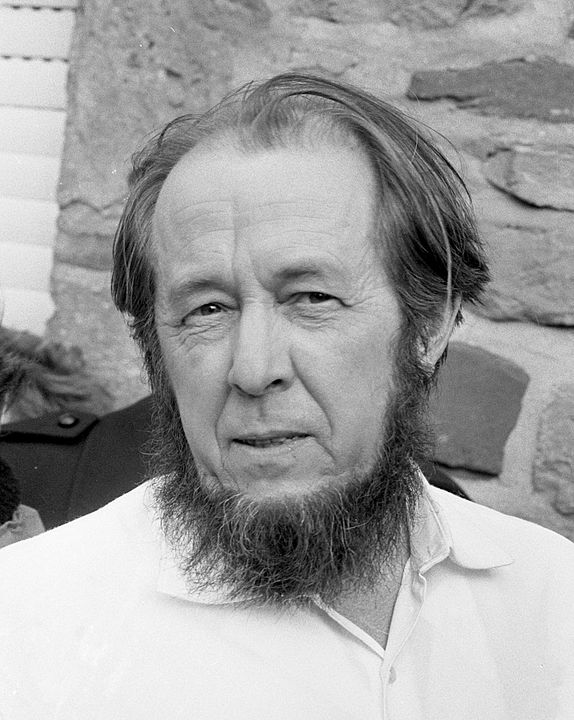
This represents a cautionary tale for us against a common human error or misconception about how evil might be cancelled or conquered in this world. In 1945, the Russian writer Aleksandr Solzhenitsyn was sentenced to a Soviet forced labor camp for his criticism of communist tyranny. After his release he went on to write his most famous work, “The Gulag Archipelago.” In it, the Christian Solzhenitsyn shares this true insight:

“If only it were all so simple! If only there were evil people somewhere insidiously committing evil deeds, and it were necessary only to separate them from the rest of us and destroy them. But the line dividing good and evil cuts through the heart of every human being. And who is willing to destroy a piece of his own heart?”

We can and should work for change in this world, but advocacy for changing evils “out there” will prove ultimately futile without accompanying spiritual change within us. But how are we to accomplish this most difficult transformation inside our own hearts? Human history and our personal experience show we cannot achieve this on our own, so how shall we be saved?

I believe in Jesus Christ, his only Son, our Lord. On the cusp of his fruitful public ministry,

“The Spirit drove Jesus out into the desert,
  and he remained in the desert for forty days,
  tempted by Satan. He was among wild beasts…”

After the Fall of man, the garden paradise is replaced by a desert. The animals, formerly tame in the Garden of Eden, have become wild in our fractured world. Humanity now had a great debt with God it could not pay, a vast chasm between him and us we could not cross. The first Adam died unatoned, but a new Adam has come. The Eternal Son of God entered time and space and became human to reconcile God and man and establish a new covenant between us. Jesus comes to undo the Fall, dwelling in the desert among the wild beasts, to be tempted by the ancient serpent, the devil. Jesus comes to reclaim the crown that Adam had lost. Jesus Christ, God’s only Son, would be the Lord of all. He comes and proclaims:

“This is the time of fulfillment.
  The Kingdom of God is at hand.
  Repent, and believe in the gospel.”

During these forty desert days of Lent, Jesus invites you to approach him, asking his forgiveness in the Sacrament of Confession. He invites you dwell with him, spend time with him, encountering him through daily prayer and the Holy Eucharist. Jesus would accompany and strengthen you in your earnest battles against temptation, growing you in his virtues. And he would perfect your love, forming you in his likeness, preparing you for more fruitful works on earth and for the supreme, communal joy of Heaven. Now is the time for Confession, for prayer, for the Mass, growth in virtue, and growth in love.

The Holy Spirit would lead you out to Jesus during this desert retreat of Lent. And everything Jesus does for you, everything he does within you, is to lead you back to God our Father. I believe and proclaim that this is the Father’s will for you. Yet, despite all of almighty God’s infinite, omnipotent power, only you can freely choose whether to answer him with your “Yes.”

The Church – The Body of Christ

February 13, 2021

6th Sunday in Ordinary Time – Valentine’s Day
By Deacon Dick Kostner

Thanks to Clint Berge who shared with me a YouTube talk, my thoughts this last month has moved to “What If’s?” The talk’s objective was to plant in our minds that maybe things won’t ever get back to “normal,” followed by “maybe that’s good!” I think God is trying to teach us the importance of thinking new for His Church. Coming up with new ideas to foster the Kingdom of God through our vocation to love and serve others which will gain us the keys to Heaven.

Our scripture readings this weekend come during the Church’s calendar of “Ordinary Time.” Remember Scripture is divinely-inspired, meaning God is the primary author. Our readings talk about suffering people who were experiencing the disease of leprosy over two thousand years ago. This disease literally ate up their skin and was highly contagious so that these people were ostracized from family and friends for their lifetime. It was thought that God was punishing them for either their sins or the sins of their family, so their only way out was if a priest certified that they had been made clean.

Sounds kind of familiar and “ordinary” doesn’t it? In our gospel, Jesus cures a person who begs him for help which he receives, which allows him to rejoin family and friends and continue on with his life after a priest certifies he has been made clean. So two thousand years later, here we are praying to God for relief from another disease which is dramatically changing the way we are used to. Bottom line is that God is constantly trying to have us focus and redirect our lives not to the present but rather to the future. God is trying to teach us that we are in boot camp with our lives here on earth to prepare us for our next life where the Body of Christ will come together without the crosses of life, as our reward for having lived through and learned from boot camp. Our scriptures tell us that history will always repeat itself here on earth. Where one disease is cured another will be born but we are to adjust and continue on with our training. Although boot camp is tough it also will gives us great pleasure and happiness when tasks are accomplished.

A few weeks ago, some friends of mine were sharing an experience that had occurred in their life. While shopping for groceries they noticed a man picking up and then returning food several time from the shelves. They asked him what was wrong and he confessed he only had so much money left and he was trying to decide what to buy. My friends offered to buy them for him but he refused. But they did not give up and they picked up the items he had looked at, paid for them and caught him on his way out with their gift of love. The man broke down but not without blessing them for their good deed. I never witnessed two happier people then those friends who knew that they were representing the Body of Christ in helping another get through a tough time. They were fulfilling their Christian vocation to love as Jesus has loved us. I ask you to ask yourself: “What if I did something like this when I spotted someone having a bad day? How would this make me feel knowing Jesus is smiling at me? How might this simple act of kindness change the world?

I will end with another revelation I received about the same time which I ask you to reflect upon. When we receive Holy Communion the minister begins by saying to the person receiving: “The Body of Christ.” I just realized that these words carry a two-fold meaning. First it is announcing that we are being fed divine food to give us strength for the tasks at hand. The second is that Jesus, through the minister of Communion, is directing and identifying us as being a part of His divine body for all the world to see in good times and in bad. When someone is being the body of Christ to us during a bad or good time remember to bless and thank them for being there for us and then go out and be the “Body of Christ” for another. The reward: happiness in this life and a key to Heaven to get us into the next. So get your boots on for Christ.

After I had just written this homily, I went to complete my morning prayers and one of them from the Book of Tobit said this:

Do to no one what you yourself dislike. Give to the hungry some of your bread, and to the naked some of your clothing. Seek counsel from every wise man. At all times bless the Lord God, and ask him to make all your paths straight and to grant success to all your endeavors and plans.” (Tobit 4:15a, 16a, 18a, 19)

I ask you, isn’t that a coincidence? Guess you know who helped me write this homily.

Have a happy and blessed Valentine’s Day and “What if” you gave to Jesus for this Valentine’s Day, a pledge saying you will be happy to put on the boots of Christ and carry out the wisdom words proclaimed above from God’s Book of Tobit? I am sure that would make His Day a very special day!

Wisdom for the Discouraged

February 7, 2021

5th Sunday in Ordinary Time

In our first reading, we hear the deep discouragement of Job:

“Is not man’s life on earth a drudgery?
…I have been assigned months of misery…
…My days… they come to an end without hope.
…I shall not see happiness again.”

If you are familiar with Job’s story you know he says these words during a very dark time in his life. Though innocent, he is in the midst of an extended trial, with emotional suffering, physical pain, loss, and loneliness. His words, like all the words of Scripture, are offered for our benefit — thanks be to God. And indeed, the Book of Job has lessons to teach us in our hard times.

One thing we learn from Job is that we can be real and honest with God. By the end of the book, Job is shown that God’s vast creations, plans, and purposes are beyond Job’s comprehension, for “Great is our Lord and mighty in power; to his wisdom there is no limit,” yet the Lord does not condemn Job for his questioning. In fact, God has Job intercede on behalf of his friends who had argued Job’s sufferings must be on account of his own sins. God has Job pray for them that they may be forgiven their error. The number of plaintive psalms that God inspired and made sure were included in Sacred Scripture suggests that he wants us to bring our complaints to him. The very name of God’s people “Israel” means “He who wrestles with God,” and you cannot wrestle with someone without drawing close to them.

The Lord wants us to be honest with him because that is the real us and the kind of relating that will actually help us. If you wear a disguise in God’s presence, it won’t fool him and it won’t help you. In spiritually directing others and in studying myself, I have noticed that when we are avoiding times of prayer or finding our prayer times very dry, it is often because we are avoiding relating something to the Lord. There’s something we don’t want to look at or talk about with him. Imagine if you had a good doctor, indeed the very best doctor – would it be wise to find excuses to miss your appointments or lie to your physician about how you were feeling? Reveal your wounds and symptoms to the Divine Physician that you may be healed. As today’s psalm says, “He heals the brokenhearted and binds up their wounds.” Today’s gospel tells us, “Rising very early before dawn, [Jesus] left and went off to a deserted place, where he prayed.” If making time for daily personal prayer was a top priority for Jesus, how much more important must it be for us?

A second thing we learn from Job is that God is with us in our struggle and that the struggle is worth it. Though Job did not understand why he suffered, God was never far from him. God was proud of Job and praised him, “There is no one on earth like him, blameless and upright, fearing God and avoiding evil,” and through his trials and sufferings God made him greater still. Other Christians sometimes ask why we have crucifixes on our walls rather than a bare cross. “Christ is risen,” they remind us, “so why depict him as still suffering on the Cross?” In his post-Ascension appearance to one of the Church’s early persecutors, Jesus said, “Saul, Saul, why are you persecuting me?” When asked by Saul, “Who are you, sir?” the reply came, “I am Jesus, whom you are persecuting.” If you are a suffering member of Christ’s body then know that you do not suffer alone. This Saul is better known to us as St. Paul. When St. Ananias hesitated to visit him and heal his blindness, the Lord insisted, “Go, for this man is a chosen instrument of mine to carry my name before Gentiles, kings, and Israelites, and I will show him what he will have to suffer for my name.” St. Paul writes in today’s second reading that his life’s mission, the preaching of the gospel, was an obligation imposed upon him. He could either see this as a hard burden to grumble over, or as an opportunity to rejoice in, and thereby gain reward. St. Paul knew God’s purpose for his life and embraced it to great benefit.

Dr. Viktor Frankl was a Austrian-Jewish doctor who was deported to a Nazi concentration camp during the Second World War. After his liberation, Frankl wrote about what he observed and discovered about human nature during that terrible ordeal in his famous book “Man’s Search for Meaning.” Frankl says, “Life is never made unbearable by circumstances, but only by lack of meaning and purpose.” He says, “Nothing is [more] likely to help a person overcome or endure troubles than the consciousness of having a task [a purpose] in life.” So many people, believing that our existence in this universe is an accident and disbelieving that life has any objective purpose, grope through life striving to generate their own meaning and purpose. But you know you are not here by accident. “[The Lord] tells the number of the stars; he calls each by name.” Each one is in their place according to his purpose and so are you. Who made you? God made you. Why did God make you? He made you to know Him, love Him, and serve Him in this world, and to be happy with Him for ever in the next. But even Christians sometimes wonder, “Does what I’m doing really matter? Is my life important? Are my struggles really worth it?” They think to themselves, “If I wasn’t here, I’d be replaced by someone else.” Perhaps, but that’s not the right way to frame your thought. What if you disappeared from your home, your job, your community, and no one came to fill your void? Consider all the good things that would go undone. That is your contribution to our world and those around you. And God has eternal purposes for you that extend beyond this life and world.

A third and final thing we learn from Job is that things are not so hopeless as they may seem and there are better things to come. The way that we happen to feel in any particular moment does not necessarily reflect reality. One afternoon when I was a seminarian, I was in my dorm room and had homework to do, but I was fed up with it, I had no motivation, and decided to give up and to go to bed. When I woke up three hours later, the world was transformed, brighter. I was happier, eager to work, and even the view outside my window seemed better. Of course, it wasn’t the world that changed but me. I was exhausted and I didn’t know it and this was coloring my perceptions. You are an union of body and spirit. You need sleep, and food, and personal connection. Self-care is important, so love yourself as well as your neighbor. If someone is diabetic, we do not tell them to just buckle down and change their attitude. They need insulin to be healthy. Sometimes people suffer chemical imbalances in their brains, often hereditary in origin, which burden their experience of life. We live in an age of wonders with remarkable medicines and we should be unashamed to seek help. As the 38th chapter of Sirach teaches: “Make friends with the doctor, for he is essential to you; God has also established him in his profession. From God the doctor has wisdom… Through which the doctor eases pain, and the druggist prepares his medicines.” Sirach explains that a good doctor is one of God’s instruments in doing his work on earth.

The story of Job shows us things are not so hopeless as they may seem – there are better things to come. We heard Job’s lament, “I shall not see happiness again,” but he was mistaken. Job’s lot got better. Much better. God restored the prosperity of Job and even gave him twice as much as he had before. Then all of his brothers and sisters came to him, and all his former acquaintances, and they dined with him in his house. They consoled him and comforted him and gave him gifts. Job would see his children, his grandchildren, and even his great-grandchildren in fullness of years. Thus the Lord blessed the latter days of Job more than his former ones. But what if the remaining years of my life do not get better? What if each new year becomes harder than the last? What if I have a stroke, or a heart attack, or terminal cancer and I am dead in six months? How can better times still be waiting for me? Are you not promised Heaven where you will experience the restoration, fellowship, and consoling joys Job knew? Then, in the end, as St. Julian of Norwich said, “All shall be well, and all shall be well, and all manner of thing shall be well.

So remember that you can be completely real and honest with God, he invites this. Remember that the Lord is with you in your struggles and that these struggles are worth it. And remember that things are not so hopeless as they may seem, for with Jesus Christ there are surely better things to come.