Archive for the ‘Sunday Homilies’ Category

Humility, Truth, & Love — 30th Sunday of Ordinary Time—Year C

October 28, 2019

Today’s second reading from the Second Letter to Timothy has St. Paul declaring near the end of his earthly life: “I have competed well, I have finished the race, I have kept the faith. From now on the crown of righteousness awaits me, which the Lord, the just judge, will award to me…” Recall how at the Visitation, after encountering her cousin Elizabeth, St. Mary declares about herself: “[God] has looked with favor on his lowly servant; from this day all generations will call me blessed.” Are these humble things for Mary and Paul to say about themselves?

Well, they’re both true statements, inspired by the Holy Spirit. Paul, having finished his race, is now a triumphant saint in Heaven, and the Church calls Mary the Blessed Virgin in every generation even to our day. True humility is not thinking that you’re dirt, it is being down-to-earth, well-grounded, and rooted in reality. Jesus says, “Let your light shine before others,” and the Blessed Virgin Mary pleases and honors God when she states, “The Almighty has done great things for me and holy is his name.” God has done good things for you as well, so thank and praise and glorify him for it!

But wait a minute, someone might object, wasn’t the Pharisee who went up to pray at the Temple in Jesus’ parable today also thanking God and declaring true statements about himself? What if this Pharisee did fast twice a week; what if he did pay tithes on his entire income; and was neither greedy, dishonest, nor adulterous? That is what’s implied by the parable, and those are all very good things! So why then does he incur our Lord and God’s displeasure?

Today’s gospel says “Jesus addressed this parable to those who were convinced of their own righteousness and despised everyone else.” Jesus says the Pharisee took up his position at the Temple and spoke this prayer to himself, “O God, I thank you that I am not like the rest of humanity – greedy, dishonest, adulterous – or even like this tax collector.” Imagine the Pharisee praying these words out loud, within earshot of this tax collector in front of everybody. Yet, even if the Pharisee prayed silently, or quietly to himself, and his neighbor did not hear him; the Pharisee despised the tax collector and the rest of humanity, and did not gain God’s pleasure. Like St. Paul once wrote, “If I give away everything I own, and if I hand over my body so that I may boast but do not have love, I gain nothing.” In order to gain Heaven; truth, love, and sacrifice all need to go together within us.

We see the truth, authentic love, and self-sacrifice combined in the inspiring life of the twentieth century saint, Edith Stein. She was born into a Orthodox Jewish family but renounced her faith by the age of thirteen and embraced atheism. She went on to become a respected PhD in philosophy. Then, one night while staying with friends on a vacation, she read the entire autobiography of St. Teresa of Avila. The following morning she put the book down and declared, “That is the truth,” and responded accordingly. She was baptized a Catholic at the age of thirty, became a Carmelite nun and took the name Teresa Benedicta of the Cross, like the Carmelite St. Teresa of Avila before her. During World War II, because of her Jewish ancestry, the Nazis came to arrest her along with her biological sister Rosa, who worked at the convent. Teresa Benedicta reportedly said to Rosa, “Come. Let us go and die for our people.” They were taken to Auschwitz where survivors of the death camp testified that the nun helped other sufferers with great compassion. A week after their arrest, she and her sister were killed in the gas chamber. St. Teresa Benedicta comes to my mind this Sunday because of one of her most famous quotes: “Do not accept anything as truth that lacks love and do not accept anything as love that lacks truth. One without the other is a destructive lie.

It could be said that the proud Pharisee in our parable had the truth without love, while our culture today has many (so called) loves apart from the truth. Through our friendship, our prayers, and our perseverance, the tax collectors we know today need to encounter love and the truth, that they might turn to Jesus and say “O God, be merciful to me a sinner,” and be saved. If you think you see someone seriously sinning; perhaps in your circles or our community, on TV or in the news; be sure—at very least—to pray for them. Maybe you’re right, which means that they are greatly in need of your prayer. Or perhaps you’re judging rashly or too harshly, in which case you are in need more prayer. In any case, you cannot both hate someone and pray for someone at the same time, because praying for someone is an act of love.

As Jesus tells us, “the one who humbles himself will be exalted.” Praying for and loving sinners makes you their servant in the likeness of Christ. Jesus came to us, he told us the truth, he prayed and interceded for us, and he even died for us – you and me and everyone. Jesus wants all of us to be like him, loving in truth and sharing the truth in love.

Lepers’ Lessons — 28th Sunday of Ordinary Time—Year C

October 14, 2019

Naaman, an army commander from Syria, suffered from some kind of skin disease. He came to Israel seeking a miraculous cure. And, at the direction of the prophet Elisha, Naaman washed seven times in the Jordan River. Perhaps Naaman plunged those seven times all at once, or maybe he bathed across a longer span of time, bathing at morning, midday, and evening, such that he was cured on the third day. But regardless, after Naaman’s washing in the Jordan River, “his flesh became again like the flesh of a little child, and he was clean of his leprosy.” After his baptism, it was like Naaman had been born again. And Naaman was, understandably, extremely grateful.

Now I know that there is no God in all the earth except in Israel,” he said, “Please accept a gift from your servant.” But Elisha replied, “As the Lord lives whom I serve, I will not take it,” and despite Naaman’s urging, he still refused. Why did the prophet refuse him? Perhaps Elisha sensed that to receive any gifts from him would make Naaman feel like his debt of gratitude to God was paid. But God desired Naaman to be in ongoing relationship with him. Unable to give any gift in Israel, Naaman took two mule-loads of earth back home with him to Syria so that he might always worship and offer sacrifice to the God of Israel on holy ground. Naaman was returning to a pagan land, but he intentionally created space for the true God in his life.

Today’s Gospel features another man from a foreign land with a skin disease who comes to seek healing from the Lord. As Jesus was entering a village, a Samaritan and nine other skin-diseased people stood at a distance from him and raised their voices, saying, “Jesus, Master! Have pity on us!” Jesus tells them to present themselves to the priests. he Old Covenant directed the Jewish priests to administer examinations and rituals regarding people with various skin diseases which our translations somewhat inaccurately call “leprosy.” What we think of as leprosy, Hansen’s Disease (the victims of which St. Damien of Moloka’i and St. Marianne Cope cared for in Hawaii in the late 1800’s) reportedly did not exist in the ancient world. In any case, as Jesus’ ten petitioners were going, their skin was cleansed. And one of them, a Samaritan, realizing he had been healed, returned glorifying God in a loud voice, fell at the feet of Jesus, and thanked him. Jesus says in reply, “Ten were cleansed, were they not? Where are the other nine? Has none but this foreigner returned to give thanks to God?” Apparently, there were some non-foreigners, some Jewish persons, among the other nine. Jesus says to the healed Samaritan: “Stand up and go; your faith has saved you.

These stories from God’s Word present multiple lessons for us today. Listen and consider, with the help of the Holy Spirit how these lessons apply to your life.

  • Like in the case of Naaman with the prophet Elisha, God can’t be bought off with just a few of our gifts. And God does not desire to be honored just one day, but every day of our lives. God wants you, and he wants all of you. That might sound like an unwelcome burden, but it is in the friendship and service of Jesus that we live a worthwhile life. Sure, I can cling to sin, like tolerating a leprosy corrupting my flesh, but how much better off will my life be if I acknowledge God as my master and ask him to heal me?
  • As I noted before, there were apparently Jewish persons among the other nine lepers who didn’t come back to Jesus. Sometimes cradle Catholics can take the gracious gifts we receive for granted. The fervent enthusiasm often seen in converts into the Church reminds us how precious our Catholic Faith is.
  • Among the ten healed lepers, only one showed gratitude. How much do we complain compared to compliment? How often are we criticizing compared to celebrating? The Samaritan made a choice to thank and give praise, and so should we. “Sing joyfully to the Lord, all you lands,” says our psalm, “break into song; sing praise.” And today’s Gospel antiphon quotes the New Testament, “In all circumstances, give thanks, for this is the will of God for you in Christ Jesus.
  • When the lepers saw Jesus they cried out saying: “Jesus, Master! Have pity on us!” And after his healing, the Samaritan returned glorifying God in a loud voice, fell at the feet of Jesus in front of everybody, and thanked him. The Samaritan raised his voice for both occasions and purposes. How much do we pray to God to ask for things, and how much do we pray to God to thank and praise him? God commands us to offer prayers of petition: “Ask and you will receive,” but we also need raise prayers of praise and thanksgiving to him. And we shouldn’t care too much what others think about us doing so.
  • As I said before, Naaman the Syrian knew the pagan land he was returning to, and he intentionally created a holy space in his home within that pagan culture. As today’s modern culture, its entertainments, its schools, its modes of thought, and laws become less and less Christian, we too must be intentional about preserving pure and holy spaces for ourselves and our households. Always going with the flow of this world will lead you down the drain. Instead, build your house on the rock of our Faith.

This saying is trustworthy: If we die with Jesus, we shall also live with him; if we persevere with Christ, we shall also reign with him. But if we deny him, he will deny us. If we are unfaithful, he remains faithful, and merciful, and just, for he cannot and will not deny himself. Learn from the examples of Naaman the Syrian and the Samaritan Leper. Approach the loving and powerful Lord. Ask him to cleanse you of your impurities and heal you. And live a better life which will be happily remembered and celebrated forever.

Generous Stewards — 25th Sunday of Ordinary Time—Year C

September 21, 2019

Of all of Jesus’ parables, today’s is among the most peculiar: “Hey disciples, listen to my story about a dishonest steward who successfully swindles his boss. You can learn from him!” Elsewhere in the Gospels, Jesus says, “You shall not steal; you shall not bear false witness; you shall not defraud… Let your ‘Yes’ mean ‘Yes,’ and your ‘No’ mean ‘No.’ Anything more is from the evil one.” So what lesson does Jesus want us to learn from this antihero?

Well, we have a lot in common with that fellow. We are in a similar situation. Our Creator God, the sustainer of the universe, is like the rich man, to whom by right belongs everything in the heavens and the earth. We are his stewards, the managers of his possessions, who each must present an account of our stewardship once our positions here on earth are taken away from us. Knowing this day of reckoning approaches, what shall we do? We have often squandered what has been entrusted to us. We are too weak to dig ourselves from the grave of death. And we are too proud, for if we lived fully in the truth, about who God is and who we are, we would not sin. Jesus urges us to follow the dishonest steward’s example, to be very generous, so that after this life, when we are removed from our present stewardship, we may live happily together with friends forever.

The dishonest steward calls in his master’s debtors individually. To the first he says, “How much do you owe my master?” That man replies, “100 measures (that is, 800 or 900 gallons) of olive oil.” He says to him, “Here’s your bill. Sit down and quickly write one for 50 (measures.)” Then the steward says to another, “And you, how much do you owe?” He replies, “100 kors (that is, 10 or 12 hundred bushels) of wheat.” The steward says to him, “Here’s your debt note; write one for 80 (kors.)”

Elsewhere in Luke’s Gospel, the forgiving of sins is likened to the forgiving of debts. Every sin creates a debt because it is depriving another of what is rightfully owed to them. Stealing deprives others of property, lying deprives them of the truth, and rudeness deprives them of the respect and kindness they deserve. Sin forms a debt, first and foremost with God, but also towards the people we trespass against. Luke’s version of the Our Father says, “Give us each day our daily bread, and forgive us our sins, for we ourselves forgive everyone in debt to us.”

Some have suggested that the steward in today’s parable was simply forgiving the portion of his master’s accounts which was his own rightful commission as steward. If we are prudent, we will quickly take the present opportunity to forgive our debtors the share of debts they owe us by forgiving the sins they have sinned against us. For we have it on Jesus’ word, “If you forgive others their transgressions, your heavenly Father will forgive you. But if you do not forgive others, neither will your Father forgive your transgressions.” Forgiveness means loving those who have wronged you, it means, at the very least, praying for them. The person you have a hard time praying for is who you need to pray for.

This lesson about forgiveness is true, but I am not convinced that the steward here was an upright servant merely forgoing his fair share. His urging that the debtors “quickly” write new invoices suggests that he and they are doing something that they don’t want to be discovered. Jesus himself called him dishonest, and the varied commissions of 50% off of the olive oil while getting a 20% commission from the wheat are strange. More likely, this steward is covering the tracks of his embezzlement. If the steward had given every debtor the same write-off, say, a 50% markdown for everyone, the master could have easily undone the scheme by doubling all the figures back. But because of these varying percentages (20% here, 50% there) the deed cannot be reversed, and even the master cannot help but to admire the steward’s cunning craftiness.

Forgiveness is always timely, but this parable is really about being generous with the material possessions God has entrusted to your care. Jesus ends today’s gospel declaring, “You cannot serve both God and mammon.” That is to say, you cannot love God and riches. Like a servant with two masters, or an employee with two bosses, you will either hate one and love the other, or be devoted to one and despise the other. A person who is trustworthy in small things will be trustworthy in great ones; and a person who is dishonest in small things will be dishonest in great ones. If we are not trustworthy with dishonest wealth, with these passing things on earth, how can we be entrusted with the true wealth of Heaven where everyone loves their neighbor as themselves?

When I consider that we’re arguably living in the all-time wealthiest country in the world, living in the greatest technological comfort of any stage of human history, I wonder if I am being generous enough with the possessions given to me. This question concerns me. I think about these powerful words of St. Basil the Great, from a 4th century homily he preached:

When someone steals another’s clothes, we call them a thief. Should we not give the same name to one who could clothe the naked and does not? The bread in your cupboard belongs to the hungry; the coat unused in your closet belongs to the one who needs it; the shoes rotting in your closet belong to the one who has no shoes; the money which you hoard up belongs to the poor. Thus, the more there are whom you could help, the more there are whom you are wronging.” St. Basil delivers this gut punch to his hearers who always say, “I have nothing to give. I am only a poor man”: “A poor man you certainly are, and destitute of all real riches; you are poor in love, generosity, faith in God and hope for eternal happiness. Give to a hungry man,” St. Basil urges, “and what you give becomes yours, and indeed it returns to you with interest. As the sower profits from wheat that falls onto the ground, so will you profit greatly in the world to come from the bread that you place before a hungry man.” St. Basil notes, “You are going to leave your money behind you here whether you wish to or not. On the other hand, you will take with you to the Lord the honor that you have won through good works. In the presence of the universal judge, all the people will surround you, acclaim you as a public benefactor, and tell of your generosity and kindness.”

This Sunday is our parish Fall Festival. I invite you to come, to enjoy it, and to generously support it. I am not ashamed to ask you to give generously to our parish because I believe in the great importance and the great goodness of what we do here. But supporting the work of Christ in our parish is not the end of our calling to generous stewardship in this wide world of needs, both spiritual and material. Give like a saint so that someday you may hear the Lord declare to you, “Well done, my good and faithful servant. Since you were faithful in small matters, I will give you great responsibilities. Come share your master’s joy.”

Three Parables for Us — 24th Sunday of Ordinary Time—Year C

September 14, 2019

It was not without design that Jesus, St. Luke, and the Holy Spirit place before us today a trio of Gospel parables: that of a sheep that strayed and was found, that of a coin that was lost and then recovered, and that of a son dead through sin but then returned to life. The lost sheep is joyfully brought back by the Shepherd. The missing coin (specifically a Greek silver drachma worth one day’s wage) is joyfully found by the woman. And the son, repenting of his sinful wandering, retraces his footsteps to his father and is joyfully embraced.

The Pharisees and scribes had complained about Jesus: “This man welcomes sinners and eats with them.” So Jesus replies with these three parables, three allegorical stories teaching spiritual truths about God, the Church, and us. So where are we symbolically in these parables? We are that sheep, we are that coin, and we are that prodigal son.

Who is the good shepherd in today’s parable? This Good Shepherd is Jesus Christ, who took upon Himself your sins and bears you upon His own Body because he treasures you. And who is the woman who has lost her silver coin, a coin perhaps from an ornamental belt which held her sentimentally-valuable marriage dowry? This woman, this bride, is the Church, who searches and longs for you, because you are precious to her. And who is the merciful father? The merciful father is God the Father, the Father who receives you back.

Consider how, amongst our Good Shepherd’s riches, we are but one one-hundredth portion. Besides us he has vast, sprawling flocks: the angels and archangels, thrones and dominions, and possesses in himself every divine attribute and glory. But he stepped away from these in a mysterious way to save us. In the words of St. Paul, ‘though was in the form of God, Jesus emptied himself, coming in human likeness; he humbled himself for us, even facing death.’ “I am the good shepherd,” Jesus says. “A good shepherd lays down his life for the sheep.”

Consider how that ancient drachma coin would bear an image, perhaps the likeness of a god or of the king who had minted it. In whose image are we minted?

God created mankind in his image;
in the image of God he created them;
male and female he created them.”

The Bride of Christ rejoices in every coin she picks up and holds, because each one bears an image of her beloved, uniquely shows his face, and enriches her all the more with him.

And consider how living in our Father’s house is better than life in a country distant from him. The word “prodigal” means to spend wastefully, and the son’s time spent away was truly wasted. After paying to enjoy sinful pleasures in the dark of night what did he have left to show for it in the new day’s light? But living in the Father’s household bears good fruit, “fruit that will remain.” And there is more than enough food to eat. “Whoever comes to me will never hunger,” Jesus says, “and whoever believes in me will never thirst.” And the joyful celebrations his Father’s house are not regretted after.

These three parables today are about us. We are the sheep; let us heed our Good Shepherd’s voice. We are precious coins; let us believe our great worth. And we are beloved children; let us live in our Father’s house.

Loving & Serving Jesus Foremost — 23rd Sunday of Ordinary Time—Year C

September 11, 2019

Jesus says, “If anyone comes to me without hating his father and mother, wife and children, brothers and sisters, and even his own life, he cannot be my disciple.” That teaching certainly demands one’s attention. But how does it mesh with our Lord saying: “I give you a new commandment: love one another”? This teaching, like Jesus’ parables, invites us to question and wrestle a little for our Lord’s meaning, so that, through the struggle, we will understand him more deeply and his words will go more deeply in us.

Loving our family members is not the problem that Jesus is warning us against—the problem comes from loving someone or something more than him. We are called to universal Christian love. We are commanded to love our neighbors as ourselves, and therefore, by extension, commanded to love ourselves as well. (Because if I did not love myself, then what good would it be to love my neighbor as myself?) We should love our neighbors and love ourselves. However, if I am seeking to always please myself or seeking to please everyone around me, that will not lead me to Heaven.

Whatever Jesus asks of me, ultimately will, sooner or later, yield happiness for me. Jesus says, “Seek first the Kingdom of God and his righteousness, and all these (good) things will be given you besides,” and “I came so that they might have life and have it more abundantly.” Doing what Jesus asks us leads to happiness, but that doesn’t mean that I, or the people around me, will always be thrilled about what we’re called to do.

Suppose someone is called to be more healthy (which is a good goal) and begins to eat better, exercise more, drink less, and/or quit smoking. This person is loving their body by acting in healthy ways, but at the same time their flesh may, at first, hate these changes. In time, these healthy habits will bear happy fruits, but at the beginning you may have to love your body while displeasing your flesh. Healthy choices can face resistance from other people as well. Family members might object when there’s less junk food snacks in the kitchen cabinets, or when you don’t go out so often for fast food. Drinking or smoking-break buddies may complain that you’re never around, or somehow no fun, anymore. Ultimately, you have to decide whom you are going to serve, listen to, and follow. Jesus Christ insists that we serve him first.

My dad told me that when he was a kid he thought bad people did bad things because they wanted to be bad, like dastardly villains in cartoons and comic books. But in reality, nobody does evil solely for evil’s sake. Every single person, every angel and demon, acts in pursuit some real or perceived good. Sinners are simply pursuing happiness in wrong ways. The unrepentant usually feel justified in what sins they commit; and human beings can create justifications for anything they want.

In the Genesis story of the Tower of Babel, the people said, “Let us build ourselves a city and a tower with its top in the sky…” They sought, in other words, to build a city and a tower into Heaven. But they attempted to do this without God, and they never got close. Genesis says ‘the Lord had to come down to see the city and the tower that the people had built.’ They fell far short. Today Jesus asks, “Which of you wishing to construct a tower does not first sit down and calculate the cost to see if there is enough for its completion? Otherwise, after laying the foundation and finding himself unable to finish the work the onlookers should laugh at him and say, ‘This one began to build but did not have the resources to finish.’”

Who, of themselves, has the knowledge or resources to construct paradise, to build an earthly tower into Heaven? No one. We see many people try to build their own foundations for their lives and fail in every sort of sinful way. ‘For human beings this is impossible, but with God all things are possible.’ If we follow Jesus he leads us into the City of God and his Heavenly Kingdom, the Church, the Church here below and above in glory. Following Jesus means being his disciple, and to be a good disciple is to listen, to learn, and to apply the teachings you are taught.

On earth, Jesus never penned a book, but he did establish a Church, a Church with a Great Commission to “make disciples of all nations”. Make disciples how? Through the sacraments, beginning with baptism, and by “teaching them to observe all that I have commanded you.” In this, the inspired, Sacred Scriptures of the Church play an important part. “And behold,” Jesus says “I am with you always, until the end of the age.” Jesus is present in our Church today. Jesus still teaches through his Holy Catholic Church throughout the world.

Is there a part of your life where you’re not listening to Jesus? Perhaps you’re not listening as he speaks in your conscience, in your prayer, or through his Bride, our Mother, the Church? It could be about money, or sexuality, or your life’s vocation, about something you’re doing, or something you’re refusing or afraid to do. Whatever it is, the Lord knows what it is, and you probably do, too.

I’d like to share with you a technique or approach I’ve used to help me take the next step when the Lord was calling me somewhere I wasn’t eager to go; like when I was in middle school and the Lord was calling me to take my faith more seriously, when it would have been easier to ignore him. Or later, when I was called to be more generous with my wealth, but I was frightened of risk. Or when he started calling me to become a priest, and that wasn’t necessarily what I wanted to do with my life. Picture yourself on your death bed someday, having not taken the Lord’s path now. Imagine looking back and having to wonder, “What would my life have looked like if I had trusted and dared more for the Gospel? How much better, how much more fruitful, would my life have been?” Or think of yourself standing before God’s judgment seat and him asking you, “Why didn’t you live your life like I wanted you to live it? I desired so much more for you.” Avoid having to look back someday with regret, at the end of this life or in the next. Bravely take the path that God is calling you to choose. Jesus desires abundant life for you, so carry your cross and follow him.

Christ and the Rich Young Ruler” by Heinrich Hofmann, 1888

Chihuahuas & Heavenly Glory — 22nd Sunday of Ordinary Time—Year C

September 1, 2019


Saturday Night Live used to have a running bit called “Deep Thoughts, by Jack Handy,” and this was my all-time favorite Deep Thought:

I hope if dogs ever take over the world, and they choose a king, I hope they don’t just go by size, because I bet there are some Chihuahuas with some good ideas.

Imagine if our human social standing in the world were based upon size. What if we were looked up to, or looked down upon, because of our height? I imagine that more men would wear big boots and more women would wear high heels. Guys would don tall hats and gals would keep their hair up. Basketball would be the sport of kings. And some unfriendly folk would say, “I don’t want no short people round here.”

Or, what if our worldly status were based upon the alphabetical order of our last names? A, B, and C families would have every honor and advantage, and the middle letter households would be considered middle class. I suspect there would be more romantic stories and fairy tales about Andersons marrying Zwiefelhofers. And I can picture lots of people legally changing their last names, until perhaps this practice got outlawed by a new law signed by President Aaaaaaaaaaaaaaaaah.

These are silly and unjust ways to structure a society. But what is the basis for social standing and status in our real world? Money comes to mind. Now people usually work for their pay or profits, so personal wealth is a personal trait that – to some degree – is earned. But how much have we really merited all the wealth that we possess? Compared to international averages, all of us here are very rich. I try to do my best in ministry, but do I really work five times harder than a priest in Bolivia? Am I actually twelve times more productive than a priest in The Philippines? Am I truly twenty-five times more fruitful than a parish priest in Nigeria? I doubt it. So how proud can I be of my being rich? How much should I be enamored by, or how much should I look up to, people wealthier than me? And how much should I look down on people with less than me? Other sources of status and standing in our society include political power or physical attractiveness. But history teaches us that people in positions of power are often not admirable. And sometimes the wicked in this world can be very attractive, while the good can look quite plain or even ugly.

Our second reading today speaks of a society quite different and far better than this broken world we live in. The Letter to the Hebrews tells us we approach ‘the heavenly Jerusalem, the city of the living God.’ Who lives there? God the judge of all, and countless angels in festal gathering, and the spirits of the just made perfect, and Jesus, the mediator of a new covenant. All are happy who live in Heaven, happy to their fullest, but their individual weights of glory are not the same. It is like how thimbles and small cups can be as completely full as buckets and tubs while holding different amounts of water. We know that glory differs in Heaven because, for starters, who among us could possess as much glory as our Lord? Within the hierarchy of the angels some have more glory than others. And glory varies amongst the human saints in Heaven as well.

The salvation of every saint is only possible through Jesus’ precious blood—the blood of his sacrifice we could not and did not deserve; sprinkled blood which speaks more eloquently than that of Abel, because Abel’s blood cried out from the earth for punishment on his murderer, while Jesus’ blood cries out to God for mercy on us all. Yet, once redeemed by Christ’s blood, we can merit, because God promises to reward our good deeds done in Christ. Jesus promises that he, “the Son of Man will come with his angels in his Father’s glory, and then he will repay everyone according to his conduct.” He tells us today, “When you hold a banquet, invite the poor, the crippled, the lame, the blind… for you will be repaid at the resurrection of the righteous.” St. Paul speaks to this in various places in the New Testament. He says, “…A person will reap only what he sows… Let us not grow tired of doing good, for in due time we shall reap our harvest, if we do not give up.” And St. Paul says elsewhere, “Consider this: whoever sows sparingly will also reap sparingly, and whoever sows bountifully will also reap bountifully.

Our gracious good deeds transform us more and more into God’s likeness, allowing us to receive more and reflect more of his glory, both now in this life and forever in Heaven. So what is the best way to sow bountifully in this life for the greatest possible reward in the next? We can look to and imitate the lives of the saints. We can learn from them and we are wise to befriend them. Yet the saints were first and foremost imitators and friends of Christ; who, though he was in the form of God, emptied himself to became human like us. Jesus deserved to be our king on earth, but he took the form of a servant. He humbled himself, even to the point of death on a cross. And because of this, God greatly exalted him and bestowed upon him the name and honor and glory that is above and before all.

Like in today’s parable, Jesus took the lowest place, and the Father called him up to a higher place, to be seated at his right hand in Heaven. Jesus calls us to be like him, in what we respect and in who we honor, in what we value and in who we treasure, in how we live and in how we treat others. You may or may be considered a big dog in this world, but you must follow our good Master, loyally heed his commands, and show kindness to all the Chihuahuas.

How Many Will Be Saved? — 21st Sunday of Ordinary Time—Year C

August 25, 2019

Someone asks Jesus from the crowd, “Lord, will only a few people be saved?” And Jesus replies, “Strive to enter through the narrow gate, for many, I tell you, will attempt to enter but will not be strong enough.” Instead of quoting some particular figure, like ten thousand or ten billion souls, Jesus says, “Strive to enter through the narrow gate…” Jesus dodges the question. So we are left wondering: in the end, will the number of people saved be small or large?

In the Book of Revelation, St. John witnesses a vast number of saints worshiping God in heaven. He beholds “a vision of a great multitude, which no one could count, from every nation, race, people, and tongue.” Note that this ‘countless multitude’ is different and much larger than the “144,000 marked from every tribe of the Israelites” that John observes several verses before. Jesus came to save people not only from the twelve tribes of Israel, but from the whole world. As the Lord declares through the Prophet Isaiah in our first reading, “I come to gather nations of every language; they shall come and see my glory.” Based on this, we can confidently say that a very large number will be saved.

On the other hand, in our gospel’s parallel passage from St. Matthew’s Gospel, Jesus says, “Enter through the narrow gate; for the gate is wide and the road broad that leads to destruction, and those who enter through it are many. How narrow the gate and constricted the road that leads to life. And those who find it are few.” The ‘few’ who enter the narrow gate to life sounds like less than the ‘many’ who do not. From this, it would seem that the number saved will be comparatively small.

However, the words “few” and “many” are relative terms which depend upon the context. For example, nearly 19,000 medals have been awarded in the modern Summer and Winter Olympic Games, and that is indeed many. But how many Olympic gold, silver, or bronze medalists have you personally met? If any at all, probably only a few. In a more tragic example, around 130,000 Americans die each year in accidents, and that’s awfully many. But at the same time, roughly 99.96% of Americans do not die in accidents each year, making the 0.04% who do relatively few. The word “many” sometimes refers to a majority of people, but not always.

Jesus suffered, died, and rose to redeem all of mankind. Even if there had been only one sinner on earth in all of human history, it seems that Jesus would have become man in order to offer himself to save him or her, me or you. Suppose that the number of human souls condemned to Hell on Judgment Day turns out to be only a dozen. Knowing how much our Lord loves each and every person, will not those lost twelve feel like many in the heart of Jesus and those saved billions feel like few? In any case, Jesus never tells us whether the majority of the human race will be saved or lost. Either outcome is possible.

Why isn’t Jesus more clear about exactly how many people will be saved? Because Jesus knows how such knowledge would be harmful for us. If we were told that most people will be saved in the end, we would fall into dangerous presumption. We’d say to ourselves, “I haven’t robbed any banks or murdered anybody; I sure I’m good enough.” And if we were told that most people will be lost in the end, we would fall into poisonous despair. We’d say to ourselves, “With my sins, what’s the use in me even trying?” St. John’s Gospel tells us that Jesus “did not need anyone to testify to him about human nature. He himself understood it well.” So, instead of giving us some precise statistic, some number or percentage about how many will be saved, Jesus gives us this much more beneficial advice: ‘Strive to enter through the narrow gate (for whether you are saved or not depends, in part, on you.)’

Almighty God “wills everyone to be saved and to come to knowledge of the truth,” in the words of St. Paul, but upon coming to know that truth, the Lord requires our personal response. He respects our freedom, and we are free to ignore him, to our own harm. As Jesus tells us, after the master of the house has arisen and locked the door, you may stand outside knocking and saying, “Lord, open the door for us.” He will say to you in reply, “I do not know where you are from.” (In other words, “You’re a stranger to me.”) And you will say, “We ate and drank in your company and you taught in our streets” (as happens at every Holy Mass.) Then he will say to you, “I do not know where you are from. Depart from me, all you evildoers!” In Matthew’s Gospel, Jesus declares, “Not everyone who says to me, ‘Lord, Lord,’ will enter the Kingdom of Heaven, but only the one who does the will of my Father in Heaven.

For adults like you and me, entering through Jesus’ narrow door requires more than merely wishing or have vague aspirations about going to Heaven someday. Striving to enter through the narrow gate entails sacrifices and discipline. As our second reading tells us, to those who are trained by it, discipline brings the peaceful fruit of righteousness. “So strengthen your drooping hands and your weak knees. Make straight paths for your feet.” Consider:

What sacrifice does Jesus ask of you?
What is Jesus asking you to remove from your life?
What is Jesus asking you to add to your life?
What sin does he want you to cease?
What gift does he want you to give?
Think about it. Pray about it.
Jesus has answers for you.

Let us intentionally cooperate with God and his grace. Let us accept the Lordship of Jesus Christ in our lives, so that we may be numbered among ‘the few‘ who are saved in the end.

Really Present — 19th Sunday of Ordinary Time—Year C

August 12, 2019

The Pew Research Center, which conducts surveys on religious belief in America, published a poll this week which asked self-identifying, Catholic adults this question:

Regardless of the official teaching of the Catholic Church, what do you personally believe about the bread and wine used for Communion? During Catholic Mass, the bread and wine…
  1. Actually become the body and blood of Jesus Christ, or
  2. Are symbols of the body and blood of Jesus Christ.

65% of respondents said that the bread and wine are symbols of the body and blood of Jesus while only 30% said the bread and wine actually become the body and blood of Jesus. This is discouraging, but I’m inclined to think that many people are misunderstanding the question.

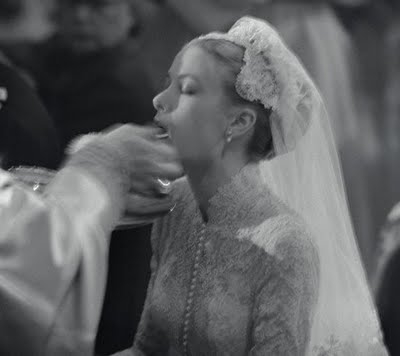
As you know, when the priest says the words of Consecration at Mass (“This is my body… This is the chalice of my blood”) what we see with our eyes appears unchanged. What the priest holds still looks like bread. What the chalice holds still looks like wine. On well-documented occasions throughout the centuries, Eucharistic miracles have occurred in which Hosts have turned into visible human flesh and the chalice contents have become visible blood. I encourage you to read about and investigate these ancient and modern miracles for yourself. But outside these extraordinary cases, if you looked at the Eucharist under a microscope, or ran a chemical analyses before and after Consecration, the Eucharist would appear unchanged. Catholics who have made their First Communion know the Host doesn’t taste like meat and drinking from the chalice doesn’t taste like blood. So, strictly in this outward sense, when people say “The bread and wine do not actually become the body and blood of Jesus” they are correct. But after the priest’s words of consecration at Mass, are the gifts on the altar just symbols of Jesus’ body and blood? No! Something very real and wonderful occurs.

Now Jesus does give his Eucharistic meal intrinsic symbolic meanings. For example, breaking the bread which is his body and pouring out his blood for us are symbols of his Passion. Separating his body and blood is a symbol of his death. And sharing his meal with us symbolizes our intimate communion with him. Yet, the Eucharist is no a mere symbol, any more than baptism can be called just a washing with water. After the water and words of baptism, a newly baptized person appears unchanged (they have the same height, same weight, same hair and eye color as before) but they have been radically transformed within; the baptized person’s soul is cleansed, they have become a child of the Father, a temple of the Holy Spirit, a new person in Jesus Christ. Likewise, at the Consecration, though appearances remain unchanged, the gifts on the altar undergo a radical transformation; in fact, apart from outward appearances they can no longer truly be called bread and wine at all; for they become the body and blood, soul and divinity, of the living person Jesus Christ. In the Eucharist, Jesus’ real presence is really present, and it is no blasphemy to gaze upon the Host and say, “My Lord and my God!

Our belief in the Real Presence of Jesus in the Eucharist is not something the Church just invented. This teaching goes back to Jesus himself. St. John writes about the Real Presence in his Gospel, St. Paul writes about it to the Corinthians, and the Church Fathers write about it throughout the first centuries AD. God has confirmed this mystery with Eucharistic miracles, as I mentioned before (miracles which occur in no Protestant denomination.) The Real Presence of Jesus Christ in the Eucharist her been our Catholic Church’s teaching from her beginnings to this day.

I am somewhat encouraged that when other polls ask Catholics adults about their belief in the Real Presence in a different way, using different words than in the recent Pew poll, their responses are different as well. When given a choice between saying: “Jesus Christ is really present in the bread and wine of the Eucharist,” or “The bread and wine are symbols of Jesus, but Jesus is not really present,” about 60% of Catholics give the first and correct answer. However, we should be only somewhat encouraged by this. Four out of ten Catholics not believing in the Real Presence of Jesus is a tragic and terrible thing.

This week, I visited an old college roommate friend and his wife and children in Oregon. He is a very faithful Evangelical Christian; following Jesus is the most important thing in his life. But he and his family haven’t attended a church on Sundays for some time. It’s partly because he has two very young children, but he also confided over dinner that it’s because he has difficulty seeing the point of going just for a message and some songs. My friend studied in a Protestant seminary and could probably give a better sermon than most preachers. He plays guitar and has a great voice; why can’t he just sing and worship with his family at home? Discussing the recent Pew poll and my plans for this homily with him, he asked me — not to challenge me, but to better understand — “What difference does it make whether Catholics believe in the Real Presence or not? What is the harm in them receiving Communion without holding this belief?” I answered that, without the Real Presence, the Holy Mass becomes optional. And when we skip the Mass we miss out on the source and summit of the Christian life, the most intimate sacramental encounter we can have with Jesus on earth, the Holy Eucharist. And if we do go to Mass and receive Communion without believing it’s really Jesus, we do not receive the fullness of graces he wants to give us, and perhaps — by receiving him unworthily — we are offending him and doing ourselves actual harm.

In a chapter of Luke’s Gospel different from the one we heard today, Jesus asks, “Who among you would say to your servant who has just come in from plowing or tending sheep in the field, ‘Come here immediately and take your place at table’? Would he not rather say to him, ‘Prepare something for me to eat. Put on your apron and wait on me while I eat and drink. You may eat and drink when I am finished’?” This is the attitude of a very earthly master. Yet notice what the master does in one of today’s parables. Jesus tells us, “Gird your loins and light your lamps and be like servants who await their master’s return from a wedding, ready to open immediately when he comes and knocks. Blessed are those servants whom the master finds vigilant on his arrival. Amen, I say to you, [the master] will gird himself, have them recline at table, and proceed to wait on them.” This is a parable about the coming of our Lord. We are to be diligent, vigilant, and ready for his Second Coming, or for the unknown day and unknown hour of our death. But Jesus, our Lord and Master, wishes to come to us more than just once at the end of our lives. He would come to us at every Mass. Blessed are those servants whom our master finds vigilant on his arrival on Sundays and Holy Days of Obligation. They open the doors of their lips and hearts to him receive him. He has returned from the wedding of Heaven and earth and desires to feast with us. Amen, I say to you, he girds himself, gathers us at his table, and proceed to wait on us. And he does not serve us mere things, dead foods, but the greatest gift and nourishment conceivable, his very living self.

Jesus says, “That servant who knew his master’s will but did not make preparations nor act in accord with his will shall be beaten severely; and the servant who was ignorant of his master’s will but acted in a way deserving of a severe beating shall be beaten only lightly. Much will be required of the person entrusted with much, and still more will be demanded of the person entrusted with more.” What greater thing could be entrusted to us than Jesus in the Holy Eucharist? Let us not spurn but cherish this precious gift of Jesus Christ; let us nor hesitate but dare to share with others this good news of Jesus’ Real Presence here. “Blessed is that servant whom his master on arrival finds doing so.”

“The Prince” or the Christ? — 18th Sunday of Ordinary Time—Year C

August 3, 2019

In the 6th century B.C., the Romans had a king named Tarquin the Proud who declared war on a city eleven miles east of Rome called Gabii. When the king was unable to take the city by force, he plotted to take it by deception. His son, Sextus, pretending to be ill-treated by his father and bearing fresh wounds from being flogged, fled to Gabii. The infatuated inhabitants entrusted him with the command of their troops, and when he had obtained the full confidence of the citizens, he sent a messenger to his father to learn what he should do next. The king, who was walking in his garden when the messenger arrived, spoke no words, but kept striking off the heads of the tallest poppy plants with his stick. His son understood the unspoken reply, and put to death or banished on false charges all the leading men of Gabii, after which he had no difficulty in compelling the city to submit to his father.

I was reminded of this story of political power and deceitful scheming this week while listening to Niccolò Machiavelli’s 16th century Italian book, “The Prince.” In this pragmatic, cynical treatise, Machiavelli discusses how a ruler can most effectively rule his realm. For example, upon conquering another king or noble’s territories, Machiavelli recommends exterminating that ruler’s family members to prevent future revolts. Machiavelli also encourages leaders to always appear merciful, faithful, humane, sincere, and religious to appear so but not always be so, because he holds that no ruler can be successful without, at times, deliberately doing evil as circumstances require.

Machiavelli provides numerous historical illustrations, like the story of an Italian ruler whose newly acquired territory was full of corruption, robbery, and violence. He appointed a cruel and efficient man as their governor, entrusting him with full authority to act. This governor quickly restored order with his iron fist, but then his lord had less use for him and saw him as a possible threat. Machiavelli writes that the ruler, “to clear himself [of guilt] in the minds of the people and make them entirely loyal to him, … desired to show that if any cruelty had been practiced it had not originated from him but came from the personal cruelty of the governor. Under this pretense [he arrested the governor] and one morning had him killed and left in [the city square] with the block and a bloody knife at his side. This terrible sight,” writes Machiavelli, “caused the people to be at the same time satisfied and worried.”

Listening to his stories, hearing his advice, I wondered what sort of person would ever want to be such a prince or ruler. Besides the iniquity, Machiavelli himself acknowledges that the prudent leader, when not fighting wars, should constantly focus on preparing for wars. But like King Solomon asks in our first reading, ‘what profit comes to [a ruler] from all the toil and anxiety of heart with which he has labored under the sun? Even at night his mind is not at rest. This is vanity.’ And furthermore, like Jesus says, ‘What does it profit a man to gain the whole world and lose his soul?’

Machiavelli’s advice and methods for maintaining power by any means might work in one sense here in this world, but in the long term all these things are futile. The rich fool says to himself, “Now as for you, you have so many good things stored up for many years, rest, eat, drink, be merry!” But God says to him, “You fool, this night your life will be demanded of you; and the things you have prepared, to whom will they belong?” Thus will it be for all who store up treasure for themselves but are not rich in what matters to God.

Jesus once asked, “What king marching into battle would not first sit down and decide whether with 10,000 troops he can successfully oppose another king advancing upon him with 20,000 troops? But if not, while he is still far away, he will send a delegation to ask for peace terms.” That’s simply basic strategy, yet how many people march towards the inevitable end of their lives — when they will approach the all-powerful King of kings and the Lord of hosts — without consideration of how ill-prepared they are to face him?

Who and what are we loving? And are we loving them as we should?

St. Paul is often quoted from his 1st Letter to Timothy as saying, “The love of money is the root of all evils, and some people in their desire for it have strayed from the faith and have pierced themselves with many pains.” But something about this passage never made sense to me. Does the root of all evil really reside in the love of money? For instance, does every act of adultery stem from a love of money? I don’t think so. But while studying Greek in seminary I discovered that this passage can be justifiably translated a different way: “The love of money is a root of all evils,” and that is very true.

Money, wealth, is a tool, like fire. It’s a neutral thing; good when used rightly but potentially destructive and deadly when mishandled. The love of money, that is to say greed, is rightly called “idolatry” by St. Paul in our second reading, because the greedy person serves and trusts in wealth as their god, their savior and source of blessings. While urging us never to worry, our Lord does call us work, to make material provision for ourselves and our households. St. Paul taught the Thessalonians that “if anyone was unwilling to work neither should that one eat.” And on another occasion he wrote, “whoever does not provide for relatives and especially family members [of his household] has denied the faith and is worse than an unbeliever.” Yet Jesus does not wish us to make work and wealth our idol: “Take care to guard against all greed, for though one may be rich, one’s life does not consist of possessions.”

One day, perhaps sooner than we imagine, our lives will be demanded of us and all the property and possessions we leave behind will be left to others. It is a good thing for us to have a will prepared for this foreseeable event, and I would ask you to remember St. Paul’s Parish and our endowment in your estate. But as praiseworthy as it is to prepare inheritances for that day, it is not as meritorious as giving during your lifetime. How much generosity is there in giving away what you cannot possibly take with you or keep? How generous is it to give away what is no longer of any use to you? Unavoidable giving is a small sacrifice and exercises small trust in God.

And so I recommend to you the practice of tithing, to the Church and to charities. Chose some percentage to tithe to the mission of Jesus Christ in our parish, for needs in our community, and to help people far beyond. In the Old Testament, God commanded his people to tithe 10% of everything, and they were much poorer than us. I urge you to prayerfully discern a number for yourself. Giving in this way practices trusting in the Lord and allows him to show you his providence and his power to provide. Though we do not believe in a “prosperity gospel” which claims believers will never experience trials, Jesus does promise a prize for our every given gift: “Give and gifts will be given to you; a good measure, packed together, shaken down, and overflowing, will be poured into your lap. For the measure with which you measure will in return be measured out to you. … And whoever gives only a cup of cold water to one of these little ones to drink because he is a disciple—amen, I say to you, he will surely not lose his reward.”

Our short life here on earth is an audition and a training ground for life in the Kingdom of Heaven. Through his gracious, saving work, Jesus Christ has extended an invitation to everyone to become a citizen of his Kingdom, now and in the age to come. Presently here on earth, his Kingdom, the City of God and her citizens, exist alongside and amidst the City of Man with its Machiavellian-minded members. But in the coming age, there will be no place for those sinners who live for themselves, and the virtuous meek who are generous to God and their neighbor shall inherit the earth. The choice before us all is for “The Prince” or for the Christ.

Asking for a Gift to Give — 17th Sunday of Ordinary Time—Year C

July 28, 2019

Remember last Sunday, when Abraham hosted three mysterious visitors from Heaven. Once they had agreed to Abraham’s offer to serve them a meal can you recall the first thing Abraham did? “Abraham hastened into the tent and told Sarah, ‘Quick, three measures of fine flour! Knead it and make rolls.'” How much were “three measures of flour” back then? Through a scripture commentary, I learned that this was about half a bushel, or like twenty pounds of flour. That’s enough to make about twelve of the loaves of bread we buy at the grocery store these days. So, Abraham served about a dozen loaves of bread to three guests. Now I’m as much a fan of unlimited breadstick deals as anybody, but when was the last time you ate four loaves-worth of bread in one sitting? Abraham knew these were extraordinary guests, so he set an extraordinary meal before them. And perhaps he intended to give them all the leftover loaves as a further gift to God.

I wondered about those “three measures of flour” because of Jesus’ parable today: Suppose you have a friend to whom you go at midnight and say, “Friend, lend me three loaves of bread, for a friend of mine has arrived at my house…” So we have a meal with three measures and a parable with three loaves. Three measures of flour for the Lord, and three loaves of bread for a friend. I perceive that these things are connected, but more on that later.

Immediately preceding this parable, Jesus teaches his disciples how to pray. You surely noticed that the Our Father prayer in Luke differs from Matthew’s more familiar version. This is providential. If the two texts were exactly the same, some Christians might mistake Jesus’ example as being our only permissible prayer. But Jesus does not give the Our Father as a magic formula or incantation, but as a model for our approach and attitude to prayer. In Matthew’s version, the prayer begins with “Our Father.” He is not mine, but ours, because he calls us to salvation together. Luke’s version simply begins with “Father”; not “Master,” as though we were merely his slaves; not “Ruler,” as though we were merely his subjects; but “Father,” because we are his children. The prayer’s petitions are direct requests, simple requests, profound requests. For example, consider: “Give us each day our daily bread.” It’s straight-forward, basic, yet deep when you contemplate “our daily bread” as a symbol for all of our constant bodily and spiritual needs. And notice something else that these petitions have in common: “hallowed be your name,” “your kingdom come,” “forgive us our sins.” Each is asking God for something that God already desires for us. They are each a part of his plan already.

Who are we supposed to be like in Jesus’ parable? Surely it’s the persistently asking and seeking door-knocker. Because Jesus says, immediately after this parable, “And I tell you, ask and you will receive; seek and you will find; knock and the door will be opened to you.”

And who is God represented by in this parable? Naturally, the man in the house whose gifts can be gained through asking. Indeed, God is on the other side of Heaven’s door. And even at midnight, in the darkest hour, we can call on him for help. His children inside, the saints and angels who rest peacefully in his house, join their voices to ours when we persistently ask for good things on earth. But God is surely not like this annoyed neighbor in saying, “Do not bother me… I cannot get up to give you anything.” Jesus’ mode of teaching here is from the lesser to the greater. If this annoyed neighbor can be persuaded to give, how much more can God who already desires to give. Likewise, Jesus says, “If you, who are wicked, know how to give good gifts to your children, how much more will the Father in heaven give the Holy Spirit to those who ask him?

The request for three loaves and Abraham’s request for three measures suggests another character like the Lord in this parable: “Lend me three loaves of bread, for a friend of mine has arrived at my house from a journey and I have nothing to offer him.” Mystically speaking, this visiting friend is the Lord. For Jesus says, “Amen, I say to you, whatever you did for one of these least brothers of mine, you did for me.” Jesus says, “Whoever receives one child such as this in my name receives me.” And Jesus says to the early Church’s persecutor, “Saul, Saul, why are you persecuting me?” Jesus is mystically present in every Christian and within in his Church. Thinking of God as represented in this parable by both the homeowner and the visiting friend reveals a dynamic that could change how you relate to prayer.

When you pray for some good thing, when you ask some worthy blessing for yourself, someone else, or even billions of people at once, are you not praying for the greater glory of God among us? What prayer would he, could he, possibly grant you that would not also glory him? Furthermore, what can we offer him that is entirely of ourselves? The man in the parable asks his neighbor for loaves for his friend because “I have nothing to offer him.” As St. Paul asked the Corinthians, “What do you possess that you have not received?” It’s been said that to truly make an apple pie from scratch, you have to recreate the universe. Like Abraham asking Sarah for loaves for his holy guests, like the man in the parable asking for a loan of bread, every good prayer—whatever it may be—is asking for a gift to be gifted to the Lord. It’s like asking your dad for money to buy him a gift for Father’s Day. It’s for his own glory, so you don’t have to persuade or coerce him, he loves you and already wants to give. Which raises a question: if God already wants to give, then why doesn’t God always give immediately in answer to our prayers?

Sometimes God waits for the right time to grant our requests. If you bought your mom the perfect Christmas gift, you might desperately want to give it to her right now, but you would realize that the very best time for her to open it comes later. Would you rather have you prayer answered right now or at the best and perfect moment?

Sometimes God is storing up the accumulated reservoir of your prayers so that once the floodgates are opened a torrent will be unleashed. St. Monica prayed for her sinful, wayward son for years, and when he finally converted he was not merely saved but went on to become the priest, bishop, and great doctor and father of the Church we know as St. Augustine of Hippo. Would you rather have your prayer answered in a small way now or in an overwhelmingly incredible way later?

Sometimes it we must pray persistently, rather than just asking once and setting the request aside, for the powerful influence of that continued offering. On one occasion in the gospels, there was a demon afflicting a boy that the disciples could not exorcise. After Jesus cast out the demon his disciples asked why they were unable. Jesus is written to have answered them, “This kind can only come out through prayer and fasting.” Last week we heard St. Paul tell the Colossians, “I rejoice in my sufferings for your sake, and in my flesh I am filling up what is lacking in the afflictions of Christ on behalf of his body, which is the Church”. It’s not that Jesus’ Passion is insufficient, but that God allows our offered sufferings and sacrifices to have a vital role in Christ’s work of saving souls. Patient, persistent prayer is a sacrifice we offer with him.

In conclusion, the Father, our Father, already wants to give, for the praise and glory of his name, for our good and the good of all his holy Church. So let us not hesitate, but let us persist, in asking good things from Him who loves us.

Meals with the Lord — 16th Sunday of Ordinary Time—Year C

July 21, 2019

Our first reading from Genesis recalls Abraham at a meal with the Lord. In the story immediately preceding this one, God had renewed his covenant with him. The Lord changed his name from Abram to Abraham, which means “father of a multitude,” and indeed, today more than two billion Christians around the world call Abraham our father in faith. A covenant bond is an alliance which transforms unrelated persons into family. In the ancient world, nations and peoples would form covenants, declaring themselves brothers. Today we rightly call marriage a covenant. And God has established many covenants between himself and members of the human race through salvation history. Something that family members do is eat together. Sharing a meal signifies communion and relationship with each other. Today, after renewing his covenant with Abraham, the Lord visits him for a meal.

Genesis says “the LORD appeared to Abraham,” but, “Looking up, Abraham saw three men standing nearby.” Like when God said at Creation, “Let US make man in OUR image,” Christians detect signs here of the presence of the Holy Trinity. There’s an interesting alternation of singulars and plurals in their dialogue. Abraham says, “Sir, if I may ask you (singular) this favor, please do not go on past your servant….” Abraham offers THEM a meal and THEY reply, “Very well, do as you have said.” Later THEY ask him, “Where is your wife Sarah,” and then ONE of them declares, “I will surely return to you about this time next year, and Sarah will then have a son.” Genesis does go on to call two of these three visitors “angels” but in Hebrew and Greek this word angel means “messenger or representative.” And who are the greatest representatives and messengers of God the Father but God the Son and God the Holy Spirit? Whatever the mystery that was actually at play here, Abraham serves a meal with the Lord and is blessed in the encounter.

In today’s Gospel, the Lord God visits Martha in the person of Jesus Christ. She welcomes him and sets about serving him with food and drink. Her sister, Mary, sits beside the feet of the Lord listening to him speak. And Martha, burdened with much serving, comes to him and says, “Lord, do you not care that my sister has left me by myself to do the serving? Tell her to help me.” “Martha, Martha,” Jesus replies, “you are anxious and worried about many things. There is need of only one thing.” Notice how Jesus repeats her name, something seen only a handful of times in the New Testament. Jesus laments over “Jerusalem, Jerusalem” before his Passion, he admonishes “Simon, Simon” at the Last Supper, he cries out “Eloi, Eloi / My God, My God” on the Cross, and he calls out to “Saul, Saul” on the road to Damascus. That’s some extraordinary company she shares. Clearly, Martha matters a great deal to Jesus.

So what was Martha doing wrong? Is it because she was working so hard to serve the Lord a meal? Well, Abraham hastened and hustled to serve too; he ran to pick out a choice steer, get curds and milk, and set these before his guests. Abraham even got others to help him work; telling his wife to make some bread rolls and directing his servant to prepare the meat. The problem wasn’t Martha’s work. It was her mindset, her outlook. “Martha, Martha, you are anxious and worried about many things.” Why was Martha anxious and worried? Anxiety and worry come from fear. What was she afraid of? Was she afraid of failing? Was she afraid of what others might think? Was she afraid of disappointing the Lord? What are you afraid of? What drives your anxiety and worries? Do you think Jesus will abandon you if things go wrong, if things are less than perfect?

Jesus says, “There is need of only one thing.” What is that one thing? Mary apparently had it sitting at his feet, listening to him teach. She was sharing personal communion with him and receiving from him. And later, when Mary got up to do whatever task came next, I bet that peace remained with her. “Mary has chosen the better part,” Jesus says, “and it will not be taken from her.” If you have gravely sinned, then return to Jesus, go back to confession, and come into the state of grace. And when in the state of grace stop letting yourself get in the way of connecting with Jesus and receiving and enjoying his good pleasure in you. Rest with him, rest in him, even as you work hard for him.

Fifty years ago this weekend, mankind took its first steps on the surface of the Moon. The astronauts journeyed from Earth more than 200,000 miles, through the extreme temperatures of an airless void, to achieve a modern marvel watched and celebrated around the world. But a still greater journey is made, a more incredible wonder is accomplished, when Jesus Christ comes from Heaven to this altar and invites you and me (who remain far from perfect) to share this covenant meal with him.

The Good Samaritan — 15th Sunday of Ordinary Time—Year C

July 14, 2019

Jesus’ Parable of the Good Samaritan is among his most famous and familiar. Yet, like Jesus Christ himself, it has still more to teach us. Today I will share contexts and symbolisms of this parable that you’ve probably never heard before.

Jesus’ story begins, “A man fell victim to robbers as he went down from Jerusalem to Jericho.” In Wisconsin, we talk about going up to Canada or going down to Madison; for us north is “up” and south is down. But in Israel, the city of Jericho lies fourteen miles east of Jerusalem. The man went down to Jericho because Jerusalem has a much higher elevation. Have you ever seen the Sears Tower (now called the Willis Tower) in Chicago? Picture its height from street-level to the top of its two antennas; now imagine stacking another Sears Tower standing on top of those antennas. From top to bottom, that’s how much a traveler descends when going from Jerusalem to Jericho.

Jerusalem was the Holy City, the place of God’s dwelling. But Jericho, as you may recall, was the city which Joshua at God’s command marched the Hebrews around in a circle for seven days, before blowing their horns and shouting, causing its walls to collapse. They conquered the city which symbolizes sin, human fallenness, and rebellion from God. Jericho, incidentally, is not far from the Dead Sea, the shore of which is the lowest dry land on the surface of the earth—the furthest you can be from heaven above.

The robbers stripped and beat the man and went off leaving him half-dead. A priest happened to be going down that road, but when he saw him, he passed by on the opposite side. In the same way, a Levite came to the place, and when he saw him, he passed by on the opposite side.” Who were these men? The Jewish priest would have offered sacrifices at the Temple while the Levite would have assisted there like a sacristan. Why did both men pass by ‘on the opposite side of the road’ as they walked in the direction of Jericho? Perhaps that they thought the motionless body on the shoulder of the road was already dead. Under the Law of Moses, touching a dead body made a person ritually unclean. Whether this was their reason, or they just did not care enough to be bothered, a third man comes along who is both willing and able to help.

A Samaritan traveler came upon him and was moved with compassion at the sight.” We know that Jews and Samaritans didn’t like each other, but why? Who were the Samaritans? Some five hundred years before the coming of Christ the Babylonians were the superpower of the ancient world. When the Jewish king decided he wasn’t going to pay tribute to Babylon anymore, the Babylonian king was not pleased. He sent his army, sieged Jerusalem, conquered it, and carried off the region’s inhabitants into what is called the Babylonian Exile. Not everyone was taken though; some of the poor laborers, the farmers and vine-dressers, were left behind. To ensure that this Jewish remnant did not rebel again, and to make sure the good land did not go idle, the Babylonians resettled the people of five pagan nations among them.

Seventy years after this catastrophe, after the Babylonians themselves were conquered by the Persian Empire, the king of Persia gave the Jews permission to return to their homeland. When they arrived they found that those who had been left behind had intermarried with the pagans and adopted some of their religious practices. The Jews looked down on these people, these Samaritans, as unfaithful to the Lord. It’s no mere coincidence that the Samaritan Woman at the Well with whom Jesus speaks in John’s Gospel has had five husbands—just like the five resettled pagan nations. This real woman symbolizes her people, with whom Jesus desires to be reconciled and whom he wants to save.

Jesus’ chosen hero for this parable, the Good Samaritan, “approached the victim, poured oil and wine over his wounds and bandaged them. Then he lifted him up on his own animal, took him to an inn and cared for him.” In today’s Gospel, Jesus tells the scholar of the law (and us) to be like “the one who treated him with mercy.” That’s a very important, famous, and familiar lesson, but there is symbolism within this parable which teaches even more.
The man who fell to the robbers represents our human race. Traveling from Jerusalem to Jericho, we were descending from the height of communion with God to the depths of sin. We fell to robbers, to evil spirits and wicked desire. They stripped us naked, depriving us of our previous glory. They beat us and left us half-dead; biologically we were still living, but spiritually we were dead. No one could or would help us. But then our Good Samaritan came – Jesus Christ.

He looked upon us and was moved with compassion. He approached us and poured His blood over us, like wine, to cleanse the wounds of sin. He poured the Holy Spirit on us, like oil, to strengthen us. He bandaged our members with his teachings; and though these disciplines bind us they are for the freedom of full health. He lifted us up on his beast of burden, his own flesh in the Passion, to bring us to the inn. This inn, where the robbers’ victim is cared for until he comes again, is the Church.

You and I are represented by the robbers’ victim brought into the inn for care. But you and I are also represented by the inn-keeper, for we are likewise called to care for others. The Good Samaritan provides two coins to the inn-keeper along with an instruction and a promise: “Take care of him. If you spend more than what I have given you, I shall repay you on my way back.” In the parable, these are two coins are Roman silver denarii, equal to two day’s wages. Jesus provides for our mission to serve him and our neighbor, for today and for tomorrow, and whatever we expend in time, talent, or treasure in his inn, the Church, will have his divine repayment.

In light of this great parable, ask Jesus to show you your neighbor, who he has entrusted to your care, then “Go and do likewise.” The command which he ‘enjoins on you today is not too mysterious and remote for you. …No, it is something very near to you, already in your mouths and in your hearts; you have only to carry it out.’ You shall love the Lord your God supremely, and love your neighbor as yourself.

Consoling the New Jerusalem — 14th Sunday of Ordinary Time—Year C

July 8, 2019

This word of the Lord regarding Jerusalem was spoken through the Prophet Isaiah in our first reading:

“Thus says the LORD: Rejoice with Jerusalem and be glad because of her, all you who love her; exult, exult with her, all you who were mourning over her! For thus says the LORD: Behold, I will spread prosperity over Jerusalem like a river. As a mother comforts her child, so will I comfort you; in Jerusalem you shall find your comfort. When you see this, your heart shall rejoice and your bodies flourish like the grass; the LORD’s power shall be known to his servants.”

When reading Old Testament prophesies, the tone can really widely vary. Depending upon the particular century, the Lord’s message directed towards Jerusalem or the Israelites can be consoling, encouraging, promising good things to come; or denouncing, woeful, declaring punishments to follow. I find it really difficult to place our country and our present time amongst these Old Testament messages. I can imagine the people of our land being pleasing the Lord in many respects and I can see us meriting his correcting chastisement for other reasons. So do the consoling words of Isaiah apply to us? Let me explain how I think that they can.

In Old Testament times, Jerusalem, the holy city, was the place of God’s temple, his dwelling place on earth. But in 70 A.D., the Romans sieged Jerusalem and destroyed the temple leaving not one stone upon another, as Jesus had proselytized and foretold. In New Testament times, Jesus is the Temple. In John’s Gospel, Jesus tells a crowd, “Destroy this temple and in three days I will raise it up,” and John notes Jesus “speaking about the temple of his body.” The Body of Christ is the New Temple. The Christian understanding of Jerusalem changes, too. In the Book of Revelation, St. John beholds “the holy city, a new Jerusalem, coming down out of heaven from God, prepared as a bride adorned for her husband.” John hears a loud voice from the throne say, “Behold, God’s dwelling is with the human race. He will dwell with them and they will be his people and God himself will always be with them as their God.” So the New Temple is the Body of Christ. And the New Jerusalem is the Bride of Christ. Where is the Body of Christ now and where is his Bride? As New Testament Scriptures tell us, they are present on earth and in Heaven, as his Holy Church.

There are wounds and sufferings in the Body of Christ. This was personally true for Jesus on earth, and it is true for his members. In our second reading, St. Paul writes: “From now on, let no one make troubles for me; for I bear the marks of Jesus on my body.” Paul composed his letter in Greek, and here the Greek word for “marks” is literally “stigmata.” In the ancient world, slaves and devotees of pagan deities were often branded by marks called “stigmata” to indicate to whom they belonged, who they served or who was their god. In a Christian context, “stigmata” has come to mean the miraculous sign or gift of receiving the wounds of Christ, in one’s hands, feet, or side. St. Francis of Assisi experienced the stigmata near the end of his life, and St. Padre Pio bore Christ’s wounds in his hands for fifty years. But what St. Paul is describing in this passage is not necessarily that. In 2nd Corinthians, he enumerates the sufferings he had endured: “Five times at the hands of the Jews I received forty lashes minus one. Three times I was beaten with rods, once I was stoned…” St. Paul greatly suffered in Christ, but many wounds are not physical.

I hate that wolves in sheep’s clothing have hurt and scarred members of the Body of Christ, the Church. I hate that the Bride of Christ I love is denounced as something evil. Perhaps it has never been easy to be a Catholic, but it is hard to be a Catholic today. How are we going to respond? In today’s gospel, Jesus says, “Beg the master of the harvest [that is, God his Father] to send laborers into his harvest.” In other words, we should ask God to raise up saints. In the worst and hardest times in Church history, God has supplied holy saints. And he still lifts up saints in our modern times as well.

In the year 2010, a baby boy was born in Illinois with neither breath nor pulse. The parents prayed for the intercession of another native son of Illinois. That man had grown up in El Paso, Illinois, become a priest and eventually an archbishop, was an excellent preacher and author, and even won an Emmy for his highly-rated, prime-time, national TV show called “Life is Worth Living.” Archbishop Fulton J. Sheen died in 1979, but after praying for his help in saving their son’s life, after sixty-one minutes of no signs of life, their boy began to breathe and show a pulse. Today, James Fulton Engstrom is a fully healthy eight-year-old, and yesterday the Vatican officially announced that his inexplicable healing was a miracle, which clears the way for Archbishop’s Sheen’s beatification in the near future.

Fulton Sheen was a twentieth century saint, but God desires to raise up twenty-first century saints as well. And not just among others elsewhere, but among we ourselves. You and I likely never be beatified or canonized, but we are all called to be saints because we are all called to Heaven, and to begin living the life of Heaven here and now.

Notice how in today’s gospel, Jesus does not send out his missionaries one-by-one but in pairs. He told them to stick together, “stay in the same house.” Why? He wanted them to be a help, encouragements to each other, to be faithful and fruitful. Likewise, we have the fellowship of one another to help us become saints. And we have holy friends who know and love us to help us, the saints in Heaven. And we have our greatest friend who provides the means for our sanctification in himself, Jesus Christ. Let us become saints together. Then the words of Isaiah will be fulfilled among us. All who were mourning over Jerusalem will exult and all who love her will rejoice. In holiness the Lord’s power shall be known to his servants. And we will be comforted and flourish, in the New Jerusalem here on earth and in Heaven without end.

Mass Apparitions of Our Lord

June 26, 2019

So there’s Our Lady of Guadalupe, Our Lady of Lourdes, Our Lady of Knock, Our Lady of Fatima, and Our Lady of lots of places. Our Lady of the Rosary, Our Lady of the Miraculous Medal, Our Lady of Good Counsel, Our Lady of Good Help, Our Lady of Sorrows, Our Lady of Victory, Our Lady of Grace, Our Lady of Peace, and Our Lady of lots of other good things, too. When I was a kid, I didn’t realize that all these ladies were the same lady. But eventually I figured out that these were all titles of the Blessed Virgin Mary. With that confusion cleared up, I went on to wonder why there seems to be so many apparitions of Mother Mary throughout Church history and so few of her Son, Jesus Christ.

Sure, there are famous exceptions. In the 18th century, Jesus appeared to St. Margaret Mary Alacoque to invite devotion to his Sacred Heart. The month of June is now dedicated to the Sacred Heart of Jesus. And in the 20th century, St. Faustina Kowalska had visions of Jesus encouraging devotion to his Divine Mercy. As a result, the first Sunday after Easter is celebrated as Divine Mercy Sunday. But it’s usually Mary who we hear about appearing here or there around the world, encouraging people to repent, to listen to her Son’s words, and be saved.

So I wondered, “Why aren’t there more apparitions of Jesus in the world?” Eventually I figured out the reason: there’s an apparition of Jesus Christ at every Holy Mass. At every Mass, Jesus’ words are proclaimed. At every Mass, he works a miracle for us. At every Mass, his Real Presence come to us by the Eucharist. Compared to how frequently Jesus appears before us at Mass, Marian apparitions are the rarity.

In today’s Gospel, Jesus multiplies five loaves and two fish to feed more than five thousand people (and that’s just counting the men.) He has them sit in groups of about fifty, blesses and breaks the food, and hands it to his disciples to serve the people. They all eat and are satisfied, and the leftovers are more than Jesus had started with. The day after this amazing event (a miracle recounted by all four Gospels) St. John tells us that Jesus was in Capernaum, teaching in the synagogue about the Bread of Life:

I am the bread of life,” he said, “whoever eats this bread will live forever; and the bread that I will give is my flesh for the life of the world.” At this the Jews quarreled among themselves, saying, “How can this man give us his flesh to eat?” And Jesus replied, “Amen, amen, I say to you, unless you eat the flesh of the Son of Man and drink his blood, you do not have life within you. Whoever eats my flesh and drinks my blood has eternal life, and I will raise him on the last day. …My flesh is true food, and my blood is true drink. Whoever eats my flesh and drinks my blood remains in me and I in him. …The one who feeds on me will have life because of me. …Whoever eats this bread will live forever.

The crowds were perplexed by this teaching and St. John notes that after this many of Jesus disciples left and no longer followed him. But Jesus doesn’t chase them down saying, “Come back, you misunderstood, I was only using a figure of speech.” Instead, he turns to his apostles and asks, “Do you also want to leave?” St. Peter, not understanding but trusting, replies, “Master, to whom shall we go? You have the words of eternal life.” After the Last Supper, recounted by St. Paul in today’s second reading, the Early Church understood Jesus’ teaching. Multiplying five loaves into enough bread to feed thousands is a miracle, but Jesus’ far greater miracle is feeding the world with bread transformed into himself.

If someone asked you, “Are you an object? Are you a thing?” how would you answer? If someone asked me if I was an object, I’d say that I do have many qualities and traits of an object; I have size, and shape, and color, and weight. But an object or a thing can be bought or sold, used and discarded, held cheaply and treated cheaply. You and I are not merely objects or things, but persons; persons meant to be loved and to recognized as worthy of love. So much about our devotion is set right when we recognize that the Holy Eucharist is not merely an object but a person.

When we dress up for Sunday Mass, we dress up for him. When we sing as Mass, we’re singing for him. Unlike Judas, who took the morsel and left the Last Supper before it was over, we remain until the end of Mass because he is here. Sunday Mass in not merely an obligation, but an opportunity for encounter with him. And when we visit him (on Sundays, or at a weekday Mass, or just stopping by the church) he is please that we are here. In love, Jesus offers us a communion with himself through the Eucharist more intimate and profound than that shared by spouses. Our Eucharistic Lord wants us to behold him, recognize him, and rejoice to receive him. So, if a Christian ever asks you, “Have you personally received Jesus?” you can answer, “Yes, in my hand, on my tongue, into my body and blood, in my soul and in my heart, through the Most Holy Eucharist, which is his very self.

Princess Grace (née Kelly) of Monaco receives
the Holy Eucharist at her 1956 nuptial Mass


The Good Father

June 26, 2019

How do we know about the Most Holy Trinity? Humanity learned of the it late in history, but the Trinity existed before the universe began. In retrospect, Christians can read the Old Testament and see the truth of the one true God being one God in three Divine Persons hinted at, but this eternal reality was only clearly revealed to us through Jesus Christ.

Some people, past and present, have claimed that Jesus was not divine – that he was just a man, or an angel, or something else more exulted than us but less than God. But this is not what the Early Church believed. Prologue of St. John’s Gospel proclaims: “the Word was with God, and the Word was God… And the Word became flesh.” (That’s Jesus Christ.) And when St. Thomas sees Jesus resurrected and exclaims: “My Lord and my God!” Jesus does not correct him for idolatry, because Jesus is truly God.

Others, past and present, have held that the Father, Son, and Holy Spirit are just one person, God, who manifests himself in different modes, like an actor who puts on masks to play different parts. But in the Garden of Gethsemane, Jesus prays: “My Father, if it is possible, let this cup pass from me; yet, not as I will, but as you will.” If Jesus and the Father are the same person, then who is Jesus talking to? The Father and the Son are distinct persons who know and love each other.

Others people have said, simplifying the mystery, that the three persons of the Trinity are three Gods. But God had instilled Monotheism, the belief that there is only one God, deeply into his Jewish people: “Hear, O Israel! The Lord is our God, the Lord is one!” And the earliest Christians, all of them Jews, believed this as well. For example, in his New Testament letter, St. James writes, “You believe that God is one. You do well. Even the demons believe that and tremble.” The oneness of God is treated as a given, while at the same time the Church confessed that “Jesus Christ (the Son of God) is Lord.” Jesus said, “I and the Father are one,” and “whoever has seen me has seen the Father.”

This year, Holy Trinity Sunday lands upon Father’s Day weekend. God the Father is the origin and paragon of fatherhood. So let’s explore what Jesus reveals to us about God the Father and what fathers are called to be.

The Good Father has Authority, but is he not Unapproachable
In the Garden, Jesus prayed, “Abba, Father, all things are possible to you. Take this cup away from me, but not what I will but what you will.” Jesus submits to his “Abba, Father’s” plan. And his use of the word “Abba” is a big deal. As St. John Paul the Great observed, “An Israelite would not have used [“Abba” to address God] even in prayer. Only one who regarded himself as Son of God in the proper sense of the word could have spoken thus of him and to him as Father – Abba, or my Father, Daddy, Papa!” We are encouraged by Scripture and the Holy Spirit to be this familiar with the Father as well, calling God our “Abba” too.

The Good Father Listens
Outside the tomb of Lazarus, Jesus said, “Father, I thank you for hearing me. I know that you always hear me…” God always hears our words to him; be they words of Adoration, Contrition, Thanksgiving, or Supplication, or just our telling him about our day.

The Good Father Cares and Provides
Jesus said, “The Father loves the Son and has given everything over to him.” “Ask and it will be given to you; seek and you will find; knock and the door will be opened to you.” Though when we ask for something he may answer with a “not yet,” or by fulfilling our longing in a better way than we had thought of, the Father always cares, listens, and provides.

The Good Father Encourages
At Jesus’ baptism in the Jordan River, the Father declared from Heaven, “You are my beloved Son, in whom I am well pleased.” And on Mt. Tabor, at Jesus’ Transfiguration, the Father spoke from the cloud, “This is my beloved Son, listen to him.” Imagine how it must have felt for Jesus to hear his Father profess his love for him and pleasure in him. Our words are powerful for one another. Let us strive, with the Holy Spirit’s help, to make our compliments and praises outnumber our criticisms and complaints.

The Good Father Teaches through his Word and Example
Jesus said, “the word you hear is not mine but that of the Father who sent me.” “Amen, amen, I say to you, a son cannot do anything on his own, but only what he sees his father doing; for what he does, his son will also do.” The influence a father can have is reflected by a large, 1990’s Swiss study which found that the religious practice of a father is what most determines the future attendance of his children at church. It found that if a father is non-practicing and the mother is a regular churchgoer, only 2% of their children will go on to become regular worshipers while over 60% of such children will be lost completely to the church. However, if the father is a regular churchgoer while the mother is non-practicing, 44% of these children grow up to become regular churchgoers too – more than twenty-fold impact! Such is the importance and influence of a father’s example.

And finally, the Good Father Loves his Child’s Mother
At the Visitation, filled with the Holy Spirit, Elizabeth declared to Mary, “Most blessed are you among women,” and Mary rejoiced, “From this day all generations will call me blessed. The Almighty has done great things for me, and holy is his name.” It has been rightly said that the best way for a father to love his children is to dearly love their mother.

Some of us have had very good dad, while for some of us our fathers were very far from perfect. There is a cultural crisis with fatherhood today; we see its effects in our country’s schools and in our country’s prisons. Gentlemen, take our heavenly Father as your model. And if you’re ever unsure of how to resemble our Father, look at His son, for St. Paul calls him “the image of the invisible God.” May God bless all our fathers, living or passed on, and may God help all of us here who are fathers to become better ones.