Archive for the ‘Jesus Christ’ Category

Called to Seek & Save

January 22, 2022

3rd Sunday of Ordinary Time
By Fr. Chinnappan Pelavendran

“The Spirit of the Lord is upon me,
  because he has anointed me
  to bring glad tidings to the poor
  He has sent me to proclaim liberty to captives
  and recovery of sight to the blind,
  to let the oppressed go free
  and to proclaim a year acceptable to the Lord.”

—Luke 4:18-19

In the beginning, God created everything by His words. When God created the first human being, He created him out of the dust in His own image and likeness. God’s creation was perfect, yet Adam and Eve chose to disobey God. Instead of following his instructions, Adam and Eve ate from the Tree of the Knowledge of Good and Evil, bringing darkness and death into the world. But God did not abandon them. He gave them hope by sending them a savior who would be born from the seed of a woman and would crush the head of the serpent who tricked them. This Savior would save His people from sin and death. From that moment on, God’s mission started.

In our time we have a wonderful saint, Mother Teresa, who continued God’s mission to the poor, the orphan, the refugees and all those who are considered least in the society. Mother Teresa was born in 1910 in Yugoslavia in ordinary family. At the age of twelve she had a call from Jesus to serve the poor. When she was eighteen years old, she left her home to join a community of Irish nuns. One of Mother Teresa’s first assignments was to teach in the school, Later she discovered that God was calling her to do more. She received a second calling, “a call within a call.” She left the convent life and started to work with the poor in the streets. She started this mission with 5 rupees, which is Indian money worth less than a penny. People witness her nuns ministering to the suffering Jesus whom they encountered in the poor, especially those who were dying in the streets. She quickly attracted both financial support and volunteers. This is the way God continues His mission even today.

Today’s first reading is a beautiful scene of Nehemiah, who was a layman, not a priest, not a king. During the Babylonian exile, Nehemiah served under the Persian king as a cup bearer, a position of great importance and influence with the king’s court. Nehemiah was a man who was dependent on God, always praying, always seeking to be sensitive to God’s will in his life. One day he had a chance to speak to the king about helping the people of Israel to rebuild the wall of Jerusalem. Under Nehemiah’s leadership, the Jews came together to accomplish the goal of reconstructing the walls of Jerusalem, Judea’s capital city. Nehemiah and Ezra led the spiritual renewal of the people and directed the political and religious restoration of the Jews in their homeland after the Babylonian captivity. God shows us how He can take an ordinary layman like Nehemiah to continue His extraordinary mission to His people.

The mission begins in the heart of God. God sent his only Son to this world to save His people. Jesus’ mission was to save that which was lost. Jesus was convinced that he was able to fulfill his mission because God had anointed him with the Holy Spirit. When Jesus entered Zacchaeus’ house He said, “The Son of Man came to seek and to save the lost.” Jesus had just been criticized for going to the house of a sinner. Jesus responded by affirming His mission to save the lost; sinners whose reputation for sinfulness was not a reason avoid then, rather, it was a reason to seek them out. In Matthew chapter nine, when Jesus went to Matthew’s home for dinner, while he was at table, once again Jesus was criticized for “eating with the tax collector and sinners,” and once again Jesus responded by stating of His mission “I have not come to call the righteous but sinners.” Jesus’ mission was to save His people. Jesus did not passively wait for the lost to come to Him, but He went after them. He explained His mission in the Parable of the Lost Sheep (in Luke chapter fifteen). In this parable, Jesus talks about a shepherd who loses his sheep and leaves the rest of his herd to find that lost sheep. Jesus concludes this parable saying “there will be more joy in heaven over one sinner who repents than over ninety-nine righteous’ persons who need no repentance.”

The Church by its nature is missionary because her founder, Jesus Christ, was the first missionary. God the Father sent God the Son Incarnate in Jesus into the world with a message of God’s love and salvation. Thus, the evangelizing mission of the Church is essentially the announcement of God’s love, mercy, forgiveness, and salvation, as these are revealed to mankind through the life, death, and Resurrection of Jesus Christ our Lord. How should we evangelize? By exemplary and transparent Christian life. The most powerful means of preaching Christ is by living a truly Christian life — a life filled with love, mercy, kindness, compassion, and a spirit of forgiveness and service.

He is Baptized for Us

January 8, 2022

Baptism of the Lord
By Fr. Chinnappan Pelavendran

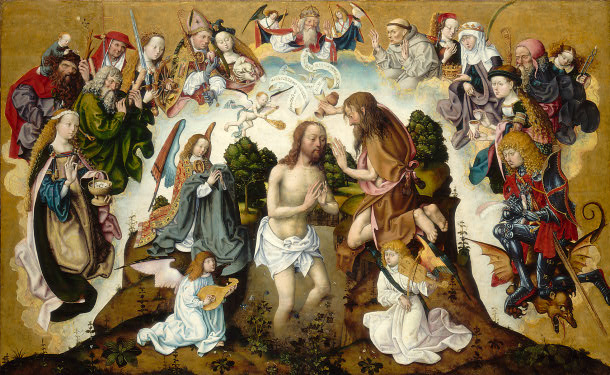
The Baptism of the Lord is a great event in the history of the Church because it is the first public manifestation of our Lord; the official revelation of Jesus as the Son of God to the world in the River Jordan by God the Father. John the Baptist was preaching and preparing in the wilderness and was baptizing all those who responded to his call of repentance. The purpose of his ministry of preaching and baptizing was to direct people towards Jesus who would baptize them with the Holy Spirit. Scripture tells us that Jesus came from Galilee to the River Jordan to be baptized by John the Baptist. Baptism is a call for the purification of sins, but Jesus is the Holy one of Trinity He does not need any purification. Though He is Son of God, He subjects himself to be baptized by another man to teach us the great virtue of humility.

The first reading taken from the Book of Isaiah tells us that the promised Messiah would be God’s chosen Servant in whom the divine soul would delight. The Messiah would have the Spirit of God upon Him bringing forth justice to all the nations, not just God’s chosen people. As the Servant of God, Jesus’ mission is modest and gentle in nature. He operates by His example and works. He brings a message of hope and consolation to all God’s people. Christ, the Anointed One of God is with us to bring us healing. Most importantly, He is here to restore our peace. Isaiah says in this way: “Console my people, console them…here is the Lord coming with power, his arm subduing all things to him, the prize of his victory is here with him…” This is exactly the ministry for which Christ was anointed and he empowered the human race for the entire salvation of God’s plan.

In the second reading, St. Paul invites us to recall our own Baptism — the gift of the Father, Son and the Spirit. He reminds us that the Lord has come to give us salvation and he gives us through the sacrament of baptism: “God saved us by the cleansing water of baptism and by renewing us with the Holy Spirit which he poured over us through Jesus Christ our Savior.” Through His own baptism, Christ sanctified and opened the fountain of baptism for us. He also initiated our redemptive process.

Today, the baptism of Jesus gives us our own identity. It reminds us who we are and to whom we are sent. By Baptism we become sons and daughters of God, brothers and sisters of Jesus, members of his Church, heirs of Heaven, and temples of the Holy Spirit. We are called to live as the children of God in thought, word and action. We are expected to lead a holy and transparent Christian life. The human body is the temple of the Holy Spirit and we belong to God who created us in his own image and likeness. Let us therefore grow and live in intimacy with God by personal and family prayers, by meditatively reading of the Word of God and fervently participating in the Holy Mass. Let us ask God to shower on us the divine graces to live out our baptismal life in a worthy manner. May the name of Jesus be glorified!

“What Should We Do?”

December 12, 2021

3rd Sunday of Advent

Despite the complications of the heavy storm, the family still decided to come. They came to St. Paul’s Friday evening to have their children baptized: a nearly three-year-old boy and a six-year-old girl. Afterwards, I asked the daughter what it was like to get baptized. She answered, “It felt like Jesus was in my heart.” Truly and beautifully, that’s what baptism does. Through simple water and simple words, new Christians are born with Christ living within them.

Large crowds came to St. John the Baptist to be baptized by him in the Jordan River as they confessed their sins. Now this was neither sacramental baptism nor sacramental confession but a preparation for what was next. John the Baptist preached that he was sent by God to prepare his people for the coming of the Messiah. Regular folks, and tax collectors, and soldiers all asked this forerunner of the Christ: “What should we do? Teacher, Rabbi, what should we do?” And what really strikes me about John the Baptist’s answers is what John the Baptist doesn’t say.

He does not say, “Give all your food and clothing away.” He says to the crowds, “Whoever has two cloaks should share with the person who has none. And whoever has food should do likewise.” He does not say to servants of King Herod and Caesar, “Abandon your posts and revolt against your rulers.” He says to the tax collectors, “Stop collecting more than what is prescribed,” and to the soldiers, “Do not practice extortion, do not falsely accuse anyone, and be satisfied with your wages.” The plan of God is to change the world by transforming individuals within the world.

John does not send people on a complicated, epic quest. They can begin doing what they need to do to prepare for Christ’s coming immediately where they’re at. John instructs them and us to do simple things: share with the needy as you are able, stop stealing, stop lying, and stop coveting what others have. These acts belong to basic justice: treating other people at least as well as you ought to be treated yourself.

Can Jesus Christ call us from this to more advanced discipleship? To sacrifice for the Kingdom of God? To suffer for the sake of righteousness? To embrace poverty, or celibacy, or radical obedience? To take solemn vows like the retired religious whose special collection is this weekend? Certainly! The Old Covenant teaches lessons for walking in justice while Christ’s New Covenant goes further, as with the Beatitudes. However, we must walk with the Lord before we can run with the Lord.

Do you grumble, discontent with what you have? Do you deceive, not always speaking what is true? Do you take what is not yours to take, or keep what is not yours to keep? Do you fail to share what is your surplus with others in need? Then you know what you should do this Advent to prepare for the Christmas coming of Christ. Convert more space in your heart for Jesus that he may fully live in you and you may fully live in him.

Why the Catholic Church is Always so Behind the Times

November 20, 2021

Solemnity of Christ the King

A teenager recently asked me, “Why does the Catholic Church have ideas so behind the times?” It was a written question submitted alongside other students’ “Questions for Father.” The question reflected the young person’s doubts and I’m glad that it was asked, because after some reflection and with the help of grace I gave what I believe was an inspired answer.

I began with a review of some late modern history. In 1789, the leaders of the French Revolution took power in France. They rejected faith and wished to entirely replace Catholicism with their own invented “Cult of Reason.” They redefined the number of days in a week from seven to ten to deconsecrate Sunday – the Lord’s Day. They killed or exiled Catholic clergy and converted churches into “Temples of Reason.” They confiscated the convents and monasteries and expelled or martyred the monks and nuns, ending charitable ministries all across France. In their Reign of Terror they executed thousands and then turned on one another. Their revolution ended after ten years with a military coup which gave France a dictator who would crown himself their emperor: Napoleon Bonaparte.

In the early 1930’s, when Hitler rose to power in Germany, he was opposed by Catholics there. In fact, a map of the regional vote shares that the Nazi Party received across Germany looks like the photographic negative of the percentages of Catholic populations in place to place. The dark places of one map were the light places on the other. The Catholic Church proclaims universal human dignity, the preciousness of every human person, but the anti-Catholic Nazis believed in racial supremacy. They claimed the modern science of eugenics proved Germans to be the master race and showed Jews, Slavs, the disabled, and others to be lesser human beings. The Nazis arrested, deported, and murdered millions in concentration camps (including Catholic clergy, religious, and activists) and started a world war which killed millions more. Hitler’s “thousand year Reich” died with him after twelve terrible years.

The 1917 Russian Revolution and the Chinese Revolution of 1949 were violent, atheistic, communist movements. They heralded divisive class warfare as the path to utopia, denouncing and persecuting religion as the “opiate of the Masses.” The governments of the Soviet Union and Communist China, thoroughly corrupt with unchecked power, trampling human rights and freedom, are responsible for tens of millions of deaths over the past one hundred years.

I concluded my answer to that anonymous student’s question by asking the class to consider: if we had lived in France, or Germany, or Russia, or China during those times of social change would we have gone along with the spirits of the age? What would have prevented us from being swept up by and falling for their seductive errors? Our best protection against them, what would have preserved us, would be our firm conviction in our Catholic Christian Faith. The teachings of the Catholic Church will always seem to be “behind the times” because the world is always finding new ways of going gravely wrong. But timeless truth never changes. As the Letter to the Hebrews says, “Jesus Christ is the same yesterday, today, and forever.” Christ is the King “who is and who was and who is to come,” and our allegiance to him is our salvation.

For the feast of Passover, the 1st century Roman Governor of Judea, Pontius Pilate, was accustomed to release for the Jews one of his prisoners. So when the crowds assembled on Good Friday, Pilate asked them, “Which one do you want me to release to you, Jesus Barabbas or Jesus called Christ?” Barabbas was a notorious prisoner imprisoned for a rebellion which had taken place in Jerusalem and for murder. The name Barabbas means “son of the father.” So the crowd had a choice: which savior, which son of the father, which king did they prefer? Many Jews expected the Christ, their Messiah, to be a military leader who would forcefully drive out the Romans and rule an earthly kingdom like David’s or Solomon’s. Most of the crowd chose Barabbas over and against the Lord.

Pilate asked Jesus, “Are you the King of the Jews? …[So] you are a king?” Jesus’ responses to him mean, ‘Yes, but not like you imagine. If my kingdom were like the other kingdoms you know, my followers would be fighting an armed revolt right now.’ Christ’s Kingdom is in our world but not of this world. Jesus called and sent his twelve apostles to proclaim the Kingdom of God and upon the “Rock” of Peter he built his Church to teach and heal, sanctify and save. The Church continues her work with Christ to this day. She is the seed and the beginning of his kingdom. She is “the reign of Christ already present in mystery.

It can be easy to get discouraged by the evils and errors of today. As faith declines within our culture, challenging times are ahead for our Church and her mission. But there always remains reason for hope. Even amid the great evils of Good Friday, Jesus was still advancing his saving mission. Always remember: if Jesus could achieve his saving work on that most wicked day then he can surely accomplish his saving work in our day as well.

Jesus on our Life’s Course — Funeral Homily for Helen Kellen, 97

November 19, 2021

Helen has been close to St. Paul’s Parish her whole life. She was born in our community, educated in our school, married in our church, and became a daily Mass-goer who lived across the street from here for many years. Today, St. Paul’s Parish is honored to offer our most powerful prayer, the Holy Mass, for the perfection of Helen’s soul and for the peace of all of you who love her. Her family has told me a number of things about her life. Certainly not the most important detail, but one which stood out to me, was Helen’s intense desire to win the family golf tournament. Her parents, Frank and Mary Seibel, began an annual family reunion which still gathers here in Bloomer. For more than 30 years, a part of these festivities has been a golf scramble at the local 18 holes. More than a dozen teams of four compete to have their names immortalized on the coveted family trophy.

If you’re not familiar with what a golf scramble tournament is like, everyone on a team tees off, then they choose the best hit ball among them. Each player on the team takes their next shot from that new spot, and so on and so on, hopefully getting closer to that flag on the green until they can sink a ball into the cup. The teams do this for every hole and whichever team has the fewest best swings at the end of the day, wins. The great thing about playing on a golf scramble team is even if you’re not that good your teammates can carry you, and you can occasionally positively contribute as well. Maybe it was growing up around eight siblings, but for whatever reason Helen was fiercely competitive and she very much wanted to get her name on that two-foot, family tournament trophy.

Here’s a theological question for reflection: did Jesus Christ ever golf? History’s earliest reference to the sport only dates back to 1457. That’s when King James II of Scotland banned the popular pastime in his realm, preferring his subjects practice archery instead to be better prepared for times of war. So Jesus of Nazareth, living more than a millennium before, almost certainly never played the links growing up in the Holy Land. But what if Jesus were to play golf now, how good a golfer would he be?

I suspect, if he were to play golf today, Jesus might be the greatest golfer of all time. He possesses an advantage no professional golfer has ever had: his human nature is raised to glory. Jesus’ soul wields perfect control over his glorified body so he could hit each swing exactly as he wished. Par 5? The risen Christ could get it on the green in one. When Jesus resurrects the holy dead on the Last Day “the victor will inherit these gifts” as well, as the Book of Revelation says. But what if Jesus would have played golf during his lifetime before his Passion, death, and Resurrection? How good would he have been then?

In those days, though he was divine, Jesus emptied himself, limiting his almighty power in accord with the Father’s will and their shared plan to save humanity. He had the ability to work miracles but he usually did not use them. When he was tired, he took naps. When he hungered, he ate meals. And when he suffered, he wept. So Jesus knows what it’s like to be one of us. He knows how we struggle. Even the best pro-golfers in this world usually miss their shots.

Being a Christian is like having Jesus Christ on your golf scramble team. The fearsome foursome opposing us is darkness, sin, condemnation, and death, and they would always beat us if Jesus were not on our side. When we miss our shots due to our weakness or our own chosen faults, Jesus can carry us. And sometimes our efforts actually do positively contribute to the mission we share, which is the salvation of the world. Jesus and his friends are the best companions for us to walk with along life’s course. And if we remain on his team without wandering off, or return to his team before reaching the clubhouse, Jesus Christ will lead us to victory with himself.

Eventually, Helen and her teammates did finally win the family reunion golf tournament and her name shares in the minor glory of being immortalized on the family trophy. But for Helen and ourselves, let us pray that our names may attain the surpassing glory of being written in God’s Book of Life forever.

Associated Priests

October 30, 2021

31st Sunday in Ordinary Time

For the past four weeks, our second reading has come from the Letter to the Hebrews. This New Testament book shows Jesus Christ as our great, faithful, and merciful high priest: holy, innocent, and undefiled, yet patient and compassionate. He is able to personally sympathize with us in our weaknesses because, though sinless, he shares in our humanity and struggle. Jesus Christ is a priest forever offering his one perfect sacrifice to God the Father in a priesthood which does not pass away.

As the Catechism teaches, the redemptive sacrifice of Christ is unique, accomplished once for all; but this sacrifice is made present for us at Mass. The same is true of the one priesthood of Christ; Jesus’ priesthood is unique, but it is made present for us through the ministerial priesthood which he founded at the Last Supper. Jesus commands his apostles, “Do this in memory of me,” ordaining them priests of his New Covenant. Yet only Christ is the true priest, while they are merely his ministers.

Besides the unique priesthood of Jesus Christ and the ministerial priesthood of his ordained bishops and priests, there is the common priesthood (that is to say, an equally-shared priesthood) of all the faithful, which is ours through baptism. Sharing in Christ’s identity as priest, prophet, and king, each of us have holy sacrifices to offer, each of us have holy truth to proclaim, and each of us have holy power to wield. The Second Vatican Council noted, pastors “know that they themselves were not meant by Christ to shoulder alone the entire saving mission of the Church toward the world.” The ministerial priesthood is at the service of your priesthood, so that you — sanctified, strengthened, enlightened, and formed — can be as Jesus Christ and his saints for this place and time.

The scribe in today’s gospel approaches Jesus and asks: “Which is the first of all the commandments?” Jesus answers that the first in importance is this: “You shall love the Lord your God with all your heart, with all your soul, with all your mind, and with all your strength.” And the second is this: “‘You shall love your neighbor as yourself.’ There is no other commandment greater than these.” We must be entirely devoted to God, lovingly serving his kingdom according to our personal gifts and callings. And yet, even when we’re giving our all, we remain limited creatures. For instance, time spent doing one thing cannot be spent doing something else. And we are not pure, angelic spirits but physically embodied creatures, beset by weakness and fatigue.

I have experienced this these past four years as your pastor, having two parishes and a school, celebrating thirteen or fourteen Masses a week, with usually five Masses to offer on the weekends. Plus there’s confessions, funerals, anointings, and weddings; school activities and CCD; answering correspondence and completing paperwork; writing for the bulletins and the Sunday homily; and meetings or appointments on most weeknights. I mention this not to brag or complain, but to show why this is grinding and draining and why I do not do more — there is only one of me. I would like to do more than these things I do, but I feel I can’t – not without some help or relief. That’s why I have been working with our parish councils for several months seeking a good solution.

Today, I can announce good news: St. Paul’s and St. John the Baptist’s parishes will soon have an additional priest. This associate priest will assist me, your pastor, in serving you. His name is Fr. Chinnappan, a priest from India, who presently happens to be Fr. John Potaczek’s associate in Mauston. Fr. Potaczek will have a new associate, but Fr. Chinnappan will officially begin ministry here with us, with lodging at St. John’s rectory, on December 1st of this year.

This means that our current weekend Mass schedule will not need to change next year. We’ll have more flexibility in scheduling funerals and more opportunities for confession. Weekday Masses will become Communion Services much less often than before. And visiting priests will no longer be needed for helpouts. Fr. Chinnappan is excited to teach a religion class at St. Paul’s School next semester, and now there will typically be at least one priest around at both parishes for each night of CCD.

I look forward to the unique gifts and perspective Fr. Chinnappan will bring to St. Paul’s and St. John the Baptist’s. I trust that you will make him welcome, and be patient with us who serve you. For myself, I am most excited to have more opportunities to engage, teach, and evangelize, drawing souls more closely and profoundly to Christ here at our church and school. I have some new ideas in mind, and I want to hear your ideas and any offers to help. Jesus wills for you and I to be one hundred percent devoted, with all our heart and mind, soul and strength. Let us serve Jesus Christ, our priest and king, as saints for this parish according to our own unique gifts and callings.

What do you Wish?

October 23, 2021

30th Sunday in Ordinary Time

John the Baptist was once with two of his disciples and as he watched Jesus walk by he declared, “Behold, the Lamb of God!” Hearing this, the two disciples began tailing Jesus. Jesus turned, saw them, and asked them a question: “What are you looking for?” Last week, we heard how James and John, the sons of Zebedee, approached Jesus saying, “Teacher, we want you to do for us whatever we ask of you.” Jesus began by asking them a question: “What do you wish me to do for you?” This Sunday, a blind beggar, Bartimaeus the son of Timaeus, calls out to Jesus from the roadside. Jesus summons the man and once he comes near Jesus asks him a question: “What do you want me to do for you?

Why does Jesus pose these questions? Surely he already knows the answers. “Jesus immediately knew in his mind what they were thinking to themselves,” either from his divinity, or by reading their souls (as some saints have been known to do), or through his profound knowledge of human nature. Jesus “did not need anyone to testify about human nature. He himself understood it well.” So why does Jesus ask, “What are you looking for, what do you wish, what do you want me to do for you?

Jesus knows us through and through but how well do we know ourselves? To answer Jesus’ questions we must consider and articulate what we truly desire: “What do I really want? How could life be better?” Forming the answers helps us know ourselves. Sometimes we neglect or avoid such self-reflection. We assume or despair that the unsatisfying status quo is the best we can expect. But to name our wishes and longings and present these to Jesus is an act of faith, and hope, and trust in him.

When Jesus turned on the two disciples of John the Baptist (one of whom was St. Andrew) and asked “What are you looking for?” they answered, “Rabbi (Teacher), where are you staying?” And Jesus said to them, “Come, and you will see.” What they desired was to know Jesus better, and Jesus gave them what they asked for. Last week, James and John said what they wanted was to sit at Jesus’ right and left in his glory. What they desired was not chairs but a greater share in Christ’s glory, and Jesus gave them what they asked for. Today, Jesus asks Bartimaeus, “What do you want me to do for you?” The blind man answers, “Master, I want to see.” What he desires is deliverance, for his blindness has kept him a beggar, and Jesus gives him what he asks for.

Today, you have come before Jesus and approach him here. What are you looking for? What do you want him to do for you? What do you wish for him to do? In St. Matthew’s Gospel, Jesus says, “Whatever you ask for in prayer with faith, you will receive.” Jesus says, “Ask and you shall receive.” So I dare you to take courage, discern your desires, and present your requests to Jesus with faith, that he may give you what you ask for.

Repairing Shoes & Souls — Funeral Homily for Gerald “Casey” Franz, 92

October 4, 2021

Sixty-eight years ago, Gerald married Wanda here in St. Paul’s Catholic Church. On Sundays, they brought their children here to see Jesus and worship. In their later years, Gerald and his wife became daily Mass-goers. Even when confined to home, he would watch Mass on TV, and during his days at Dove Nursing Home he was delighted to attend its celebration. Today, we gather here once more to offer our greatest prayer to God, the Holy Mass, for Gerald’s soul and for the good of all who love him. Gerald’s past occupations are not nearly as important as his faith, family, or friends, but Gerald’s all-time favorite job stands out for being rather rare.

Alongside Wanda, and then up until the end of last year, Gerald worked as one of our modern world’s last cobblers; not an apple, peach, or cherry cobbler, but a cobbler who works with shoes. Shoes are our lowest article of clothing, walking upon the earth. We see them everywhere we go; covering our lowly, vulnerable, and sometimes embarrassing feet. Some people say they “love shoes” but how much are we really willing to sacrifice for them? In this era of cheap mass production and consumerism, when a pair of shoes is somehow flawed or broken people typically toss them in the trash. But working out of his home shop, Gerald’s affordable rates and friendly face kept customers coming to his door.

I’m told that Gerald’s sharp and witty mind seemed to know every person’s face and name in Bloomer and Tilden; along with the names of their parents and siblings, whom they married and where they lived. Gerald would fix what was broken, patch what was torn, and through orthopedics enable people to walk. What might be considered worthless garbage to some, he restored. In this, Gerald bears a likeness to another.

Today, there are more people upon the surface of the earth than ever before. We human beings are lowly, vulnerable, and sometimes embarrassing. And when we are flawed or broken, this utilitarian world would often discard us. Some people say they “love humanity” but how much are they really willing to sacrifice for others? In our modern, consumeristic age some doubt whether God and his Church are needed anymore. But Christ and our Catholic faith are not antiquated professions, we need them now as much as ever.

Jesus Christ knows your name. He knows your face and your story. Our loving Lord knows absolutely everything about you. He who enabled the crippled to walk would fix what is broken in you and patch what was torn about you. The sacrifice of the Mass you are about to behold is Jesus’ sign of love for you. The Eucharist which Gerald has so loved is Jesus’ gift of love to you. I am confident that Gerald will be grateful for your prayers today, but I believe that the greatest wish of this cobbler of shoes is that you would always walk with the healer of souls.

Cutting Off the Near Occasions

September 25, 2021

26th Sunday in Ordinary Time

Jesus says if your hand causes you to sin, cut it off. If your foot causes you to sin, cut if off. If your eye causes you to sin, pluck it out. It is better for you to enter into eternal life maimed, or crippled, or half-blinded, than with two hands, two feet, and two eyes to be thrown into Gehenna (into hell) forever. There are two mistakes one can make with this gospel teaching. The first mistake is less grave than the other.

This first mistake would be imagining that one’s hand, foot, or eye were the source of your sins. If that were what Jesus meant, how could he think that plucking out just one eye, would be an effective solution? Pretty much any sin you can do with two eyes can be done just as easily with one. No, the Church does not encourage elective amputations because that’s not what Jesus is saying here. Jesus is using hyperbole, over-the-top rhetoric, to vividly drive home an important point.

As much as you enjoy your hand, your foot, or your eye, you can live without them. So if any of these were leading you to your death, you would be a fool not to part ways with it. How much more so is this true for the lesser things people enjoy which lead to spiritual death?

Human beings, for better or worse, are creatures of habit. The sins we commit and the virtues we practice tend to be habitual. So think: is there a person, setting, or thing that often leads you to sin? Whom do you sin with? Where and when do you sin? What object, substance, or technology do you sin with often? Jesus knows that you know your pattern of weakness and sin, or that you could easily recognize your pattern with a little self-reflection, and he wants you to take this issue seriously. For the love of God who loves you, for the good of your own soul and the souls of others, curtail in your life the near occasions of sin or, even better, cut them out entirely. Make a firm resolution, make a conscious renunciation, make a good confession, and begin better living the life Jesus wills for you.

Now here is the second, graver mistake people make with Jesus’ teaching. Since Jesus uses hyperbolic imagery about chopping off body parts some think that he isn’t being serious about the dangers of hell. Yes, Jesus uses symbolic imagery to describe it, but hell is very real.

Gehenna, for instance, was a valley southwest of Jerusalem, just outside the walls of God’s holy city. It had once been the site of pagan temples where children were offered as holocausts to idols of Baal and Moloch. The Jews went on to use that shameful place as a smoldering garbage dump, with rotten, worm-infested refuse and continuously burning trash. Will there be literal fire in hell? Maybe not. We would not say hell must have “undying worms” for Jesus’ teachings to be true. But fire does speak to great agony and worms to corruption.

In Jesus’ parable of the royal wedding guests, the king finds a man unfit for his feast. The king says to his servants, “Bind his hands and feet, and cast him into the darkness outside, where there will be wailing and grinding of teeth.” Wailing accompanies despair and the grinding of teeth, violent anger. As light is to vision and wisdom, the outer darkness is to blindness and error – error which is not innocent ignorance but falsehood blamefully embraced.

In that parable, the condemned one is utterly bound, hand and foot, and thrown out. Yet in Jesus’ parable of the sheep and the goats, the condemned go off on their own. Christ tells us that when he returns as king he will sit upon his glorious throne and turn to the unrighteous goats on his left and say, “Depart from me, you accursed…” And these, he tells us, “will go off to eternal punishment.” Hell is their sentence, but hell is also what they have freely chosen.

Grave sin, freely and knowingly chosen, is a rejection of the Kingdom of God. Mortal sin rejects Christ’s Way; it rejects the life of heaven. This decision to stray is ours, but the decision to respond to God’s grace and return is ours as well.

People today assume almost everybody is going to heaven, but the early Church Fathers were far less optimistic. Whether the number who will be saved in the end is a majority or a minority of the human race, I want all of you to make it. So please take Christ’s words to you seriously. Repent of your sins and change your ways. This is Jesus’ loving will for you.

Following the Shepherd

September 12, 2021

24th Sunday in Ordinary Time

[Homily Part 1 at both parishes]

Jesus asked his disciples, “Who do you say that I am?” Simon Peter replied, “You are the Christ.” That was a correct and inspired answer. Jesus then began to openly teach his disciples that he, as the Christ, must greatly suffer, be rejected by the Jewish religious leaders, be murdered, and rise after three days. Peter then took Jesus aside and began to correct him. St. Matthew reports that Peter said, “God forbid, Lord! No such thing shall ever happen to you!” At this, Jesus turned and, looking at his disciples, rebuked Peter in return, saying, “Get behind me, Satan. You are thinking not as God does, but as human beings do.” Jesus calls St. Peter, his apostle, his Church’s first pope—“Satan.” What are we to make of this?

Satan” is the title given to the highest angel who rebelled against God at the beginning of Creation. The Book of Revelation recalls how “the serpent of old who is called the devil and Satan, who deceives the whole world … was thrown down to the earth, and his angels were thrown down with him.” Jesus talks about this Evil One: “I saw Satan fall like lightning from heaven. … He was a murderer from the beginning and does not stand in truth, because there is no truth in him. …He is a liar and the father of lies.” Both Jesus Christ and his Church today definitely believe in the Devil and that he prowls about the world opposing God and our good. But Jesus does not accuse Peter of being that fallen angel.

The Hebrew word “satan” means “adversary.” Jesus calls Peter his adversary at that moment because he is opposing God’s plan and being an obstacle in Jesus’ path. Like the Devil during the Temptations in the Desert, Peter is suggesting that Jesus be a Messiah who never suffers, a rich, powerful, comfortable Christ who imposes his will over peoples in the same mold as earthly kings. This is what Peter and Judas and the Jews in those days expected. But Jesus knew that the Christ must greatly suffer if the Kingdom of God would save human souls.

During the forty days in the desert, Jesus rebuked the Devil, “Get away, Satan!” And at the Last Judgment, Christ the King upon his throne will tell the unrighteous goats on his left, “Depart from me, you accursed, into the eternal fire prepared for the devil and his angels.” But notice Jesus does not say to Peter “get away” or “depart from me.” Jesus tells him, “get behind me.” Peter is not yet thinking as God does but the Lord Jesus does not desire to cast Peter off forever, if that fate can be avoided. If Peter would humbly follow Jesus, the Lord would show him the Way. Jesus saying “get behind me” was not a personal rejection of Peter, but asking him to follow his Good Shepherd from a new perspective to the Promised Land of heaven.

[Homily Part 2 at St. Paul’s]

Peter thought he had a great plan for Jesus and himself, but Jesus had a different plan, a more challenging plan, but a better plan for them both.

There is godly prudence in our forming of plans and working hard to achieve them. Like in Aesop’s fable about the ant and the grasshopper, the Book of Proverbs urges the lazy to work and prepare for tomorrow: “Go to the ant, O sluggard; consider her ways, and be wise. Without having any chief, officer, or ruler, she prepares her bread in summer and gathers her food in harvest.” St. Paul believed in Divine Providence, but also taught the Thessalonians: “When we were with you, we instructed you that if anyone was unwilling to work, neither should that one eat.” And Jesus said, “Suppose one of you wants to build a tower. Won’t you first sit down and estimate the cost to see if you have enough money to complete it?” Jesus then encourages his hearers to be just as prudently intentional and totally invested in being his disciple. It is good for us to make plans and work hard toward worthy goals. But we should also keep in mind that all of our earthly plans are uncertain.

We simply do not know what our remaining time on this earth will be like. St. James writes in his New Testament Letter: “Come now, you who say, ‘Today or tomorrow we shall go into such and such a town, spend a year there doing business, and make a profit’ — you have no idea what your life will be like tomorrow. You are a puff of smoke that appears briefly and then disappears. Instead you should say, ‘If the Lord wills it, we shall live to do this or that.’” As another verse from the Book of Proverbs says: “Many are the plans in a person’s heart, but it is the Lord’s purpose that prevails.

In this land of the living, we do not know our earthly futures and we cannot control everything to make our futures entirely as we’d like. But then again, who’s to say that knowing our future perfectly would be good for us? Who’s to say that having the power to craft a future exactly to our liking, would be best for us? We very well may not know what is best for us and what is best for us may not be something we would readily choose. We do not always think as God does, but as human beings do.

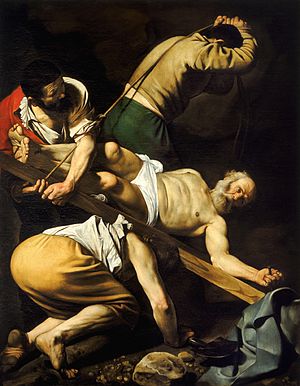
Young Simon Peter could not imagine that the Christ would be killed, but this was how Jesus would save the world. Young Peter used to dress himself and go where he wanted; but when he grew old, he stretched out his hands and someone else dressed him and led him where he did not want to go. Jesus had foretold this to Peter, signifying by what kind of death he would glorify God in the divine plan: crucified in the likeness of his friend and Lord and God, and sharing (more than most) in his glory. Our personalized path to sainthood may not be the one we’d expect or choose for ourselves.

We ought to plan and work hard towards worthy goals, even though this broken world and the sins of men and demons make all of our plans uncertain. Our human sight and wisdom are limited. We do not always see, or have the courage to pursue, what is best for us. But we do know, as St. Paul taught the Romans, “that God works all things for the good of those who love him, who have been called according to his purpose.” Jesus tells us, “Whoever wishes to come after me must deny himself, take up his cross, and follow me. For whoever wishes to save his life will lose it, but whoever loses his life for my sake and that of the gospel will save it.” With this firm confidence, let us get behind Jesus Christ and follow him who leads our lives to salvation even through the Cross.

[Homily Part 2 at St. John the Baptist’s]
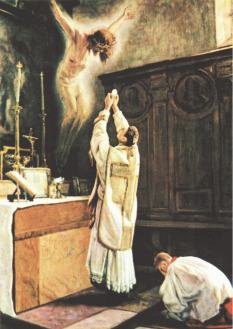
This is where your homily this morning diverges from what I’m preaching at St. Paul’s this weekend because I have been meaning to talk to you about ad Orientem Masses. Since the Second Vatican Council, the most common way priests have celebrated Mass is versus populum, or “towards the people.” Yet the much longer-practiced custom has been for the priest and the people to face literally or symbolically towards the East together, or “ad Orientem.” Like Muslims today who pray towards Mecca, the custom of the Jews was to pray towards the Temple in their holy city of Jerusalem. The writings of the Church Fathers show that the early Christians prayed towards the east.

In the second century, St. Clement of Alexandria wrote “prayers are made looking towards the sunrise in the east.” And in the third century, Origen noted: “…Of all the quarters of the heavens, the east is the only direction we turn to when we pour out prayer…” Tertullian records that Christians facing east to pray caused some non-Christians to mistakenly believe we worshiped the sun. But the Christians praying towards the sunrise saw a symbol of Christ rising from the dead and of his promised return to earth in radiant glory one day. Throughout the centuries, even in churches which were not built to face east, the priest and the people faced the same direction (or “liturgical east”) together. However, since the 1970’s the prevailing custom has been for the priest to face towards the congregation.

Now I am not saying that one way of celebrating English Masses is good and the other way is terrible. The Catholic Church approves both versus populum and ad Orientem as valid, legitimate options. But these two ways of celebrating the Mass emphasize different things. Celebrating versus populum, toward the people, emphasizes the horizontal aspect, the communal meal. And the Holy Mass is indeed a meal, a memorial of the Last Supper; where Jesus Christ and his disciples gather at his table. Celebrating ad Orientem, toward the East, emphasizes the vertical aspect, the sacrificial offering. And the Holy Mass is indeed a sacrifice, a memorial of the Cross; where Jesus Christ is offered up for us from his altar.

I experienced my first ad Orientem Mass back when I was still in seminary. The celebrant was a priest of our diocese, a graduate from our seminary returning to visit us, Fr. Derek Sakowski. I remember fearing that I would hate the Mass being said that way because I often dislike change. (For instance, our seminary once changed the toaster in the dining hall and, even though I almost never used that old toaster, I was annoyed when they had replaced it with another because the old one was pleasantly familiar.) Fr. Sakowski said the same English prayers as at other Masses, but seeing him celebrating that Mass ad Orientem, facing us when speaking to us and facing God when praying to God, I found it surprisingly beautiful and it made a lot of sense. Here at St. John the Baptist Church, I’ve celebrated our Monday, Thursday, and First Friday Masses ad Orientem since 2019, and attendees have reported positive experiences similar to mine. I’d like to give you the opportunity to experience this, too.

Around fifty years ago, when versus populum (Mass facing the people) became the prevailing custom in the Church, pastors often introduced the liturgical change abruptly and without adequate explanation. It was jarring, many lay people were bewildered and hurt, and public Masses celebrated ad Orientem were very rarely offered. I do not wish to repeat those mistakes going in the opposite direction.

Having consulted with our Parish Pastoral Council (who encouraged me to proceed with this plan) I’d like to alternate celebrating Masses ad Orientem and versus populum over four upcoming weekends. This means that if you consistently attend the same Mass time over those four weeks, you’ll experience the English Mass offered ad Orientem twice. Come with an open mind. After that, I’ll survey your feedback. Which approach do you find more fruitful? Which weekend Mass would you like to see celebrated ad Orientem on a regular basis: Saturday night, Sunday morning, neither, or both? I’ll want to hear what would help you worship best, and then we’ll go from there. For now, let us turn to Jesus Christ who invites us this morning, like St. Peter before us, to share in his holy meal and his perfect sacrifice.

Ephphatha! Be Opened!

September 5, 2021

23rd Sunday in Ordinary Time

What message does the Holy Spirit want you to hear through this homily? In what way does Jesus want you to be opened?

In today’s gospel, people bring to Jesus a deaf man with a speech impediment. They had heard Jesus’ teachings and reports of his miracles. Maybe they had seen and experienced his healing power themselves, so they bring this man to Jesus and beg the Lord to lay his hand and heal him. See how they lead someone they care about to meet Jesus and intercede before the Lord on his behalf. You and I are called to bring people to Jesus, too, and pray to God for their salvation. This gospel story shows that miracles can happen when we do.

Jesus takes this deaf man off by himself, away from the crowd. Like St. Zachariah, the father of St. John the Baptist, whose neighbors and relatives had resorted to making gestures to ask him the name of his newborn son, the deaf man’s speech problem is related (at least in part) to his inability to hear. Jesus wills to restore both the man’s hearing and speech, and see how our Lord does it: he puts his finger into the man’s ears and, spitting, touches the man’s tongue. Notice that Jesus does not heal this man through a word alone but through a physical encounter with himself. Likewise, Jesus encounters us today not only through his Scriptures and his Spirit, but through his Body and his Sacraments. The visible Church of Christ on earth and this material world have key parts to play in our salvation. And notice that this deaf man is delivered not merely through action alone, but also through prayer.

Jesus looks up to his Father God in heaven and groans, and says to the man, “Be opened!” (which is, “Ephphatha” in the Aramaic tongue). Behold the intensity of Jesus’ desire for this man’s good, the yearning in our Lord’s prayer. St. Paul writes in his Letter to the Romans that the Holy Spirit intercedes within us to help us intensely will what God wills, aiding our prayer with what Paul calls “inexpressible groanings.” St. Augustine preaches that the task of prayer “is generally accomplished more through sighs than words, more through weeping than speech.” So remember that you do not need many eloquent words in order to powerfully pray. A heartfelt groan can obtain a miracle.

Jesus says to the man, “Be opened!” and immediately the man’s ears are opened, the man’s mouth opens too, and he begins speaking plainly. The Holy Spirit inspired this story’s inclusion within St. Mark’s Gospel, and Christ’s Church recalls this episode in her Masses all around the world today. This is because Jesus’ healing of that deaf man has relevance for us all. This is reflected at sacrament of baptism. There is a custom of the priest or deacon touching the baby’s ears and lips with his thumb and praying: “May the Lord Jesus, who made the deaf to hear and the mute to speak, grant that you may soon receive his word with your ears and profess the faith with your lips, to the glory of God the Father. Amen.” This tradition is called the Ephphatha Rite. The story of Jesus curing that deaf man is meant to make us consider: how is the Lord wishing me, commanding me, to be opened?

Today’s first reading from the Prophet Isaiah proclaims that our God comes to save us, to clear the ears of the deaf and cause the tongues of the mute to sing. But this reading begins by saying “to those whose hearts are frightened: Be strong, fear not!” Do not be afraid of what our Lord wishes for you. Be strong and fulfill his command. Ephphatha! Be opened! But in what way does Jesus want you to be opened? Would he open your ears to somehow listen, or open your mouth to somehow speak, or open your heart to feel somehow, or open your mind to somehow think anew? The Holy Spirit can tell you.

Perhaps, like St. James talks about in today’s second reading, you are called to be more open to respecting and caring for the poor. Or perhaps there’s a person in your life whom you’ve been overlooking, neglecting someone you are called to be more open to. Maybe Jesus would take you off by yourself, away from the crowd, to be open to more daily prayer, or calling to follow him more closely in your vocation.

After curing the deaf man, Jesus ordered that the miracle be kept secret (for the time was not ripe for it to be shared). Yet the more he commanded this, the more they proclaimed it. Now we are commanded to share the Good News with others, and yet we are often silent. Perhaps Jesus wants you to be open to speaking with other people about your Faith. Maybe invite a non-Catholic person you’re close to to attend RCIA, which begins at St. Paul’s on September 16th.

I do not know in what particular way God desires you to be opened. But I believe that Jesus Christ, who “has done all things well,” who succeeded in making even the ears of a deaf man hear him, can surely tell you his will through the Spirit.

Mary & the Holy Eucharist

August 14, 2021

Solemnity of the Assumption
(20th Sunday in Ordinary Time – Year B)

The first three evangelists, Saints Matthew, Mark, and Luke, all detail the same event from the Last Supper. In his First Letter to the Corinthians, St. Paul recounts it in these words:

“I received from the Lord what I also handed on to you, that the Lord Jesus, on the night he was handed over, took bread, and, after he had given thanks, broke it and said, ‘This is my body that is for you. Do this in remembrance of me.’ In the same way also the cup, after supper, saying, ‘This cup is the new covenant in my blood. Do this, as often as you drink it, in remembrance of me.’”

At every Mass, we recall how Jesus instituted the Holy Eucharist the night before he died. But the Gospel of John does not feature these words of institution. The Last Supper spans five full chapters in John’s Gospel—spending far more verses detailing Jesus’ words and deeds at table that night than is done by Matthew, Mark, and Luke combined—yet the phrase “This is my Body” is not included there. Why is this?

Both the early Church Fathers and modern scripture scholars agree that John’s was the last canonical gospel to be written. St. John probably thought it was unnecessary to retread again the same familiar ground as his predecessors, so he chose to omit the institution narrative. Instead, St. John shares with us the Bread of Life discourse. We’ve been listening to this chapter from John for the previous two weeks. Next Sunday presents the resolution of this story. And this Sunday, we would ordinarily be hearing the climax of Jesus’ teaching. Rather than being quoted saying “This is my body” at the Last Supper, in this gospel Jesus declares at the synagogue in Capernaum:

“Amen, amen, I say to you, unless you eat the flesh of the Son of Man and drink his blood, you do not have life within you. …For my flesh is true food, and my blood is true drink. Whoever eats my flesh and drinks my blood remains in me and I in him. …The one who feeds on me will have life because of me. …Whoever eats this bread will live forever.”

The other gospels include the eucharistic words of institution, but John particularly emphasizes Jesus’ real eucharistic presence.

As I said, we would ordinarily be hearing this climax to Jesus’ Bread of Life discourse this weekend, but it is preempted this year by the August 15th Solemnity of the Assumption of the Blessed Virgin Mary. Now I’m a very big fan of Mary but I also love that particular gospel reading from John 6, so I was a bit disappointed when I realized the first would be cancelling the second. But then I reflected upon Mary’s profound connections to Jesus’ Real Presence in the Eucharist, and there is actually great beauty in the convergence of these two holy days.

Consider: from where did Jesus receive the flesh he gives us in the Holy Eucharist? God ordained that Jesus Christ receive his human nature from his mother, Mary. At the Annunciation, Mary gave God her pure flesh and pure “yes,” saying “Let it be done to me according to your word,” on behalf of all humanity. That she might respond with a truly free “yes” and be a truly worthy source and vessel for her Son, the most Blessed Virgin Mary was preserved in flawless holiness by the grace of God from the first moment of her life. She lived all her days on earth in sanctity untainted by sin. The 16th psalm proclaims of God: “You will not allow your holy one to see decay.” And so, “the Immaculate Mother of God, the ever Virgin Mary, having completed the course of her earthly life, was assumed body and soul into heavenly glory.” This is the wonderful event which we remember and celebrate with Jesus and Mary today.

The sacred body and precious blood of Jesus we see held aloft at Mass come to us through the Blessed Virgin Mary. She is symbolically present on the altar as well. Consider the chalice. It is made from a precious metal and fashioned for a sacred purpose. It is traditionally veiled, denoting its dignity and sanctity. It is femininely curved, a vessel open to receiving and holding God’s gifts. The chalice is a symbol of the Virgin Mary, who is not to be adored as God and yet who is most profoundly close to him. Like Mary at the visit of the Magi, the chalice holds Jesus for all peoples to adore him.

At the Annunciation, after Mary responded, “Behold, I am the handmaid of the Lord. May it be done to me according to your word,” did she feel anything the instant the Word became flesh within her? Maybe she had the most enrapturing mystical experience ever known. Or maybe, when the angel departed from her, she felt nothing at the moment of the Incarnation. Either extreme seems possible, or it may have been something in between. When you receive the Holy Eucharist, you may or may not be graced to feel any different from the presence of Jesus within you. But consider how Jesus Christ has come to dwell in you at the center of your being as he did first within the Blessed Virgin Mary.

May Blessed Mary, the source of Christ’s flesh; the Lord’s holy chalice; the first Christian to commune with Jesus; intercede for you, helping you to know, love, and follow her Son. May you join them both in heaven one day so that all generations may call you blessed.

Drawn to Jesus by God’s Grace

August 8, 2021

19th Sunday in Ordinary Time
By Deacon Matthew Bowe

There are many things that we are drawn to. I am drawn to delicious food, as you can tell. I am also drawn to playing golf, watching the Olympics, and spending time with friends and family. I have noticed that we can easily talk about the tangible and physical things that we are drawn to, whether it be sports, fishing, hunting, outdoor activities, card-playing, work, or any other thing. Curiously, I wondered how do we tell others about the spiritual things that we are drawn to? Examples include praying, going to Mass, charitable works, retreats, and any other sort of thing. Do we not tell people because we are not drawn to spiritual things, or do physical things attract us more than the spiritual things?

Currently, we are in the middle of the Bread of Life discourse from the Gospel of John. Two weeks ago, it was the reading about the multiplication of the loaves. Jesus fed five thousand people with just five barley loaves and two fish. In that story, the power of Jesus can do a lot with the little that we can give Him. Last week, the crowds pursued Jesus seeking to have this bread always, and the reading concluded with Jesus saying that he was the bread of life. Whoever comes to Him will never hunger, and whoever believes in Him will never thirst. In his writings, the evangelist John never uses the word “miracle.” Rather, he writes about the signs that Jesus worked. A sign points toward something. A stop sign signifies that it is the law to stop at this intersection. In this Gospel, the physical signs point to a spiritual reality. In this Bread of Life discourse, the physical sign is the bread, and the spiritual reality is that Jesus is the bread of life. This is one reason John wrote the Gospel – to show that Jesus was not only fully human but also fully divine.

Now, we turn to today’s Gospel reading. The Jews are murmuring and struggling that Jesus said that He is the bread that came down from heaven. The crowd could see the physical reality, or the humanity, of Jesus. They knew that Jesus was the son of Joseph and of Mary. However, they were spiritually blind. Despite the wonders and the signs that Jesus worked, they saw not the divinity of Jesus, the true bread that came down from heaven. Our culture today disbelieves the spiritual reality of the created world and idolizes the physical world. It is a culture that espouses that “science is everything,” “follow the science,” and “do whatever makes you happy,” yet the culture fails to recognize that the created world is more than just the physical and the pleasurable. That is not to say that the Church is anti-science. The Church promotes and espouses the arts and the sciences. Science leads us to a deeper understanding of the created world and thus of our Creator. Science serves to deepen our knowledge of God. The culture says that it is unreasonable to believe in God, but I say that is unreasonable to not believe in God and the spiritual reality of Creation.

Then, Jesus sternly answers the murmurs of the crowd. There is a lot here, most of which I will leave for your spiritual meditation. In each of our lives, God always makes the first move. When we pray, it is because He first drew us to pray. When we give charitably, it is because He first gave us the grace to do so. Everyone is capable of being drawn by the Father, but not everyone responds to that invitation. The early Church Fathers, who wrote commentaries on this passage, noted that the Arians, fourth-century heretics who denied the divinity of Christ (even after the Church declared otherwise), were not drawn by the Father. Because they denied a truth of the faith, they denied Truth Himself, who is Jesus Christ. Thus, they could not be drawn by the Father because the Father does not draw us partially. He draws us to Himself fully. Even people today who support and are gravely involved in any immorality or injustice condemned by the Church or hold opinions contrary to the teachings of the Church deny Truth and are thus not drawn by the Father. There is something that is lacking.

This is why we should pray, my brothers and sisters, that everyone may be drawn in by the Father, into the Catholic Church, which safeguards the fullness of Truth and Faith. There is always hope, for God is merciful and kind, as the Psalmist says. Repentance and conversion are always possible for us so long as there is life in us. This is the first way in which we are drawn by the Father. To repent of our sinful ways and to turn back toward Him. As St. Paul wrote to the Ephesians, we should remove all bitterness, fury, anger, shouting, reviling, and malice and replace it with kindness compassion, and forgiveness. We should imitate Christ. The ultimate imitation is sacrifice (even death on a cross). Then, we listen to Father, humbly being taught by God, and we will come to Jesus. Jesus is the bread of life, of life eternal. It is not by our bodies that we believe, but it is by our spirits that we choose to believe, through divine assistance. We who believe will be raised up on the last day and have eternal life.

How is it that we are intimately drawn into a spiritual union with Jesus? Foremost, it is via the Sacrament of the Holy Eucharist. The classic expression “You are what you eat” holds exceptionally true. Not only is there spiritual contact with Jesus, but we can also physically touch Jesus, for what was once ordinary bread becomes, by sacramental grace, the Real Presence, the Body of Christ. Jesus left us a Sacrament by which He is ever present on Earth. The Eucharist is the bread that comes down from heaven to lead us into heaven just as God came down from heaven and became Man. Whoever eats this bread will live forever, for this bread is the very flesh of Christ, Who is Life, and Jesus Who gives Life to the world. Brothers and sisters, let us pray that we may be drawn to Jesus today in this Blessed Sacrament, to believe more deeply in the Life of the world, and to delight in the heavenly things which are to come.

Reflecting Christ — Funeral Homily for Edward “Ed” Boehm, 96

July 23, 2021

Edward BoehmHe is known and loved by many. A man others are drawn to because they feel welcome and loved around him. He is wise and witty, joyful and just, honest and unpretentious; a strong, steady, peaceful presence. A great storyteller and a great listener. A hardworking craftsman who both builds and repairs. He’s faithful and devout, hating no one, a lover of God’s word and a believer in the Resurrection. He is the reason that we are all gathered here today. The man I speak of is Jesus Christ.

One of the things I love most about “The Chosen,” an excellent mini-series (now through its second season) about Christ and his disciples, is its wonderful depiction of Jesus. What sort of person’s three-year public ministry could so transform the world ever after? What kind of person would people leave everything behind to follow? Someone engaging and winsome, who can see into your soul and still loves you. “The Chosen” is currently free to watch online, and I urge you see it because it is truly well done, but you can always read the books that the series is based on instead and encounter Jesus Christ in the four Gospels.

Regardless, it is essential that each of us get to know and love him. As Pope Emeritus Benedict XVI once observed, “Being Christian is not the result of an ethical choice or a lofty idea, but the encounter with an event, a person, which gives life a new horizon and a decisive direction.” As Jesus says in St. John’s Gospel today, this is the will of God the Father: that everyone who sees God the Son and believes in him may have eternal life, and be raised up on the last day.

Even though my opening description lists praiseworthy traits of Jesus Christ also found in Edward Boehm, those who know and love him and report such things about him acknowledge that Ed was not perfect. (This, by the way, is why the Church offers prayers for the dead, to help those who die as friends of God be sanctified through and through, to be completely healed and purged of any obvious or hidden flaw, since Revelation teaches us nothing impure can enter the heavenly Jerusalem, the holy city, where God’s unveiled glory dwells.) Ed was not perfect, but where did his Christ-like traits come from? Our world is not perfect, but where does its beauty come from? These things come from Jesus Christ, through whom all things were made, through whom all good things come.

We are finite creatures who desire the infinite. This longing for ever greater and unending goodness, beauty, truth, life, happiness, and love is to be fulfilled in God who, though we are dust, has placed these longings within us from the beginning. Though many do not realize it, our ultimate longing is for communion with God himself. There is a God-shaped hole in every human heart. And we meet the divine in human form in the person of Jesus Christ. Realize that the goodness you love in Edward Boehm reflects something of God’s goodness. Jesus Christ is the one on whom rests all our joyful hope, for Ed and for ourselves. He is the Alpha and the Omega, the beginning and the end.

The Master Chef — Funeral Homily for John Kenneavy, 74

July 22, 2021

John KenneavySt. John the Baptist Parish is honored welcome you and to offer our greatest prayer, the Holy Mass, for John’s soul and the consolation of all who know and love him. No short funeral homily can capture the fullness of a person. If I were to preach to you for an hour about his life, afterwards I bet that each of you here could add another unique story. This morning, I’m going to reflect upon just a single aspect of John’s life, one that all of you who are his family and friends are already familiar with: his being a chef.

John opened and operated the Kenneavy’s Kitchen restaurant for seventeen years, preparing homestyle dishes, fresh bakery items, and his famous pizza. After selling that restaurant in 1993, he cheffed at several other Door County restaurants. He went on to be one of the first cooks hired to run the kitchen at a brand new, area nursing facility. And, in his own retirement, he helped to helped cook and serve a weekly lunch for his Florida residential community. In addition to his customers and neighbors, how many countless times did he use his culinary talents to feed his family and friends? Consider how much nourishment and delight John provided for literally thousands through his culinary gifts in life. And John delighted in doing it.

So what is the joy in cooking? Everyone likes to eat good food – chefs included – but the joy from cooking is more than merely eating. There is delight in creating a dish and delight in sharing it. The chef offers up a gift of self to create a great meal and offers this meal to others. A chef’s feast is offered for peoples’ nourishment and joy, that they may have life and have it more abundantly. And a great feast brings people together, connecting the chef with his friends, family, or guests.

At the Last Supper and at the Holy Mass, Jesus gathers his friends for a feast. The Good Shepherd spreads a table before them in the house of the Lord. Christ prepares a meal for his family, makes a gift of himself for us, and offers us this gift. Jesus says: “I am the living bread that came down from heaven; whoever eats this bread will live forever; and the bread that I will give is my Flesh for the life of the world. Whoever eats my Flesh and drinks my Blood has eternal life, and I will raise him on the last day.” This is not mere metaphor, for Jesus insists, “my Flesh is true food, and my Blood is true drink,” and so his Church has always professed and believed. This meal brings us into communion with the Chef who prepares it: “Whoever eats my Flesh and drinks my Blood remains in me and I in him. Just as the living Father sent me and I have life because of the Father, so also the one who feeds on me will have life because of me.” Whoever eats this bread will live forever with the Lord on the holy mountain that the Prophet Isaiah describes, where death will be no more and those who are saved will rejoice in their salvation.

When St. Augustine’s mother, St. Monica, was dying she famously told her son, “Bury my body wherever you will…. Only one thing I ask of you, that you remember me at the altar of the Lord wherever you may be.” St. Monica knew the Holy Mass is our greatest prayer because this feast connects to the Lord and one another, that we might have life and have it more abundantly. Today, let us pray for the peace of John’s soul and receive Christ’s consolation for ourselves. Jesus Christ the Master Chef has prepared his feast for us, and “blessed are those called to the Supper of the Lamb.”