Archive for the ‘Last Things’ Category

Then and Now — Funeral for Fabian “John” Wingert, 80

February 5, 2010

John did not know when the day would come, but he knew it was coming, and so he was proactive in making preparations. It was 1952, and our country was at war on the Korean peninsula. John knew that his army draft number was low and that he going to be called up for service any day. John was proactive, and he heeded the advice of his father, who said, “Join the navy. It’s better to have a bed than to sleep on the ground.” John enlisted in the navy two days before his army draft number came up.

Later, when it came time for him to ship out, John took the initiative again. John had met Beverly two years before. He would later say they met at a dance in Rozellville. She insists that it happened earlier at an ice rink. But in the week before he was to ship out they were in perfect agreement about what they wanted to do. They were wedded in Los Angeles at St. Michael’s Catholic Church, beginning 57 years of marriage. They enjoyed the sweetness of their too short honeymoon together, and then he left, as he had been called to do by higher-ups.

Beverly tells me that this time without him was lonely, and that she would worry about him, too. They wrote to each other every day, though the mysterious mechanisms of the mail service made the letters arrive in clumps. Finally, John came home, and he and Beverly began raising children and living happily, together.

Today we gather to mourn and pray for John, who suffered his last days’ passion in Christ’s likeness, and whom we trust will be raised up in Christ’s likeness. John has been called up for service by the Higher-Ups of heaven.

There’s a sadness in this separation, but there is no need for fear. It is you who sit here who remain in the war, while John is heading home. We need not fear for him, for unlike the mail, he cannot be lost now, but we pray for him while experiences the mysterious mechanisms that perfect souls until they reach their final address.

And if you have anything you wish you could tell him, you can, for like our connection to the love of Christ, nothing can separate our spiritual connection with John in Christ.  If you would like to talk to him, just pray. You might even sense him speaking back.

This life has the happiness and incompleteness of a too short honeymoon. But if we proactively respond to God’s grace, in not too long, we will all be joyfully reunited. And we will live happily, together, forever.

Carrying Water — 2nd Sunday in Ordinary Time—Year C

January 20, 2010

Today’s Gospel, the miracle at the wedding fest of Cana, is a scene rich in symbolism and has many preachable parts. For example, the water of Old Covenant law is changed into New Covenant wine. It is the seventh day in John’s Gospel, according to the narration, pointing to a new Creation and rest. And the New Adam and the New Eve are at a wedding feast together, foreshadowing the marriage of Christ and His Church. But this morning, I would like to bring your attention to an extraordinary part of this Gospel which we disregard as being ordinary. I’m referring to the six stone water jars and the servers who carried them.

“Now there were six stone water jars there for Jewish ceremonial washings, each holding twenty to thirty gallons. Jesus told them, ‘Fill the jars with water.’ So they filled them to the brim.”

You’ve carried a gallon of milk before.   Imagine carrying 25 gallons of milk. I doubt you could do it all at once. Not only would they be too bulky, they would be awfully heavy too. Maybe you could put them on a pole and carry them with a partner. Maybe that’s what the servers in the Gospel had to do, or maybe they were doing laps between the well of Cana and the stone jars at the party. In either case, they we’re hauling an awful lot of water and weight.

Now a gallon of water weighs a little more than eight pounds. If each jar in the Gospel was at least 40 pounds of stone and held 20 to 30 gallons, then we are talking about six filled jars weighing 200 to 300 pounds apiece. And we know they were completely filled, for Mary had told them, “Do whatever he tells you,” and Jesus had told them, “Fill the jars with water.” “So they filled them to the brim.”

The saying “To carry water for (someone)” means to do a menial or difficult task for others.  That’s what these servers were doing and they definitely felt the burden.  Did they have any idea, as they carried those 1,500 pounds of stone and water, that they were a part of something remarkable? Did they know that they were playing an intimate role in one of Jesus’ most memorable miracles? No, they had no idea, not until later, and this reflects a encouraging truth for us to hold onto this week. We often don’t realize the extraordinary impact of our ordinary sacrifices.

You may feel burdened in your life, like your just scrapping or limping along; at work, at school, or at home; with your peers, your friends, or your family. But you do more good than you know. Sometimes we catch glimpses of this, like when someone takes your hand and says, “Thank you sooo much,” or when someone shares with you that they have always looked up to you, or when a child grows to realize and thank you for everything you did for them. After this life, one of our joys in heaven will be seeing how our ordinary sacrifices have touched and changed the lives of thousands, even millions, of people.

Like the servers with their six stone jars, we disregard our efforts as ordinary and do not realize their extraordinary impact. Maybe you don’t see it now, but your ordinary sacrifices do more good than you know. Let us be encouraged by recalling this truth in our daily lives, for if you’re carrying water for Jesus, you’re going to have a part in His miracles. So, “do whatever He tells you,” no matter how ordinary it may seem.

Tuesday, 3rd Week of Advent

December 16, 2009

Is it more important to say the right thing, or to do the right thing? As people like to say “Talk is cheap,” but “Actions speak louder than words.”

Some Christians say that if we merely confess Jesus Christ as our personal Lord and Savior then we are assuredly saved. But Jesus Himself says that ‘not everyone who says to me, ‘Lord, Lord,’ will enter the kingdom of heaven, but only the one who does the will of my Father in heaven.

It is easy to feel righteous like the chief priests and the elders if we subscribe to the right and enlightened opinions, but we should be humbled by the fact that scandalous sinners have turned to Christ and today harvest more fruit in the vineyard than we do.

We have to do more than talk a good game, we have to show up on the court. For example, you say you oppose the killing of the unborn? Good! But what are you doing to end it? Do you pray for mothers and their babies? Do you march for life?

You say that hatred between peoples should end. Absolutely! But is there someone here that you cannot bring yourself to pray for, or say “hello” to in the hallway?

You say that we must care for people in need. Indeed, and Jesus says the same. But do you give of your time, talent and spending cash until it hurts a bit, like an actual sacrifice?

If I were to end this homily here and now with an exhortation that you should go out into your world and to work hard for good in that vineyard, you might decide to listen and your life might change a little bit for a little while. But I would not expect your life change a great deal, unless you also respond to another calling; the calling from our Father that you work in another vineyard first. This vineyard is within you, it is an inner-vineyard. You work it alongside Christ in prayer and what you harvest from it is intimacy with God.  Of this encounter, St. Augustine wrote:

“Late have I loved you, O Beauty ever ancient, ever new, late have I loved you!  You were within me, but I was outside, and it was there that I searched for you.  In my unloveliness I plunged into the lovely things which you created.  You were with me, but I was not with you.  Created things kept me from you; yet if they had not been in you they would not have been at all. You called, you shouted, and you broke through my deafness.  You flashed, you shone, and you dispelled my blindness.  You breathed your fragrance on me; I drew in breath and now I pant for you.  I have tasted you, now I hunger and thirst for more.  You touched me, and I burned for your peace.”

In the labor of prayer (and it does take a daily effort) you encounter God. He surprises you with gifts of consolation and peace, and you overflow with His love. This overflow is what makes the saints the saints. It is what makes their holy lives possible. The saints are not self-made men and women. Their cups runneth over within them, and it is from out of this abundance that they love the vineyard of the world and work in it for the better.

You say that you believe in God, and in Jesus Christ as your Lord and Savior. So come to the work of prayer each day, or your devotion and service to God will remain forever little more than lip-service.

33rd Sunday in Ordinary Time—Year B

November 15, 2009

Should we ask challenging questions about our faith? Is asking tough questions about what we believe a sign of doubt and mistrust toward God? No, it shows just the opposite. Sincerely searching out for the answers to challenging questions is a sign of faith for it shows our confidence that there are good answers out there just waiting to be found.

If we Catholics decide to plug their ears and close-tight their eyes when challenging questions arise, our faith will never grow.  Our faith will never develop, in sophistication or strength, beyond what we knew when they were kids. We should ask tough questions about our faith because if we sincerely seek we will find, and our faith will be made all the stronger because of it.

Today’s readings raise two challenging questions. The first came up in the second reading, from the Letter to the Hebrews. It describes how the Old Testament priests once offered sacrifices, day-after-day, in an attempt to take away sins.  But Jesus Christ, our new high-priest, has offered a single sacrifice for the forgiveness of sins. This raises a challenging question: Why do we have the sacrifice of the Mass, Sunday after Sunday? Sometimes people ask us, “Why do you Catholics do that? We are you trying to sacrifice Jesus over and over again? Are you saying that Jesus’ one sacrifice wasn’t enough?” No, that’s not what we believe.

At the Mass, the one sacrifice of Jesus Christ is not repeated, it is presented again, in its full reality, for us.  If the Mass actually repeated Christ’s sacrifice, then Jesus would be dying over and over again.  No, rather the Mass re—presents His sacrifice.  The Mass really brings to us, the one passion, death, resurrection, and ascension into glory of our savior.

Jesus’ sacrifice was accomplished once, but it is applied many times. Jesus’ sacrifice was accomplished only once in history, two thousand years ago and half a world away, but the graces of that sacrifice have been applied many places and many times. How do these graces come from His cross to us today? They come to us through the sacraments which Jesus gave to His one bride, His Church, to wash her, to nourish her, to make her perfectly beautiful, and to make her one with Himself. Jesus’ sacrifice was accomplished once, but its graces are applied to us many times, most especially here in the Eucharist.

The second challenging question from today’s readings comes out of the Gospel.  Here’s the context for the scene we heard in the Gospel:

As Jesus was making his way out of the temple area one of his disciples said to him, “Look, teacher, what stones and what buildings!”  Jesus said to him, “Do you see these great buildings? There will not be one stone left upon another that will not be thrown down.” As he was sitting on the Mount of Olives opposite the temple area, Peter, James, John, and Andrew asked him privately, “Tell us, when will this happen, and what sign will there be when all these things are about to come to an end?”

Jesus then proceeds to prophesize about the fall of Jerusalem and the end of the world, when He says (as we heard,) “Amen, I say to you, this generation will not pass away until all these things have taken place.”

Well, the generation of the apostles is long gone and we’re still here, so the world hasn’t ended.  This raises the challenging question: are Jesus and the Gospel wrong? Jesus said, “Amen, I say to you, this generation will not pass away until all these things have taken place.”

Notice how the apostles asked two questions.  First, “when will this happen,” and “what sign will there be when all these things are about to come to an end?” The first question is a local one, about when the stones of the temple and Jerusalem will be thrown down.  The second is a cosmic one, about the end of the world. The apostles witnessed the first—the fall of Jerusalem—historically, but they experienced the second—mystically—in their own time.

Let me share you something written by present-day the Catholic author, Mark Shea.  (The internet is, by the way, a great place to discover good Catholic answers to tough Catholic questions.) Mr. Shea writes, “The prophecies of Jesus concerning the destruction of Jerusalem by the Romans in 70 AD and his prophecies concerning his coming at the end of time are almost seamlessly intermingled (something that has caused endless puzzlement for Bible students as well as guaranteeing job security for biblical scholars all over the world.) Why do the gospel writers mix these prophecies together? Because, in a very real sense, the gospel writers see them as referring to nearly the same thing. This does not mean the gospel writers fancy that the world came to an end in 70 AD with the sack of Jerusalem. Rather, it means that the ‘death’ Jerusalem suffered when the Temple was destroyed is an image of the death Jesus suffered in the temple of his body, and an image of the death the Body of Christ [the Church] will one day undergo in the final climactic battle between light and darkness before the return of Christ.”

I would add that when Jesus says in the Gospel that ‘this generation will not pass away until all these things have taken place’ He is not just speaking to the apostles Peter, John, James and Andrew for their time.  He is speaking to us and to every Christian generation.  From the fall of Jerusalem to the Second Coming, every Christian shares in the trials of the Church against the mystery of evil.

Again, from Mark Shea, “Disciples of Christ suffer and even die for Christ all over the world to this day. And, in our daily lives, all Christians experience various trials and tribulations ranging from illness to divorce to family difficulties to the inevitable death that we all must sooner or later endure. However, what some people are starting to forget is that what is true of Christ and of his individual followers is also true of the Church as a whole. Some people dream of a happy earthly destiny for the Church of Christ. They hope that, as the Church spreads out across the world, then perhaps little by little and bit by bit, every day in every way, the world will get better until the Kingdom of Heaven comes in the Great Rosy Dawn. Others, most notably in [the last] century, have tried to tinker together a man-made heavenly kingdom and have given it names like National Socialism, [Soviet] Communism, Maoism, Hedonism, Materialism, the Playboy Philosophy, the Triumph of Reason, etc. All these schemes share in the common hope of achieving the happiness of the resurrection without having to go to the trouble of dying. Several of the more energetic forms have, however, taken great trouble to kill on a massive scale. This “counterfeit messianism” is precisely what the Church warns us against. Indeed, the unbroken tradition of the Church holds precisely that [as the catechism says] “before Christ’s second coming the Church must pass through a final trial that will shake the faith of many believers. The persecution that accompanies her pilgrimage on earth will unveil the ‘mystery of iniquity’ in the form of a religious deception offering men an apparent solution to their problems at the price of apostasy from the truth. The supreme religious deception is that of the Antichrist, the pseudo-messianism by which man glorifies himself in place of God and of his Messiah come in the flesh” (CCC #675). The Church as a whole, like her members and like her Lord, will not get to take a shortcut. She too must pass through death to resurrection.”
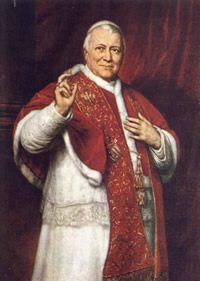
Again, I would add to this that the great deception and trial are not limited to the final generation of Christians, these confront every age, including our own. This is partly why Pope Pius XI established the feast of Christ the King in 1925, which you will celebrate in a special way next Sunday.  Christ is our king, and His is our Way.  We will not accept pretenders to the thrown, for only by Christ’s reign will we be saved.

He, the Lord, is our inheritance!
He will show us the path to life,
the fullness of joys in His presence,
the delights at His right hand forever,
now, here at the sacrifice of the Mass
and later, forever in heaven.
32nd Sunday in Ordinary Time—Year B

November 9, 2009

Widow's Mite

Imagine if you took two pennies and put them into a savings account, at 1.5 percent interest annually, and left it there for 2000 years. How much money would there be at the end? (2 cents, 2000 years, at 1.5% interest.) One hundred dollars?  No, higher.  A thousand dollars?  Still higher.  Ten thousand dollars?   Not even close. There would be one-hundred, seventy-one billion dollars.

[$0.02 * (1.015)^2000 = $171,046,619,000]

First of all, this reveals to us the power and the fury of compound interest.  But second, and relevant to today’s gospel, this shows us that small things can be more powerful and valuable than we would expect.

One day, almost two thousand years ago, a poor widow climbed the temple mount in Jerusalem and walked among the crowds in the temple courts to the treasury where she gave two small coins for the support of the temple.  Many rich people where there, were pouring much larger gifts into the treasury with great fanfare. Though her gift was tiny compared to theirs, that doesn’t mean that what she did was an easy thing to do. Being poor, it was hard for her, a real sacrifice.  She had to trust in the God of Israel; the God said to provide for the needs of orphans and widows like her. She could have dropped in just one coin, or given nothing at all, but she gave both coins, everything she had. She wasn’t trying to be seen, but the Lord was watching.

Jesus, sitting across from the treasury, called His disciples to Himself to draw their attention to her. “Look at what this poor widow has done.  Take this, all of you, as an image of myself.  Just as she has given everything as a gift of herself to God (even though it was hard and took great trust) so will I give myself up for you.”

The poor widow’s two coins, worth just a few cents, landed in the treasury with a quiet “tink, tink,” but her act has echoed through the centuries. Everywhere this gospel has been preached, the throughout the centuries and around the world, what she did has been remembered.  How many consciences have been pricked and how many hearts have been inspired to invest more completely into the kingdom of God? If the good her small deed has done throughout the ages could be quantified, it would far surpass one hundred, seventy-one billion dollars.

When we rise from the dead, at the general resurrection, I suspect that this poor widow will stand out.  She will be more glorious and enchantingly beautiful than most, and (even though the gospel does not give her name) everyone will know who see is and she will enjoy the love and gratitude of vast multitudes.

When we die, we will all die penniless, and when we rise we will all rise penniless, but some of us will be richer than others. The richest in heaven are those who receive and can give the greatest love, and this will depend upon how much we have invested ourselves into the kingdom of heaven.

You are already giving to your spouses and your children, your friends and your family, at home, at work, and at church, but we should ask ourselves from time to time how much we are giving from our surplus wealth and how much was are making a total gift of ourselves.  Such giving is hard, it takes trust in God, and it conforms us to Jesus Christ. When we give ourselves in this way, in the likeness of Jesus Christ, our gifts yields the greatest returns, here on earth and forever in heaven.

Now you have heard me put in my two cents.  I pray that it may result in great profit for your souls.

29th Sunday in Ordinary Time—Year B

October 18, 2009

The Three Crosses by Rembrandt. 1653

Today, the Apostles James and John make their big pitch in order to move up the ladder in Jesus’ organization. “[Jesus,] grant that in your glory we may sit, one at your right, and the other at your left.” Jesus says to them, “You do not know what you are asking.”

They jump at the chance to drink of Jesus’ cup and to be baptized in His baptism, whatever that means, because they have no idea that these are allusions to Christ’s suffering. Jesus tells them, ‘You will drink my cup and experience my baptism, but to sit at my right and my left is for those for whom it has been prepared.’ Where are the seats beside Christ in His glory?  The Gospel of Mark later tells us: “With [Jesus] they crucified two revolutionaries, one on his right and one on his left.” Indeed, James and John don’t know what they’re really asking.

They want spots beside Jesus’ throne because they think this will put their lives on Easy Street. They think that being enthroned at Christ’s side in glory means they will be served by everyone, and that they will never have to serve anyone else, ever again, besides Jesus of course. James and John want to live like as princes, like the billionaires, the bosses, and the big shots in the world. But true greatness is very different.

Whoever wishes to be great, Jesus says, must be a servant.  And whoever wishes to be the greatest of all, must be the servant to everyone. But we might ask why anyone would want this sort of greatness? Who wants to be a slave or to be crucified with Christ? And yet, Jesus offers such self-offering as the only greatness truly worth seeking? Why? Because true love equals self-gift, and in heaven love lasts forever.

In the world out there, there is a hierarchy according to wealth and power. For the Church on earth, Christ establishes a hierarchy according to orders. But for the Church in heaven, the hierarchy is established according to love. There is no money to be had in heaven. Greatness there is measured according to the love you can give and the love you receive from others.

Consider, who is more beloved on earth, Blessed Mother Teresa or the richest person in the world? And who is more likely to have a higher place in heaven? When Mother Teresa died a million people turned out for her funeral. She, like all the saints, is rich in love.

If you desire true and lasting greatness, imitate Christ on earth, who became a slave for us. Jesus did not come to be served but to serve. And through His trials and self-sacrifice, He offered his life as a ransom for us and won our hearts for Himself.

Though it is worthwhile, it isn’t easy to follow Christ. If we serve Him, we should expect temptations, trials and sufferings, too, just like Him.  Trials are normal for the Christian life and we should expect them.

As Saint Peter writes, “Beloved, do not be surprised that a trial by fire is occurring among you, as if something strange were happening to you. But rejoice to the extent that you share in the sufferings of Christ, so that when his glory is revealed you may also rejoice exultantly. If you are insulted for the name of Christ, blessed are you, for the Spirit of glory and of God rests upon you.”

Temptations are normal for the Christian life, too.  Jesus Himself was tempted in the desert and in the garden. As the second reading says, “…We do not have a high priest who is unable to sympathize with our weaknesses, but one who has similarly been tested in every way, yet without sin.” Understand and remember that human weakness and temptations are not the same thing as sin. It is not a sin to be tempted. Jesus was weak and tempted like us, but he never sinned. We only sin when we give in to temptation, when heart says “yes” to them.

Catherine of Siena by Giovanni[1]

Believe it or not, the saints know more about fierce temptation than unrepentant sinners do. The saints do battle against strong temptations, with the sacraments and prayer, with penance and self-disciple.  Many hardened sinners, on the other hand, don’t even know they are being tempted. One time, St. Catherine of Sienna, after she had made great progress in holiness, was subjected to the most violent temptations. Impure images filled her imagination and darkness attacked her heart. She called on God but He seemed to be absent. After these temptations had ceased, Jesus visited her, filling her with heavenly consolation. “Ah, my Divine Spouse,” she cried out, “where were you when I laid in such an abandoned and frightful condition?” “I was in your heart,” he replied, “fortifying you by grace.” “What, in the midst of the filthy abominations with which my soul was filled?” “Yes,” Jesus said, “for these temptations were most displeasing and painful to you. By fighting against them, you have gained immense merit, and the victory was because of my presence.”

When Jesus asked James and John if they could drink His cup and be baptized in His baptism, they eagerly responded, “We can!” Did they entirely know what this meant? No. Do we entirely know what it will mean for us to give our yes to Christ and to follow in His footsteps? No.  But with that little seed from James and John, Jesus was able to grow them into great saints.

Jesus Christ is the greatest person who has ever lived.  No one has been greater and no one has done greater things.  No one has loved better and no one is better loved. Let’s follow in his footsteps, even if that means the cross, for to be remade in His image means sharing in His greatness, His glory and His joy.

Thursday, 27th Week in Ordinary Time—Year I

October 8, 2009

In the illustration used by Jesus in the Gospel, a person goes to their neighbor’s house and calls inside for a needed favor. The father inside is not immediately obliging. The door’s locked and his sons and daughters are already at rest. But Jesus says, ‘…If the father does not get up… because of their friendship, he will get up to give him whatever he needs because of the person’s persistence.’

Why will the father end up doing the favor in the end? Because of the father’s children. Imagine all the kids in there, in the dark and in their beds, with the neighbor at the door, knocking: *pounding* “Daaad.” *more pounding* “Dad, do whatever they want!”

The father in this story stands for our Father in heaven, who can sometimes seem reluctant in answering our prayers. The children in the story are the saints in heaven, the sons and daughters who rest in the Father’s house. 

What is it like for the souls in heaven to hear our prayers? Perhaps the experience St. Faustina of the Divine Mercy on earth gives us a glimpse into the experience of the saints in heaven. In the Diary of St. Faustina, a book which I highly recommend for spiritual reading, the Polish nun records this:St. Faustina of the Divine Mercy

“It has happened to me for some time now that I immediately sense in my soul when someone is praying for me; and I likewise sense it in my soul when some soul asks me for prayer, even though they do not speak to me about it. The feeling is one of certain disquiet, as if someone were calling me; and when I pray I obtain peace.”

This reaction makes perfect sense, for how could a good person hear of another’s heartfelt needs and not insist that our Father act? Or how could a saint remain at rest while someone knocks at the door of heaven? Knowing this, how then should we pray? Imagine what doors would open for us, if only we would persist in knocking? Or imagine what gifts would we receive, if only we would try asking? So knock, and ask, boldly.

27th Sunday in Ordinary Time—Year B

October 4, 2009

At my old seminary in Ohio, where I was formed for the priesthood, there’s a great professor named Dr. Perry Cahall. Dr. Cahall taught us not only through his lectures but also by his personal example, as a husband, a father, and a good Catholic man. One of the courses taught us was early Church history, a class that covered the controversies and councils of that era about Jesus Christ and the Trinity. Now a person might easily overlook the importance of those councils, but Dr. Cahall presented us with a revealing thought experiment. He would have us imagine how things would be different if the heretics had won the day. For example, he would say, “Imagine a world in which Arius was right.” (Arius claimed in the 4th century that Jesus was neither God nor man, but rather the highest creature God had made.) What if the bishops at the council of Nicaea would have spurned the Holy Spirit, and the apostolic tradition, to make Arius’ theology the creed we say each Sunday? When you sit down to consider the consequences Arius’ belief would have for our morality, our worship, and our world, you realize that everything was at stake at Council of Nicaea. 

Important ideas have consequences. If some Christian belief does not influence your life, then you have either not accepted it, or you have not really grasped what it means. Dr. Cahall liked to say, “If you get into pulpit as a priest on Trinity Sunday and preach to your people that, ‘The Trinity is a mystery, so there’s really nothing we can say about it,’ I will hunt you down like the dogs you are. (We think he was kidding.) He said this because the Trinity and Incarnation are the two most central beliefs of our faith and they are full of implications for our lives. Important ideas have important consequences and our beliefs should shape our lives.

Dr. Cahall also taught our seminary course on marriage and family, and he had a meditation about marriage, family, and the Last Judgment that I hope to never forget and always remember. He would say, “At the Last Judgment, every person who has reached adulthood will stand before the Lord’s throne and Christ will ask them two things: First, ‘Were you faithful to your spouse?’ And second, ‘Show me your children.’” Now he said this to a room full of seminarians on their way to becoming celibate priests, but what he said is valid for everyone. We are all called to marriage, be it spiritual or natural. And we are all called to be mothers or fathers, either spiritually or naturally.

The Lord God said, “It is not good for the man to be alone. That is why a man… clings to his wife, and the two of them become one flesh.”

The fulfillment of our humanity is achieved, in Christ, through marriage and having children. Priests and religious who live chaste, celibate lives are no exception. That’s because celibacy is really about fruitful, spousal relationship, to one spouse, bearing many children. It is not without meaning that tradition calls nuns and consecrated virgins the “brides of Christ,” for they really are. All people are called to marriage; to fidelity in marriage, to permanence in marriage, and to fruitfulness in marriage. This is our Christian belief, but many people today have either not accepted it, or not really grasped what it means.

Consider the meaning of fruitfulness for marriage. The psalmist today considered having a large family to be a blessing (‘may your children be like olive plants around your table’) and Jesus said, “Let the children come to me and do not prevent them.” But many people today act as if having more than two children were a curse, and prevent more children from coming. Now there can be serious and legitimate reasons for naturally regulating and limiting births, but I fear that many people, when it comes down to it, are resisting Christ. Jesus said, “Whoever receives a child such as this in my name receives me.” So what does it mean if someone refuses to receive a child in His name?

Couples are afraid; they’re afraid that having four children will be twice as hard as having two.  But if you ask most Catholic couples with large families (with numbers of kids that were commonplace fifty years ago) they’ll say that the burden is less with each additional child, while the love and blessings within the family are multiplied. We should not be afraid to give ourselves fully to fruitfulness in marriage.

We are also called to permanence in marriage. Marriage in Christ is “until death do us part.” But in America today, one in every two marriages end in divorce. God says in the Old Testament, “I hate divorce,” and I suspect that the children of divorced parents share in His sentiment. Cases of abuse, serious addition, or unrepentant infidelity may require a couple’s separation, perhaps indefinitely, or may even require a divorce in the eyes of the state, but a consummated sacramental marriage can never be divorced in God’s eyes. As Jesus said:

“What God has joined together, no human being must separate. Whoever divorces his wife and marries another commits adultery against her; and if she divorces her husband and marries another, she commits adultery.”

That is why a divorced person cannot be remarried in the Church without a determination by the Church that something essential was lacking in the first marriage, from its very beginning, which prevented that marriage from being sacramental. So no one should say that annulments are “Catholic divorces.”  Annulments are judgments by the Church that a marriage was never sacramental. But in a valid, sacramental marriage, the mission of the husband and wife is to lead each other to heaven, no matter what, and to raise up children, natural or spiritual, for God.

If you want you children to feel safe and secure, tell them what my parents told me and my sisters when we were kids. Tell them, “Even, though Mom and Dad may argue sometimes, we want you to know that we will never, ever, get divorced.” Tell them this, and mean it.  They’ll really appreciate it. And I’m sure your spouse would like hearing you say it, too.

Most people would still agree that a married couple should be faithful to each other, exclusively.  But I would not be surprised if we began to see the open dismantling of this third pillar of marriage as well. The institution of marriage has been under assault for many years. It’s not that people have been out to destroy marriage per se; but steps to redefine what marriage means weaken marriage all the same.

Now a person might easily overlook the importance that traditional beliefs about marriage have for our society; but, like Arius’ heresy, when you sit down to consider the consequences of negating fruitfulness, permanence, and fidelity in marriage, then you realize that everything is at stake when it comes to marriage. You can’t remove or seriously weaken all the pillars from a house and expect the roof to remain hovering in the air. When we redefine marriage to mean what it is not, the house we live in comes crashing down upon us. That goes for one marriage or an entire society’s marriages.

So what are we to do? First, we must pray. Pray for your marriage. Pray together as a couple, because you need this. Pray together with your children, because they need this. And pray for our country, because it needs this. And then, empowered through your sacrament of marriage, which makes the love between Christ and His Church really present between the two of you, live out what Christian marriage really is as an example for all to see. Be fruitful, be faithful, be loving and joyful, as long as you both shall live.

Tuesday, 25th Week in Ordinary Time—Year I

September 22, 2009

I rejoiced because they said to me,
“We will go up to the house of the LORD.”
And now we have set foot
within your gates, O Jerusalem.

The Jews would joyfully sing these words as they came into Jerusalem, to worship the Lord in His temple. They understood why they should lift up their hearts and give Him their thanks and praise. The Lord was always with them, but He was most especially with them at the temple. It should be the same for us today, whenever we come to Mass. Jesus Christ is always with us, but He is most fully with us at the Mass.

What if your guardian angel appeared to you and carried you through space and time, and gave you a place at the table of the Last Supper? How closely would you listen to Jesus’ every word and prayer?

What if your angel then brought you to the foot of the cross, to witness Jesus’ sacrifice for you? How faithfully would you attend to Him there?

What if your angel then brought you into heaven, among all the saints and angels, into the presence of the Father, Son, and Holy Spirit? What would you feel? How would you pray?

The truth is that you can encounter the Last Supper, the cross, and heaven at every Mass. The power of Christ brings these realities, through space and time, to you. Jesus’ one sacrifice is really made present to us and we join in the combined worship of heaven with earth.

Granted, all of this is not undeniably-obvious, These realities are veiled to our senses, but encountered through our faith. Just because something is unseen, doesn’t mean that it’s not real. If we never had radios how easily would you believe in radio waves? They’re invisible, intangible, and span time and space, but they’re real indeed, and you can experience them if you are tuned-in to receiving them. How can you be tuned-in at Mass? I offer four suggestions:

First, before Mass, pray for the grace to worship well. I fear that often we do not receive because we never ask.

Second, bring a personal intention to every Mass; that is, a person or a cause that you want Christ to grace through His one sacrifice today. For example, my intention for this Mass is for the Marshfield Area Catholic Schools. Always bring an intention to Mass, because the Mass has more power in the world than we realize.

Third, pray with your whole voice, your whole mind, and your whole heart. Just because you are not always speaking during Mass, doesn’t mean one should ever stop praying. As you hear me pray the Eucharistic prayers make them your own. And when you sing, sing as if you were singing for the Lord, because you really are.

Fourth and finally, direct your eyes, your body, and your thoughts toward the one to whom you are speaking. Most of the prayers of the Mass are directed to our Father in heaven, though some are directed to Jesus Christ. Know the one to whom you are speaking to, and follow through with your eyes and your body accordingly.

As we saw in the Gospel, merely showing up at the house where Jesus is, isn’t enough for a person to achieve the greatest intimacy with Him. Likewise, merely showing up at the Mass where Jesus is, isn’t enough for a person to achieve the greatest intimacy with Him. Those who hear the word of God and act on it in faith and worship, they become the closest to Christ. So let us go rejoicing, to encounter Christ at the Last Supper, at the cross, and in heaven, at this Mass, in the house of the Lord.

23rd Sunday in Ordinary Time—Year B

September 6, 2009

Remember what it was like before the dot-com bubble burst? Maybe you heard about tiny internet start-ups having total stock values in the billions and you just knew that that wouldn’t last. Remember the time before the recent housing bubble popped? I remember watching a show on TV called “Flip this House” in which a couple bought a building, put two weeks of work and a few thousand dollars into cleaning it up, and then quickly sold it for several tens of thousands of dollars more than what they bought it. I remember saying to myself then, “This just can’t go on. This isn’t sustainable.”

The thing about economic bubbles is that while you can often read the signs of the times and see that the bubble’s there, you’re never quite sure when it will pop.

For years now, our country has been riding on a similar bubble with the unsustainable spending and borrowing by the federal government. We’re not quite sure when it will finally pop, but you can see that the bubble’s there.  Most of us here will witness firsthand the consequences of its bursting.

The Congressional Budget Office is a non-partisan, independent government agency that provides economic data to Congress. And for years, regardless of whether the Democrats or Republicans were in power, the CBO has consistently reported the unfortunate facts and grim forecasts of our present course. This summer, the CBO published its “Long-Term Budget Outlook.” And they tell us, quote…

“Under current law, the federal budget is on an unsustainable path—meaning that federal debt will continue to grow much faster than the economy over the long run.

Although great uncertainty surrounds longterm fiscal projections, rising costs for health care and the aging of the U.S. population will cause federal spending to increase rapidly under any plausible scenario for current law. […]

Keeping deficits and debt from reaching levels that would cause substantial harm to the economy would require increasing revenues significantly…, decreasing projected spending sharply, or some combination of the two.”

Some or all of the following things will inevitably happen: an increased federal retirement age, decreased retirement benefits from Social Security, decreased health benefits from Medicare and/or Medicaid, increased federal taxes, or (and this seems the most likely) a dramatically increased national debt.

Now understand that an endlessly ballooning national debt is no solution.  It has economic consequences for us. What happens when foreign countries finally decide they are no longer interested in holding any more of our debt (in the form of low-interest yielding U.S. government bonds?) One result will be hyper-inflation, which will negatively impact anyone who uses U.S. Dollars. Unpleasant changes are coming. And they will have real consequences our lives. We will feel their effects.

Maybe hearing me speak about these grim realities feels as if I’ve just spit on your tongue.  It’s unpleasant and a bit repulsive. But my hope and prayer is that you will “be opened” by it, that you will be motivated to prepare yourself for what is coming, to begin living now as we should have already been living as Chrisitians all along.

In the past we have lived beyond our means, just like crowd, just like the government made in our own image. We spent more than we had and we often spent wastefully. But we are called to live differently, to live out Christian stewardship, Christian poverty, or simplicity of life in our own lives. Let’s not wait to hit economic rock bottom before we begin living as we ought to.

We are called to live simply and within our means, free from debt-slavery. We are called to be both frugal and generous, generous and frugal. If we are frugal without generosity, we’re simply being misers. If we are generous without frugality, we are being irresponsible. But if you are both frugal and generous won’t God, who (as the psalmist says) keeps faith forever, who secures justice for the oppressed, who gives food to the hungry, who supports the fatherless and the widow, won’t He provide you with what you need? On the other hand, if we are not frugal and generous, if we do not lovingly support our poor neighbors, those in our parish, throughout the diocese, and abroad, then how can we ask God to support us?

To quote St. James, “Act on this word.  If all you do is listen to it, you are deceiving yourselves.” “Fear not, be strong.” “Be not afraid,” but prepare yourself. Prepare for the days when our accounts will come due.  For a day coming soon in our country, and for the Last Day, when we shall all appear before God.

Monday, 22nd Week in Ordinary Time—Year I

August 31, 2009

Why does Saint Paul say that the dead are “fallen asleep?” Are we to think of the dead as unaware and unconscious until the general resurrection? No. We believe that all the saints in heaven are actively alive in Christ.

As the dying St. Dominic said to his religious brothers, “Do not weep, for I shall be more useful to you after my death and I shall help you then more effectively than during my life.” And as St. Therese of Lisieux said in her last conversations, “I want to spend my heaven in doing good on earth.”

The saints continue to cooperate in Christ’s messianic work. The Spirit of the Lord is with the saints, He has anointed them, to bring gifts to the poor, liberty to captives, sight to the blind, freedom to the oppressed, and to make times and seasons acceptable to the Lord.

Though death is not unconsciousness, going to sleep is a fitting image for it. The deceased Christian arrives home from a long-road’s journey. After blisters, sunburns, and dehydration are attended to, not to mention a needed bath (I speak of the business of purgatory), dying begins the Christian traveler’s transition to a lasting, comfortable rest.

Those who have arrived at this home before of us are not cut off from those of us who are still journeying there. As Lumen Gentium and the Catechism says, “the union of the wayfarers with the brethren who sleep in the peace of Christ is in no way interrupted, but on the contrary, according to the constant faith of the Church, this union is reinforced by an exchange of spiritual goods.”

So today, why not ask your favorite saints to provide you with something special for this day’s journey? I suspect that they’re here, waiting, eagerly listening, for us simply to ask for something good.

Tuesday, 21st Week in Ordinary Time—Year I

August 25, 2009

Jesus said,

“Woe to you, scribes and Pharisees, you hypocrites. You pay tithes of mint and dill and cumin, and have neglected the weightier things of the law: judgment and mercy and fidelity. (But) these you should have done, without neglecting the others.”

The Mosaic Law commanded that one tenth of the produce of the land, of the new animals and the harvest, to be given (or tithed) to the priests and the temple. The scribal tradition had apparently extended this law to even the smallest herbs.

Jesus is not criticizing tithing, but rather the focusing on little externals for others to see, rather than on the important things. He is criticizing the practice religion with more interest in appearing holy than in actually and thoroughly being holy.

Have you ever been quietly praying, realized that someone might be seeing you, and then toned down your outward signs of piety? Maybe you wished that you could be invisible, so that nobody could see you, so that you could keep praying as before. We try not to look too holy. It’s good to be humble, and to not be a distraction to another’s prayer, and not to be after the empty praise of men, but how much of our experience, of subduing our outward signs of devotion, is actually really due to fear?

The Pharisees were concerned about other people seeing their acts of devotion so that others would think better of them. But I think our problem is different; we don’t want people to see our devotion, so they won’t think worse of us.

In Jesus’ setting, religious dedication was likely to be admired. Seeing the Pharisees carefully measure out their gifts at the temple an observer might say, “Wow, he even tithes his herbs and spices!  What a righteous son of Abraham!” But in our culture, the opposite of admiration, or contempt, often comes from Christian devotion.  “I heard that he and his wife give 10% to their church every year! Talk about brainwashed, religious kooks!”

If Jesus’ time was disposed to the fault of showy religiosity, ours seems inclined to religious timidity, or cowardice. Consider, how often does the name of Jesus, or the mention of God, leave our lips when we’re outside of Church? Do we pray at home before meals? Good! But what about when we go out to eat at restaurants?

I don’t think that most of us here are in danger of the Pharisees’ sin, of flaunting our piety before others, so much as we are in danger of being ashamed of Christ before men. As Jesus says, “Whoever is ashamed of me and of my words, the Son of Man will be ashamed of when he comes in his glory and in the glory of the Father and of the holy angels.”

We should pray when we eat out at restaurants, just like we do at home. And we would all benefit from more frequent, thoughtful conversations about God and Jesus in our lives. And perhaps, instead of wishing that no one else would see you when you pray, maybe next time we should pray as if we didn’t know that there were people around us at all.

These are just little things, little acts of fidelity, but fidelity is one of the weightier things of the Law.

5th Sunday of Easter—Year B

August 23, 2009

This Sunday our country celebrates our mothers—and rightly so.  For the care and love which our mothers have given us cannot be measured or given a price.  Of course, our earthly parents are not perfect. Sometimes they’re quite far from perfect.  But any love we’ve known from them is a likeness of the love God has for us. A religious icon is made of mere wood and paint, but it can be a window to heavenly realities. In the same way, we can see through our parents’ love a glimpse to God himself.

Most of us have more memories about our mothers than we could possibly count, but today I would like to go with you back to a time and place about which you have no clear memories—to the time in your mother’s womb. Just as the Hebrews were 40 years in the desert; just as Jesus prepared 40 days in the wilderness; and just as Christ rested 40 hours until his resurrection from the tomb; so you remained 40 weeks, more or less, within your mother’s womb, being prepared for a new life.

Through your mother’s vine you grew into the mature fruit of her womb. You were nourished and grew within her. You were never far from her heart or mind. You existed in within her, connected to her at the center of your being.      She fed you with her very self. She provided for all your needs. Apart from her, you could do nothing. You remained in her and found rest in her.

At the early stages of our life in the womb, our minds did not comprehend very much, but what if you could have understood everything that your mom was doing for you at the time? Certainly you would have directed your thoughts to her often.  And certainly, from time to time, you would have turned to her with the eyes of your heart to bask in her love for you.

And imagine further what if you could have talked with your mom from the womb? Would you not have taken the opportunity to speak with her every day? Would you not have thanked her daily out of a deep gratitude? Would you not have let her know each day how much you love her? Whoever would refuse or neglect to do so would continue to live, at least functionally or biologically, but the person would not be fully alive without this relationship .

As you and your mother would continue to talk as the days and months of pregnancy passed, she would eventually present you with a most-frightening prospect: She might say, “My child, soon, in a little while, you are going to begin an new stage of life. You will be departing from the life you know, and then you’ll experience a world of people and things you have never known before.” But you would say, “I’m scared, I don’t want to go, not now, not ever!” But she would say, “I realize this concept is scary for you, but trust me when I say that it is better that you go. In fact, someday soon you’ll look back and think it a silly thought to be again as you are now. This transition is going to hurt a little bit… trust me, I know… but when the appointed time comes, I’ll be right here with you. Do not be afraid.”

This morning we reflect on this time in the womb because our life in our mothers is like our life in Christ. As it was with our mothers, so it is, in this life, with Christ. You are nourished and grow within Him. You are never far from His heart or mind. You exist in within Him, connected to Him at the center of your being. He feeds you with His very self. He provides for all your needs. Apart from Him, you can do nothing. You remain in Him and find rest in Him.

Knowing and believing this, shouldn’t we direct our thoughts to Him often? Shouldn’t we, from time to time, turn to Him with the eyes of our hearts to bask in His love for us.

We have the ability to talk with Jesus Christ. Who would not take the opportunity to speak with Him every day? Who would not thank Him daily out of deepest gratitude? And who would not let Him know each day how much we love Him? Whoever would refuse or neglect to talk with Him, that is to pray, would continue to live, at least functionally or biologically, but the person would not be fully alive without this relationship with Jesus Christ. We need to pray every day if we want to remain in Him and to bear much fruit.

None of us want to die and that’s perfectly natural. But Jesus says to us, “Soon, in a little while, you are going to begin a new stage of life. You will be departing from the life you know, and then you’ll experience a world of people and things you have never known before. I realize this concept is scary for you, but trust me when I say that it is better that you go. In fact, someday soon you’ll look back and think it a silly thought to be as you are now again. This transition is going to hurt a little bit… trust me, I know… but when the appointed time comes, I’ll be right there with you. Be not afraid.”

Today, let us thank God for the gift of our mothers and the gift of Jesus Christ.  God bless our mothers, and praised be Jesus Christ.

Funeral for Robert J. Wallig, 89

August 18, 2009

In late 1942, at the young age of twenty-two, Robert Wallig went off to war. He bravely answered his call and helped in winning the Second World War. He served as an army medic, in the European theater, earning a Bronze Star. Bob was going to go on to become a medic after the war, but the coming of the first of his five beloved children and changed his and Donna’s plans. I am told that Robert never liked to talk very much about his wartime abroad—which is a strong indication that he witnessed and experienced some very difficult things back then.

There are not many World War II veterans still around, but I tell you, there is still a world war being fought today, and you and I are in its combat theater. I am not speaking so much about the War on Terror or any other particular war between peoples or nations.  Such wars among flesh and blood are just the manifestations of a broader, less visible war.  The World War I’m speaking of is a spiritual war being waged between Christ and the principalities and powers who oppose Him.  We cannot see this spiritual conflict directly, but we can see in our world the consequences of its victories and losses.  We can feel and recognize its skirmishes being fought inside of us.  The battle is for our souls. This is why the Church here on earth is called the Church militant, and why St. Paul so often uses military language—because we are in a war.

 Our demonic adversaries in this campaign are more evil than the Nazis and manipulated by a leader far more dark than Hitler. Yet we should not be afraid.

For “What will separate us from the love of Christ? Will anguish, or distress, or persecution, or famine, or nakedness, or peril, or the sword? No, in all these things we conquer overwhelmingly through him who loved us. For I am convinced that neither death, nor life, nor angels, nor principalities, nor present things, nor future things, nor powers, nor height, nor depth, nor any other creature will be able to separate us from the love of God in Christ Jesus our Lord.”

Fear is the only real weapon our enemy has. Their strategy is to make us mistrust our Lord and to choose another, renegade path of our own, to divide us, apart from God and apart from one another. But we fight together as a band of brothers on the side of Christ, who has already won the greater part of the battle. Jesus says, “Do not let your hearts be troubled.” The only way a Christian can be lost in this war is through surrendering to the enemy.

Occasionally, we may be wounded by sin during this cosmic battle, but these wounds can be healed, through the sacraments which Christ, our field medic, has provided for our care. Yet even after the gapping wounds of our sins are closed through the sacraments, scars can often still remain; scars of fear, guilt, sadness, bitterness, resentment, regret, and the like. After we have fought the good fight by the grace, and are honorably discharged from this life, such scars can still remain an can delay our entry into the Church triumphant in heaven; where the saints now fully enjoy their victory won. Instead, our scars may keep us just outside heaven, in what is called the Church suffering, or rather, the Church healing, for the path to our healing can be painful. This is a place of hope called purgatory, where souls are being healed, completed and made perfect for heaven.

Like the general of Israel, Judas Maccabeus, whom  we heard about of in the first reading, let us offer sacrifice and prayers for our fallen brother.  Our prayers, united to the one and perfect sacrifice of Jesus Christ, which we really encounter here at the Mass, can help to heal Robert of any and all of the scars he might have.

I’m sure that all of you know Robert far better than I, you know what sort of man he is, and from what I have been told that is very good, so you have the well-founded hope that he is well on his way in Christ. But I ask of you, a favor for him, the same favor that I would ask for myself if it were possible for me to preach at my own funeral:  to please pray for him. It can only do him good, and perhaps very great deal of good.

In the decades after the war, Robert did many, many things. Among these, Robert worked as a custodian for one of God’s own homes, a church in Kenosha.  He also worked as a manager for others’ residences, including apartments here in Marshfield. He repaired the boilers, emptied the trash, painted the walls, cleaned what was dirty, and did whatever else was necessary for the place to be ready and just right. Jesus tells us, in our Father’s house there are many dwelling places. Christ has been at work, busy preparing a perfect place for Robert. So let us help Robert to get moved in, and to become completely settled, in this new home.

August 8 – St. John Marie Vianney

August 17, 2009

For many years, around 300 people would travel by train each day to a small town of 230 people. Why did they come? They came because they sought the mercy and counsel of Christ in the confessional of John Marie Vianney. Why did Father John 12 to 17 hours a day sitting in his confessional? He was there because he believed that this sacrament was that important.

Today we often hear people say, “Why do I have to confess my sins to a priest when I can just pray to God directly? It’s like the complaint of Aaron and Miriam in the first reading,  “Is it though Moses alone that the Lord speaks?”

Jesus, in the upper room, breathed on his apostles and said to them, “Receive the holy Spirit.  Whose sins you forgive are forgiven them, and whose sins you retain are retained.” Did Jesus give them this authority and power for no purpose at all?

Jesus gave us the sacrament of reconciliation because we need it. Confession prevents my sins from just being between me and myself. It prevents me from making mountains into molehills, and molehills into mountains. It allows me to know with absolute confidence that this sin of mine is forgiven forever. When we go to confession we acknowledge the Incarnation, that Christ redeemed us in His flesh, not merely by composing a prayer to the Father.

If you are too shy to admit your sins to a priest, who won’t know who you are, and couldn’t tell another soul even if he did, then what makes you think you will have the poise to stand face to face with Christ at the judgment?

When Miriam and Aaron sinned, they turned for mercy to the Lord’s servant, Moses, and their sin was healed. If you have neglected confession, please come. There is mercy, peace, and God’s help awaiting you.

If you already go to confession with some frequency, then please offer a penance today for the conversion of sinners. St. John Vianney did penances for conversions because he was convinced that it made a difference.

In the Gospel we heard that every sick person who came and touched Jesus’ cloak was healed, but those sick people first had to be brought to Jesus. Help carry them.