Archive for the ‘O.T. Figures’ Category

Born Under the Law — Tuesday, 15th Week in Ordinary Time—Year I

July 12, 2011

The story of Moses prefigures the life and works of Jesus Christ. St. Paul tells the Galatian Christians, “[We,] when we were not of age, were enslaved to the elemental powers of the world. But when the fullness of time had come, God sent his Son, born of a woman, born under the law, to ransom those under the law, so that we might receive adoption.”

The elemental powers St. Paul speaks of are the devil and the demons who powerfully and harmfully influence the world. Pharaoh and his evil reign image Satan, the demons, and their works. The children of Israel strained under the law and it brought them death. But, when the fullness of time had come, God sent a child, born of a woman, born under that law. That child, who would image person and works of Jesus, was Moses.

As long as he remained a quiet, sleepy newborn, the mother of Moses could hide him, but after three months her son began to loudly and frequently cry. With a pain that pierced her to the heart, she laid her son in the waters of death, hoping against hope, that she would receive him back safe. And, like Mary the mother of Jesus, God miraculously brought her son came back to her alive and safe. For what purpose was Moses was born under the law?—to ransom those under the law, so that they might receive God’s adoption. The Hebrews were known as the children of Israel, but they were to become the people of God.

Moses was destined to lead them, but in his youth, he was still unready. (His actions towards the Egyptian taskmaster make this clear. The one who would lead the people into the Promised Land, the one who would prefigure the Christ, could not to have an undisciplined and violent character.) After decades in a hidden life of preparation, Moses confronted Pharaoh and brought out the Israelites, not by force of arms, but by God’s power.

Moses led them into a new covenant relationship with God, who declared to them, “I will be your God, and you will be my people.” Through Moses, the Israelites were made God’s people. Through Jesus Christ, we are made God’s children. Let us recognize, that as much as Jesus is greater Moses, so the gift of the New Covenant is greater than the Old. As amazing as mighty deeds and graces of God were in the age of Moses, remember that these are all greater in the age of Jesus Christ.

Teachings Hardly Heard — 15th Sunday in Ordinary Time—Year A

July 10, 2011

Like the rains that come down from heaven to water the earth, so we are called to live lives of self-gift, fruitfulness, and peace. Jesus comes down from heaven to give us life, to free us from futility and slavery to corruption. But sometimes when Jesus preaches, people hear without understanding and the evil one steals away the seed of truth He sows. For others, worldly fear and the attraction of riches prevent Jesus’ word from bearing fruit. But when His word lands on a person of openness and discernment, it bears a great fruitfulness for that person and others.

What are teachings that we as Catholics have tended to hear but not understand, to glace at but never really examine. What are the teachings of Jesus Christ’s Church which we hardly hear with our ears and toward which we are most tempted to close our eyes? These are the issues about which clergy are most hesitant to preach. Nevertheless, Jesus wills that we hear these things with our ears, understand them with our hearts, and be converted, that He may heal us. Please pray now, for the grace of the Holy Spirit, that your heart may receptive to His word.

One area about which we hardly hear with our ears is the harm in sensual or romantic fantasizes.

For men, this temptation tends to be toward indecent images. For women, it tends towards things like romance novels. With these things, a person looks at another, or imagines being with another, without ever touching them, but that does not make sensual or romantic fantasies o.k. or harmless. Recall how Jesus said, “Everyone who looks at a woman with lust has already committed adultery with her in his heart.”

What is the harm in these things? Real love is only found and shared in the real world. Sensual or romantic escapism leaves behind those we are called to love. Compared to these fantasies, no real man or woman, no wife or husband, can possibly measure up. These fantasies can be addictive and they change the way we look at and relate to others in daily life.

If books, magazines, or movies tempt you in this way, throw them out. If the internet is the gateway to fantasy, place near the monitor a picture of someone you love. Commit yourself to loving the real people in your life, for that is the only place where real love is found.

Another topic about which we hardly hear is the harm of contraception.

In the beginning, upon creating the first man and woman, “God blessed them, saying: ‘Be fertile and multiply.’”  To unite husband and wife in love, and to bless the world with new human life, God designed the one-flesh marital embrace. God created and wills this embrace for life as well as love. Contraception, however, separates life from love, to the harm of both.  This must not be done for as Jesus said, in the context of marriage, “What God has joined together, no human being must separate.”

Forms of contraception are not new, they’re actually quite ancient. And from the start, the Catholic Church has recognized the wrongness of intentionally contracepted acts. In fact, as late as 1930, all Protestant groups agreed with Catholics on this principle (before they began to splinter off.) If the constant teaching of the Church of Jesus Christ is not persuasive enough, consider the fallout of contraception.

A contracepting couple closes off their marriage, their embrace, to life. Therefore, if they unexpectedly conceive a child, the little one is not felt to be a gift from God but a mistake. Whenever the surprise blessing of a child is considered to be a curse, love for that child is wounded, and even the unspeakable becomes tempting.

Contraception also threatens the love of couples. Pope Paul VI foresaw this danger, as he wrote in Humanae Vitae, “It is also to be feared that the man who grows accustomed to contraceptive methods may forget the reverence due to a woman, and, disregarding her physical and psychological equilibrium, reduce her to being a mere instrument for the satisfaction of his own desires, and no longer as his partner whom he should surround with care and affection.” Contraception separates life and love to the harm of both.

What then does the Church ask couples to do; to have as many children as they physically possibly can? No—For serious physical, psychological, economic, or social reasons, a couple may limit their marital embraces to her cycle’s naturally infertile periods. This is called Natural Family Planning (or NFP) and its methods, when used as directed, are as effective as the pill. But unlike the pill, Natural Family Planning has no unhealthy side-effects, is not an abortifacient, and conforms with God’s will. Practicing NFP is fruitful within marriage, whether God blesses a couple with more children or not.

A third subject about which we do not hear is the harm of fornication, or partaking of the marital embrace without the covenant of marriage.

Body language speaks, and the message of the body in the marital embrace is one of total self-gift. It says, “I joyfully give myself to you, all of me, completely and forever.” Fornication, however, makes this language of the body a lie. Unless a relationship has been sealed, before God and the world, in the bond of marriage, either one of the couple can back out at any time, and the couple knows this. It’s always in the back of their minds. For this reason, these couples tend to repress anger and complaints, avoid facing problems in their relationship, and put off the hard questions about their future together.

The embrace of man and woman naturally forges strong emotional bonds between the couple. In marriage, that’s a good thing, but before a marriage this clouds judgment and can plaster over serious flaws, serious cracks, in a bad relationship, at least for awhile. And what if their embrace conceives a child they don’t think they’re ready for? The woman, to preserve the relationship, may be tempted or coerced toward an unspeakable choice she’ll always regret.

Cohabitating couples can slouch into marriage; sometimes the man doesn’t really choose marriage so much as finally give in to others’ expectations. Then, after their wedding, nothing really seems different from before, and psychologically, the assumptions of their dating relationship carry into the marriage. Once their wedding day (which wasn’t as special for them as it should have been) drifts further away into the past, and marital difficulties inevitably arise, the old idea, the old escape hatch of breaking up and moving out, naturally returns, increasing the risk of divorce.

Fornication and cohabitation expose a person to emotional and spiritual pains, decrease one’s chances of marrying the right person, and increase one’s chances of divorcing in the future. No matter where you are in your dating relationships, Jesus Christ calls you to pre-marital chastity, for true love is found in purity.

A final topic about which we hardly hear is the harmfulness in acting out according to one’s same-sex attractions.

As the Catechism of the Catholic Church notes, “The number of men and women who have deep-seated [tendencies of this kind] is not negligible. This inclination, which is objectively disordered, constitutes for most of them a trial. They must be accepted with respect, compassion, and sensitivity. Every sign of unjust discrimination in their regard should be avoided. These persons are called to fulfill God’s will in their lives and, if they are Christians, to unite to the sacrifice of the Lord’s Cross the difficulties they may encounter from their condition.”

It is important for all of us to remember that a temptation, whatever it is, by itself, is not sin. Unless we go out looking for temptation, we are not responsible for the temptations which our genetics, upbringing, or environment send our way. What important is how we respond to our temptations, whether we give in to them and fall, or if stand strong with God like His saints before us.

As a Christian, and a fellow sinner, it would be wrong for me to look down on anyone. God loves everyone like He loves me. But at the same time, it would not be loving for me as a follower of Jesus Christ to say that acting out on one’s same-sex attractions is o.k. or harmless. The Old and New Testaments and the constant teachings of Christ’s Church are clear.

People of the same sex may be friends, even the dearest of friends with each other, but they’re not meant to be lovers. Man and wife were made each other. Their masculine and feminine differences compliment and complete each other and husbands and wives, as mothers and fathers. This is seen physically, in their marital embrace and in the conception of new life; but also psychologically and spiritually as well, in faithful marriages that last a lifetime. Persons of the same sex do not have this complimentarity and to ignore truth this leads to suffering, for such relationships are unhealthy for one’s body or soul. The tragically higher rates of promiscuity, transmittable diseases and cancers, domestic violence, drug and alcohol abuse, depression, and attempted suicide, point to the brokenness of these lifestyles. (And one notes that these comparatively higher rates are found not only in our country, but also aboard, like in the Netherlands where such relationships are more common and much more socially accepted.) Jesus calls these brothers and sisters of His and ours to a different, better, happier way of life.

Regardless of our temptations, there is hope. Freedom from sin and joyful peace are possible for all of us, by the grace of Jesus Christ the support of one another. For example, Courage international is a Catholic organization which ministers to help those with same-sex attractions live chaste and happy lives. For more information about Courage groups in our area, or about how to enroll in Natural Family Planning classes see me after Mass or give me a call. If you are cohabitating and wish to return to chastity but you don’t know how you as a couple can practically achieve it, talk to me. God has solutions for those who seek His will. May the seeds of Jesus’ teachings find rich soil in your hearts and bear an abundant harvest for you and for others.

Why Twelve Apostles? — Wednesday, 14th Week in Ordinary Time—Year I

July 6, 2011

Yesterday, Jesus said to His followers, “ask the master of the harvest to send out laborers for his harvest.” Today, He summons twelve disciples from the crowd to have a special role and authority among His people. Each is named an “apostle,” a title which is a Greek word, meaning “one who is sent.” Jesus shall send the apostles into the world to be the foundation stones of the Church. Why did Jesus choose twelve Apostles, rather than ten, twenty, or one hundred? I think that reasons are found in the history of God’s people and in the symbolic meaning of numbers.

Yesterday, Jacob wrestled with God and his name was changed Israel. This man, Israel, had twelve sons and through these sons, descended the twelve tribes, the people of Israel. By choosing twelve, Jesus establishes the people of God anew; He constitutes a new Israel. The number twelve is also three times four. Three is the Trinitarian number of God and four is the number of the created world; as in north, south, east and west, or the four corners of the earth. Twelve, the number which is three times four, denotes how the Triune God shall reach out to all nations to form a new people of God, a new family, a New Israel, the Church.

Our Church, its bishops, priests and deacons, like the sons of Israel and the twelve Apostles, frequently prove that they are human, yet our Church is more than just an organization and the ordained are more than just functionaries. Our clergy derive their special role and authority from Jesus Christ and the Apostles, and our Church is intended for all. They are our fathers and the Church is God’s family.

The Age of the Donkey — 14th Sunday in Ordinary Time—Year A

July 4, 2011


Jesus tells us in today’s gospel, “All things have been handed over to me by my Father.” But if that is so, why do so many things in the world seem so out of hand? We see that many things are sinful, broken, and not as they should be. Zechariah foretold that the true king would proclaim establish peace among the nations. Yet, this Fourth of July weekend sees our country fighting in at least two wars abroad. If we take our faith seriously, and think seriously about our faith, we’re led to ask, “Where is the reign of Jesus and where is His promised peace?”

In our first reading, we heard Zechariah prophesy that the true king, the Messiah, the Christ, would come to Jerusalem riding on a donkey. You will recall, of course, how Jesus fulfilled this passage when he rode into Jerusalem on Palm Sunday to the people’s shouts of joy. So what is the significance of His riding in on a donkey? The significance of the donkey is that it points to the meekness of Jesus’ reign.

In the ancient world, when a general sieged and took a fortified city, he would most often ride through its city gates by means of horse power. That conqueror would either be saddled upon one of these magnificently fast and powerful animals, or else he would ride in a chariot pulled by them. Then, upon entering, one would expect him to ruthlessly establish the new order of things. Oftentimes, to secure the conqueror’s rule, new laws would be proclaimed and severely enforced, prominent enemies would be put to death, and all local resistance would be crushed.

Jesus, however, comes into Jerusalem in a different way; not on a warhorse or in a chariot, but on a slow and humble donkey. This signifies that His reign shall be different. Apart from the relatively tame activism of scattering livestock and tipping tables at the temple, Jesus introduces his reign without any sign of force. In fact, the only person who would be murdered in the course of Jesus’ rise to power… would be Jesus Himself.

When Jesus stood accused before the high priest and the Sanhedrin, when He was in chains before Pilate and his troops, do you not think that He could have called upon His Father to provide Him in an instant with more than twelve legions of angels? Jesus could have backed Himself up with the power of more than 60,000 angelic warriors, but then He would not have died, and His kingdom would have been very different.

Let me speak for a minutes about the angels. God’s angels, in the first instant of their created existence, had a clear knowledge into God’s goodness and preeminence. In that moment, some of them decided that they would rather live as their own gods. As the Book of Revelation tells us, a war broke out in heaven; St. Michael the Archangel and his angels battled against Satan. Satan and its angels fought back, but they did not prevail and there was no longer any place for them in heaven. Satan was thrown down to earth, and his angels were thrown down with him, where they have tempted us to share in their rebellion ever since. Sometimes people ask if Satan and the demons could be someday be saved. However, angels and demons are creatures that do not change their minds. Unlike human beings, they do not change over time. We human beings are a different sort of creatures. We learn through experience and (hopefully) grow in maturity. If one of us chooses to rebel through grave sin, hope remains for us, as long as we live, that we will repent and turn again to God, to love Him and others as we ought. Even after Caiaphas and Pilate condemned Jesus and handed Him over to for execution, hope remained for their conversion and salvation.

What if Jesus had called in His angelic reinforcements, unveiling before them the Heavenly armies in their terrifying fierceness? What if Christ had tolerated no resistance to the advent of His reign, to the coming of His Kingdom, in 33 AD?        In that case, all of humanity would be confronted with a sudden and inescapable choice, a choice either for Christ or against Him; a moment of choosing like that experienced by the angels and demons.

Some human beings, when confronted with Christ in this way, would sinfully refuse to follow Him, and that refusal would be a rebellion. And here we come to the heart of the problem: How can Christ allow these rebels to remain on the earth, in hopes that they may repent, unless He is willing to show some tolerance and patience toward their sinful resistance for a time? Jesus could wipe away all sin from the face of the earth in an instant, but He would have to wipe out all of the earth’s unrepentant sinners in the process. A sudden judgment would bring a quick and clean end to sin, but less of mankind would be saved. The approach Jesus has taken with us is more merciful, but is also messier. God hopes that all shall turn to Him freely, and not by force, because love cannot be forced. Jesus Christ hopes and works for the conversion and salvation of all. As St. Peter writes, “The Lord’s patience is directed towards salvation.” And though it can be difficult for us to see God’s providential purposes and plans in our lives, “we know that,” as St. Paul says, “all things work for good for those who love God.”

Where is the peace that was promised to the world? Its total reign, the fullness of the kingdom of God, is yet to come. For now, the spirit of the world and the Spirit of life do battle. But we can experience peace in our souls, peace in our families, and peace in our communities, if we live by the Spirit of Christ.

In this age, Jesus comes to us on a donkey, but in the age to come He shall ride a warhorse. As the Book of Revelation says:

“I saw the heavens opened, and there was a white horse; its rider was called ‘Faithful and True.’ He judges and wages war in righteousness.… He wore a cloak that had been dipped in blood, and his name was called the Word of God. The armies of heaven followed him, mounted on white horses and wearing clean white linen. Out of his mouth came a sharp sword to strike the nations. He will rule them with an iron rod, and he himself will tread out in the wine press the wine of the fury and wrath of God the almighty. He has a name written on his cloak and on his thigh, ‘King of kings and Lord of lords.’”

In this age, Jesus rides the donkey, for this is the time of patient mercy. But on the Last Day, Jesus shall ride the white warhorse, for that is the time of decisive and definitive judgment. Let sinners take note; we shall not be permitted to keep sinning forever. And let those who mourn the brokenness, the sin, the suffering and death in the world take courage, for these things shall pass away. ‘See, your king shall come to you; a just savior is he. He shall proclaim peace to the nations. And His rule shall be to the ends of the earth.’

United Hearts — The Kristopher and KayLee Schnitzler Wedding

July 4, 2011

Kristopher and KayLee, when you chose this day, July 2nd, to be your wedding day you were probably not aware that you were choosing an extra special date. We unite your hearts today in holy matrimony amidst Sacred Heart of Jesus and the Immaculate Heart of Mary. Yesterday was the Solemnity of His Sacred Heart and today is the Memorial of her Immaculate Heart. We celebrate these two feasts so closely on the calendar, one after the other, because no two human hearts are so intimately united in a perfect love. I present them to you as role models for your love

Mary and Jesus were mother and Son. They were never married in the way we think of marriage, so how can they be role models for your marriage? In Jesus and Mary, we see the perfect man with the perfect woman, we see the New Adam together with the New Eve, we see the King and Queen of Heaven and Earth. Jesus is the Bridegroom and Mary is the flawless image of the Church, which is His Bride. By seeing how Jesus loves her and how Mary loves Him we can learn much about how men and women are to serve and love each other.

How does Jesus love Mary? For one thing, he listens to her. He is receptive to her wants and needs. It was true at the wedding feast of Cana, He worked a miracle to provide wine at her request, and it is still true now in heaven, where she continues to ask for good things for us. A good husband must be receptive to his wife’s wants and needs. On the other hand, in what manner do you think Mary asks things of Jesus? Mary does not nag Jesus, asking Him in plaintive tones. She doesn’t sit next to Jesus in Heaven and sigh, “I see you still haven’t taken care of the garbage down there.” Instead, I imagine she says to Him, “It would make me very happy if you would do this for me.” A good wife must allow pleasing her to be her husband’s joy, not his burden.

A good husband must die to himself in many ways for his family, and a good wife must support him through his sacrifices. Look how Jesus goes to the cross and offers Himself for the good of Mary and her children. He suffers for her and lays down his life for her. And how does Mary support Him? She is right there, at the foot of the cross, faithful and consoling. God gave Eve to Adam as a partner, to support him in the garden. Mary continues to be a helpmate to Jesus in His work of harvesting the vineyard of this world. A good husband lays down his life for his wife and a good wife must support him through his sacrifices.

From the cross, Jesus make Mary the mother of all Christians. He desired Mary to be the mother of many children, and now, Mary’s motherhood is perhaps her greatest joy. A good husband and wife must be open to children. This is the will of God for you and He will bless you with joy for saying “Yes” to Him.

The worship of God and following His will was at the center of the relationship between Jesus and Mary. Every Sabbath they came to join the worship at the synagogue (the Church of their day) and every day they said prayers and remained close to God. So too, God must be at the center of every good marriage. You must come to Mass every Sunday and pray every day. Good husbands and wives share the same mission in life, to assist each other and their children in getting to Heaven.

From earth to Heaven, Jesus led Mary through life with love, and Mary faithfully followed Him. A good husband must have the integrity not to phone it in, but to lead, and a good wife must have the courage to follow that lead. Kristopher and KayLee, May the hearts of Jesus and Mary reign in your homes. May you model their virtues on earth. And may you draw each other, and your children, to share their heavenly joy forever.

“He Is Not Here” — Easter Vigil

April 23, 2011

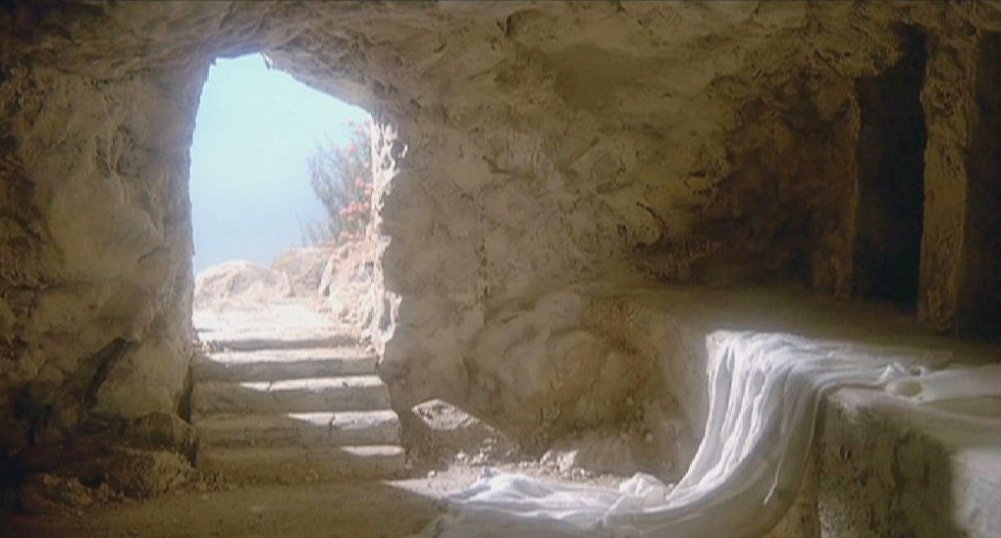
When the women came to the tomb they did not find Jesus, but a radiant messenger. He told them, “Do not be afraid! I know that you are seeking Jesus the crucified. He is not here.…” The tomb was empty, Jesus was not there.

Jesus was present at the beginning of creation, for through Him all things were made. Going forth from the Father’s mouth, He was at hand on earth throughout the ages, achieving His purposes.

He was mystically with Noah, who saved his family from death by building a ship, just as Jesus built the Church to save us.

He was mystically with Isaac, who, though bound and led to sacrifice, was not to be lost forever.

He was mystically with Moses, who freed God’s people from Pharaoh’s demonic slavery by leading them through miraculous waters.

He was mystically with all the prophets, in proclaiming a law to be written on hearts instead of stones, in promising the gift of a Holy Spirit from Heaven, in suffering at the hands of those who refused to hear wisdom.

He has been in His saints, from the least to the greatest, throughout the centuries to this very night. He is present here in all of us who are ‘living for God in Christ Jesus.’

By the all foreshadowings that proceeded His coming, and by the fruitful witness of all His saints ever since, we can confirm the angel’s words, “he has been raised just as he said.”

Jesus is not there in the empty tomb. He is here,  tonight, with us.

The Passion of Lent — 1st Sunday in Lent—Year A

March 14, 2011


Today Satan approaches Jesus in the desert at the end of His forty days of prayer and fasting and attempts to divert Him from the Father’s plan.   The ancient serpent employs the same tactics he used on Eve in the garden, twisting God’s words and playing on human desires. So how much did Satan know about what Jesus intended to do in the years ahead? St. Matthew suggests the Devil knew something of this, because the three temptations Satan puts to Jesus foreshadow His future Passion.

First, Satan comes and says to Jesus, “If you are the Son of God, command that these stones become loaves of bread.” Is it a coincidence that at the Last Supper Jesus will command bread to transformation into His very Self? It is as if the Devil were saying, “Why not simply give everyone bread. Why give yourself into their hands?” Jesus answers, “Man does not live on bread alone, but on every word that comes forth from the mouth of God.”

Jesus knows that a lifetime supply of bread would not save us. To live forever the Bread of Life must nourish us. Jesus is the Bread of Life. We do not live by bread alone, with whatever this world can offer, but by the Word that comes forth from the mouth of God. The Word of God is Jesus Christ.

This first temptation and Jesus’ answer point to the importance of prayer and the Eucharist. Prayer lifts our minds above having worldly thoughts alone. The Eucharist empowers our hearts to live for God. Do you pray every day? Prayer must be a top priority in Lent. Do you frequently receive Jesus in the Eucharist? In Lent, try coming to weekday Masses. Those who do so find it so powerful and precious that they often wonder how they ever used to make it a full seven days without receiving Jesus in between.

For his next temptation, Satan takes Jesus to the very top of the temple in Jerusalem. About three years later, not far from that place, the hostile Sanhedrin will gather and put Jesus on trial, questioning Him, demanding to know, ‘Are you the Son of God?’ and they’re not going to like His answer. The Devil says, “If you are the Son of God, throw yourself down.  [God’s angels will protect you.]” It is as if the Devil were saying, “Since you are a child of God He will be with you to save you no matter what, so why not do your own will and decline to give difficult witness?” But Jesus answers, “You shall not put the Lord, your God, to the test.”

You and I are also children of God and He is always with us,  but this must not lead us to presumption. We need to seek His will and give witness in the world by our words and deeds. If we sin, God always offers forgiveness, but we must take Him up on the offer. God always welcomes sinners, but we must turn to Him. To keep sinning without any words or actions of repentance is to put God to the test.

This second temptation and Jesus’ response point to the importance of confession and conversion. This Lent, turn from sin, come to confession at least once, and put some serious thought into planning how you will “sin no more and to avoid the near occasions of sin.”

For the third temptation, the Devil takes Jesus up to a very high mountain and shows him all the kingdoms of the world in their magnificence. He says, “All these I shall give to you, if you will prostrate yourself and worship me.” Jesus plans to claim His universal kingdom by climbing another mountain by Himself, Mount Calvary, and by taking his throne on the cross. (This is why Jesus tells James and John that they do not know that they are asking when they request to sit ‘one at His right hand and one at His left when He enters His kingdom and glory.’) Here it is as if the Devil were saying, “If you simply give up you won’t have to sacrifice, you won’t have to suffer. Lay down your cross and lay down before me.” But Jesus rebukes the devil, (much like he will later rebuke St. Peter for saying, ‘God forbid such a thing should ever happen to you): “Get away, Satan! The Lord, your God, shall you worship and him alone shall you serve.”

This third temptation and Jesus’ answer point to the importance spiritual sacrifices and patiently bearing our burdens. We have taken on Lenten penances, let us not give them up; and when unforeseen trials come to us, let us trust that Jesus knows what He’s doing; for it is through crosses like these that God makes us holy.

Prayer and the Eucharist, confession and conversion, spiritual sacrifices and patiently bearing our burdens. Let these things be in your response as you are tested these forty days.

Tobiah Prefigures Jesus

March 3, 2011

In the Gospels of Matthew, Mark, and Luke, Jesus declares to his disciples at the Last Supper, ‘I shall not drink again the fruit of the vine until the day when I drink it new in the kingdom of God.’ (Mt 26:26, Mk 14:25, Lk 22:18) This is as Tobiah says to the father of Sarah—his rightful and would-be bride: “I will eat or drink nothing until you set aside what belongs to me.” (Tobit 7:11)

In Matthew, Mark, and John, almost the final thing Jesus does on His cross before He dies is to consume some wine from a sponge. (Mt 27:48, Mk 15:36, Jn 19:29) Jesus drinks because the kingdom has come and His marriage to His bride, the Church, is sealed. He loves us as Tobiah loved Sarah, not out of lust (to control and exploit) but “for a noble purpose” (out of love.)  Like Tobiah, Jesus is willing to face death to gain His beautiful bride.

Prayers Gradually Answered — Wednesday, 6th Week in Ordinary Time—Year I

February 16, 2011


Noah’s Ark was no cruise ship, and forty days and nights on stormy waters is no pleasure cruise. Imagine what it was like for Noah; shoveling food for the animals all morning, shoveling something else all afternoon; hearing the squawking of the animals all night, hearing the complaints of your family all day. Noah must have been praying hard for land. He sends out a raven and it doesn’t come back. He sends out a dove and it brings back with a twig. After sending out the dove again they finally make landfall. Noah’s prayer was fulfilled in a gradual way, just like Jesus healed the blind man of today’s gospel in stages.

Sometimes we get impatient and question when our prayers for ourselves and others are not answered immediately, but we should not lose hope.  But remember, slow, gradual progress doesn’t mean that God’s plan is not being fulfilled. And just because you’re not instantly healed doesn’t mean that your prayer for healing is not being answered.

Christ Or Foe? — Monday, 6th Week in Ordinary Time—Year I

February 15, 2011

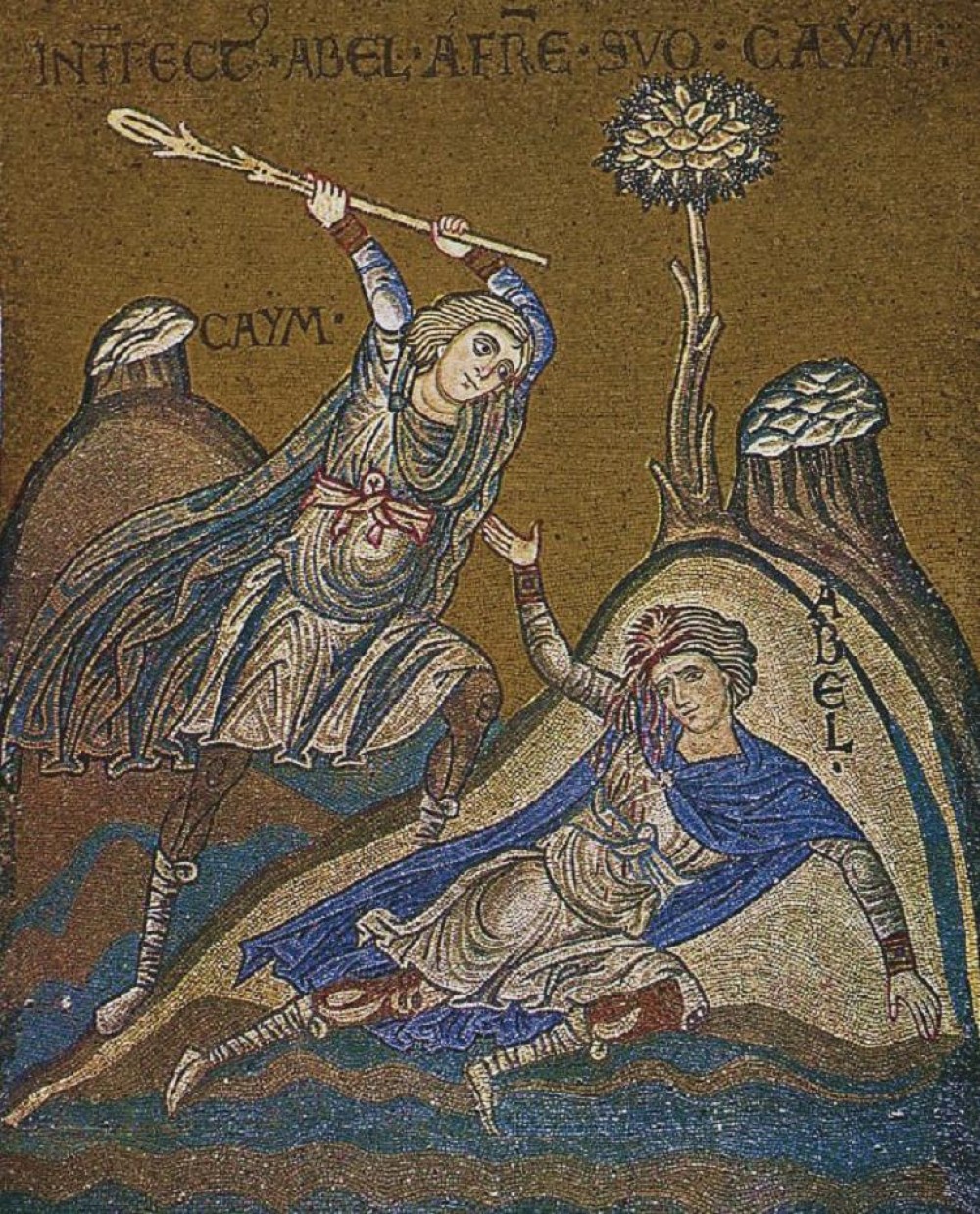
Today we recall two brothers who were icons of Christ. I speak of Cain and Abel. (At least, they both started off as images of Christ.)

When Eve conceived and bore Cain, she said, “I have produced a man with the help of the Lord.” We can imagine the New Eve, Mary, saying the same thing. Abel was a keeper of flocks, like Jesus the Good Shepherd. Cain was a tiller of the soil, like Jesus the Sower of the Seed and Reaper of the Harvest. Both Cain and Abel had priestly characters because both offered sacrifices to God.

Imagine how much better the world would have been if these two brothers had lived and worked together in harmony. They would have transformed the whole world, like the holy brothers Cyril and Methodius, the patron saints of Europe.  Instead, tragically, jealousy, resentment, temptation, and sin led Cain to murder his brother. By this spilling of innocent blood, Abel came to image the future Christ still further, while Cain became a likeness of the Christ’s future enemies; the chief priests, scribes, and Pharisees.

For you and I, in the end, it may all come down to this: are we Christ, or are we those who would destroy Him?

Christ’s Boat — Tuesday, 6th Week in Ordinary Time—Year I

February 15, 2011

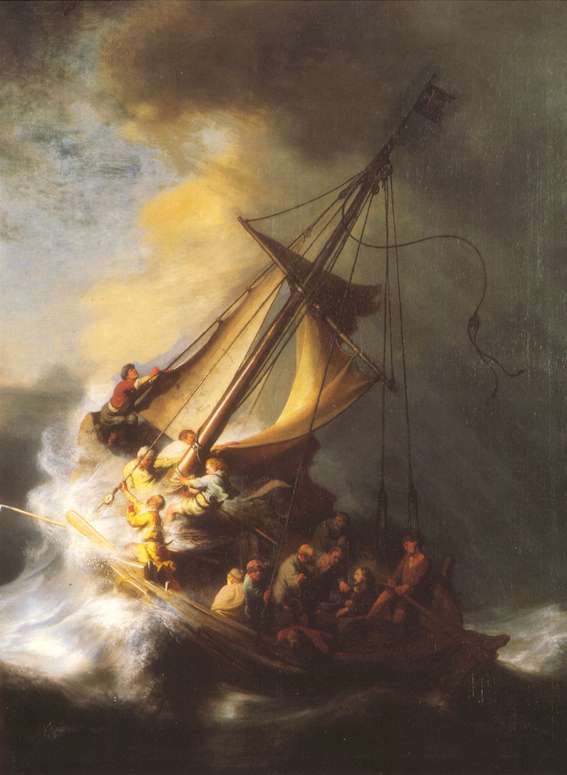
Perhaps you’ve noticed at Mass that most of our prayers are directed to God the Father. That is why you see me looking up so often. I’m looking up to our Father in Heaven as I speak to Him. From time to time, while I’m looking up, I can’t help but notice the ceiling. Take a look for yourself. It often reminds me of a boat’s wooden hull. That is really quite appropriate, because the Church is a boat and it is an important boat to be in.

The old ark was a boat built by Noah in which a few persons, eight in all, were saved through the waters of the flood. The new ark is our Church, the boat built by Christ, in which many are saved through the waters of baptism. Jesus’ boat has the cross for its mast and its sails are filled by the winds of the Holy Spirit. The Catholic Church, the bark of Peter, is the only vessel that navigates safely through the dangerous waters of this world.

As the Church Fathers frequently said, “Outside the Church there is no salvation.” But how should we understand this teaching? Restated positively it means this: that all salvation comes from Christ the Head through the Church, which is his Body. Basing Herself on Scripture and Tradition, Bride of Christ teaches that she, the Church, is necessary for salvation. As the Second Vatican Council repeated in modern times, Jesus “himself explicitly asserted the necessity of faith and Baptism, and thereby affirmed at the same time the necessity of the Church which men enter through Baptism as through a door. Hence they could not be saved who, knowing that the Catholic Church was founded as necessary by God through Christ, would refuse either to enter it or to remain in it.”

It must be noted that this teaching is not aimed at those who do not know Christ and his Church through no fault of their own. “Those who, through no fault of their own, do not know the Gospel of Christ or his Church, but who nevertheless seek God with a sincere heart, and, moved by grace, try in their actions to do His will as they know it through the dictates of their conscience – those too may achieve eternal salvation.”

“Although in ways known to Himself God can lead those who, through no fault of their own, are ignorant of the Gospel, to that faith without which it is impossible to please Him, the Church still has the obligation and also the sacred right to evangelize all men.” If we love all men, we will naturally desire to share the truth and blessings of the Church’s Gospel with everyone. Think of it this way: while it is theoretically possible for anyone to swim the English Channel, it is a far easier crossing if we take the ferry. In the same way, it is not a matter of indifference if people come into the Church or not. The journey is much safer and easier if you’re in the boat.

Remember not underestimate the importance of the Church. In the end, all those who will be saved will be saved through their relationship, known or unknown, with the one, holy, catholic and apostolic Church Jesus founded.

And do not underestimate the importance of the Mass. All the graces that flow into souls pours forth from the Catholic Church through this sacrifice we celebrate. The Mass takes the sacrifice of Calvary from then and there, through space and time, to here and now, and applies its power and effects to our world today. (What we’re doing here is a very important thing.)

And finally, do not underestimate the importance of remaining in the Church. May we never forsake it. We have to stay in the boat with Jesus Christ, because without Him, none of us can walk on water.

Man and Wife — Thursday, 5th Week of Ordinary Time—Year I

February 10, 2011

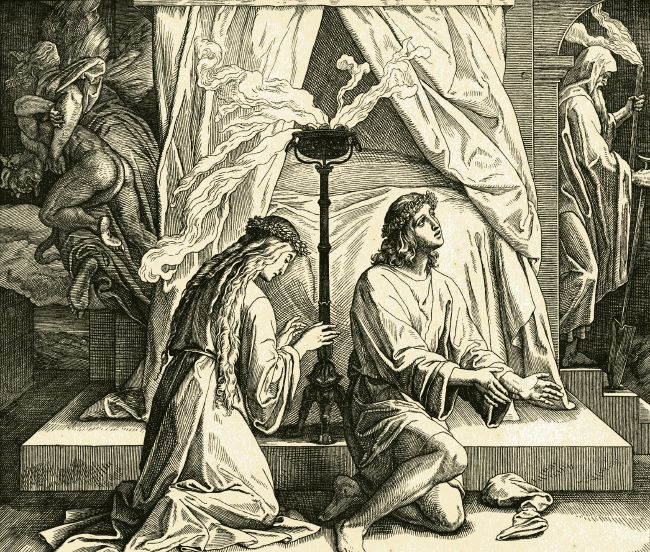
God cast a deep sleep on the man and made for him the woman of his dreams. God fashioned her from his rib, perhaps because it was the bone closest to his heart. This reflects her dignity, for the man was made from mud while she was made from flesh. Woman is God’s final and ultimate creation.

The man beholds her with joy and names her, just as he had named every animal. This authorship is a sign of his authority, not to manipulate nor humiliate, but to lovingly lead and to care for what is entrusted to him. (The fact that “the man and his wife were both naked, yet they felt no shame,” reveals that they completely trusted and respected each other.) As Christ loves His Church, so husbands should love their wives.

Evil: Unholy Holes — Tuesday, 5th Week of Ordinary Time—Year I

February 8, 2011

“God looked at everything he had made, and he found it very good.” Everything that God has made, everything that has being, contains God’s goodness. What then is this thing called evil?

Think of a hole in the ground. What is the hole made of? Nothing really. If not for the good earth surrounding it you would not even know that a hole was there. Evil is like that hole, it’s an absence, a deprivation, a negation of something good. Evil can only be present within something good, as a corruption. Even though evil is essentially nothingness, that doesn’t mean that it can’t still hurt you, like falling into a deep, gaping hole.

Let no one think that evil is necessary for there to be good. No one should think of evil as the Ying to God’s Yang. God created a universe which was entirely good. It has been the free choices of the demons and of us to rebel in sin which have brought evils upon us.

Because of the goodness that remains in them, God shall love and preserve the Devil, the demons, and the damned forever. They shall not be destroyed, but they shall no longer do harm. They shall be as the wounds in Jesus’ hands, feet and side, which are as they are due to evil, but which cause no more pain, only glory.

The Lamb of God — 2nd Sunday in Ordinary Time—Year A

January 16, 2011

When John the Baptist sees Jesus coming toward him he declares, “Behold, the Lamb of God, who takes away the sin of the world!” Why does John say that? How is Jesus like a lamb? Under the Old Covenant, animal sacrifices were offered for the forgiveness of sins.  The symbolism was that the animal, typically an unblemished lamb, was dying in place of the sinner who offered it. Jesus, like an obedient sheep that follows its master’s voice, does His Father’s will and takes our place in the sacrifice that truly forgives our sins. This is why Jesus is the Lamb of God who takes away the sins of the world.

John the Baptist goes on to say, “He is the one of whom I said, ‘A man is coming after me who ranks ahead of me because he existed before me.’” Indeed, Jesus existed before the universe itself. Through Him, all things were made, and all things that were made to point to Christ. For this reason, it is not so much that Jesus resembles the lambs of Old Covenant sacrifices. Instead, God established the ritual of sacrificing lambs for the forgiveness of sins in order to point to Christ.

Jesus is born in the age of the New Testament, but throughout the entire Old Testament the Holy Spirit has spoken through the prophets about Him. For example, our first reading from the book of Isaiah, written several centuries before Christ, is just one of hundreds and hundreds of passages pointing to Him. But, before we look at it again, a little background: Jacob was Abraham’s grandson. Jacob was renamed “Israel” by God and fathered twelve sons. From these twelve sons descended the twelve tribes of Israel. This is why the names “Jacob” and “Israel” can be interchangeable, and can refer to one person or many.

In Isaiah, the prophet writes, “The Lord said to me: You are my servant, Israel, through whom I show my glory.” To whom is God speaking here? Who is the servant whom God formed in the womb; the prophet himself, God’s faithful people, or Jesus Christ? There is truth to each of these interpretations, but Jesus shines especially through. Isaiah continues:

“It is too little, the Lord says, for you to be my servant, to raise up the tribes of Jacob, and restore the survivors of Israel; I will make you a light to the nations, that my salvation may reach to the ends of the earth.”

Jesus is the one who brings salvation and the resurrection not only to the descendants of Abraham, Isaac and Jacob, but for all the nations on earth, bringing His light to Gentiles like you and I.  For another example, consider today’s psalm, written by King David 1,000 years before Christ. Hear these words again as coming from Jesus’ own lips:

Sacrifice or offering you wished not,
but ears open to obedience you gave me.
Holocausts or sin-offerings you sought not;
then said I, “Behold I come.”

“In the written scroll it is prescribed for me,
to do your will, O my God, is my delight,
and your law is within my heart!”

I announced your justice in the vast assembly;
I did not restrain my lips, as you, O Lord, know.

I have waited, waited for the Lord,
and he stooped toward me and heard my cry.
And he put a new song into my mouth,
a hymn to our God.

I suspect that these words had a personal meaning to David when he composed them, and the fortieth psalm has been prayed in a personal way by God’s faithful people ever since, but these words apply especially to the person and life of Christ. After preaching God’s word before crowds of thousands in the time of His ministry and obediently coming to the cross at its end, after crying out for His Father to save Him and waiting three days in the tomb, the resurrection has put a new song in Jesus’ mouth, a new hymn of praise to our Father.

The point is this: the Old Testament is not a dead letter, or a merely historical book. The passages of the Old Testament meant something historically to the people who wrote them, but those men were not the only authors—the Holy Spirit was writing, too. The Spirit was writing for all generations of God’s faithful people, including you and I today. The Spirit was also revealing and prophetically pointing to the person and life of Jesus Christ.

St. Jerome said, “Ignorance of the Scriptures is ignorance of Christ.” So when you hear the Old Testament proclaimed at Mass, and read the Bible on your own, look for the meaning it had in its historical context, look for the spiritual meaning it has for us today, and look for Jesus, because you can find Him there, and get to know Him better.

History Ryhmes — Solemnity of Christ the King—Year C

December 22, 2010

As Mark Twain said, “History doesn’t repeat itself, but it does rhyme.” Throughout the story of our salvation, we see history rhyming time and again.

In the beginning, when God created the first man He saw that it would be good for him to have a partner, a mate, a bride. So the Lord put the man into a deep sleep, removed his rib (perhaps because it was the bone closest to his heart,) and fashioned from it the first woman. When Adam awoke and saw, he happily exclaimed, “This one, at last, is bone of my bones and flesh of my flesh!” In our first reading today, the people of Israel come to David and declare, “Here we are, your bone and your flesh. [Be our king!]” Here we see God’s people, Israel the bride, coming in joy to greet her husband, the king.

In days past, Saul had been Israel’s king, the one anointed by God’s prophet Samuel. But as time passed, King Saul became proud and loved himself to the contempt of God. After many transgressions, Samuel announced to Saul God’s judgment, “The Lord has torn the kingdom of Israel from you this day, and has given it to a neighbor of yours, who is better than you.” Saul rightly guessed that his replacement would be the young man, David, and he set about to have him killed. When David wisely fled for his life, Saul gathered a posse to hunt him down.

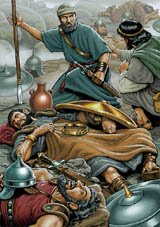
One night, David and his right-hand man, Abishai, snuck into the camp of Saul and his men. They came right up to where Saul laid, but the men “remained asleep, because the Lord had put them into a deep slumber.” Abishai begged in hushed tones, “Let me nail him to the ground with one thrust of the spear; I will not need a second thrust!” David replied, “the Lord forbid that I touch his anointed!” David would not thrusting a spear through the side of God’s anointed. Instead, David took the spear and water jug which lay at Saul’s head and went to a remote hilltop. From there, David cried out: “Why does my lord pursue his servant? What have I done? What evil do I plan? [I could have killed you!] Here is the king’s spear! Let an attendant come over to get it!” After that Saul acknowledged that he had betrayed David’s innocent blood and went away. Later, Saul committed suicide in a battle lost to the Philistines and God’s people came to David to ask him to be their king. David had refused to take the kingship by force, and God graciously bestowed the kingdom upon him.

About 1,000 years later, another Christ or Messiah came, the true Anointed One of God. Like David, Jesus also refused to slay his opponents and take His kingdom by force. This confused and disturbed many who believed in Him. Some speculate that Judas betrayed Jesus into the hands of the Jewish leaders so that Jesus, His back pinned to the wall, would be forced to show his power. When Judas realized that he had betrayed innocent blood he did not seek out Jesus’ forgiveness, but despaired and killed himself.

As Jesus hung on His cross, making it the new tree of life, He was the New Adam, naked without shame. Jesus was surrounded there by all sorts of people. Some of them where disciples who had believed in Him, but they stood there fearful of their allegiance becoming known. Scribes, Pharisees, and religious rulers stood there who should have acknowledged Jesus as their Christ, but they disregarded His words. The Roman soldiers there were doing their duty, and perhaps didn’t feel much about Jesus one way or the other. However, one person there on Calvary was unafraid to speak out in truth and faith. He was a condemned man crucified beside Jesus. This man said, “We have been condemned justly… but this man has done nothing criminal. Jesus, remember me when you come into your kingdom.” Jesus replied to him, “Amen, I say to you, today you will be with me in Paradise.” We call this man “the good thief,” and indeed he was, for in the last hours of his life he managed to steal Heaven.

What would we have done if we had been there? What sort of witness would we have given? It is impossible for us to go back to that time—history doesn’t repeat itself, yet our present does rhyme with the past. A senior at Columbus recently told me that he always tries to get other students to come to Mr. Kitzhaber’s youth events because, in his words, “they’re really fun!” But most students decline, replying “that’s a Jesus thing.” Are we ashamed or afraid to be identified as Christ’s followers? How many people today are like the scribes and Pharisees of the past by ignoring Christ teachings as they are taught through his bride, the Church? And how many Catholics fulfill their duty, by saying their prayers and going to Mass, but do it without much joy? What would we make of a bride who appeared indifferent and bored with her groom on their wedding day?

History doesn’t repeat itself, but salvation history does rhyme. In our day, will we resemble the timid disciples, Jesus’ religious opponents, the indifferent guards, or the faithful and courageous, good thief? Without fear, let acknowledge Jesus as our God. With obedience, let us heed the words our King speaks to us through His Church. With joy, let us approach Christ as our Bridegroom, like a bride on her wedding day.