Archive for the ‘Parables’ Category

Spread the Good Seed

July 16, 2023

15th Sunday in Ordinary Time
By Fr. Chinnappan Pelavendran

Jesus’s favorite way of teaching was by using stories and parables. The story makes it more approachable and leads us to discover it for ourselves. We recall stories much more than abstract things; today’s gospel narrates the familiar parable of the sower and the different kinds of soil on which the seed falls. This story encourages us to reflect on our own lives and our response to the good news of God’s loving reign. It invites each of us to ask, what kind of soil am I?

Today Jesus speaks about four types of land, path, stones, thorns, and the last is good ground. The seed fallen on the path stands for those who hear the message of the kingdom of God but do not understand it, thus the evil one comes and snatches it away. The evil one does not want the seed of the Gospel to sprout in the heart of man.

The second is that of the seed fallen among the stones, this represents the people who hear the word of God and understand it immediately, but when trials and tribulations arise, these people give up immediately.

The third is that of the seed fallen among the bushes with thorns; Jesus explains that this refers to the people who hear the word but care about the world and the temptation of riches, being choked. Finally, the seed that fell on the fertile soil represents those who hear the word, accept it, cherish it, and understand it.

The enemy of our life here is ignorance, trials, tribulations, focus on money, possessions, pleasure, comfort, and indifference. All these may lead to the seed of God’s word to wither and die, or be carried away by the winds of the world.

Jesus invites us to have good dispositions be docile to His word, grow, and bear fruit in us. Today we must ask ourselves how our heart is. Which soil does it resemble? That of the path, the rocks, the thorns? It is up to us to become good soil and bear good fruit for us and for our brothers and sisters.

Today we must examine ourselves, Am I a catholic who actively practices my faith and love of God? or am I simply someone who attends church on Sundays and just identify as a catholic without truly living out my beliefs? Do I truly understand and put into action the teaching of Jesus as found in the Gospel?

Let’s remember that for a plant to grow, it needs to be watered, cared for, and protected from bugs or diseases. To practice our faith, we must nurture it by reading scripture and continually deepen our prayer, the sacraments, and ongoing education, in order to live our faith well. As St. Jerome says ignorance of Scripture is ignorance of Christ.

At the same time, we are also sowers for people who rely on us. Do we make an effort to teach others about the faith through our prayers, actions, and words? Our words and actions have the power to do both good and harm, they can build up or cause scandal, they can inspire or discourage, can bring souls closer to Christ, or push them away. So try to be good soil and sower of the word of God to His people.

Seed, Soil, & Fruit: Parish Transformation

July 16, 2023

15th Sunday in Ordinary Time
By Fr. Victor Feltes
(As preached at St. Paul’s Parish)

Imagine if St. Paul’s Parish had turned out very differently than what we see today. Imagine if we had not only failed to reach our capital campaign pledge goal for renovating this church — imagine we had never even attempted it. Imagine unmet maintenance needs all around our campus: Our church roofs in desperate need of re-shingling. Our church attic lacking proper insulation. Our undercroft walls in clear need of refreshing. Our crumbling parking lot in need of repaving. No digital sign promoting our parish on our front lawn. Imagine there was never a new extension added between our church and the school. The gym, library, computer lab, and other rooms were never built. They would not be needed now anyway, since our school closed down years ago. All our grade school children enrolled in the secular public school.

A lack of sufficient volunteers ended our CCD/religious education program, teen youth ministries, and Vacation Bible Schools. Sunday Masses’ Children’s Liturgies never even began. Our Thrift Sale pavilion building, likewise deprived of sufficient volunteers, became used for nothing more than storage. At parish funerals, no resurrection singers in the balcony, nor ladies providing luncheons for the mourners after. No Family Life Committee meals marking each year’s marriage anniversaries and dearly departed souls. No Sojourner House evenings, no KC or PCCW events, no Fall Festival. No Eucharistic Adoration, no prayer chain, no prayer shawls, and few Communions being brought to the homebound. Not only no associate priest coming to our parish, but also no priestly vocations coming out of our parish. And many more lost things than this. Imagine all these things gone and the resulting missing goodness.

The good things we enjoy in our parish are the result of the seed Jesus speaks of in our Gospel. He is the Sower who goes out to sow, but some seed falls on hardened hearts and quickly gets gobbled up. Some seed falls on weedy hearts and gets choked by the worldly fears or earthly desires living there. Some seed falls on shallow hearts and is betrayed as soon as trials or difficulties come. But the Sower’s seed has found rich soil in some, in the hearts of those who listen to his word and understand it, bearing fruit a hundred or sixty or thirtyfold in our parish.

Now ordinary soulless soil cannot choose to change, but you can! Make a decision of your will and invite the Sower to cultivate you. Ask Jesus to help you to believe and understand him. Ask him to calm your fears and disordered desires. Ask him to deepen the personal connection between you. With Jesus Christ, you can change the sort of soil you are in order to bear more fruit with him. The Sower sows the seed in hopes it will produce much fruit, and along with it, more seed. Together with the Sower, we should scatter seed too.

Imagine a St. Paul’s Parish of tomorrow greater than we see now: Each pew of our renovated and beautified church filled on Sundays. More families worshipping here with their children. A full set of altar servers and a choir for every Sunday Mass. Our great Catholic school, enrolled to its full capacity. New parishioner initiatives and efforts to bless our community. And scores of your relatives, friends, and neighbors returning to the Church or joining her for the first time.

Is this not what the Sower of the seeds wills for our parish? He desires each of us to play a part in his mission, and our role is simple. Pray to God and offer sacrifices for these good things to come be. Pray earnestly to those around you and boldly invite them to join us. (Remember how the Sower casts the seed all around him on every ground.) And be living saints, whose lives, devotion, words, and deeds, bear good and lasting fruit for yourself and others, thirty, sixty, or a hundredfold.

Jesus is Our Good Shepherd

April 29, 2023

4th Sunday of Easter
By Fr. Chinnappan Pelavendran

Today we honor Jesus as the Good Shepherd. Jesus calls himself the Good Shepherd and promises to take care of the sheep entrusted to his care. We have the popular images of Jesus the Good Shepherd carrying a sheep over his shoulders, or we have a smiling Jesus sitting under a tree, with a little lamb on his lap. These images of Jesus teach us about his tenderness and his compassion. A shepherd is more than that. A shepherd walks before the sheep, seeking out a safe path, taking them to the pastures, to water, and to shelter. The sheep follow him because they recognize his voice and they trust him.

In the first reading today, St. Peter reminds his Jewish people that they have crucified their true Shepherd. They need to receive forgiveness for their sin by receiving baptism in the name of Jesus and acknowledge the risen Jesus as their Lord and Savior. In the second reading, St. Peter invites the suffering Christians to follow the example of their Good Shepherd, the suffering servant. Suffering and death help us to become more fully the children of God.

Today’s gospel says how much love Jesus has for His flock. He says: “I am the good Shepherd.” What does this mean? First of all, He is not working for pay but provides for his sheep’s needs, leading them out to pasture. He keeps them safe and healthy, he does not want them to be lost or get hurt. The good Shepherd knows each member of His flock. The Good Shepherd protects them to the point of risking his life for them, and He did. Our Good Shepherd shows the true way to the Father. He gives and leads us to, the fullness of life. He saves us from sin and death. He opens for us the gate of heaven and offers us a life of fellowship with His Father.

In this parable, Jesus compares Himself to the Shepherd and the Gate. The image of the Good Shepherd represents His ownership. The image of the Gate represents His leadership. Jesus is the gate, the only way in and out. He is the one Mediator between God and mankind: to reach heaven, all must go through Him. Jesus gives the assurance that whoever enters through him will be safe and well-cared for.

We are invited to be a shepherd to those who are entrusted to our love and care. Pastors, parents, teachers, doctors, nurses, government officials, and caregivers. We become good shepherds by loving those entrusted to us, praying for them, spending our time and blessings for their welfare, and guarding them against physical and spiritual dangers.

As we celebrate good shepherd Sunday, let us pray to the Lord that we may be His good sheep, listening attentively to His voice, and following His example of self–giving love. Let us also pray for all our shepherds, especially our religious and political leaders: may they follow the example of Jesus who was willing to serve and lay down His life for his sheep.

Be Holy Salt, Holy Light

February 5, 2023

5th Sunday of Ordinary Time
By Fr. Chinnappan Pelavendran

St. Mother Teresa was born in Yugoslavia to Albanian parents. When she was young, she felt a calling to become a nun. One day, as a religious sister, she passed through India on a train and saw many poor people in the streets and gutters. She realized a call within a call. She later returned to India because she wanted to help the people.

She started a new order, the Missionaries of Charity. They worked with the sick and the poorest of the poor on the streets of India. She prayed, “Oh God, if I cannot help these people in their poverty and their suffering, let me at least die with them, close to them so that I can show them your love.” The Missionaries of Charity are now worldwide with many brothers and sisters, homes for children, the sick, destitute, and dying. She was the salt of the earth and the light of the world to many of the poor people in India and around the whole world.

In our first reading, the Lord God through His prophet Isaiah gives us examples of how we are to allow the light of God to shine through us. “Share your bread with the hungry, sheltering the oppressed and the homeless: clothing the naked when you see them, not turning your back on your own. Then light shall rise for you in the darkness, and the gloom shall become for you like midday.” (Isaiah 58:7,10) In the Old Testament, God had been telling His chosen people that he would send a light into the world to save His people and the gentiles.

St. Paul, in the second reading, tells us that our proclamation of faith will carry the Spirit and His power when we rely on the power and wisdom of God. God made St. Paul a light in this world for the gentiles. When St. Paul was teaching the Corinthians about the self–sacrifice of the crucified Jesus, and the suffering our savior endured, his message transformed the lives of the pagans. St. Paul’s experience teaches us that when we start doing good to others, even if it causes us suffering and death, we will become the salt of the earth and the light of the world.

In today’s Gospel, Jesus outlines the role of Christians in this world–to be the salt of the earth and light of the world. As a symbol of purity, salt was a common ingredient in sacrifices offered to God by Jews and pagans. In the ancient world, salt was a preservative, used to prevent the spoilage of foods. Salt also flavors food when used as a seasoning and preservative. Light is something that is meant to be seen. A light or a lamp is a guide to clear the way. A traffic light also serves as a warning. Light from the sun gives us warmth and heat.

We need to be the salt of the earth. What does this mean? Salt is the symbol of purity, Christians must be an example of purity in speech, conduct, and in thought. Salt is a cleansing and healing agent, the Christian must have a cleansing influence on life and society, defeating corruption, fighting against injustice, and making it easier for others to avoid sin. We need to preserve the religious faith, Christian values, and world principles that Jesus has given us.

We need to be the light of the world. What does this mean? Christians are to receive the light of Christ and radiate it to everyone as love, Mercy, forgiveness, and respect for all. Our duty is to show and illuminate the love of Christ.

The Allegory of the Jordan River

December 4, 2022

2nd Sunday of Advent
By Fr. Victor Feltes

Preceding Jesus’ public ministry, St. John the Baptist appeared preaching in the Judean wilderness. People from Jerusalem, all Judea, and the Jordan River region were going out to see him. John said, “Repent, for the kingdom of heaven is at hand!” The crowds regarded him as a prophet and were being baptized by him as they acknowledged their sins. Like a bath which cleanses one’s outer self of dirt and odor, John’s baptism was an appeal to God for an inner self cleansed from sin. John’s ministry prepared for Jesus Christ and foreshadowed Christian baptism. The Jordan River in which John baptized embodies an allegory whose symbolism remains important for us today.

The fresh waters of the Jordan River originate in the north from the living Sea of Galilee, a large lake full of fish and ringed by trees. The Jordan’s waters flow south and come to one of either two notable ends. Most of the river’s water just goes with the flow. It flows downhill (as all rivers naturally do) ultimately descending seven hundred vertical feet. These waters remain on the edge of the Promised Land without entering in. And at the end of their journey, they empty out into the Dead Sea. The Dead Sea is the lowest place on the face of the earth. After the river drains there, the water has nowhere else to go. As it evaporates to nothingness, the water leaves behind trace amounts of salt which over many, many millennia has made that sea ten times saltier than the oceans. In this oppressive saltiness, no plants nor fish can live. The Dead Sea is thoroughly dead.

Some of the Jordan River’s water, however, does not simply go with the flow downhill. This water escapes the fate of the Dead Sea, by giving itself to the Promised Land. This water enables life and generates fruit among many trees in an otherwise arid place. Jeremiah the Prophet writes of a tree planted beside the stream: “It does not fear heat when it comes; its leaves stay green. In the year of drought it shows no distress, but still produces fruit.” And the 1st Psalm likewise says: “a tree planted near streams of water… yields its fruit in due season; its leaves never wither.” These baptismal waters are willed by God to give life and bear fruit for the Promised Land.

Most of John the Baptist’s contemporaries were convinced he was a prophet, yet the Jewish religious leaders disbelieved. When John saw many Pharisees and Sadducees coming to his baptism, he admonished them: “Produce good fruit as evidence of your repentance! … Every tree that does not bear good fruit will be cut down and thrown into the fire!” It would not be enough (for them or us) to just say the right things and go through the motions. Our faith and repentance must be real, producing of good fruit.

As the life-giving Sea of Galilee is the River Jordan’s source, so God above is the source of every spiritual grace and good thing in creation here below. Having received Christian baptism, we can respond in one of two ways on this life’s journey. In this world, we can go with the natural flow of things, descending more and more, ending in the dead abyss without entering the Promised Land. But that is not Jesus’ will for us. As G.K. Chesterton once observed: “A dead thing can go with the stream, but only a living thing can go against it.” Jesus wills for us to cooperate with him, to be changed, and to change the world around us. So believe in the Lord, acknowledge your sins and repent, and bear good fruit with Christ. What is one area — just one thing — one habit or virtue, you can acknowledge today and grow in throughout this Advent season with the grace of God?

Our Divine Physician

October 22, 2022

30th Sunday in Ordinary Time
By Fr. Victor Feltes

Jesus tells us a story of two men who go up to the temple to pray. One is a Pharisee, a group with a reputation for holiness. The other is a tax collector, a profession associated with injustice. The Pharisee, entering the temple courtyard, walks to a more prominent place and speaks this prayer to himself: “O God, I thank you that I am not like the rest of humanity — greedy, dishonest, adulterous — or even like this tax collector. I fast twice a week, and I pay tithes on my whole income.” Jesus presents this Pharisee as an example of someone convinced of his own righteousness and despising of everyone else.

The tax collector, in contrast, stands at the distant edge of the temple court, keeps his eyes cast down, and beats his breast (an ancient sign of contrition) praying, “O God, be merciful to me a sinner.” The Pharisee exults himself while the tax collector humbles himself before God. And Jesus tells us the tax collector went home justified, reconciled with God, while the Pharisee did not.

Imagine going to the hospital clinic for your annual check-up. Sitting there in the waiting area, you glance discretely at the other people around the room. Your secret thoughts become filled with observations and guesses at what ailments brought them there. “I’m in much better health than these people,” you think to yourself with pride. Then your name gets called. The doctor greets you, you sit down, and asks if you are having any issues with your health. “No, nothing’s wrong” you say, but that’s not true.

Awhile back, you cut your hip on an exposed piece of jagged metal, and your concealed wound is not healing. It’s been oozing a smelly, yellow fluid and the skin all around the wound is swollen, red, and painful to touch, but you’ve been mostly able to ignore it. Either embarrassed at your injury or oblivious to the danger, you say, “I’m fine,” and leave without presenting this infection to your physician who has the ability to heal you.

In a sermon about Jesus’ story of the Pharisee and the Tax Collector, St. Augustine once preached:

How useful and necessary a medicine is repentance! People who remember that they are only human will readily understand this. It is written, ‘God resists the proud, but gives grace to the humble.’ The Pharisee was not rejoicing so much in his own clean bill of health as in comparing it with the diseases of others. He came to the doctor. It would have been more worthwhile to inform him by confession of the things that were wrong with himself instead of keeping his wounds secret and having the nerve to crow over the scars of others. It is not surprising that the tax collector went away cured, since he had not been ashamed of showing where he felt pain.

Do the sins of others bother you more than your own? Do you know what your sins are? Are you contrite for them? When was the last time you went to Confession? Will you present your infected wounds to our Divine Physician and then follow his prescription for your good health?

Plant Using Your Tiny Seed of Faith

October 1, 2022

27th Sunday in Ordinary Time
By Fr. Victor Feltes

Today the apostles beg our Lord, “Increase our faith.” They feel apprehension at Jesus’ teachings. Christ asks extraordinary things of his disciples, and they fear their faith is insufficient. The Lord replies, “If you have faith the size of a mustard seed, you would say to this mulberry tree, ‘Be uprooted and planted in the sea,’ and it would obey you.” Realize that faith (like courage or love) is not necessarily a feeling. You can be courageous, even while feeling fear, by doing the right thing anyway. You can be loving, even while feeling strong dislike for your enemies, by willing their good anyway. And you can be faithful, even when you feel apprehensive like the apostles, by acting on your trust in God anyway.

Perhaps you feel nervous when you fly on an airplane, yet you buy your ticket and board the flight because you believe commercial jet is a very safe way to travel—and it is. If you were a business traveler, taking dozens of flights each year, your anxious feelings would calm and come to better resemble your sincere conviction about the safety of flying. Faith is like this, too. You may or may not have feelings of great faith, but when you choose to trust God and do the faithful thing you are acting in faith. Exercise your faith and your faith will strengthen, because you will see that God is faithful, and then your emotions touching on faith will naturally follow.

Jesus says, “If you have faith the size of a mustard seed,” you could miraculously transplant a tree with your command. When I was younger, the first time I read Jesus’ answer, I was discouraged by it—“I’ve never performed a miracle like that. How microscopic must my faith be!” But I had misunderstood him. Jesus’ reply is meant as an encouragement. Our Lord is saying, “Even if your faith is tiny, it is more than enough for you to fulfill my will.” What is God’s will for you? What does he want you to do? If you do not know this already ask him to reveal it to you. And “if today you hear his voice, harden not your hearts.”

On another occasion, Jesus said “the Kingdom of Heaven is like a mustard seed that a person took and sowed in a field. It is the smallest of all the seeds, yet when full-grown it is the largest of plants. It becomes a large bush, and the ‘birds of the sky come and dwell in its branches.’” So using your tiny seed of faith, plant in the field of your life as the Lord commands you. It may take awhile for the results to sprout but be patient. As the Lord said to Habakkuk, “The vision still has its time, presses on to fulfillment, and will not disappoint; if it delays, wait for it, it will surely come, it will not be late. The rash one has no integrity; but the just one, because of his faith, shall live.

Mustard bushes grow very large and the mustard it produces has a very potent taste. Given time, what you plant in faith will change the landscape and the flavor of our world. When you go on to see the incredible transforming results which faith allows you may become inflated and vulnerable to pride. People through whom God has accomplished great things may be tempted to think their serious sins are therefore no big deal, or may abandon serving the Lord before their days on earth are done. For this reason, Jesus follows his parable about faith and the mustard bush with another parable about a servant and his master.

Jesus asked his apostles, “Who among you would say to your servant who has just come in from plowing or tending sheep in the field, ‘Come here immediately and take your place at table’? Would he not rather say to him, ‘Prepare something for me to eat. Put on your apron and wait on me while I eat and drink. You may eat and drink when I am finished’? Is he grateful to that servant because he did what was commanded?” Jesus here is not describing how the world ought to be, but describing how their familiar, ancient world actually operated; where the stronger dominated the weaker. It is like when Jesus told them, “You know that the rulers of the Gentiles lord it over them, and their great ones make their authority over them felt. But it shall not be so among you. Rather, whoever wishes to be great among you shall be your servant.”

The apostles would not expect a slave’s master to be much grateful to his slave, and they would judge a slave to be most prudent in his position to remain humble and obey his master. “So should it be with you,” Jesus says, “When you have done all you have been commanded, say, ‘We are unprofitable servants; we have done what we were obliged to do.’” Indeed, apart from God we can do nothing, and keeping a humble servant’s attitude protects us from dangerous pride and presumption and helps us to fulfill what Christ commands. But the Master who is our Lord differs from other masters of the earth.

At the Last Supper, after he had washed his apostles’ feet, Jesus asked them, “Do you realize what I have done for you? You call me ‘teacher’ and ‘master,’ and rightly so, for indeed I am. If I, therefore, the master and teacher, have washed your feet, you ought to wash one another’s feet. I have given you a model to follow, so that as I have done for you, you should also do.” Although our Lord, being God, is rightfully entitled to all we have and are, he is grateful for our labors. If we do not let up our efforts, when our hard days on this earth are complete we can look forward to hearing him say: “Well done, my good and faithful servant… Come, share your master’s joy!

So while your faith may feel small, it is more than enough to do Christ’s will. If you do not know God’s will already, seek and ask to know it. Then plant your seed of faith in action and patiently watch it grow. And when you see the great things our Lord achieves through you do not let up your efforts slip, knowing that his reward for you is eternal joy in Heaven.

Caring For Our Neighbor

September 25, 2022

26th Sunday of Ordinary Time
By Fr. Chinnappan Pelavendran

The story is told of a Franciscan monk in Australia, who was assigned to be the guide to St. Mother Teresa when she visited New South Wales. The monk was thrilled and excited at being so close to this great woman. He dreamed of how much he would learn from her. But, during her visit, he became frustrated. There were always other people for her to meet. Finally, her tour was over and she was about to fly to her next destination. The Franciscan friar spoke to Mother Teresa: “If I pay my own fare to New Guinea, can I sit next to you on the plane so I can talk to you and learn from you?” Mother Teresa looked at him and said: “Do you have enough money to pay airfare to New Guinea?” He replied eagerly, “Yes!” Mother said, “Give that money to the poor. You will learn more from that than anything I can tell you.

God speaks to us in many ways and touches our lives but we often fail to listen to him. He speaks to us in gentle ways and guides us in our weaknesses. The readings of today give us the values of the kingdom of God, which is different from all worldly values. It tells us that we, as the children of God, have the obligation and duty to look after our brothers and sisters and care for them. We all belong to the one family of God.

The prophet Amos, in the first reading, gives a powerful warning to those who seek wealth at the expense of the poor: people who spend their time and their money on themselves alone. He prophesies that those rich and self-indulgent people will be punished by God because they don’t care for their poor, suffering brothers and sisters.

In today’s second reading, St. Paul reminds Timothy, who was an ordained priest and consecrated Bishop, of the Faith he had confessed at his Baptism, He reminded him of his obligation to pursue righteousness, devotion, faith, love, patience, and gentleness. He reminded him of his ongoing call to bear witness to Christ as a loyal teacher and example of that faith. The message for us is that the generous sharing of our talents and resources is the necessary response to our Christian commitment.

All the parables of our Lord are based on everyday happenings. In today’s gospel, we are tempted to ask the question, “Why was the rich man punished?” He did not kick Lazarus, he was not cruel to him. He was punished because he continued to commit a sin of omission. He never noticed Lazarus as a human being and a brother. He did no wrong, but he did nothing good, either. He neglected the poor beggar at his door by not helping him to treat his illness nor giving him a small house to live in. He totally ignored the poor people around him, which was Cain’s attitude: “Am I the guardian of my brother?” It is not wrong to be rich, but it is wrong not to share our blessings with our brothers and sisters.

Today’s readings teach us an important lesson: it reminds us that all of us will experience God’s justice after our death. We are all rich enough to share our blessings with others. God has blessed each one of us with wealth, health, special talents, social power, political influence, or many other blessings. The parable invites us to share, in various ways, what we have been given, not use everything for selfish gains.

In today’s world, who are the poor we must not neglect? The unborn. We need to treat the unborn as our brother or sister Lazarus of this century. The rich man was condemned for not treating Lazarus as his brother. We also will be condemned for our selfishness if we do not treat the preborn as our brother and sister. We might think: “Who am I to interfere with a woman’s choice to abort?” I am a brother, a sister of that child in the womb. Finally, I am a follower of the One who said, “Whatsoever you do to the least of my brothers and sisters, you do to me.

On Being Man’s Best Friend

September 25, 2022

26th Sunday in Ordinary Time
By Fr. Victor Feltes

In the 1996 film “Independence Day,” we get introduced to a single-mother named Jasmine, played by Vivica Fox. With alien ships hovering ominously above the world’s major cities, she decides to flee Los Angeles. When the aliens begin their attack, Jasmine is stuck in a traffic jam inside a tunnel with her little boy, Dylan, and their handsome pet Labrador Retriever, named Boomer.

A wall of fire rushes from behind, tossing cars into the air before it and incinerating everyone it catches. Jasmine grabs her son and runs between the cars until she spots the door to a maintenance room. She kicks down the locked door and they huddle inside, but their dog has not followed them. Jasmine cries out, “Boomer! Boomer!” And Boomer sprints toward them, jumping over cars, and leaps safely into the side room at the very last second, just as the inferno passes by. Hundreds and hundreds of people are killed in the tunnel, but Boomer survives.

One commenter on a YouTube clip of this movie scene remarked, “I remember when I first saw this scene in the theater. I got all teary-eyed because, ‘YAY the doggy lives!’” Another commenter wrote, “When I saw this at the cinema, everyone cheered at this bit. It was the only part of the movie they cheered at!

Our culture loves dogs, but Jewish culture was more ambivalent towards them. Scripture does not celebrate dogs as “man’s best friend” like we do today. There are verses pointing to sheepdogs for shepherding or watchdogs for security. And in the Book of Tobit, when young Tobiah leaves home with the angel Raphael, it says “the dog followed Tobiah out and went along with them” on their adventure. However, the mentions of dogs in the Bible are usually negative.

In the Old Testament, for example, Goliath said to David who held a shepherd’s staff, “Am I a dog that you come against me with a stick?” Years later, encountering a different scoffer, one of King David’s soldiers asked, “Why should this dead dog curse my lord the king?” And Psalm 22, which Jesus referenced on his Cross, says, “Dogs surround me; a pack of evildoers closes in on me… [Deliver] my life from the grip of the dog.

In the New Testament, we see more of this dim view of dogs. Jesus teaches, “Do not give what is holy to dogs.” St. Paul writes, “Beware of the dogs, beware of the evil workers…” And the Book of Revelation, when it describes God’s heavenly city, says, “Outside are the dogs, the sorcerers, the unchaste, the murderers, the idol-worshipers, and all who love and practice deceit.” So where does this biblical disdain for dogs come from?

Realize that in those days, most dogs were not pets but wild. Packs of feral dogs were not only a noisy nuisance but also dangerous. This is reflected in Psalm 59, which describes deadly enemies as “growling like dogs and prowling about the city.” If not killing prey, stray dogs would eat whatever dead flesh they found, of beast or man — “they roam about as scavengers; if they are not filled, they howl.” I mention all of this because of details in today’s parable.

In Jesus’ story, a rich man with expensive, comfortable clothing eats plenty of good food at every meal. But outside of his gate, lying on the ground, is Lazarus, a hungry poor man covered with exposed sores. Jesus tells us Lazarus “would gladly have eaten his fill of the scraps that fell from the rich man’s table.” And Jesus notes that “dogs even used to come [up to Lazarus] and lick his sores.” When the poor man died, he was carried away by angels to a place of peace with Abraham. But when the rich man died he descended to a place of torment, in part, for his failure to care for Lazarus.

Those stray dogs did not attack Lazarus but licked his wounds. Perhaps they were drawn to the salty taste, or maybe they had an instinctual impulse towards him. But in either case they were helping him. Like many other animals, including cats, rodents, and primates, dogs lick their wounds to clean them. And certain chemical compounds found in dogs’ saliva help to disinfect, reduce pain, and promote healing. Letting dogs lick your wounds today is not recommended by doctors today; modern disinfectants and treatments are less likely to result in infection. But in the ancient world, for a beggar on the streets covered with sores like Lazarus, such dog licks would be a blessing.

The parable tells us Lazarus “would gladly have eaten his fill of the scraps that fell from the rich man’s table.” This resembles the remark of the Syrophoenician woman who came to Jesus seeking a miracle for her demon-possessed daughter. Though they were not of the house of Israel, she begged Jesus to help them, saying “Lord, even the dogs eat the crumbs that fall from their masters’ table.” Lazarus “would gladly have eaten his fill of the scraps that fell from the rich man’s table,” but the rich man never gave him any. So the rich man treated Lazarus worse than a dog. “Dogs even used to come and lick [Lazarus’] sores.” This means even the despised dogs in the streets treated Lazarus better and helped him more than the rich man ever did.

It’s fine to love dogs. They’re one of God’s good creatures and they reflect his goodness. It’s been said that God created dogs to help show us how he loves us (and that he created cats to show us how we love him). But it sadly seems rather common today for people to care more about the well-being of random dogs than of random strangers. Today’s psalm tells us, “Blessed is he who keeps faith forever, secures justice for the oppressed, [and] gives food to the hungry.” Living in this way makes us more like our Lord ‘who sets captives free, raises up those who are bowed down, and protects strangers,’ and becoming like our Lord is necessary for us to be at home with him in his heavenly city. It’s alright to appreciate our pets, but lest we end up like the rich man in hell let’s make sure we treat and love everyone better than dogs.

Learning from the Dishonest Steward

September 17, 2022

25th Sunday in Ordinary Time
Fr. Victor Feltes

In today’s strange parable, Jesus presents the scheming of a thief and a liar as an example we can learn from. We are not to imitate this dishonest steward’s treachery but rather his proactive shrewdness, “for the children of this world are more prudent in dealing with their own generation than are the children of light.”

How shrewdly proactive are we in doing good? We hunt for bargains at the store or online. But do we pursue opportunities to be generous? You have wealth and skills – so share them creatively. We invest and save for retirement. But do we intentionally store up treasure in heaven like Jesus tells us to? You can take nothing with you when you die; but you can increase what wealth awaits you by sending it ahead of you beforehand through generous deeds done now on earth. Jesus tells us to be “as shrewd as serpents and as innocent as doves.” He wants us, in cooperation with his grace, to show initiative in strategically and sinlessly serving his Kingdom for God’s glory, for our good, and for the good of all. That’s a worthwhile takeaway, but let’s look a little deeper. Like many of Jesus’ stories, today’s parable contains weird details which goad us to grapple with it further. What do we discover when we imagine ourselves in the shoes of the dishonest steward?

In this story, a rich man has a steward who was reported to him for squandering his property. (A steward is someone entrusted to manage another’s property, finances, or affairs.) The master summons his servant and said, “What is this I hear about you? Prepare a full account of your stewardship, because you can no longer be my steward.” If you and I are this steward, then who is our rich master? Our Lord is God. We are his servants, and who could be richer than the one from whom all good things come?

What has God entrusted to us? St. Paul replies, “What do you have that you did not receive? … For we brought nothing into the world.” Even the hardest-working farmer relies upon God’s soil, sun, air, and water to transform the seeds into his harvest. Even our own efforts in doing good come from God, “for God is the one who, for his good purpose, works in you both to desire and to work,” as St. Paul tells the Philippians. Every good thing we have is his.

Have we squandered what God entrusted to us as stewards? Every sin is a misuse of what we’ve been given, and who of us has used what we were given to its full potential? Our Lord has put us on notice that a day is coming when our present stewardship will end with a full accounting of our stewardship, “for we must all appear before the judgment seat of Christ,” St. Paul writes, “then each of us shall give an account of himself to God.”

The steward in the parable says to himself, “What shall I do, now that my master is taking the position of steward away from me? I am not strong enough to dig and I am ashamed to beg.” He recognizes he is too weak and too proud. Similarly, who of us is strong enough to overcome death, to dig ourselves out of the grave? And if you or I were perfectly humble instead of proud, we would always live in the truth (about who God is and who we are) and we would never sin—and yet we do sin.

The steward says to himself, “I know what I shall do so that when I am removed from the stewardship they may welcome me into their homes.” He calls in his master’s debtors one by one, asking them, “How much do you owe my master?” He then forgives portions of their debts – sometimes a fifth or a half of what they owe. And in the end, amazingly, when what this dishonest steward has done is revealed, even his betrayed master commends him for acting prudently and this steward is welcomed into many mansions.

The Our Father prayer as it appears in St. Matthew’s Gospel says, “forgive us our debts, as we forgive our debtors.” Whenever someone sins against you they sin against God too, creating a kind of debt, but you yourself can forgive a portion of that debt. When our Lord sees this, he commends you for it. “Blessed are the merciful, for they will be shown mercy.” And when you are more mercifully generous than what is deserved, you gain blessings. “For the measure with which you measure will be measured out to you.” So learn from the dishonest steward. Forgive the sin-debts of others, be creative and proactive in your generosity on earth, and one day “you will be welcomed into eternal dwellings.”

The Lost Sheep, The Lost Coin, The Lost Son

September 10, 2022

24th Sunday of Ordinary Time
By Fr. Chinnappan Pelavendran

On this twenty fourth Sunday of Ordinary time, by our faith in Christ, we have gathered in the presence of our Lord who is Loving, merciful, forgiving, and compassionate God. The Good News Jesus preached was that God is not a cruel, judging, and punishing God. He is our loving and forgiving Heavenly Father who wants to save everyone through His Son Jesus.

In the first reading of today, we discover a God who is faithful to his vows. As a merciful and compassionate father. Moses is imploring a forgiving God to have mercy on the sinful people who have abandoned Him and turned to idol-worship. He reminds God of His promises to Abraham, Isaac and Jacob and to show mercy to His unfaithful people. God heard the prayers of Moses on behalf of his people God hears Moses’ plea and takes his people back.

Today’s second reading, St. Paul repeats his story of conversion, intending to offer to everyone who will listen. As Saul of Tarsus, a zealous Jew, persecuted the church of God, but not only he forgiven, he is called to be an apostle. St. Paul always contrasts his life before Christ with his life after his Damascus experience. He had been the greatest of sinners, as a blasphemer and arrogant persecutor, God showed great mercy towards him. St. Paul invites us to marvel at the mercy of God and to find hope and help for dealing with our own need for conversion.

In the Gospel reading, the first two parables, there are the common elements of loss, searching, finding, rejoicing, and sharing of the joy. But in the third parable, we see a God forgiving and receiving sinners, the parables tell us about God’s generosity in seeking and receiving the sinner and the joy of the sinner in being received by a forgiving and loving God.

All three parables of Luke 15 end with a party or a celebration of the finding.  Since the self-righteous Pharisees, who accused Jesus of befriending publicans and sinners, could not believe that God would be delighted at the conversion of sinners, Jesus told them the parable of the lost sheep and the shepherd’s joy on its discovery, the parable of the lost coin and the woman’s joy when she found it, and the parable of the lost and returned son and his Father’s joy. Besides presenting a God who is patiently waiting for the return of the sinners, ready to pardon them, these parables teach us of God’s infinite love and mercy.

We need to live every day as our merciful God’s forgiven children: Let us begin every day by prayer so that we may learn how to obey God’s holy will by doing good, avoiding evil, and trying to live in God’s presence everywhere. Before we go to bed at night, let us examine our conscience and confess to God our sins and failures of the day, asking His pardon and forgiveness.  Let us resolve to receive the Sacrament of Reconciliation if we have fallen into serious sins. Let us continue to ask for God’s forgiveness before we receive Jesus in Holy Communion during the Holy Mass. Thus, let us live a peaceful life as forgiven prodigal children, getting daily reconciled with God, our merciful and forgiving Father.

Let us not act like the Scribes, the Pharisees and the elder brother of the prodigal son who hold on to others’ sins rather we should act like Jesus who easily overlooks our faults and forgives us of our grave sins and then welcomes us back. We pray that the mercy of God may find us whenever we miss our track and patiently bring us back to his merciful bosom.

Parables of Towers & Kings

September 3, 2022

23rd Sunday in Ordinary Time
By Fr. Victor Feltes
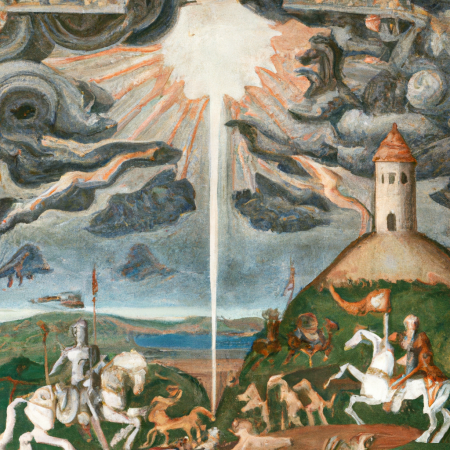
The disciples asked Jesus, “Why do you speak to the people in parables?” The gospels show him explaining parables to his apostles in private, but the meanings of Jesus’ symbolic stories about the Kingdom of God were kept somewhat hidden from the crowds. Christ’s enemies and scoffers would dismiss these tales as nonsense but those with faith in him would keep them and contemplate them. The foes to his public ministry walked away with no additional ammunition to attack him with, but his faithful disciples would discover wisdom in his teachings. As Jesus says, “To anyone who has, more will be given and he will grow rich; from anyone who has not, even what he has will be taken away.”

Sometimes the gospels explicitly tell us Jesus’ interpretations of his parables, as with The Parable of the Sower or The Parable of the Weeds. But many parables get presented without being unpacked, like our parables today: a parable about building a tower and a parable about considering battle against a stronger king. The context gives us clues to their meaning but some ambiguity remains. I believe this openness to interpretation can be intentional – inspired by God to convey multiple ideas at the same time, like that optical illusion where two profiled faces outline a vase between them, or the one where the same image depicts either an old woman or a young lady. Is the tower being built in today’s parable a good thing or a bad thing? Is the opposing king we contemplate fighting a wicked one or righteous? Each of these interpretations teaches us a lesson for the Kingdom of God.

In the first parable, Jesus asks, “Which of you wishing to construct a tower does not first sit down and calculate the cost to see if there is enough for its completion? Otherwise, after laying the foundation and finding himself unable to finish the work the onlookers should laugh at him and say, ‘This one began to build but did not have the resources to finish.’” In this parable, is the tower something good or something bad?

What is the Bible’s first and most famous tower? It’s the Tower of Babel in Genesis. The people at Babel said: “Come, let us build ourselves a city and a tower with its top in the sky, and so make a name for ourselves; otherwise we shall be scattered all over the earth!” This was after God had commanded Noah and his descendants to “Be fertile and multiply and fill the earth.” But the people of Babel turned inward, seeking to glorify their own name apart from God through building a city and tower rivaling heaven.

The God of heaven, whose name is above every name, had to come down to examine their efforts. And God, foreseeing what evils Babel’s unchecked hubris and concentration of power would bring about on earth, confuses their speech. Having amusingly lost the ability to even say, “Hey, pass me that brick,” great and mighty Babel must abandon its proud project and its people scatter across the earth. Babel is the image of a wicked tower project, but another kind of tower in the Bible has positive connotations.

Both the Old Testament prophet Isaiah and Jesus Christ in the gospels speak of building watchtowers for vineyards to safeguard their previous fruits. Jesus’ Parable of the Tenants begins, “A man planted a vineyard and put a fence around it and dug a pit for the winepress and built a tower…” This echoes Isaiah’s song about his friend’s vineyard, which also notes, “within it he built a watchtower.” A farmer would dwell atop his tower to watch and guard his vineyard during harvest time, on the lookout for hungry foxes, badgers, jackals, and even human thieves. But a vineyard’s half-finished watchtower is of little or no use at all. Unlike the Tower of Babel, this sort of tower is good and wise to complete.

There also are two ways to take today’s second parable. Jesus asks, “What king marching into battle would not first sit down and decide whether with ten thousand troops he can successfully oppose another king advancing upon him with twenty thousand troops? But if not, while he is still far away, he will send a delegation to ask for peace terms.” Can you prevail against an enemy who outnumbers you two-to-one? In ancient battles the side with the far more numerous forces typically won, but there were exceptions.

In the 1st Book of Maccabees, the army of the wicked, pagan King Antiochus, led by a commander who sought to ‘make a name for himself,’ came to fight the people of God on the battlefield. The soldiers of the Jewish leader, Judas Maccabeus, asked him: “How can we, few as we are, fight such a strong host as this? Besides, we are weak since we have not eaten today.” But Judas replied: “Many are easily hemmed in by a few; in the sight of Heaven there is no difference between deliverance by many or by few; for victory in war does not depend upon the size of the army, but on strength that comes from Heaven.” The people of God prevailed that day. Though outnumbered, the Jews would go on to win battle after battle against their enemy, so long as they were faithful in serving and honoring God.

So what do today’s parables mean for us? Well, what kind of tower are you intending to build? Is it a structure of sin, vanity, and pride (like the Tower of Babel) which will not reach heaven? Then sit down, recognize your foolishness, and change your plans, lest your foreseeable failure become your mockable, lasting legacy. Or do you plan to build a watchtower to guard your soul and protect your good fruits from anything or anyone (that is, any temptation) that would rob you? Then do not only invest in your project halfway. You cannot clear a ten-foot-wide chasm with five-foot jumps. Our hearts must not be divided, but fully devoted to Jesus Christ.

Jesus tells us, “You cannot serve both God and Mammon (or, both God and money)… Anyone of you who does not renounce all his possessions (that is, anyone who would be unwilling to sacrifice his wealth to do my will) cannot be my disciple.” Jesus says, “If anyone comes to me without hating (that is, if anyone loves more than me) his father and mother, wife and children, brothers and sisters, and even his own life, he cannot be my disciple. Whoever does not carry his own cross and come after me cannot be my disciple.” This is the level of commitment that Jesus Christ expects from us.

And who is the powerful king we contemplate doing battle with? If that king in the parable is God we would be foolish to oppose him. You could not defeat him or the coming of his Kingdom with even a billion troops at your command. So it is wise to seek out and accept his peace terms now before Jesus Christ returns. Alternatively, what if that king in our parable is the Evil One? Then we should not be afraid. The devil and the demons hate us and war against us; they are legion. Yet “victory in war does not depend upon the size of the army, but on strength that comes from Heaven.” As St. James writes, “God resists the proud, but gives grace to the humble. So submit yourselves to God. Resist the devil, and he will flee from you.

In conclusion, as you can see, the simple parables of Jesus contain riches for those who listen and keep them. Reject the foolishness of pride and vanity. Resist sin and the devil by being fully allied with Christ. Do not have a divided heart, but instead wisely invest all-in with Jesus.

Are you Friends with Jesus?

August 21, 2022

21st Sunday in Ordinary Time
By Fr. Victor Feltes

How many friends do you have on earth? When was the last time you counted them? It’s not the same as the number of Facebook friends you have. Each of us have many acquaintances, but fewer friendly acquaintances, and still fewer true friends. What is it that makes you and your friends friends? Are you friends with Jesus and how can you tell?

Luke’s Gospel relates a parable which foreshadows that not all will die as friends of Christ. The Lord Jesus is the master of the house and he plainly warns us that after he has arisen and locked the door, many will stand outside knocking and saying, “Lord, open the door for us… We ate and drank in your company and you taught in our streets.” But he will answer, “I do not know where you are from. Depart from me, all you evildoers!” In the parallel passage to this which appears in Matthew’s Gospel, Jesus cautions us, “Not everyone who says to me, ‘Lord, Lord,’ will enter the kingdom of heaven… I will declare to them solemnly, ‘I never knew you.’” Seeing many figures from the Old Covenant and from around the world saved, reclining at table, and feasting in the kingdom of God, those kept outside will be angry and grieved, wailing and grinding their teeth, at having squandered their chance to enter.

But doesn’t Jesus say elsewhere: “Knock and the door will be opened to you. For everyone who asks, receives; and the one who seeks, finds; and to the one who knocks, the door will be opened”? That is true for us during this lifetime, but at the moment of death one’s eternal fate is sealed. As the Catechism of the Catholic Church teaches: “Death puts an end to human life as the time open to either accepting or rejecting the divine grace manifested in Christ.” (CCC #1021) We must come to Jesus. Jesus says, “I am the gate…. No one comes to the Father except through me… Whoever believes and is baptized will be saved; whoever does not believe will be condemned.” Now is the time to approach him and befriend him for our salvation. We know that he loves us, but are we friends with Jesus?

When I was growing up, I thought about how many friends I had. I wondered, “Who counts as a friend?” I came up with a test: my close friends were those who could invite me to their house for supper with their family, or whom I could have over to eat with mine, without it being strange. With most of my grade school peers such invites would have felt weird, but with my handful of friends it felt fine. Eating with other people has been a sign of fellowship since ancient times. This is partly why Jesus calls us to Mass, to this meal together with him and the family of God. What greater dinner invitation could we receive than this?

Yet, simply eating with our Lord does not guarantee our closeness. During his public ministry, Pharisees invited Jesus to dine with them while regarding him with suspicion, and recall what those locked outside in the parable say to our Lord: “We ate and drank in your company and you taught in our streets.” Merely being present for these activities does not automatically yield a close friendship with Christ. At every Mass, Jesus’ Word is taught and his Body and Blood are consumed, but friendship with Christ is about more than just coming to church. So how can we be closer to him?

I recognized my boyhood friends in those whom I would visit for meals and whom I would likewise welcome to dine with me. Jesus invites us to visit him in the Eucharist but desires that we in turn would invite him to our homes. In the Book of Revelation, Jesus says, “Behold, I stand at the door and knock. If anyone hears my voice and opens the door, I will enter his house and dine with him, and he with me.” How can we invite Jesus inside? How do we receive him into the places where we live?

Jesus knocks upon the door of our souls and hearts and minds each day, and through daily prayer we let him in. Open the door to him by prioritizing your relationship with habits of devotion. Be a gracious host to your great guest and make him feel at completely home, listening to his voice and fulfilling all his requests. Seek to serve the Kingdom of Christ and embody his righteousness as a saint like him. Reject your sins and love like him, for Jesus says, “You are my friends if you do what I command you.” Jesus knows we’ll mess up sometimes, but Christ’s true friends will strive to be his close friends.

Choose the Narrow Gate

August 20, 2022

21st Sunday of Ordinary Time
By Fr. Chinnappan Pelavendran

Salvation is a past, present, and future event. We were saved from the bondage of sin when we were baptized as children or adults. We are being saved in the present, when we cooperate with God’s grace by loving others as Jesus did, by sharing our blessing with the needy, and being reconciled with God daily through His forgiveness of our sins. We will be definitively saved when we hear the loving invitation from Jesus, our Judge, at the moment of our death when we hear Him say, “Good and faithful servant, you were faithful in little things enter into the joy of your Master.”

Today’s first reading about the prophesy of Isaiah, we hear about the return of God’s people to Jerusalem. It is an assurance that God will fulfill His promise to His People. God will soon fulfill his promise of restoring us to Himself. He will do this to show His saving power. God has the purpose for this gathering, this is for the glory of his name. In other words, every work he does has the remote aim of giving Him Glory. In addition to gathering us unto Himself, God will also make us his ambassadors to other nations.

Today’s second reading from the letter to the Hebrews gives us the “narrow gate” theology. The road less often taken and the gate less often chosen are the paths of God’s discipline. The pain and suffering Christians experience are the parts of God’s discipline given in love. We are being disciplined by our afflictions, strengthened to walk that straight and narrow path – that we may enter the gate and take our place at the banquet of the righteous. The experience is similar to that of a child being disciplined by loving parents who desire only to help him grow, mature, and become responsible.

In the Gospel, Jesus answers a very difficult question, “Lord, will there be only a few saved?” His response was very simple, “Try your best to enter by the narrow door.” Jesus affirms that God wants all persons to enjoy eternal life. But he stresses our need for constant fidelity and vigilance to His commandments throughout our lives. Thus Jesus reminds us that, even though God wants all of us to be saved, we all need to work at it. Entry into God’s Kingdom is not automatically granted. Jesus came to bring God’s love and freedom to the whole world. The message of his Gospel is that there is not a single person, people, nation, race or class which will be excluded from experiencing the love and liberation that God offers.

We need to make wise decisions and choose the narrow gate. God allows us to decide every day what road we will walk down and what gate we will choose. He encourages us to choose His way and His life. “If anyone desires to come after Me, let him deny himself, and take up his cross daily, and follow Me,” this means a consistent denial of self for the steady follower of Jesus.

We need to cooperate with God’s grace every day, by choosing the narrow way and the narrow gate of self – control of our evil tendencies, evil habits, and addictions. God gives us divine strength to practice self – control. We are enabled to love others, see the face of Jesus in them, and share our blessings with them. The Holy Spirit guides us through the narrow way in daily prayer, bible reading, and reception of the Sacraments of Reconciliation and Eucharist.

In the Boss’s Shoes

August 7, 2022

19th Sunday in Ordinary Time
By Fr. Victor Feltes

Once upon a time, you had an idea, an idea to bless the entire world by starting a new business from scratch. You fully invested yourself into the project – your time and talent and treasure – to make this enterprise successful, and it was very successful. After leading your business for many years without a single vacation, you announced you would be taking some time away. You reassured your employees the company would continue and that you would be back, perhaps in a few weeks or maybe several months.

You gave careful instructions to all of your managers for what they were to do in your absence, and then you left on a journey which was out of this world. You celebrated a beautiful, destination wedding which you had long-looked forward to and enjoyed many other things. Then one Friday afternoon around 3:00 PM, you returned to your workplace, your creation.

Driving into the parking lot, you’re surprised by how few cars there are. Your confusion turns into shock when you discover the building’s front doors are locked, despite it being business hours. Fishing out your keys from your pocket you unlock the door and walk into an empty lobby. First, you go to your office and find your dear secretary, Mary, at her desk.

Thank God you’re here,” she says and she begins to tear up. “After you left, everything became horrible. Despite what you told them, people started doing their own thing. When I tried to correct them, they wouldn’t listen and were cruel.” “Where are they now?” you ask. “Most of the salaried employees have simply stopped showing up, and the rest are skipping work today to make it another ‘long weekend.’” “Mary, I thank you for your faithfulness. I’m sorry this happened to you, and I will make it up to you.

As you walk throughout the building you notice many empty beer bottles and pizza boxes laying around. The cubicles and warehouse are nearly deserted, except for Jennifer helping customers over the phone at her computer and Michael moving shipping crates on his forklift. Then you find several of the junior employees goofing-off in the break room. They become very quiet when you enter.

Why aren’t you working?” “Because… no one has told us what to do.” “Fine! Start by clearing these tables and picking up the floor. Clean these workspaces and take out the trash. Then report back to me.

Returning to your office, you immediately dictate two memos: the first, firing all of your current managers for cause, and a second memo giving large raises and promotions to Mary, Jennifer, and Michael, appointing them as the new leaders of their departments. I trust this tale sounds familiar; it is similar to Jesus’ parables but dressed in modern clothes.

In today’s Gospel, Jesus urges us to be prepared “like servants who await their master’s return from a wedding, ready to open immediately when he comes and knocks.” Blessed will such servants be upon his arrival, especially if he finds them vigilant in nighttime’s “second or third watch,” that is, during this world’s darkest hours. Their joyfully returning lord and master will be so grateful for their proven faithfulness. “Amen, I say to you, he will gird himself, have them recline at table, and proceed to wait on them,” just like Jesus washes his disciples’ feet, dries their feet with a towel wrapped around his waist, and gives them his Eucharist at the Last Supper. Our Lord and Master, who shall come knocking on an unknown future day – either on the day we die or on the Last Day – is Jesus Christ himself.

As for those who say “the master is delayed in coming” or imagine he is never coming back, who mistreat other people (the menservants and the maidservants) and serve their own selfish desires (eating and drinking and getting drunk), our Lord will come at an unknown hour and punish them severely, condemning them to where the unfaithful go.

In the beginning, God had an idea, an idea to bless our entire world, creating this universe from scratch. Jesus Christ, through whom all things were made, has fully invested himself into his enterprise’s success. Yet Jesus has given us all freewill. Though never far, Christ leaves us free to choose to be his good co-workers or to do our own wicked thing. Today I hope that, having imagined yourself in the Boss’s shoes, you may better personally feel and appreciate how much our Lord treasures your faithfulness and how eager he is to reward it.