Archive for the ‘Parables’ Category

Tuesday, 3rd Week of Advent

December 16, 2009

Is it more important to say the right thing, or to do the right thing? As people like to say “Talk is cheap,” but “Actions speak louder than words.”

Some Christians say that if we merely confess Jesus Christ as our personal Lord and Savior then we are assuredly saved. But Jesus Himself says that ‘not everyone who says to me, ‘Lord, Lord,’ will enter the kingdom of heaven, but only the one who does the will of my Father in heaven.

It is easy to feel righteous like the chief priests and the elders if we subscribe to the right and enlightened opinions, but we should be humbled by the fact that scandalous sinners have turned to Christ and today harvest more fruit in the vineyard than we do.

We have to do more than talk a good game, we have to show up on the court. For example, you say you oppose the killing of the unborn? Good! But what are you doing to end it? Do you pray for mothers and their babies? Do you march for life?

You say that hatred between peoples should end. Absolutely! But is there someone here that you cannot bring yourself to pray for, or say “hello” to in the hallway?

You say that we must care for people in need. Indeed, and Jesus says the same. But do you give of your time, talent and spending cash until it hurts a bit, like an actual sacrifice?

If I were to end this homily here and now with an exhortation that you should go out into your world and to work hard for good in that vineyard, you might decide to listen and your life might change a little bit for a little while. But I would not expect your life change a great deal, unless you also respond to another calling; the calling from our Father that you work in another vineyard first. This vineyard is within you, it is an inner-vineyard. You work it alongside Christ in prayer and what you harvest from it is intimacy with God.  Of this encounter, St. Augustine wrote:

“Late have I loved you, O Beauty ever ancient, ever new, late have I loved you!  You were within me, but I was outside, and it was there that I searched for you.  In my unloveliness I plunged into the lovely things which you created.  You were with me, but I was not with you.  Created things kept me from you; yet if they had not been in you they would not have been at all. You called, you shouted, and you broke through my deafness.  You flashed, you shone, and you dispelled my blindness.  You breathed your fragrance on me; I drew in breath and now I pant for you.  I have tasted you, now I hunger and thirst for more.  You touched me, and I burned for your peace.”

In the labor of prayer (and it does take a daily effort) you encounter God. He surprises you with gifts of consolation and peace, and you overflow with His love. This overflow is what makes the saints the saints. It is what makes their holy lives possible. The saints are not self-made men and women. Their cups runneth over within them, and it is from out of this abundance that they love the vineyard of the world and work in it for the better.

You say that you believe in God, and in Jesus Christ as your Lord and Savior. So come to the work of prayer each day, or your devotion and service to God will remain forever little more than lip-service.
November 11 – Veterans Day

November 11, 2009

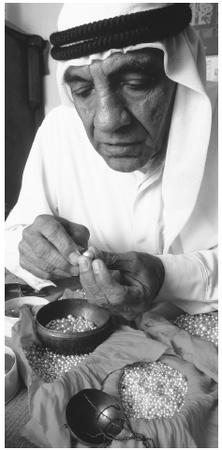
Pearl Merchant

In the Gospel today, Jesus describes the kingdom of heaven as being like a treasure buried in a dirt field, or like a ridiculously underpriced pearl in a market place. These are valuable things that take great personal sacrifice to obtain. Jesus’ lesson in this for us is that a wise person should be willing to trade away everything else they have, and do it joyfully, because of the desirability of what’s before them. So it is with the Kingdom of God.

But these parables are not only about us, and how we should go after God’s kingdom. They also tell about how God has sought after for us for His kingdom. The Lord saw us as the treasure buried in a field, the field being the world. He was like the pearl merchant, who saw us as a precious pearl whose great worth was unrealized by others. And out of love for us one could say that He joyfully sold everything that He had to possess us.

“For us men and for our salvation, He came down from heaven. By the power of the Holy Spirit He was born of the Virgin Mary and became man. For our sake He was crucified under Pontius Pilate.  He suffered, died, and was buried. On the third day he rose again,” ‘giving us a new birth to a living hope through His resurrection.’ Through Christ’s poverty, He made us rich, giving us “an inheritance that is imperishable, undefiled, and unfading, kept in heaven for [us].”

Whenever something is truly valuable, it is worth one’s great personal sacrifice to possess it and to protect it. Today we are honoring those men and women who have done just that; who have made great personal sacrifices to serve our country in the military. Today is Veterans’ Day. While we would be mistaken to identify our country as being the kingdom of God, it would also be a mistake to dismiss the good our country and its veterans have done around the world.

We can we be so proud of our country’s veterans because they are true soldiers. As G.K. Chesterton said, “The true soldier fights not because he hates what is in front of him, but because he loves what is behind him.” This is reflected in how we have treated those we have defeated. We forgive them, rebuild them, and let them have their freedom. We may need to fight some enemies, now and in the future, but we have no need to hate them. Our power is not in our hatred, but our love. In this we follow our model, Jesus Christ, who loved the world so much that sacrificed everything He had for it. And let us remember that He conquered the whole world for us without firing a single shot.

Thursday, 27th Week in Ordinary Time—Year I

October 8, 2009

In the illustration used by Jesus in the Gospel, a person goes to their neighbor’s house and calls inside for a needed favor. The father inside is not immediately obliging. The door’s locked and his sons and daughters are already at rest. But Jesus says, ‘…If the father does not get up… because of their friendship, he will get up to give him whatever he needs because of the person’s persistence.’

Why will the father end up doing the favor in the end? Because of the father’s children. Imagine all the kids in there, in the dark and in their beds, with the neighbor at the door, knocking: *pounding* “Daaad.” *more pounding* “Dad, do whatever they want!”

The father in this story stands for our Father in heaven, who can sometimes seem reluctant in answering our prayers. The children in the story are the saints in heaven, the sons and daughters who rest in the Father’s house. 

What is it like for the souls in heaven to hear our prayers? Perhaps the experience St. Faustina of the Divine Mercy on earth gives us a glimpse into the experience of the saints in heaven. In the Diary of St. Faustina, a book which I highly recommend for spiritual reading, the Polish nun records this:St. Faustina of the Divine Mercy

“It has happened to me for some time now that I immediately sense in my soul when someone is praying for me; and I likewise sense it in my soul when some soul asks me for prayer, even though they do not speak to me about it. The feeling is one of certain disquiet, as if someone were calling me; and when I pray I obtain peace.”

This reaction makes perfect sense, for how could a good person hear of another’s heartfelt needs and not insist that our Father act? Or how could a saint remain at rest while someone knocks at the door of heaven? Knowing this, how then should we pray? Imagine what doors would open for us, if only we would persist in knocking? Or imagine what gifts would we receive, if only we would try asking? So knock, and ask, boldly.

Wednesday, 20th Week in Ordinary Time—Year I

August 19, 2009

Today’s readings give us two lessons about service:

In the first reading we hear an allegory of the forest trees coming to their most prominent members, asking each one to lead them. But every tree declines, asking “why would I want to give up my comfortable glory to serve like that?” As a last resort, they ask the buckthorn tree. This last tree is something of a large bush, and not good for very much. The buckthorn agrees and rules as a tyrant over them.

What is the lesson for us here? If we Catholics are not willing to sacrifice our some of our comfortable glory for the social needs of others, we should expect bad things to come. As Pope Paul VI said, “If you want peace, work for justice.”

The second lesson is from the Gospel, where we hear the parable most likely to offend an American’s sense of justice. We hear that the last laborers work a little and receive the same pay as the first. But the landowner is right to say that he has robbed no one. The first laborers receive the full wage which they agreed was fair and just at the beginning of the day.

What is the lesson here for us in our service? Serving Christ is work, but it should not make us feel deprived.  It should make us feel enriched. If we come to the end of the day’s labors feeling bitterness at our Landlord we are in need of an open and honest conversation with Him.

Thursday, 19th Week in Ordinary Time—Year I

August 17, 2009

Today we heard the parable of the debt-ridden servant. You and I, of course, are the first servant with the unpayable debt. The debt of our sins. And the Lord, our King, has taken the loss, upon Himself, to gratuitously forgive our debt. But, at our judgment, He will receive important testimony about how we have treated those who have owed us much lesser personal debts.

This is why some Christians pray, “forgive us our debts and we forgive our debtors,” while we pray, “forgive us our trespasses, as we forgive those who trespass against us.”

Who is it that you’re not sure you’ve forgiven?

Remember this:  To forgive another’s sin is not to say that the wrong wasn’t wrong, and it is not trying convince yourself that the hurt doesn’t hurt. If you can pray for the good of your offenders, you have a forgiving heart.