When a child is presented for baptism, the parents are asked: “What name do you give [or have you given] your child?” The Diocese of La Crosse is comprised of 162 parishes across nineteen Wisconsin counties and is home to more than 200,000 Catholics. These are the top ten names attached to parishes in the Diocese of La Crosse:
If I were a demon prowling about the world for the discouragement, confusion, and ruin of souls, how might I have tried to tempt God’s beloved ones in the year leading up to the first Christmas?
If I were a demon, I would say to St. Elizabeth, “Did people imagine that Zechariah had a vision while he was serving in the temple? He simply had a stroke and he will never speak again. You’re feeling sick every day and your abdomen is expanding. You clearly have a cancer. You will soon be dead. There is no hope.”
If I were a demon, I would say to St. Mary, “You think you saw an angel? That’s crazy! You’re imagining things. Who are you to be the mother of God’s son? Who do you think you are! Don’t even bother going to visit Elizabeth. You’ll feel foolish when you arrive and see that nothing has changed. None of your family, friends, or neighbors will believe you. Joseph will divorce you and you will be all alone.”
And if I were a demon, I would say to St. Joseph, “Do you really believe Mary conceived by God’s Spirit? She’s obviously lying. Even if it’s true, who are you to be a father to the Messiah? Either way, it is best for you to just get a divorce. Whatever you imagined when you married her, now you can see that you were so very wrong.”
Even with the coming of Christmas, my diabolical efforts would not cease. I would advise Bethlehem’s shepherds to steer safely-clear of the holy child and to keep to watching their flocks. I would urge the Magi to dismiss the starry signs as meaningless coincidences and not to risk a long journey. I would encourage Joseph to ignore the warning dream to take his family into Egypt and I would encourage Mary not to trust in her loving husband’s lead: “Surely, God would have told you this before telling Joseph.” Thankfully for us, none of them were prevented from doing God’s will through being tripped-up by such traps.
Some people think of temptation strictly as a prompting toward pleasurable, immoral action. But temptation can come in other forms. It can also pull us toward inaction and negative experiences like fear, doubt, sadness, and despair.
Some people assume that the saints do not know temptation like the rest of us. But did Mary, Joseph, and Elizabeth live oblivious to the thoughts and unassailed by the feelings realistically described above? In truth, the saints come to understand temptation well as they discern and persevere through the trials of life.
Some people believe that God loves and watches over a few favored saints while having less concern for the rest of us. But this is also a temptation. Even if our life takes a shocking turn and we don’t know what to do, even if we have a stroke, or cancer, or our mind begins to fail, even if we seem betrayed or abandoned by everyone, each and all of us are his dearly beloved ones. (And we shouldn’t listen to anyone telling us otherwise, even if they speak to us in our own voice.)
Remember Raiders of the Lost Ark? The Ark that Indiana Jones and the Nazis were pursued in that entertaining film was the most precious object in the entire Old Testament. But what is lost on many is how that holy artifact is related to the most important woman in the New Testament and its New Covenant.
The Old Testament Ark of the Covenant was a box built in the days of Moses according to God’s instructions at Mount Sinai. It was made of wood overlaid with pure gold, inside and out. No man was allowed to touch God’s Holy Ark—lest they die—so it was designed to be carried about using a pair of poles. The Ark was the throne for God’s presence on earth. The wings of two, golden Cherubim angel statues atop the Ark’s lid served as his “mercy-seat.” The Ark itself contained within several interesting items from the time of the Exodus: the two stone tablets of the 10 Commandments, the wooden staff of Aaron (which miraculously blossomed to confirm his divinely-ordained priesthood), and a gold container holding some of the Manna from heaven which God provided to feed his people on their desert pilgrimage.
About 450 years after its construction, around 1000 BC, King David reigned over all of Israel. He tried to bring the Ark up to his royal city, Jerusalem, until one of the priests (who should have known better) touched the Ark and fell down dead. David exclaimed, “How can the Ark of the Lord come to me?” He arranged for it to be kept at the house of Obed-edom in the Judean countryside. The Ark remained there for three months and manifestly blessed the whole household. When it was reported to the king how richly Obed-edom was being graced, King David decided to try transporting the Ark into Jerusalem once more. David himself led that procession, dancing and leaping before the Lord with joyful abandon.
The Ark would eventually reside in the Jerusalem Temple built by David’s son, King Solomon. It is written that before that Temple was destroyed by the Babylonians in 587 BC, Jeremiah the Prophet took the Ark and hid it in a secret cave, saying, “No one must know about this place until God gathers his people together again and shows them mercy.”Unlike in the 1981 film, the Lost Ark has never been found, but a new Ark of God did appear.
The Blessed Virgin Mary is the New Ark of the Covenant because she bears Jesus Christ, God’s fullest presence on earth. By God’s design, the first Ark was made of wood and covered with gold; Mary is a human being full with grace. The former Ark carried the word of God in stone; Mary’s womb carries the Word become flesh. Aaron’s dead staff miraculously flowered; Mary’s virgin womb blossomed with a bud from the stump of Jesse. The Ark held Manna from heaven; Mary bore the true bread from heaven. Mary’s womb holds Jesus Christ, our Prophet, Priest, and King.
As the Gospel of Luke tells us, after she was visited by St. Gabriel the Archangel at the Annunciation, “Mary set out and traveled to the hill country in haste to a town of Judah, where she entered the house of Zechariah and greeted Elizabeth. When Elizabeth heard Mary’s greeting, the infant leaped in her womb, and Elizabeth, filled with the holy Spirit, cried out in a loud voice and said, ‘Most blessed are you among women, and blessed is the fruit of your womb. And how does this happen to me, that the mother of my Lord should come to me?’” And Mary would bless them with her help and companionship, staying at their house in the Judean hill country about three months.
Like King David, St. Elizabeth questions and St. John the Baptist leaps for joy before the Ark of the Lord. St. Joseph, regarding the inviolable sanctity of his wife with reverent fear, never touched her virginity. Mary would also go on to literally serve as God’s throne, his mercy-seat; “On entering the house [the Magi] saw the child with Mary his mother.”
In the Book of Revelation, St. John’s vision of heaven includes a sighting of the Lost Ark: “Then God’s temple in heaven was opened, and the Ark of his Covenant could be seen in the temple.” Then John beholds “in the sky, a woman clothed with the sun, with the moon under her feet, and on her head a crown of twelve stars.” We soon discover that this glorious woman is pregnant with “a son, a male child, destined to rule all the nations….” This is the Christ, and she is his Holy Ark.
Now the Lord’s Ark is not meant to be worshiped. (Though among God’s most holy creations, an Ark of God is not divine.) Yet, as one draws nearer to the Holy Ark, one inevitably draws nearer to God’s presence. Just as the old Ark of the Covenant was of central (though secondary) importance in the Old Covenant, so God gives the Blessed Virgin Mary an essential role in his New Covenant. All who come to her are drawn nearer to her Son.
Imagine daring to enter the old Jewish Temple’s the Holy of Holies where the Ark of God was kept. What awe and reverence would you feel before the all-holy presence of God? Now consider drawing near to the even greater Ark, Mary the Mother of all Christians, who reaches out to each of us with love and takes away our fear. And now reflect upon the great privilege we have in approaching and even touching the Christmas Gift of God she bore, Jesus Christ himself. Mary is blessed among women and blessed is the fruit of her womb, Jesus. But blessed are we who would believe in all that the Lord has revealed to us.
“Some [spiritual beginners] make little of their faults, and at other times become over-sad when they see themselves fall into them, thinking themselves to have been saints already; and thus they become angry and impatient with themselves, which is another imperfection. Often they beseech God, with great yearnings, that He will take from them their imperfections and faults, but they do this that they may find themselves at peace, and may not be troubled by them, rather than for God’s sake; not realizing that, if He should take their imperfections from them, they would probably become prouder and more presumptuous still. They dislike praising others and love to be praised themselves; sometimes they seek out such praise. Herein they are like the foolish virgins, who, when their lamps could not be lit, sought oil from others.”
—St. John of the Cross in The Dark Night of the Soul
1. Prepare for Confession by Examining Your Conscience
Consider the question, “Since my last confession, what did I chose to do even though I knew that it was wrong?” To help you know your sins, ask the Holy Spirit to give you insight. Then, perhaps review your personal relationships (God, family, etc.), the Ten Commandments, or the Seven Deadly Sins. You may want to write a list for yourself to bring into the confessional, if that would make you feel more comfortable.
2. Begin Confession with a Sign of the Cross, saying, “Bless me, Father, for I have sinned”
Don’t worry. If you forget what to do, the priest will walk you through it.
3. Give the Priest Some Idea of how Long Ago Your Last Confession Was
Exact precision is not important here; it simply gives the priest some context.
4. Tell the Priest Your Sins
Confess what sins you committed and how many times (or with what frequency) you committed them. The most important thing is that you not intentionally withhold any serious sins. Avoid doing this and you’ll make a good confession. Let the priest know when you are finished.
5. Listen to the Priest’s Advice
Father will probably have some encouragement and advice to help you sin no more.
6. Make Note of Your Penance
The priest will give you a task (usually prayers) to perform to help repair the harms and brokenness that your sins have caused in yourself and the world. Though you can do your penance anytime after confession, sooner is probably better, so that you don’t forget.
7. Pray Your Act of Contrition
In essence, an Act of Contrition simply says, “Lord, I’m sorry for my sins. Please help me to sin no more.” You can pray this in your own words, or use a traditional Act of Contrition prayer like this one:
“O my God, I am heartily sorry for having offended you. I detest all my sins because of your just punishment, but most of all because they offend you, my God, who are all-good and deserving of all my love. I firmly resolve, with the help of Your grace, to sin no more and to avoid the near occasion of sin.”
8. Stay for Absolution
Listen to the priest’s Absolution prayer, which forgives your sins by the power of God through Jesus Christ.
An “advent” is the coming of something extremely important. The word “advent” is from the Latin word for “arrival.”
What is the Advent season for?
We are preparing for Jesus Christ’s coming at Christmas and at this world’s end.
How many years ago was Jesus born?
The first Christmas was about 2,015 years ago. It is fitting that his birth is the basis for our calendar because Jesus Christ is the center of human history.
When will Jesus come again in glory?
We do not know precisely, so we are to be always ready and prepared for Him.
Why are Isaiah and John the Baptist so prominent in Advent’s Sunday readings?
These two prophets preached about the Jewish Messiah’s coming and about the Kingdom of God He would establish.
What does purple symbolize for Advent?
Purple was associated with royalty in the ancient world. It is a color for Advent since Jesus is coming to us as the King of Kings.
Why does Advent have a wreath with four candles?
The circle of evergreen branches symbolizes the eternal, everlasting life which Jesus comes to bring to all four-corners of the earth. The candles are lit to mark the four Sundays of Advent preceding Christmas.
Why is one of the candles different?
One candle is rose-colored to mark the 3rd Sunday of Advent, which we call “Gaudete Sunday.”
What’s special about Gaudete Sunday?
Reaching this Sunday means that we have passed the halfway-point on our Advent journey to Christmas. “Gaudete” means “rejoice” in Latin.
This evening, I received an email from a concerned parish visitor who was responding to a pair of area ecumenical Thanksgiving services being promoted in our bulletin:
Dear Father. I was severely shocked and disappointed to see this in a CATHOLIC bulletin. I am a devout Roman Catholic visiting family in the area. Not only is this confusing to to parishoners. It is outright contradicting to Church doctrine. You have beautiful homilies, and seem to be a devout priest ! Which is why I’m so confused and outright shocked !!! I will also be emailing the Bishop to address this issue with him. God bless [F]ather. And may the Sacred Heart [guide] us both ! [-Signed-]
In case there is wider confusion and concern on this subject, here is the reply I sent.
Dear —,
Thank you for your note. Properly representing our Catholic Faith and preventing scandal are important to me and I’m glad you wrote me.
The Catholic Church calls Protestants our “separated brethren.” This is because we are united as brothers and sisters in Christ though, at the same time, divided in non-trivial ways. (I hope this teaching of the Church is clearly reflected through my preaching, for I believe our Lord desires all of his disciples and all people to come into full communion with his Catholic Church.) While Catholics and Protestants are certainly not in full communion with each other, we share and revere many of the same elements of Christian Prayer, Scripture, and Tradition. Without compromising on the truth, the Church allows Catholics to come together with other Christians for ecumenical prayer events such as the upcoming Thanksgiving gatherings you saw advertised in the bulletin.
This evening, I spoke with Mr. Christopher Carstens, our (solidly orthodox) diocesan director of liturgy, regarding your concerns. He confirmed that these ecumenical events are not condemned by the Church. In fact, The Directory for the Application of Principles and Norms on Ecumenism promulgated by St. Pope John Paul II in 1993 states that, “In liturgical celebrations taking place in other Churches and ecclesial Communities [i.e, Protestant churches], Catholics are encouraged to take part in the psalms, responses, hymns and common actions of the Church in which they are guests. If invited by their hosts, they may read a lesson or preach.” (#118) The upcoming area Thanksgiving ecumenical services are celebrations of this sort, consisting of scripture readings, psalms, prayer responses, hymns, and talks (without common communion.) And so, Catholics may feel welcome to take part.
Through our participation in such ecumenical events and gatherings, while remaining firmly and unabashedly Catholic, I hope that our separated brethren may be drawn from (perhaps) prejudice against Catholicism, to curiosity, to understanding, to attraction, and finally into full communion with Mother Church. Sharing the truth with love and showing love informed by truth through encounters like these will be key to the reunion of all Christians.
Thanks again for writing me with your concerns, which are hopefully now relieved.
St. Michael is one of the principal angels. His name (translated from Hebrew, “Who is like God?“) is the war-cry of the good angels in the battle fought in heaven against the devil and his followers. His name is recorded four times in Scripture:
Daniel 10 — Gabriel says to Daniel, when he asks God to permit the Jews to return to Jerusalem: “The Angel of the kingdom of the Persians resisted me … and, behold Michael, one of the chief princes, came to help me … and none is my helper in all these things, but Michael your prince.”
Daniel 12 — An angel speaking of the end of the world and the Antichrist says: “At that time shall Michael rise up, the great prince, who stands for the children of your people.”
Jude 1 — St. Jude alludes to an ancient Jewish tradition of a dispute between Michael and Satan over the body of Moses: “[The archangel Michael] did not venture to pronounce a reviling judgment upon [Satan] but said, ‘May the Lord rebuke you!’”
Revelation 12 — St. John speaks of the great conflict at the end of time, which reflects also the battle in heaven at the beginning of time: “Then war broke out in heaven; Michael and his angels battled against the dragon. The dragon and its angels fought back, but they did not prevail and there was no longer any place for them in heaven. The huge dragon, the ancient serpent, who is called the Devil and Satan, who deceived the whole world, was thrown down to earth, and its angels were thrown down with it.”
Following these Scriptural passages, Christian tradition gives to St. Michael four offices:
(1) To fight against Satan.
(2) To be the champion of God’s people, the Jews in the Old Law, the Christians in the New Testament; therefore he was the patron of the Church, and of the orders of knights during the Middle Ages.
(3) To rescue the souls of the faithful from the power of the enemy, especially at the hour of death.
(4) To call men’s souls away from earth and bring their souls to judgment.
Regarding his rank in the celestial hierarchy opinions vary; St. Basil and other Greek Fathers place St. Michael over all the angels; they say he is called “archangel” because he is the prince of the other angels; others believe that he is the prince of the seraphim, the first of the nine angelic orders. But, according to St. Thomas Aquinas he is the prince of the last and lowest choir, the angels.
I would like to share with you the most interesting Scripture interpretation that I have come across in some time. This theory proposes that St. Mary of Bethany, the beloved sister of Martha and Lazarus, had some form of cognitive disability, perhaps from a genetic disorder. While we cannot prove this speculation (short of DNA testing her first-class relics) this theory fits with the Gospels and illuminates familiar stories and figures.
Jesus and his disciples journeyed to Bethany where a woman named Martha welcomed him. Martha’s sister, Mary, lived with her because (as per this theory) Mary was unmarried and could not live on her own. While Martha was burdened with much serving, Mary sat beside Jesus at his feet, listening to him speak. Mary was oblivious to the social expectation that she should not assume the place of a disciple like a man, yet Jesus showed no signs of disapproval.
Martha, frustrated and knowing that Mary would not heed a quiet cue, called upon Jesus to redirect her, “Lord, do you not care that my sister has left me by myself to do the serving? Tell her to help me.” Jesus said to her in reply, “Martha, Martha, you are anxious and worried about many things. There is need of only one thing. Mary has chosen the better part and it will not be taken from her.” Mary was not accustomed to her decisions being praised and she smiled broadly as she got to remain close to Jesus.
Jesus loved Martha and Mary and their brother Lazarus, and they each believed in him. So the sisters were heartbroken when Jesus did not come in time to save Lazarus on his deathbed. When Martha heard that Jesus had finally arrived she went to meet him outside the village while Mary sat at home. Martha said to Jesus, “Lord, if you had been here, my brother would not have died. But even now I know that whatever you ask of God, God will give you.” The two spoke for a time and then Martha went to secretly call her sister. Martha was so discrete because the village of Bethany was just two miles from Jerusalem and she knew that Jesus’ enemies were out to get him.
Martha went into the house and whispered to Mary, “The teacher is here and is asking for you.” As soon as Mary heard this, she rose quickly (without caution or subtlety) and went single-mindedly to Jesus. Many Jews had come to Martha and Mary to comfort them about their brother, so when the Jews who were with Mary in the house comforting her saw Mary get up quickly and go out, they followed her, presuming that she was going to the tomb to weep there. (They had not previously followed Martha out, but they felt it prudent to accompany Mary and make sure that she would be safe and alright.)
When Mary came to where Jesus was and saw him, she fell at his feet and tearfully repeated the same lament that she had heard her sister saying over the past four days: “Lord, if you had been here, my brother would not have died.” (These are the only words of St. Mary of Bethany recorded in the Gospels.) Imagine her unrestrained joy when she soon saw her brother Lazarus alive once again.
[Although these three persons have sometimes been conflated, we assume here that that Mary of Bethany is neither Mary of Magdala (also known as Mary Magdalene) nor the penitent woman who anoints Jesus in Luke’s Gospel.]
Jesus’ Passion was near and he came with his disciples to a supper in Bethany. Lazarus was there, reclining at table with Jesus, while Martha served. Mary was also present, holding a stone, alabaster flask containing a liter of very expensive ointment. (It was made from genuine aromatic nard, an oil derived from a plant in the Himalayas.) Perhaps Mary borrowed the perfume from her sister, or perhaps she had inherited it when their mother died. Regardless, although Mary treasured this perfume and loved to smell it from time to time, she was resolved to make a gift of it to Jesus. She approached him, anointed his head and feet, and dried his feet with her hair. The house was filled with the fragrance of the oil.
Mary loved Jesus very much and was delighted to do something extra special for him. But the other guests at table became indignant: “Why was this ointment wasted? Why was it not sold for three hundred days wages and given to the poor?” Mary began to cry, but Jesus defended her. “Let her alone; why do you trouble her? She has done a beautiful thing for me. For you will always have the poor with you… but you will not always have me. … In pouring this ointment on my body she has done it prepare me for burial. And truly, I say to you wherever this gospel is preached in the whole world, what she has done will be told in memory of her.” Indeed, Jesus’ prophesy is fulfilled in your sight.
Mary of Bethany, One of Jesus’ Simple & Beloved Little Ones
Jesus said, “Amen, I say to you, unless you turn and become like children, you will not enter the kingdom of heaven. Whoever humbles himself like this child is the greatest in the kingdom of heaven. And whoever receives one child such as this in my name receives me.” (Matthew 18:3-5)
In a world with little welcome or regard for the mentally or physically flawed, the acceptance and love that Jesus showed St. Mary of Bethany are an important and powerful statement. Her openness, generosity, and childlike devotion to Jesus made her truly great. She is now celebrated in Heaven and throughout the whole world, wherever the Gospel is proclaimed, and perhaps we know her better than we ever have before.
How could we possibly celebrate the Holy Mass without the chalice? Without the chalice, how would we adore the Precious Blood? The chalice holds the Lord and it gives form to his presence. He is not lifted up in sacrifice without its close collaboration. Perhaps our Lord could have chosen another means but this is the one He chose. The chalice at Mass is not divine, but when our Lord is adored it shares in His glory.
The chalice at Mass is an icon of a person. The chalice of Jesus Christ is the Blessed Virgin Mary. She held the Lord within her and from her He received his human form. He was not lifted up in sacrifice without her close collaboration. Perhaps our Lord could have chosen another means, but she is the one He chose. Mary is not divine, but when our Lord is adored she shares in His glory.
We do well to closely heed all that our Lord Jesus says, but we must also carefully understand what the Word of God Incarnate is really telling us. Using Scripture to interpret Scripture, let us consider two examples where some modern-day Christians misinterpret Jesus’ teaching by taking him too literally.
“Do not swear at all”
Jesus declares, “You have heard that it was said to your ancestors, ‘Do not take a false oath, but make good to the Lord all that you vow.’ But I say to you, do not swear at all; not by heaven, for it is God’s throne; nor by the earth, for it is his footstool; nor by Jerusalem, for it is the city of the great King. Do not swear by your head, for you cannot make a single hair white or black. Let your ‘Yes’ mean ‘Yes,’ and your ‘No’ mean ‘No.’ Anything more is from the evil one.” (Matthew 5:33-37)
Swearing an oath or vow invokes God as one’s witness to a claim or a promise and invites God’s just punishments if his name is taken in vain. It seems that people in Jesus’ day were trying to steal credibility without fearing divine retribution by swearing by lesser holy things. But Jesus warns that all good things belong to God, and condemns clever manipulations of the truth as coming from the devil. Instead, Jesus says, “do not swear at all,” but “let your ‘Yes’ mean ‘Yes.’”
So do any appropriate times and places remain for swearing oaths or vows in the New Covenant? God reveals that such exist through St. Paul. In Galatians 1:20 and 2nd Corinthians 1:23, God himself inspires St. Paul to swear oaths (for example, “I call upon God as witness, on my life, that it is to spare you that I have not yet gone to Corinth.“) And in Acts 18:18, we read that St. Paul “had taken a vow.” Thus, in rare, righteous, and serious situations a Christian may solemnly swear to things before God.
“Call no one on earth your father”
Jesus tells us, “Call no one on earth your father; you have but one Father in heaven.” (Matthew 23:9) Does this mean that we should not call priests (or our even own dads) “Father?” This is not how the first Christians understood Jesus’ words.
St. Stephen calls the Jewish leaders “fathers” in Acts 7:2, and St. Paul does similarly in Acts 22:1. God prompted St. John to address Christian community elders as “fathers.” (1st John 2:13-14) God also willed St. Paul to write of “our father Isaac” and to call Abraham “the father of us all.” (Romans 9:10, 4:16-17) God inspired St. Paul to regard and describe himself as a father to his spiritual children. (1st Corinthians 4:14-15, 1st Timothy 1:2, Titus 1:4, Philemon 10) Therefore, the true concern of our Lord is not with the label of “father,” but that our greatest devotion and love always be directed toward “our Father who art in Heaven.”
While studying for the priesthood, I spent a summer at our diocese’s mission in Bolivia. There I learned that South America’s poorest country has a death rate from tuberculosis 222-times higher than here. I was told the Bolivian government offers free TB medicine, but that many who take the pills start to feel better and quit before they’ve finished the prescription. Tragically, this allows the disease to resurge, and the patients are lost. Their half-measured approach to what would save them invites their death.
As our children soon return to CCD, I wish to emphasize the obvious truth that CCD alone is not enough to form a child into a mature Christian adult. Religious education must be paired with daily family prayer (beyond simply before meals) and family Mass attendance each week. Without these, children learn from their parents’ silent instruction that their Catholic faith may be carelessly discarded once their “last hoop” of Confirmation is cleared. This must not be so!
If you are already attending Mass and sharing family prayers, please keep it up. If not, please follow this powerful prescription of prayer and Sunday worship. Embrace it for your children’s sake and for your own. Our Catholic faith is not mere “fire insurance.” It is the path to abundant life for this life and the next. As Jesus says, “I came so that they might have life and have it more abundantly.” (John 10:10)
Name the Apostle that the Catholic Church has not declared a saint.
The Blessed Virgin Mary lived with at least eight other people at various times on earth. How many of them can you name?
St. Joseph was physically present at which mysteries of the Rosary?
Name a non-mythical animal that was not on Noah’s ark.
How many times did Moses lead God’s people around the walls of Jericho?
Answers: [highlight to reveal]
Judas Iscariot, one of the Twelve.
Mary’s housemates included her parents (traditionally, Joachim & Anne), Zachariah, Elizabeth, & John the Baptist, Joseph & Jesus, & the Beloved Disciple (traditionally, John the Apostle. See John 19:27.)
Joseph was present for the Nativity, the Presentation, & the Finding of Jesus in the Temple. (See Luke 2)
Fish, dolphins, whales, etc.
None. Moses died outside the Promised Land, but Joshua took them for 13 laps around the city in one week. (See Joshua 6)
So the FOX network plans to launch this new show in 2016:
They say you can’t judge a book by its cover, but previews for movies and TV shows these days tell us plenty about what to expect. Based on this trailer and its synopsis, I’d like to share my first thoughts about FOX’s Lucifer.
What “Lucifer” Gets Right Giving Their Devil His Due
Our first encounter with FOX’s Lucifer is in a form such as we should expect him to appear. No horns, tail, or pitchfork. Nothing in his appearance to make us flee from him in horror. He’s attractive, wealthy, well dressed, and speaks with sophistication. He drives through the night self-satisfied, solitary, and yet pleased to have others serve him and line up eagerly at his door. His popular club is named “Lux” (Latin for “Light.”) “And no wonder, for even Satan masquerades as an angel of light.” (2 Corinthians 11:14) He draws many to himself by means of human sensuality.
His name, “Lucifer Morningstar,” is drawn from Isaiah 14:12.
Church Fathers wrote that “Lucifer” was never the devil’s proper (or “God-given”) name but that it signifies the glorious state from which he fell. However, I give the show creators credit for a pretty good name choice.
FOX’s Lucifer is a denouncer, reviling “this human stain” and “your corrupt little organization.” This is in keeping with him being ‘the accuser of the brethren, who night and day accuses them before God’ (Revelation 12:10) as he did with righteous Job. (Job 1:9-11, 2:4-5) In fact, his most well-known titles highlight this trait: “Devil” comes from the Greek word for “Slanderer,” while “Satan” is Hebrew for “Adversary” or “Accuser.”
Lucifer is willing to transgress laws whenever it benefits him. Perhaps this is why FOX’s Lucifer will premiere in 2016 driving with expired tags on his license plate (but it’s more likely just a production mistake.)
What “Lucifer” Gets Wrong The Devil They Know is Better
Than the Devil They Don’t
If there were people in the entertainment world who didn’t believe that Adolf Hitler really existed, I could imagine someone reenvisioning him to be some TV drama’s charismatic hero. Many people would be understandably offended and concerned about what evils could flow from presenting the leader of the Third Reich — a spreader of hate and murderer of millions — as primetime television’s next charming protagonist. Ordinarily, aware of Godwin’s Law, I would avoid drawing comparisons to Hitler. Yet as bad as Hitler was, the devil is much worse. The worst thing the show’s creators will get wrong about the devil is that he is certainly not, and will never be, ‘a demon with a heart of gold.’
When a young, dispirited pop star returns to Lucifer he counsels her, “Pull yourself together,” and comforts her. Following her sudden death, he looks on her lifeless body with shock and concern. He asks of the LAPD homicide detective, “What is your corrupt little organization going to do about this?” Later, he tells a female confidante, “Someone out there needs to be punished!” She replies, “Stop caring, you’re the devil.” Indeed, this does not fit with his true character. Unable to strike out at the Almighty, the devil attacks the human race God loves. The devil would not mourn the death of a young woman lost in her sins, he would desire her unhappy end and encourage it, as he did the suicide of Judas Iscariot. The devil hates us all.
Lucifer meets the police detective again and offers his assistance: “We should be out there punishing those responsible. Come on, I’ll help you.” However, the real devil does not accuse sinners and will their damnation out of a devotion to truth or justice. He tempts and condemns out of envy, to prove that others are no better than himself. “[B]y the envy of the devil, death entered the world…” (Wisdom 2:24) Jesus said of him, “He was a murderer from the beginning and does not stand in truth, because there is no truth in him. When he tells a lie, he speaks in character, because he is a liar and the father of lies.” (John 8:44)
If you want to see something of what the devil is like, I suggest Heath Ledger’s Oscar-winning performance as the Joker in The Dark Knight. (*) Heath Ledger described the Joker as “an absolute sociopath, a cold-blooded, mass-murdering clown,” and his portrayal of evil will be long remembered. However, I doubt the same will be true for FOX’s Lucifer.
Why I Doubt “Lucifer” Will Last The Devil Has No New Tricks
What type of show is Lucifer? It’s a sometimes light-hearted police procedural with supernatural themes and a “will-they-or-won’t-they” romantic subplot. FOX’s Lucifer isbasically like The X-Files with angels instead of aliens. However, I’ll be surprised if it survives beyond its first season. I am dubious about how original and well-written the show will be since it borrows so much from previous works:
— We saw charming, talented eccentrics tagging along with cops to solve crimes in The Mentalist, Castle, and Monk.
— We saw a fallen angel embracing human life and love in Los Angeles in Nicholas Cage’s City of Angels.
— We saw a brazen angel in human form magically attracting women in John Travolta’s Michael.
— We saw a female love interest be uniquely impervious to a dangerous hunk’s powers with Bella and Edward in Twilight.
— We even saw a demonic vanity license plate (“BAD 1″) in Brendan Fraser and Elizabeth Hurley’s Bedazzled.
— At least FOX’s Lucifer plays piano instead of a mean fiddle.
Will these recycled elements gel into a successful hit? Will solving crimes, landing insults, exposing hypocrites, titillating women, and facing-down CGI angels and demons be a long-winning formula? I’m skeptical, but either way, I don’t plan to be watching.
How We Should Respond Resist the Devil and He Will Flee
In the preface to his spiritually insightful and quite funny book about demonic temptation, The Screwtape Letters, C.S. Lewis wrote:
“There are two equal and opposite errors into which our race can fall about the devils. One is to disbelieve in their existence. The other is to believe, and to feel an excessive and unhealthy interest in them. They themselves are equally pleased by both errors and hail a materialist or a magician with the same delight.”
As it is with devils, so I think for this show. In the coming year, I expect it to attract more heat and noise of controversy, and I suspect the show’s creators will welcome the free publicity. We may be told that everyone must watch the series in order to form an opinion — as if forms of entertainment were somehow entitled to our time and focus. On one hand, we do not want to lend this show inordinate attention. On the other hand, ignoring its existence would be a mistake. We should respond to FOX’s Lucifer with both true teaching and prayer.
Just like with the inaccurate history of Dan Brown’s The Da Vinci Code, this regrettable new TV show will bring with it
opportunities for catechesis; to teach about angels and demons, temptation and discernment, and the war that is fought for every human soul. (Teaching can be as easy as sharing an article like this one.) We can discourage others from tuning-in but, whether we like it or not, questions will come our way and we should be well-prepared to answer with the truth.
We must also pray. In 2012, an 24-year-old gunman with red-dyed hair, reportedly self-identifying as “the Joker,” killed 12 people and injured 70 in an Aurora, Colorado movie theater showing the third film of the Batman trilogy. On the human level, the responsibility for this crime lies with its perpetrator, but just as a movie can inspire an unstable person to imitate a villain, so a show about the devil can both lead the unwary into exploring the occult or subtly persuade others that the devil’s just a myth. Against such evils we should pray; not only for the impressionable viewers among the audience of millions, but for the creators of such art itself.
Spiritual connections are mysterious and rarely certain, but dabbling with satanic things can open doors to evil and burn us. Six months after the release of The Dark Knight, Heath Ledger, the actor who had immersed himself into the persona of the demonic Joker, was dead from a drug overdose. At one infamous concert in 1969, during which an audience member was later killed by “Hell’s Angels” working security, The Rolling Stones’ performance of “Sympathy for the Devil” was interrupted by a fight and the song had to be restarted. At the time, Mick Jagger remarked onstage, “We’re always having—something very funny happens when we start that number.”
For the good of everyone involved, I will be praying that the cast and crew of FOX’s Lucifer may soon find themselves safely employed in other work and, if Lucifer ever comes to air, that its harm may be minimal and a better show may quickly take its place. I invite you to join me in praying for the same by invoking the help of St. Michael, who fought the devil and the demons out of Heaven. (Revelation 12:7-9)
Saint Michael the Archangel, defend us
in battle, be our protection against the wickedness and snares of the devil. May God rebuke him we humbly pray; and may you, O Prince of the Heavenly host, by the power of God, thrust into hell Satan and all evil spirits who wander through the world seeking the ruin of souls. Amen.
(*) — Like the devil, the Joker in The Dark Knight is a liar, telling incompatible tales about his scars. He loves fire, chaos, violence, and death. Alfred the butler says of him, “Some men aren’t looking for anything logical, like money. They can’t be bought, bullied, reasoned or negotiated with. Some men just want to watch the world burn.” The Joker is an accuser of all: “See, their morals, their ‘code’…it’s a bad joke, dropped at the first sign of trouble. They’re only as good as the world allows them to be. I’ll show you, when the chips are down, these — ah — ‘civilized people?’ They’ll eat each other. See, I’m not a monster. I’m just ahead of the curve.” In the Joker’s climactic final scene, he is angered that those on neither ferry have blown the other up. Batman asks him, “What were you trying to prove? That deep down, everyone’s as ugly as you?!” The Joker tells Batman that they have been locked in “a battle for Gotham’s soul” while the camera films him, from an inverted perspective, having the likeness of one in an everlasting fall.


 As the Gospel of Luke tells us, after she was visited by St. Gabriel the Archangel at the Annunciation, “Mary set out and traveled to the hill country in haste to a town of Judah, where she entered the house of Zechariah and greeted Elizabeth. When Elizabeth heard Mary’s greeting, the infant leaped in her womb, and Elizabeth, filled with the holy Spirit, cried out in a loud voice and said, ‘Most blessed are you among women, and blessed is the fruit of your womb. And how does this happen to me, that the mother of my Lord should come to me?’” And Mary would bless them with her help and companionship, staying at their house in the Judean hill country about three months.
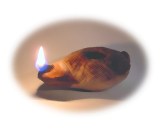 and more presumptuous still. They dislike praising others and love to be praised themselves; sometimes they seek out such praise. Herein they are like the foolish virgins, who, when their lamps could not be lit, sought oil from others.”
 4. Tell the Priest Your Sins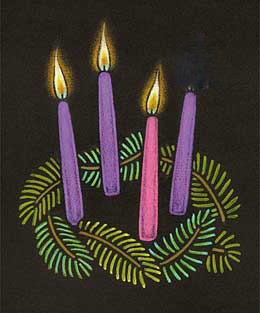
 Jesus and his disciples journeyed to Bethany where a woman named Martha welcomed him. Martha’s sister, Mary, lived with her because (as per this theory) Mary was unmarried and could not live on her own. While Martha was burdened with much serving, Mary sat beside Jesus at his feet, listening to him speak. Mary was oblivious to the social expectation that she should not assume the place of a disciple like a man, yet Jesus showed no signs of disapproval.
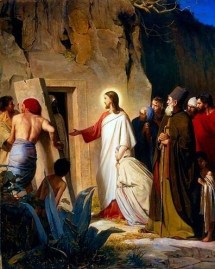 Martha went into the house and whispered to Mary, “The teacher is here and is asking for you.” As soon as Mary heard this, she rose quickly (without caution or subtlety) and went single-mindedly to Jesus. Many Jews had come to Martha and Mary to comfort them about their brother, so when the Jews who were with Mary in the house comforting her saw Mary get up quickly and go out, they followed her, presuming that she was going to the tomb to weep there. (They had not previously followed Martha out, but they felt it prudent to accompany Mary and make sure that she would be safe and alright.)





 Parishable Items