Archive for the ‘Saintly People’ Category

Whom Her Heart Loves — July 22 – St. Mary Magdalene

July 23, 2011


Mary Magdalene in today’s gospel shares obvious parallels with the woman in the first reading from the Song of Songs. The woman in the Song of Songs rose to find him whom her heart loves. Mary Magdalene rose early in the morning and came to the tomb. The woman in the Song of Songs sought her beloved but did not find him. Mary Magdalene reported to the apostles, “They have taken the Lord from the tomb, and we don’t know where they put him.” The watchmen came upon the woman in the Song of Songs. As Mary wept, she saw two angels in white. The woman in the Song of Songs asked, “Have you seen him whom my heart loves?” Mary said (unknowingly to Jesus), “Sir, if you carried him away, tell me where you laid him, and I will take him.” The woman in the Song of Songs had hardly left the watchmen when she found him whom her heart loved. Jesus said Mary’s name; she turned and said to him, “My rabbi!” The woman in the Song of Songs goes on to say, “I took hold of him and would not let him go.” Jesus had to say to Mary Magdalene, “Stop holding on to me, for I have not yet ascended to the Father.”

So what is the reason behind this providential parallel between Mary Magdalene and the woman in the Song of Songs? I have heard it said that the Song of Songs is the book of the Bible on which the saints have written about most. Perhaps God gave us Mary’s example so that we would not interpret the Song of Songs merely as a description of the corporate love between Yahweh and the people of God, or between Jesus and His bride the Church, but so that we would also see in it the love affair between Him and every person individually.

Our faith is not based upon feelings alone. (Feelings are too fickle to be our foundation.) Yet, feelings of the heart are an important part of our relationship with God. As Jesus said, “You shall love the Lord you God with all your heart, with all you mind, with all your strength, and with all your soul.” We must love Him with the intellect of our minds, with the strength of our bodies, and with the will of our souls, but we must also love Him with the emotions of our hearts. Stir up your affections for Christ, pattern the emotions of Mary Magdalene, who showed true devotion to Him whom her heart loved.

Bread of Angels — Wednesday, 16th Week in Ordinary Time—Year I

July 21, 2011

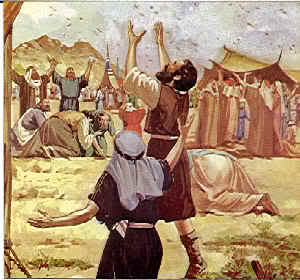
Here at St. John’s, on the wall behind me, there is painted an angel holding a banner which says, “Ecce Panis Angelorum.” This is a Latin phrase. “Ecce” means “behold,” “panis” means “the bread,” and “angelorum” translates to “of the angels.” And thus the phrase goes, “Ecce Panis Angelorum; Behold the bread of angels.” This idea comes from Psalm 78, the psalm we heard today, which says of the Manna and the Israelites in the desert, “Man ate the bread of angels, food he sent them in abundance.” 

Why was the Manna in the desert was called the bread of angels? Extra-Biblical Jewish tradition suggested that the Manna bread actually nourished the angels. The Manna also came down from Heaven for the benefit of men and came through the mediation of angels. Of course, the Manna prefigures the Eucharist, which nourishes us through the deserts of this life toward the Promised Land. The Eucharist is really Jesus Christ who came down from Heaven for mankind. The angels are indeed nourished by this bread, Jesus Christ, for their lives are sustained thorough Him. We also receive the New Testament Manna with the help of the angels. As we say in Eucharistic Prayer I: “Almighty God, we pray that your angel may take this sacrifice to your altar in heaven. Then, as we receive from this altar the sacred body and blood of your Son, let us be filled with every grace and blessing.” It has been said that if angels could envy us, it would be for our reception of Jesus in the Eucharist.

The angels do more for us than we realize. We should remember to thank them; for getting us out of bed to come to Mass this morning, for assisting us here in our prayers, and for assisting us in our daily lives. Lovingly invite them, give them the permission, to do more in your lives. (They’re probably just waiting for you to ask.) Let us ask their intercession and at this Mass, together with the angels who surround us, let us delight in the bread of angels.

Rules of Spiritual Discernment

July 17, 2011

In just a few pages, St. Ignatius’ famous Rules for Discernment can teach us about:

  • Spiritual consolation, spiritual desolation, and how to act in the midst of them.
  • How the enemy of our souls attacks us and how we are to defend ourselves.
  • How to recognize the activity of the good spirit or the bad spirit within us.

Enduring Despite Scandal — 16th Sunday in Ordinary Time—Year A

July 17, 2011

I know of a man who was called and chosen to lead, to preach, and to be a minister on behalf of Christ. Good and powerful things were done through his ministry and he was respected by many Christians. However, despite outward appearances, this man was a sinner (a great sinner,) and when his sins became known he brought great scandal to the Church. It was revealed that he had repeated stolen from funds collected for the poor. It also became known that he had betrayed Christ, his people, and his vocation in a vastly more terrible way. So terribly, in fact, that Jesus said, “It would be better for that man if he had never been born.”  (Better for him if he had never lived life outside his mother’s womb.) This man, who preached the gospel, who worked mighty deeds, who drew crowds to Jesus Christ, was the Apostle Judas Iscariot.

Could you imagine being one of those Christians who had been evangelized by the Apostle Judas? What if he had preached the gospel and ministered in your hometown? Imagine how your faith might be shaken by his sins. How tragic it would be if any Christians had parted ways with Jesus Christ, the apostles and the Church because of the scandal of this one man.

Though the one, apostolic, and Catholic Church is holy, she does contain sinners. Jesus said that there would be weeds that grow alongside the wheat. It has always been this way, and so it shall be, until the separating harvest at the end of the age. There have been terrible sinners among the Church’s popes and priests, her lay men and women; children of the evil one. Yet, these sinners, should not make us forget about the Church’s many canonized and uncanonized saints, the children of the kingdom, through whom far greater good has been done.

Like the mustard seed Jesus described, His Catholic Church, which began as a speck in history, has grown into the largest of plants, a peaceful dwelling place which brings together all peoples. And like the yeast in the dough that Jesus spoke of, the works and teachings of His Catholic Church have raised up the whole world for the better. For instance, the Catholic Church is the largest charitable organization in the world and she has been the defender of universal human dignity through the centuries. The modern world accepts the concept of universal human rights as a given because the Catholic Church first championed human dignity by her teachings and deeds. Despite the sins of some of its members, let no one say that the Catholic Church has not been a source and a force for good in the world.

We see that Jesus foreknew what Judas was freely going to do. Jesus said, “Did I not choose you twelve? Yet is not one of you a devil?” “Amen, I say to you, one of you will betray me.” (He said this in reference to Judas.) Why did Jesus, who knew all the while what Judas would freely do, permit him to remain in their company? One could rightly say it was because the Father had ordained it so, or that it was necessary to fulfill Old Testament prophesies, or so that the Son of Man and Savior of mankind would experience the human suffering of betrayal by someone who knew Him well and should have loved Him. Perhaps there are one thousand true reasons for it in God’s providential plan, but I am convinced that one of these reasons is this: So that in the future, whenever one of Jesus’ own betrayed Christ’s Church, be they a member of the clergy or laity, it would not destroy our faith in Christ.      Ultimately, the only person our Catholic faith depends upon is Him, and Jesus will never let us down.

For those who have been alienated from the Faith because of scandals, let us pray whatever the offense, that no Judas shall keep them away from Jesus Christ and His Church.

Broadcasting Our Faith — Thursday, 15th Week in Ordinary Time—Year I

July 14, 2011

At Easter time, my sister, Laura, and I used to watch documentaries about Christianity on TV. On the one hand, it was cool to see Jesus Christ talked about on channels like CNN and the History Channel. On the other hand, they couldn’t seem to present on the Christian faith without giving at least equal airtime to doubt. Laura and I enjoyed mocking their seemingly unrelenting skepticism:

“Jesus of Nazareth died nailed to a cross… or did He?”
“Every Easter, Christians around the world celebrate their belief that Jesus rose from the dead… or do they?”
“We’ll be right back after these words from our sponsors… or will we?”

Last night, ABC’s Nightline had an episode about the Virgin Mary and various apparition sites.  As I expected, the show both pleased me and annoyed me. I was pleased they had almost seven minutes about the shrine of Our Lady of Champion, near Green Bay—the first Church-approved Marian apparition site in our country. This was great, because the better the shrine is known the more good it shall do. On the other hand, I was annoyed by the show in various ways; for starters, by the Nightline episode’s title: “Beyond Belief.”  I was also annoyed by some of the things they included people saying.

I know that being interviewed isn’t easy. Expressing yourself like you want to can be hard, and video editing can take your words out of context, but here are some things they had people saying.  The doctor of a boy who was found to be free of leukemia the day after they visited the Green Bay shrine, was asked whether it was a miracle. He said, “The medicine did its job.… No matter what, God can’t work in the care of this child unless he works through somebody.” The narrator then referred to this metaphysical assertion, regarding what God can and can’t do, as “science.”

Later, the opinions of two, so-called experts were given. The first had written a book entitled From Jesus to Christ. (The book title was itself a red flag because it implies that the real historical Jesus of Nazareth got mythologized into the Christ of faith by later Christians. The Jesus of history and the Christ of our faith are one in the same.) She said, “When I think of the historical Mary, I think, first of all, of a very tired mom. Jesus could have been her fourth or fifth child for all we know. There’s absolutely no data in the New Testament itself to even tell us that.” (Actually, the Gospels of Matthew and Luke describe Mary as a virgin and Jesus as her firstborn Son.) A second expert said, “I’m not really big on the virgin birth as being scientifically viable.” (I wonder if he considers Jesus’ Resurrection, or any other miracle, to be scientifically viable.)

Then the show’s host, who seemed to me more ill-informed than malicious, went on to say, “After her death, early Christians hungry for information on the mother of their Messiah, began filling in Mary’s biography, with more stories like this; that she too was Immaculately Conceived, that her body was assumed to heaven like her Son’s, but the truth is that there’s no evidence to support any of these traditions.” First, he conflates the miracle of Jesus’ virgin birth with Mary’s Immaculate Conception. That’s a common error. Second, it’s just not true that there’s no evidence of Mary’s Assumption. For instance, the mere fact that Christians claim to have bones from all of the Holy Apostles, while no one at anytime anywhere has claimed to have hers, points to something. That’s not an incontrovertible proof for Mary’s Assumption, but it is some evidence for what all Christians were convinced about from the earliest times. The fact that people keep seeing her in compelling apparitions is some evidence too.

On the whole, I thought the show was a net plus; it did more good than harm, but it goes to show that we can’t rely upon the secular media to proclaim the Gospel for us. A person whose only source is secular television is not likely to come to faith. We need to step up as individuals and give witness to others about who God is and what He has done for us. As the psalmist says:

“Give thanks to the LORD, invoke his name;
make known among the nations his deeds.
Recall the wondrous deeds that he has wrought,
his signs, and the judgments he has uttered.”

Moses hesitated to speak to others about God. He said, “When I go to the children of Israel… what am I to tell them?” The Lord said, ‘Tell them, ‘I am who am.’ You shall tell them that I-Am-Who-Am sent you to them.’ Likewise, the one true God is asking you to witness to Him before others. Ask the Holy Spirit for the grace and you will soon receive the opportunity to witness to Jesus Christ and the good things He has done.

St. Benedict & The Pharoah — Monday, 15th Week in Ordinary Time—Year I

July 11, 2011

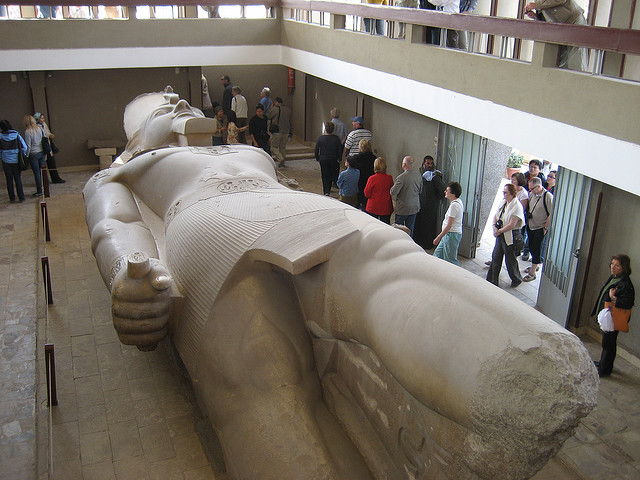
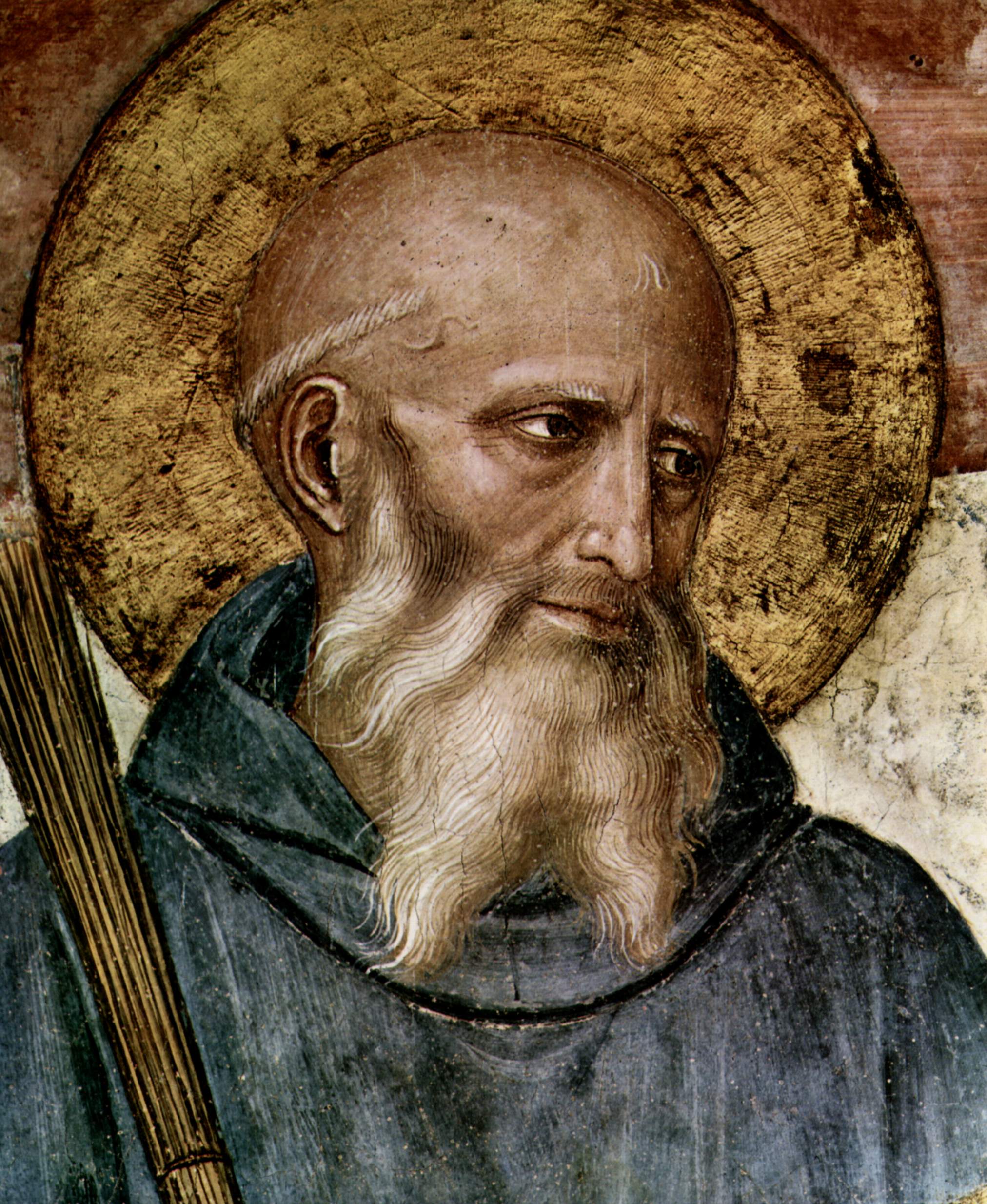
Today we recall two lawgiving rulers, one Egyptian and one Italian, one who was wicked and one who is good. This morning we hear of Pharaoh, who oppressed the Israelites, and we celebrate St. Benedict, who is called the founder of Western monasticism.

When Pharaoh saw the growing demographics of the children of Israel, he saw them as a threat and devised a new social strategy. Pharaoh had the Israelites enslaved and ordered that their male babies be sacrificed to Hapy, the fertility god of the River Nile. This would then force Israeli young women to take Egyptian husbands. In this way, if everything went according to plan, after a few generations of cultural assimilation, the children of Israel would be effectively no more.

St. Benedict, for his part, also established new laws over those he governed. His “Rule of St. Benedict” has directed the spirituality and administration of Benedictine monastic life for more than fifteen hundred years. Both Benedict and Pharaoh were shrewd men, clever and astute about practical matters like human behavior, but Pharaoh’s strategy was evil and failed while St. Benedict’s was good and still endures. Both men had intelligence, but only one had wisdom.

Pharaoh and St. Benedict demonstrate that intelligence is not the same thing as wisdom, that being clever is not the same thing as being good. Just because we know how to do something doesn’t mean we should. We see this in science, which teaches us how to do certain things, but which (of itself) cannot tell us whether we should. Governments can pass new laws, but that does not mean that all laws are just or serve the common good. Intelligence without wisdom is almost a curse. The devil is a brilliant creature, but he is without wisdom.

Where do we find wisdom? We find it in Jesus Christ, who presents Himself as the definitive prophet and righteous man, who presents His life as our pattern to follow. Whoever receives Him receives wisdom, and will receive wisdom’s reward.

Why Twelve Apostles? — Wednesday, 14th Week in Ordinary Time—Year I

July 6, 2011

Yesterday, Jesus said to His followers, “ask the master of the harvest to send out laborers for his harvest.” Today, He summons twelve disciples from the crowd to have a special role and authority among His people. Each is named an “apostle,” a title which is a Greek word, meaning “one who is sent.” Jesus shall send the apostles into the world to be the foundation stones of the Church. Why did Jesus choose twelve Apostles, rather than ten, twenty, or one hundred? I think that reasons are found in the history of God’s people and in the symbolic meaning of numbers.

Yesterday, Jacob wrestled with God and his name was changed Israel. This man, Israel, had twelve sons and through these sons, descended the twelve tribes, the people of Israel. By choosing twelve, Jesus establishes the people of God anew; He constitutes a new Israel. The number twelve is also three times four. Three is the Trinitarian number of God and four is the number of the created world; as in north, south, east and west, or the four corners of the earth. Twelve, the number which is three times four, denotes how the Triune God shall reach out to all nations to form a new people of God, a new family, a New Israel, the Church.

Our Church, its bishops, priests and deacons, like the sons of Israel and the twelve Apostles, frequently prove that they are human, yet our Church is more than just an organization and the ordained are more than just functionaries. Our clergy derive their special role and authority from Jesus Christ and the Apostles, and our Church is intended for all. They are our fathers and the Church is God’s family.

The Age of the Donkey — 14th Sunday in Ordinary Time—Year A

July 4, 2011


Jesus tells us in today’s gospel, “All things have been handed over to me by my Father.” But if that is so, why do so many things in the world seem so out of hand? We see that many things are sinful, broken, and not as they should be. Zechariah foretold that the true king would proclaim establish peace among the nations. Yet, this Fourth of July weekend sees our country fighting in at least two wars abroad. If we take our faith seriously, and think seriously about our faith, we’re led to ask, “Where is the reign of Jesus and where is His promised peace?”

In our first reading, we heard Zechariah prophesy that the true king, the Messiah, the Christ, would come to Jerusalem riding on a donkey. You will recall, of course, how Jesus fulfilled this passage when he rode into Jerusalem on Palm Sunday to the people’s shouts of joy. So what is the significance of His riding in on a donkey? The significance of the donkey is that it points to the meekness of Jesus’ reign.

In the ancient world, when a general sieged and took a fortified city, he would most often ride through its city gates by means of horse power. That conqueror would either be saddled upon one of these magnificently fast and powerful animals, or else he would ride in a chariot pulled by them. Then, upon entering, one would expect him to ruthlessly establish the new order of things. Oftentimes, to secure the conqueror’s rule, new laws would be proclaimed and severely enforced, prominent enemies would be put to death, and all local resistance would be crushed.

Jesus, however, comes into Jerusalem in a different way; not on a warhorse or in a chariot, but on a slow and humble donkey. This signifies that His reign shall be different. Apart from the relatively tame activism of scattering livestock and tipping tables at the temple, Jesus introduces his reign without any sign of force. In fact, the only person who would be murdered in the course of Jesus’ rise to power… would be Jesus Himself.

When Jesus stood accused before the high priest and the Sanhedrin, when He was in chains before Pilate and his troops, do you not think that He could have called upon His Father to provide Him in an instant with more than twelve legions of angels? Jesus could have backed Himself up with the power of more than 60,000 angelic warriors, but then He would not have died, and His kingdom would have been very different.

Let me speak for a minutes about the angels. God’s angels, in the first instant of their created existence, had a clear knowledge into God’s goodness and preeminence. In that moment, some of them decided that they would rather live as their own gods. As the Book of Revelation tells us, a war broke out in heaven; St. Michael the Archangel and his angels battled against Satan. Satan and its angels fought back, but they did not prevail and there was no longer any place for them in heaven. Satan was thrown down to earth, and his angels were thrown down with him, where they have tempted us to share in their rebellion ever since. Sometimes people ask if Satan and the demons could be someday be saved. However, angels and demons are creatures that do not change their minds. Unlike human beings, they do not change over time. We human beings are a different sort of creatures. We learn through experience and (hopefully) grow in maturity. If one of us chooses to rebel through grave sin, hope remains for us, as long as we live, that we will repent and turn again to God, to love Him and others as we ought. Even after Caiaphas and Pilate condemned Jesus and handed Him over to for execution, hope remained for their conversion and salvation.

What if Jesus had called in His angelic reinforcements, unveiling before them the Heavenly armies in their terrifying fierceness? What if Christ had tolerated no resistance to the advent of His reign, to the coming of His Kingdom, in 33 AD?        In that case, all of humanity would be confronted with a sudden and inescapable choice, a choice either for Christ or against Him; a moment of choosing like that experienced by the angels and demons.

Some human beings, when confronted with Christ in this way, would sinfully refuse to follow Him, and that refusal would be a rebellion. And here we come to the heart of the problem: How can Christ allow these rebels to remain on the earth, in hopes that they may repent, unless He is willing to show some tolerance and patience toward their sinful resistance for a time? Jesus could wipe away all sin from the face of the earth in an instant, but He would have to wipe out all of the earth’s unrepentant sinners in the process. A sudden judgment would bring a quick and clean end to sin, but less of mankind would be saved. The approach Jesus has taken with us is more merciful, but is also messier. God hopes that all shall turn to Him freely, and not by force, because love cannot be forced. Jesus Christ hopes and works for the conversion and salvation of all. As St. Peter writes, “The Lord’s patience is directed towards salvation.” And though it can be difficult for us to see God’s providential purposes and plans in our lives, “we know that,” as St. Paul says, “all things work for good for those who love God.”

Where is the peace that was promised to the world? Its total reign, the fullness of the kingdom of God, is yet to come. For now, the spirit of the world and the Spirit of life do battle. But we can experience peace in our souls, peace in our families, and peace in our communities, if we live by the Spirit of Christ.

In this age, Jesus comes to us on a donkey, but in the age to come He shall ride a warhorse. As the Book of Revelation says:

“I saw the heavens opened, and there was a white horse; its rider was called ‘Faithful and True.’ He judges and wages war in righteousness.… He wore a cloak that had been dipped in blood, and his name was called the Word of God. The armies of heaven followed him, mounted on white horses and wearing clean white linen. Out of his mouth came a sharp sword to strike the nations. He will rule them with an iron rod, and he himself will tread out in the wine press the wine of the fury and wrath of God the almighty. He has a name written on his cloak and on his thigh, ‘King of kings and Lord of lords.’”

In this age, Jesus rides the donkey, for this is the time of patient mercy. But on the Last Day, Jesus shall ride the white warhorse, for that is the time of decisive and definitive judgment. Let sinners take note; we shall not be permitted to keep sinning forever. And let those who mourn the brokenness, the sin, the suffering and death in the world take courage, for these things shall pass away. ‘See, your king shall come to you; a just savior is he. He shall proclaim peace to the nations. And His rule shall be to the ends of the earth.’

United Hearts — The Kristopher and KayLee Schnitzler Wedding

July 4, 2011

Kristopher and KayLee, when you chose this day, July 2nd, to be your wedding day you were probably not aware that you were choosing an extra special date. We unite your hearts today in holy matrimony amidst Sacred Heart of Jesus and the Immaculate Heart of Mary. Yesterday was the Solemnity of His Sacred Heart and today is the Memorial of her Immaculate Heart. We celebrate these two feasts so closely on the calendar, one after the other, because no two human hearts are so intimately united in a perfect love. I present them to you as role models for your love

Mary and Jesus were mother and Son. They were never married in the way we think of marriage, so how can they be role models for your marriage? In Jesus and Mary, we see the perfect man with the perfect woman, we see the New Adam together with the New Eve, we see the King and Queen of Heaven and Earth. Jesus is the Bridegroom and Mary is the flawless image of the Church, which is His Bride. By seeing how Jesus loves her and how Mary loves Him we can learn much about how men and women are to serve and love each other.

How does Jesus love Mary? For one thing, he listens to her. He is receptive to her wants and needs. It was true at the wedding feast of Cana, He worked a miracle to provide wine at her request, and it is still true now in heaven, where she continues to ask for good things for us. A good husband must be receptive to his wife’s wants and needs. On the other hand, in what manner do you think Mary asks things of Jesus? Mary does not nag Jesus, asking Him in plaintive tones. She doesn’t sit next to Jesus in Heaven and sigh, “I see you still haven’t taken care of the garbage down there.” Instead, I imagine she says to Him, “It would make me very happy if you would do this for me.” A good wife must allow pleasing her to be her husband’s joy, not his burden.

A good husband must die to himself in many ways for his family, and a good wife must support him through his sacrifices. Look how Jesus goes to the cross and offers Himself for the good of Mary and her children. He suffers for her and lays down his life for her. And how does Mary support Him? She is right there, at the foot of the cross, faithful and consoling. God gave Eve to Adam as a partner, to support him in the garden. Mary continues to be a helpmate to Jesus in His work of harvesting the vineyard of this world. A good husband lays down his life for his wife and a good wife must support him through his sacrifices.

From the cross, Jesus make Mary the mother of all Christians. He desired Mary to be the mother of many children, and now, Mary’s motherhood is perhaps her greatest joy. A good husband and wife must be open to children. This is the will of God for you and He will bless you with joy for saying “Yes” to Him.

The worship of God and following His will was at the center of the relationship between Jesus and Mary. Every Sabbath they came to join the worship at the synagogue (the Church of their day) and every day they said prayers and remained close to God. So too, God must be at the center of every good marriage. You must come to Mass every Sunday and pray every day. Good husbands and wives share the same mission in life, to assist each other and their children in getting to Heaven.

From earth to Heaven, Jesus led Mary through life with love, and Mary faithfully followed Him. A good husband must have the integrity not to phone it in, but to lead, and a good wife must have the courage to follow that lead. Kristopher and KayLee, May the hearts of Jesus and Mary reign in your homes. May you model their virtues on earth. And may you draw each other, and your children, to share their heavenly joy forever.

Our Lady of Good Help Pilgrimage Homily

June 14, 2011

In the Garden of Eden, there were many fruit-bearing trees but Genesis mentions two by name: the Tree of Life, and the Tree of the Knowledge of Good and Evil. By partaking of the Tree of Life, the human race could keep living forever, but the Lord warned that to eat from the other tree would mean our certain death.

On October 9th, 1859, the Blessed Virgin Mary appeared here, to 28 year-old Belgian emigrant, named Adele Brise, as she was walking 11 miles home from Sunday Mass. Interestingly, Our Lady chose to appear to Adele not in a church setting such as this, but between two trees: a Maple tree and a Hemlock tree.

You’re all familiar with the beauty and goodness of the Maple. In the fall, its leaves turn the most striking colors; and in the spring, its sap yields sweet syrup. But do you know what distinguishes the Hemlock tree? The poison that Socrates was condemned to drink came from this plant. Ingesting just six or eight fresh Hemlock leaves can kill a healthy adult. [Post-Script: The Hemlock Tree found in Wisconsin is not poisonous, but merely shares the name.] The Maple is a tree of life, while the Hemlock is a tree of death. Mary, the New Eve, stands between the two. [Post-Script: The Hemlock Trees native to Wisconsin are a non-poisonous but share the name.]

She tells Adele, “I am the Queen of Heaven, who prays for the conversion of sinners, and I wish you to do the same. You received Holy Communion this morning, and that is well. But you must do more. Make a general confession, and offer Communion for the conversion of sinners. If they do not convert and do penance, my Son will be obliged to punish them.”

Our Lady’s message by the trees recalls the counsel of Moses, who told the Israelites: “I have set before you life and death, the blessing and the curse. Choose life, then, that you and your descendants may live, by loving the Lord, your God, heeding his voice, and holding fast to him. For that will mean life for you, a long life for you to live on the land….”

Apparently, Our Lady’s warnings were not sufficiently heeded. In October of 1871, The Great Peshtigo Fire erupted. In terms of both size and loss of human life, The Great Peshtigo Fire remains the worst recorded forest fire in North American history. Between 1,200 and 2,400 lives ended in that firestorm which saw, according to an eyewitness, “large wooden houses torn from their foundations and caught up like straws by two opposing currents of air which raised them till they came in contact with the stream of fire.” This seems to be the punishment due to sin that Mary spoke of, but this does not mean that everyone who perished in that fire was condemned. We should remember that at harvest time, the good wheat and the bad weeds are pulled up together in a moment, but their future fates are not the same. Once uprooted from the earth, the good are gathered and kept in the barn, while the bad are thrown away forever.

The Peshtigo firestorm came and surrounded this shrine, where hundreds had come with their families and herds, to beseech the intercession of Mary before God. As many as fled to her were saved. The morning of October 9th, 1871, twelve years to the day after Our Lady’s appearance, saw them delivered.  This consecrated earth was an emerald-green island in an ocean of smoldering ashes as far as eyes could see.

After witnessing this miraculous deliverance, and seeing the lifelong dedication and fruitfulness in Adele Brise’s efforts, many began to believe that she had indeed seen and heard Our Lady. Just last year, the Church formally agreed, approving the apparitions and locutions given to Adele Brise in October of 1859 as worthy of belief by the Christian faithful. Some people will think that this official recognition closes the book on the story of Our Lady of Champion. Some will come here like tourists, excited see where Mary once appeared and go home contented. They won’t think to imagine that Mary’s message was not only meant for Adele in the past, but directed toward us today

In 1859, Mary prayed for and sought the conversion of sinners. Have we gotten less sinful since then? In 1859, Mary lamented how the young did not know the faith. How much better do we live it now? In 1859, Mary warned that if people did not convert and do penance, her Son will be obliged to punish them.” Do we need to convert and do penance? Would you be surprised if a great natural or man-made disaster befell us? How spiritually well prepared do you think people would be to face that?

I don’t think it is a coincidence that the message of Our Lady of Champion is arising to new prominence in our day. Today we heard talks about Our Lady’s Fatima apparitions, which date from 1917. At that time, Mary asked for Russia to be consecrated to her Immaculate Heart to bring about its conversion and a period of peace in the world. On March 25th, 1984, Blessed John Paul the Great consecrated Russia and the whole world to the Immaculate Heart of Mary. It was on the feast of the Annunciation. On Christmas, seven years later, the miracle arrived. On the evening of December 25th, 1991, Mikhail Gorbachev peacefully resigned as the President of the Soviet Union and from atop the Kremlin, the Soviet flag was lowered forever. This was not a coincidence. Politics, economics, and the threat of nuclear war did no bring the Soviet Union to a stunning and peaceful end; it was the work of Jesus and Mary.

What moved Blessed John Paul the Great to consecrate Russia, so many years later after the apparitions, precisely when he did? What moved Bishop David Ricken to approve this apparition, so many years later, as our country’s first Marian apparition site, here and now in our day? In both cases, I suspect that there is more behind these events than the personal whims of men. I suspect that both acts are orchestrated for their role in God’s plan.

I don’t think that Mary’s message was meant for Adele alone, such that their relevance passed away with her death. I think Mary is asking similar things from us. But what exactly? Mary’s message focused upon interceding for sinners and teaching the faith.

Mary the Queen of Heaven, prays for the conversion of sinners, and she wishes you to do the same. You receive Holy Communion, and that is well. But you must do more. First, regularly receive the sacrament of reconciliation, for the sinner whose conversion you are most responsible for is you. I suggest going once a month, for it is effective for growing in holiness.

Next, in this state of grace, offer holy Communions for the conversion of sinners. At every Mass, the priest has an intention for which he is offering the sacrifice. This is a person or group that he asks to be graced, or a problem or need he asks to be helped, by this offering of Jesus’ sacrifice. At every Mass that you attend, you can also offer an intention of your own. Offer some of your holy Communions for the conversion of sinners. And, like the children of Fatima, you can offer your daily sacrifices, burdens borne or pleasures foregone to help those far from God. In doing this, you follow Jesus, who suffered what He endured in order to save others.

Mary also told Adele: “Gather the children in this wild country and teach them what they should know for salvation.” Anyone who faith is immature is still a child in the faith. You can help teach them. Mary told Adele to ‘teach children their catechism, how to sign themselves with the sign of the Cross, and how to approach the sacraments.’ For children you will do one way, for adults, another, but you have something to offer them all; your children and relatives, your coworkers and acquaintances. As Mary said, “Go and fear nothing. I will help you.”

And finally, if and when a new firestorm afflicts our land, or when personal firestorms erupt in the lives of those we love, lead them to take refuge in Jesus through Mary. Confession and holiness of life, holy offerings and penances for sinners, teaching the faith to all, and leading them all to Jesus with Mary—this was Adele’s mission, and it is our mission too.

“Are You Saved?”

May 13, 2011

Catholics take a modest approach to the question, “Are you saved?” We hope to be saved in Jesus Christ, and we can have some measure of confidence that we will be, but Catholics consider it presumptuous to say that our salvation is assured. The Catholic attitude is like that expressed by Paul:

“It does not concern me in the least that I be judged by you or any human tribunal; I do not even pass judgment on myself; I am not conscious of anything against me, but I do not thereby stand acquitted; the one who judges me is the Lord. Therefore, do not make any judgment before the appointed time, until the Lord comes, for he will bring to light what is hidden in darkness and will manifest the motives of our hearts, and then everyone will receive praise from God.” (1st Corinthians 4:3-5)

After seeing the light on the road to Damascus, if anyone could be certain of their salvation one would imagine it would be Paul. However, in 1st Corinthians 9, Paul doesn’t speak as if he had Heaven already in the bag. He says:

“All this (becoming all things for all people) I do for the sake of the gospel, so that I too may have a share in it. … I drive my body and train it, for fear that, after having preached to others, I myself should be disqualified.” (1 Cor 9:23, 27)

Immediately following this, Paul warns the Corinthians about the necessity of remaining faithful lest they be condemned like God’s people during the Exodus:

“They were all under the cloud (like the Holy Spirit) and all passed through the sea (like baptism) and all of them were baptized into Moses (who imaged Christ) in the cloud and in the sea. All ate the same spiritual food, and all drank the same spiritual drink (like the Eucharist)… Yet God was not pleased with most of them, for they were struck down in the desert. These things happened as examples for us, so that we might not desire evil things, as they did. … Therefore, whoever thinks he is standing secure should take care not to fall.” (1 Cor 10:1-6, 12)

In Matthew’s Gospel, Jesus warns us that if we are to be saved, we must not be among those who acknowledge Him as “Lord, Lord” but fail to do God’s will:

“Not everyone who says to me, ‘Lord, Lord,’ will enter the kingdom of heaven, but only the one who does the will of my Father in heaven. Many will say to me on that day, ‘Lord, Lord, did we not prophesy in your name? Did we not drive out demons in your name? Did we not do mighty deeds in your name?’ Then I will declare to them solemnly, ‘I never knew you. Depart from me, you evildoers.'” (Matthew 7:21-23)

Those condemned seemed surprised that they are refused entry into Heaven. This is why Catholics do not rest in a self-assurance of Heaven (that judgment belongs to the Lord.) Our part is to ceaselessly strive to cooperate with the saving grace of Jesus Christ as we “work out [our] salvation with fear and trembling” as God does His work in us. (Philippians 2:12)

The Significance of Standing — Tuesday, 3rd Week of Easter

May 10, 2011

There’s a curious detail about Stephen’s vision of Heaven in our first reading today:

“Stephen, filled with the Holy Spirit, looked up intently to heaven and saw the glory of God and Jesus standing at the right hand of God, and Stephen said, ‘Behold, I see the heavens opened and the Son of Man standing at the right hand of God.’”

Stephen looks up to Heaven and sees Jesus standing at the Father’s right hand, but both the Apostles’ Creed and Nicene Creed (which we say each Sunday) describe Jesus as “seated at the right hand of the Father.” What are we to make of this?

In the ancient world, to be seated at someone’s right hand gave you the place of higher honor. At a meal, this favored seat granted a special closeness to the host. In a kingdom, the one seated at the right hand of the throne would share in the king’s authority and rule. Of course, describing Jesus as “seated at the right hand of the Father” is only an image (God the Father is unlimited, pure spirit and doesn’t have a right hand.) But this phrase from our creeds does describe a reality: that Jesus is now in the intimate presence of God the Father, sharing supremely in His glory and rule. In his vision, Stephen beholds Jesus in the place of honor, at the Father’s “right hand,” but Stephen sees Jesus standing. So why is Jesus standing?

Did you know that whenever the President of the United States enters a room, everybody stands up? It doesn’t matter if it is a room full of Democrats or Republicans, members of the press, or ordinary citizens, everyone stands up for the President. The same goes for a judge in his courtroom: “All rise, the Honorable Judge So-and-so presiding.” And a gentleman knows that he ought to stand up whenever he greets a lady. Why do they stand? Because it is a sign of respect. If you think about it, whenever we’re offering prayers in the Mass, provided we’re not kneeling, we’re standing up to pray. We stand to pray as a sign of respect to God.

Sometimes, people stand as a sign of respect not so much for the individual but for the greatness of the office they possess. Even a U.S. President’s most hostile critics in Congress, political opponents who couldn’t say one good thing about him, will stand up when he arrives to give his State of the Union address out of respect for the office he holds. It wasn’t for this reason that Jesus stood. No one on earth could have demanded Jesus’ respect by holding an office higher than his.

Jesus stood up because he wanted to show Stephen a sign of His respect. Jesus stood up because he was proud of Stephen. I think that we forget that Jesus is a real human being, with human feelings and emotions about the human events he sees. At the same time, He is also God; and therefore, He sees us all.

When you’re alone, and overcome temptation to do what you know is good, Jesus sees you and He’s proud of you. When you give an anonymous contribution or do a secret kindness, Jesus sees it and He’s proud of you. When you are opposed like Stephen, by people who hate you, or that just don’t understand you, when all the while you’re trying act with love, you do not stand alone. Remember that when you do what’s hard for Jesus, He sees it, and He sees you and He’s proud of you for it.

A Man In Jesus’ Image — Divine Mercy Sunday—Year A

May 1, 2011

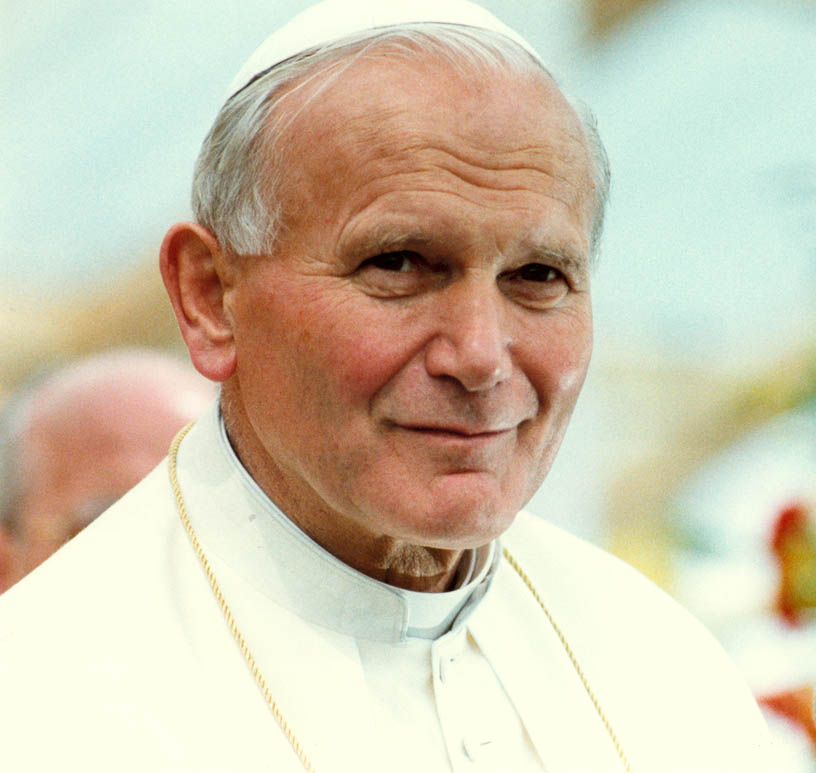
This Divine Mercy Sunday, our Catholic Church throughout the world celebrates and glorifies two men together in a special way. The first is our Savior, our Lord and our God, Jesus Christ; and the second is the great pope John Paul the Second, who is being beatified today in Rome. John Paul the Great, born Karol Wojtyla, is a man who lived in the image and likeness of Jesus Christ.

Both chose the Blessed Virgin Mary to be their mother. One chose her after the loss of his earthly mother as a boy. The other chose her from all eternity. Growing up, both of their beloved homelands were occupied and oppressed by foreign empires. For one it was the Romans. For the other it was the Nazis and then the Soviet Union. As young men, they both worked as manual laborers, in lives hidden from the world. When people encountered their ministries for the first time, many said, “Who is this man, and where does he come from?”

Both men transformed this world, not by leading violent revolutions, not by amassing incredible fortunes, but by speaking the truth, and living the truth, and leading others in doing the same for God. They preached God’s message, and their words gave hope and courage to many, but their words were not accepted by all. Both men had enemies who sought to destroy them, but they forgave, face to face, those who sought their lives.

At the end of their lives, both men were afflicted with great physical sufferings, but neither laid down their crosses. Some onlookers mocked or dismissed them in their afflictions, but those with spiritual insight beheld them to be offering a sacrifice to the Father for the salvation of the world.

St. John tells us that Jesus has done many other signs in the presence of his disciples that are not written in his Gospel. As St. John writes elsewhere, “There are many other things that Jesus did, but if these were to be described individually, I do not think the whole world would contain the books that would be written.”

Among these signs are the lives of the saints throughout the centuries, saints like Pope John Paul the Great. His life was a sign worked by Jesus Christ in our midst so that we would come to believe more deeply that Jesus is the Christ, the Son of God, and that through this belief we may have life in his name.

Why did people love Pope John Paul II so much? Catholics of every country and of all ages loved and flocked to him. Even non-Catholics and non-Christians were drawn to him. What explains this phenomenon? I think the answer is simple. People saw in him a reflection of Jesus Christ’s love for them. John Paul the Second was an icon of Christ and his love.

Every time you saw Pope John Paul, he was smiling. He traveled the nations, and embraced everyone warmly. When you encountered him, you felt loved, even if you were one person in a crowd of thousands. This was the Holy Spirit at work. Although you did not see Jesus you loved him in Pope John Paul; even though you did not see Jesus you believed in him all the more because of him, and rejoiced with an indescribable and glorious joy.

This morning we celebrate a feast day which Pope John Paul II established, Divine Mercy Sunday. What is divine mercy like? What does Jesus’ unfathomable love, which enfolds every one of us here and every person God has made, look like? Through the life of Pope John the Great we saw a partial glimpse of the divine mercy and love of Jesus Christ.

“He Is Not Here” — Easter Vigil

April 23, 2011

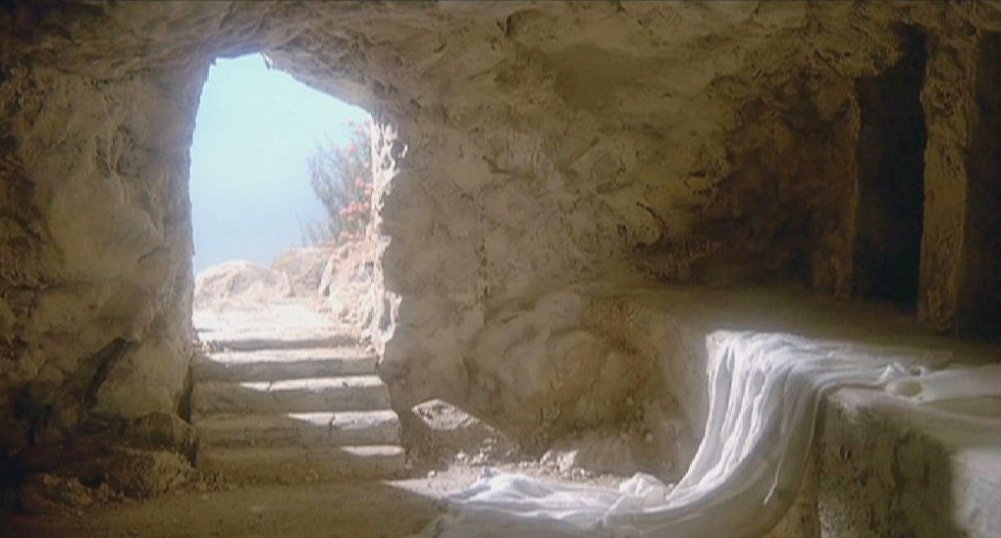
When the women came to the tomb they did not find Jesus, but a radiant messenger. He told them, “Do not be afraid! I know that you are seeking Jesus the crucified. He is not here.…” The tomb was empty, Jesus was not there.

Jesus was present at the beginning of creation, for through Him all things were made. Going forth from the Father’s mouth, He was at hand on earth throughout the ages, achieving His purposes.

He was mystically with Noah, who saved his family from death by building a ship, just as Jesus built the Church to save us.

He was mystically with Isaac, who, though bound and led to sacrifice, was not to be lost forever.

He was mystically with Moses, who freed God’s people from Pharaoh’s demonic slavery by leading them through miraculous waters.

He was mystically with all the prophets, in proclaiming a law to be written on hearts instead of stones, in promising the gift of a Holy Spirit from Heaven, in suffering at the hands of those who refused to hear wisdom.

He has been in His saints, from the least to the greatest, throughout the centuries to this very night. He is present here in all of us who are ‘living for God in Christ Jesus.’

By the all foreshadowings that proceeded His coming, and by the fruitful witness of all His saints ever since, we can confirm the angel’s words, “he has been raised just as he said.”

Jesus is not there in the empty tomb. He is here,  tonight, with us.

“I Thirst” — Good Friday

April 22, 2011

Shortly before He died on the cross, Jesus said, “I thirst.” Why did He say, “I thirst”? He was certainly physically dehydrated. As Psalm 22 foretells, His throat was as dry as broken pottery and His tongue stuck to His palate, but there was more reason for His words than just this.

Last night, at the Last Supper, Jesus had postponed drinking the traditional fourth and final cup of Passover. He said “I thirst” so that they would bring Him wine, so that He could drink, and unite the Last Supper and His Passion as one event. However, there is even more reason for His words than this.

Beside the crucifixes, in all of the chapels, in all of her religious houses around the world, Blessed Mother Teresa had written the words, “I thirst.” She understood that what Jesus thirsts for on the cross is us. Mother Teresa wrote, “Jesus is God, therefore His love, His Thirst, is infinite. He the Creator of the universe, asked for the love of His creatures. He thirsts for our love…” 

As we come to Him on the cross today, let us satisfy His thirst with the refreshment we can give to Him.